12 days in Thailand 1/7- 1/18/2025
Day 8-Wat Pra That Doi Suthep/14/2025
The next morning, our half-day tour begins at one of the most sacred and iconic sites in northern Thailand, Wat Phra That Doi Suthep. Perched high on Doi Suthep mountain, just outside Chiang Mai, this temple is often considered the spiritual heart of the region and a must-visit for anyone coming here.
The history of the temple dates back to 1383, during the reign of King Keu Na of the Lanna Kingdom. According to legend, a sacred relic believed to be a piece of bone from the shoulder of Gautama Buddha \was placed on the back of a white elephant. The elephant was released into the wild and wandered up the mountain. When it reached the spot where the temple now stands, it trumpeted three times, circled the area, and then lay down and died. This was taken as a divine sign, and the temple was built on that very site to enshrine the relic.
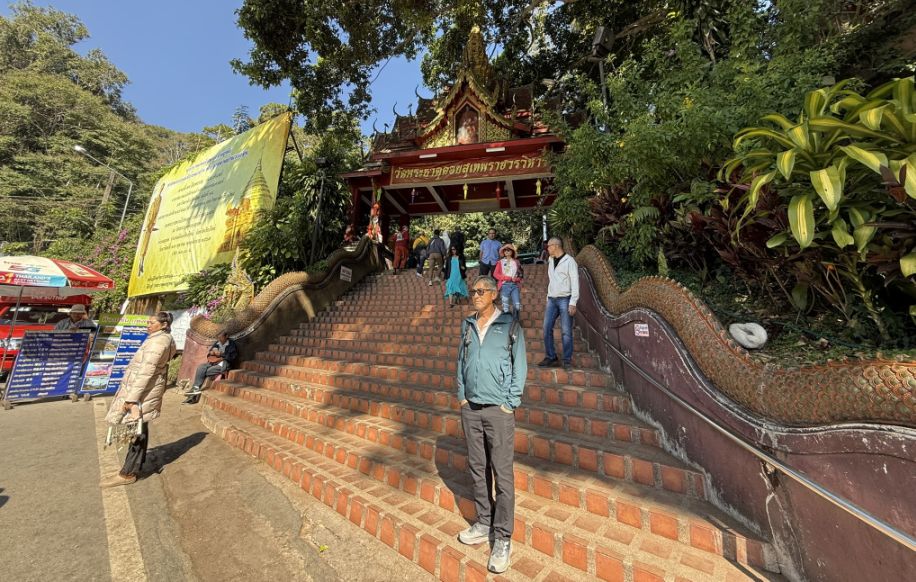
Our tour guide dropped us off at the entrance of the temple and we are just waiting for her to join us.
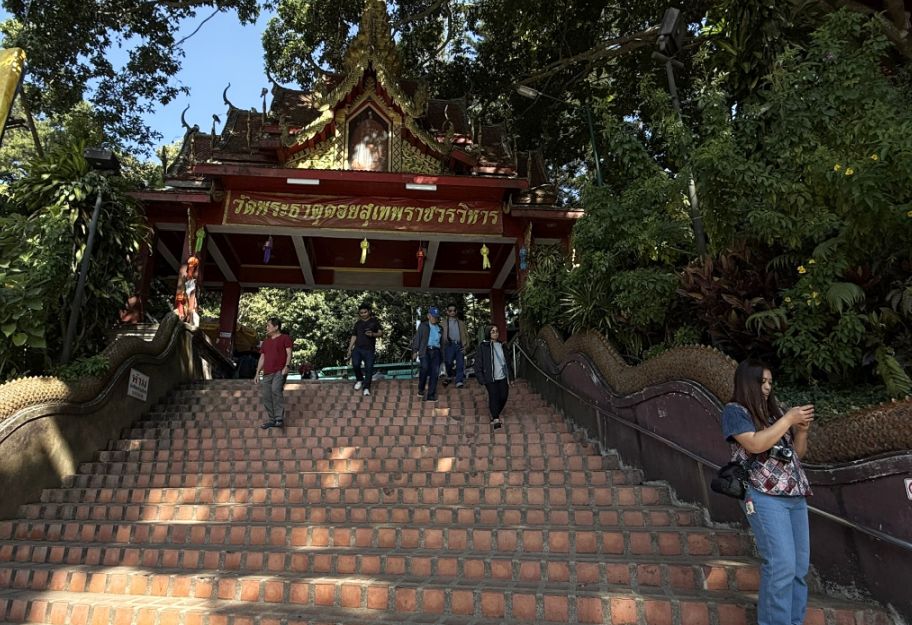
Climbing stairs to get inside the property.
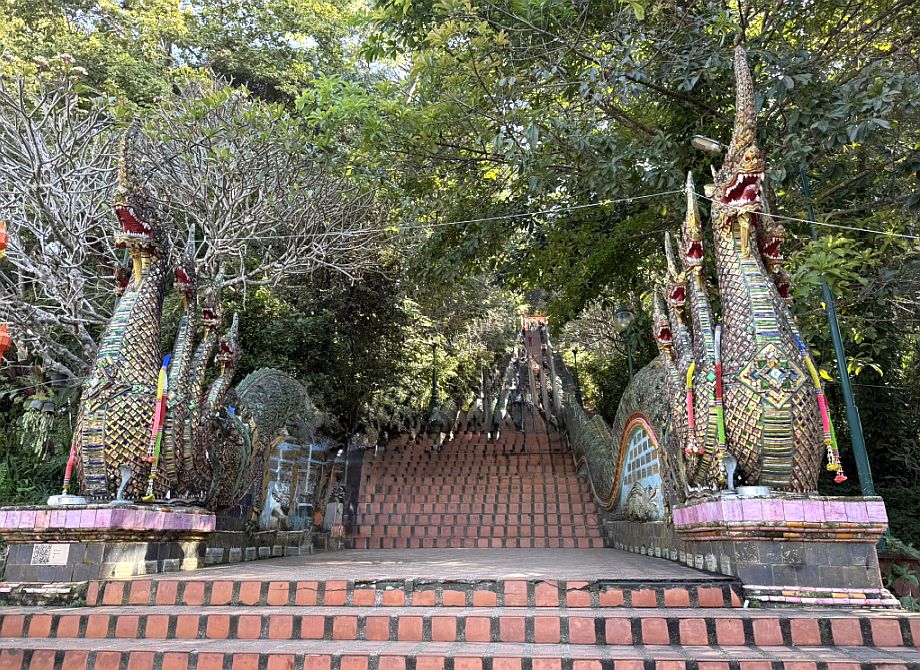
To reach the top of Wat Phra That Doi Suthep, we had to climb a long and fairly steep staircase of about 306 steps.
What makes the climb so memorable are the two magnificent naga sculptures that run along both sides of the staircase. At the base, their heads flare outward with open mouths and sharp fangs, creating a dramatic and almost mythical entrance, as if they are guarding the path. Their long, sinuous bodies form the railings, stretching all the way from the base to the top.
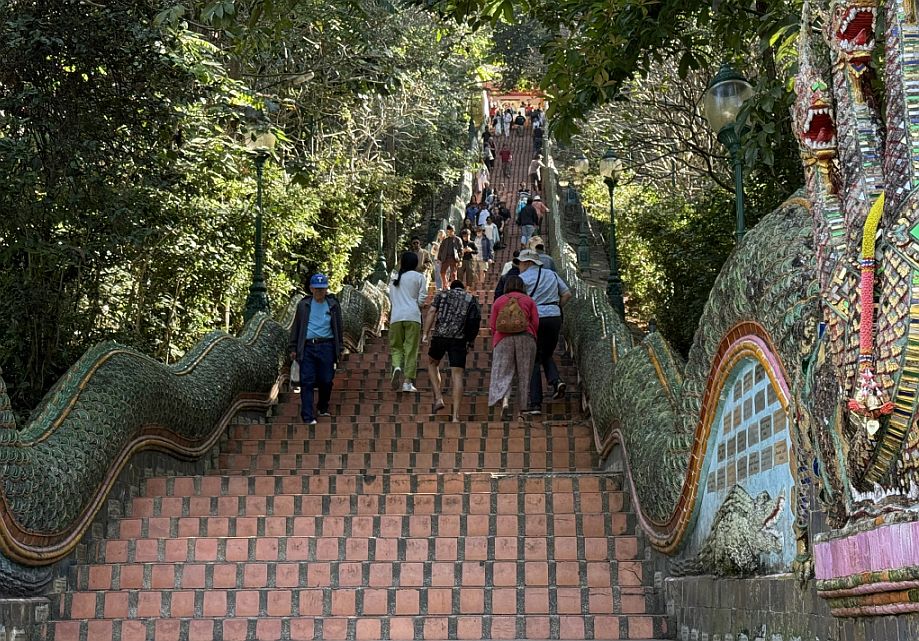
Climbing the stairs is an experience in itself, not just a way to get from point A to B. The stairs rise sharply up the hillside, and with each step, you feel like you’re gradually leaving the busy world behind and moving toward something more sacred. The Nagas long, sinuous bodies form the railings, stretching all the way from the base to the top. The scales are intricately detailed, shimmering in green and gold, and their bodies curve in a rhythmic, almost wave-like motion as they follow the incline.
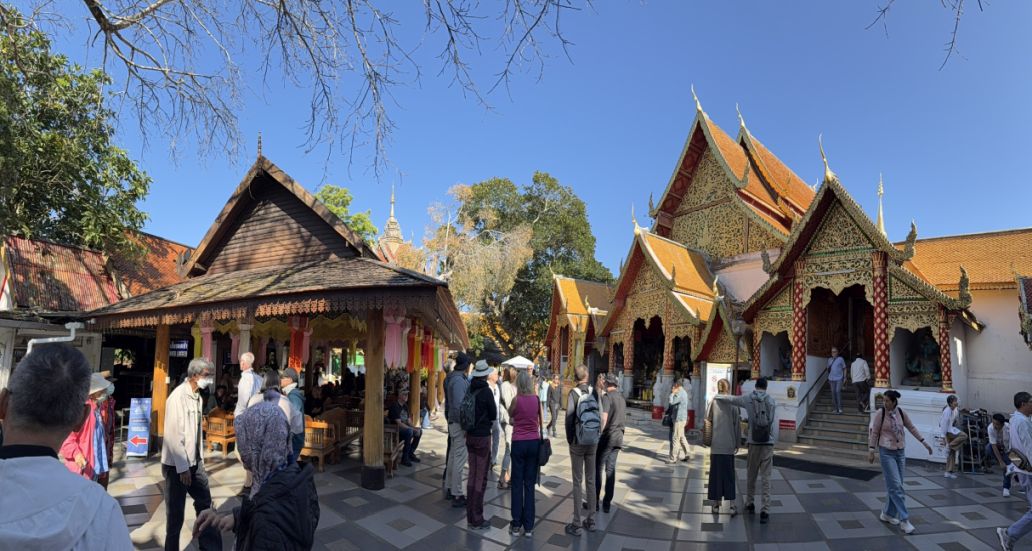
By the time we reached the top, a bit out of breath, the sense of arrival is even more rewarding. Once you reach the top of Wat Phra That Doi Suthep, it opens up into a lively temple complex rather than a single structure, and each section has its own character. On the left, the temple with the orange-tiled roof and gold facade is part of the traditional Lanna-style buildings you’ll find throughout northern Thailand. The orange and gold combination symbolizes warmth, merit, and devotion, and these halls are often used for prayer, chanting, or housing Buddha images.
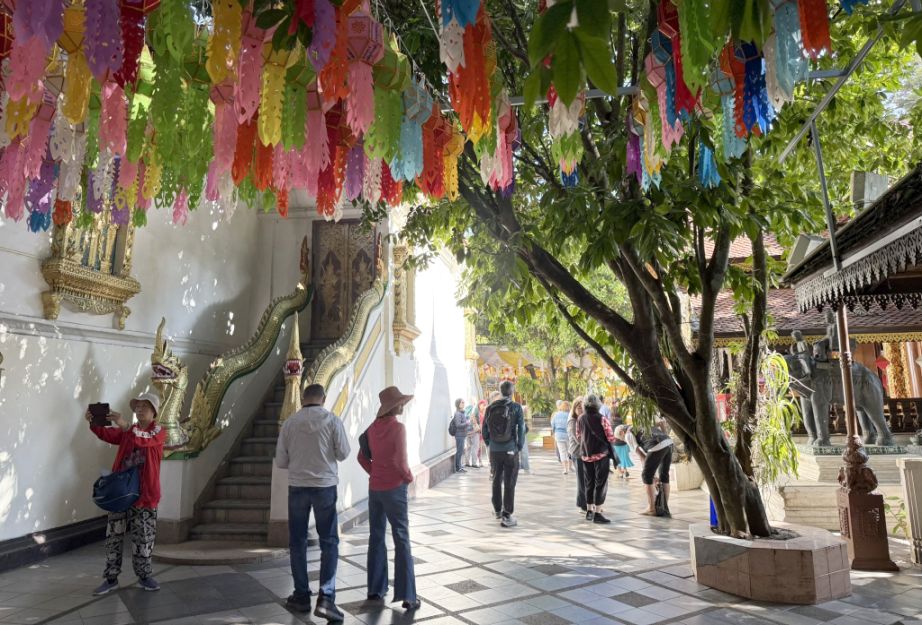
As we moved into the courtyard with colorful paper lanterns hanging from a tree, which is a very common and meaningful sight. These lanterns are often offerings made by visitors. People hang them as a way to make merit, bring good luck, or dedicate prayers for health, happiness, or remembrance of loved ones. The bright colors add a festive, almost joyful atmosphere, but behind that is a spiritual intention of hope and blessing.
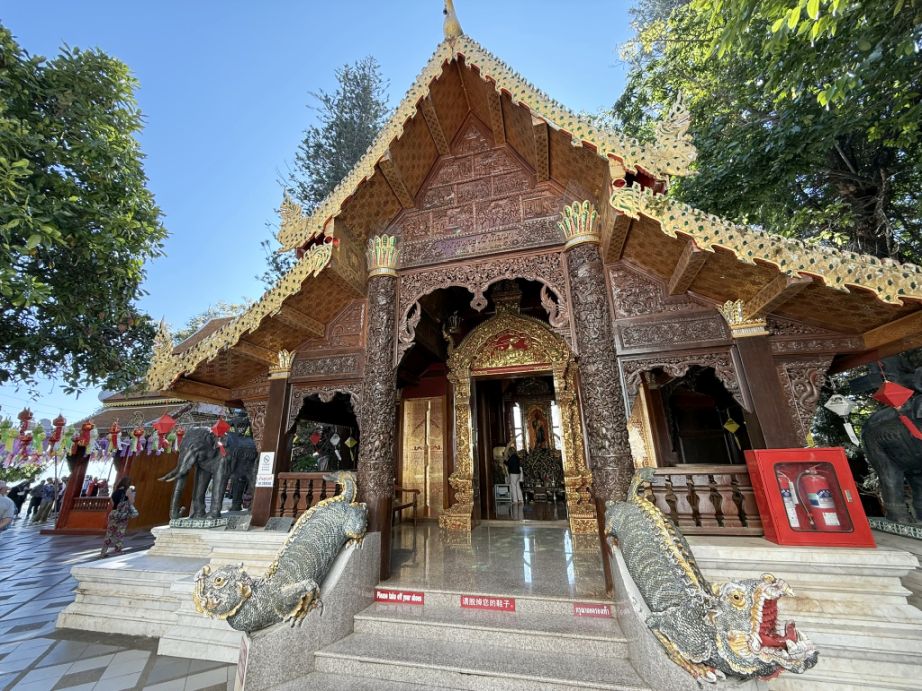
A wooden temple with gold trim along the roof edges is another beautiful example of northern Thai craftsmanship. At the entrance there are two mythical animals.
 |
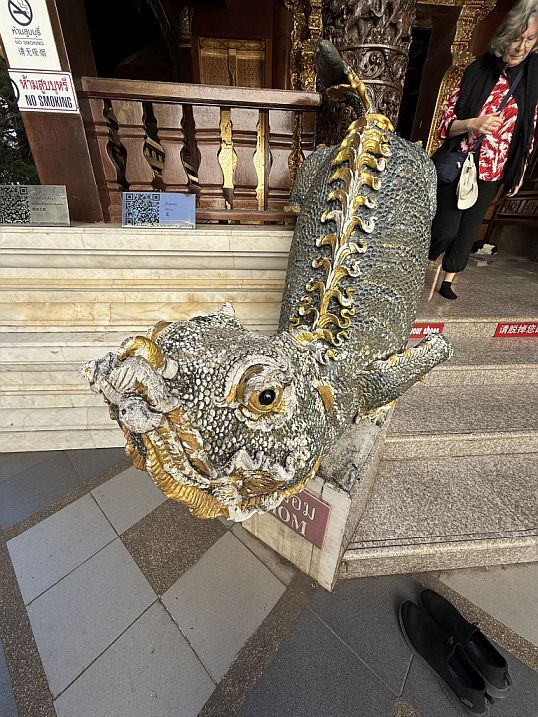 |
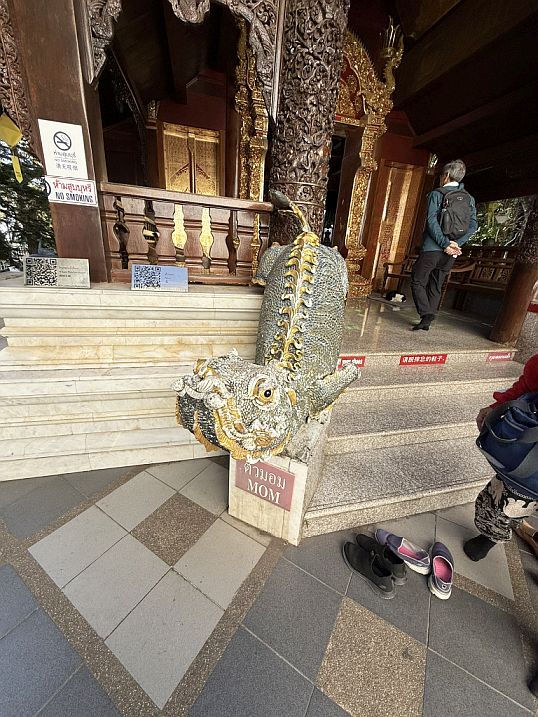
In Thai temple art, these creatures can take on imaginative forms, sometimes blending reptilian and mythical features. The panel labeled “MOM” underneath the statue, might be a donor dedication as temples often have plaques honoring people who contributed to the building or restoration, and it could be a tribute rather than the name of the creature itself.
 |
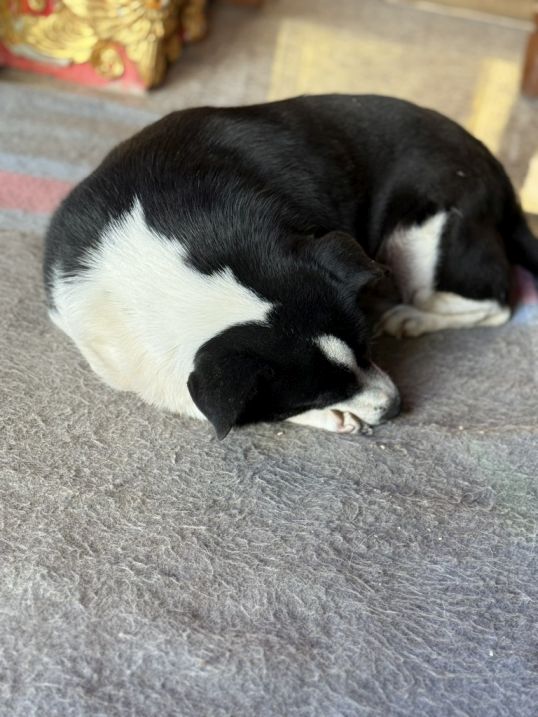 |
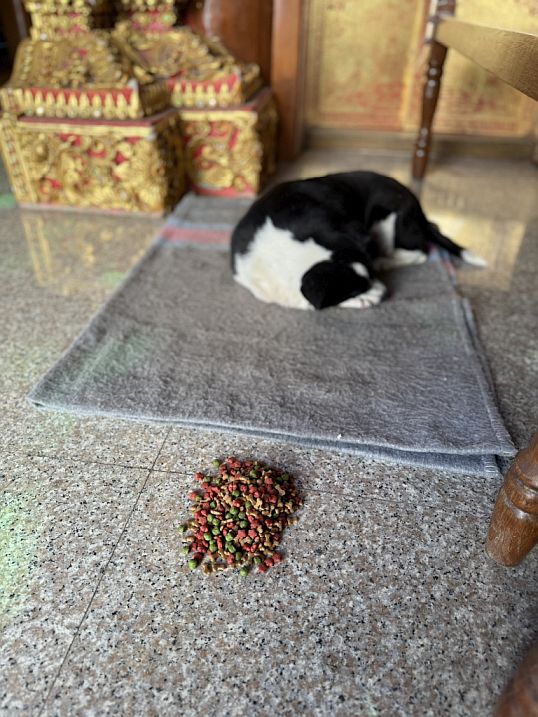
A sleeping dog inside the temple is actually very typical in Thai temples. Many temples act as informal sanctuaries for stray animals. Monks and locals often feed and care for them, which is why there is a small pile of kibble nearby. It reflects a broader Buddhist value of compassion for all living beings, animals are welcomed and allowed to coexist peacefully within temple grounds.
 |
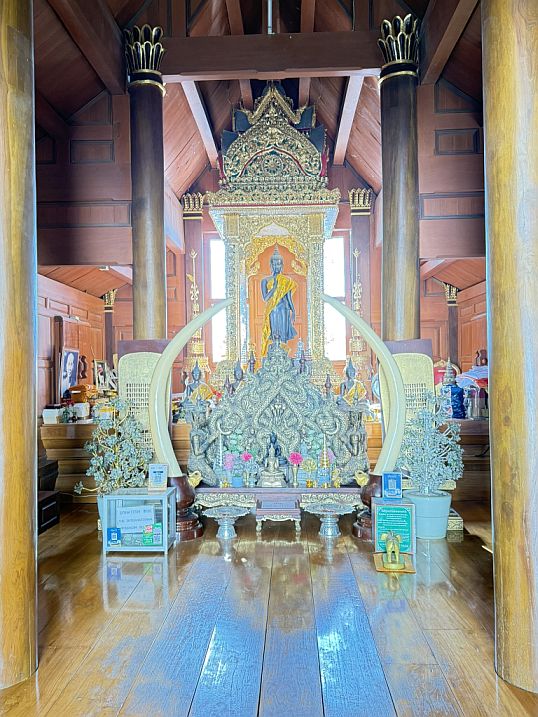 |
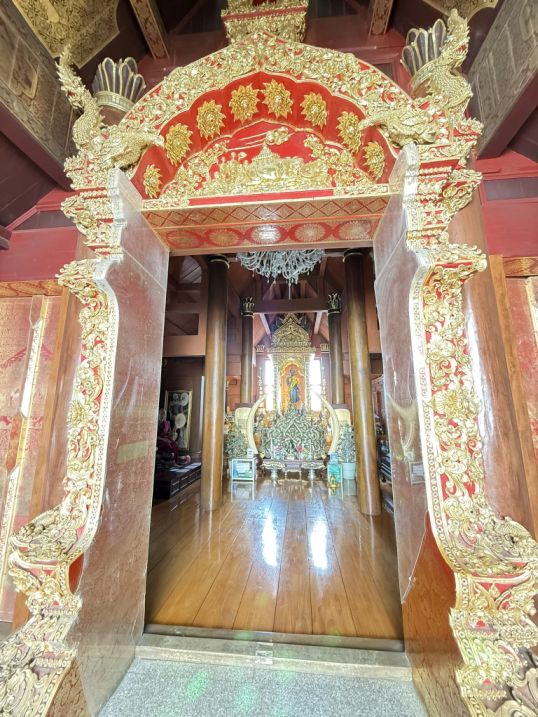
An altar inside the temple.
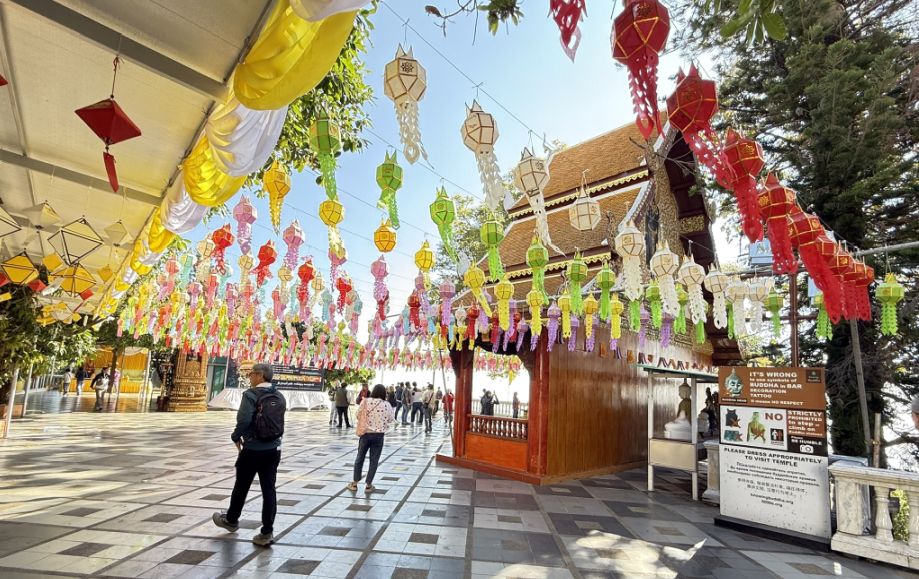
As we continued to another courtyard filled with even more hanging lanterns in different colors, it reinforces that same idea of merit-making and devotion. In some cases, these lanterns are also associated with festivals or symbolic acts representing light overcoming darkness, wisdom over ignorance.
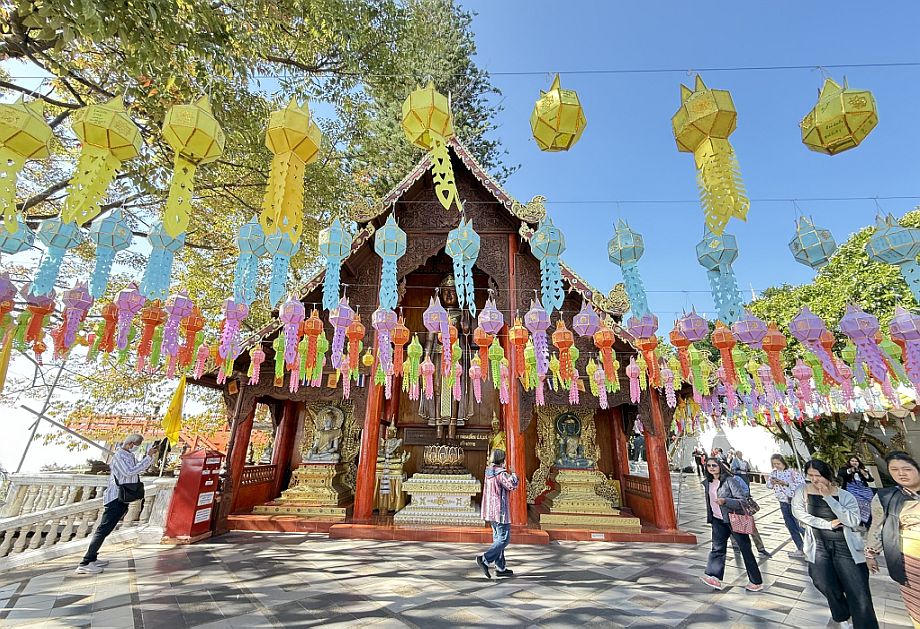
Behind the colorful lanterns at Wat Phra That Doi Suthep, that open-air space filled with carved wood and multiple Buddha statues is likely a smaller shrine or meditation area within the temple complex, designed for quiet reflection away from the main crowds.
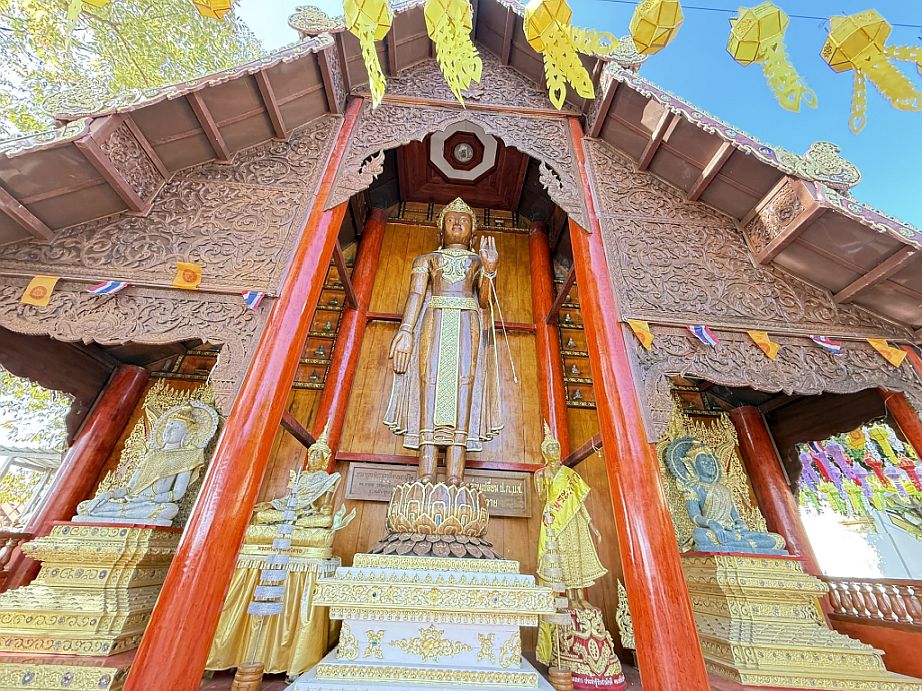
The carved wooden backdrop you’re seeing reflects classic Lanna craftsmanship, rich, intricate, and warm in tone. Wood carving in northern Thailand often carries floral, flame-like, and mythological motifs, creating a sense of depth and sacred atmosphere even in an open space. The central figure, standing Buddha on a lotus is especially meaningful. The lotus is one of the most important symbols in Buddhism. Growing from muddy water yet blooming clean and beautiful, it represents purity, spiritual awakening, and rising above suffering. Seeing the Buddha standing on a lotus emphasizes enlightenment that transcends the imperfections of the human world.
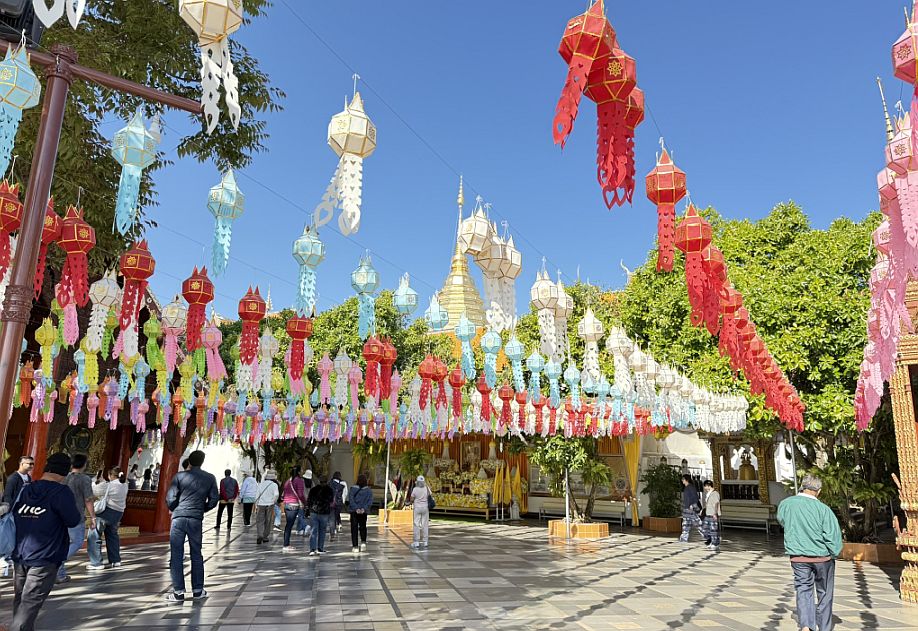
Even outside of festival times, these colorful lanterns. create a visual expression of collective prayer, with each lantern carrying someone’s wish or intention.
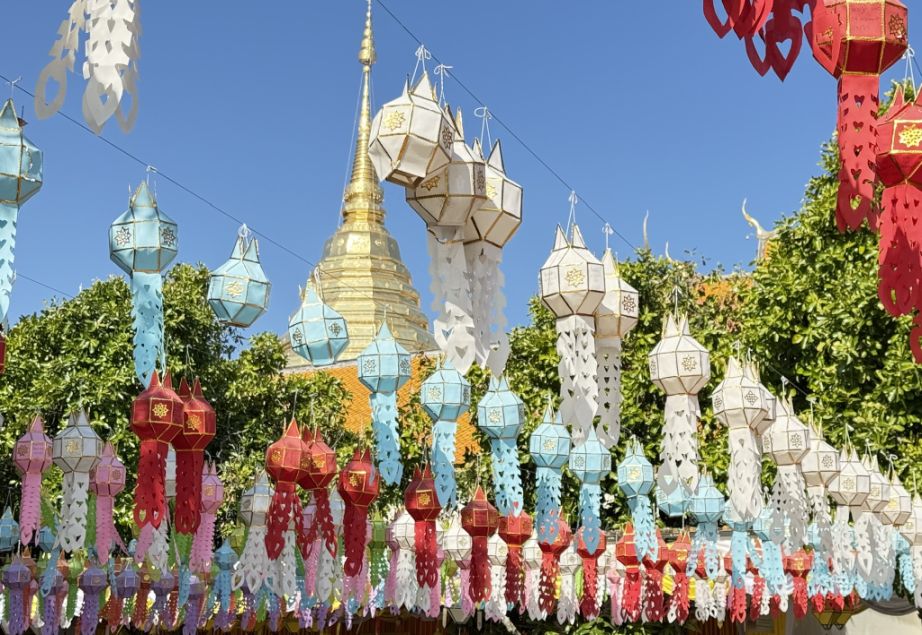
Close view of the colorful lanterns.
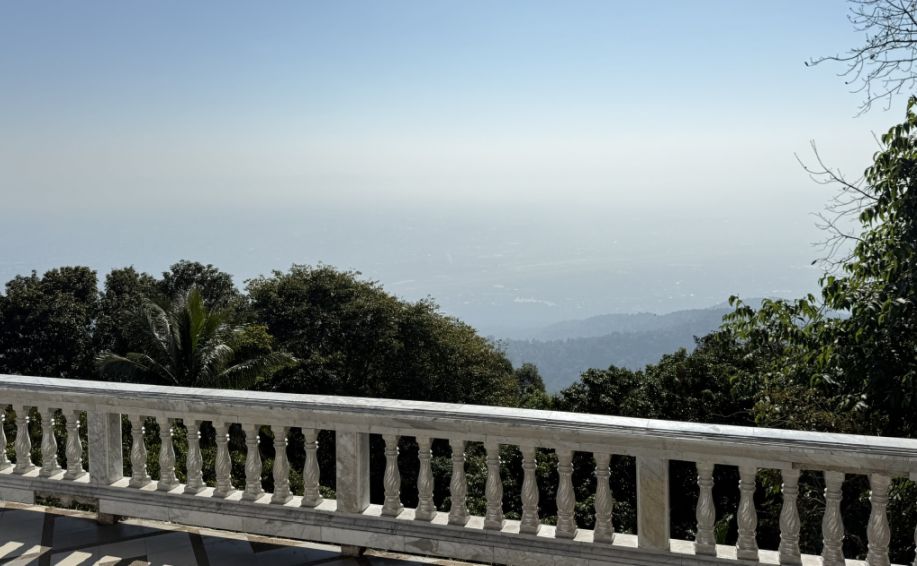
When we stepped over to the railing and look out, that sweeping view of mountains and forest is part of what makes this temple so special. We are standing at about around 3,400 feet above sea level on Doi Suthep mountain. From here, you can see across the lush forest and, on clear days, all the way over Chiang Mai below. That elevation isn’t just scenic, it reinforces the spiritual idea of rising above the ordinary world.
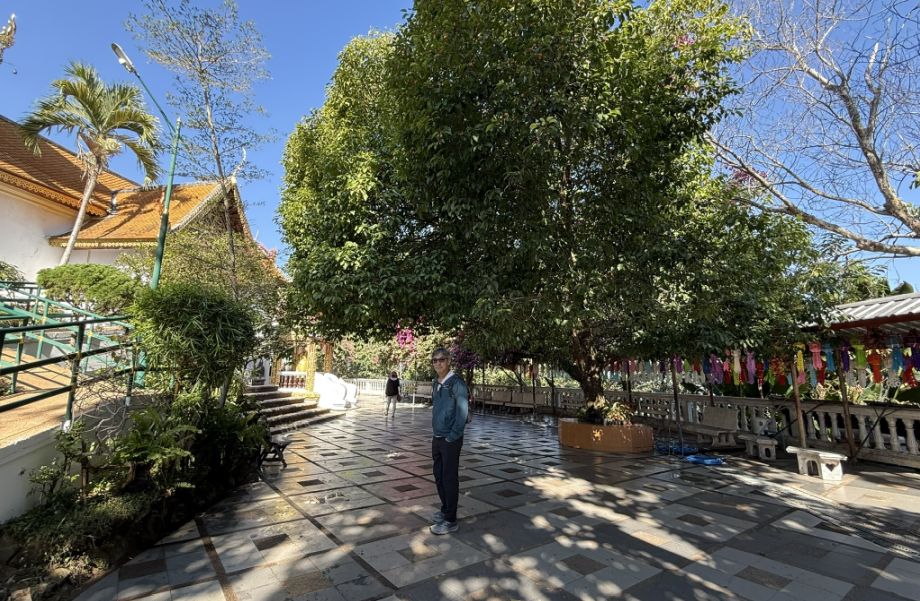
As we continued through many more courtyards, each space feels like a transition.
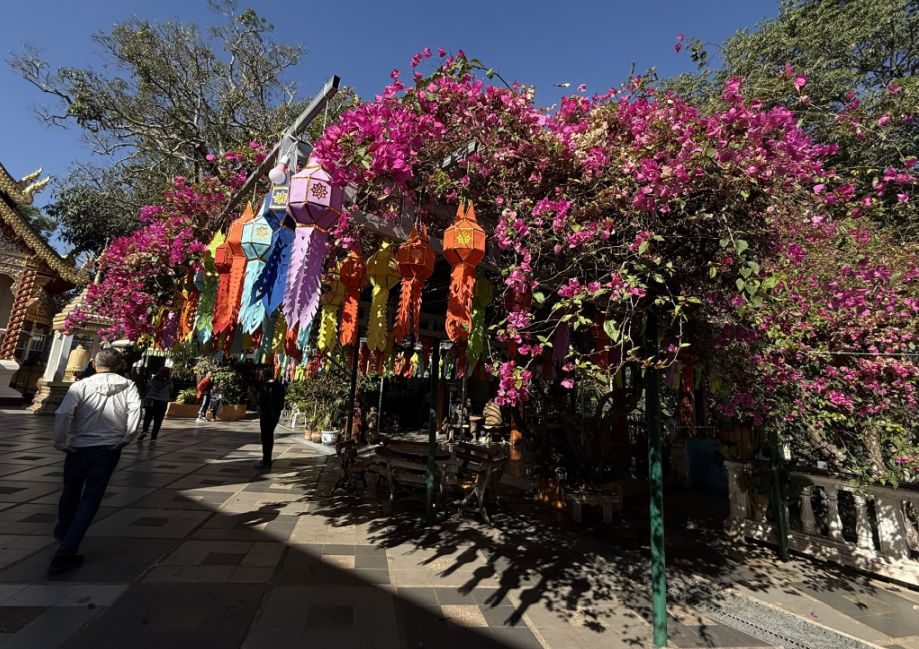
This courtyard is filled with bright pink bougainvillea bringing in color, life, and a sense of calm among the sacred structures.
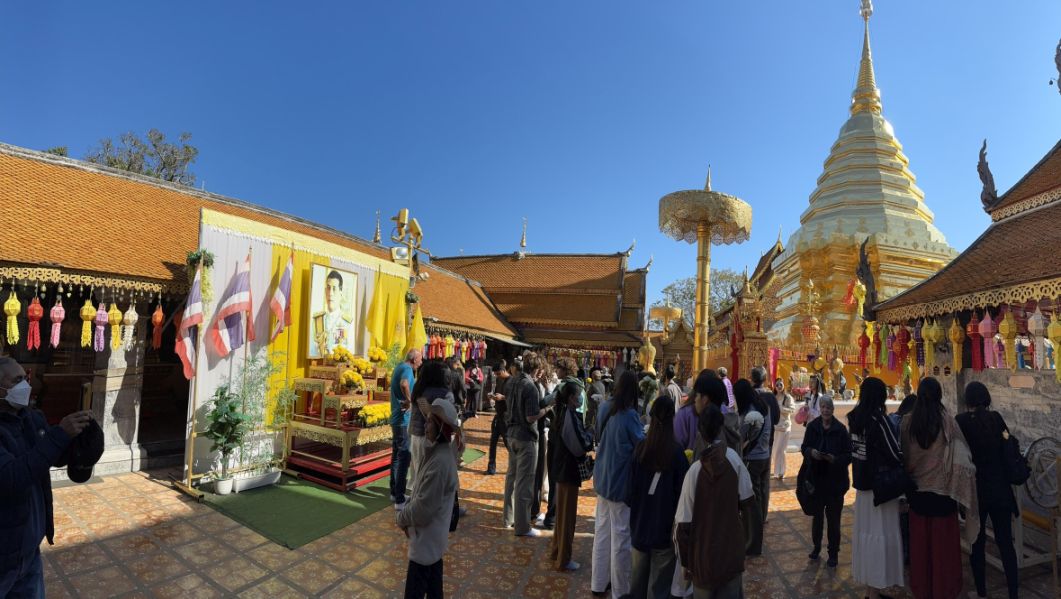
Then we arrived at the heart of the temple: the iconic golden stupa (chedi).
 |
 |
People have to remove their shoes to walk in this area.
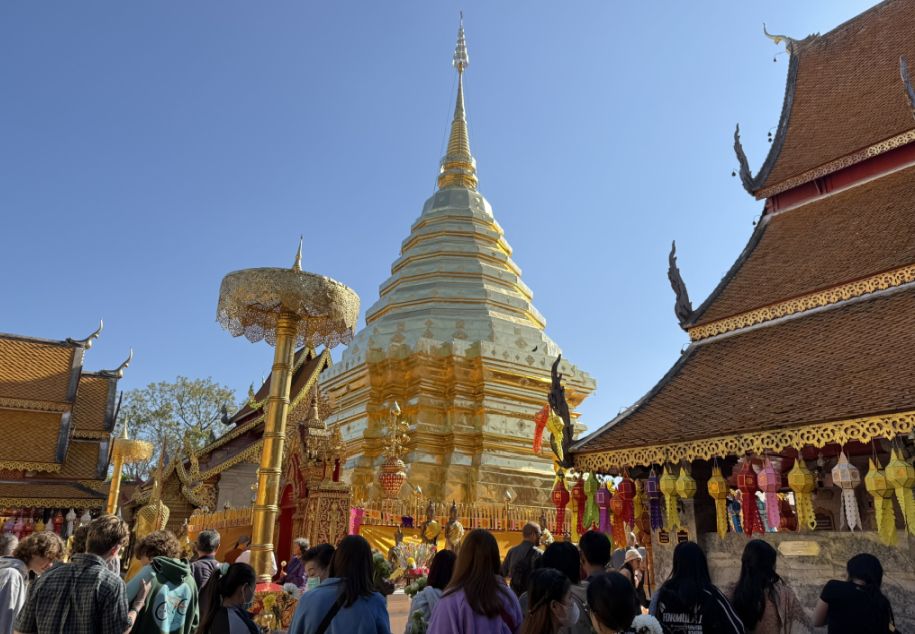
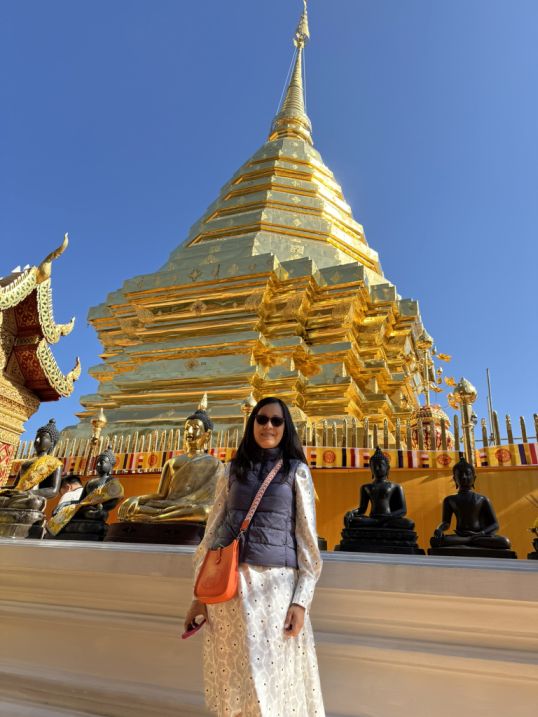
This is the most sacred area of the complex. The central golden chedi is believed to house the holy relic of Gautama Buddha, which is why this site is such an important pilgrimage destination.
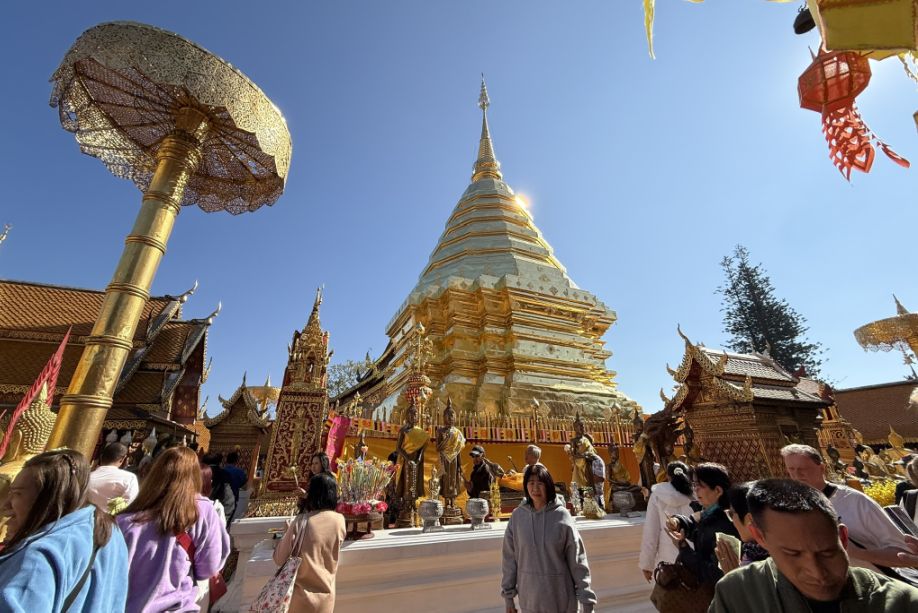
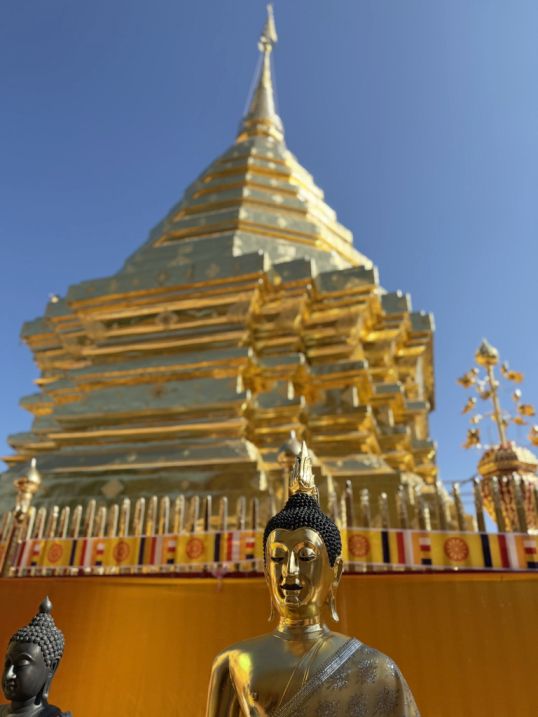
The entire structure is covered in gold, and when sunlight hits it, it radiates brilliantly, symbolizing enlightenment, purity, and the ultimate truth.
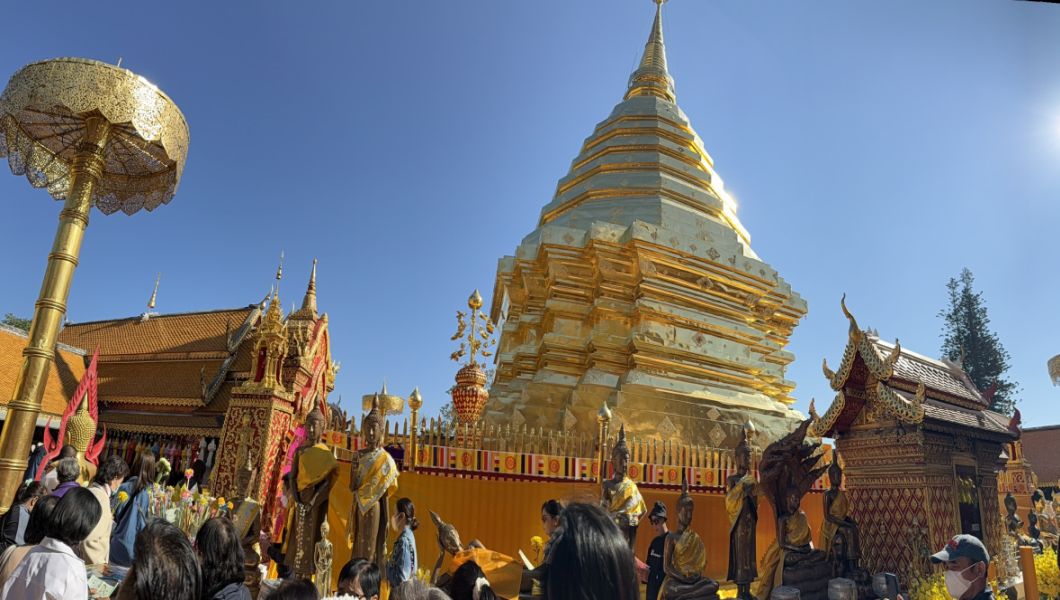
There are bells, parasols, and layered decorative elements around the chedi. The bells often ring softly in the wind, adding a gentle, almost meditative sound to the atmosphere. Everything here, from the gold surfaces to the repetition of statues—works together to create a sense of rhythm, reverence, and spiritual focus.
 |
|
Altogether, this central area is the true soul of Wat Phra That Doi Suthep.
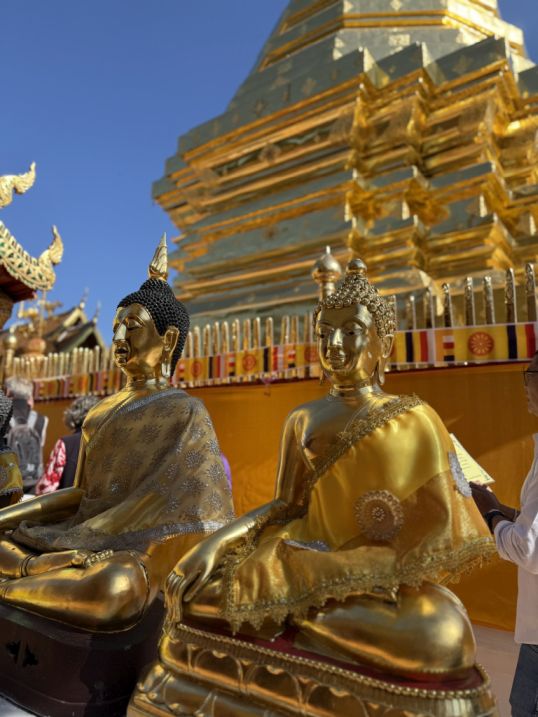 |
|
Surrounding the main stupa are smaller stupas, shrines, and numerous Buddha statues in different poses.
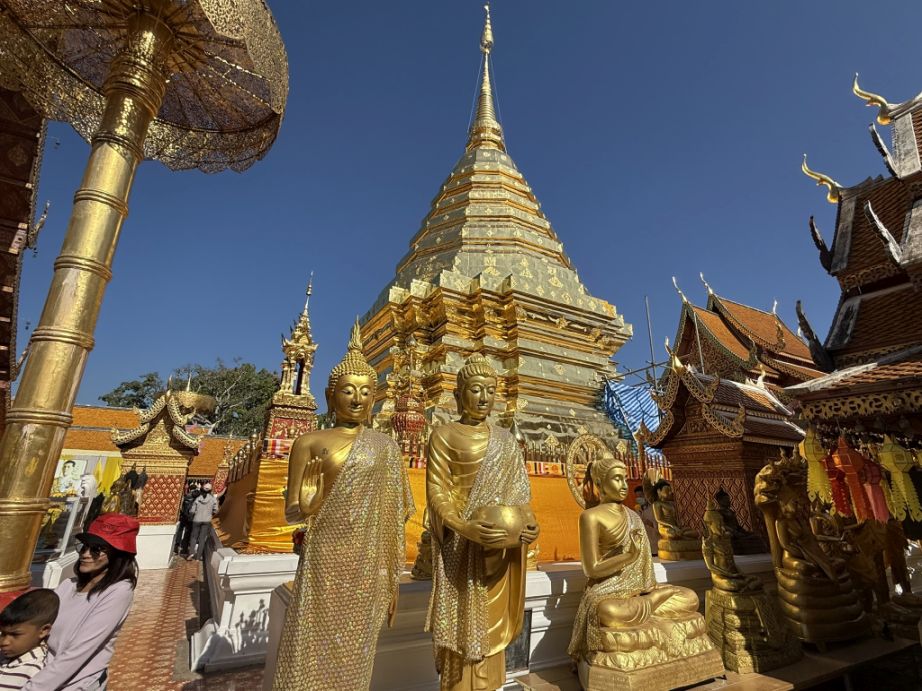
Each statue represents a different aspect of the Buddha, teaching, meditation, protection, or compassion.
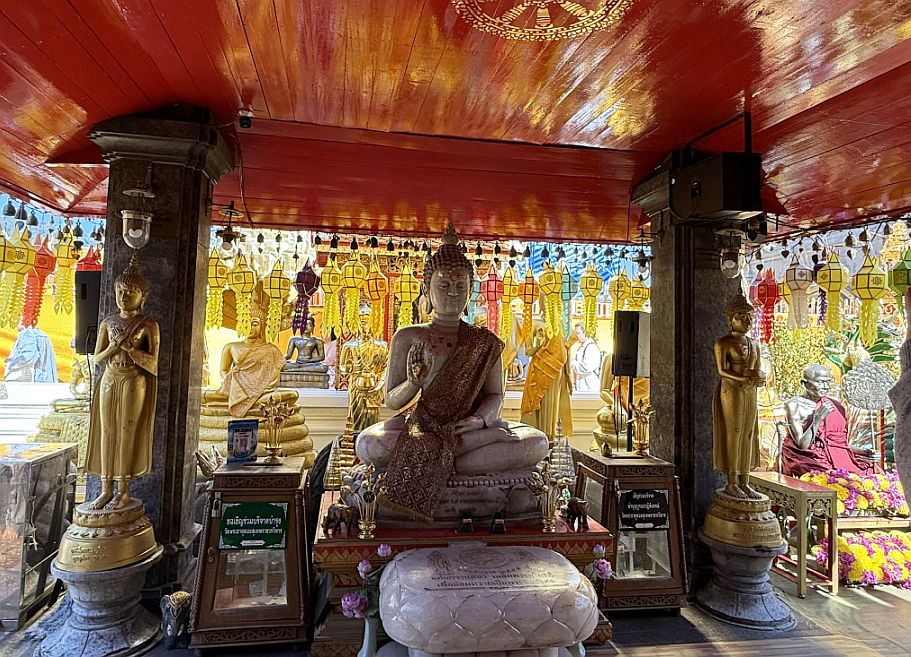
In Thai tradition, you may also see Buddha associated with the days of the week, where visitors pray to the one corresponding to their birthday
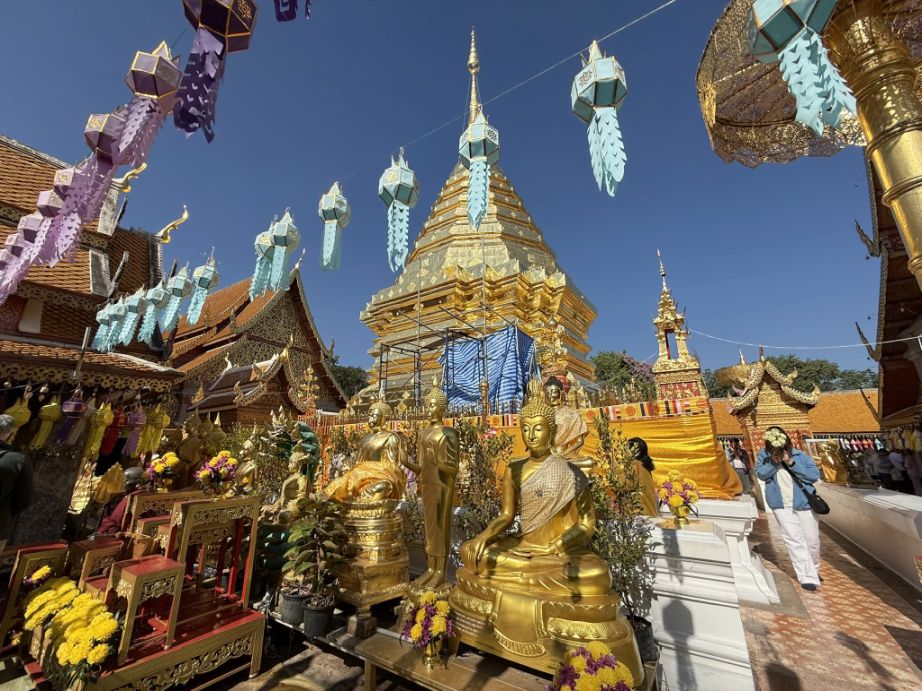
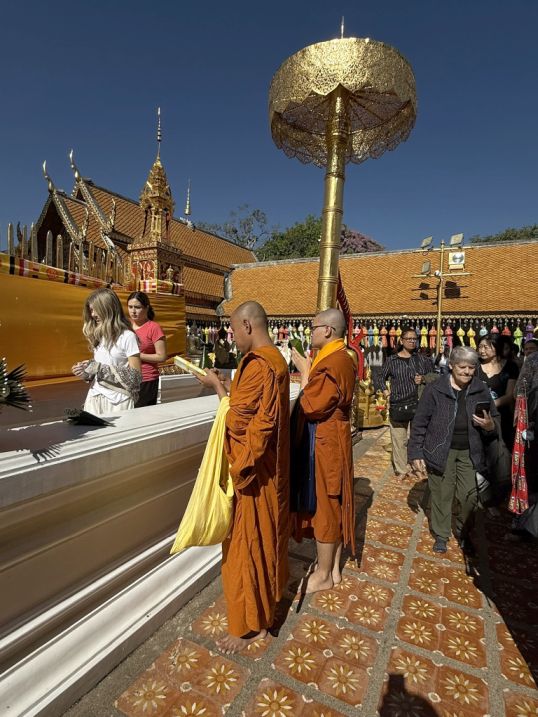
What makes this area so striking is how vast and layered it feels. The central golden chedi, the surrounding statues, shrines, bells, and prayer spaces all interconnect, creating a space that feels both expansive and intimate at the same time. There’s movement everywhere, people walking in quiet circles, monks chanting, visitors pausing to pray. yet it all feels harmonious.
 |
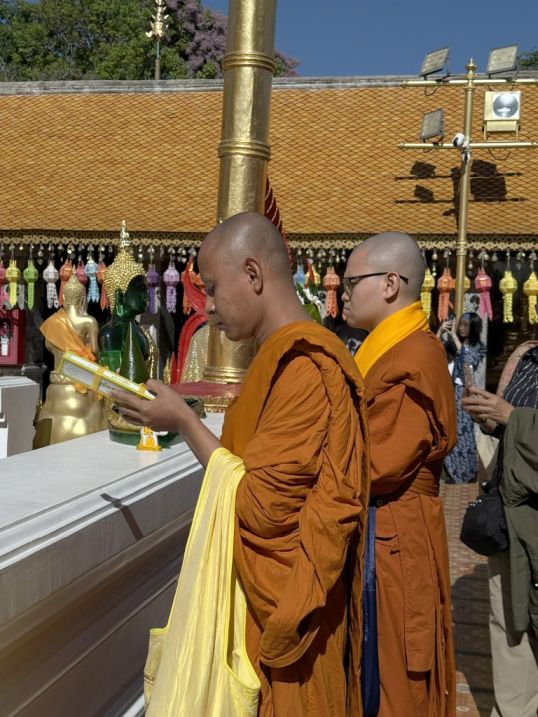 |
Two monks praying.
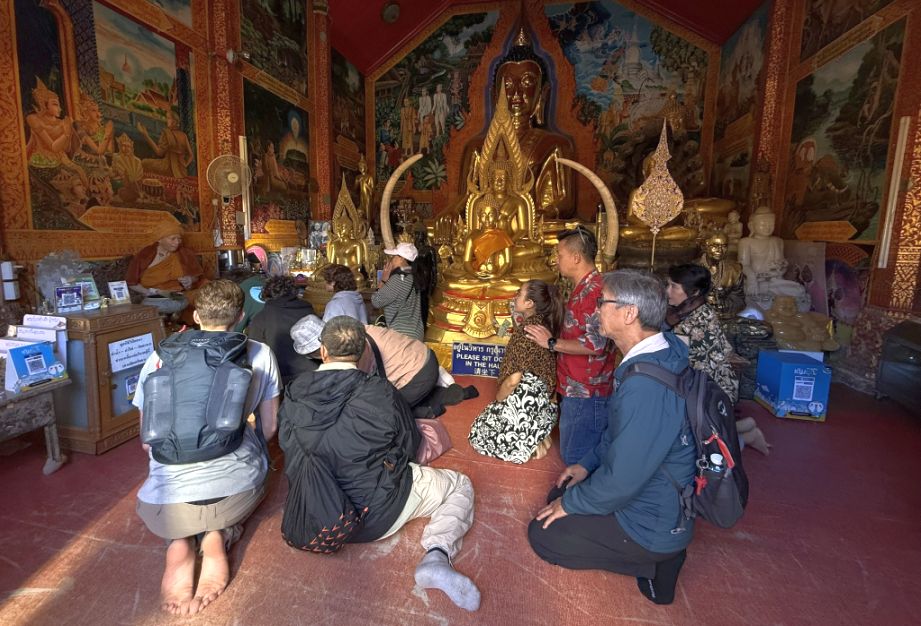
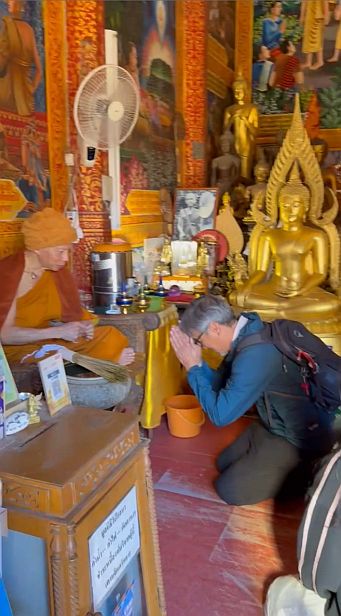
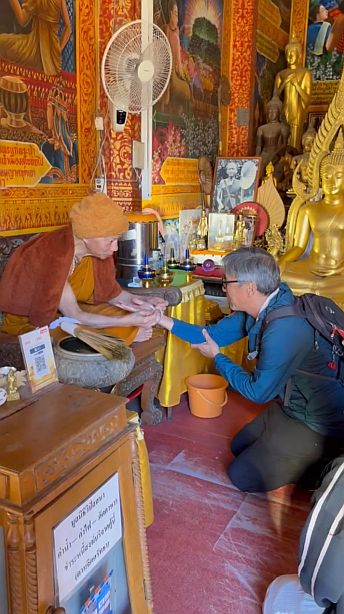
When we stepped into the prayer hall and Hoa sat down to receive a bracelet from a monk, which is a traditional Thai blessing ritual.
 |
 |
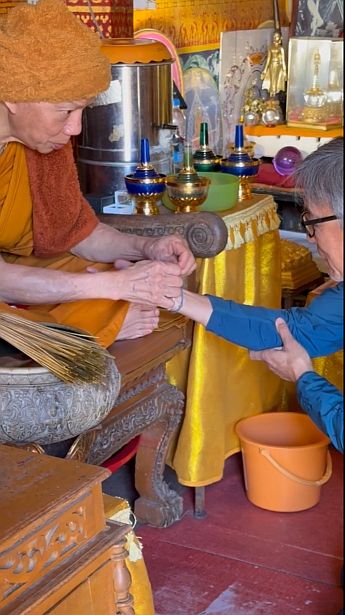 |
The monk chants prayers while gently tying a sai sin, a sacred white string around the wrist. This bracelet is meant to offer protection, good luck, and spiritual blessing. The chanting transfers merit and positive energy, and the string serves as a physical reminder of that blessing. It’s usually worn for a few days or until it naturally falls off, symbolizing the continuation of that good fortune.
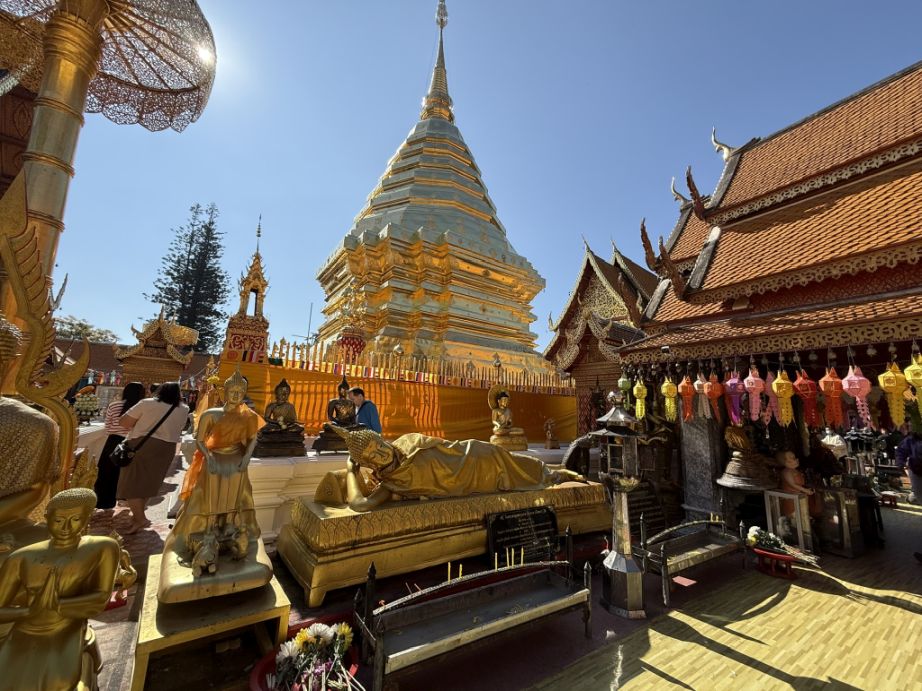
The reclining Buddha adds another layer of meaning. This posture represents the Buddha’s final moments before entering Parinirvana, the state beyond the cycle of rebirth. It’s not a sad image, but rather one of peace and completion, reminding visitors of impermanence and spiritual fulfillment.
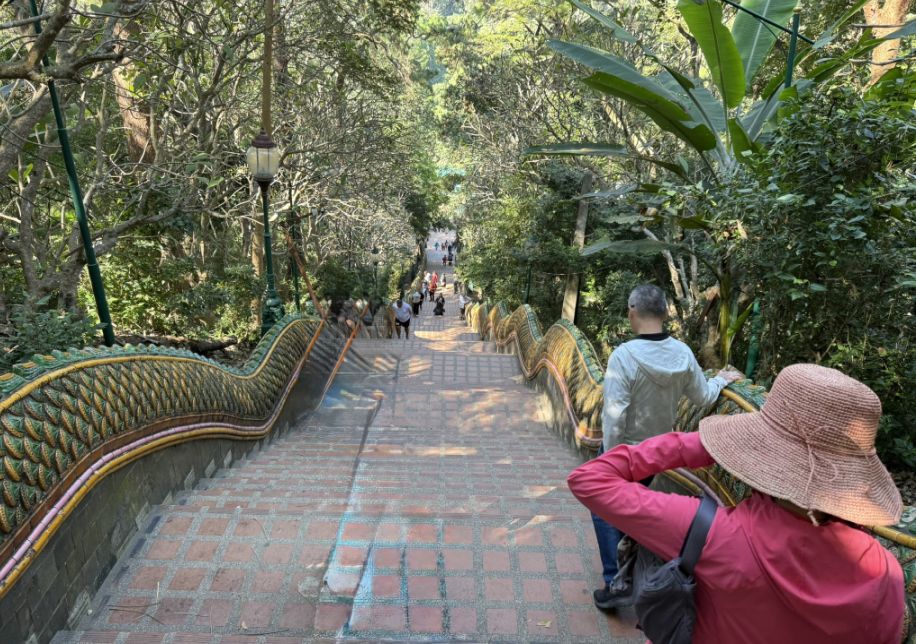
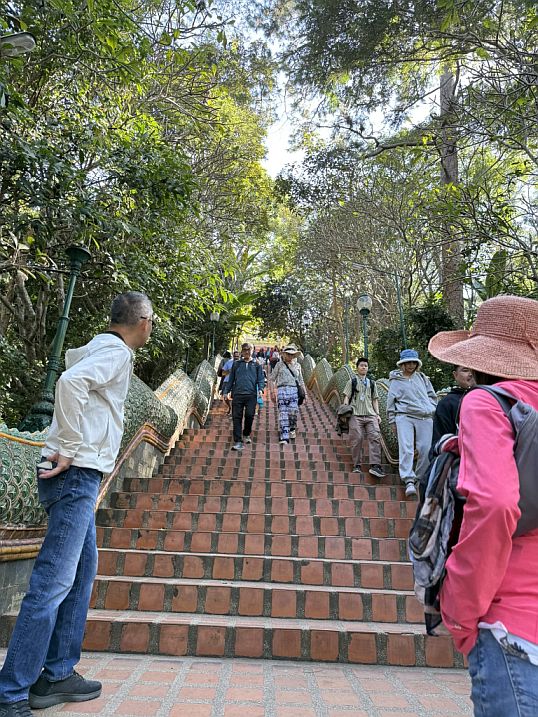
And then, after taking it all in, we began the descent down those same beautiful naga-lined stairs.
 |
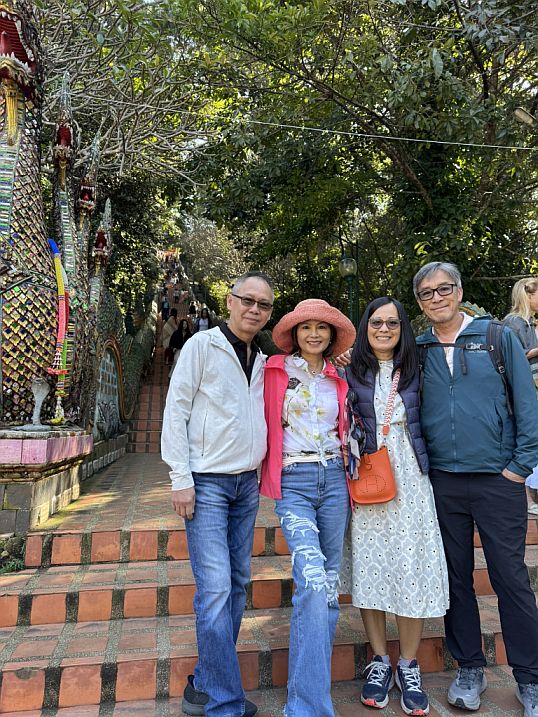 |
Walking down offers a different perspective, the sweeping bodies of the nagas guiding us back toward the world below, almost like a gentle return from a spiritual height.
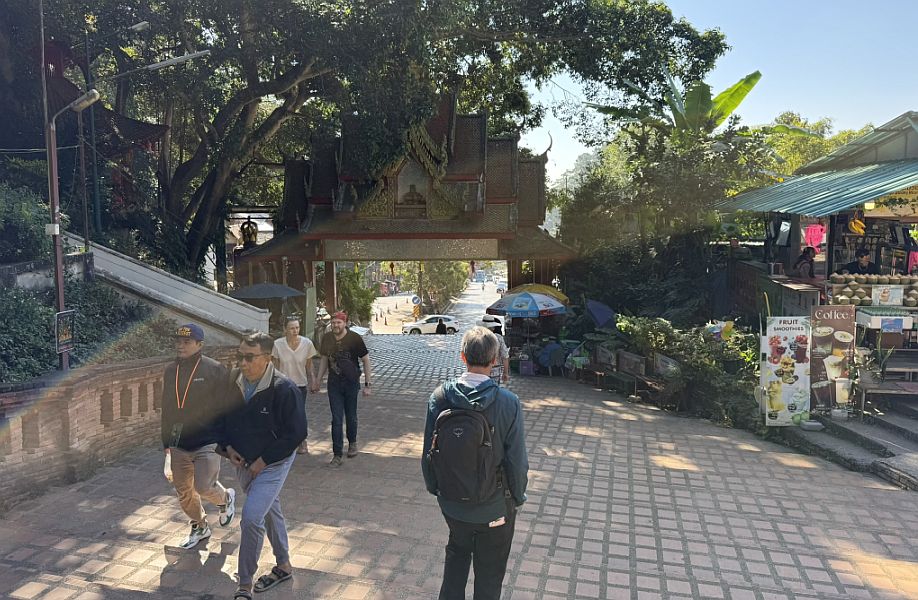
From there, we continue on to your next destination, Wat Pha Lat, leaving behind one of the most iconic and meaningful temples in northern Thailand.
NEXT... Day 8- Wat Pha Lat