12 days in Thailand 1/7- 1/18/2025
Day 7-Chiang Rai guided tour-1/13/2025
Wat Rong Suean Ten/Blue temple
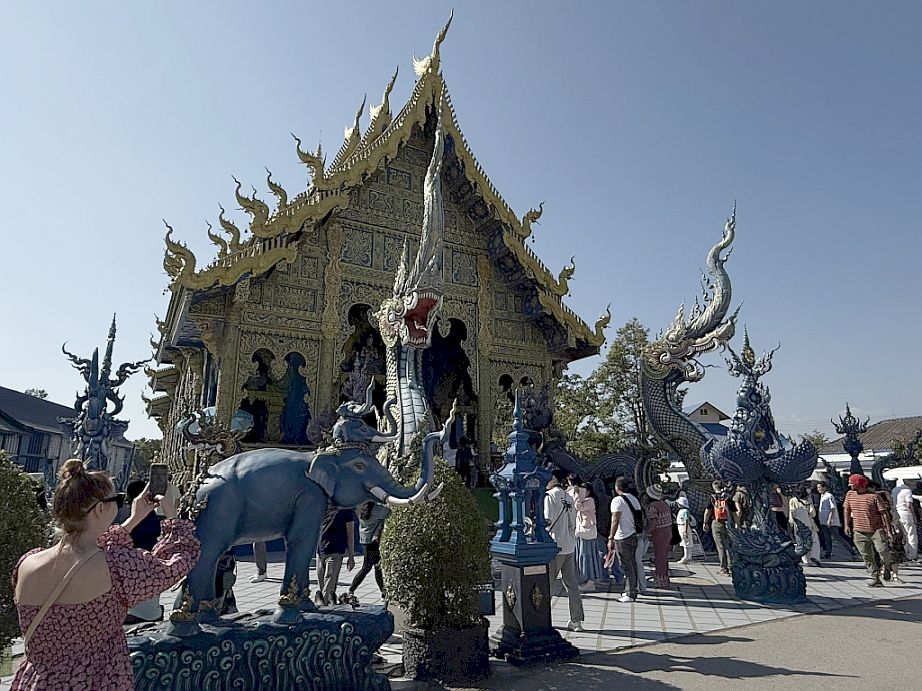
After leaving the White Temple, the short 20-minute drive brought us to one of Chiang Rai’s most striking modern landmarks, Wat Rong Suea Ten, commonly known as the Blue Temple.
Unlike many ancient Thai temples, this one is relatively new. It was completed in 2016 and designed by local artist Putha Kabkaew, a student of Chalermchai Kositpipat, the visionary behind the White Temple. Interestingly, the site itself has older roots, there was once an abandoned temple here, and the name “Rong Suea Ten” means “House of the Dancing Tiger,” referring to wild tigers that were said to roam this area in the past. The temple’s deep sapphire blue color is what immediately sets it apart. In Thai symbolism, blue represents the Dharma, the teachings of the Buddha, and wisdom, as well as the vastness of the universe. The gold accents layered over the blue create a powerful contrast, symbolizing the material world illuminated by spiritual truth. That’s why at the entrance the golden facade against the rich blue background meant to evoke a sense of entering a sacred, cosmic space.
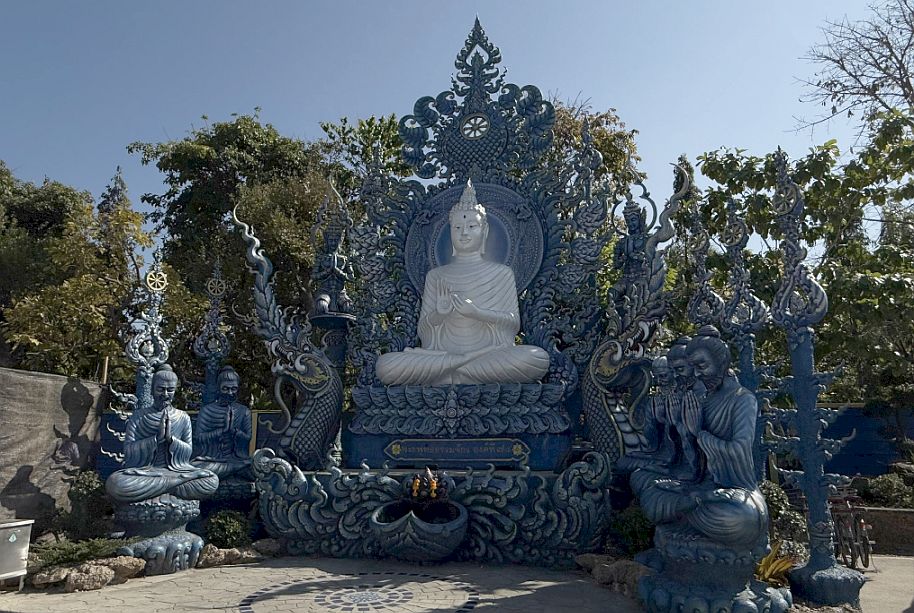
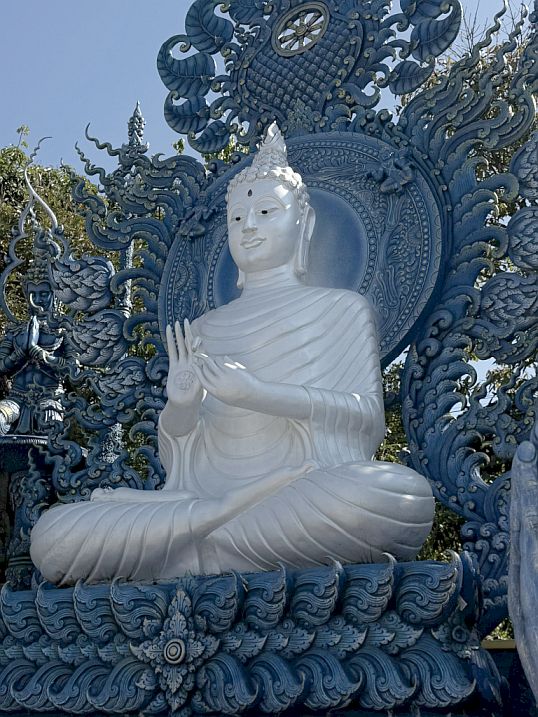
Across from the main hall, the serene white Buddha seated on a blue lotus is especially symbolic. The white color represents purity and enlightenment, while the lotus growing from muddy water yet blooming beautifully, symbolizes spiritual awakening rising above worldly suffering. The blue lotus specifically is often associated with wisdom and knowledge. Surrounding the Buddha are nagas again, reinforcing protection and divine energy.
 |
 |
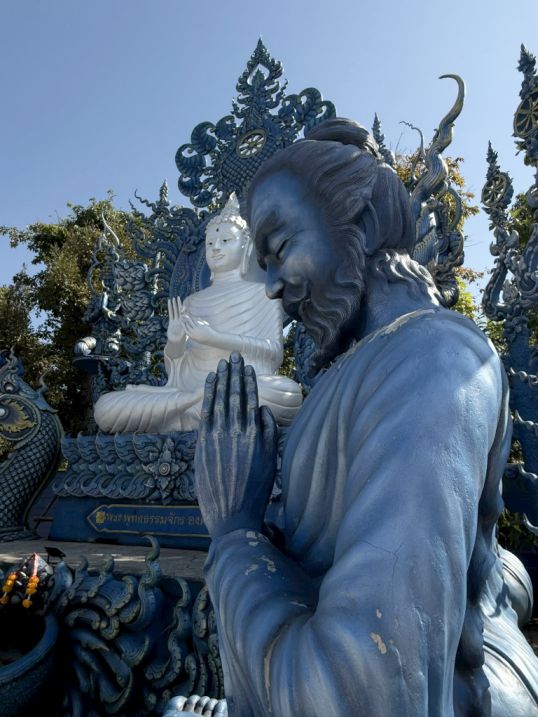
The many statues of figures kneeling or praying around the Buddha represent devotees, both earthly and celestial. They symbolize reverence, humility, and the universal act of seeking enlightenment. In a broader sense, they invite visitors to see themselves among those figures, reminding you that the path to wisdom and inner peace is open to everyone.
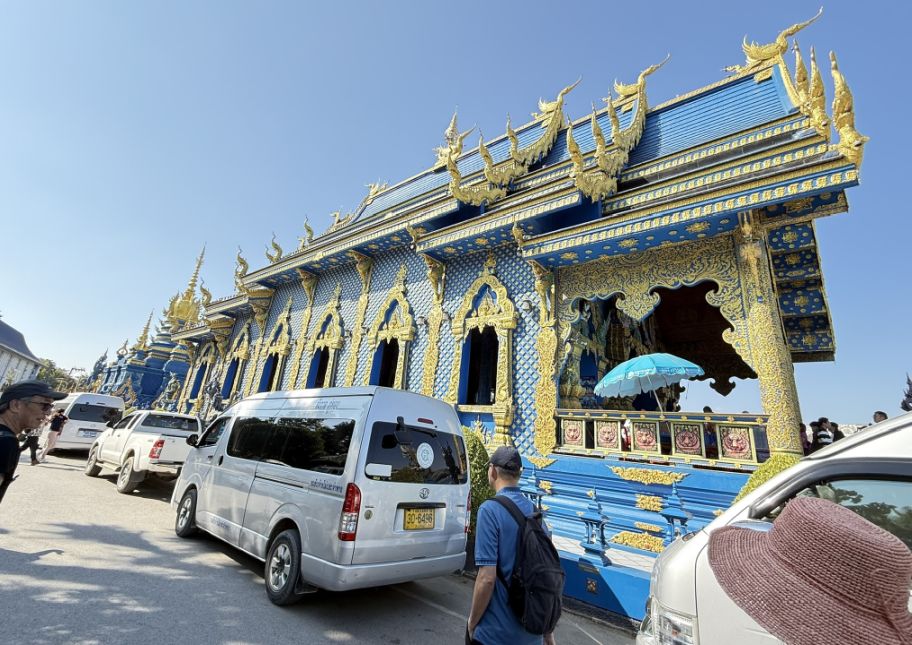
As we walked along the side alley of Wat Rong Suea Ten, we are moving through what is essentially the outer compound of the temple, sometimes referred to as the monastery grounds or the perimeter of the viharn (main assembly hall). There is a collection of architectural elements that support and complement the main hall.
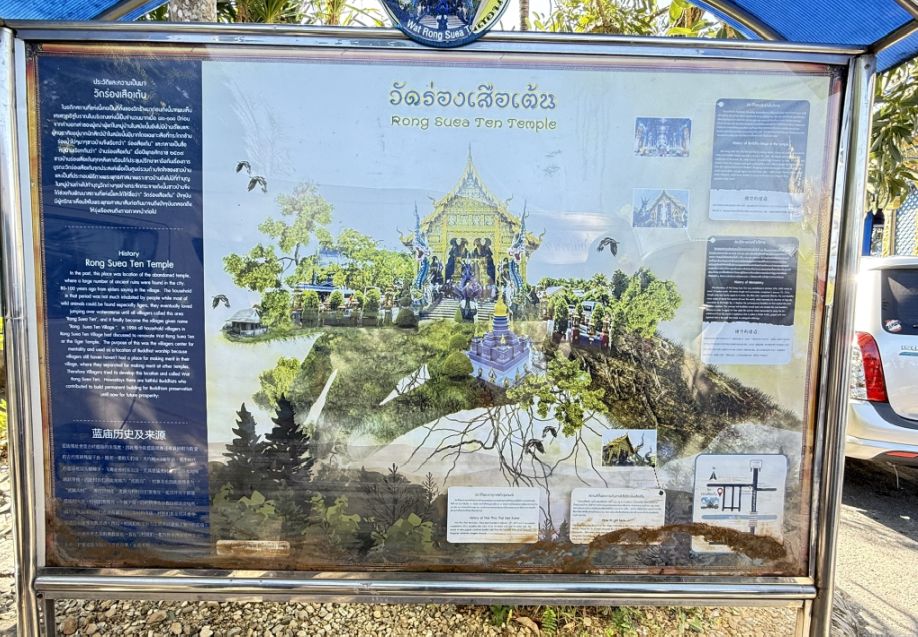
A panel telling the story of the Blue Temple.
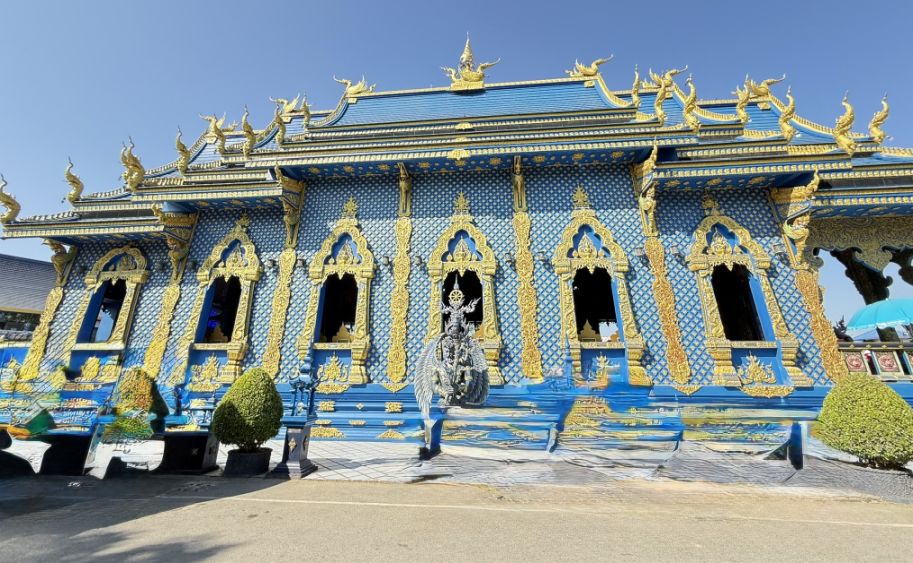
The exterior of the main Hall. The blue roofline edged with gold and adorned with what look like nagas, is a classic example of Thai temple roof ornamentation. Those sweeping, flame-like finials at the ends are often stylized naga heads or chofah, symbolizing celestial beings reaching toward the sky. The row of windows framed in gold along the blue walls isn’t just decorative, it reflects a traditional Thai design where windows are richly bordered to signify that what lies inside is sacred. The repetition of gold against blue creates a rhythmic, almost regal feeling as you walk past.
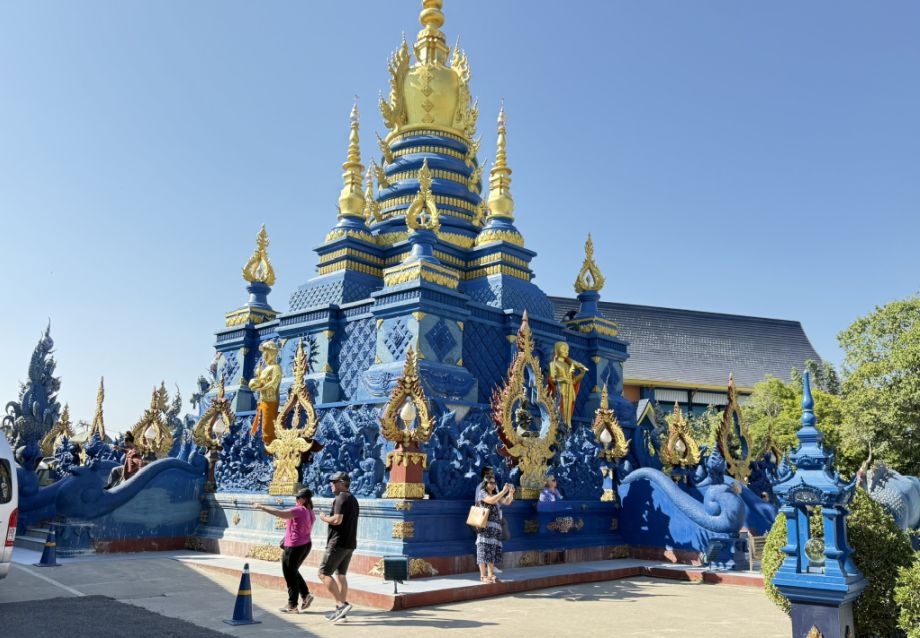
Further along, a stupa (or chedi) with a blue base and golden top is deeply symbolic. In Thai Buddhism, a chedi is a reliquary monument, often built to house sacred relics of the Gautama Buddha or to commemorate important teachings. Even when they don’t contain relics, they serve as powerful symbols of enlightenment.
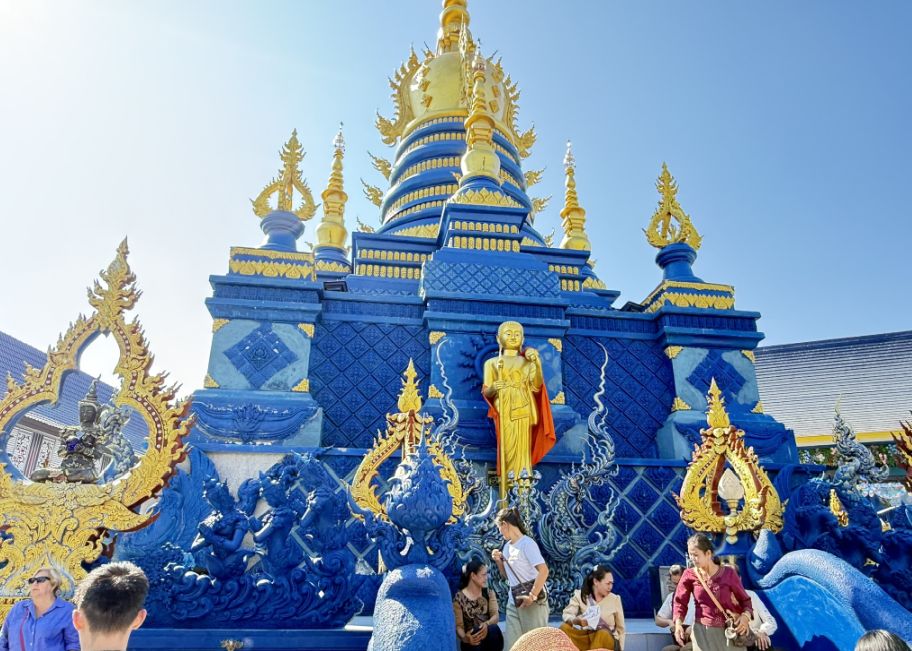
The square base represents the earthly realm, the human world grounded in form and structure. As the structure rises, it typically transitions into a more rounded or spired golden top, representing the heavens and ultimately nirvana, the state beyond suffering. The gold here signifies purity, enlightenment, and the ultimate truth.
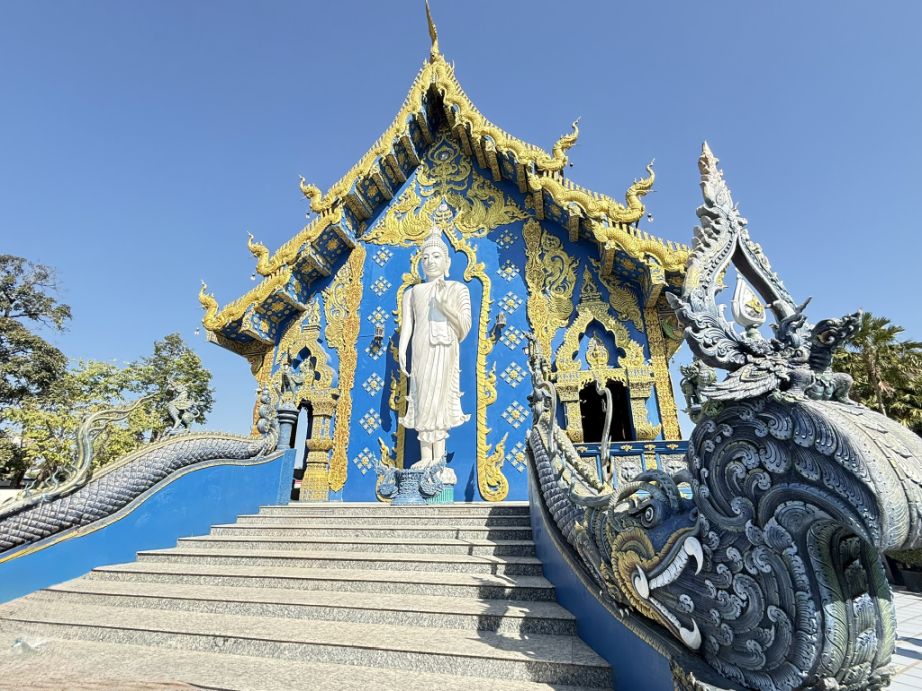
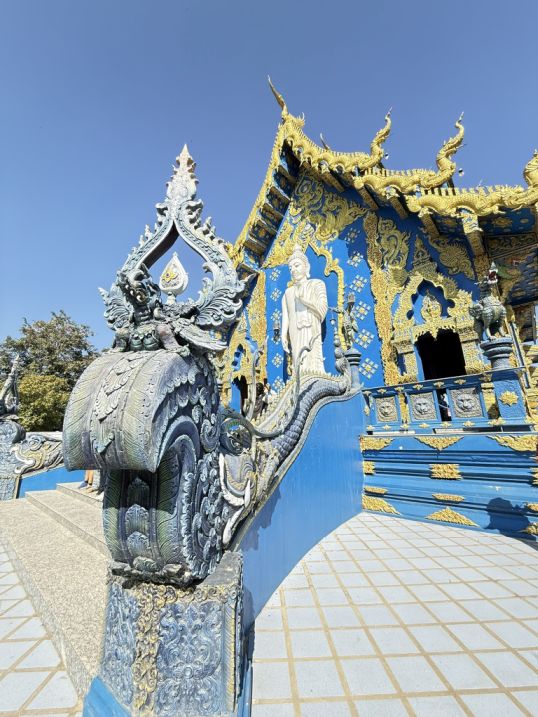
At the far end, the large standing white Buddha creates a striking focal point.
 |
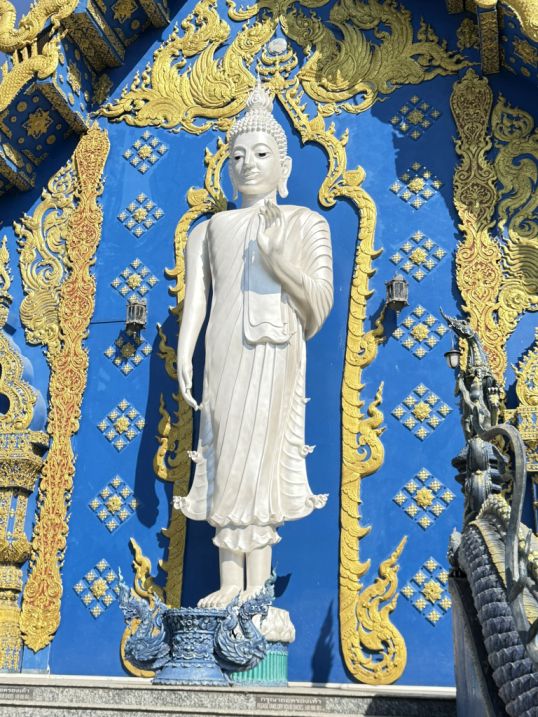 |
Unlike the seated Buddha, a standing Buddha often represents active compassion, reaching out to help others, offering reassurance, or teaching. The white color again emphasizes purity and transcendence. Positioned at the end of the walk, it almost feels intentional, as if you’re being led through layers of symbolism and architecture, culminating in this calm, watchful presence.
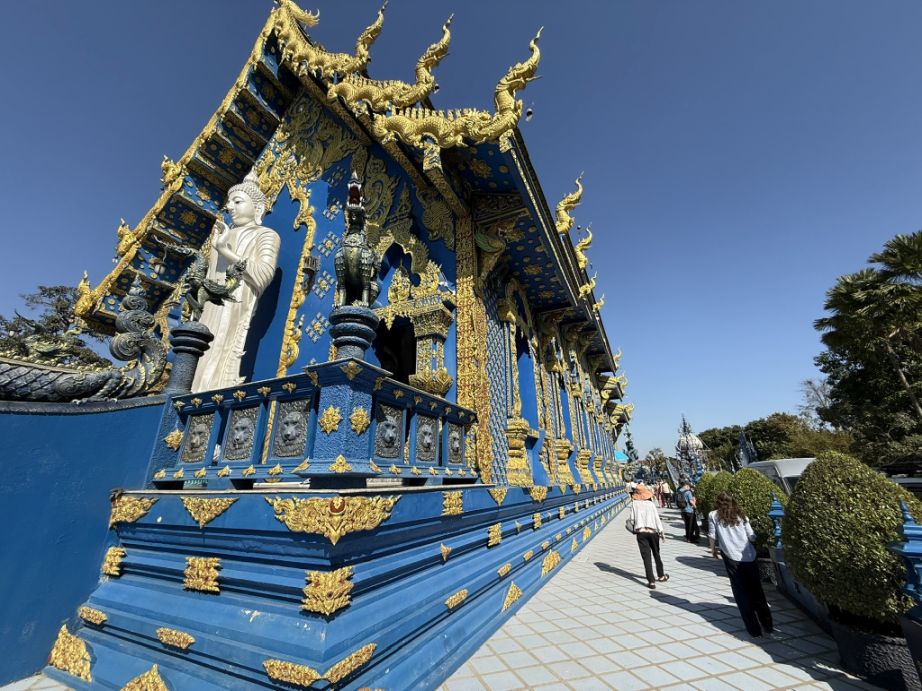
Altogether, this side path gives you a quieter, more reflective experience of the temple. Away from the main entrance, you get to notice how every detail, from rooflines to stupas to statues that works together to tell a story about the journey from the earthly world toward enlightenment.
 |
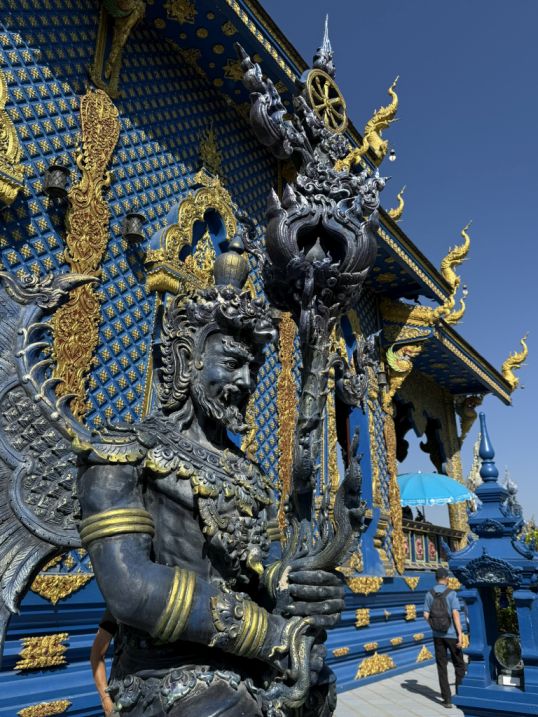 |
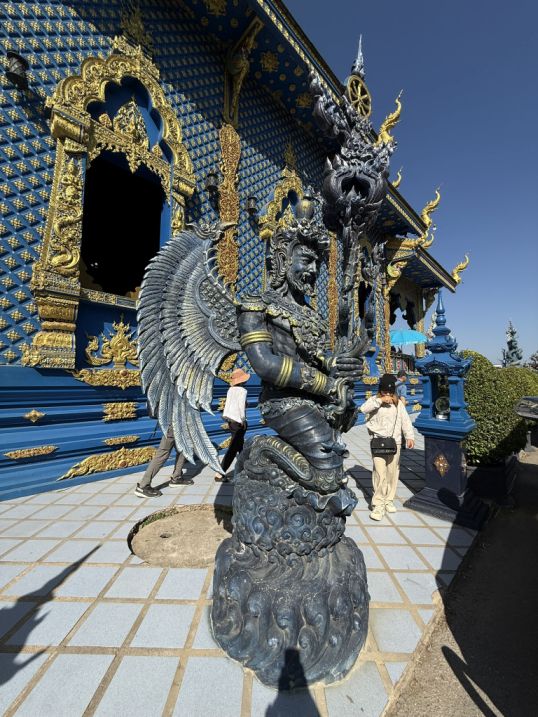
Placed along a quieter path, black statue of a winged being, which stands out strongly against the temple’s blue and gold palette. These figures are often inspired by creatures from Buddhist and Hindu mythology. A winged statue could represent a Garuda-like being. The Garuda is a powerful, eagle-like creature associated with strength, protection, and the triumph of good over evil. In Thai culture, Garuda is also a royal symbol, representing authority and divine power. When placed in temple grounds, such figures act as protectors of the sacred space.
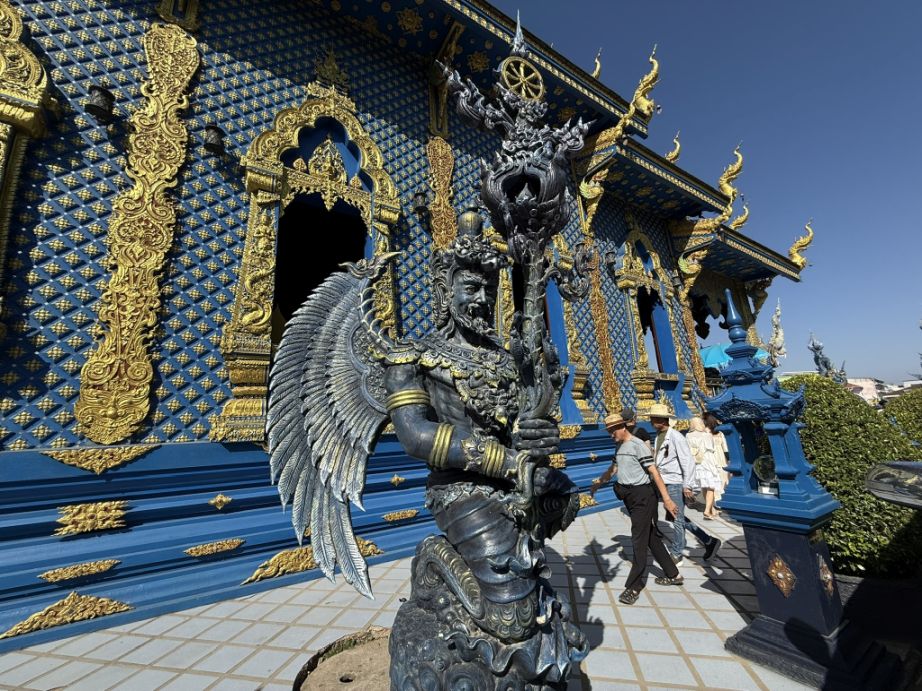
The fact that it is black is also meaningful. While gold represents enlightenment and purity, darker colors like black or deep tones can symbolize mystery, protection, and the unseen forces of the spiritual world. A black winged guardian can represent a more fierce, protective energy, warding off negative influences or evil spirits before they enter the sacred area.
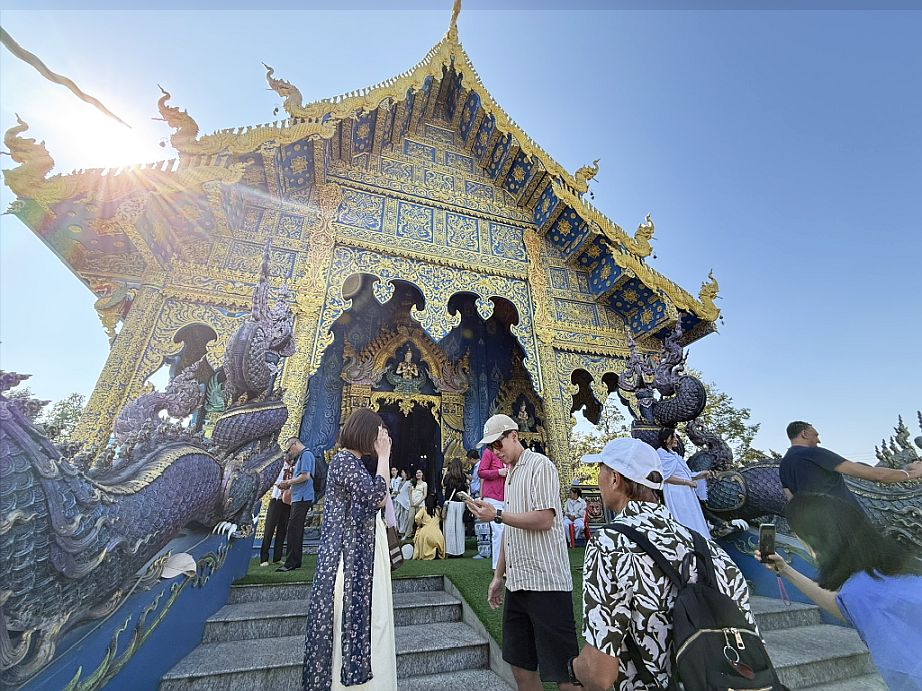
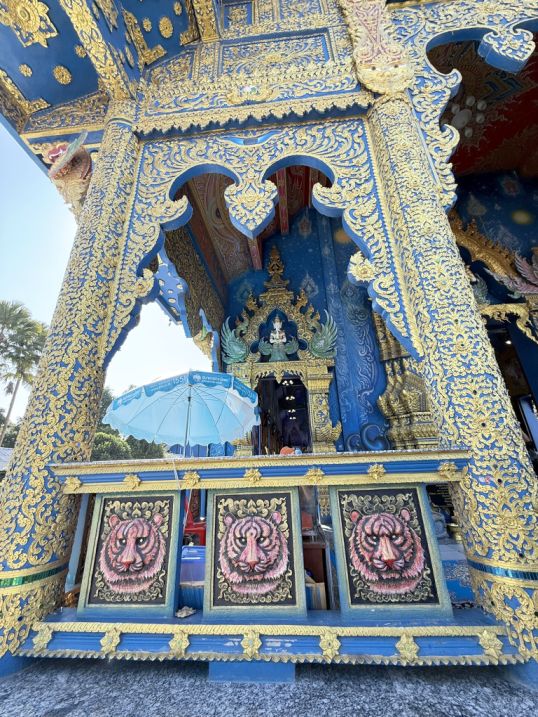
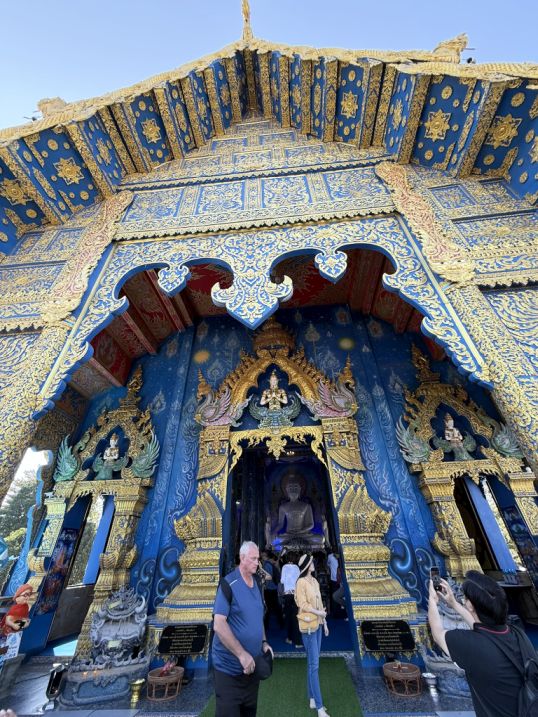
As we approached the main hall of Wat Rong Suea Ten, the entrance feels almost theatrical. The facade is richly layered in gold, set against that deep, electric blue, every surface covered in intricate, flame-like patterns that seem to move as the light hits them.
 |
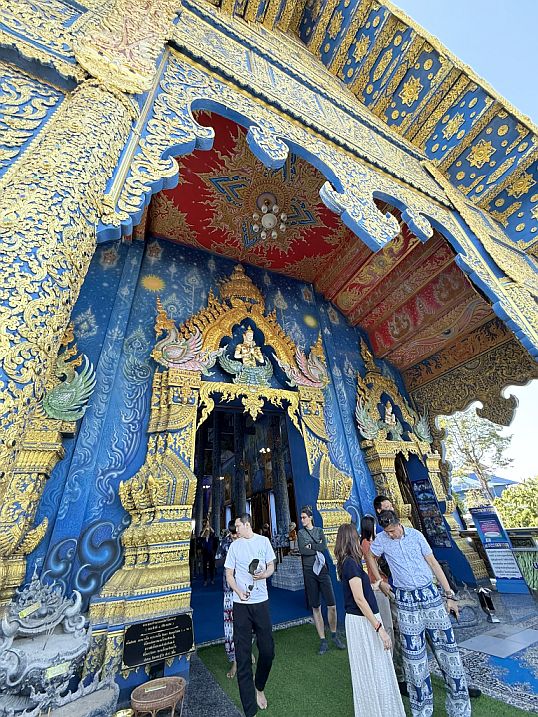 |
The gold isn’t just decoration, it symbolizes the radiance of the Buddha’s teachings cutting through ignorance. The carvings around the doorway are dense and flowing, almost like waves or living energy, drawing your eyes inward toward the entrance.
 |
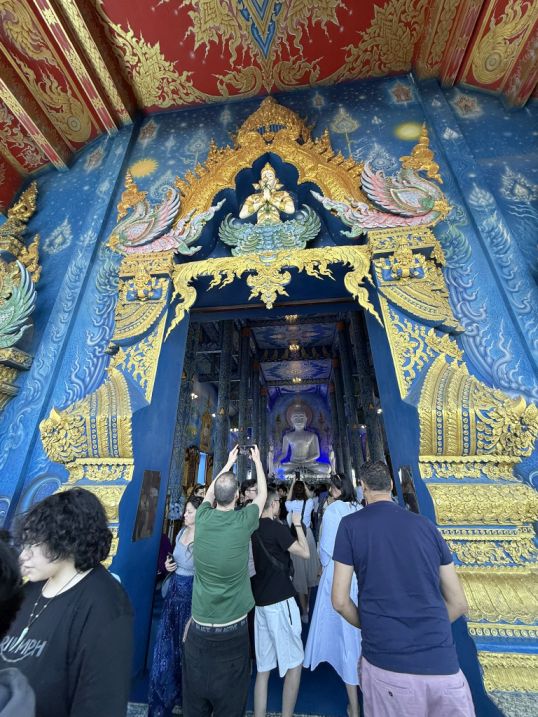 |
Entering the Main Hall.
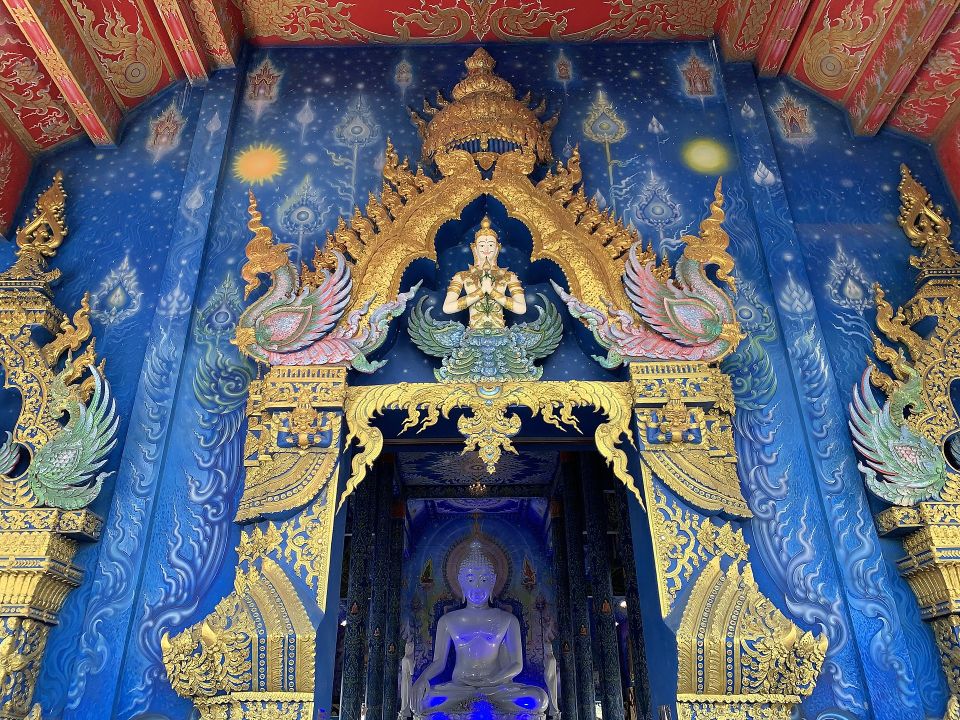
Right above or at the doorway, the Buddha figure with his hand raised is especially meaningful. This gesture is known as the Abhaya Mudra, a sign of protection, reassurance, and fearlessness. It’s as if the Buddha is blessing everyone who enters, calming your mind before stepping into the sacred space. It also marks the transition from the outside world into a place of reflection and spiritual focus.
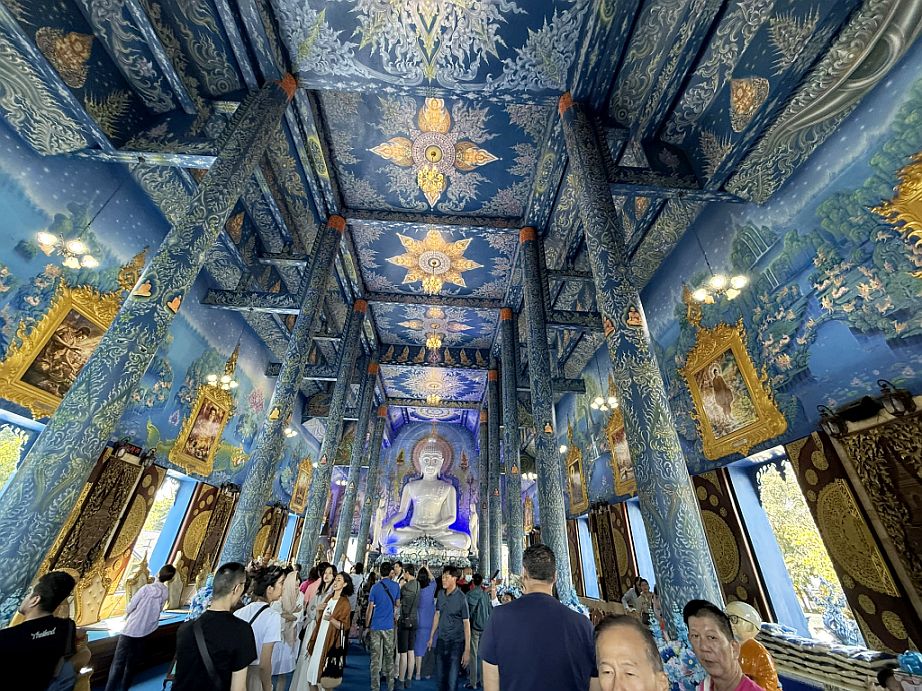
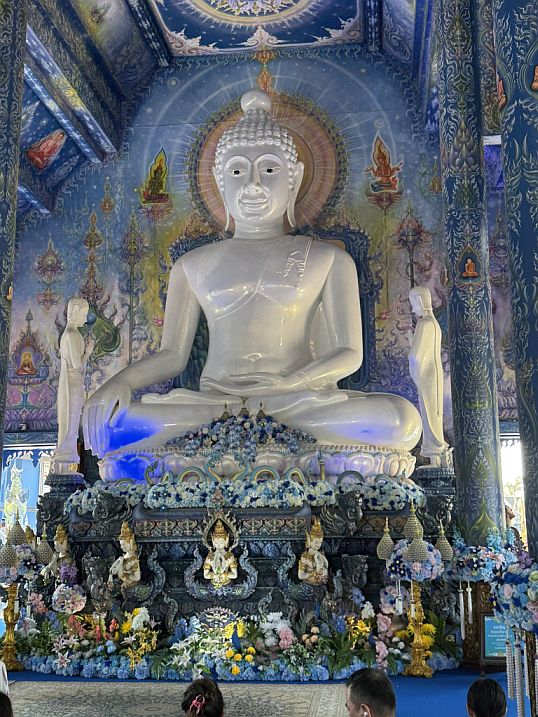
As we crossed the threshold and look inside, the attention is immediately pulled forward to the giant white Buddha seated at the center.
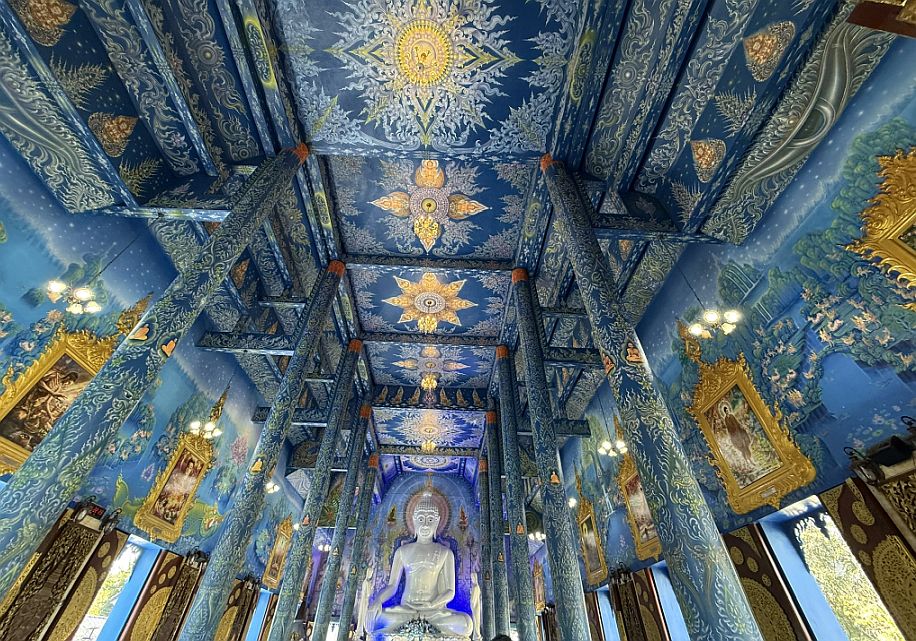
The contrast is striking, the interior is saturated in deep blue tones, with swirling, almost cosmic murals covering the walls, while the Buddha statue is pure white, glowing and serene.
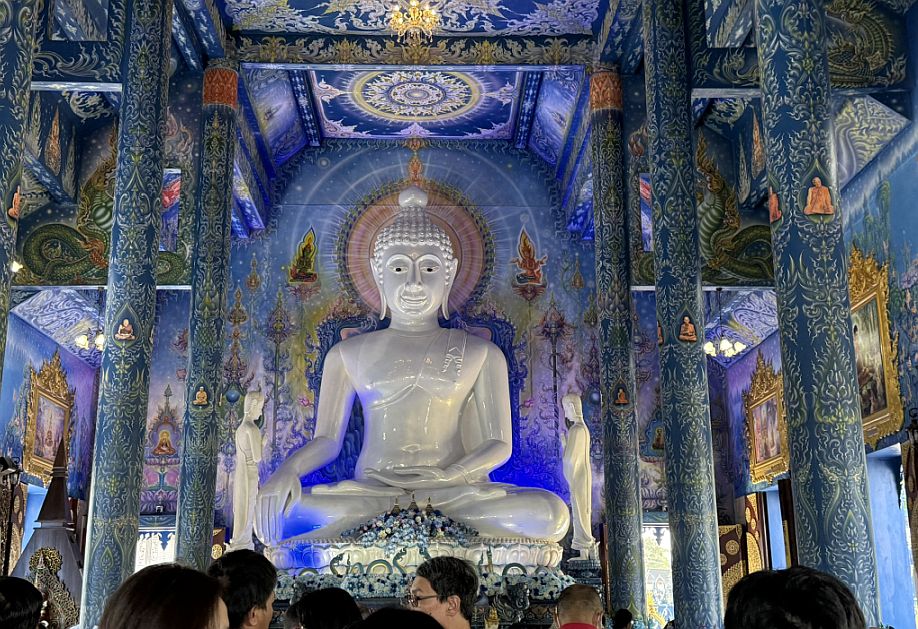
This visual contrast is intentional: the white Buddha represents purity, enlightenment, and ultimate truth, standing calm and still within the vast, complex universe symbolized by the blue surroundings.
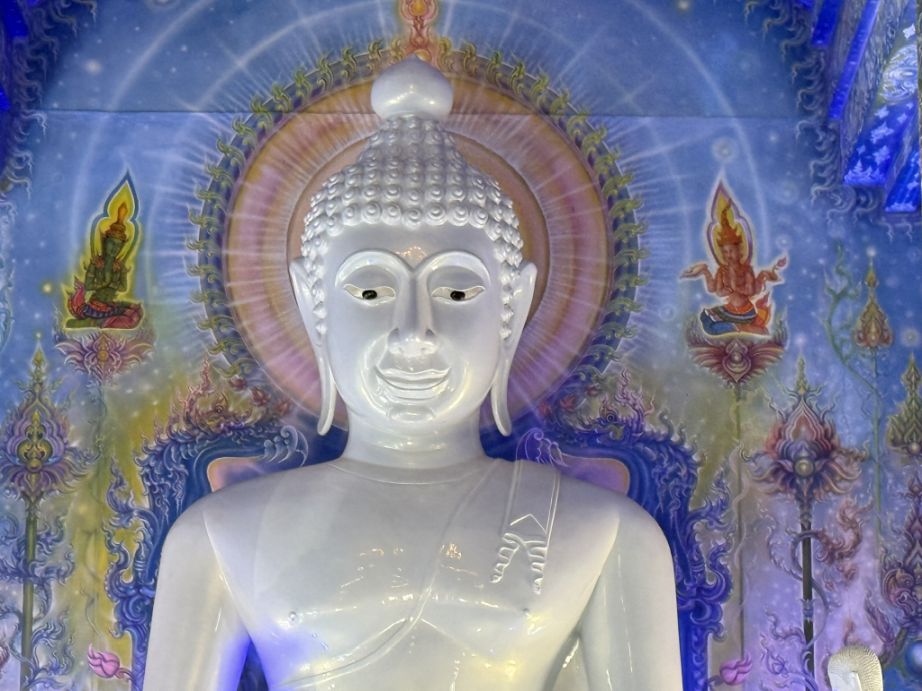
Close look at the Buddha.
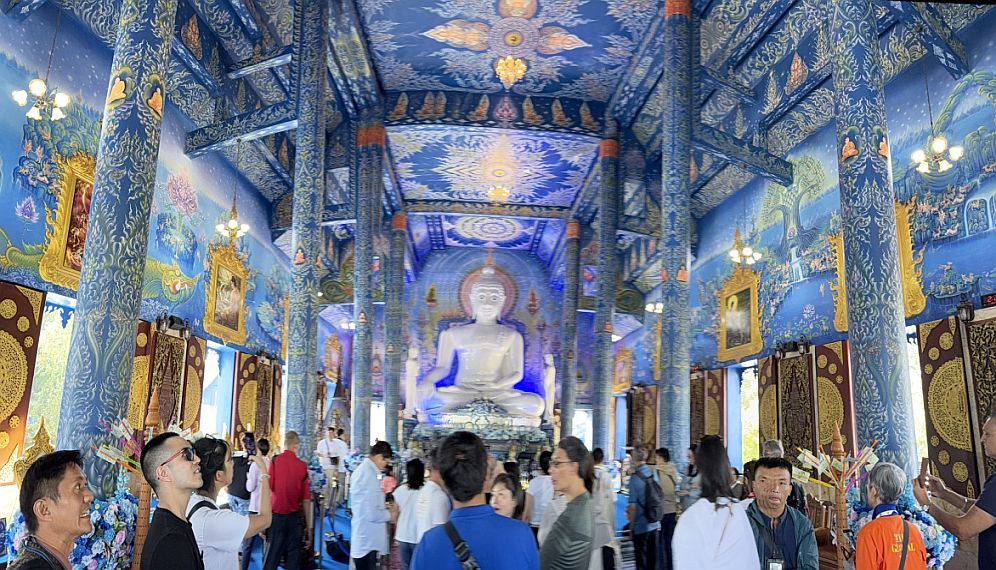
Panoramic view of the Main Hall.
 |
 |
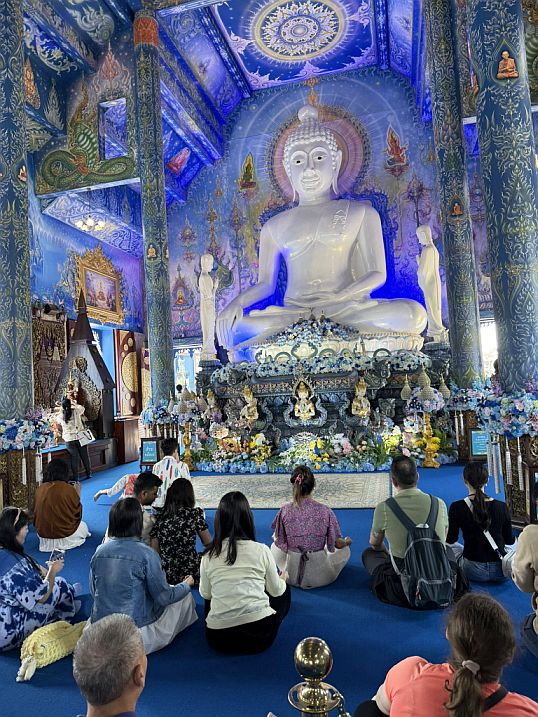
Visitors and locals sitting on the floor and praying to Buddha.
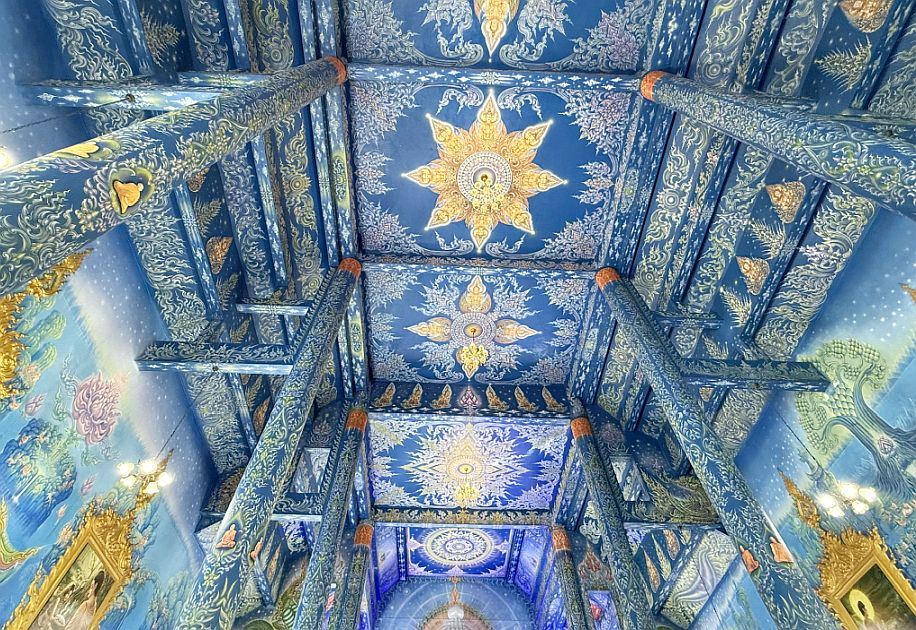
The murals inside are more contemporary than in traditional temples. Instead of strictly classical scenes, they feel fluid and dreamlike, filled with mythological figures, celestial beings, and symbolic imagery. It creates the sensation that you’re not just inside a building, but a spiritual realm, almost like being immersed in the mind of enlightenment itself.
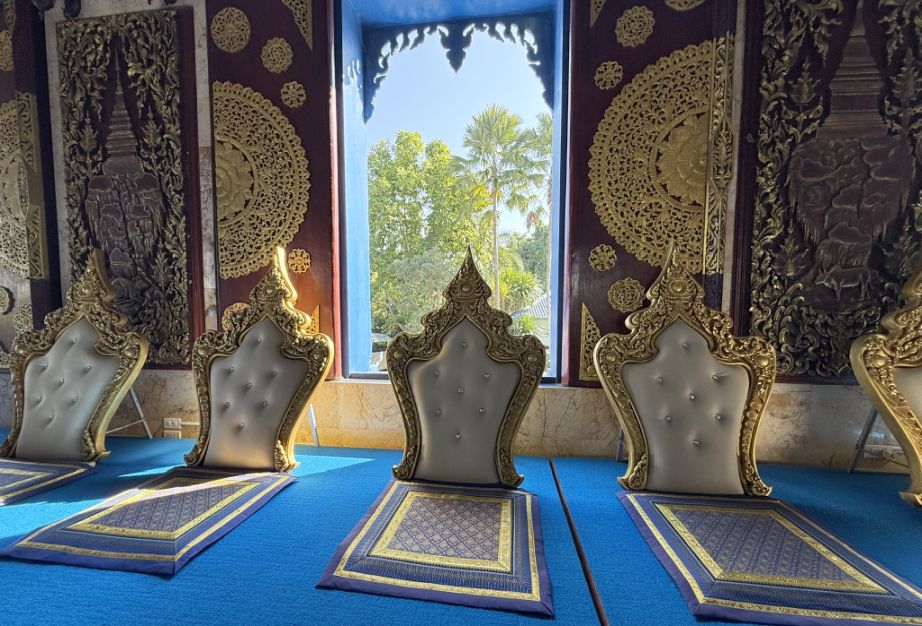
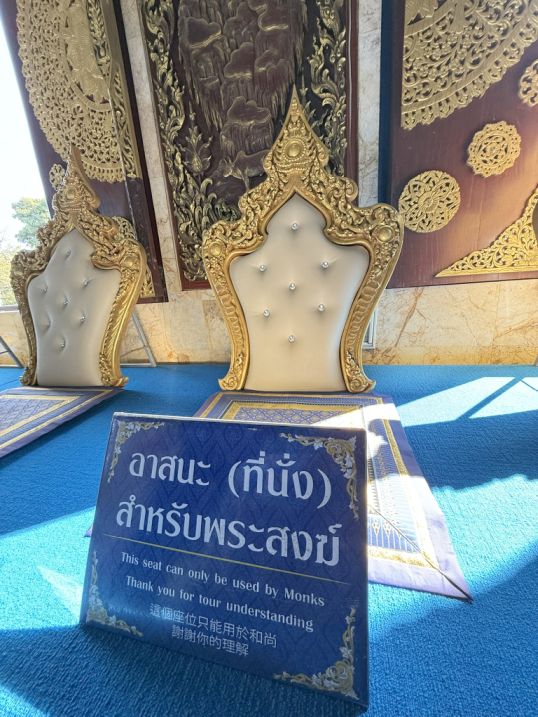
On the floor, there are designated seating areas, often marked or slightly elevated, reserved for monks.
 |
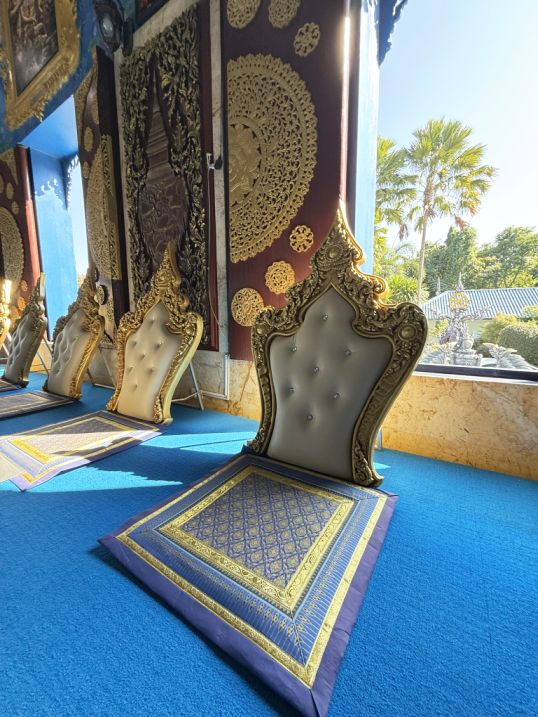 |
In Thai Buddhist practice, monks hold a highly respected position, and there is a clear hierarchy in how space is used. These reserved seats are typically arranged to face the Buddha directly and are set apart from where lay visitors sit. When monks are present, they sit here during chanting, ceremonies, or teaching.
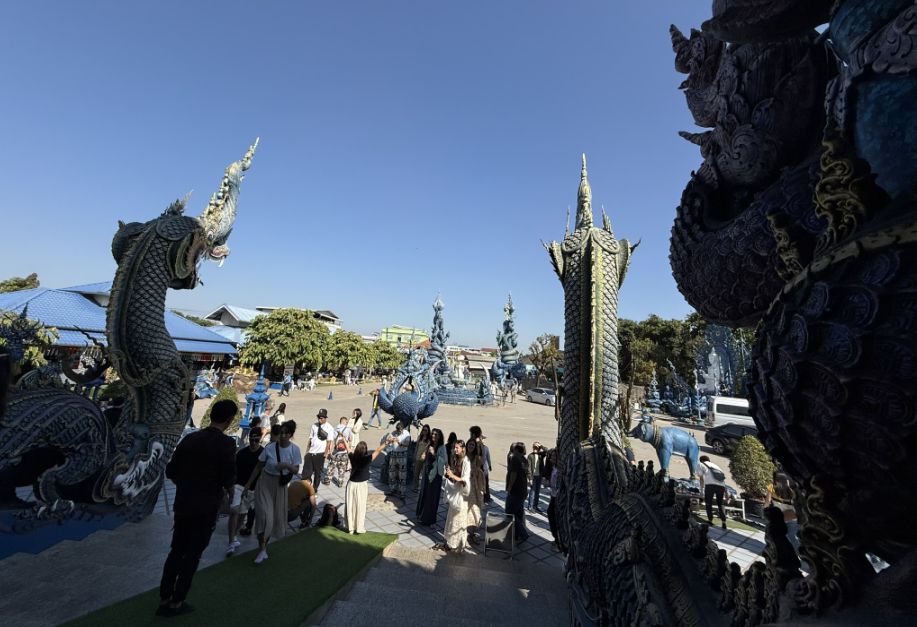
As we stepped out of the main hall our eyes are naturally drawn to the dramatic staircase guarded by the two massive naga sculptures. These serpentine beings aren’t just decorative, they are among the most important protectors in Buddhist temple design. Their scale and movement, bodies twisting along the railings create a sense of energy, as if they are alive and guiding your descent. In Buddhist mythology, nagas are said to have protected the Gautama Buddha during meditation, shielding him from storms. So here, they continue that role, guarding the teachings and everyone who enters or leaves.
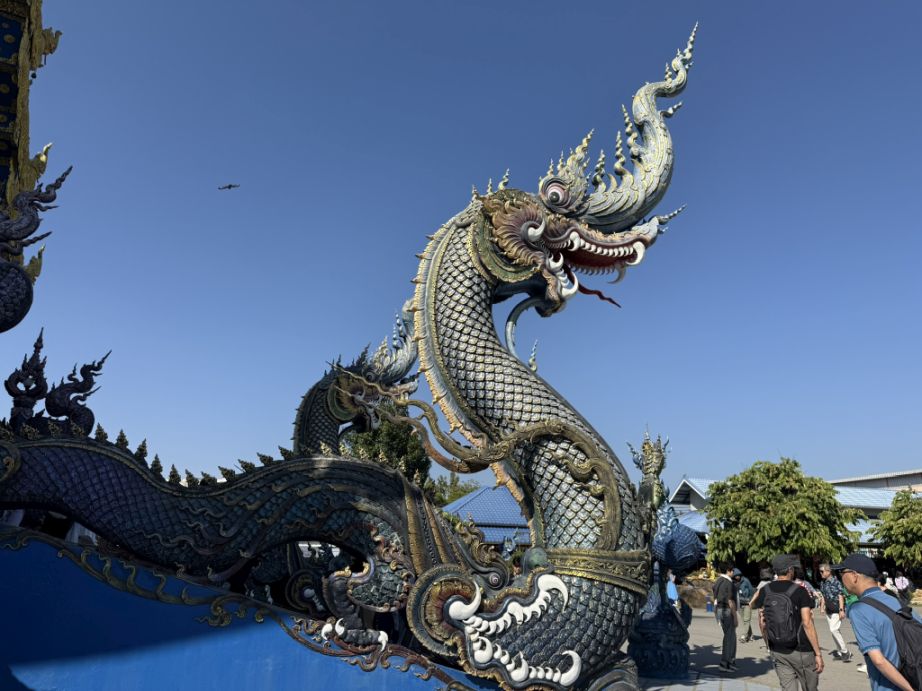
The nagas, with their long, undulating bodies and fierce multi-headed forms, symbolize guardianship, water, and the threshold between worlds. Positioned along the stairs, they represent the passage between the earthly realm below and the sacred space you’ve just experienced inside. Walking between them is almost like retracing your steps from the spiritual world back into everyday life.
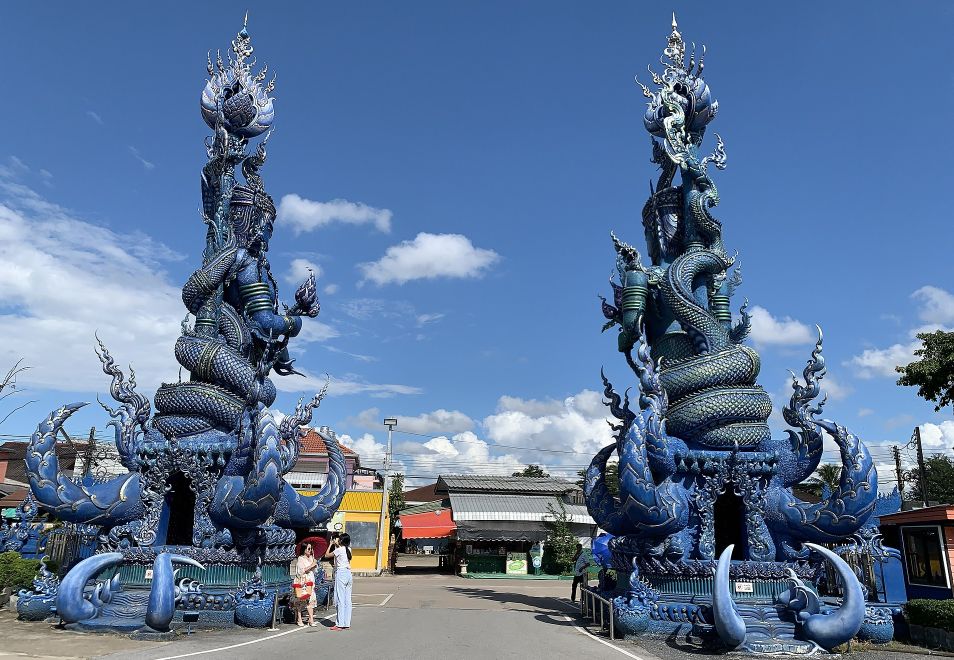
Looking out toward the parking area, a large blue gate framed with more twisting nagas and mythical figures acts almost like a ceremonial boundary of the temple grounds. It’s not just an entrance or exit, it’s symbolic of a cosmic gateway. The intertwining naga forms suggest fluidity and transformation, while the other mythical beings, often a mix of celestial guardians and stylized creatures—represent the many forces of the Buddhist universe, both protective and watchful.
The deep blue color ties everything together again, reinforcing the idea of wisdom and the infinite, while the gold highlights pick out divine elements within that vastness. Architecturally and symbolically, this gate serves as a final reminder of the journey we have just taken, from the outer world, into a sacred, almost otherworldly interior, and now back out again.
Altogether, that last view, with the nagas framing the stairs and the elaborate gate beyond feels intentional, like a closing scene. It leaves you with the sense that the temple isn’t just a place you visited, but a symbolic path you walked through, guided and protected at every step.
NEXT... Day 7- Baandam Museum