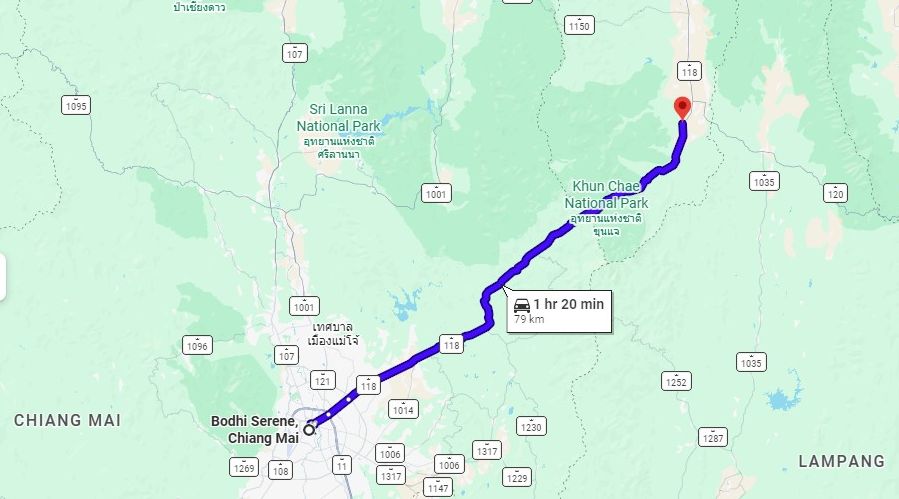
12 days in Thailand 1/7- 1/18/2025
Day 7-Chiang Rai guided tour-1/13/2025
Mae Kachan Hill Tribe and Long Neck Village
The next morning, we set off on an all-day journey to Chiang Rai, with our first stop is at the Mae Kachan Hill Tribe and Long Neck village that brings together several ethnic groups, including the Kayan (long-neck), Akha, and Lahu/Yao (Lu-Mien) communities.
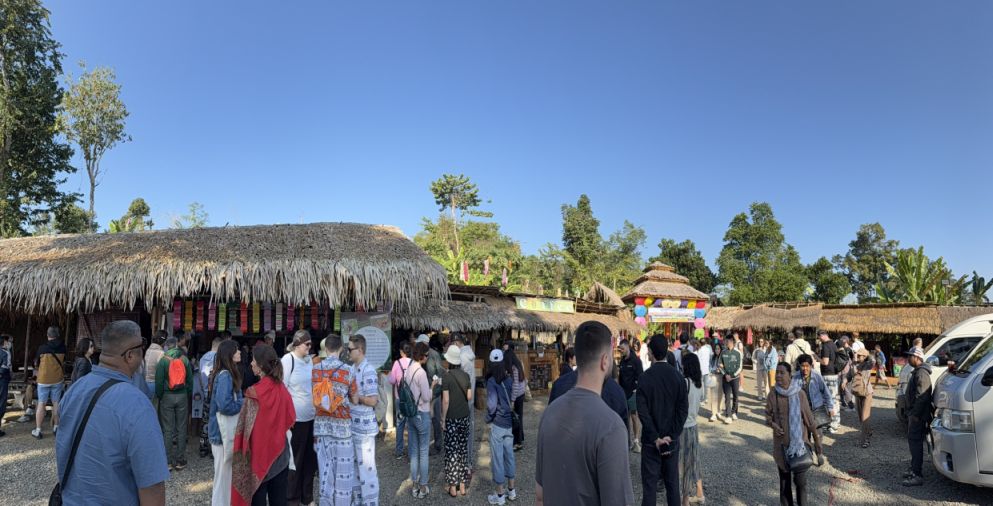
As our bus pulled up to the entrance, it felt less like a single village and more like a small cultural showcase with clusters of simple wooden huts connected by narrow pathways, with stalls lining the walkways.
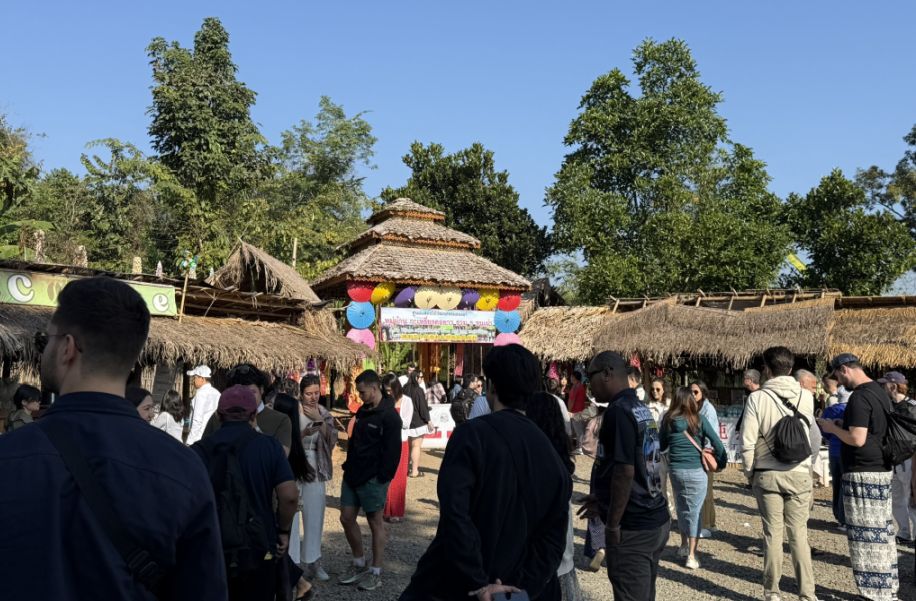
We are waiting for our tour guide to get us a ticket to get in the village.
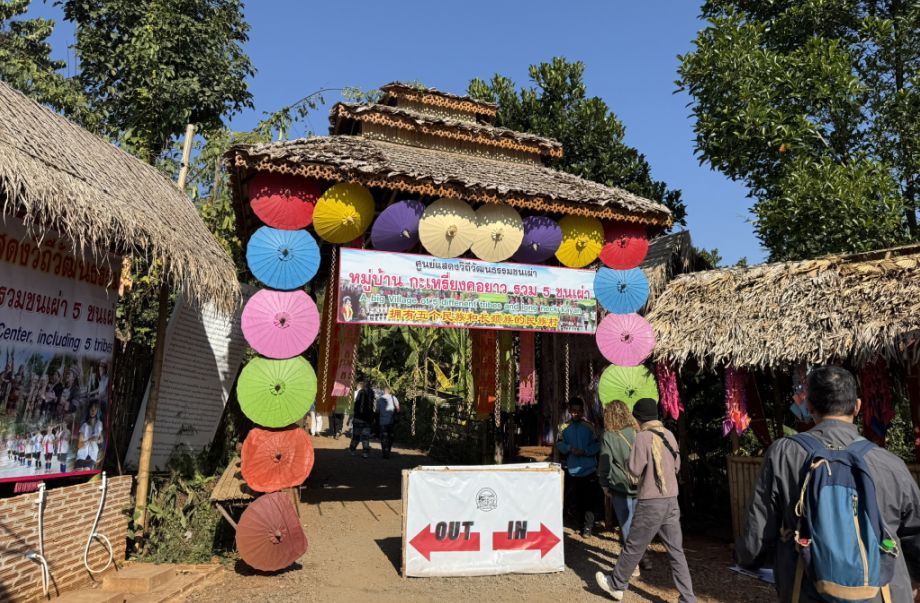
The entrance of the village.
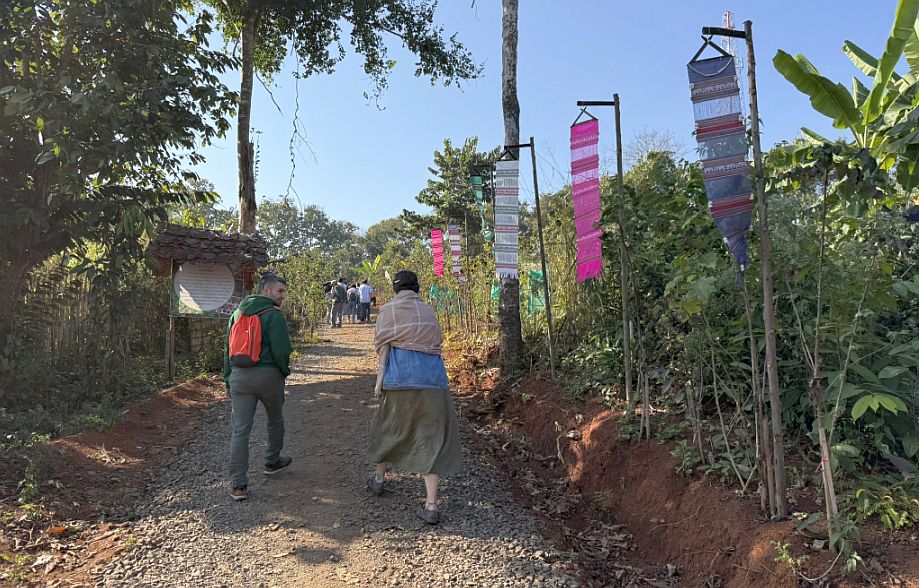
A dirt path leading to the village.
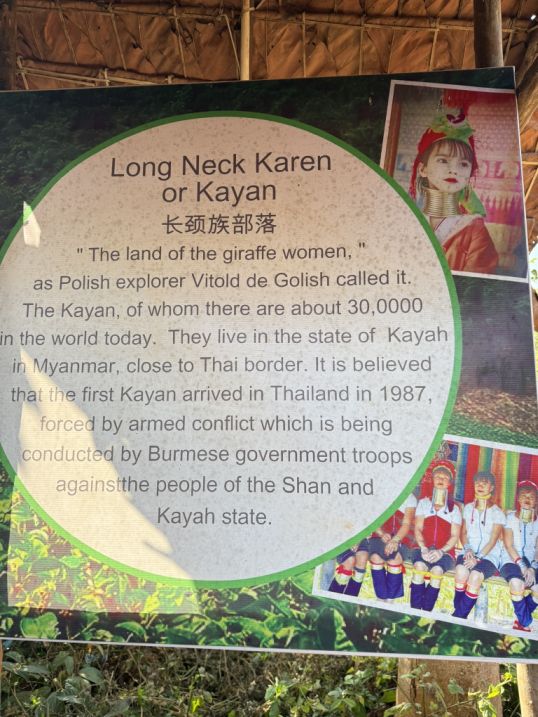 |
The Kayan people (long-neck) originally come from eastern Myanmar (Burma), particularly Kayah State. Due to conflict and political instability over the past several decades, many fled across the border into northern Thailand as refugees. The brass coils worn by Kayan women are a cultural tradition with debated origins, some say it symbolizes beauty and identity, while others believe it historically protected against tiger attacks or prevented women from being taken by rival tribes. Today, many Kayan communities in Thailand live in designated villages that are closely tied to tourism.
 |
 |
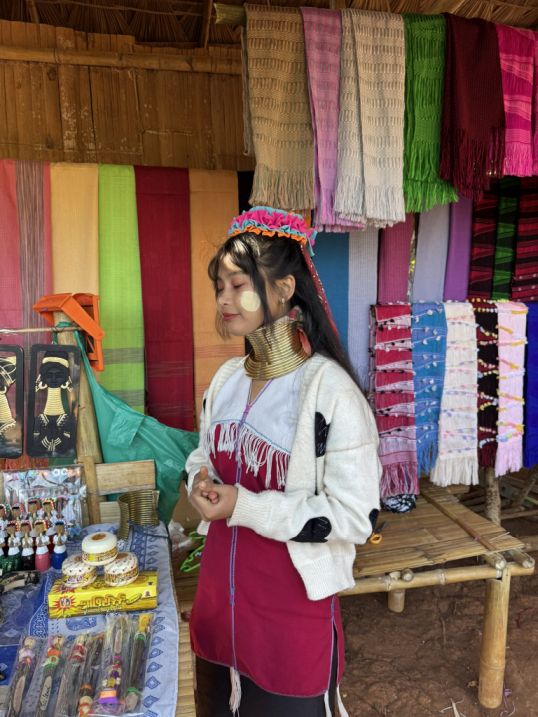
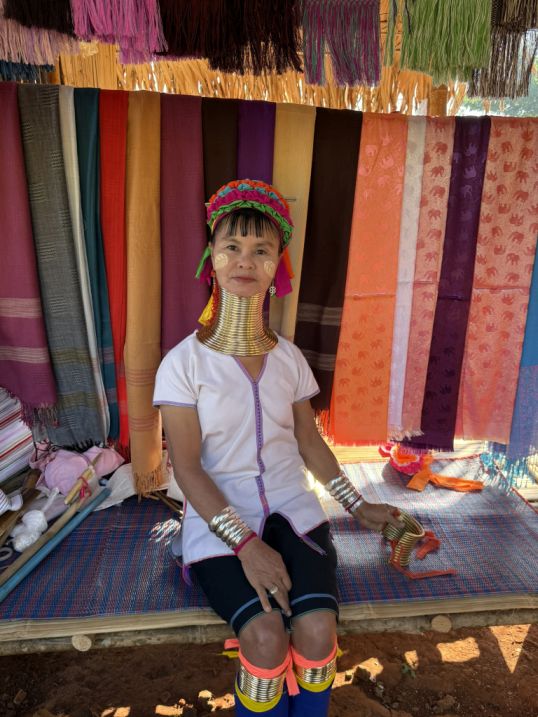
They wear a series of brass coils around their necks, which create the illusion of an elongated neck. In reality, the weight of the coils gradually pushes down the collarbone and compresses the rib cage over time, giving that distinctive appearance. Girls typically begin wearing their first coils at around five to seven years old, starting with just a few rings.
 |
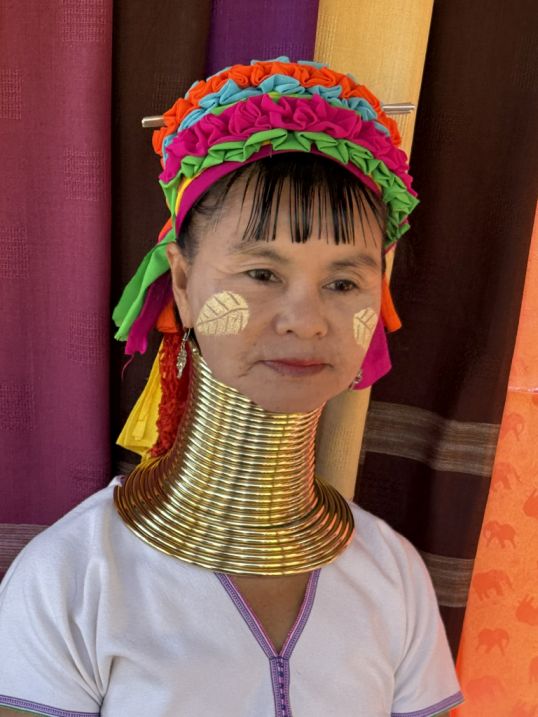 |
As they grow older, more coils are added, increasing both the height and weight. By adulthood, the coils can weigh several kilograms, and older women often wear the tallest stacks.
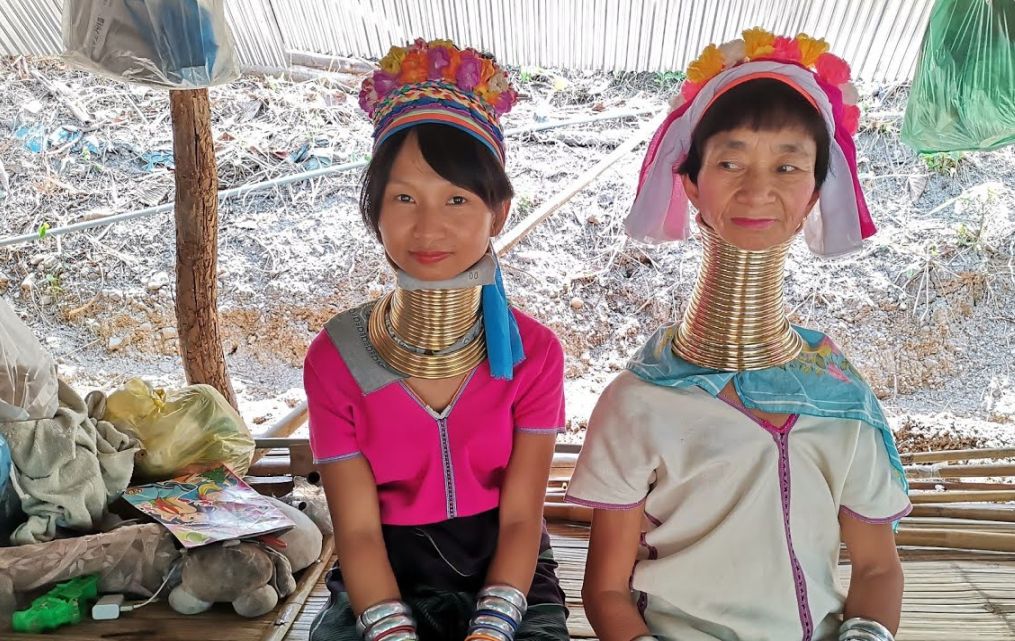
Here you can see the dramatic difference between generations. Beyond aesthetics, these coils are deeply tied to cultural identity and tradition, though today they are also closely linked to tourism.
 |
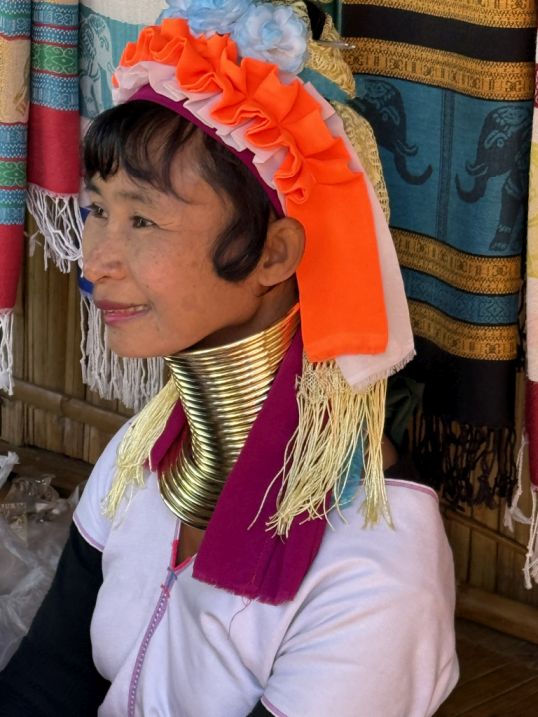 |
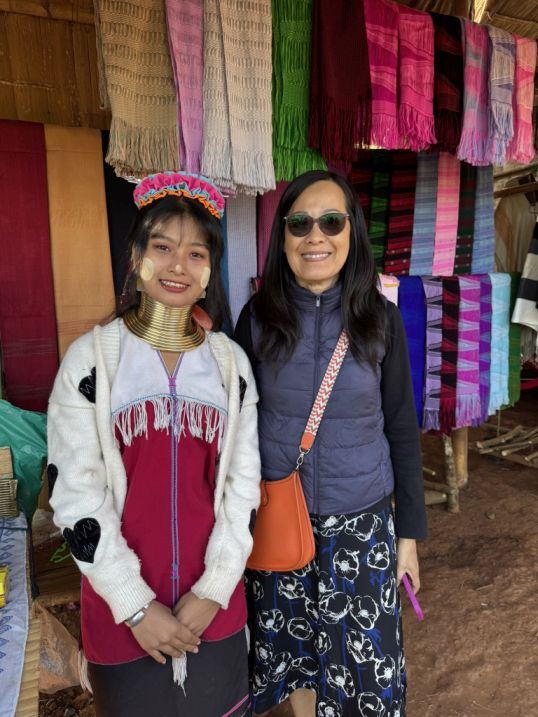
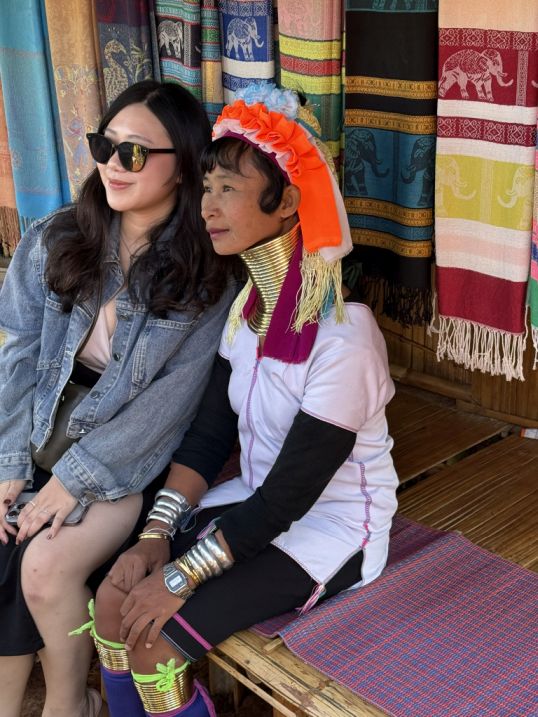
A lot of tourists are asking to take a picture with them, which they gladly oblige.
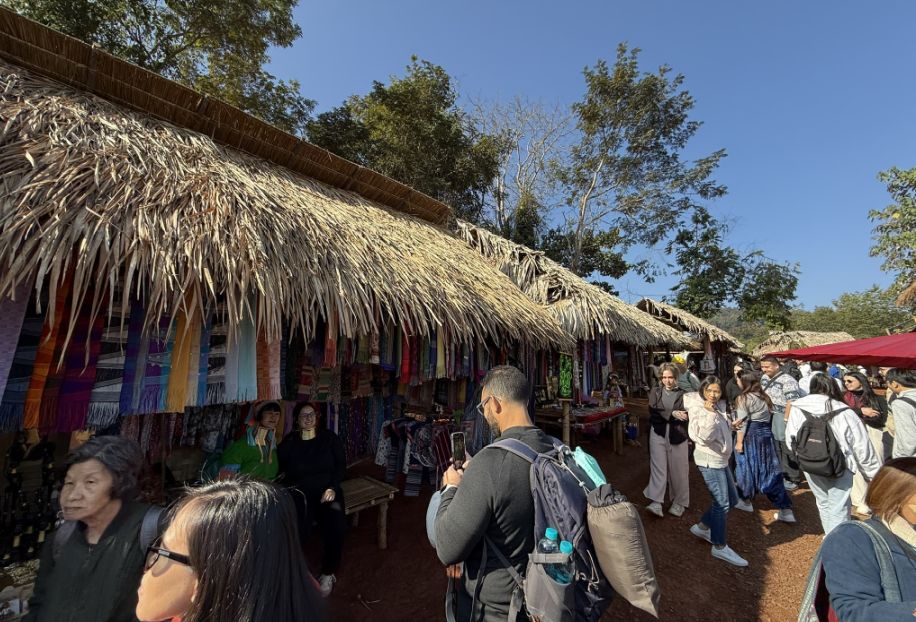
Inside the village, daily life and tourism blend together.
 |
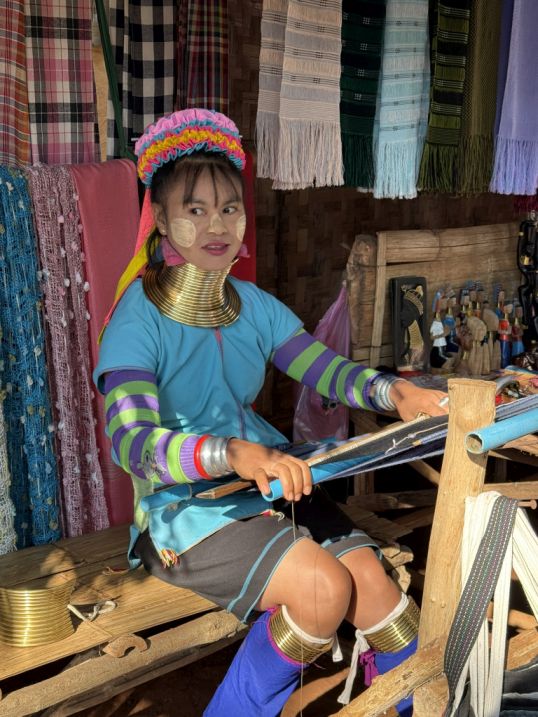 |
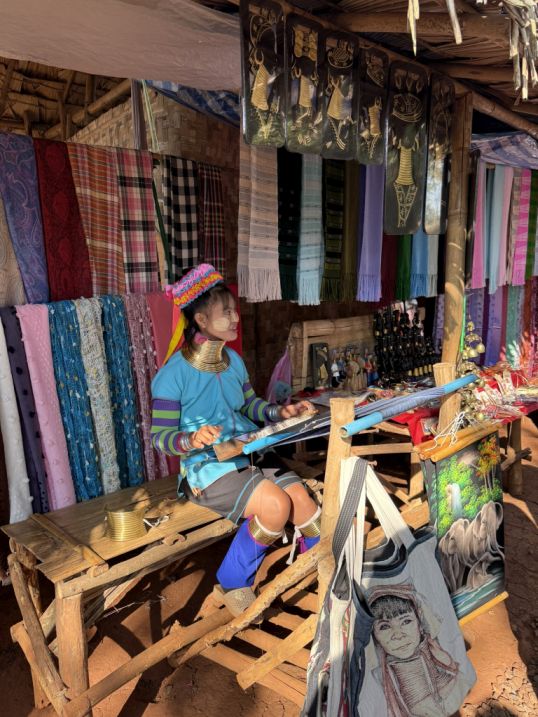
Many of the women sit outside their homes weaving textiles on traditional looms, a skill passed down through generations. You can watch them working patiently, creating intricate patterns with vibrant colors.
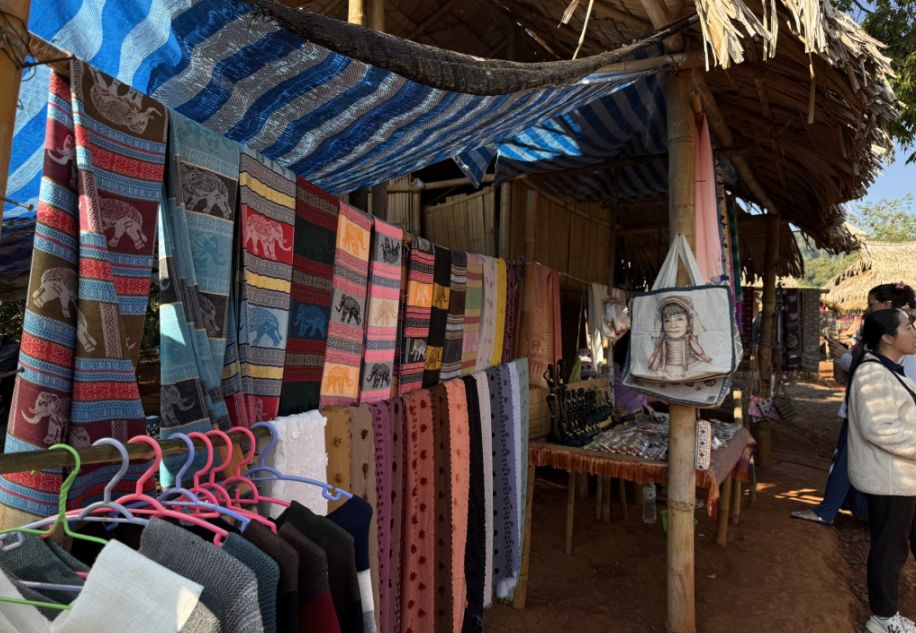
Nearby, others display and sell handmade goods, scarves, bags, jewelry, and embroidered fabrics, providing an important source of income.
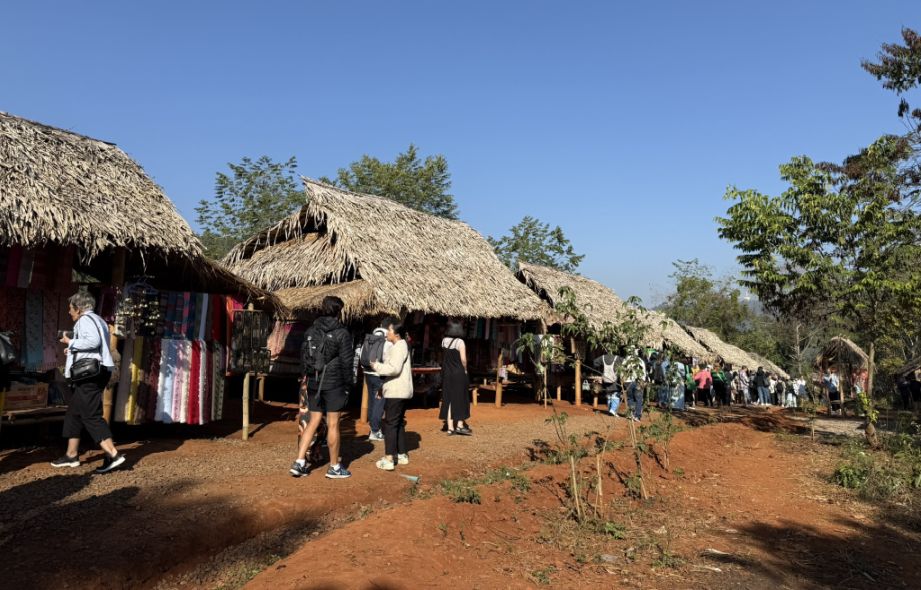
The layout is very much centered around these small stalls, giving visitors a chance to interact directly with the artisans.
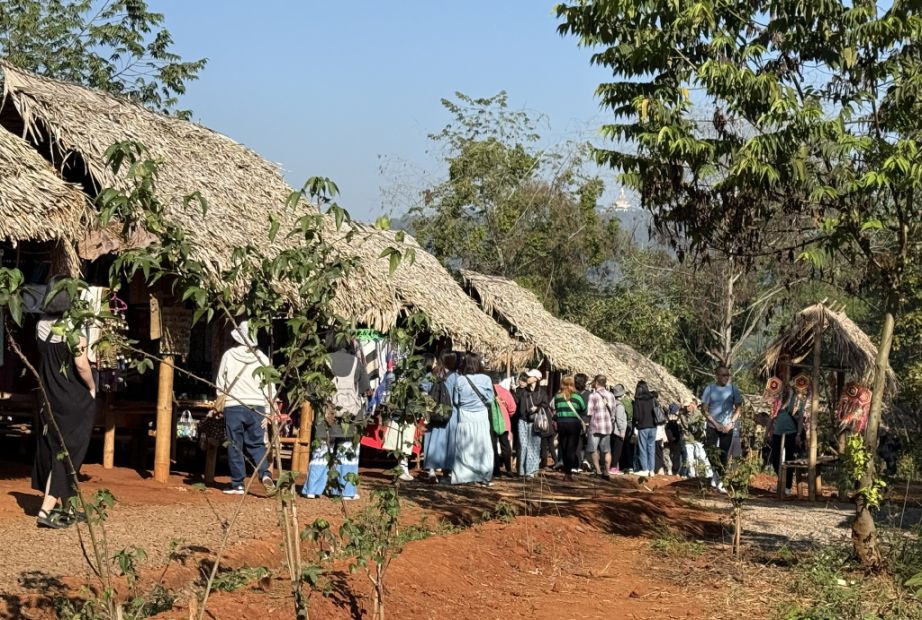
People walking by the stalls to take a look at all the merchandised that are hand-made.
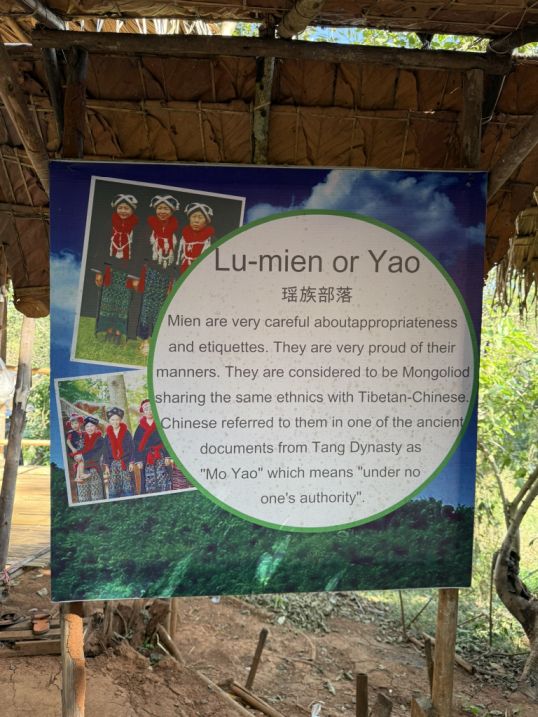 |
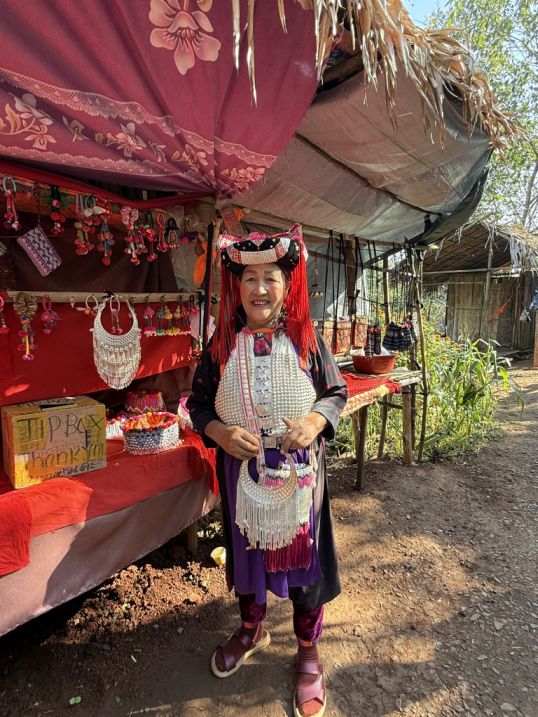
As we walked further, we encounter other tribes as well as the Lu-mien or Yao tribe community.
 |
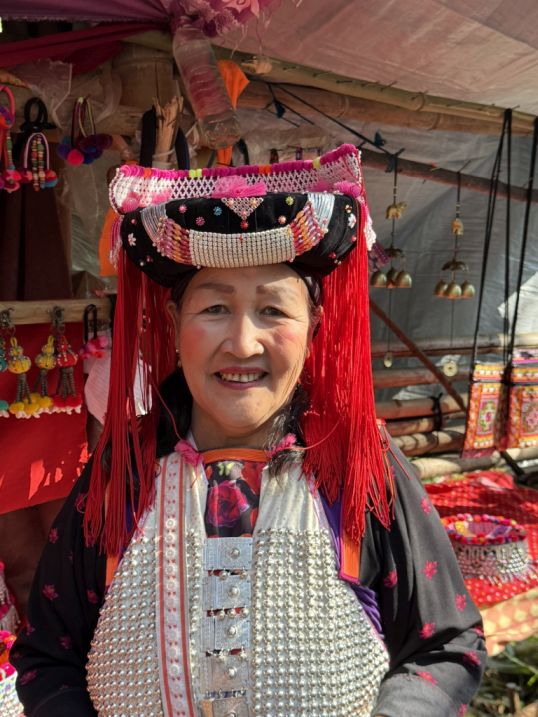 |
This tribe is recognized for their beautifully embroidered clothing, usually in darker indigo tones with detailed patterns. Each group has its own language, customs, and style of dress, and this village offers a rare opportunity to see these cultures side by side.
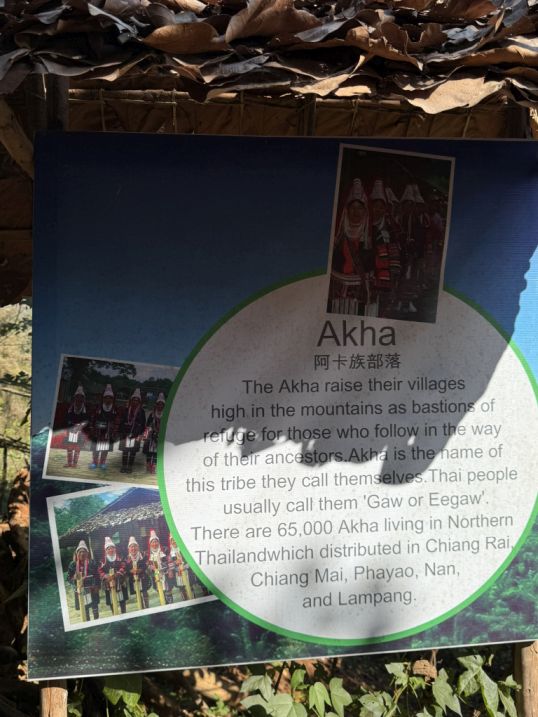 |
A bit further we encountered the Akha tribe.
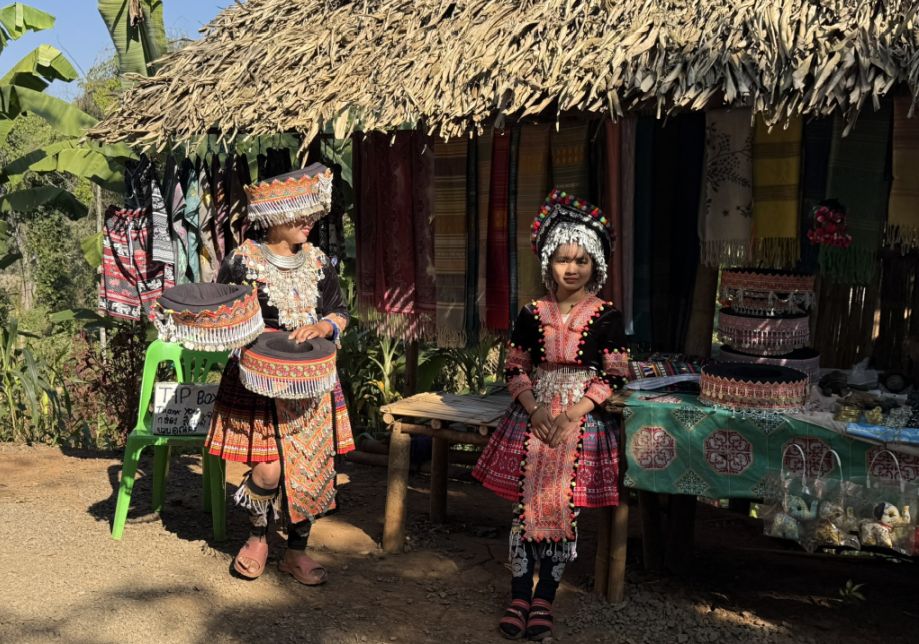
This tribe is known for their distinctive headdresses adorned with silver coins, beads, and ornaments, often worn by the women.
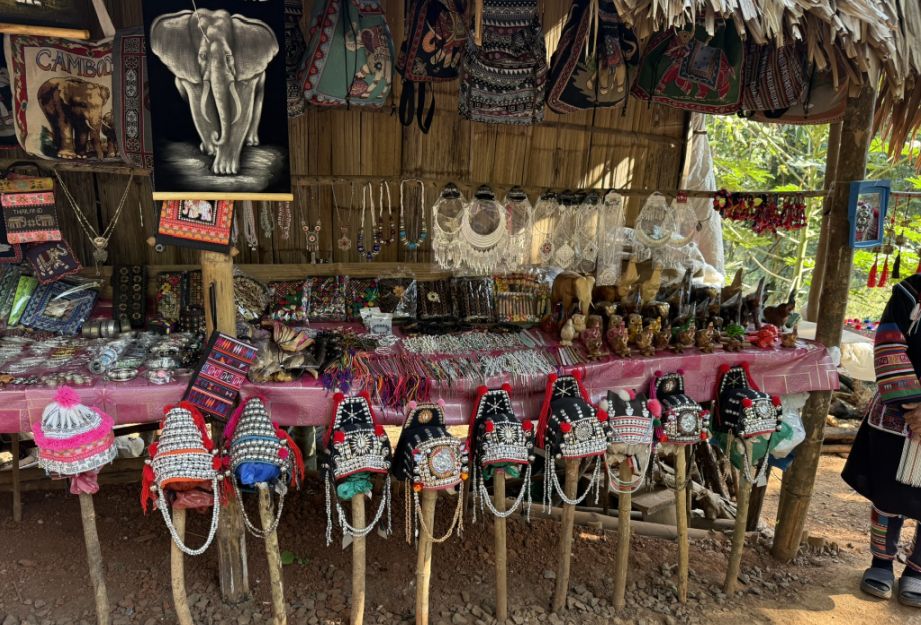
The Akha hill tribe can be found The Akha are an ethnic minority originally from Tibet and now scattered across Thailand, Myanmar, Laos, Vietnam and the Chinese province of Yunnan. In Thailand, they live mainly in the northern regions, with significant populations in Chiang Rai province and Mae Sai district.
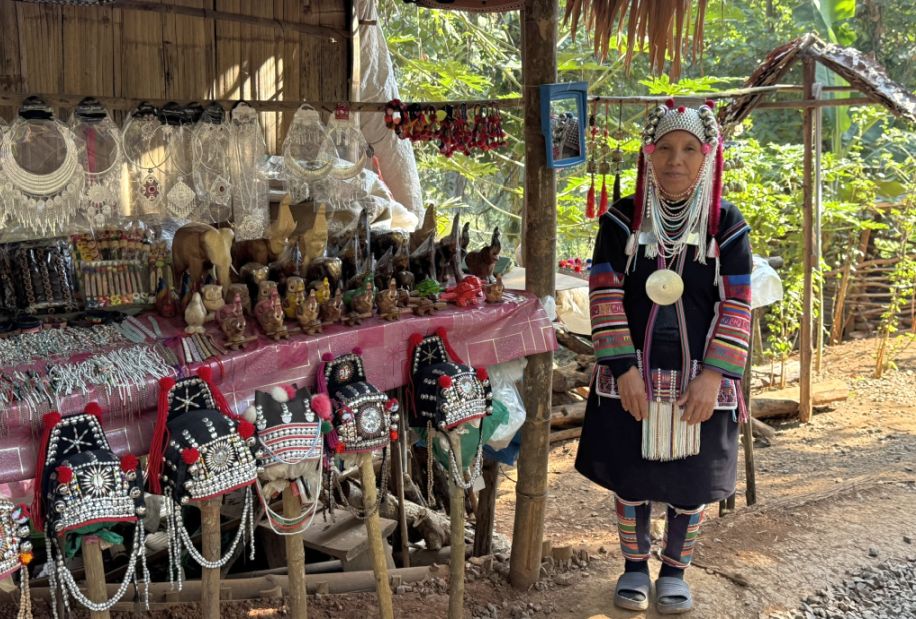
Despite the challenges of modernization, many Akha communities strive to
preserve their heritage through language programs, cultural festivals and
community-based tourism, offering visitors authentic cultural experiences.
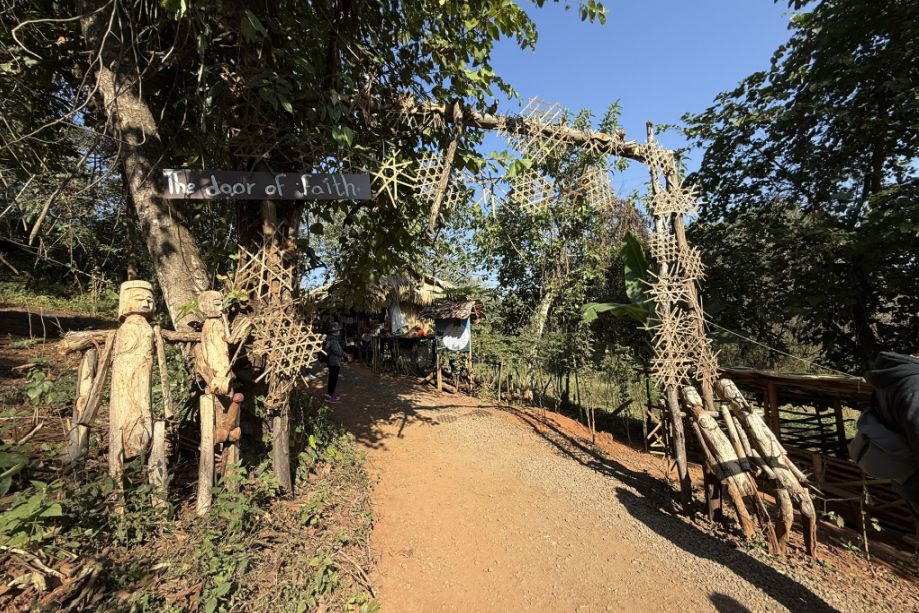
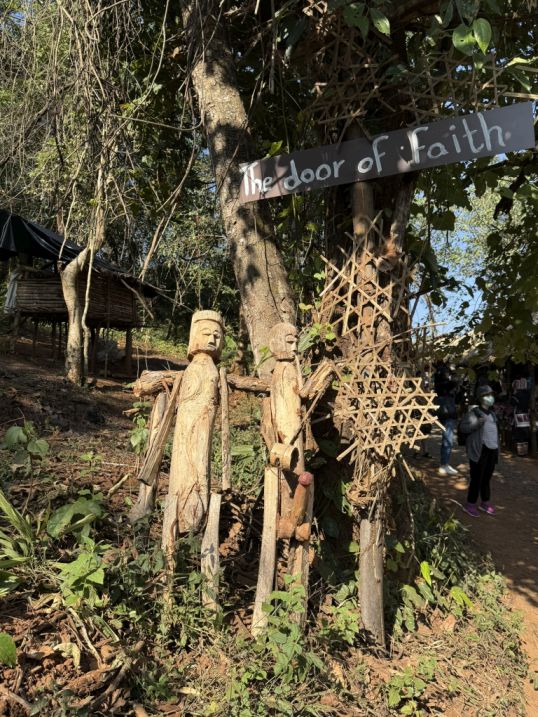
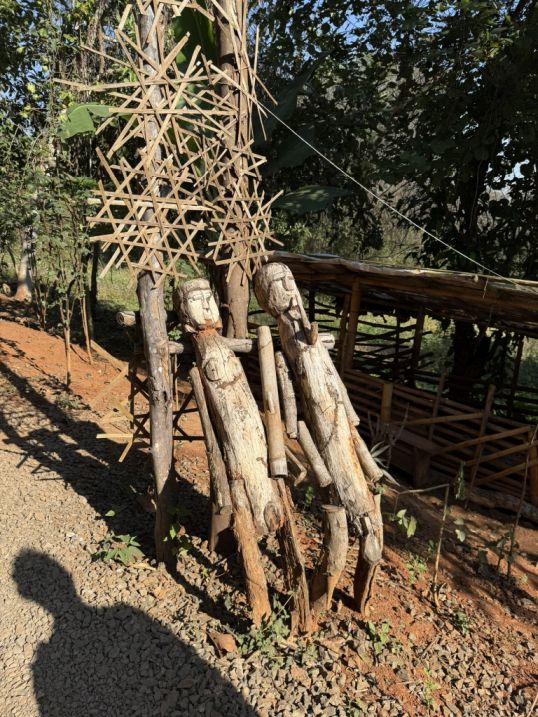
As we are leaving the village, we passed through what is often called the “Spirit Gate” or “Gate of Faith”, a symbolic entrance found in many Akha people villages. This wooden gate marks the boundary between the spiritual and physical worlds, separating the protected space of the village from the outside.
 |
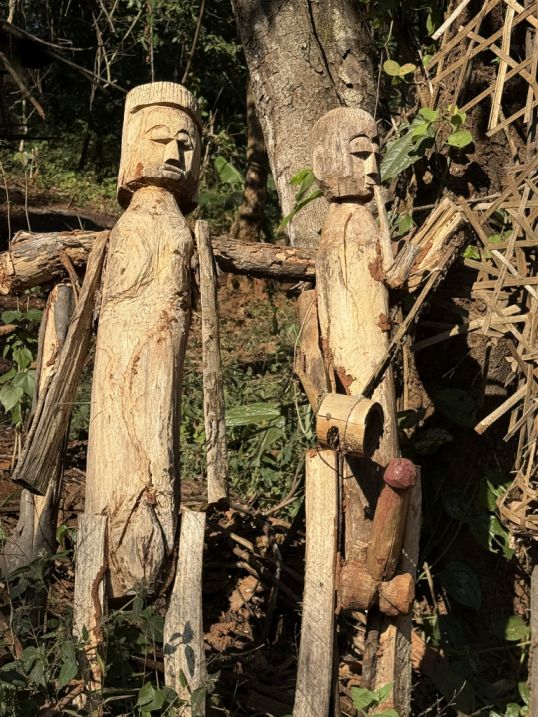 |
On either side of the gate, you’ll often see carved wooden figures, sometimes quite striking or even explicit—, like the male statue with a visible genital. These carvings are not meant to shock, but to serve as powerful fertility symbols and protective spirits.
 |
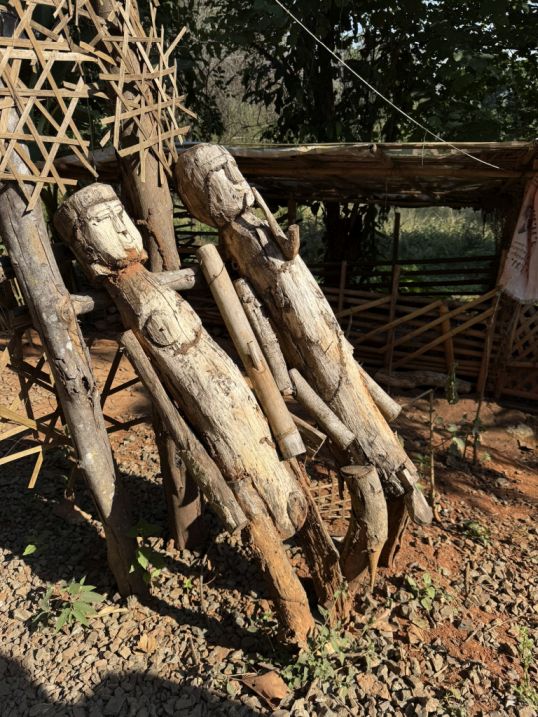 |
In Akha belief, such imagery wards off evil spirits, promotes fertility, and ensures the well-being of the community. The gate itself is central to village rituals, especially during ceremonies meant to cleanse or protect the village.
For many years, these hill tribe communities faced significant challenges in Thailand. Because they migrated across borders, many were not automatically granted Thai citizenship. This meant limited access to education, healthcare, and legal employment. In recent decades, however, the Thai government has made efforts to improve their situation with Citizenship programs: Many hill tribe people, especially younger generations, have now been granted Thai citizenship, giving them access to public services. Education and healthcare: Government and NGO programs have expanded schooling and basic healthcare in rural areas. Economic support through tourism: Villages like this one are part of a broader effort to create income through cultural tourism. While this provides financial opportunities, like selling handicrafts, it also raises questions about how traditions are preserved and presented.
For the Kayan long-neck communities in particular, their situation is more complex. Some villages function almost like cultural exhibitions, where tourism is a primary source of income. While this helps economically, it also means their traditional practices, like wearing the brass coils are sometimes maintained partly because of tourist interest.
Overall, what we experienced is a mix of authentic cultural tradition and modern adaptation. The gate we passed symbolizes a living belief system, while the village itself reflects how these communities are navigating identity, survival, and change in today’s Thailand.
NEXT... Day 7- Wat Ron Khun/White Temple