
12 days in Thailand 1/7- 1/18/2025
Day 7-Chiang Rai guided tour-1/13/2025
Wat Rong Khun/White Temple
After about an hour and a half on the road, we arrived at one of Thailand’s most striking and unconventional temples, Wat Rong Khun, better known as the “White Temple.” Unlike ancient temples we have seen elsewhere, this one is relatively new. Construction began in 1997, and it is still an ongoing project that may take decades to fully complete. The temple is located outside the city of Chiang Rai.
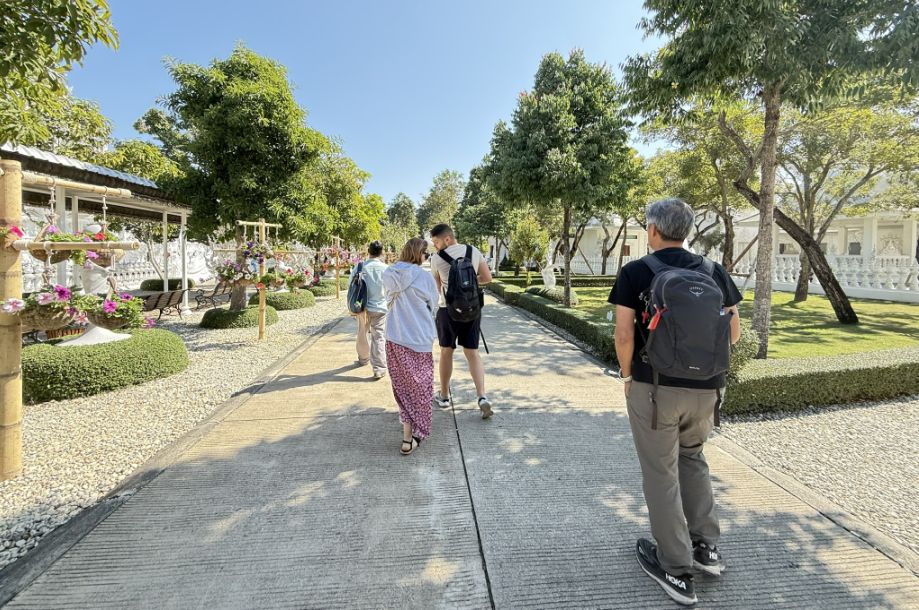
Entering the complex. The temple is the vision of renowned Thai artist
Chalermchai Kositpipat, who
funded much of the project himself. His goal was to create a contemporary
Buddhist temple that reflects both traditional beliefs and modern ideas. The
brilliant white color of the temple symbolizes purity, while the mirrored
glass embedded throughout represents wisdom shining across the world. To
date, Chalermchai has spent over 40 million THB of his own money on the
project. The artist intends for the area adjacent to the temple to be a center
of learning and meditation and for people to gain benefit from the Buddhist
teachings. Kositpipat considers the temple to be an offering to Lord
Buddha and believes the project will give him immortal life. Today the works
are ongoing, but are not expected to be completed until 2070
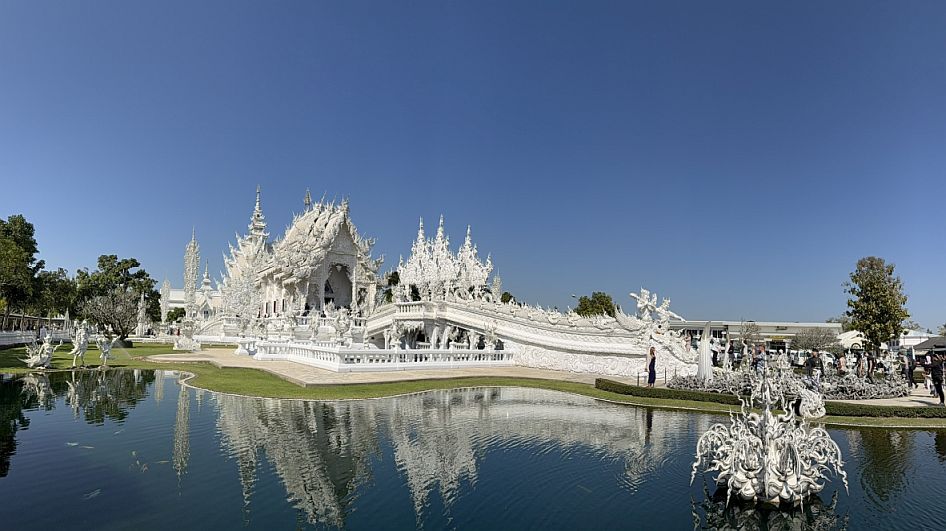
Before entering the main temple, we had to cross a small bridge over a pond. The water reflects the dazzling white structure, creating a surreal, almost dreamlike scene.
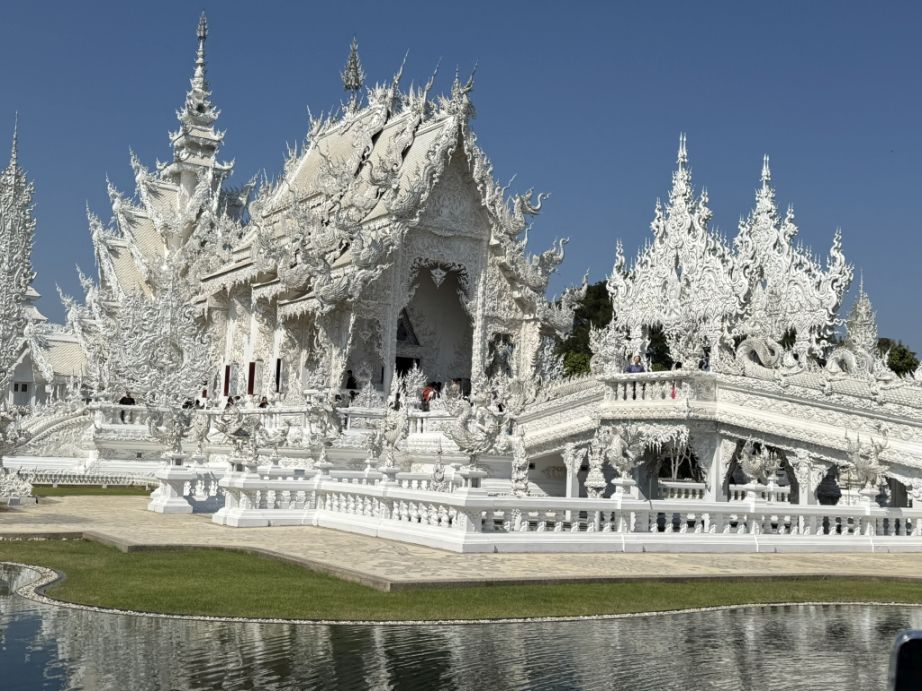
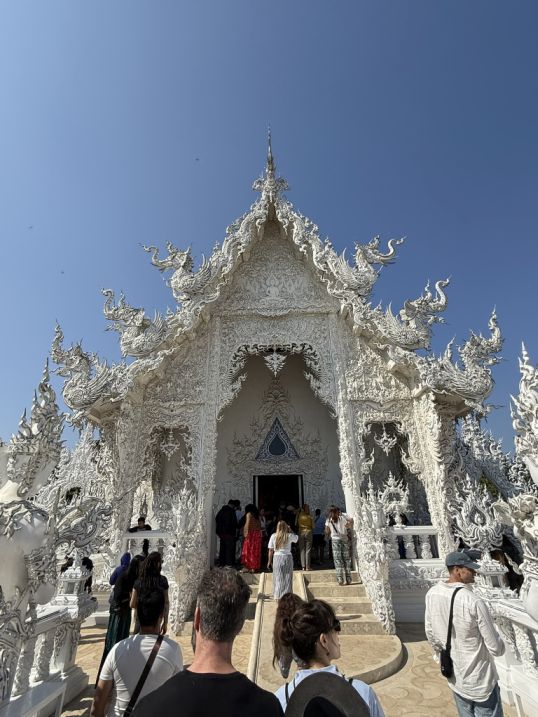
View of the main building at the white temple called the ubosot.
 |
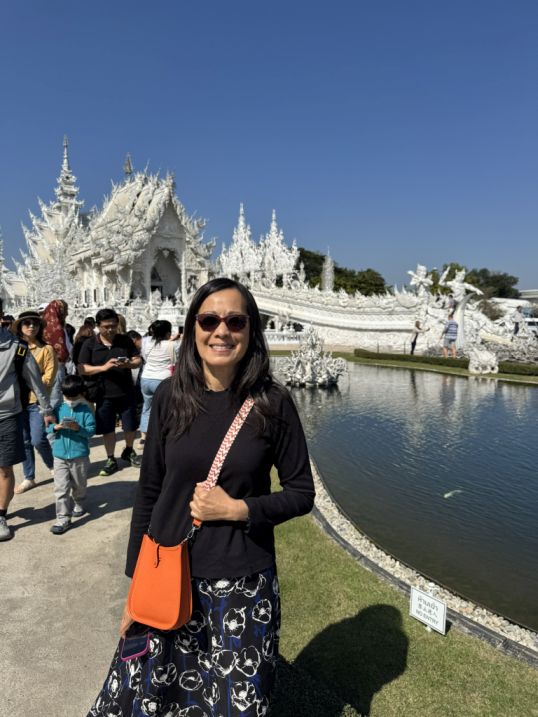 |
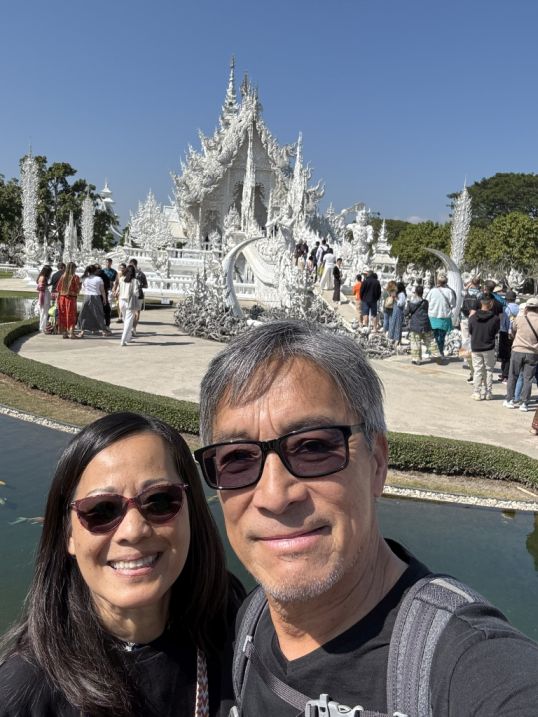
Staying in line to get in the main temple.
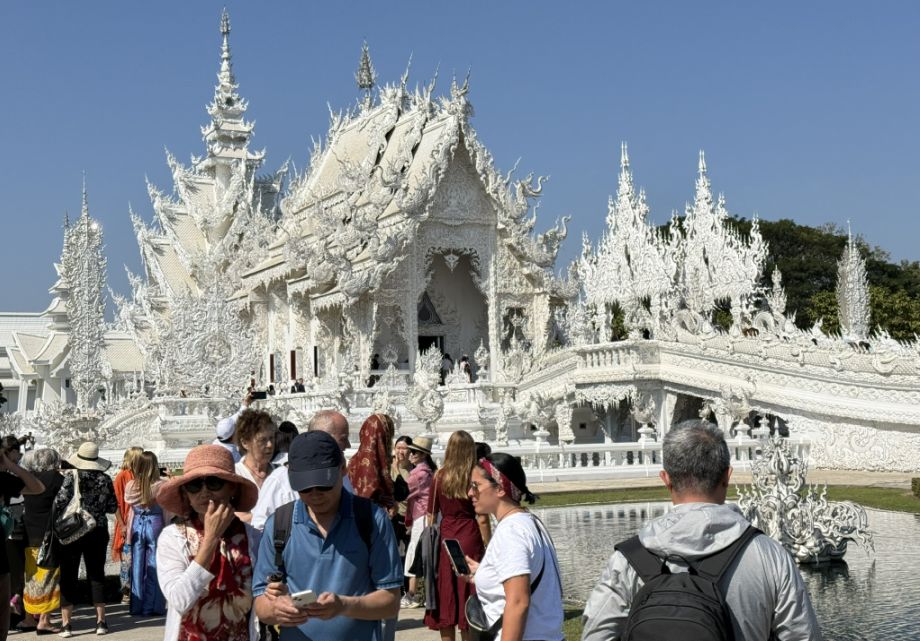
There are a lot of people.
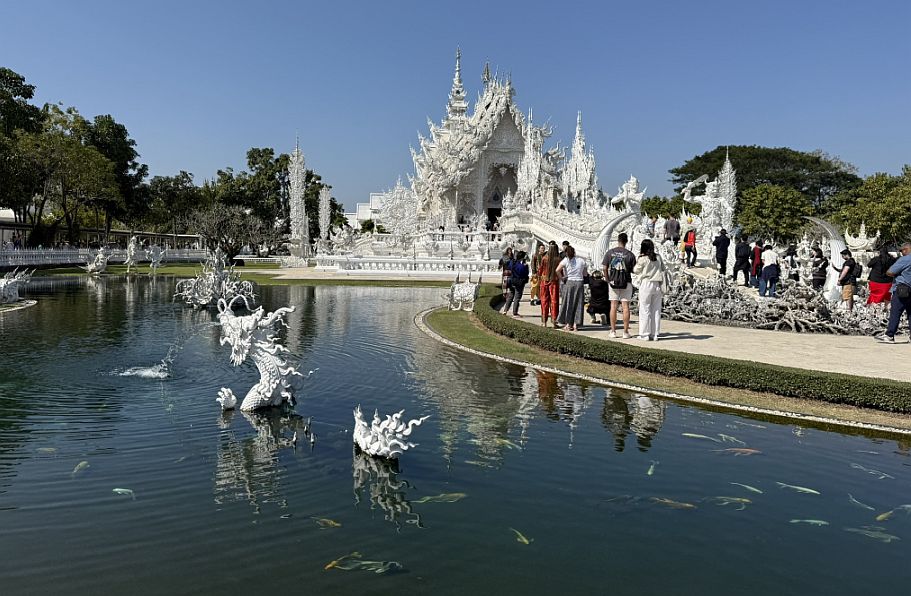
A long, rectangular pool stretches out in front, animated by rows of water jets that rise and fall in rhythm.
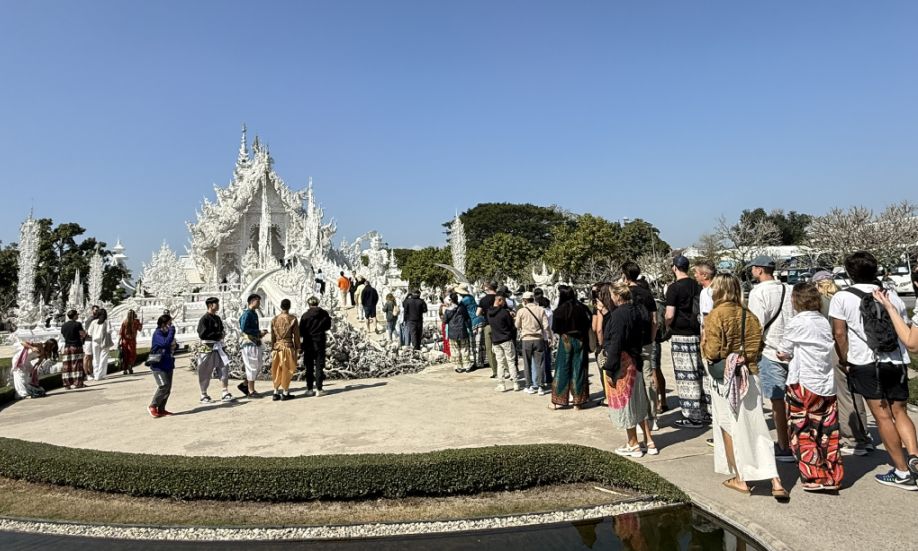
There is quite a line to get in the main temple.
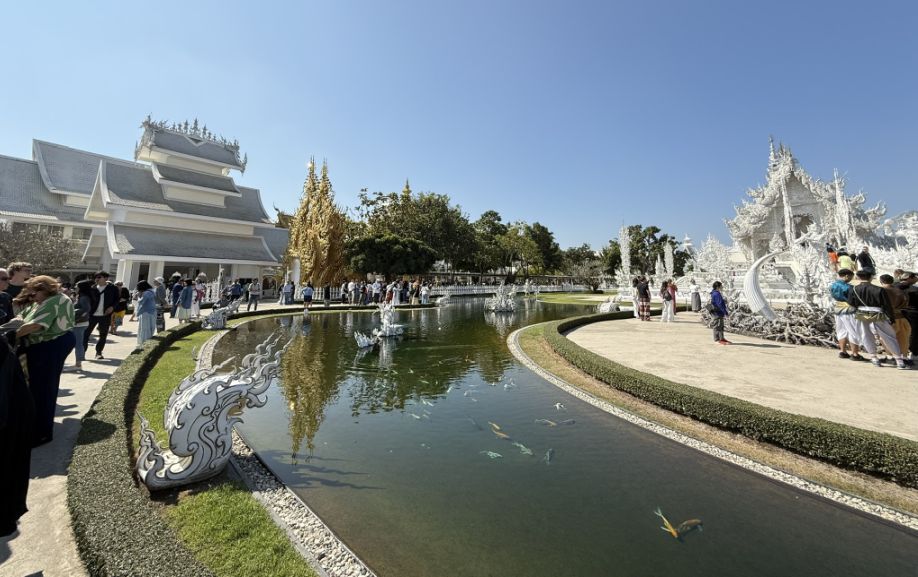
To the left of the bridge is a pond.
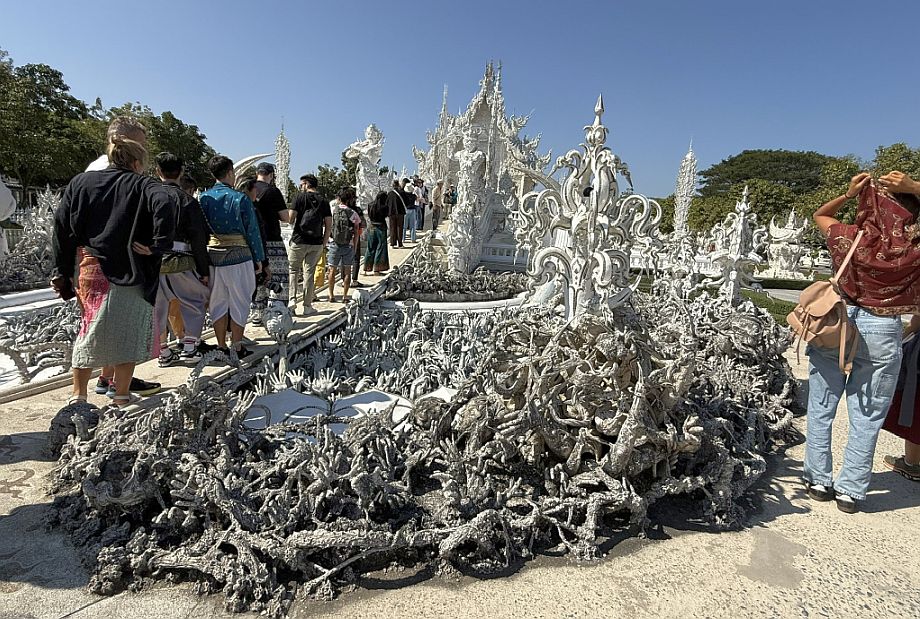
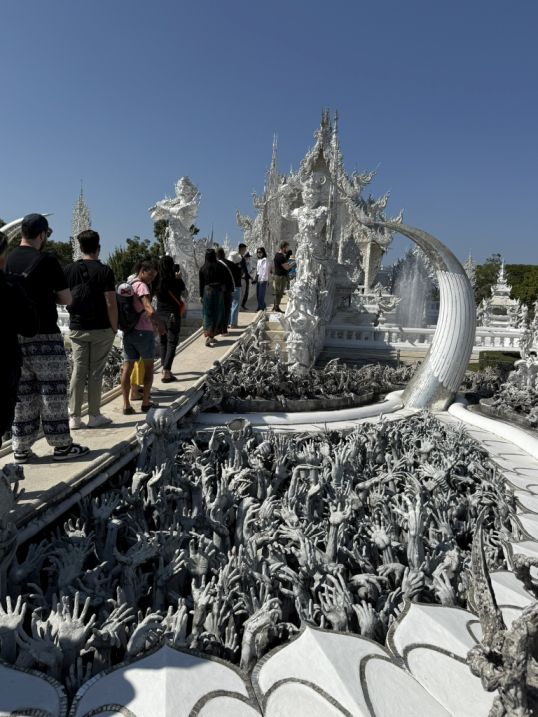
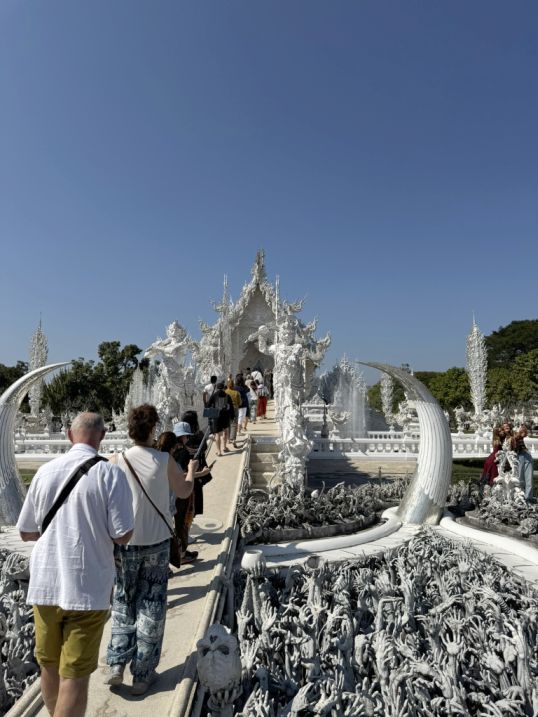
Before entering the main temple, we encountered something much darker, the field of outstretched hands reaching up from below.
 |
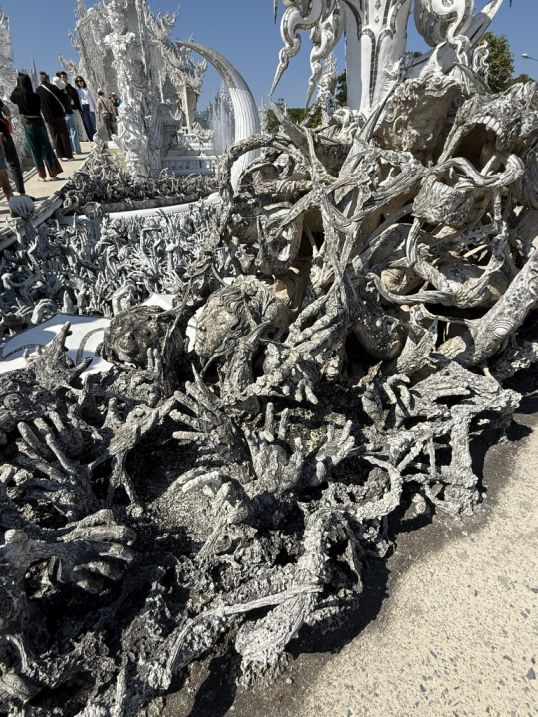 |
These hands represent human desire and suffering, greed, anger, and attachment. In Buddhist symbolism, they depict souls trapped in a kind of hell, desperately reaching upward.
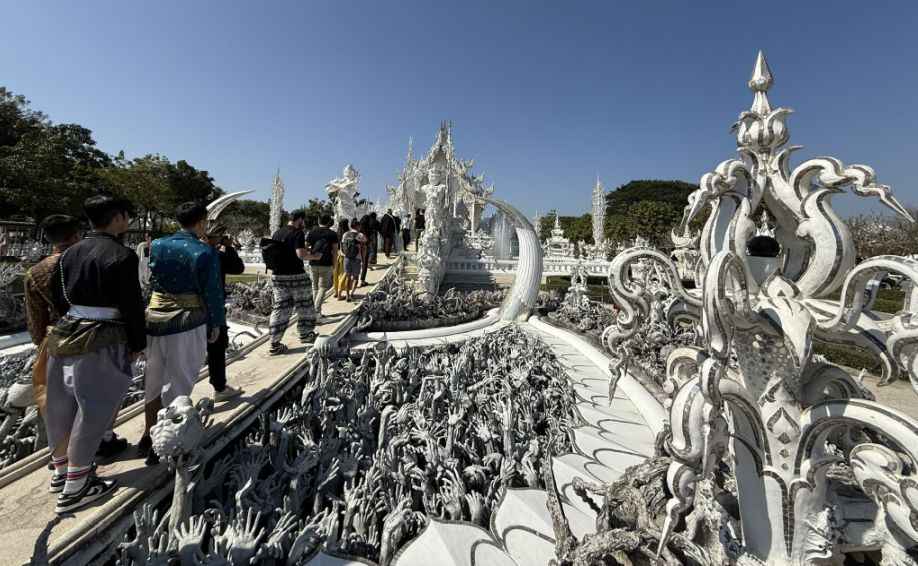
As we walked across the bridge, we are symbolically moving away from temptation and suffering toward enlightenment.
 |
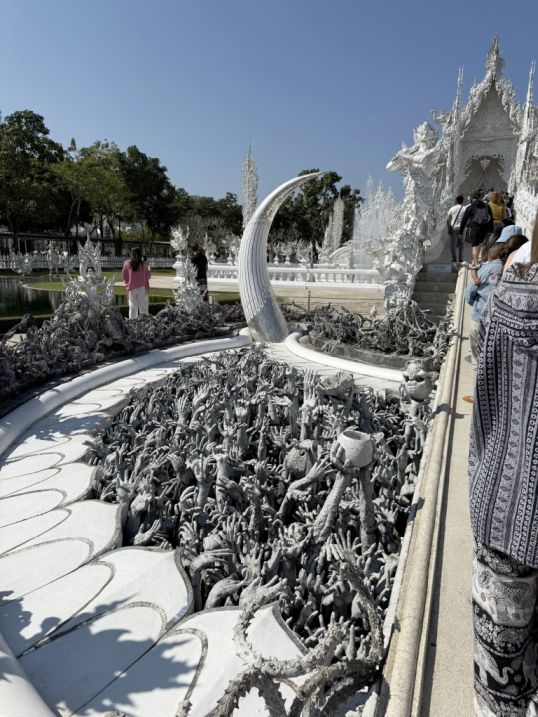 |
The bridge itself represents the transition from the cycle of rebirth to a state of purity.
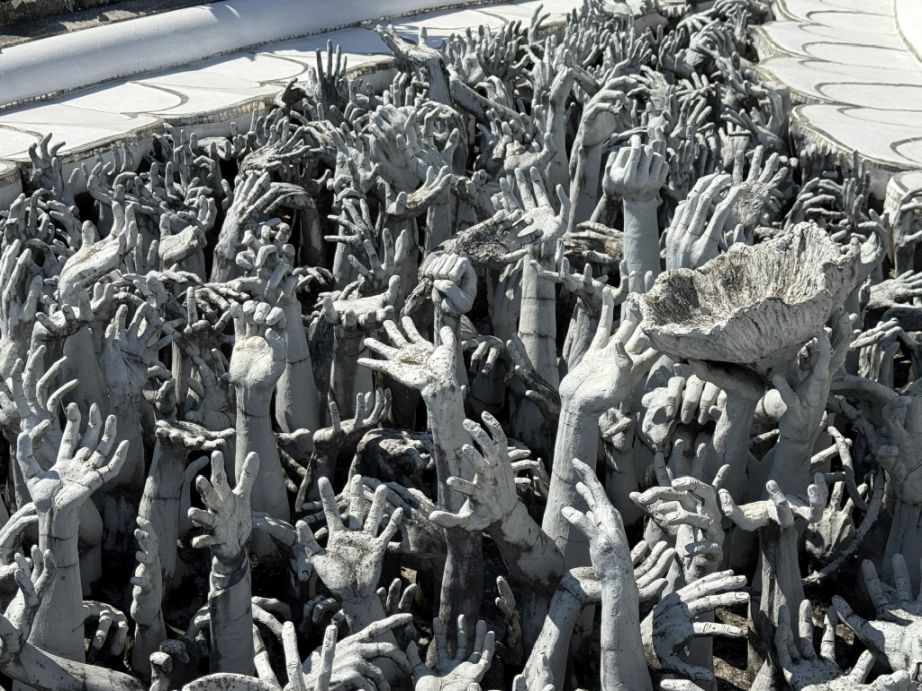
Close view of all the Hands reaching upward.
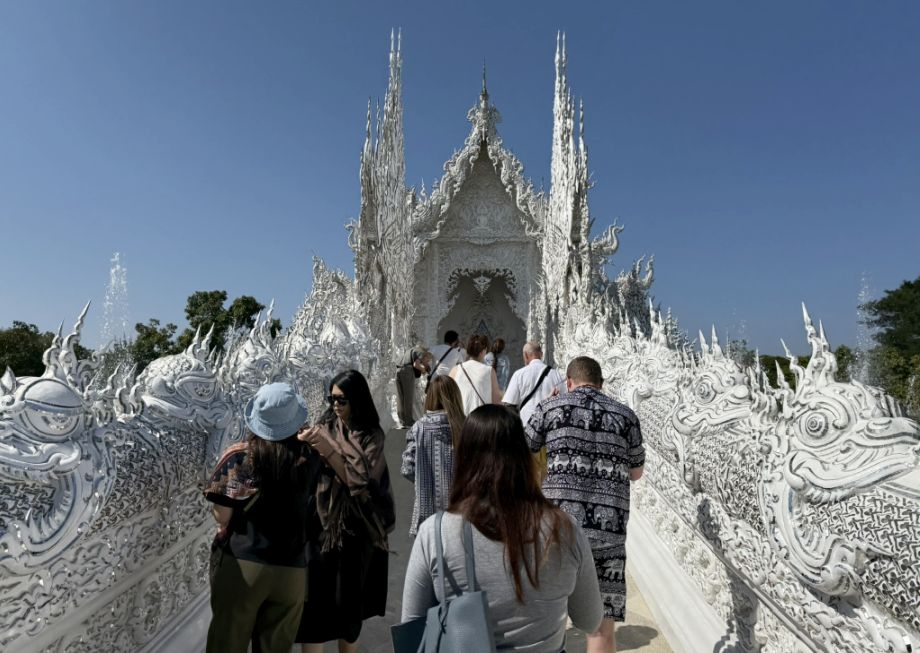
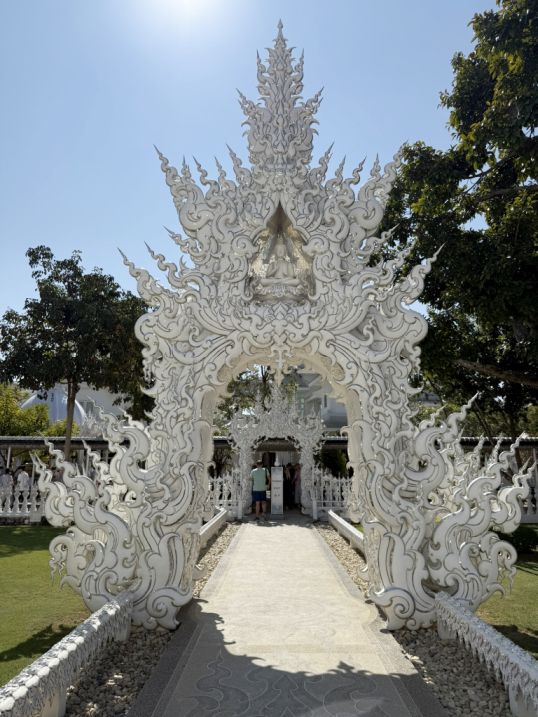
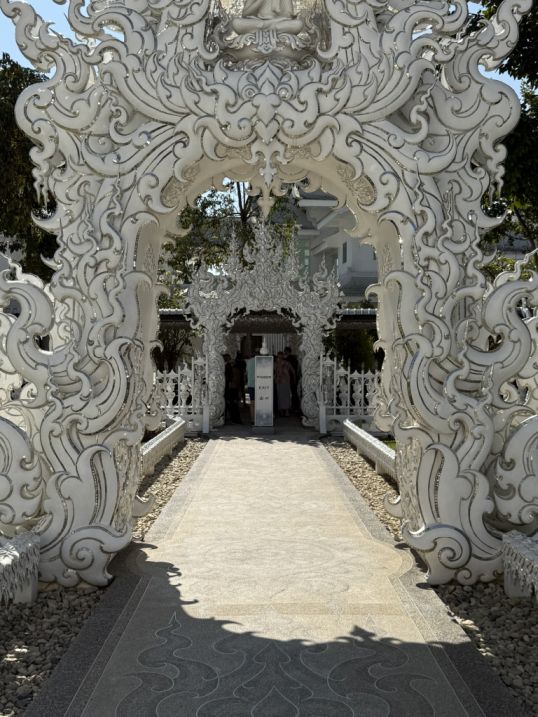
We are now heading towards the main temple. The exterior is intricately detailed with swirling, flame-like patterns, mythical creatures, and delicate carvings that seem almost lace-like.
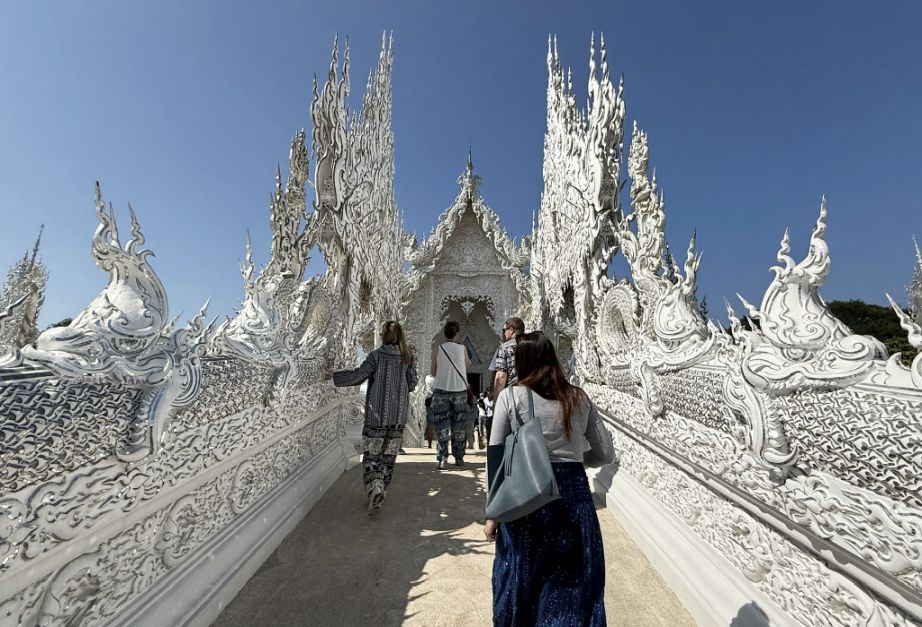
The closer you look, the more detail reveals itself, especially on the façade and roofline of the main temple, where Chalermchai Kositpipat poured an extraordinary level of artistry and symbolism.
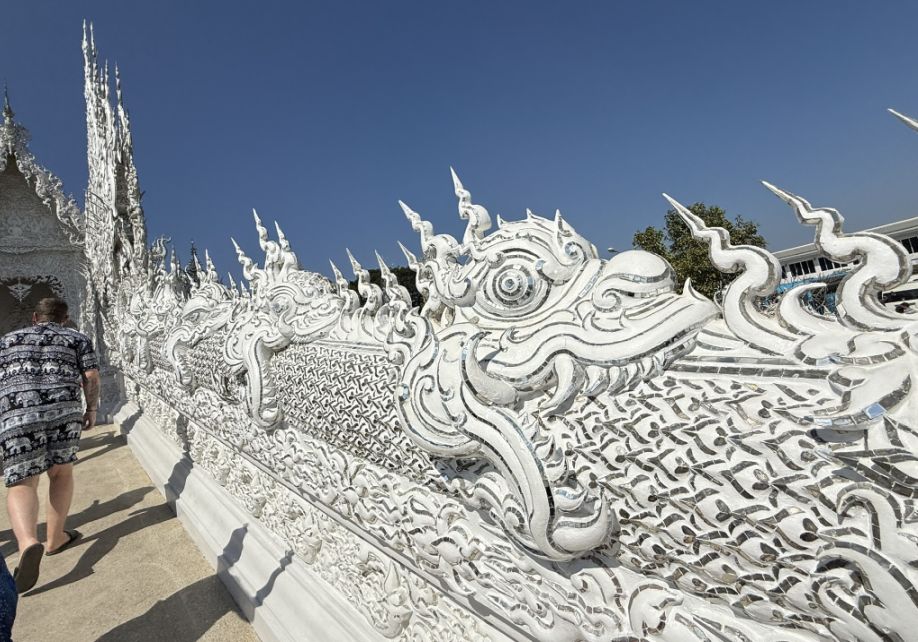
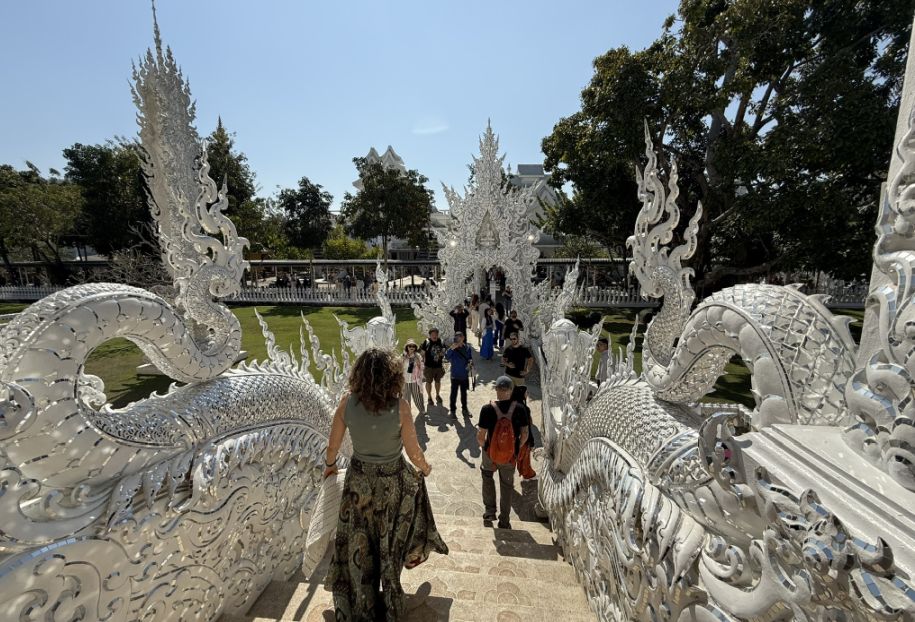
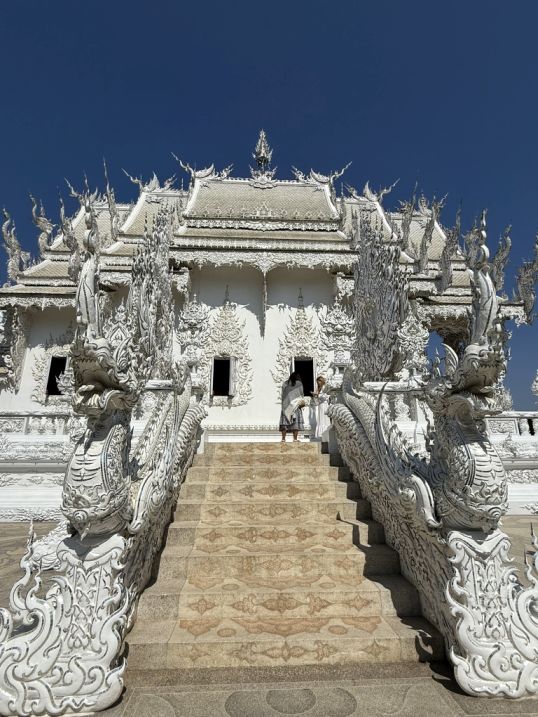
Every inch is carefully crafted, shimmering under the sunlight. As we approached and moving along the walkway, the railings themselves take on the form of these Naga. Their long, undulating bodies stretch along the sides, guiding you forward. The heads at the entrance are more pronounced, open-mouthed and expressive, creating a dramatic threshold as we passed through.
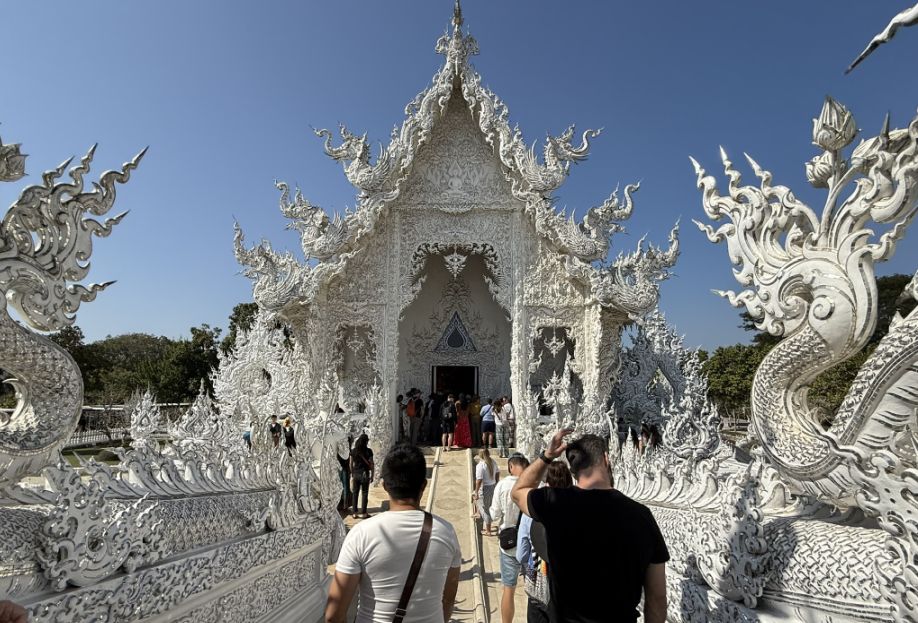
The exterior of the main hall feels almost alive. Every surface is covered in delicate, swirling patterns that resemble flames, vines, and waves, all rendered in white plaster and embedded with tiny mirrored glass pieces. When the sunlight hits, the entire structure sparkles, giving it an almost ethereal glow.
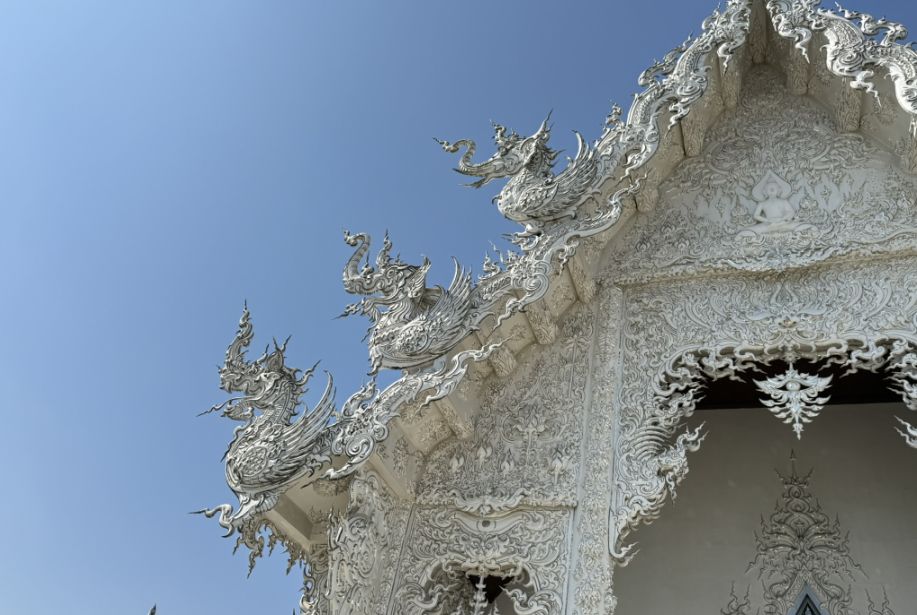
At the edges of the roof, you can see dramatic serpent-like figures, these are Naga, sacred mythological beings in Buddhist and Hindu traditions. Their elongated bodies curve along the roofline, and their heads extend outward at the corners, almost as if they are guarding the temple. The Naga are believed to protect sacred spaces and act as a bridge between the human world and the divine.
 |
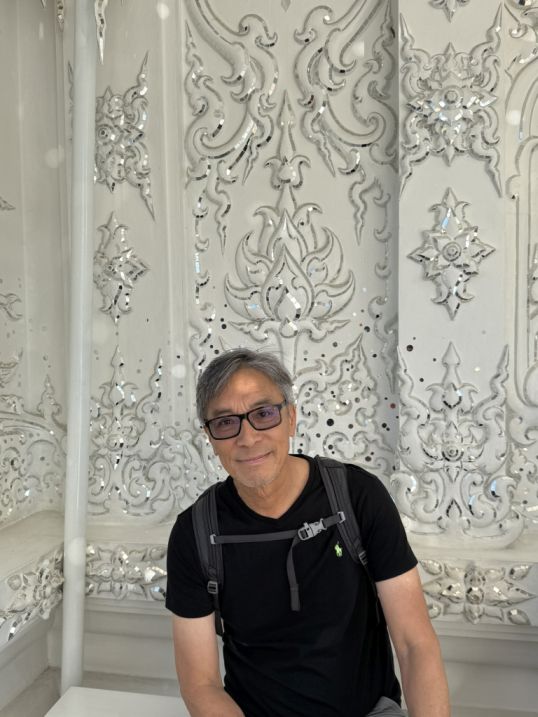 |
Entering the main temple. Inside the interior murals combine classical Buddhist imagery with modern references, depictions of chaos, suffering, and temptation from contemporary life.
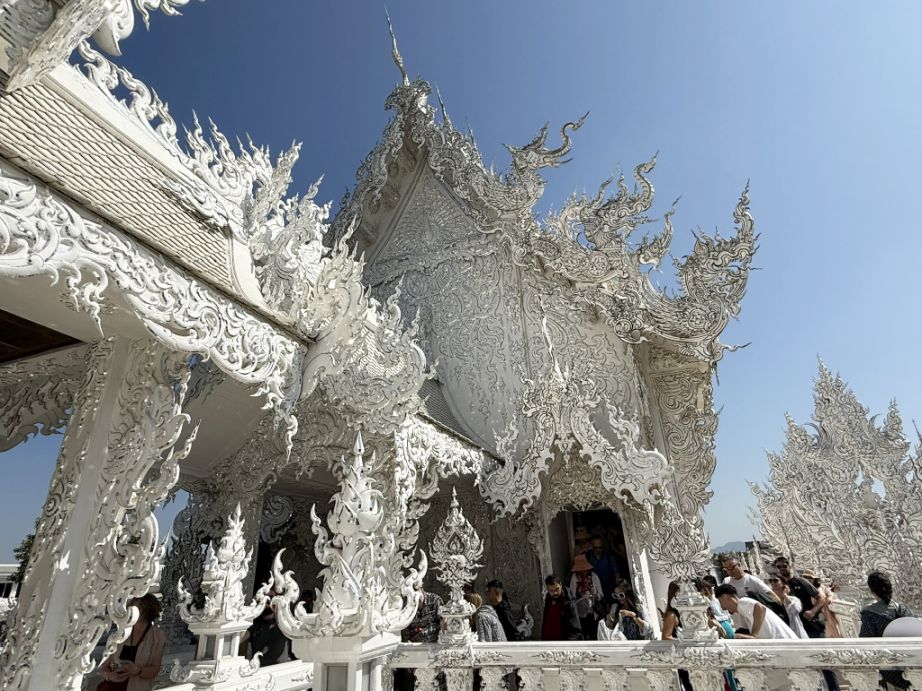
If you look closely, you’ll notice that the carvings are not random, they are filled with symbolic forms: mythical creatures, stylized faces, and flowing motifs that represent the constant movement of life and the struggle between desire and enlightenment. The craftsmanship is incredibly fine, almost lace-like, and it creates a sense that the building is both solid and weightless at the same time.
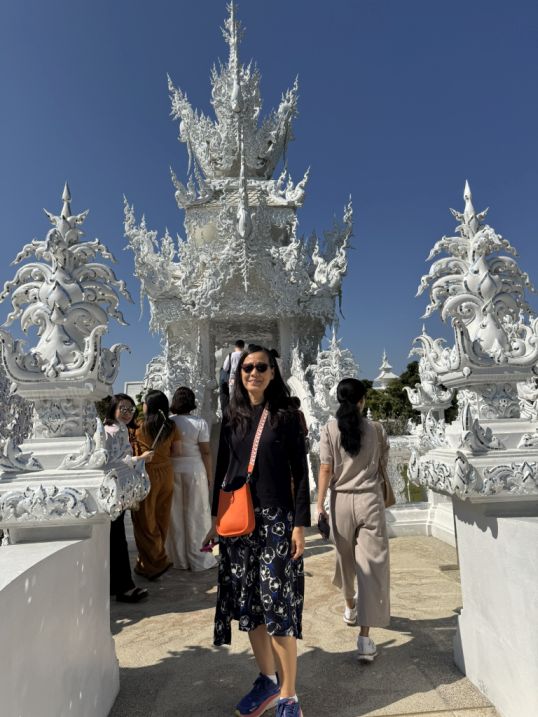
Although the main hall is the centerpiece, the complex includes several smaller structures and pavilions scattered across the grounds.
 |
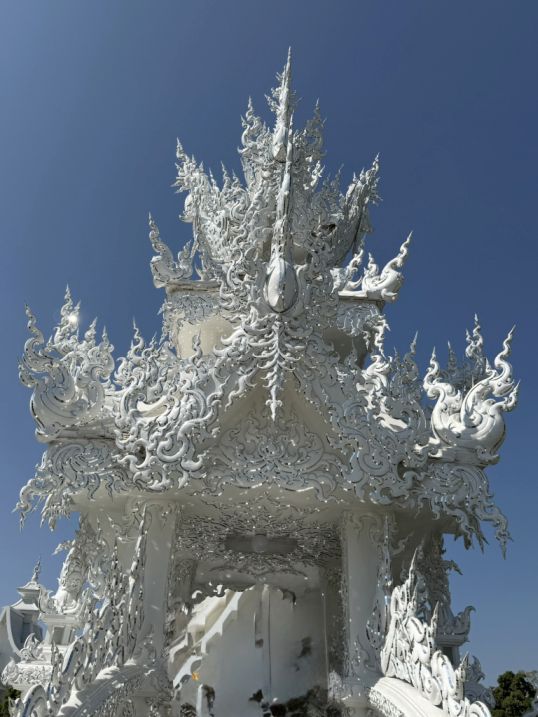 |
Each carries elements of the same design language, white surfaces, mirrored accents, and intricate carvings, but on a more intimate scale.
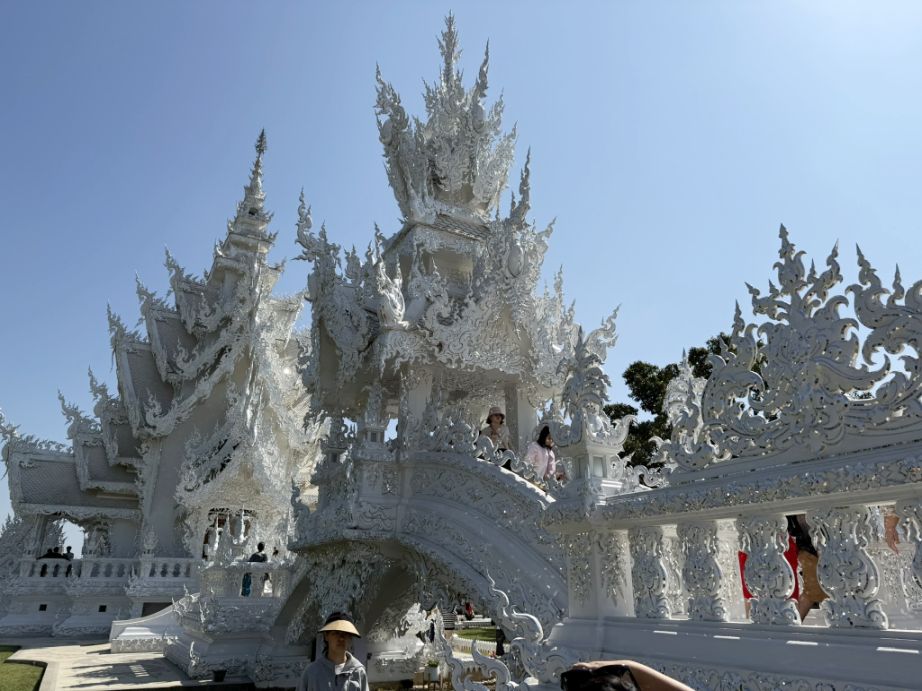
The temples inside are very ornamental.
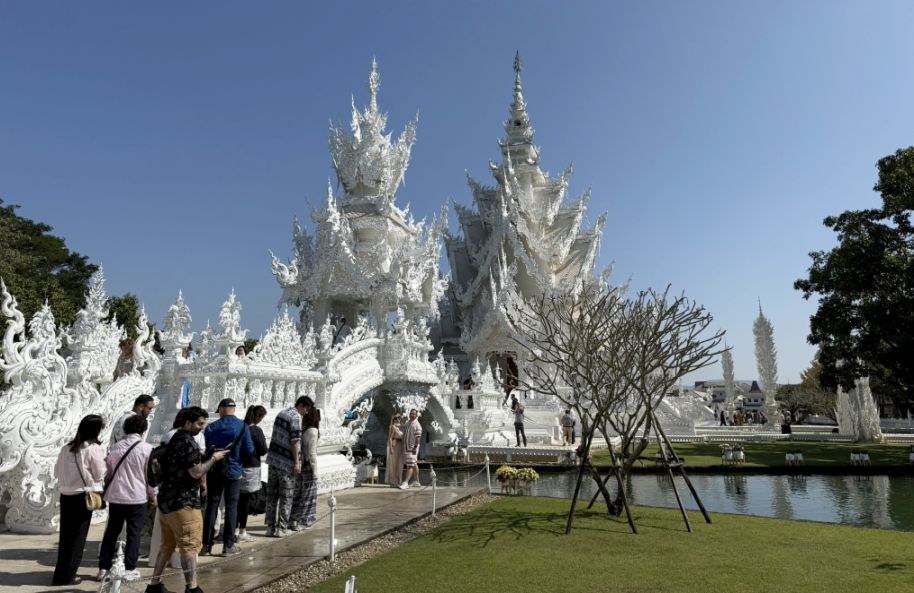
Water plays an important role in the layout.
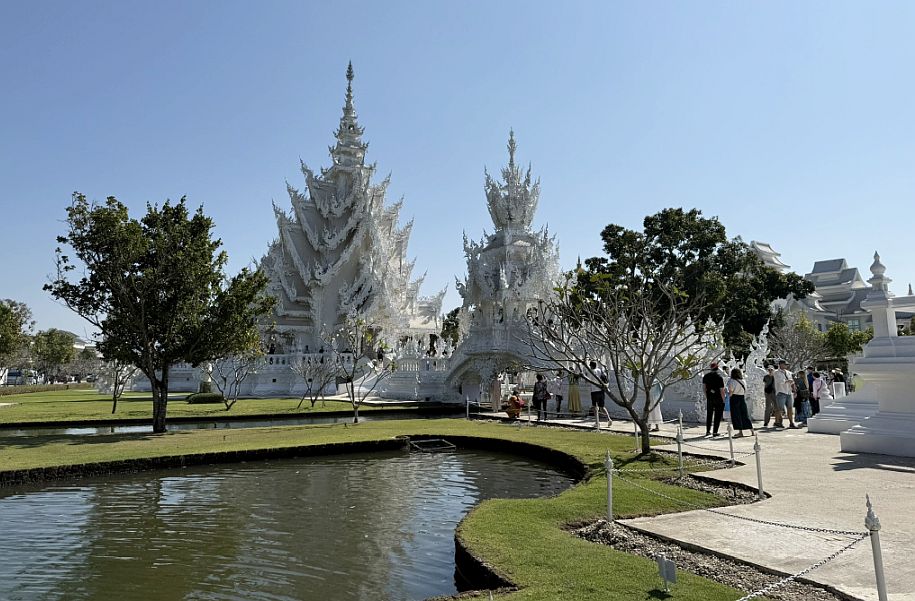
The pond surrounding the main temple not only enhances the visual beauty by reflecting the white structure like a mirror, but also reinforces the idea of separation between the ordinary world and the sacred space.
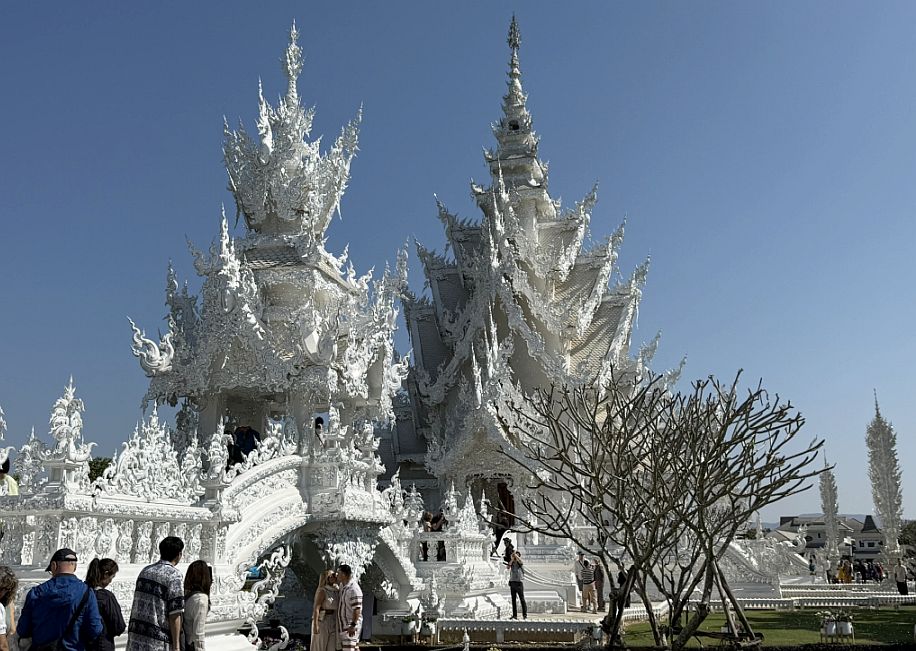
Small bridges connect different parts of the complex, encouraging a slow, deliberate movement through the space.
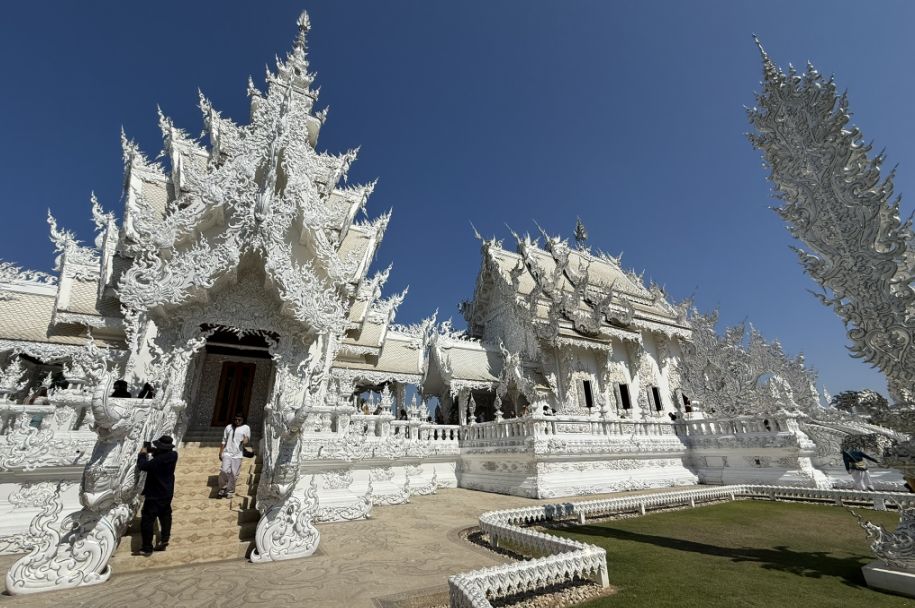
As we crossed them, we are constantly shifting perspectives, seeing the temple from different angles, noticing new details in the carvings, and watching how light interacts with the mirrored surfaces.
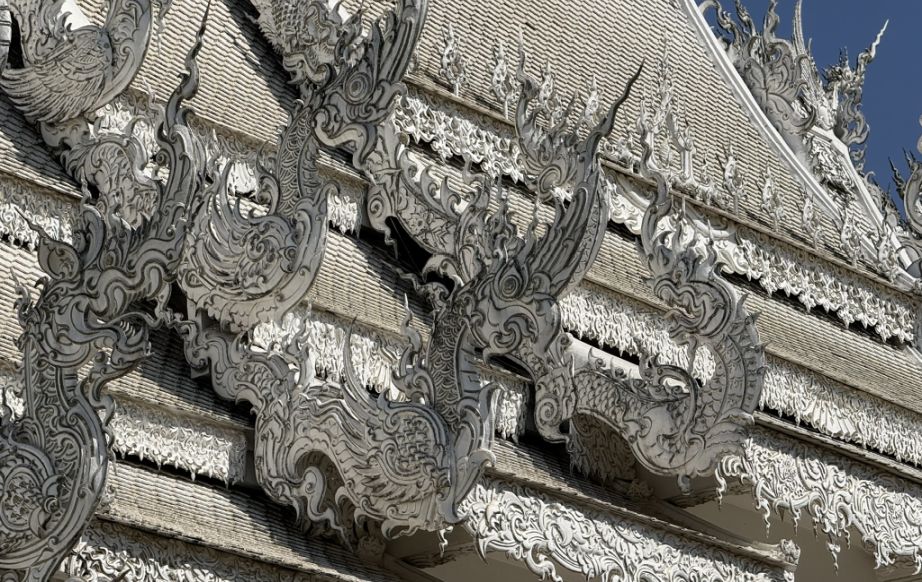
Intricate carvings on the roof.
 |
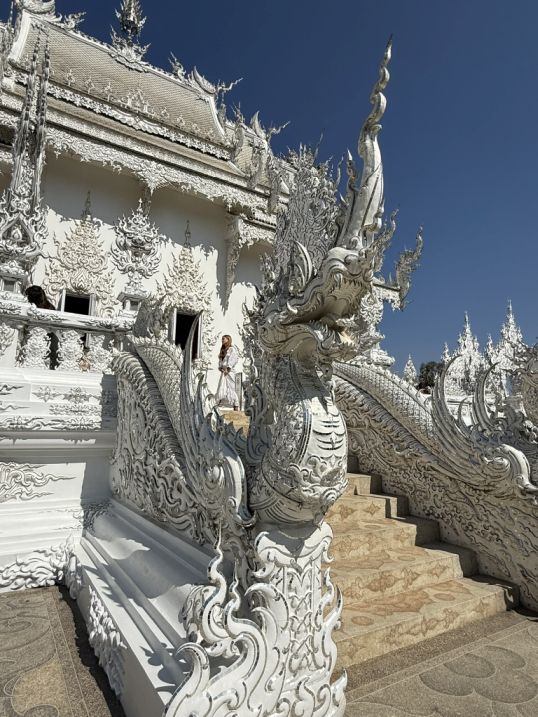 |
A beautiful staircase flanked by two nagas.
 |
 |
We are now leaving the main temple area.
 |
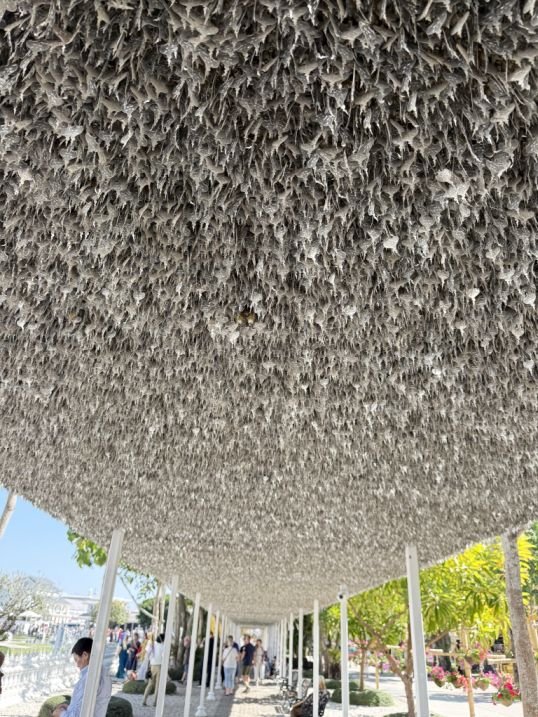 |
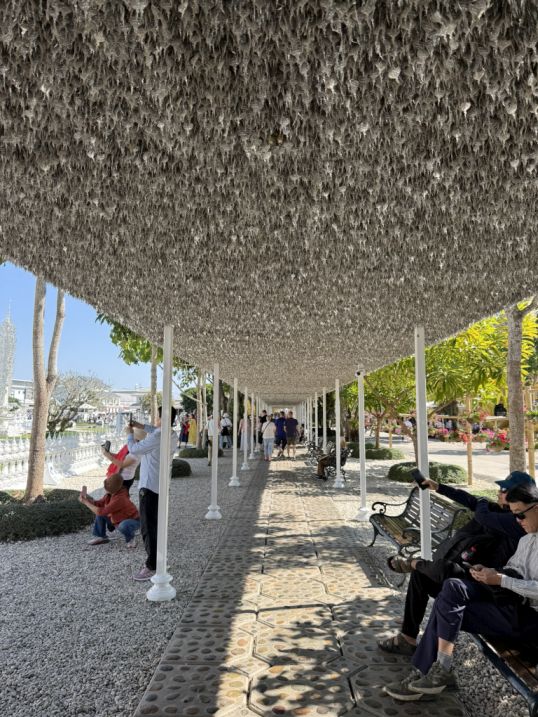
The grounds are beautifully landscaped, with small gardens, sculptures, and shaded areas where visitors can rest.
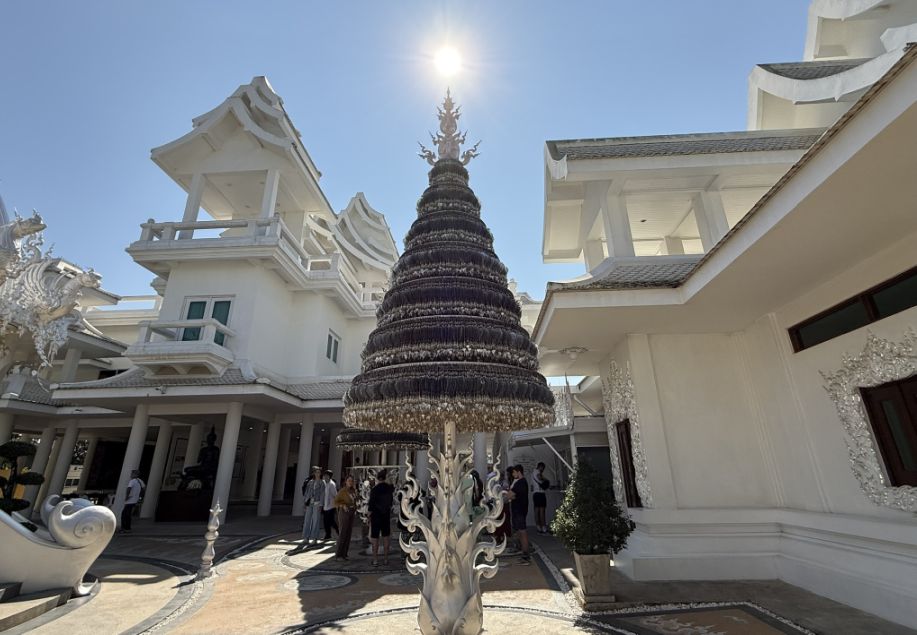
Decorative elements are scattered throughout, some whimsical, others symbolic making the entire property feel like an open-air art installation.
 |
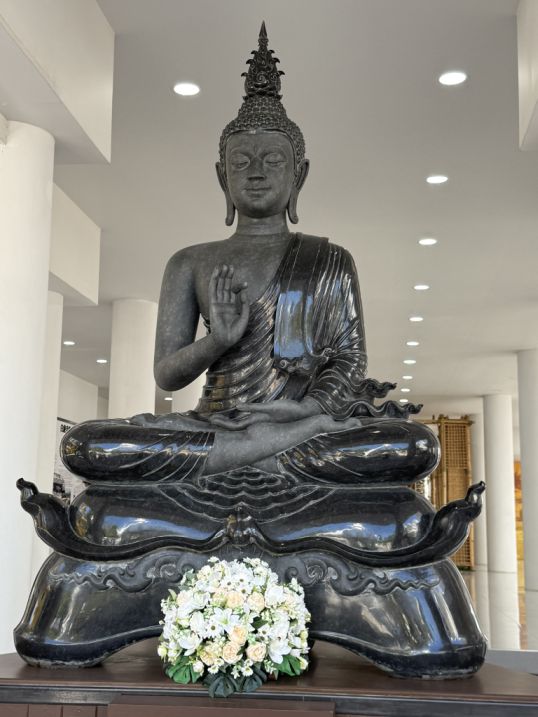 |
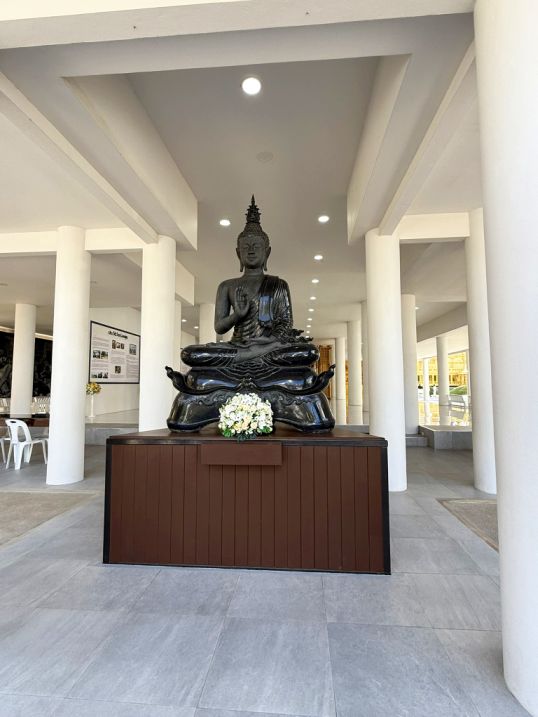
A Buddha statue in one of the hallway.
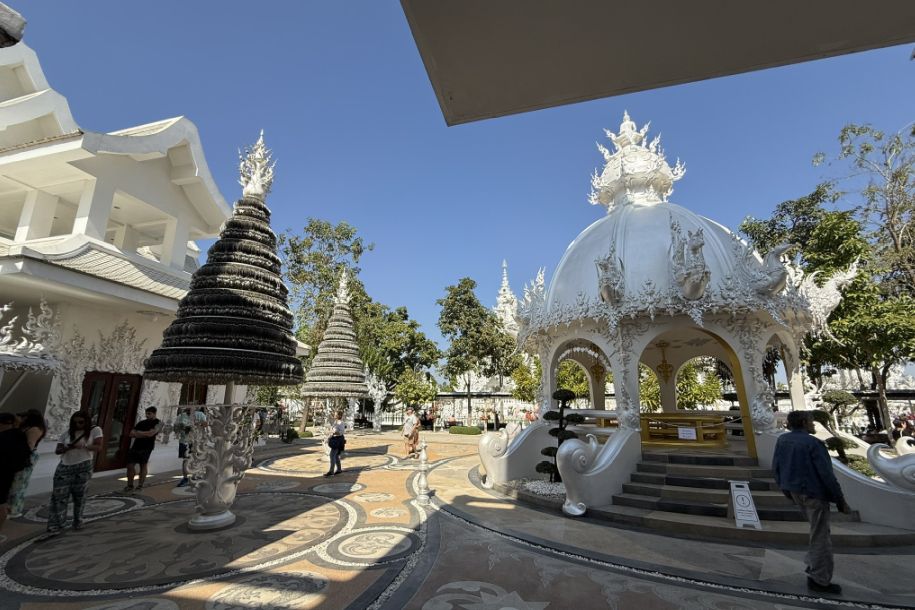
Nearby, there are also open spaces, small bridges, and quiet corners that offer a break from the crowds. Despite the number of visitors, there are moments where people can step back, take in the details, and appreciate the artistry and symbolism behind the entire site.
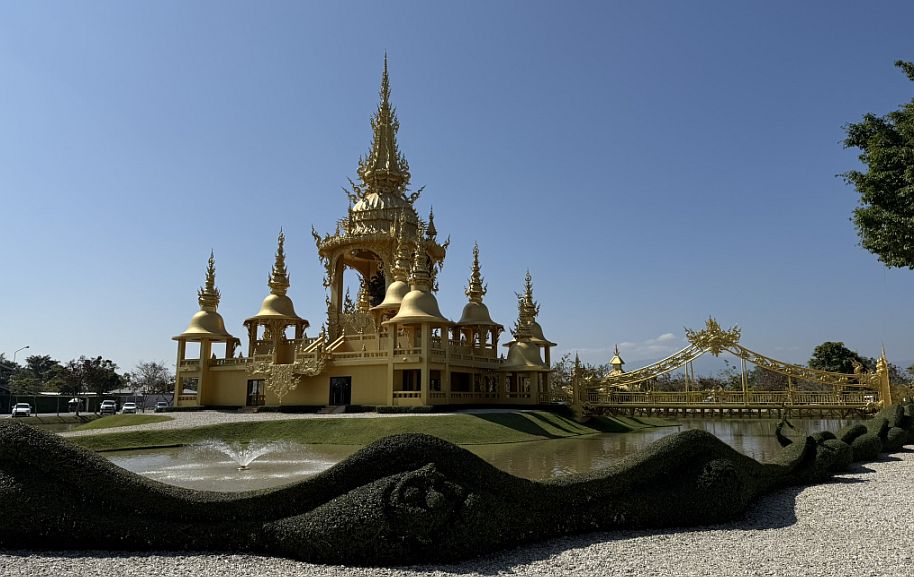
One structure that stands out in sharp contrast is the “Golden Building.” While the main temple is pure white, this building is entirely gold.
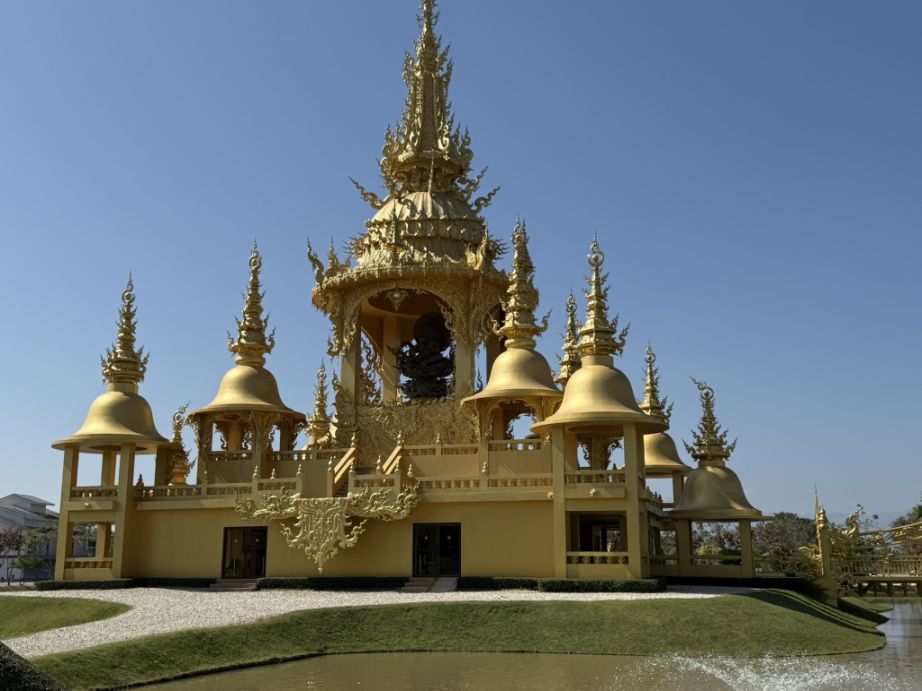
It’s actually a restroom, but highly ornate and impossible to miss. The gold color symbolizes worldly desires and materialism, contrasting with the spiritual purity represented by the white temple.
What makes Wat Rong Khun so compelling is how everything is interconnected, the façade, the roof, the sculptures, the water, and the pathways all work together to tell a story. It’s not just about visual beauty, but about guiding you through a symbolic journey, where every dragon head, every carving, and every reflection has meaning.
NEXT... Day 7- Wat Rong Suean Ten/Blue Temple