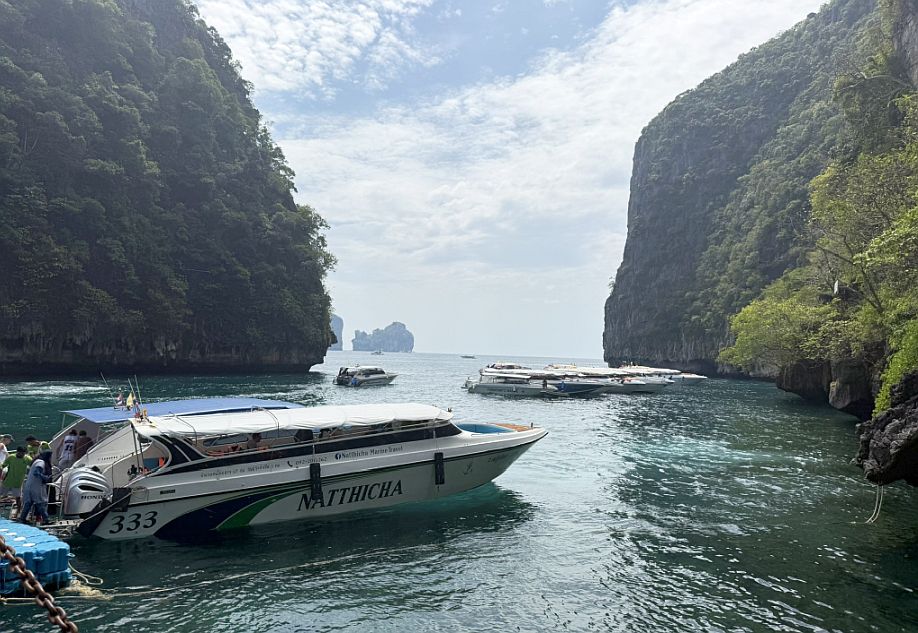
12 days in Thailand 1/7- 1/18/2025
Day 12-Phi Phi, Maya Bay Speedboat tour-1/18/2025
2nd stop: Maya Bay
As your boat pulled up to the designated drop-off point for Maya Bay, it became immediately clear just how popular, and carefully managed, his place has become. To protect the fragile ecosystem, authorities strictly limit the number of boats and visitors allowed at any given time. Boats can’t just come and go freely anymore; they’re scheduled and regulated to control the flow of people. This helps reduce overcrowding, protects the coral reefs, and preserves the natural environment that made the bay famous in the first place.
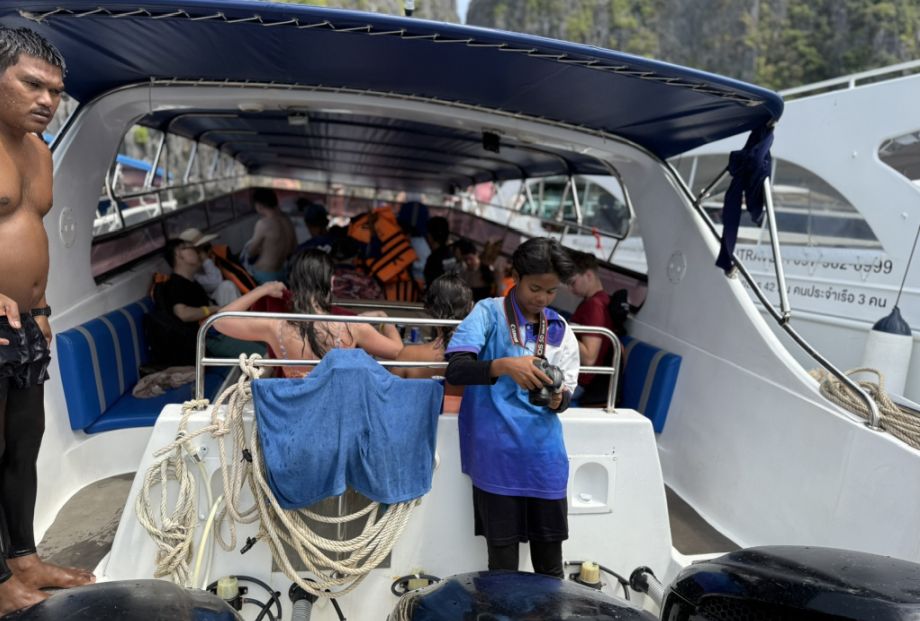
The young boy you see holding a camera takes pictures and then he print them out by the end of the trip, so that people can buy them. He actually does a very good job.
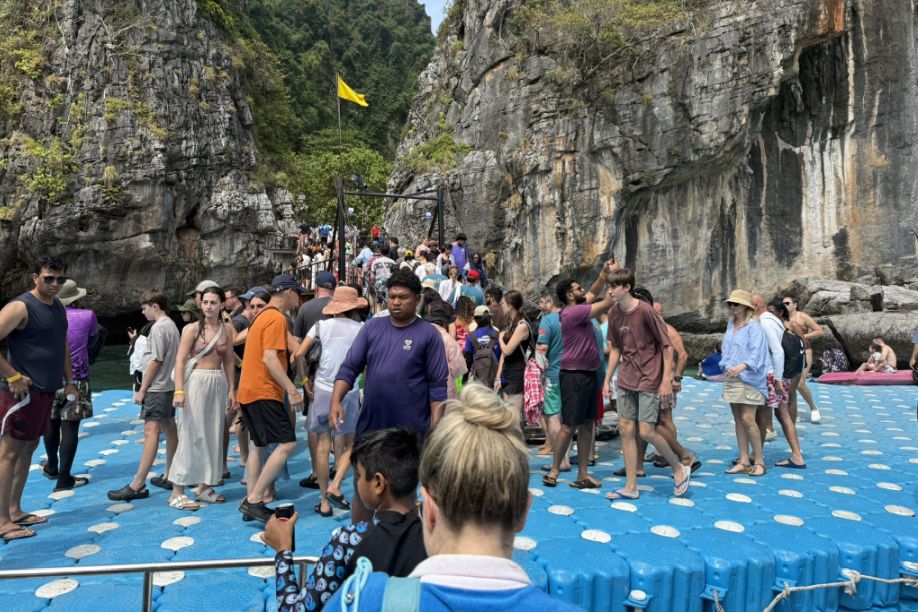
Stepping off onto that large rectangular floating pier, we are suddenly part of a steady stream of visitors arriving almost simultaneously from multiple boats. The bright blue platform gently shifts under our feet, surrounded by clear water and a cluster of anchored boats waiting their turn.
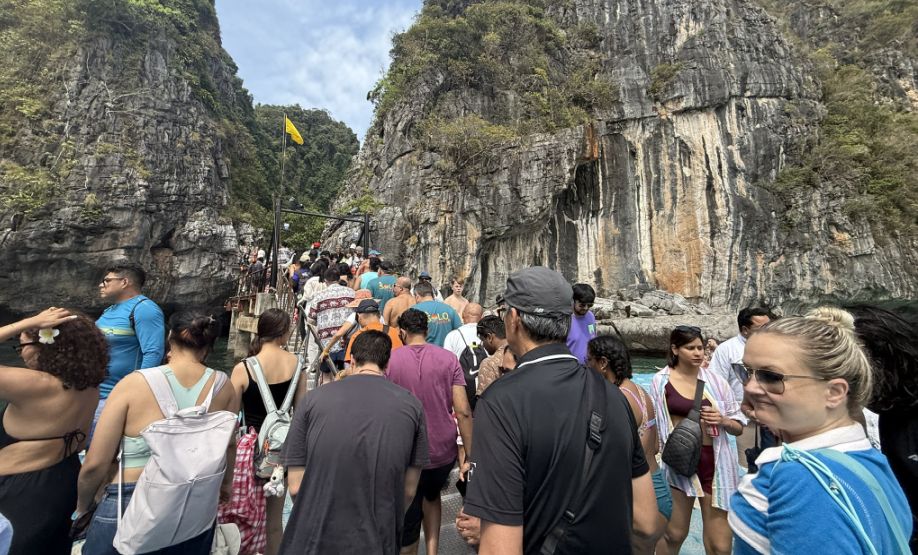
From there, we are headed straigh ahead, and the movement becomes more directed.
 |
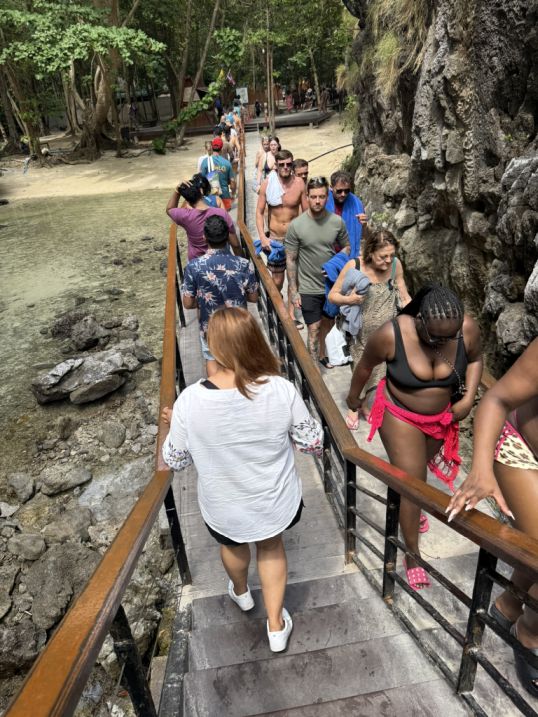 |
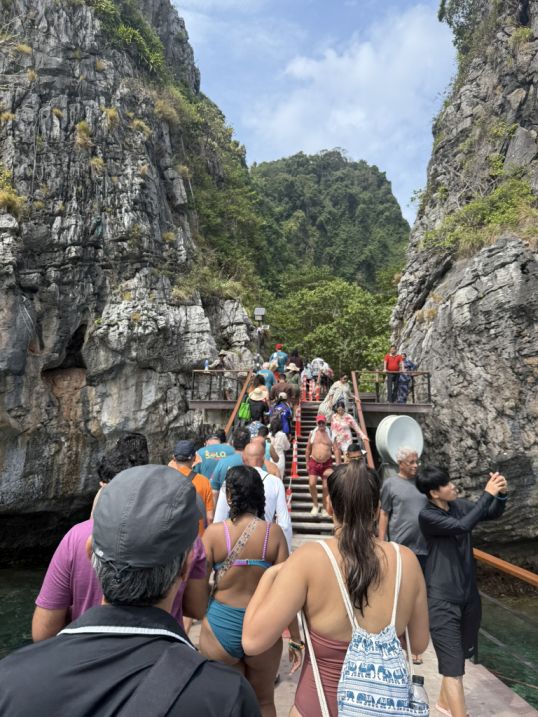
We head toward a set of narrow stairs, climbing up from the pier into the island itself. The path funnels everyone forward, and we hear the park staff calling out, “Keep walking, no stopping for photos,” keeping the flow steady and preventing bottlenecks.
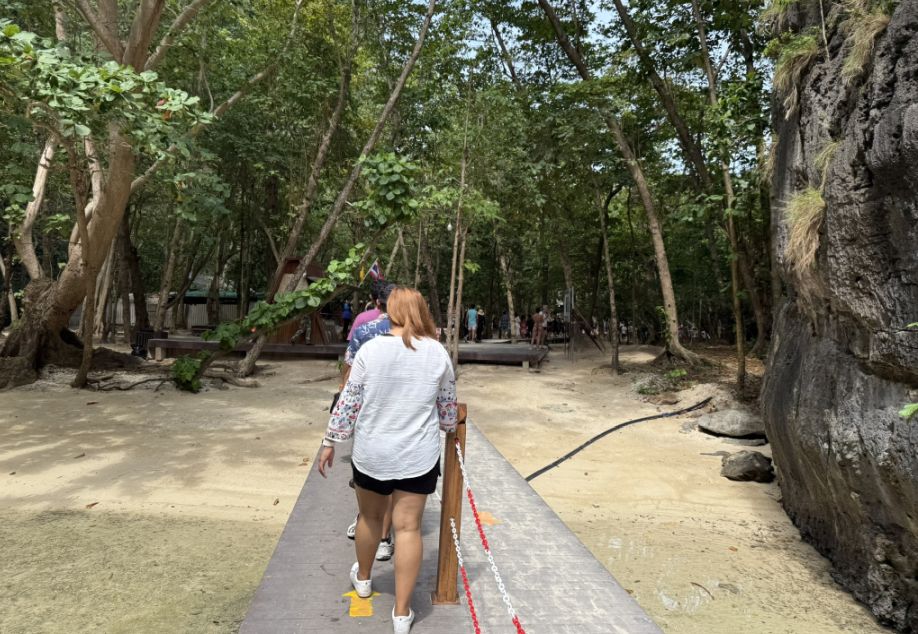
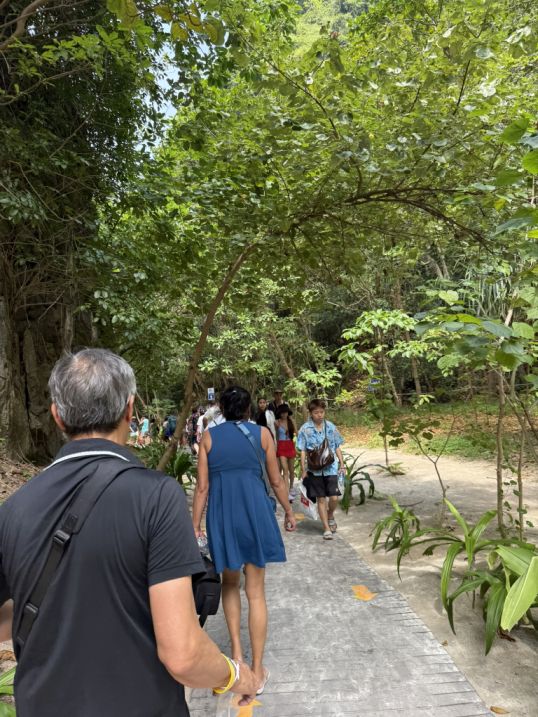
We entered a long, narrow cement walkway, shaded in parts and cutting through lush greenery. It feels less like a beach entrance and more like passing through a protected nature corridor. almost like we are being guided carefully through the island rather than rushing straight to the shore.
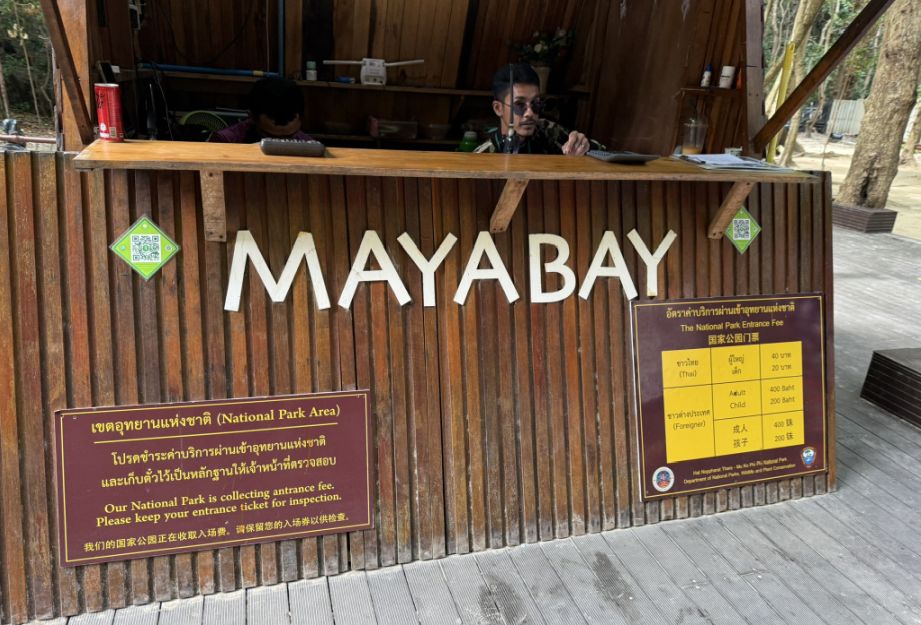
Eventually, the path opens slightly into a more organized area where our group pauses at the ticket checkpoint. Our guide collects entry passes for everyone, another layer of control to monitor how many people are inside at once.
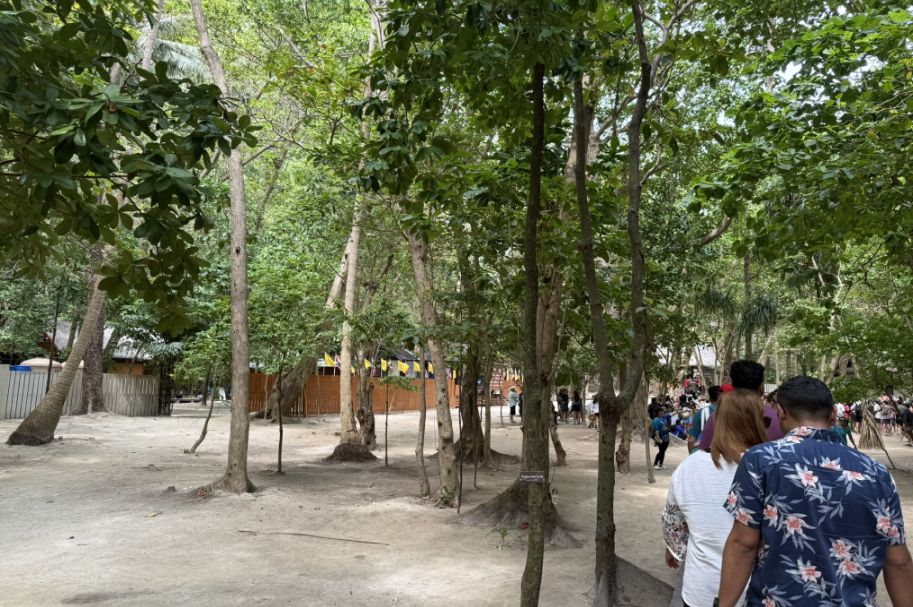
The walk through Maya Bay is surprisingly different from what you might expect, it doesn’t open straight onto the beach, but instead guides you gently through a shaded, almost park-like setting.
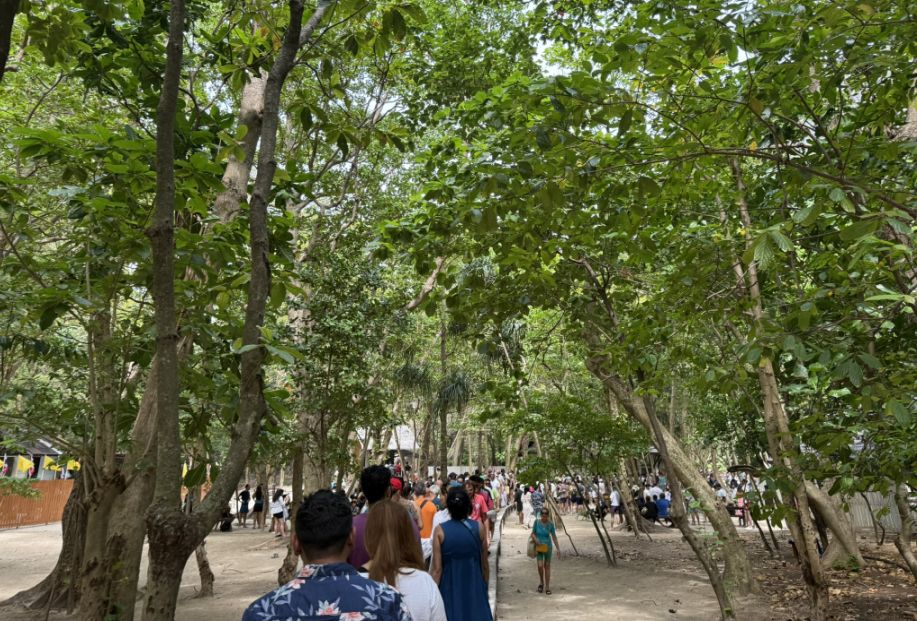
As we moved along the path, the dense greenery created a cool canopy overhead, filtering the sunlight.
 |
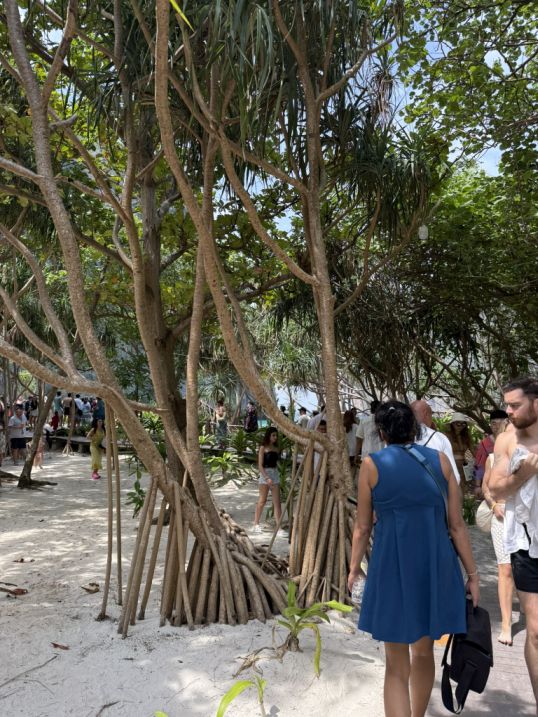 |
As we kept walking, I noticed an unusual tree with branches reaching down and taking root.
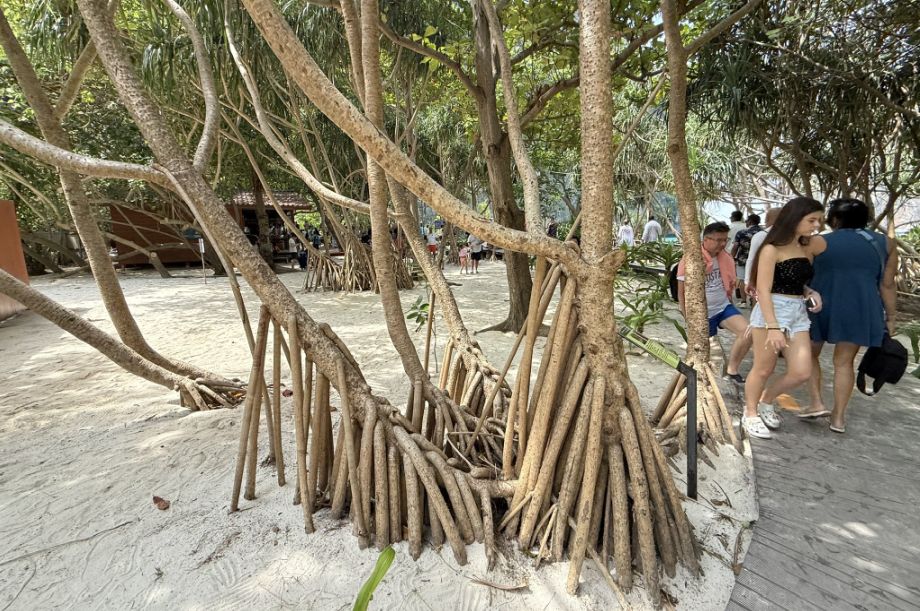
I was told that it is likely a type of banyan, giving the whole area a slightly magical, almost surreal feel, as if the forest itself was growing in layers around us.
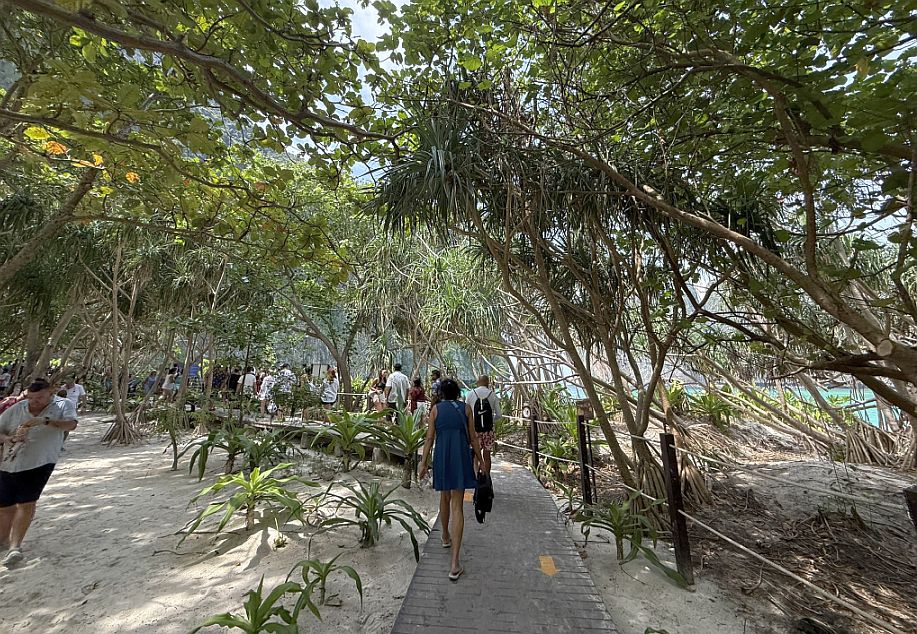
Then, little by little, the first hints of the bay begin to appear. Through gaps in the trees, we caught flashes of that vivid blue water, just enough to build anticipation.
 |
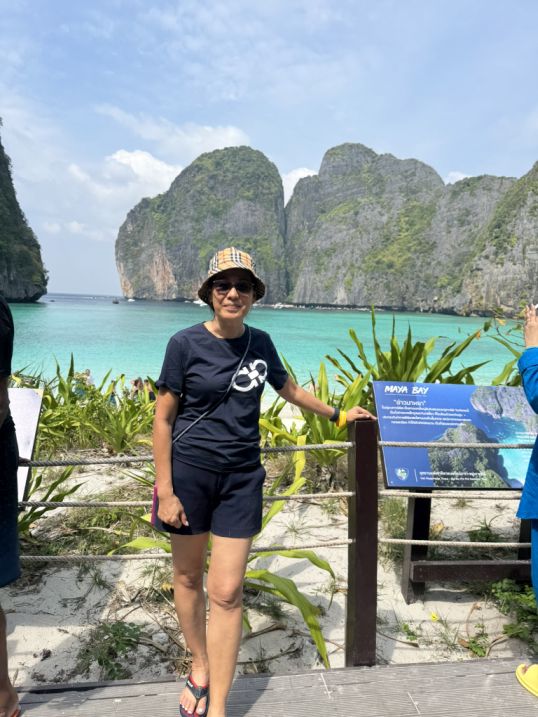 |
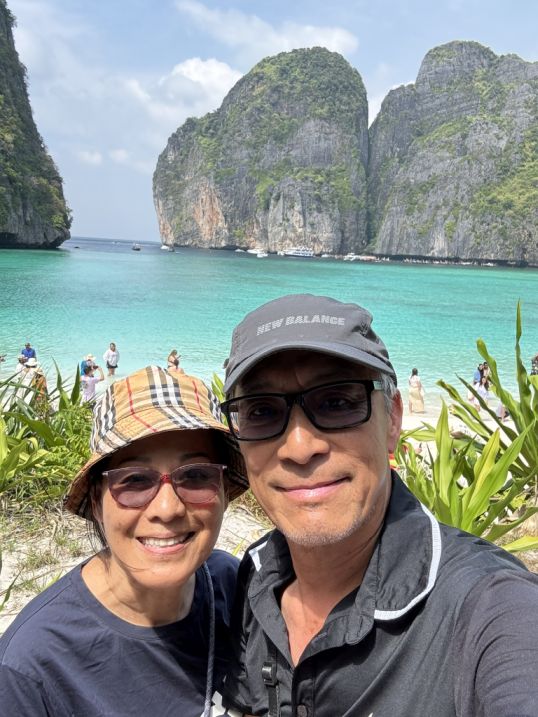
Soon we arrived at an elevated viewing area, lined with simple fences where people pause to take photos. From there, we can see the iconic shape of the bay, the opening in the center framed by towering karst mountains on either side, like a natural gateway carved into the cliffs.
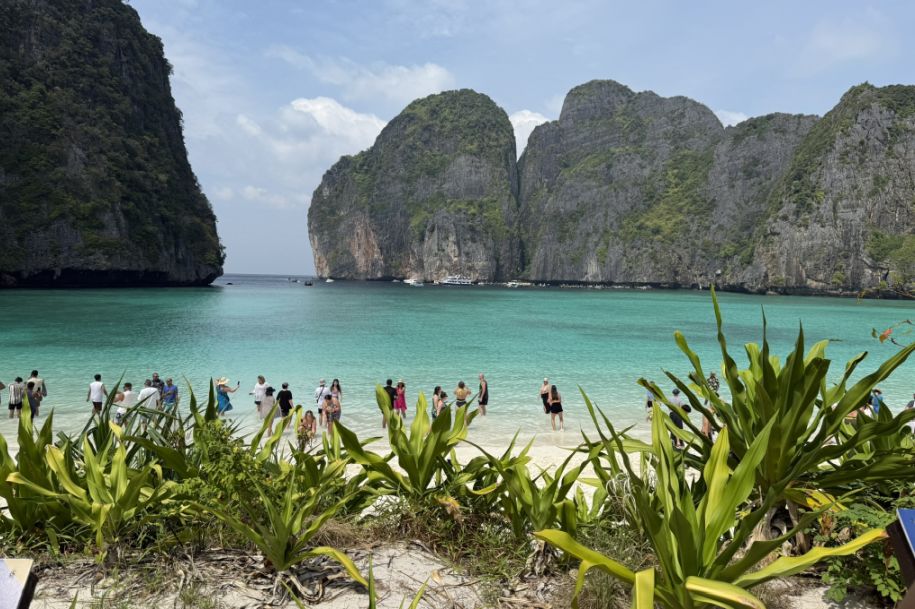
From behind the bushes, we get our first partial glimpse of the beach below, still slightly hidden, which somehow makes it feel even more special.
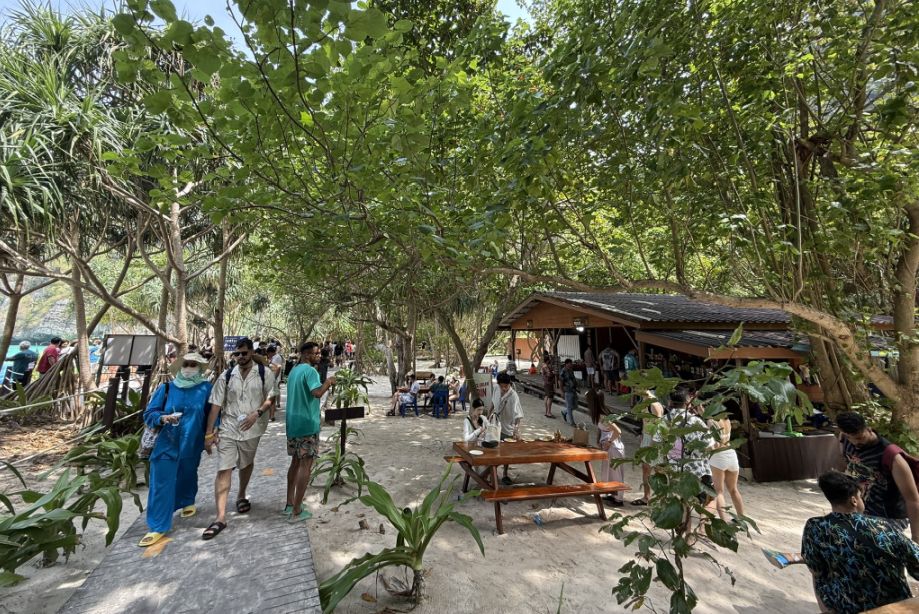
Nearby, there’s a rest area with tables set under the open sky, where visitors can sit, cool off, and grab drinks or snacks. It adds to that feeling that this isn’t just a beach, but a carefully managed park space designed to handle the steady flow of visitors.
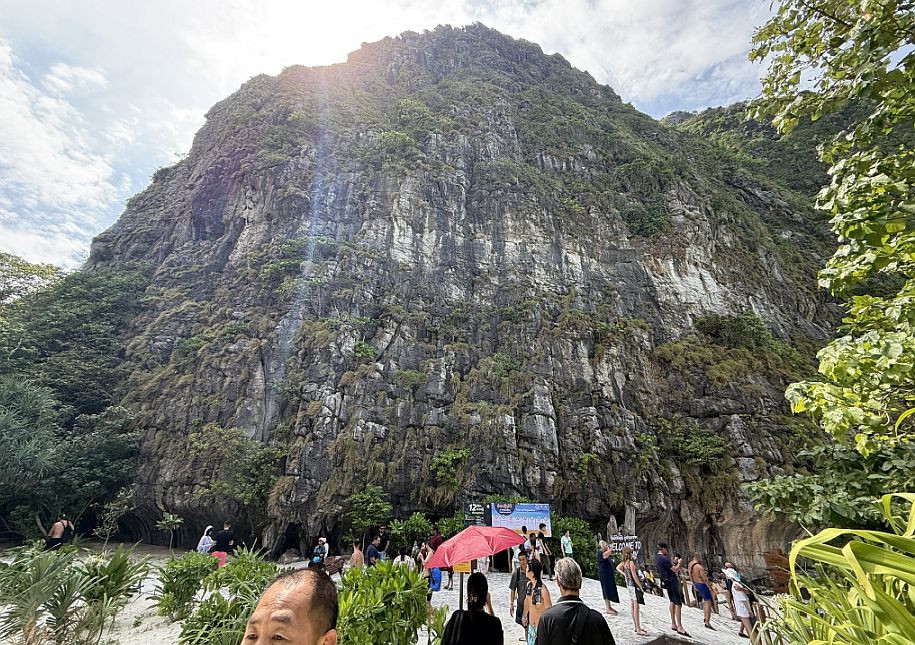
As we continued walking, the path leads us closer to the shoreline, and suddenly a massive karst wall rises into view near the final stretch. It feels almost dramatic, like a natural curtain, right before the path opens up and reveals the full beauty of the beach waiting just beyond.
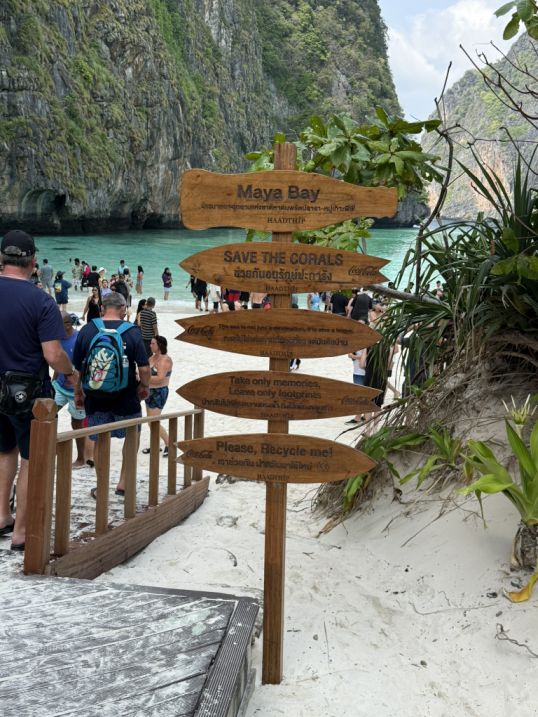 |
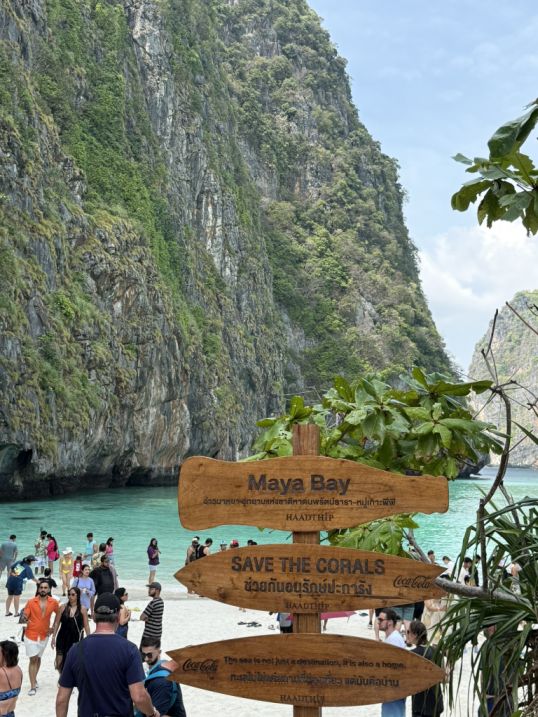 |
Sign leading to the beach
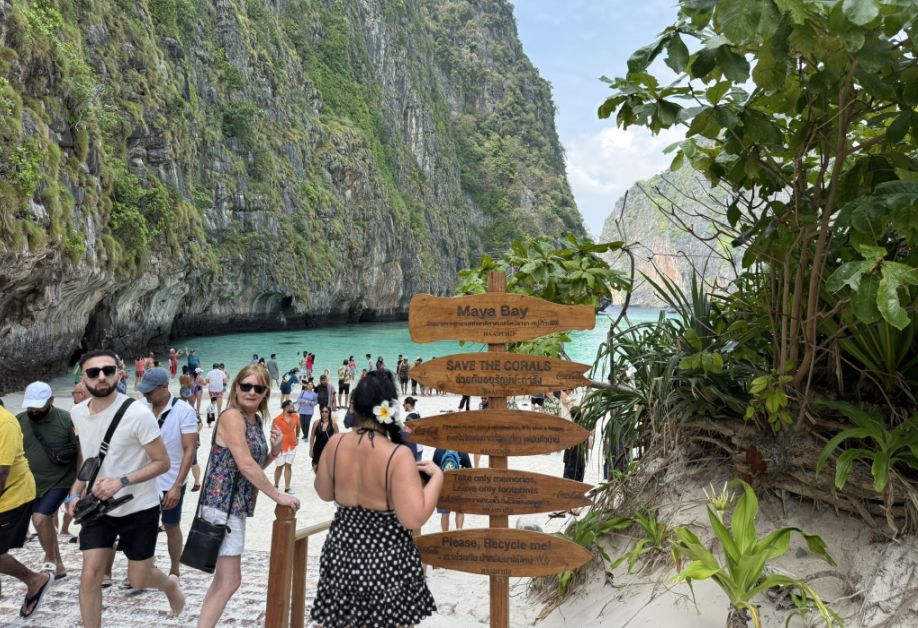
As we reached the wooden sign at Maya Bay, with its simple message, “Save the corals”, it really sets the tone for what this place has become.
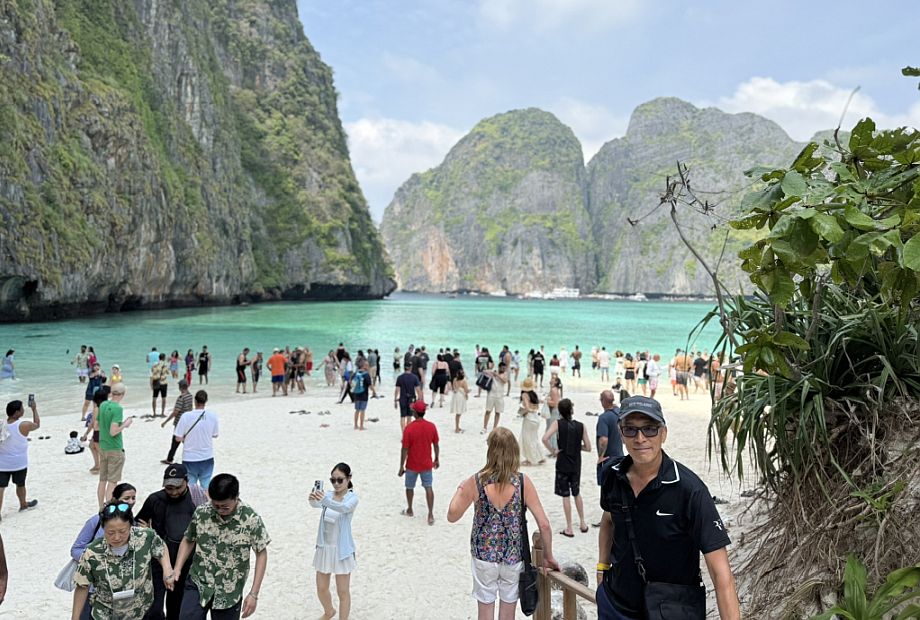
Even in the off-season, the beach is alive with visitors, all drawn to that same first breathtaking view.
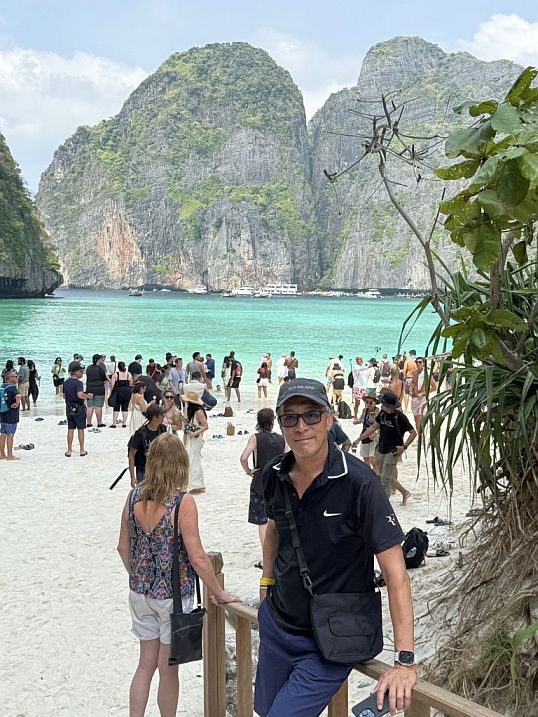 |
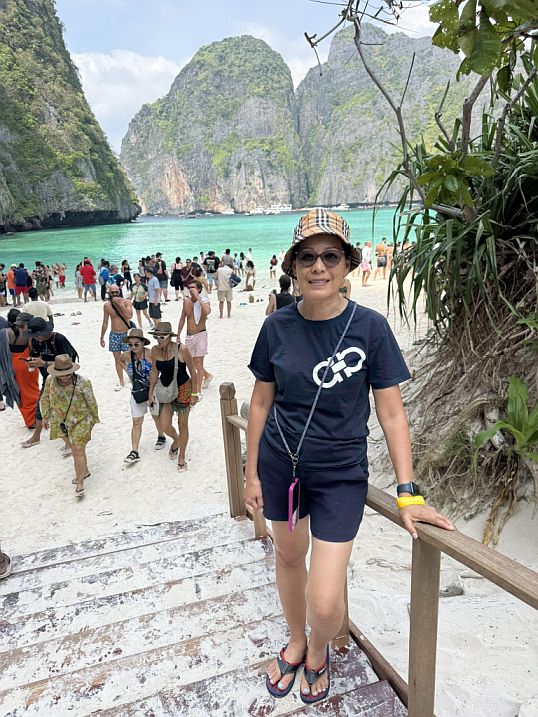 |
Walking down the stairs toward the sand, it quickly becomes clear that this isn’t a typical beach experience anymore. Park staff are present along the shoreline, gently but firmly enforcing the rules designed to protect the bay.
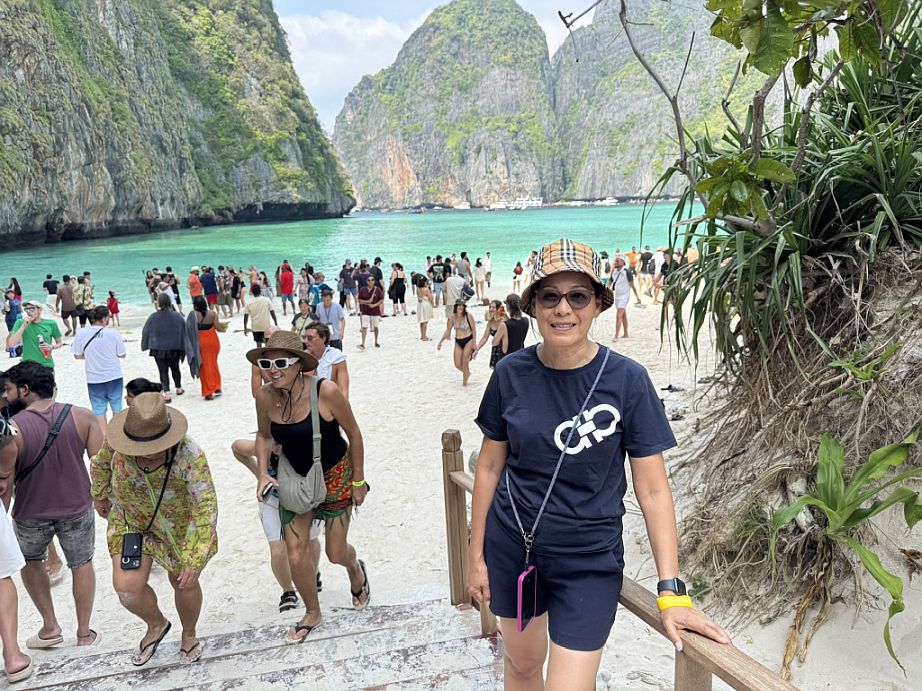
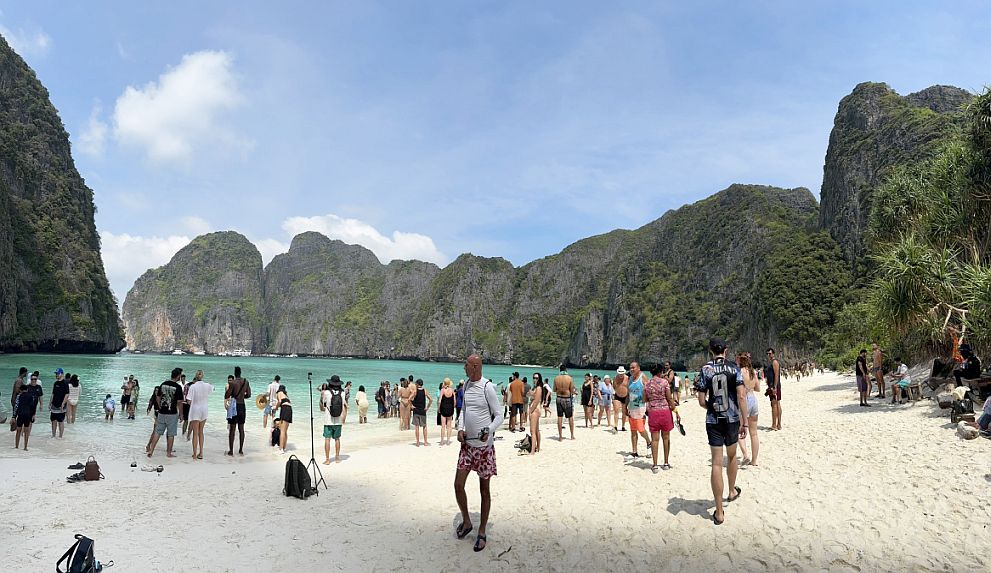
Panoramic view of the beach.
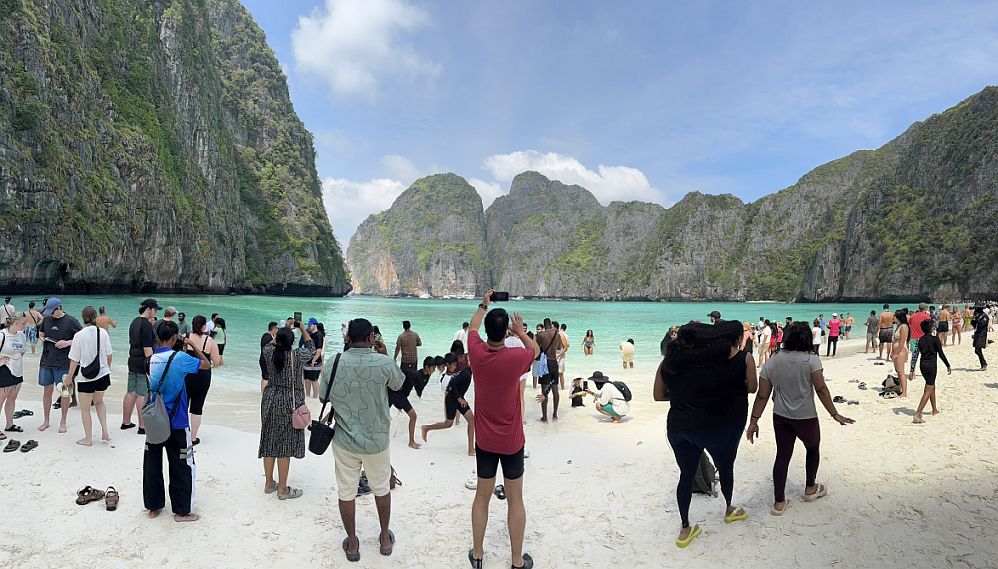
Today, visitors are not allowed to swim or snorkel in the bay. The shallow waters and coral ecosystem are still recovering, so people are asked to stay close to the shore.
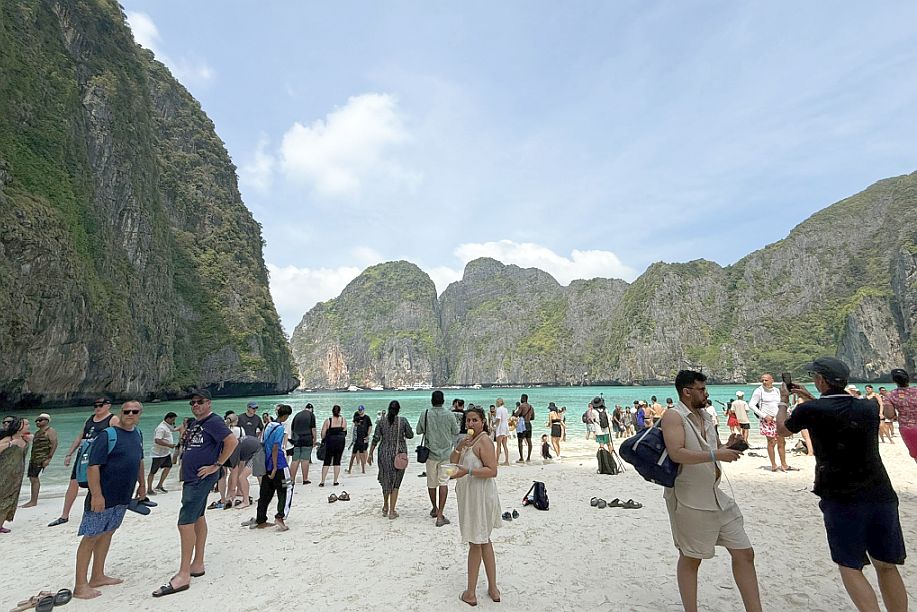
People can step into the water, but only ankle-deep, and even that is monitored. That’s why you see people taking turns, walking carefully into the clear, aqua water just enough to feel it, snapping a few photos, and then stepping back out. Other rules are also in place: no boats in the bay itself, no littering, and no disturbing the natural environment. Everything is structured to minimize impact while still allowing people to experience the beauty of the bay
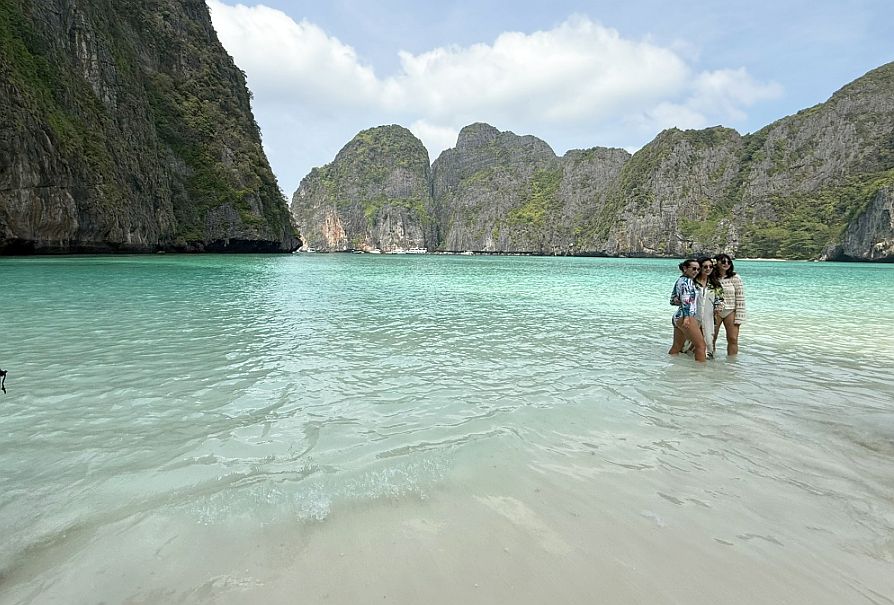
People line up for their moment in the water, the soft white sand underfoot, the towering karst cliffs behind them, and that impossibly clear sea stretching out ahead.
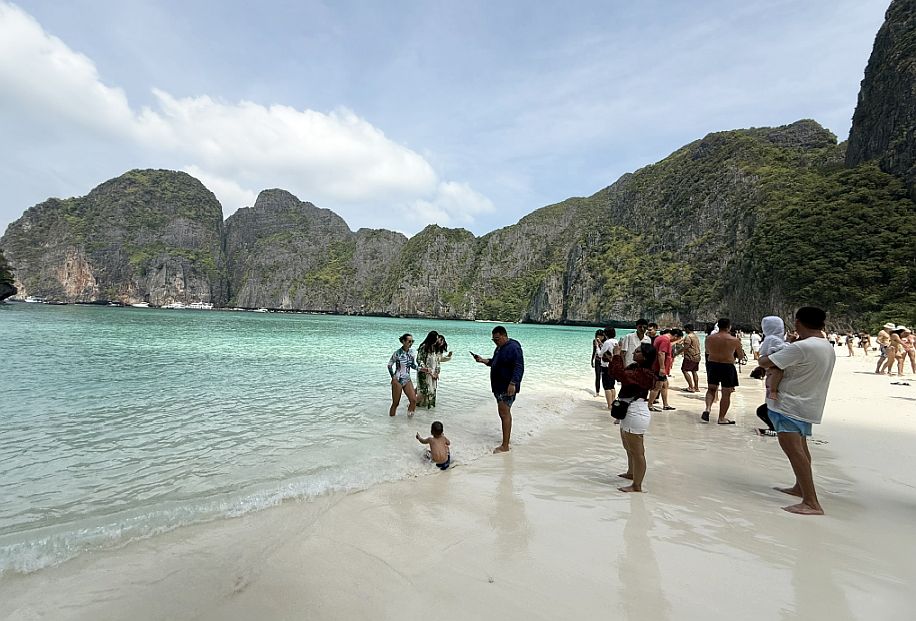
The reality is you have to wait for your turn to get in the water and take a picture without anybody around.
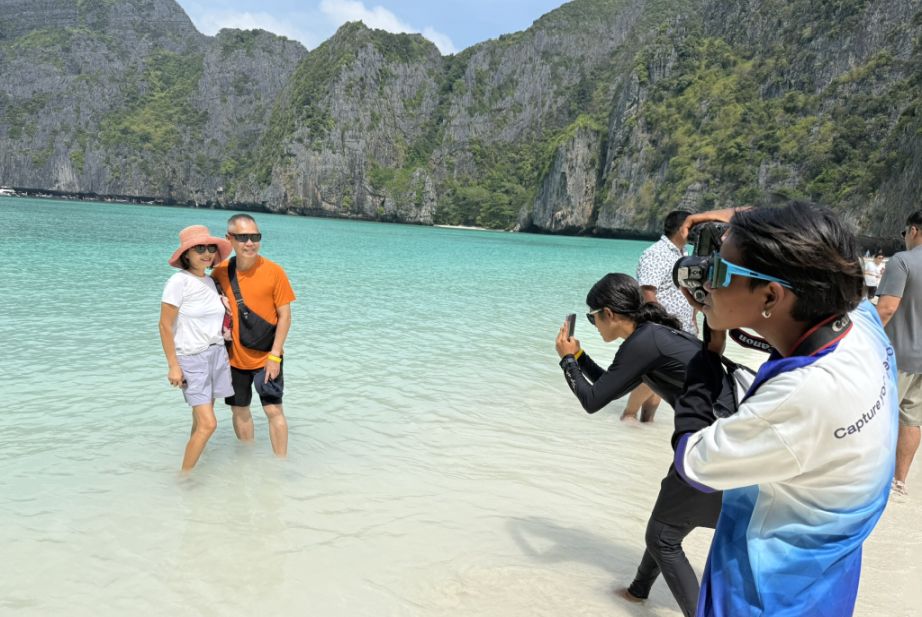
Loan and Minh's turn to take picture.
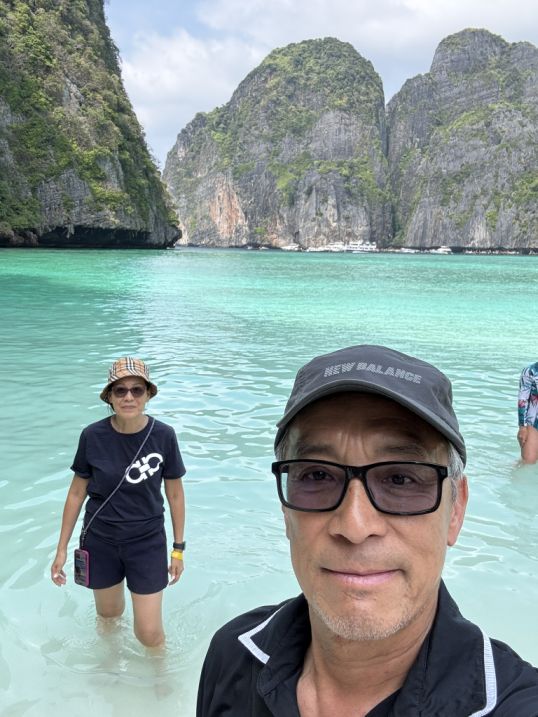 |
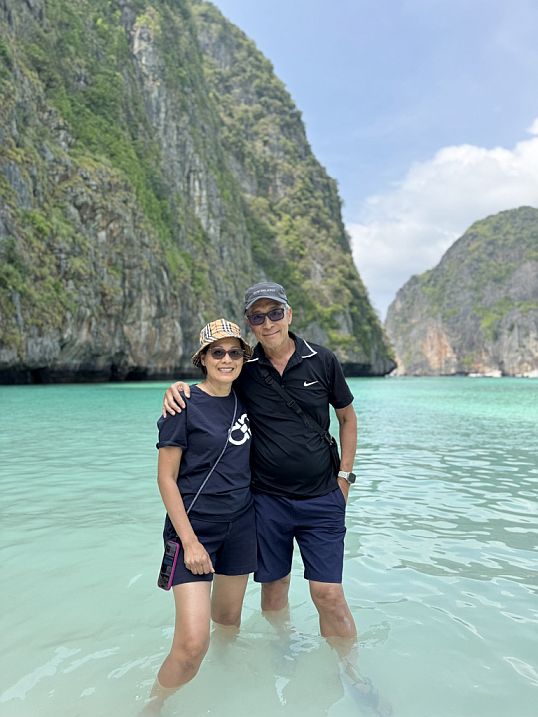 |
Our turn to take pictures.
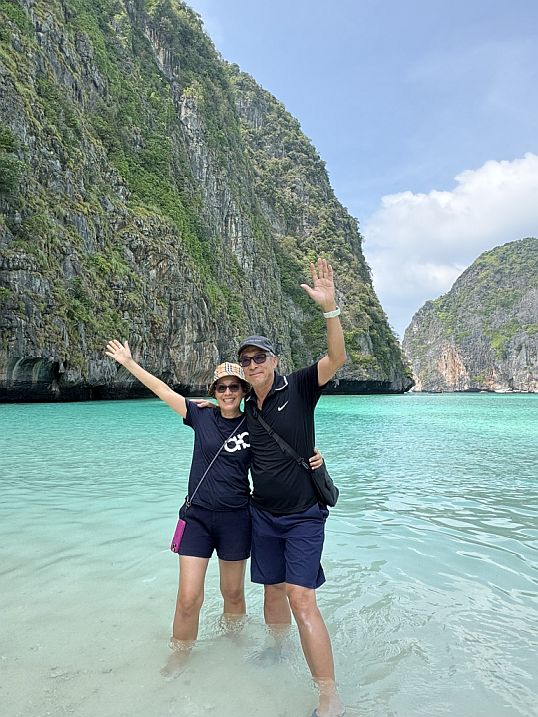 |
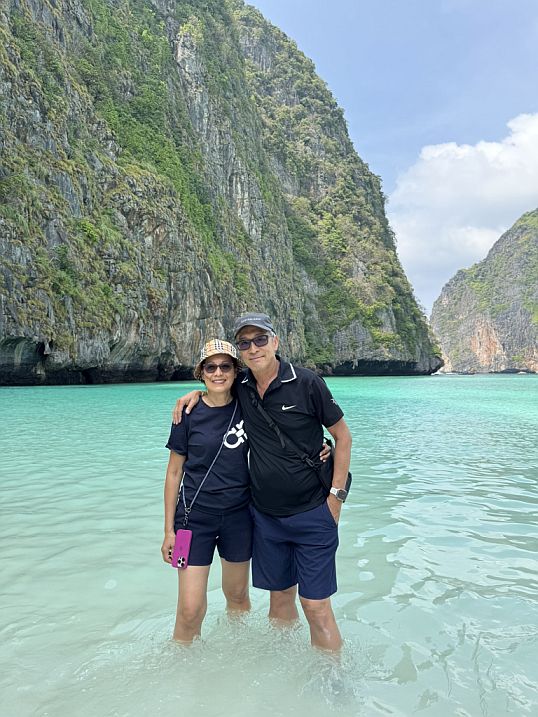 |
Standing there, even briefly in that glowing water, we can understand why these rules exist, to make sure this extraordinary place can recover and remain beautiful for years to come.
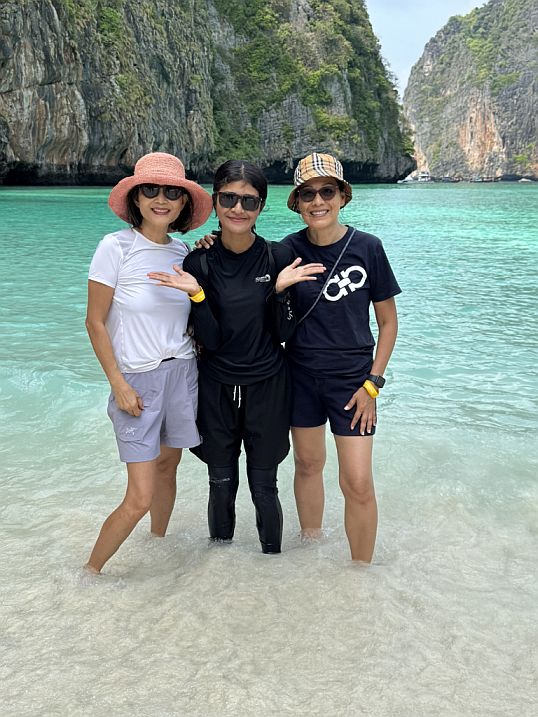 |
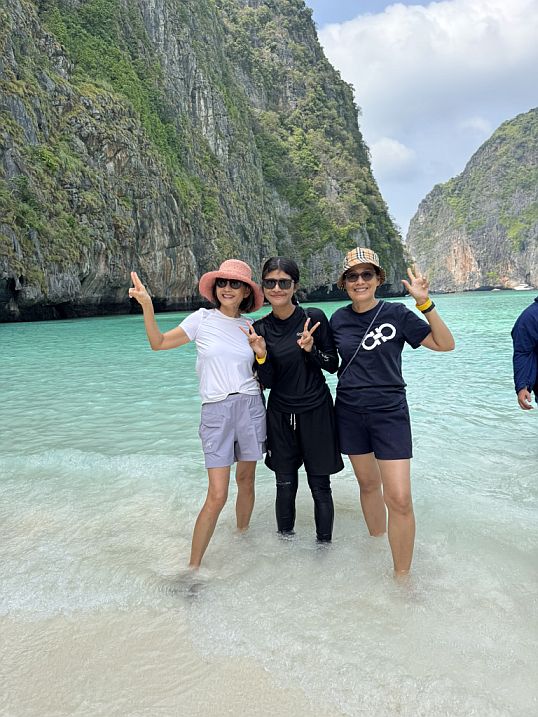 |
Loan, our skipper, and me having a great time at the beach.
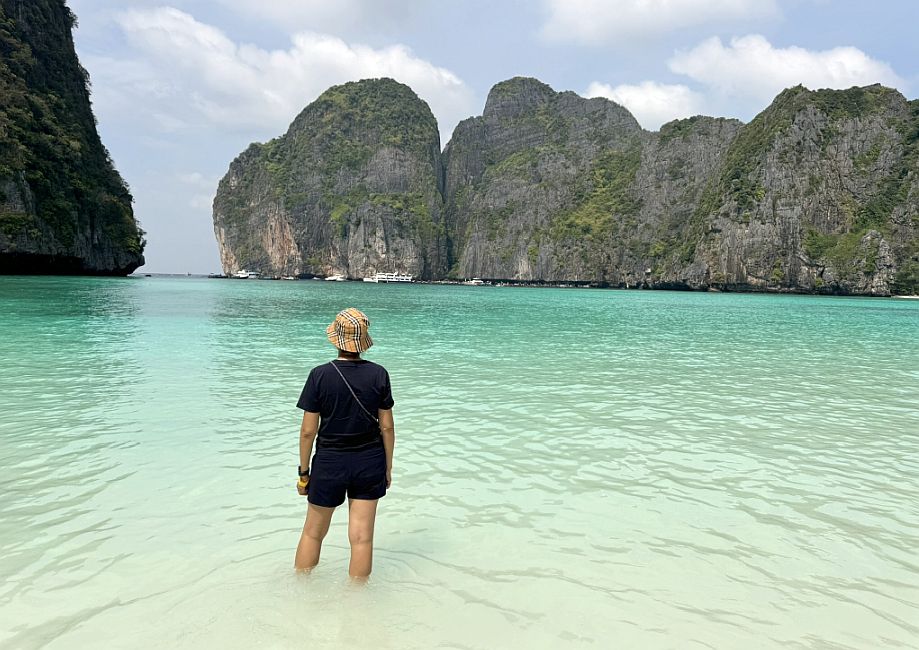
Standing on the beach at Maya Bay, the view outward toward the entrance of the bay is striking and perfectly framed by nature.
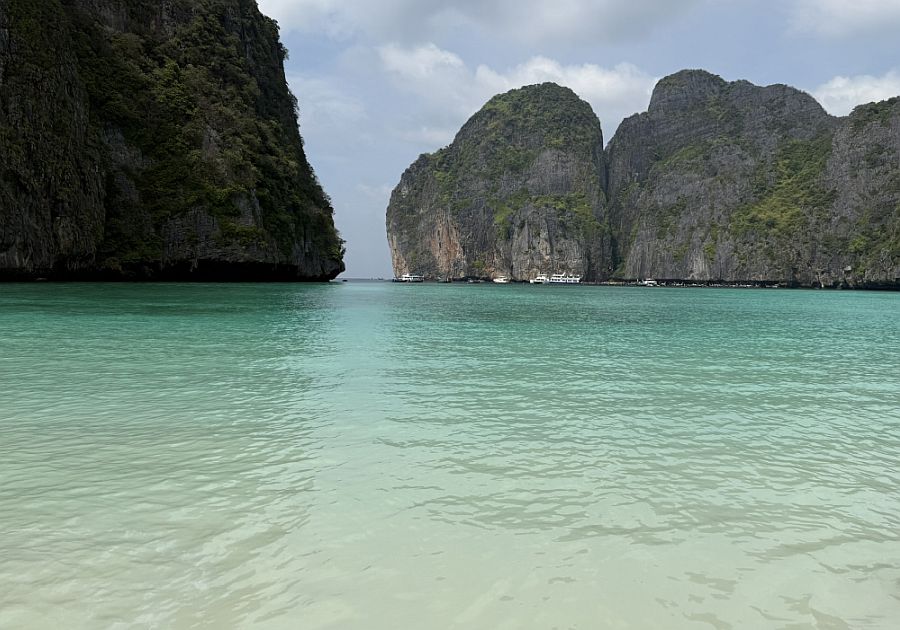
Two massive karst mountains rise on either side, forming a dramatic gateway that opens to the sea. Their steep, rugged walls feel almost protective, like they’re guarding the hidden beauty
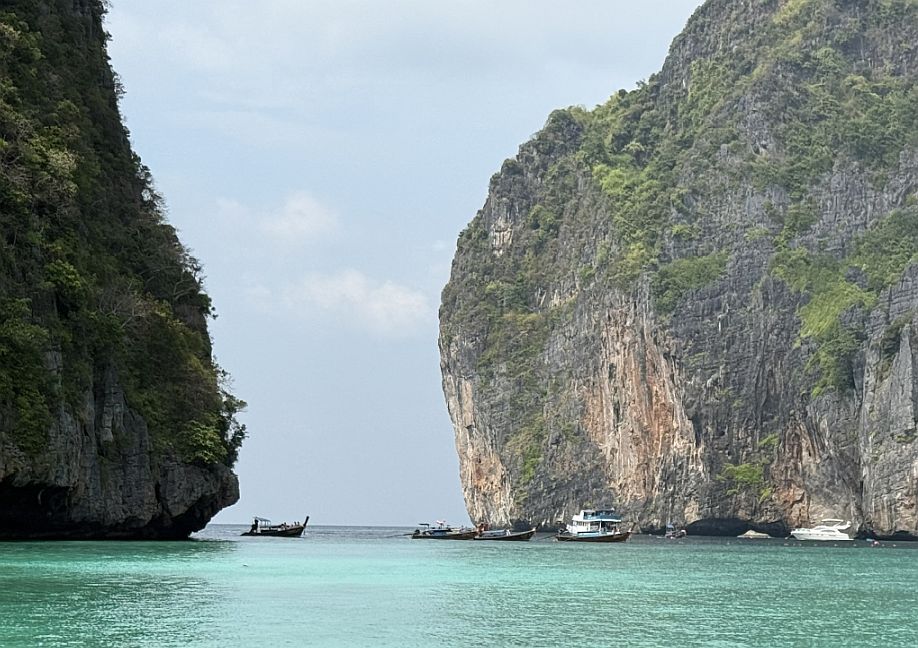
Along the right side of that opening, we can see clusters of boats gathered just outside the protected zone.
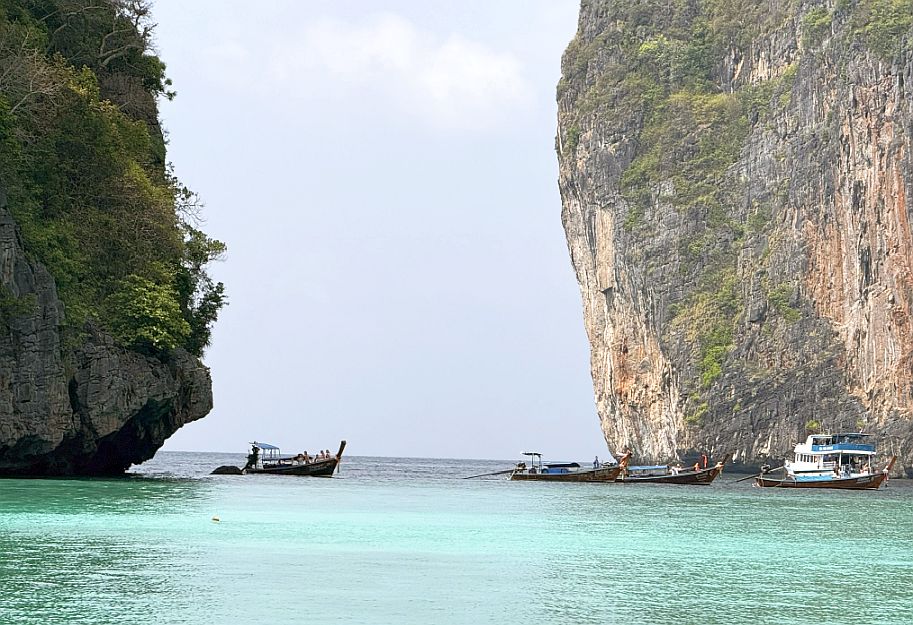
Most of them are traditional wooden long-tail boats, their colorful bows pointed toward the bay, gently rocking in the water. Among them, one or two larger boats stand out, like the two-story one I noticed on the right, offering a contrast to the smaller, more traditional vessels.
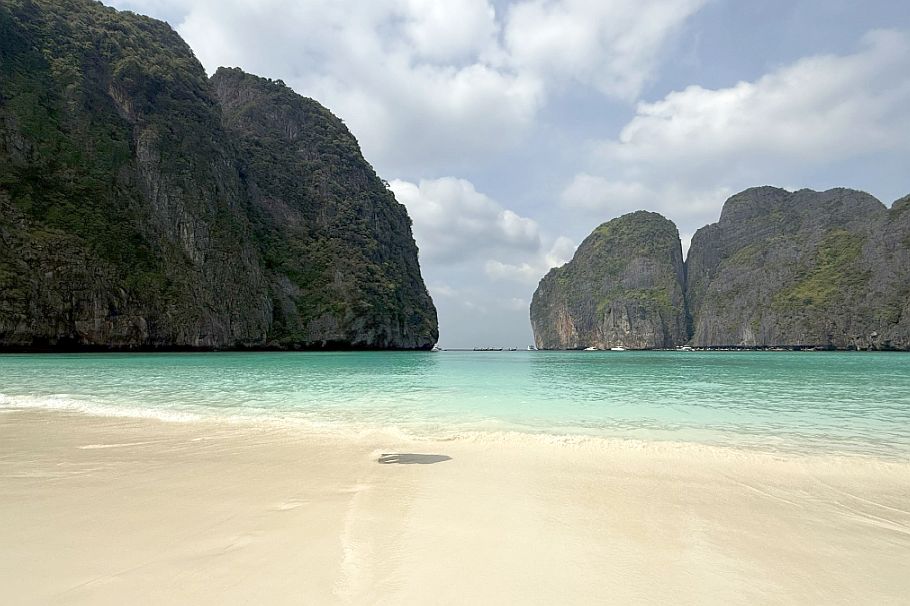
The water itself is incredibly clear, shifting between shades of pale aqua near the shore to deeper turquoise farther out. Even from the beach, you can see the sandy bottom beneath the surface, undisturbed and glowing under the sunlight. The clarity of the water, combined with the soft white sand and the towering cliffs that wrap around the bay, creates a setting that feels both vibrant and serene at the same time.
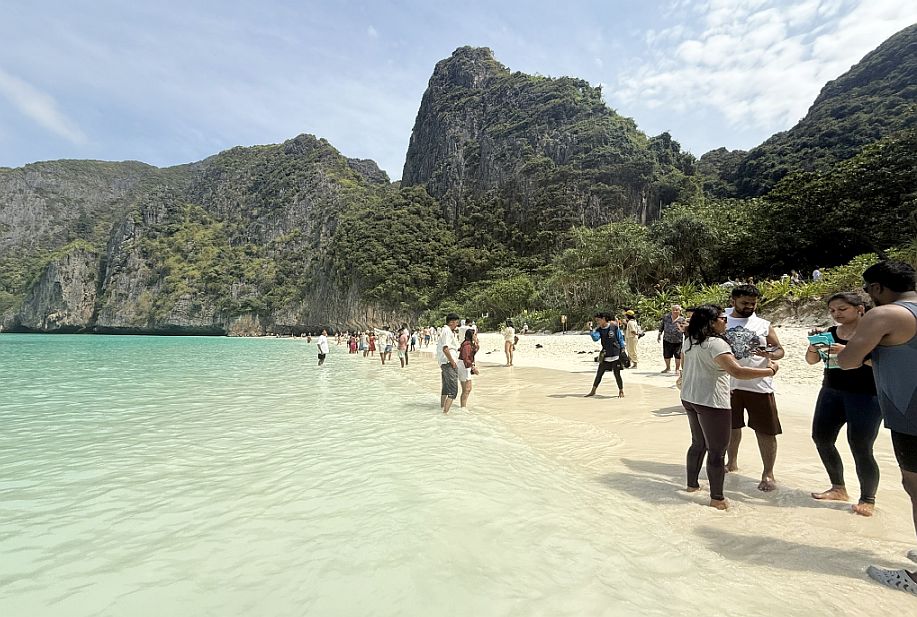
Despite the number of visitors, the natural surroundings still dominate, the scale of the mountains, the brightness of the water, and the enclosed shape of the bay all come together to make it feel like a place that’s both lively and timeless.
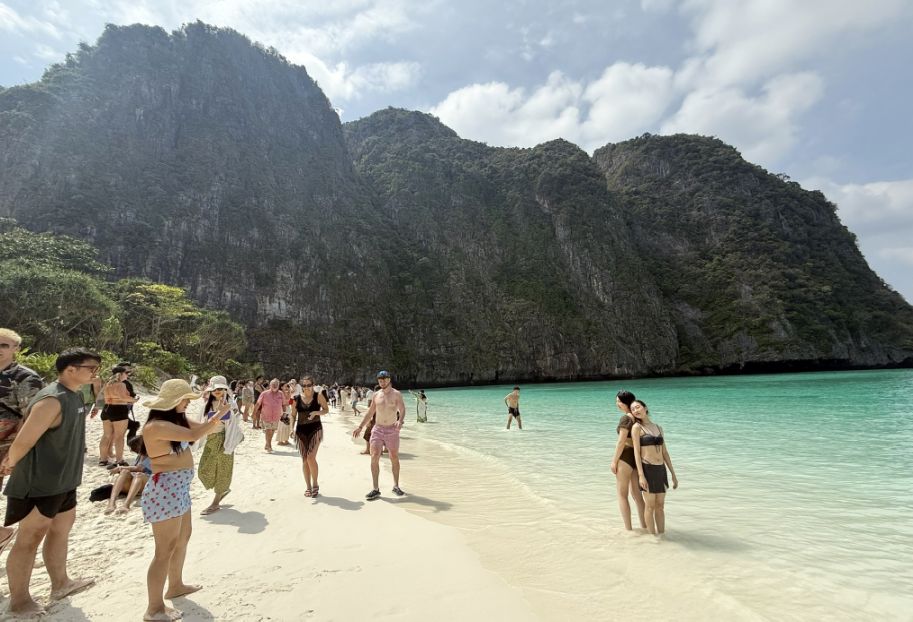
Our time here is over and we are walking back.
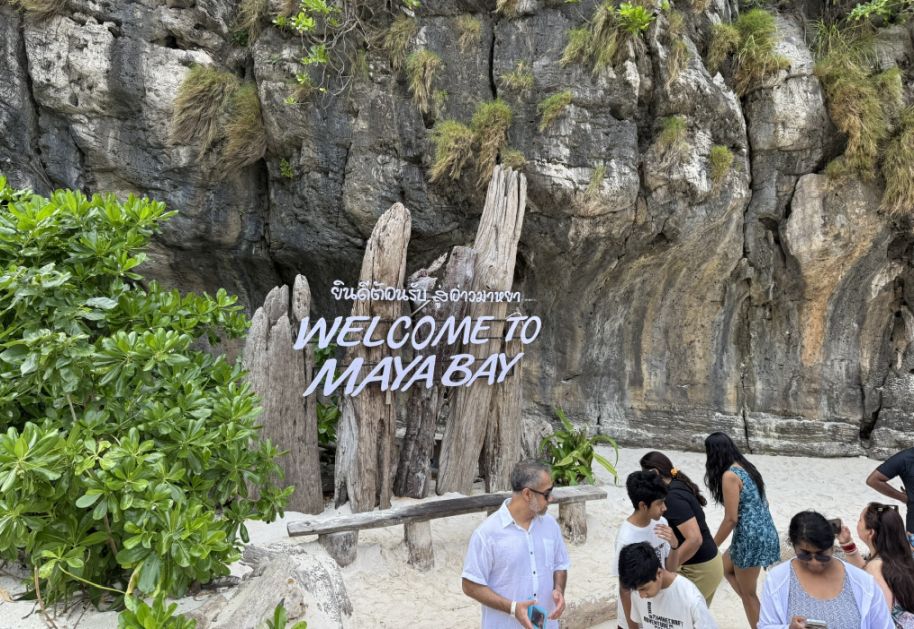
Welcome sign to Maya beach.
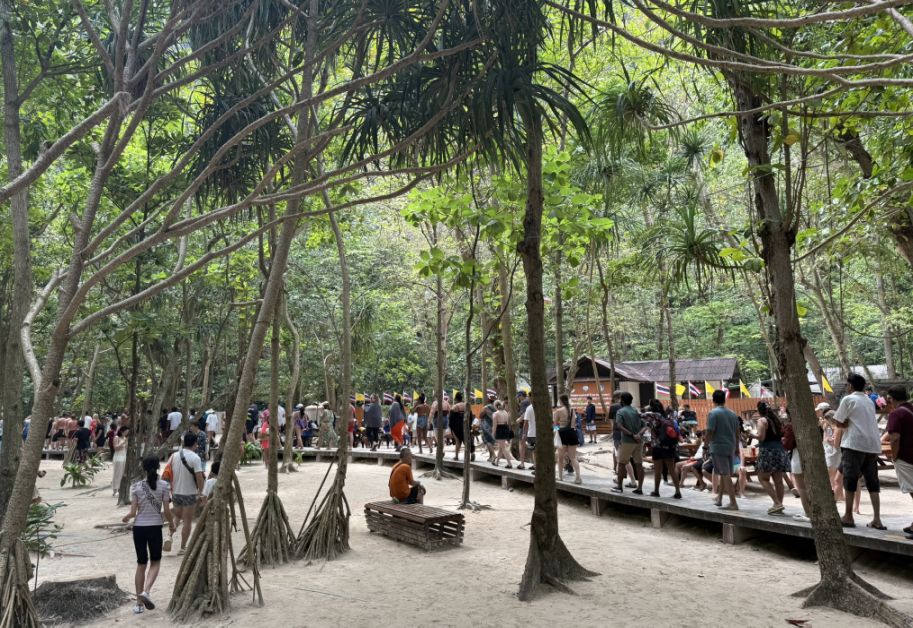
As you can see, there are a lot of people going back to the dock as our time here is limited.
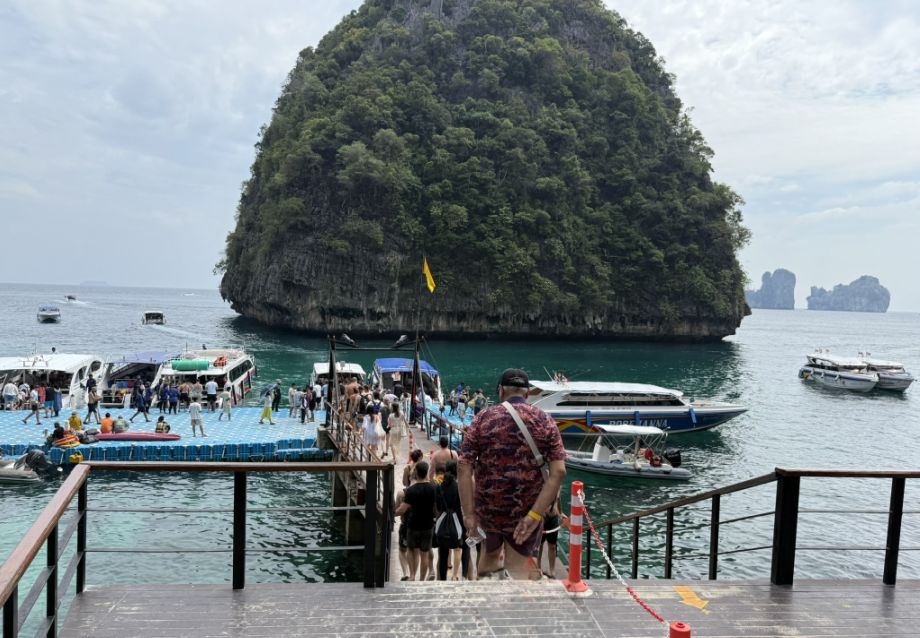
Walking back toward the floating pier at Maya Bay, the scale of tourism really comes into view.
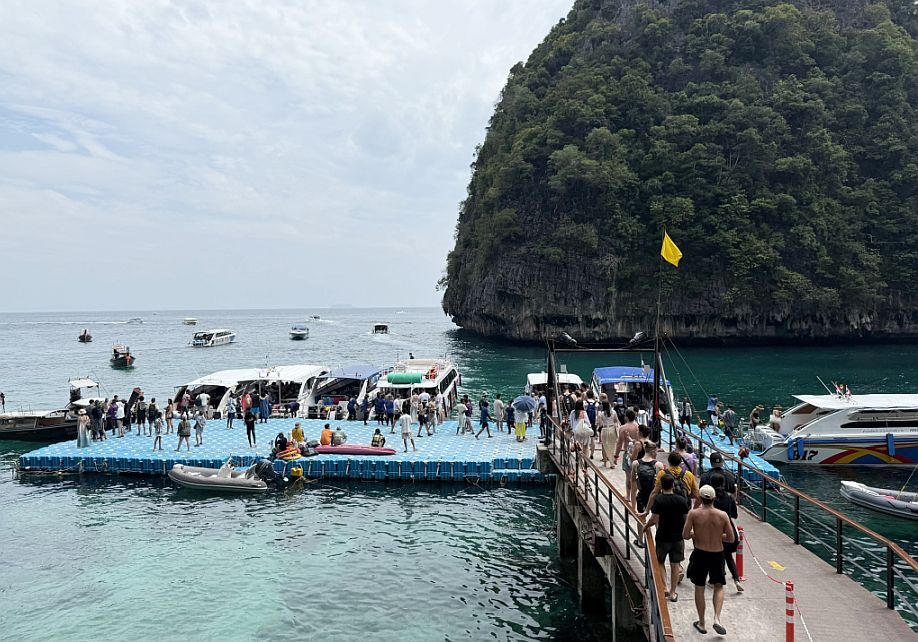
Beyond the boats lined up near the pier, you can see a constant flow of vessels in the distance, arriving, departing, circling, like a steady rhythm of movement around this small, protected place. It gives you a sense of just how many people are trying to experience the bay, even with strict controls in place. Right in front of the pier, that massive rounded karst mountain feels almost surreal up close.
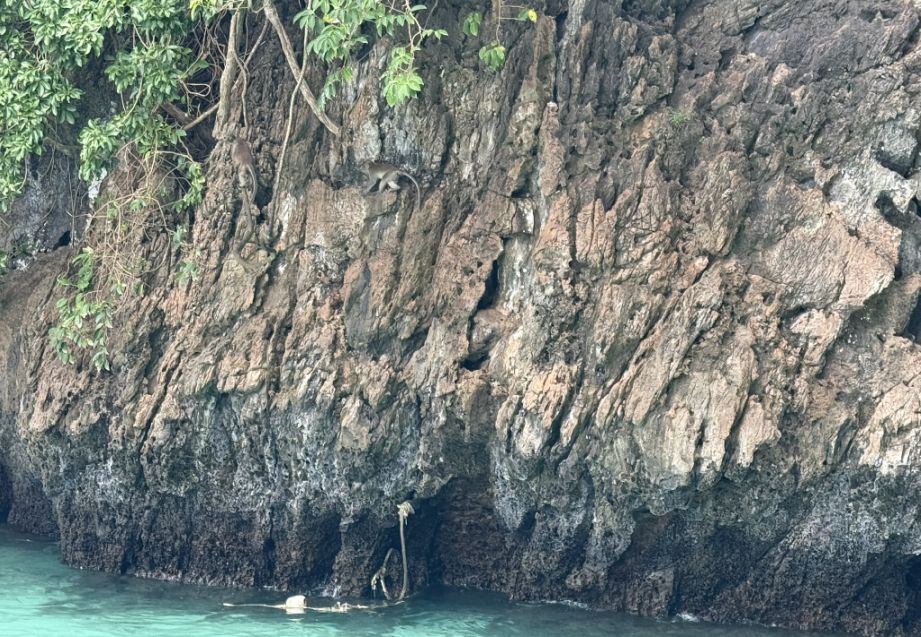
When our skipper guided the boat closer to the rock face, it revealed a different side of the landscape, alive and unexpected. Spotting a long-tailed monkey darting along the edge of the cliff is such a memorable moment. (The monkey is in the center)
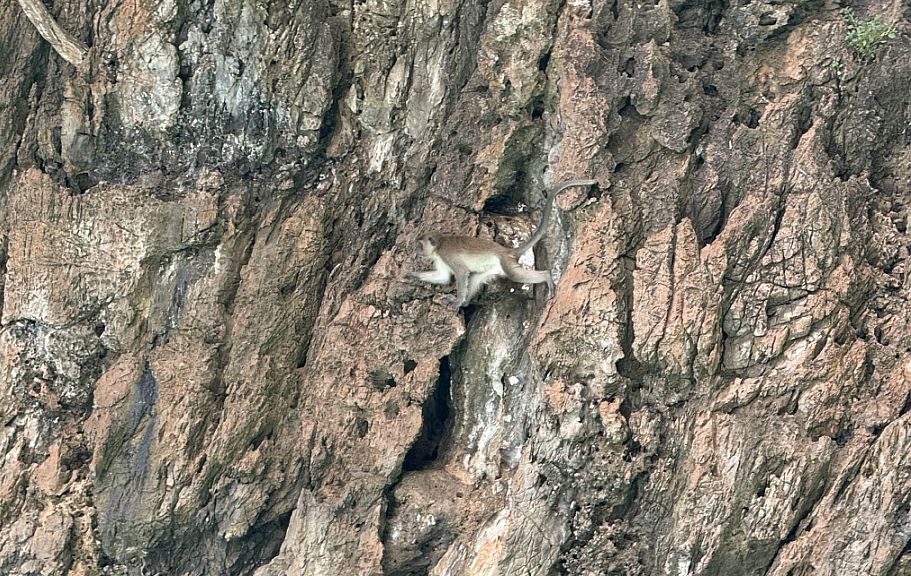
These monkeys, often called crab-eating macaques, have adapted remarkably well to this environment. Even though the cliffs look harsh and steep, they survive by feeding on a mix of fruits, leaves, insects, and occasionally small sea creatures. They’re excellent climbers, using the jagged limestone and tree roots to move around with ease. In tourist areas, they’ve also learned to take advantage of human presence, sometimes scavenging food or relying on handouts (though that’s discouraged). Freshwater can collect in rock crevices or come from rainfall, helping sustain them on these otherwise rugged islands.
3rd stop: Amdamam Beach
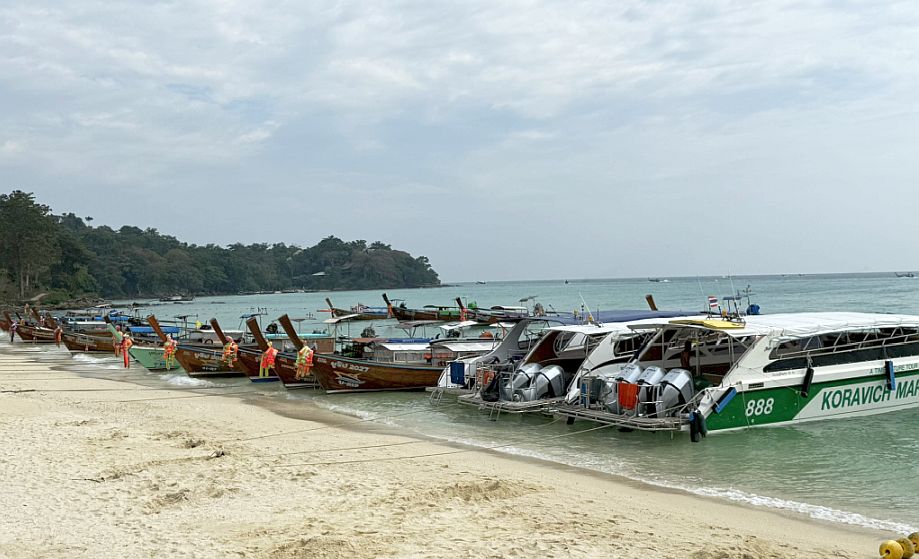
Afterward, our boat made a stop at Andaman Beach, near Phi Phi Andaman Beach Resort, feels much more relaxed and lived-in. There’s no formal pier, so the arrival itself is part of the experience, the boat gliding slowly toward shore, then easing in alongside a row of colorful long-tail boats already lined up on the sand. It feels informal and natural, like stepping into a small coastal village rather than a managed attraction.
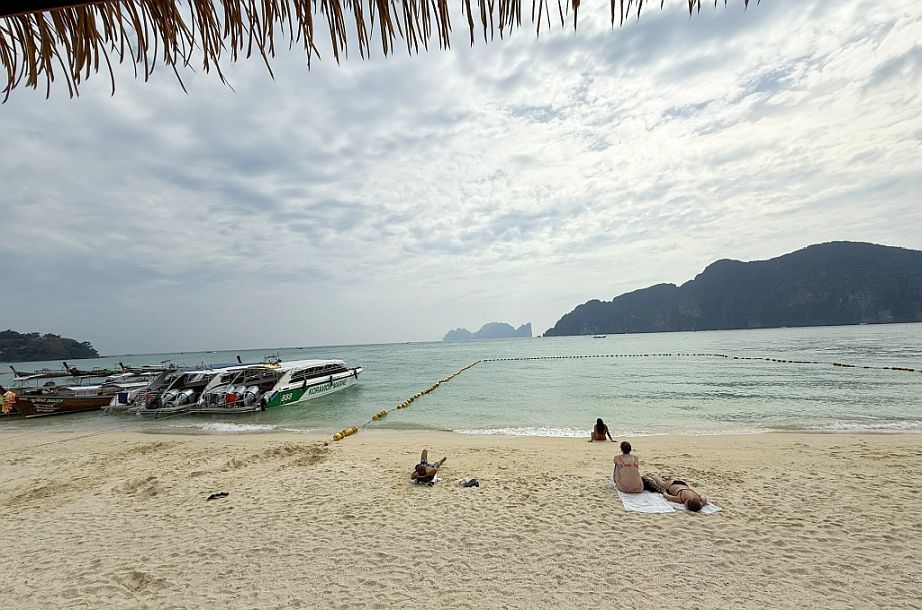
The beach here is softer in atmosphere, wide stretches of sand, gentle waves, and there were barely anybody there beside our group.
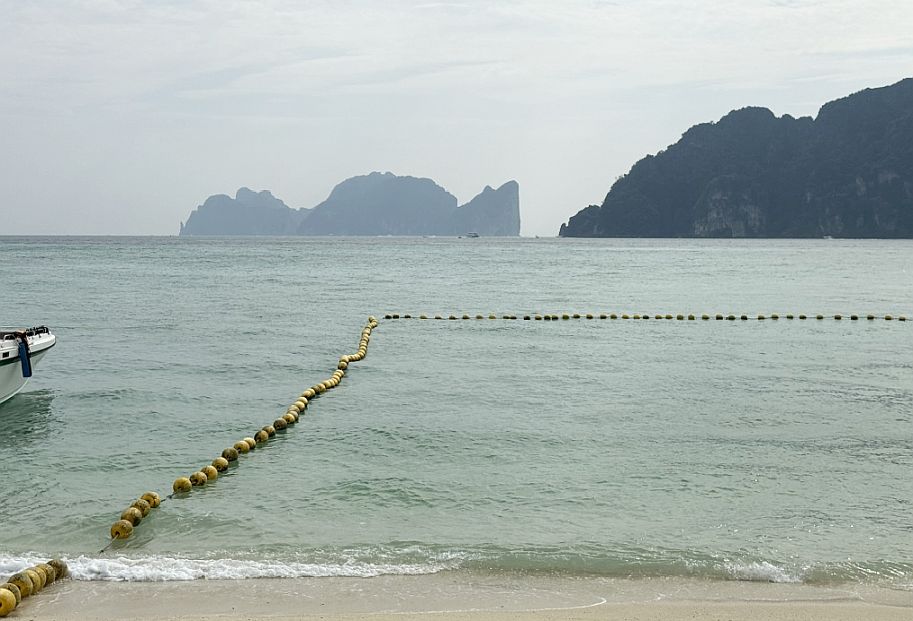
Boats come and go, people move about their daily routines, and the beach becomes a mix of locals and visitors taking a break between excursions.
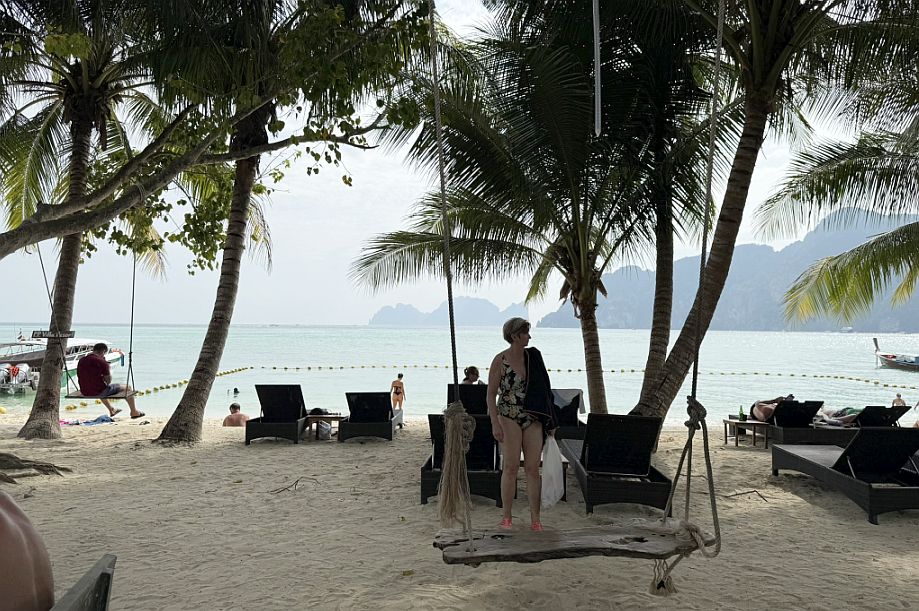
We were served lunch right by the water adds to that laid-back feeling, with the sound of the sea in the background and boats coming and going nearby. After the intensity and crowds of Maya Bay, this stop gives all of us a chance to slow down, sit, walk along the shore, or just take in the scenery at your own pace.
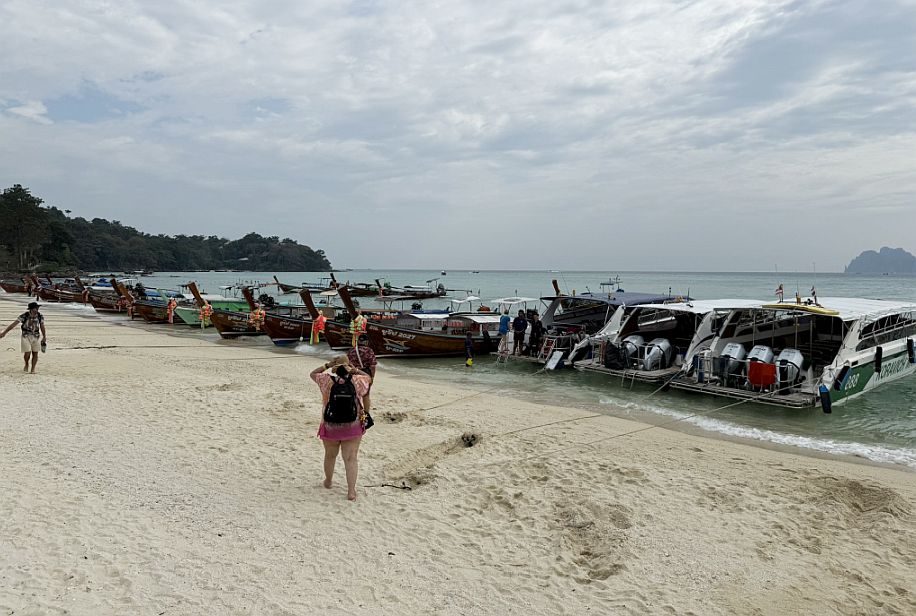
After lunch we boarded the boat to Bamboo Island.
4th stop: Bamboo island
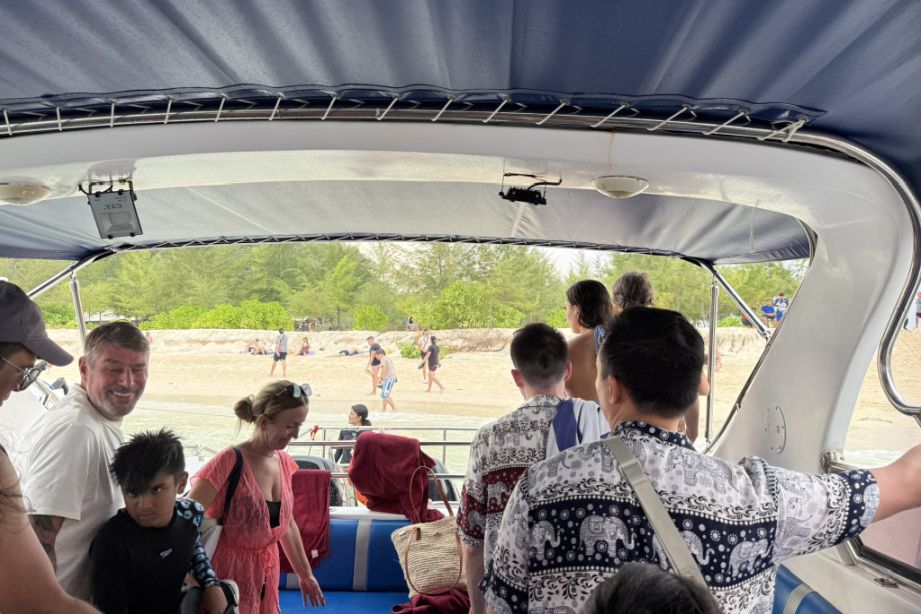
We are now arriving at Bamboo Island.
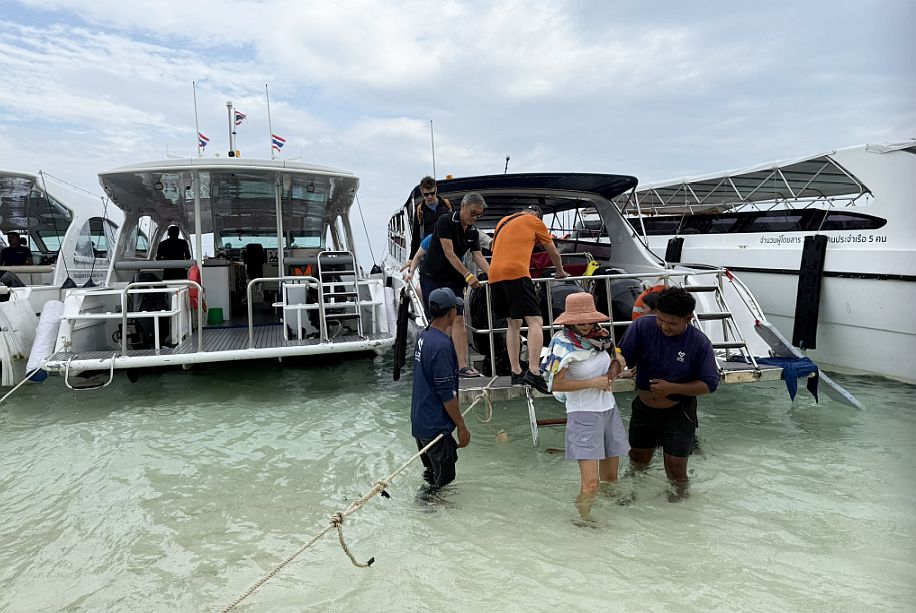
Again no pier, so the staff helped us getting off the boat and stepping in the clear water to the beach.
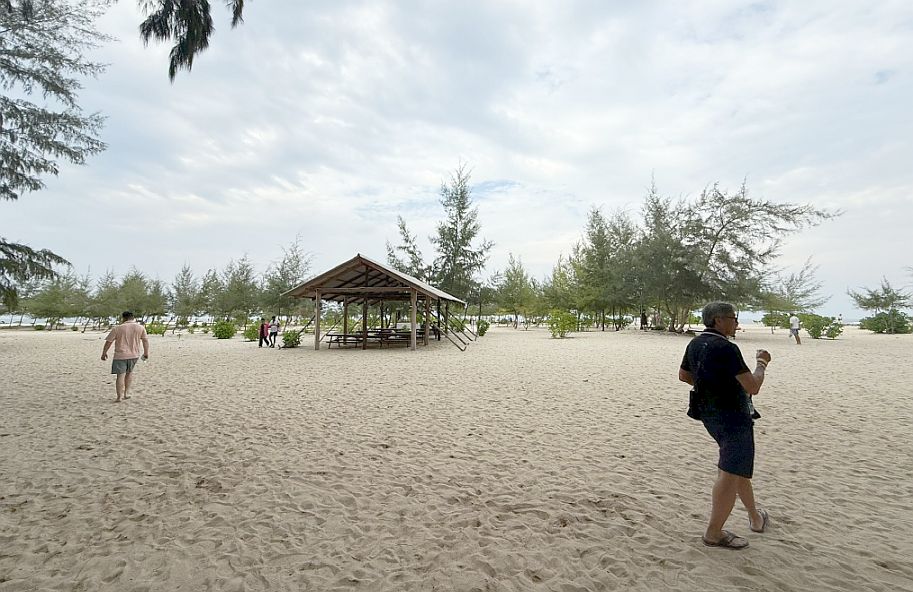
We expected to see lots of Bamboo trees on the island but to our surprise we did not see any. Our guide told us that it is actually a very common reaction when visiting Bamboo Island, you expect to see obvious bamboo everywhere, but it’s not immediately visible from the main beach.
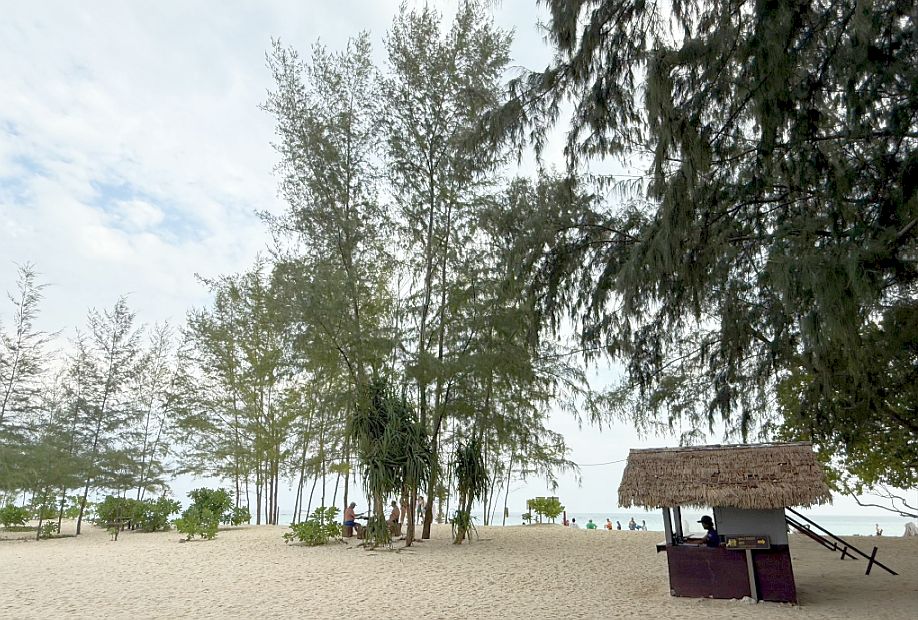
The name comes from the island’s interior, where patches of bamboo do grow naturally. However, most visitors only spend time along the open sandy areas and shallow water, so the bamboo is often hidden behind denser vegetation farther inland. The beach zones are kept relatively clear for access and to handle visitors, which makes the island feel more like a classic white-sand tropical beach rather than a “bamboo forest” island.
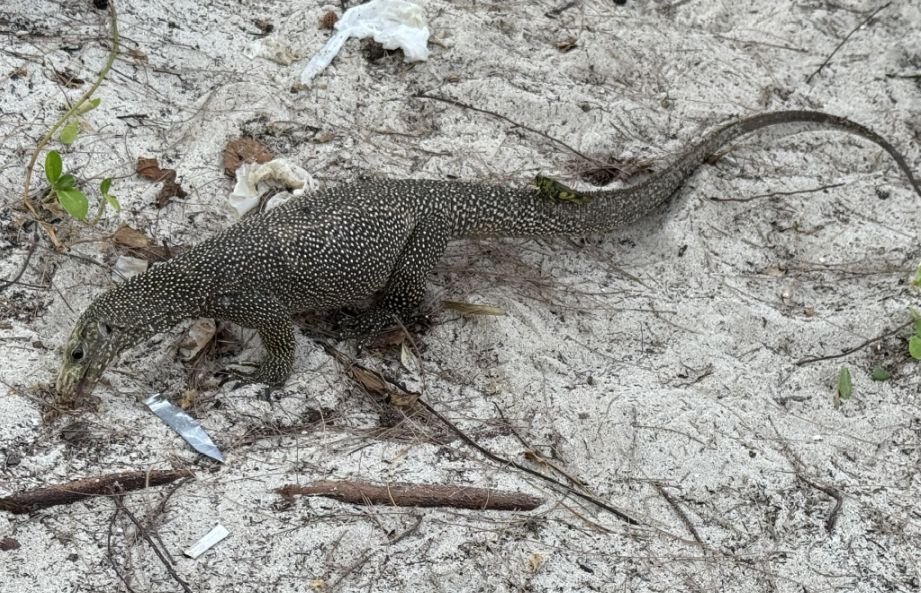
We encounter a large Monitor lizard wandering across the sand was a reminder that, beyond the tourism, this is still a living natural environment.
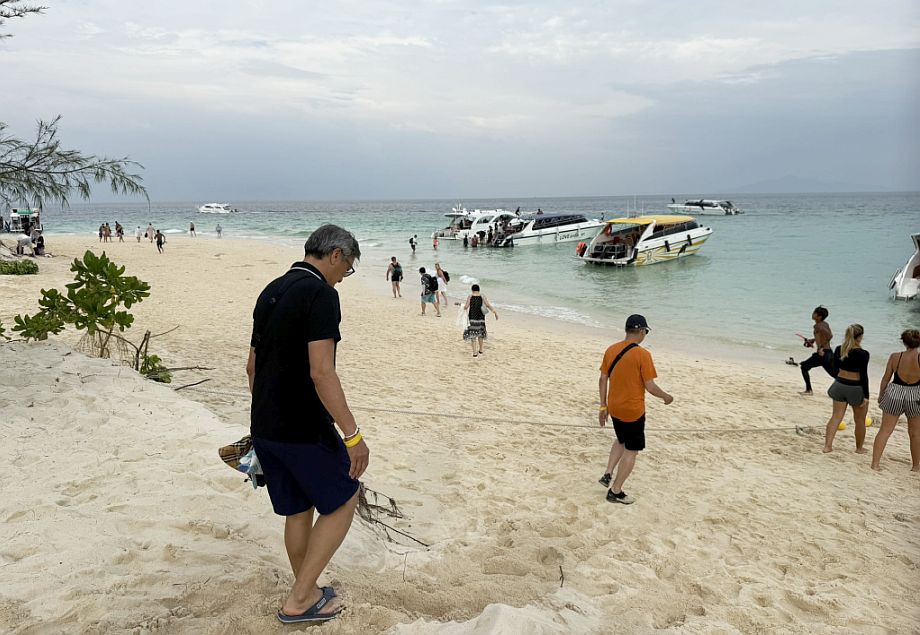
Even the simple act of returning to the boat, walking down a sandy slope, feeling the waves, and stepping into the water, felt like part of the adventure.
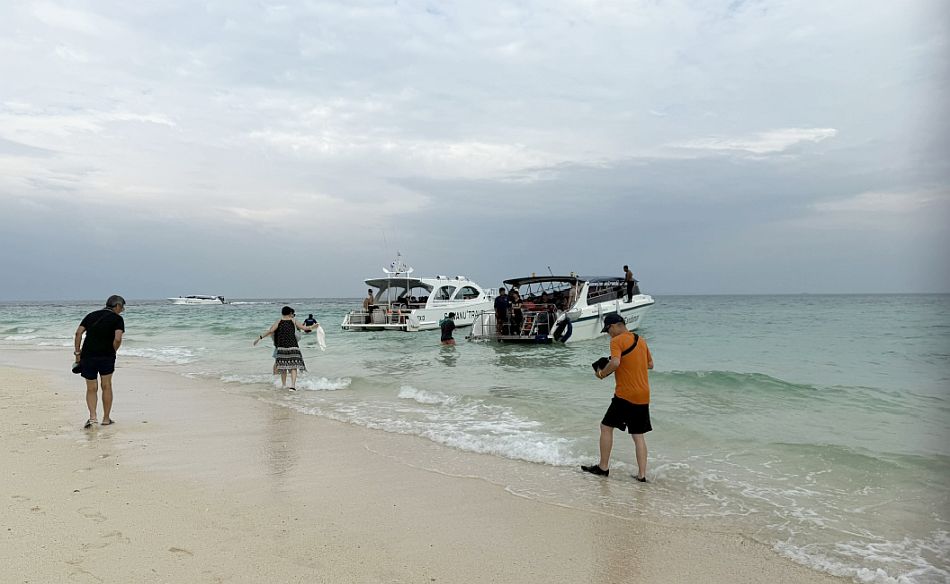
Walking toward our boat.
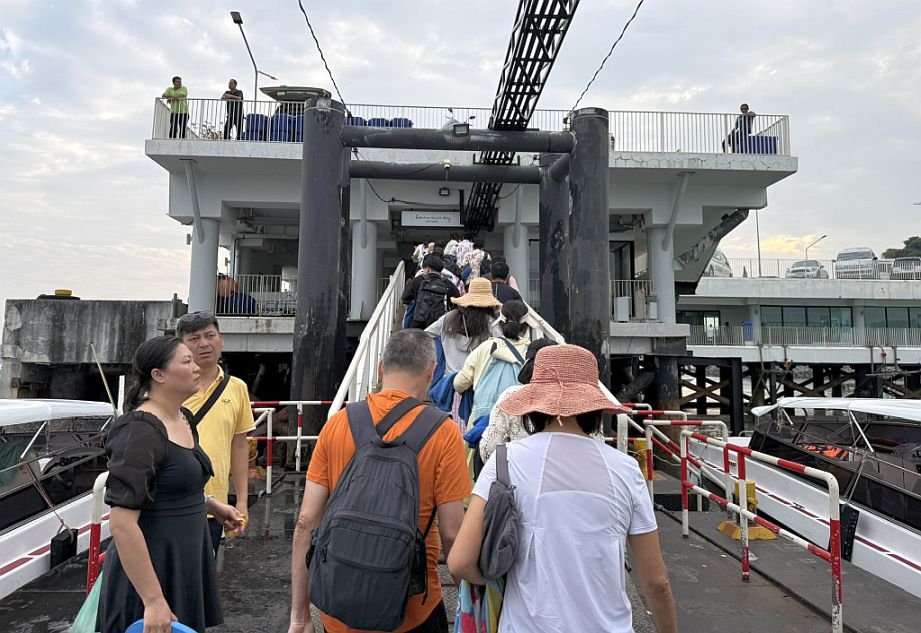
The ride back to Panwa Pier took about an hour or so.
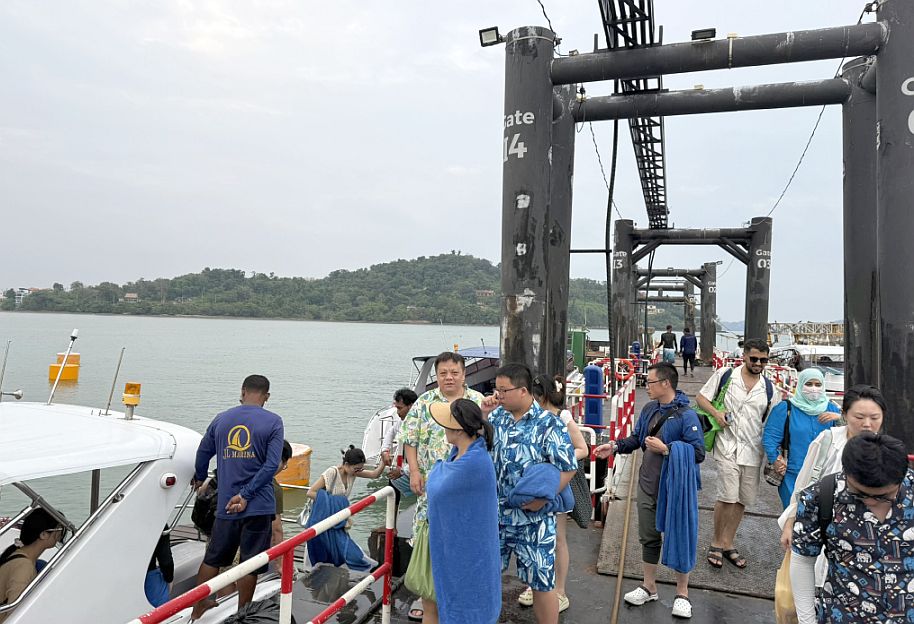
The tour is now over and we are leaving the pier.
It was a full, unforgettable day exploring the islands around Phi Phi Islands, a mix of beauty, energy, and moments that still felt personal despite the crowds. From the early morning speedboat ride to the dramatic Andaman Sea into Ao Phi Le Bay, the scenery never stopped impressing with towering karst cliffs, turquoise water, and colorful boats everywhere. Visiting Maya Bay showed just how popular these places have become, with carefully managed crowds and clear rules to protect the fragile environment, yet still offering that iconic view of white sand and crystal-clear sea framed by mountains. The day softened as we moved on to quieter moments with lunch and relaxation at Andaman Beach, then the open, postcard-perfect beauty of Bamboo Island. Yes, these islands are undeniably touristy, with boats constantly arriving and crowds gathering at the most famous spots. But despite that, the natural beauty still shines through, the clarity of the water, the scale of the limestone cliffs, and the unique landscapes make it easy to understand why so many people are drawn here. It’s that balance of lively energy and breathtaking scenery that makes the experience so memorable.
NEXT... Day 12- Marni Pizza & wine bar