12 days in Thailand 1/7- 1/18/2025
Day 11-Island hopping-1/17/2025
1st stop: Diamond Cave, Phanak Island
Our morning began with the quiet anticipation of a guided island tour, as a taxi whisked us from our hotel to Royal Phuket Marina located on the east coast of Phuket.
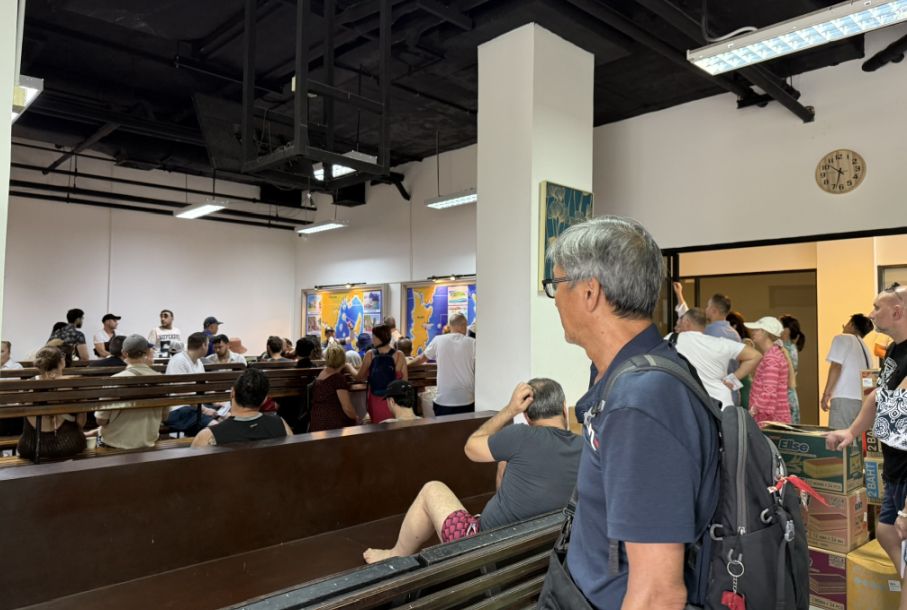
Inside, a large briefing room displayed maps of the surrounding islands, offering a glimpse of the adventure ahead.
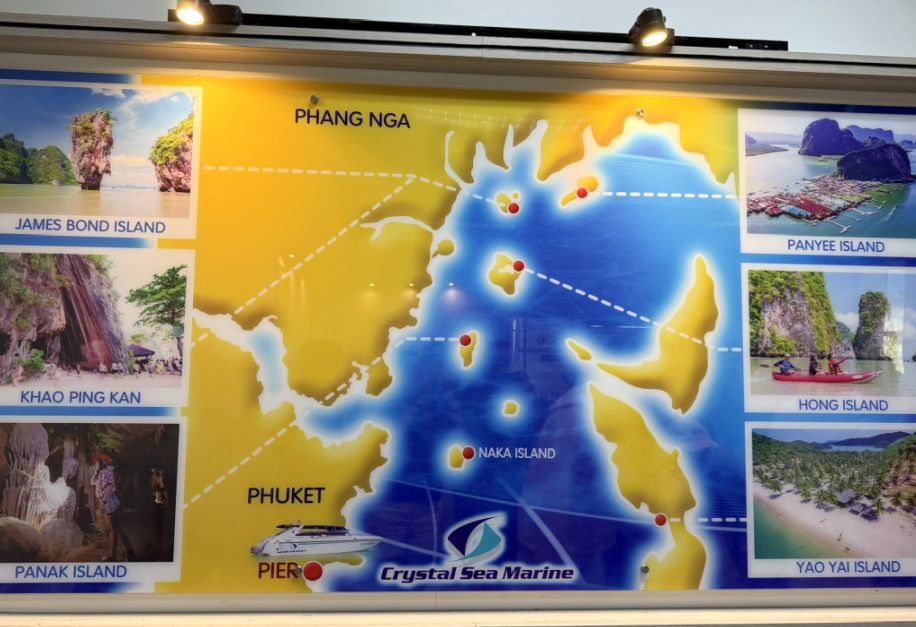
Map of the Islands we will be visiting today.
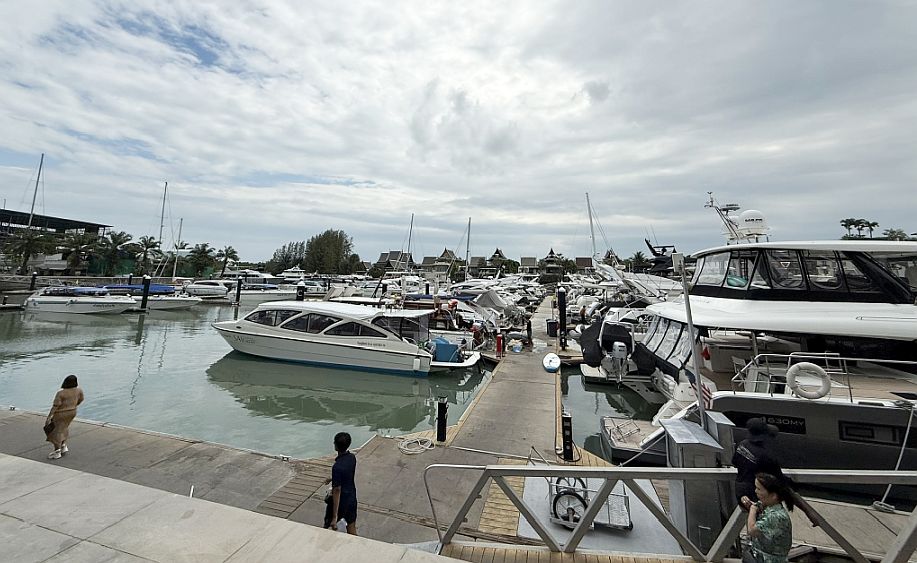
Soon after, we walked to the pier.
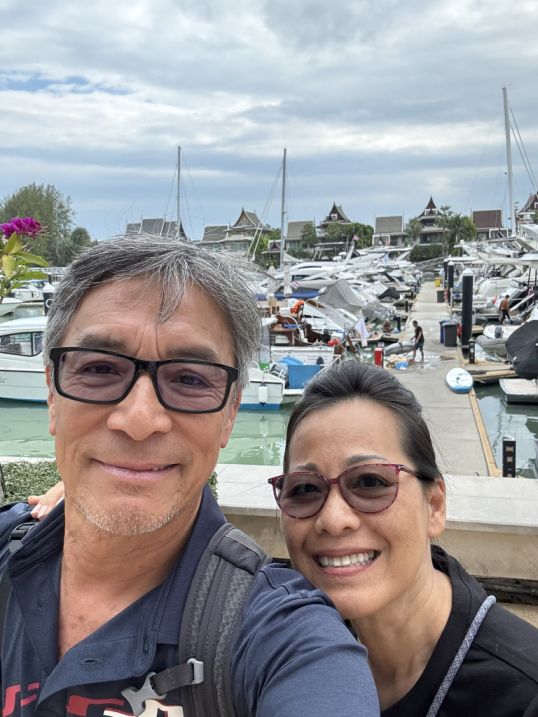 |
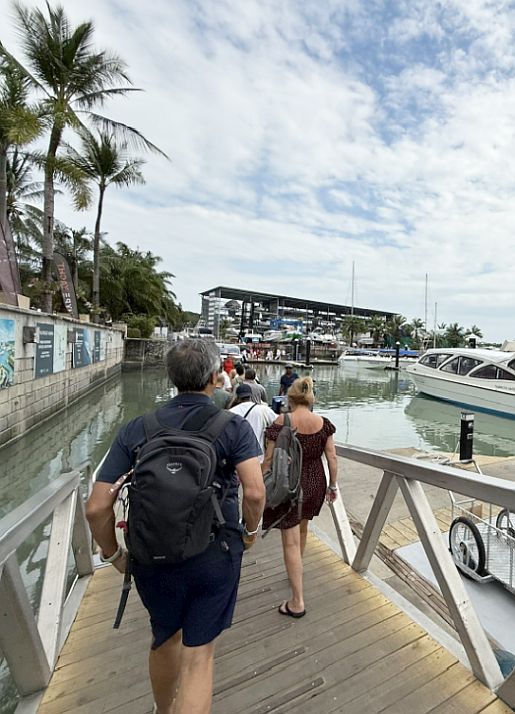 |
Along a wooden platform toward the pier, where rows of boats bobbed gently in the water.
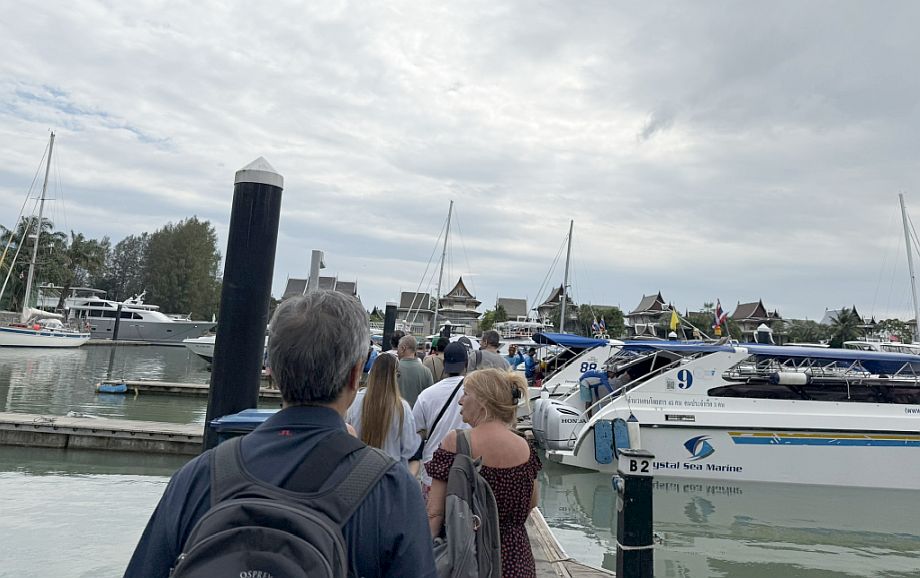
Walking to our boat.
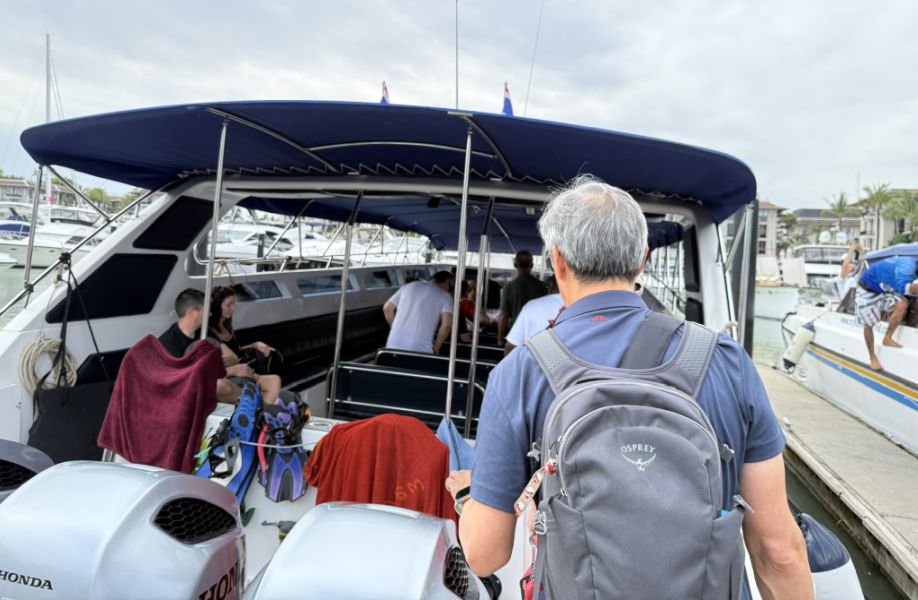
Then we boarded our vessel for the journey.
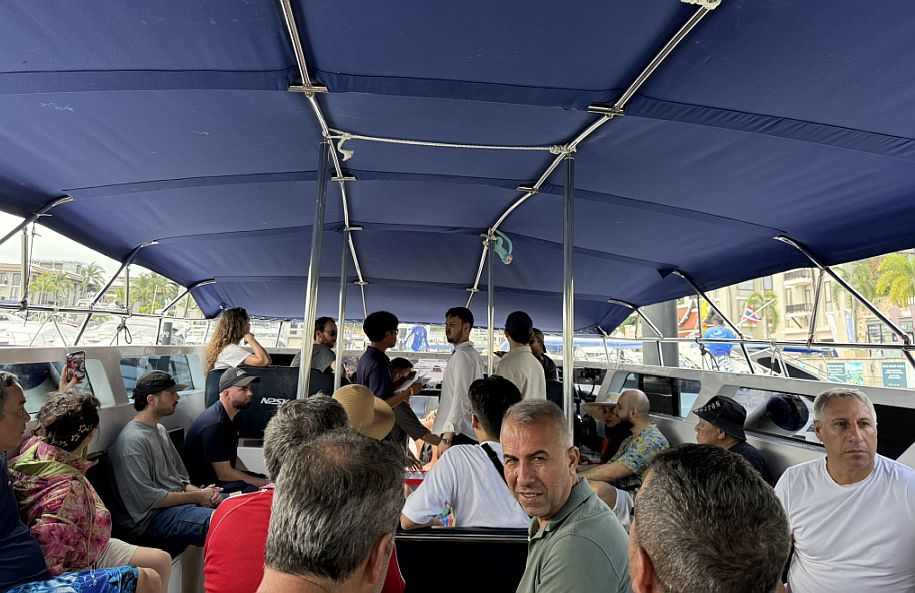
Lots of people on this tour.
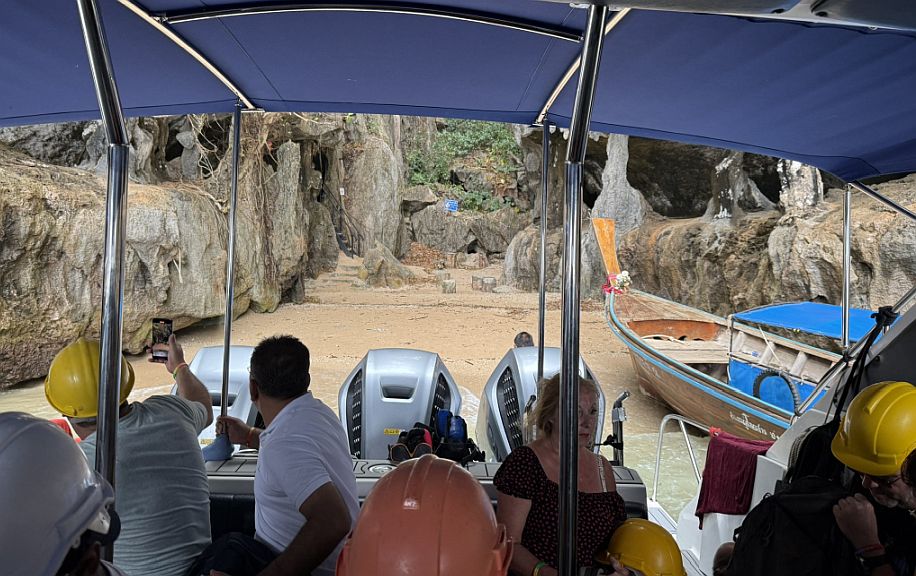
Our first stop is into Phang Nga Bay.
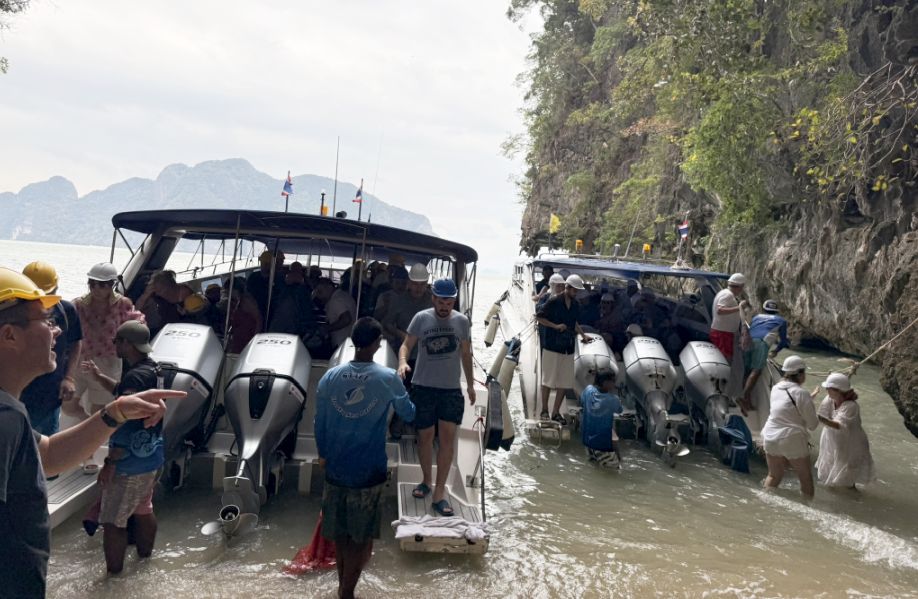
The boat dropped us off the edge of Phang Nga Island where sheer cliffs rose on either side of a small, natural shoreline.
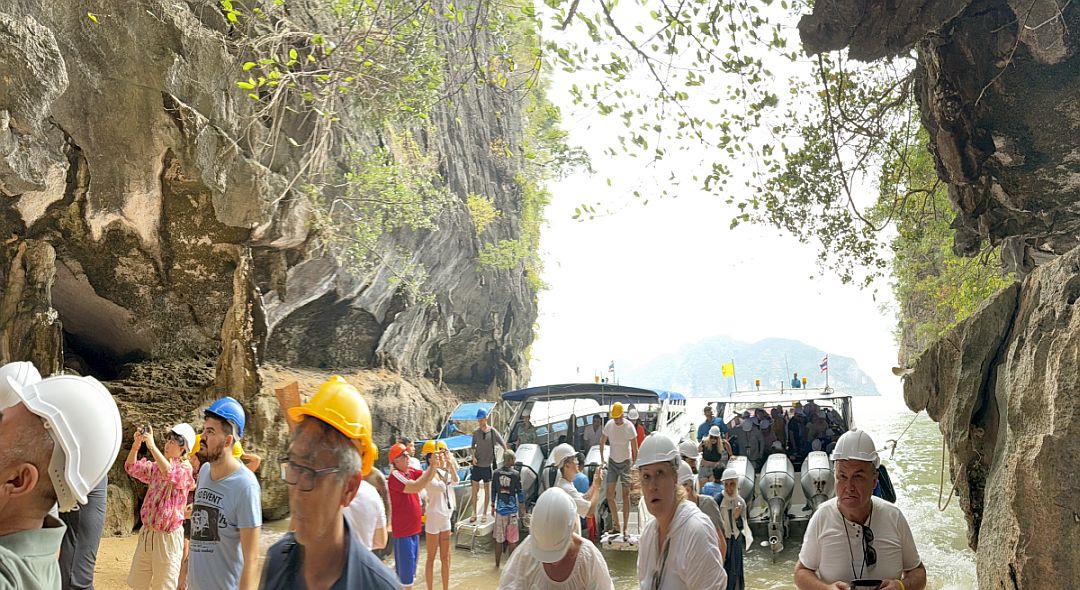
Stepping off the boat.
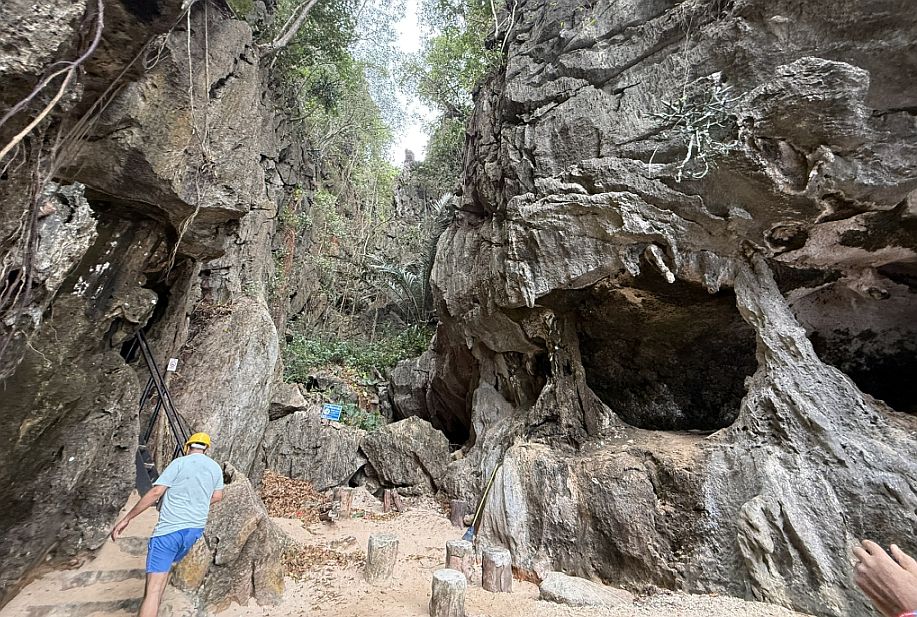
We followed our guide to what is commonly known as Diamond Cave (though names can vary locally).
 |
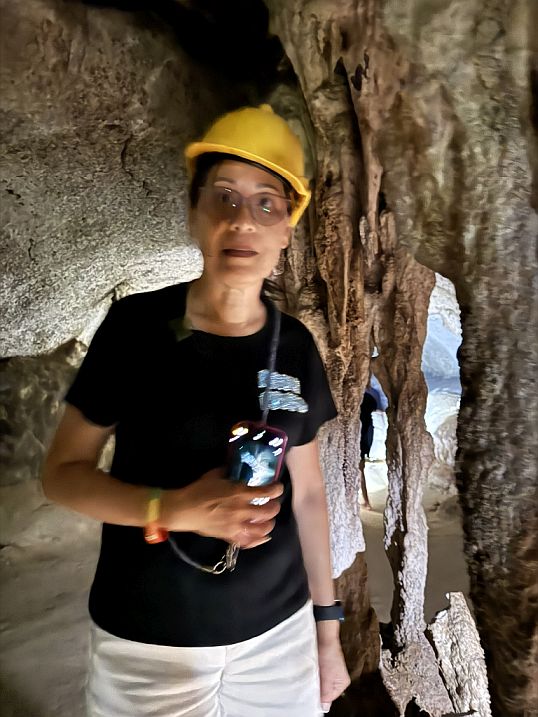 |
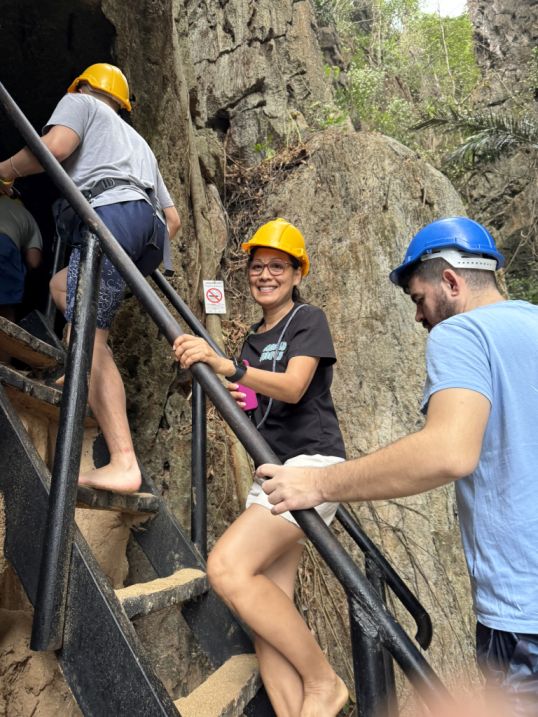
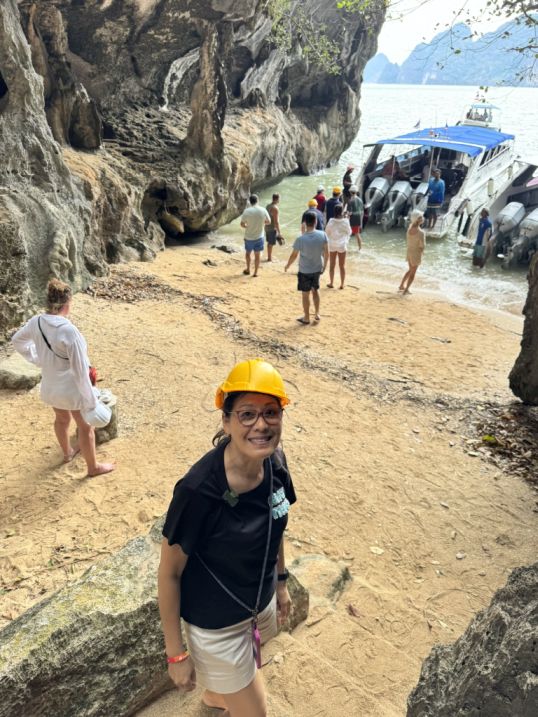
Equipped with a yellow hard hat, we made our way inside along a metal-railed path.
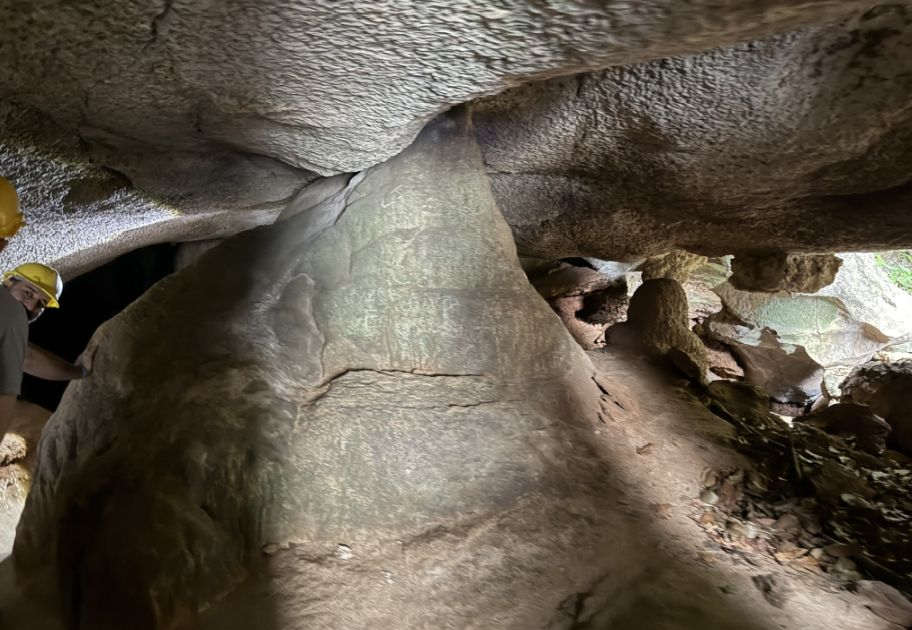
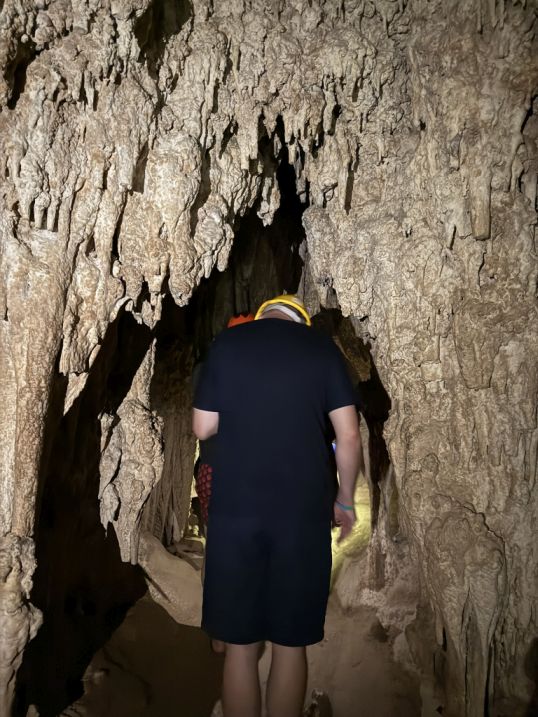
The first part of the cave is low so we had to bend down a bit.
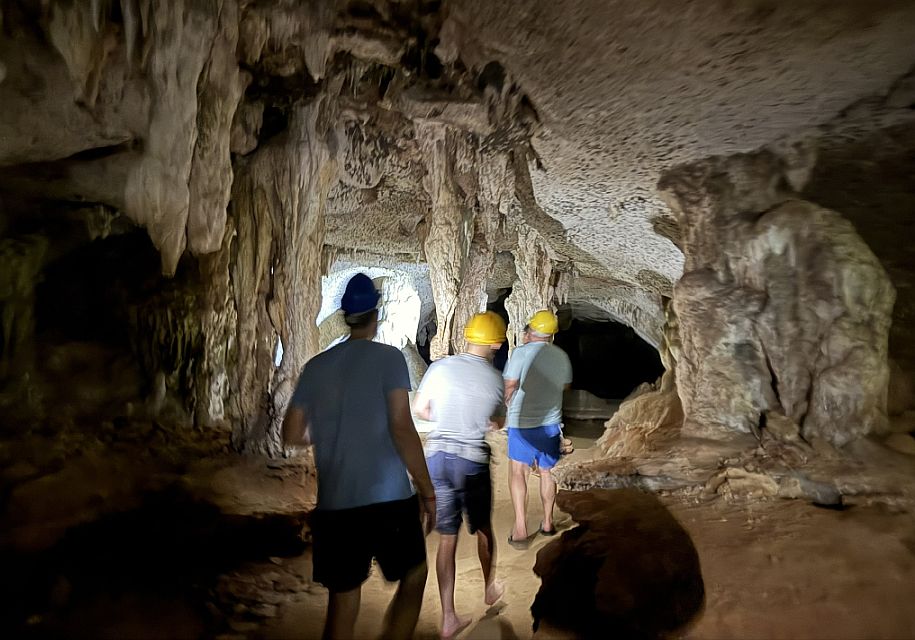
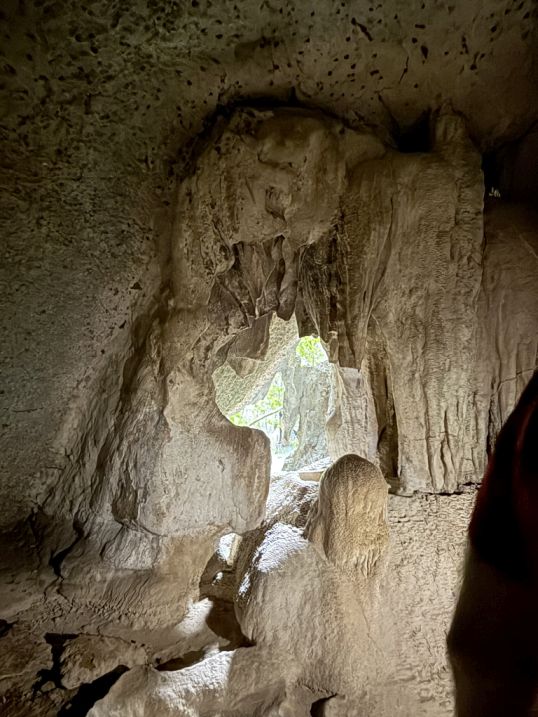
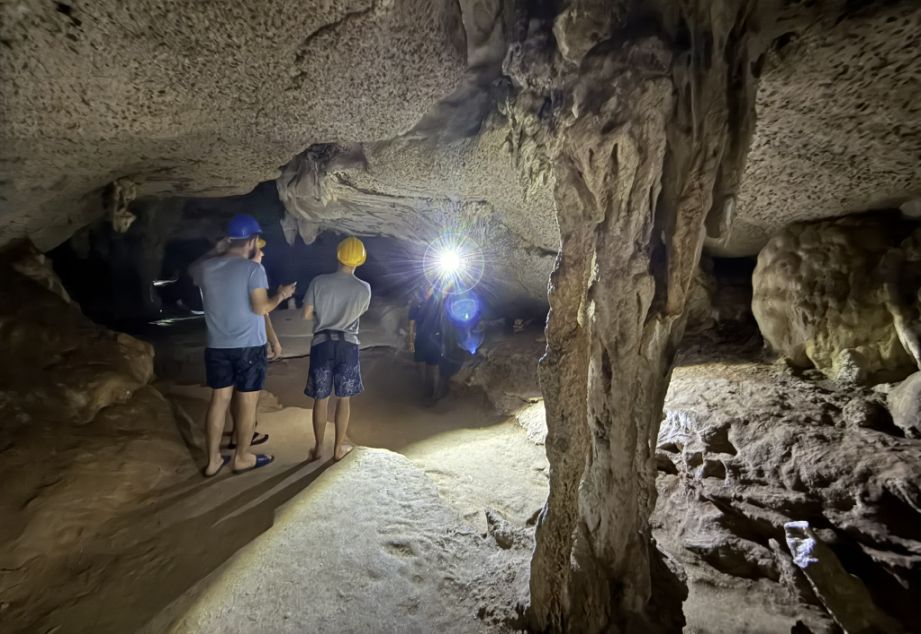
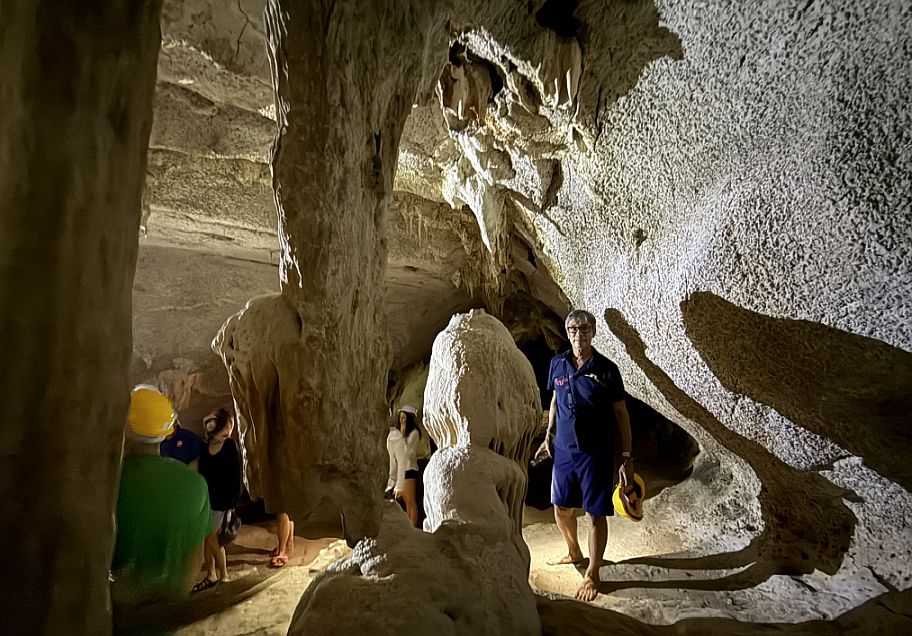
But then the cave quickly opened into a vast chamber filled with striking stalactites hanging from above and stalagmites rising from the muddy floor, shaped over thousands of years by mineral-rich water.
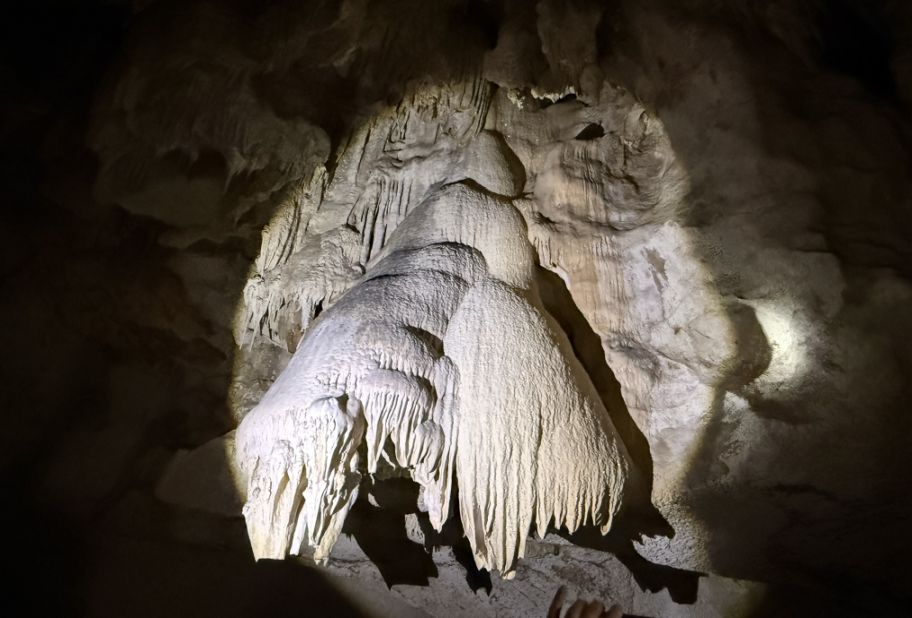
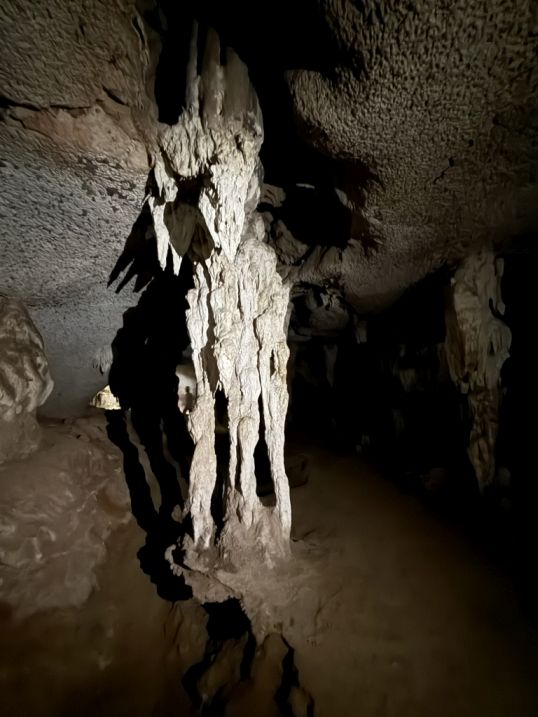
One particularly memorable formation stood out is a large triangular structure whose base resembled a cluster of jellyfish, a surreal and almost otherworldly sight.
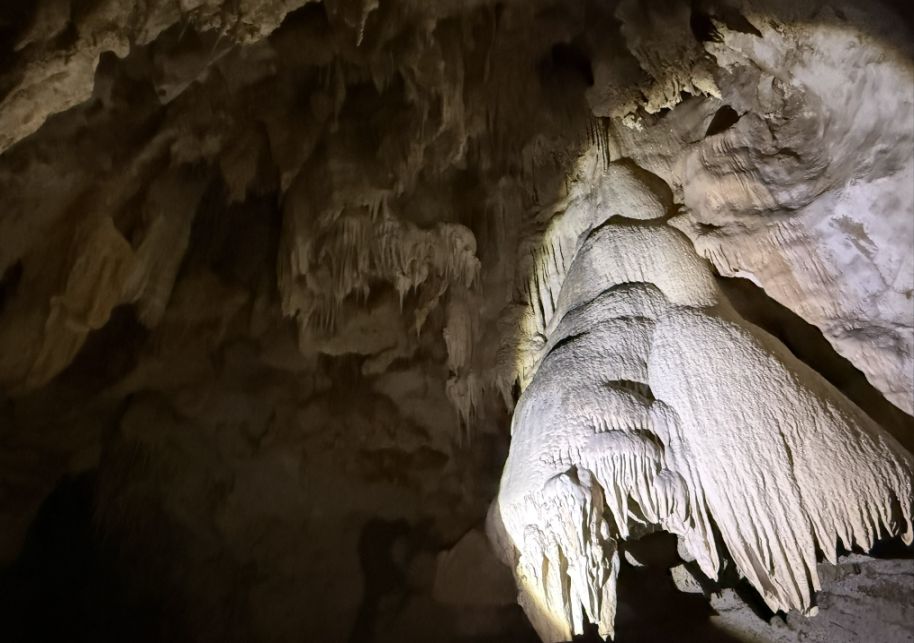
The formations themselves felt almost sculptural. That triangular structure we noticed stood out like a natural monument, and the “jellyfish” shapes at its base gave it an eerie, almost underwater feel, even though you were on land.
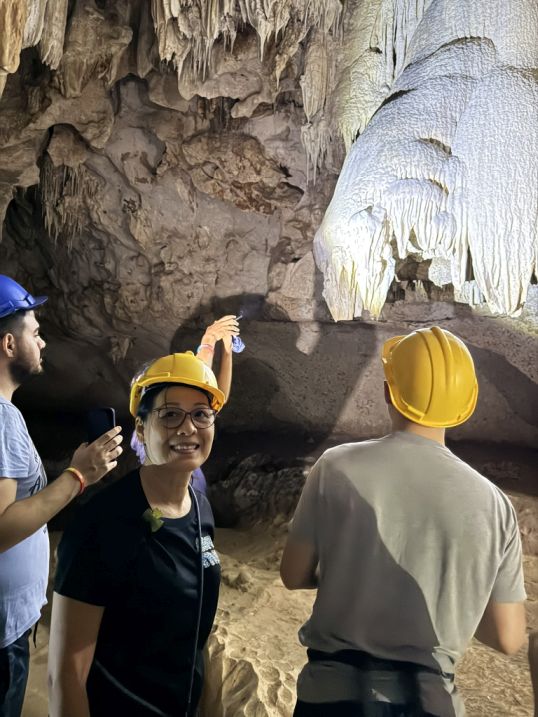 |
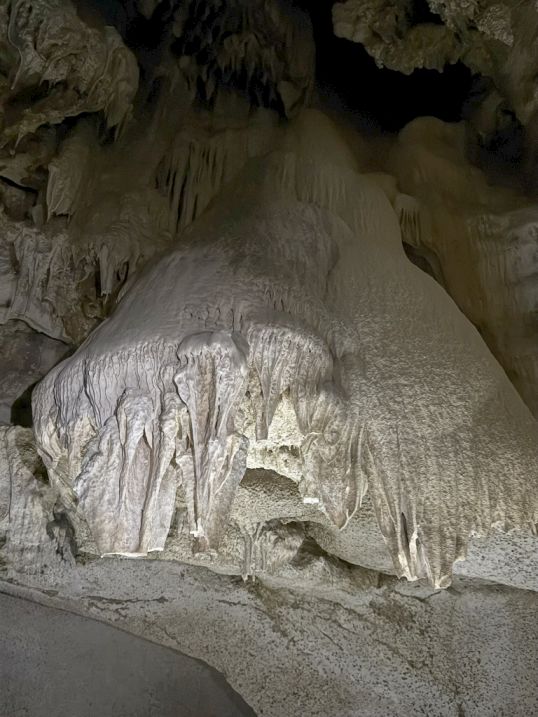 |
This formation looked like frozen waterfalls or clusters of coral, each one shaped by thousands of years of dripping mineral-rich water.
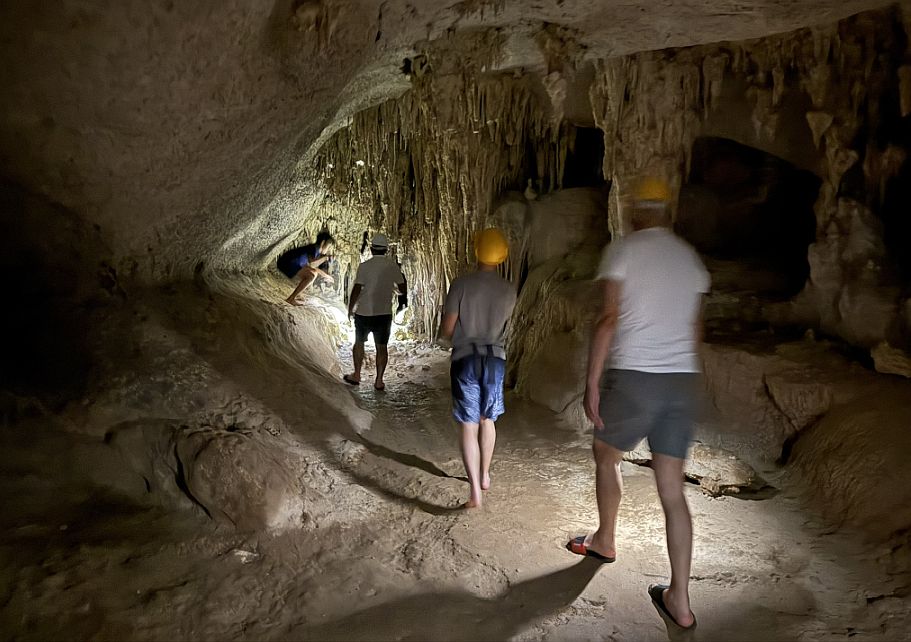
The damp ground hinted at the tides, which periodically flood the cave, adding to its ever-changing landscape.
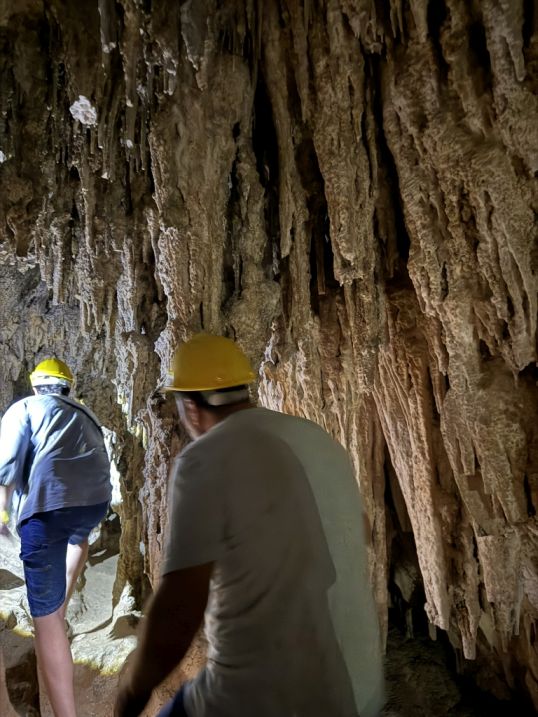 |
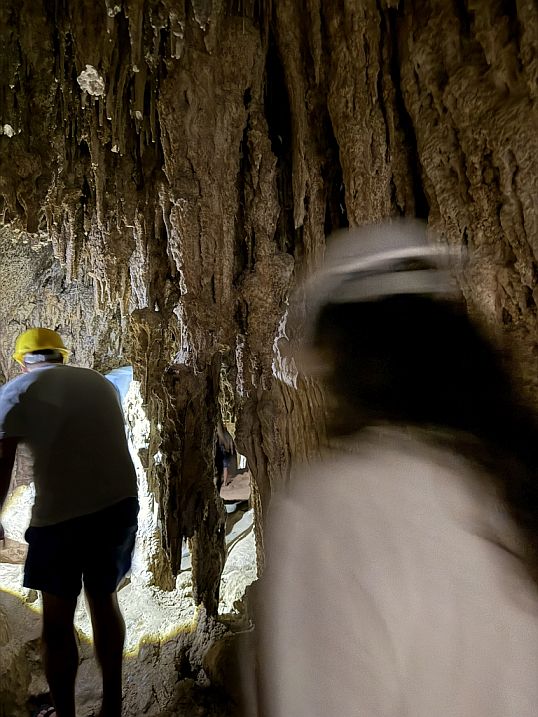 |
The air felt cool and damp, and every sound, footsteps, distant dripping water, echoed softly through the cavern.
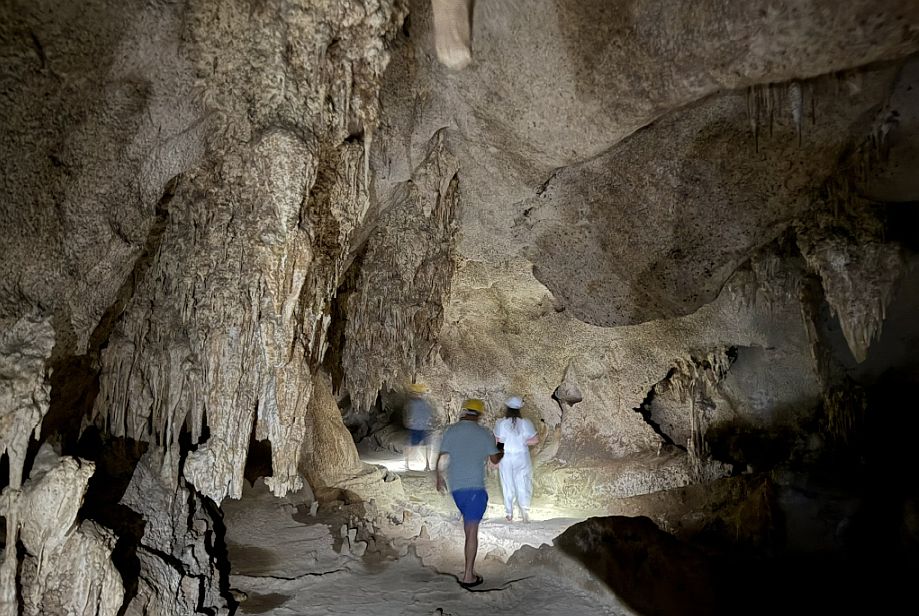
A vast chamber with soaring ceiling high above.
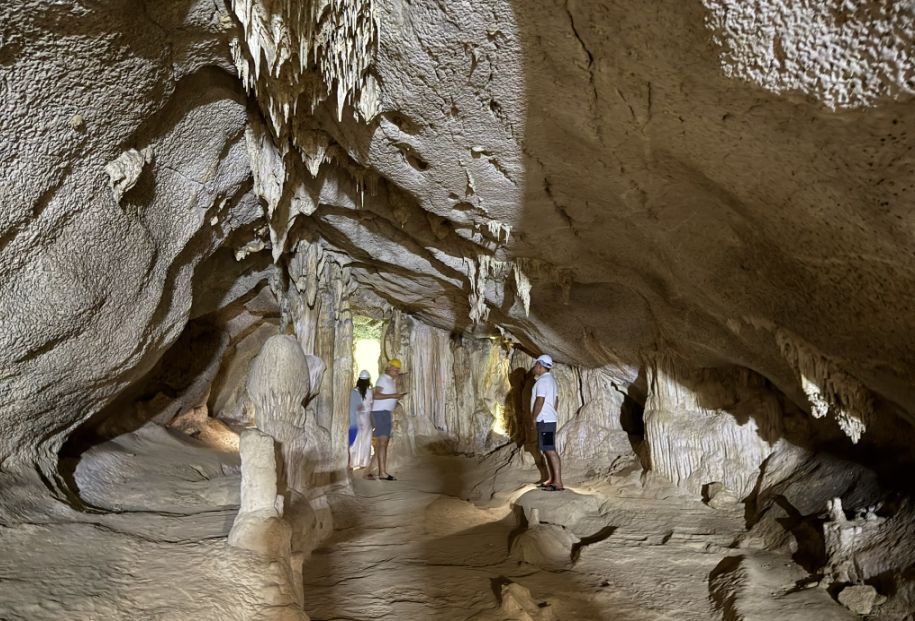
From the ground, stalagmites rose to meet them, forming towering columns where the two had fused over centuries.
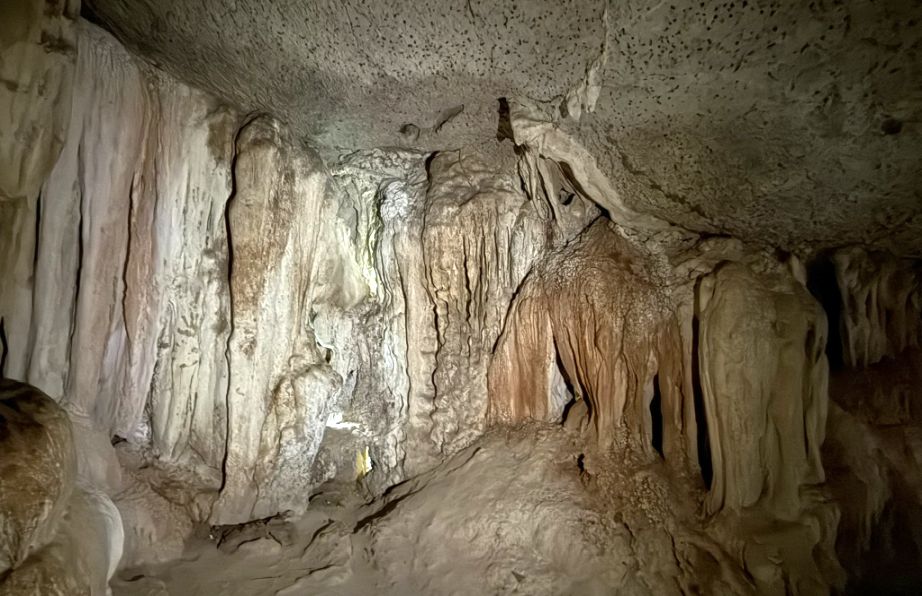
Massive stalactites hung down like stone chandeliers, some thin and needle-like, others thick and textured, as if frozen mid-drip.
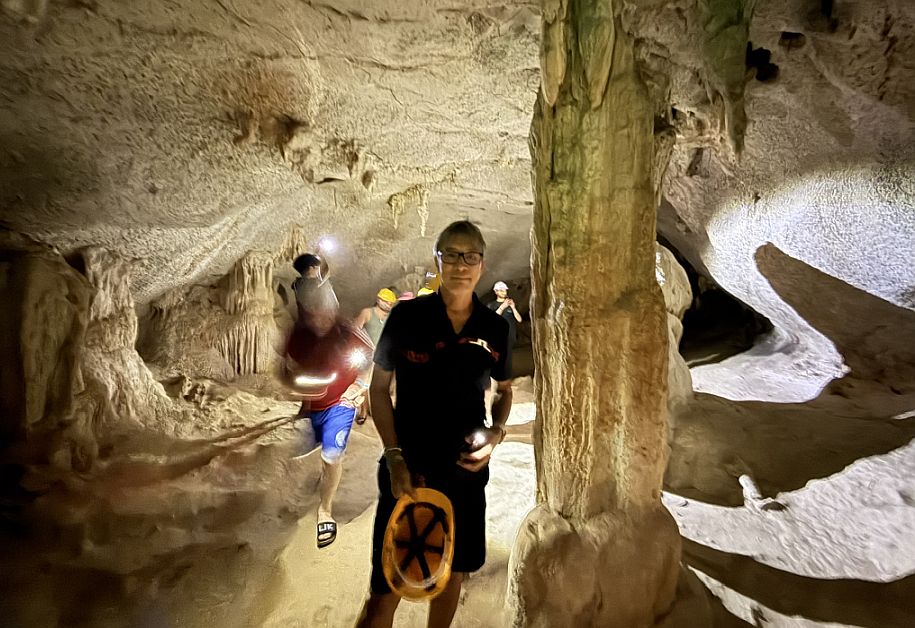
As we continued deeper, the cave narrowed in places, forcing people to slow down and follow the winding path more carefully. These tighter corridors made the experience more intimate, almost tunnel-like, with the rock formations pressing in closer. Here, the details became even more striking, rippling mineral deposits clung to the walls, resembling flowing curtains or melted wax. Some surfaces shimmered slightly under the dim lighting, reflecting moisture that constantly seeped through the limestone. The muddy ground beneath your feet told the story of the tides, showing how the sea periodically reclaims this space.
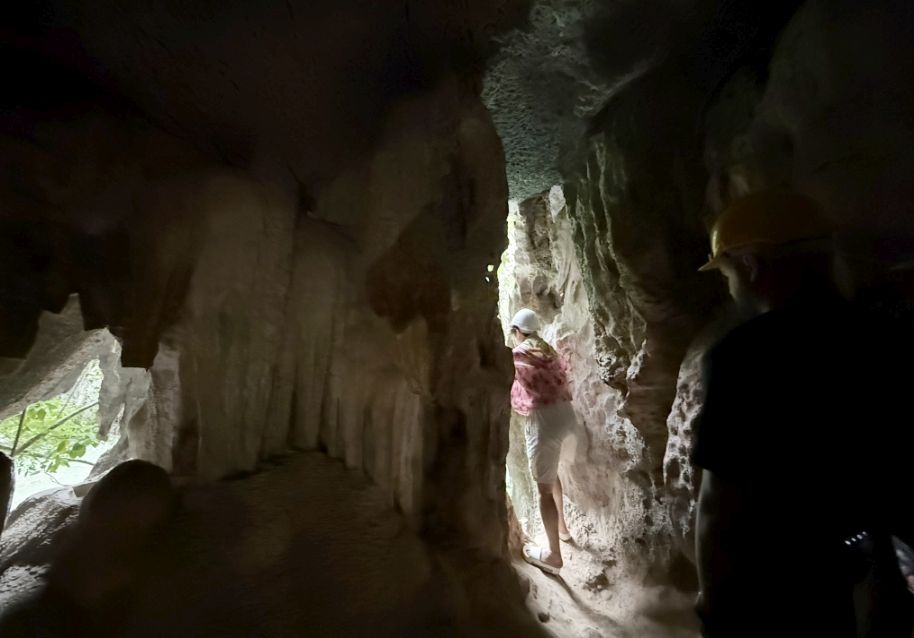
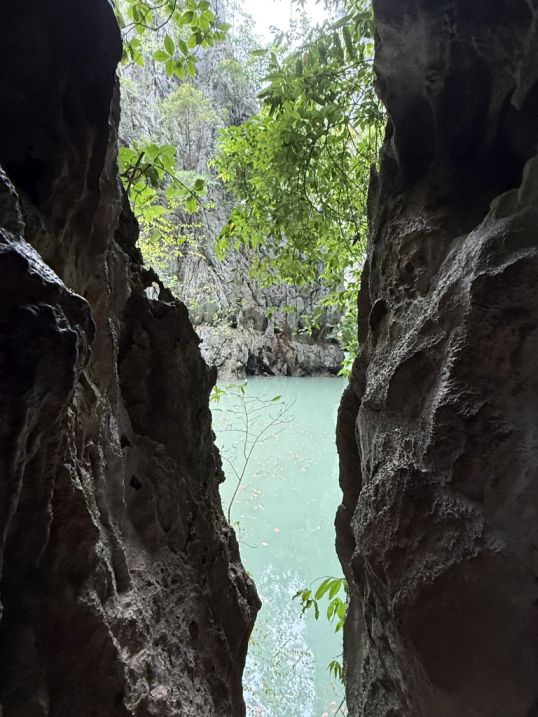
Then, just as the cave felt at its most enclosed, it opened up again, gradually widening until we reached that final opening.
|
|
|
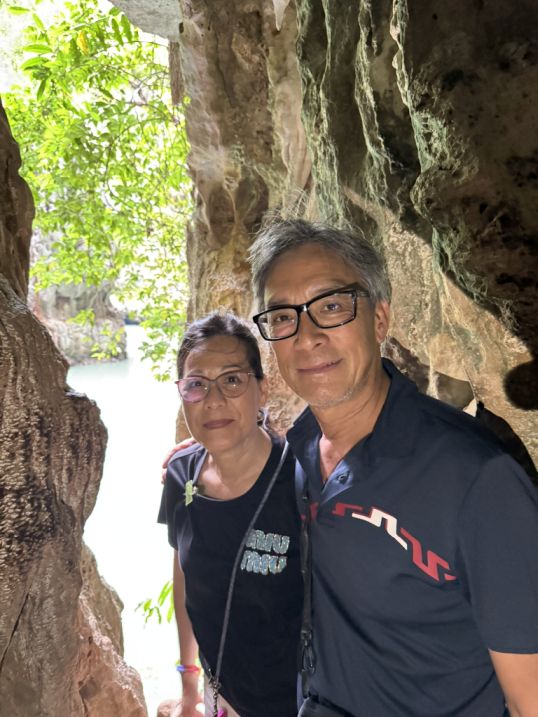
The transition was striking: from dim, enclosed darkness to a framed burst of daylight. Looking out, we could see the calm waters of Phang Nga Bay and the towering limestone cliffs beyond, almost like the cave itself was a window carved into the island.
 |
 |
After taking it all in, we retraced our steps back to where we came from.
Moving back through the same shifting spaces, wide chambers to narrow passages.
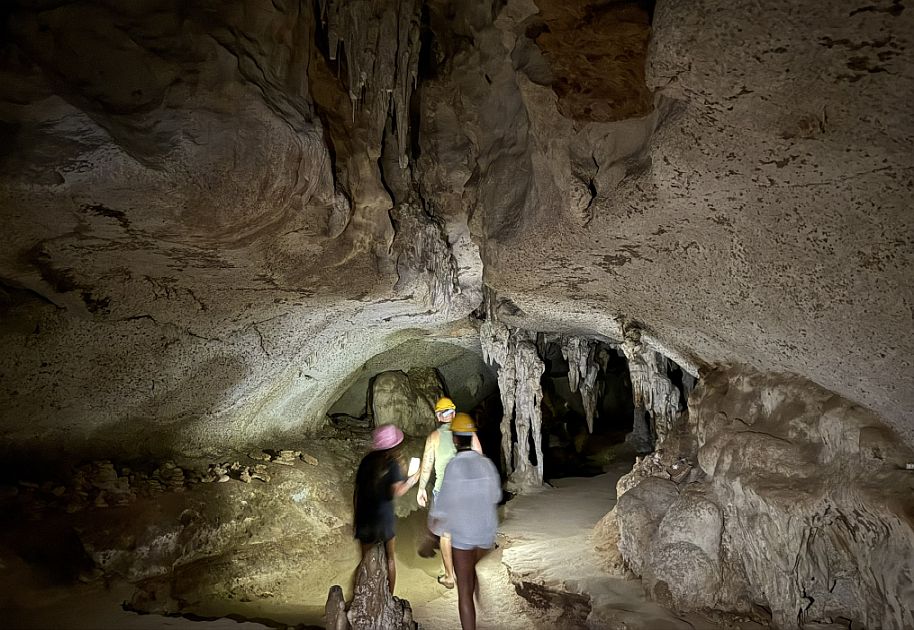
This time with a deeper appreciation for just how intricate and vast the cave really was.
 |
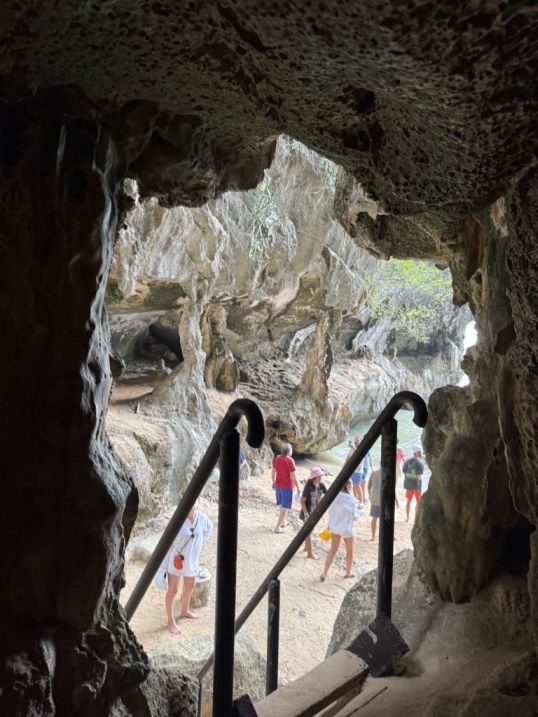 |
We are now leaving the cave.
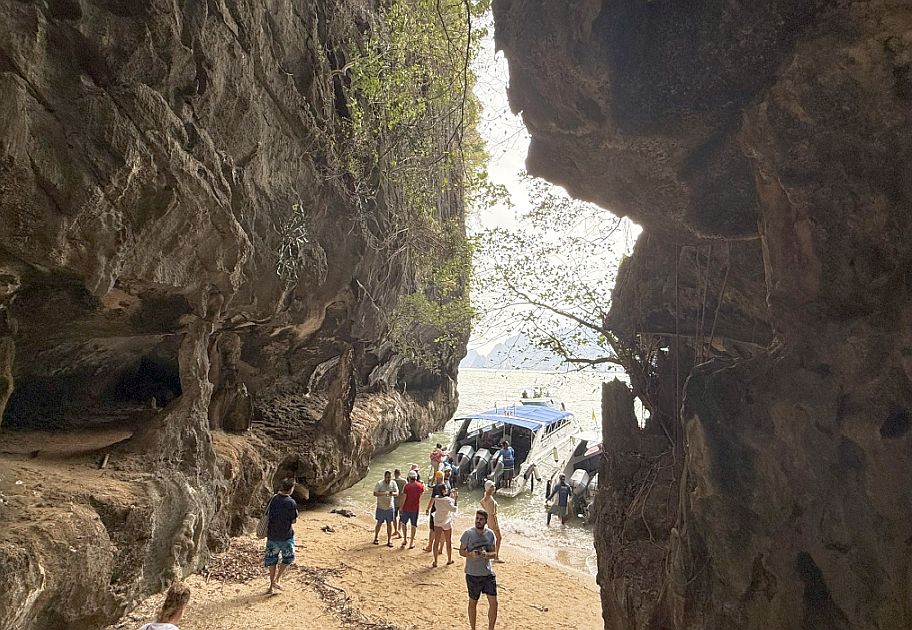
From the upper part of the cave, the view opened like a natural balcony onto Phang Nga Bay. Framed by the jagged mouth of the cavern, where we could see where our boat was waiting, floating quietly against a backdrop of towering limestone walls.
 |
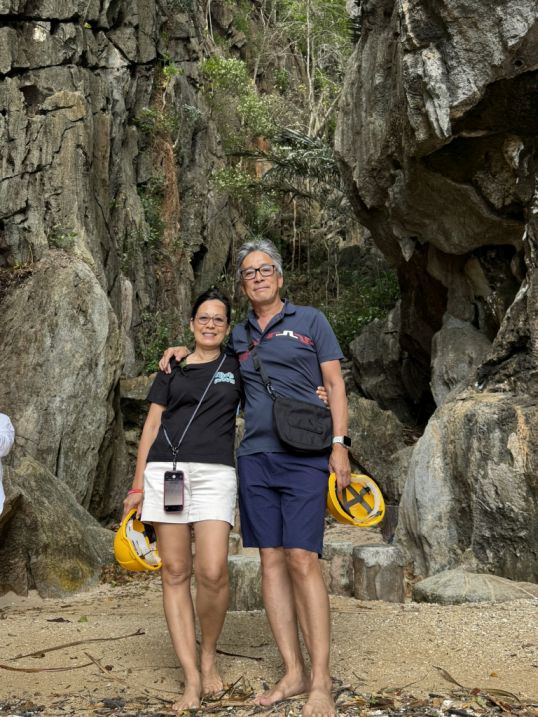 |
We are now leaving the cave, and boarding the boat.
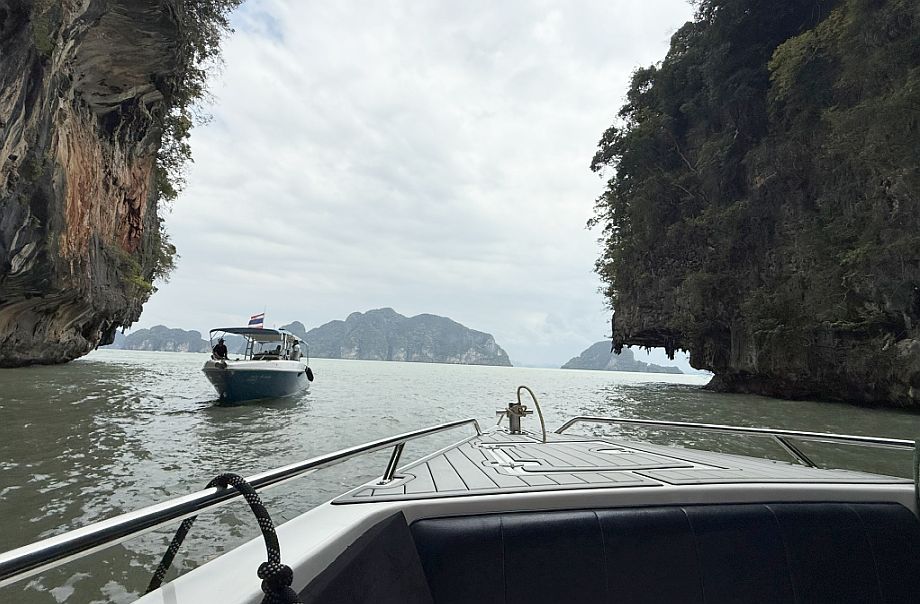
As we stepped back onto the boat and it began to glide forward, the scene slowly unfolded.
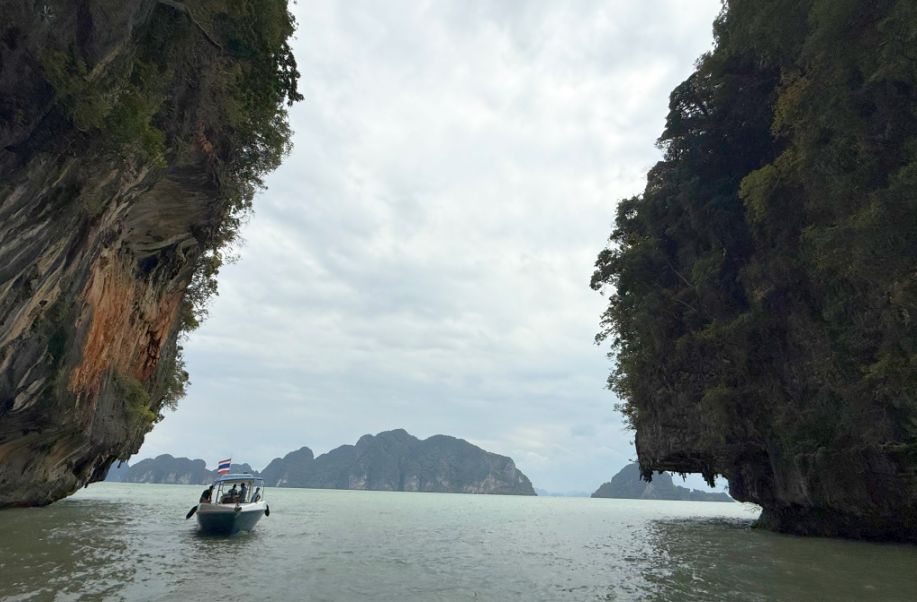
On each side rock formations rose dramatically from the water, sheer, massive, and almost impossibly tall, wrapping around the bay like a protective ring.
Ahead, clusters of islands dotted the horizon, each crowned with dense green vegetation that seemed to spill over the cliffs. The water was calm, reflecting the muted tones of the stone and sky, while the boat cut a gentle path through the bay.
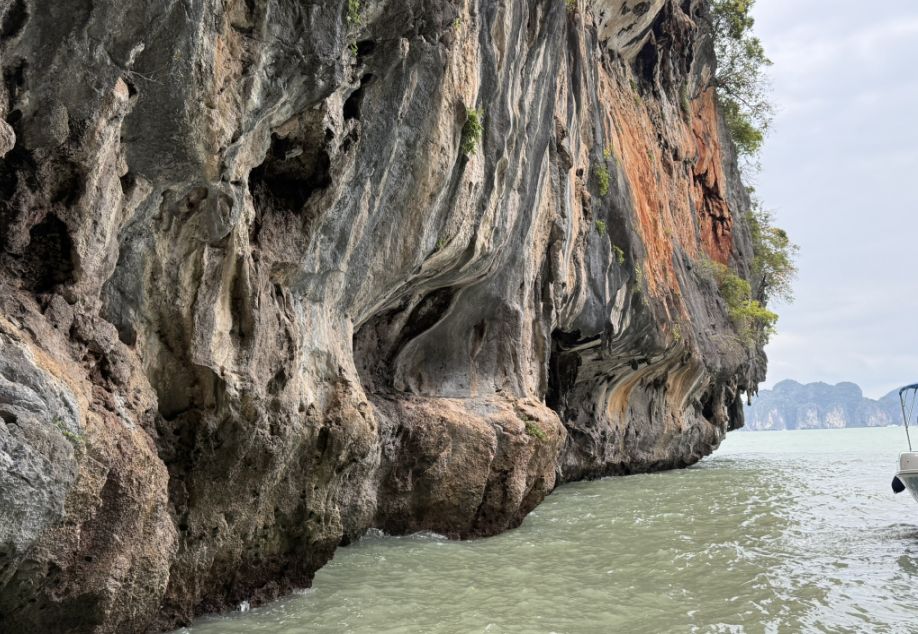
Their surfaces were textured with grooves and streaks, shaped by time and water, giving them a rugged yet sculptural beauty.
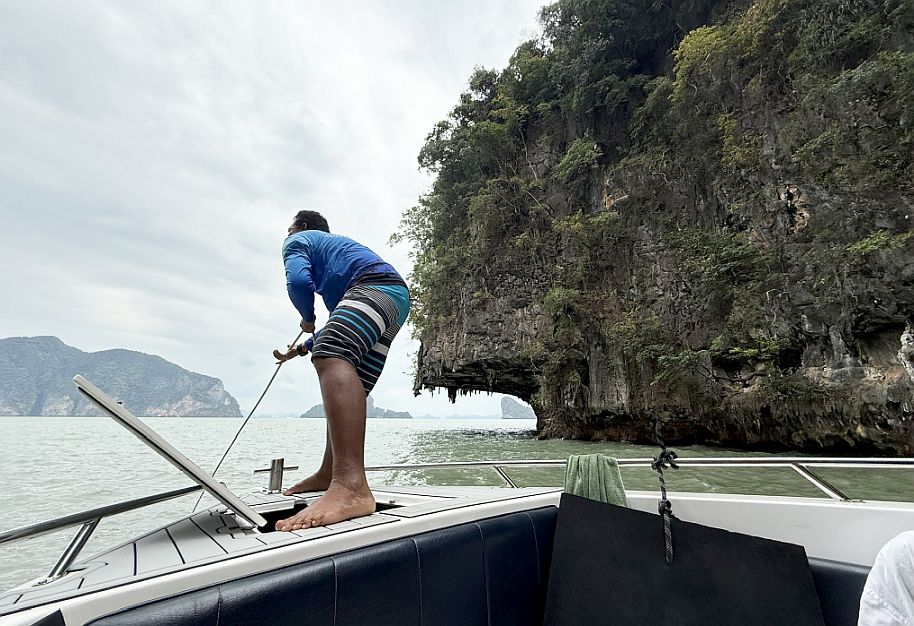
Our skipper guiding the boat to the right to a striking formation, a long a long limestone overhang stretching out above the water.
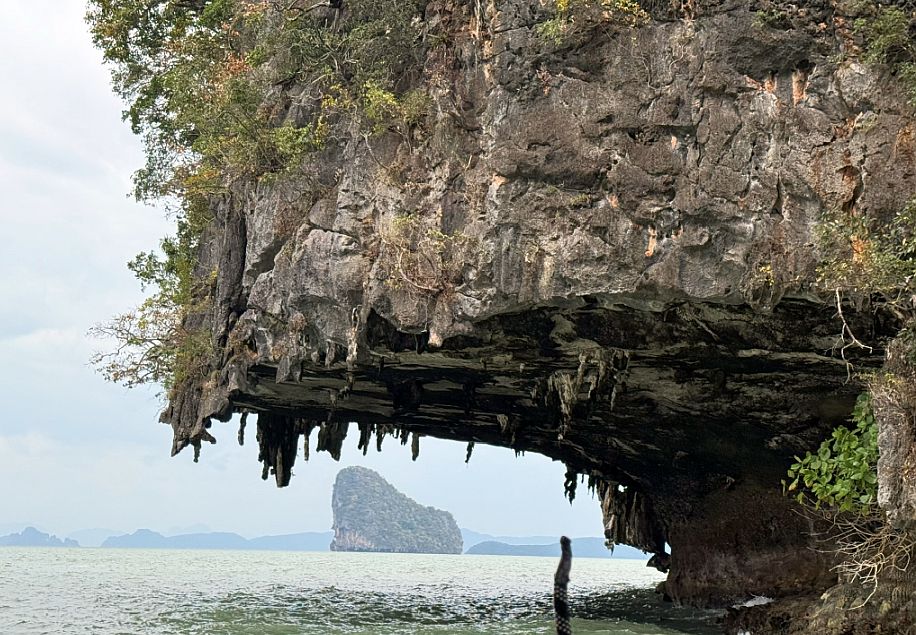
The base of the cliff was submerged, its foundation hidden beneath the surface, while the upper portion extended outward dramatically, like a natural ledge carved by centuries of erosion. On top, trees clung to the rock, their roots gripping into cracks and crevices, thriving in a place that seemed almost impossible for life.
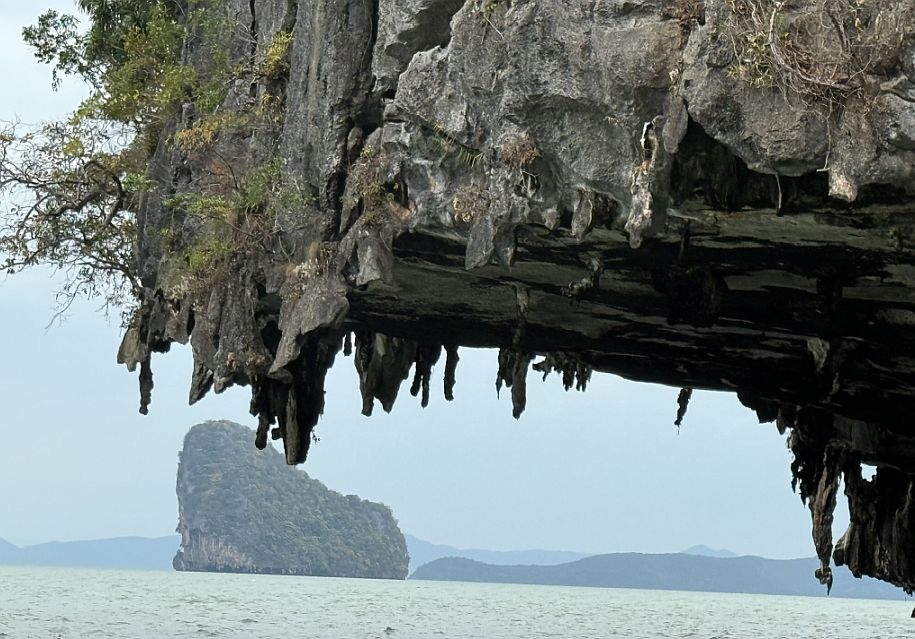
Beneath the overhang, the underside of the rock was rough and uneven, with jagged edges hanging down like stone teeth, adding a sense of raw, untamed beauty. And in the distance, beyond this dramatic foreground, another island rose from the water, quiet and majestic, its silhouette softened by distance, yet still commanding attention as you continued deeper into the bay.
NEXT... Day 11- Hong Island