12 days in Thailand 1/7- 1/18/2025
Day 11-Island hopping -1/17/2025
2nd Stop: Hong Island
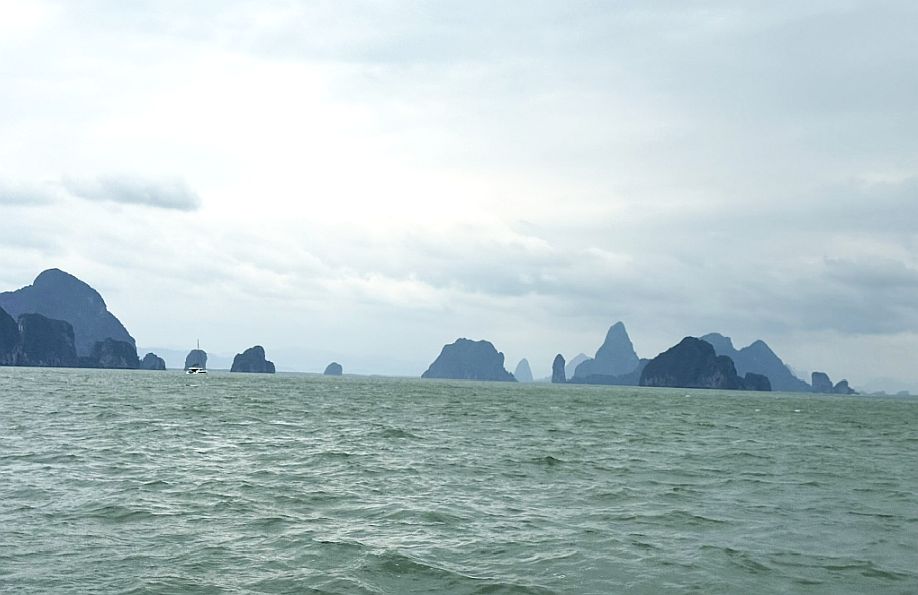
As the boat pulled away, the landscape opened up into a breathtaking panorama, countless limestone islands rising straight out of the water, scattered across Phang Nga Bay like natural sculptures.
The scene immediately brought to mind Ha Long Bay, with its same dreamlike arrangement of karst formations.
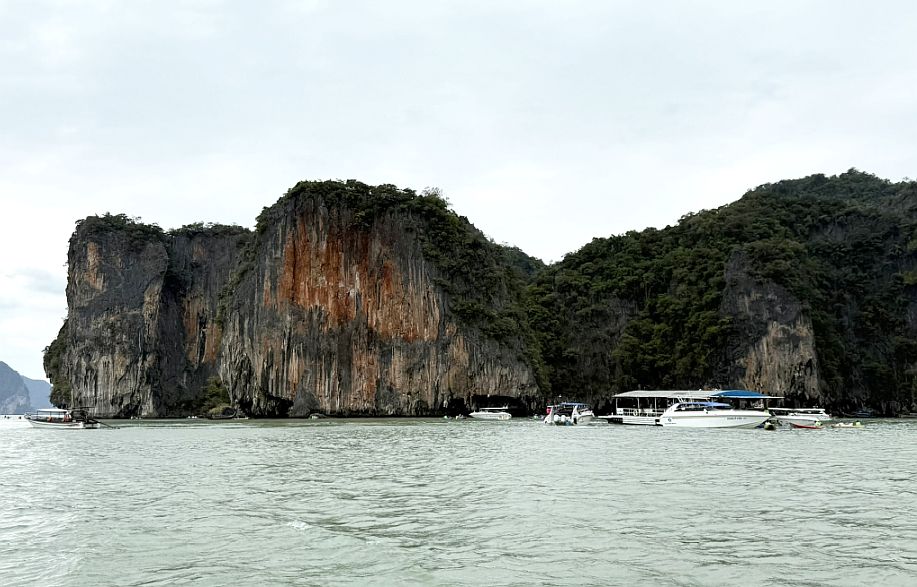
These towering karst mountains, topped with thick vegetation, seemed to grow directly from the sea, their steep faces marked by time, erosion, and mineral stains.
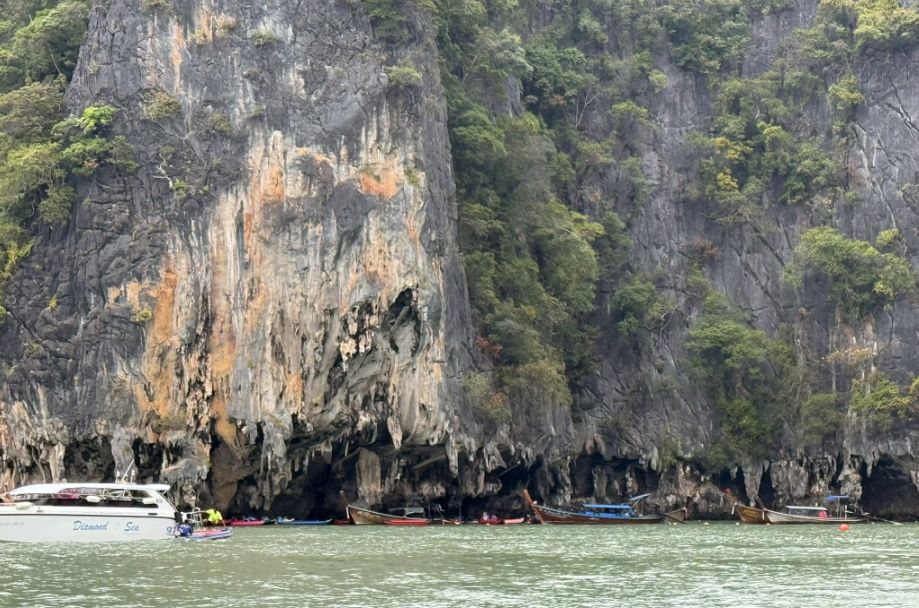
We were passing between Koh Panak and Hong Island, an area known for its hidden lagoons and caves.
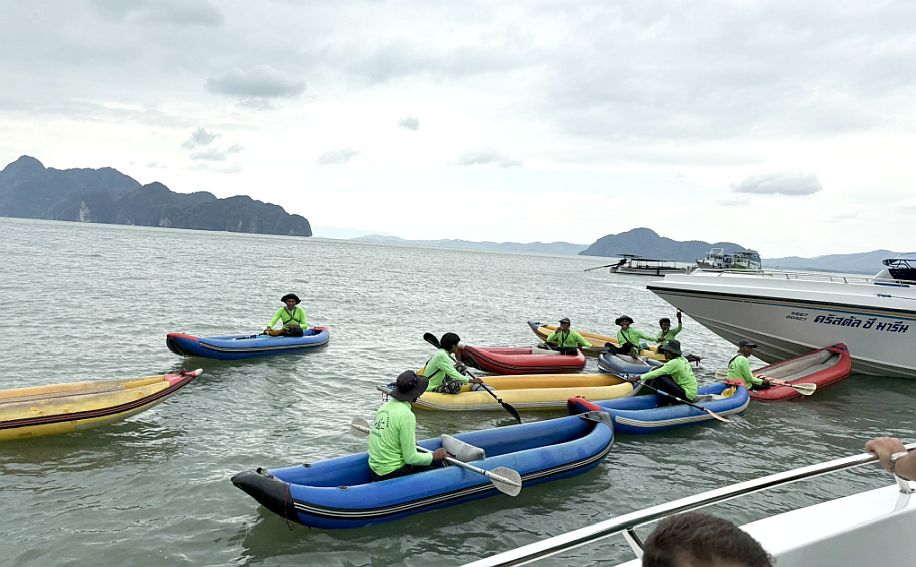
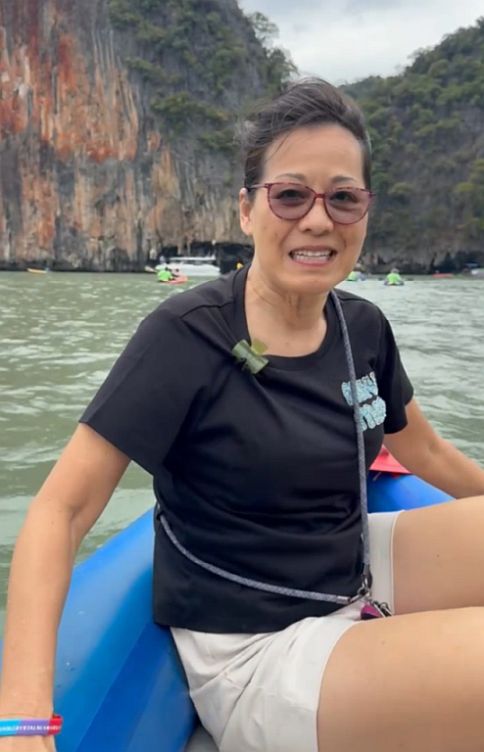
As our boat approached, it slowed and eventually stopped, unable to go further, the water here was too shallow. That’s when a small fleet of rubber canoes began to emerge, paddled by staff in bright green shirts. They moved efficiently across the water, one by one pulling alongside your boat to pick up passengers.
 |
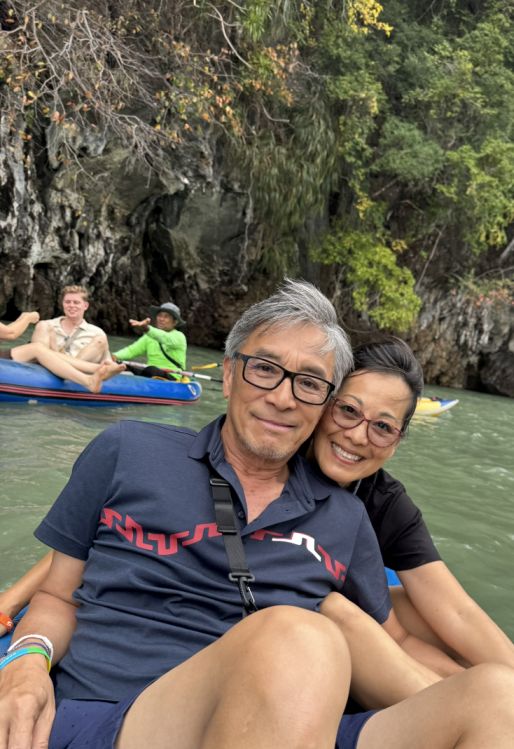 |
It felt like a seamless transition, from the larger vessel into these low, intimate canoes, preparing us to slip quietly beneath the towering rock and into the hidden cave that awaited just ahead.
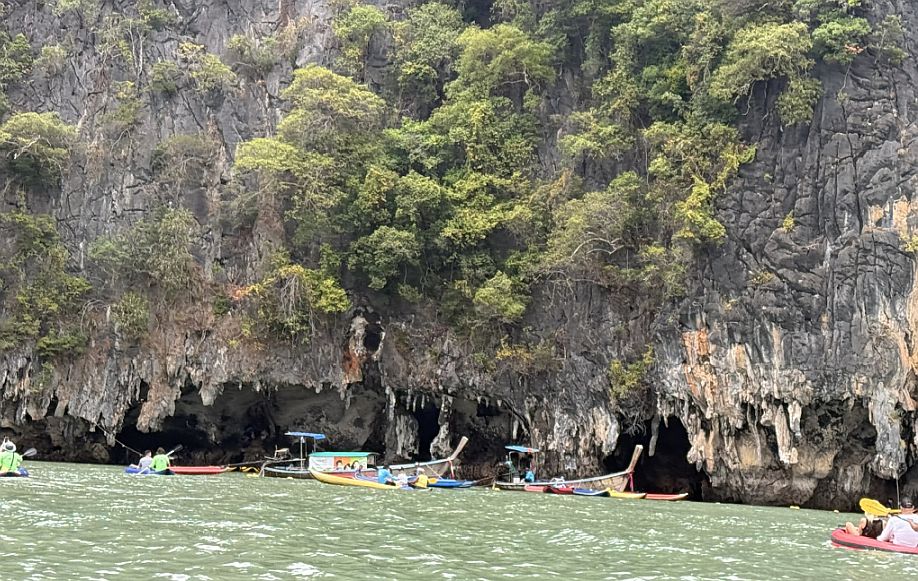
In the distance, a burst of color caught your eye, rows of bright canoes clustered near the base of a towering cliff. From afar, it looked almost like a secret entrance, a dark opening tucked beneath the massive karst wall, hinting at a hidden world inside.
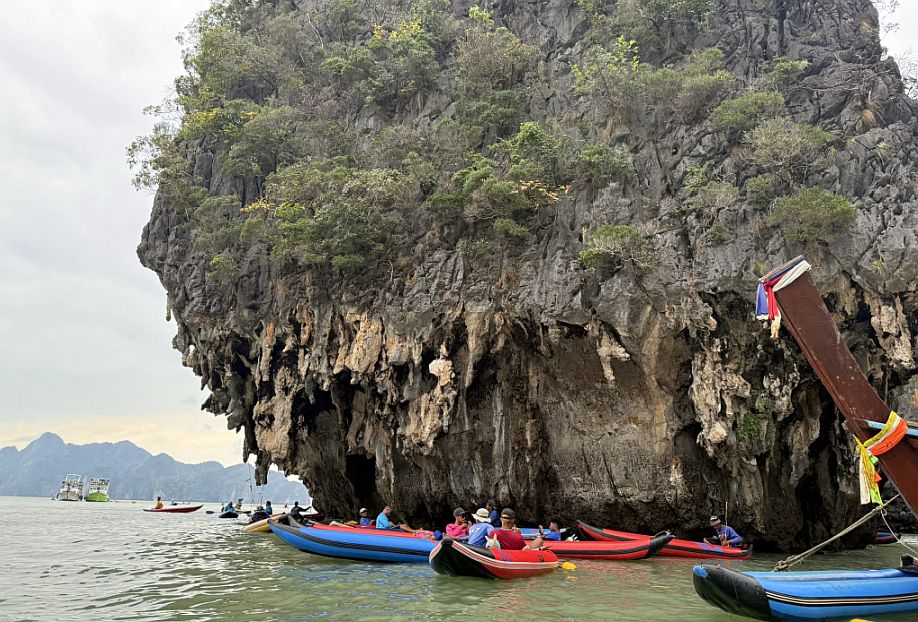
Once we settled into the canoe, the pace of the journey changed completely, slower, quieter, and much more intimate.
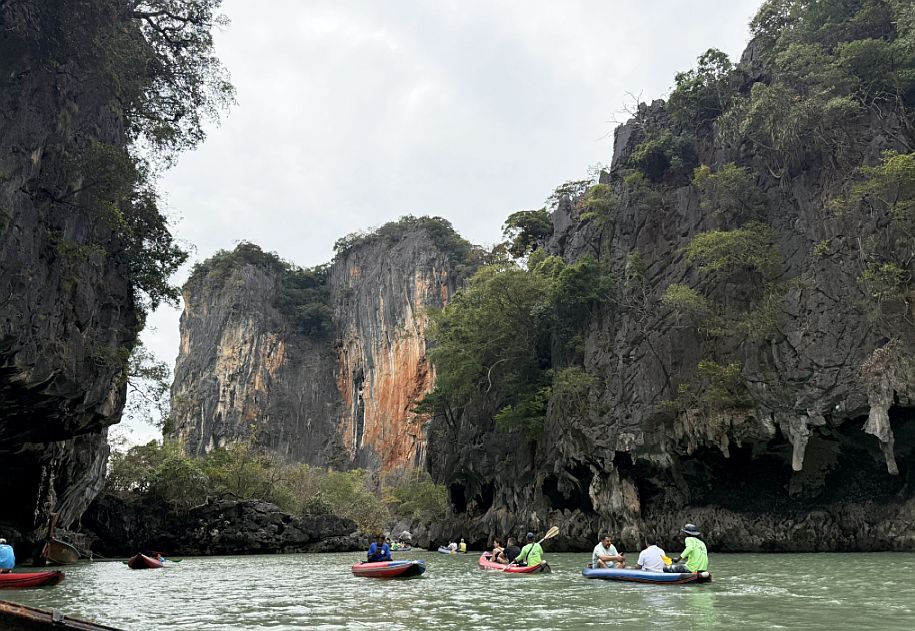
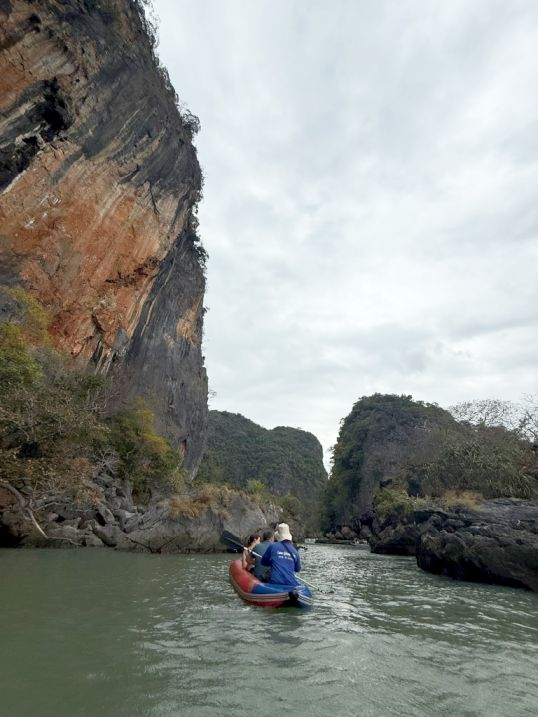
Gliding across the still waters of Phang Nga Bay, we were suddenly at the scale of the landscape, no longer just observing the karst formations from a distance but moving right alongside them.
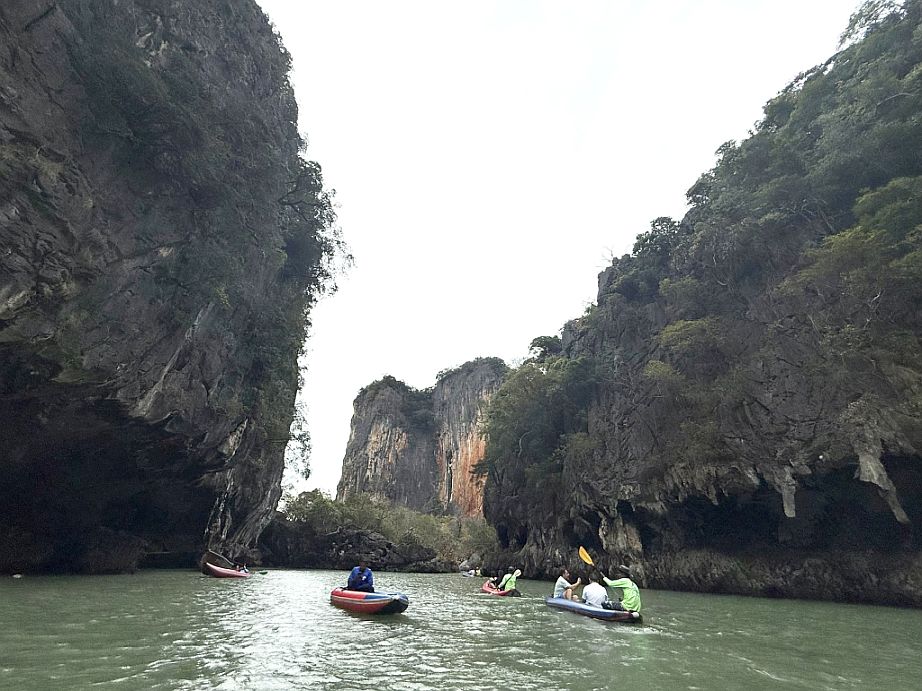
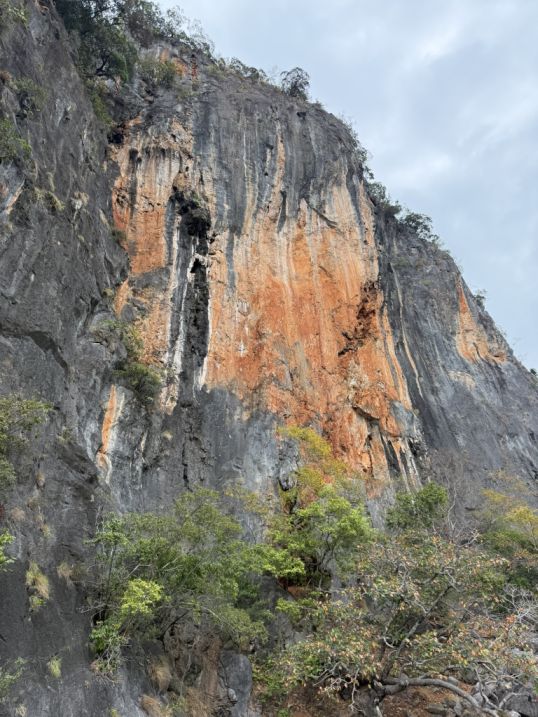
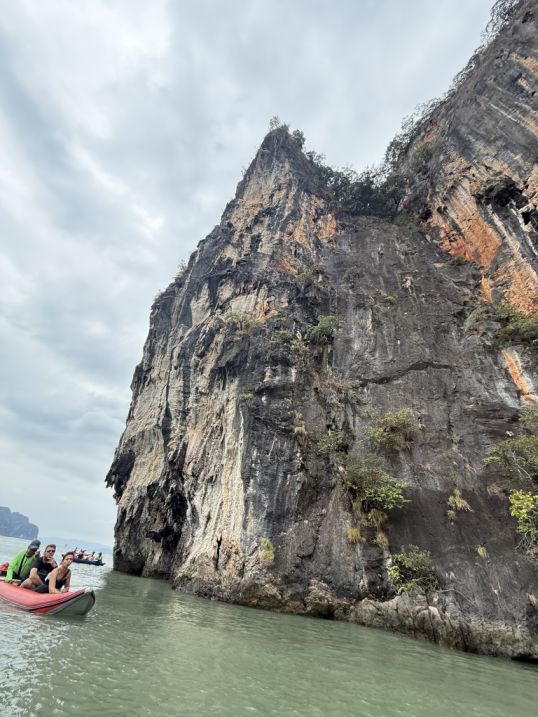
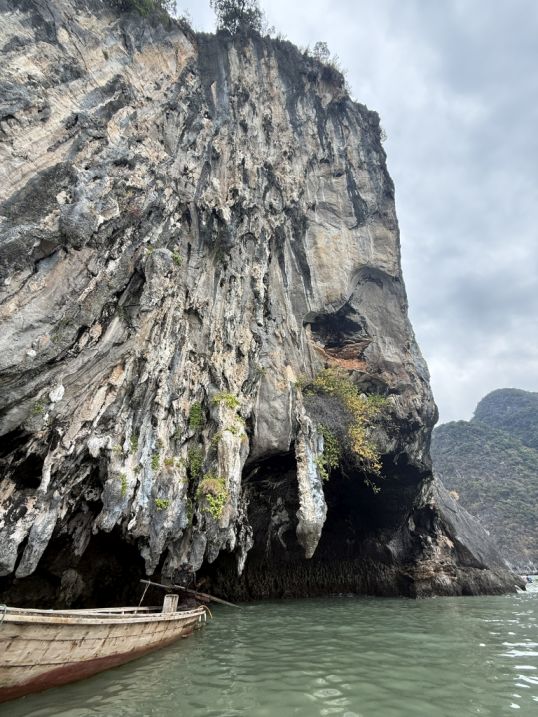
The limestone mountains here felt almost alive in their variety. Some rose as sheer vertical walls, dark and imposing, their surfaces streaked with mineral stains, reds, grays, and blacks blending together like brushstrokes.
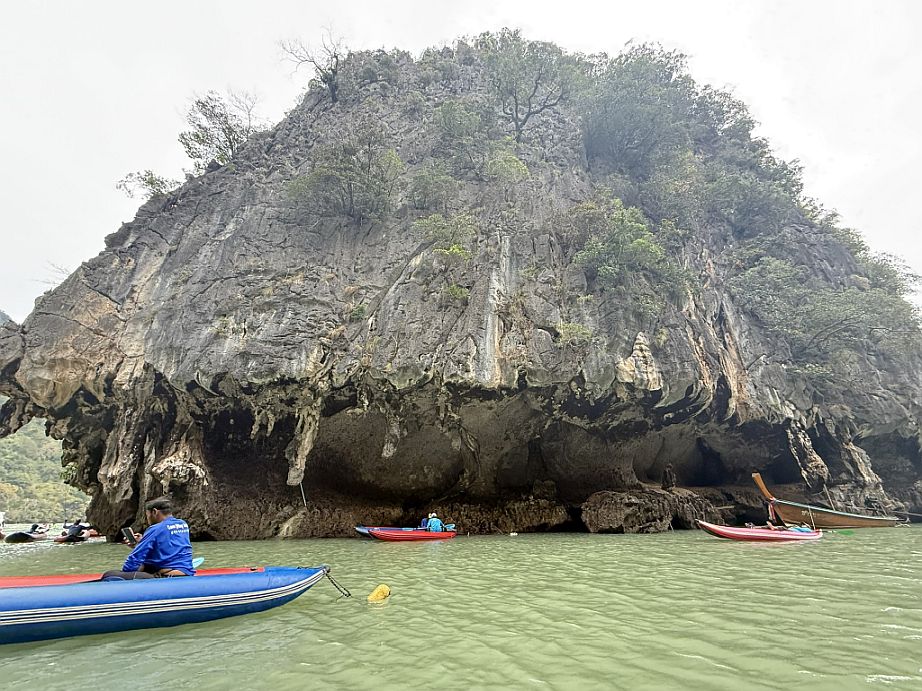
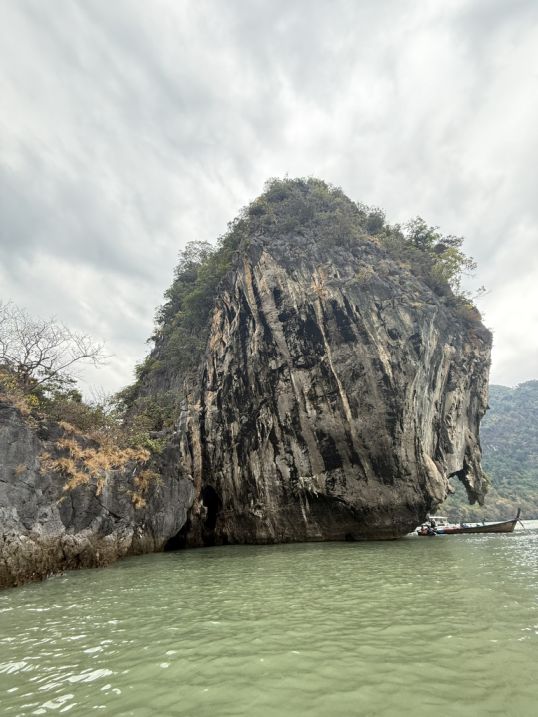
Others had softer, more rounded shapes, weathered over time into forms that sparked the imagination. One in particular resembled a giant mushroom, its narrow base widening into a heavier top, as if it were delicately balancing despite its immense weight.
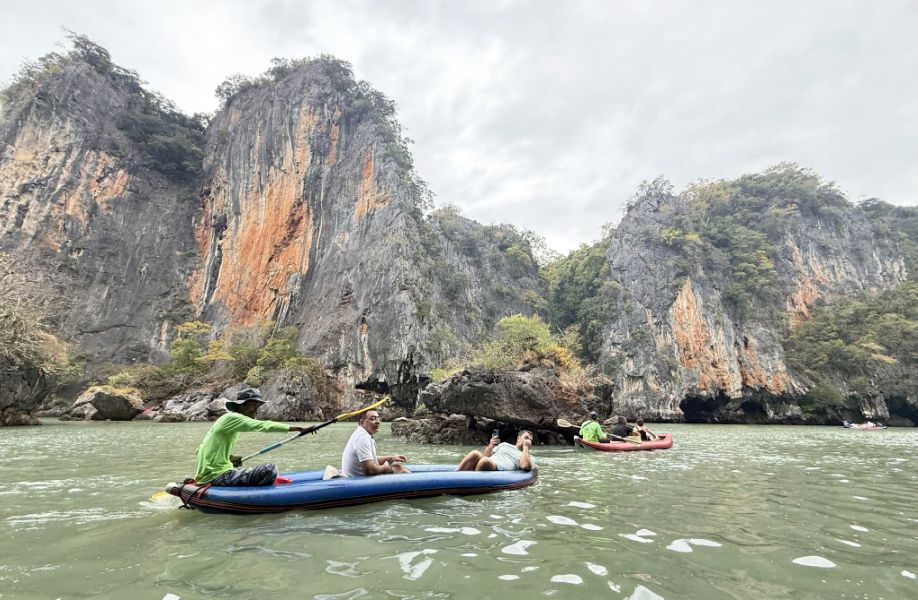
As the canoe weaved between these towering formations, we could see incredible detail up close.
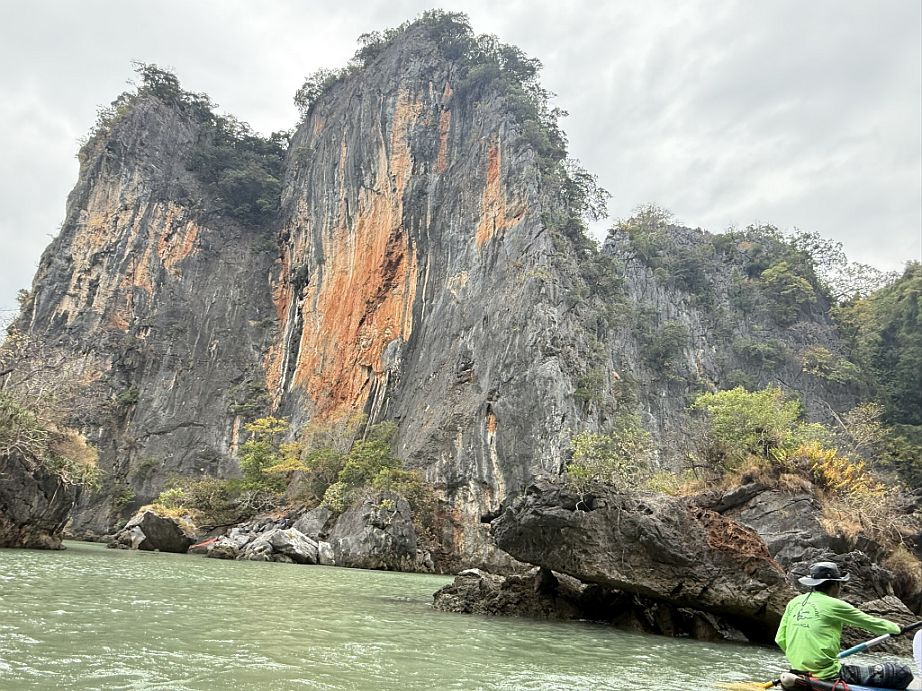
A majestic karst mountain rising sharply above the calm water.
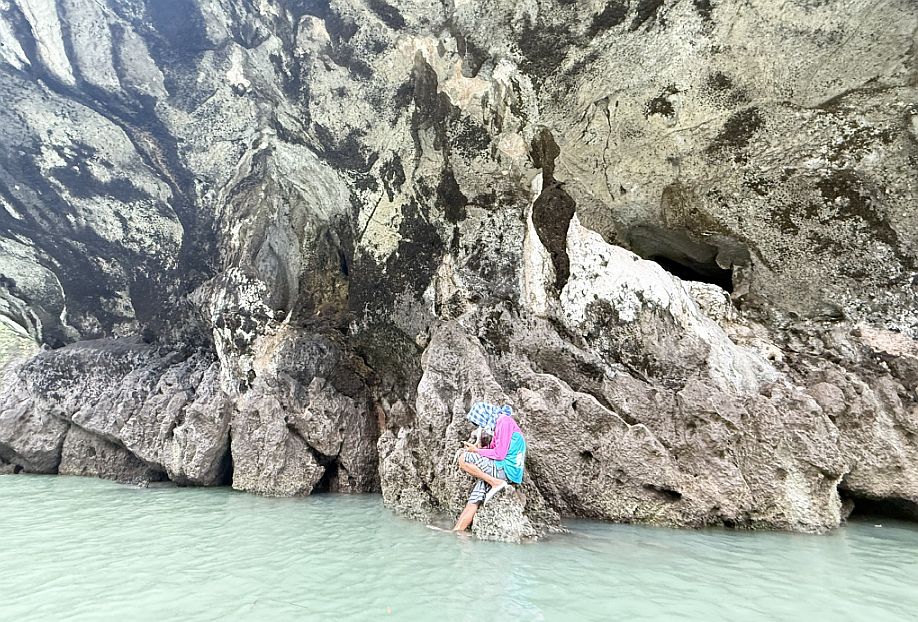
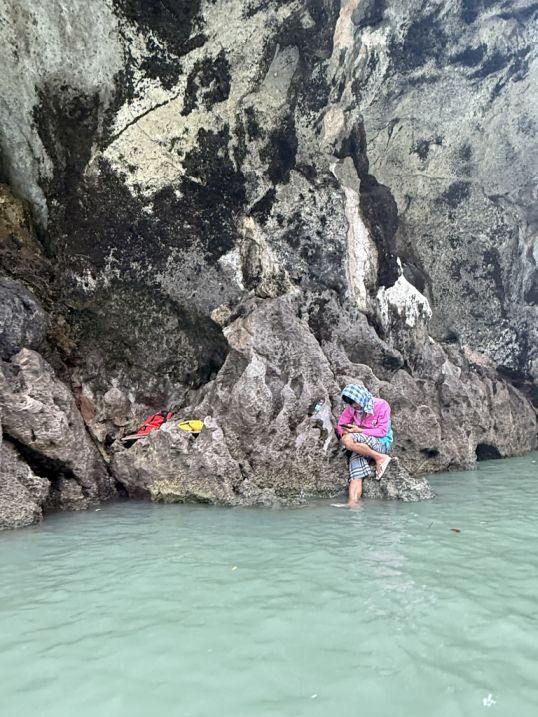
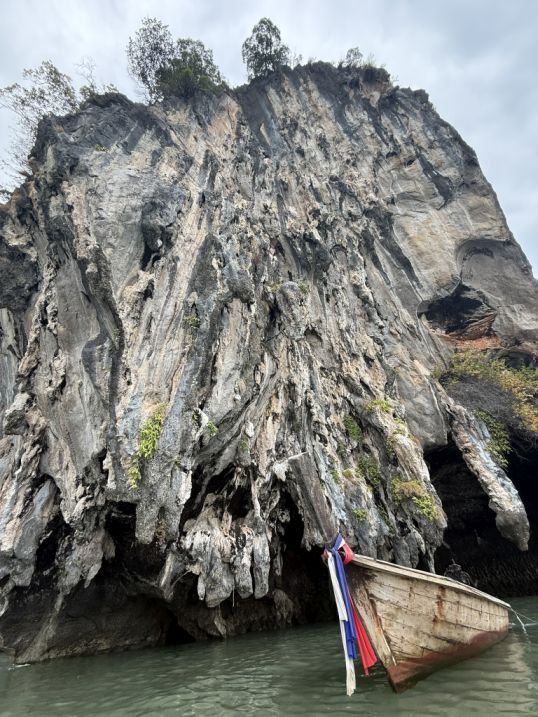
The rock faces were deeply textured, pitted, grooved, and eroded into intricate patterns by centuries of wind and water.
 |
 |
It is very peaceful here.
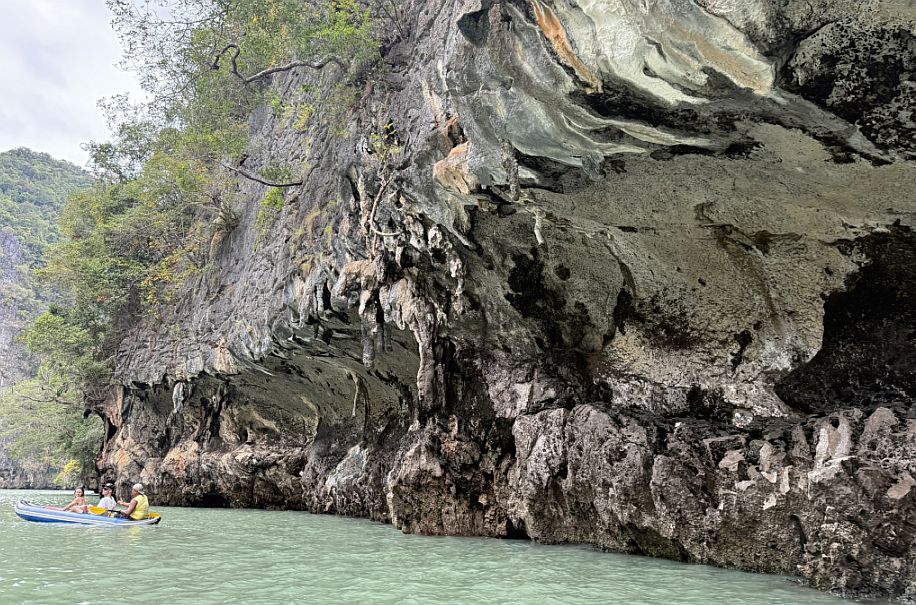
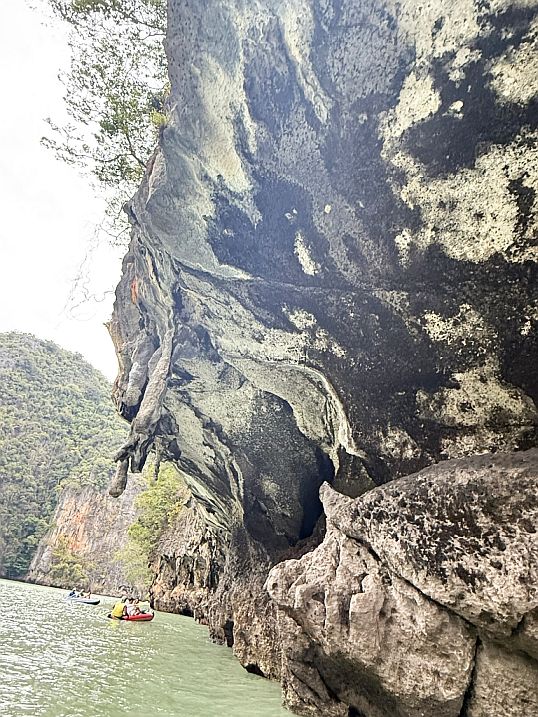
In places, the cliffs leaned inward, creating overhangs that cast shadows over the water below.
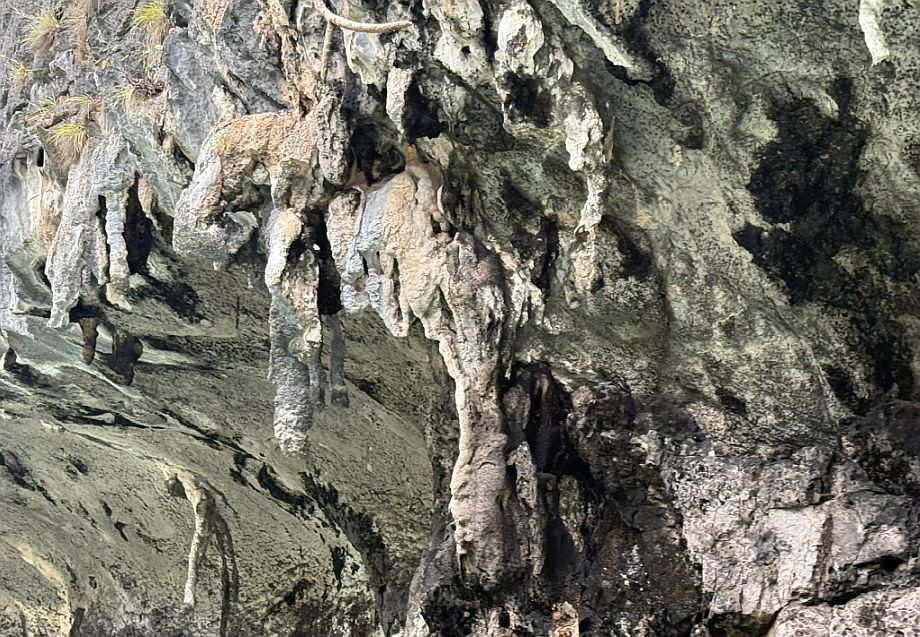
From these edges, stalactites hung down like rows of stone icicles, some sharp and pointed, others thicker and more irregular, still slowly forming drop by drop.
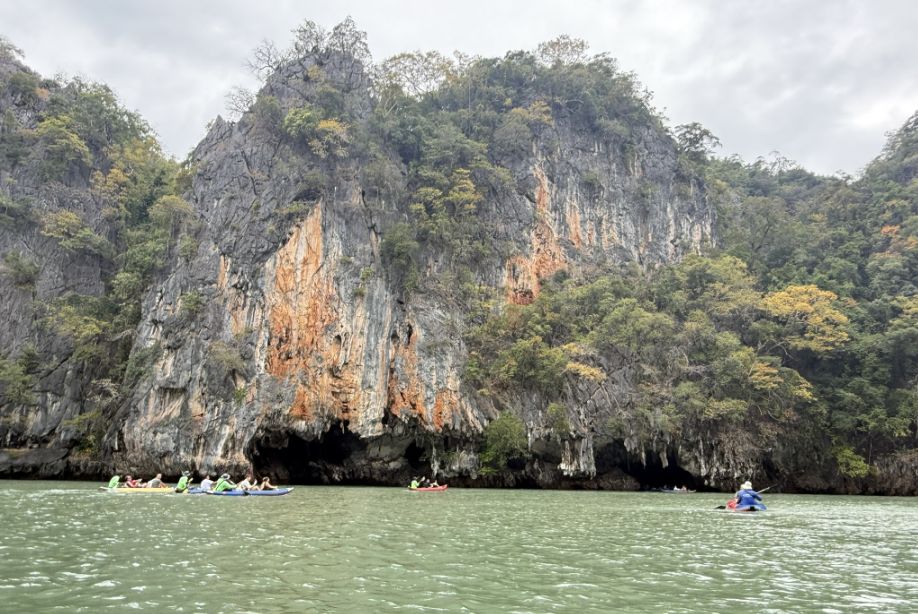
As we are gliding on the calm water, I see in the distance the mouth of the cave but we are not going there yet.
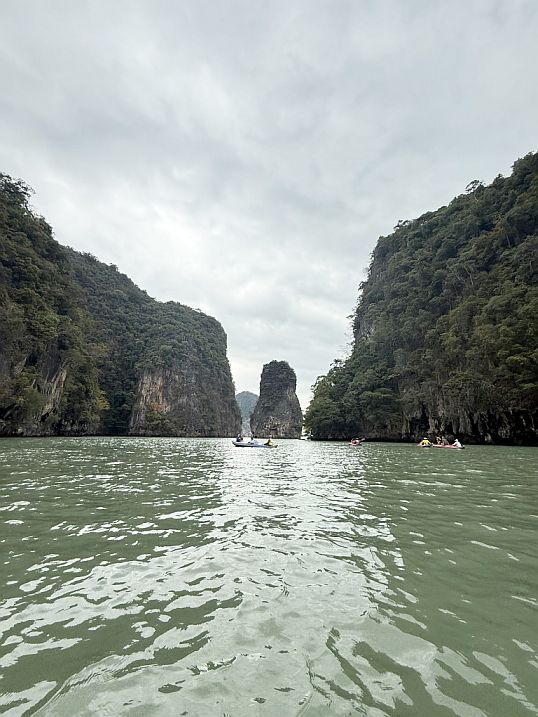 |
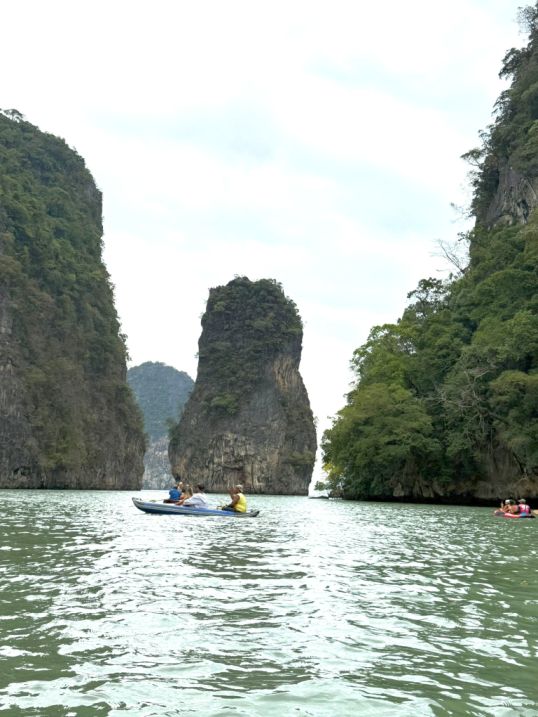 |
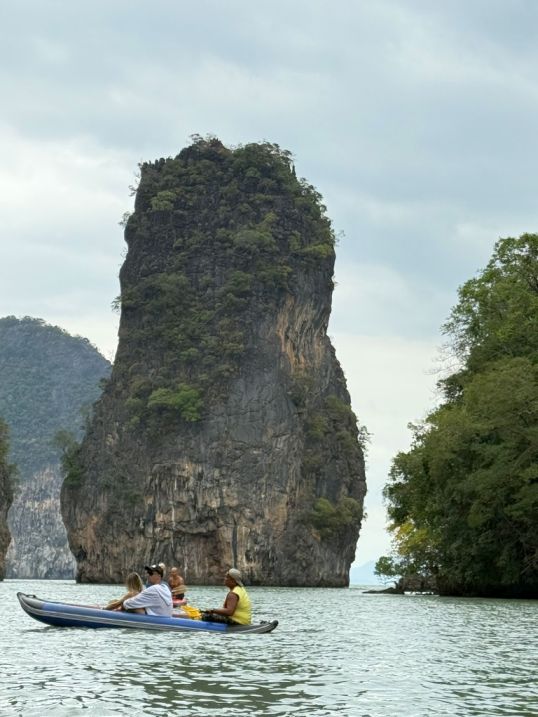
We veered around and our canoe drifted past the iconic James Bond Island, that unmistakable limestone pillar rising dramatically from the water.
 |
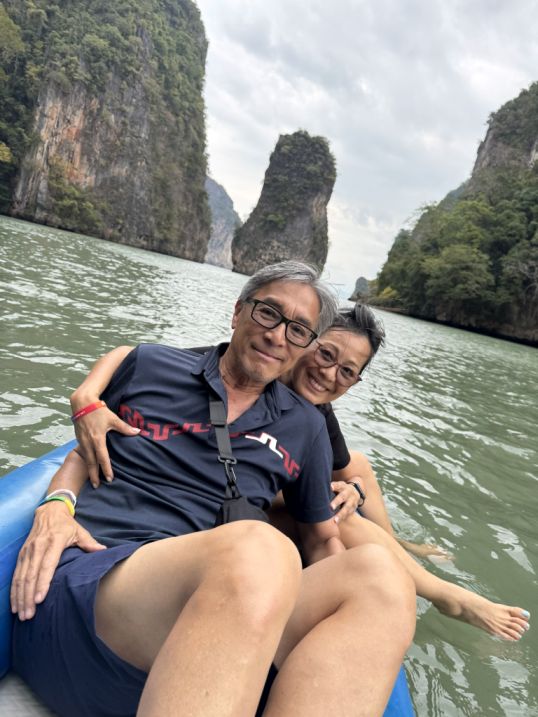 |
James Bond Island, known locally as Khao Phing Kan, is a stunning limestone formation in Phang Nga Bay, famous for its appearance in the 1974 film "The Man with the Golden Gun."
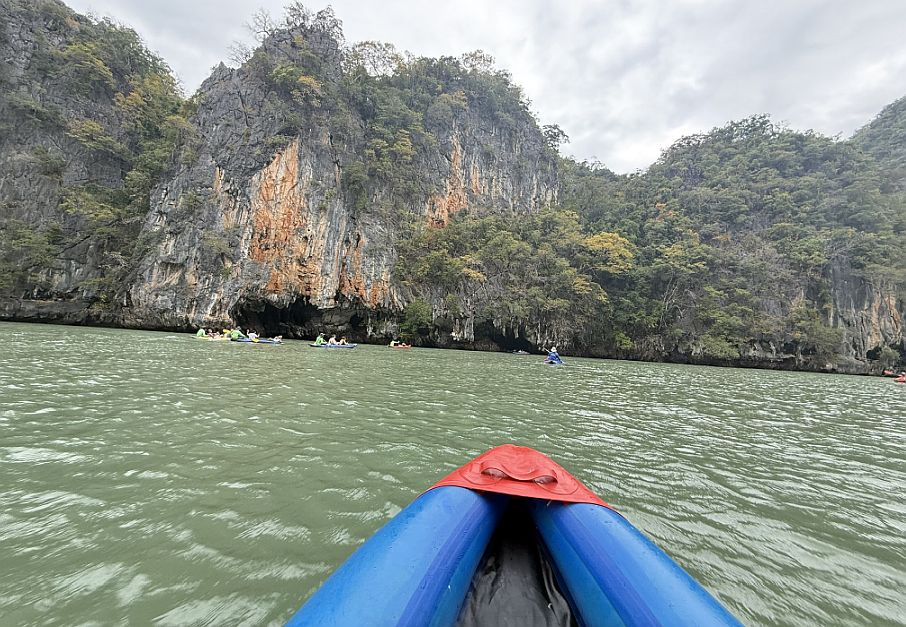
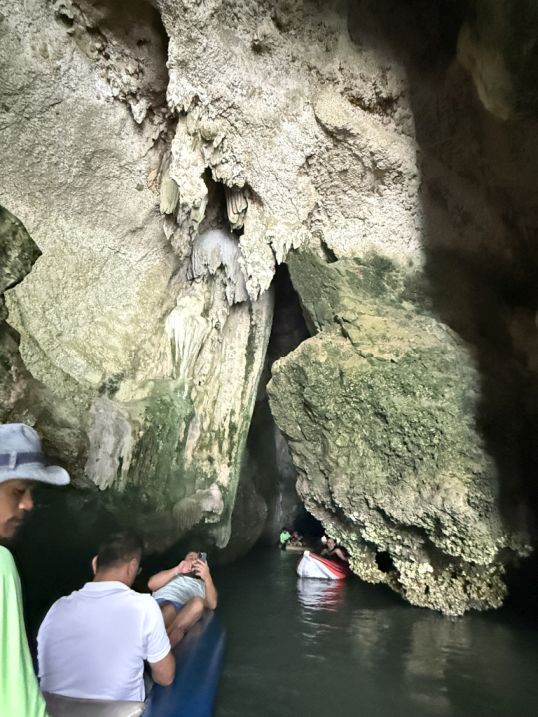
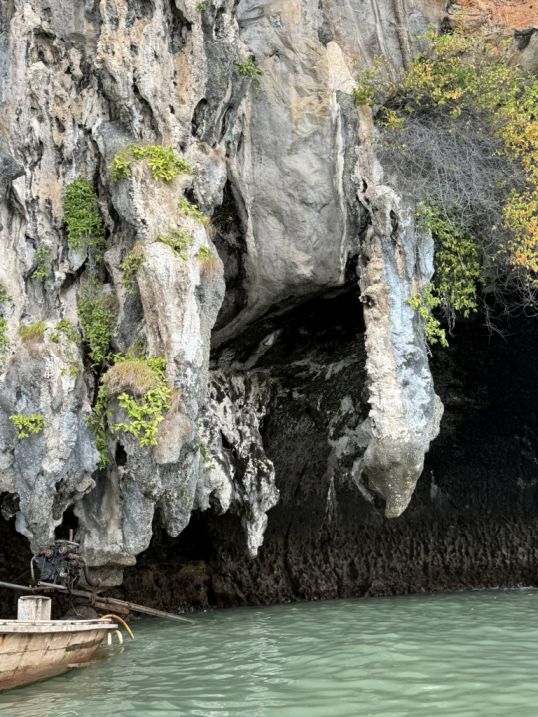
The boat is taking us toward something far more hidden and intimate: the entrance to a narrow sea cave tucked beneath a towering karst wall. From the outside, the cave looked modest, almost easy to miss, but the details drew you in.
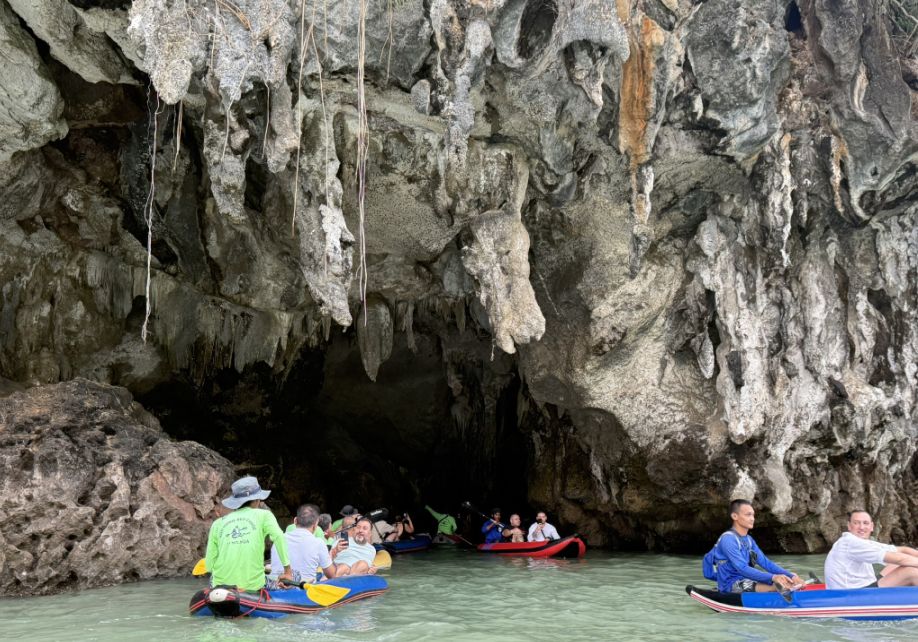
Above the entrance, clusters of stalactites hung down like jagged teeth, their tips darkened by moisture and time. There was a quiet rhythm to the scene, canoes slipping in and out in an orderly flow, each one waiting its turn to pass through the narrow opening.
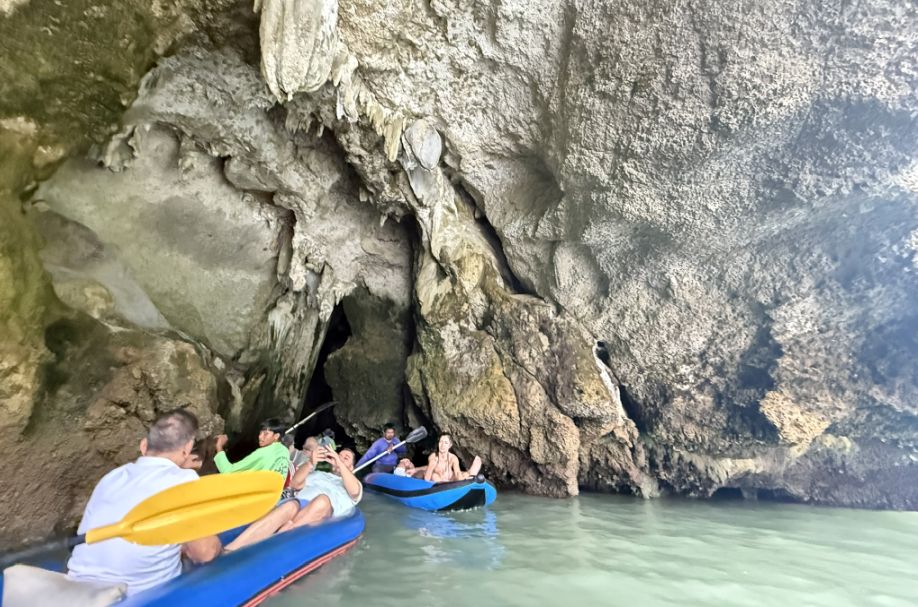
As our guide eased the canoe inside, the space immediately tightened.
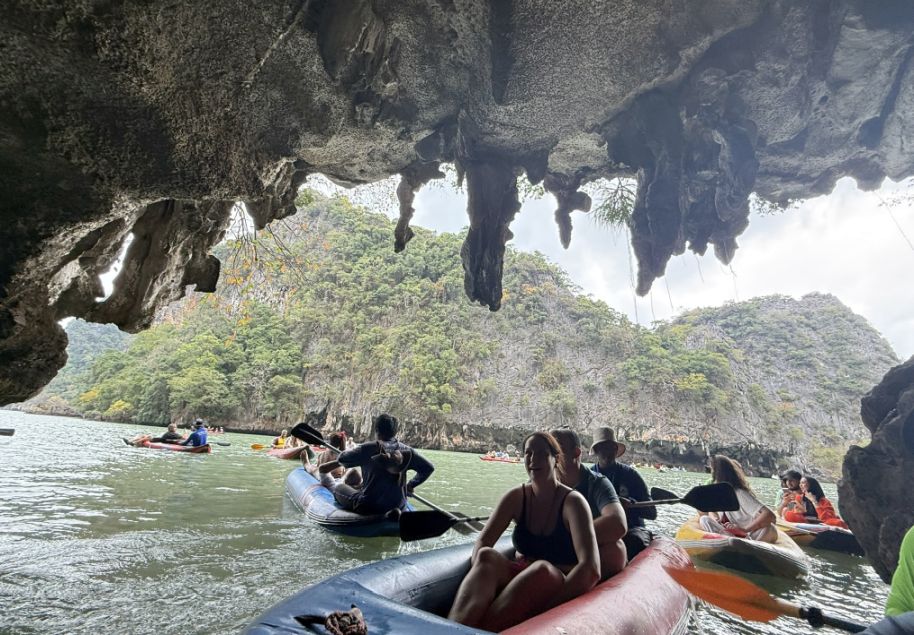
The ceiling lowered, and the light dimmed, replaced by soft reflections bouncing off the shallow water below.
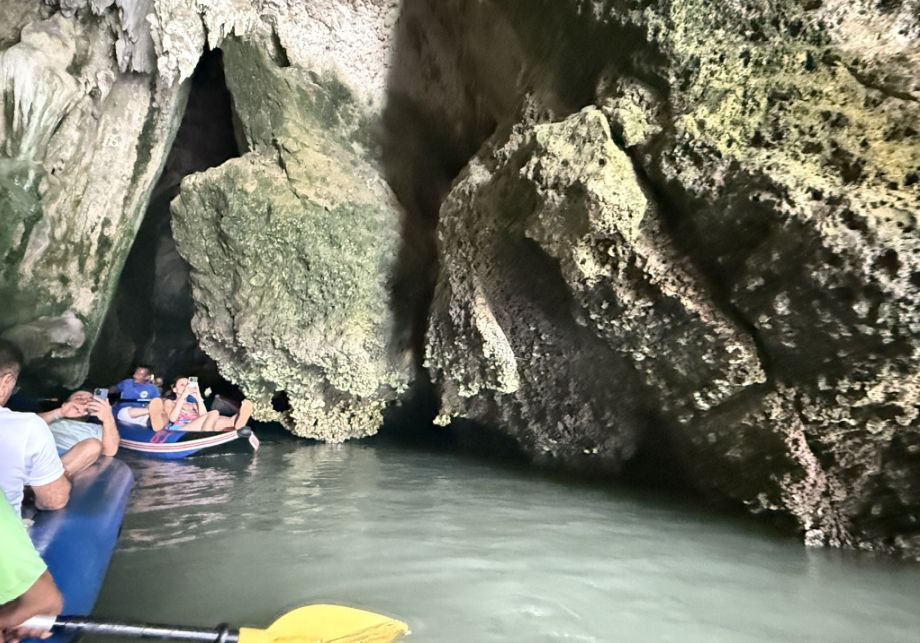
The cave walls were rough and textured, with patches of green where algae or moisture had taken hold, giving parts of the rock a slightly slick, living quality.
 |
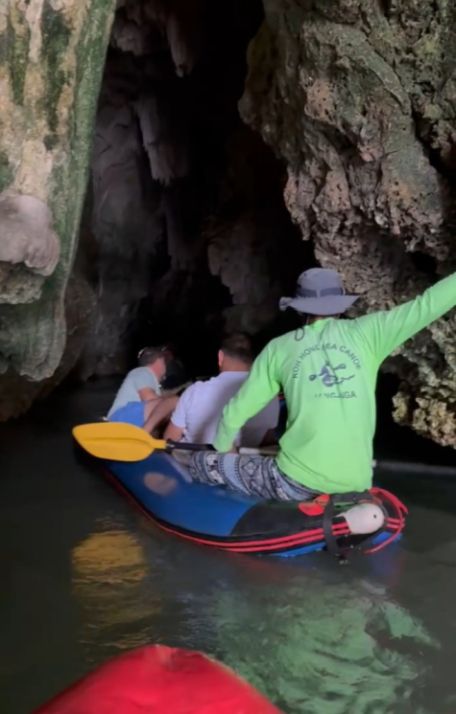 |
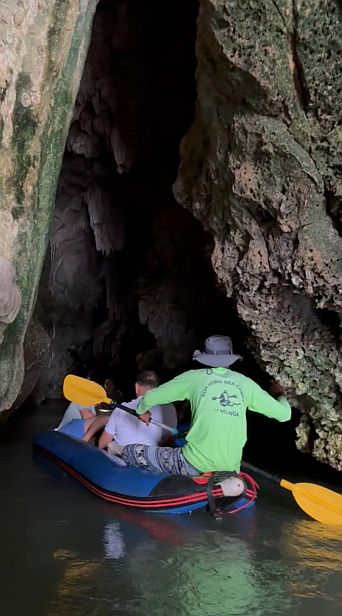
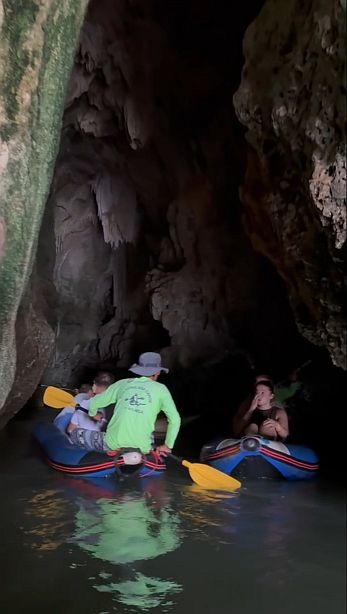
Our guide worked skillfully in the confined space, at times placing his hands against the cave walls to gently push the canoe forward.
 |
 |
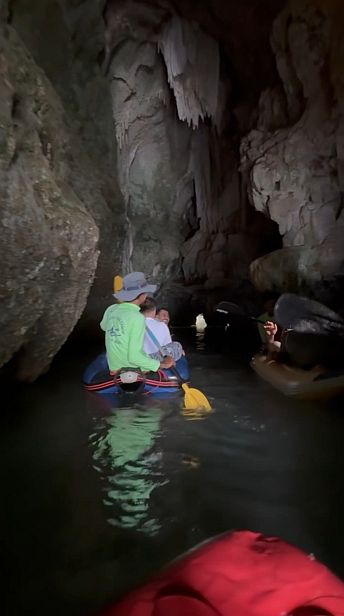 |
Then switching to his paddle when there was just enough room. Every movement was careful and controlled, echoing softly in the enclosed chamber. It felt quiet and almost secretive, like passing through a hidden passage known only to those familiar with the tides and terrain.
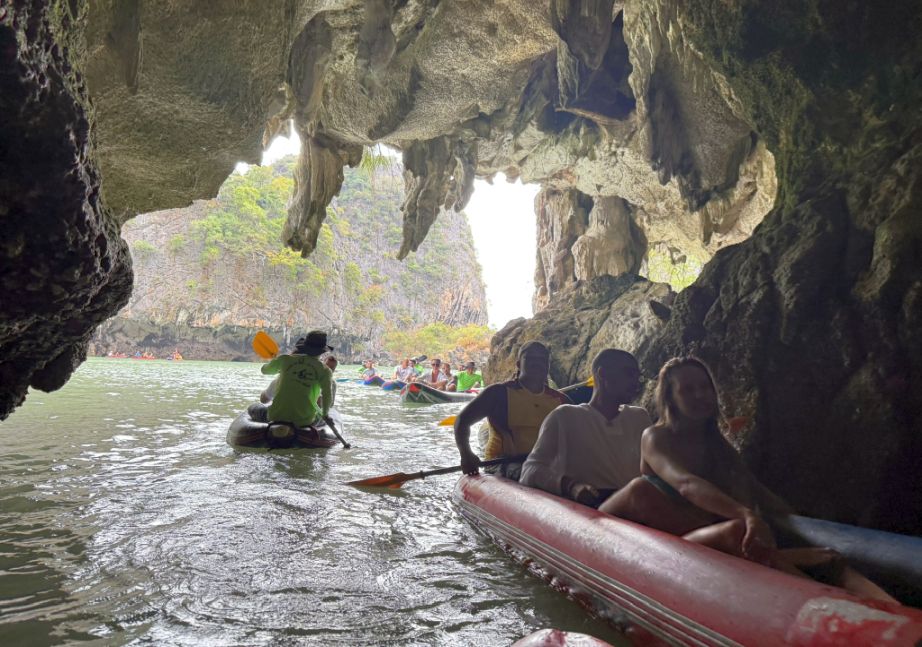
The cave itself was short, just a few minutes from entrance to end. There was no grand chamber inside, just a narrow corridor that eventually closed in, signaling it was time to turn back. The guide smoothly rotated the canoe in the tight space, a practiced motion, and began guiding you out the way you came.
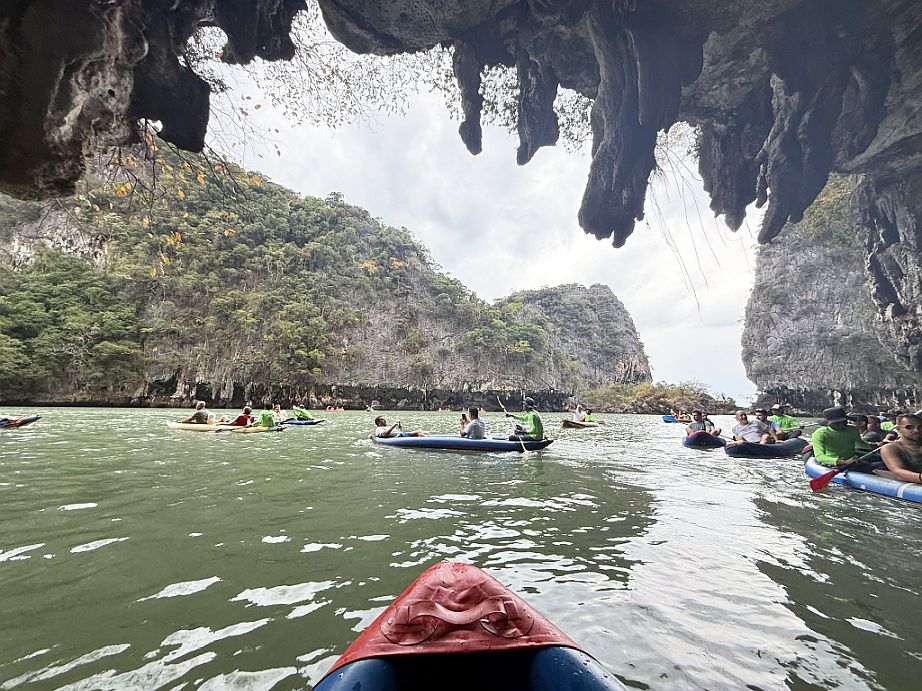
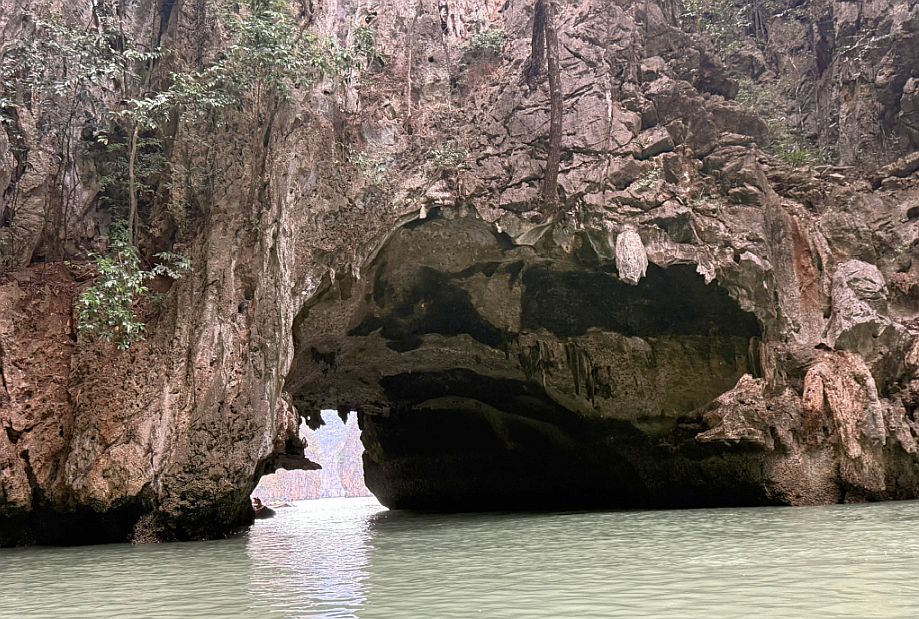
As we emerged, the light returned suddenly, framing the cave’s mouth in striking detail. The jagged stalactites above created a natural archway, and beyond it, the bay opened up again. Canoes moved in a steady rhythm, some entering, others exiting, adding a gentle sense of flow to the scene. And in the distance, rising beyond the immediate cliffs, were more of those colorful karst mountains, layered against the horizon, completing the sense that you were drifting through a vast, surreal landscape.
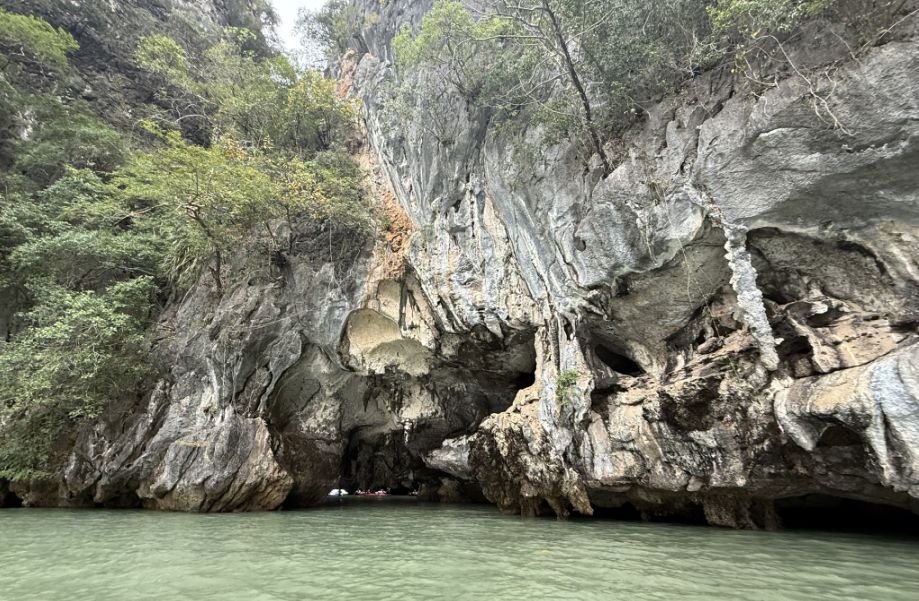
After leaving the cave we passed by one of the most magical features of Phang Nga Bay.
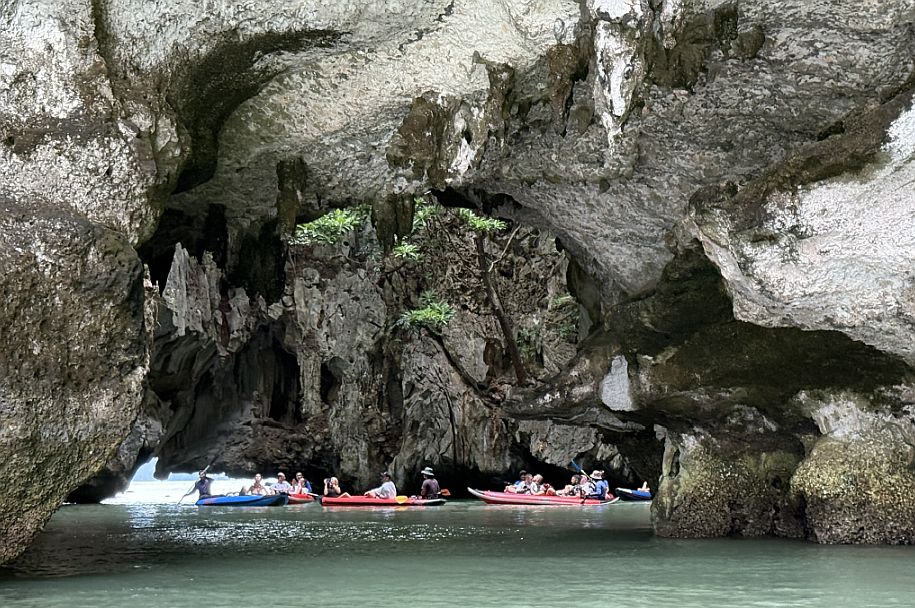
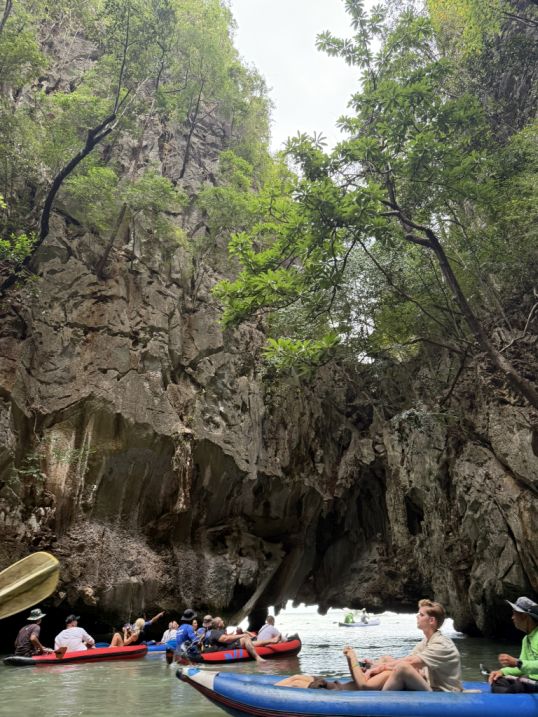
Hidden lagoon, often called a “hong,” which feels like a secret world tucked inside the limestone mountains.
 |
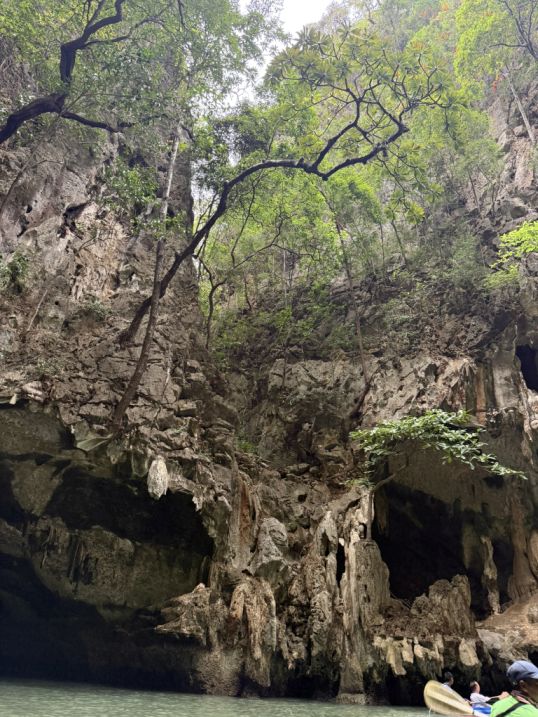 |
Our canoe approaching the lagoon.
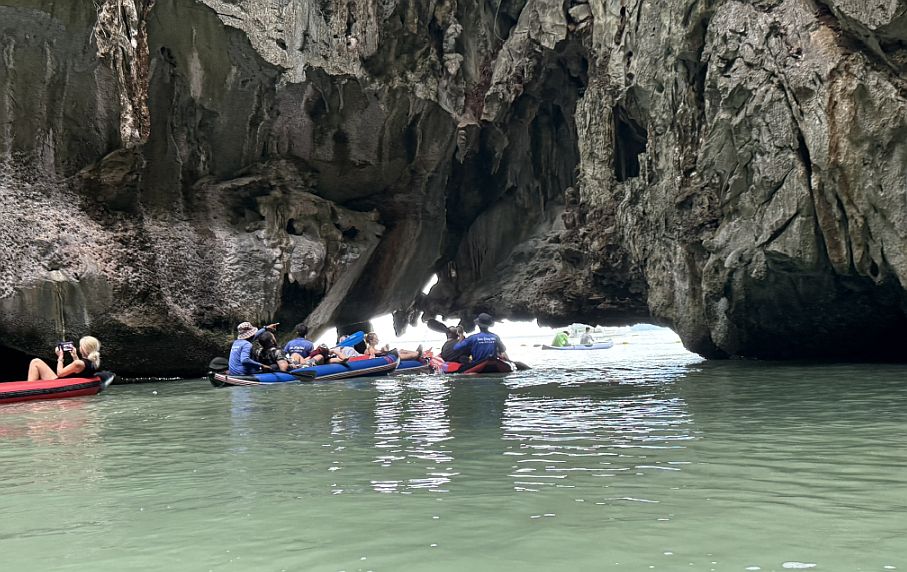
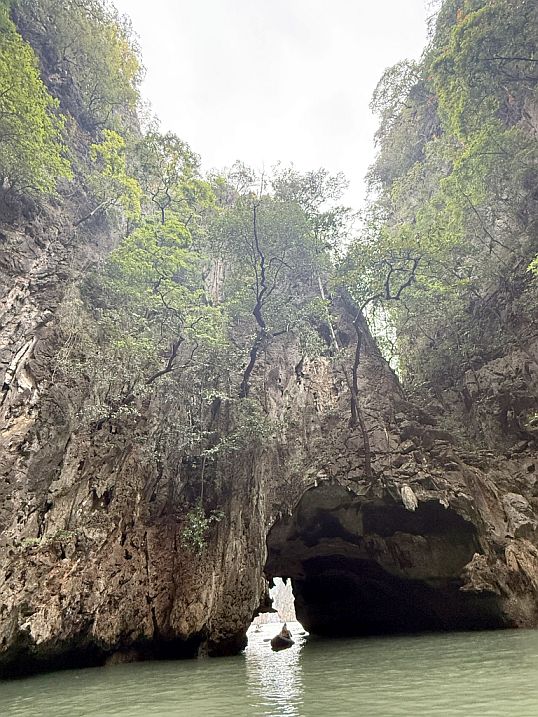
Entrance of the Lagoon.
Inside, the space transformed completely.
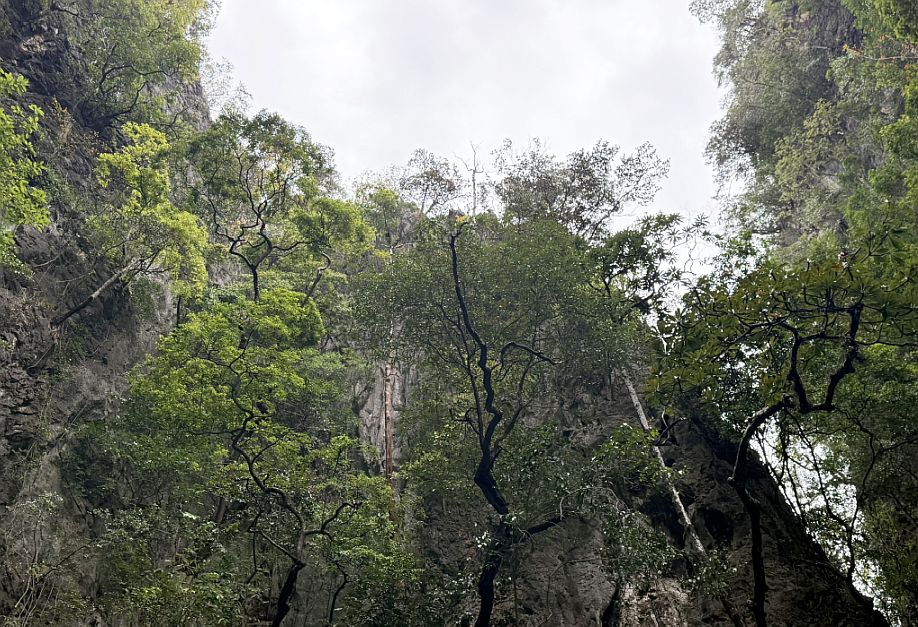
We found ourselves in a natural enclosure, surrounded on all sides by towering karst cliffs that rose straight up like the walls of a cathedral.
 |
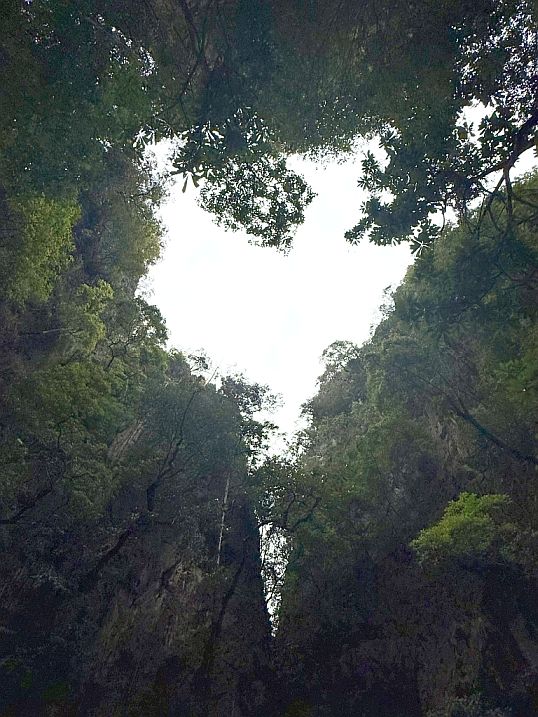 |
But unlike a cave, the top was open to the sky. Sunlight poured in from above, illuminating the lush greenery clinging to the rim, rees, vines, and shrubs cascading down in places, thriving in this sheltered, almost untouched environment.
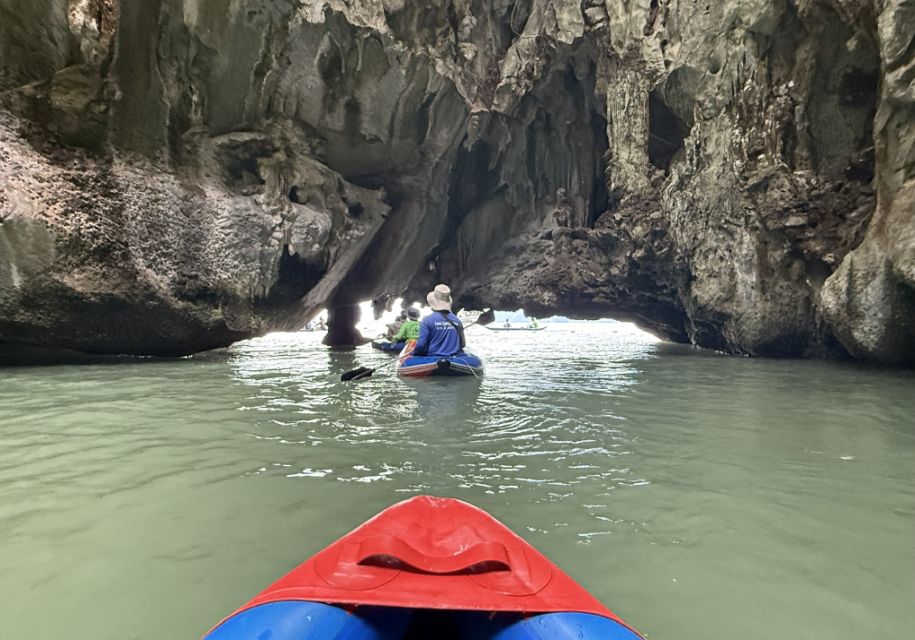
We are now exiting the lagoon by passing through a narrow gap at the base of the water just inches above the waterline.
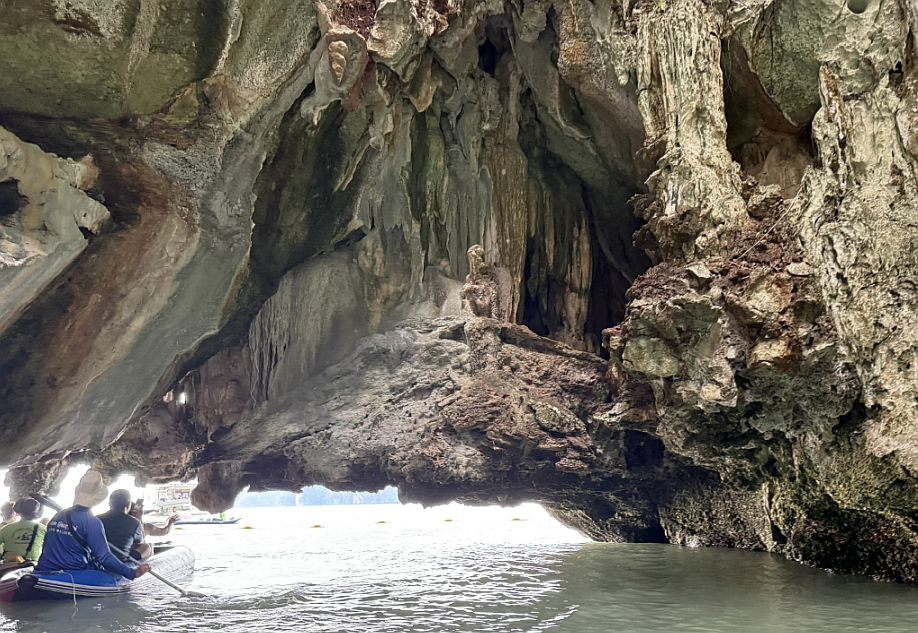
We had to glide through carefully, almost ducking as the ceiling pressed down close overhead.
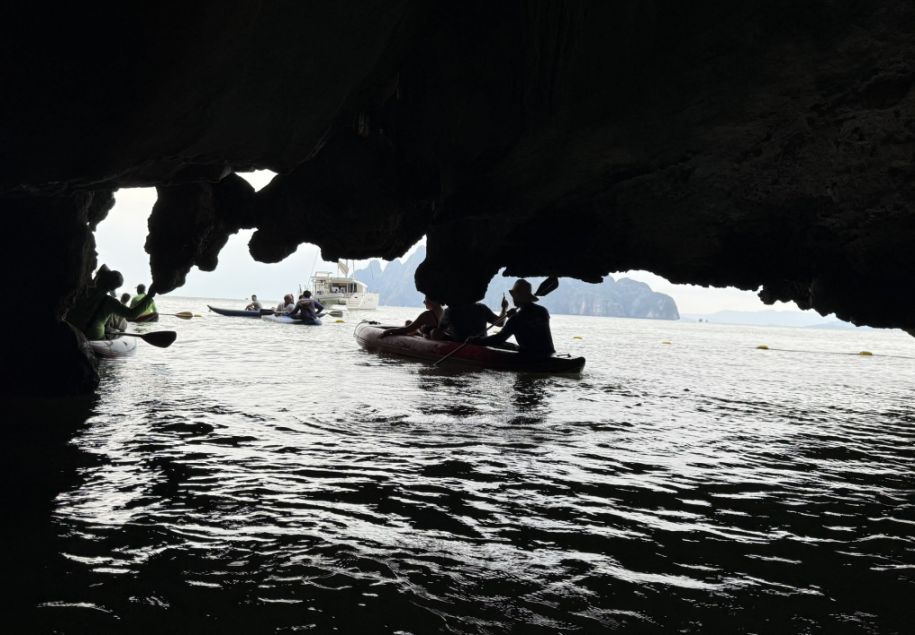
It felt like slipping through a hidden doorway, one that only reveals itself at the right tide.

For a brief moment, everything tightened, the rock above, the walls beside us, before suddenly opening up.
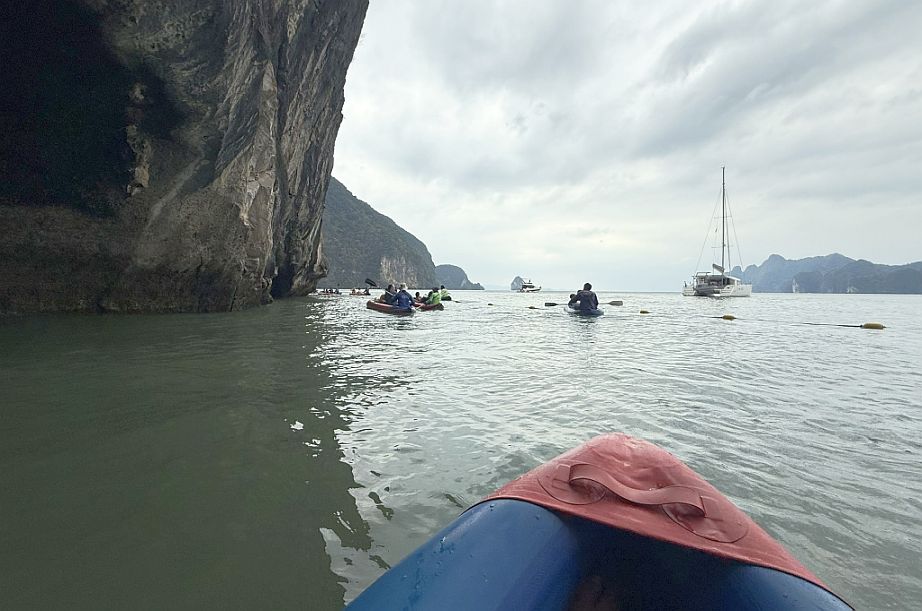
Then the bay opens again.
 |
 |
The atmosphere here felt quieter, more secluded. The water was calm and shallow, often a muted green, reflecting both the cliffs and the vegetation above.
 |
 |
The limestone walls were full of character, pocked with round openings and hollowed-out pockets, like windows carved by nature.
 |
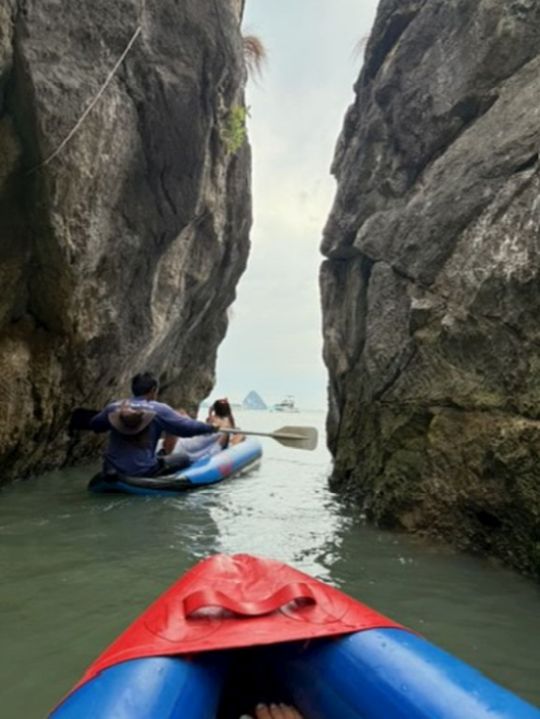 |
Because this space is enclosed, it carried a sense of stillness, almost like being inside a hidden garden. The outside world, the open bay, the boats, the movement, felt far away. Here, it was just the gentle sound of paddles dipping into water and the occasional echo bouncing off the stone walls.
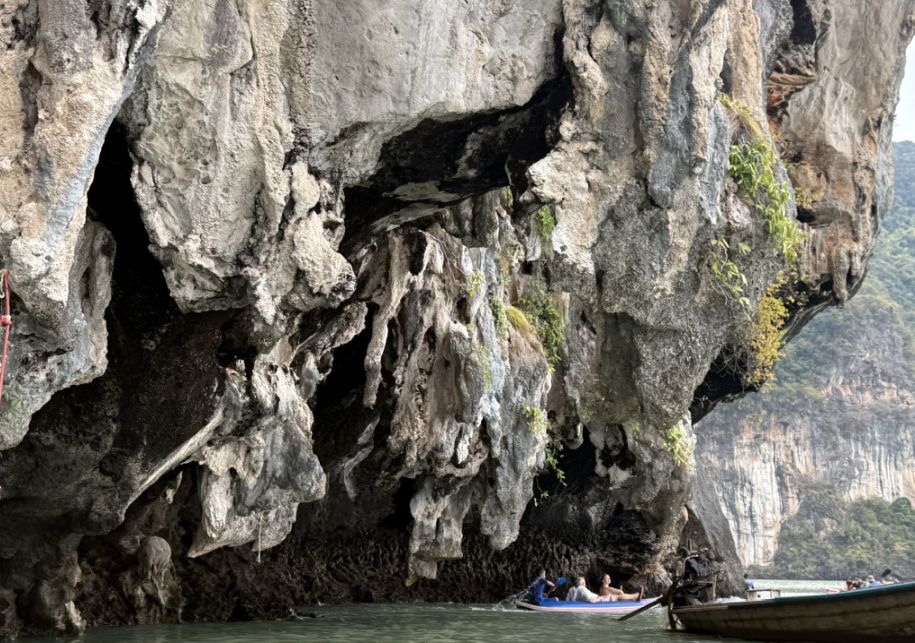
These “hongs” are formed over thousands of years as water erodes the limestone from the inside, eventually creating collapsed ceilings or hidden chambers open to the sky.
 |
 |
What we experienced wasn’t just another stop, it was like discovering a secret room within the mountains, a place that feels both enclosed and open at the same time, and far more intimate than the vast scenery outside.
 |
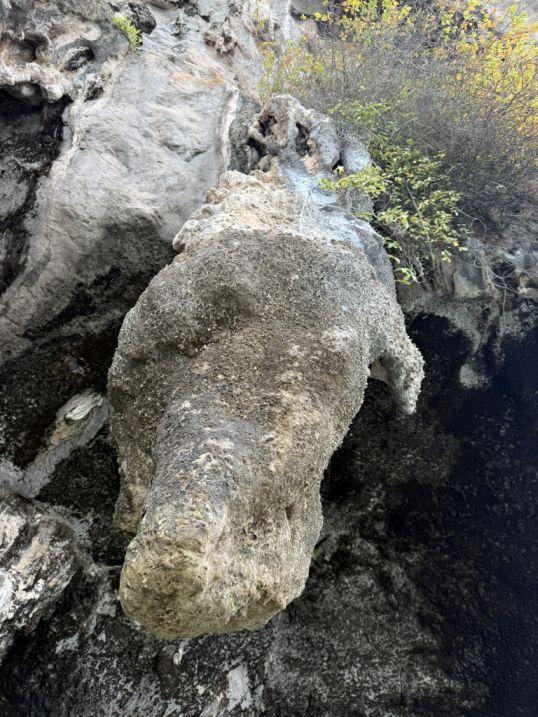 |
A stalactite hanging down one of the karst mountain.
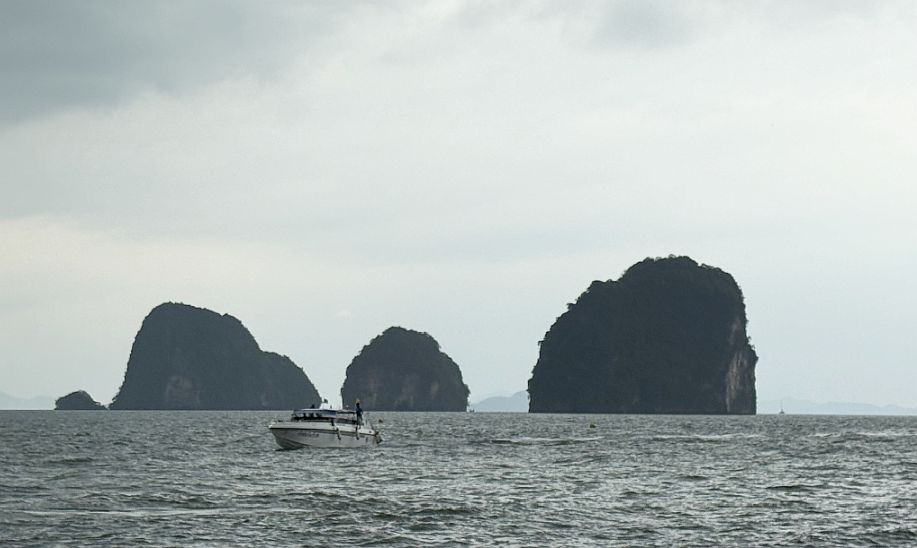
Then we boarded our big boat and we sailed away to Au Phang Nga National Park.
NEXT... Day 11- Ao Phang Nga National Park