12 days in Thailand 1/7- 1/18/2025
Day 7-Chiang Rai guided tour-1/13/2025
Baandam Museum
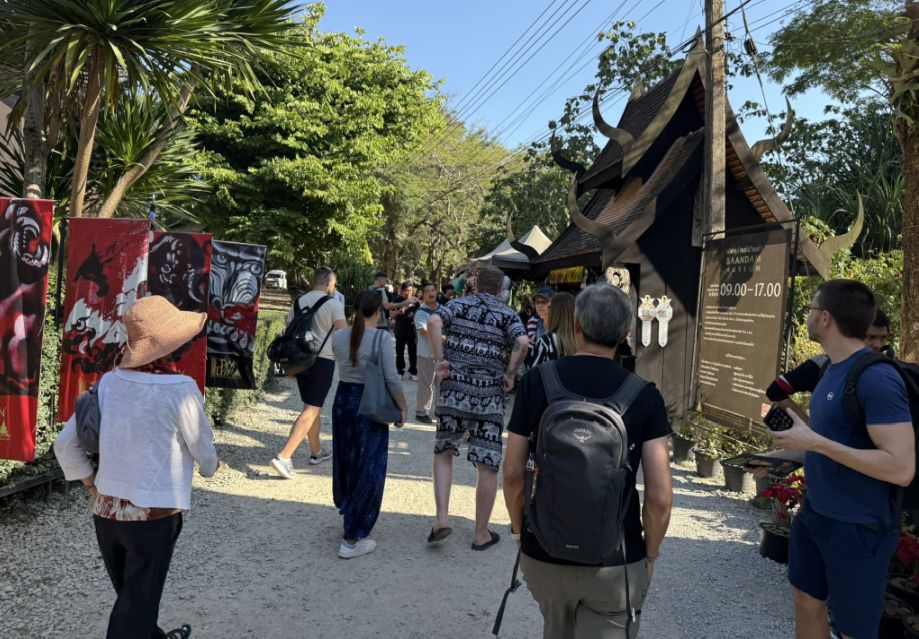
Just a short 10–15 minute drive from the Blue Temple brought us to one of Chiang Rai’s most fascinating and unconventional sites, Baan Dam Museum, often called the “Black House.” The name Baan Dam literally means “Black House,” and as soon as we arrived, we can feel the contrast with the bright, spiritual atmosphere of the temples we just visited.
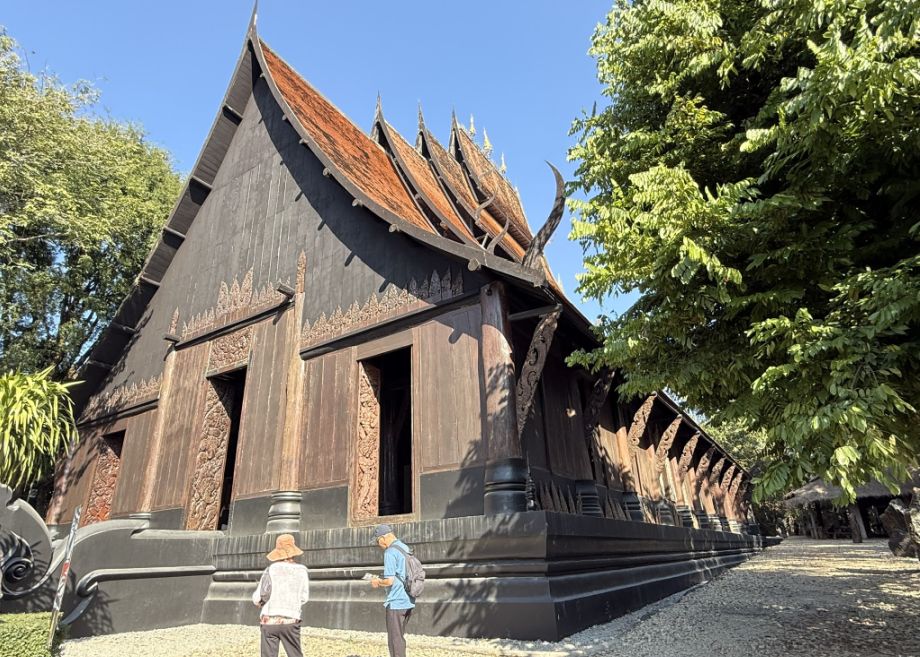
This museum is the life’s work of Thawan Duchanee, one of Thailand’s most renowned contemporary artists. He began developing the site in the 1970s, and it continued to evolve over decades until his passing in 2014. Thawan was named a National Artist of Thailand and was famous for his bold, dark, and often provocative style. His work explores themes of life, death, suffering, and the darker side of human nature, very different from the serene imagery typically associated with Buddhist art. You can actually feel influences from traditional Thai, Buddhist, and even Western styles, but reinterpreted in a much more raw and symbolic way.
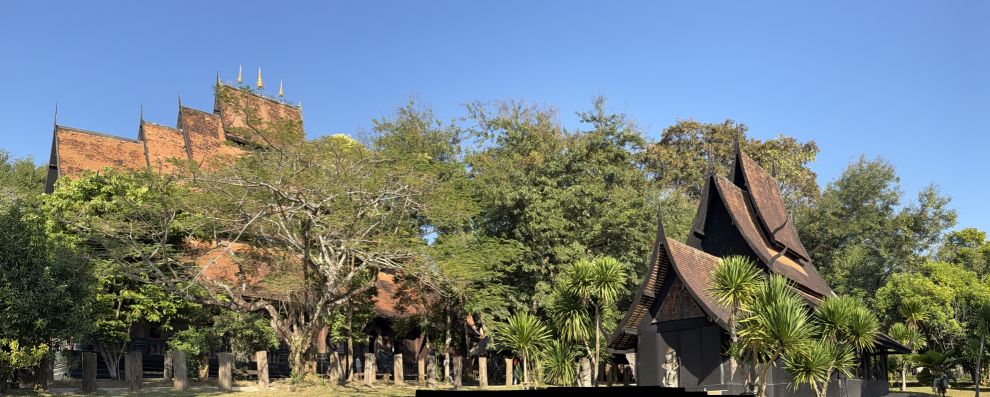
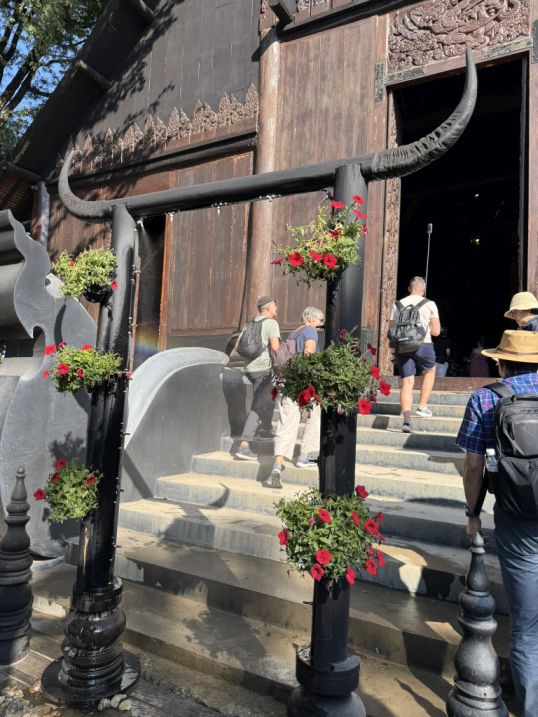
The property itself is vast and beautifully laid out, almost like an art village set within nature. Instead of a single building, there are around 40 structures scattered across the grounds, each one uniquely designed in the style of traditional northern Thai architecture. The architecture is the classic Lanna-style wooden houses with steep, multi-tiered roofs, dark wood exteriors, and intricate carvings.
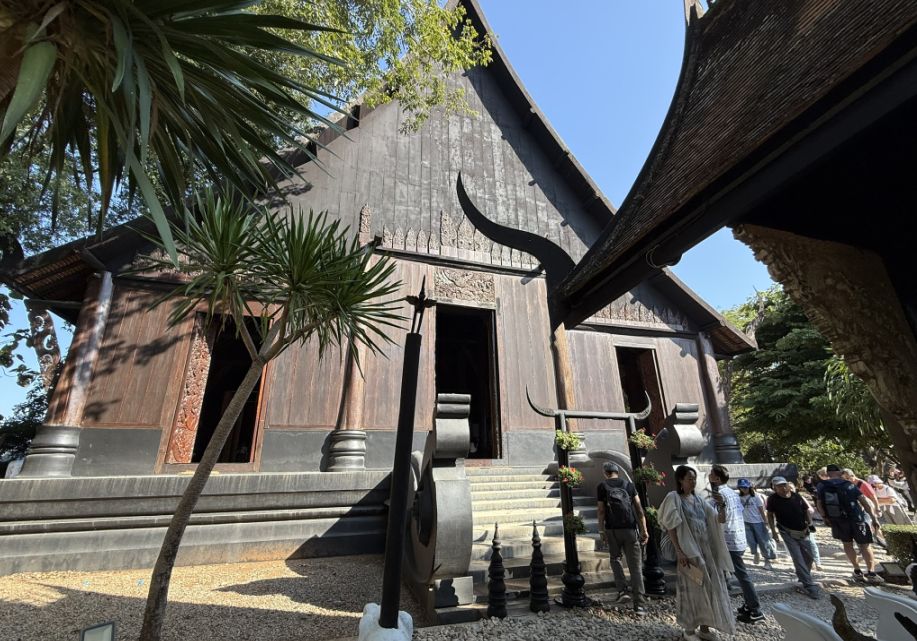
This central hall is often considered the main exhibit space is especially dramatic. It’s darker, filled with massive wooden furniture, animal remains, and bold compositions that almost feel ritualistic.
 |
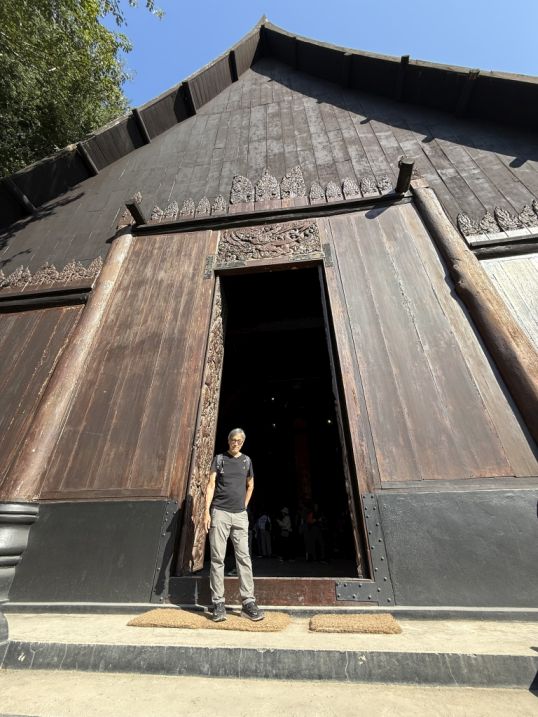 |
Stepping through the tall wooden door of the main hall at Baan Dam Museum.
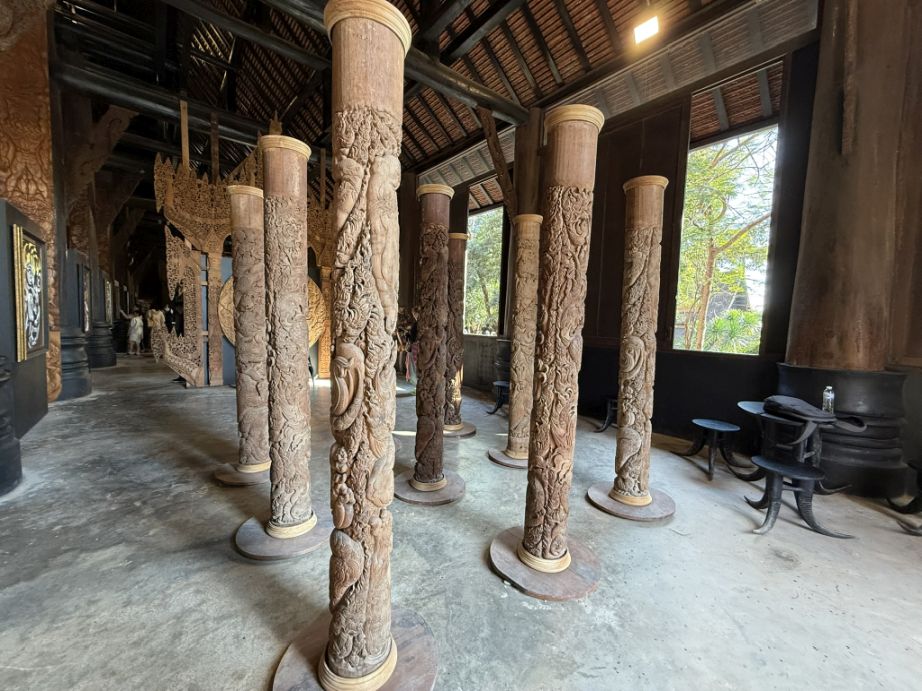
The transition is immediate and powerful, the outside light drops away, and we are pulled into a dark, almost cathedral-like interior. The space feels heavy, quiet, and intentional.
Right at the entrance, these large, ornate wooden pieces are a signature of Thawan Duchanee’s style. They’re not just decorative furniture or carvings ,they feel almost ceremonial.
 |
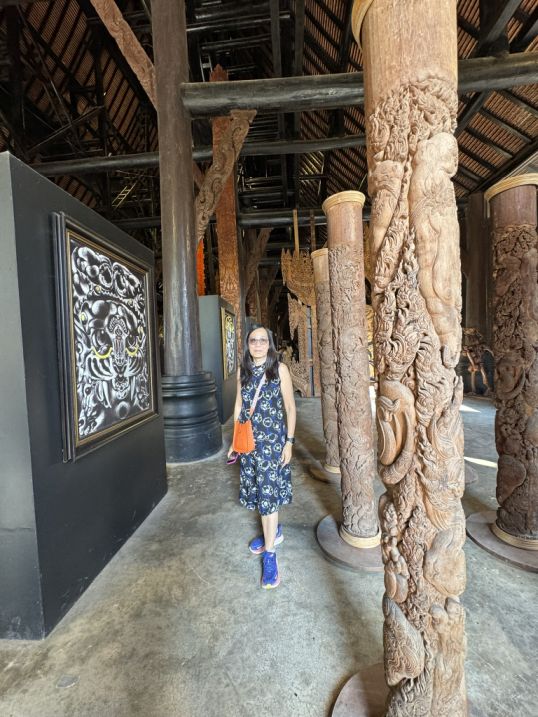 |
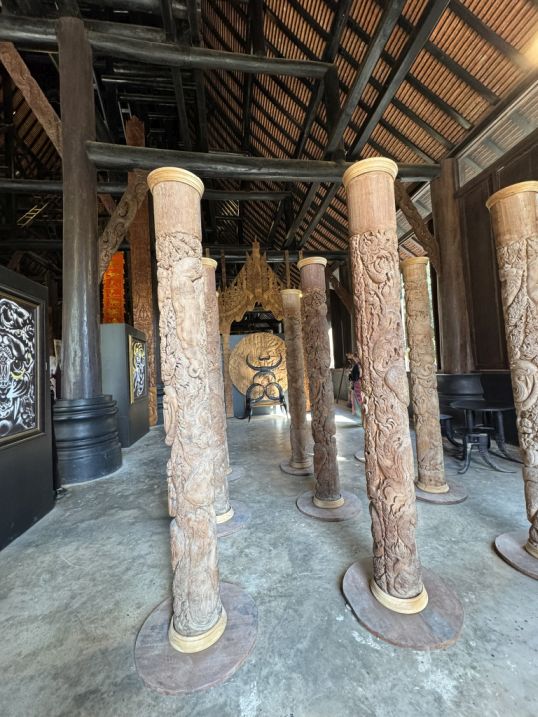
Many of these works are hand-carved from massive blocks of dark wood, with intricate, swirling patterns that echo traditional Thai and Lanna motifs, but exaggerated and intensified. The forms can feel almost alive, sharp edges, curved lines, and layered textures that give a sense of movement and tension. Some pieces resemble thrones or ritual objects, suggesting power, authority, or even judgment.
 |
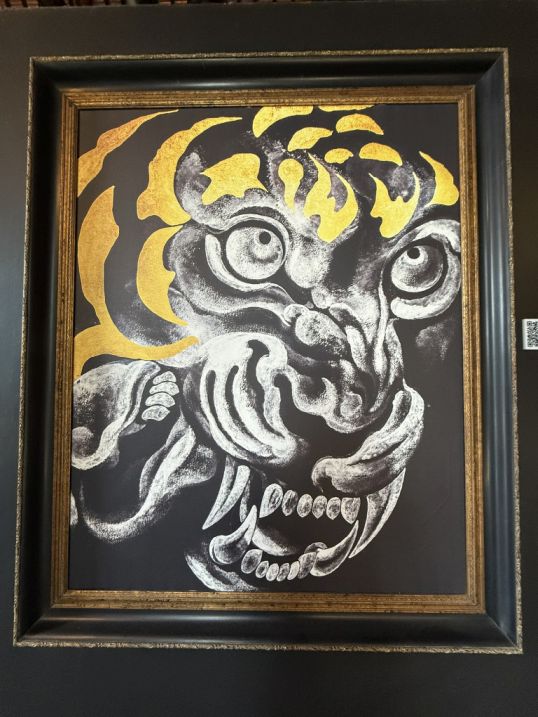 |
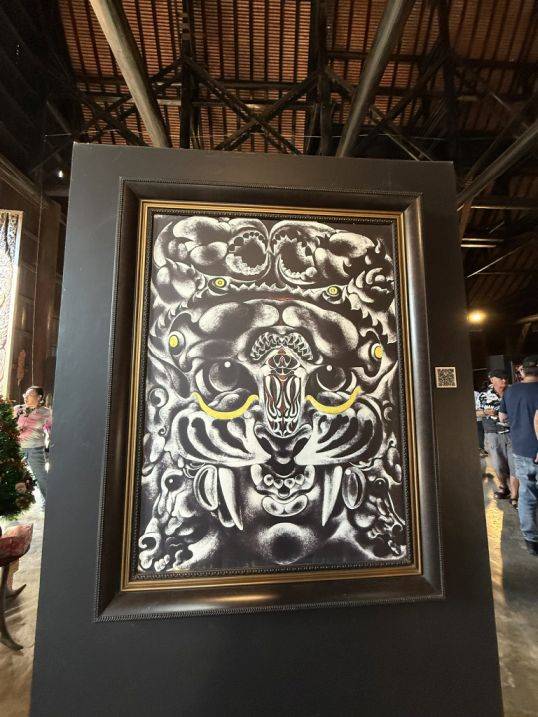
Then our eyes are drawn to these two striking paintings of a lion’s head, shown from different angles. These are especially important in understanding Thawan’s work. The lion often stylized and intense is a recurring symbol in his art. It can represent strength, dominance, primal instinct, and sometimes even inner ferocity. By painting the same subject from different perspectives, he isn’t just showing the animal physically, he’s exploring its presence, its spirit, almost like capturing different facets of power or consciousness.
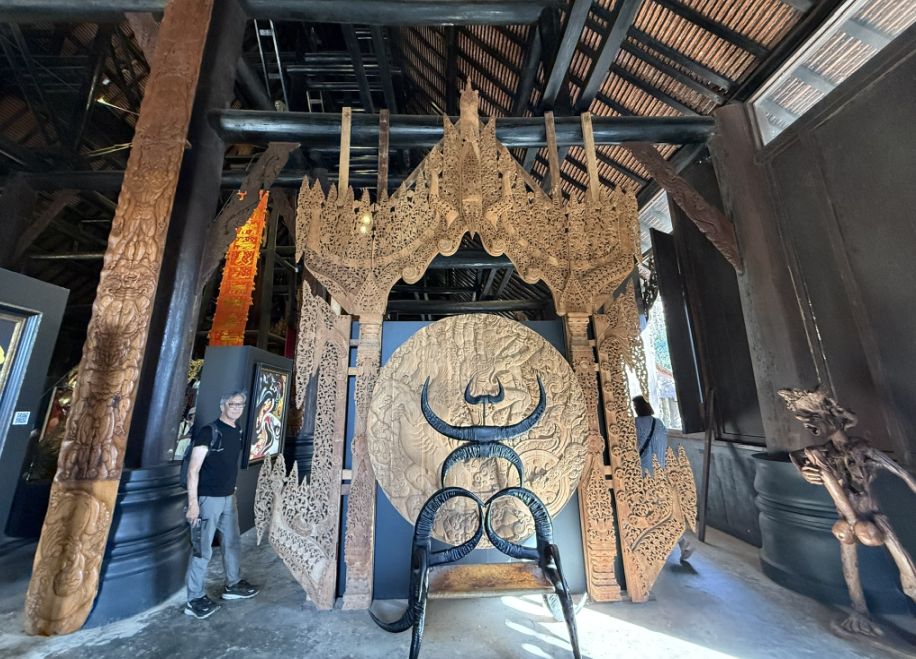
The scale of the artwork also matters. These aren’t small, intimate pieces, they’re large, commanding, almost overwhelming. All around, the arrangement of objects, paintings, carved wood, animal forms, feels deliberate but not symmetrical. There’s a sense of controlled chaos, reflecting themes that Thawan Duchanee often explored: the tension between order and instinct, civilization and the wild, life and death.
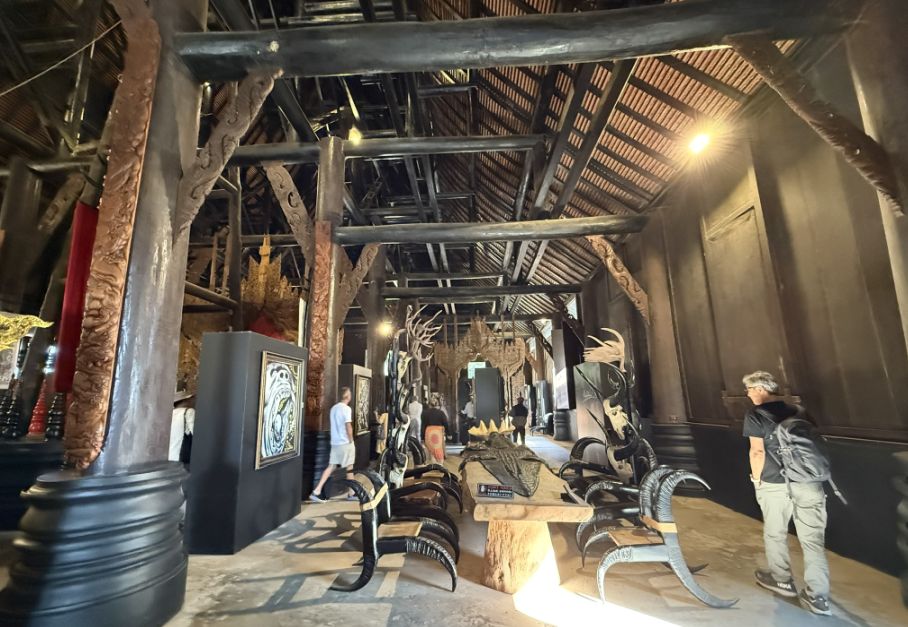
Thawan filled the spaces with unusual and sometimes shocking materials such as animal bones, skins, horns, and skulls arranged into dramatic compositions.
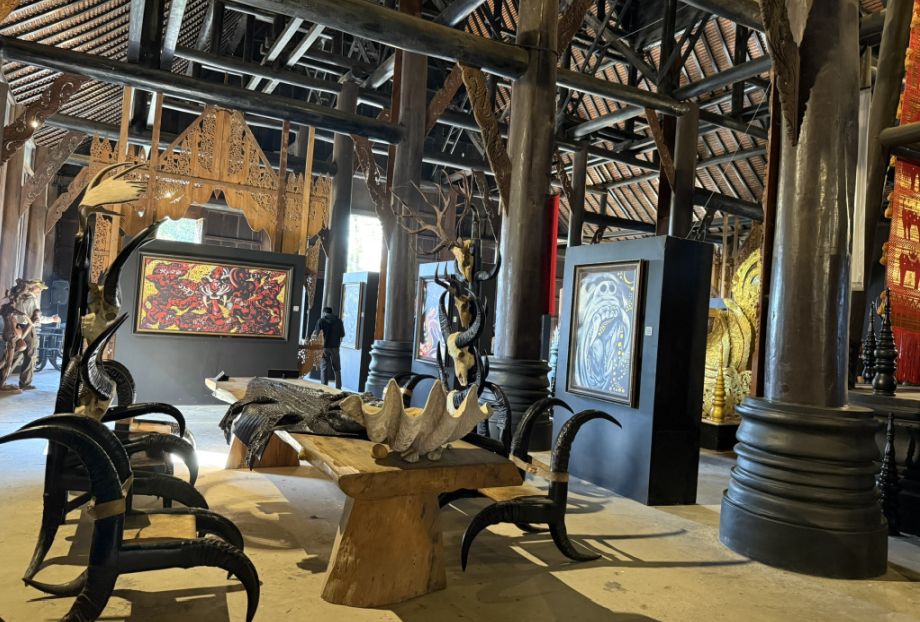
As we moved deeper into the main hall, the space opens up into what feels almost like a ceremonial chamber. A long wooden dining table becomes the emotional and visual center of it all. The chairs made of horns amplify that feeling. They’re powerful and almost aggressive in design, suggesting dominance, strength, and perhaps even violence. Sitting in them wouldn’t feel casual; it would feel like participating in something ceremonial or ancient. Altogether, this “dining” setup doesn’t invite comfort, it provokes reflection.
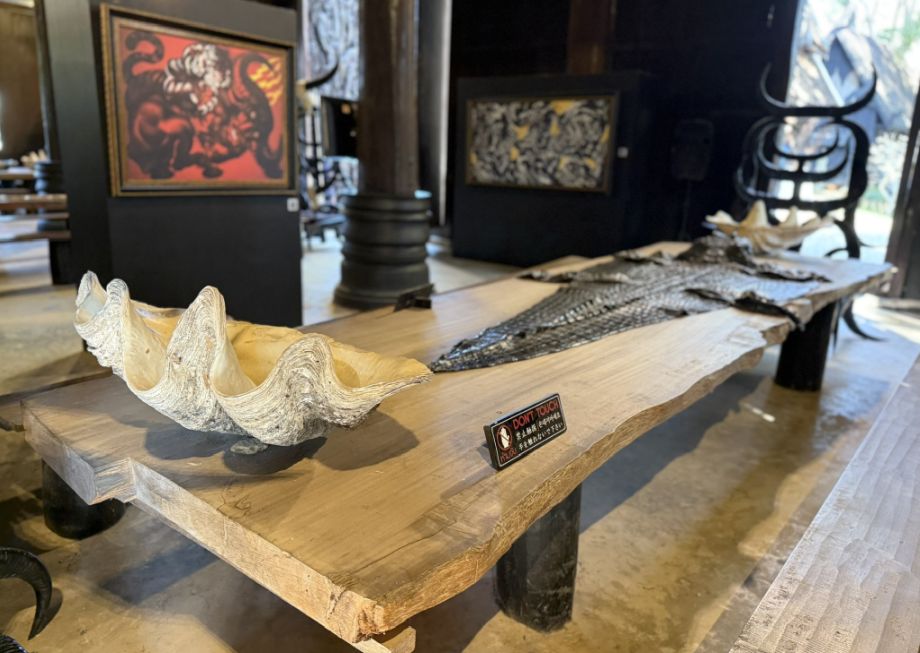
The table itself, carved from massive slabs of wood, feels less like a place for meals and more like an altar or gathering point for something ritualistic. The large seashell placed on top introduces a striking contrast, something organic, once alive, now preserved. In many traditions, shells symbolize the origin of life, the ocean, and the cyclical nature of existence. Here, it feels almost like a quiet counterpoint to the darker elements surrounding it.
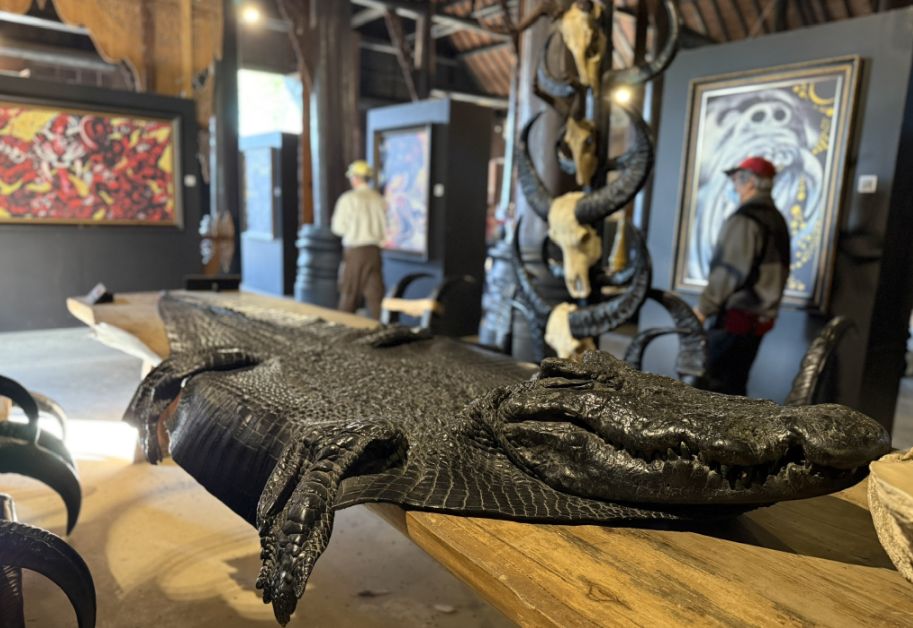
Then, at the end of the table, that full black alligator immediately commands attention. It’s intentionally unsettling. In the world of Thawan Duchanee, animals like this represent raw, primal forces, instinct, survival, and mortality. The fact that it’s whole and placed almost like a centerpiece turns it into something symbolic rather than natural, confronting you with the reality of life and death in a very direct way.
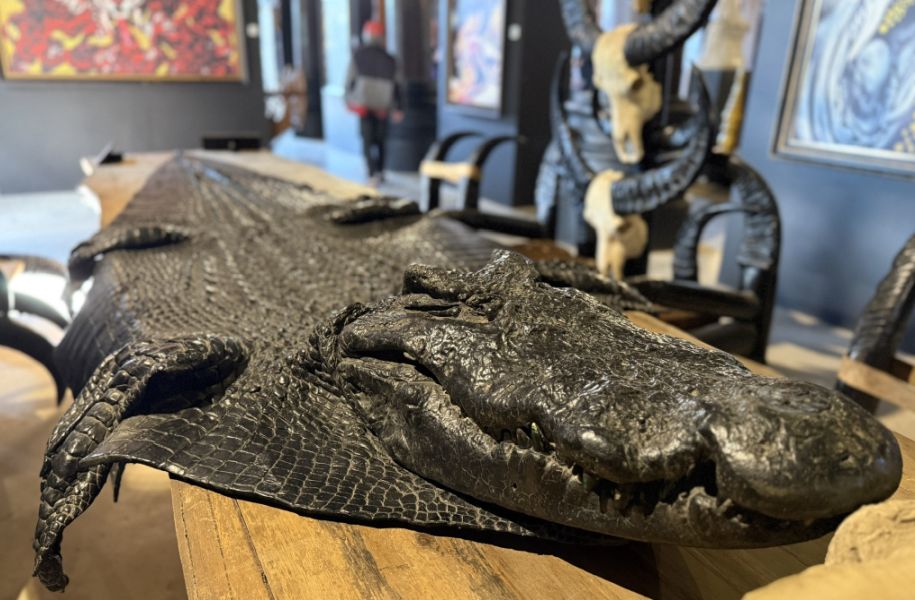
Close up view of the Alligator.
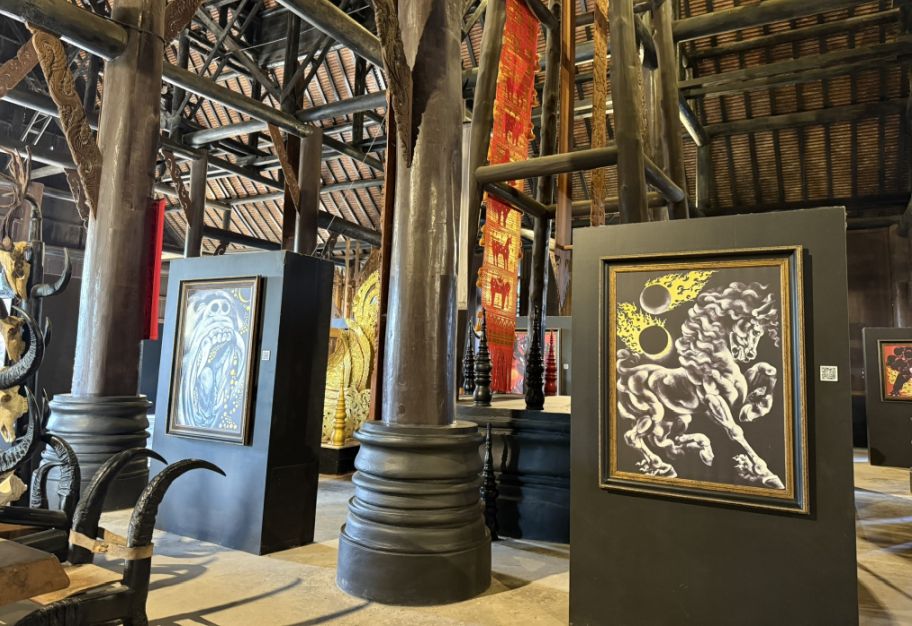
As we circled the room, the surrounding artworks deepen that intensity. On the right the horse paintings, especially the black-and-white forms with yellow flames, feel full of motion and energy. Horses often symbolize power, freedom, and vitality, but the addition of flames transforms them into something more volatile, almost spiritual or destructive. It’s as if they represent energy that can’t be contained.
 |
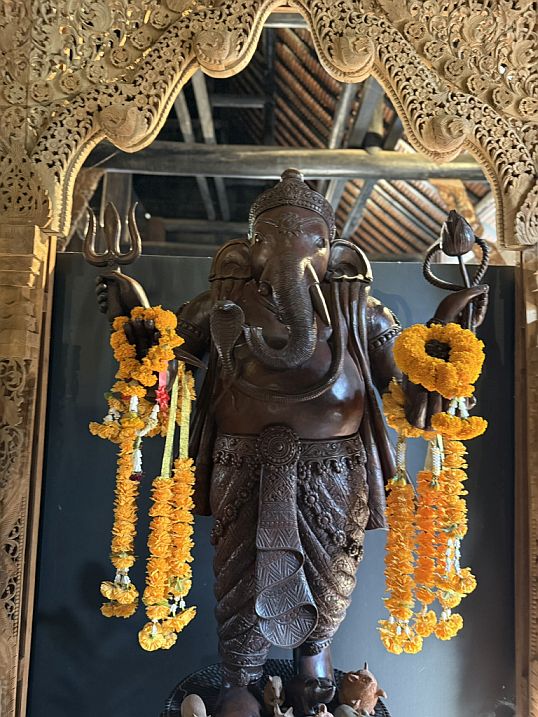 |
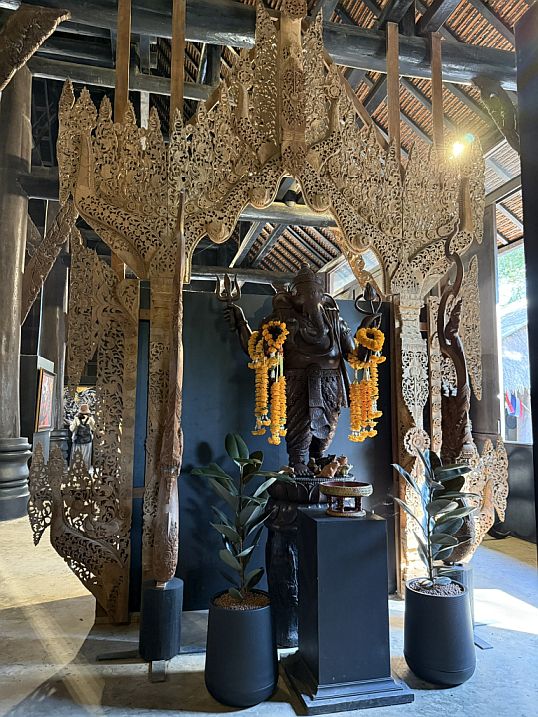
The wooden statue of the elephant-headed figure is a representation of Ganesh. In Hindu tradition, Ganesh is the remover of obstacles and the god of wisdom and beginnings. His presence here is fascinating, it introduces a spiritual and intellectual dimension amid the darker, more primal imagery. It’s like a reminder that wisdom exists alongside chaos.
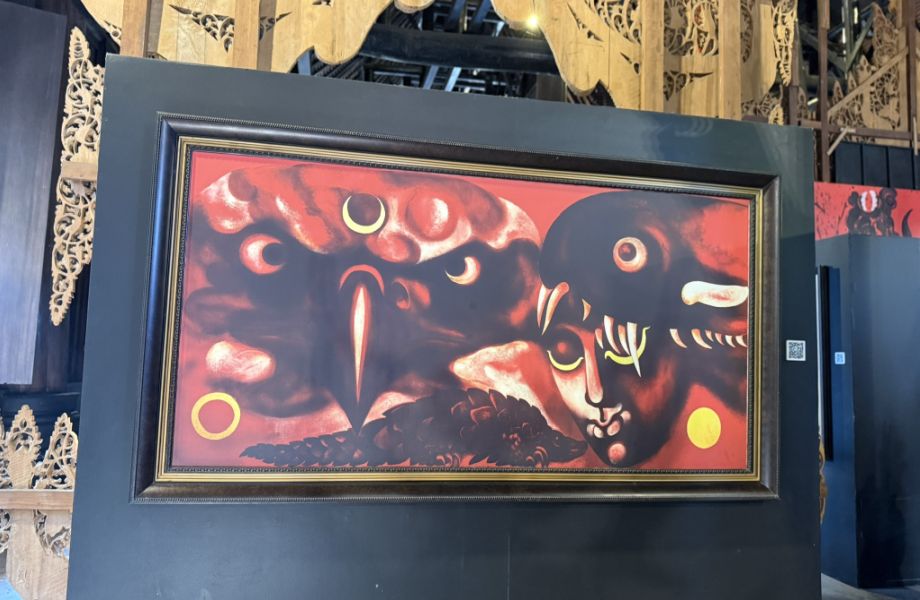
And then a large red painting on the wall, and this is where Thawan’s imagination becomes almost surreal. The eagle’s face suggests vision, dominance, and higher perspective. The alligator below brings you back to the earth, to instinct and survival. And the human figure, crowned with what looks like another animal head, blends identities together. It feels like a commentary on the layered nature of existence, human, animal, spiritual, all intertwined. The red background intensifies everything, evoking emotion, danger, and life force.
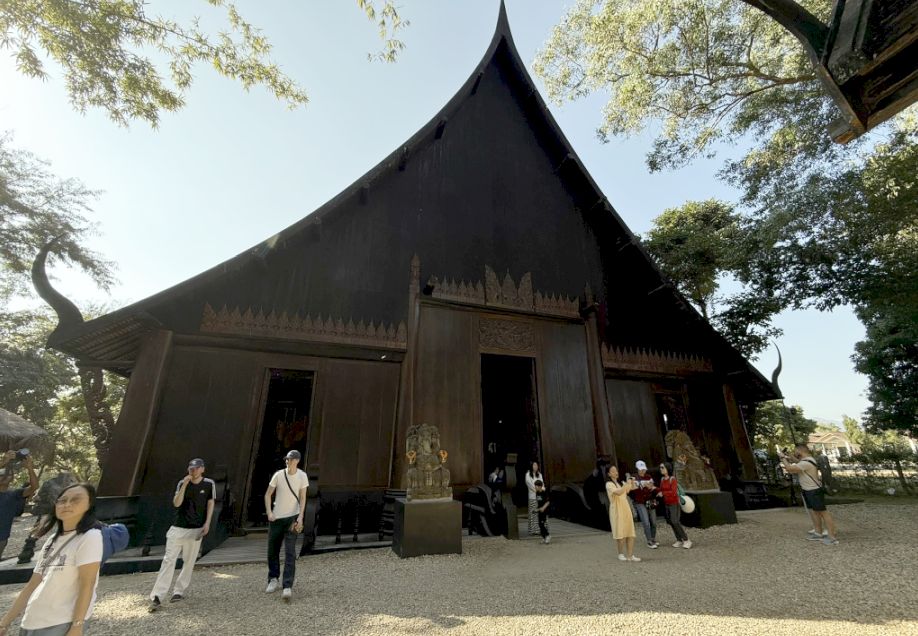
We are now exiting the Main Hall
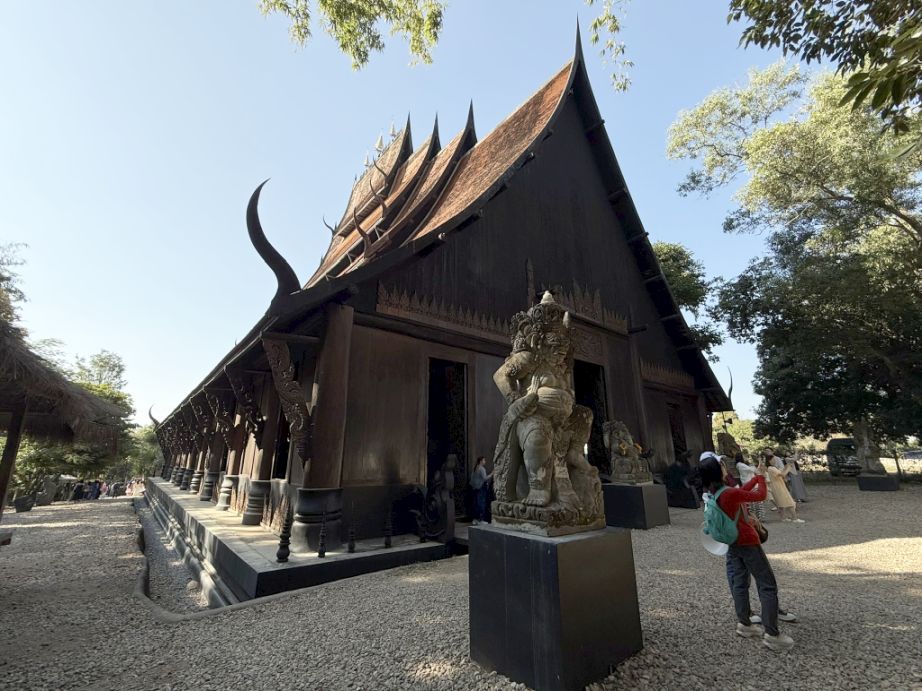
Side view of the exterior of the Main Hall.
 |
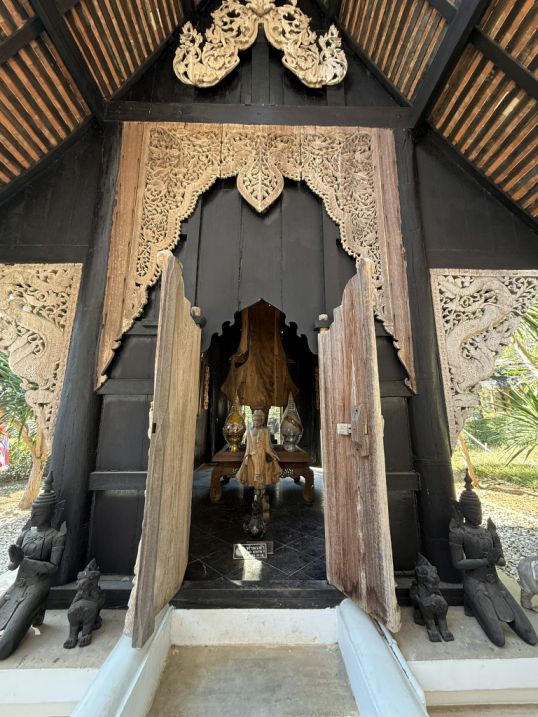 |
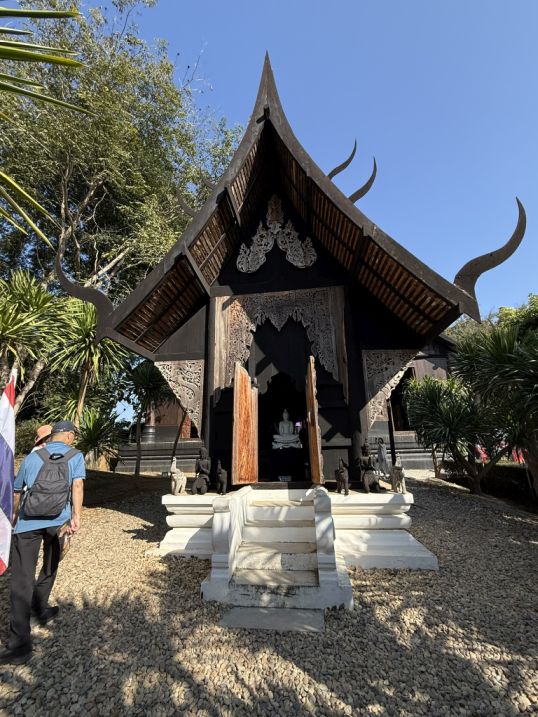
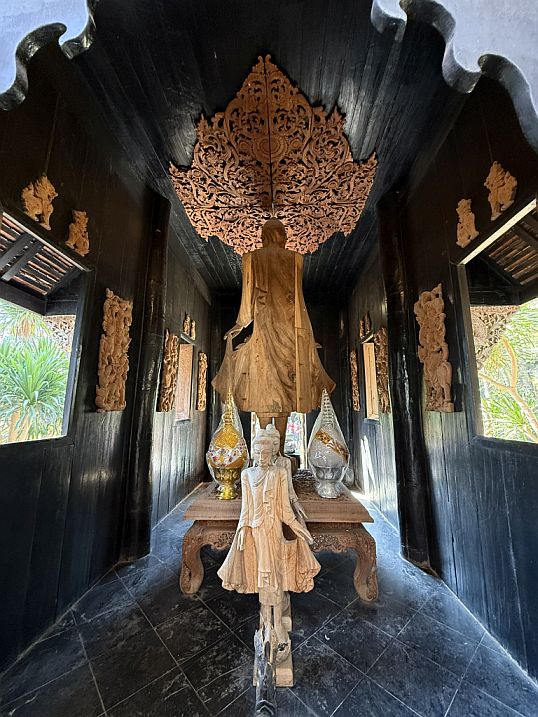
Not far from the main hall there is a small pavilion.
 |
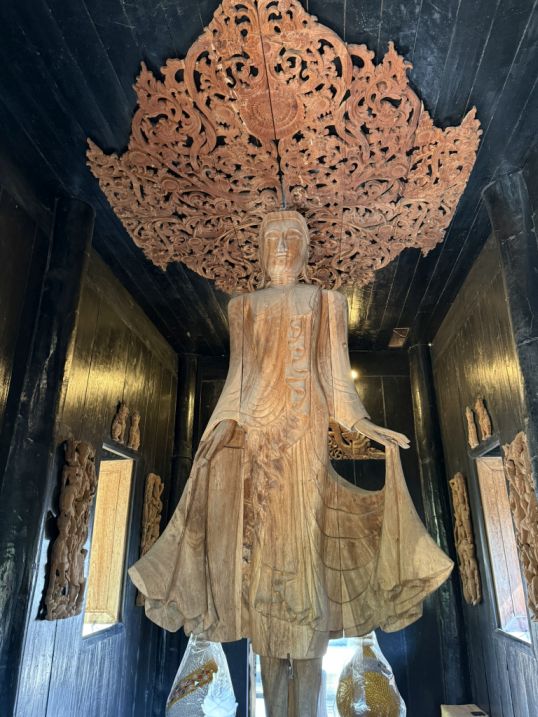 |
Inside there are many wooden carved Buddha, and lots of wooden sculptures hang on the wall.
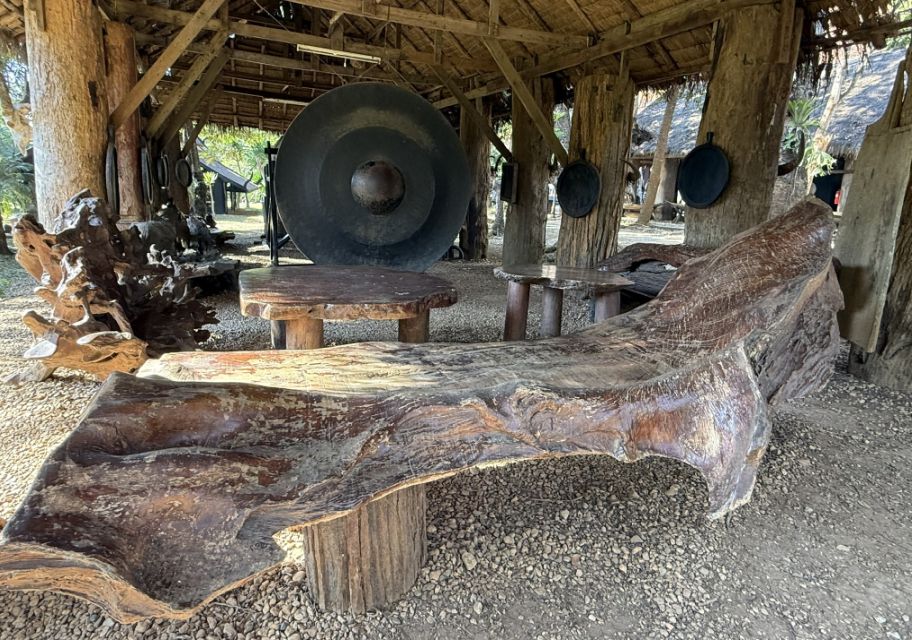
A work shop with raw materials.
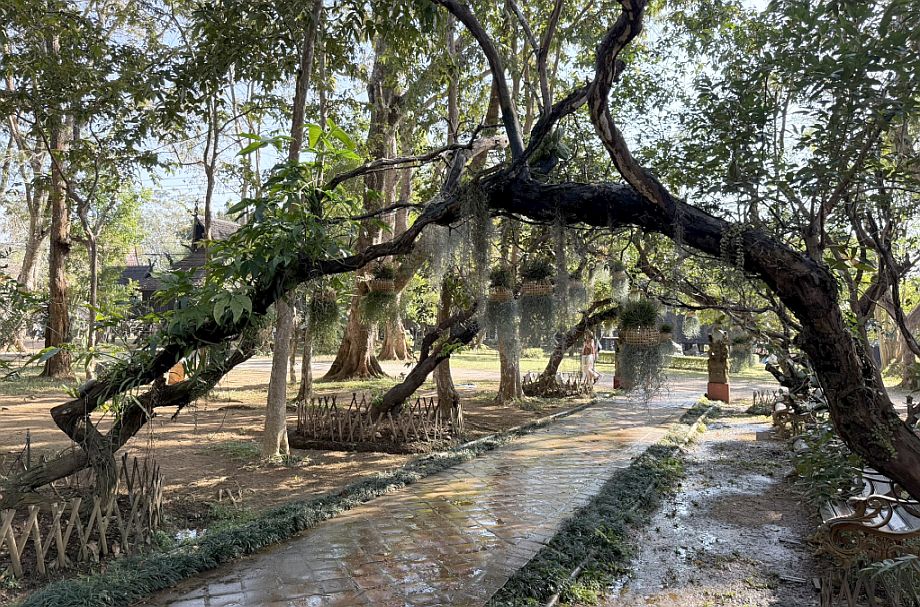
The laid out of the property is almost like an art village set within nature.
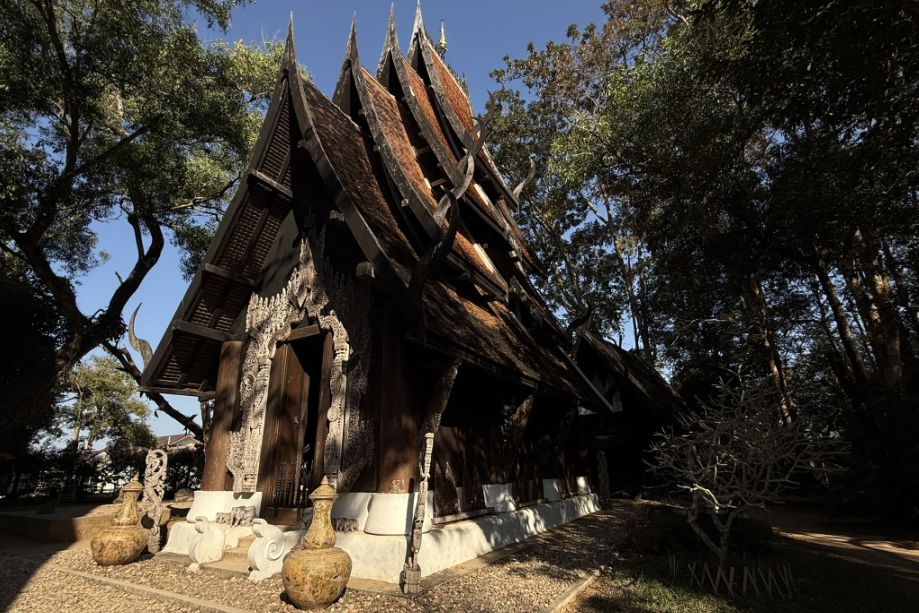
Baan Dam spans over 100 acres and features more than 40 buildings, each uniquely designed by Thawan Duchanee. These structures, made from dark wood and adorned with intricate carvings and house an eclectic collection of art.
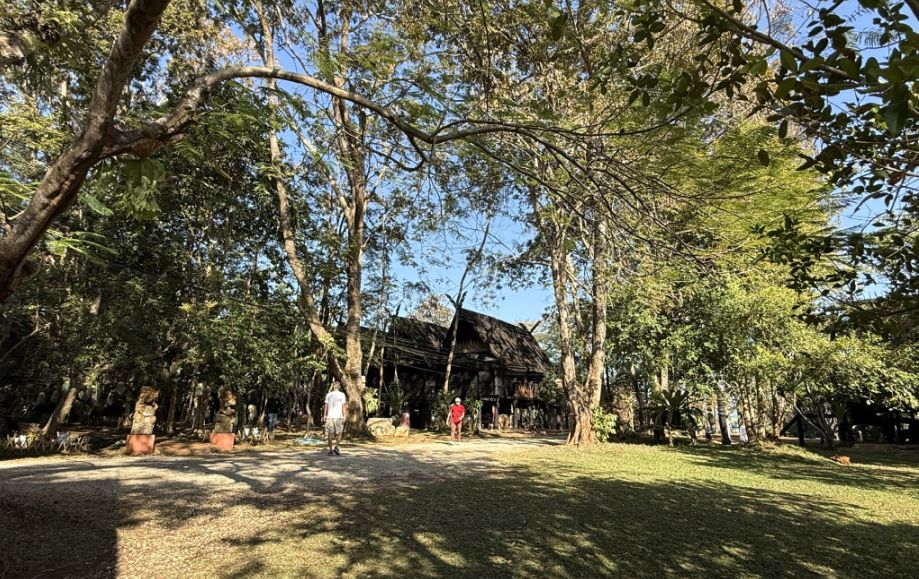
Instead of a single building, there are around 40 structures scattered across the grounds, each one uniquely designed in the style of traditional northern Thai architecture.
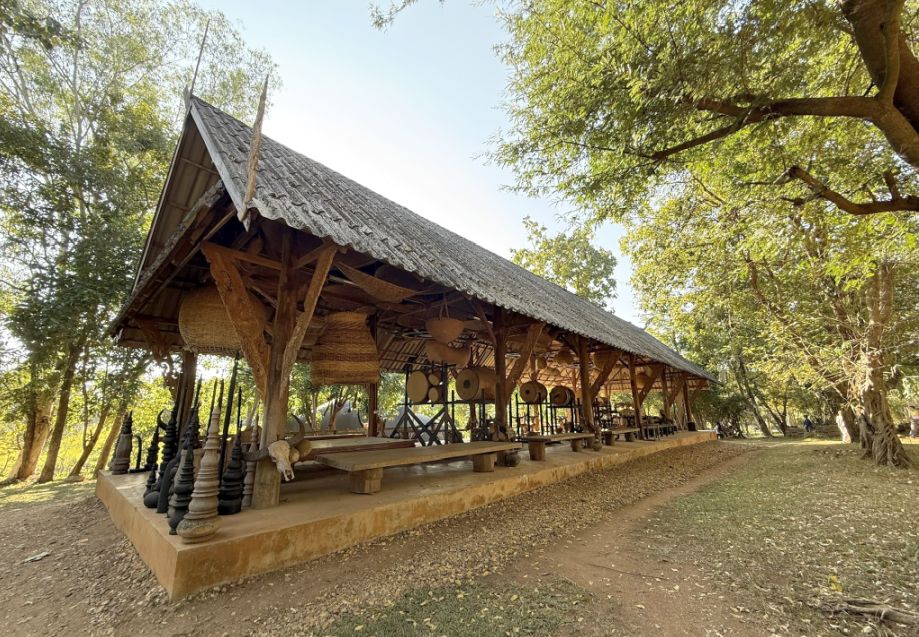
An open pavilion housing musical instruments. This is a traditional Lanna-style sala, open on all sides to let air and light flow through.
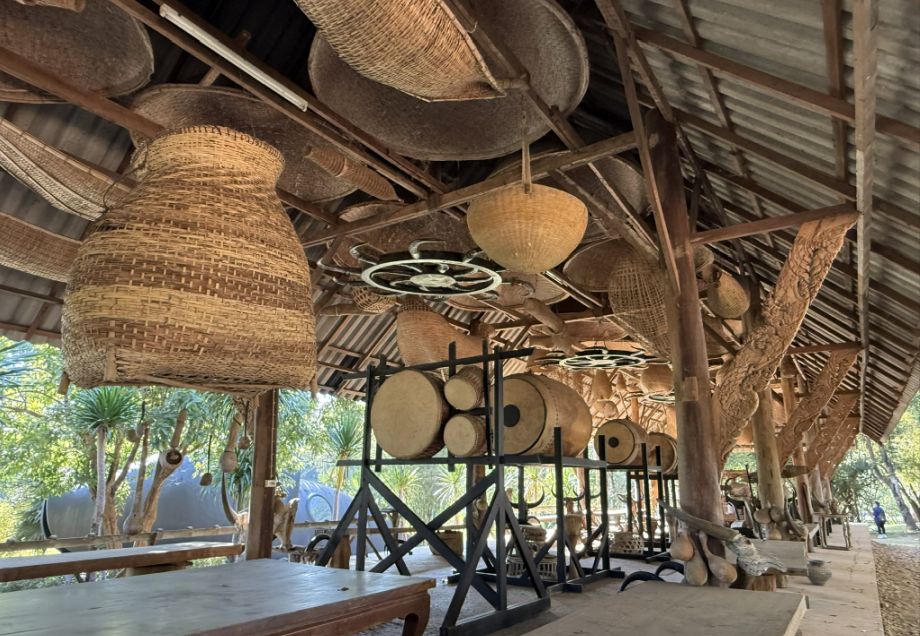
The instruments hint at everyday life, travel, and tradition, grounding the experience in Thai heritage.
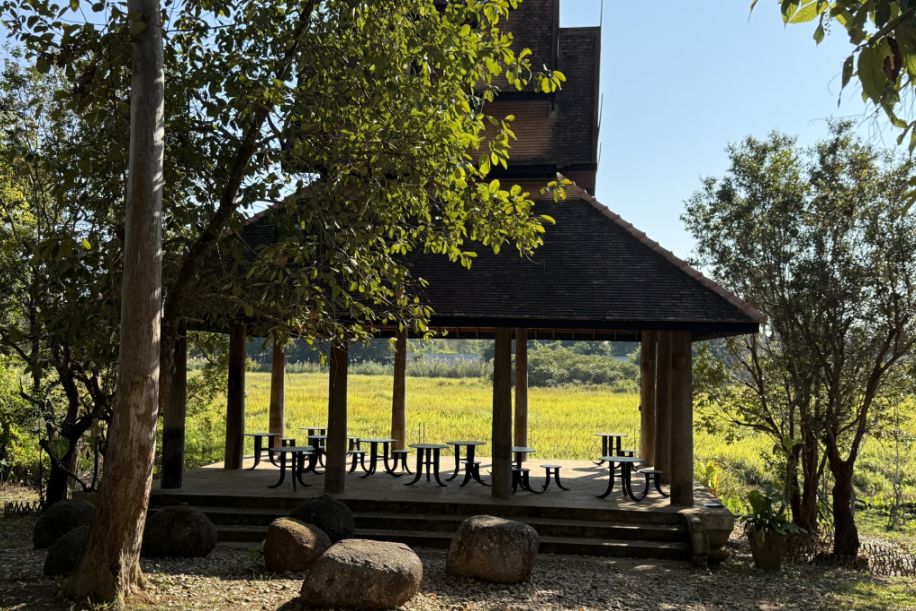
Then we came across those open-sided dining or seating areas under a roof, overlooking what looks like rice fields.
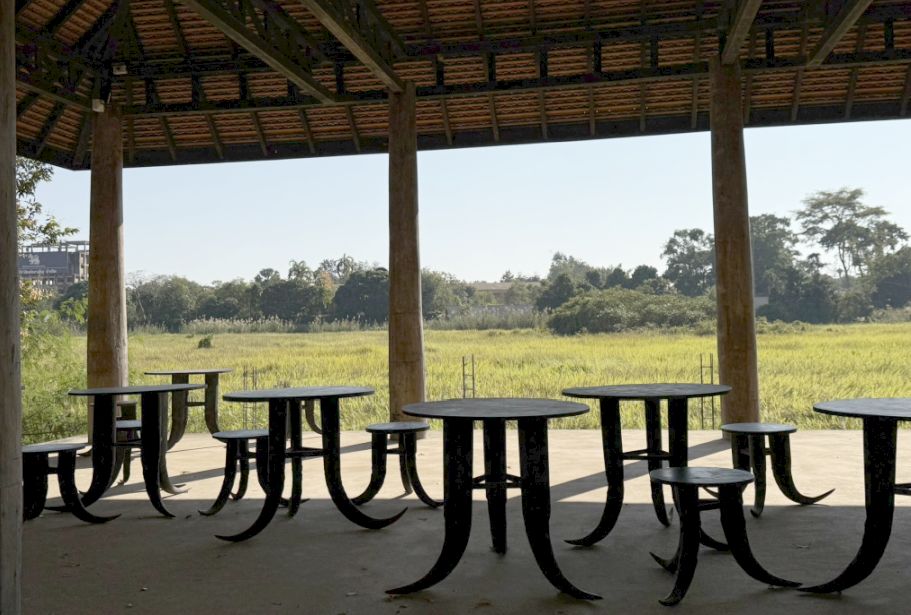
This is one of the most peaceful moment on the property. The view outward, across open land, contrasts with the enclosed intensity of the main hall. It’s almost like a pause, a place to breathe and reflect, connecting the art with the natural rhythms of rural life in northern Thailand.
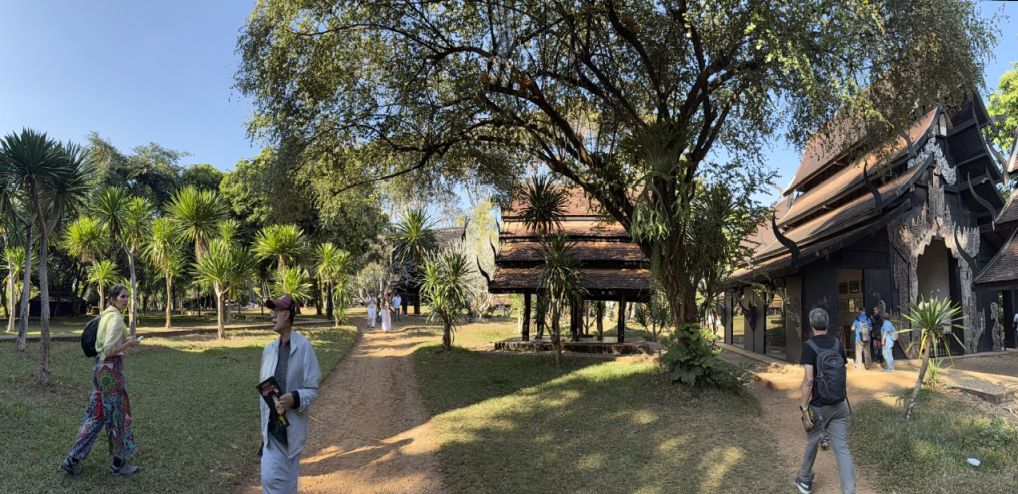
We walked back to the center of the property and the area is filled with the classic Lanna-style wooden houses with steep, multi-tiered roofs, dark wood exteriors, and intricate carvings. Walking through the grounds feels peaceful and almost meditative at first, lush greenery, open lawns, and elegant wooden pavilions.
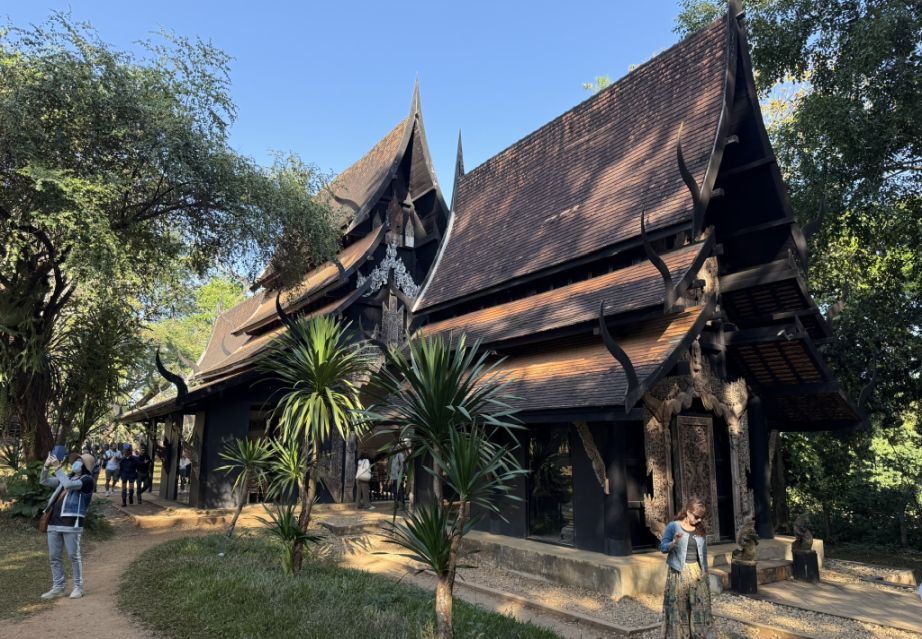
As we continued walking through the grounds of Baan Dam Museum, the experience shifts from that intense interior into something more expansive, but no less thought-provoking. The garden isn’t just a landscape, it feels like an open-air extension of Thawan Duchanee’s vision.
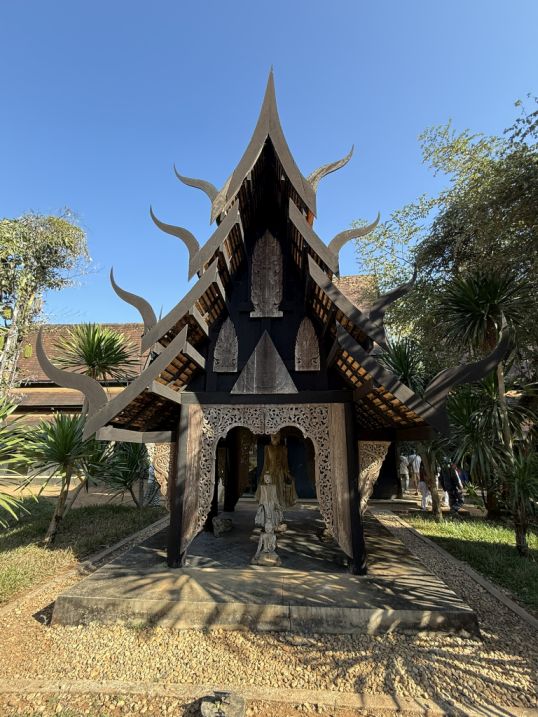 |
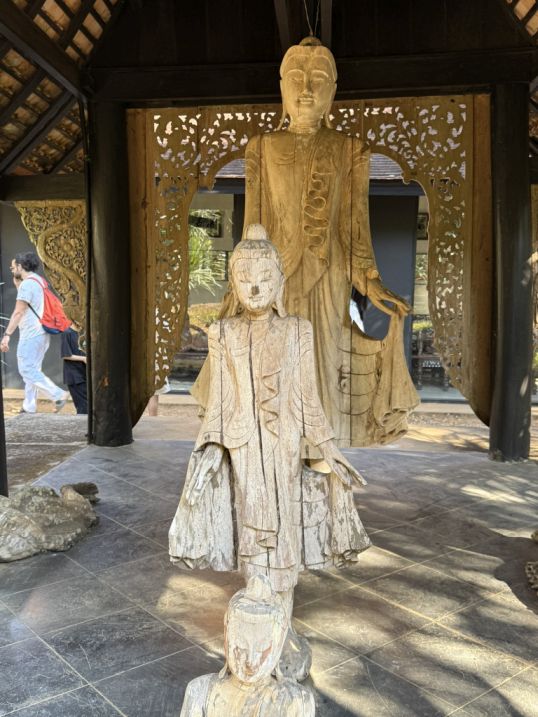 |
Another smaller pavilion filled with carved wooden statues continue that theme of craftsmanship.
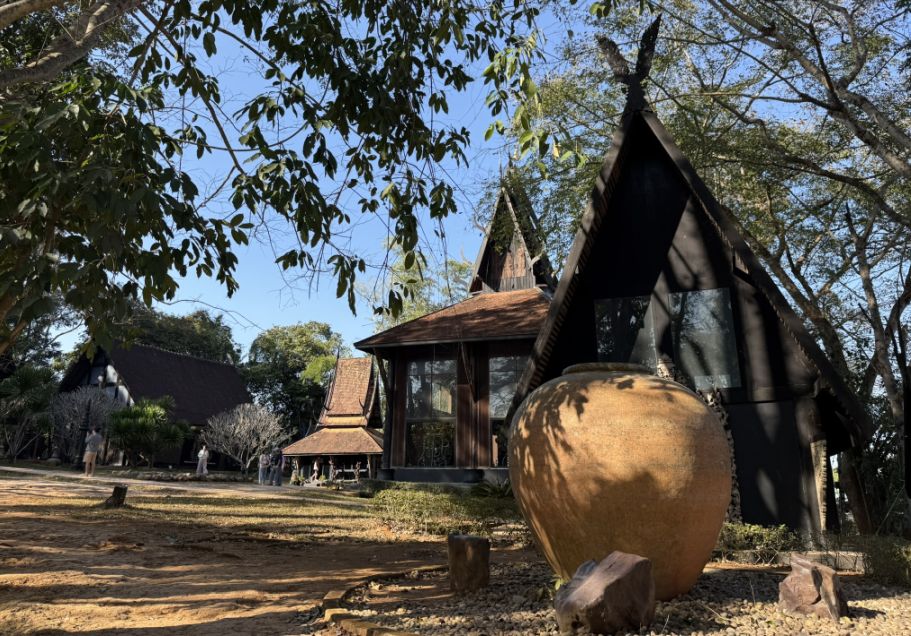
The large earthen jars scattered across the lawn are also significant. In Southeast Asia, jars like these were traditionally used for storage, water, rice, or even fermentation. Here, they take on a sculptural quality, representing containment, preservation, and perhaps even the idea of holding life or spirit within a vessel.
 |
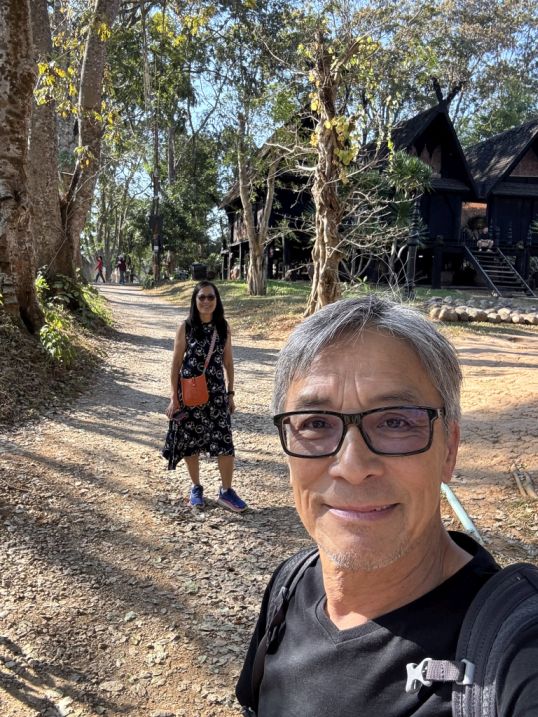 |
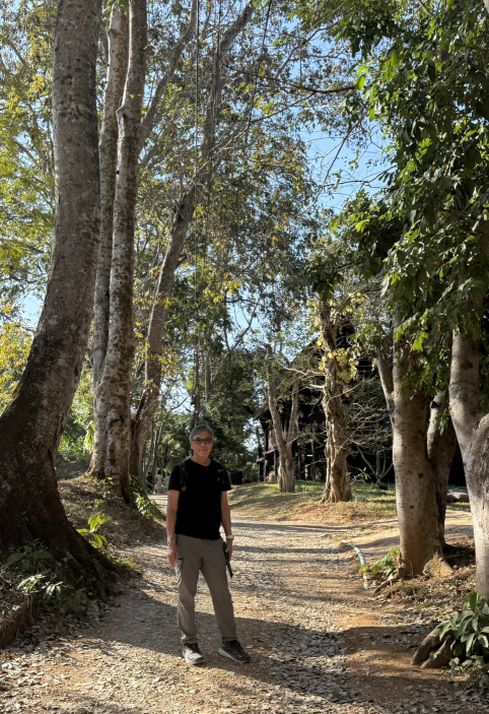
Walking into an area with giant trees, the atmosphere becomes more natural and grounded again. The shade, the scale of the trees, it feels ancient, almost timeless, as if the land itself is part of the exhibit.
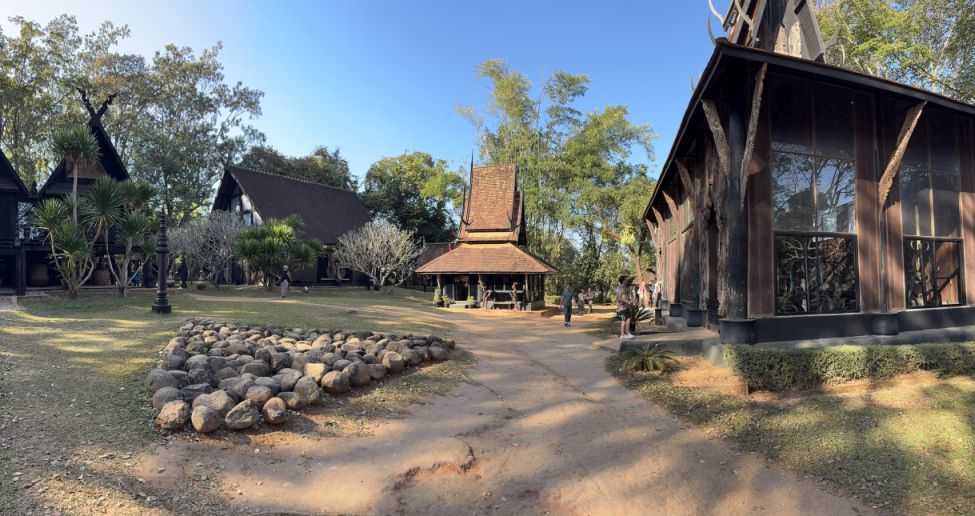
We really enjoyed walking around the property.
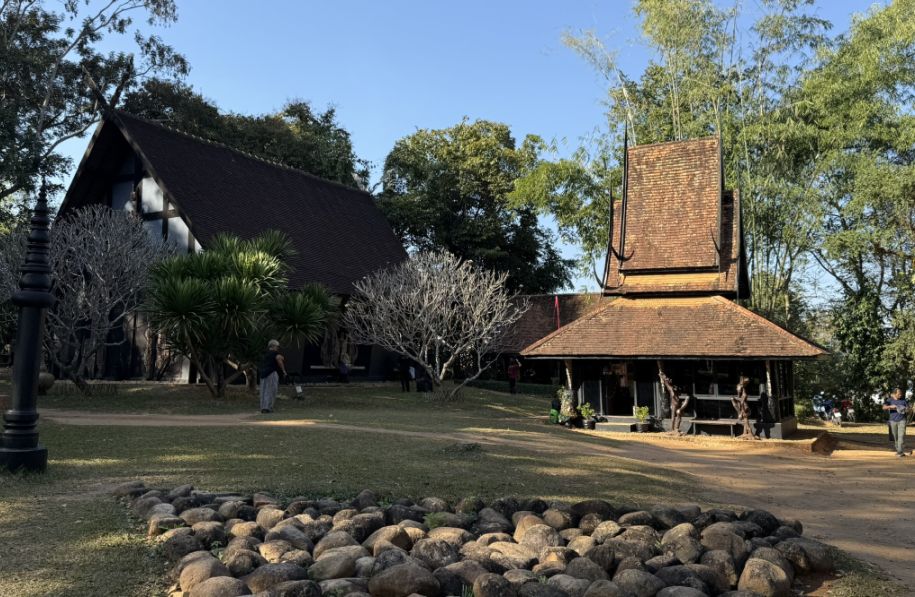
All the houses looked different.
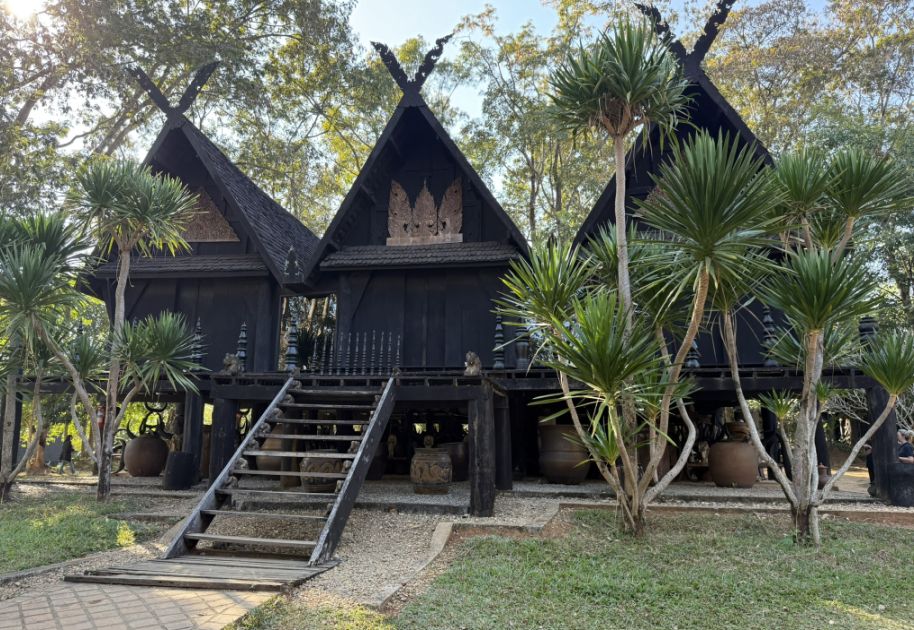
Then, these 3 stilted houses bring you back into Thawan’s more provocative world.
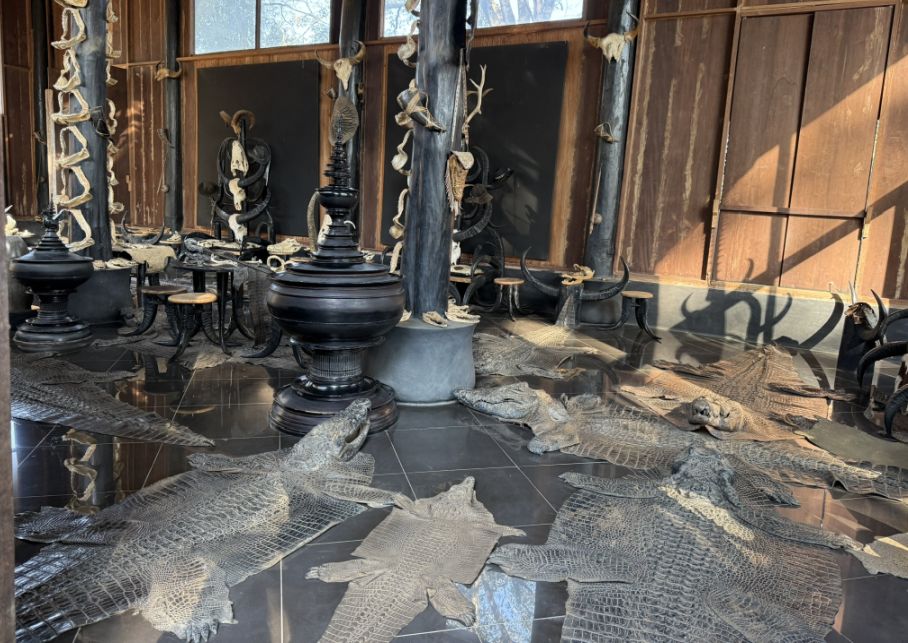
When we entered the house, it brings you back into Thawan’s more provocative world. Raised in traditional style, these structures are filled with crocodile skins, horns, bones—materials that immediately evoke mortality and primal life. The crocodile skins covering the floors are especially striking, beautiful in pattern, yet undeniably confronting. Just like inside the main hall, these elements are meant to challenge you, to make you aware of life’s raw and physical nature.
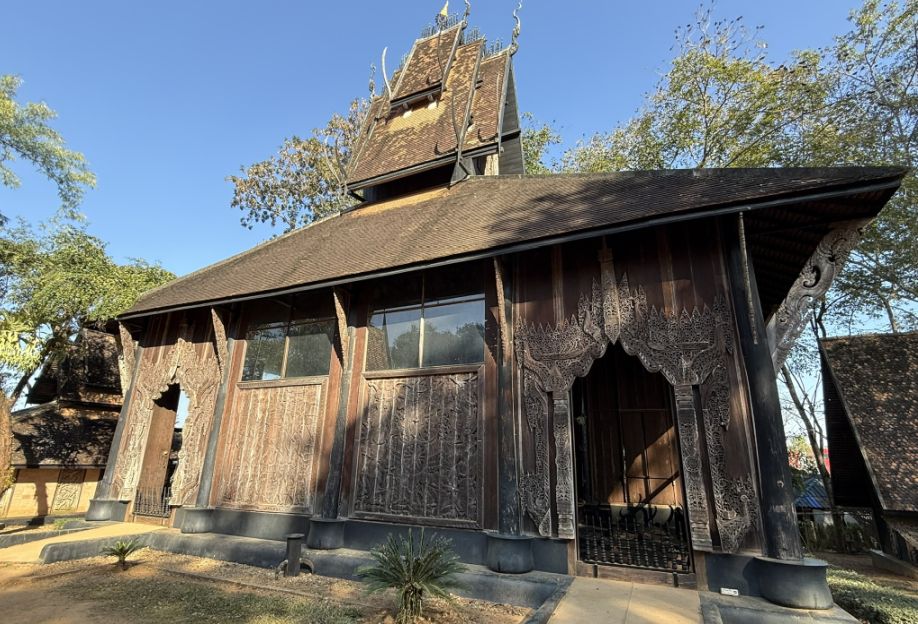
Another beautiful wooden house.

And finally, those rounded dome-like stupas, three of them, stand apart visually from the wooden architecture. These are more minimalist and sculptural, but they still connect to the idea of a chedi, a monument associated with Buddhism and the journey toward enlightenment. Their rounded, enclosed form can symbolize completeness, the universe, or the containment of spiritual essence. The fact that they’re grouped together gives them a quiet presence, almost like silent markers within the landscape.
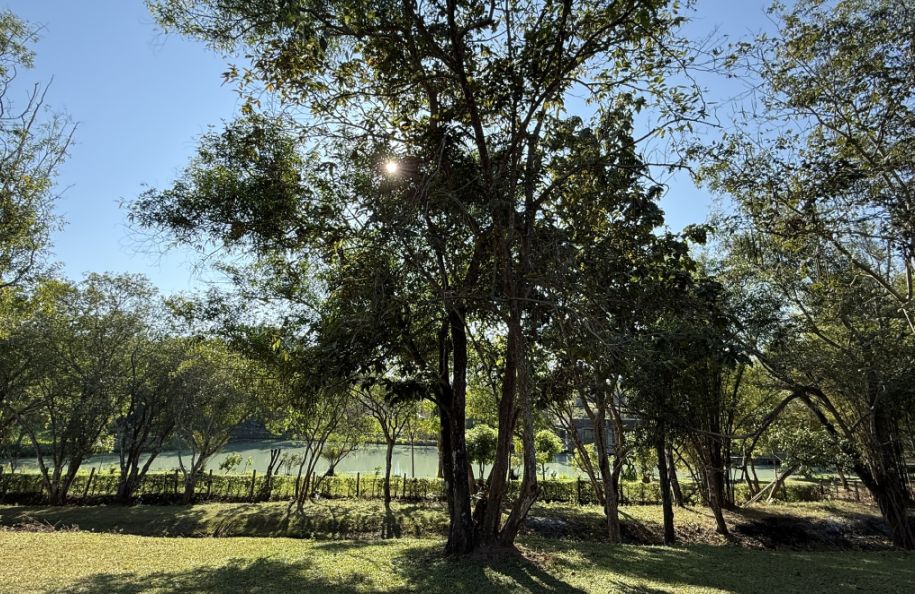
A pond surrounded by tree is the perfect spot to pause and enjoy the surrounding. The way it’s framed by trees enhances the feeling of a natural retreat
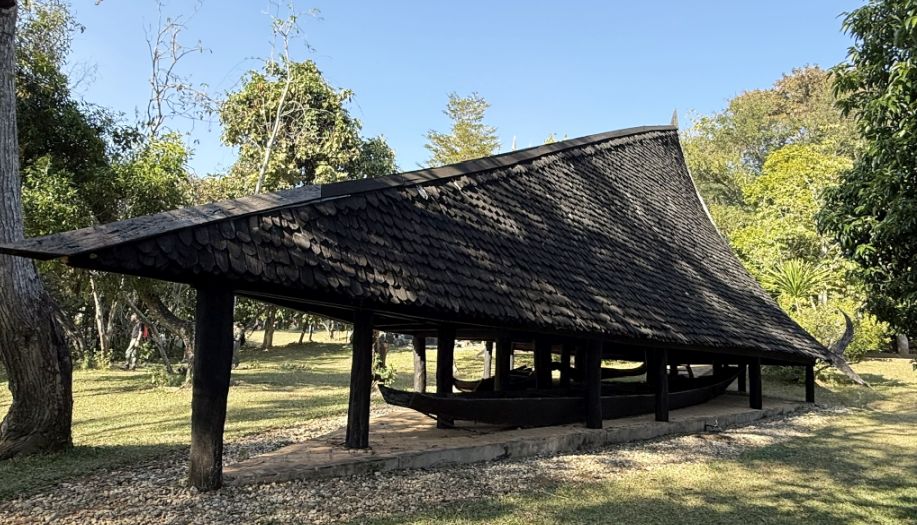
Another pavilion used to store boats.
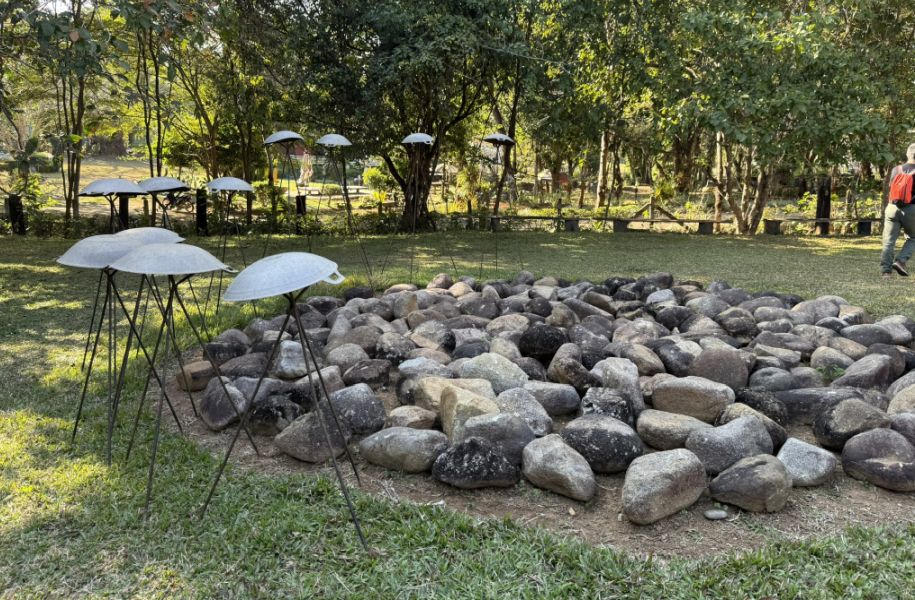
As we continued across the grounds of Baan Dam Museum, this section of the lawn with large scattered rocks feels almost like a deliberate break from the structured architecture we have been seeing. The rocks aren’t randomly placed, they echo natural landscapes, grounding the space and bringing in a more elemental, almost primordial feeling. In the context of Thawan Duchanee’s work, stones can represent permanence, age, and the raw foundation of the natural world, something untouched by human refinement.
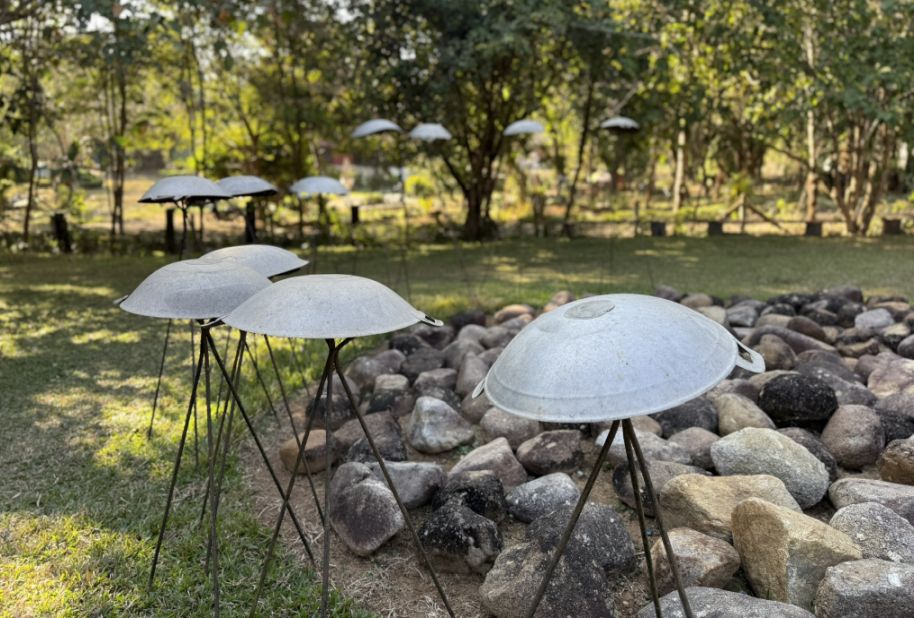
These large lamps are shaped almost like upside-down sauté pans, and they are quite striking. Their wide, bowl-like forms resemble ritual fire vessels or offering basins. Even though they’re functional as lighting, their design gives them a ceremonial presence, as if they could hold fire or light as an offering. This ties into a recurring theme throughout the property: everyday objects elevated into something symbolic, something that feels ancient or sacred.
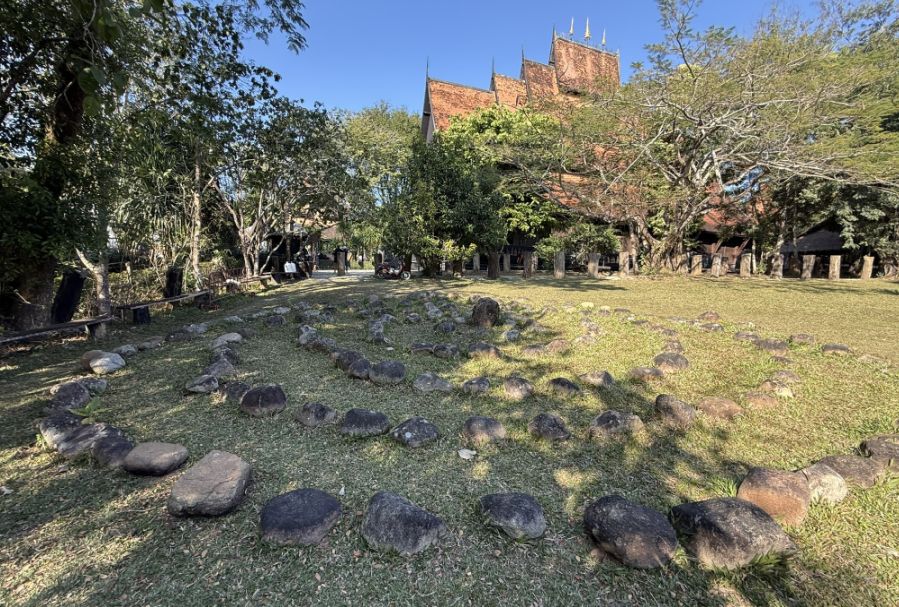
Moving further, the rocks arranged in a concentric pattern are especially meaningful. Circular layouts like this often symbolize cycles of life, death, rebirth, and the universe itself. Walking around or past them, you’re almost engaging with that idea physically, even if it’s subtle. It can feel meditative, like a quiet geometric expression of balance and continuity, contrasting with the more intense imagery inside the buildings.
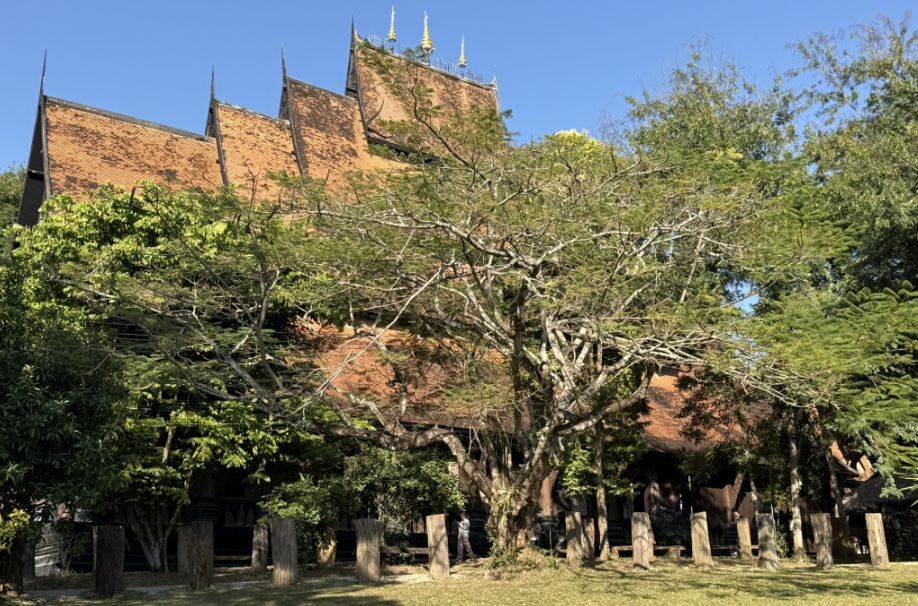
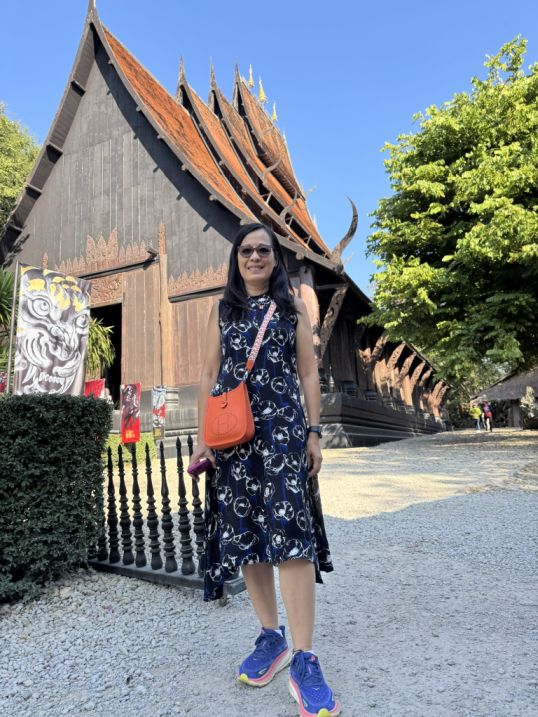
Then ahead, that large structure with the red roof stands out immediately. Among all the dark, black-toned buildings, the red roof introduces a different energy, more vivid, more commanding. In Thai culture, red can symbolize power, life force, and intensity. Architecturally, it still follows traditional forms with its sweeping rooflines, but visually it becomes a focal point, almost anchoring that part of the grounds.
 |
 |
Seeing it just before you exit feels intentional, like a final visual statement. After moving through spaces filled with dark wood, animal forms, and philosophical tension, this open lawn with stones, symbolic arrangements, and that bold red-roofed building gives you a moment to take it all in.
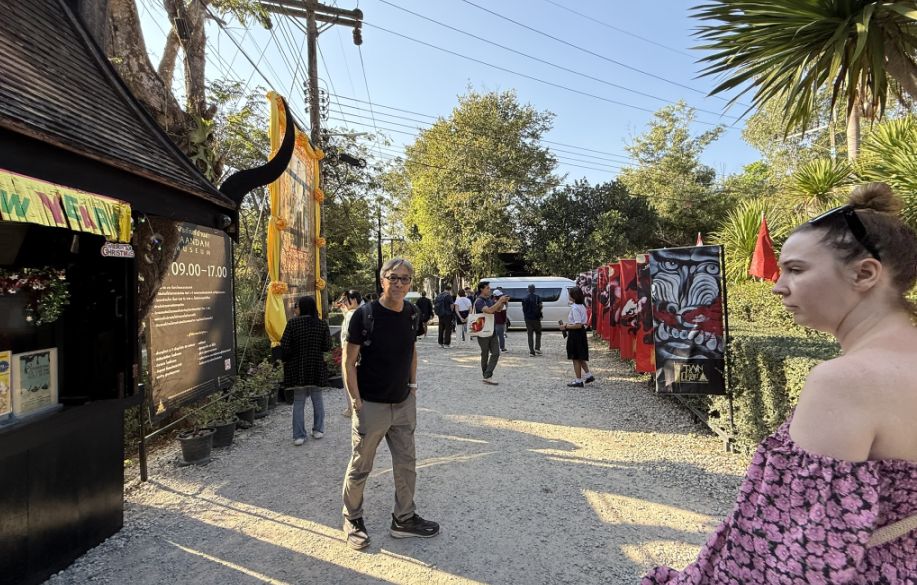
It’s a quieter ending compared to the dramatic interiors, but still very much in line with the overall experience, everything, even the rocks and lamps, contributes to a sense that the entire property is one cohesive work of art, blending nature, symbolism, and human imagination.
Altogether, the grounds of Baan Dam feel like a carefully composed journey. We move between beauty and unease, nature and artifice, tradition and personal expression. Each pavilion, house, and object adds another layer, so that by the time we have walked through it all, we are not just seeing a collection of buildings, but experiencing a deeply personal and philosophical world shaped by one artist’s vision.
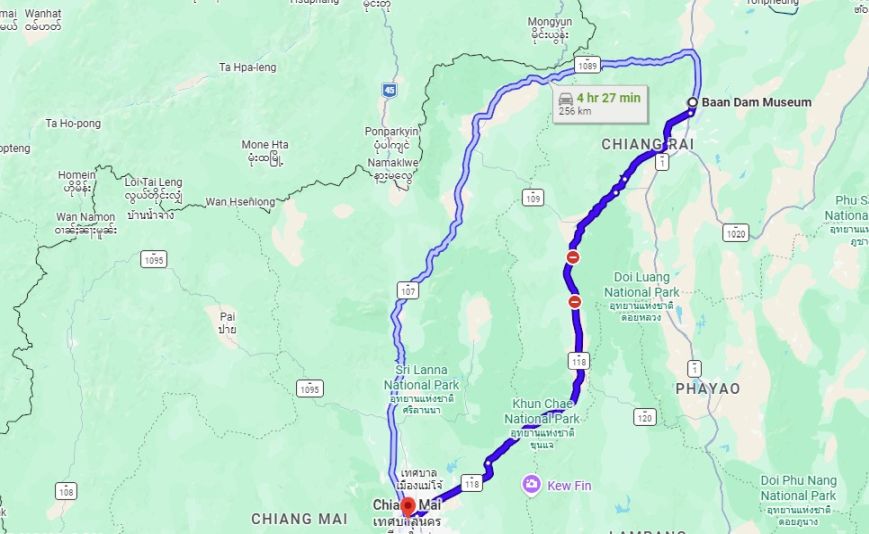
The bus took almost 4 hours to drive us back to the hotel.
Our guided tour through Chiang Rai took us from the Long Neck village to the White Temple, the Blue Temple, and finally Baan Dam Museum, but unfortunately, it was far from the experience we had hoped for. We ended up with the worst tour guide; he barely spoke throughout the day, offered almost no explanations, and even slept for most of the bus rides. There was no effort to share the stories, history, or meaning behind the places we visited, so everything we learned came from doing our own research afterward.
The first 3 stops: the Long Neck village, Wat Rong Khun (White Temple), and Wat Rong Suea Ten (Blue Temple), felt overwhelmingly touristy. While visually striking, they lacked the depth and historical richness we were expecting. Much of what we saw was relatively modern, and without proper context or storytelling, it felt more like visiting staged attractions than meaningful cultural sites. In hindsight, these stops didn’t quite feel worth the long journey.
The one highlight of the day was Baan Dam. Walking through its dark wooden houses, expansive grounds, and thought-provoking exhibits offered a completely different experience, one that felt more authentic, artistic, and intellectually engaging. It stood out as a place with a strong point of view and left a lasting impression, unlike the earlier stops.
Overall, the day felt like a missed opportunity. With a more engaged guide, the experience might have been far more meaningful, but as it stood, it was largely up to us to make sense of what we were seeing.
NEXT... Day 8- Wat Pra That Doi Suthep