12 days in Thailand 1/7- 1/18/2025
Day 8- Wat Pha Lat-1/14/2025
After about a 15 minutes drive, we arrived at Wat Pha Lat, a hidden forest temple tucked along the slopes of Doi Suthep. Unlike the more famous and ornate temples in Chiang Mai, Wat Pha Lat has a much quieter, more contemplative history. It dates back several centuries and originally served as a resting point for monks making the pilgrimage up to Wat Phra That Doi Suthep. The name “Pha Lat” roughly means “sloping rock,” referring to the natural terrain and the waterfalls that run through the temple grounds. Over time, it became a functioning monastery, but it has retained its peaceful, almost hidden character, often described as a “jungle temple” because of how seamlessly it blends into the surrounding forest.
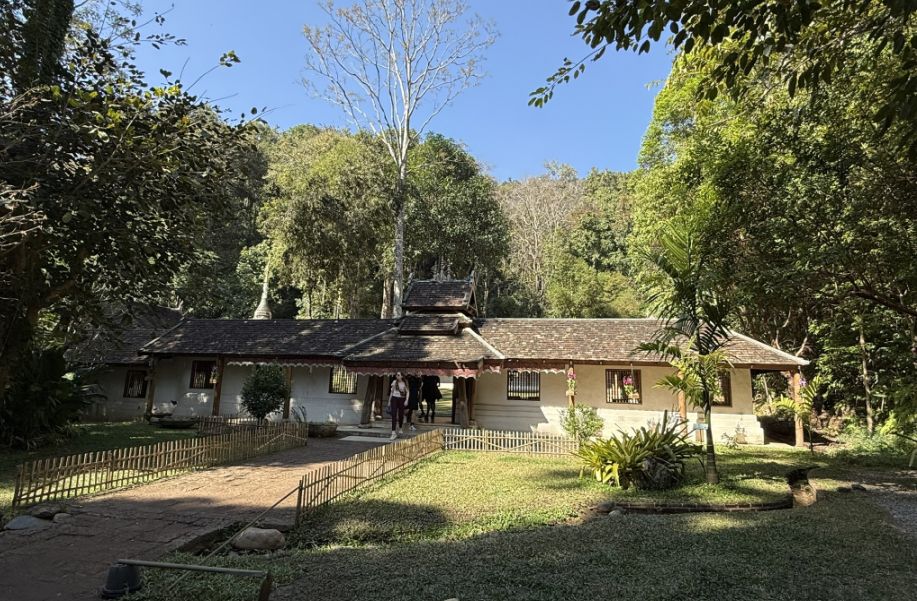
The entrance to the property is really simple and perfectly captures the understated charm. It really does look like a simple home at first, just a modest structure with a central gate, almost easy to miss if you didn’t know it was there.
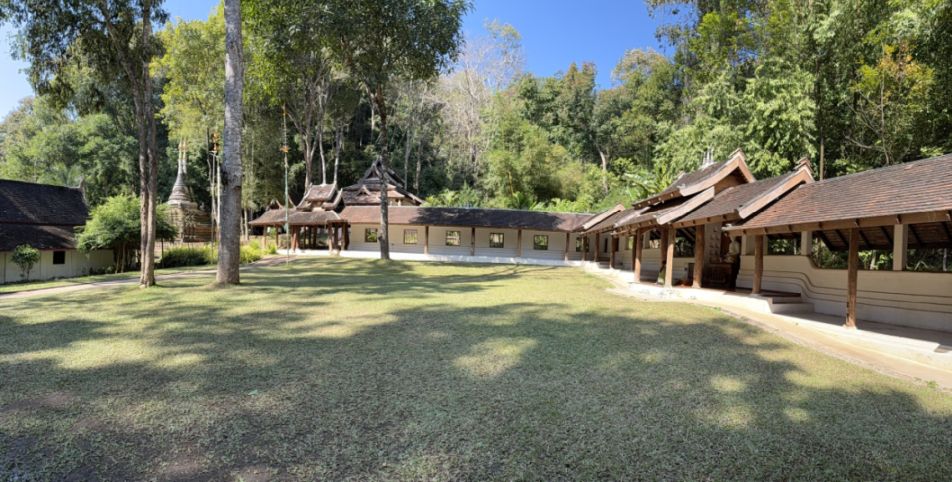
Once you pass through, the space opens up into a wide, quiet lawn dotted with one-story Lanna-style houses, their sloping roofs and wooden details reflecting traditional northern Thai architecture. The simplicity here sets the tone, and it feels calm, unpretentious, and deeply local.
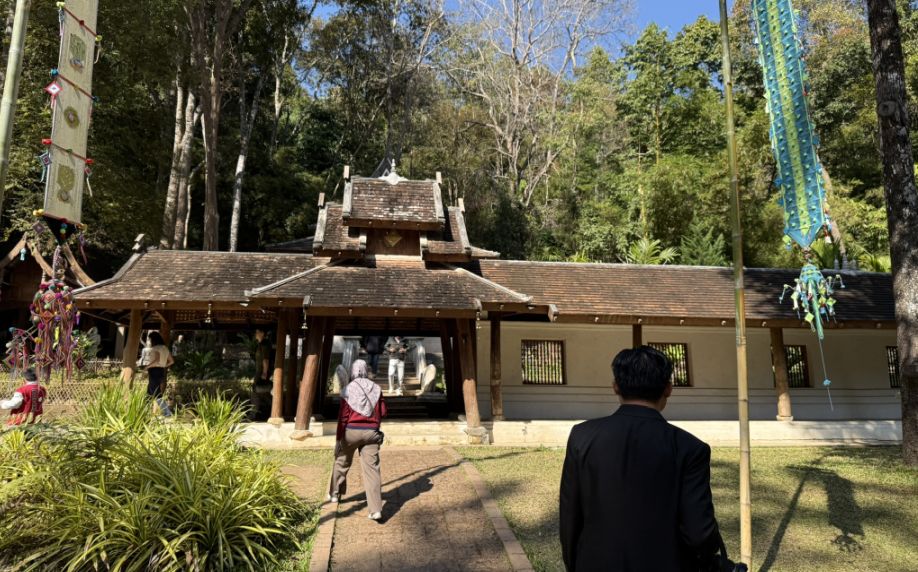
Crossing the second gate brings you further into the sacred area, where the atmosphere becomes even more serene.
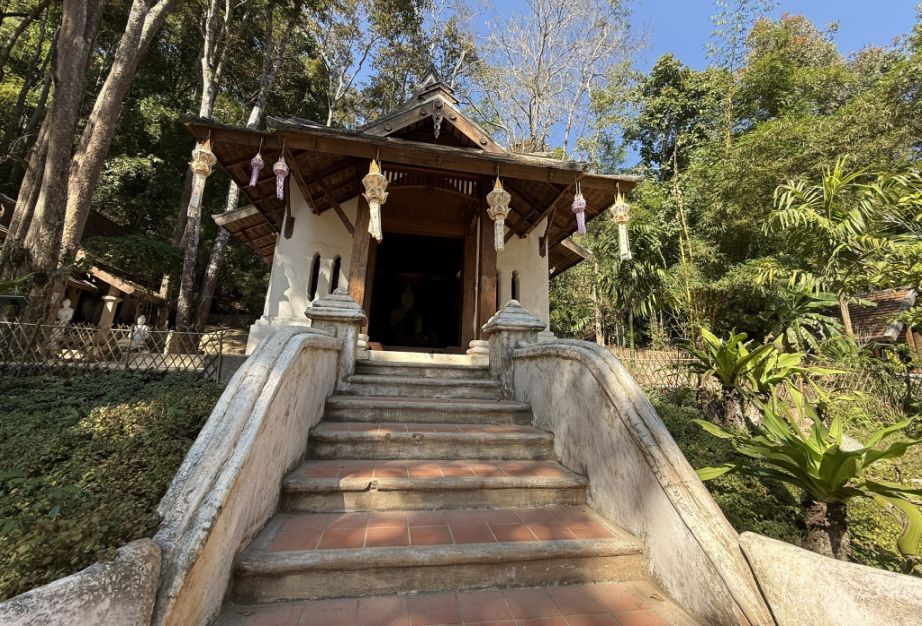
The temple we encountered, with its clean lines and minimal decoration is quite small.
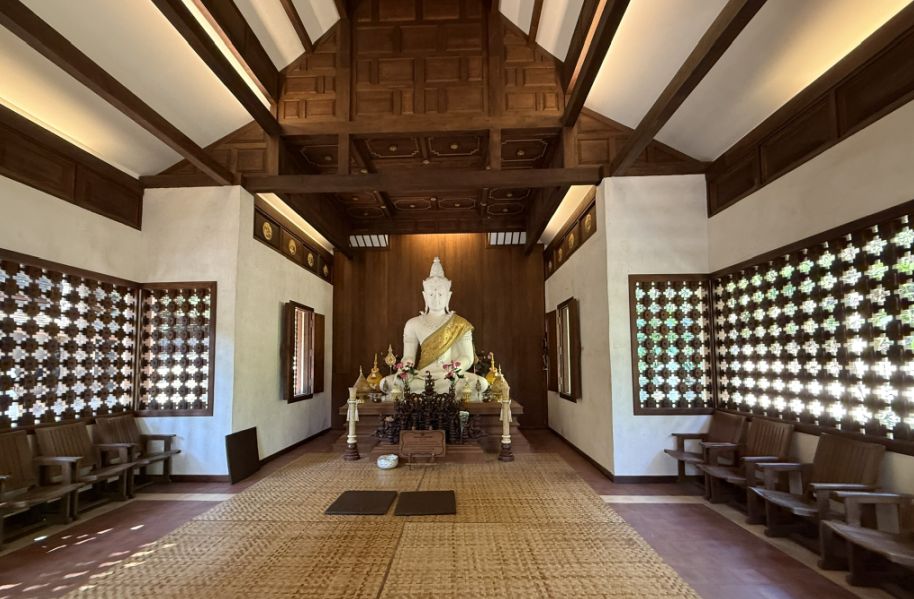
Inside it centers around a large white Buddha image. Unlike the glittering gold Buddha found elsewhere, this white figure feels calm and meditative, emphasizing purity and stillness.
The simplicity of the space encourages quiet reflection rather than awe. It’s a place where everything slows down, and the surrounding forest almost becomes part of the temple itself.
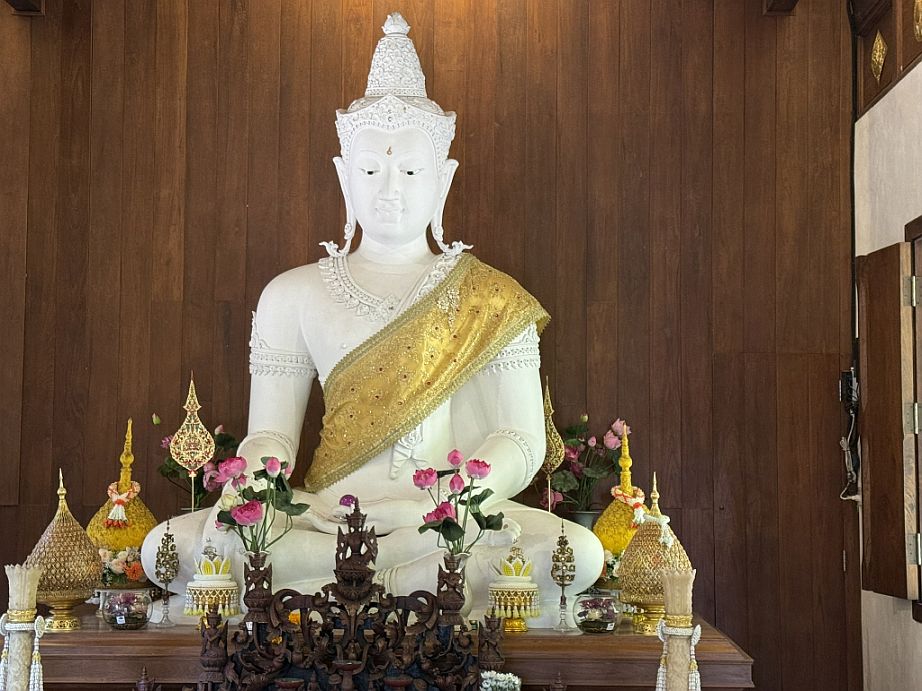
The big Buddha.
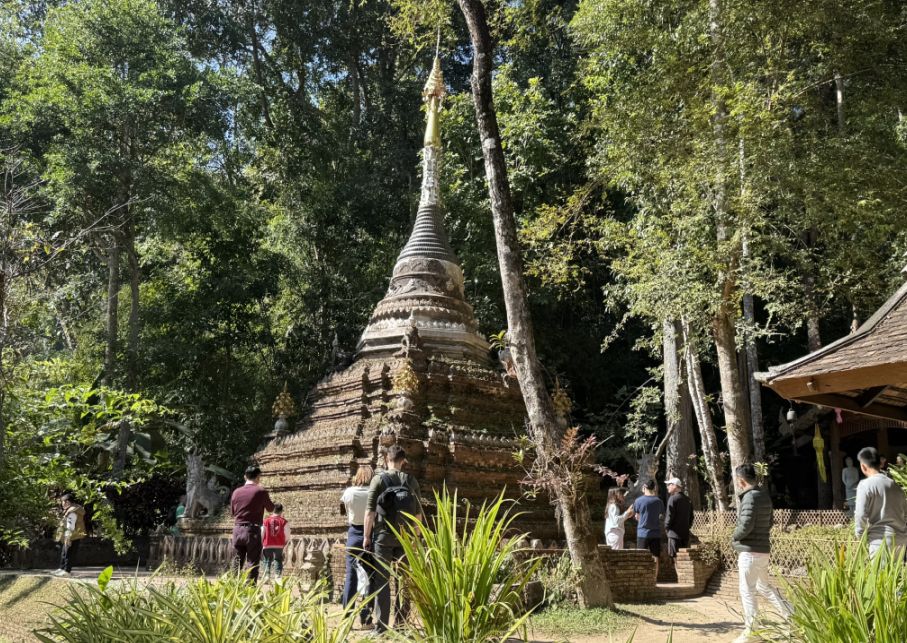
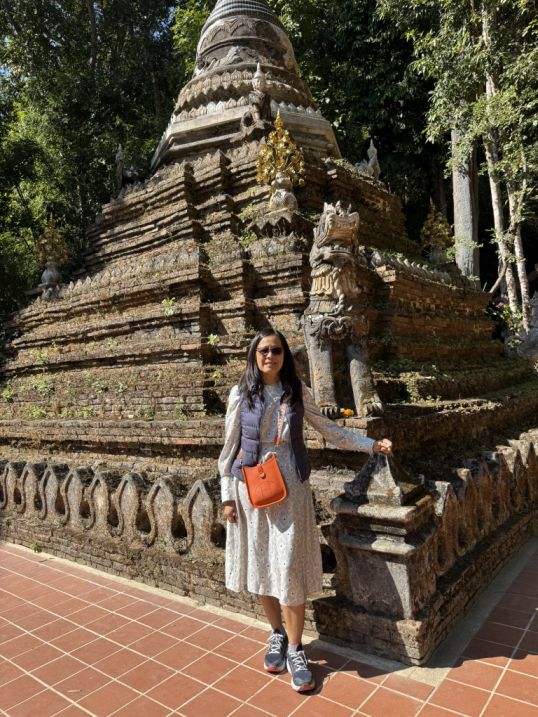
Not far from the temple, the architecture begins to feel older and more symbolic, especially when we come across the weathered chedi. This stupa, with its square base, reflects a traditional Lanna design influenced by both Thai and early Sri Lankan styles.
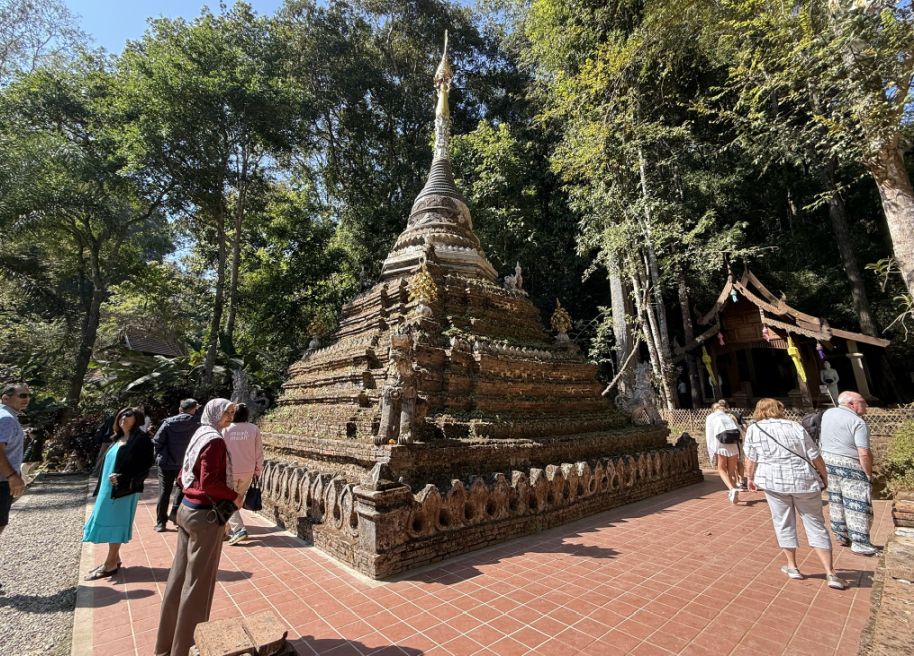
The square foundation represents stability and the earthly realm, while the upper tiers (often more rounded or tapered) symbolize the path toward enlightenment. Over time, the chedi has taken on a beautifully aged appearance, its worn surfaces, patches of moss, and muted tones blending into the forest around it. Structures like this typically enshrine sacred relics or serve as a focal point for meditation, making it one of the spiritual anchors of the temple grounds.
 |
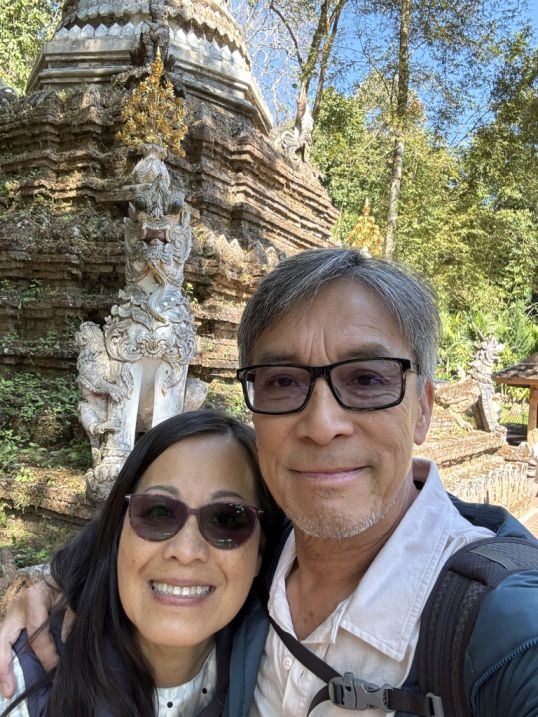 |
Moss, cracks, and faded plaster make it feel deeply connected to the forest around it, as if the temple and nature have grown together over the centuries.
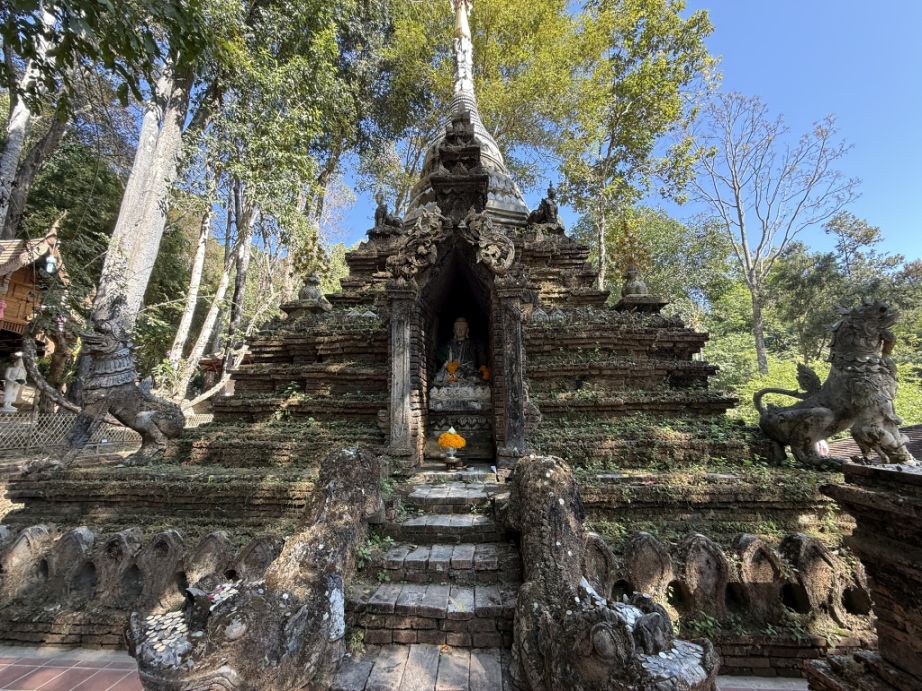
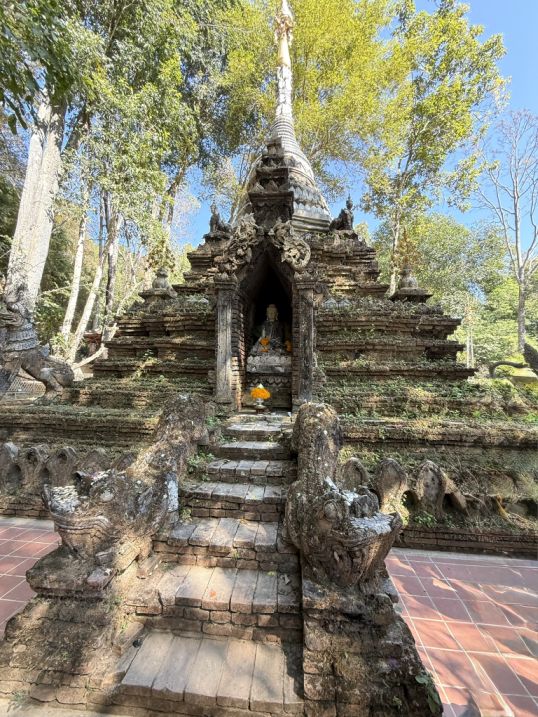
Behind the front of the Chedi, there is a small Buddha seated inside a niche carved into a wall or structure.
 |
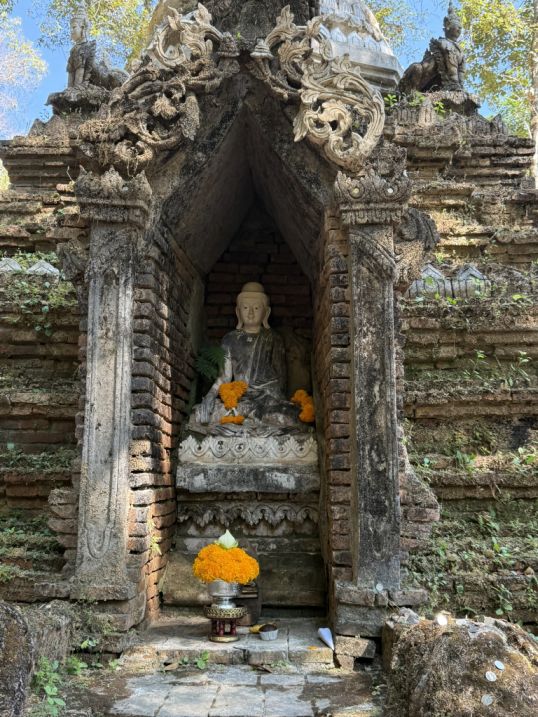 |
These niches are common in older temples and often serve as quiet places for prayer and reflection. The Buddha image is protected within the recess, almost like a shrine within the shrine, inviting visitors to pause for a moment of meditation.
 |
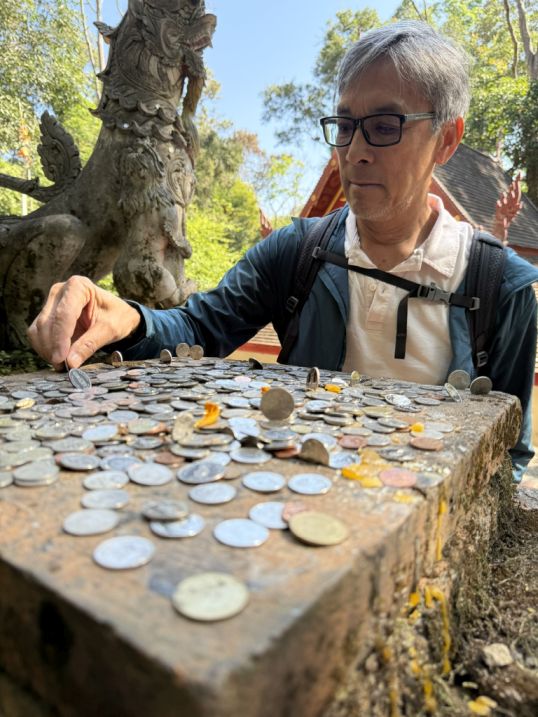 |
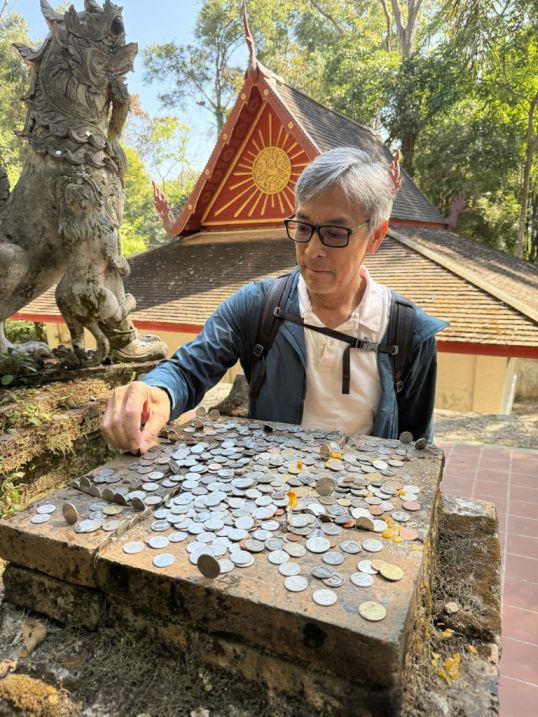
Close to the two guardian statues, figures that traditionally protect the sacred space from negative spirits, we noticed a square platform made of red bricks where people had placed many coins. This is a small but meaningful local ritual. Visitors often leave coins as a symbolic offering for good fortune, merit, or wishes. Some people try to balance the coins upright along the ridges between the bricks, just like Hoa was trying to do. It’s a playful yet spiritual gesture, if the coin stands, people sometimes believe it brings luck or shows patience and mindfulness.
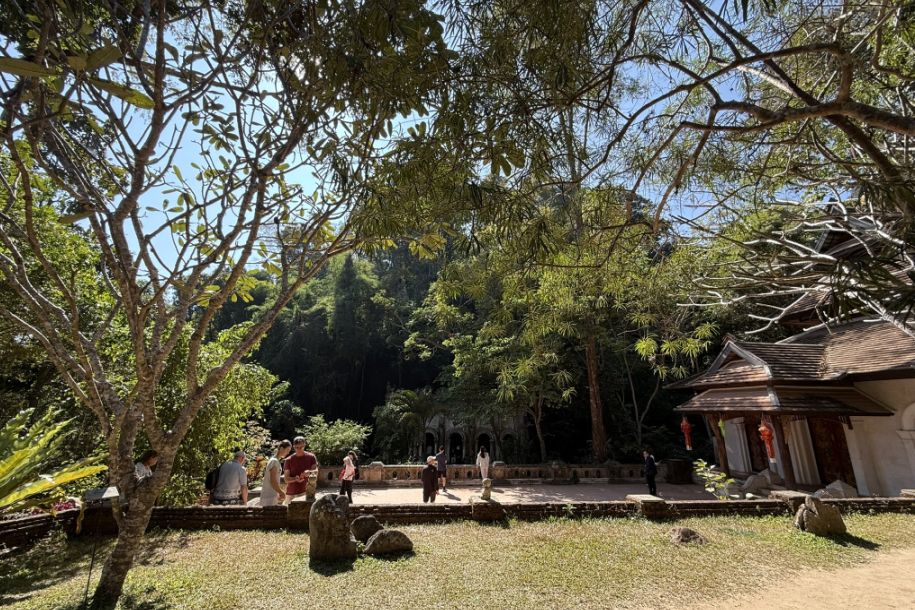
Continuing along the paths through the temple grounds.
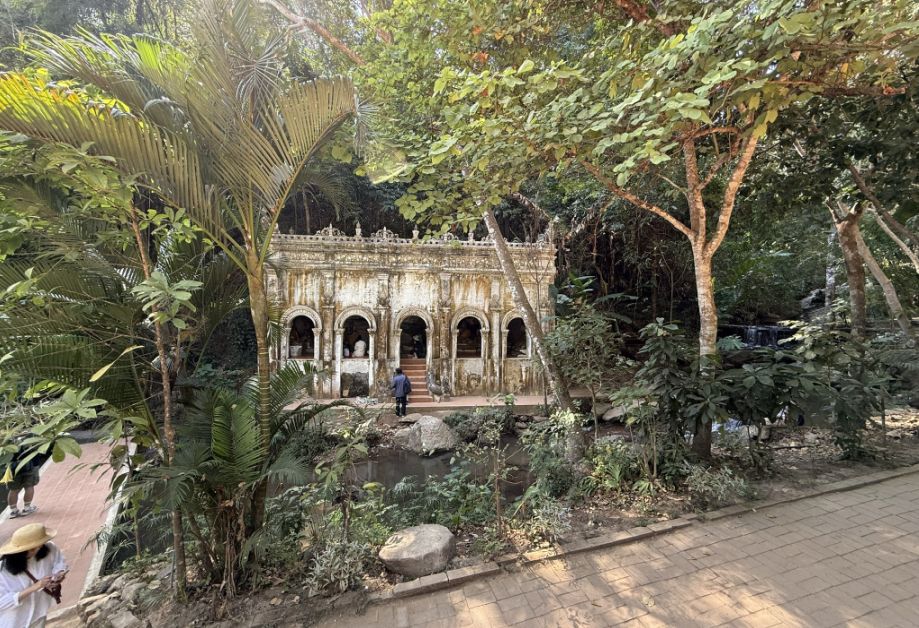
The scenery suddenly opens up to one of the most magical parts of Wat Pha Lat. Ahead there is a small body of water with a stone bridge, surrounded by thick greenery and the gentle sound of running water.
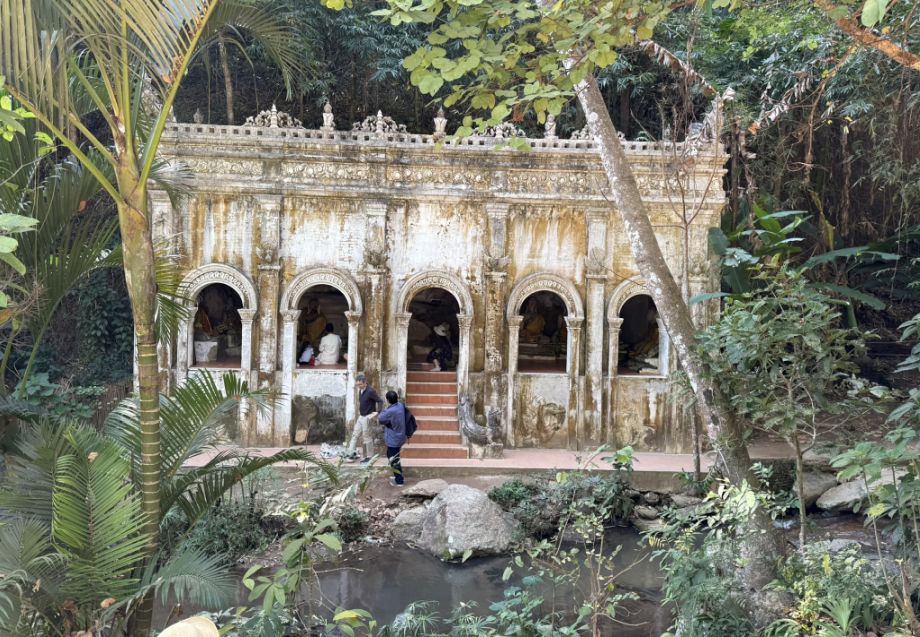
Just beside it stands an old white building, slightly weathered, with vines, moss, and forest plants growing around it. The setting almost looks like something out of an animated jungle scene, many visitors say it feels like it could belong in the world of The Jungle Book.
 |
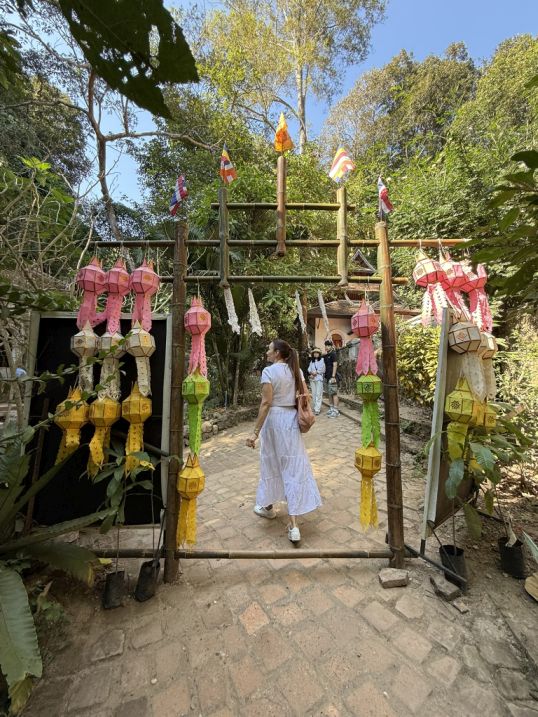 |
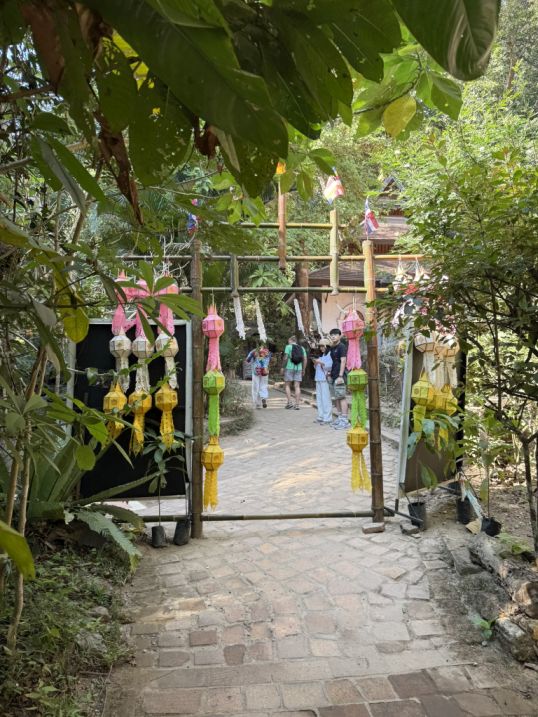
To get to the building, we crossed a colorful bamboo gate.
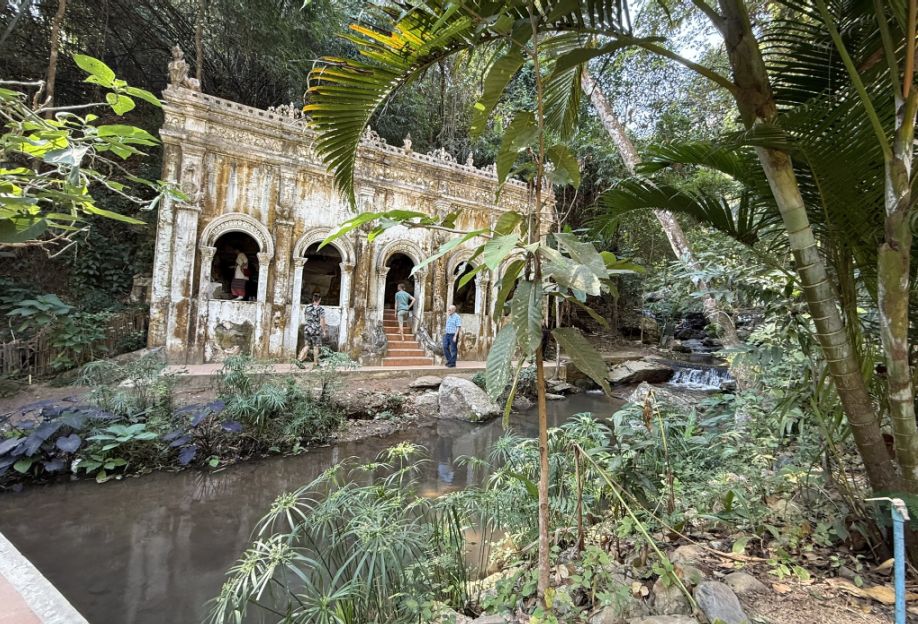
We are now crossing the bridge to get to the building.
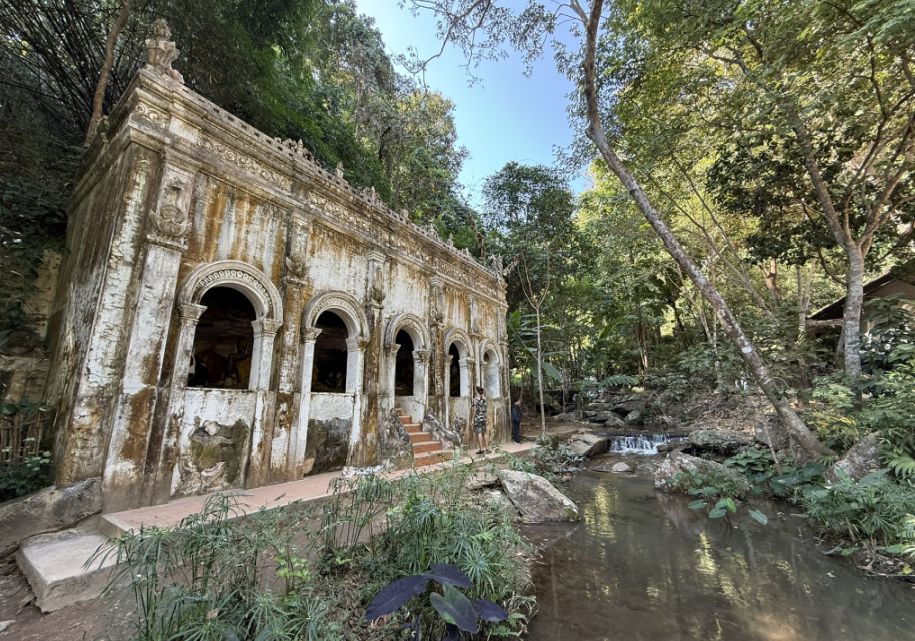
This building is actually one of the meditation halls and shrine structures within the temple complex. The exterior, softened by age and surrounded by trees and flowing water, gives it that dreamlike quality.
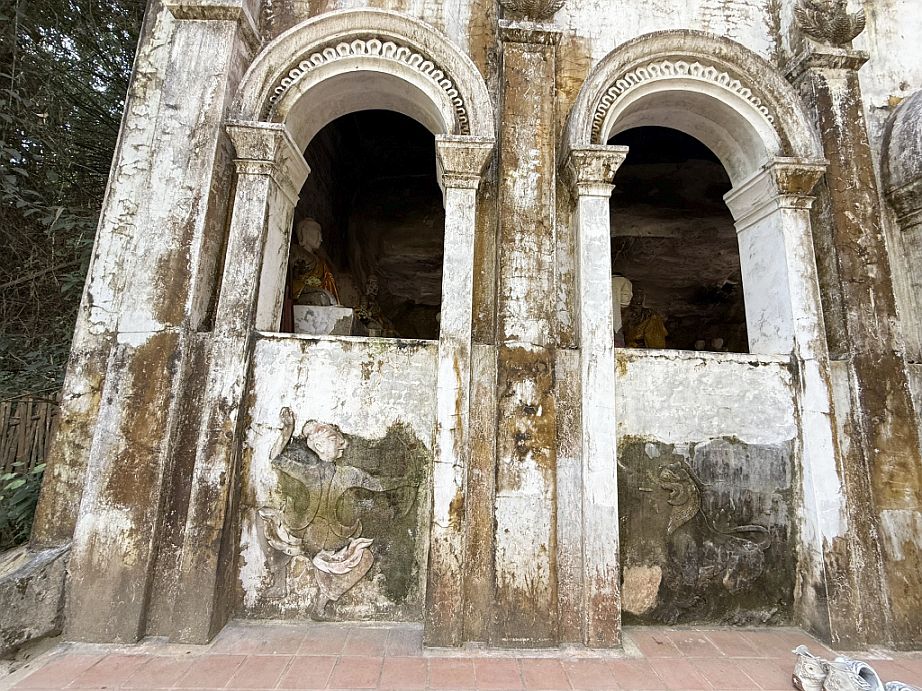
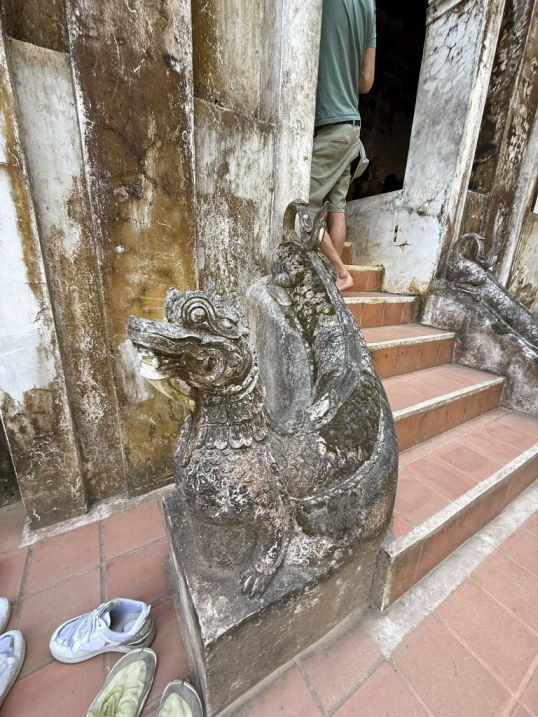
The façade of the meditation hall at Wat Pha Lat really tells its age. The weathered walls, softened edges, and simple arches give it a quiet, almost forgotten beauty, as if the building has slowly been reclaimed by the forest around it.
 |
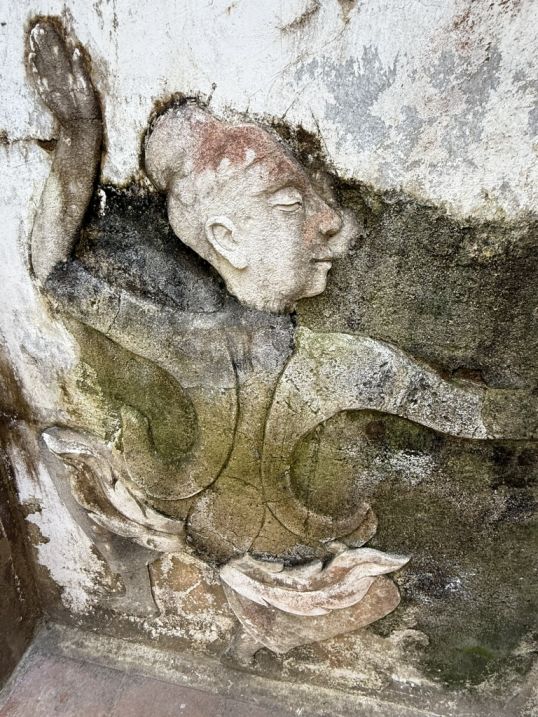 |
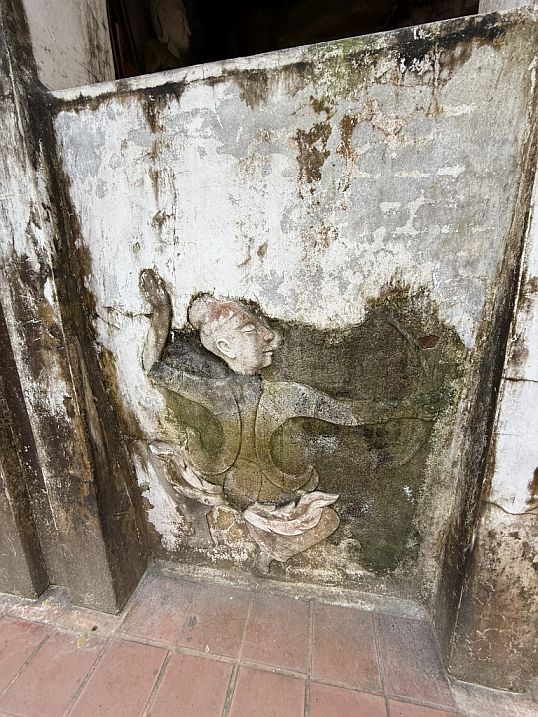
The sculpture of a seated figure with hair tied in a bun and hands raised, is likely a guardian or ascetic figure. In Lanna and broader Buddhist art, these figures often represent sages, hermits, or celestial beings in a gesture of reverence or teaching. The raised hands can symbolize offering, devotion, or even a moment of spiritual realization, adding a subtle layer of meaning right at the entrance
 |
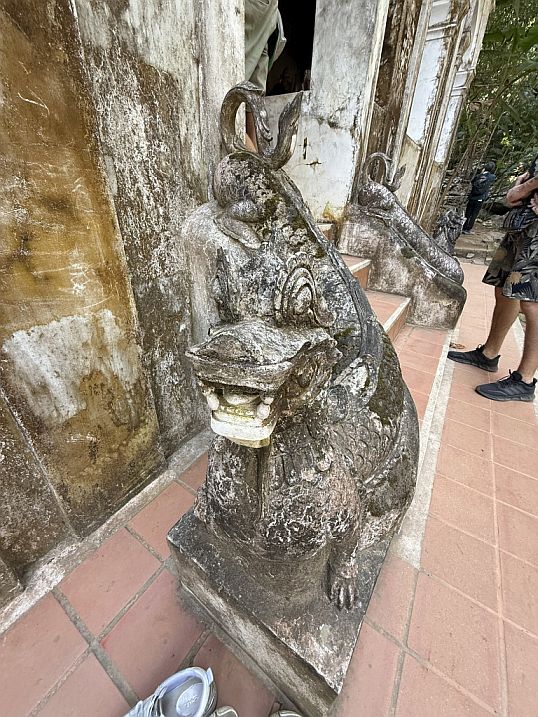 |
Removing your shoes before entering marks the transition from the natural world into a sacred interior space.
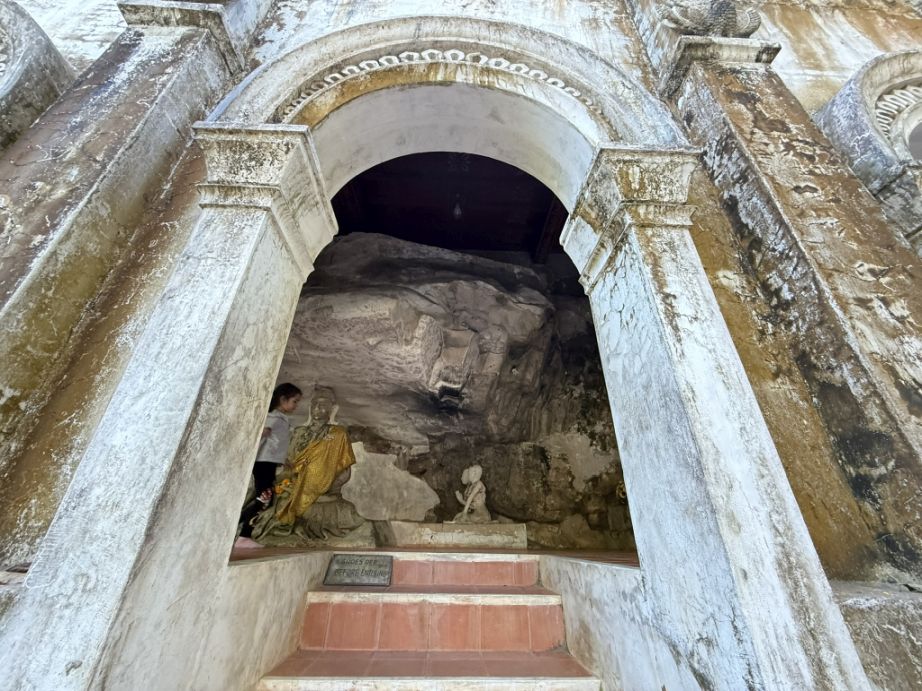
Entering the Hall.
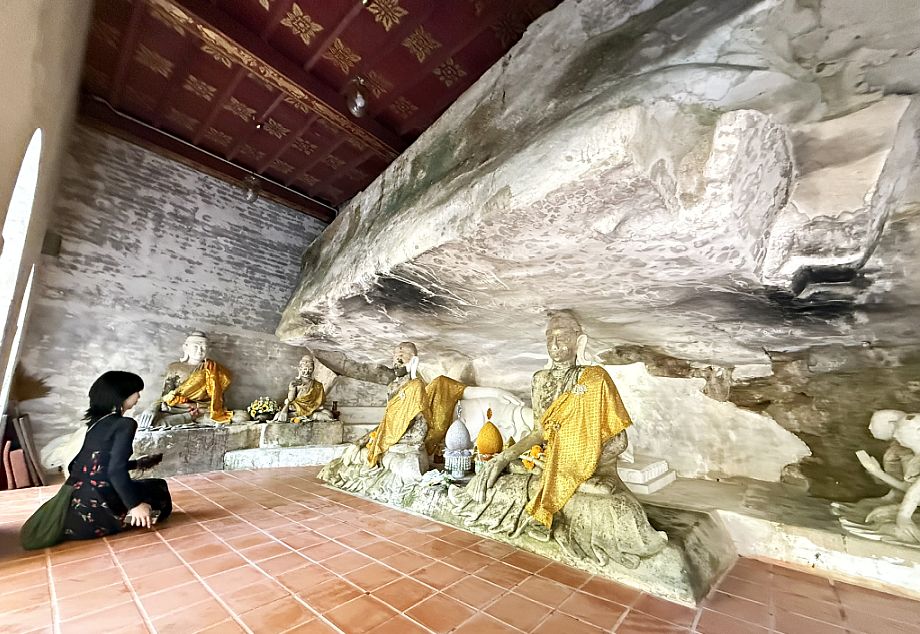
Inside, the hall’s proportions feel unique, long rather than deep, guiding our gaze forward along a quiet axis of devotion. The space isn’t grand, but it feels deeply intentional and intimate.
The interior is filled with numerous Buddha images. These statues vary in size and style, arranged closely together, creating a sense of abundance and devotion. Rather than focusing on a single central figure, the room feels like a collective offering, a place where many representations of the Buddha coexist, each one contributing to the spiritual energy of the space.
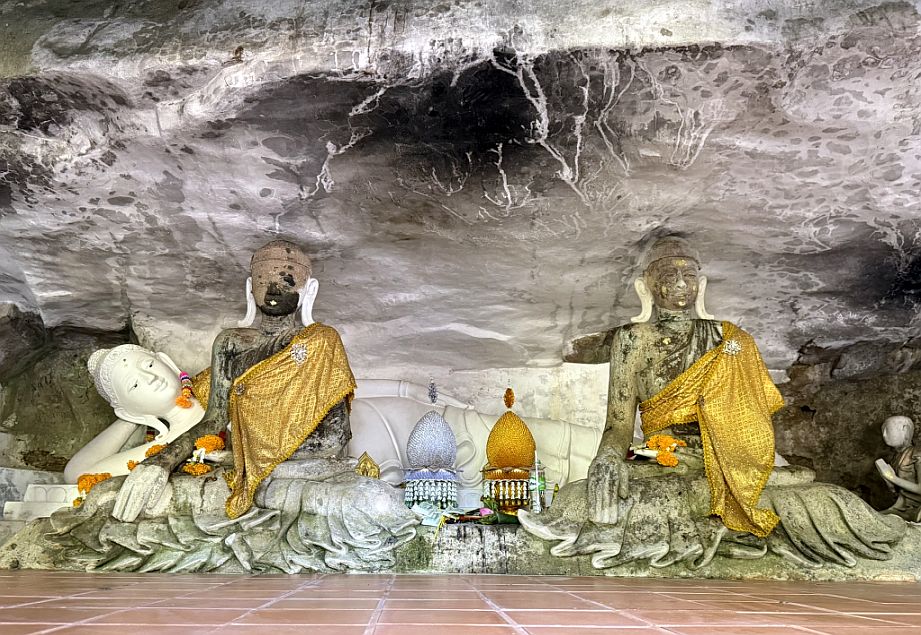
The arrangement of the Buddha images creates a kind of spiritual narrative. At the center, the two monks wrapped in yellow cloth stand out, they are likely revered monks rather than Buddha, honored for their teachings or connection to the temple. Draping them in saffron robes mirrors how real monks are clothed, symbolizing respect and continuity of the living Buddhist tradition. Behind them, the reclining Buddha adds another layer of meaning. This posture typically represents the Buddha at the moment of entering Nirvana, a peaceful passing beyond the cycle of rebirth.
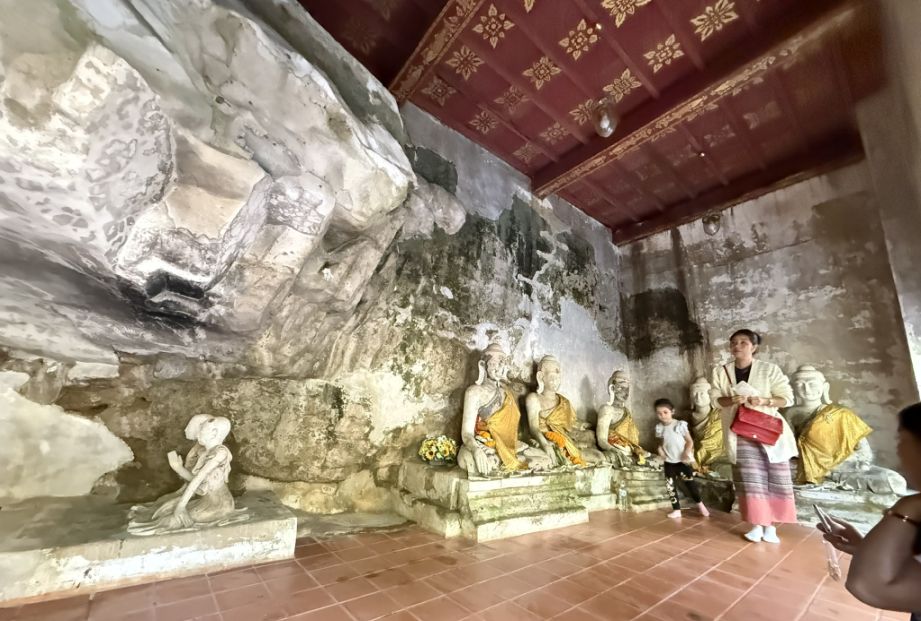
The backdrop resembling a cave is especially striking. It gives the impression that we have stepped into a natural sanctuary, echoing the early days of Buddhism when monks meditated in caves and forest retreats. This design choice reinforces Wat Pha Lat’s identity as a forest monastery, blurring the line between constructed space and the natural world.
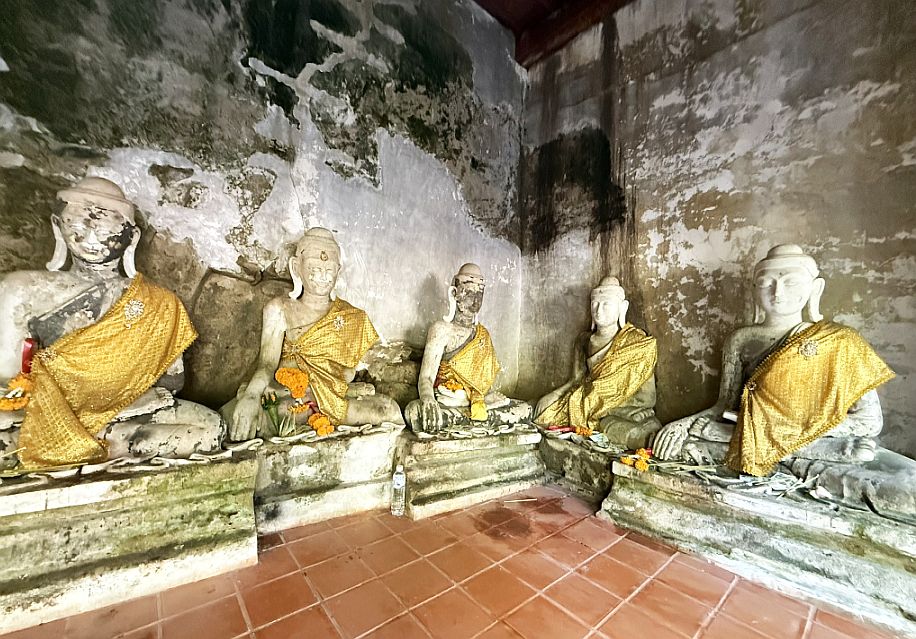
To the right, the series of repeating statues, create a sense of multiplicity, different moments, teachings, or manifestations of enlightenment existing together in one space.
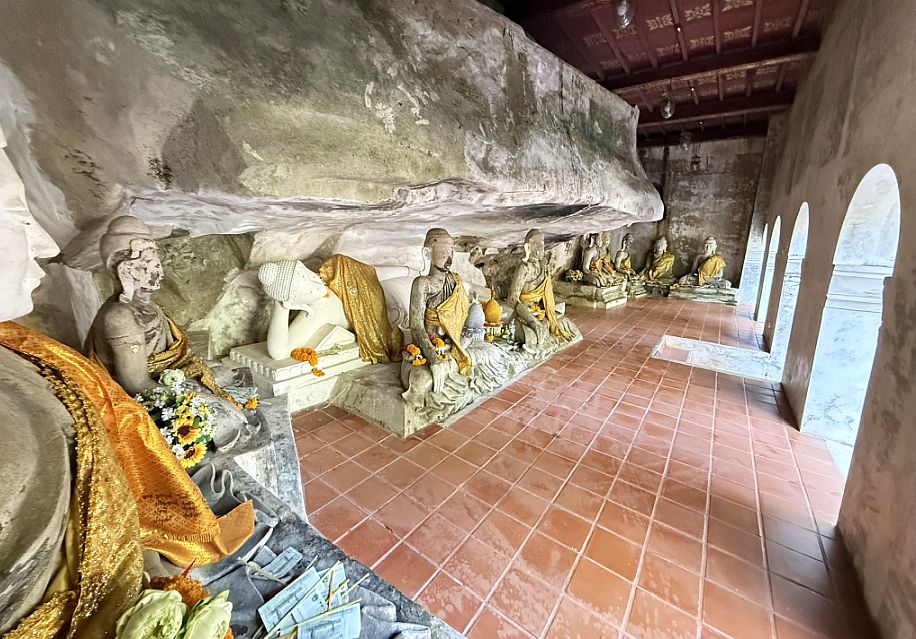
And with locals quietly praying inside, the hall feels alive rather than preserved. The soft movements, murmured chants, and stillness of devotion transform the space from something you simply observe into something we experience a living, breathing place of faith tucked gently into the jungle.
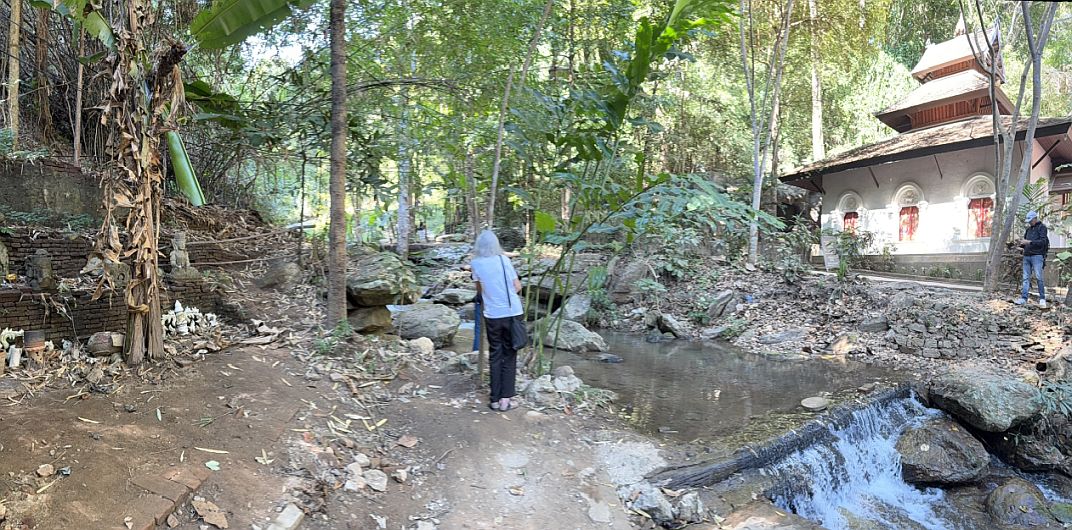
As we stepped out of the meditation hall, the sound of flowing water immediately becomes part of the experience. The small waterfall running in front of the hall isn’t just decorative, it’s part of a natural stream that originates higher up on the slopes of Doi Suthep.
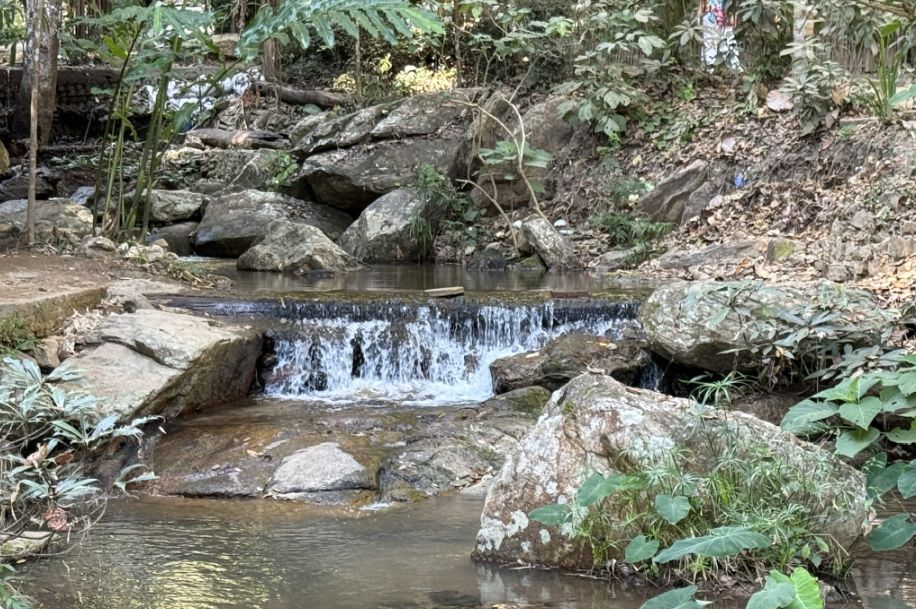
Rainwater and mountain runoff collect in the forest above, then flow down through a series of channels, rocks, and cascades that wind directly through the temple grounds.
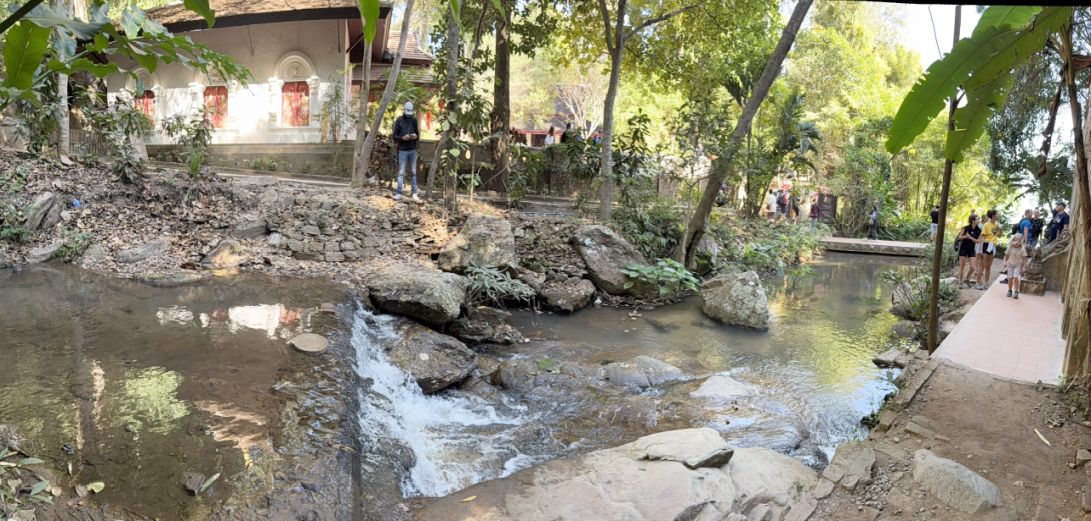
This constant movement of water is deeply symbolic in Buddhism, often representing purification, the flow of life, and the passage toward enlightenment. At Wat Pha Lat, it also reinforces the idea that the temple isn’t separate from nature, it exists within it.
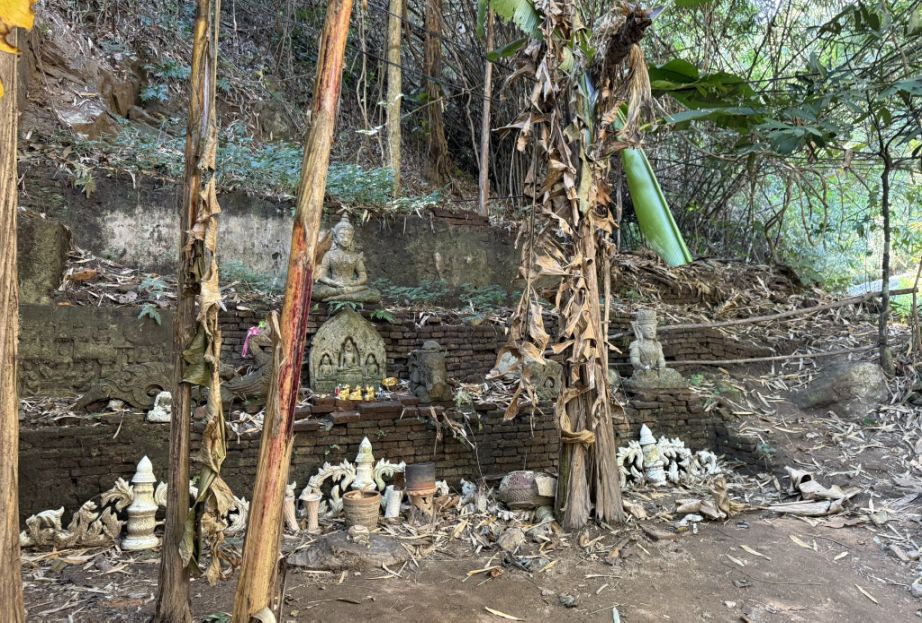
Near the hall, the old brick wall, crumbling and uneven, feels like a remnant of an earlier time. Its worn condition suggests it may have once been part of a larger structure or boundary, now slowly returning to the earth. The Buddha statues placed along it create a powerful contrast, timeless figures of serenity set against something visibly aging and fragile. It almost feels intentional, like a quiet reminder of impermanence: even structures decay, but the teachings endure.
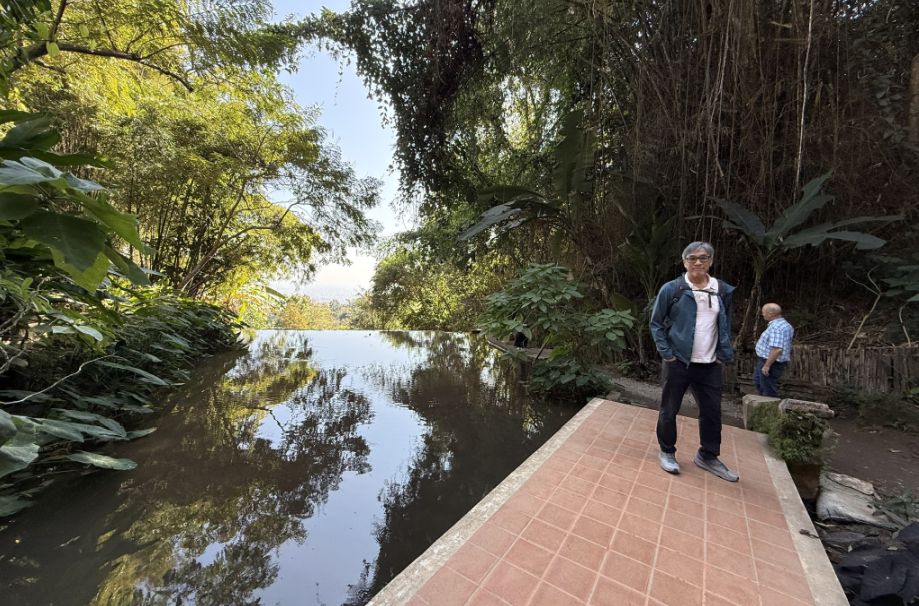
Following the water downstream, the landscape opens up into that beautiful basin where the water gathers before spilling further down.
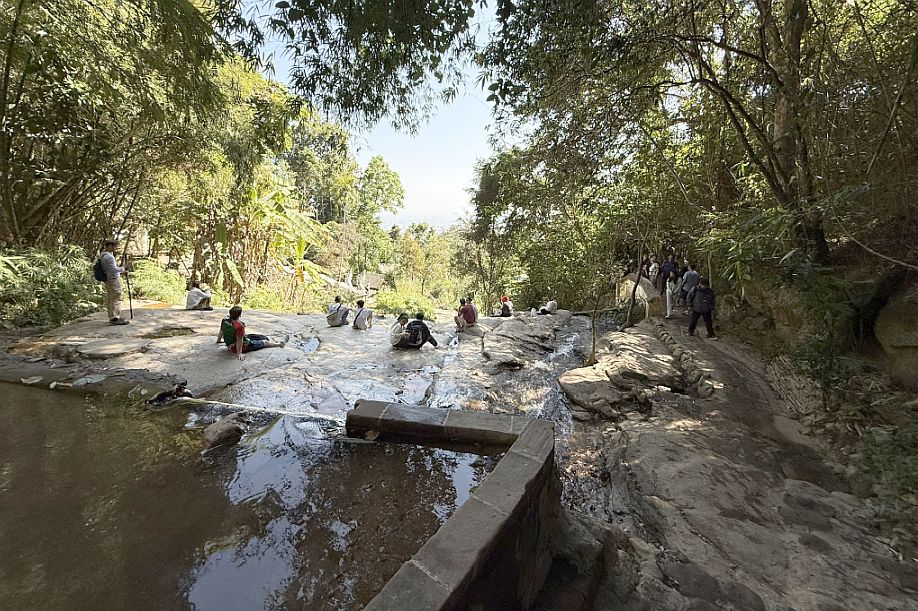
This natural pool acts like a pause in the flow, a calm moment before the stream continues its journey. From there, the water spreads thinly across the wide, flat rocky bed, creating that peaceful scene where people sit, rest, and take it all in. Because the water only runs through part of the rock, the rest becomes a natural seating area, warm and textured, inviting people to linger.
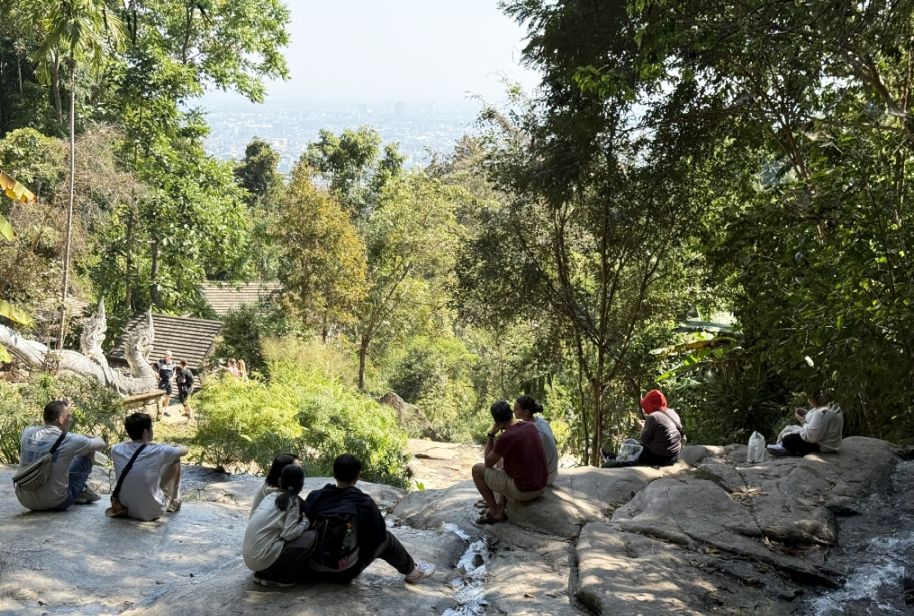
Because the water only runs through part of the rock, the rest becomes a natural seating area, warm and textured, inviting people to linger.
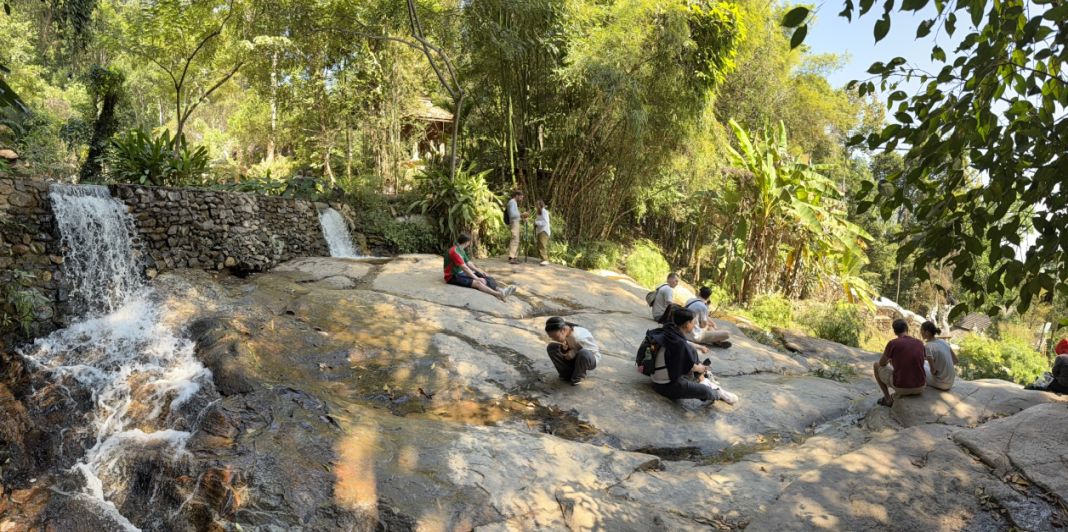
Here you can see the water running down from the big basin above. People sitting around and to enjoy the scenery.
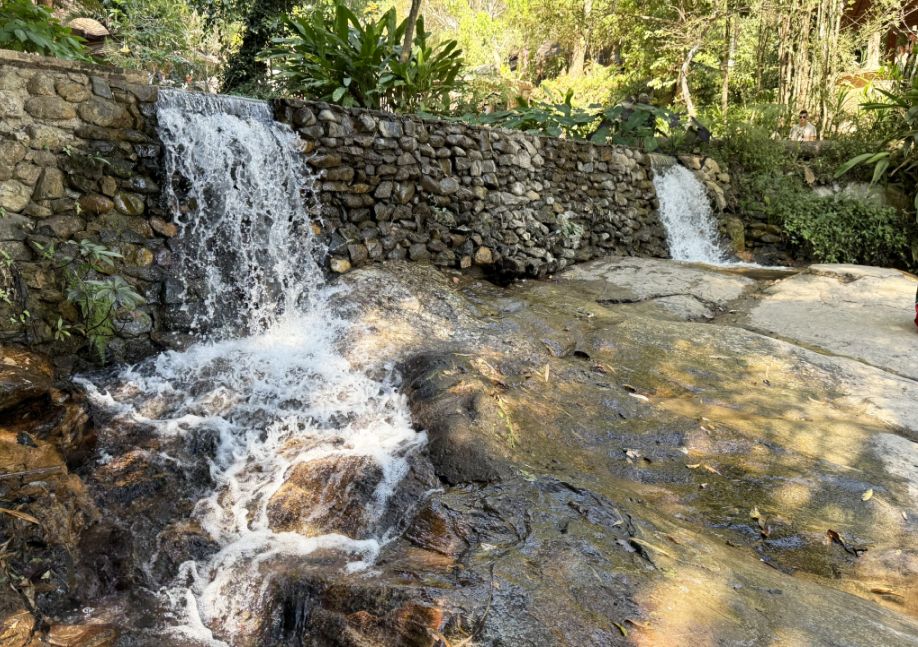
Water running down.
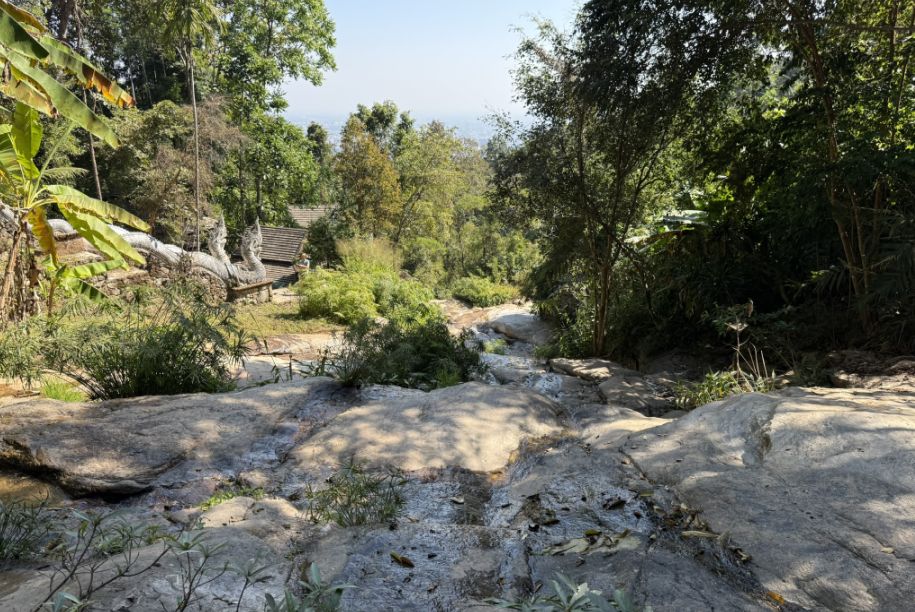
Standing on the rock and beyond it all, the view stretches outward, dense forest in the foreground, and in the distance, the city of Chiang Mai appearing through the trees.
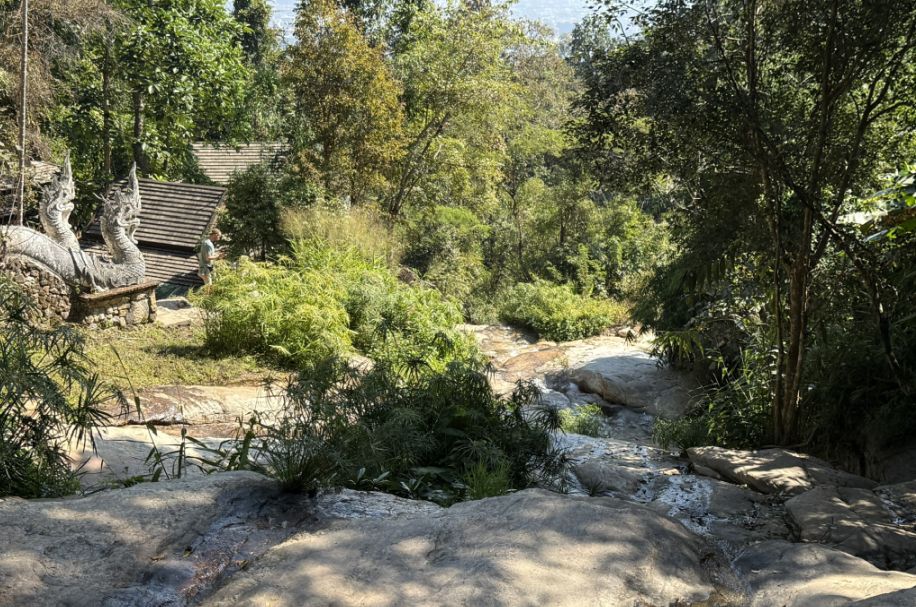
It’s a striking contrast: the quiet, shaded sanctuary of the temple against the expansive, modern world below. That viewpoint really captures what makes Wat Pha Lat so special, it’s not just a place you visit, but a space where nature, spirituality, and everyday life seem to meet in perfect balance.
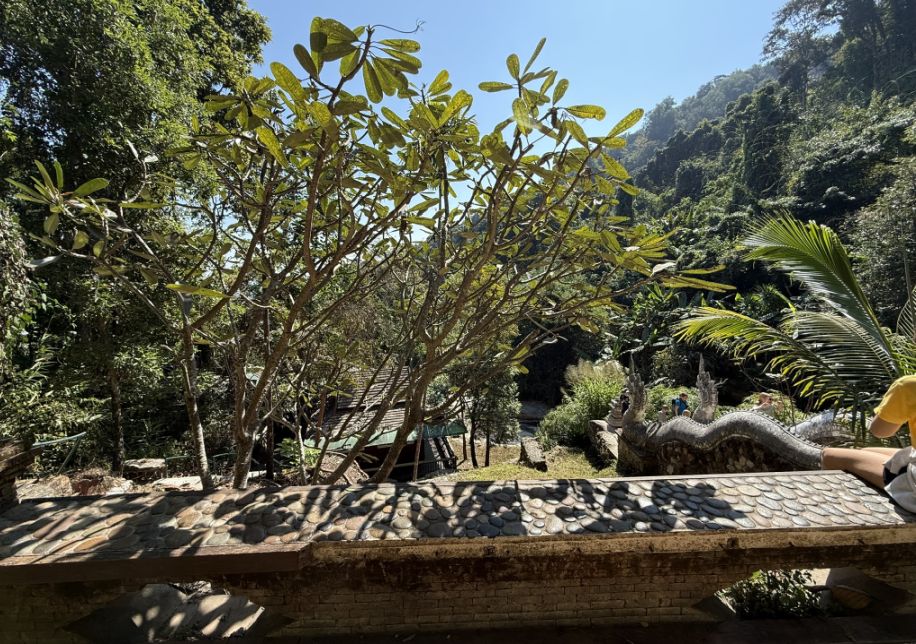
As we began to leave Wat Pha Lat, the atmosphere stays just as calm and reflective. Passing by that simple resting area with the long bench, surrounded by trees, feels like one last pause before returning to the outside world. ON the right there is staircase descending deeper down the hillside. The sides lined with sculpted nagas add a strong symbolic presence. In Thai and Buddhist tradition, nagas are protective serpent beings, guardians of sacred spaces and pathways.
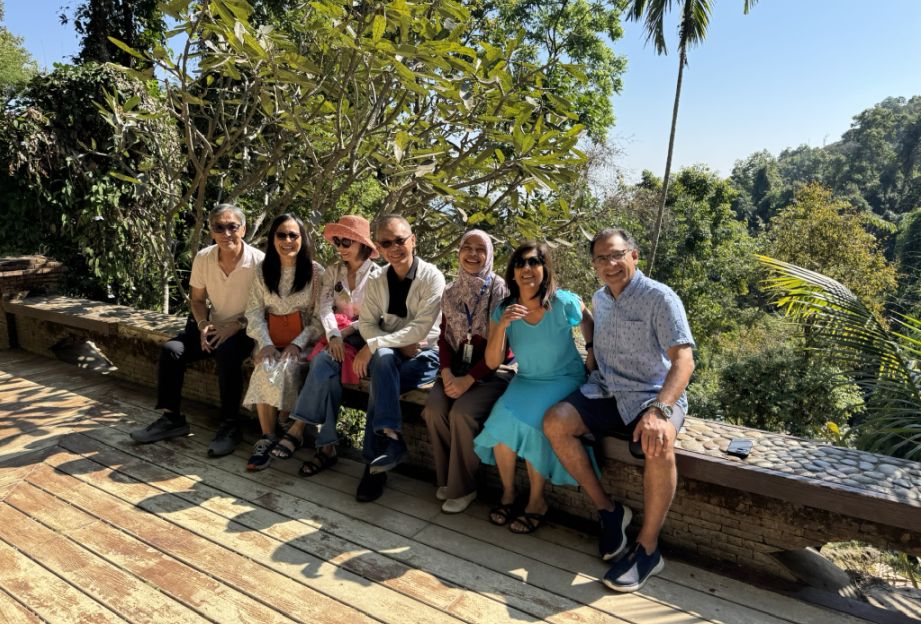
It’s the kind of place designed not for ceremony, but for quiet moments where visitors and monks alike can sit, take in the forest, and let the stillness sink in. Taking our group photo there, with all six of us and our guide captures that peaceful energy, almost like preserving a moment of calm in the middle of our journey.
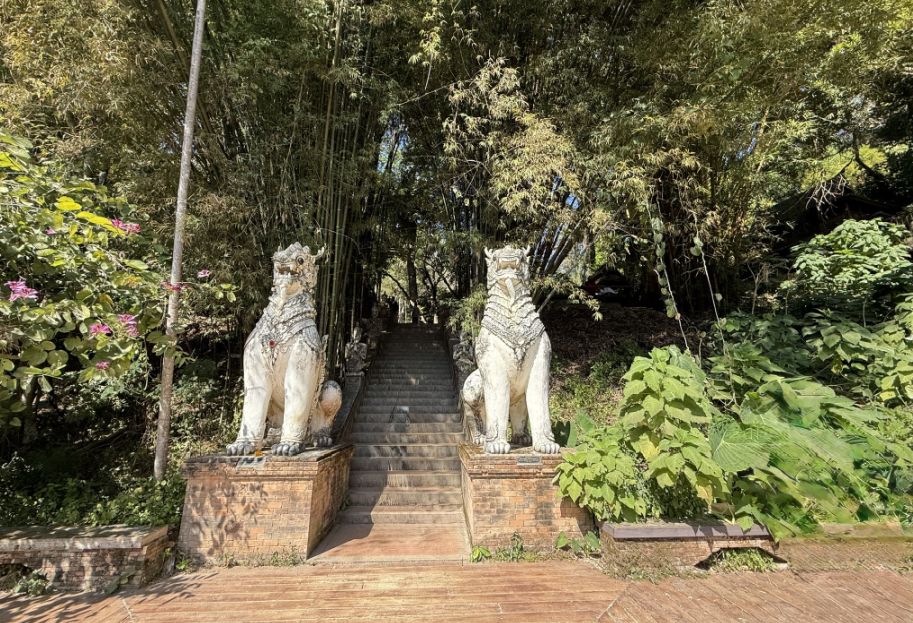
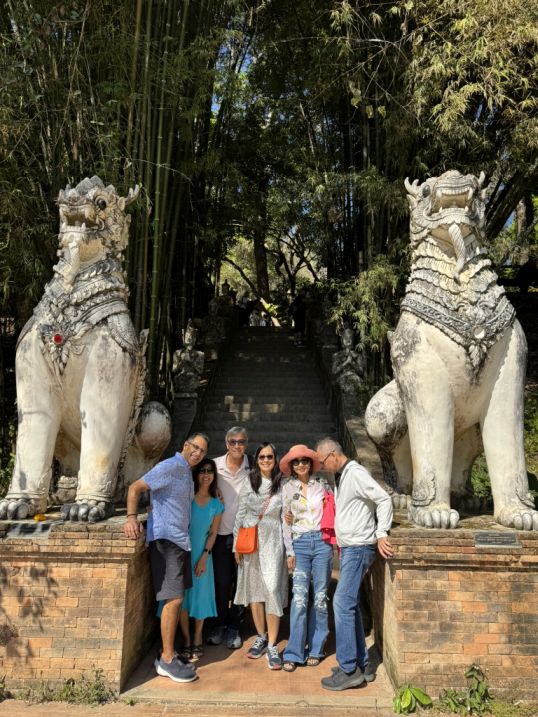
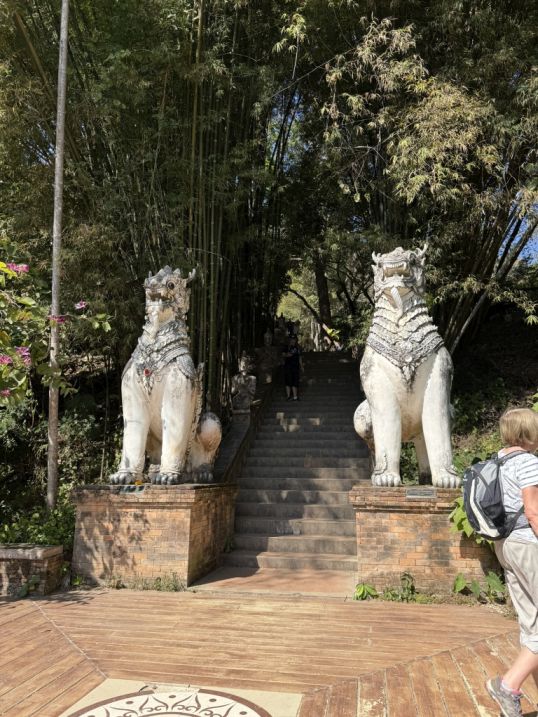
At the bottom, the scene shifts again as we arrived at another set of stairs flanked by two large white animal statues.
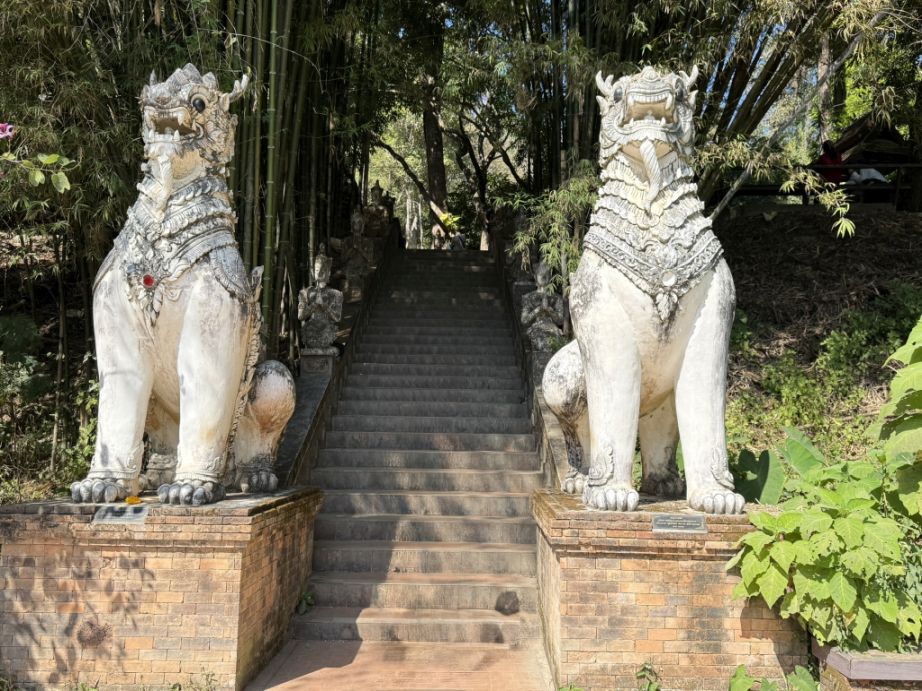
These figures, often lion-like or mythical guardians, serve a similar purpose to the nagas, standing watch at thresholds and entrances. Their size and pale color make them feel more prominent, almost like final sentinels marking the boundary between the sacred forest temple and the path back to the outside world.
 |
 |
Stopping there for our last group photo feels fitting. It’s like a closing moment, framed by these guardian figures, surrounded by greenery, and still wrapped in the quiet atmosphere of Wat Pha Lat. From here, you’re not just physically leaving the temple, but also slowly stepping away from its calm, meditative rhythm as you head toward your next destination.
NEXT... Day 8- Old town/Lunch at Baan Landai