12 days in Thailand 1/7- 1/18/2025
Day 11-Island Hopping -1/17/2025
4th Stop-Ko Panyi
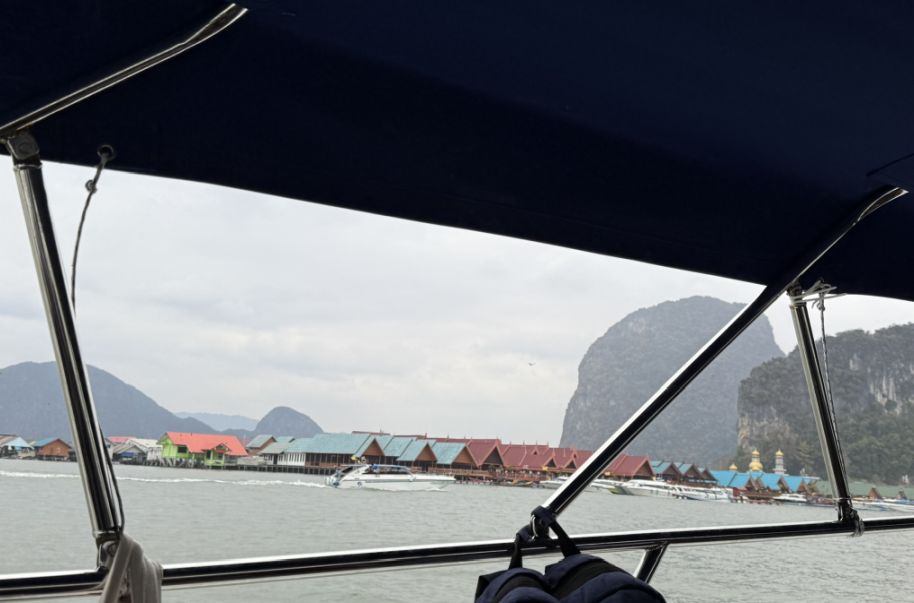
As our boat left the dramatic limestone cliffs behind and glides across the calm waters of the bay, a very different scene begins to emerge ahead Ko Panyi. At first, it almost looks like it’s rising out of the sea: a dense cluster of wooden houses on stilts, built right over the water, backed by cliffs that towers protectively behind the village.
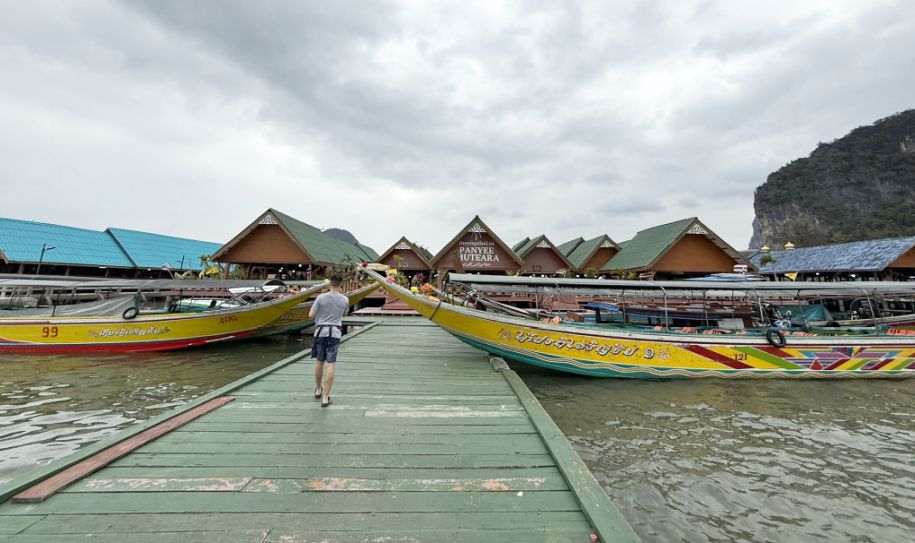
Ko Panyi has a fascinating history. It was founded over 200 years ago by Indonesian Muslim fishermen, mainly from Java, who were looking for new fishing grounds. Because Thai law at the time prevented foreigners from owning land, they built their homes on stilts over the water instead. Over generations, this grew into a permanent community, today home to around 1,500 people, still predominantly Muslim, with fishing traditions at its core. Despite its remote setting, it now has schools, shops, a mosque, and even its own floating infrastructure.
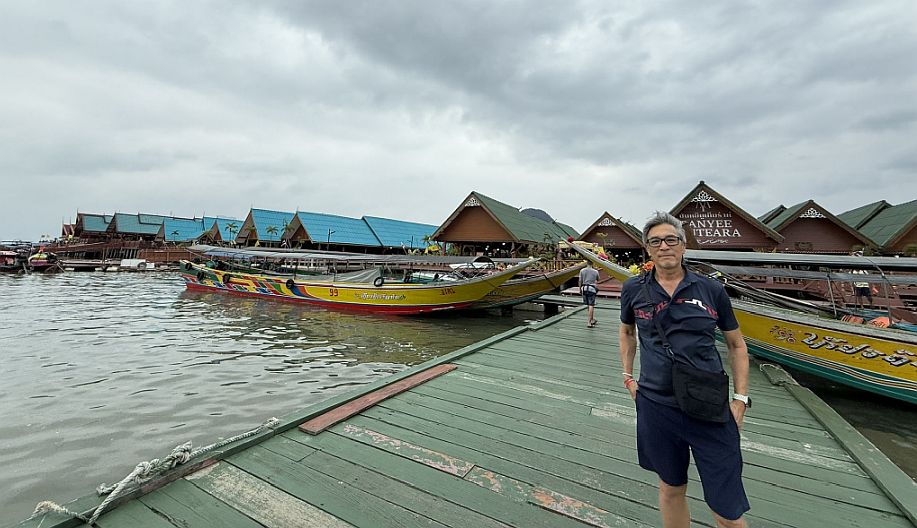
Arriving by boat is part of the experience. As we approached the wooden walkways and piers stretch out over the water, guiding boats into place. We stepped off onto the pier, which gently shifts beneath our feet, and immediately we are immersed in village life, wooden planks beneath, water visible through gaps, and boats tied alongside homes.
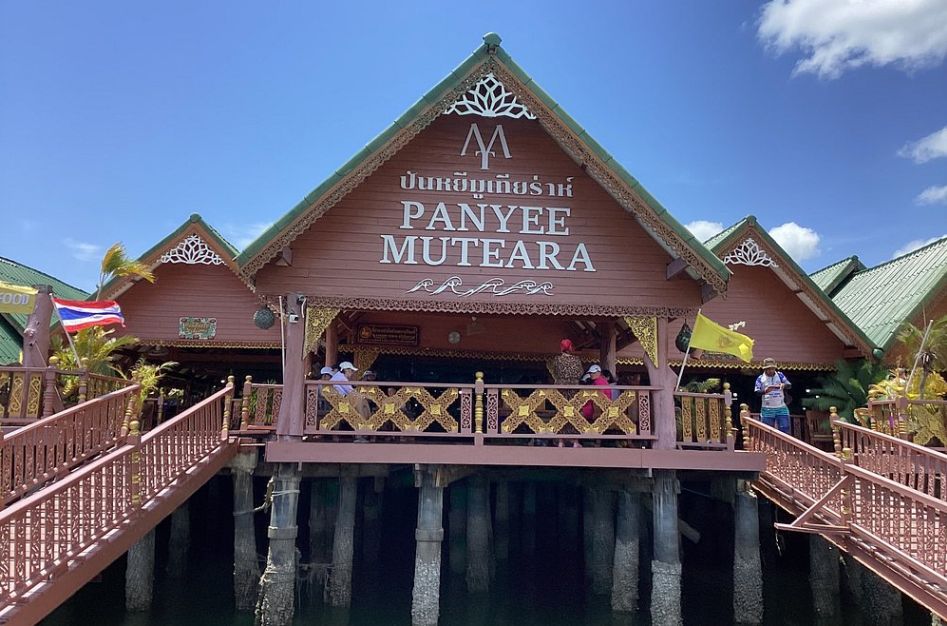
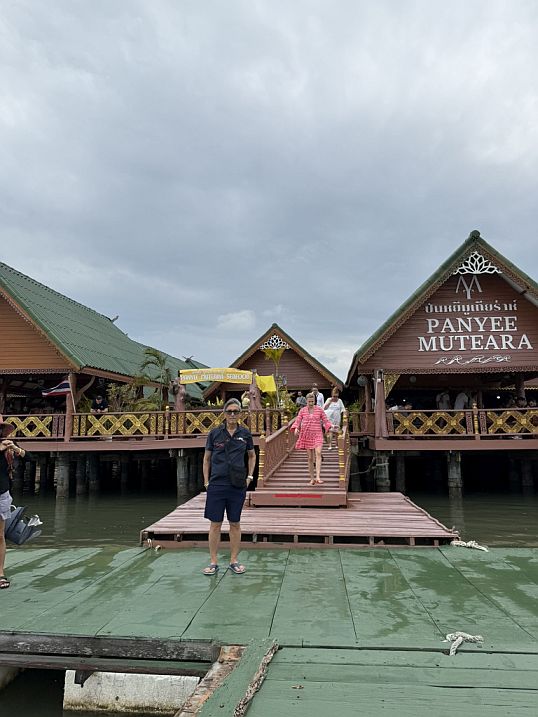
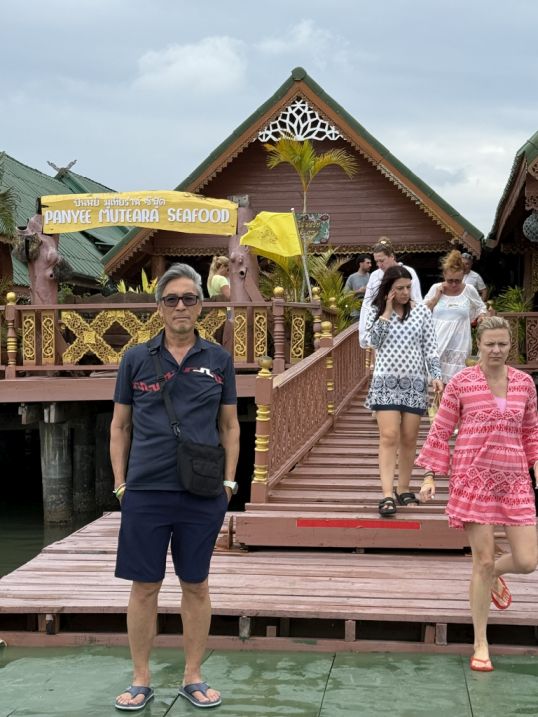
Our first stop is Panyee Muteara where lunch will be served.
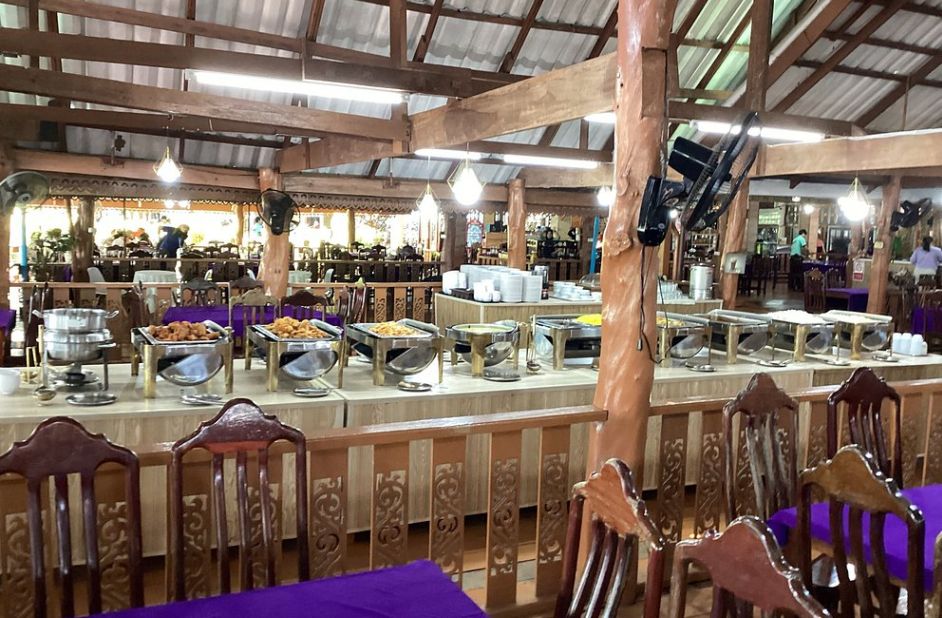
The restaurant is set up to accommodate large groups, with a buffet spread of Thai dishes ready for visitors. It’s casual and efficient, but still surrounded by the unique setting of a village built entirely above water.
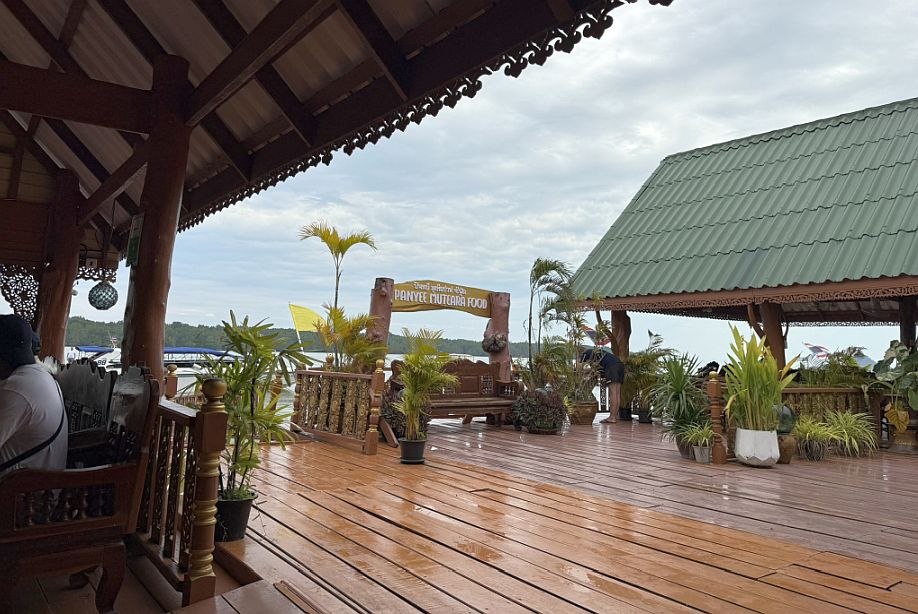
After lunch, we left the restaurant and ready to discover the floating village.
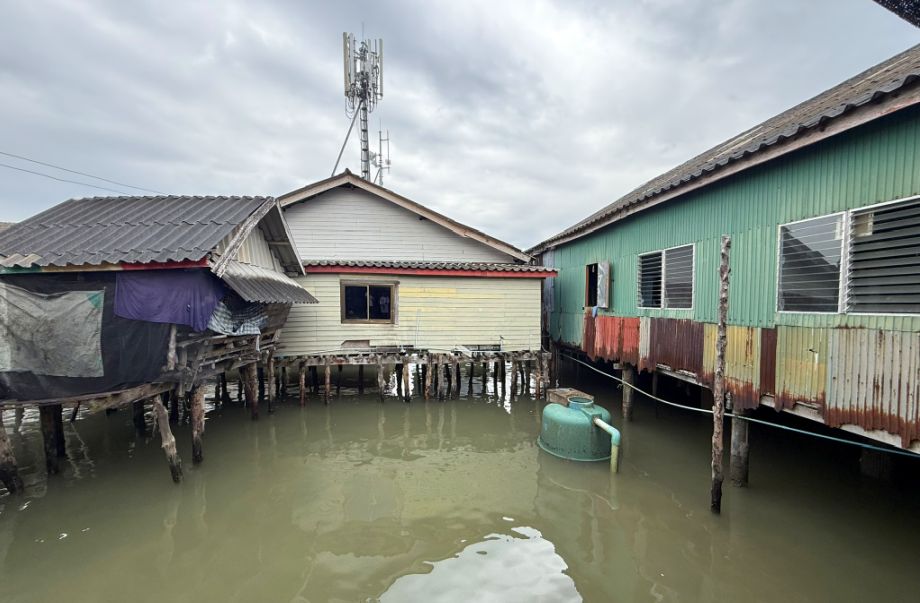
We walked deeper into the village reveals more layers.
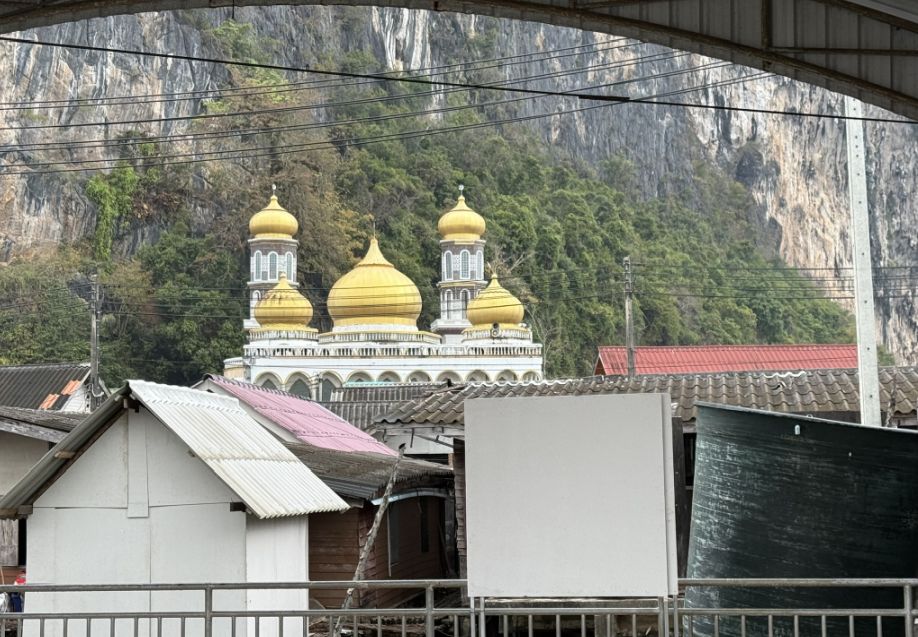
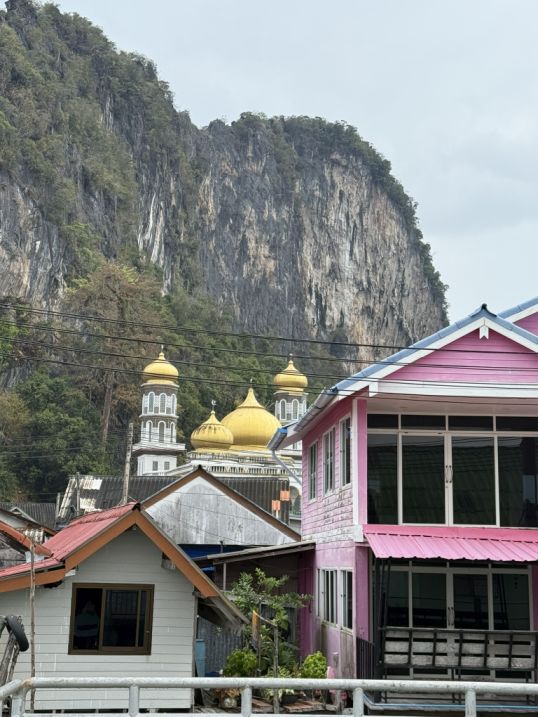
Between the houses, we caught glimpses of the mosque’s roof rising above.
 |
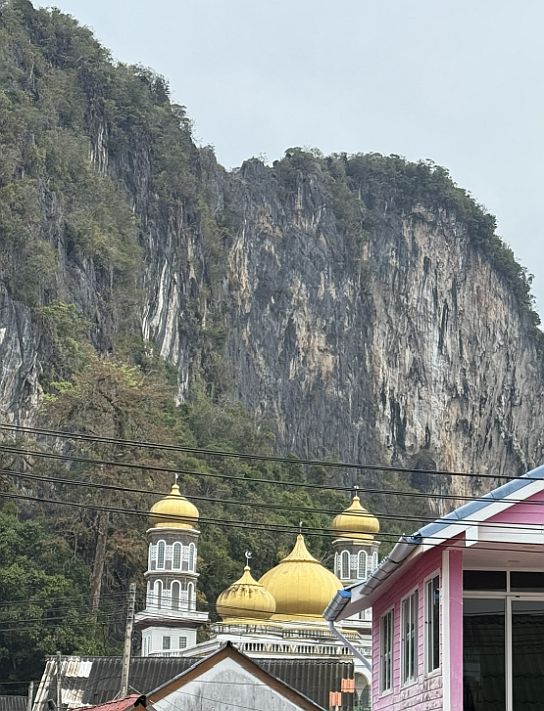 |
Simple but central to the community, reflecting the village’s Islamic roots.
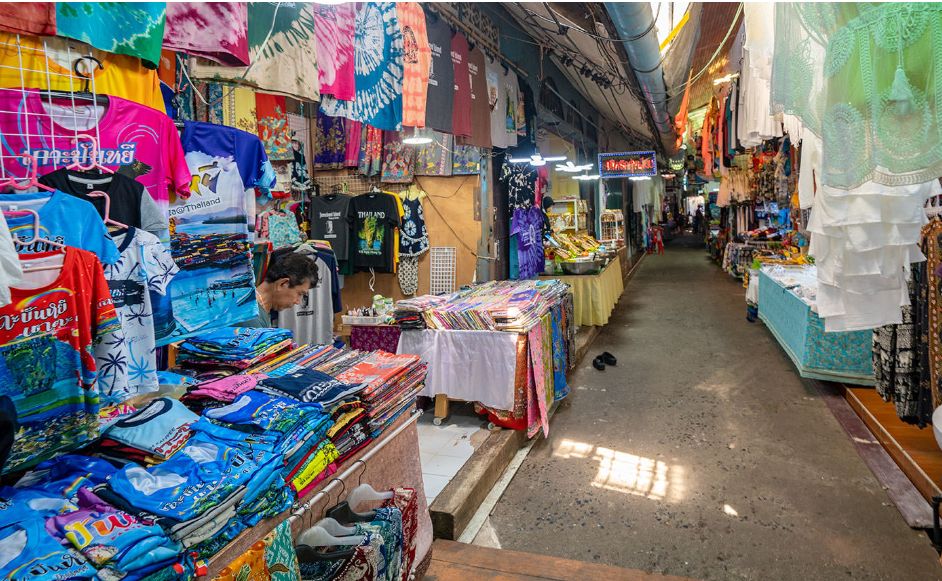
Walking inside the village, the narrow walkways are lined with small shops selling souvenirs, handmade goods, and snacks, clearly catering to visitors, yet still woven into everyday village life.
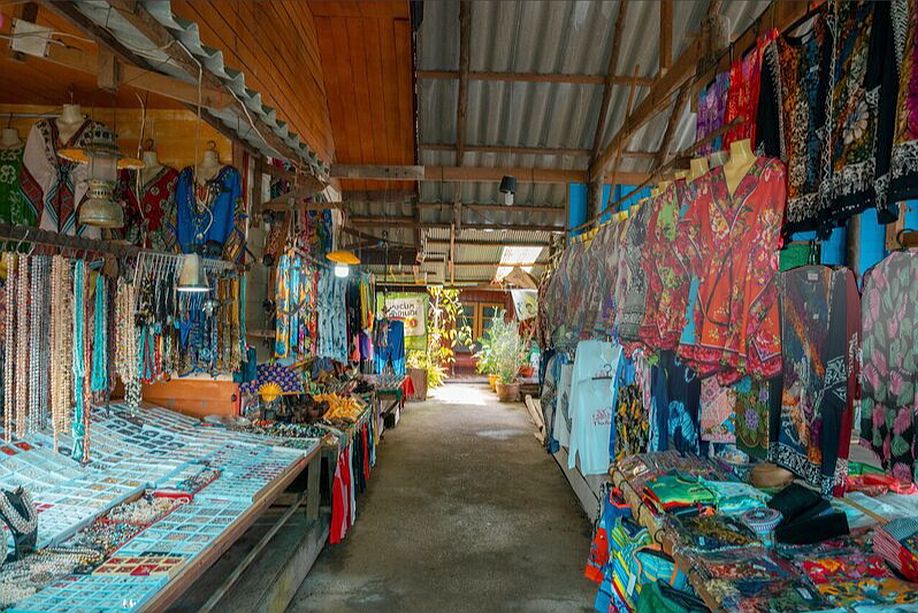
It’s a place where tourism and tradition exist side by side: a working fishing community that has opened itself to the world, without losing the essence of how it began.
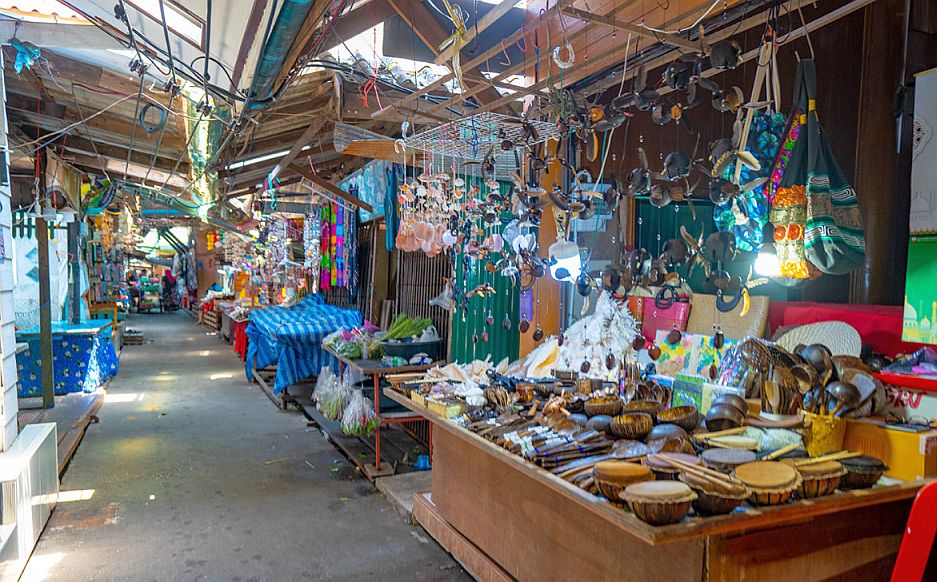
There are a lot of shops inside the village.
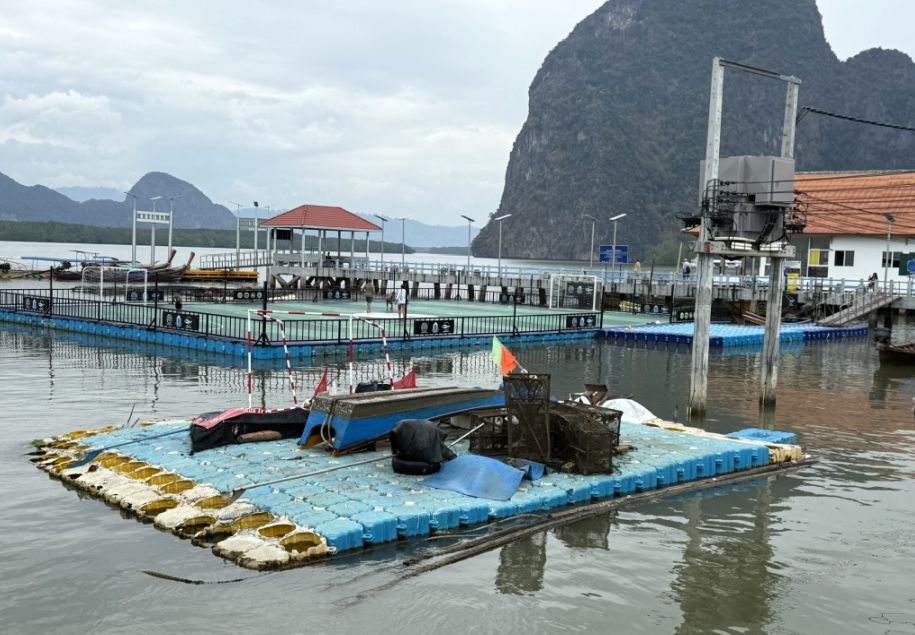
Then, almost unexpectedly, we come across the famous floating football field.
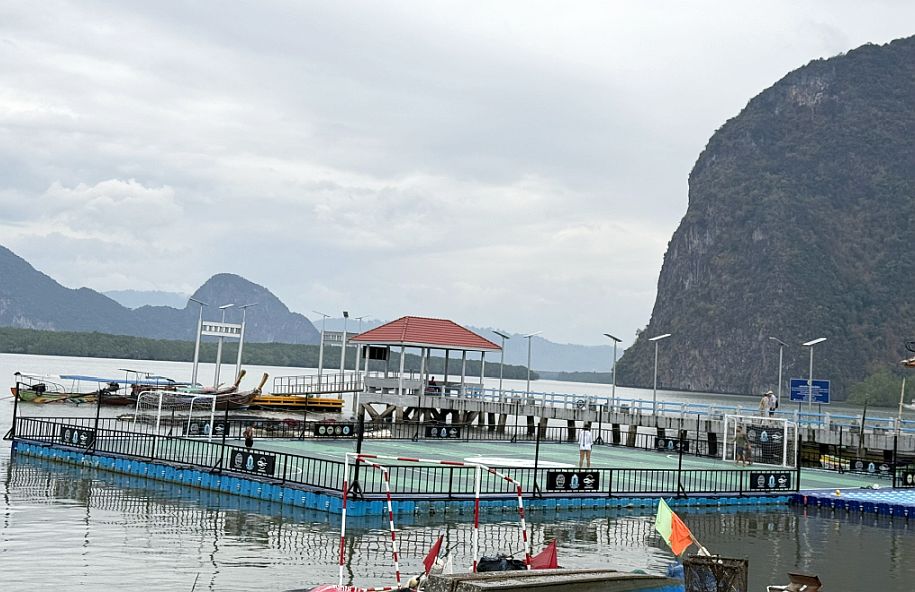
Built by local children decades ago using scraps of wood and rafts, it has since become a symbol of the village, today a proper pitch, but still floating, still surrounded by water.
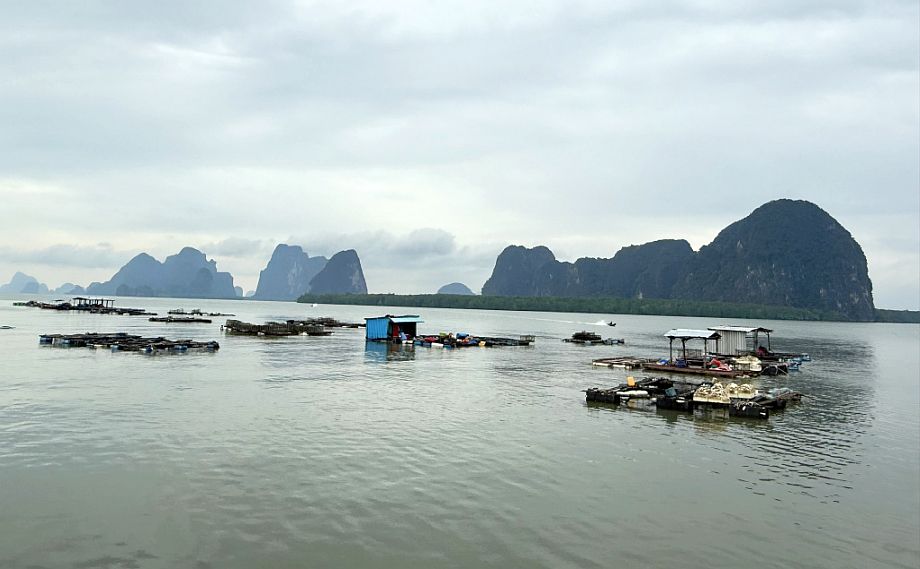
Standing on that wide platform near the floating football field in Ko Panyi, the view opens up in a completely different way compared to the enclosed limestone bays you saw earlier. Here, the horizon stretches wider, and the sea is dotted with those familiar karst mountains, rising abruptly from the water like scattered stone pillars, each one slightly different in shape and distance, creating that layered, almost dreamlike backdrop.
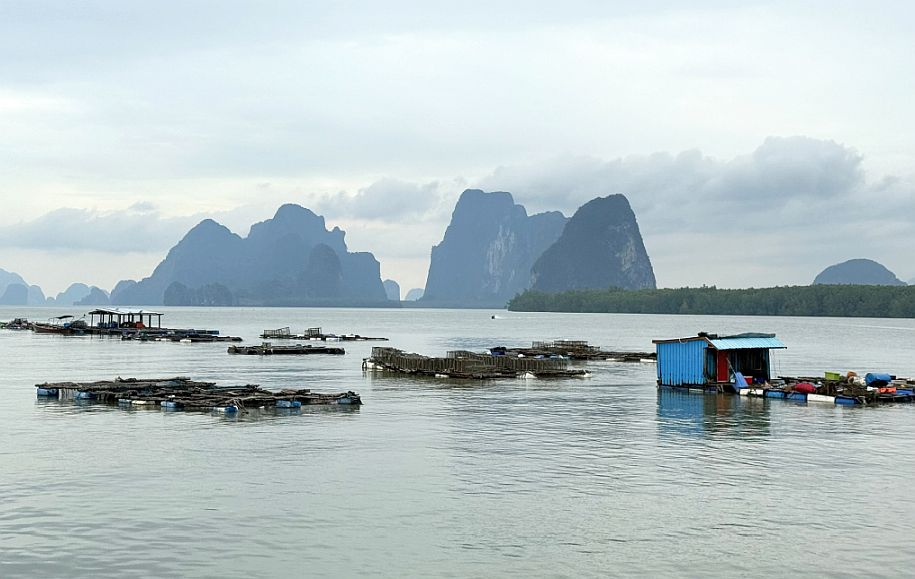
But what really draw my eyes are those square structures floating on the water. They are actually floating fish farms and aquaculture rafts, which are a big part of how the village sustains itself today. These platforms are typically built from wood or plastic barrels for buoyancy, forming square or rectangular grids on the water. That blue square “house” is likely a small caretaker hut or storage shelter, someone may stay there during the day (or even overnight) to monitor the fish, guard the stock, or manage feeding schedules.
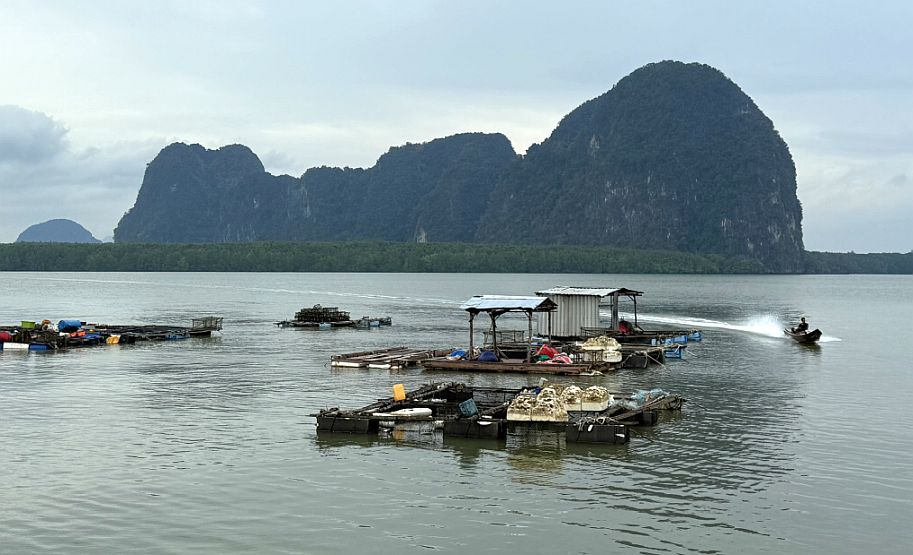
The ones with roofs but open sides are working areas, used for feeding fish, storing equipment, or giving shade to workers. The ones that look more like simple rafts with items on top are often fish pens below the surface, where species like grouper, snapper, or sea bass are raised. Nets hang down into the water beneath them, creating enclosed areas for farming. On the right you can see boat with a motor approaching the rafts ties it all together. These are the everyday working boats of the village used to move between platforms, deliver feed, check nets, and harvest fish. Watching one glide toward the rafts gives you a glimpse into the rhythm of life here: quiet, steady, and closely tied to the water.
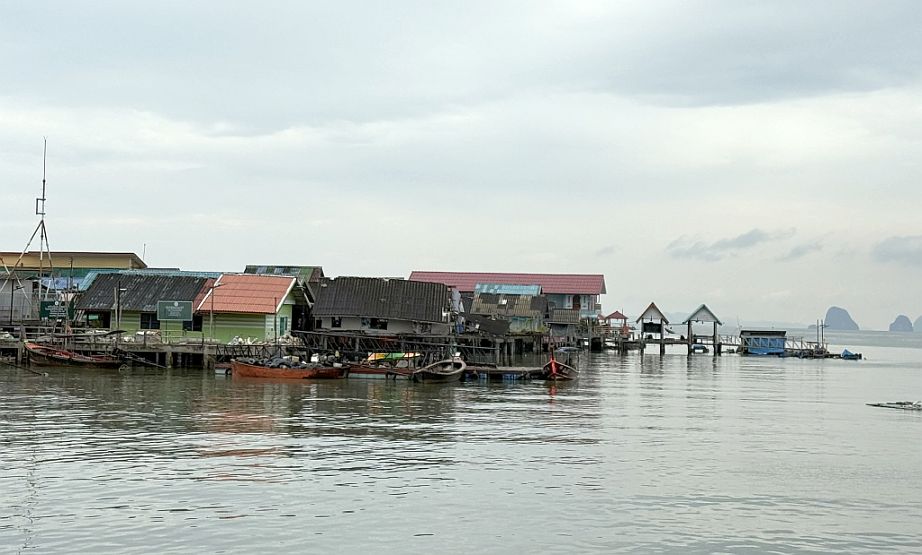
View of a small part of the village.
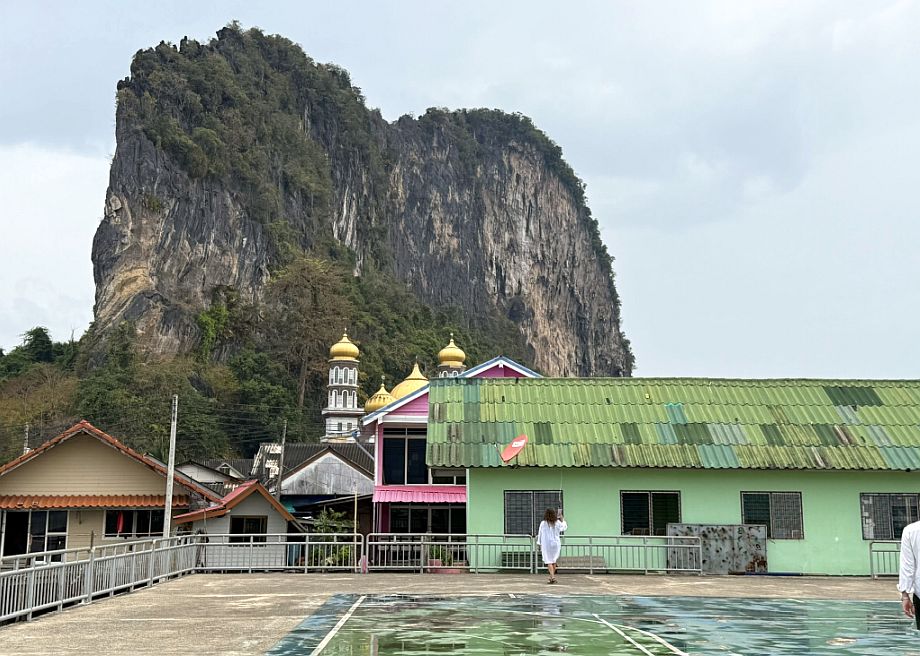
As we turned around on that wide platform, the scene shifts into something almost cinematic. Just above the clustered rooftops, we caught sight of the mosque with its golden roof gleaming softly in the light. It’s only a partial view, tucked behind the houses, but it feels central, quietly anchoring the village. Rising directly behind it is a towering karst mountain, sheer and imposing, its height almost overwhelming at this distance. The contrast is striking: a place of worship nestled beneath something ancient and monumental.
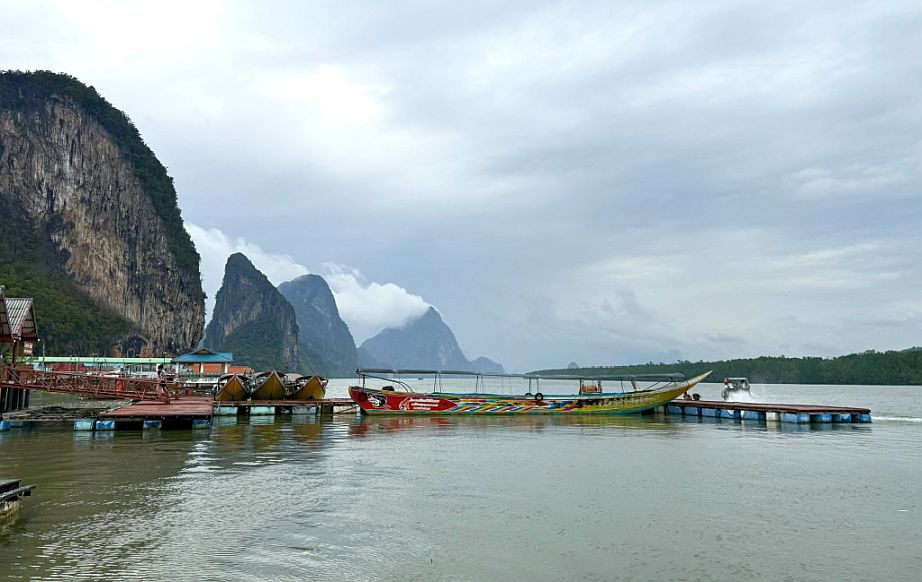
Turning back toward the open water, the landscape stretches wide again.
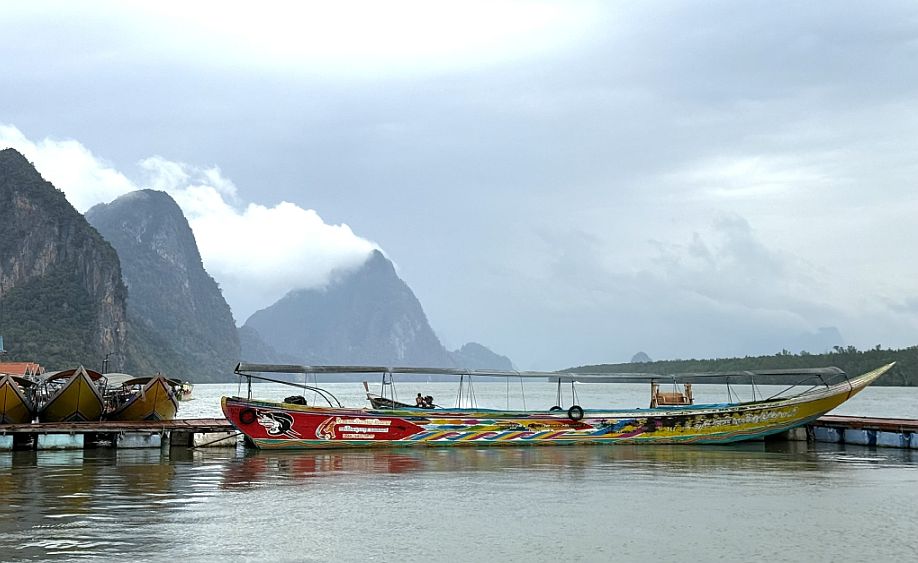
Massive limestone mountains stands across the bay, each one rising steeply from the sea. Some peaks are brushed with low clouds, the mist clinging to their summits and softening their edges, giving the whole scene a calm, almost ethereal quality.
A long, narrow wooden boat, painted in bright hues, reds, blues, yellows glides is docked next to the pier. It feels both functional and beautiful, perfectly suited to these waters.
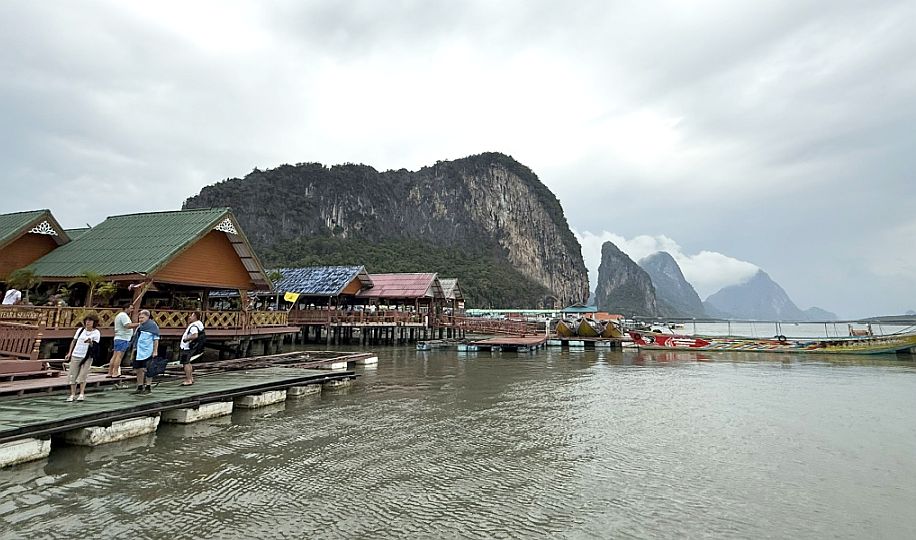
The village is surrounded by majestic karst mountains.
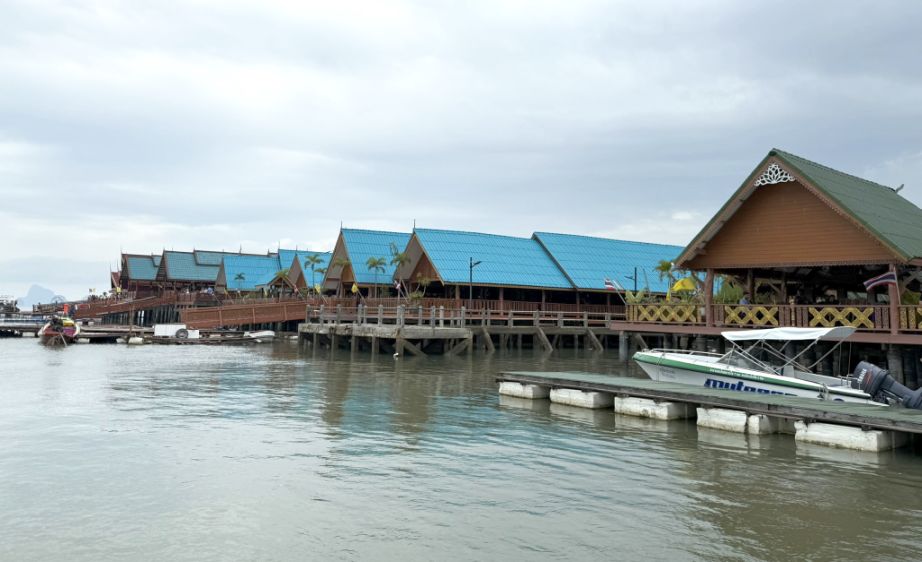
Off to the side, a row of houses with blue-aqua roofs lines the edge of the village, their colors vivid against the muted greens and grays of the mountains.
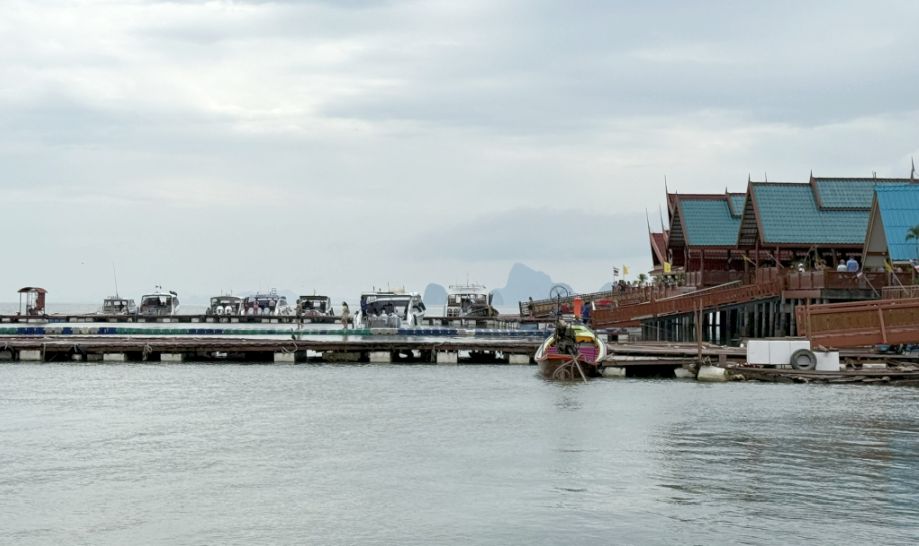
A narrow pier or wooden walkway stretches out toward them, connecting everything together, homes, water, and movement. It’s a simple structure, but it carries the rhythm of daily life: people walking, boats docking, the constant quiet flow between land and sea.
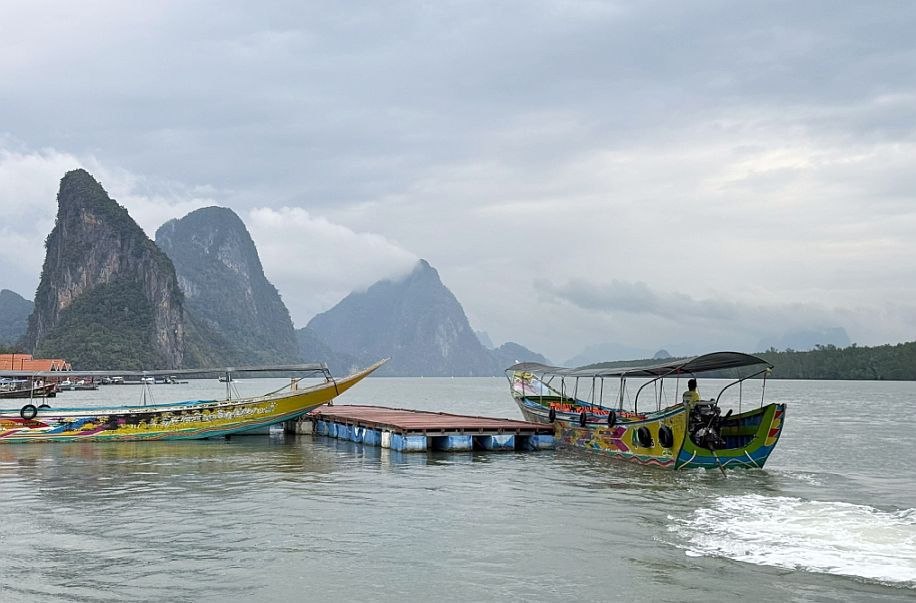
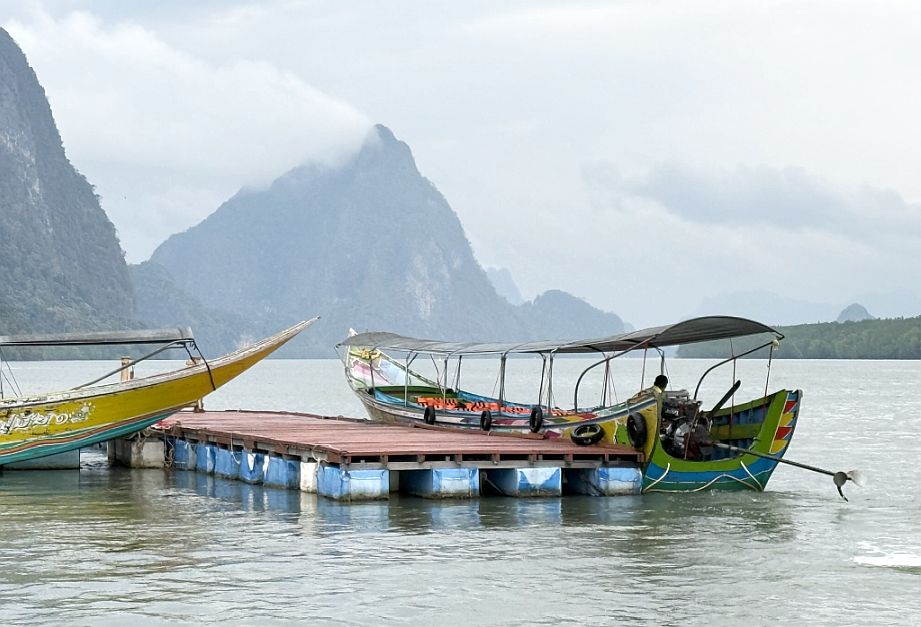
As I heard that low hum of the motor and watch the longtail boat ease itself carefully alongside the floating pier, it feels like a quiet closing moment for Ko Panyi. The boat, empty except for the driver, moves with practiced precision, nudging into place against the gently shifting platform.
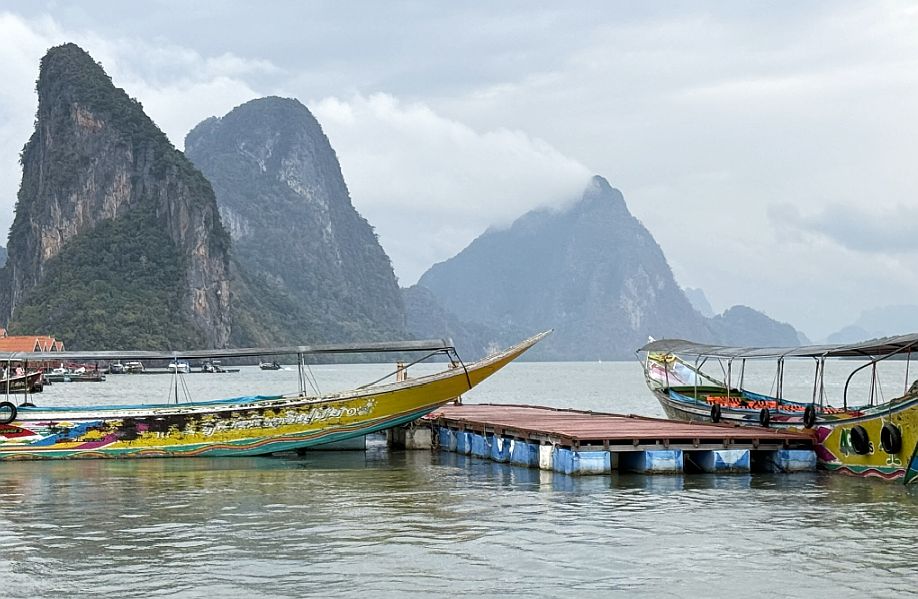
Behind it, those three towering karst mountains rise like a painted backdrop, perfectly still and impossibly tall, framing the everyday motion in front of you. It’s one of those simple scenes that somehow captures everything, the rhythm of life, the scale of nature, and the calm of the bay.
 |
 |
Then it’s time to leave.
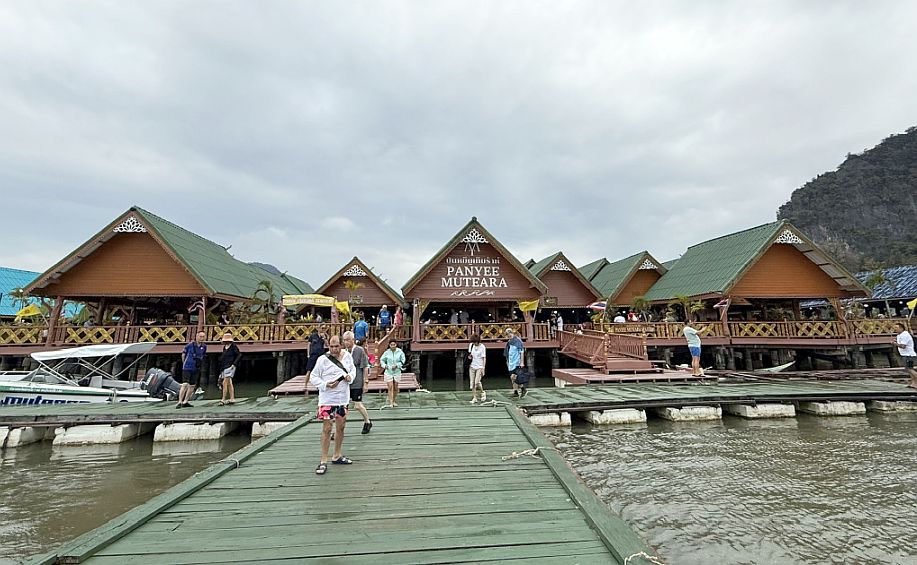
Walking back along the wooden green pier.
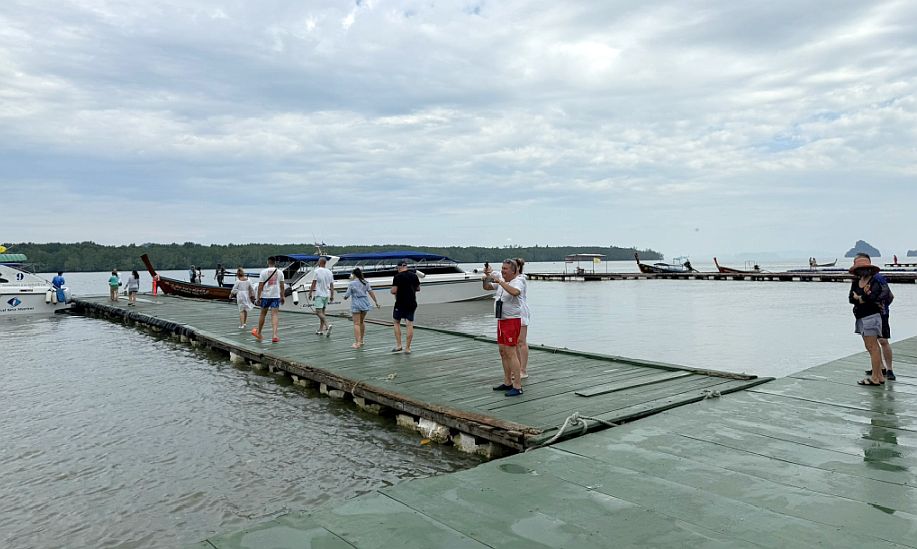
Walking to our boat.

5th Stop-Palm Beach
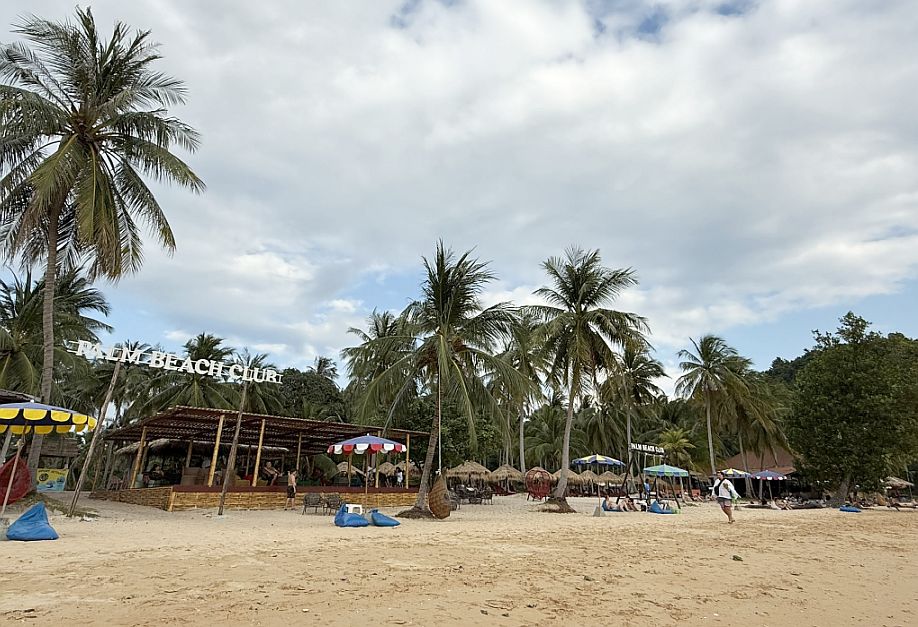
This last stop at Palm Beach feels like a completely different world compared to everything you experienced earlier in Ao Phang Nga National Park.
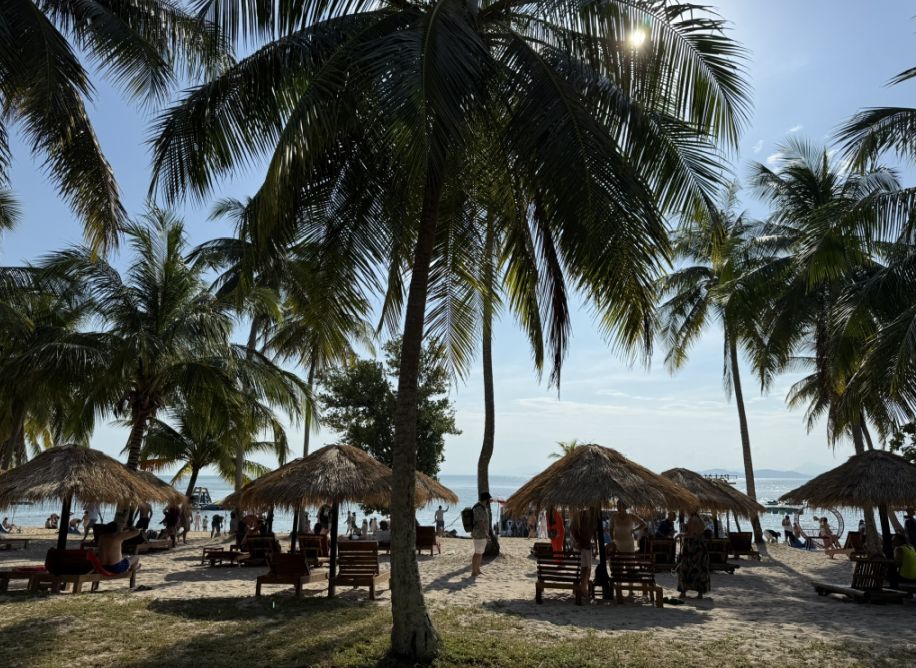
Set on a private stretch of sand, the space is designed to be both relaxing and inviting, almost like a hidden beach lounge tucked into the bay. Tall palm trees sway slightly overhead, completing that classic island scene. It’s the kind of place where time slows down without you really noticing.
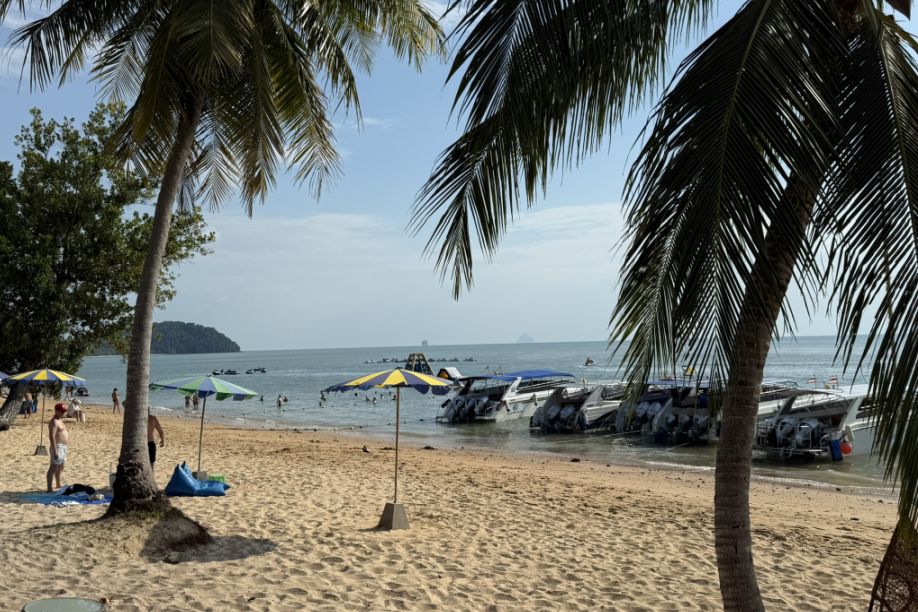
The shoreline is a narrow strip of soft sand, edged by gently swaying palm trees that provide shade and a tropical, laid-back atmosphere. The water here is calmer and more accessible, shallow near the shore, with a warm, inviting hue that shifts between green and blue depending on the light.
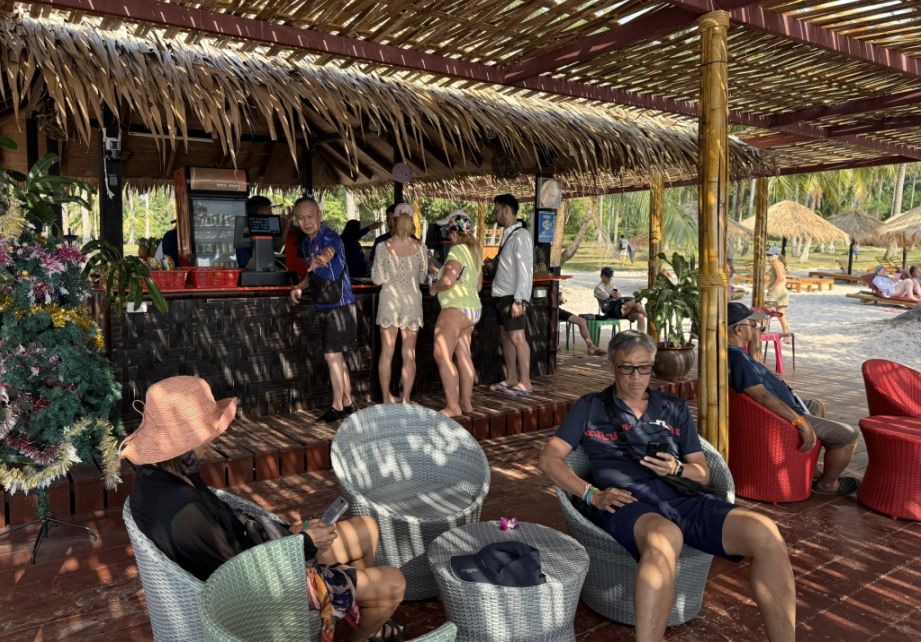
The bar area, with its bamboo roof and simple wooden furniture, blends naturally into the surroundings. Nothing feels overly polished or modern; instead, it leans into that tropical, laid-back aesthetic. Minh is at the bar getting us some refreshment.
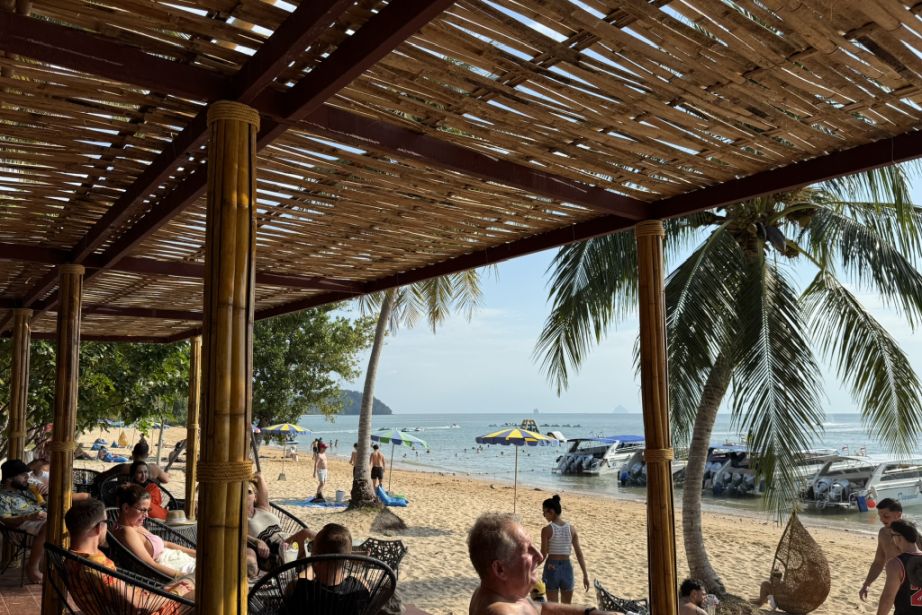
View of the beach from the bar. People sit under the shade, sipping cold drinks, unwinding after the boat rides and walking tours, there’s a gentle buzz of conversation, but it never feels crowded or rushed.
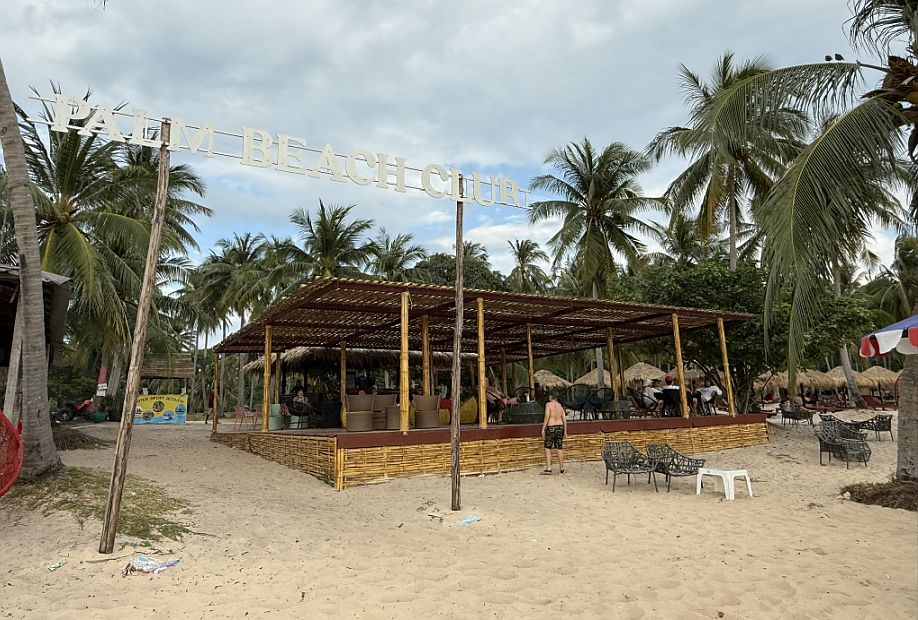
Knowing it’s part of a small private beach entertainment setup explains the thoughtful layout, it’s built for comfort, giving visitors a place to pause, cool off, and take everything in before heading back.
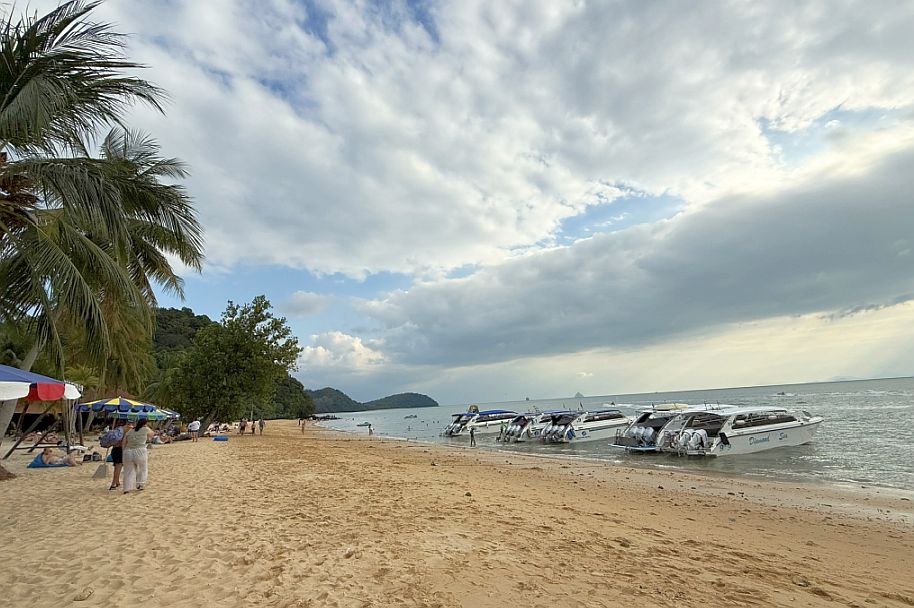
Our time is over and it is time to go back to our boat.
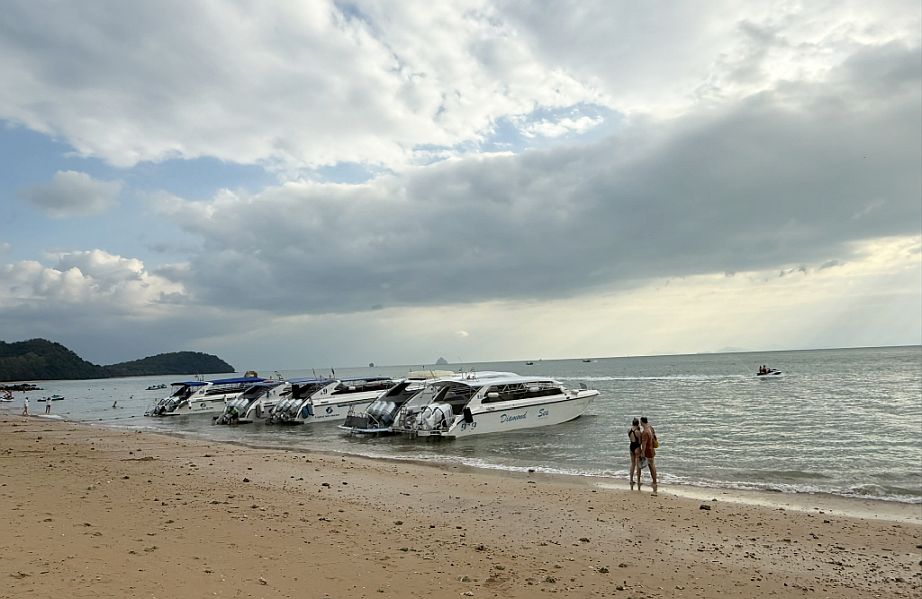
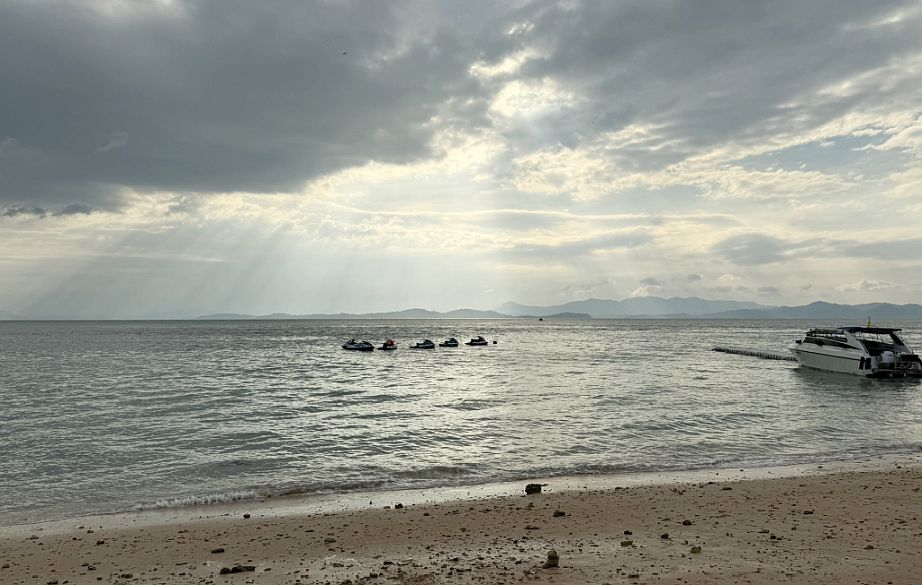
The mood shifted again, this time in the sky. The clouds had rolled in, softening the light, but instead of dulling the view, they made it more dramatic.
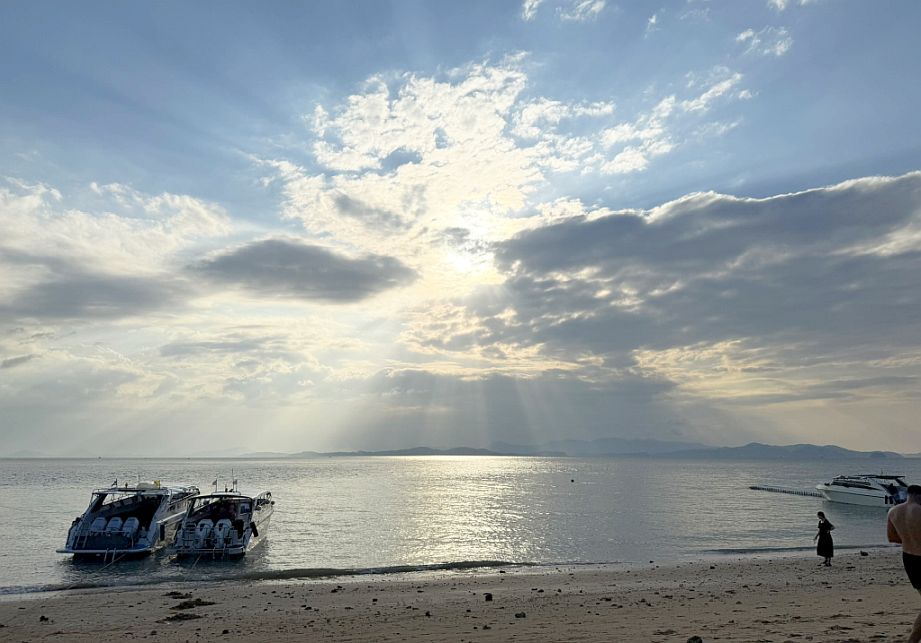
Rays of sunlight broke through the gaps, streaming down in visible beams and touching the water in scattered patches of brightness.
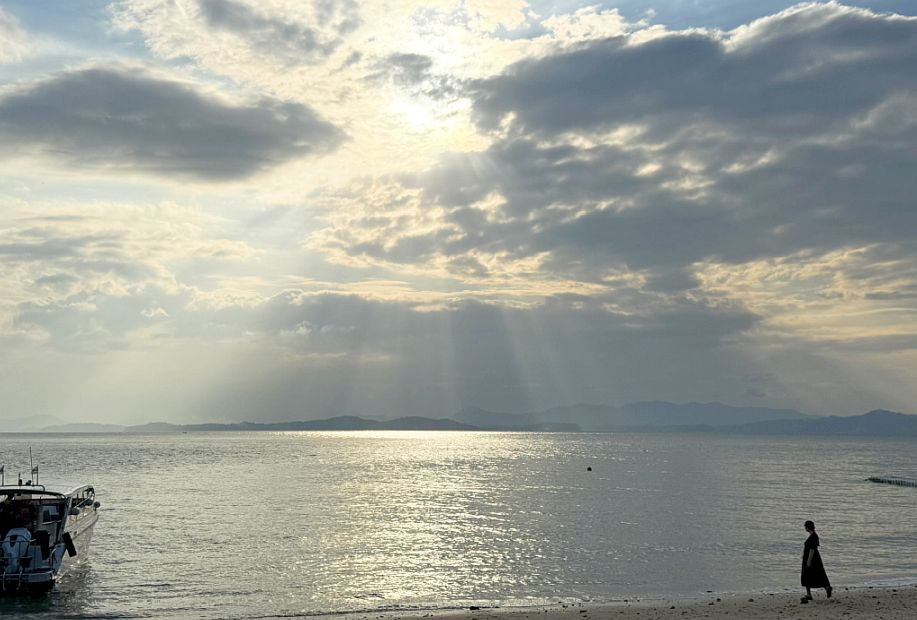
Against the muted tones of the cloudy sky and the calm sea, those rays stood out, almost spotlighting different parts of the bay.
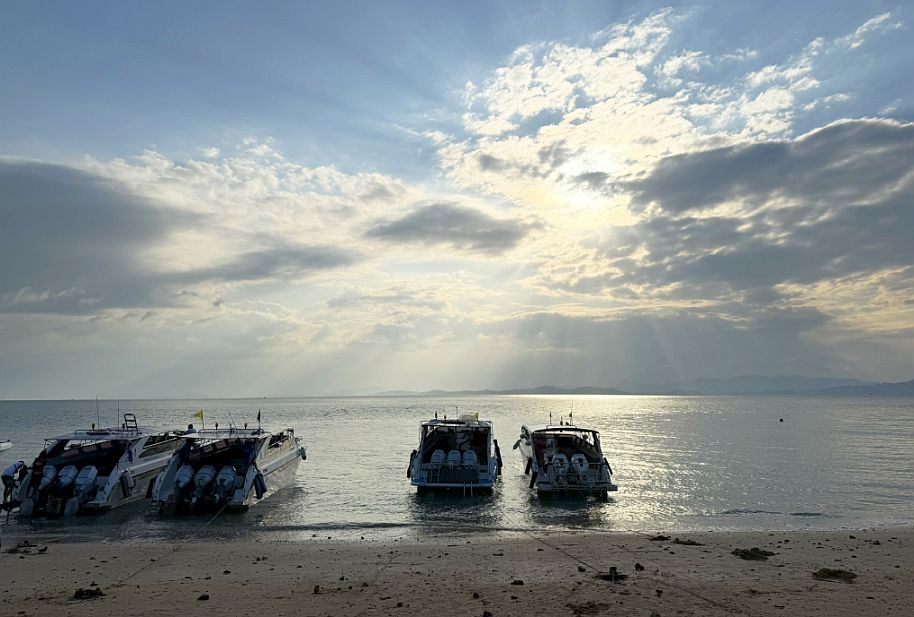
This our final goodbye before reaching our boat.
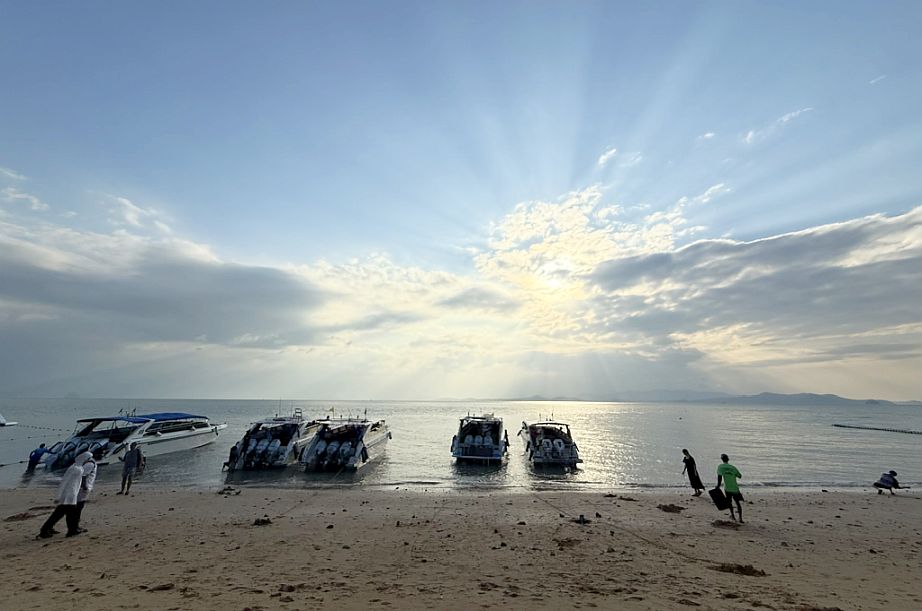
It’s one of those fleeting moments that feels quietly special, not the bold, iconic views like James Bond Island, but something softer and more atmospheric. A calm, beautiful ending to a day filled with dramatic landscapes, shifting perspectives, and glimpses of life on the water.
 |
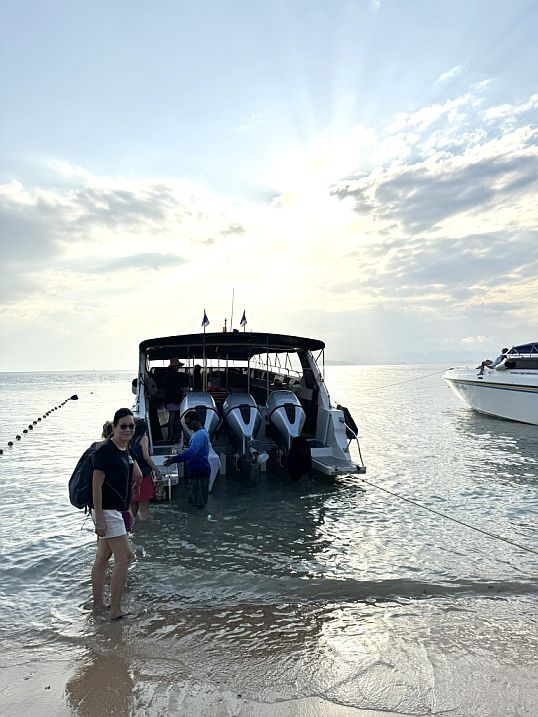 |
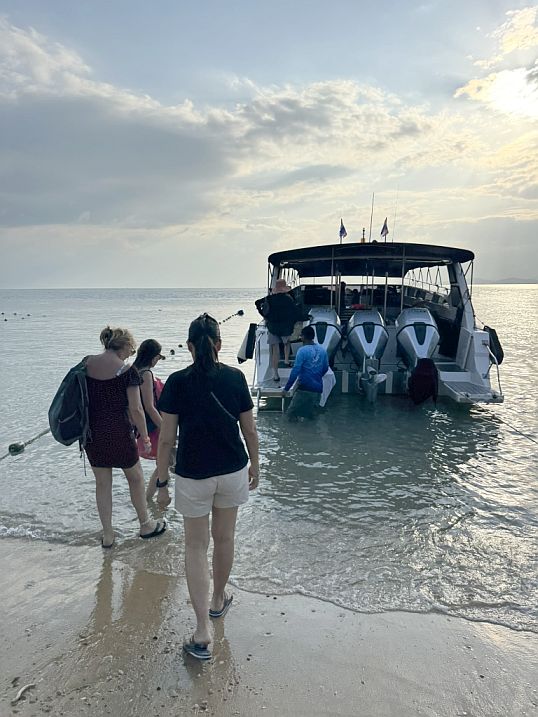
Boarding our boat!
We had an excellent day exploring the stunning landscapes of Ao Phang Nga National Park, from the dramatic karst formations of Khao Phing Kan and the iconic James Bond Island, to the unique floating life of Ko Panyi. Each stop offered something different, towering cliffs, hidden beaches, cultural encounters, and everyday life on the water, before ending with a relaxing break at a peaceful palm-lined beach. It was a perfect blend of natural beauty, local charm, and quiet moments, making the entire boat outing both memorable and deeply enjoyable.
NEXT... Day 12- Speedboat tour