12 days in Thailand 1/7- 1/18/2025
Day 6-Wat Chedi Luang, Chiang Mai-1/12/2025
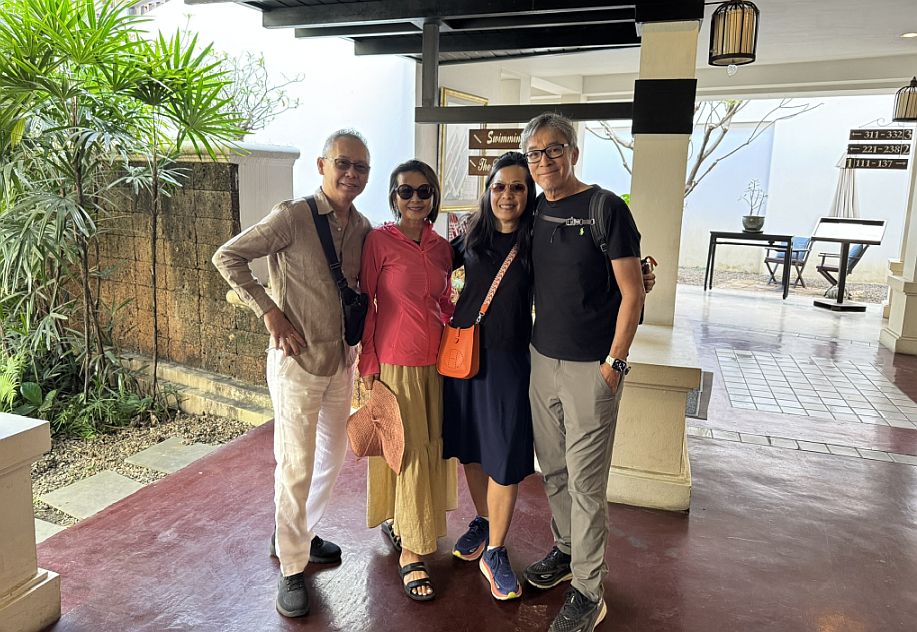
Minh and Loan flew from Saigon to joined us for more adventure in Thailand. We began the day at Wat Chedi Luang, one of the city’s most historically significant temples.
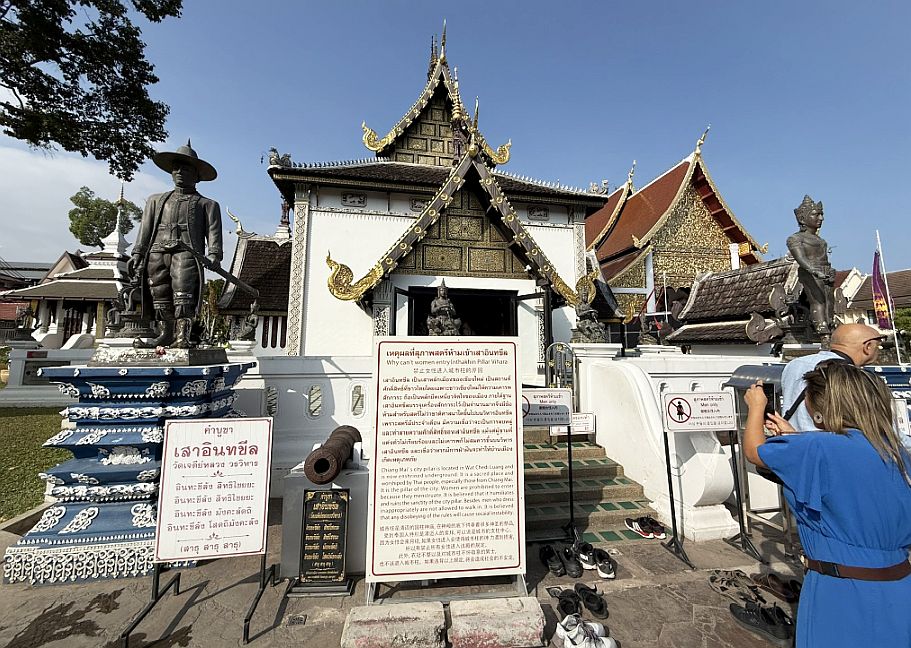
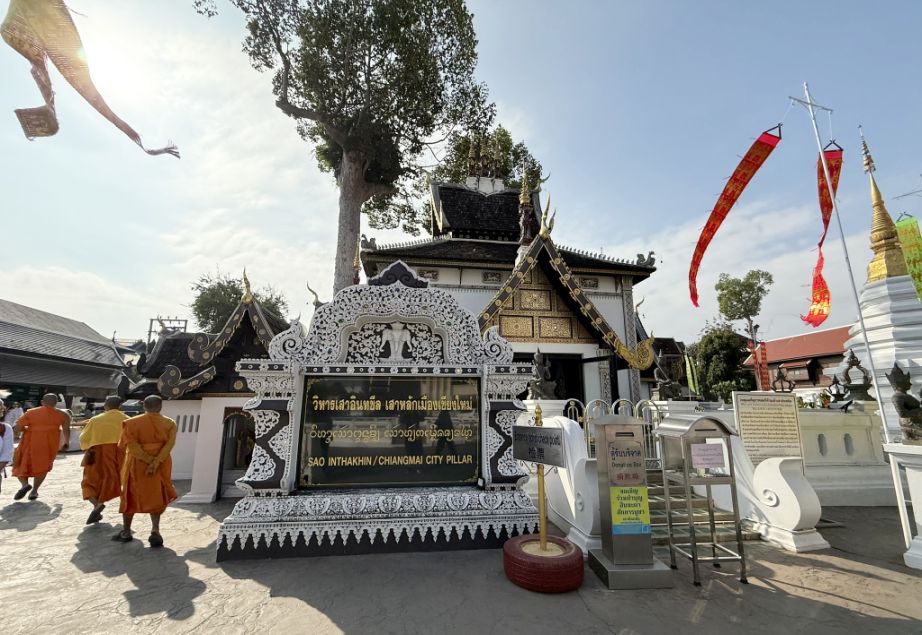
Just before entering Wat Chedi Luang, we passed by Sao Inthakin (Chiang Mai City Pillar), a sacred site believed to house the protective spirit of the city.
 |
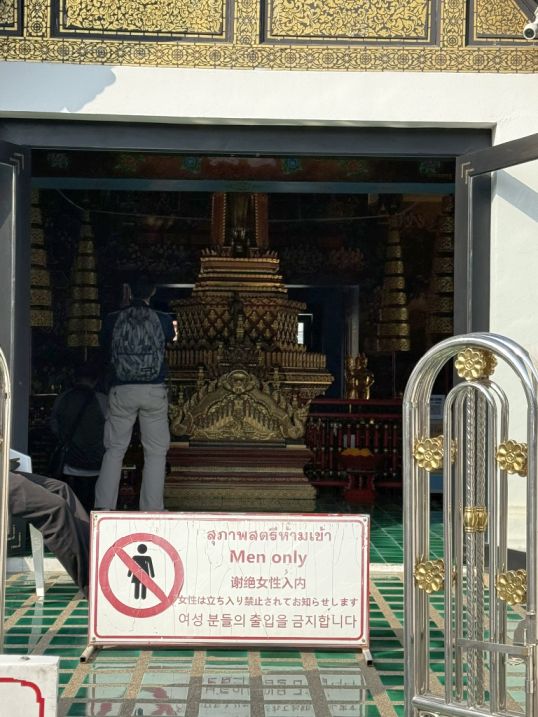 |
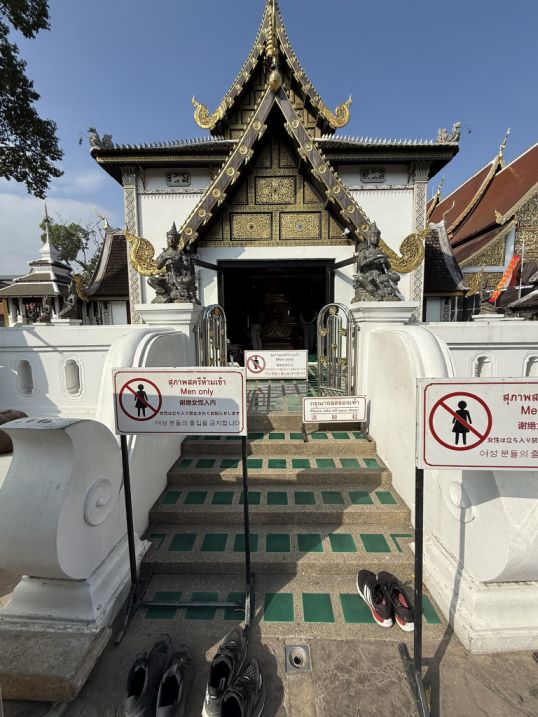
The small shrine restricts entry to men only as part of long-standing Lanna customs tied to spiritual purity and ritual practice.
 |
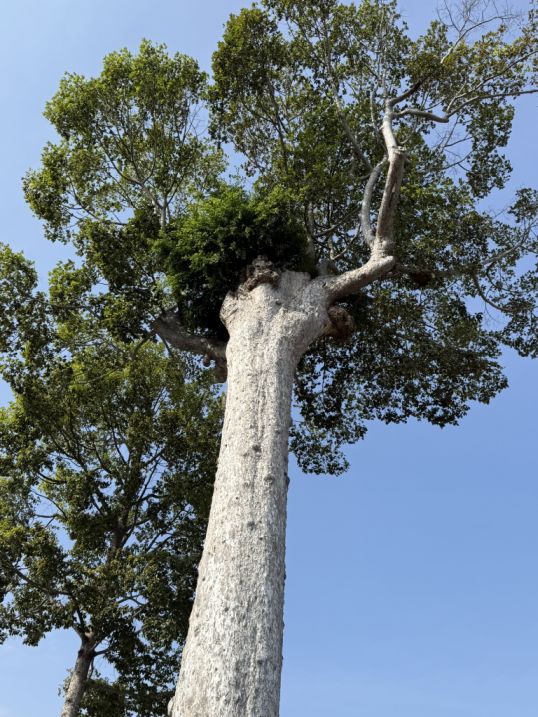 |
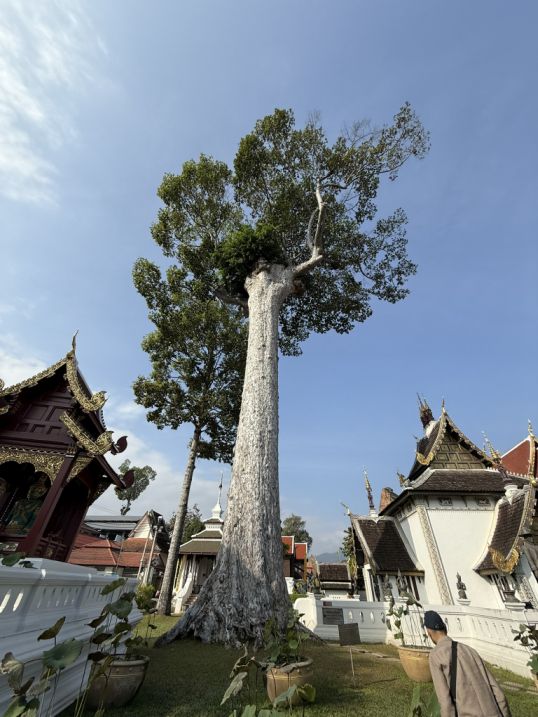
Nearby stood a marked Ton Yang Na tree, a towering native species valued both ecologically and culturally, these trees can live for centuries and are often preserved as symbols of natural heritage and local identity.
This tree was planted by King Kawa, King of Chiang Mai.
We are now entering Wat Chedi Luang. The current temple grounds originally consisted of three temples, Wat Chedi Luang, Wat Ho Tham, and Wat Sukmi. The temple's construction started in the 14th century under King Saen Muang Ma, who planned to bury his father's ashes there and due to prolonged issues, the Wat was finally completed in the 15th century under the reign of King Tilokaraj.
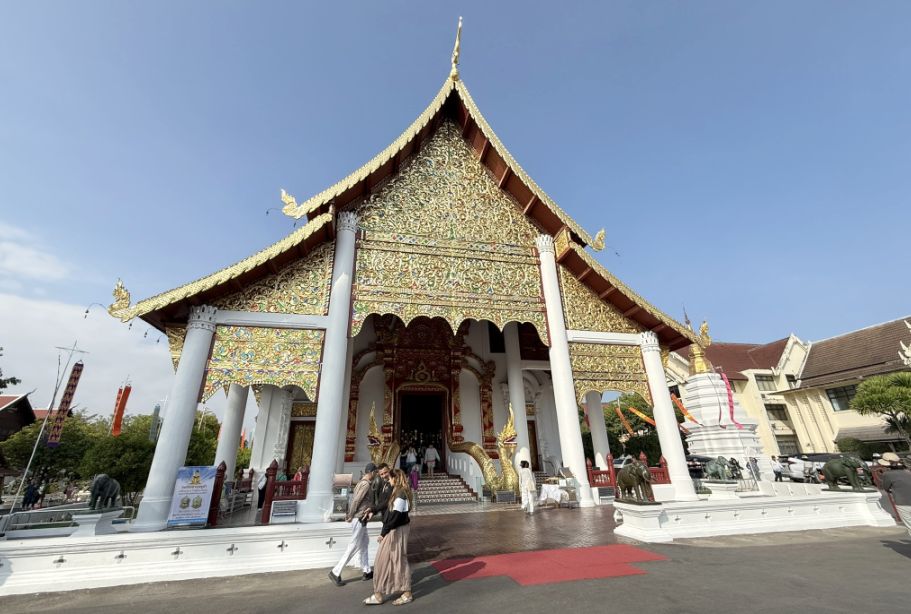
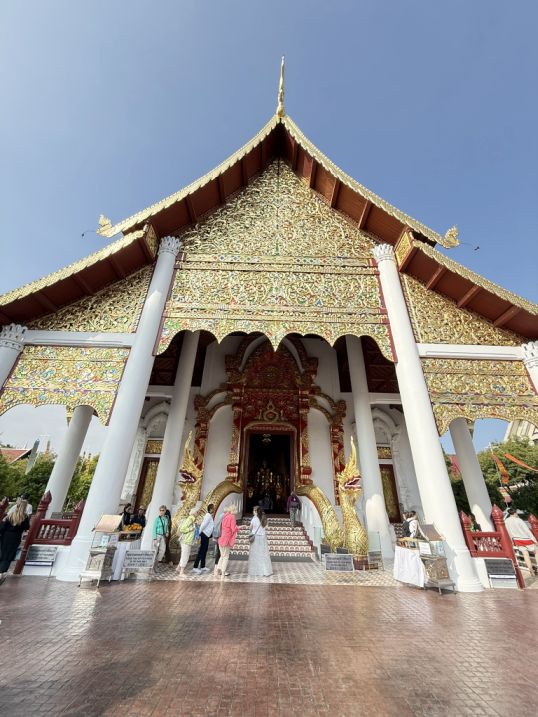
By the 15th century, it had become one of the most important religious sites in northern Thailand, even housing the sacred Emerald Buddha for a time before it was relocated to Bangkok. The layered roof above, typical of Lanna architecture, sweeps downward in elegant tiers, with dark wooden eaves contrasting against the brilliant gold detailing.
 |
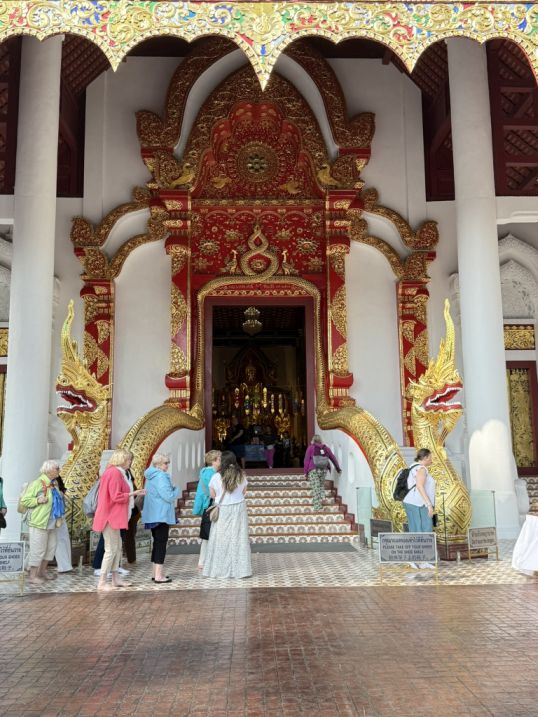 |
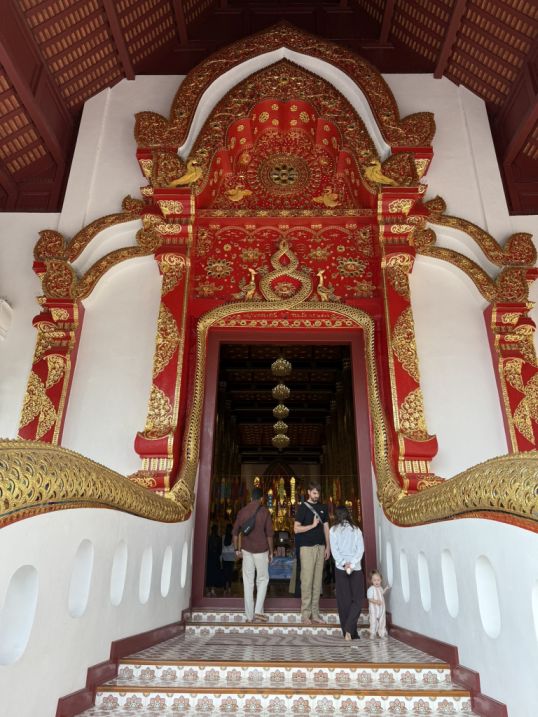
The façade of the main hall (viharn) is striking and richly symbolic. The exterior gleams with gold ornamentation that catches the sunlight, creating an almost luminous effect.
 |
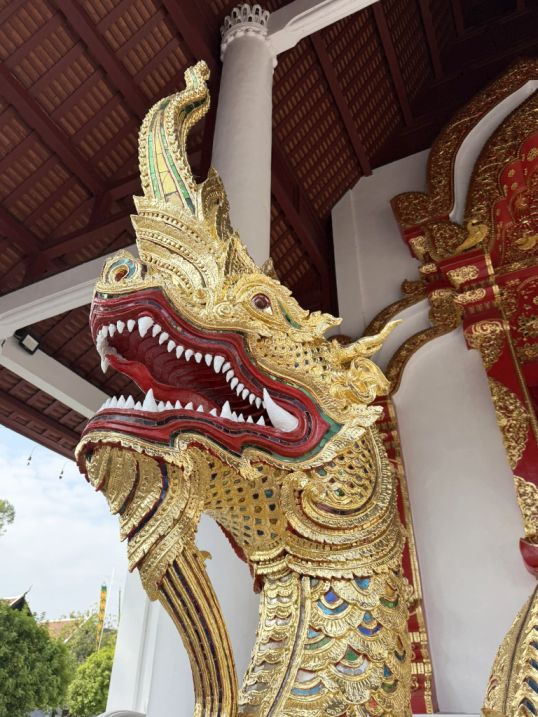 |
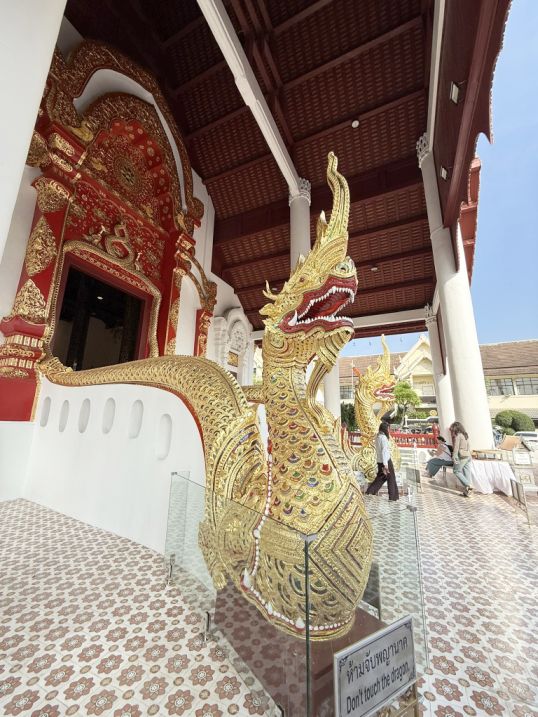
At the entrance, two elaborately crafted naga (serpent) balustrades rise along the stairway, their bodies undulating upward with intricate scales and mirrored glass inlays, guiding the eye toward the doorway.
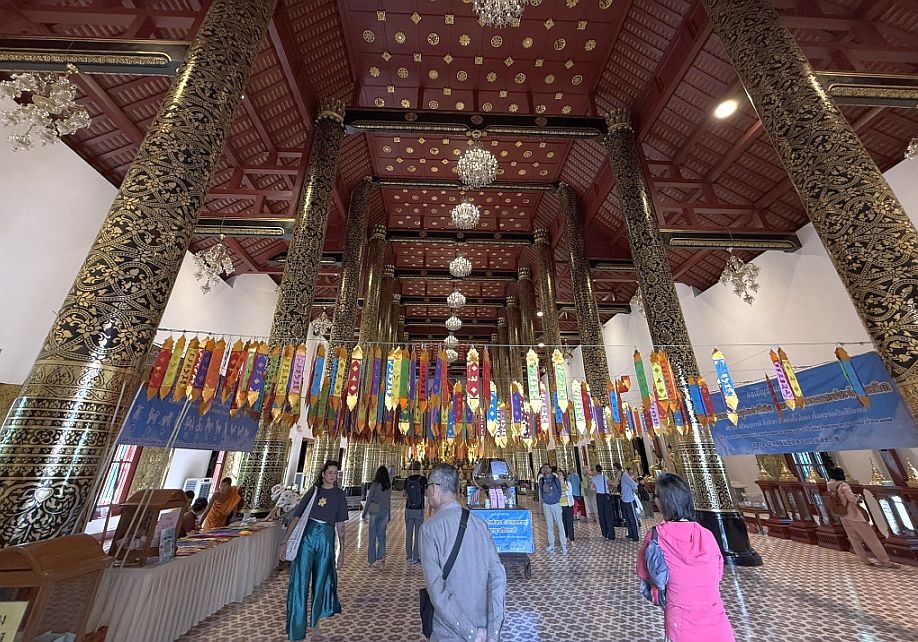
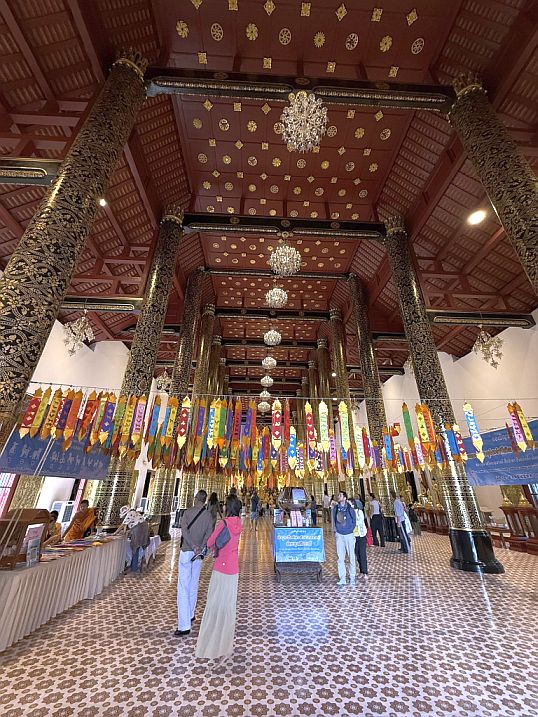
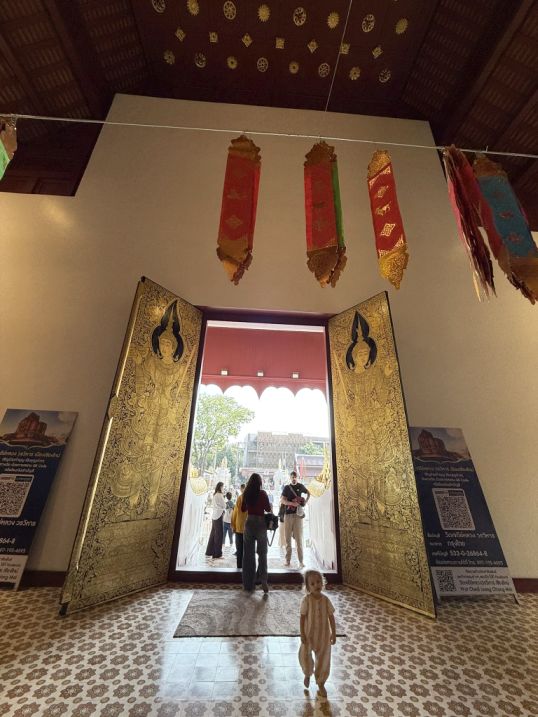
Inside, the main hall feels grand and was designed to inspire reverence. Tall wooden columns line the hall, many adorned with gold leaf and decorative motifs, drawing the eye upward to the high ceiling.
 |
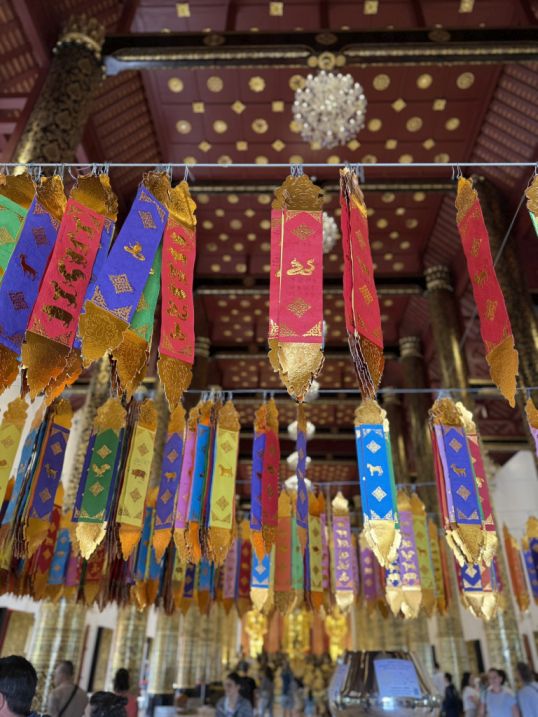 |
Above, rows of colorful hanging flags add movement and vibrancy to the interior, creating a layered visual contrast against the rich gold and deep red tones of the temple, and giving the entire space a sense of both reverence and quiet grandeur.

Inside the main hall, the tall standing golden Buddha immediately draws your attention, rising gracefully at the far end of the Hall. The statue’s surface is richly covered in gold, which reflects the ambient light of the hall, giving it a soft, radiant glow rather than a harsh shine. The proportions are elegant and distinctly Lanna in style, slender, slightly elongated, with a serene facial expression marked by downcast eyes and a faint, compassionate smile. This creates a sense of quiet presence, as if the figure is both watching over the space and inviting contemplation.
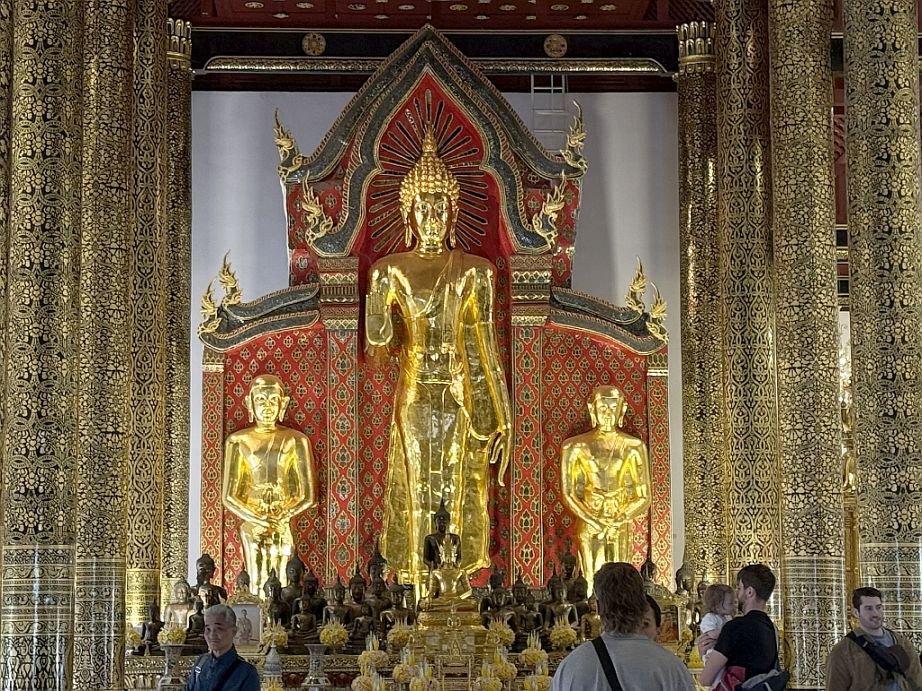
Unlike the more common seated Buddha images, this standing figure feels especially dynamic and welcoming. The Buddha is depicted upright with a calm, elongated posture, one hand often raised in a gesture of reassurance and protection (the abhaya mudra), symbolizing fearlessness and peace, while the other hand rests gently at his side. Behind the Buddha, an ornate backdrop frames the statue like a halo, often decorated with intricate patterns, red and gold motifs, and sometimes mirrored glass that catches and scatters light. This framing enhances the sense of depth and importance, making the figure appear even taller and more luminous. On either side, guardian figures stand in still vigilance, reinforcing the sacredness of the space.
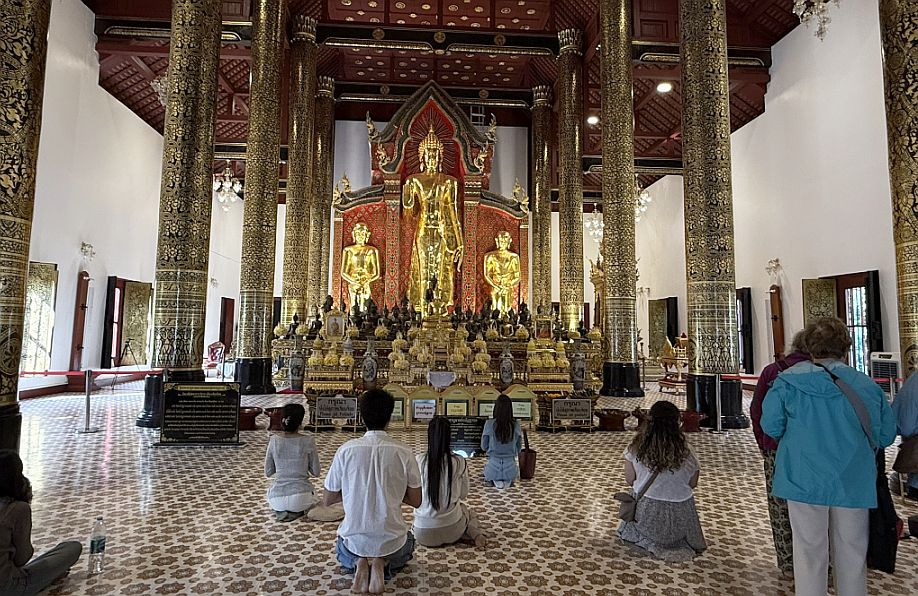
What makes this standing Buddha especially striking is how it contrasts with the rest of the hall, the dark wooden beams, the rows of columns, and the colorful hanging flags above. While the surroundings are richly detailed, the Buddha itself feels calm and centered, almost anchoring the entire space. It gives the hall a focal point not just visually, but spiritually, a quiet, steady presence amid the ornate beauty of the temple.
 |
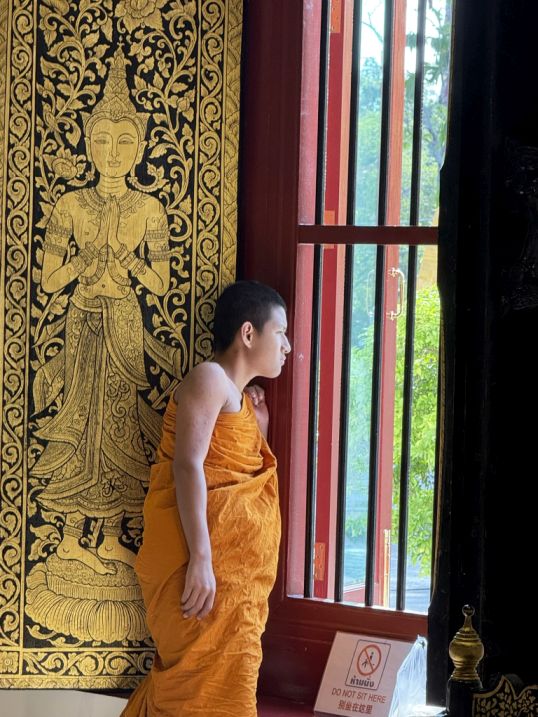 |
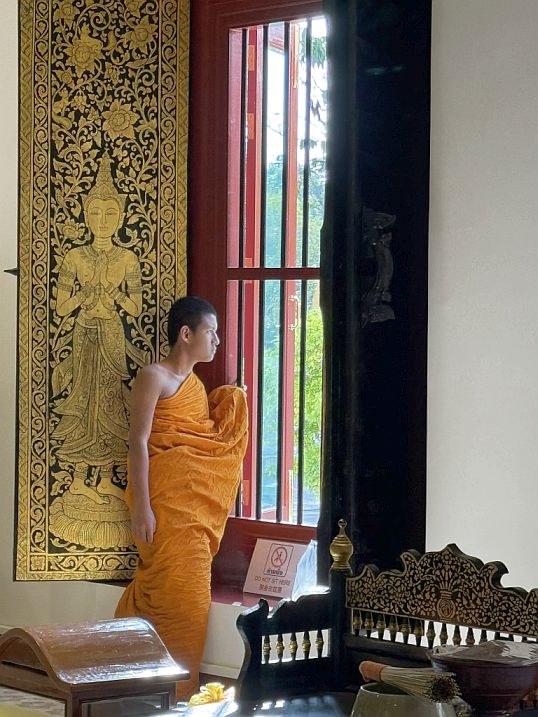
A young monk looking out at the window.
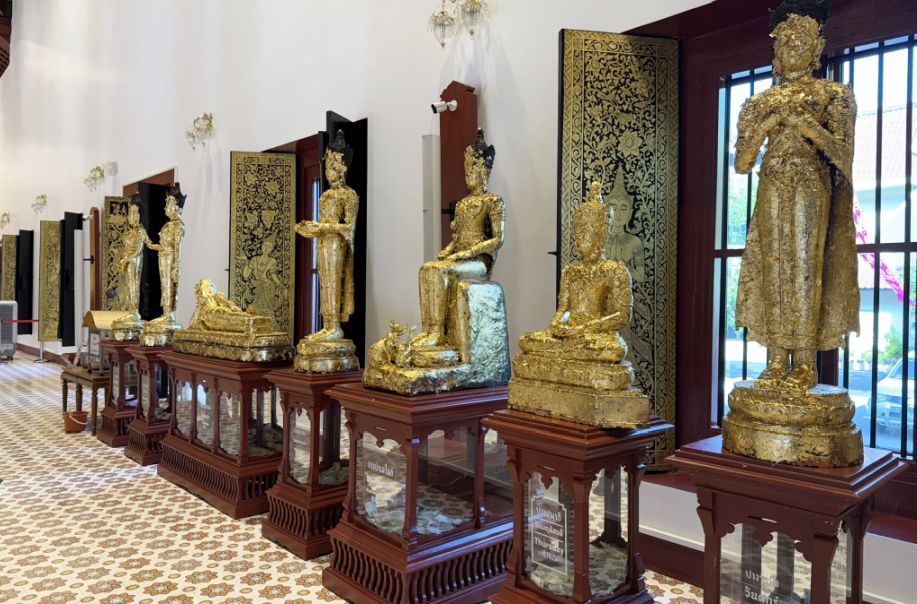
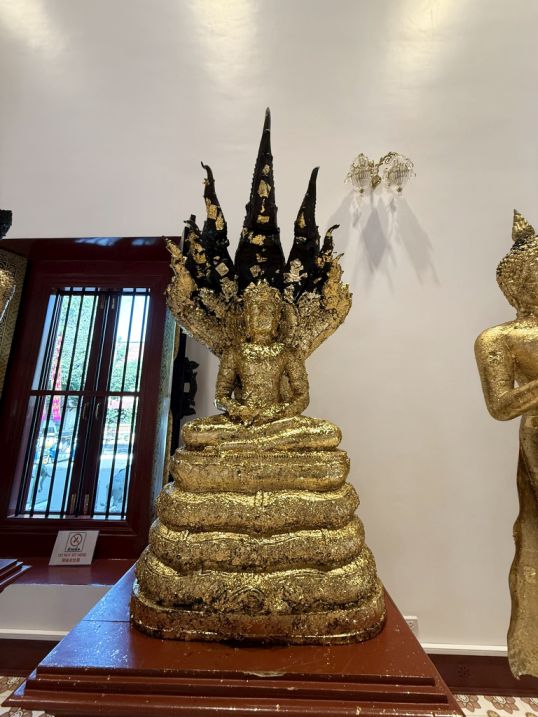
As we walked along the corridor, a row of golden Buddha statues creates a quiet, almost meditative rhythm. Each figure is unique, some tall and slender, others smaller and more rounded; some seated in the classic meditation pose, others standing or displaying different hand gestures (mudras), each carrying its own symbolic meaning such as teaching, protection, or enlightenment. Despite their differences in size and style, the uniform gold finish ties them together, catching the light and giving the entire corridor a warm, continuous glow.
 |
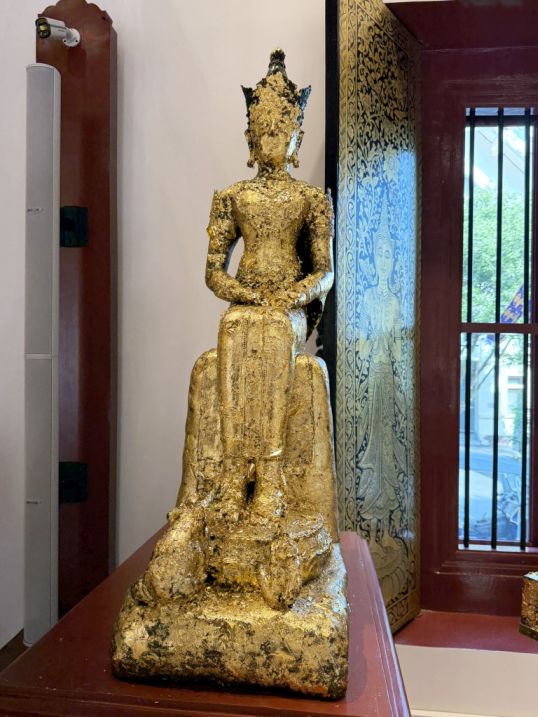 |
These statues often represent different periods, artistic influences, or donations from devotees over time, which is why no two are exactly alike. Some may reflect the elegant, elongated features of Lanna style, while others show influences from other regions of Thailand. As we passed by them, there’s a sense of quiet devotion, like a gallery of faith where each image holds its own story, yet together they form a collective expression of reverence.
 |
 |
We are now leaving the main hall.
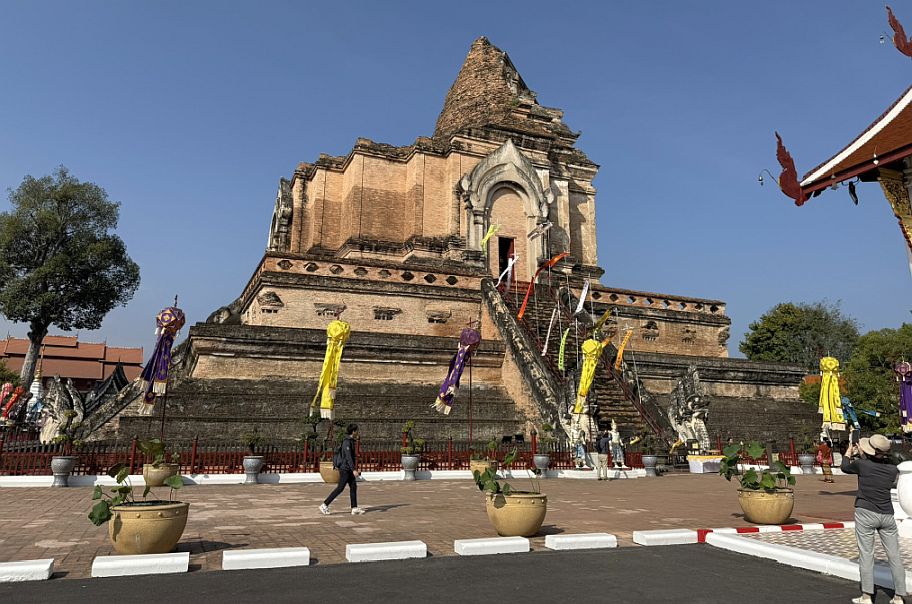
The temple’s most striking feature is its massive, partially ruined chedi, damaged by an earthquake in the 16th century but still imposing and atmospheric. The temple’s massive chedi, once the tallest structure in the ancient city, was partially destroyed by an earthquake in 1545, leaving the dramatic, ruined form we see today. Despite this, the site remains deeply revered. While Wat Chedi Luang itself is not individually designated as a UNESCO World Heritage Site, it is part of the historic fabric of Chiang Mai, which has been considered for UNESCO recognition due to its concentration of important Lanna-era temples and cultural landmarks.
 |
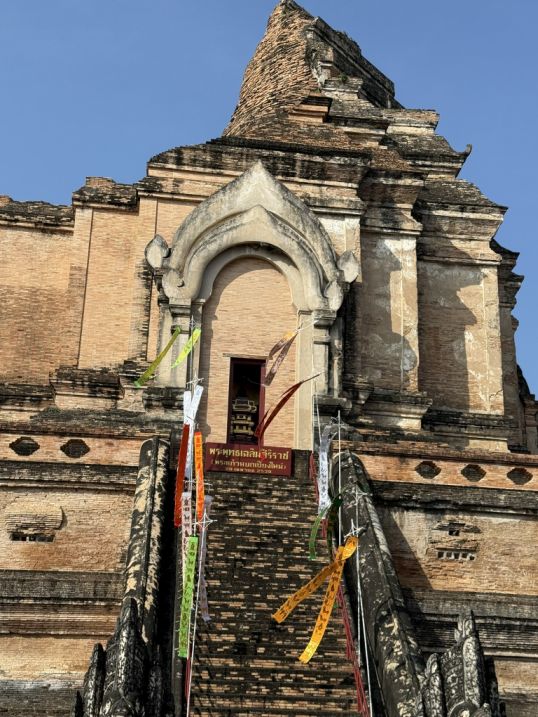 |
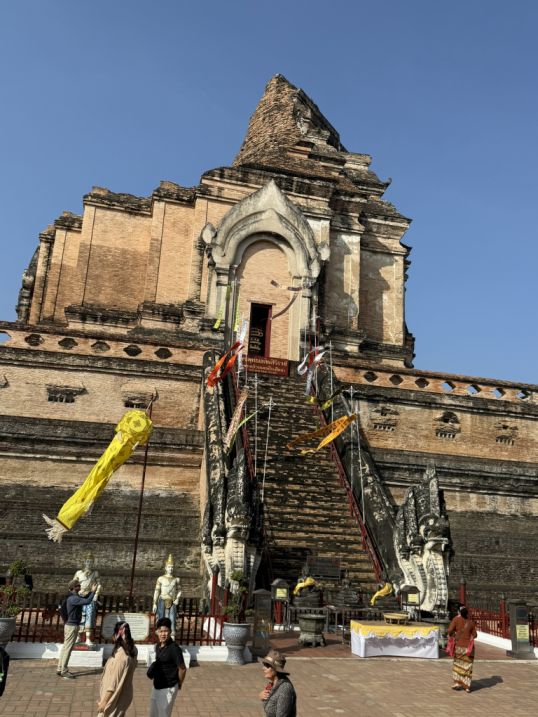
Each side of the structure, each façade revealing different architectural details and stages of decay and restoration.
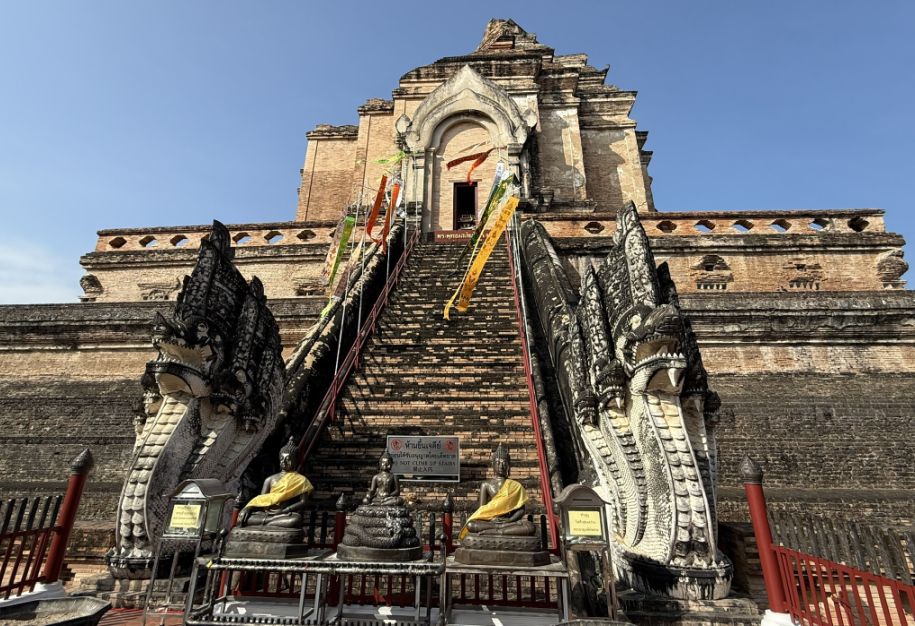
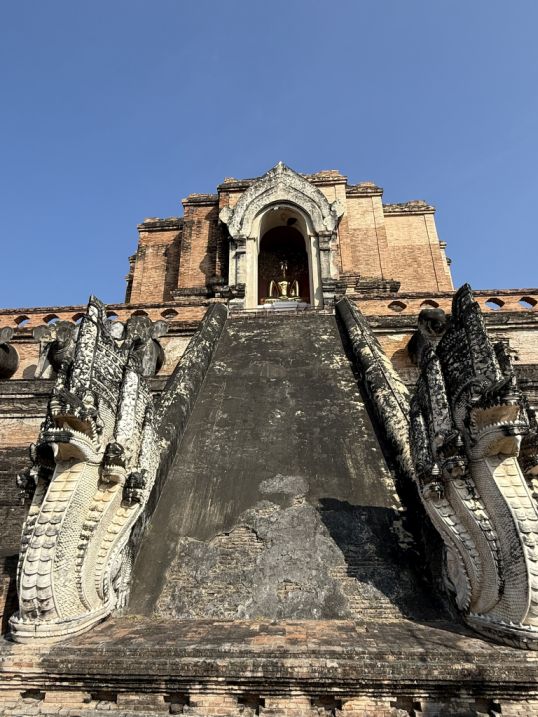
The first face we encountered is perhaps the most dramatic and ceremonial. A grand staircase rises toward the upper terrace, now closed off but still conveys a strong sense of ascent toward the sacred. Flanking the staircase are two enormous naga serpents, with their bodies stretching along the sides, their heads rearing up at the base. These nagas act as guardians, symbolically protecting the path to the higher, more sacred levels of the chedi. Even in their weathered state, their scale and presence feel powerful, emphasizing how monumental the structure must have been at its peak.
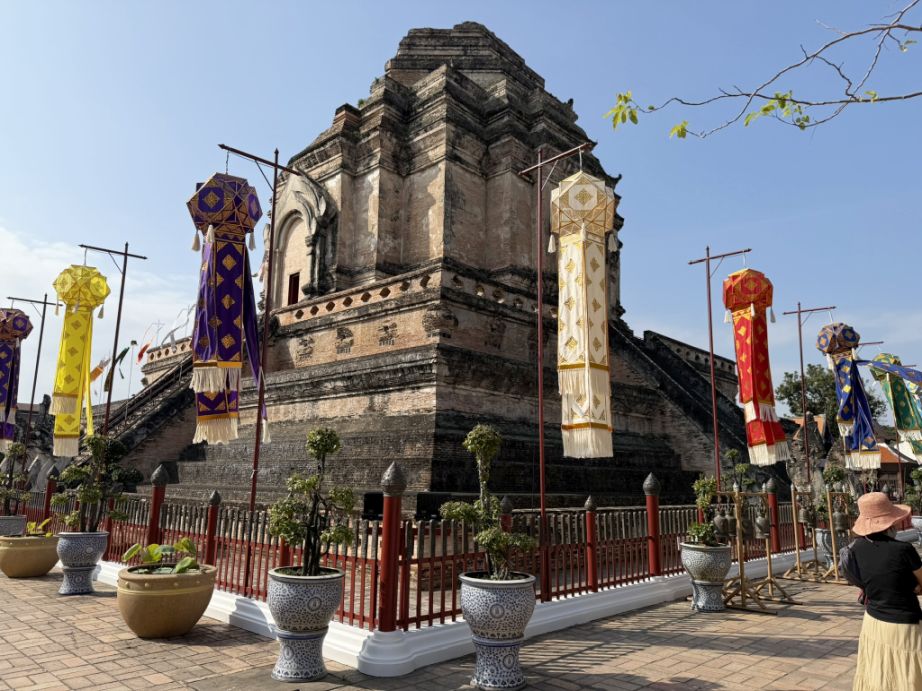
As we continued around, another side reveals a more ruined and raw character.
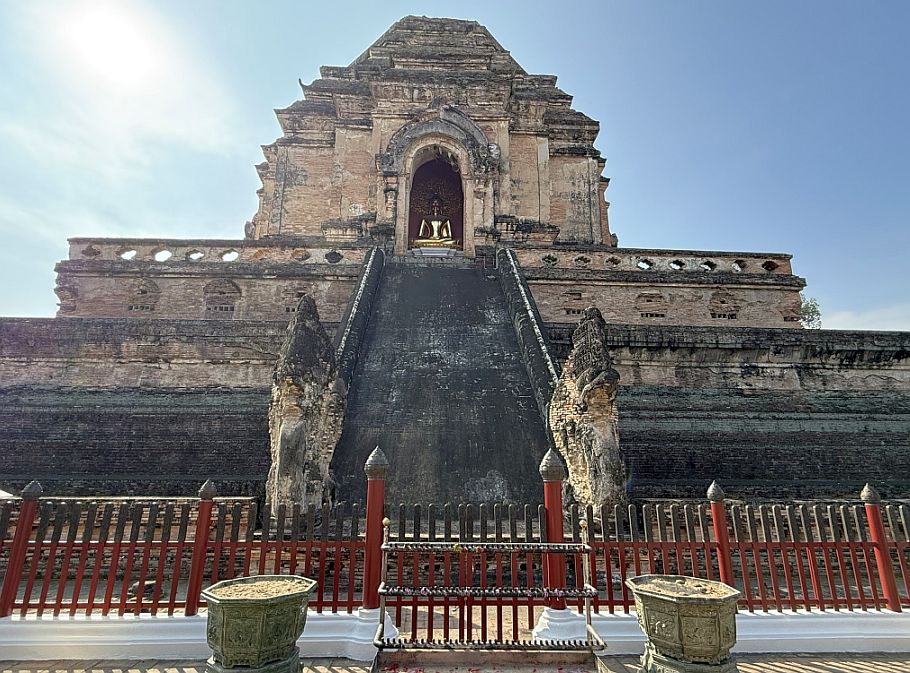
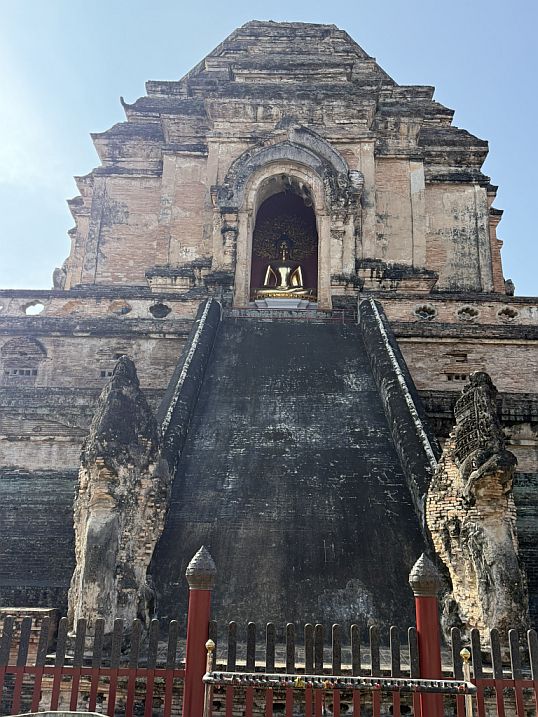
Here, what appear to be large naga forms or guardian figures are heavily eroded, almost blending into the brickwork.
 |
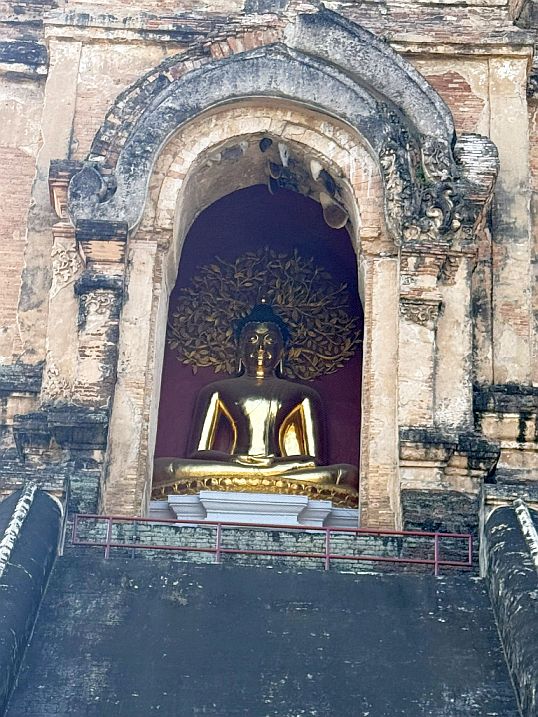 |
Instead of a defined staircase, there is a steep, worn incline leading upward, giving a sense of how time and nature have softened the once precise geometry of the structure. Set into the chedi is a niche containing a golden Buddha, luminous against the aged brick. this contrast between ruin and renewal is especially striking, as the restored Buddha figure brings life back into the ancient structure.
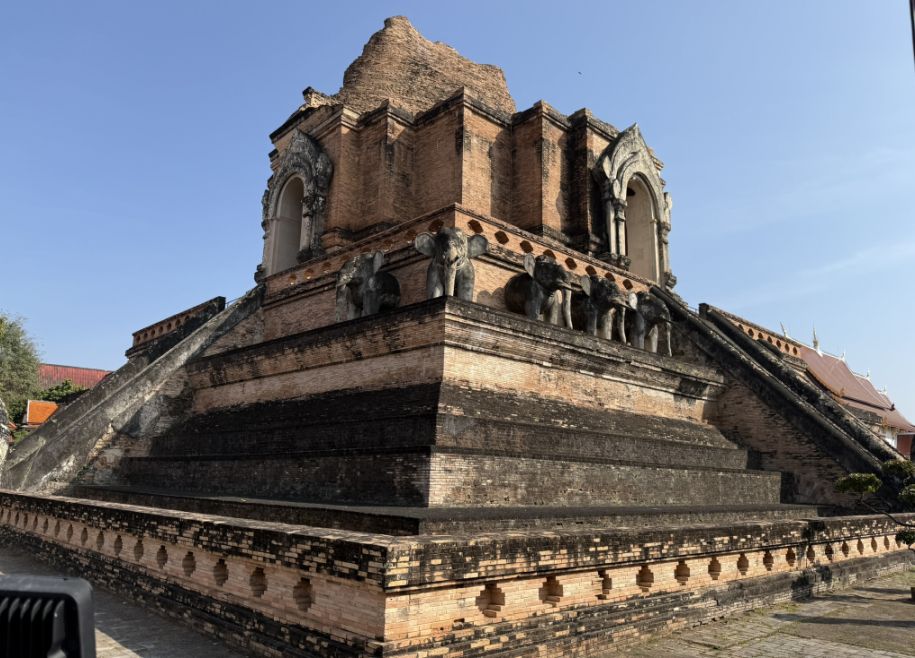
Turning the corner, we come upon one of the most iconic elements: rows of sculpted elephants emerging from the base of the chedi.
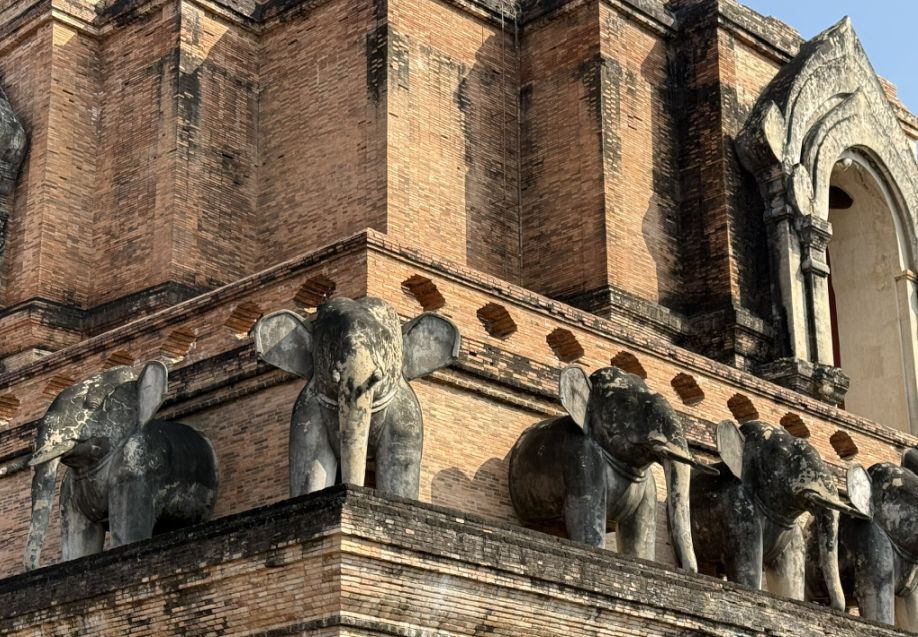
These life-sized elephant statues appear to support the structure, a common motif in Lanna architecture symbolizing strength and stability. Though many have been restored, they still retain a sense of antiquity, and walking alongside them gives a rhythmic, almost processional feeling, as if the entire base of the chedi is being upheld by these powerful animals.
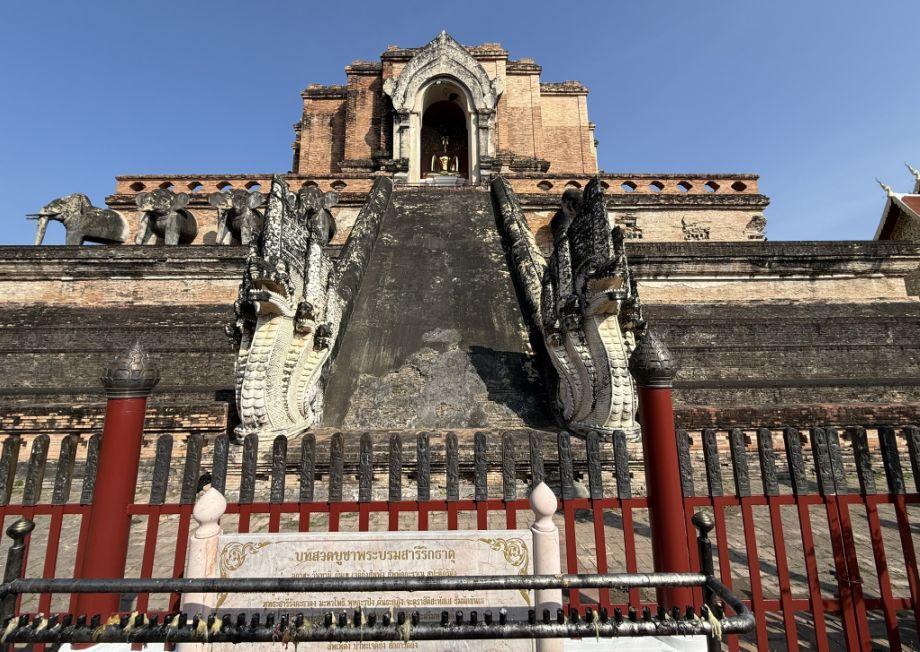
Each side of the chedi feels slightly different, some more intact, others more visibly scarred by the 16th-century earthquake, but together they create a full narrative of grandeur, destruction, and reverence.
 |
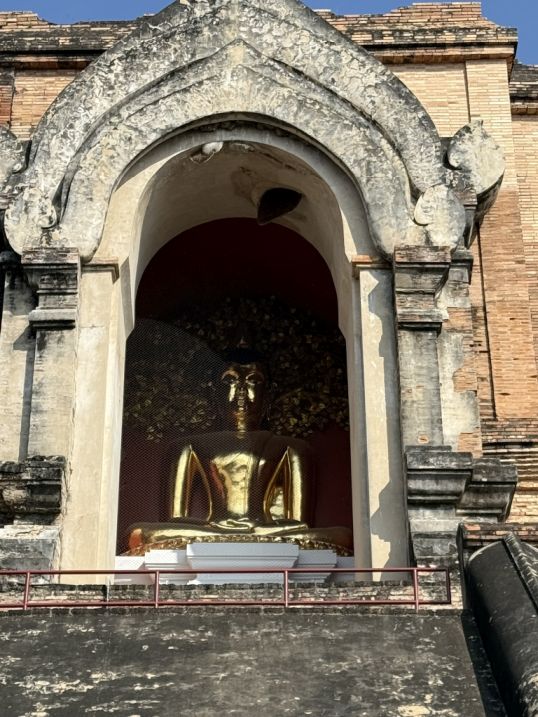 |
The interplay between crumbling brick, restored stucco, guardian figures, and serene Buddha images gives the chedi its unique character: not just a monument, but a living record of time.
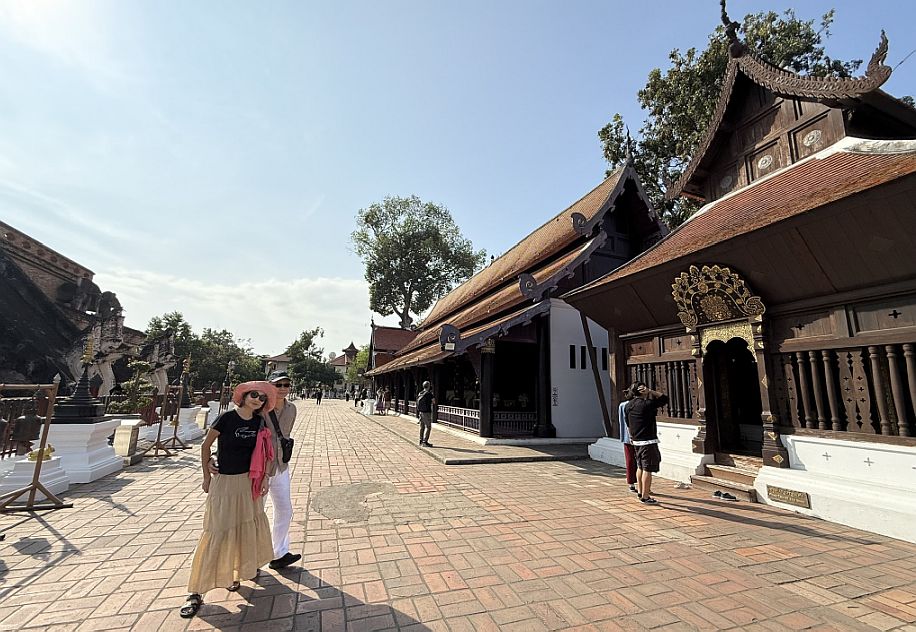
We are now leaving the area.
 |
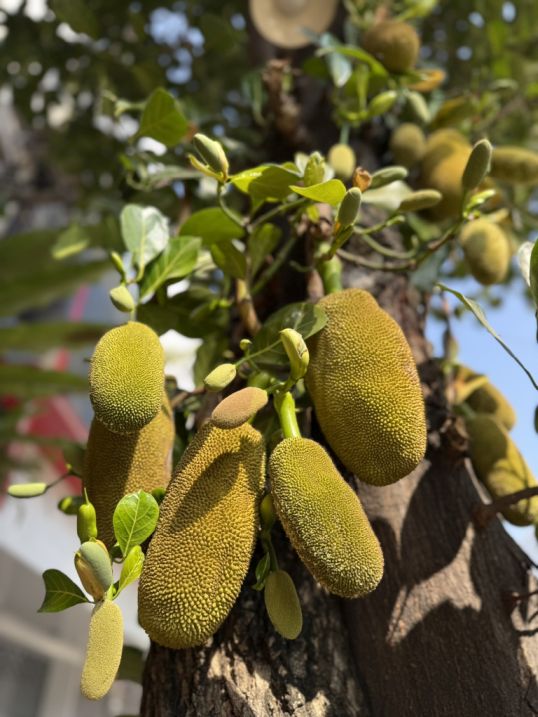 |
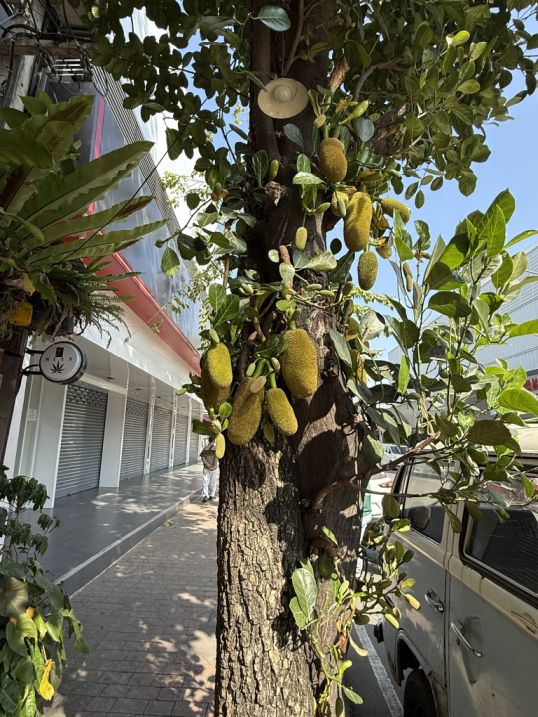
We walked around the old town and we were so surprised to see a Jack fruit tree growing in the street.
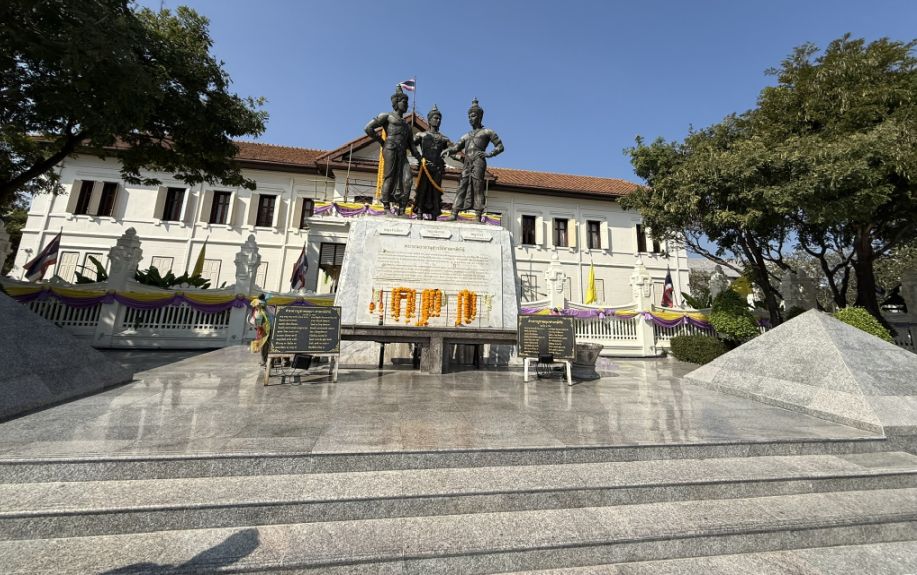
We walked by the Three Kings Monument located in the heart of Chiang Mai. Behind the monument is a large open area which serves as a public space for ceremonies, cultural events, and community gatherings
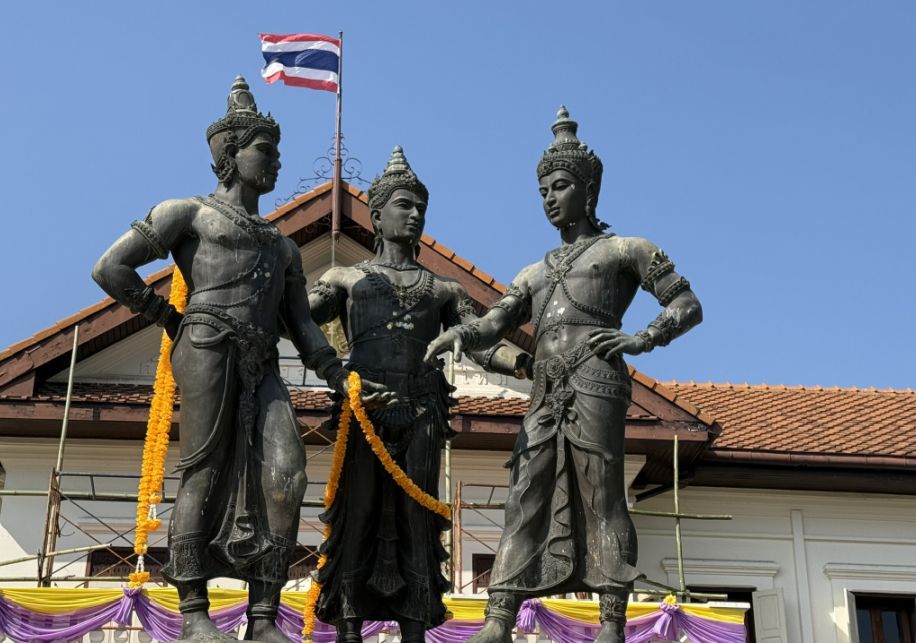
According to historical accounts, the three kings formed a strong bond and agreed to establish a new city together. They selected a strategic location along the Ping River, surrounded by fertile plains and the towering Doi Suthep. In 1296 CE, they founded Chiang Mai, which later became the capital of the Lanna Kingdom. To honor their legacy, the people of Chiang Mai built the Three Kings Monument in 1983. Designed and cast by the national artist Kaimook Chuto, the monument stands 8 ft. 10 in) high.
NEXT... Day 6- Evening stroll/Dinner at the House by Ginger