12 days in Thailand 1/7- 1/18/2025
Day 5-Doi Inthanon National Park-1/11/2025
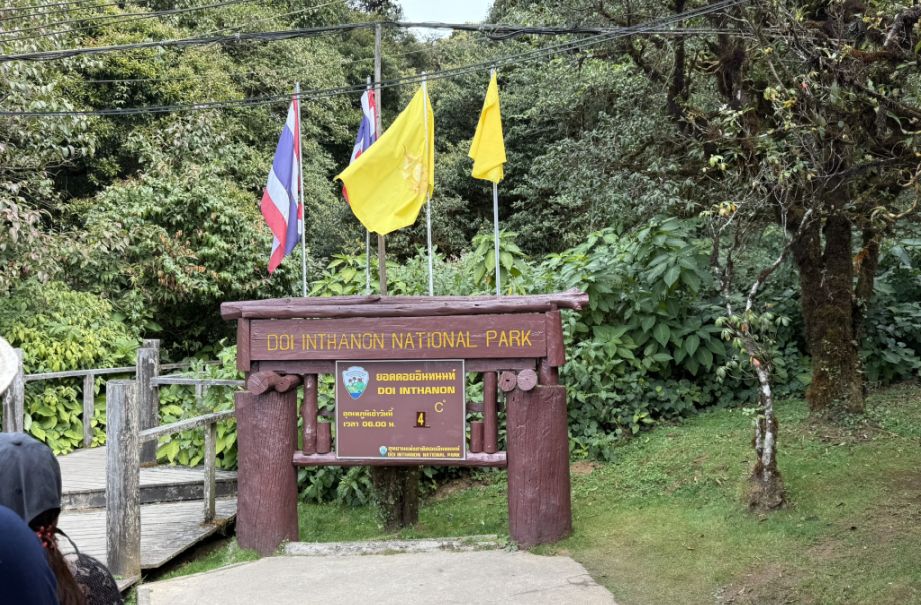
After leaving the elephant sanctuary, the shift in scenery at Doi Inthanon National Park feels almost dramatic. We went from warm, lowland countryside into the cool, misty mountains which is part of the Himalaya foothills that extend into northern Thailand.
Doi Inthanon National Park is one of Thailand’s most important natural areas, established in 1972 to protect its forests, waterfalls, and diverse wildlife. It’s named after King Inthawichayanon, the last ruler of Chiang Mai, who was deeply concerned about deforestation. After his death, his remains were placed on the mountain, and the peak was renamed in his honor.
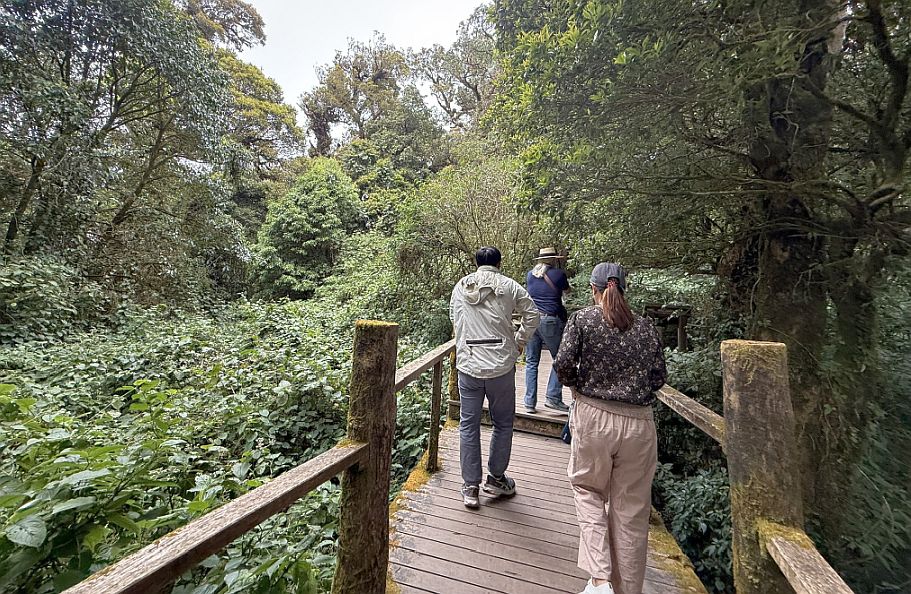
We are following our tour guide to get inside the National Park.
 |
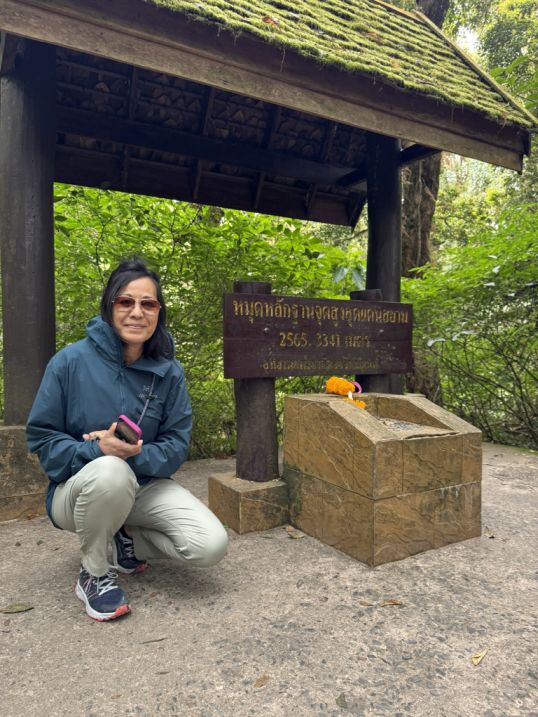 |
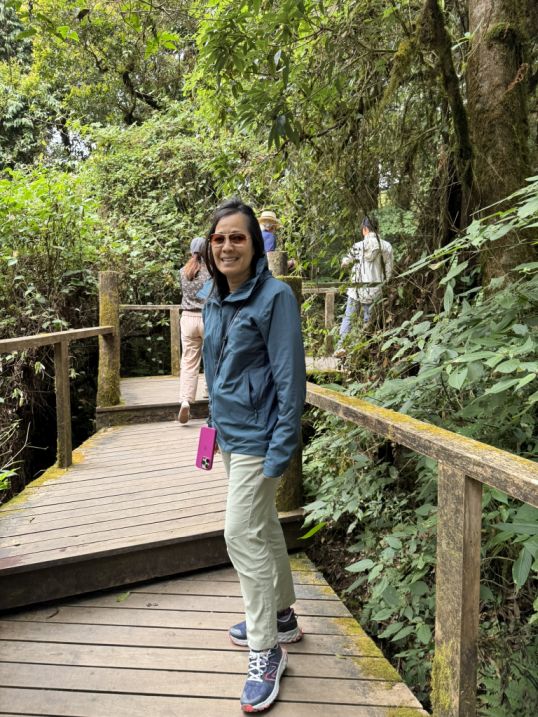
The wooden walkway we followed leads to the highest natural point in Thailand, at about 2,565 meters (8,415 feet) above sea level.
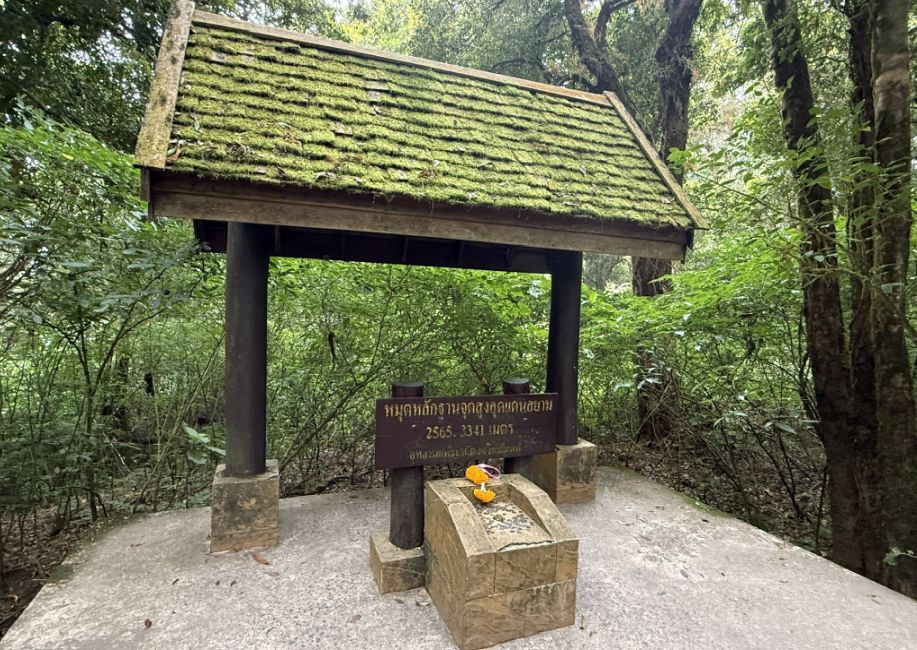
It’s a surprisingly understated spot, no dramatic peak, just a forested area marked by a sign, but it carries a quiet significance.
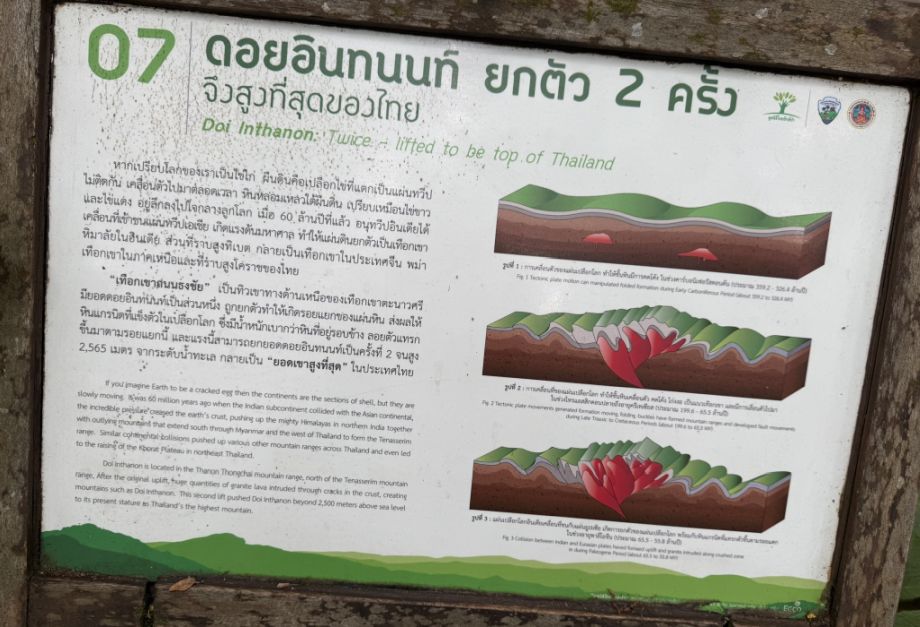
This panel about the land being “lifted” refers to tectonic activity. Over millions of years, movements of the Earth’s crust gradually pushed this area upward, forming the mountains of northern Thailand. It’s a reminder that what feels still and ancient is actually the result of slow, powerful geological change.
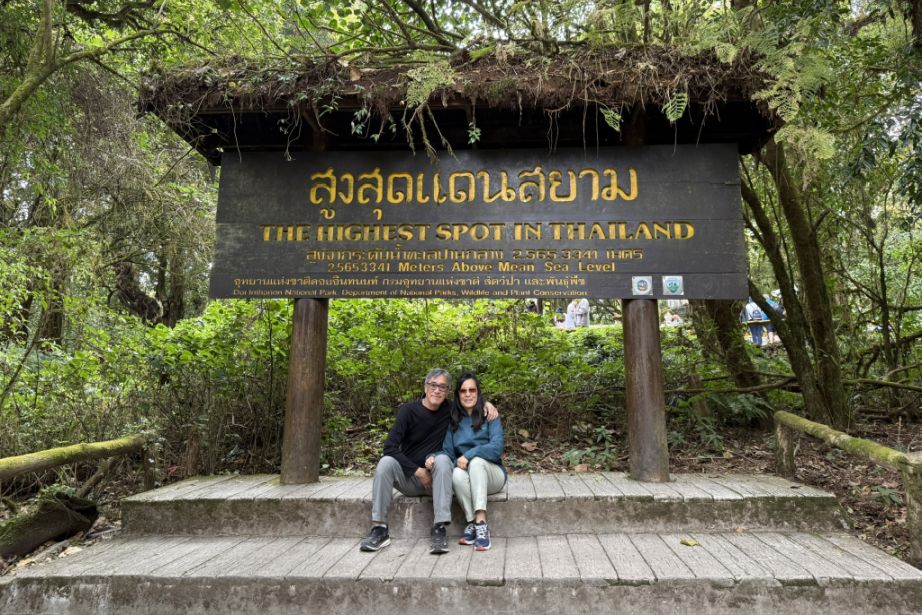
The cool temperature is also part of what makes this place unique. Because of the elevation, it can be 10–15°C (50–60°F) cooler than the city below, and in the early mornings it can feel almost chilly, especially with the mist and humidity.
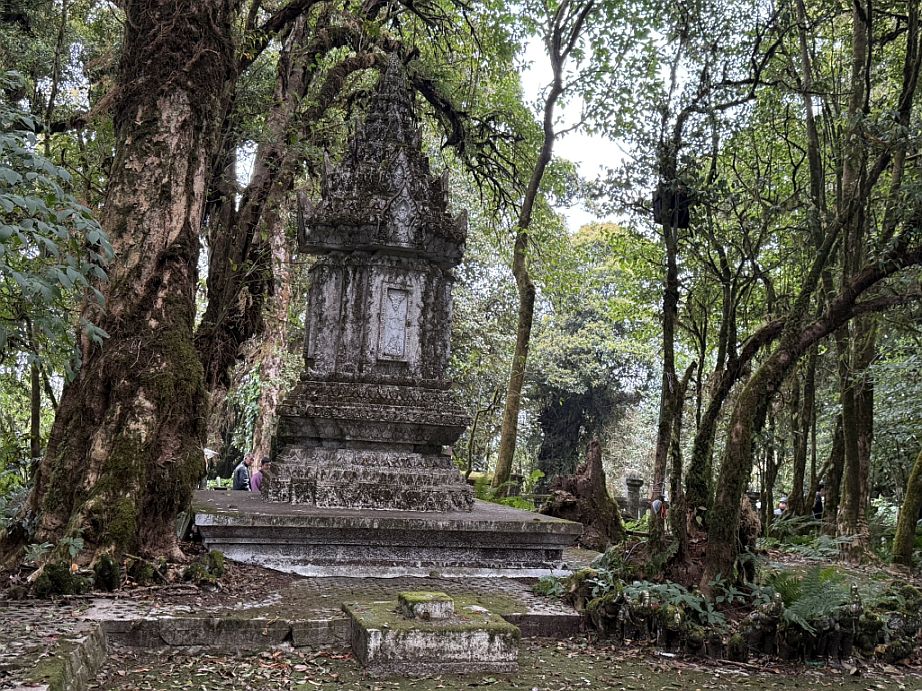
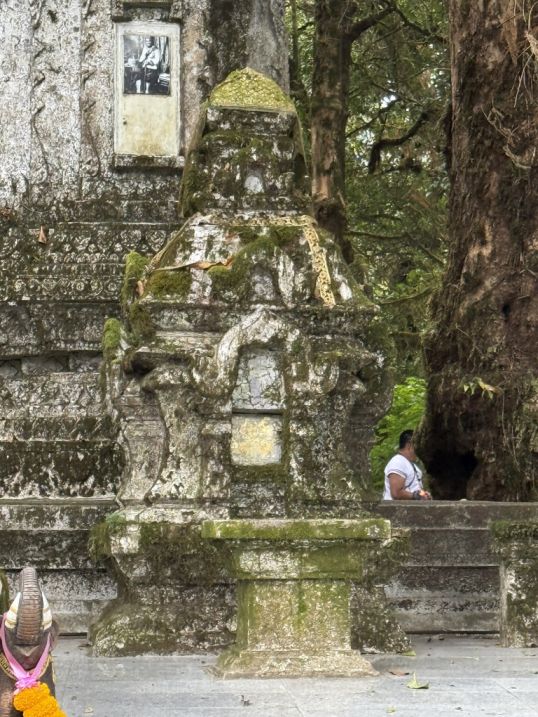
Near the highest point, there is a modest stupa tucked into the forest.
 |
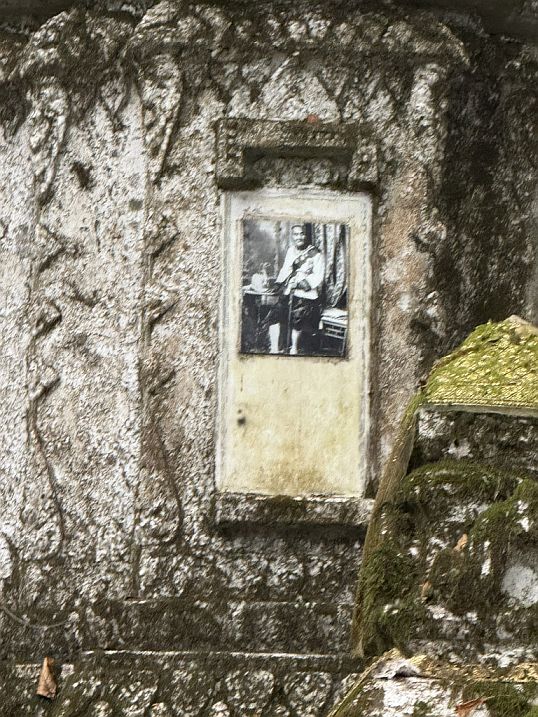 |
This is a sacred site where the ashes of King Inthawichayanon are enshrined.
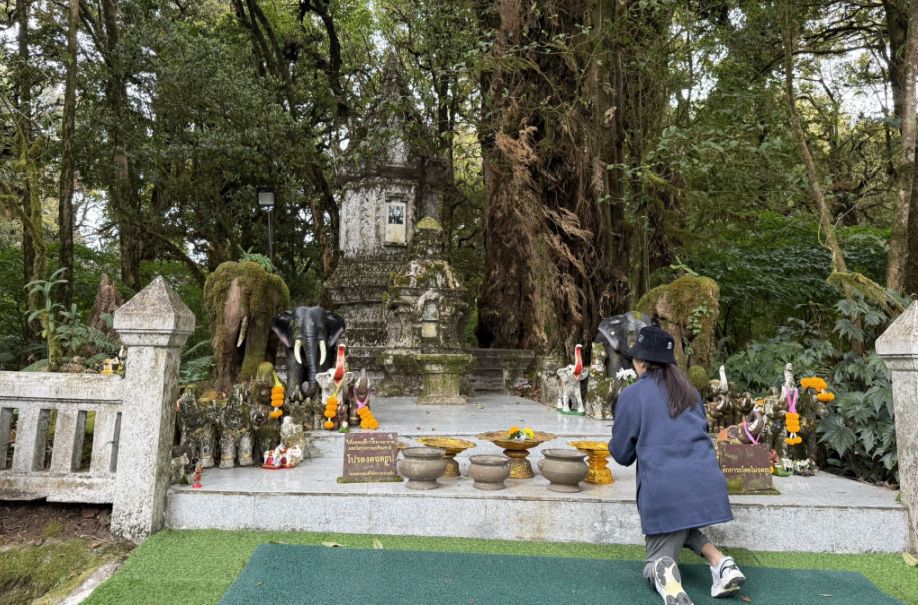
The offerings such as flowers, incense, small tokens reflect how locals still come here to pay respect. It gives the summit a spiritual dimension, not just a geographical one.
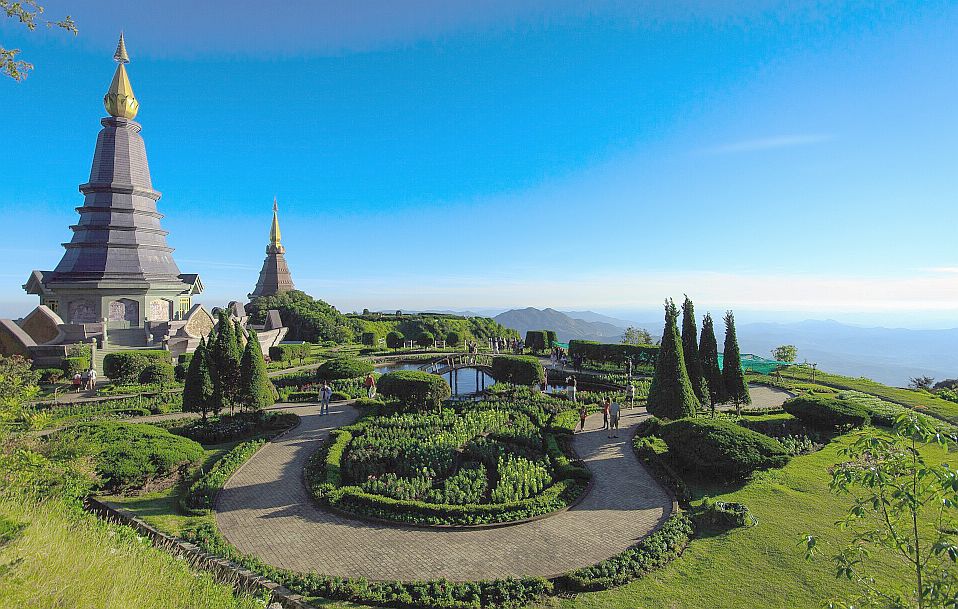
Then our tour guide took us to the Royal Pagodas that are nestled amidst the
lush green mountains of Doi Inthanon National Park. These two pagodas, also
known as Phra Mahathat Naphamethanidon and Naphaphonphumisiri, and
they are a popular tourist attraction and hold great significance in Thai
culture.
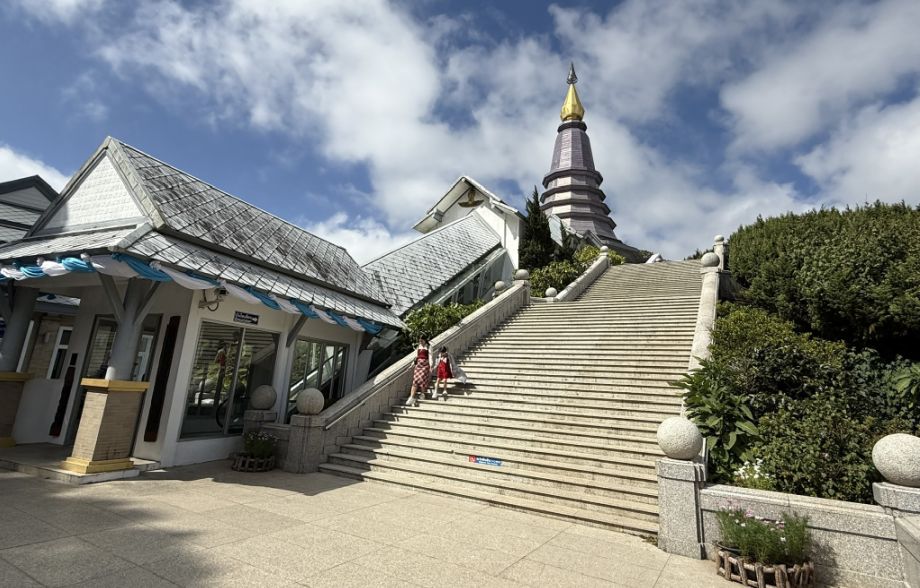
Climbing the stairs to get to the King's pagoda: Phra Mahathat Naphamethanidon which was completed in 1989.
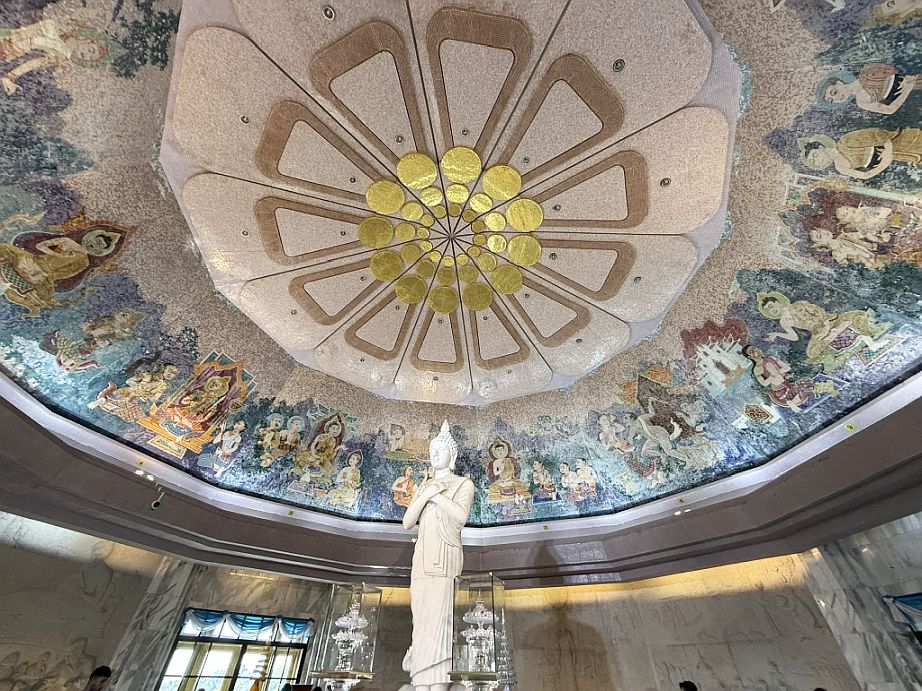
As we stepped in, the space becomes quieter, more enclosed, almost reverent. Our eyes are naturally drawn upward to the dome ceiling, which is beautifully decorated.
 |
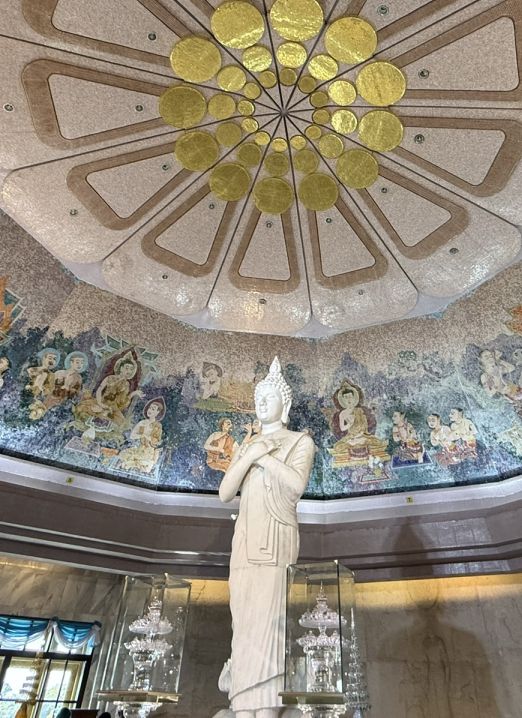 |
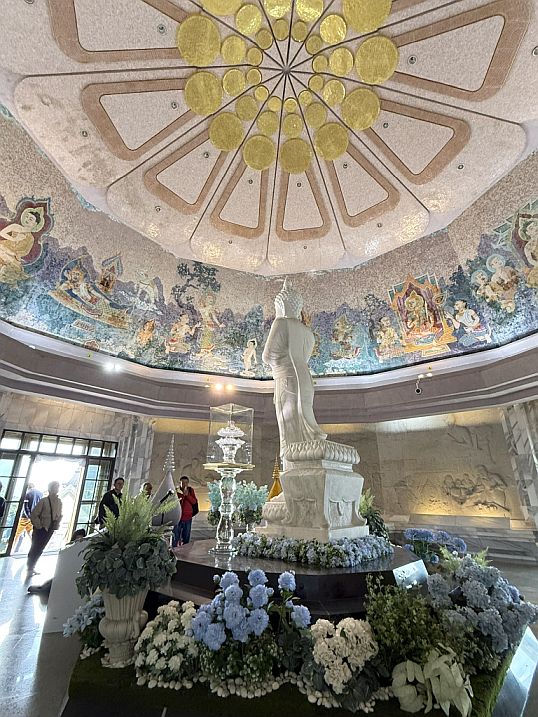
The ceiling is painted in rich, deep tones with celestial motifs with soft gold accents against darker backgrounds. The effect is meant to evoke the Buddhist cosmos, drawing your attention upward toward enlightenment.
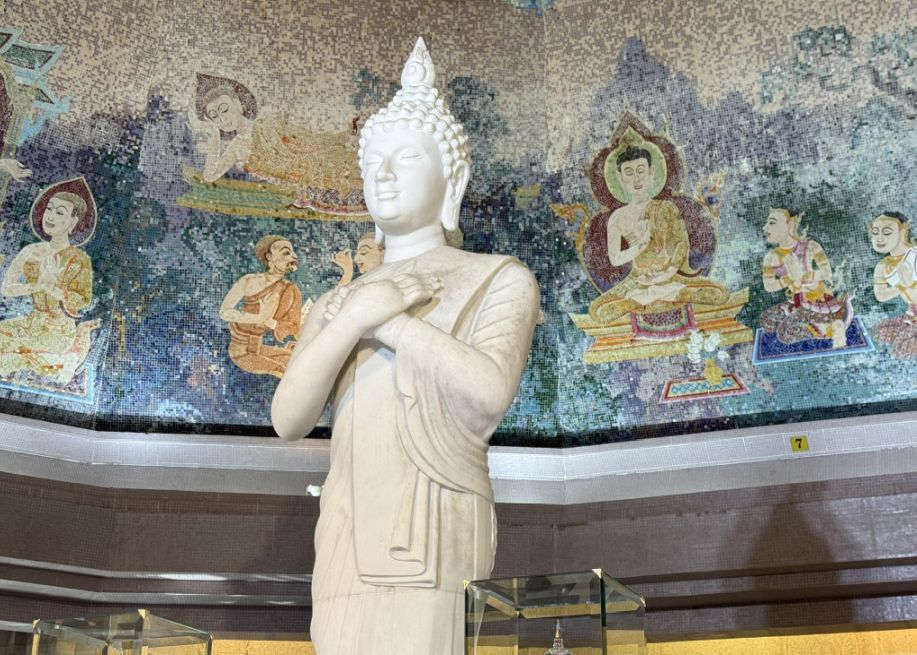
At the center stands a Buddha statue, in a calm, composed posture with arms crossed over the chest. This pose is less common than the seated Buddha and gives a very serene, almost protective presence within the space.
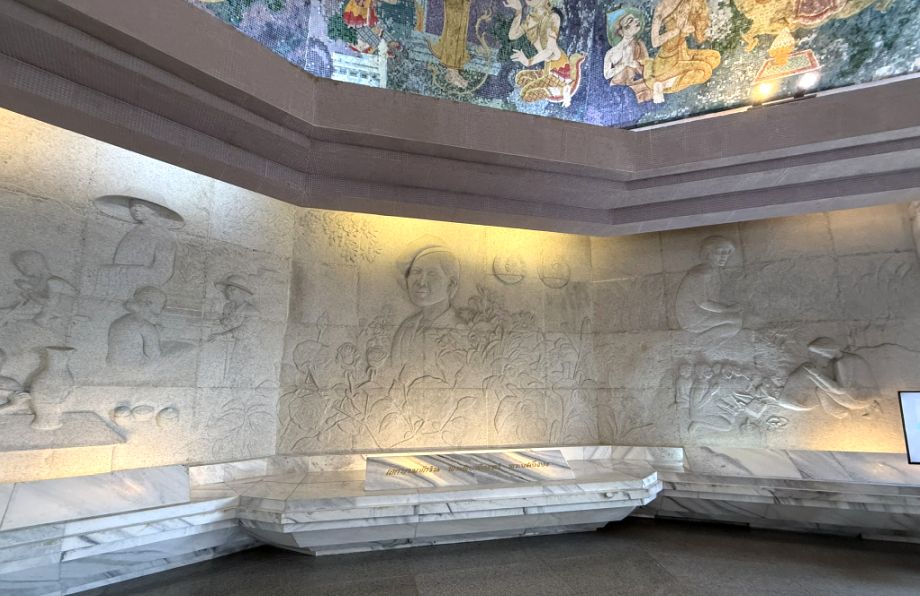
Around the circular walls, there is a sequence of sculpted panels and scenes.
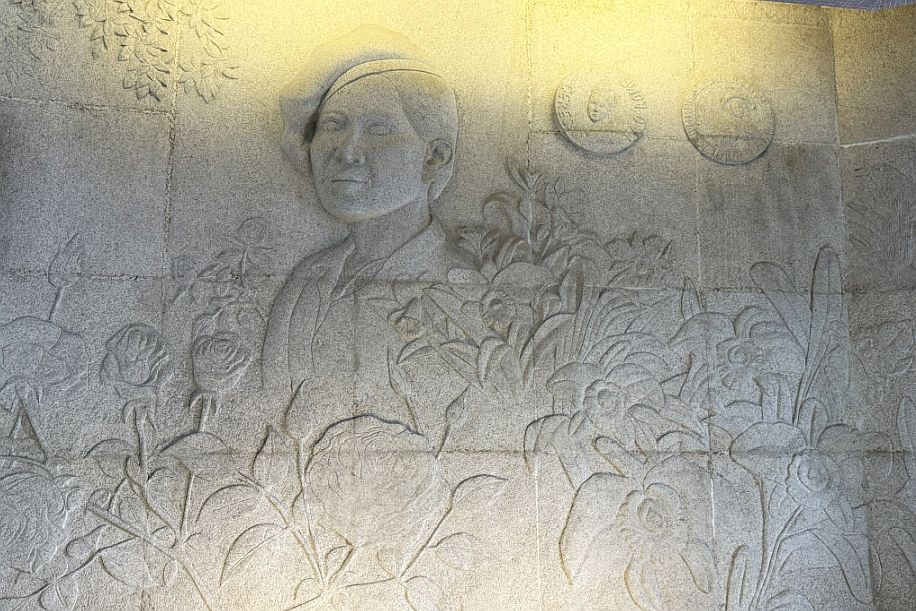
These tell stories from the life of the Buddha and important figures connected to him.
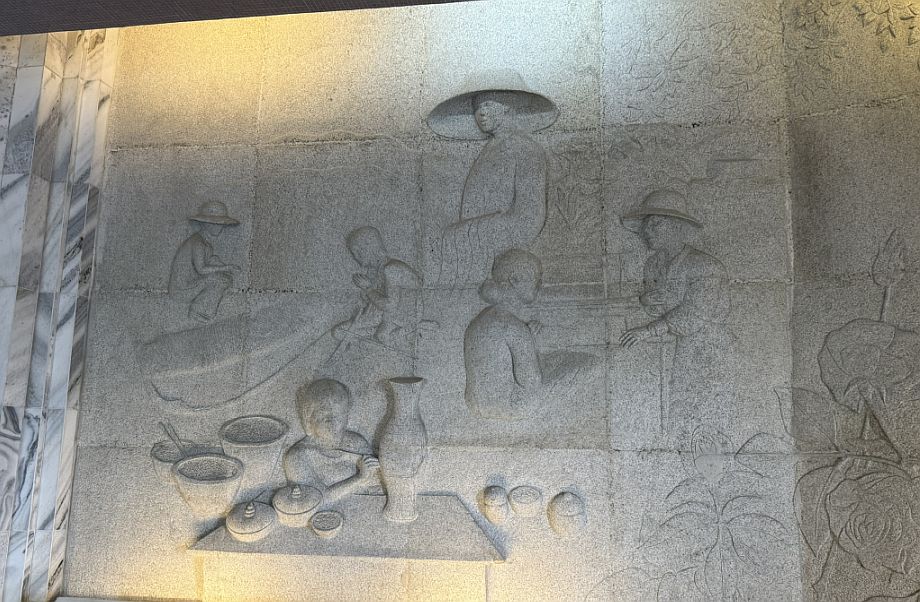
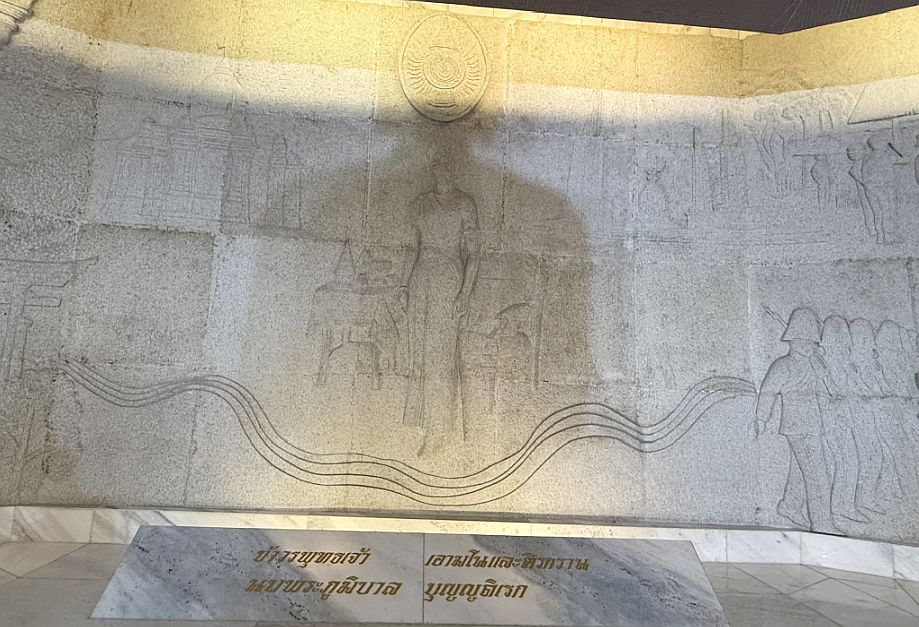
This panel tells the story of Princess Yashodhara. She was the wife of Prince Siddhartha (who later became the Buddha). Her story represents devotion and spiritual determination: After the Buddha began teaching, she sought to follow his path, she asked to be ordained. Once accepted, she became one of the early bhikkhunis (female monks).
This narrative highlights the role of women in Buddhism and the idea that enlightenment is open to all, regardless of gender.
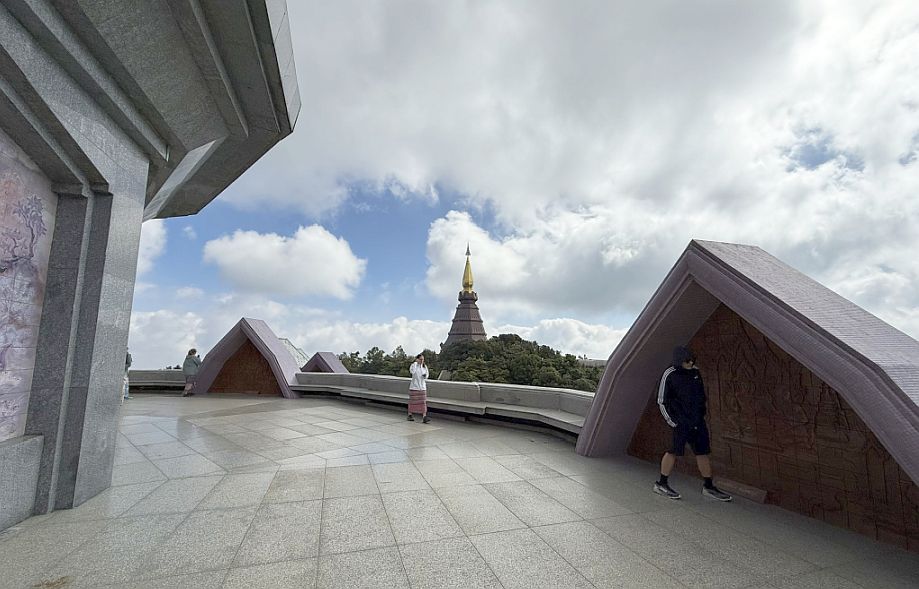
We are now walking around the terrace of the King's pagoda. In the distance the Queen's pagoda is rising in the distance.
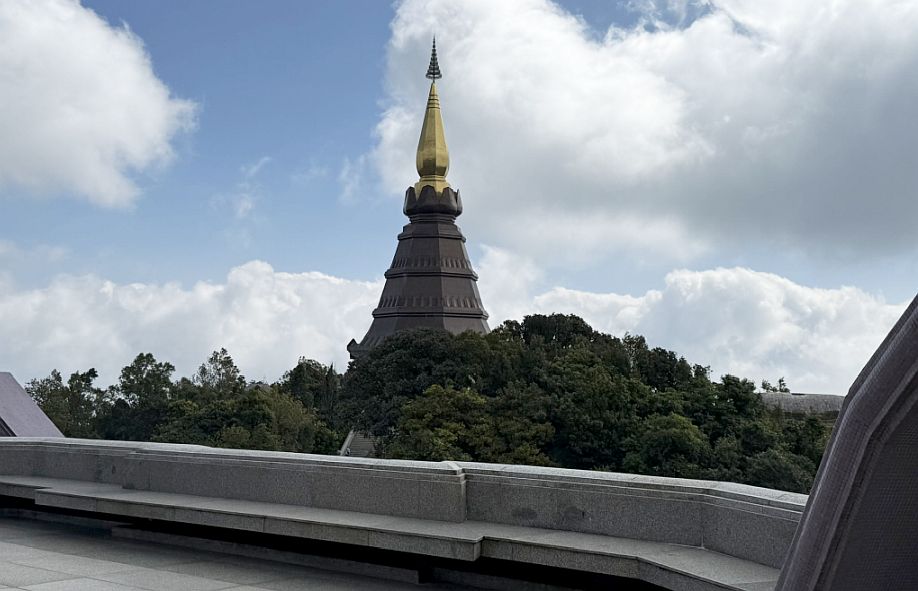
The Queen’s pagoda has a slightly different tone, lighter in color and often perceived as softer and more floral in its design elements.
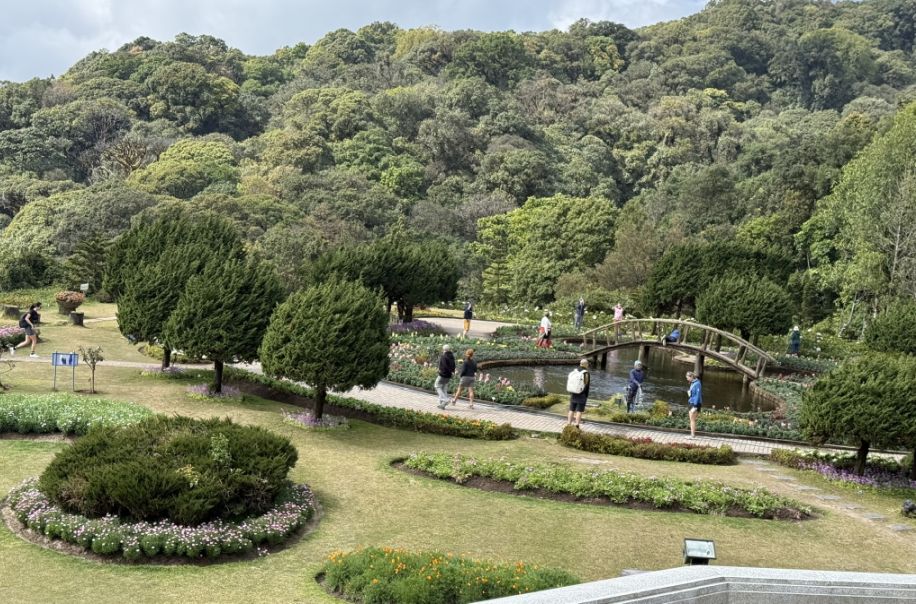
From the terrace we had a great view of the beautiful garden.
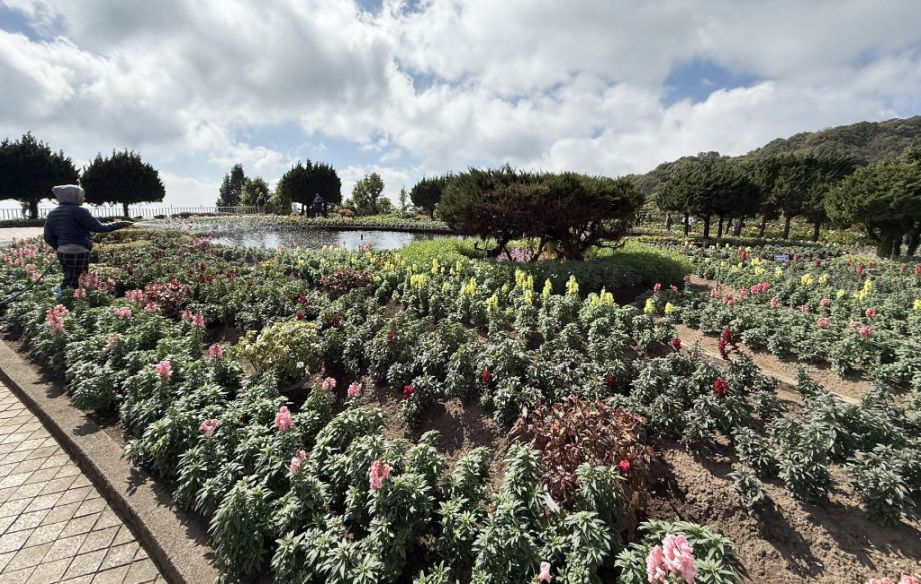
What makes this area especially memorable is how beautifully it’s landscaped. The manicured gardens feel almost like a high-altitude park with carefully arranged flower beds.
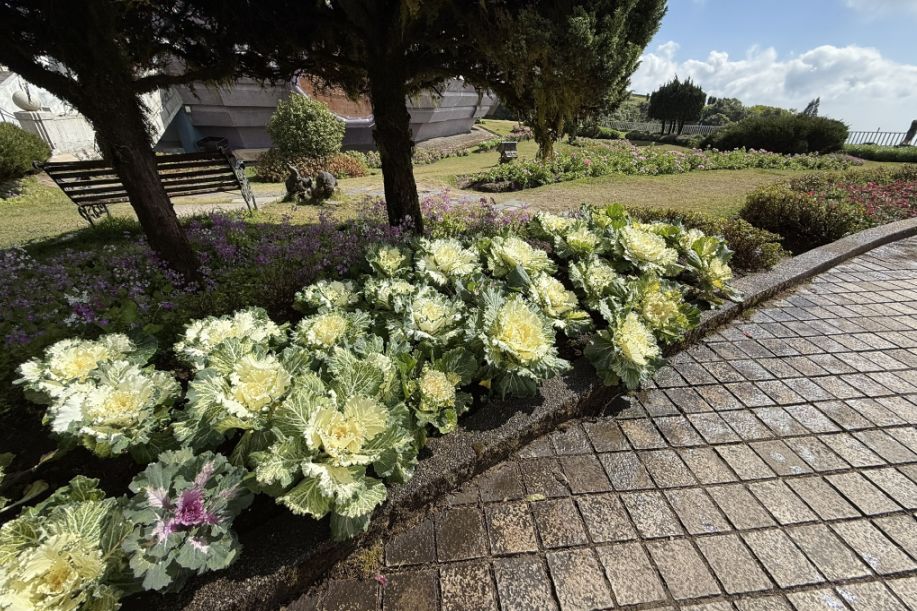
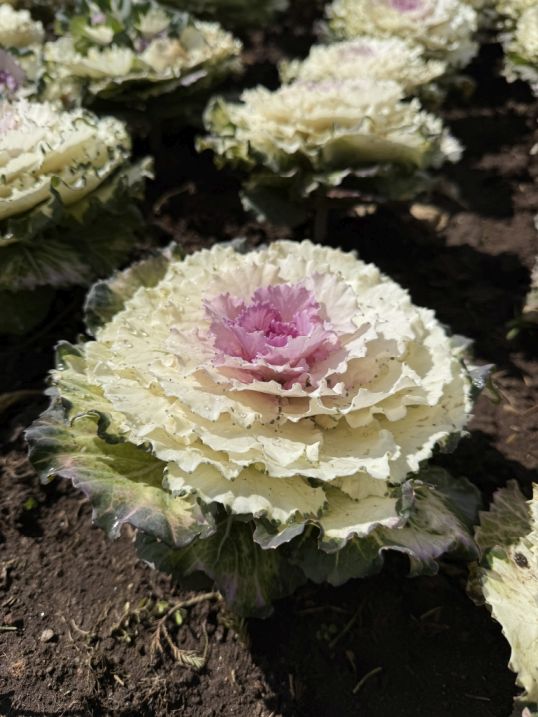
A row of wild cabbage
 |
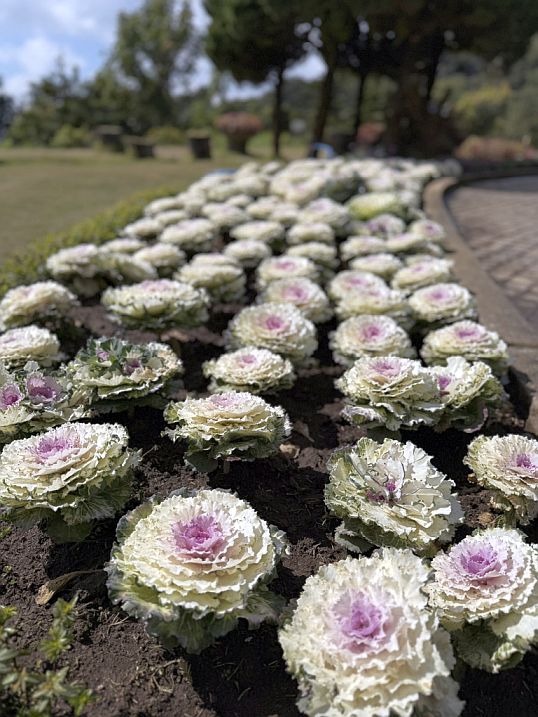 |
Because of the cooler climate at this altitude, wild cabbage thrive in a way that feels almost unexpected for Thailand.
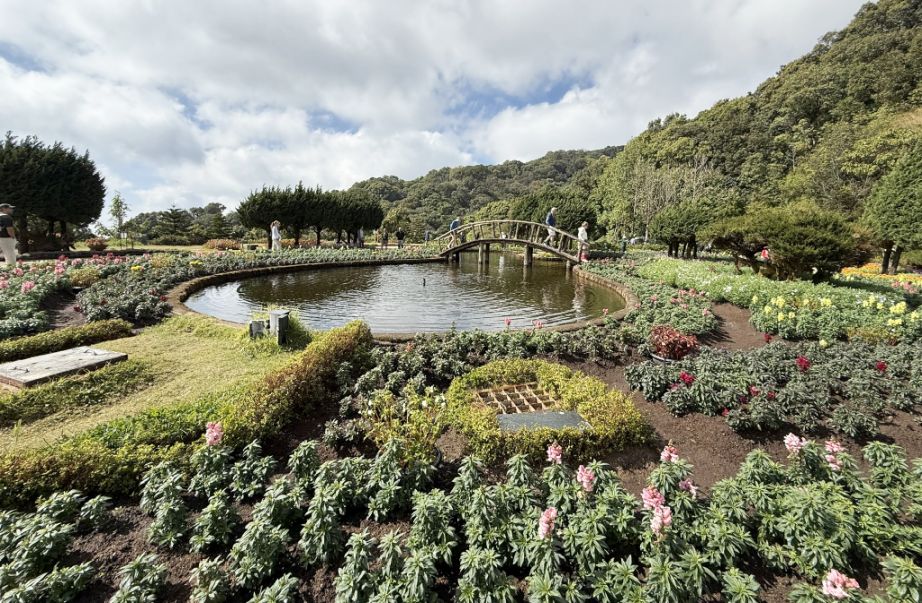
The garden is well manicured, vibrant, and alive like a highland botanical display set against a backdrop of misty mountains.
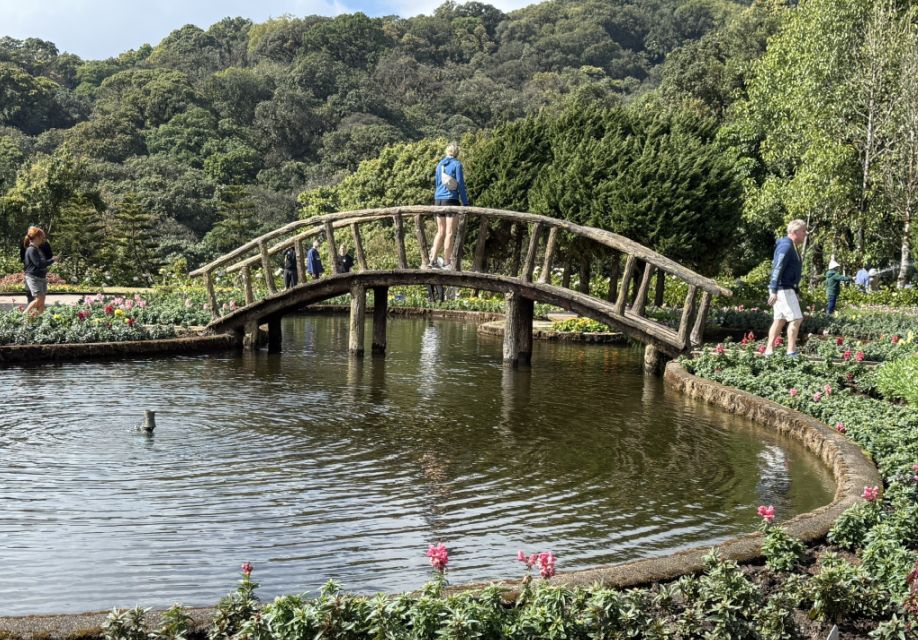
Wooden bridge gently curves over the gardens, offering a peaceful path to walk through the space. It invites you to slow down, take in the symmetry, and enjoy the view of the pagodas rising above the landscape.
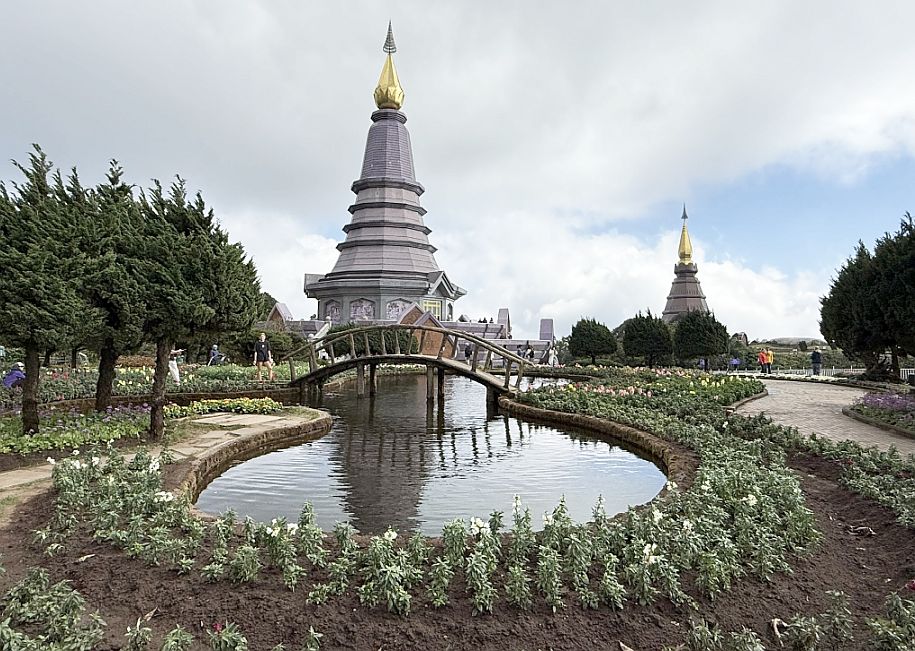
The moment we stepped into the grounds around the Queen’s pagoda, Phra Mahathat Naphaphonphumisiri, the atmosphere softens. Compared to the more formal, symbolic feel of the King’s pagoda, this side feels almost like a mountain garden in bloom, carefully designed yet still in harmony with the natural surroundings.
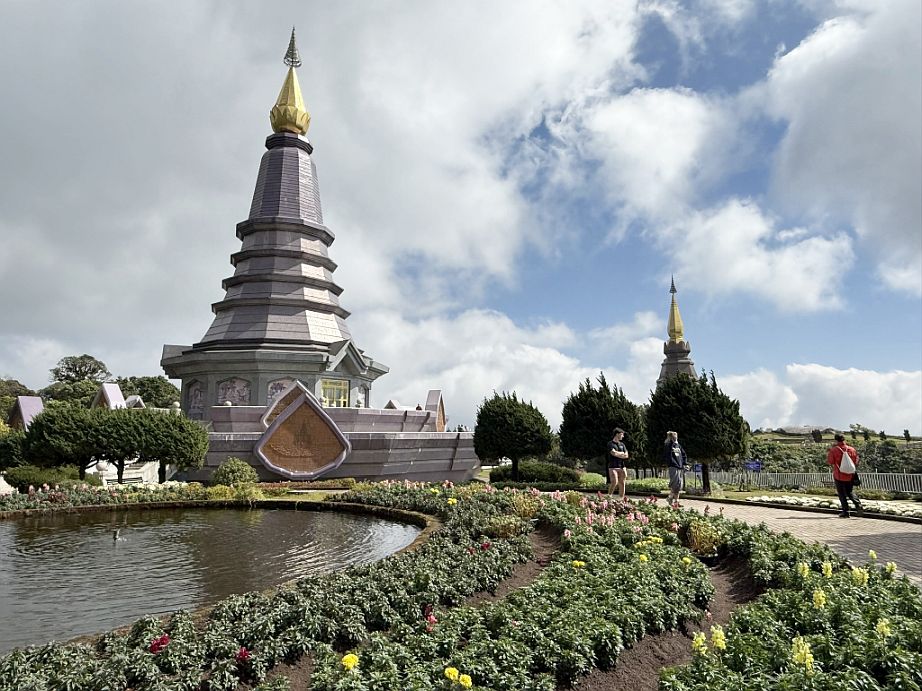
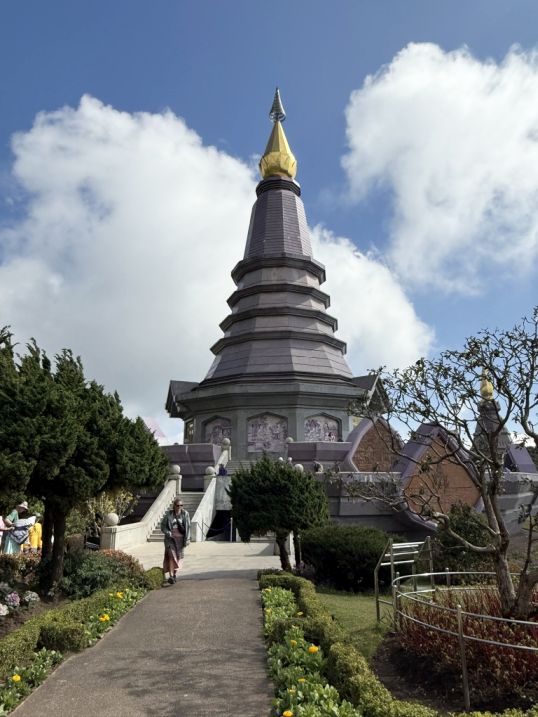
This the Queen's Pagoda that was completed in 1992 and is surrounded by a beautiful garden with vibrant flowers.
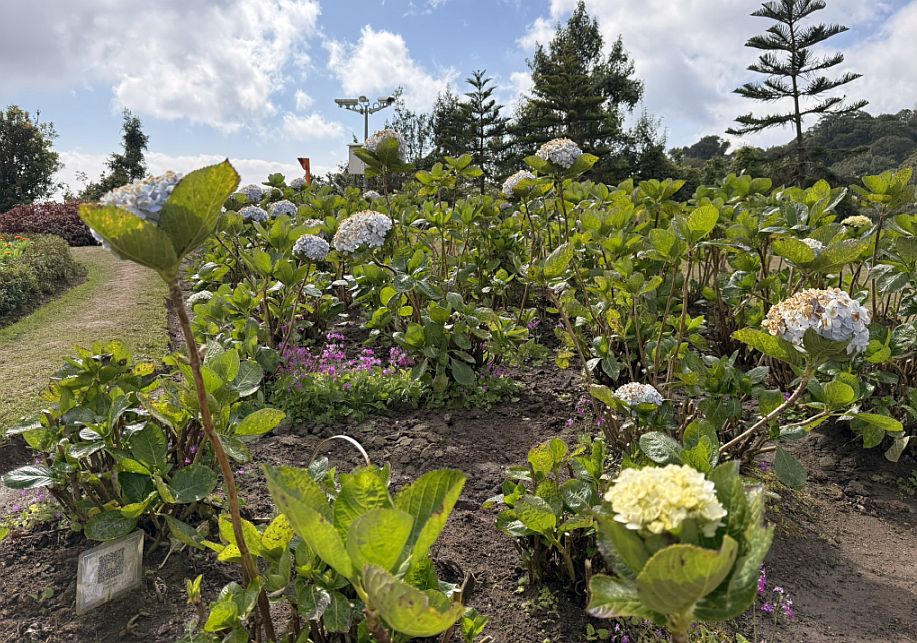
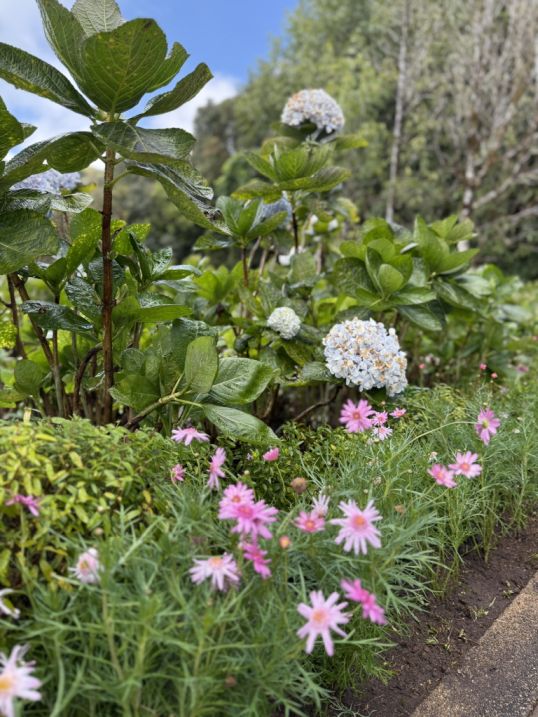
The gardens here are one of the highlights of the entire visit. They are beautifully manicured, but not rigid, more flowing and organic in layout.
 |
 |
As we walked along the paths and across the wooden bridge, we are surrounded by layers of color and texture.
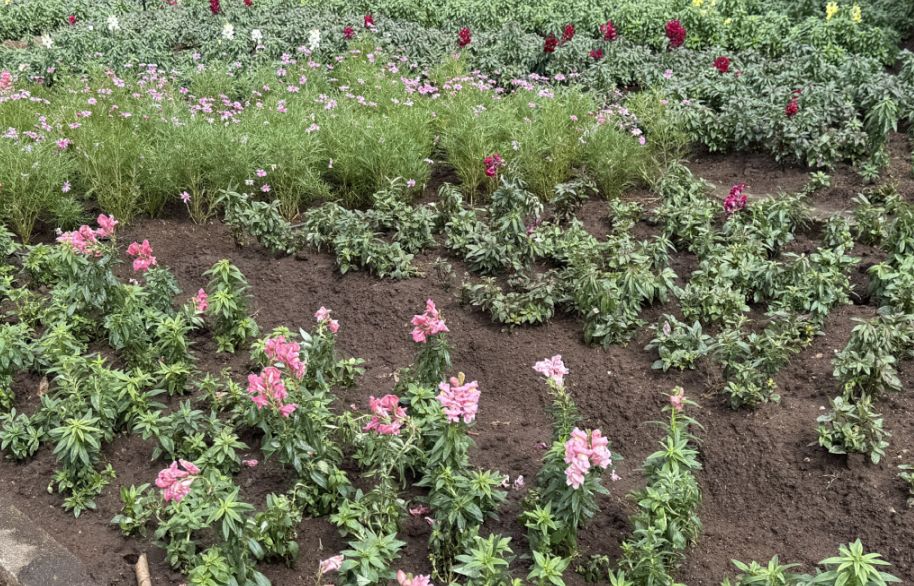
Snapdragons rising in vertical clusters, adding height and softness, Marguerite daisies and dill daisies scattered like small bursts of colors.
 |
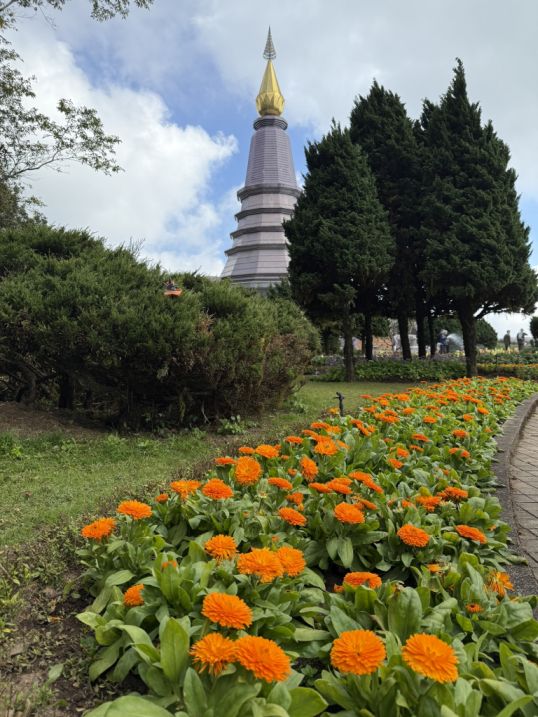 |
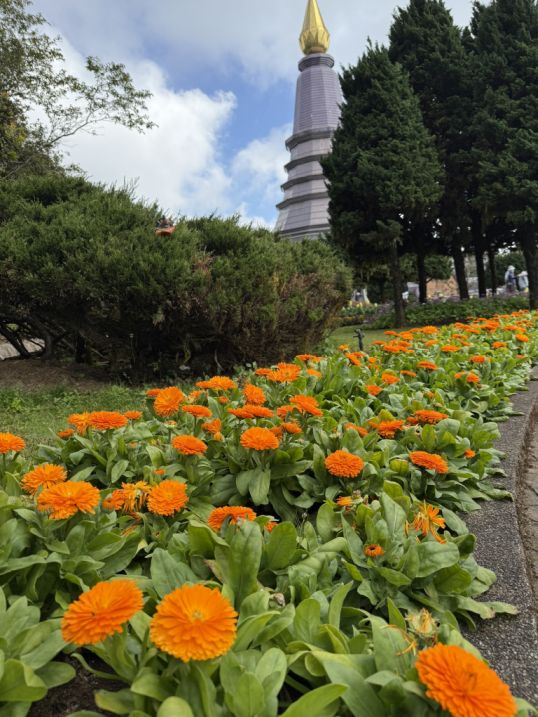
Orange pot marigolds, bright and cheerful, catching the sunlight.
 |
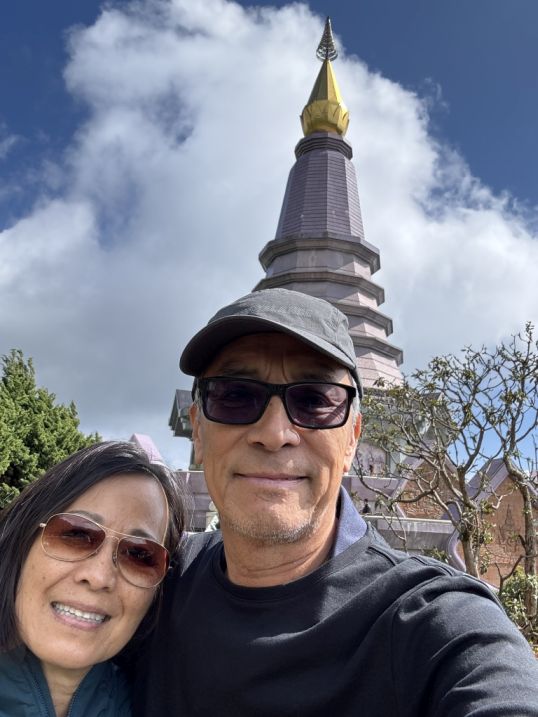 |
We are now heading to the Queen's pagoda.
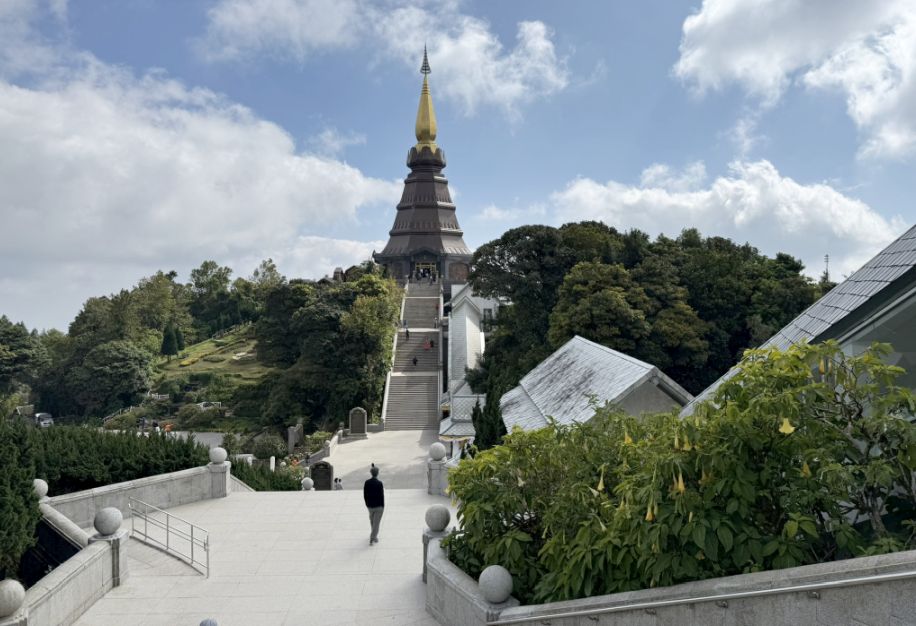
From the vibrant garden below, we made our way toward the Queen’s pagoda. Its elegant structure rising above the flowers and greenery. As we got closer, the path shifted from gentle garden walkways to a steady climb. A long staircase stretched upward, and we began making our way step by step, leaving the colorful blooms behind us.
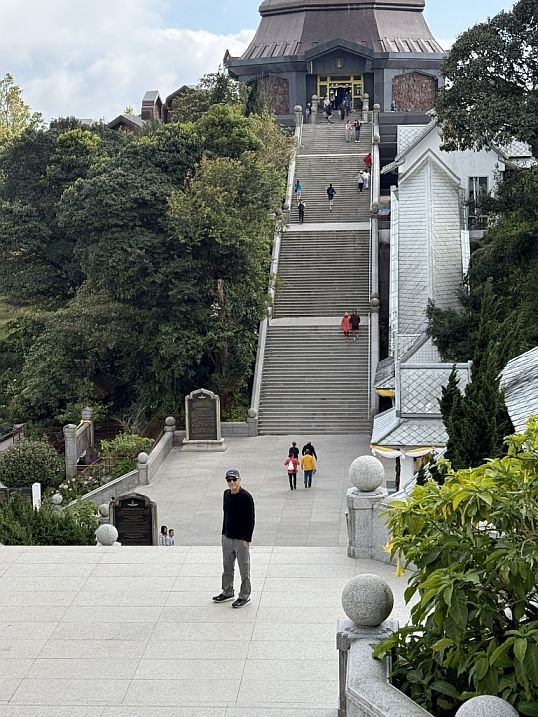 |
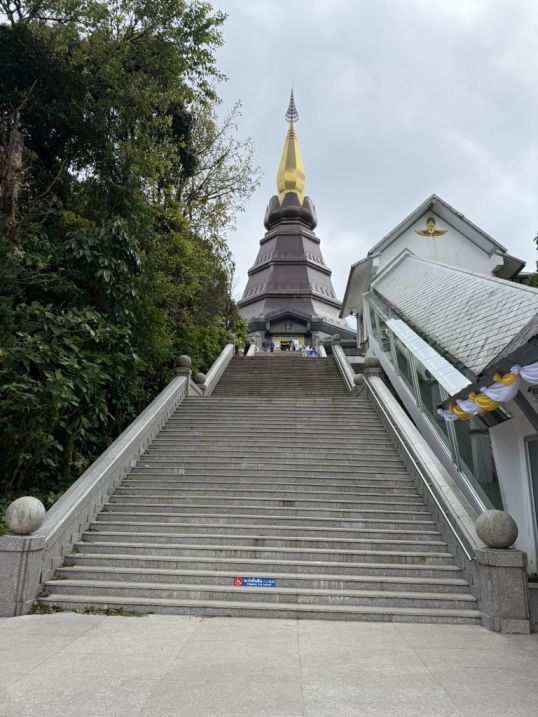 |
The climb wasn’t too difficult, but it was enough to slow us down and make us pause, occasionally turning back to take in the view of the manicured gardens below. With each step, the pagoda felt more imposing and serene at the same time, standing quietly at the top. By the time we reached the summit, the cooler mountain air and the sense of elevation made the arrival feel even more rewarding.
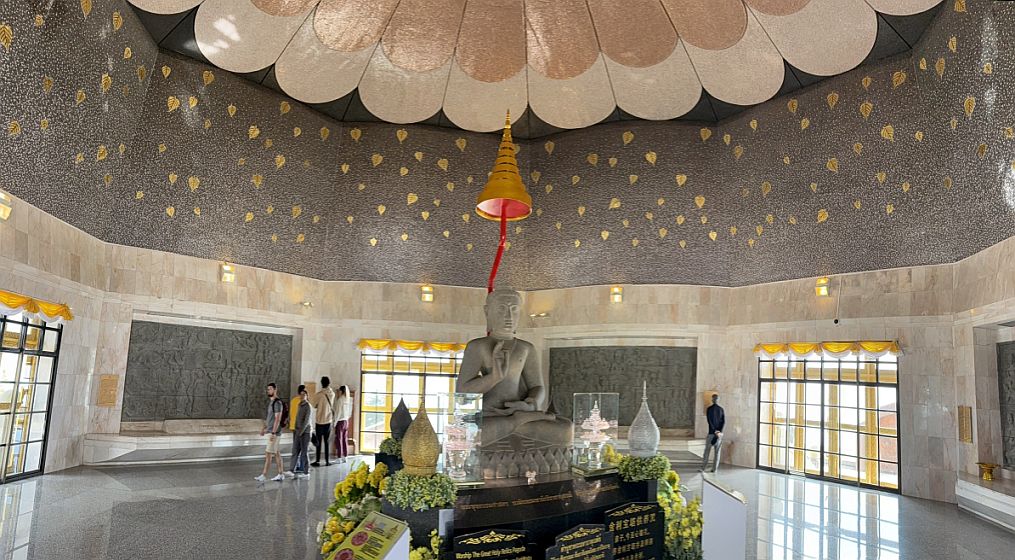
When we step inside, the space feels immediately calmer and more understated than the King’s pagoda.
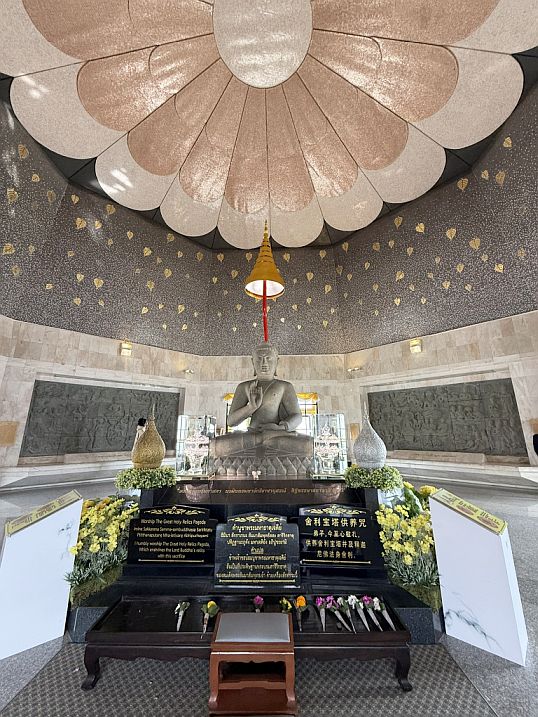 |
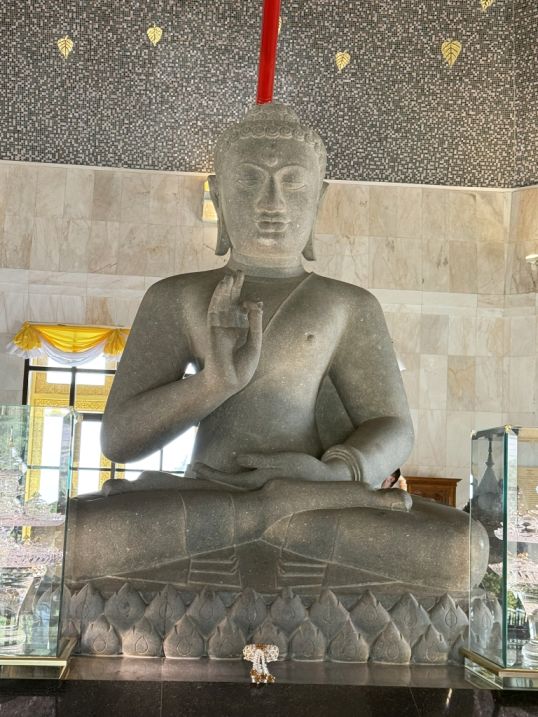 |
At the center sits a seated Buddha, grounded and serene. It is a meditative posture, inviting quiet reflection rather than drawing attention upward. There’s a sense of stillness here that contrasts with the more ceremonial feel of the King’s tower.
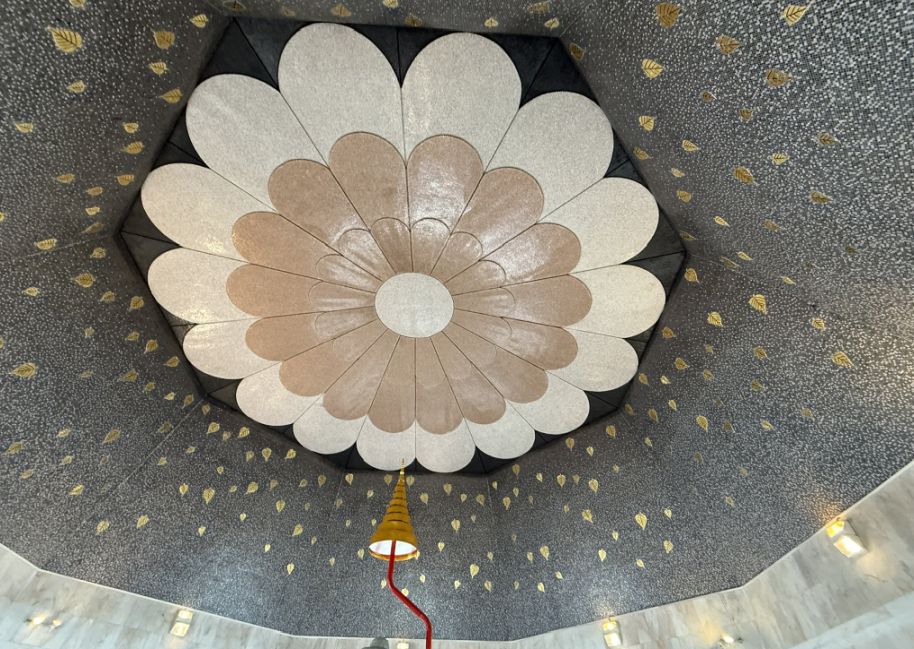
Looking up, the dome ceiling is elegant but less ornate with simple patterns, softer color palette.
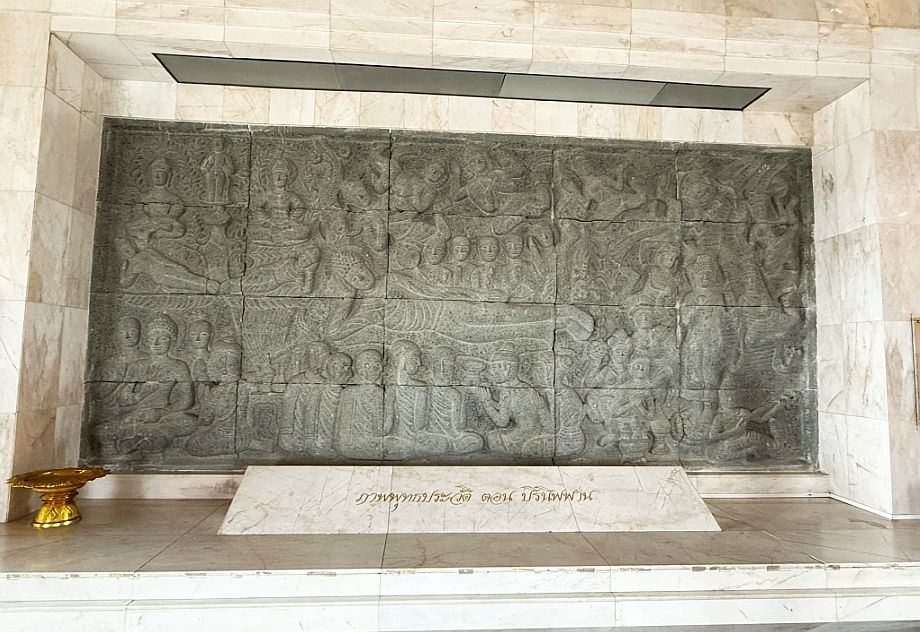
Around the walls, the murals continue the storytelling tradition, but they feel more subtle and flowing.
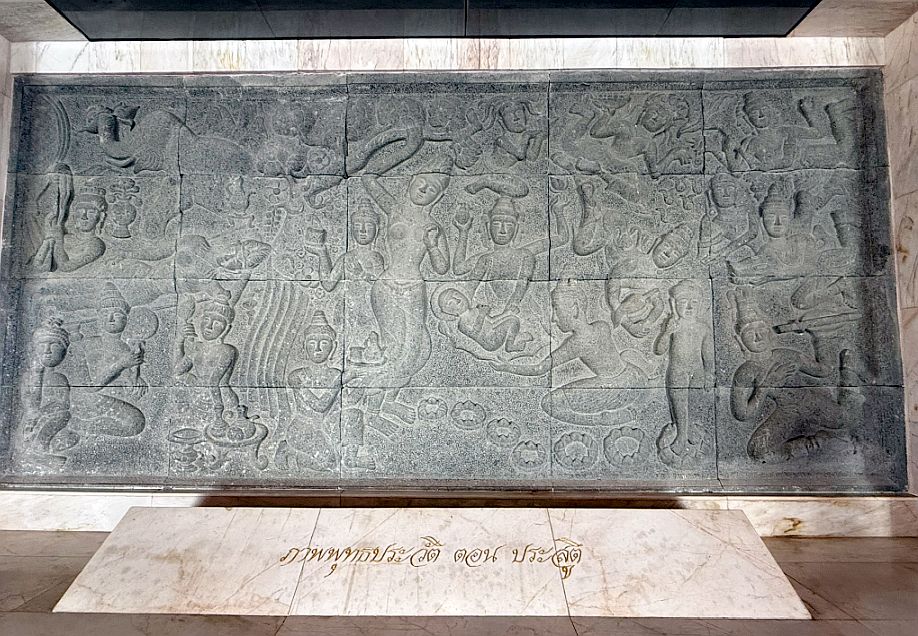
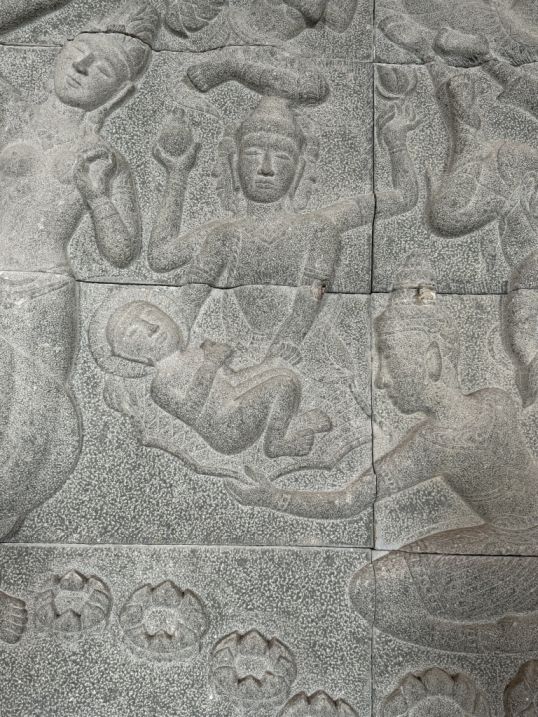
This scene depict Buddha's birth place.
 |
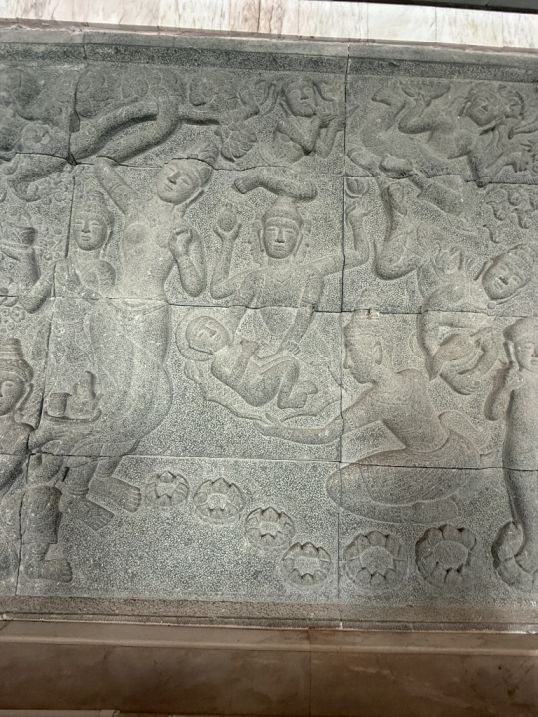 |
Lumbini Park is the birth plce of Gauram Buddha. It is situated at the foothills of the Himalayas in Kapilavatthu, on the Indian borders of present Nepal.
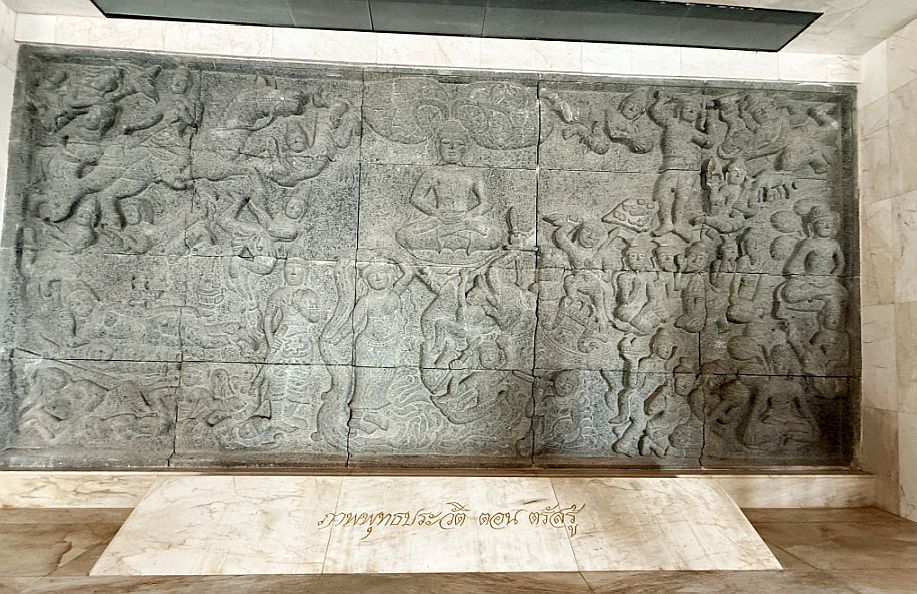
A scene depicting moments from the Buddha's life. The colors and compositions are harmonious, not crowded, allowing each scene to breathe. Walking around the interior, it feels less like a sequence of dramatic stories and more like a continuous narrative.
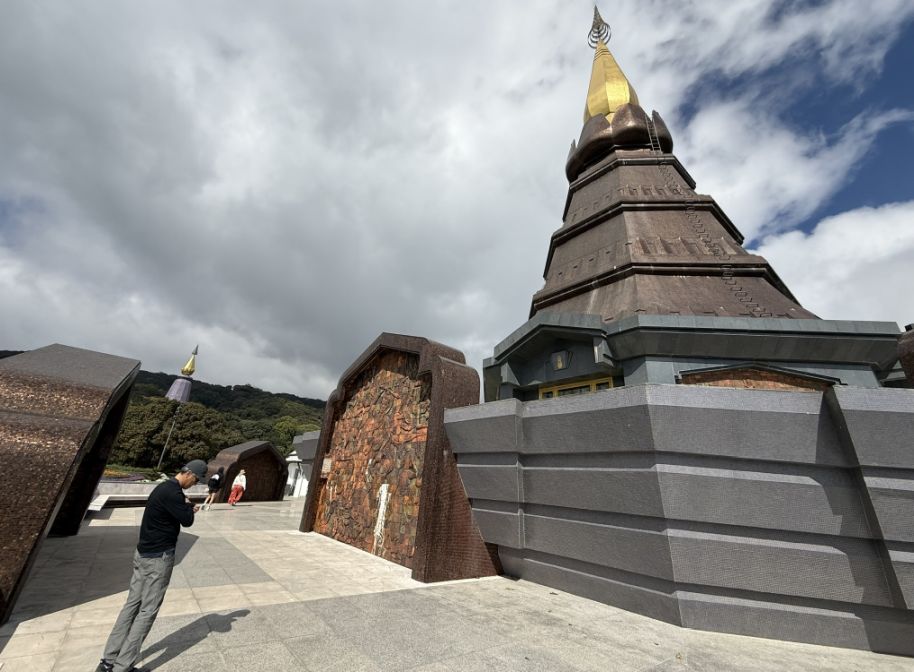
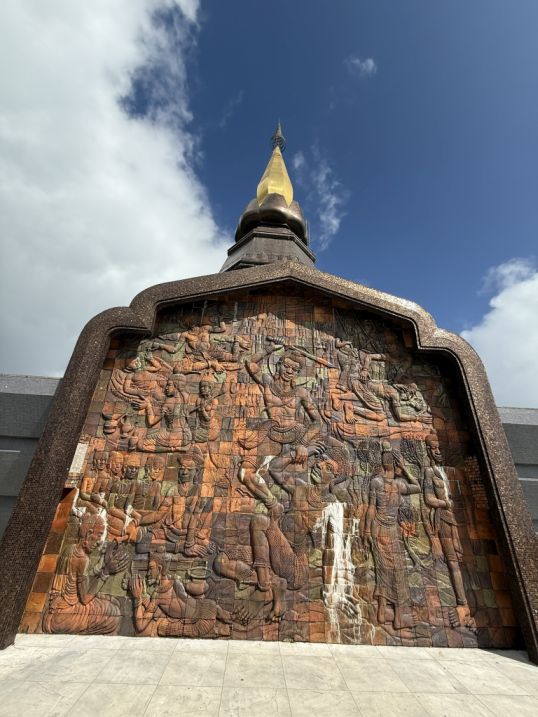
As we made our way around the exterior of the Queen’s pagoda, Phra Mahathat Naphaphonphumisiri, we started to notice the smaller artistic details that are easy to miss at first glance.
 |
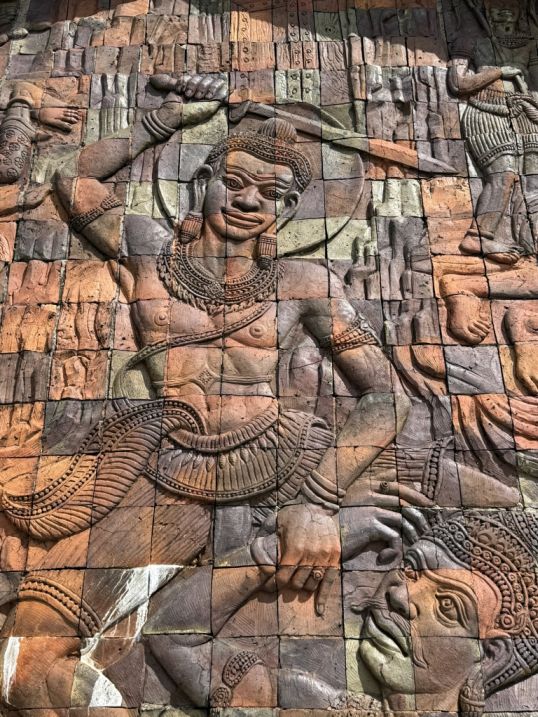 |
One of the most striking was a decorative panel in a warm orange tone. Up close, we could see it was composed of many small square pieces, like tiles or carved segments carefully assembled to form a larger image. The figure we saw, resembling a warrior holding a sword while gripping another person’s arm, likely represents a guardian or protective figure. In Buddhist and Thai temple art, these figures are not just decorative, they symbolize the protection of sacred spaces, the triumph of good over evil, or the discipline needed to overcome inner struggles.
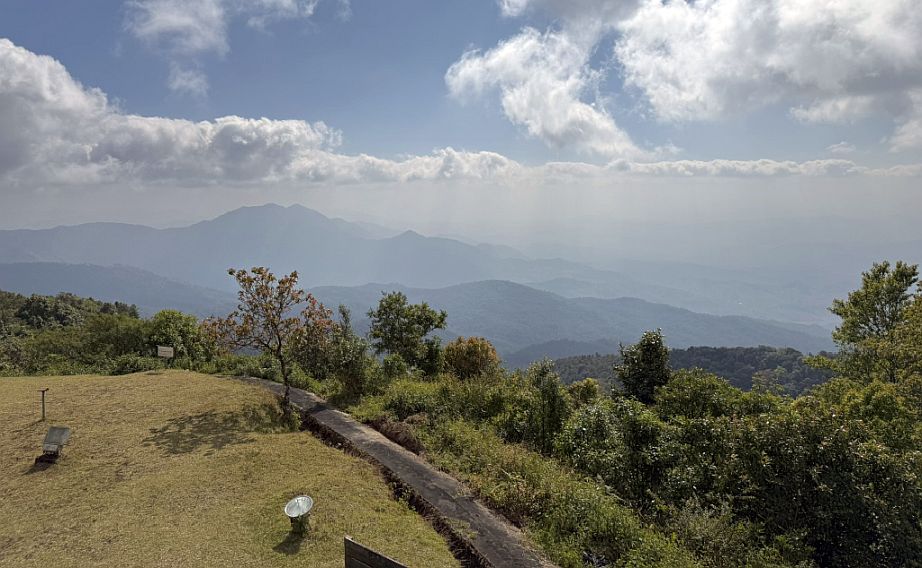
As we continued walking around the pagoda, the space gradually opened up. The carefully designed structure gave way to something much larger, the landscape itself. In the distance, you could see layers of mountains fading into one another, covered in dense forest, their colors shifting with the light and haze. It’s the kind of view that makes you pause without even realizing it.
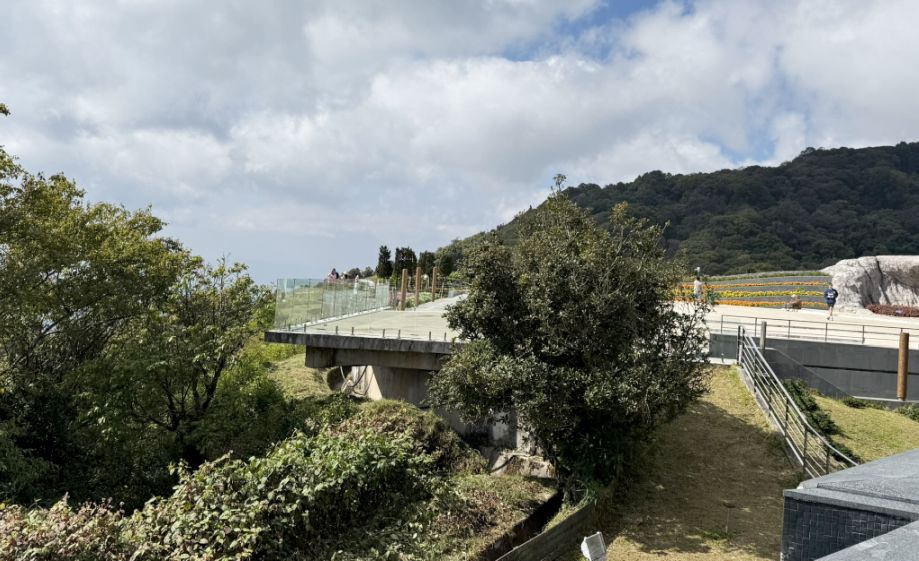
Then we reached the raised viewing platform, with its glass barrier right at the edge.
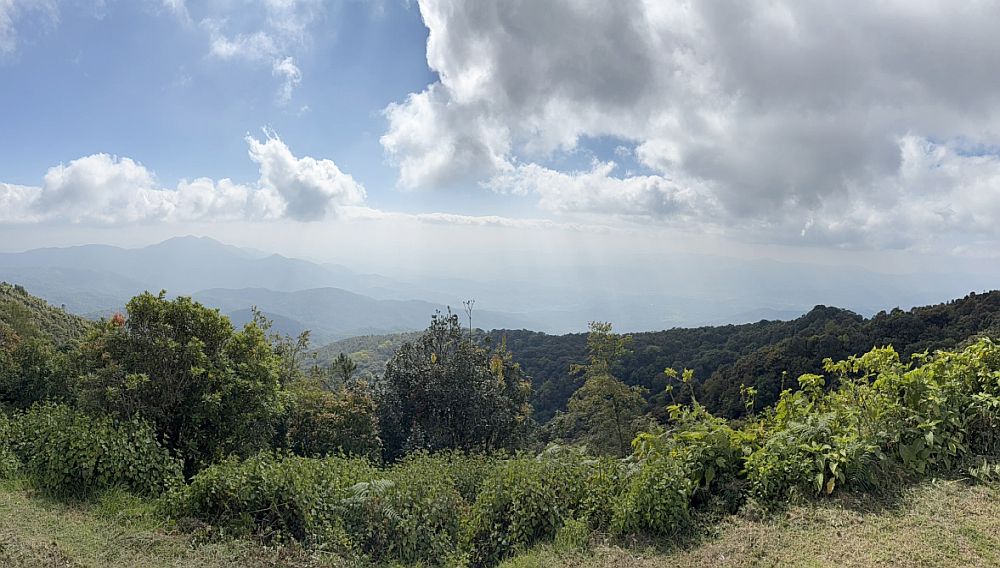
Standing there, unobstructed, the view stretches out in every direction, rolling mountains ridges, thick green forest below, and soft misty horizon that seems to go on forever. The glass barrier almost disappears, making it feel like you’re standing at the edge of the landscape itself. After the detailed artistry of the pagoda and its decorations, this moment feels expansive and quiet, less about design, more about nature.
NEXT... Day 5- Pha Dok Siao Nature Tail