12 days in Thailand 1/7- 1/18/2025
Day 12-Phi Phi, Maya Bay Speedboat tour-1/128/2025
1st stop: Phi Phi Island/Ao Phi Le Bay
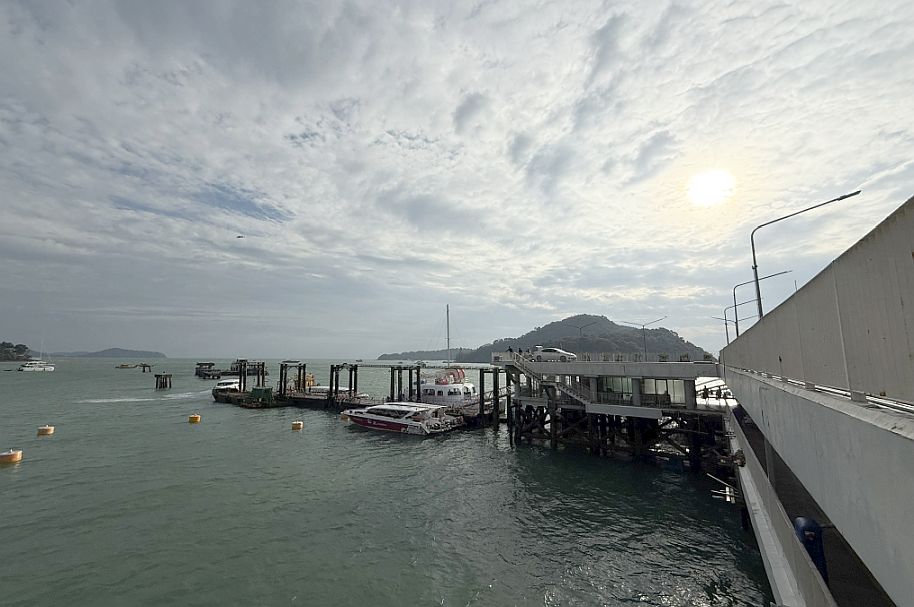
This morning’s journey took us to the quieter southeast side of Phuket. Panwa Pier sits on Cape Panwa, which is south and slightly east of Royal Phuket Marina (the pier we boarded yesterday) on the island’s northeast coast. This area is from a more secluded, less trafficked side of Phuket, facing out toward the open Andaman Sea.
View of the Pier from one of the meeting room.
 |
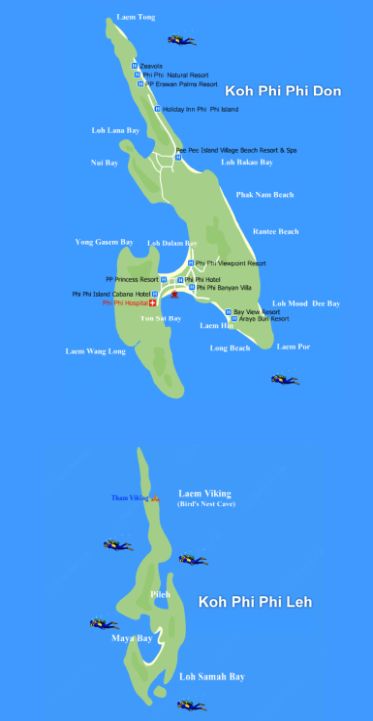 |
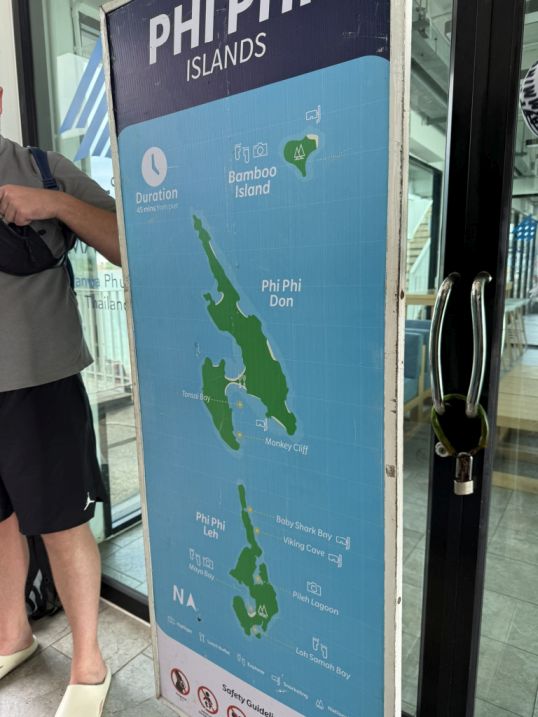
We met up with out tour guide in one of the meeting room inside the Pier. Map of Phi Phi Island
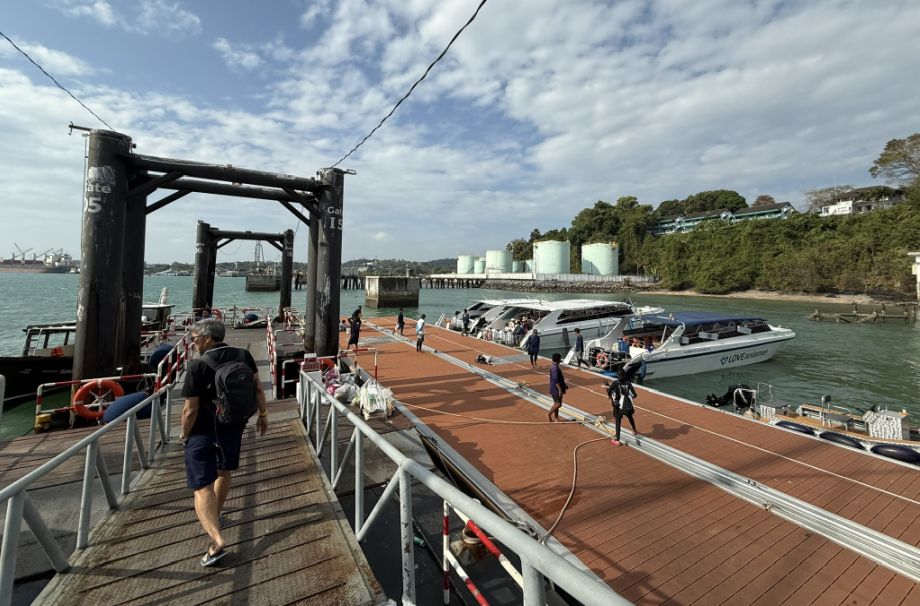
We are now walking to the pier to catch a speedboat.
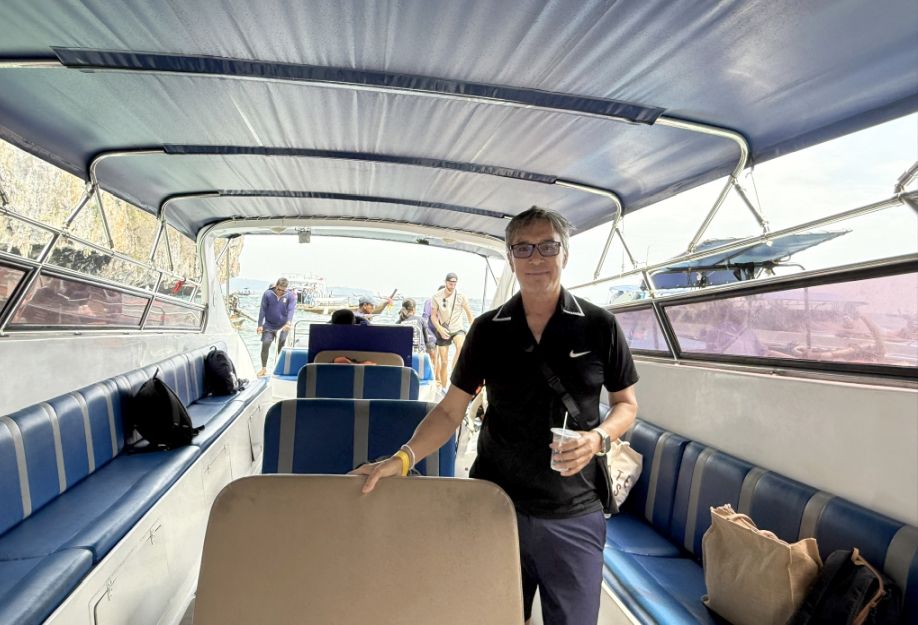
The speedboat ride to the entrance of Ao Phi Le Bay typically takes around 45 minutes to 1 hour, depending on sea conditions and speed. The boat ride from the pier toward Ao Phi Le Bay felt completely different from the day before. Yesterday’s glassy, calm water had given way to choppier waves, and the longtail boat bounced and slapped against the sea with each swell. The wind picked up spray from the surface, and every so often a larger wave would send a jolt through the boat, making the ride both thrilling and slightly unsettling. Taking motion sickness medicine beforehand turned out to be a very good decision, it made it much easier to enjoy the journey instead of focusing on the rocking.
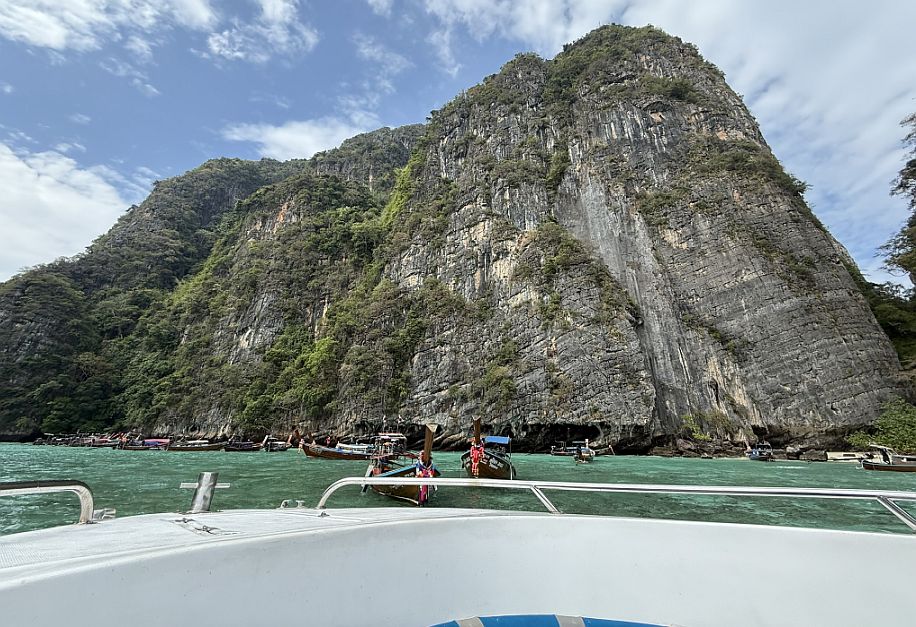
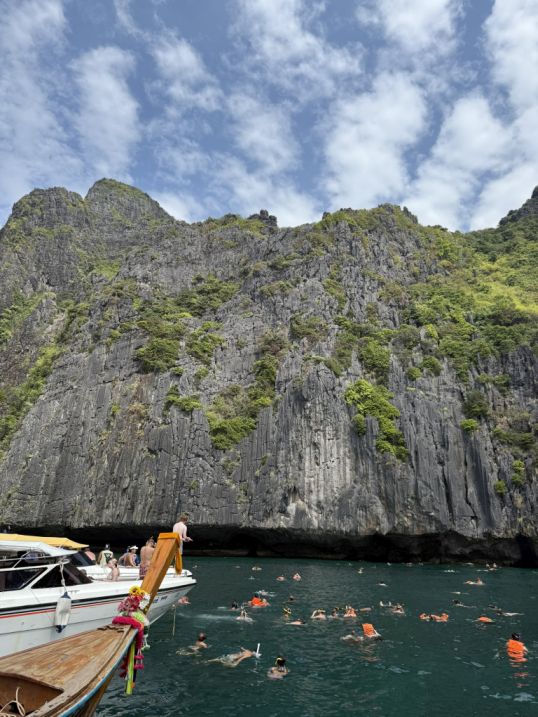
As we approached the entrance of Ao Phi Le Bay, the scenery shifted dramatically. Towering limestone karst mountains rose almost straight out of the water, their steep, dark cliffs streaked with greenery clinging to every ledge.
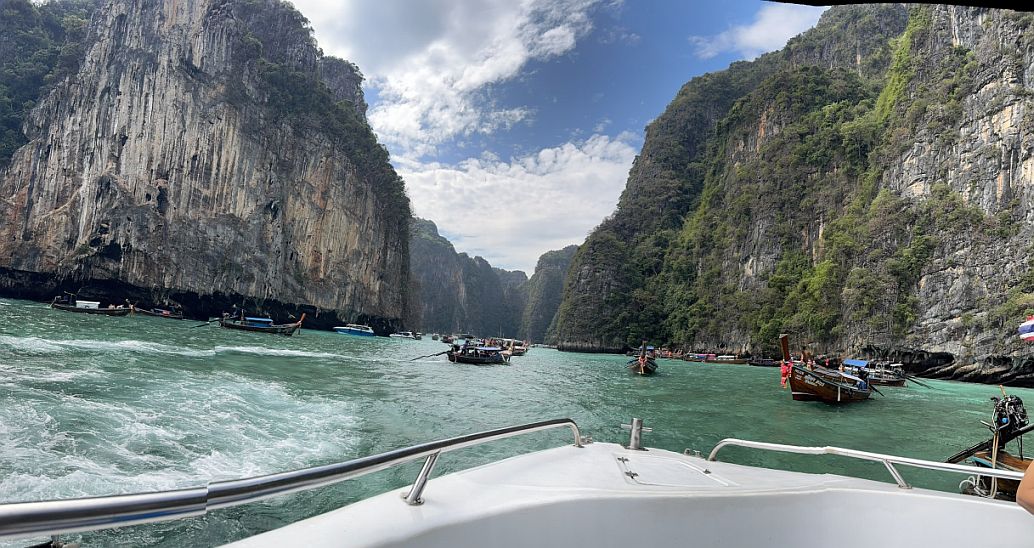
The opening to the bay felt almost hidden, like a secret passage carved into the rock. From the outside, it was hard to imagine what lay beyond, but as the boat slipped through the narrow entrance, the space opened up into something truly breathtaking.
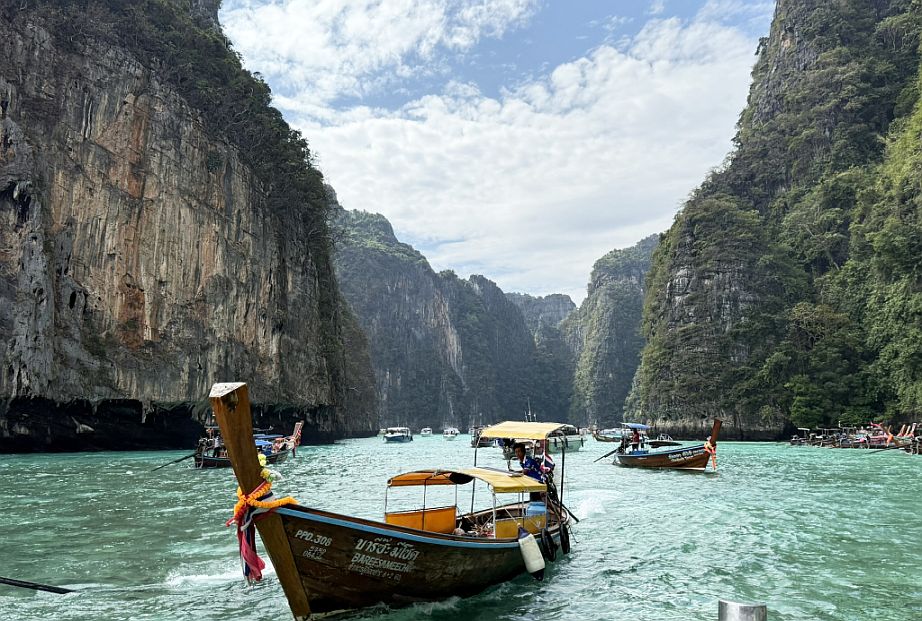
Towering karst limestone cliffs rise almost vertically from the sea, their rugged faces streaked with shades of gray and green, softened by patches of tropical vegetation clinging to every ledge. As we reached the entrance of Ao Phi Le Bay, the sight of those colorful long-tail boats gathered against a backdrop of towering cliffs really captures how this once-remote lagoon has become one of Thailand’s iconic destinations, busy, yes, but still undeniably breathtaking.
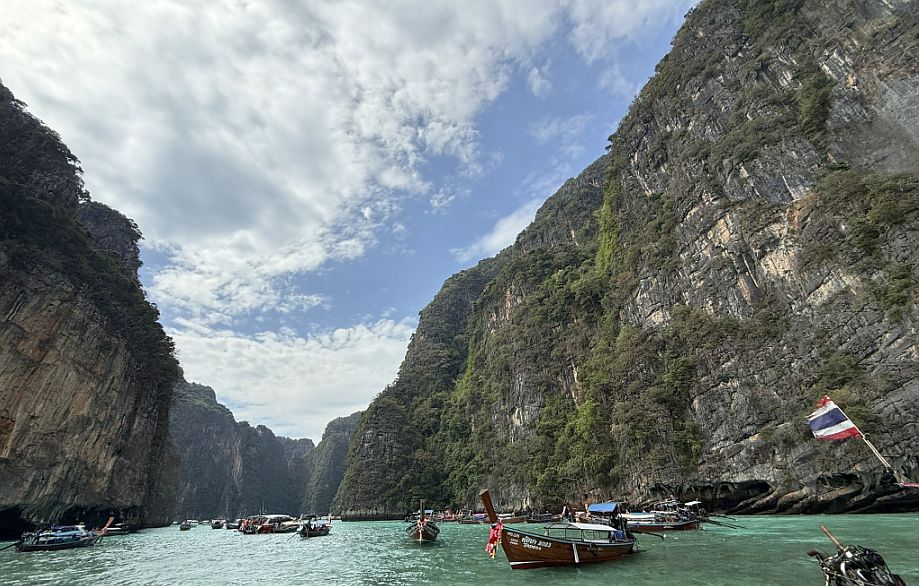
Geologically, the dramatic karst mountains surrounding the bay date back hundreds of millions of years.
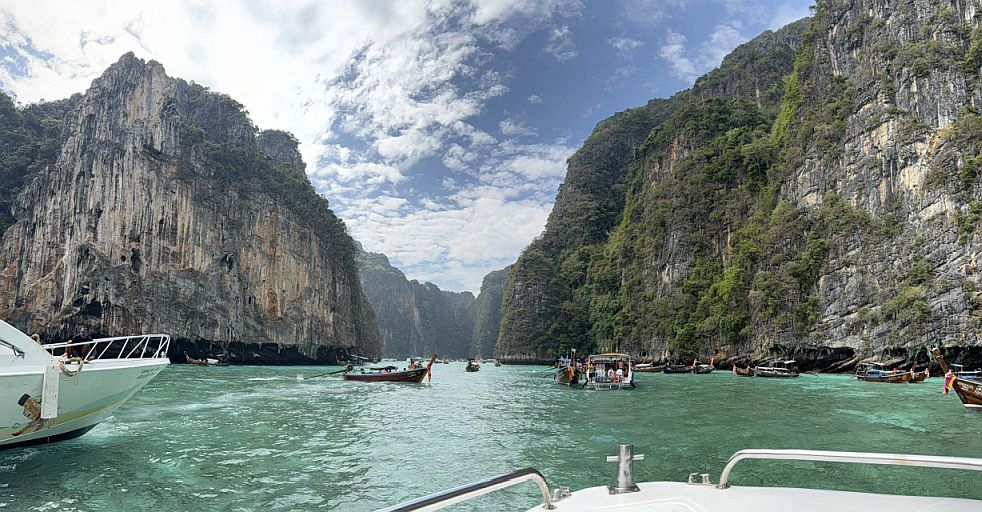
The area was once a shallow tropical sea where layers of coral, shells, and marine organisms accumulated and eventually hardened into limestone. Over time, tectonic uplift raised these limestone above sea level, and then nature took over, rainwater, slightly acidic, slowly dissolved the limestone in a process known as karstification. This created the sheer cliffs, hidden caves, and enclosed lagoons we see today. The steep vertical walls are a hallmark of this process, shaped by both chemical erosion and the relentless action of waves.
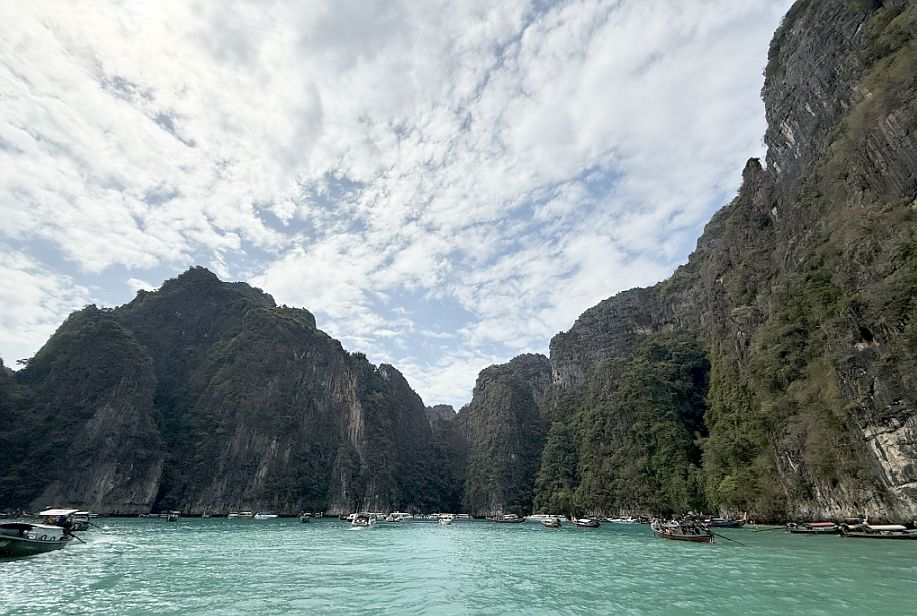
Historically, the Phi Phi islands, including this bay, were not heavily inhabited but were used by local fishermen and sea gypsies as sheltered anchorages. For much of their history, these places remained relatively untouched due to their isolation and difficult access. That changed in the late 20th century as tourism in southern Thailand expanded, and the islands became famous worldwide for their natural beauty.
 |
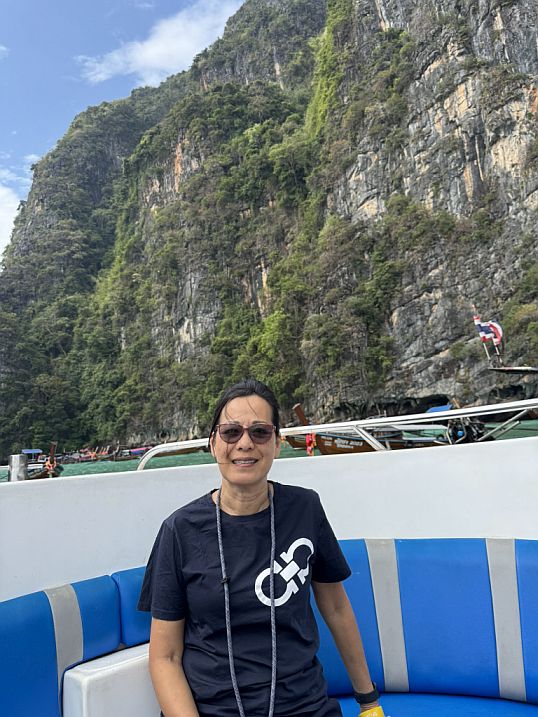 |
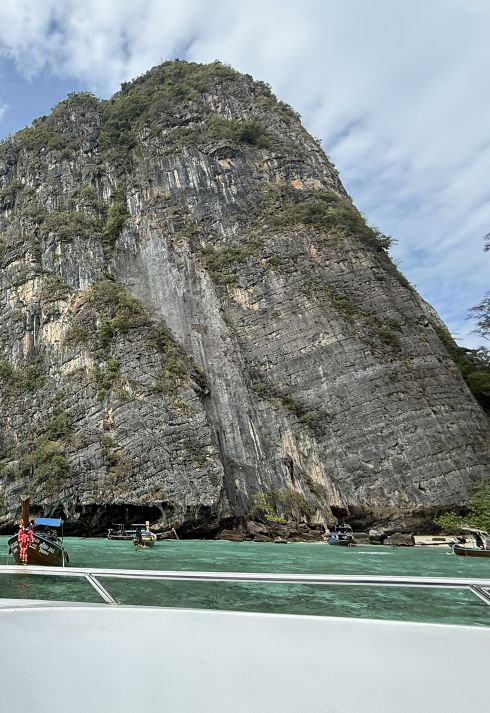
Sitting on the boat and passing these towering Karst mountain is very impressive.
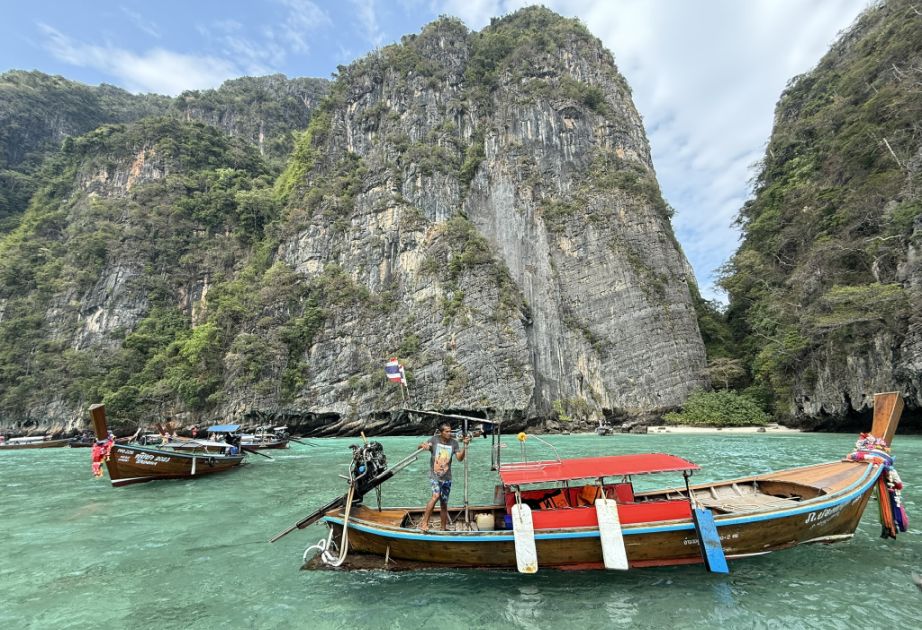
These smaller, colorful wooden boats are traditional Thai long-tail boats, and they are a big part of the character of places like Ao Phi Le Bay. They are called long-tail boats because of the way the engine is mounted, on a long metal shaft that extends out behind the boat, with a propeller at the end.
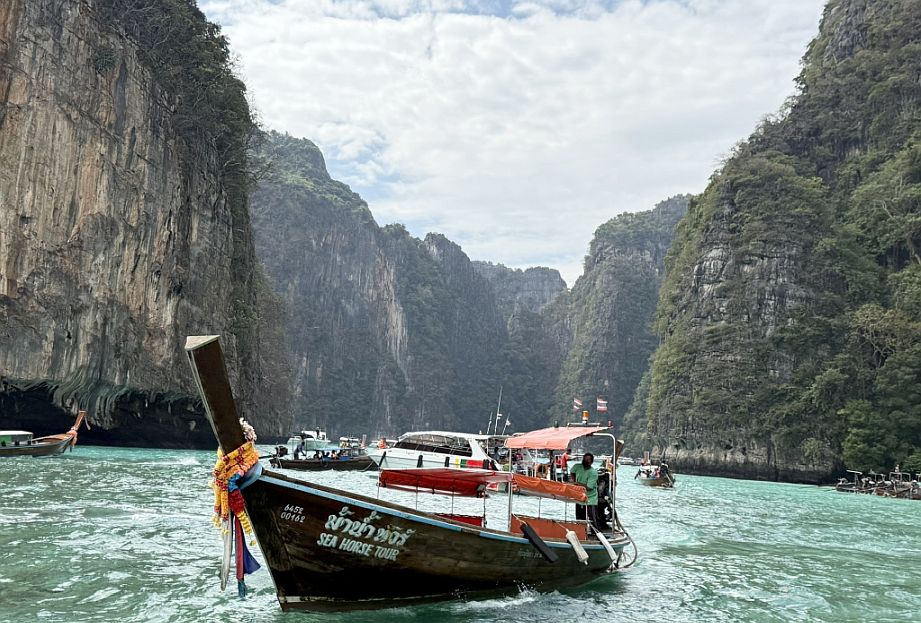
This setup makes them incredibly maneuverable, especially in shallow water and tight spaces, which is exactly why they’re used in these narrow coves and along the edges of the karst cliffs.
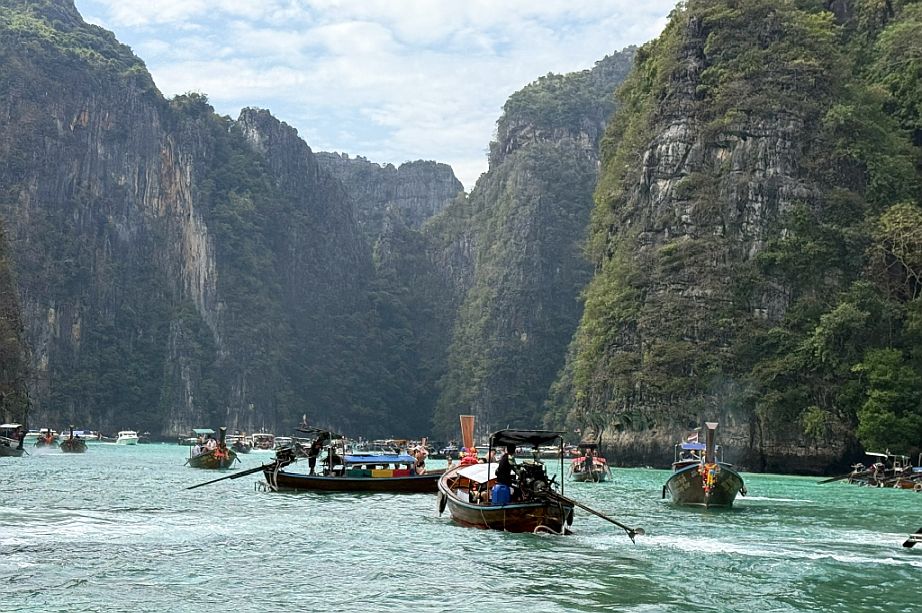
Today, while the bay is lively with visitors, what we are seeing is the result of an ancient landscape shaped over immense spans of time, far older and more enduring than the colorful boats floating at its entrance
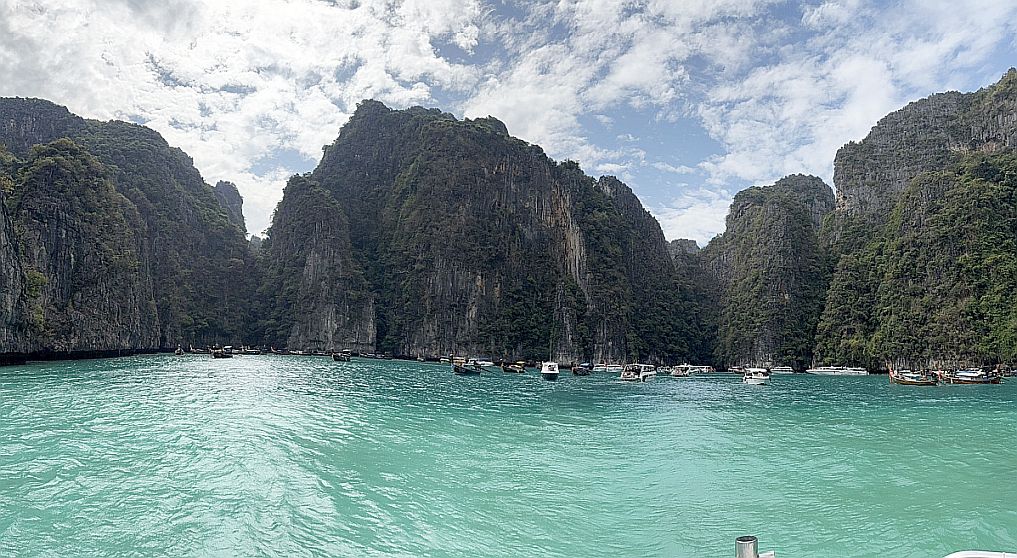
Towering karst limestone cliffs rise almost vertically from the sea, their rugged faces streaked with shades of gray and green, softened by patches of tropical vegetation clinging to every ledge.
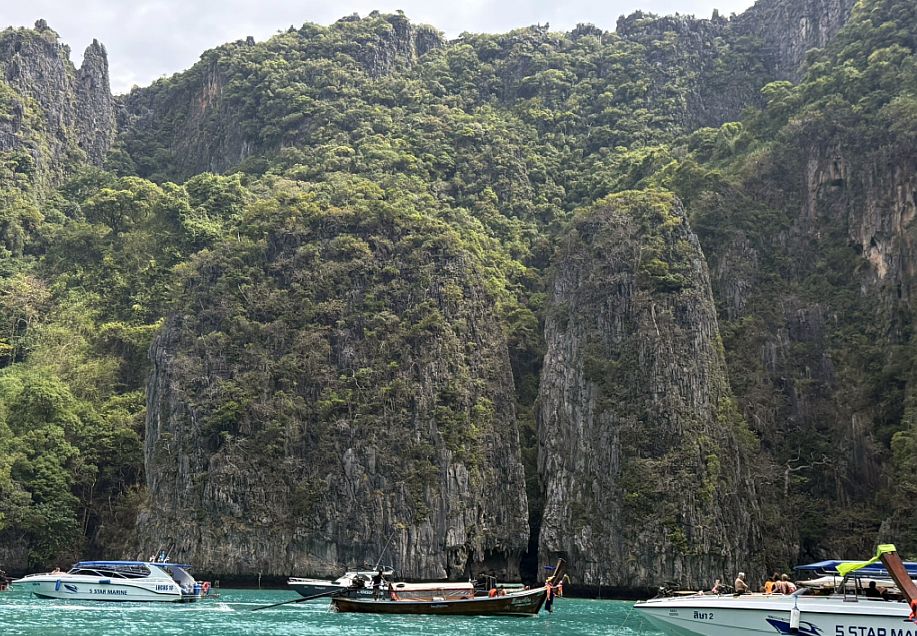
Our guide gave us an option to rent a longtail boat to get closer to the cliffs. Larger speedboats can’t safely approach the rocky edges or shallow areas, but long-tail boats can glide right up to small inlets, caves, or narrow openings in the limestone. That’s where you really feel the scale of the karst mountains towering above you, with the sound of the engine echoing off the rock walls and the water turning even clearer and more still.
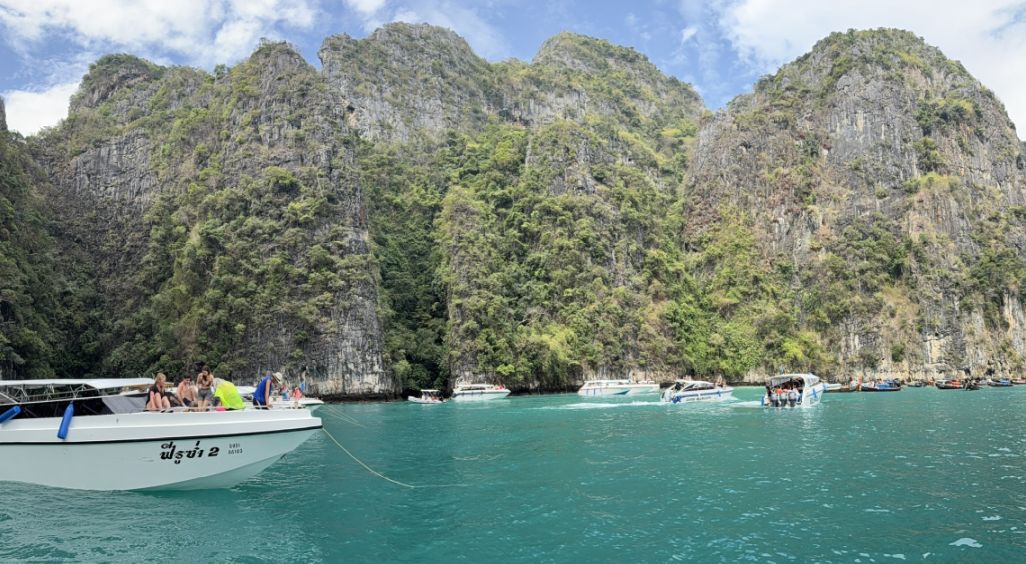
We opted to stay on the boat and watch from a distance.
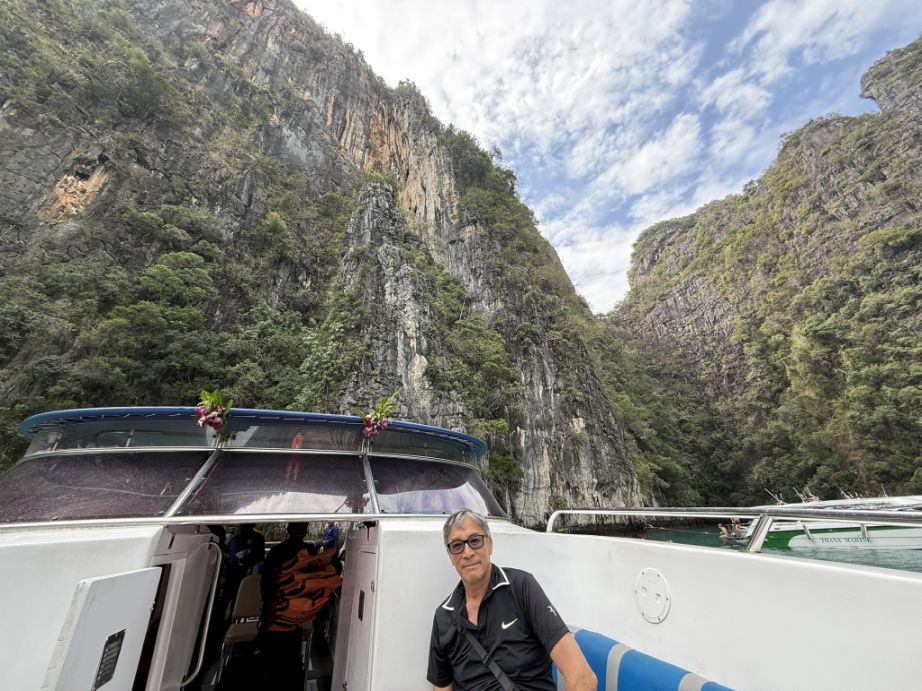
While most people peeled off onto the long-tail boats, we stayed behind and suddenly the whole speedboat felt like it belonged just to us.
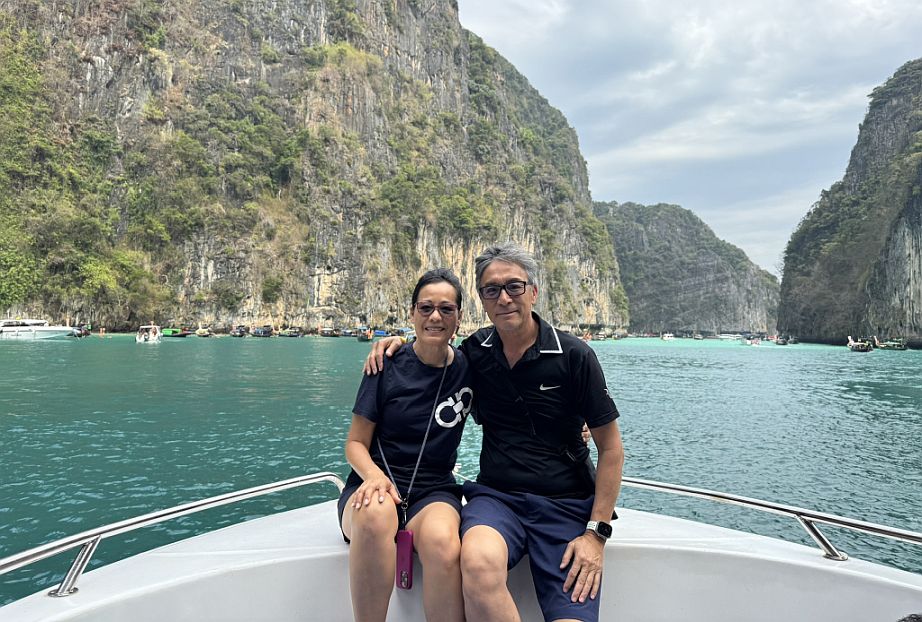
Out on the water in Ao Phi Le Bay, with fewer boats around us, everything probably felt calmer, the cliffs a little more majestic, the water a little more vivid, the experience a little more personal.
 |
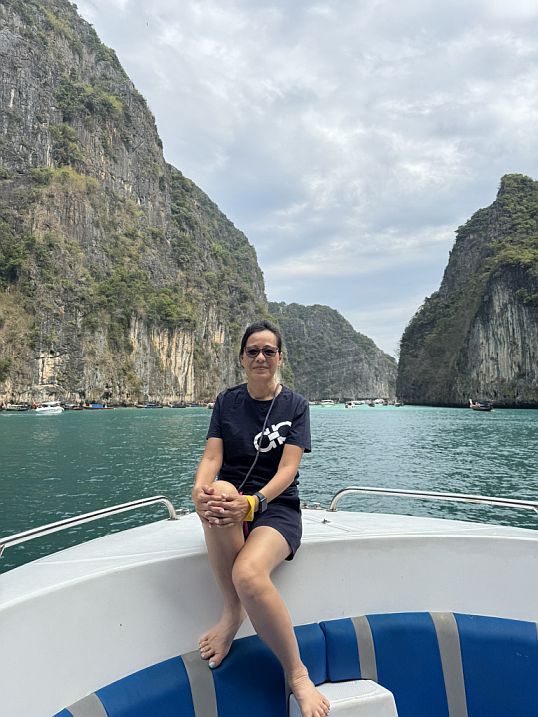 |
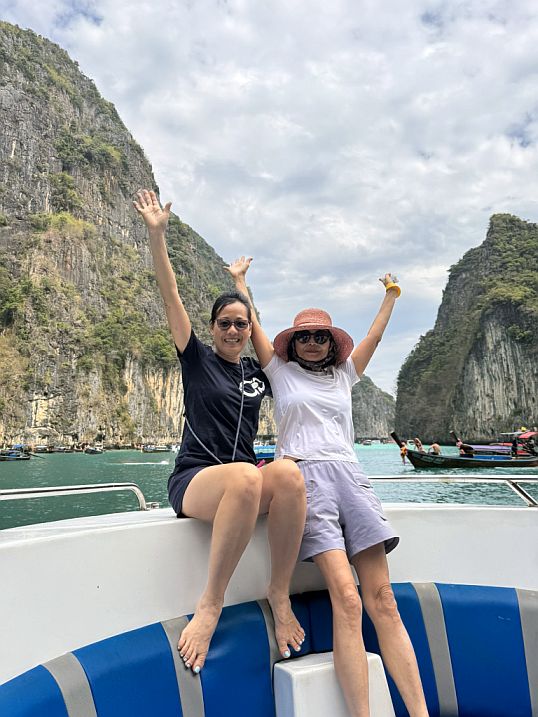
Standing and sitting on that narrow, pointed bow, where the seats stretch forward, is such a special spot.
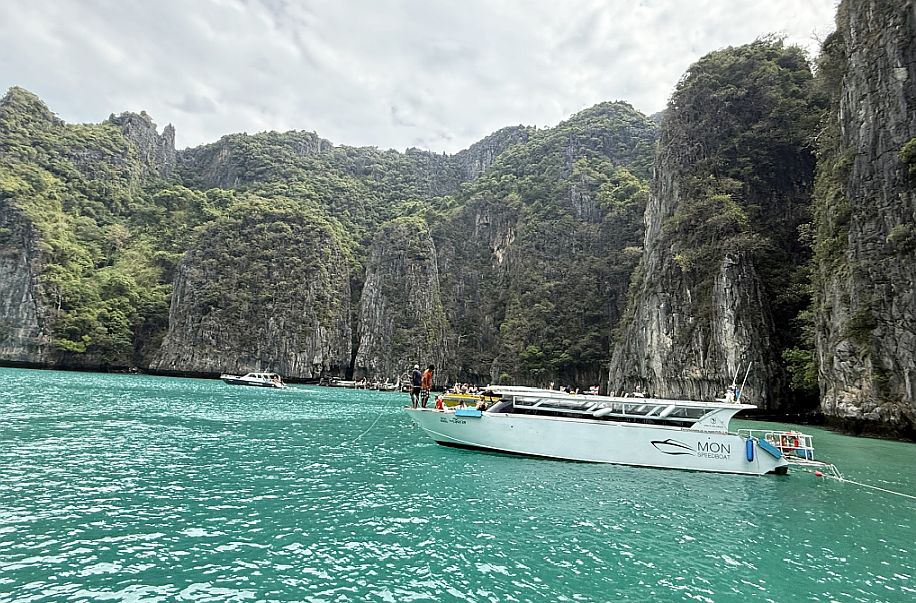
With the boat gently rocking and the breeze, it gives us an uninterrupted view straight into the heart of the bay. It’s the kind of place where photos don’t just capture the scenery, they capture the feeling of being there: the openness, the light, the towering karst walls rising on all sides.
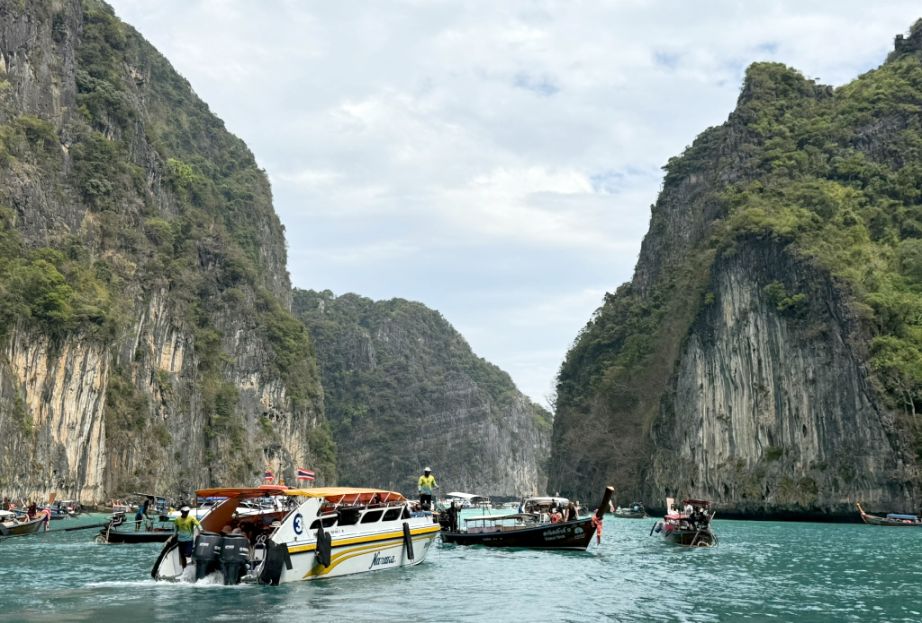
As we moved deeper into the cove of Ao Phi Le Bay.
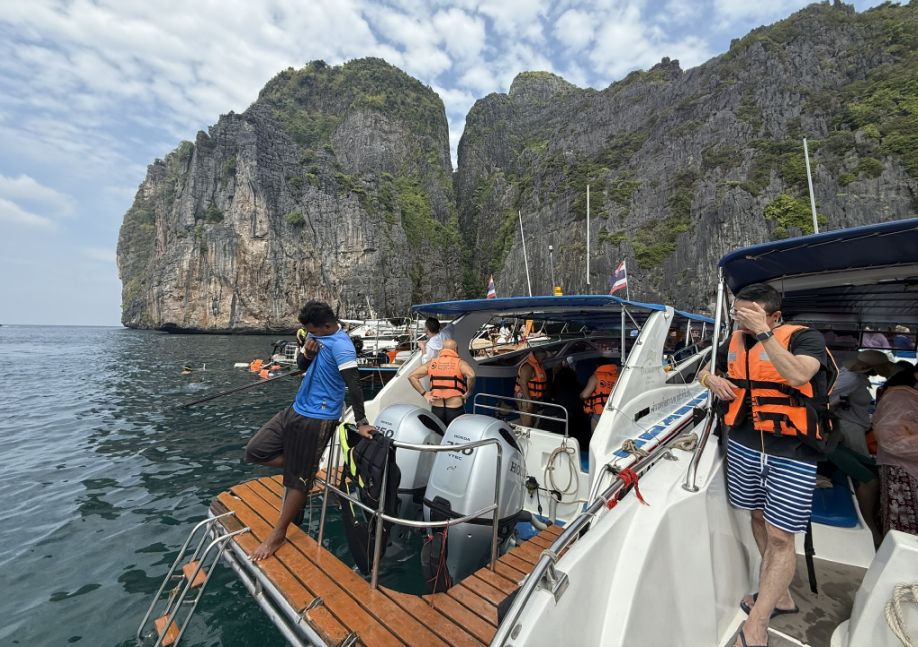
Dozens of boats were anchored side by side, gently bobbing on the calm water, creating a floating mosaic of colors and movement
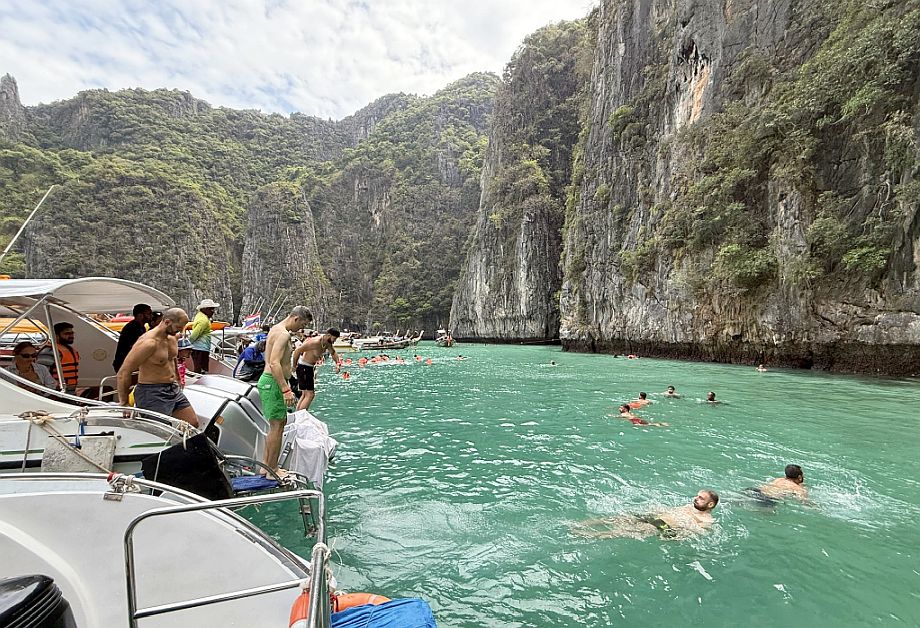
People using the boat as a jumping board.
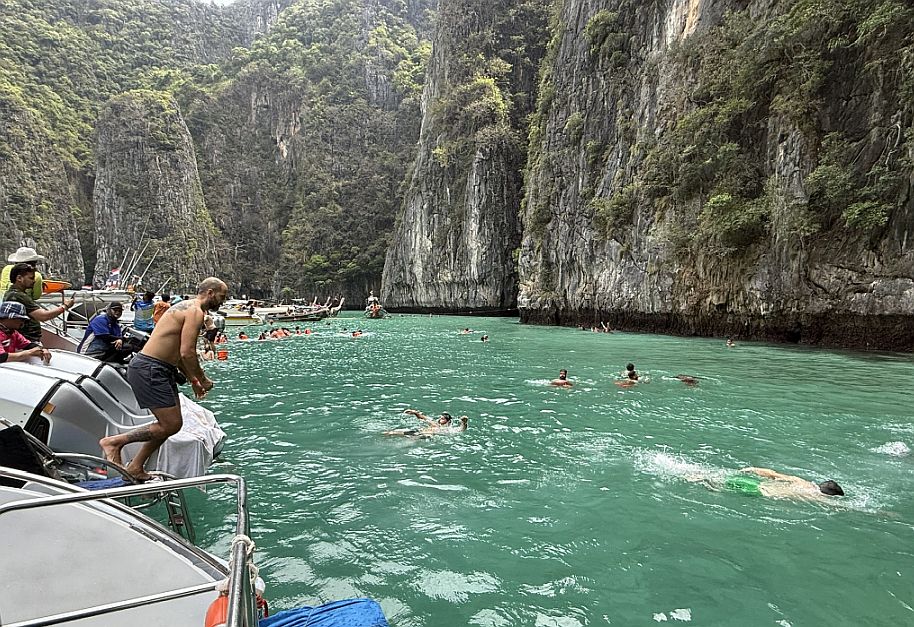
The sea here was a striking shade of turquoise, so clear you could glimpse the world beneath the surface.
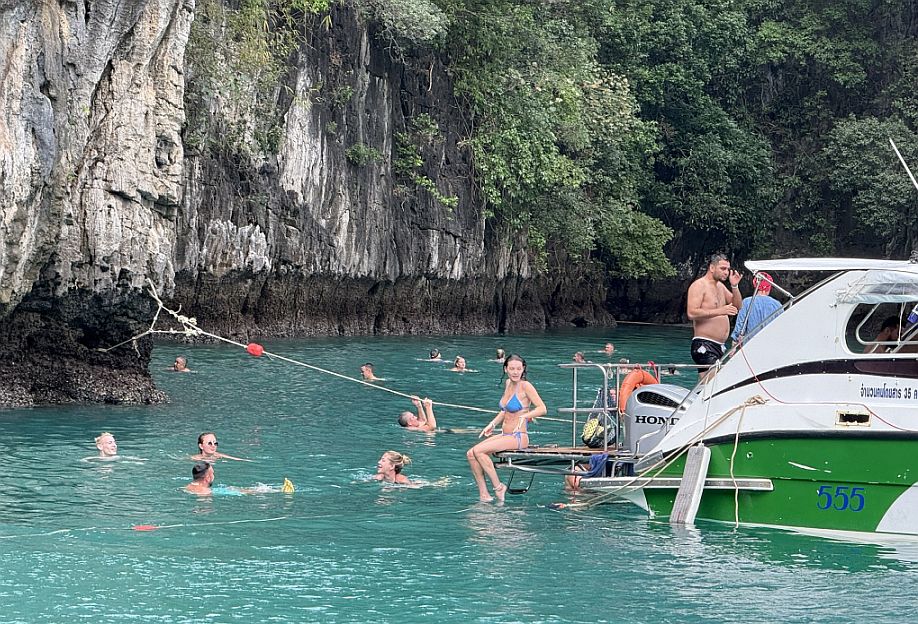
People swimming all around as the water is really clear and beautiful.
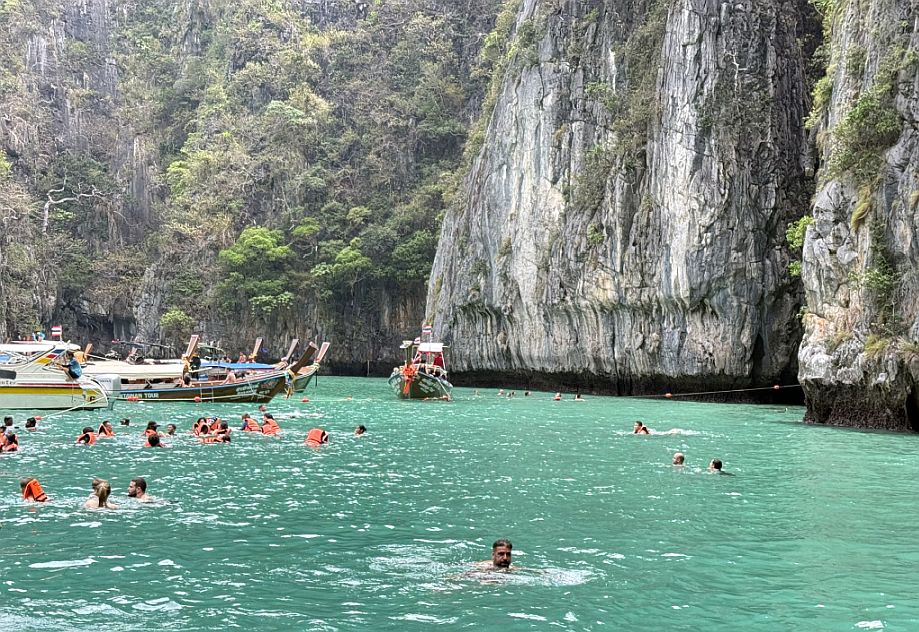
All around us, people drifted in the water wearing bright orange flotation vests, their colors popping against the blue-green sea.
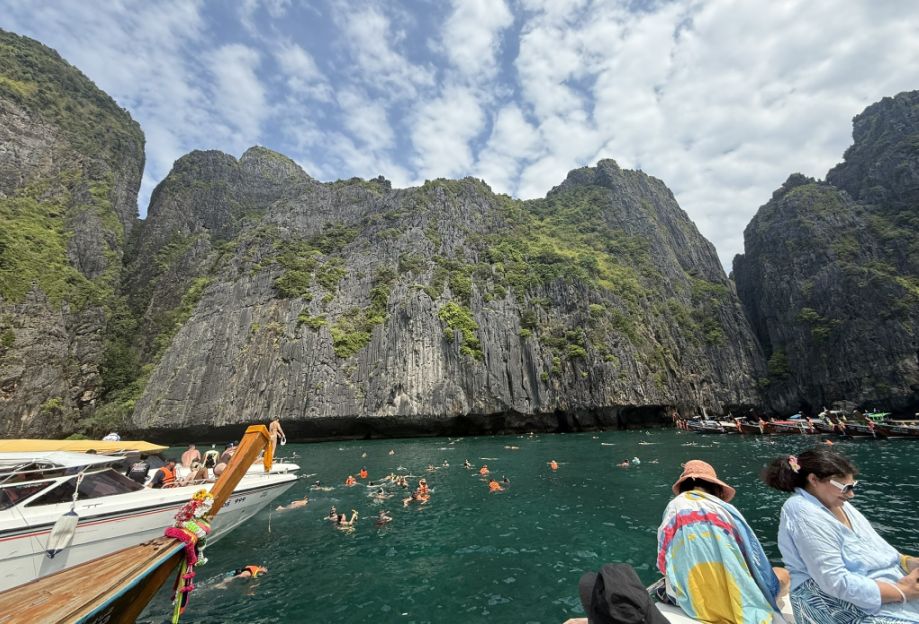
We are now toward the end of the cove.
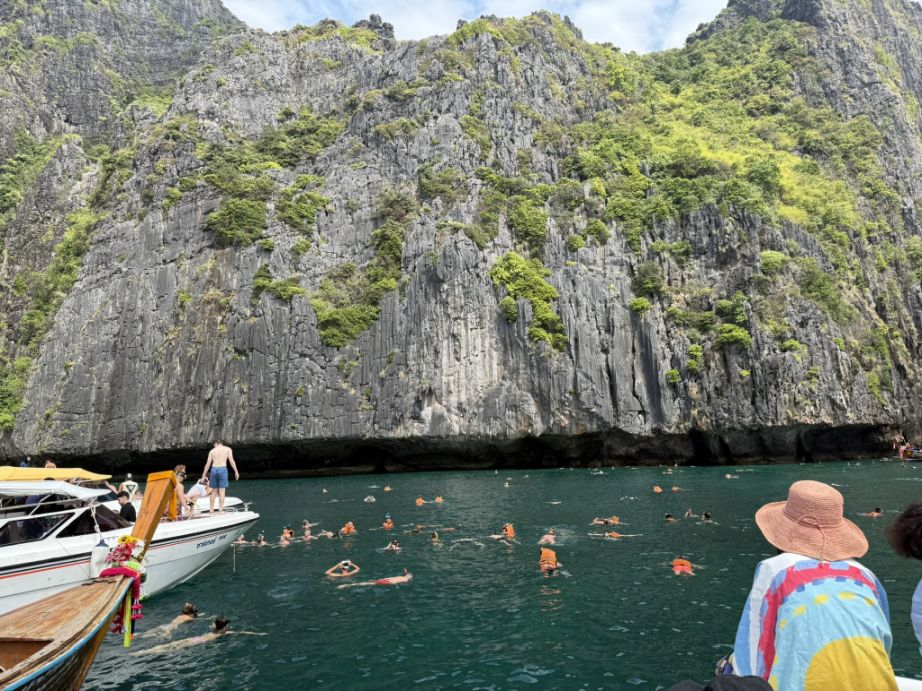
Loan watching people swimming and snorkeling.
 |
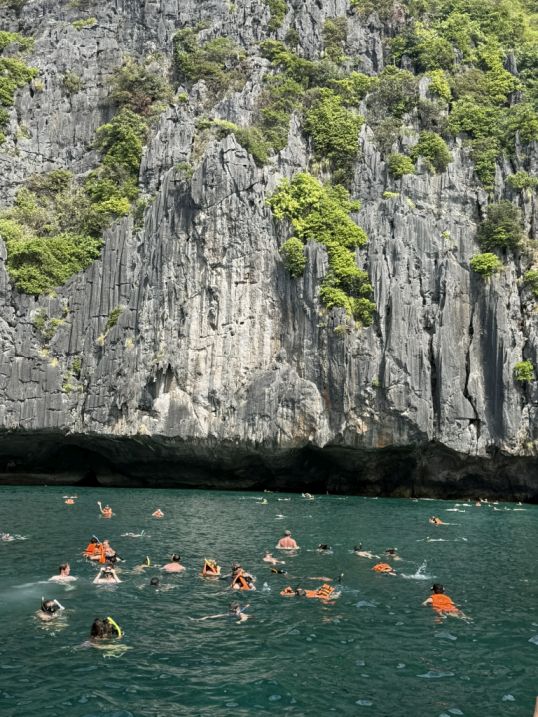 |
So many people are snorkeling!
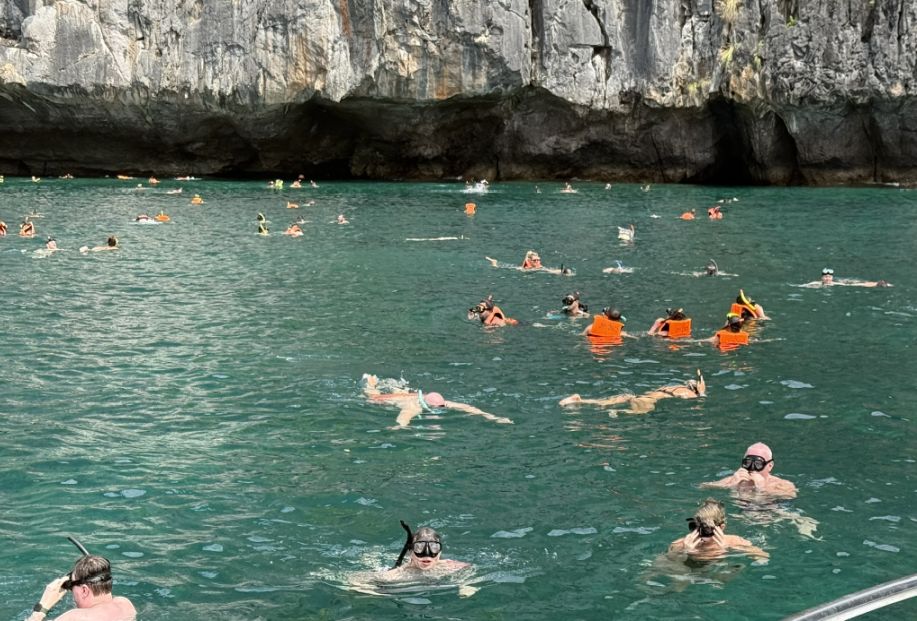
Snorkelers floated face-down, exploring below, while others laughed and splashed nearby. It felt busy and energetic, almost festive, yet still surrounded by the towering karst cliffs that made the whole setting feel surreal, like a hidden lagoon brought to life with color and motion.
 |
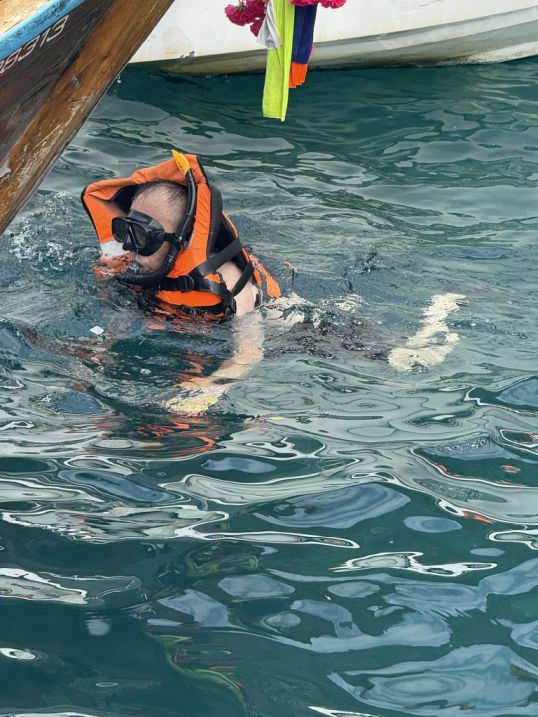 |
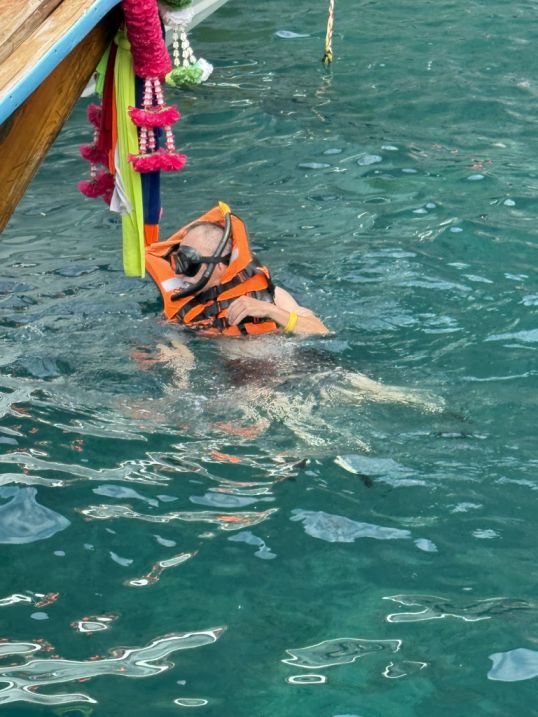
Minh having a great time snorkeling!
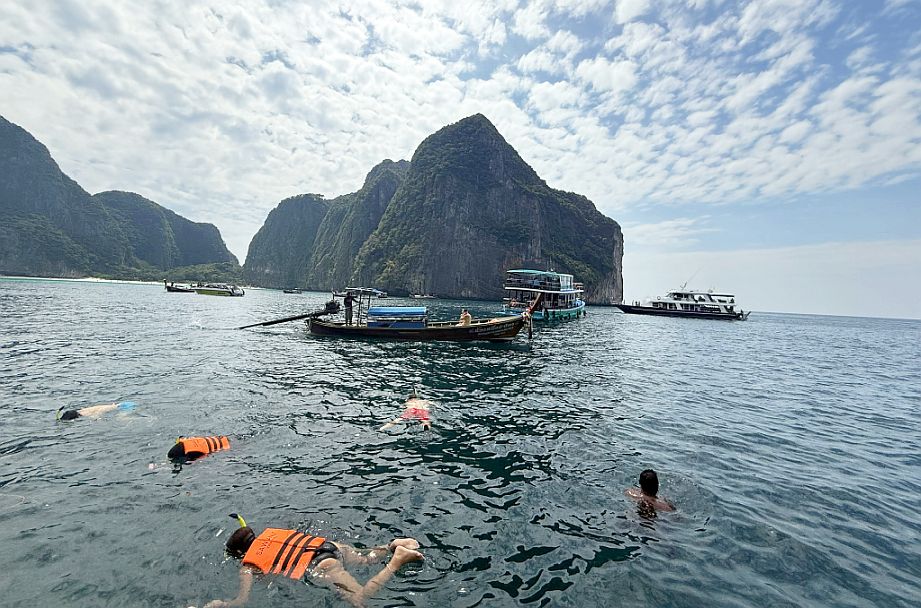
Snorklers floating around the bay.
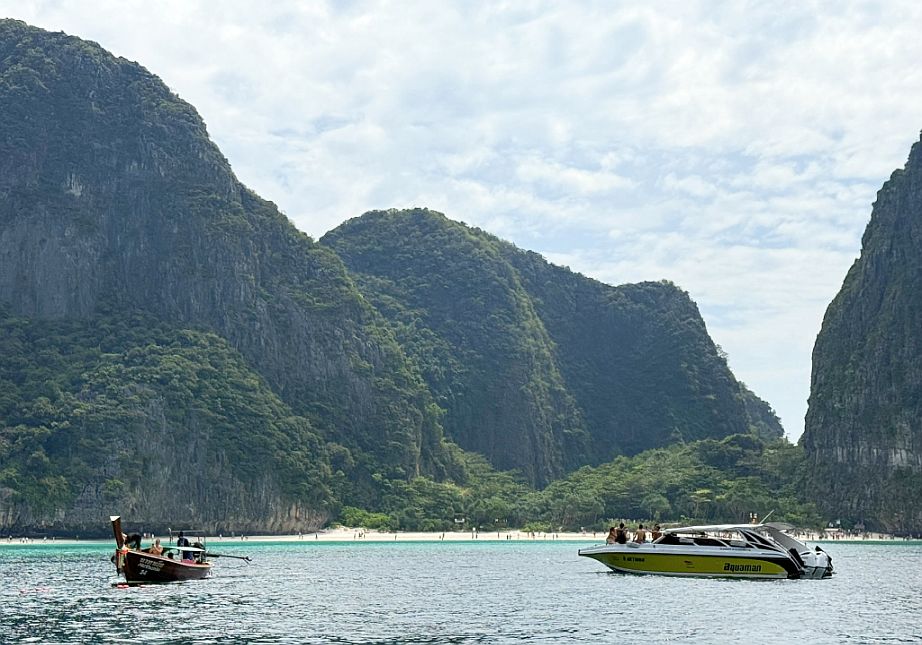
As we left Ao Phi Le Bay, we caught a glimpse in the distance of the stunning Maya Bay, its bright white sand framed by towering karst cliffs, almost glowing against the turquoise water.
Boats are no longer allowed to enter the bay directly, and that’s very intentional. Years of heavy tourism, especially after the beach gained worldwide fame from the film The Beach it caused significant damage to the coral reefs and marine ecosystem. Anchors, boat traffic, and pollution took a toll on what was once a fragile, pristine environment.
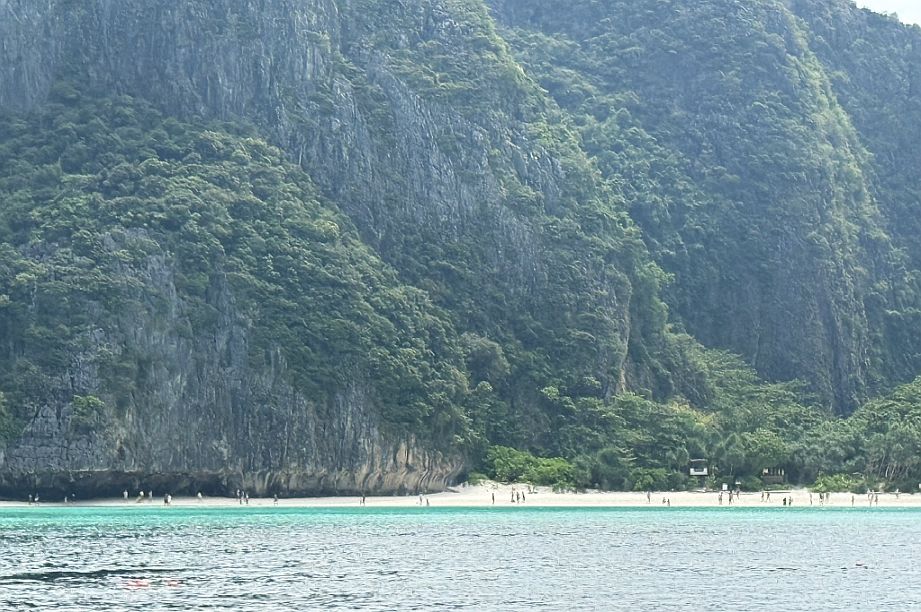
To protect and restore the area, Thai authorities closed the bay for several years and later reopened it with strict conservation rules. Now, boats must dock on the opposite side of the island, and visitors enter through a designated path, almost like walking through a nature park before emerging onto the beach.
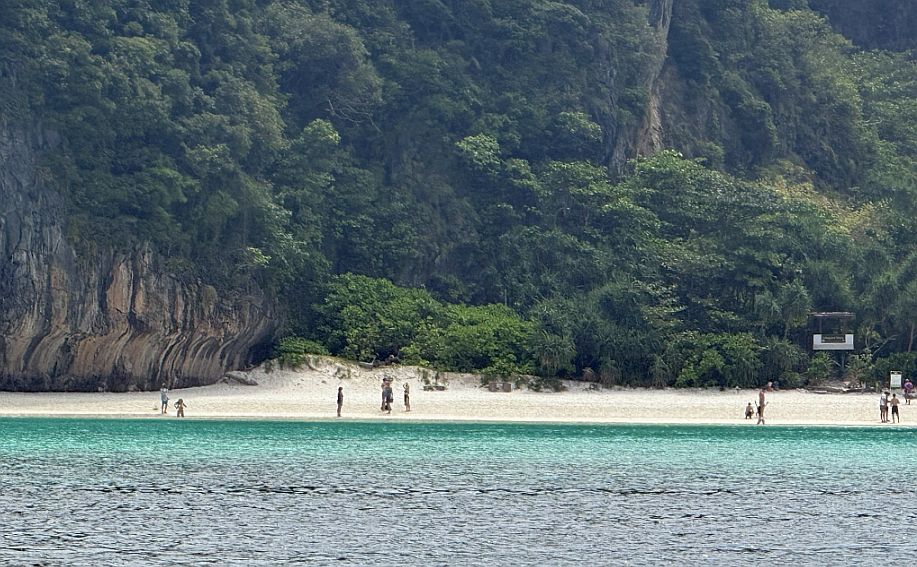
This limits boat congestion, reduces environmental impact, and helps preserve the coral, marine life, and the natural beauty of the bay.
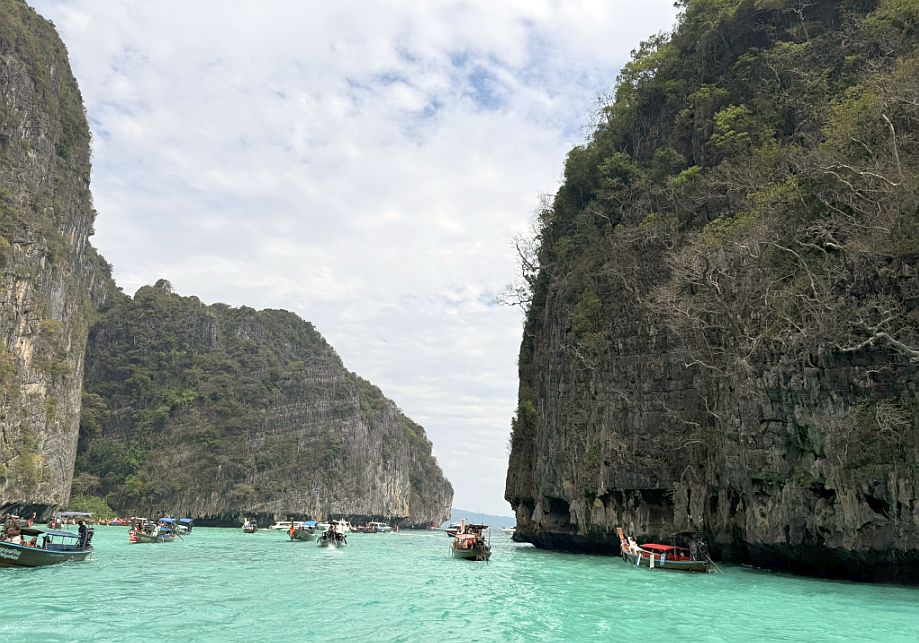
We are now sailing out the Ao Phi Le Bay.
NEXT... Day 12- Maya Bay