12 days in Thailand 1/7- 1/18/2025
Day 10- Old Town, Phuket-1/16/2025
After a good breakfast at our hotel we are walking to the Phuket Old Town that has a story that is rooted in trade, migration, and cultural blending that goes back more than a century. In the 19th century, Phuket was one of the world’s major tin-producing regions. This attracted waves of Chinese immigrants, especially from southern China, who came to work in the mines and eventually became wealthy merchants. Over time, they settled permanently, intermarried with local Thai communities, and formed what became known as the Peranakan culture.
Heading towared the Old Town.
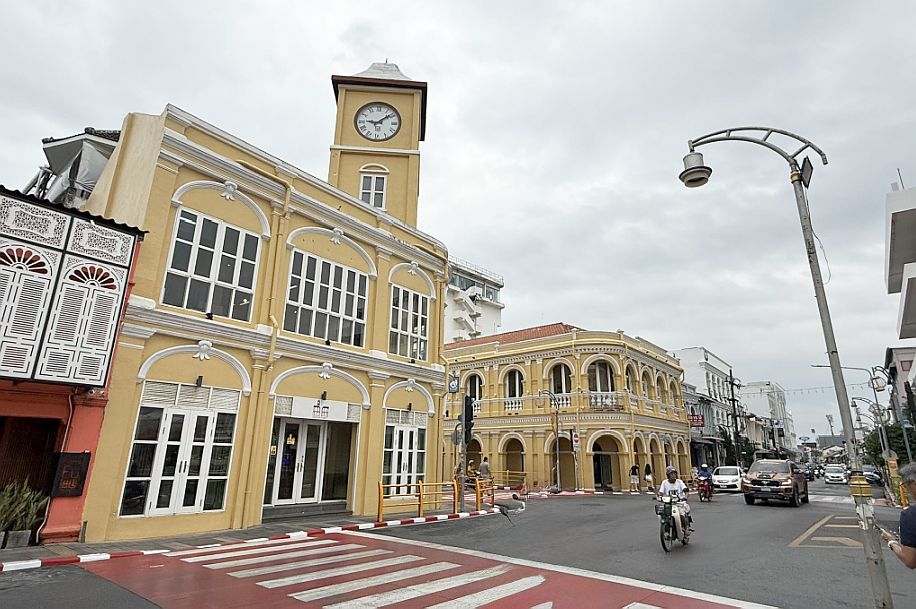
As we stepped into the Old Town, there are two grand yellow buildings that immediately set the tone, they’re not just beautiful, they’re anchors of Phuket’s history.
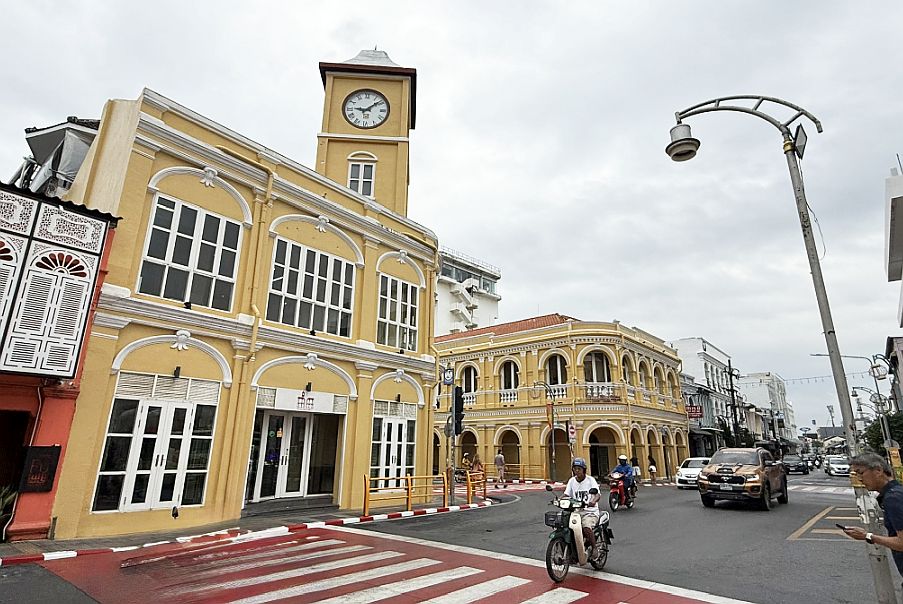
The first building with the clock tower is the Phuket Thai Hua Museum. Originally built in 1917 as a Chinese-language school, it reflects the importance of the Chinese community during Phuket’s tin-mining boom. The architecture is classic Sino-colonial, symmetrical, elegant, and painted in that distinctive soft yellow. Today, it’s a museum that tells the story of Chinese immigrants on the island, preserving the very roots of the culture we are walking through.
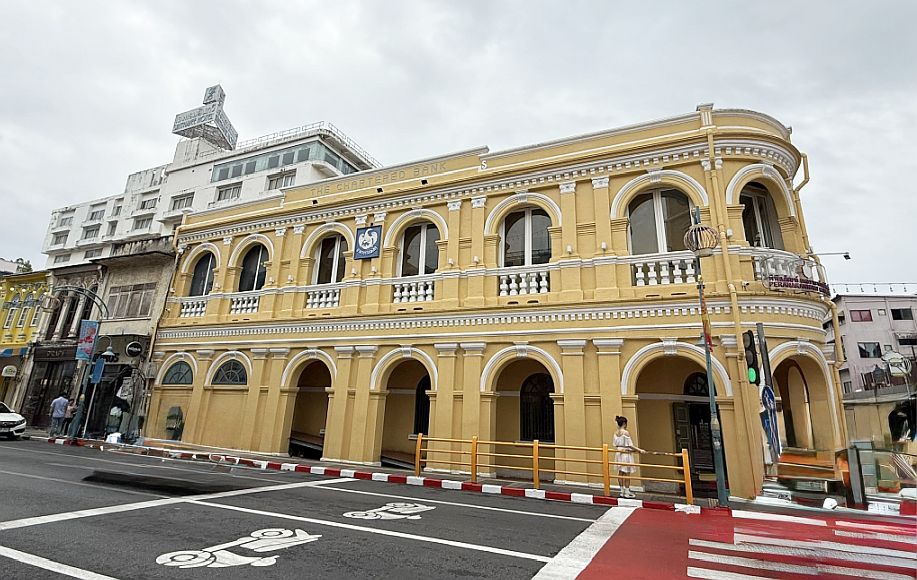
Right nearby is the old Chartered Bank of India Australia and China Phuket branch building. This was once part of an international banking network that supported global tin trade. Its presence here shows just how connected Phuket was to the wider world. The building’s solid, colonial style, with arched windows and a stately façade, signals wealth, stability, and the importance of commerce in this area.
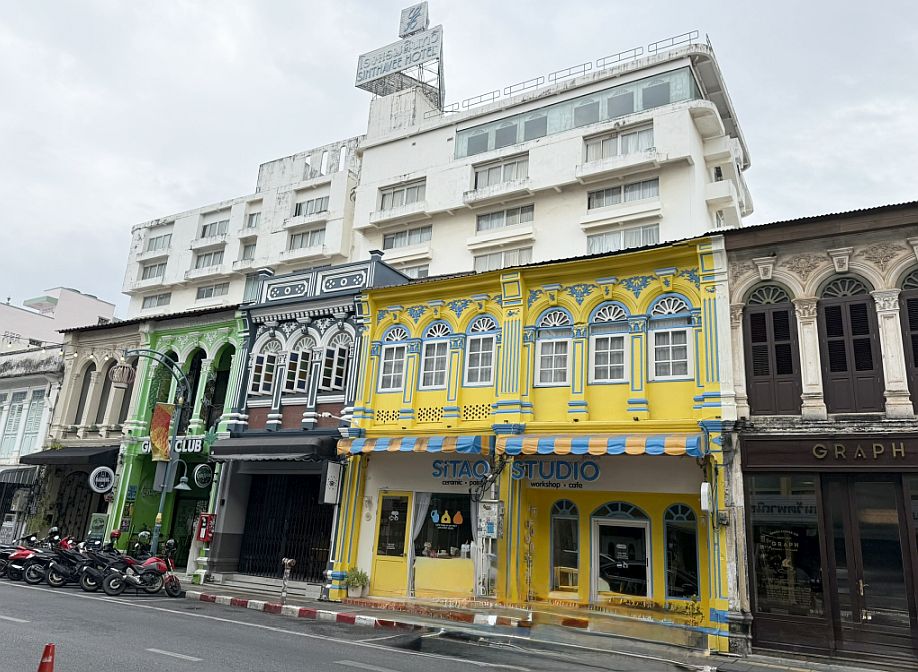
The bright yellow building with aqua blue trim, now a studio is a perfect example of how these historic spaces have been reimagined. The bold colors highlight the decorative moldings, window frames, and shutters, giving new life to structures that once housed family-run shops.
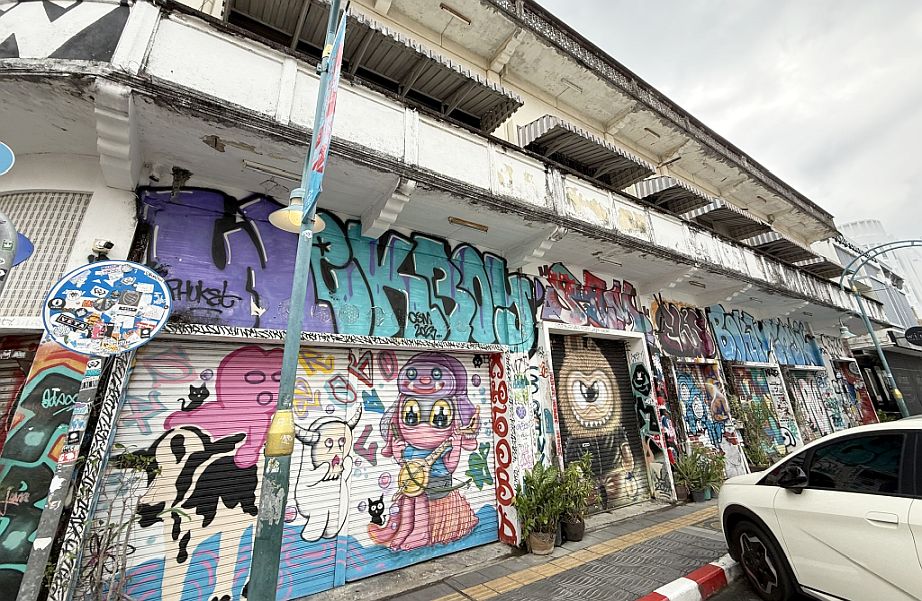
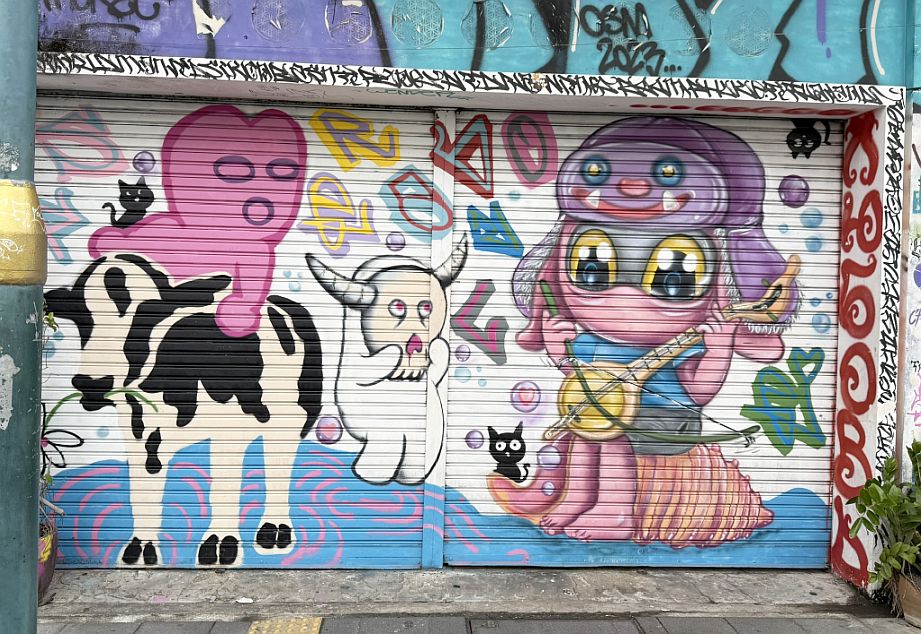
Phuket Street Art.
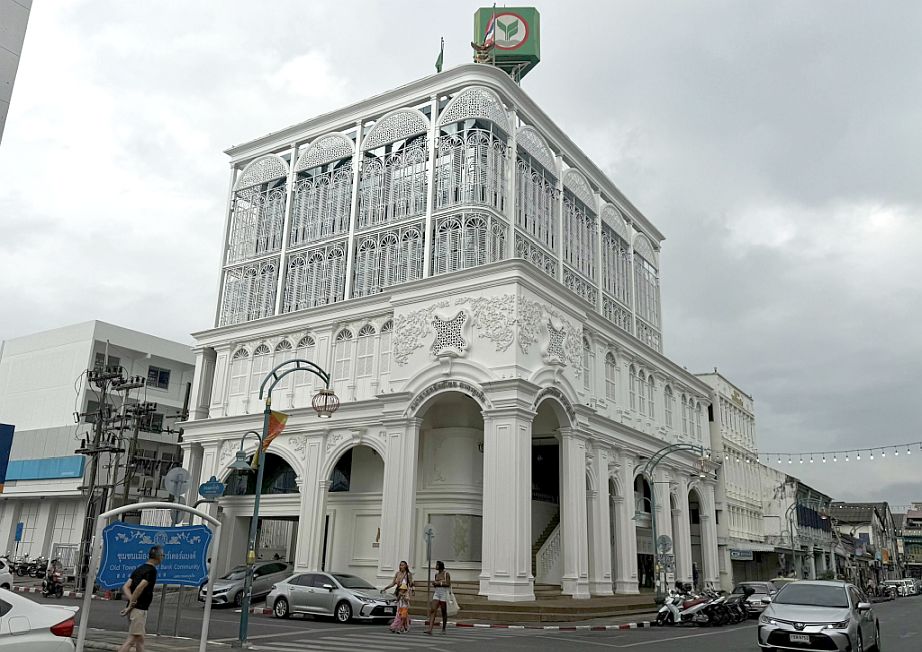
At the corner is the charming The Memory at On On Hotel. Opened in 1929, it’s considered the island’s first hotel, originally serving tin miners, traders, and travelers arriving from afar. The architecture is classic Sino-Portuguese: a narrow frontage that opens into a surprisingly deep interior, with a central courtyard that brings in light and air. Back in the day, it was simple and functional, shared bathrooms, basic rooms, but full of character. Today, after careful restoration, it blends vintage charm with boutique comfort.
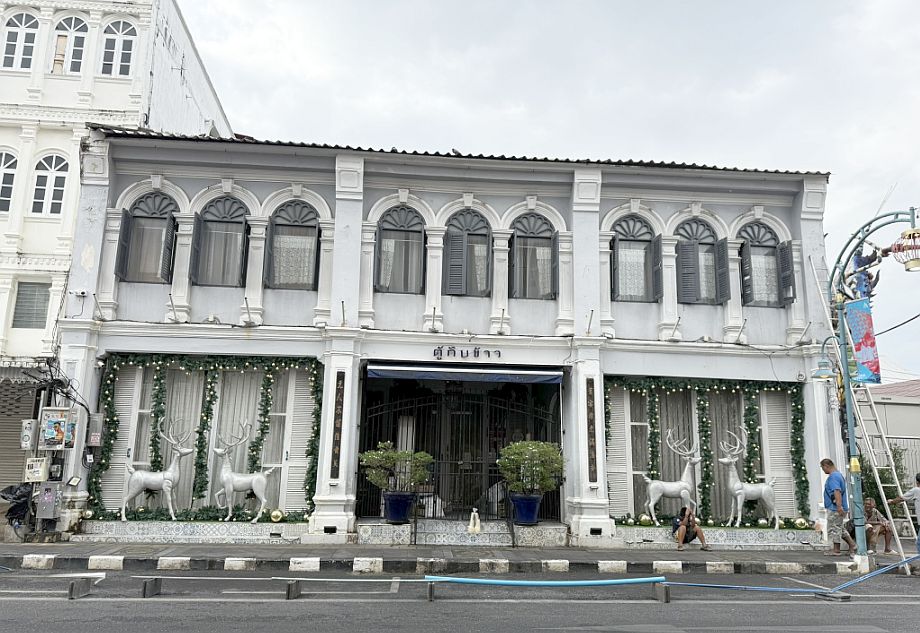
A beautiful building next to the hotel.
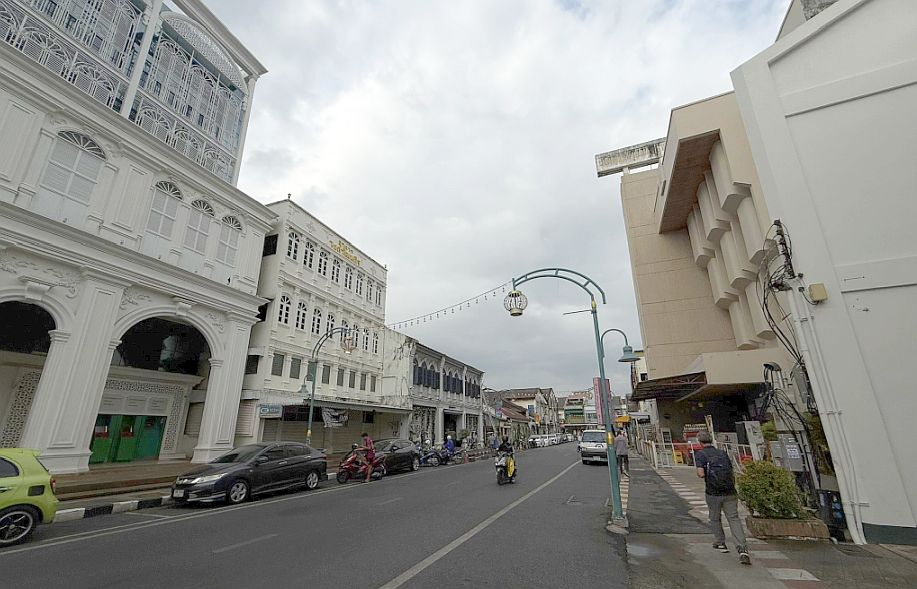
We continued our walk on Phang Nga Road.
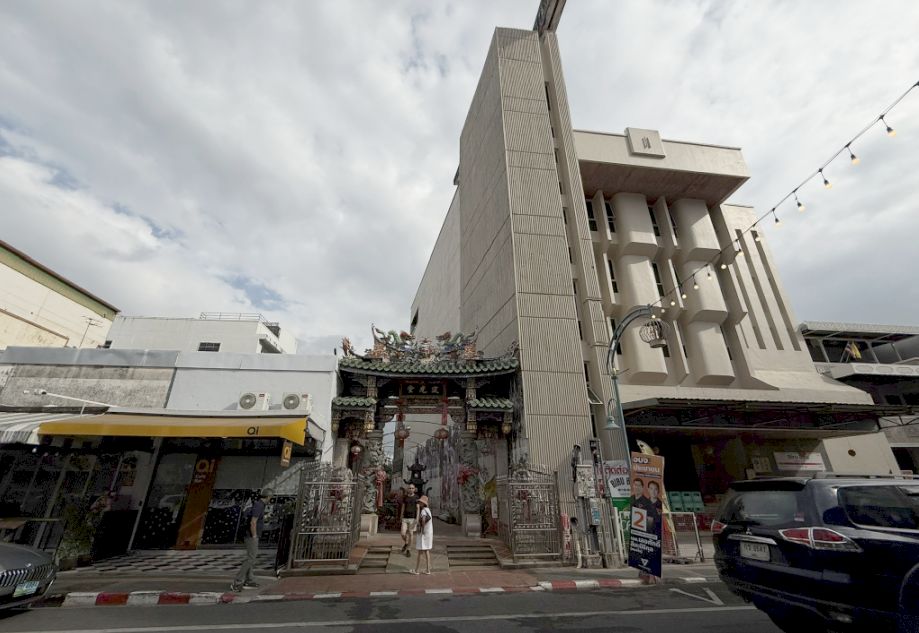
As we continued onto Phang Nga Road, this ornate Chinese gate immediately catches our eye. It feels almost symbolic, like a threshold between worlds. What makes this moment especially striking is the contrast: the gate is wedged between a modern building on one side and traditional two-story shophouses on the other. It perfectly captures Phuket Old Town’s layered identity, past and present coexisting in the same frame.
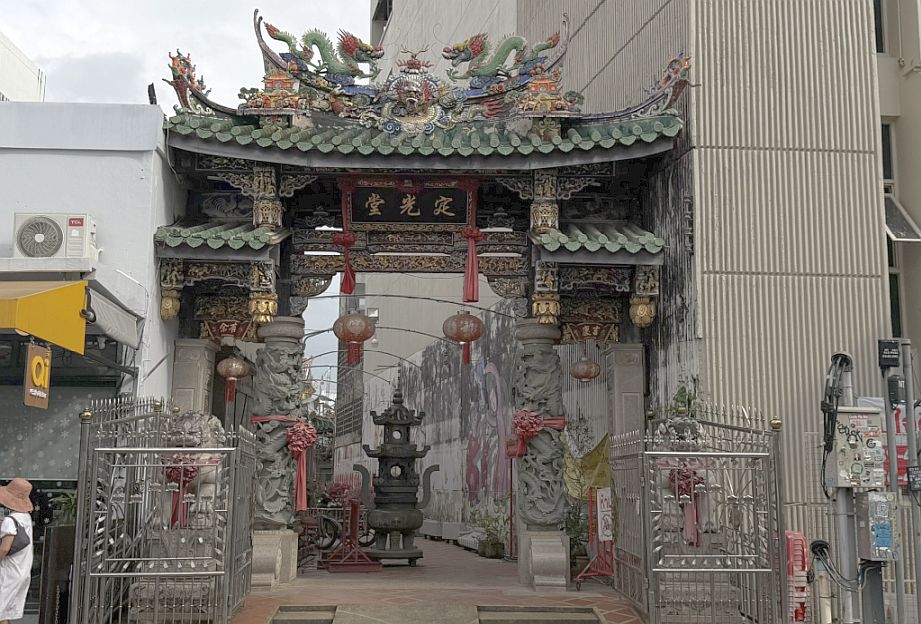
These gates are often linked to nearby Chinese shrines or community spaces, reflecting the deep influence of Chinese heritage in Phuket. The design elements are rich with meaning: Red and gold colors for prosperity and good fortune, dragon and phoenix motifs symbolizing power and harmony, and intricate carvings and layered roofs that echo temple architecture
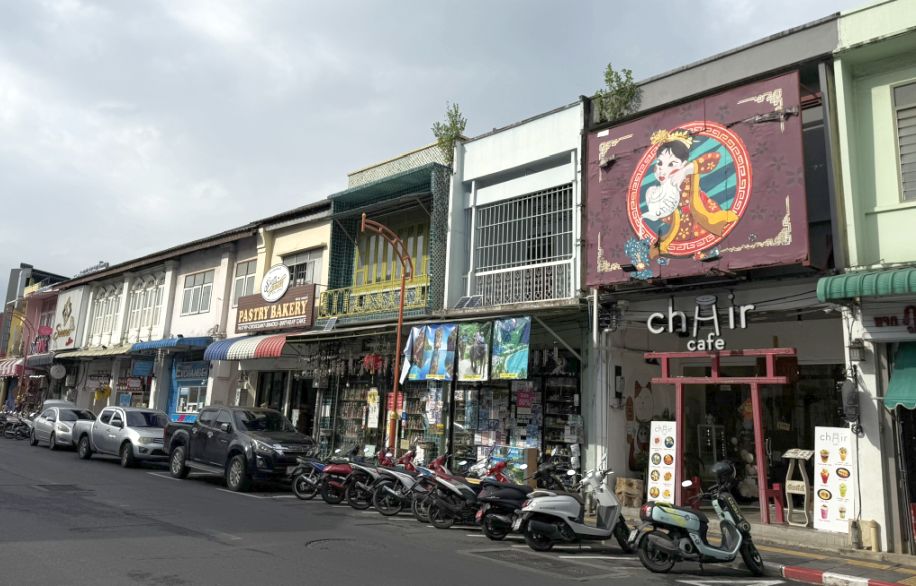
Yaowarat Road feels a bit more local, a bit more lived-in, while still incredibly photogenic.
 |
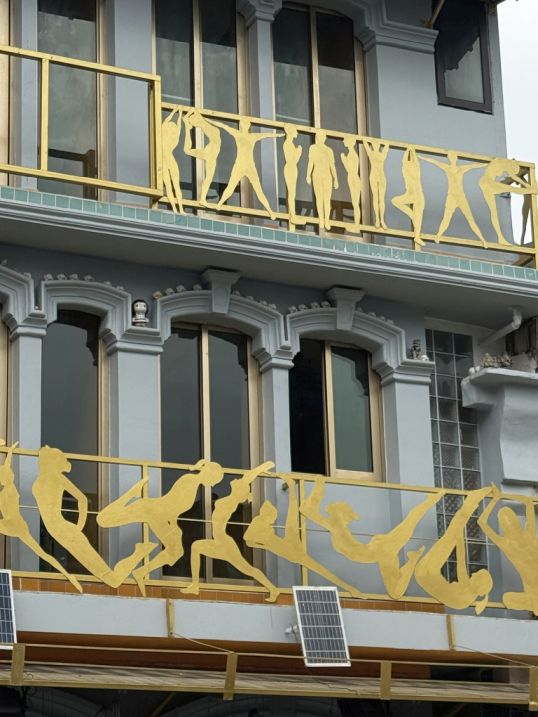 |
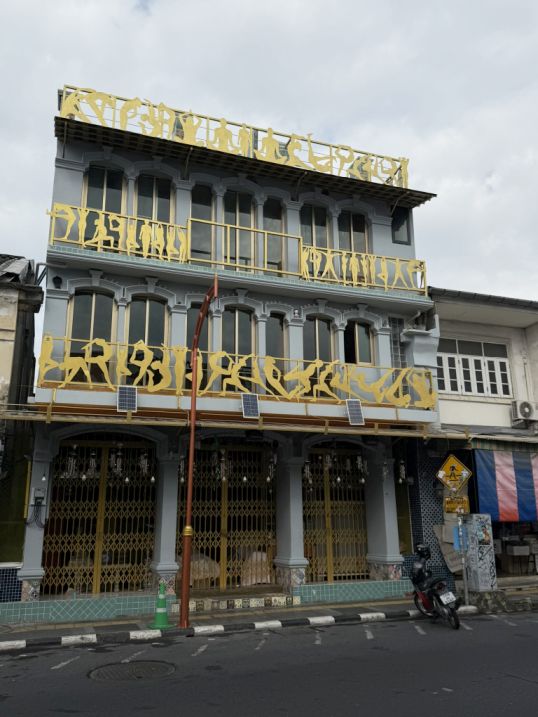
The three-story building with the balcony and yellow metal gate is a great example of how architecture here evolves. Unlike the more uniform two-story shophouses, these taller buildings reflect later development and changing needs. The balcony railing with silhouettes of people exercising adds a playful, modern touch. It’s almost like a piece of functional art, blending daily life (movement, health, routine) into the building’s design. These kinds of details show how Old Town isn’t frozen in time; it’s constantly being reinterpreted by the people who live and work here.
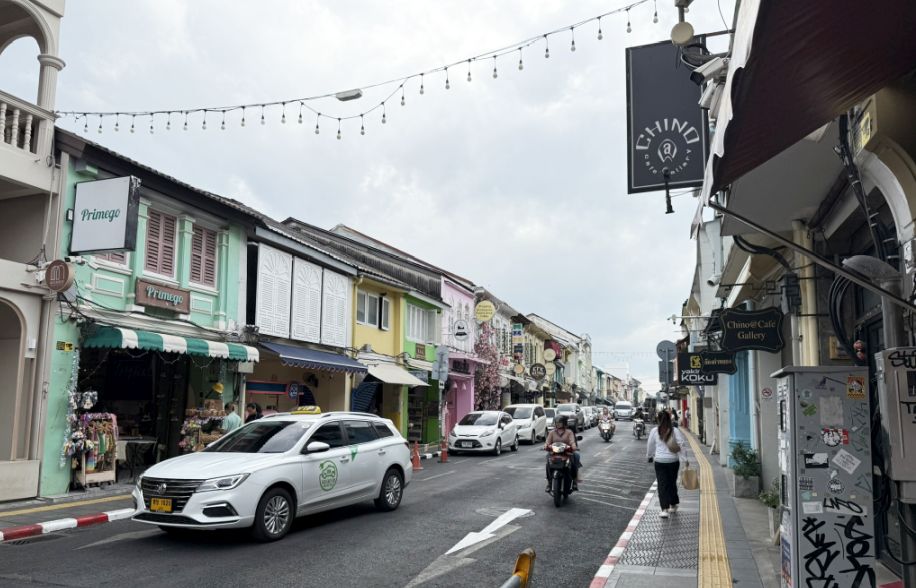
Yaowarat Road is one of the most vibrant streets in Old Town, known for colorful façades in pastel and bold tones, with lots of cafés, bakeries, and small boutiques tucked into historic buildings.
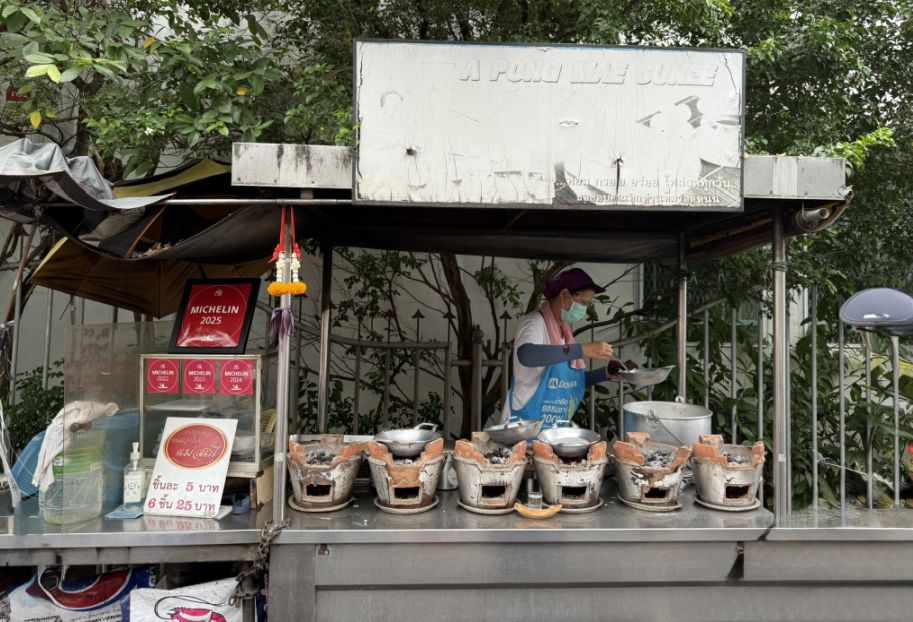
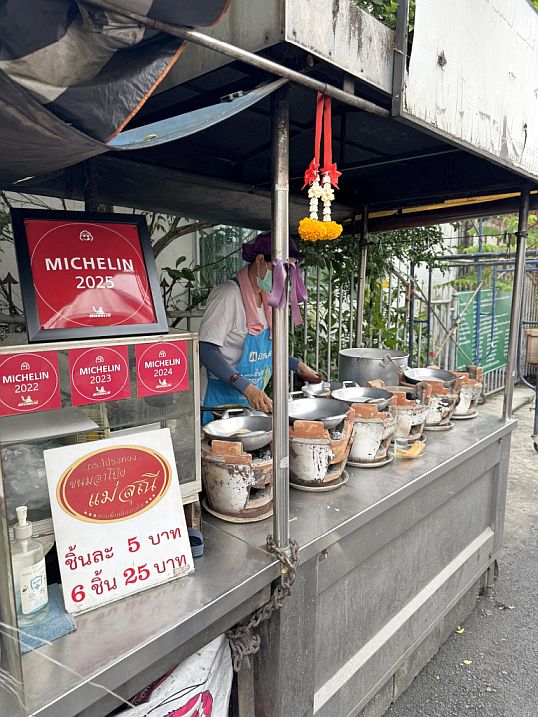
We made a great spontaneous stop at A Pong Mae Sunee Phuket, those small Michelin signs often point to places that locals have loved for generations. They specialize in “a-pong”, a Phuket-style crepe that’s incredibly thin, lacy, and crisp. It’s made from a simple batter of rice flour, eggs, sugar, and coconut milk, then cooked quickly on a hot surface and rolled into delicate tubes.
 |
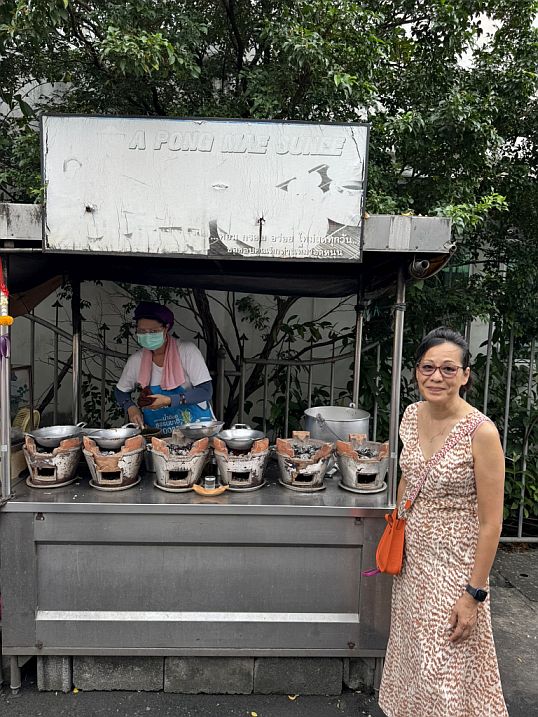 |
The stall is located right off Yaowarat Road, and is a family- run establishment that has been serving up delicious coconu crepes for over 50 years. The Michelin recognition (Bib Gourmand recommendation) highlights places that deliver exceptional quality at a very accessible price, and this is exactly that, simple, traditional, and done perfectly.
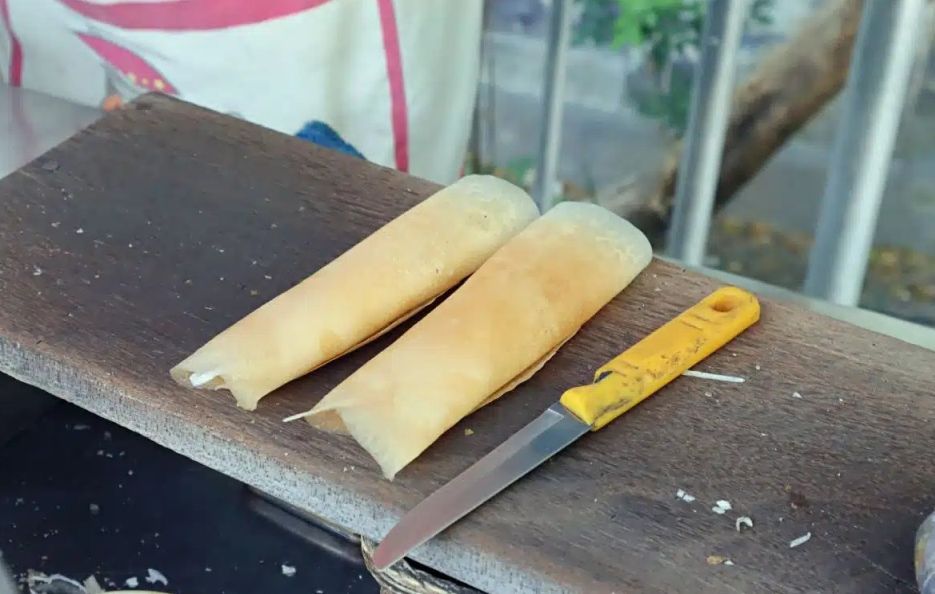
These crepes are called Khanom A Pong. What makes it special is the texture is light, airy, and slightly caramelized at the edges. It’s not heavy like a Western crepe; it’s more like a cross between a wafer and a delicate pancake.
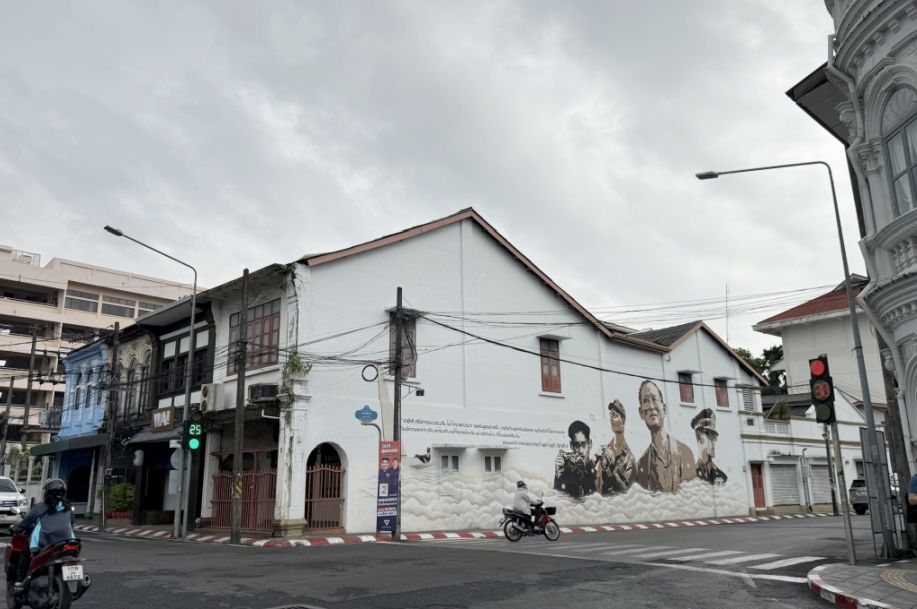
We are walking on Dibuk road and I see a mural of the late King.
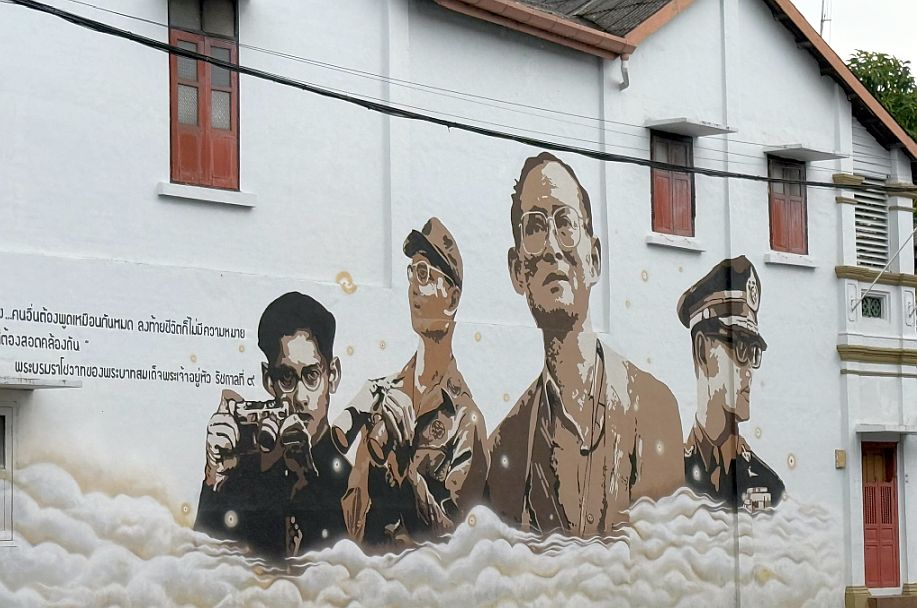
This mural is a tribute to Bhumibol Adulyadej, one of the most revered figures in modern Thai history. King Rama IX reigned for over 70 years and was deeply respected for his dedication to the Thai people, especially in rural development and sustainability projects. Even years after his passing in 2016, you’ll still see portraits, shrines, and murals honoring him across the country.
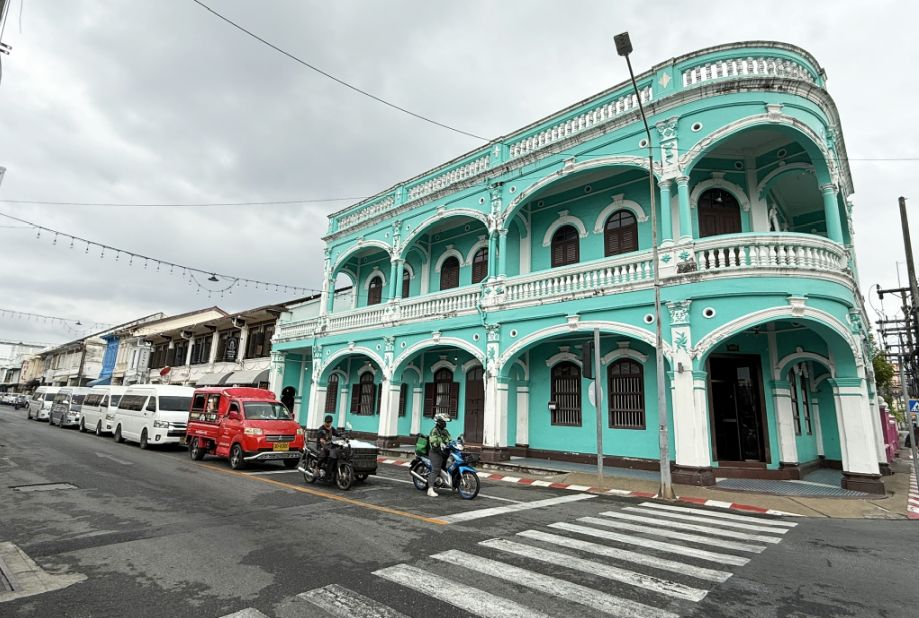
This striking two-story green building with white trim on the corner is a classic Sino-Portuguese corner structure, designed to stand out at an intersection. Today, buildings like this are often repurposed into cafés, boutiques, or creative spaces, but they retain their historic shell. The bold green color is part of the modern restoration trend—eye-catching, photogenic, and perfect for a corner landmark.
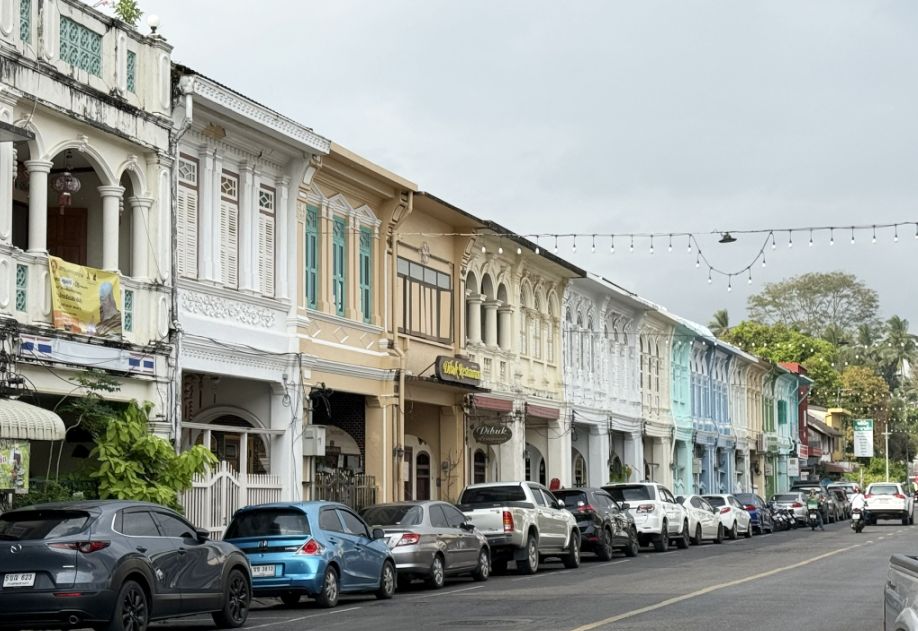
As we continued onto Dibuk Road, the mood shifts again. Compared to the brighter, bolder tones of Yaowarat, Dibuk often feels softer and more understated.
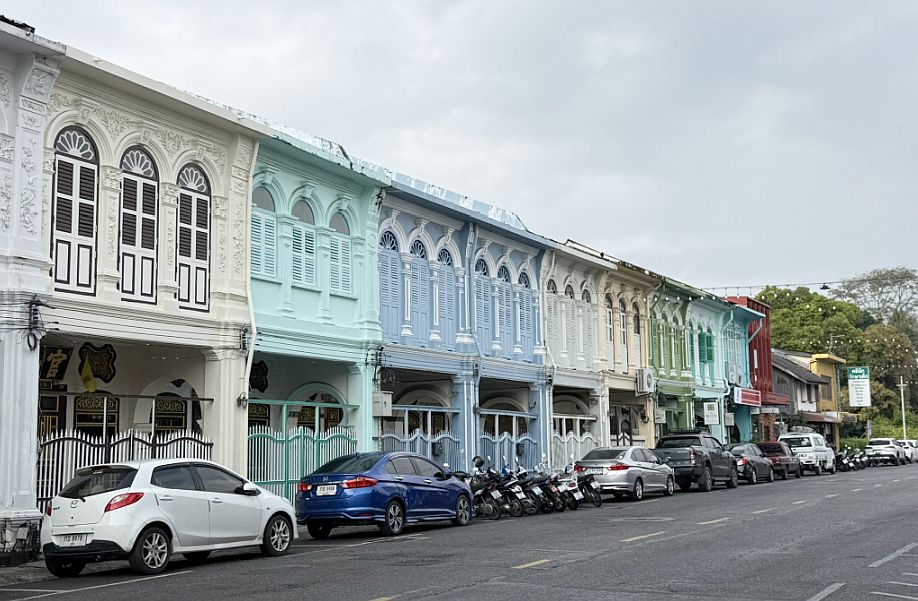
Dibuk Road feels a bit more residential and less busy, giving you a chance to appreciate the architecture without the crowds. It’s the kind of street where you can slow down and notice the small details, the texture of the walls, the symmetry of the windows, the quiet life still unfolding behind those façades.
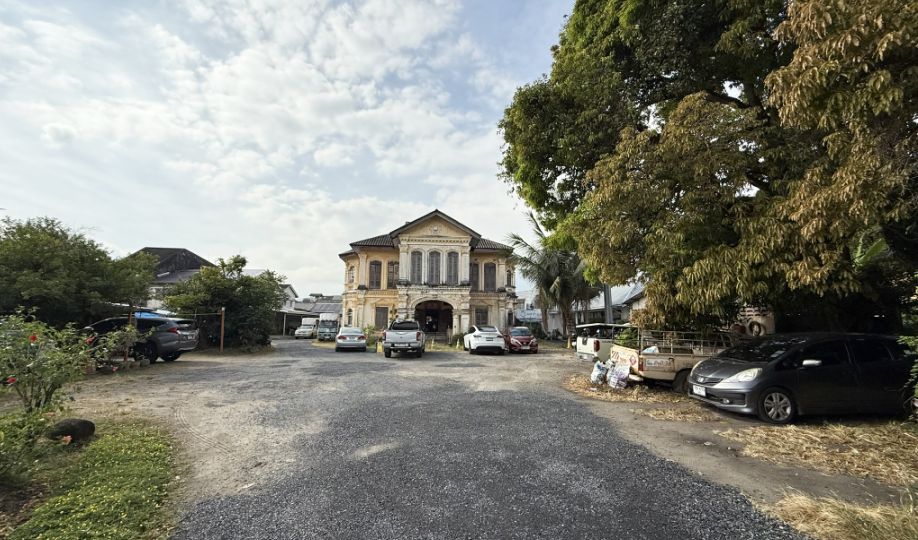
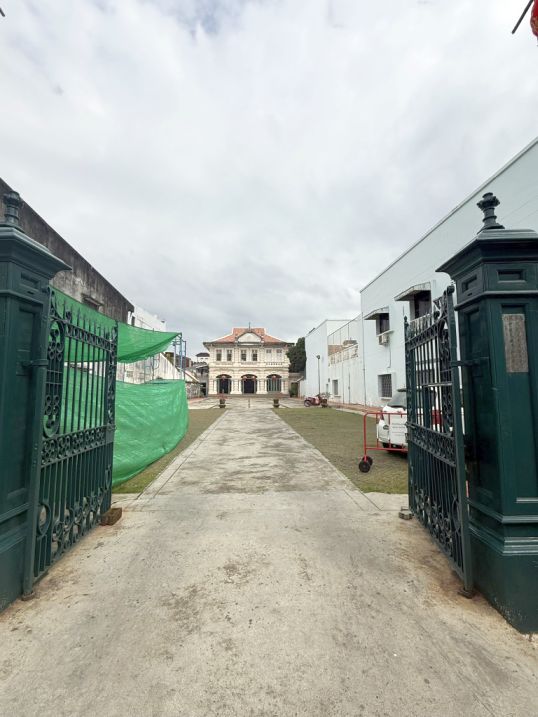
As we continued walking we noticed a building set far from the street with long driveway and a grand facade. Land was valuable, so having a long driveway and open space meant wealth,
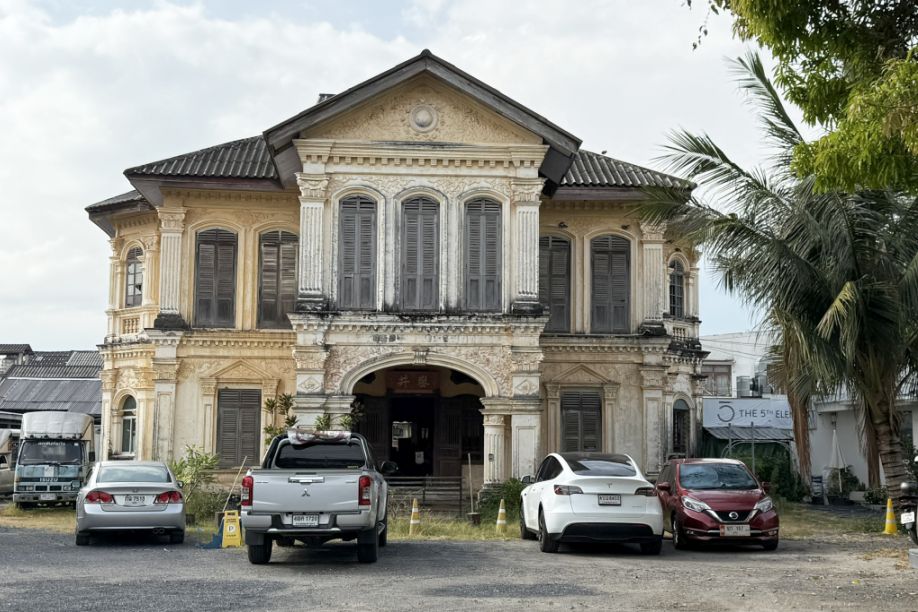
It might be Phuket’s old merchant mansions, likely now repurposed as a boutique property. Today, many of these properties have been restored into boutique hotels, cultural spaces, or private residences. The “Five Elements” (sign on the far right) I noticed fits a modern trend of rebranding historic homes into luxury heritage experiences, while preserving their architectural identity.
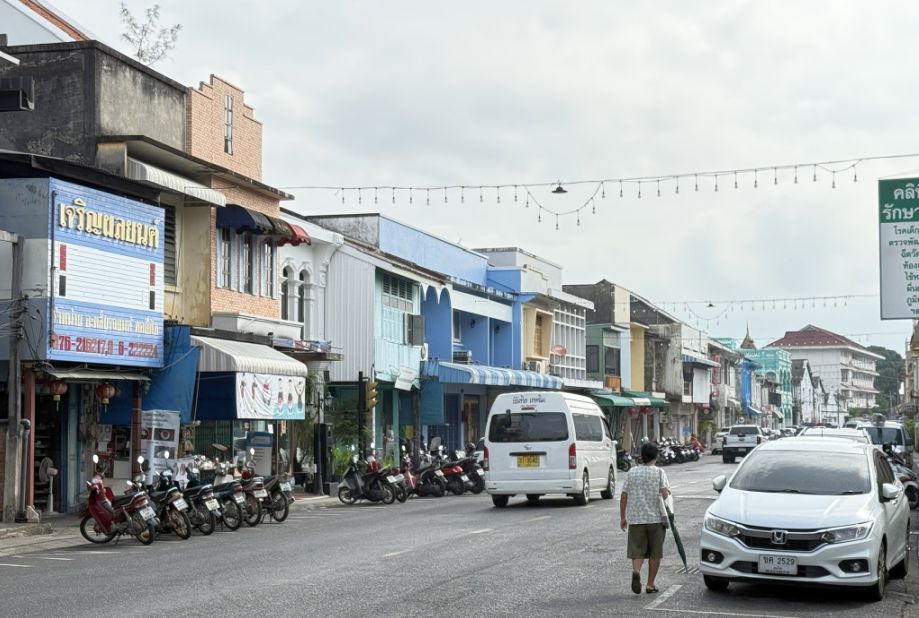
Krabi Road
 |
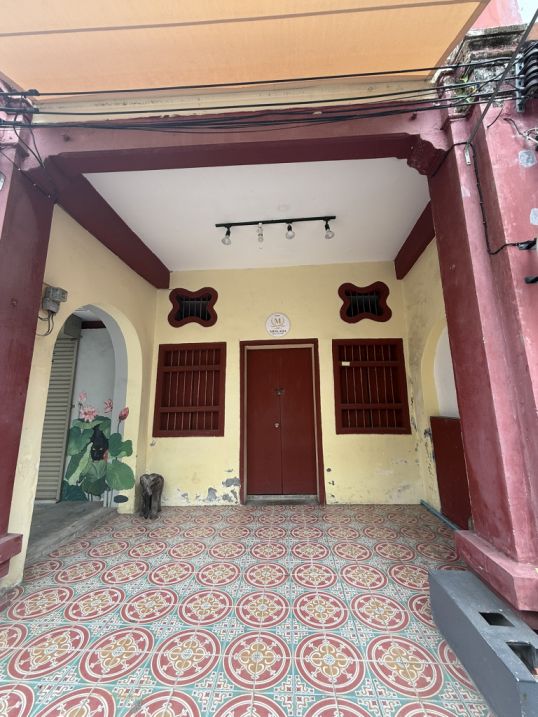 |
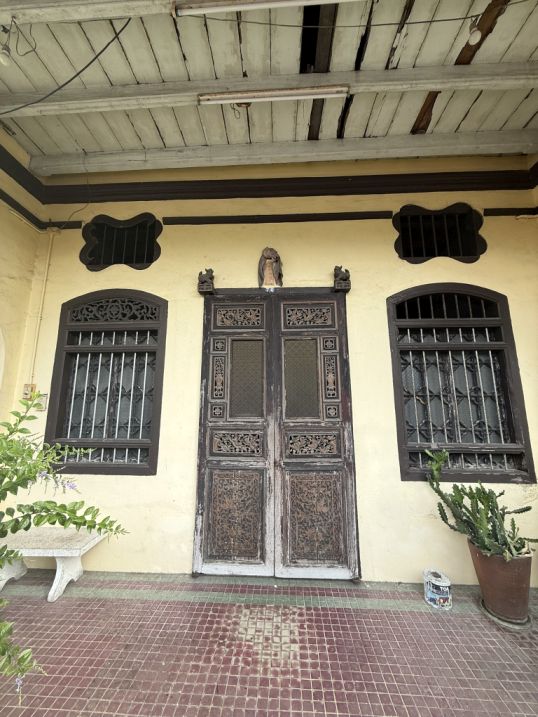
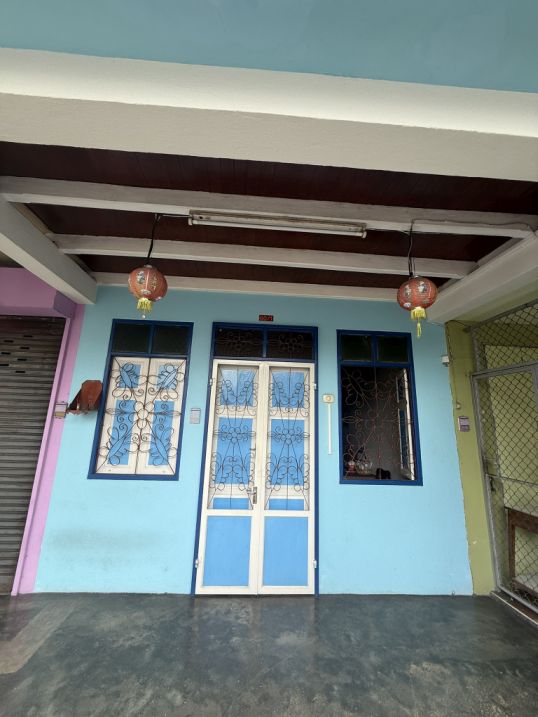
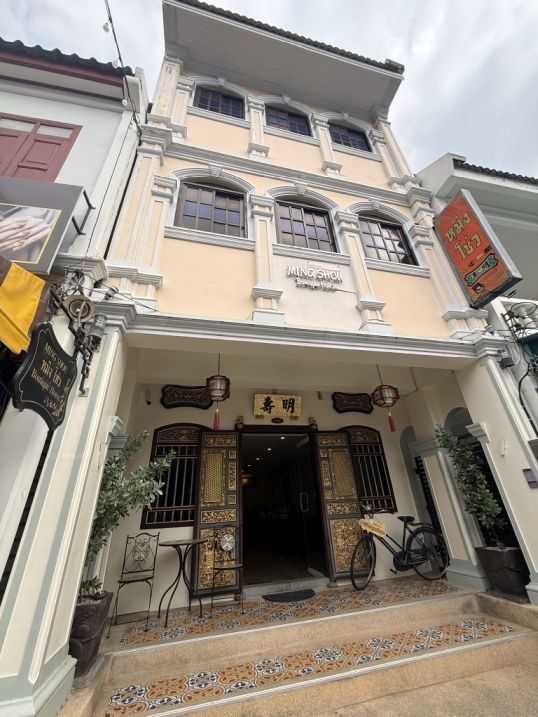
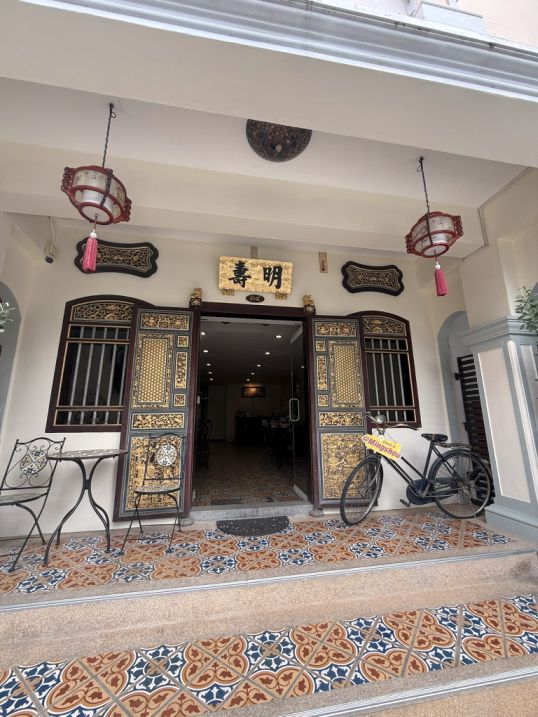
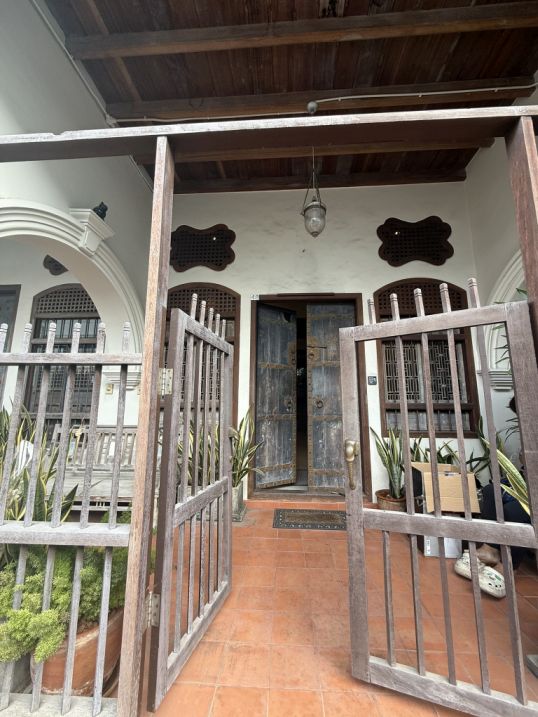
As we moved onto Krabi Road, the experience becomes more intimate, it’s less about big landmarks and more about details at eye level, especially the entrances. Each doorway feels like its own identity, reflecting the mix of cultures that shaped Phuket.
 |
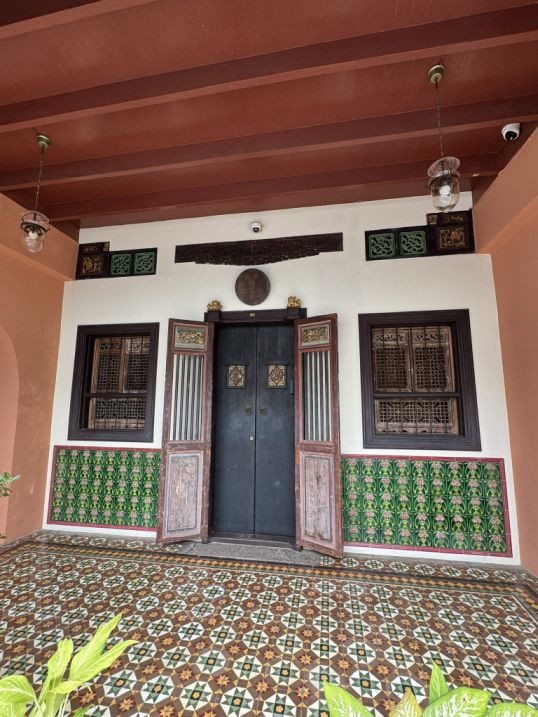 |
There are hybrid design with Chinese structure with European decorative flourishes, and simpler colonial frames with clean lines, pastel paint, and arched tops influenced by European styles.
 |
 |
This one is Chinese-influenced with dark wood, often with carved panels, symbolic motifs.
 |
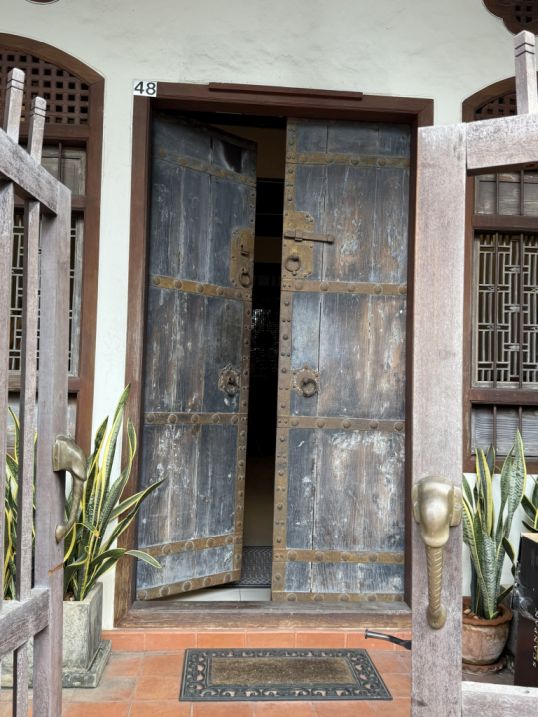 |
On Krabi Road, you start to notice that Old Town isn’t just about whole buildings, it’s about fragments of history with a doorway carved by hand generations ago, and cultural influences layered into a single entrance
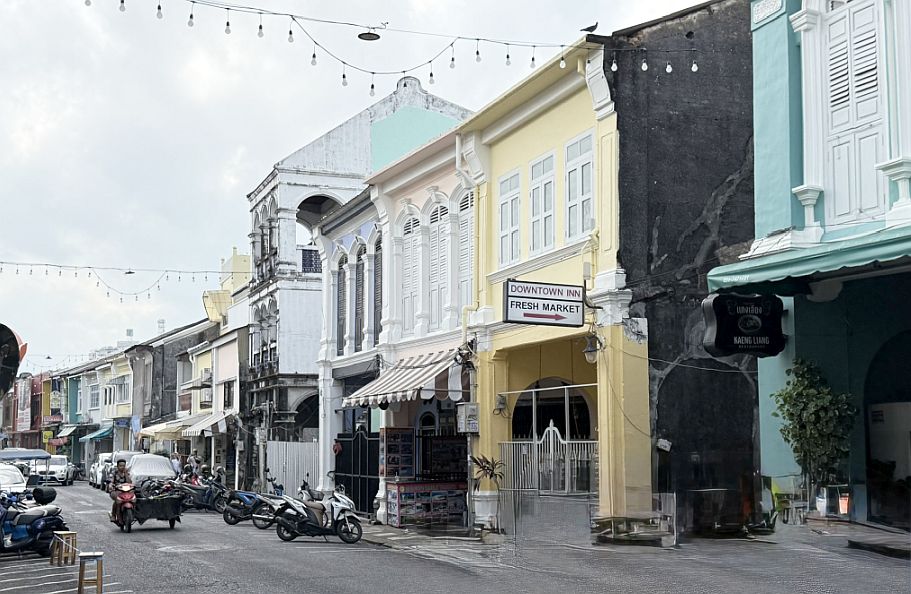
We saw a sign pointing to a fresh Market.
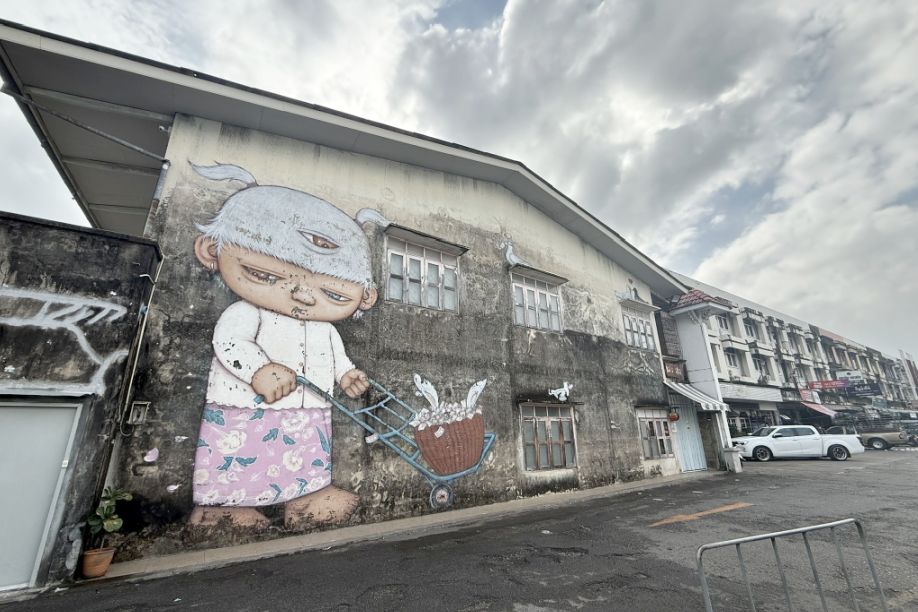
Following that small sign into the alley toward the fresh market, we stumbled onto one of Phuket Old Town’s most recognizable pieces of street art, a large mural of a girl pushing or carrying a basket. These murals are part of a broader effort to turn the Old Town into an open-air gallery, blending local life with contemporary art.
The girl with the basket reflects everyday Phuket, market culture, food, and daily routine, captured in a modern, almost nostalgic style. It’s one of those pieces that people stop for because it feels both artistic and deeply local.
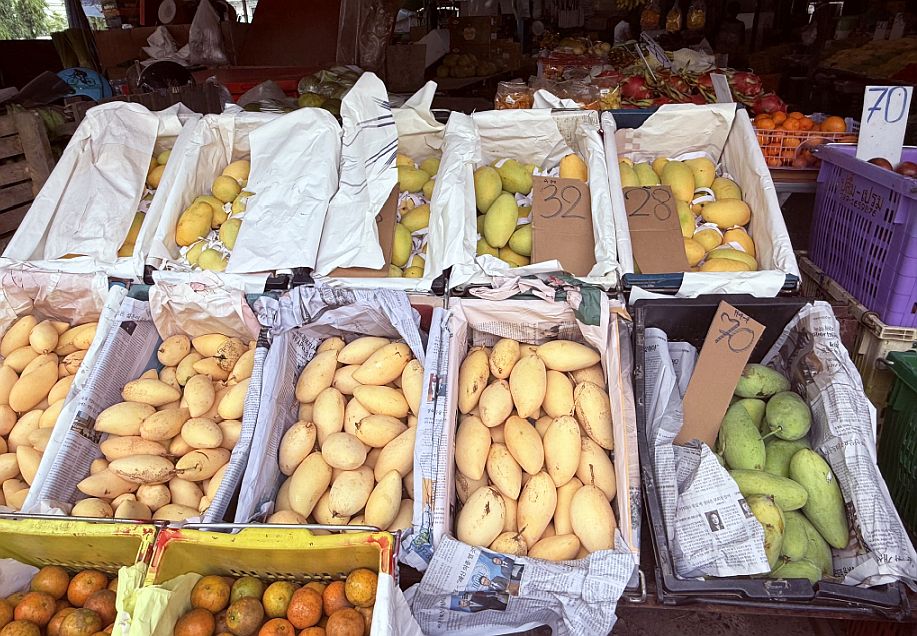
The market itself is quite small and functional, less about tourism and more about daily life.
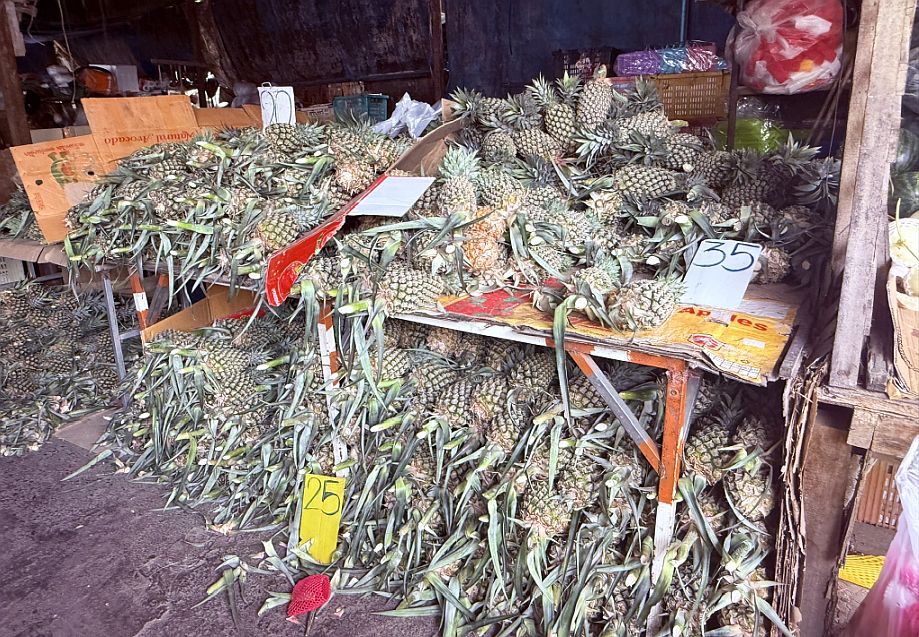
Locals come here for fresh produce, seafood, and essentials, which is why it feels quick to walk through but very authentic.
 |
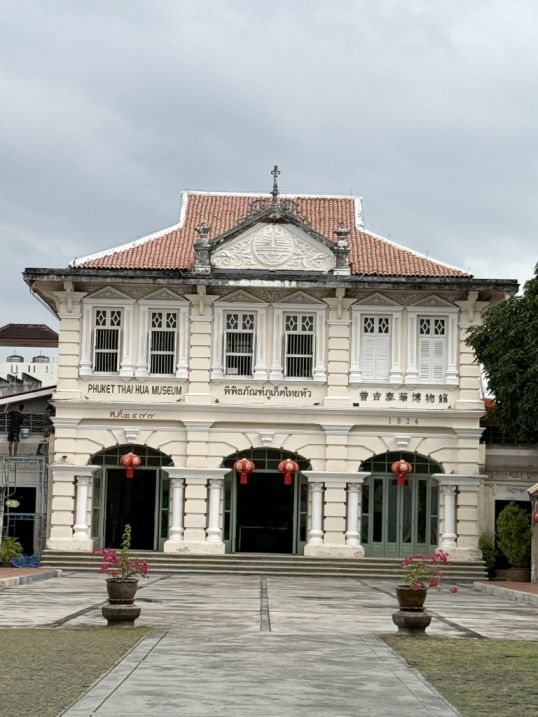 |
Phuket Thai Hua School was once a Chinese Language school called Hua Bun. In 1995 Thai Hua school has moved to new place on Prayavichi road and the old building has been restored and is now a museum. The significance of Phuket Thai Hua building is the representation of Chinese-Colonialism style alike the oversea Hokkien in Penang state, Malaysia or so called the Prenakan mansion or Pranakan Bungalow. The two story square edifice has remarkable design with the using of the internal spaces as garden and pond. The exterior show strongly influence of Neoclassicism style especially the triangle pediment.
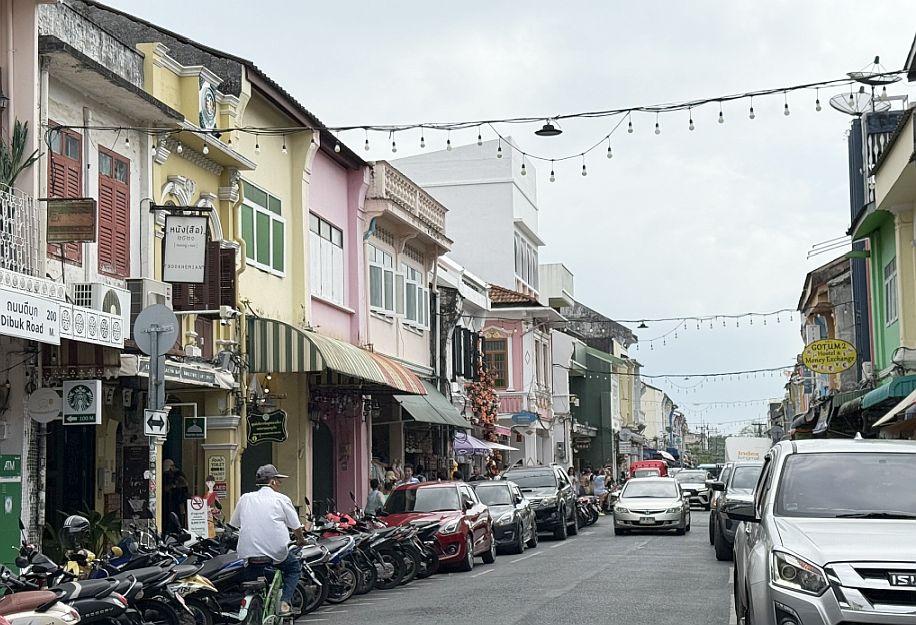
We are now back on Thaland road with brightly painted shophouses housing boutiques and cafés.
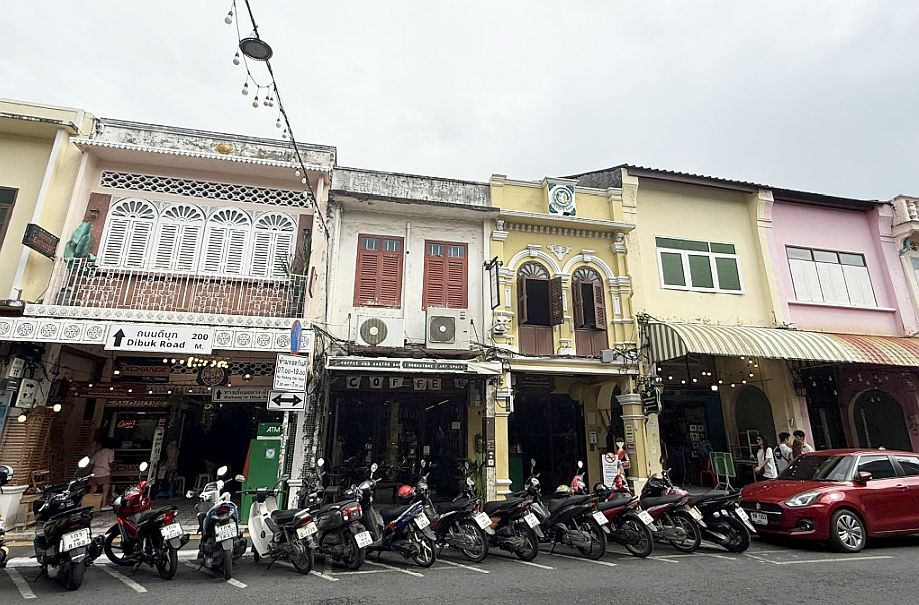
Motorcycles lined up front, a reminder that this is still a working street.
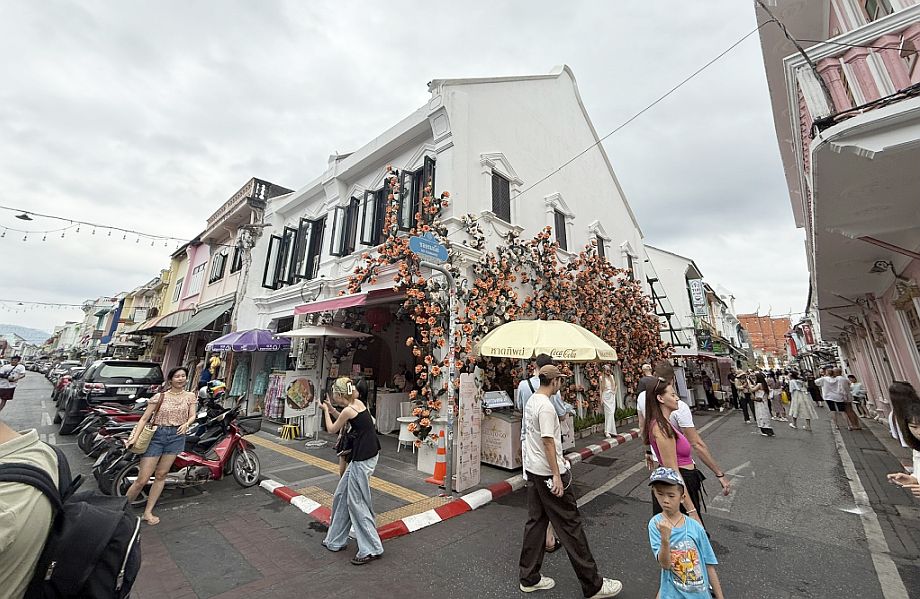
This is the most lively and photogenic stretch of Old Town.
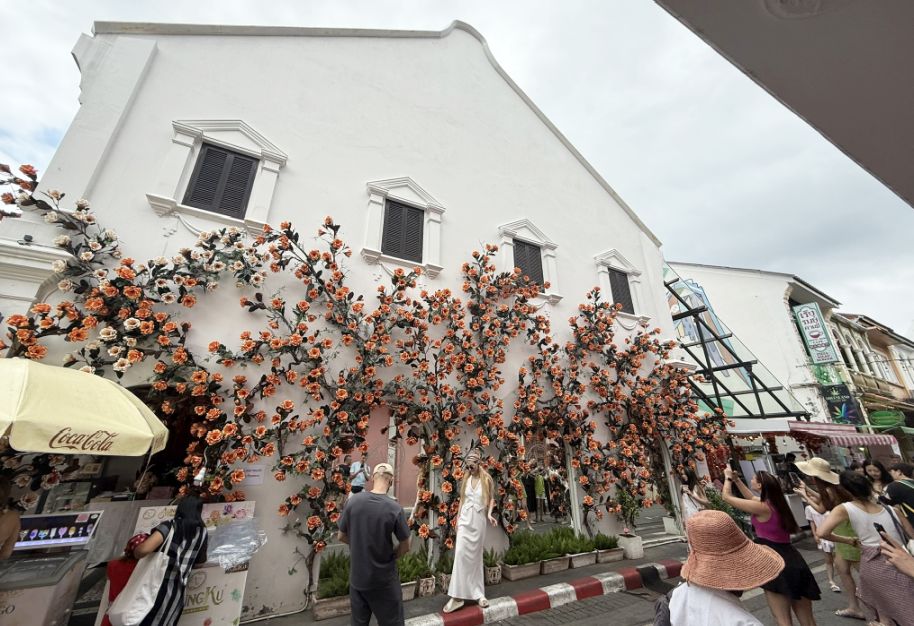
The flower installation is designed almost like a stage set with colorful, textured, and perfect for photos. It’s a newer addition, part of how Old Town has embraced tourism while still keeping its historic charm.
 |
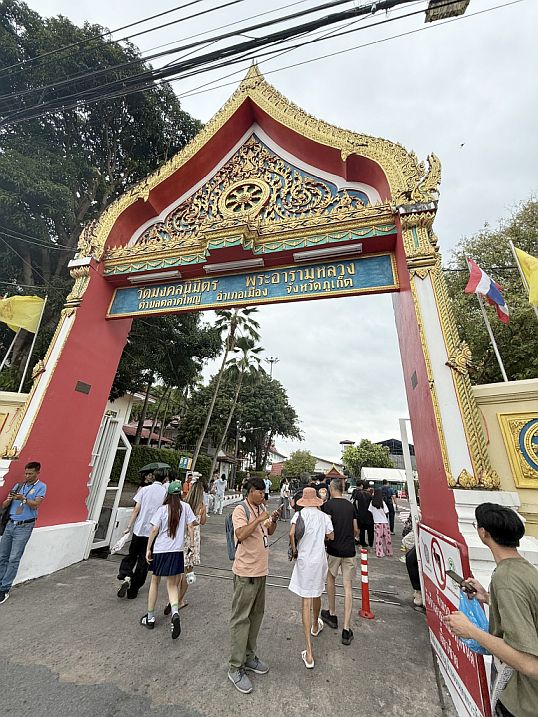 |
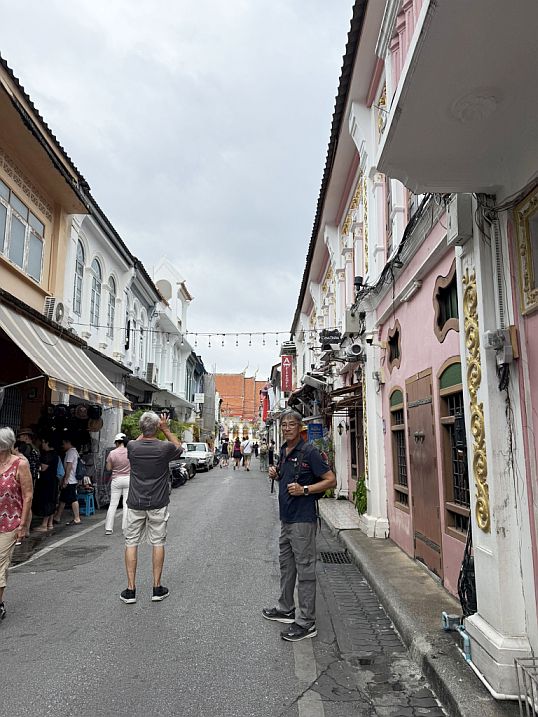
At the end of the street we noticed part of the roof of a Temple so we are heading there.
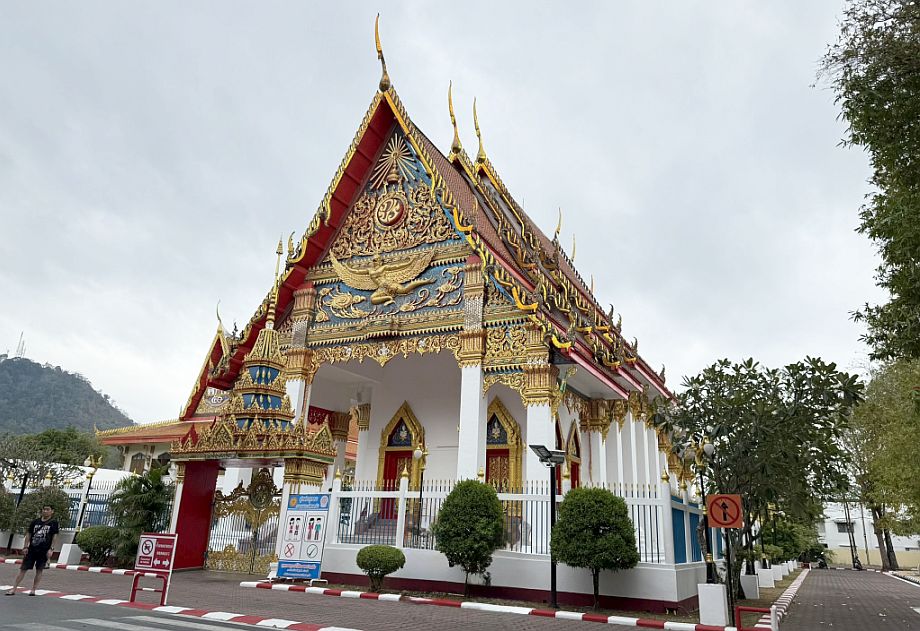
Wat Mongkol Nimit, one of the main temples in the Old Town area.
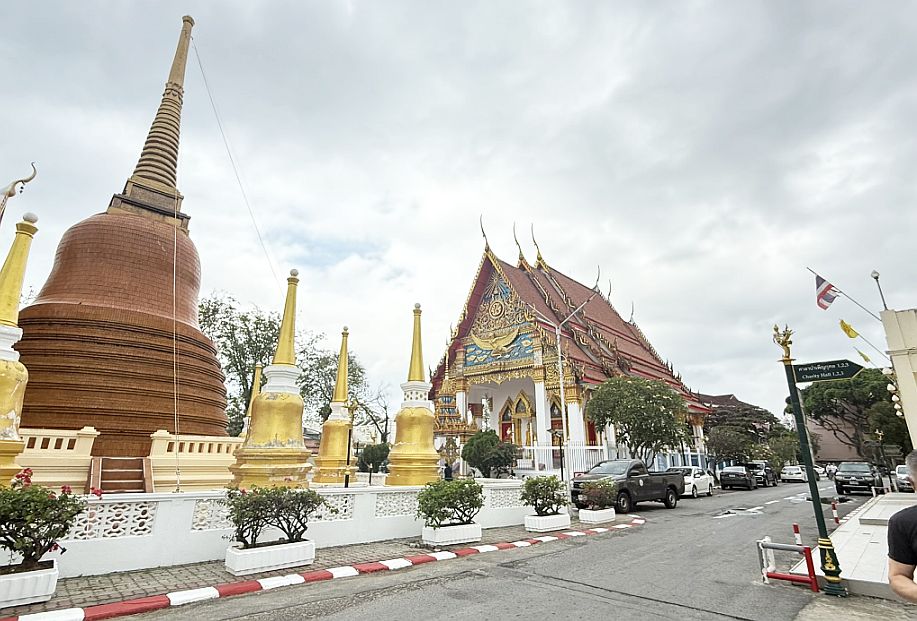
It’s a Theravada Buddhist temple, and while the main prayer hall is important, what stood out to you is the chedi (stupa), on the left.
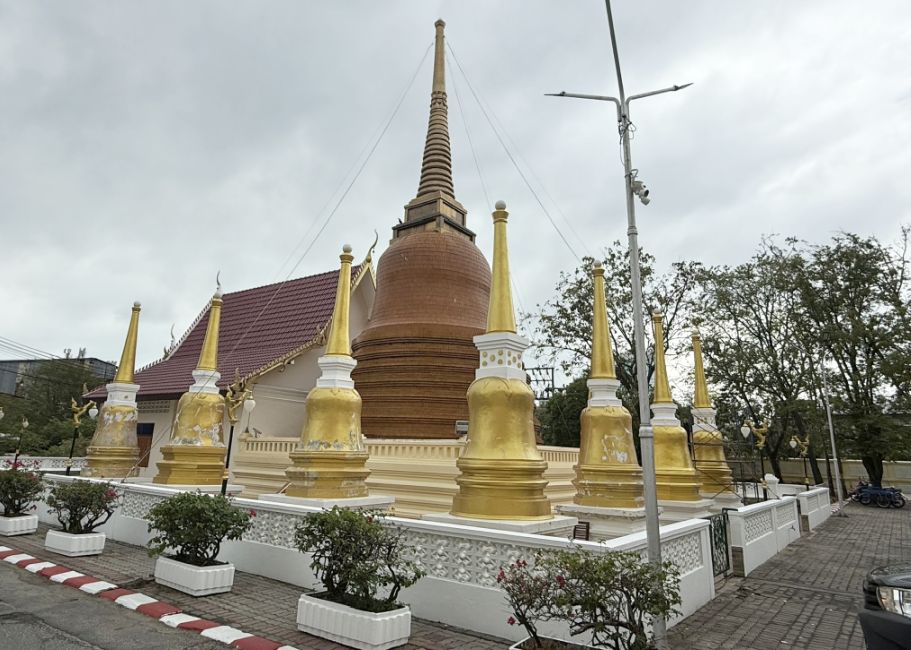
The large central chedi typically holds sacred relics or symbolizes the Buddha’s presence. The smaller golden chedis surrounding it create a sense of harmony and repetition. Gold is used to represent purity, enlightenment, and spiritual value.
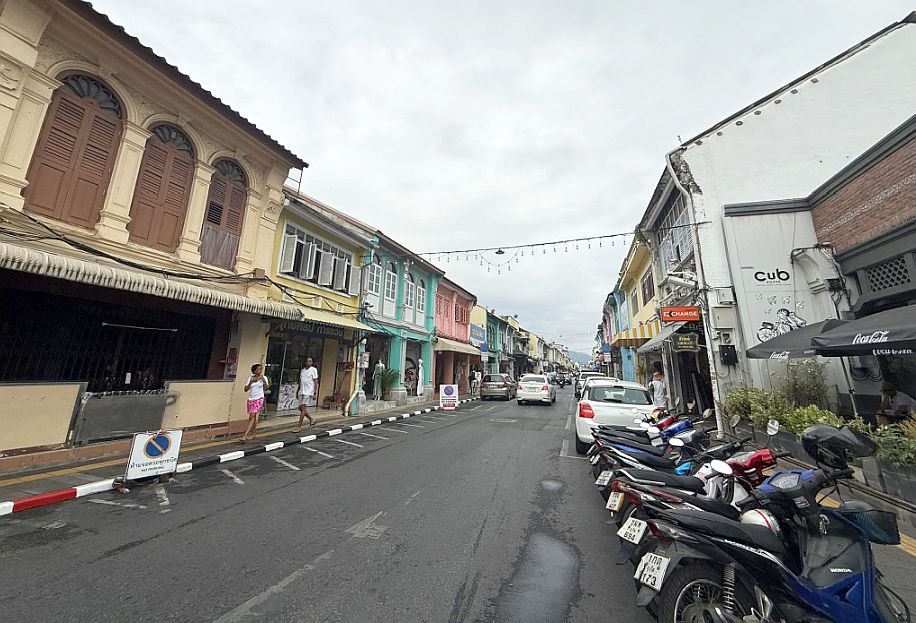
It is now lunch time and we are looking for a restaurant.
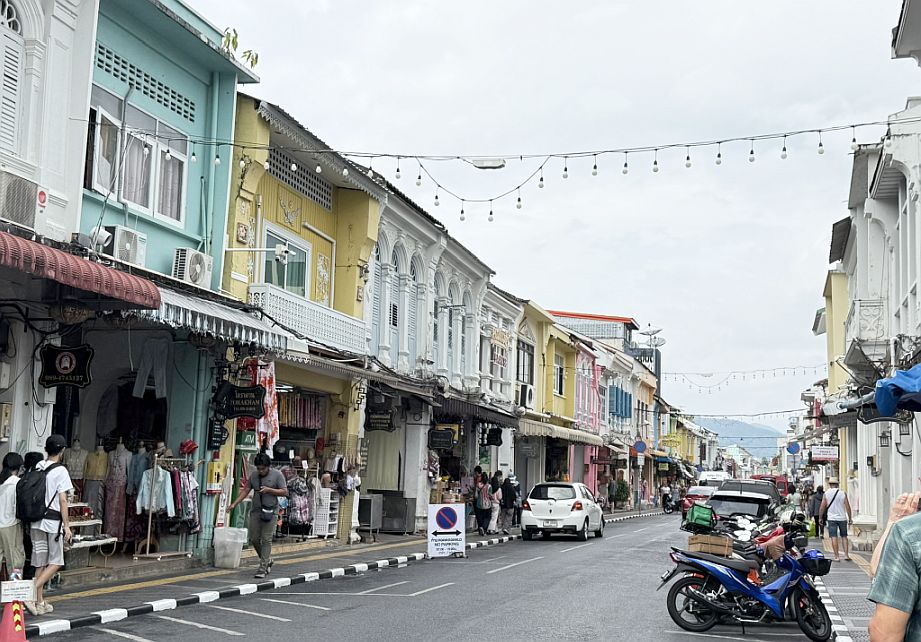
Lots of cute boutiques on this street.
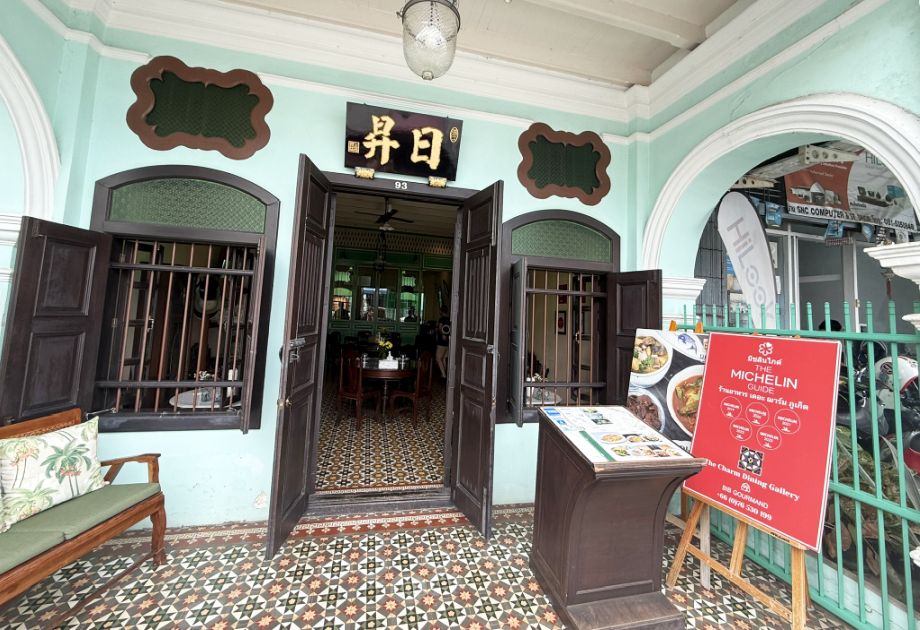
Along the way we spotted the Michelin Bib Gourmand at the entrance so we decided to eat here.
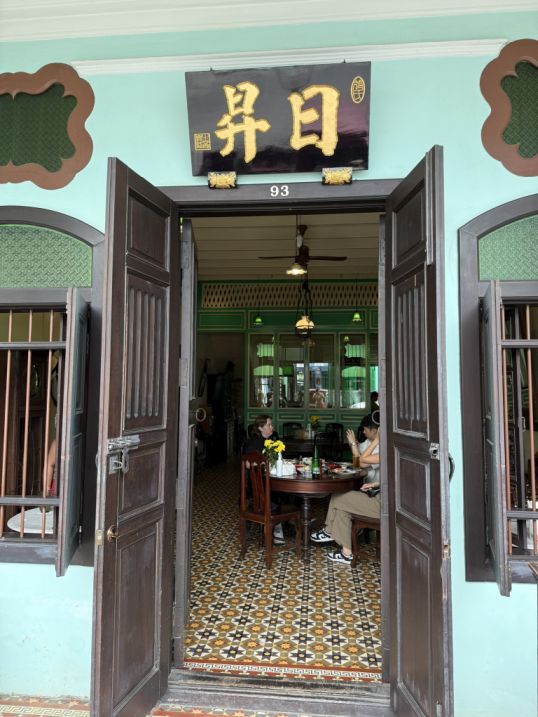 |
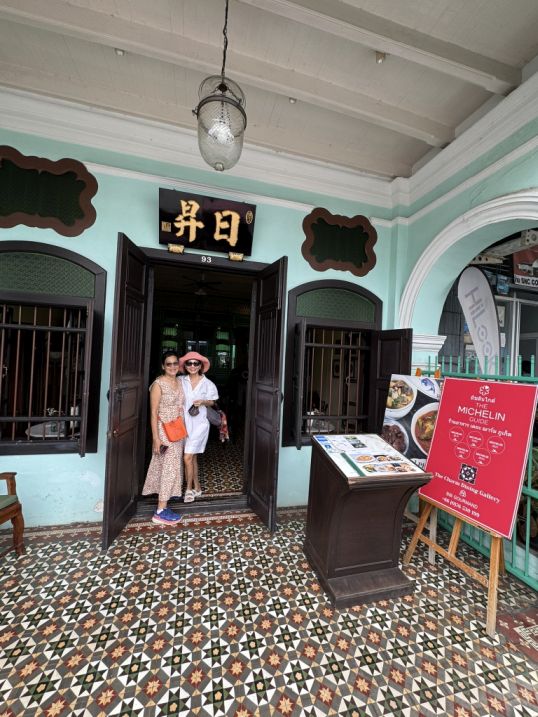 |
This restaurant is called The Charm Dining Gallery.
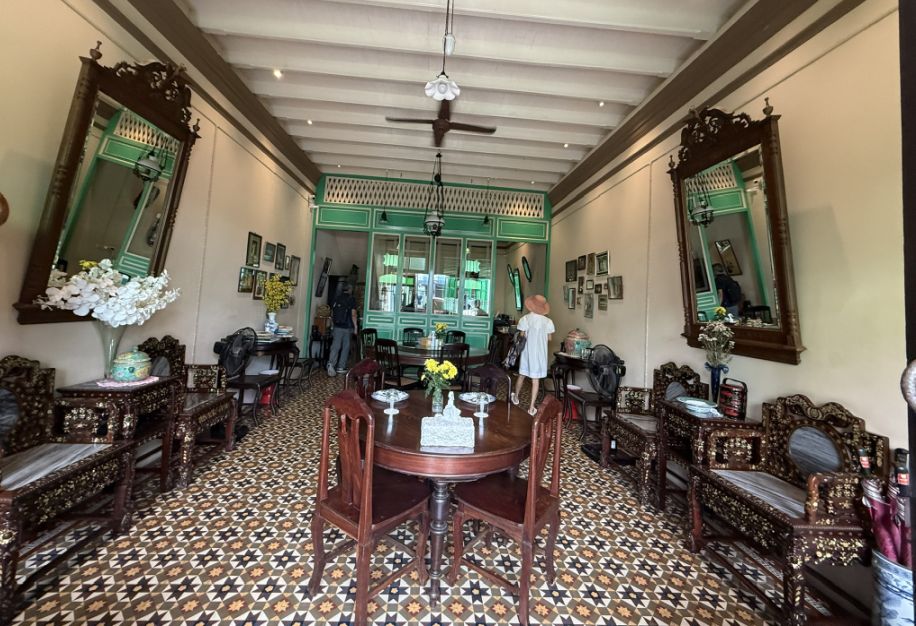
The moment you walk in, it really does feel like stepping into someone’s home, and it is probably intentional. The restaurant is set inside a restored heritage house, preserving the original layout. There are multiple rooms and we were led further in. This style reflects how many Old Town buildings have been adapted, keeping their residential soul while turning into dining spaces.
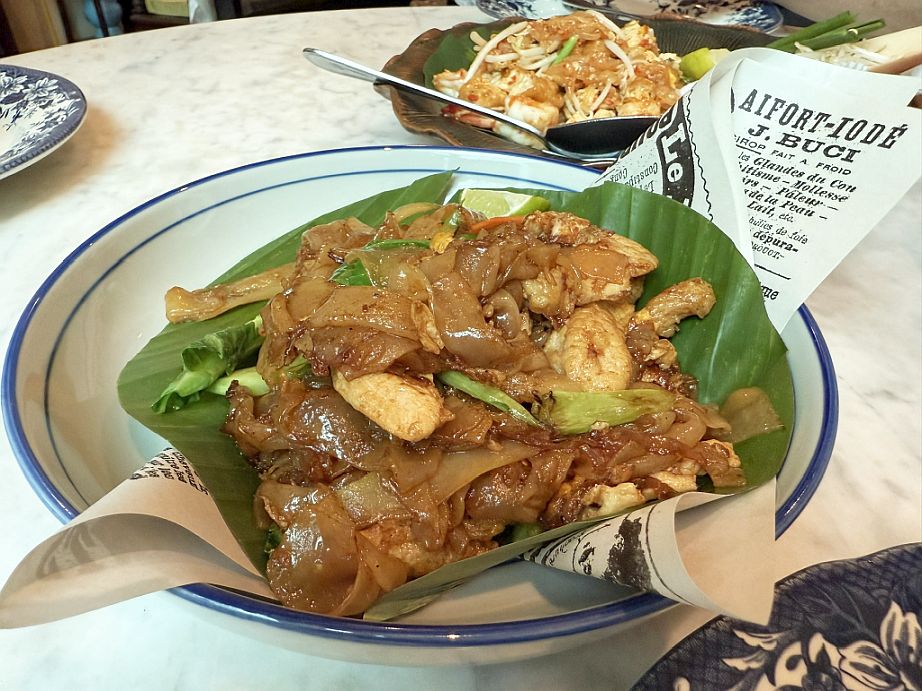
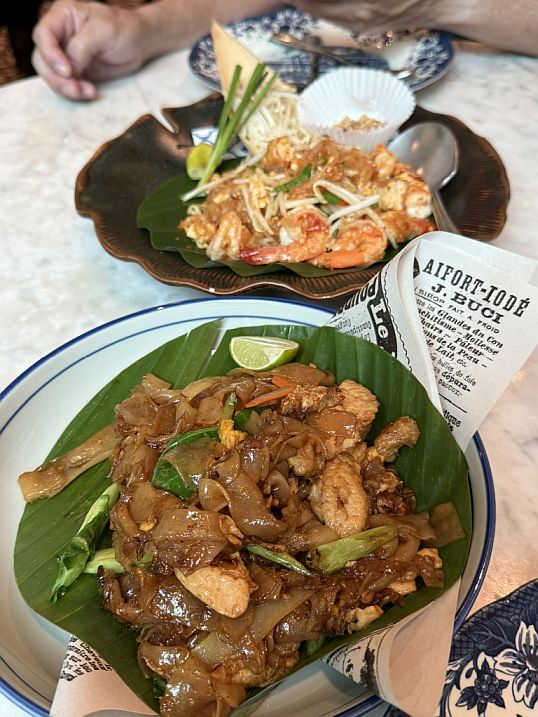
We ordered a Beef Pad See Ew
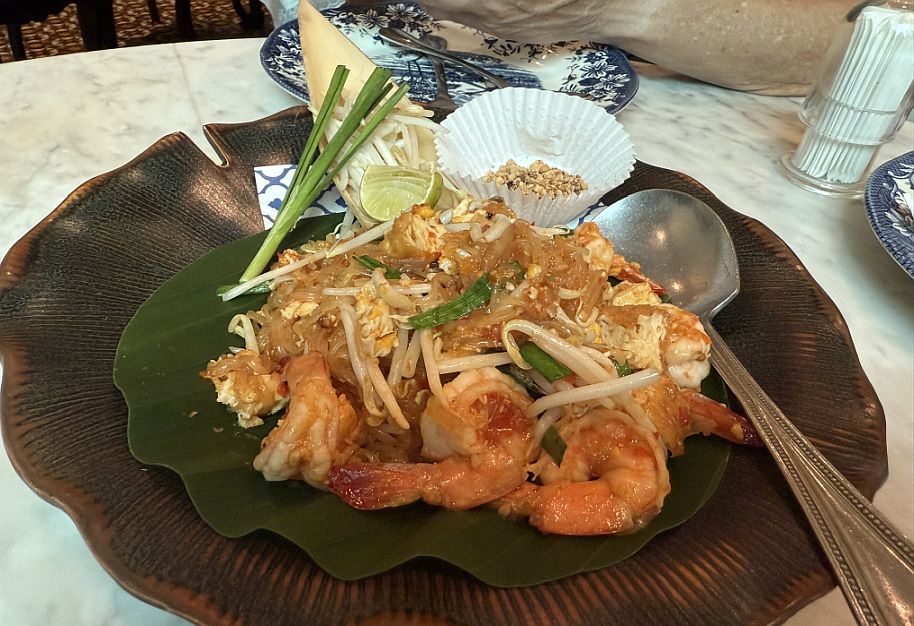
Shrimp Pad Thai
 |
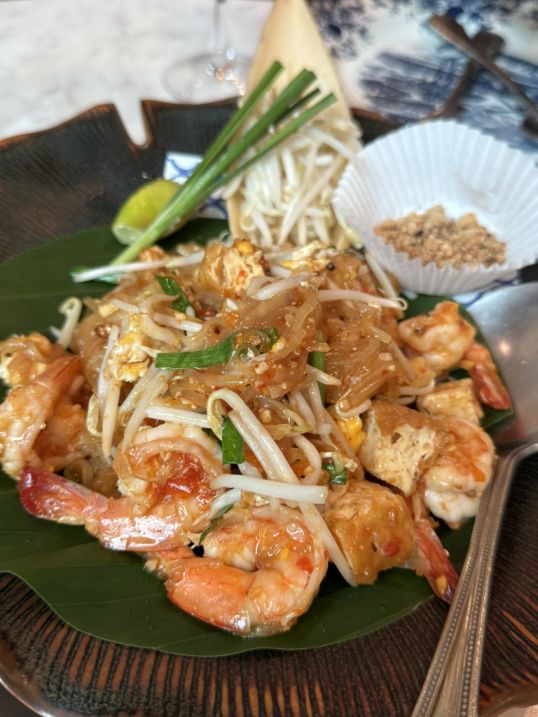 |
Both dished were tasty and delicious!
 |
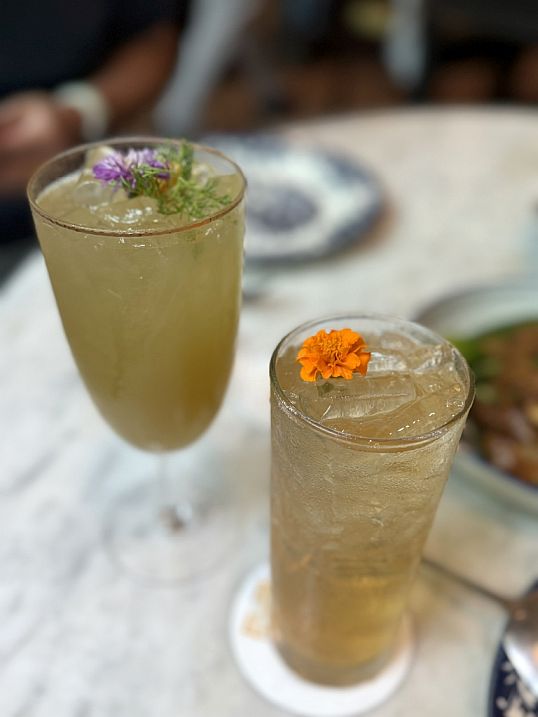 |
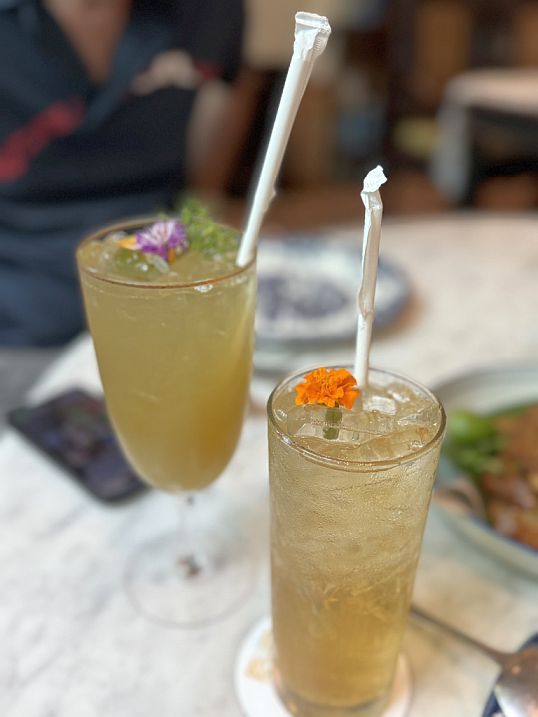
Ice Tea for me and Loan. Looks so pretty.
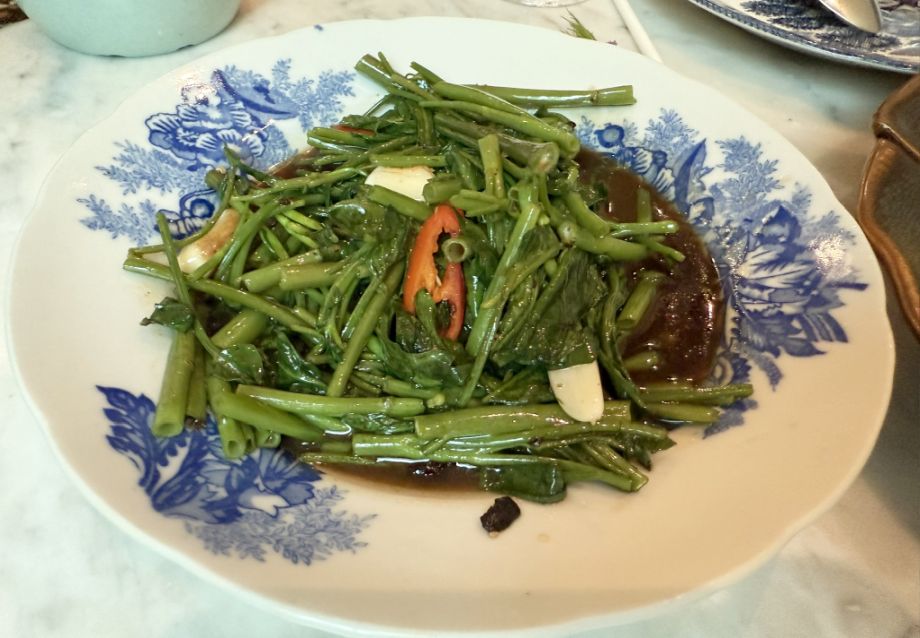
Sauteed morning glory.
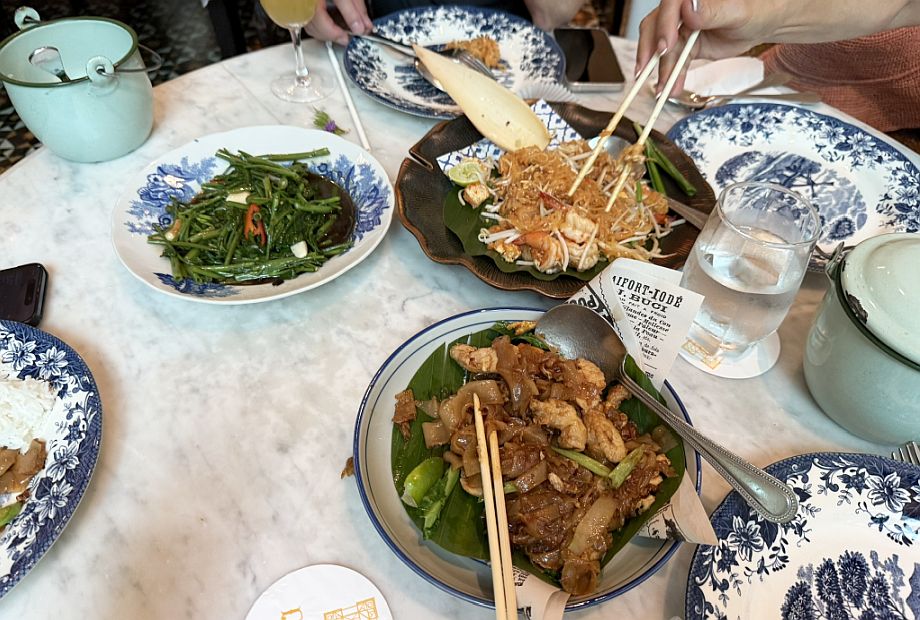
We were not that hungry so we did not order that much.
 |
 |
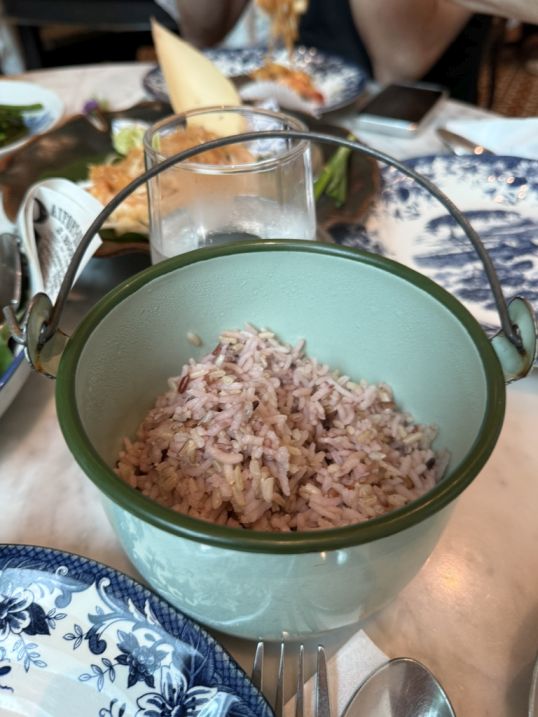
I like their rice it also very tasty.
 |
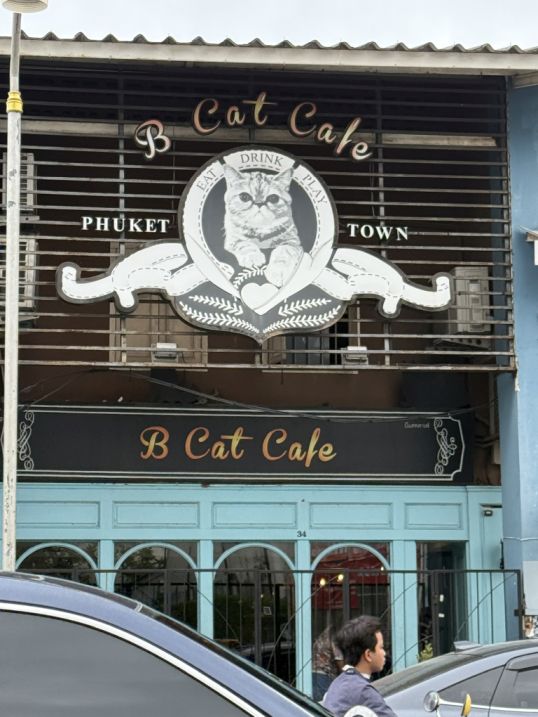 |
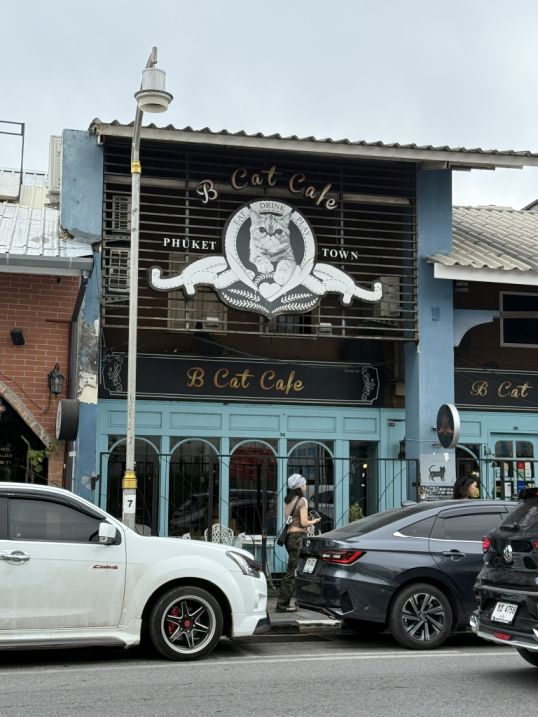
Stepping back out after lunch, the walk becomes less about landmarks and more about little moments that make Old Town feel alive. You passed by a cat café, one of those newer additions that shows how the area keeps evolving. These cozy spots blend modern café culture with a playful twist, often tucked into old shophouses, adding another layer to the mix of old and new.
 |
 |
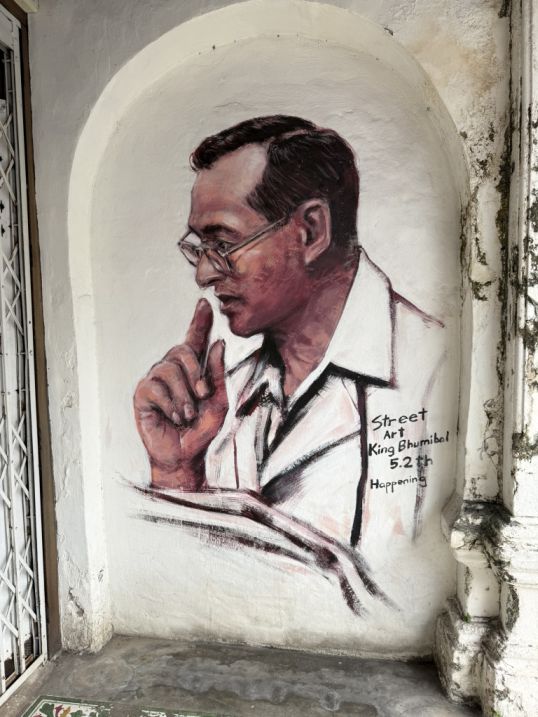
Then, another portrait of Bhumibol Adulyadej appears, reminding you again how deeply respected he is. Seeing his image repeated throughout the town gives a sense of continuity and national identity woven into everyday spaces.
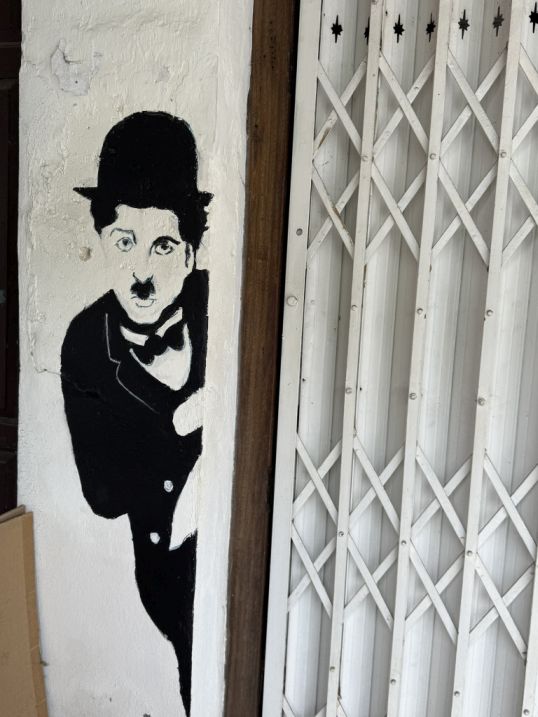
on the right something completely different: Charlie Chaplin sneaking out of a wall. It’s whimsical, almost surprising, this global pop culture icon appearing in the middle of a historic Thai street. That contrast is very Phuket Old Town: nothing feels too rigid or curated; it’s expressive and a little unexpected.
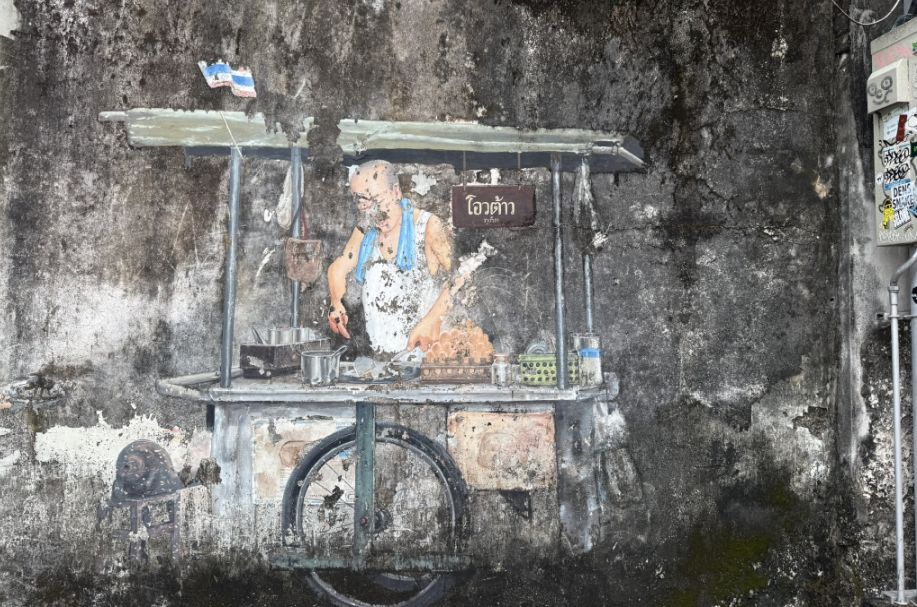
Uncle selling O-Taw by Pichi Paidan, a very local Phuket dish (sometimes written Oh Tao). These small stalls are easy to overlook but are deeply rooted in the island’s food culture.
Even though it’s starting to fade, this mural remains a Phuket classic. It portrays Hokkien settlers preparing O-Taw, a beloved local oyster dish, with care and community spirit. The vintage vibe adds to its charm.
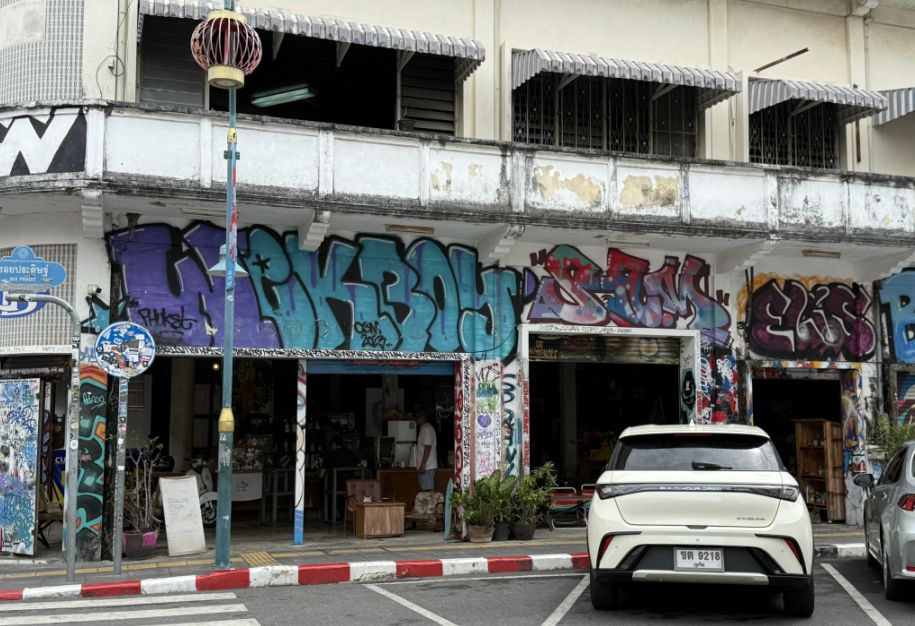
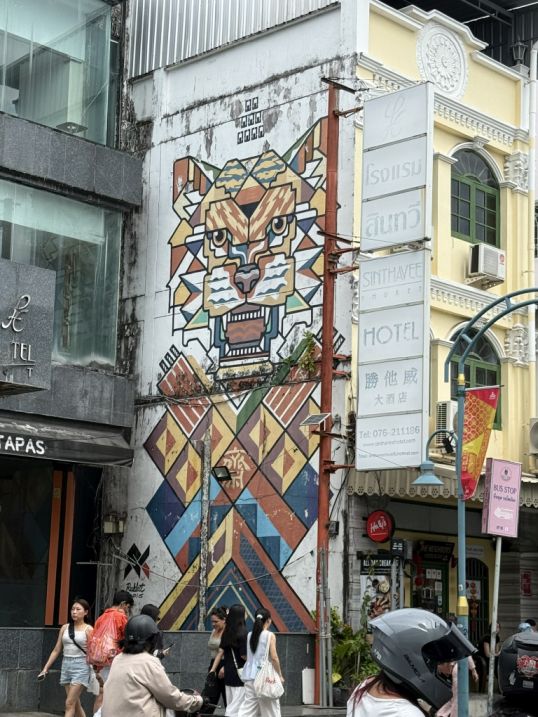
As we continued, more graffiti appears, large, bold lettering across walls. Unlike the delicate murals we saw earlier, these feel more raw and urban, adding another voice to the streets.
 |
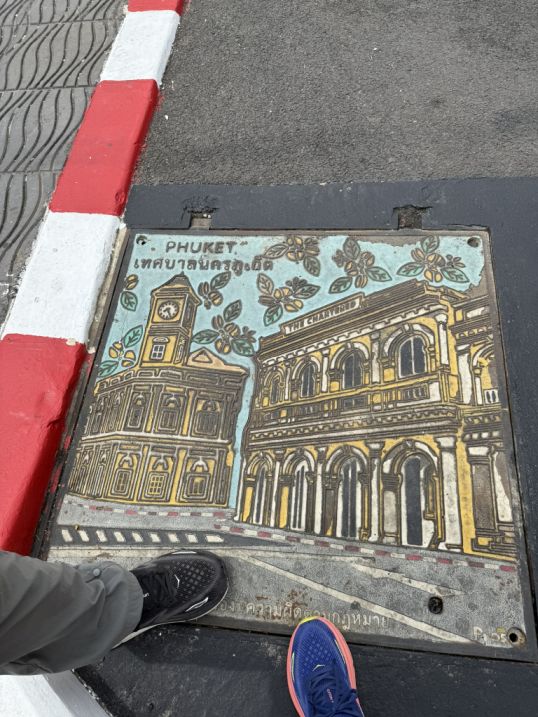 |
Another mural art of the left and even the ground tells a story. The sewage cover with an image of the two yellow buildings we saw at the beginning. It’s a small touch, but meaningful. Those buildings, especially the Phuket Thai Hua Museum are iconic enough to be turned into symbols of the town itself.
Wandering through Phuket Old Town, the morning unfolded like a journey through layers of history and everyday life. Starting with the grand yellow façade of the Phuket Thai Hua Museum and the old Chartered Bank, then drifting past rows of colorful Sino-Portuguese shophouses in shades of yellow, blue, and green. Along the way, ornate Chinese gates, intricate doorways, and tiled thresholds revealed the town’s blended heritage, while murals from the revered Bhumibol Adulyadej to playful figures like Charlie Chaplin, added a modern, artistic layer. Small discoveries punctuated the walk: a quick stop for delicate a-pong at A Pong Mae Sunee Phuket, a glimpse into local life at the fresh market, a peaceful pause at Wat Mongkol Nimit with its golden chedi, and a relaxed lunch inside the home-like setting of The Charm Dining Gallery. By the end, with street art underfoot and motorcycles lining vibrant Thalang Road, the Old Town felt less like a collection of sights and more like a living, evolving story.
NEXT... Day 10-Pathong Beach