4 days in Philadelphia 10/24- 10/27/2024
| Day 1 Arrival/Dinner |
Day 2 Walking around Cocktail/Tuna Bar |
Day 3 Guided Tour Dinner at Amata |
Day 4 LibertyBell/Independence Hall City Center |
Day 1- Arrival-10/24/2024
Today is our last day in D.C. and we are continuing our travel to Philadelphia.
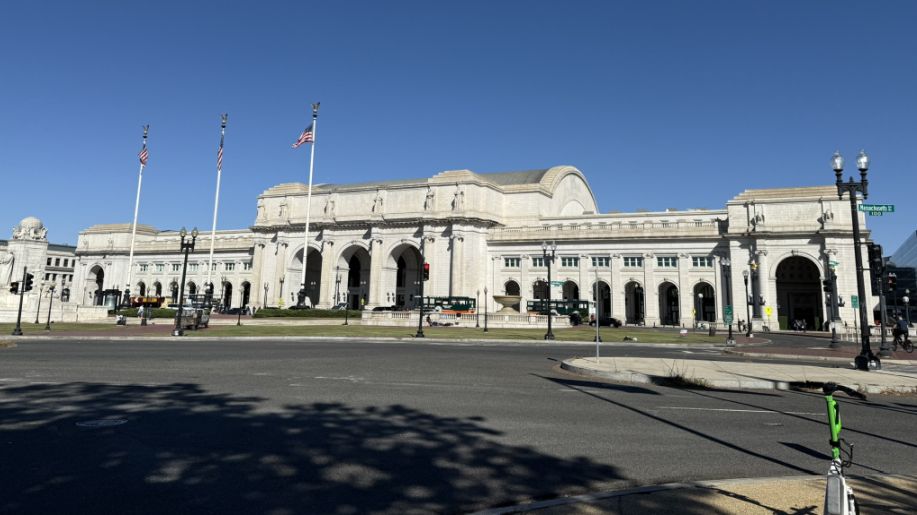
Ahead it the Union Station which was built between 1903 and 1908 and officially opened in 1907, with final touches completed in the following years. Designed by architect Daniel Burnham, one of the leaders of the City Beautiful movement.
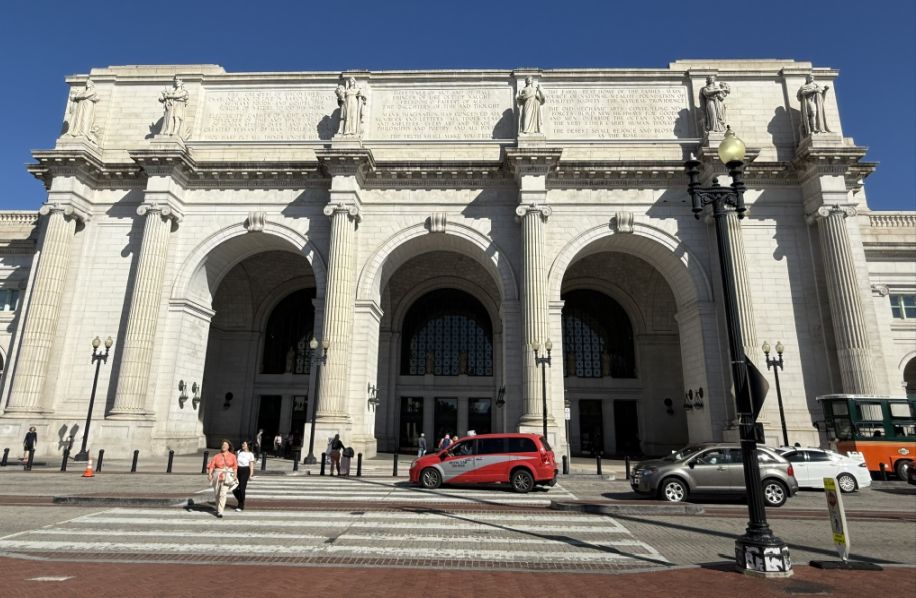
From the outside, the building feels monumental, a long sweep of white stone, rhythmic arches, and sculpted classical figures standing above the façade like guardians of travel. The architecture reflects the optimism of the railway age, designed to impress visitors arriving in the nation’s capital.
 |
 |
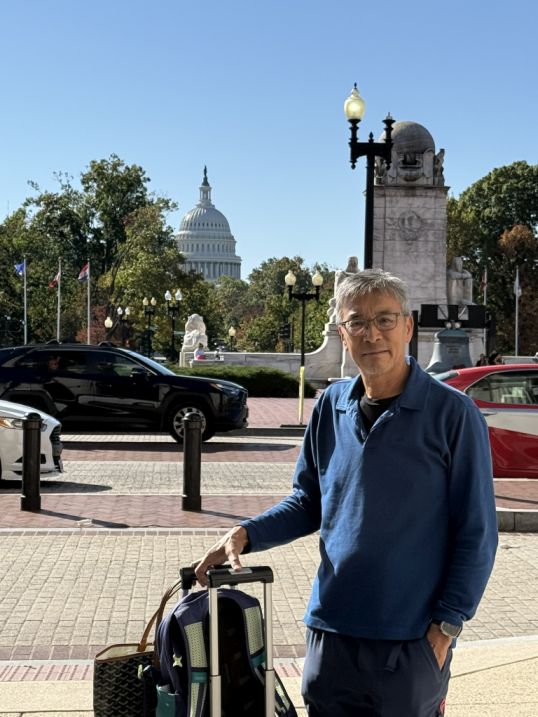
One last look at the Capitol State building before entering the Union station.
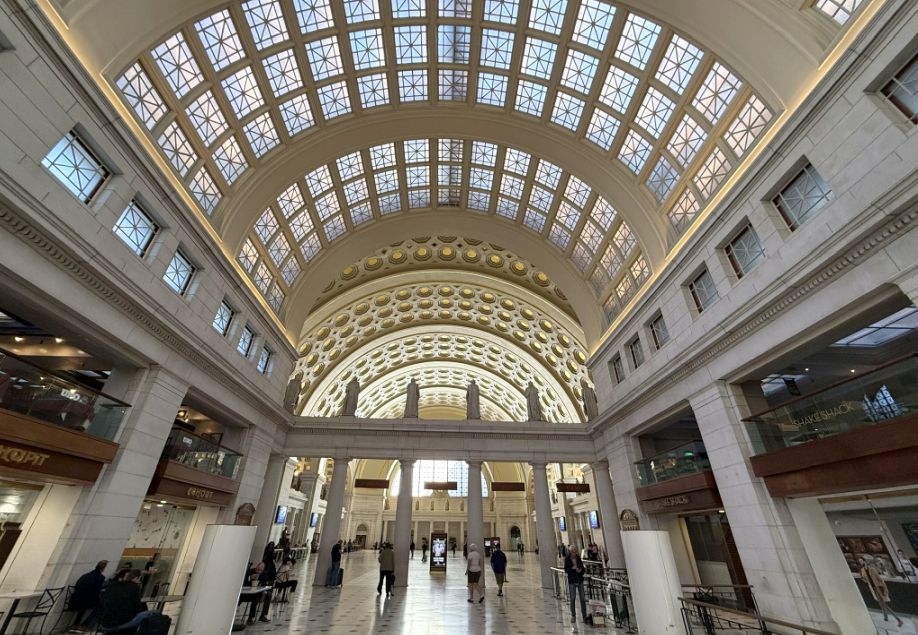
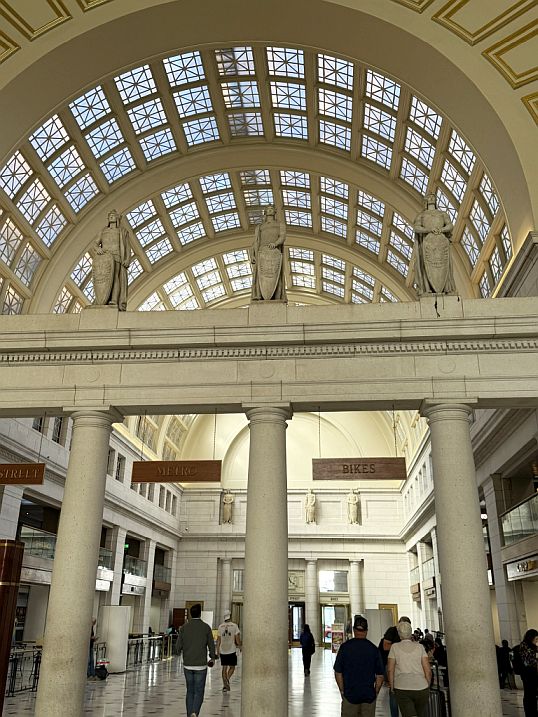
Stepping inside, the station opens into a breathtaking hall. Massive classical columns rise toward a luminous glass-paneled ceiling, filling the space with soft natural light. The scale is almost cathedral-like, with gilded details and soaring proportions that make the movement of travelers feel ceremonial rather than ordinary.
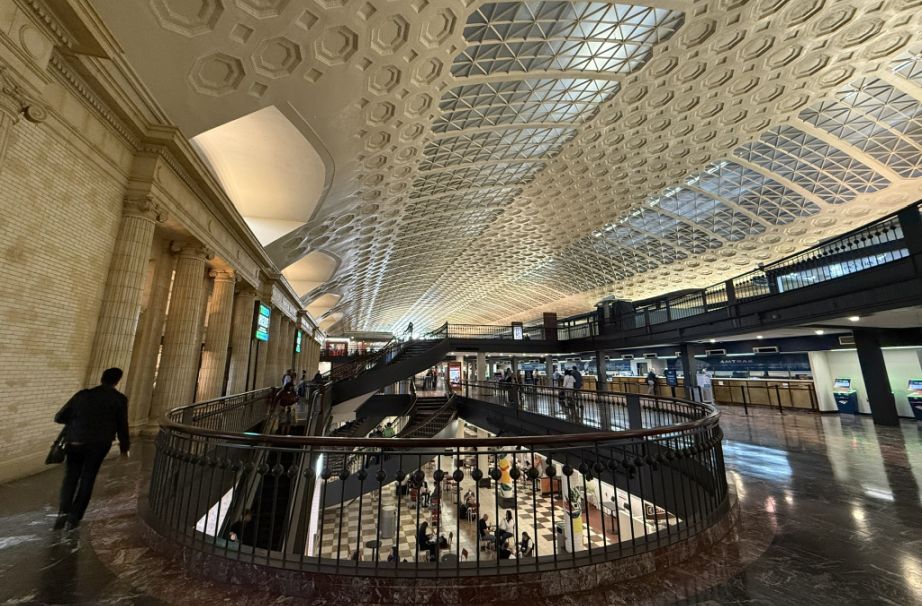
On the second floor, we passed by at a beautiful opening framed by elegant metal railings where we could look down into the main hall below.
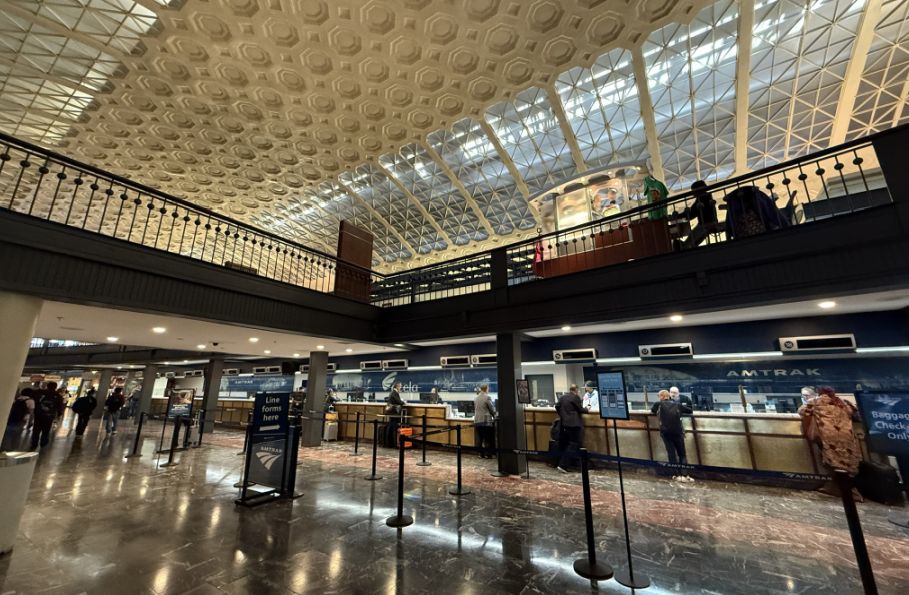
From there, the activity of the station unfolds like a living stage: people gathering, trains being announced, and light reflecting across marble and gold surfaces.
 |
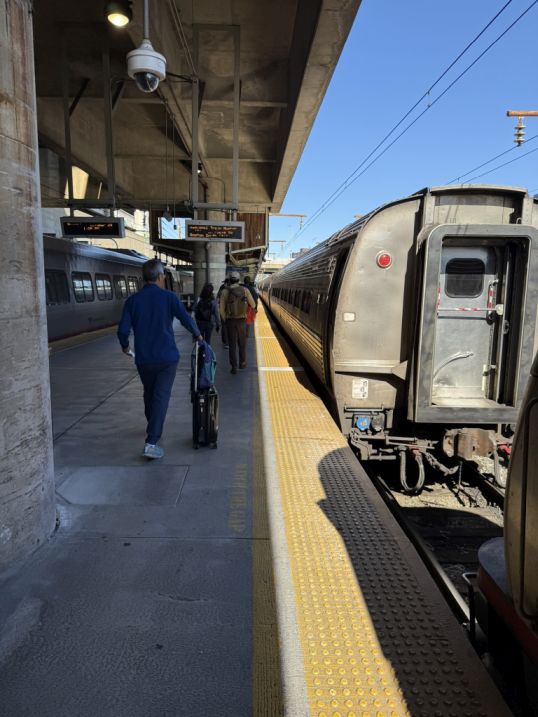 |
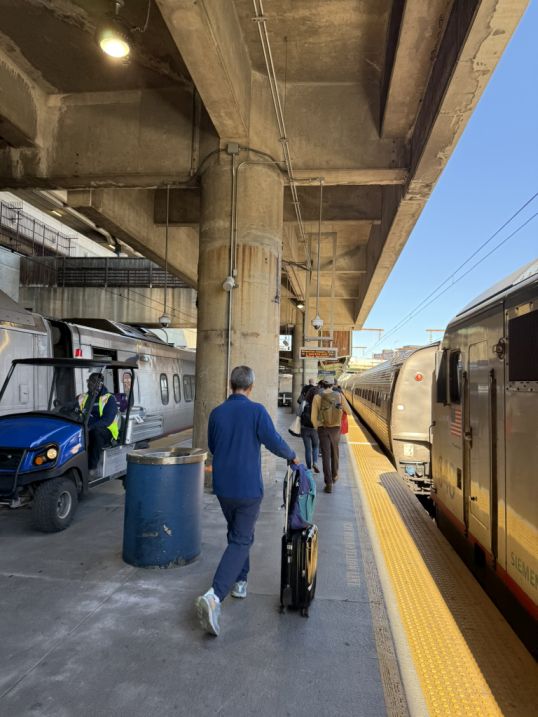
After visiting the ticket counters, we made your way down to the platforms, transitioning from architectural splendor to the anticipation of travel.
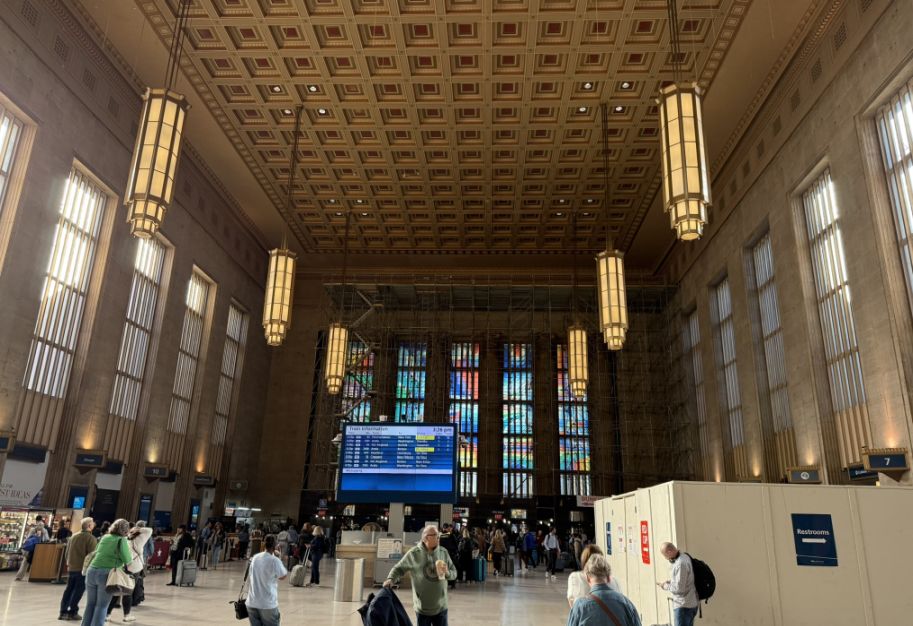
The train carried us to north to 30th Street Station in Philadelphia, another masterpiece of American railway architecture. The station feels immense upon arrival, its vast interior echoing with history. Even amid construction, its grandeur remains unmistakable, towering ceilings, monumental spaces, and classical symmetry. The lighting inside the hall is intentionally warm and dignified. Large, monumental fixtures hang high above, designed to complement, not compete with the architecture. At night, the artificial lights recreate the feeling of daylight, illuminating the pale stone surfaces so the hall never feels dark or crowded.
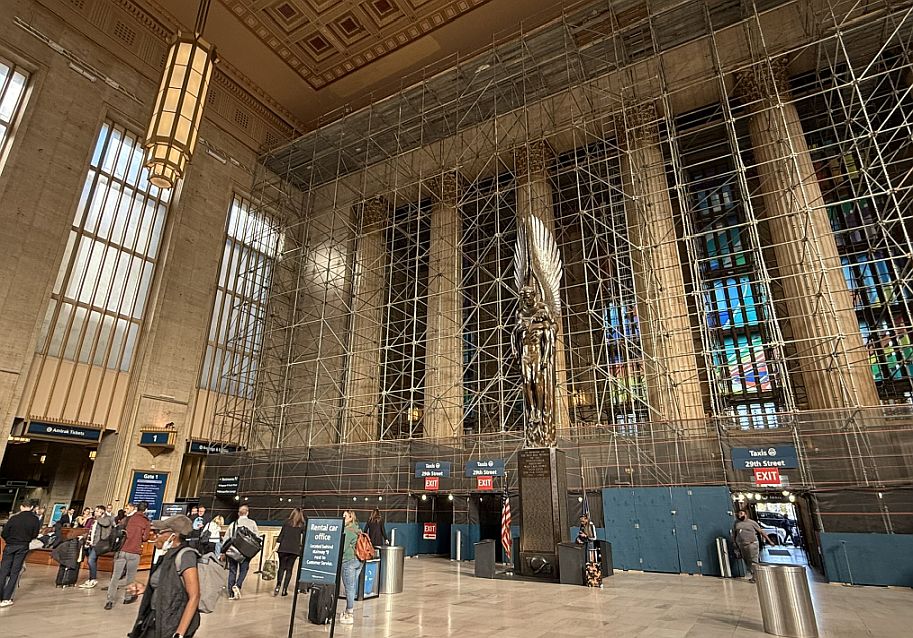
We got there when the train station was part of a major long-term restoration and modernization project, one of the largest upgrades to the station since it opened in 1933. 30th Street Station is a protected historic landmark, and many parts of the building were being carefully restored rather than replaced. Unlike newer stations, this building’s enormous open hall means work cannot easily be hidden. Materials are often staged along walls so trains and passengers can continue operating while restoration happens, essentially renovating a historic monument while it remains fully in use.
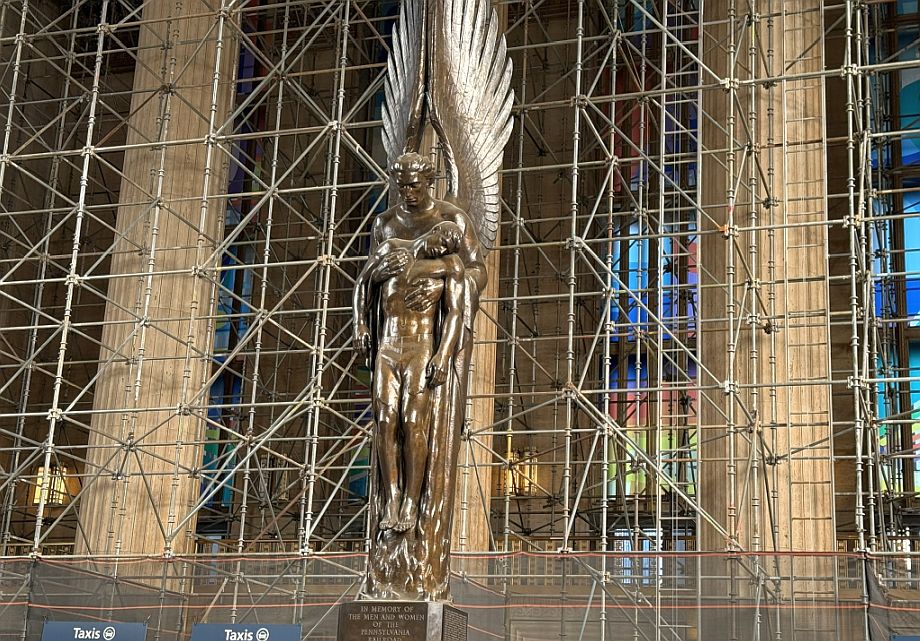
Dominating the hall is the striking golden sculpture Angel of the Resurrection, a powerful winged figure lifting another man upward. Created by Walker Hancock, the sculpture serves as a memorial to Pennsylvania Railroad employees who died in World War II. Its gold surface glows under the station lights, giving the moment a quiet sense of reverence, a reminder that train stations were once not just places of transit, but civic monuments filled with memory and meaning.
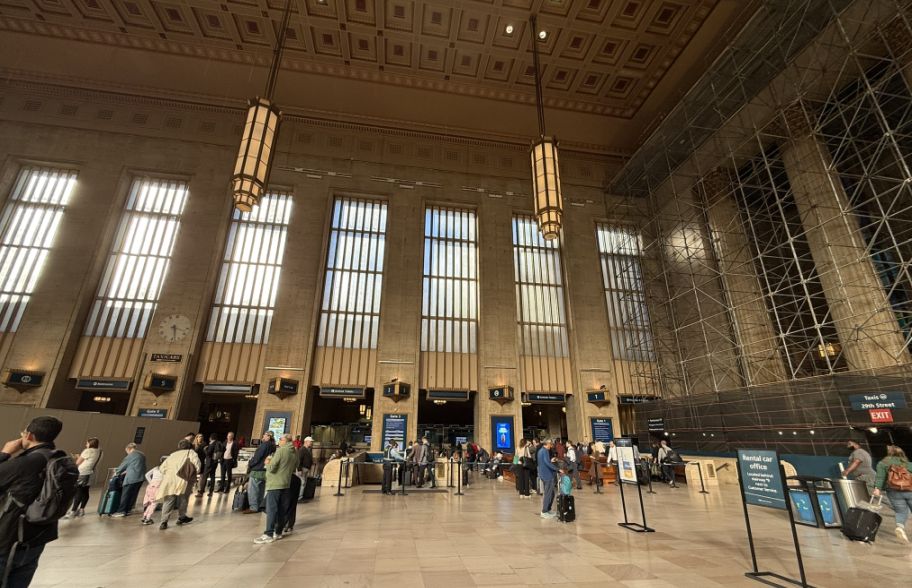
Inside the great hall of 30th Street Station, the architecture is designed to create a feeling of awe, almost like entering a civic temple dedicated to travel. The ceiling rises dramatically high above the concourse, emphasizing the station’s monumental scale. It is coffered and geometric, reflecting the Art Deco style popular when the station opened in the 1930s. Rather than ornate decoration, the design relies on strong lines, symmetry, and proportion. The height itself is part of the experience, sound softens and echoes slightly, making the vast space feel calm despite the movement of crowds below. Along the walls stand enormous vertical windows stretching nearly from floor to ceiling.

Dinner at Royal Boucherie
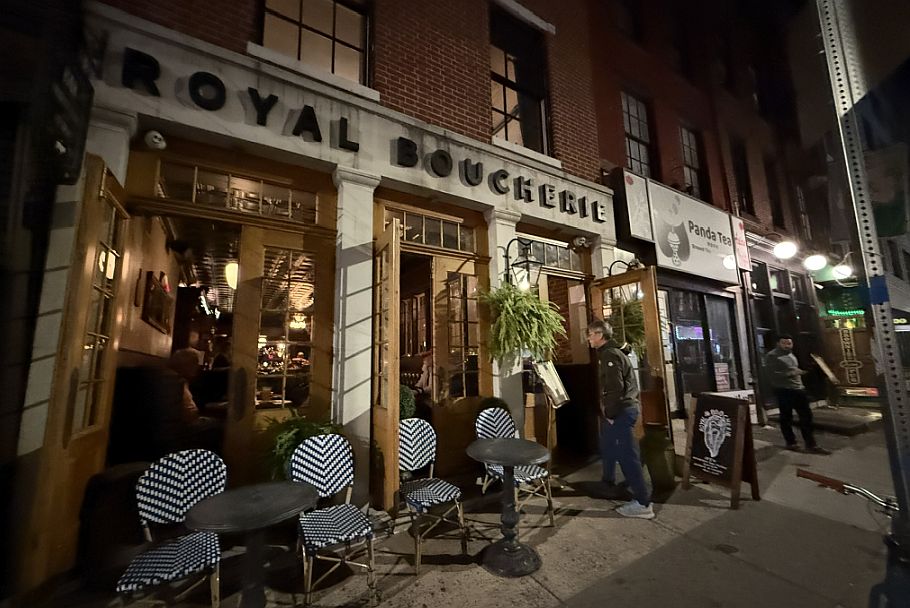
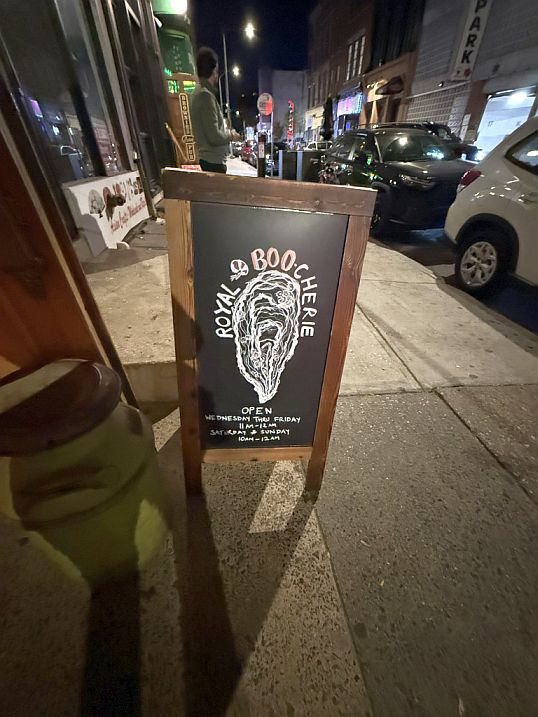
Later that evening, we are heading to Royal Boucherie, one of Old City Philadelphia’s most atmospheric and well-known French-inspired restaurants. Royal Boucherie belongs to chef Nicholas Elmi’s group, especially his flagship Laurel have been recognized within Michelin coverage and recommendations tied to the new guide, placing Royal Boucherie within the same high-quality dining circle that Michelin inspectors evaluate. In practical terms: it’s considered a Michelin-level neighborhood brasserie, even if not star-awarded.
 |
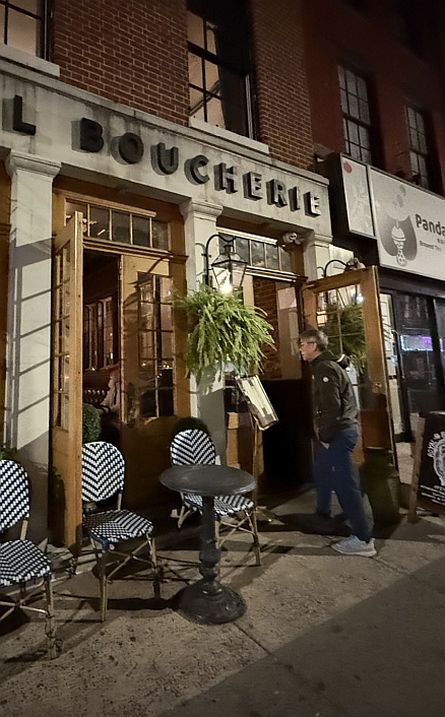 |
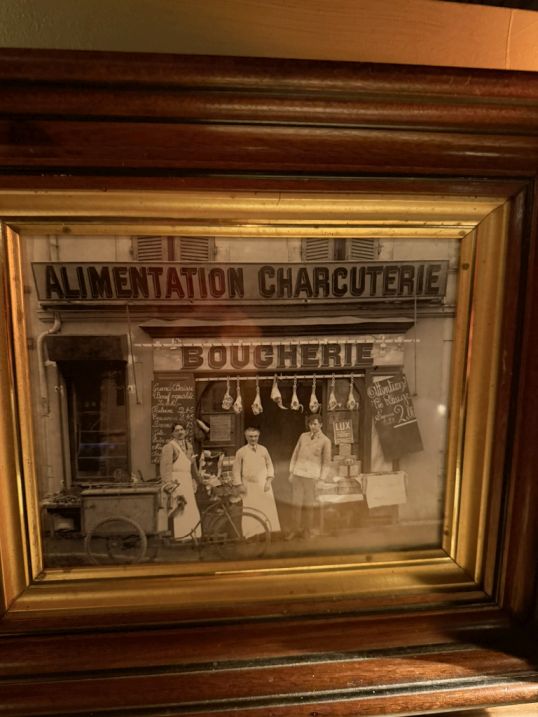
Royal Boucherie opened in 2017 in Philadelphia’s historic Old City district, led by Top Chef winner Nicholas Elmi and local restaurateurs Stephen Simons and David Frank. The idea was to create a lively American brasserie with strong French roots, a place inspired by traditional Parisian butcher shops and seafood cafés (“boucherie” means butcher shop in French).
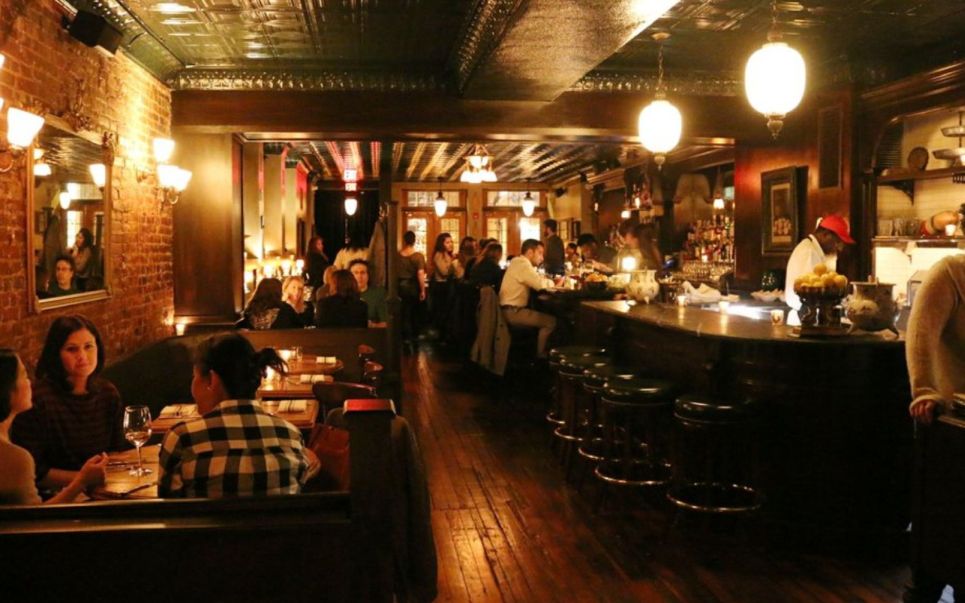
As soon as you walk in, the atmosphere is warm and welcoming. The original pine floors dating to the 1830s, exposed brick walls, restored tin ceilings, antiques light fixtures preserved during renovation.
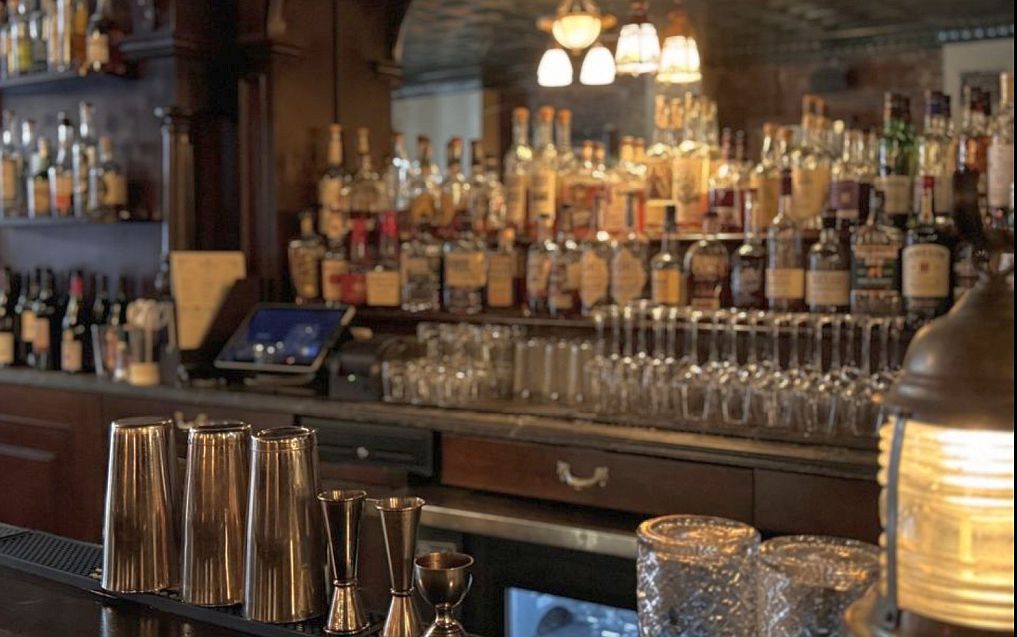
The bar.
 |
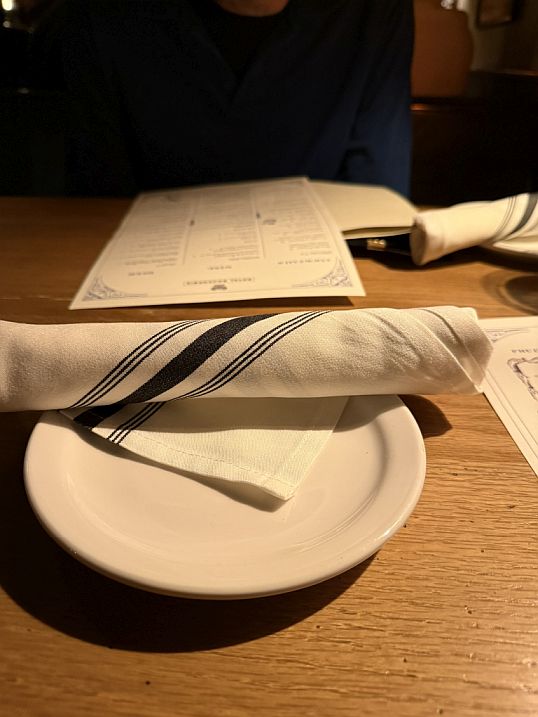 |
Simple table setting.
 |
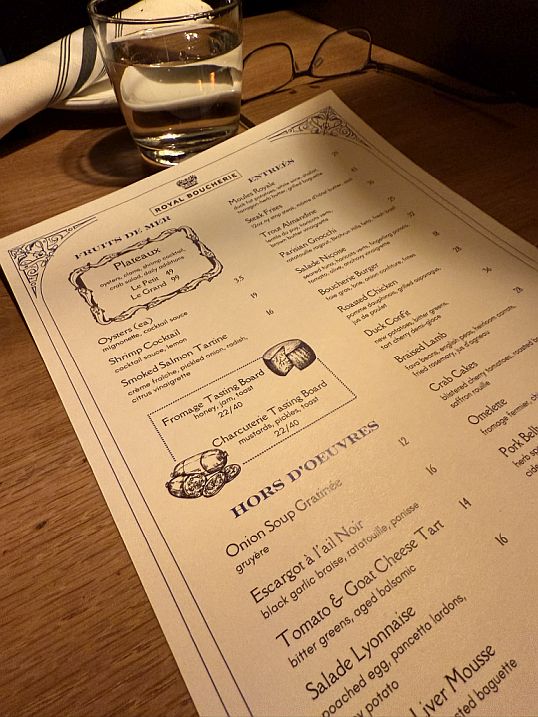 |
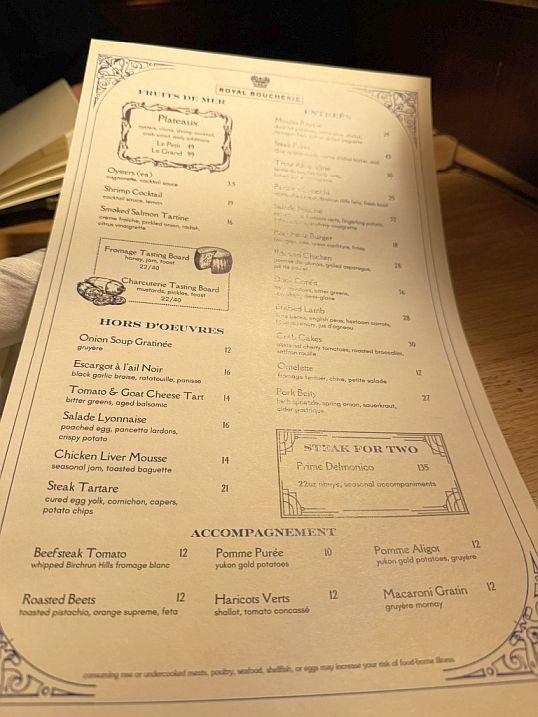
The menu
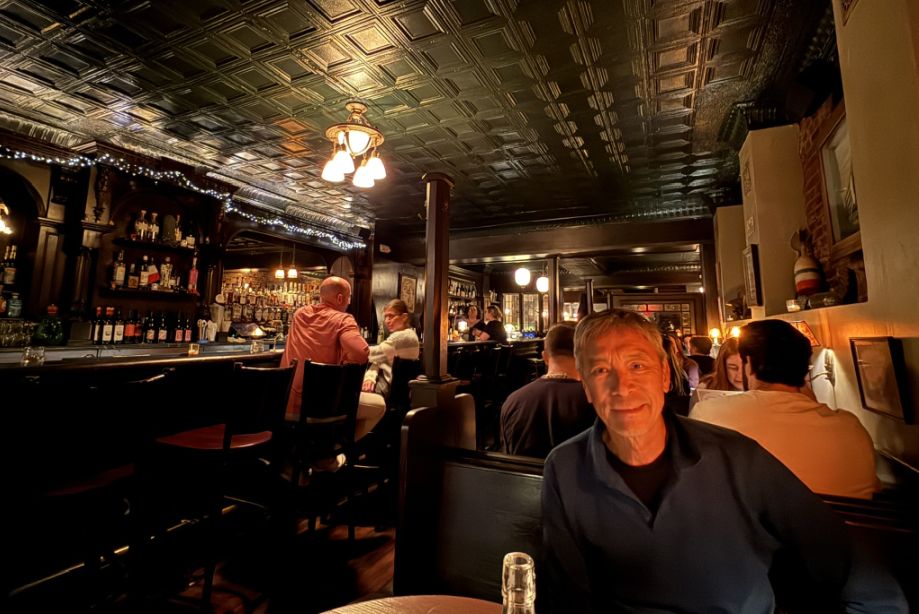
We were seated not far from the bar. The space felt lively yet relaxed, filled with conversation and warm light, and we immediately felt at ease. The energy of the room, glasses clinking, diners chatting, and the soft glow from the bar created the feeling of a classic neighborhood brasserie.
 |
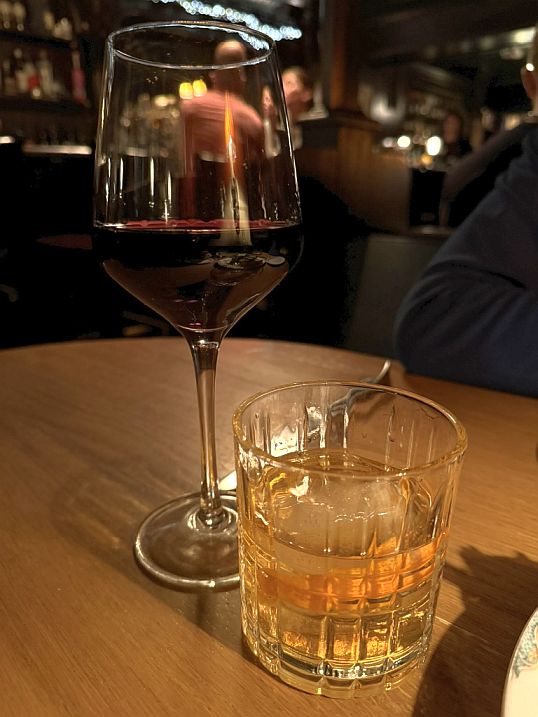 |
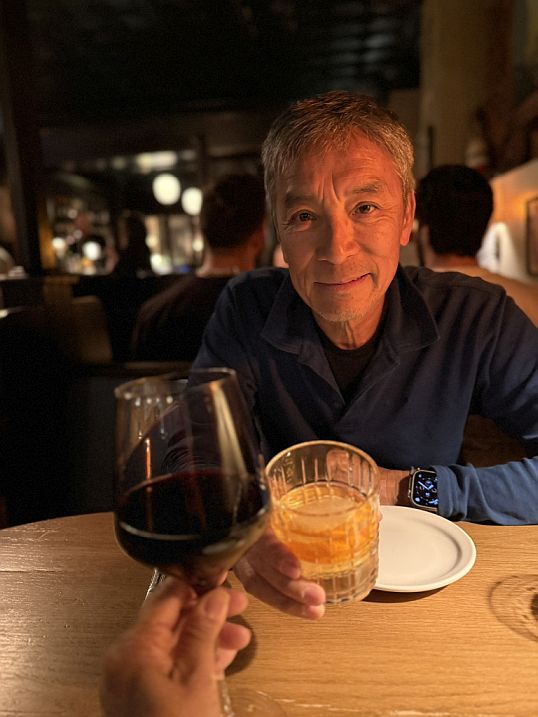
Starting the meal with a glass of red wine for me and an Old fashioned cocktail for Hoa.
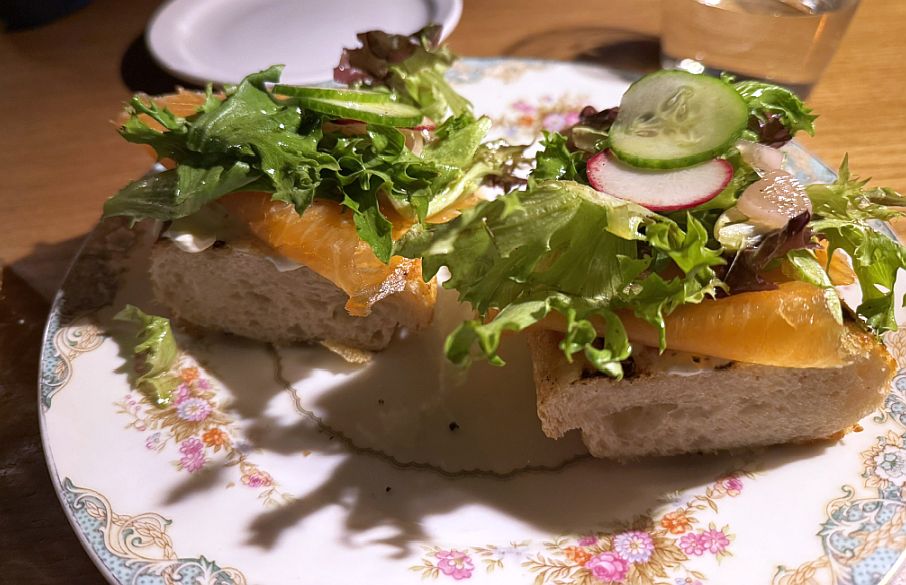
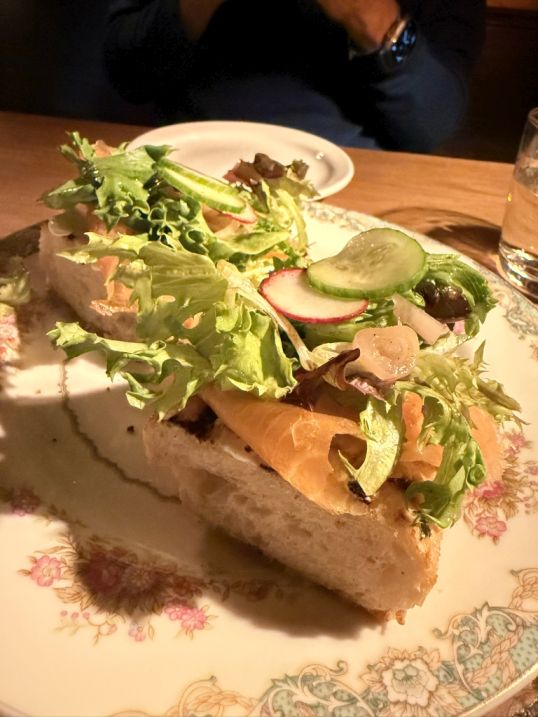
Smoked salmon tartine topped with crème fraîche, pickled onions, radish, and a bright citrus vinaigrette.
 |
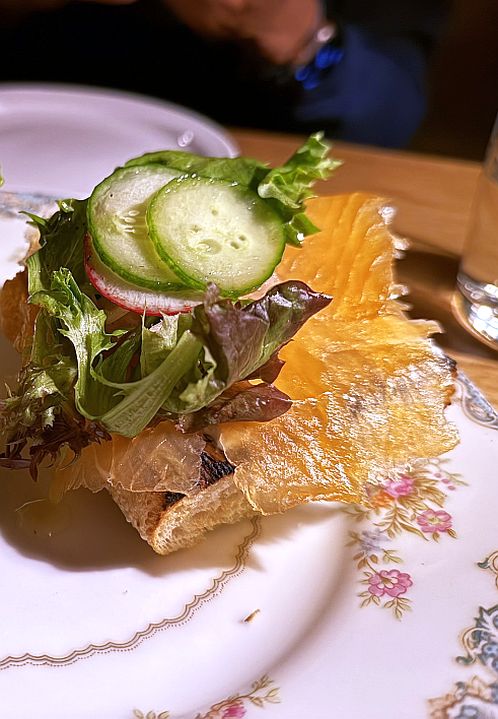 |
The dish was fresh and balanced, the richness of the salmon lifted by the acidity and crisp vegetables.
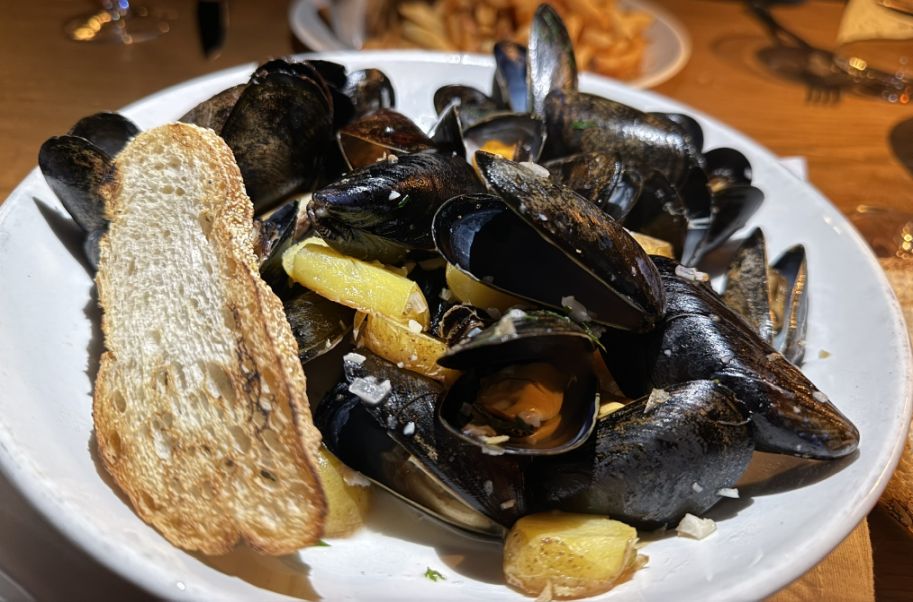
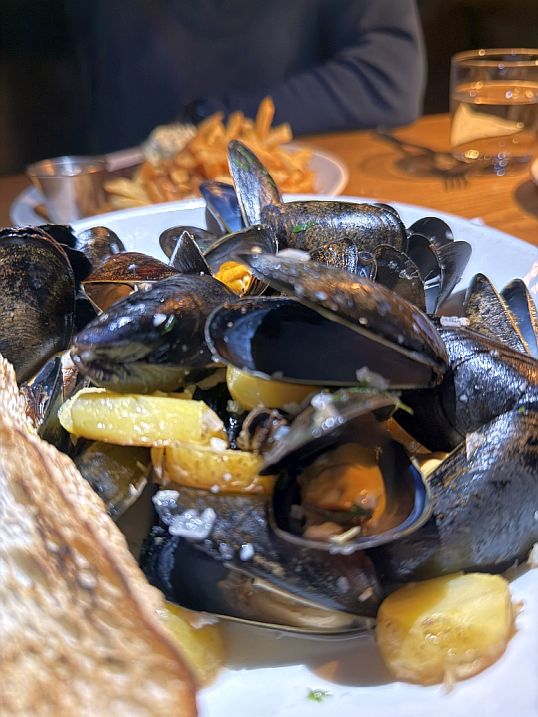
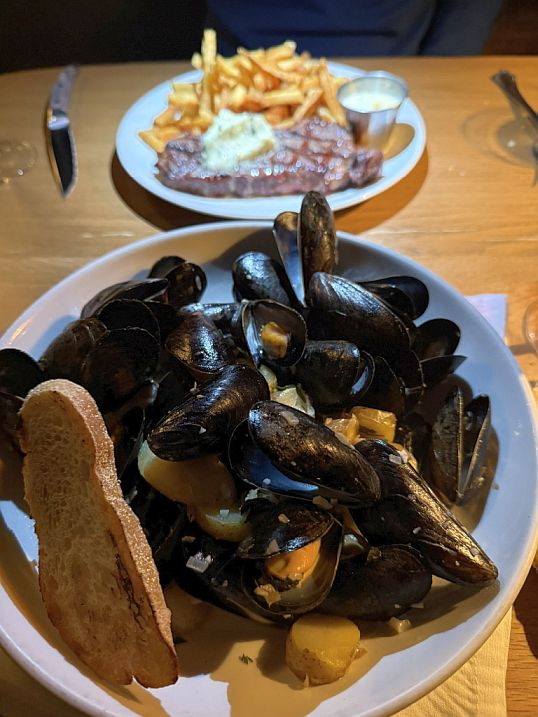
Moules Royal, white wine, saffron, rouilles , creme fraiche
 |
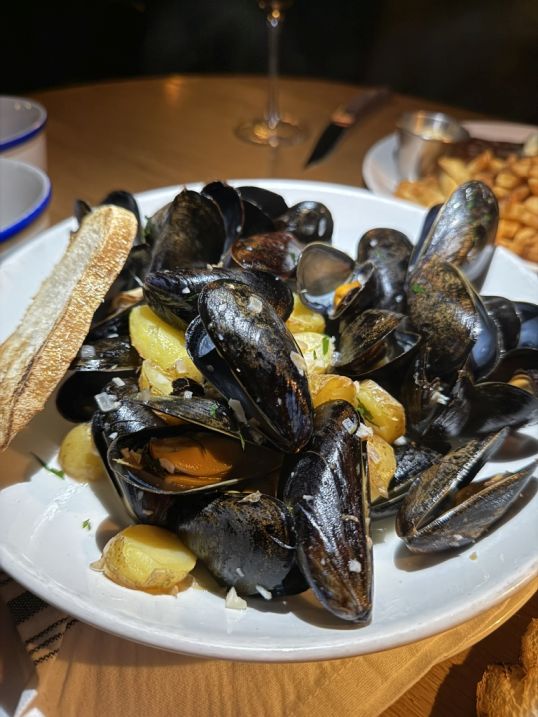 |
For the main course, the Moules Royal arrived steaming in a generous bowl, fragrant with white wine and saffron. The broth was luxurious and aromatic, its golden color hinting at the saffron’s warmth and depth. The rouille added a subtle garlicky richness, while the crème fraîche softened the flavors into a silky, velvety sauce. Each mussel was tender and briny, absorbing the delicate complexity of the broth. The dish felt both comforting and refined, especially when paired with bread to soak up every last spoonful of the sauce, arguably the true highlight of the plate.
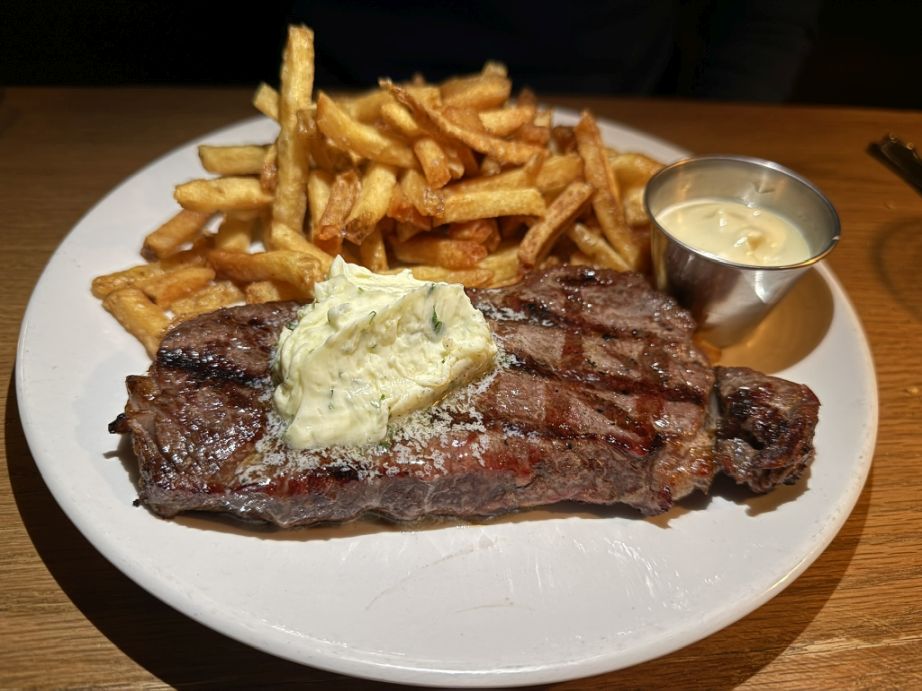
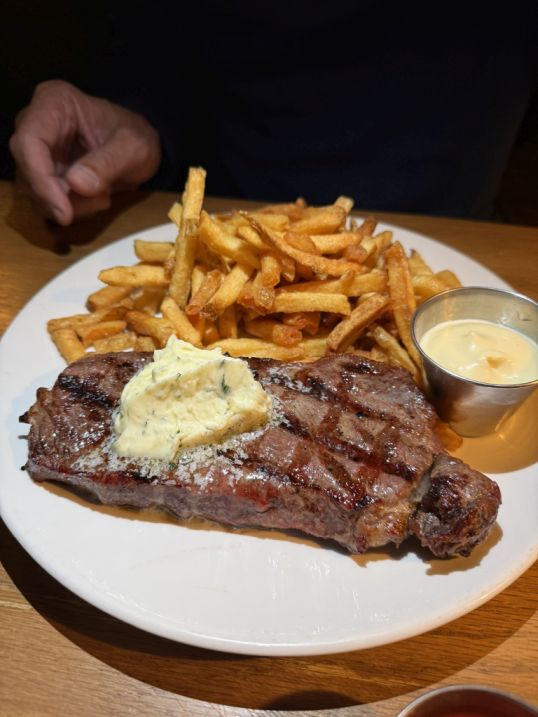
Steak Frites, 12 oz. NY strip steak, maître d'hôtel butter, aioli
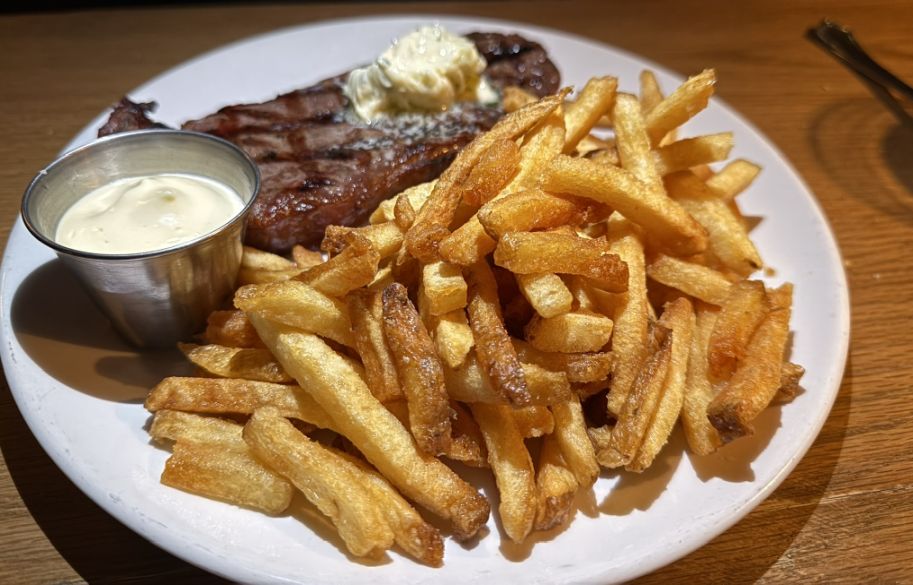
The steak was deeply seared, creating a flavorful crust while remaining juicy and tender inside. As the maître d’hôtel butter melted slowly over the hot meat, it released aromas of herbs and richness that enhanced rather than overwhelmed the natural flavor of the beef. The French fries were crisp and golden, light yet satisfying, ideal for dipping into the buttery juices left on the plate. It was a classic bistro dish executed with confidence, simple ingredients elevated through careful technique.
 |
 |
Together, the dishes captured the spirit of French brasserie cooking: comforting, generous, and elegant without feeling formal, making for a memorable and relaxing first dinner in Philadelphia.
Sitting here we felt like we could be in dinning in a bistro in Paris.
 |
 |
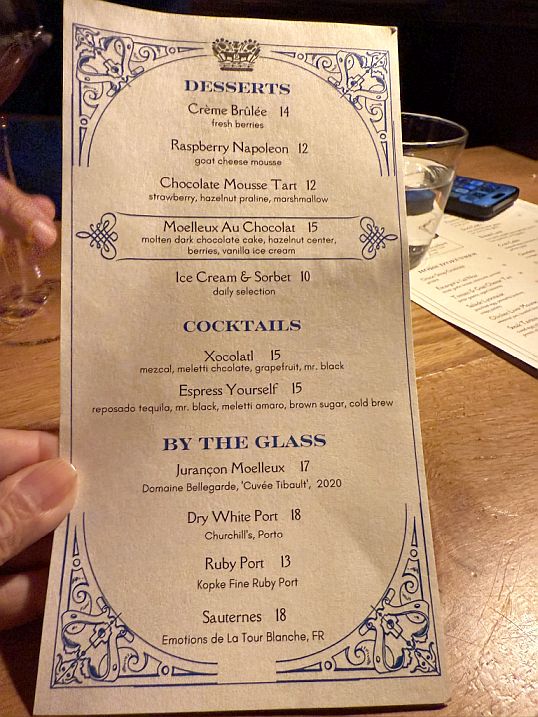
The dessert menu
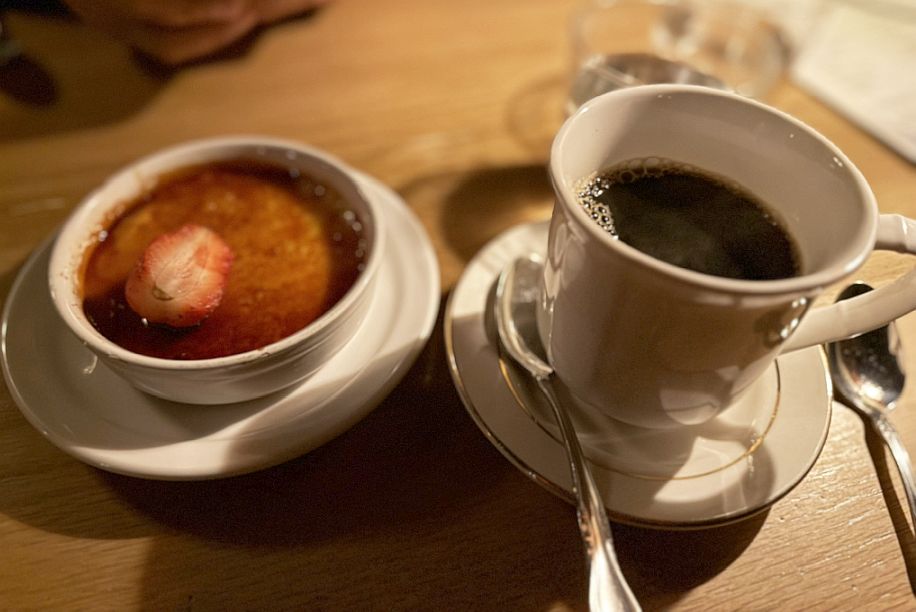
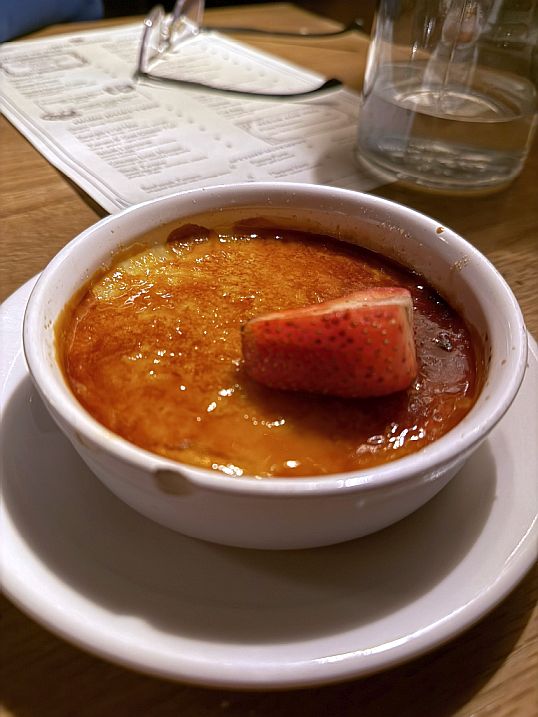
To end the meal, we shared a crème brûlée topped with fresh strawberry, accompanied by a cup of coffee.
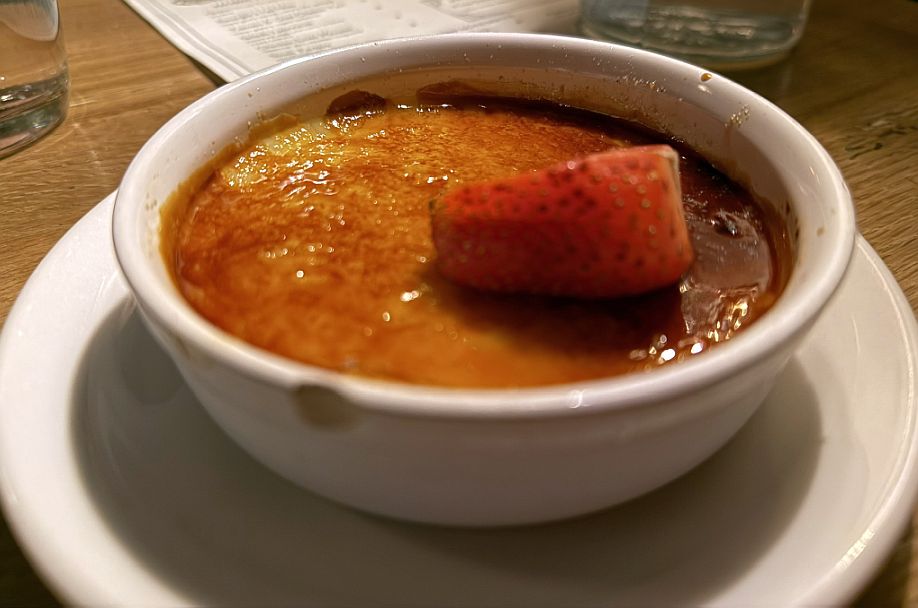
The dessert arrived with its signature caramelized sugar crust, delicately torched to a thin, glass-like layer that cracked gently under the spoon. Beneath it, the custard was smooth and creamy, rich with vanilla yet light enough to feel elegant rather than heavy. The fresh raspberries added a bright tartness that balanced the sweetness beautifully, refreshing the palate after the savory courses. Paired with the warmth and slight bitterness of the coffee, it provided a calm and satisfying finish to the evening, a simple, classic ending that perfectly matched the relaxed charm of Royal Boucherie.
NEXT... Day 2-Walking in Philadelphia
Filed under: Restaurants