4 days in Philadelphia 10/24- 10/27/2024
| Day 1 Arrival/Dinner |
Day 2 Walking around Cocktail/Tuna Bar |
Day 3 Guided Tour Dinner at Amata |
Day 4 LibertyBell/Independence Hall City Center |
Day 2- Walking in Philadelphia-10/25/2024
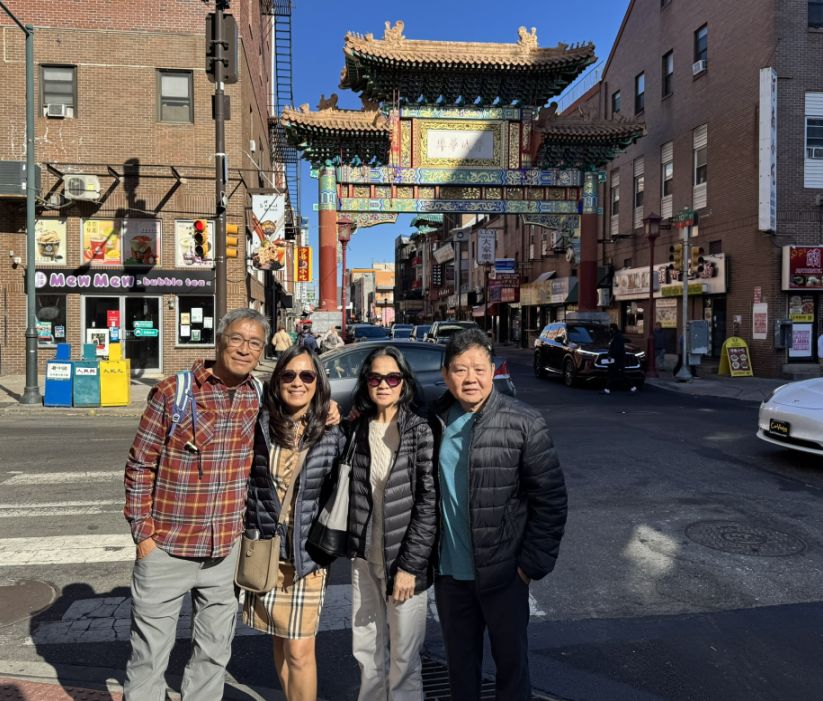
We are meeting with Hoa's cousin and his wife. We have not seen them for at least 20 years, and after contacting them, they drove 2 hours to meet up with us.
We are now in front of the towering Chinatown Gate, spanning across 10th Street, and is composed of painted and gilded wood and stone. It's not just decorative; it functions as a prominent landmark that clearly defines the boundaries and identity of Chinatown. Passing under it truly feels like entering a different cultural space within the city.
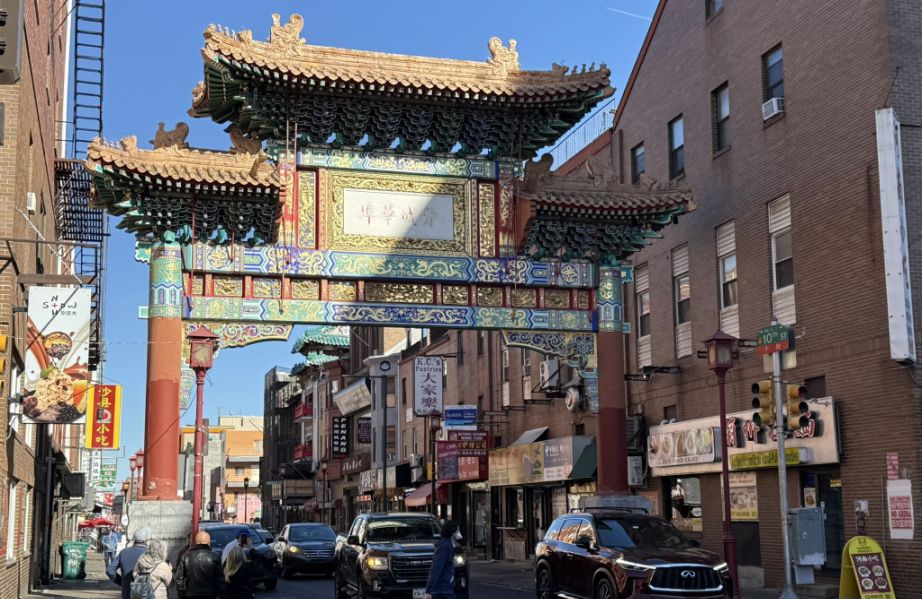
Philadelphia's Chinatown Gate, officially known as the Friendship Gate, is one of the most magnificent and authentic Chinatown gates in North America. Its location over 10th Street at Arch Street marks the cultural entrance to Philadelphia's vibrant Chinatown.. The Friendship Gate is a paifang style gate, which is a traditional Chinese architectural archway. What makes Philadelphia's gate particularly noteworthy is that it was designed and built by artisans from Tianjin, China, Philadelphia's sister city. This makes it incredibly authentic in its design and construction.
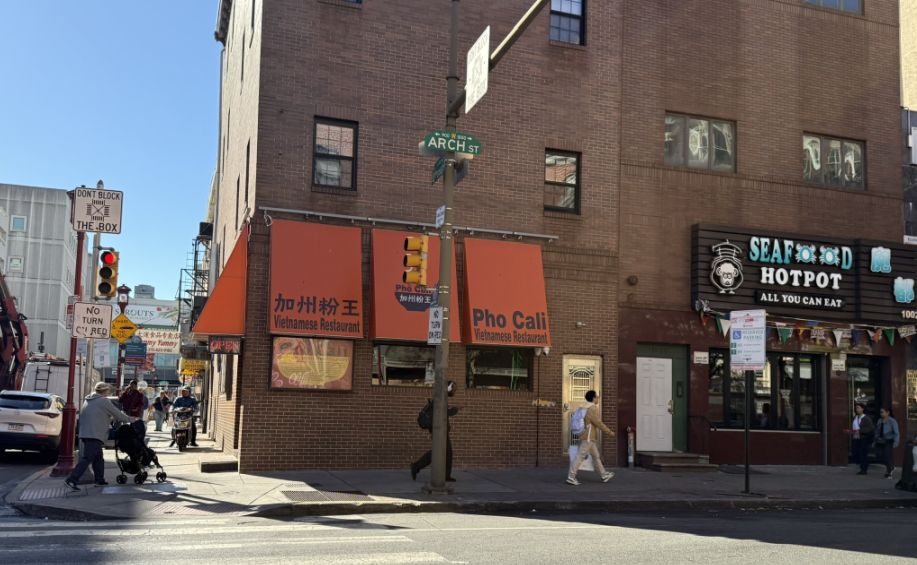
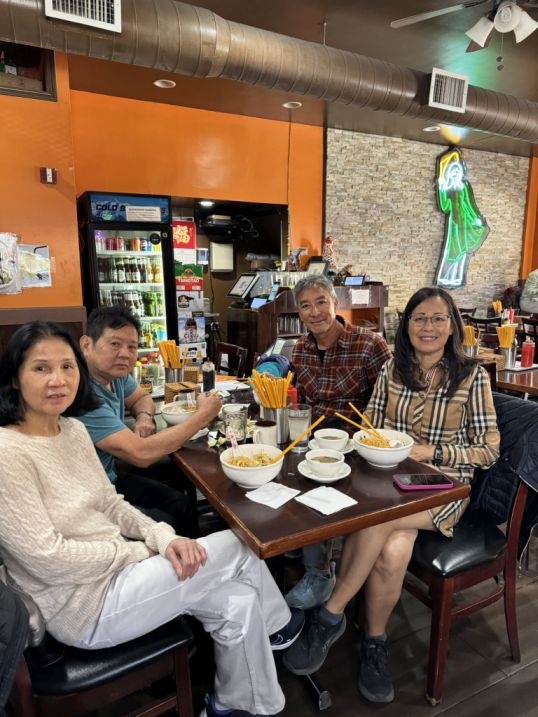
We spotted Pho Cali and we stopped by for lunch.
 |
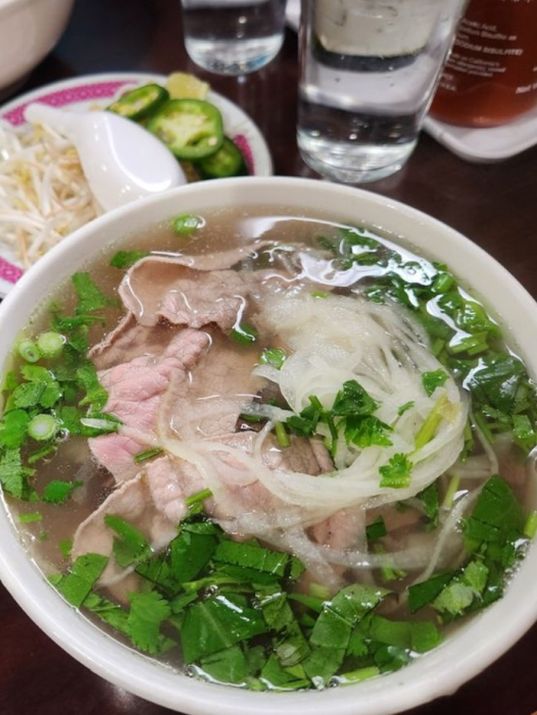 |
Hoa was very happy to have a hot and piping bowl of Pho.
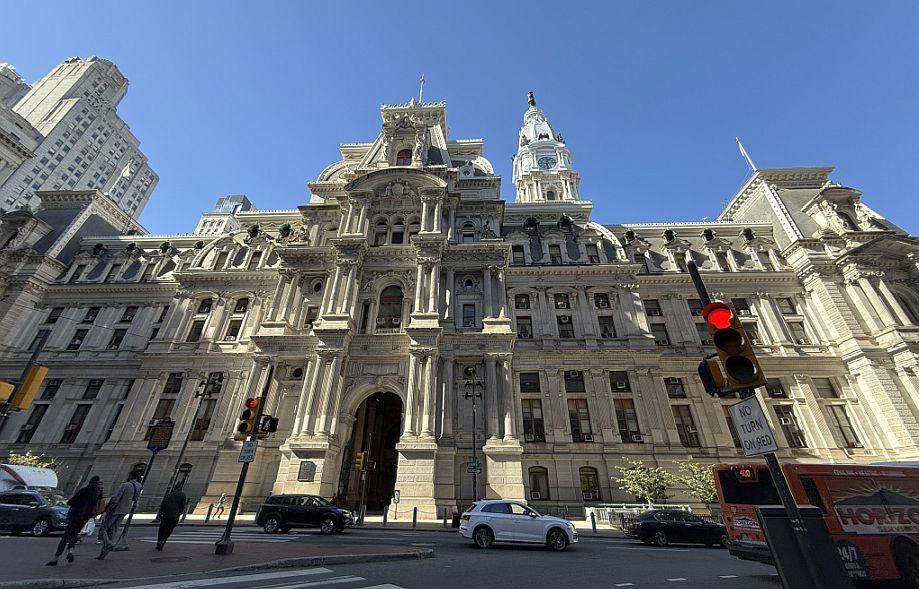
After exploring the bustling streets of Chinatown, a visit to Philadelphia City Hall offer a different architectural and historical experience.
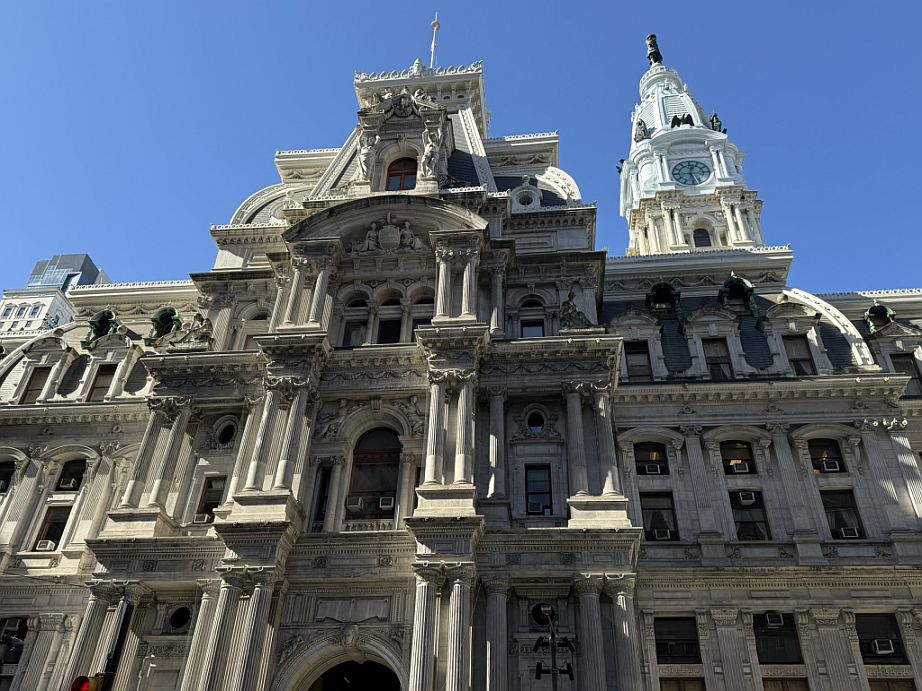
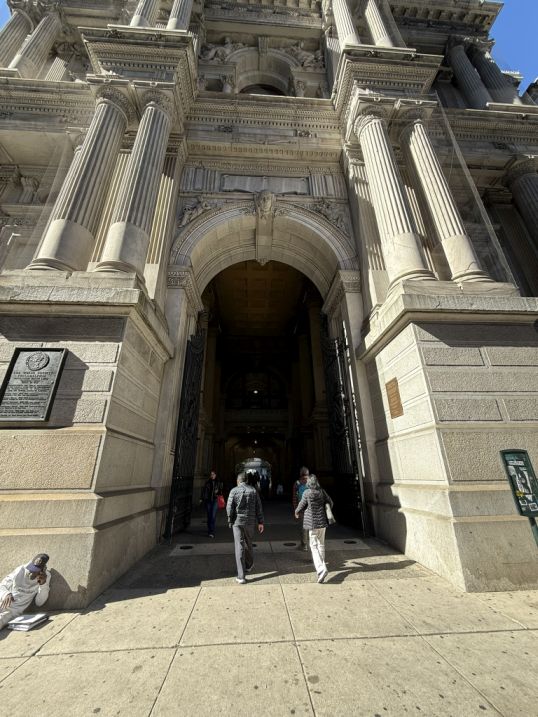
This is the East Portal (East Arcade) is located along 13th Street. While the main entrance is on Broad Street, the 13th Street side has its own grand presence.
 |
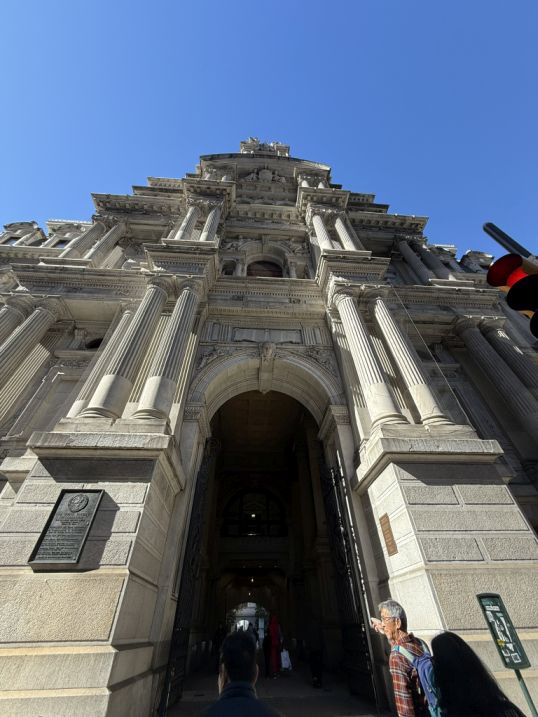 |
Robust arcades and arches at the ground level, which historically would have served as entrances for various city functions and perhaps even horse-drawn carriages in its earliest days. These provide a sense of monumental scale and welcome.
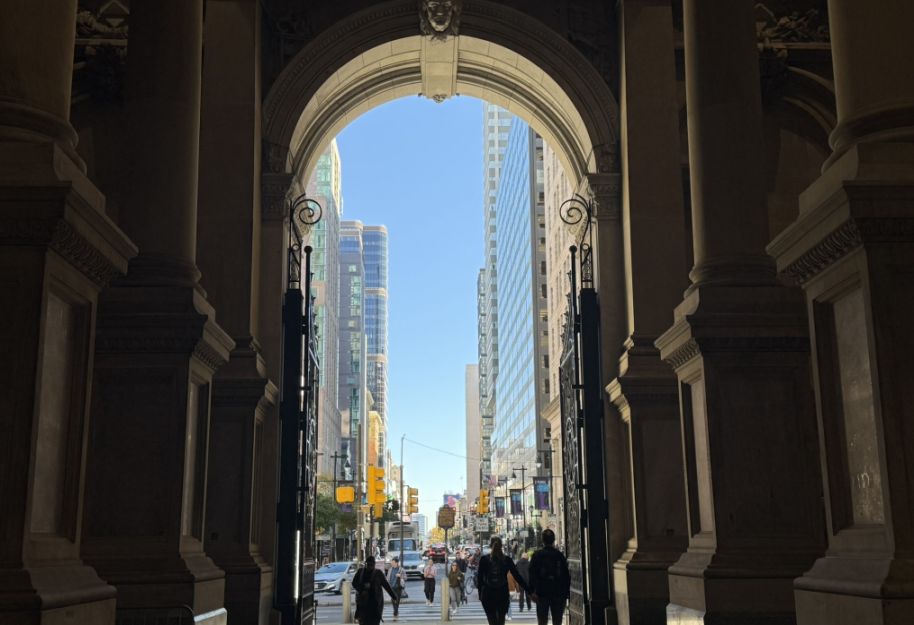
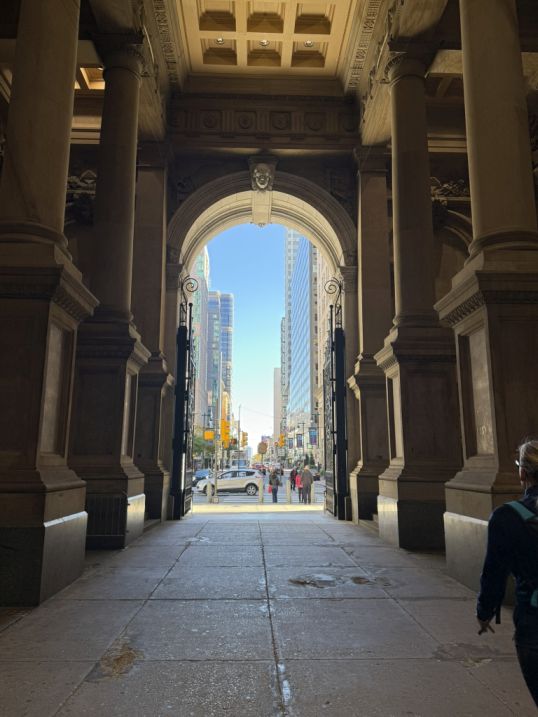
This is the classic contrast that makes City Hall so unique. We are standing within a monumental 19th-century structure, a masterpiece of ornate masonry, peering through its meticulously crafted arches. Framed by these historic arches, we see the gleaming, modern glass and steel of contemporary skyscrapers. This juxtaposition perfectly illustrates Philadelphia's blend of deep history and modern urban development. It's a conversation between eras.
 |
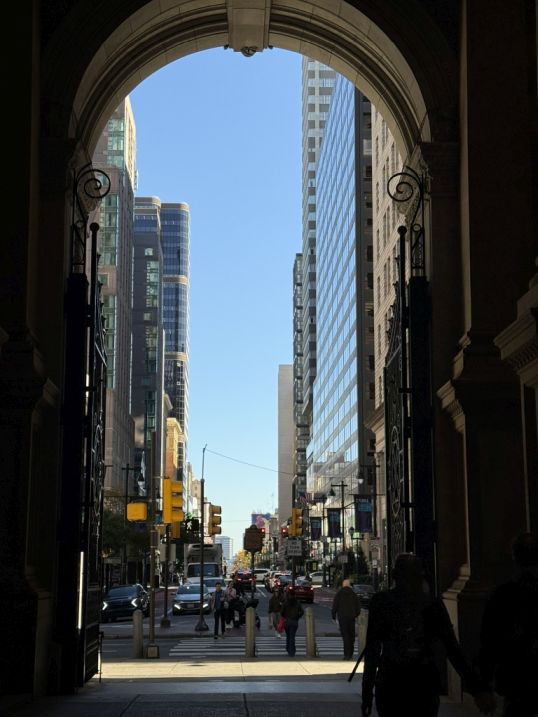 |
What a beautiful view of the city from inside City hall
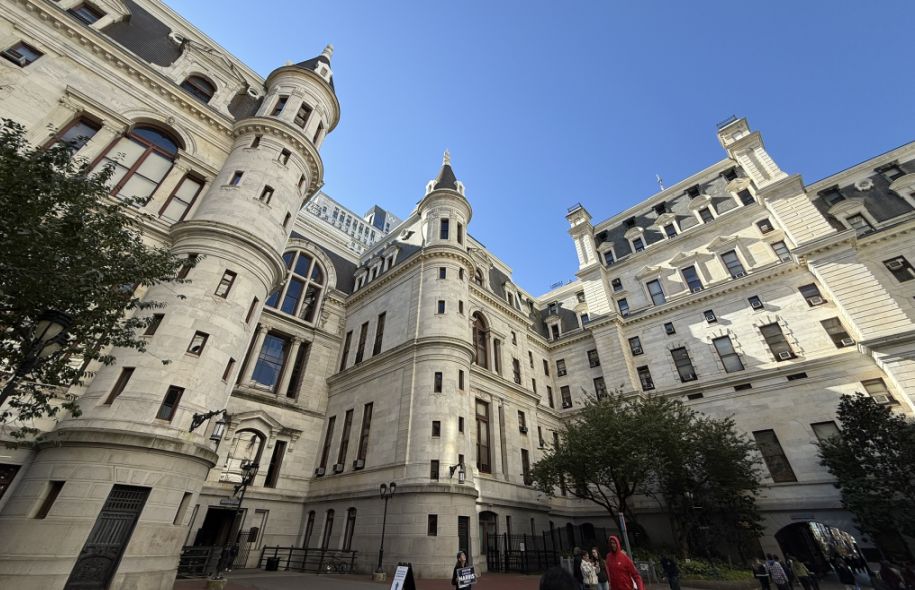
We in the courtyard of City Hall. The courtyard is truly the "heart" of the building. The most striking feature in the images are the numerous turrets (the small, round, or polygonal towers) with their conical or pointed roofs. These are a hallmark of the French Second Empire style, giving the building an undeniably castle-like appearance. You can see at least three prominent turrets in the main image, each capped with a dark slate-colored roof and a decorative finial.
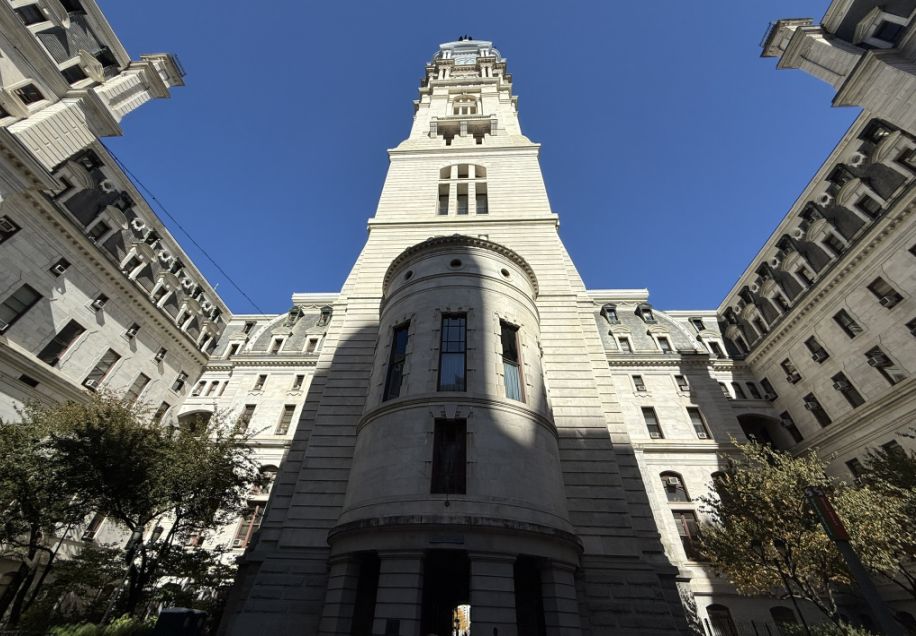
We are at the base of the City Hall tower, measuring 548 ft. including the statue of the William Penn atop its tower.
 |
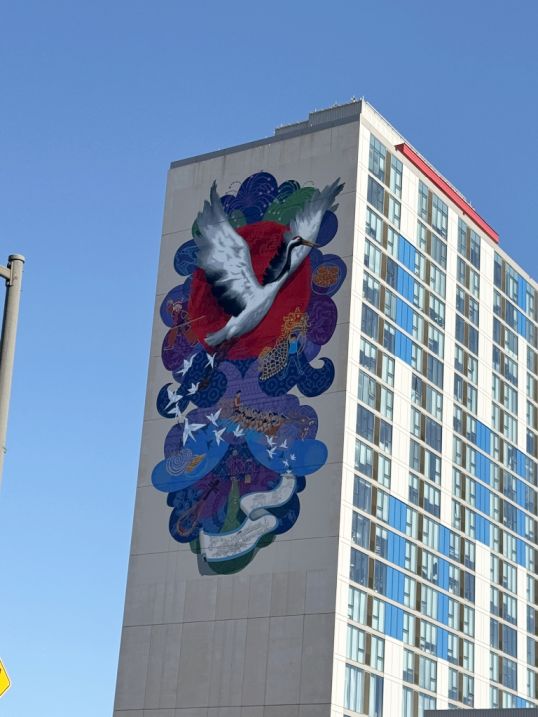 |
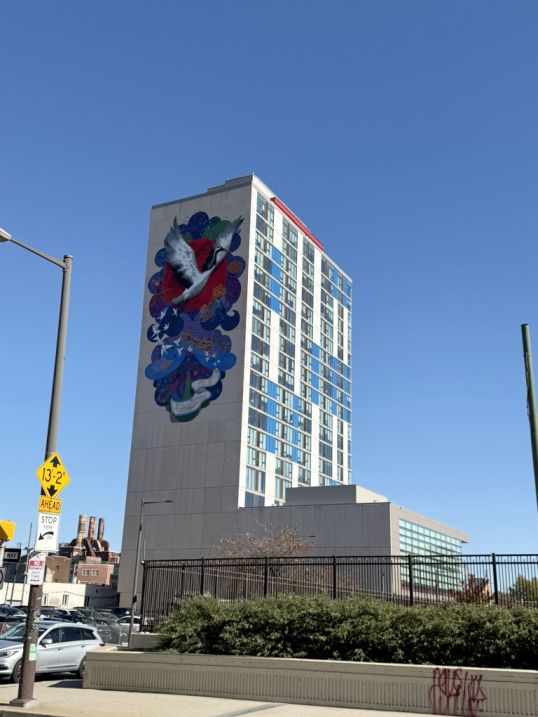
Philadelphia is often called the “Mural Capital of the World.” The city has 4,000+ murals, many created through the Mural Arts Program, which began in the 1980s as an anti-graffiti initiative and evolved into one of the largest public art programs in the U.S.
The mural you are seeing is called “Soaring Toward the Future.” It features a large bird in motion with wings fully extended, surrounded by smaller white birds against a vibrant, colorful background. The imagery suggests movement, hope, freedom, and collective uplift, a common theme in many Philadelphia murals.
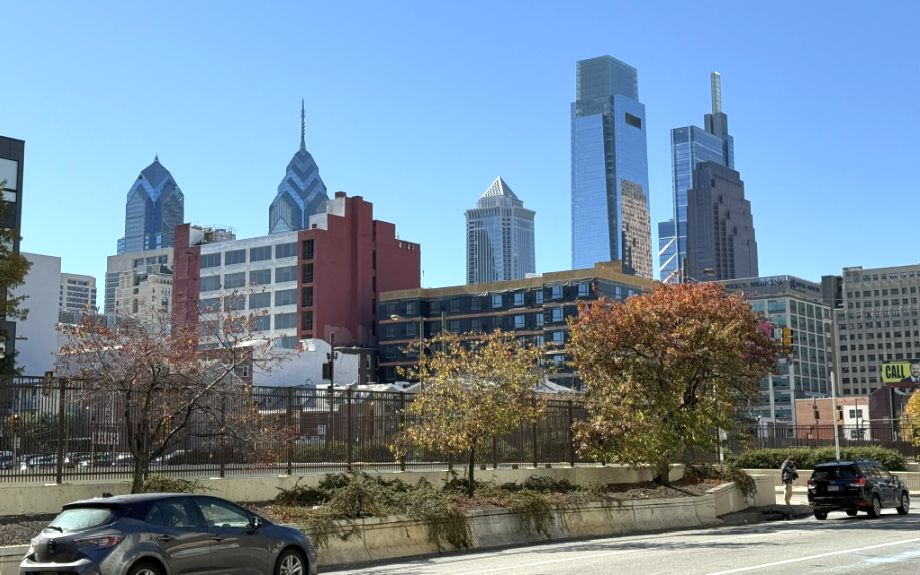
From where we are standing, we get one of the classic north‑side views of Center City. The buildings ahead are a mix of older, pointy‑roof skyscrapers and newer glass towers. There is one of the right that looks like a “USB stick to me, it is actually the Comcast Technology Center.
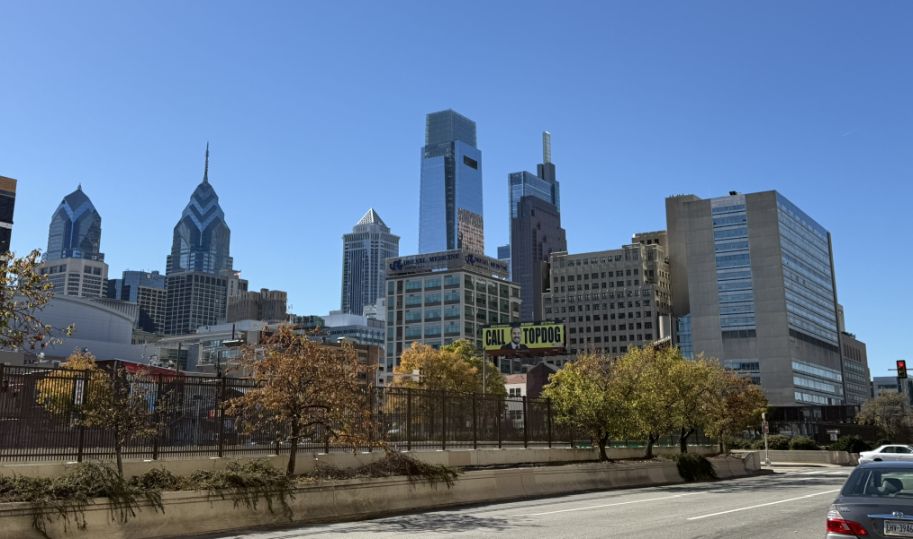
This viewpoint highlights Philadelphia’s two architectural identities, historic stone and concrete buildings from the 1900s and the recent generation of super‑tall glass towers.
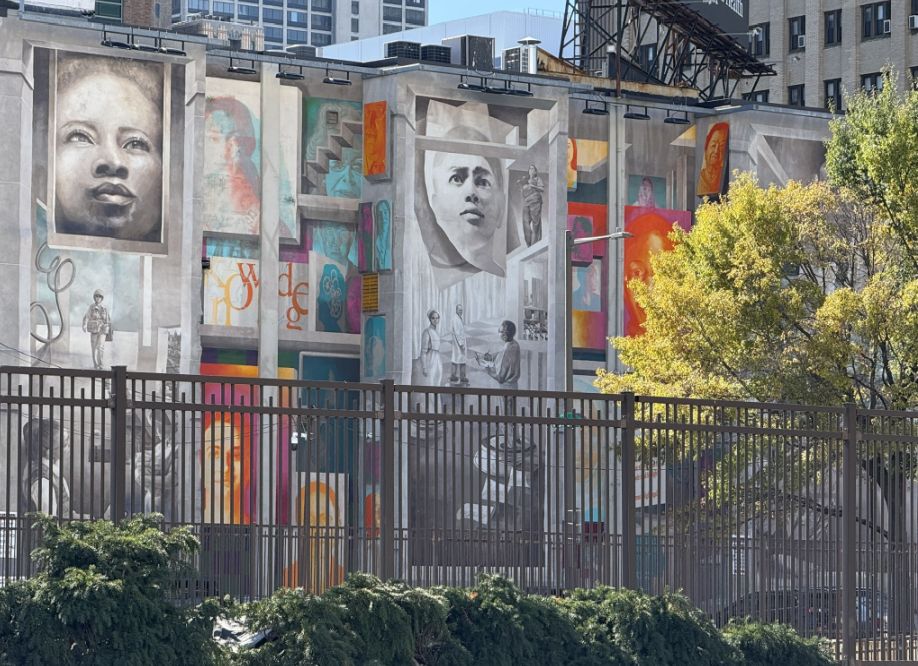
Another mural art along the way...
 |
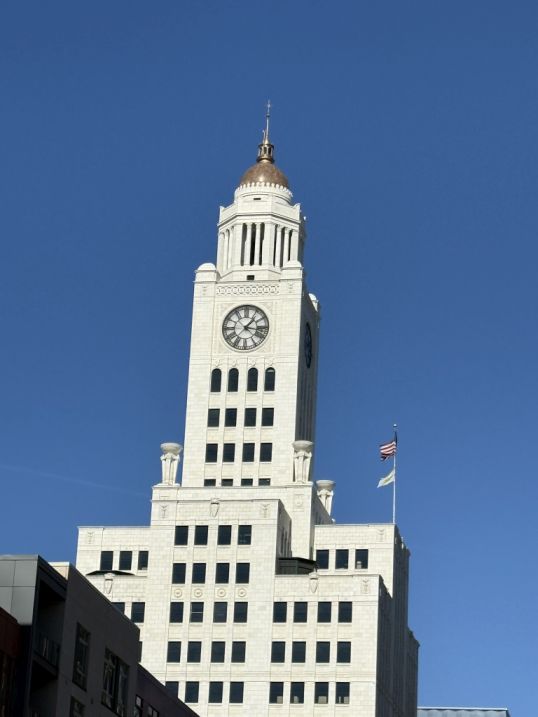 |
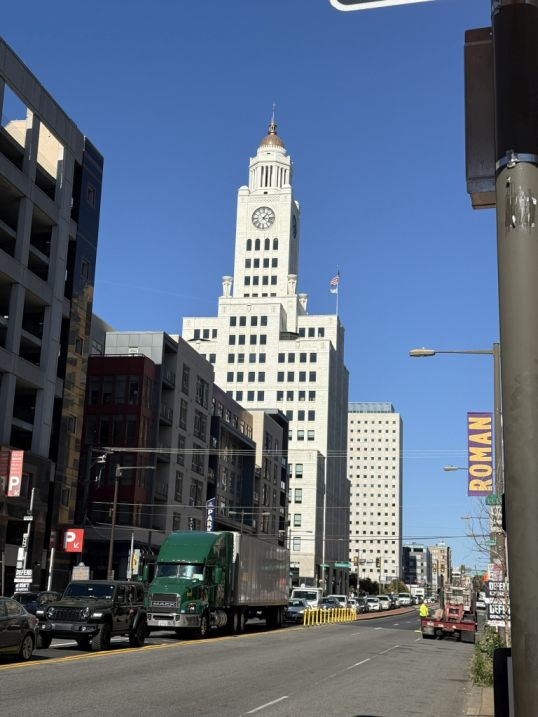
We are now downtown and the tall building is the Elverson Building is a historic early‑20th‑century commercial building located near Broad Street and Callowhill . It was originally home to the Philadelphia Inquirer’s printing operations and offices, the newspaper once owned multiple buildings in this corridor.
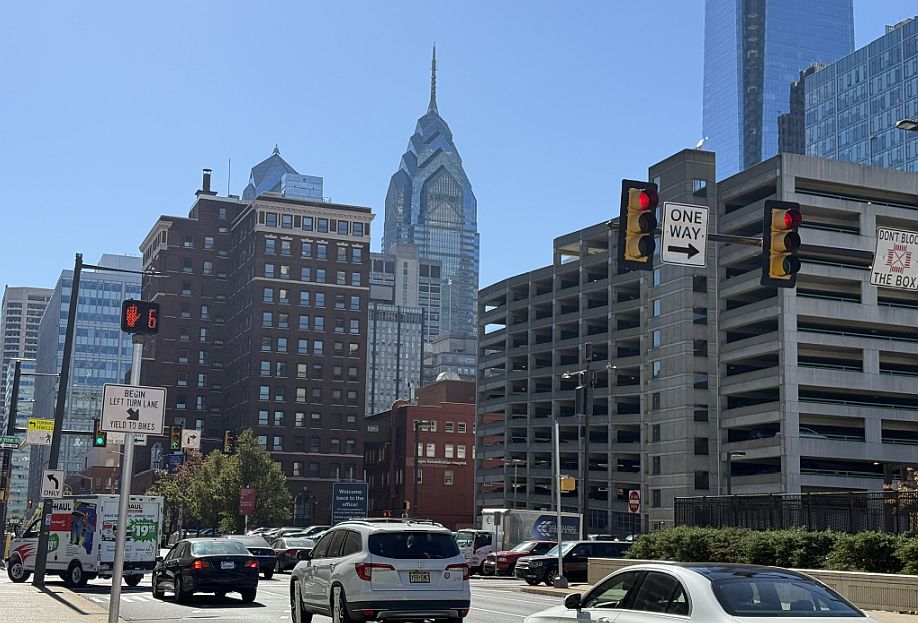
We are on vine street toward Logan square and in the distance is the
Liberty Place is
peeking above nearby buildings.
The distinctive design and spire make the complex a recognizable part of
the Philadelphia
skyline.
a
 |
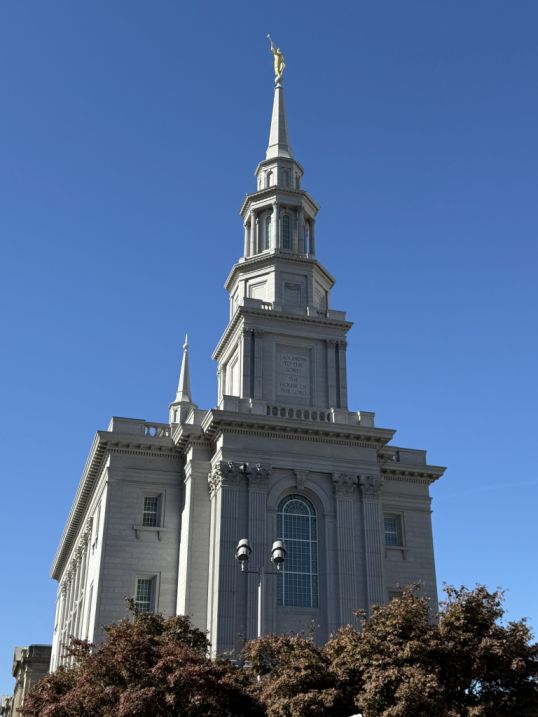 |
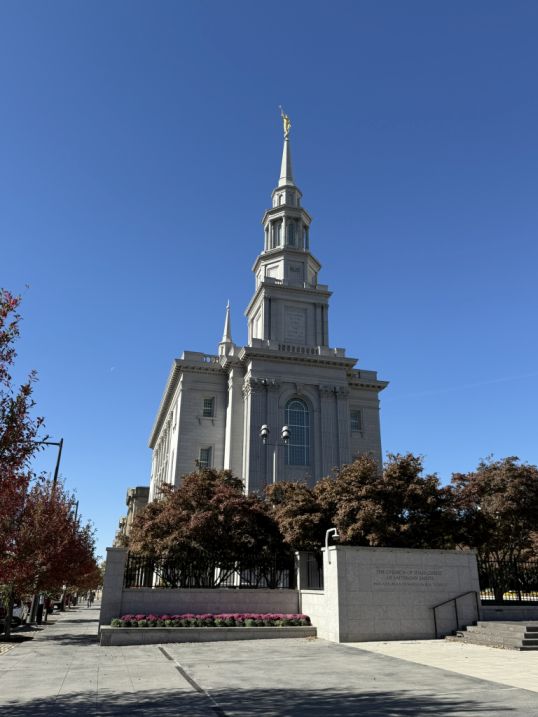
The Philadelphia Pennsylvania Temple is the first temple of The Church of Jesus Christ of Latter-day Saints in Pennsylvania, located at 1739 Vine Street, Philadelphia. The temple has two elegant spires, each rising into the sky. They echo the vertical emphasis of historic churches.
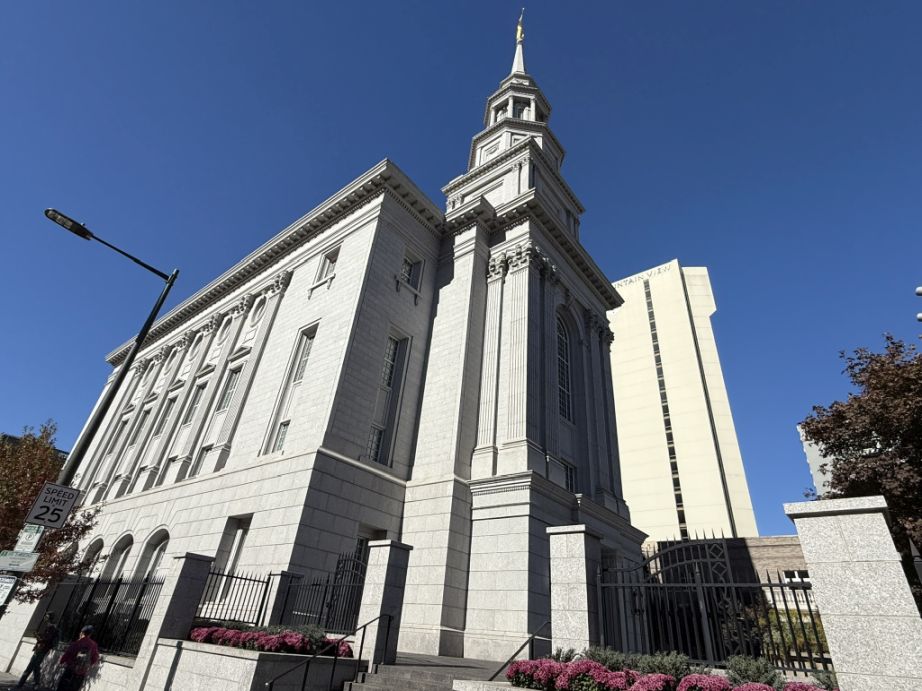
The building is created in a neoclassical style, directly inspired by the great civic buildings of Philadelphia, such as: Independence Hall, the Second Bank of the United States, and classical revival churches of the early 1800s. This gives it a very “Philadelphia” identity even though it’s a modern structure (completed in 2016). The white granite exterior gives the building a luminous, clean appearance that stands out especially on sunny days.
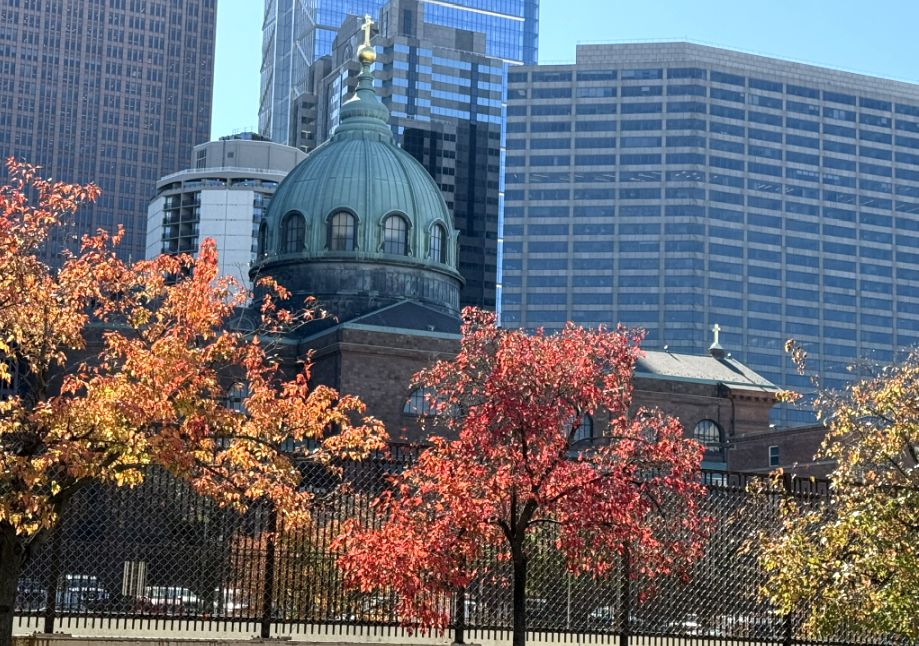
The dome of the Cathedral Basilica of Saints Peter and Paul is set back behind the front façade. The dome was inspired by Renaissance churches in Italy, and it is one of Philadelphia’s most striking landmarks. Built between 1846–1864 in a Roman-Corinthian style.
The wrought iron gate in the foreground, the trees along the fence glowing in red, orange, and yellow, and then above it all, the grand greenish-copper dome rising into the sky. In autumn, the contrast between the warm foliage and the cool stone of the cathedral makes it feel almost like a European city scene.
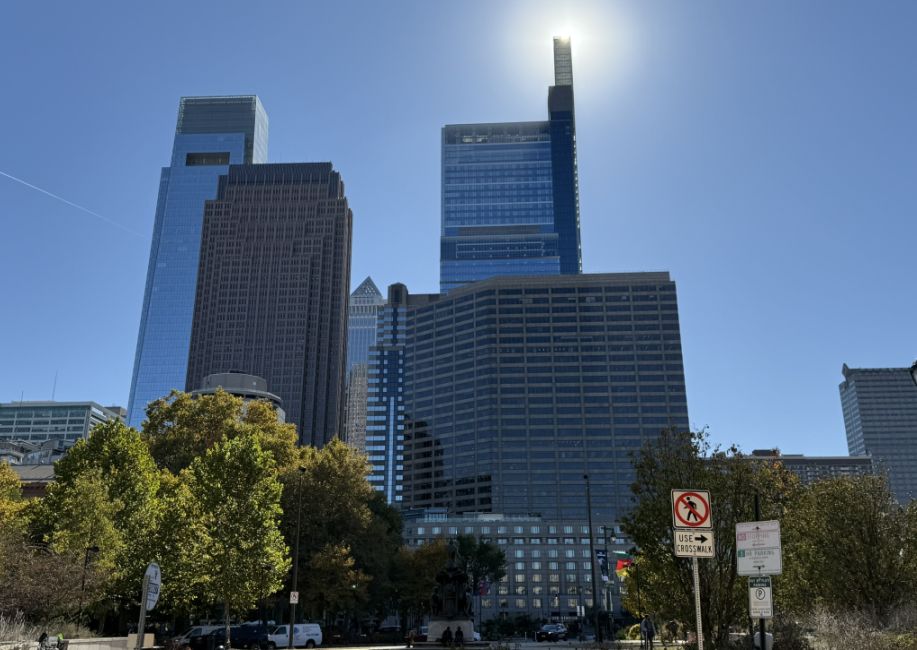
We are now in the City Center of Philadelphia. On the right is the Comcast Technology Center with the glowing top. It was completed in 2018. It is the Tallest building in Philadelphia (1,121 ft.)
On the left is the Comcast Center (glass blue tower), also completed in 2008. It was the tallest building in the city before the Technology Center (on the right). It is know for its sleek blue glass façade and the large LED video wall inside the lobby
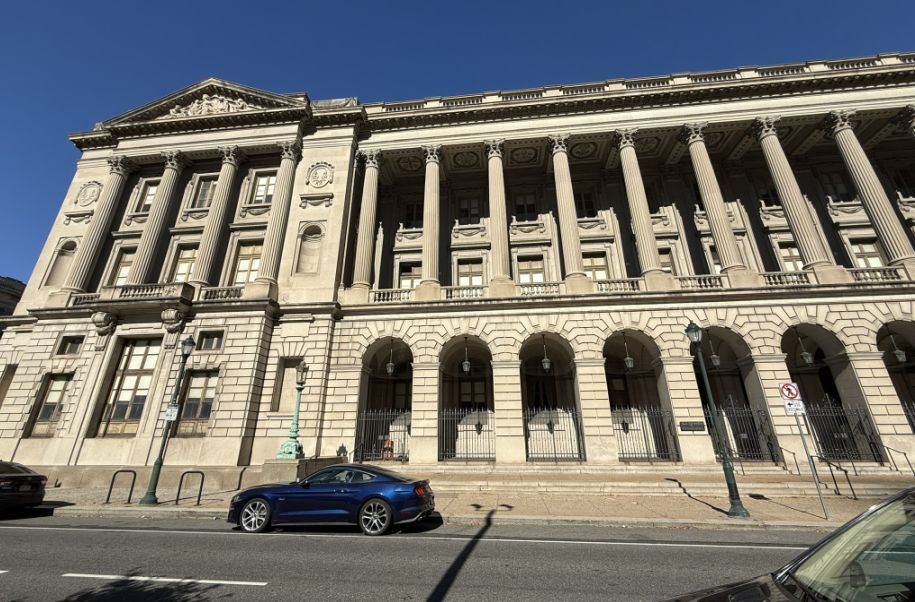
Philadelphia Family Court Building, located directly along the Benjamin Franklin Parkway. Built in the Classical Revival / Beaux‑Arts style, and completed in 1940. Designed to visually harmonize with its neighbor, the Free Library of Philadelphia, which sits directly across the Parkway.
Its grand stone façade, tall columns, and symmetry are meant to echo monumental civic buildings in Washington, D.C. and Paris.
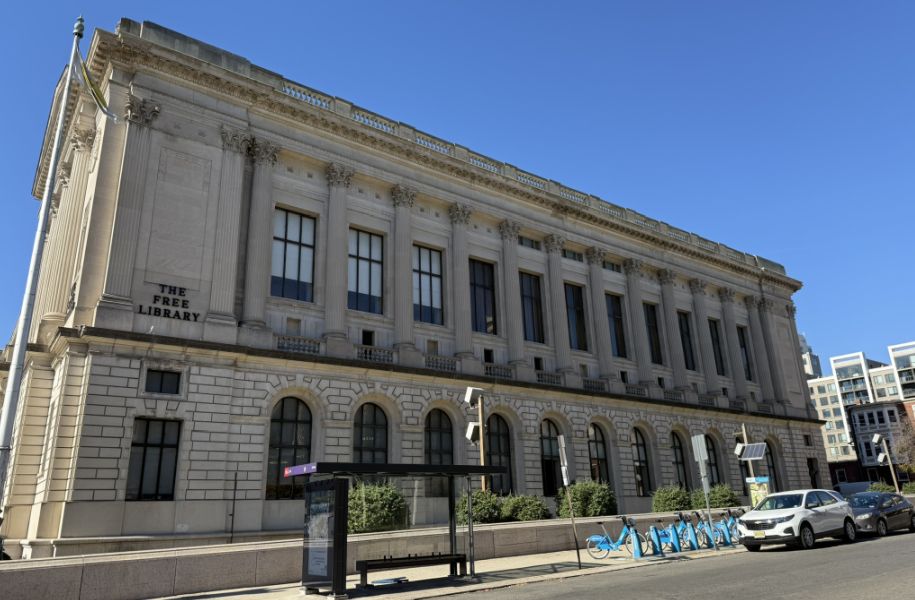
This is the Free Library’s Children’s Department & Administrative Pavilion, often called the Library Annex or Parkway Central Addition. It houses children’s library spaces, Hosts programs, workshops, offices, and support functions, and Acts as a quieter, more flexible extension of the main building. It’s intentionally low and modern so it does not overpower the historic architecture around it.
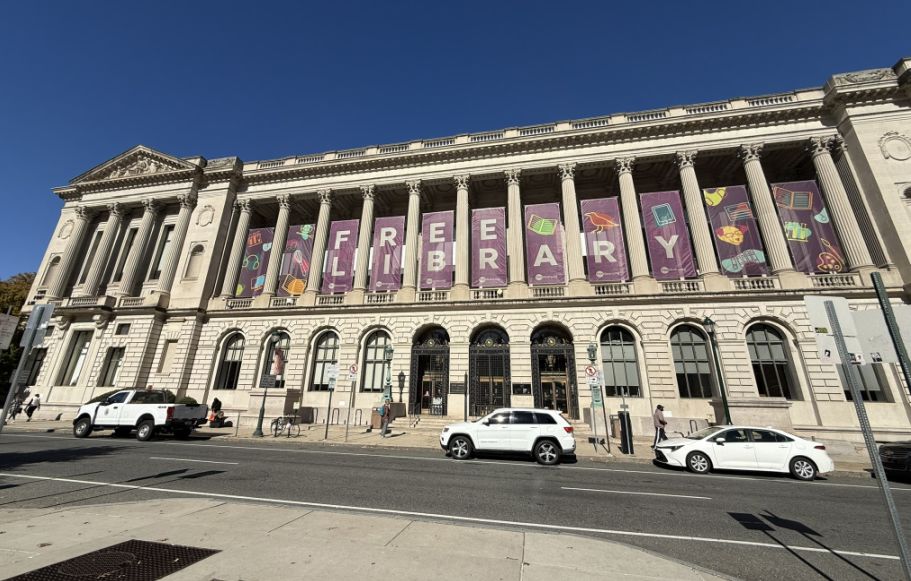
This is the Parkway Central Library, the main building of the Free Library of Philadelphia. Built in a Beaux‑Arts / Neoclassical, designed to match the Family Court Building across the Parkway, The facade is Grand, formal, and monumental, and inspired by the architecture of Paris and Washington, D.C.
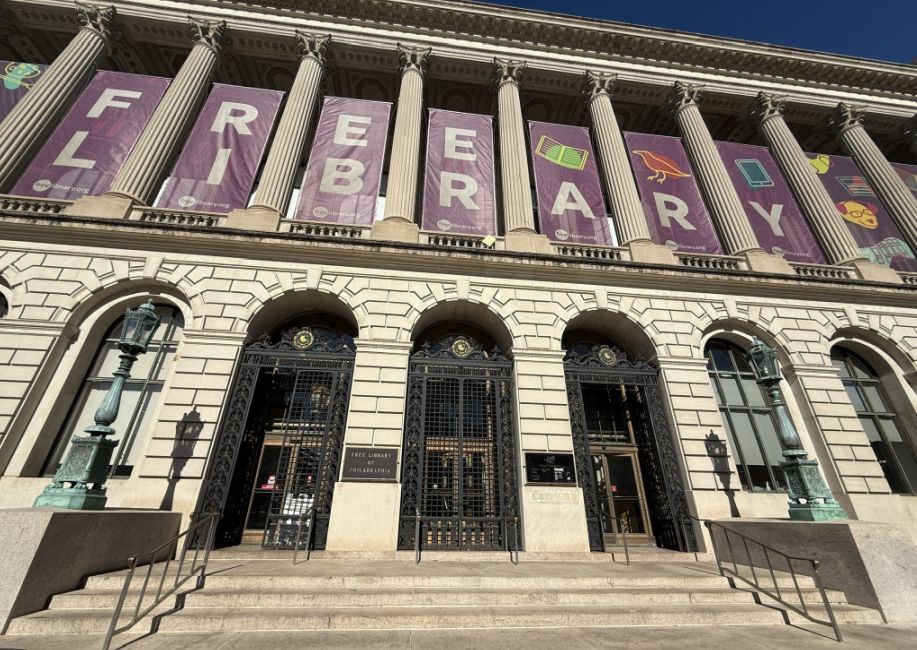
It is the flagship library of the entire Philadelphia Free Library system. Opened in 1927 and contains Rare Book Department, Music Department, Map Collection, Author lecture spaces, and reading rooms with huge arched windows overlooking the Parkway.
It is considered one of the most beautiful civic buildings in the city.
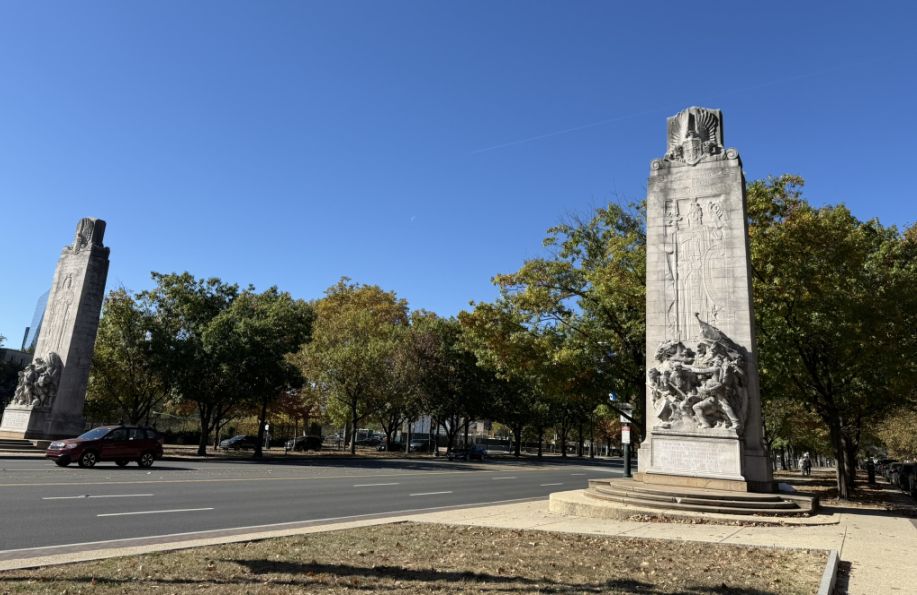
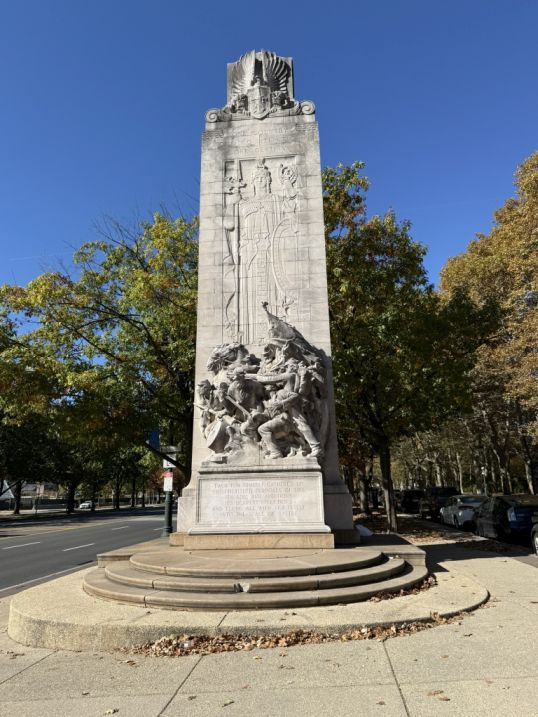
We are now Benjamin Franklin Parkway at Logan Circle, and there are two huge stone walls with sculptures called Civil War Soldiers and Sailors Memorial. Each wall is a large granite block, they face each other across a small plaza/
 |
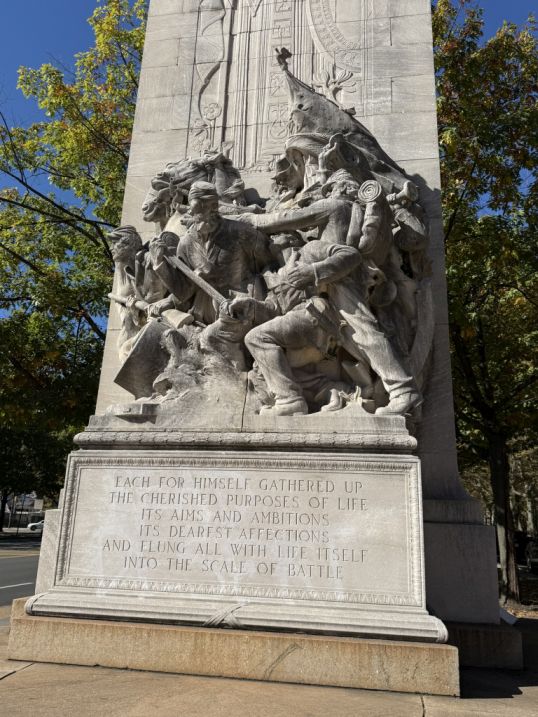 |
The Civil War Soldiers and Sailors Memorial honors the Union soldiers and sailors from Philadelphia who served in the American Civil War.
The quote “Each for himself gathered up the cherished purposes of life, its aims and ambitions, its dearest affections, and flung all, with life itself, into the scale of battle.” reflects sacrifice, duty, and the personal cost of war.
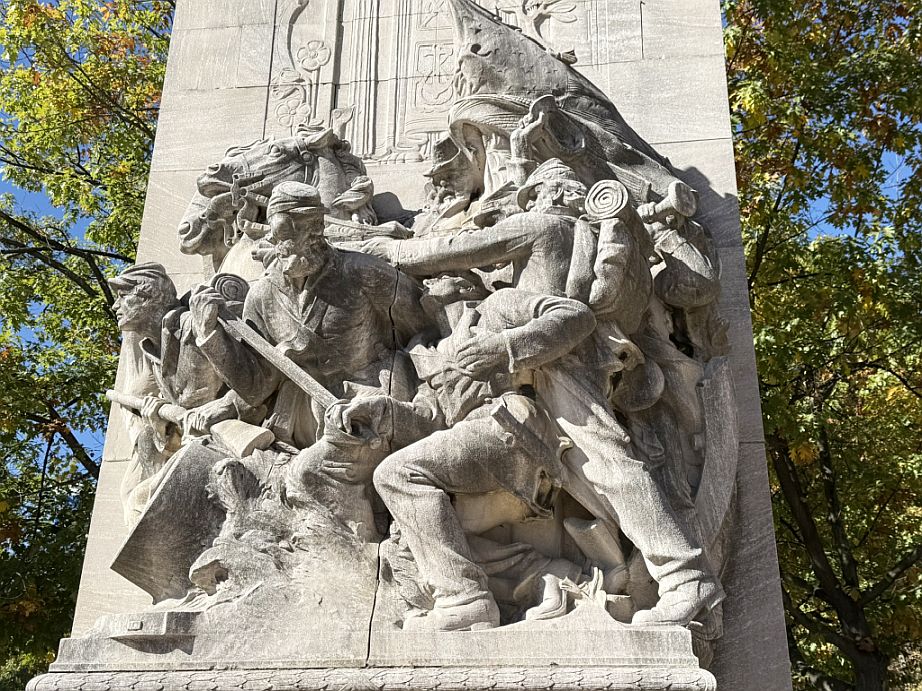
The figures are arranged symbolically to express themes of: Duty, Sacrifice, Patriotism. Protection, the gravity of war/
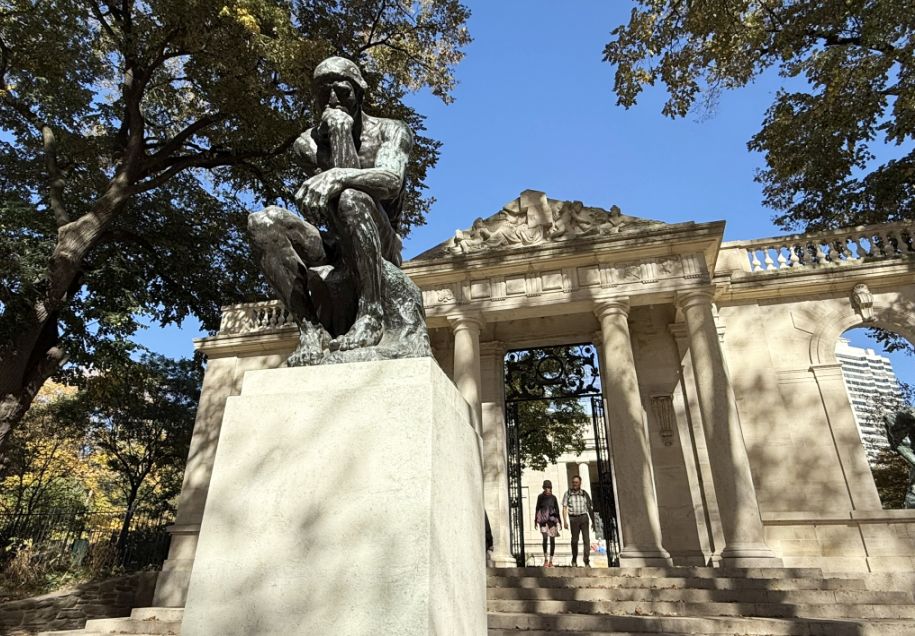
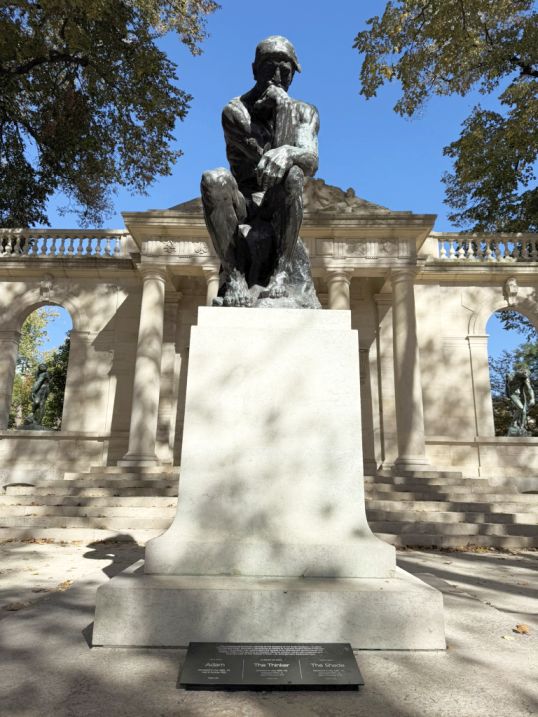
Along the way, we passed by the Rodin Museum which holds one of the largest collections of works by Auguste Rodin outside of Paris. The building and its garden create a peaceful, elegant setting that feels almost like a European courtyard tucked inside the city.
 |
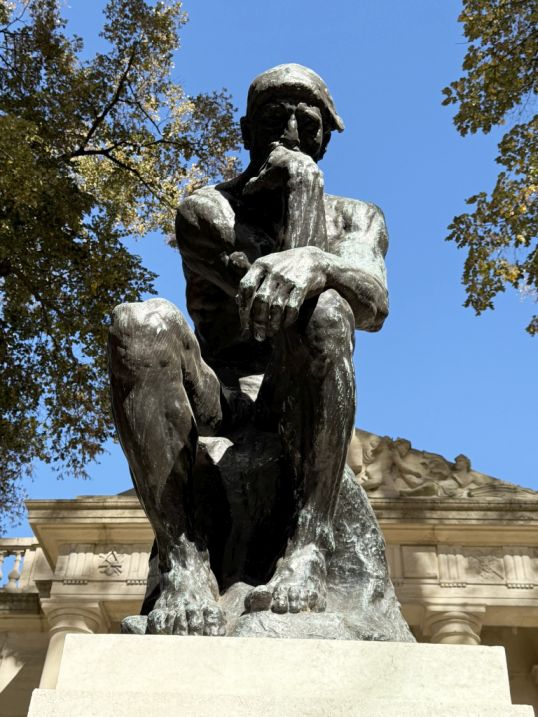 |
When you approach the Rodin Museum, the first sculpture you encounter is The Thinker, one of Rodin’s most famous works. It represent a powerful figure in a seated, contemplative pose, muscular and tense, not relaxed, he is thinking with his entire body, and symbolizes deep introspection, human struggle, and creativity.
It was placed deliberately in the garden, as the “guardian” of the museum.
 |
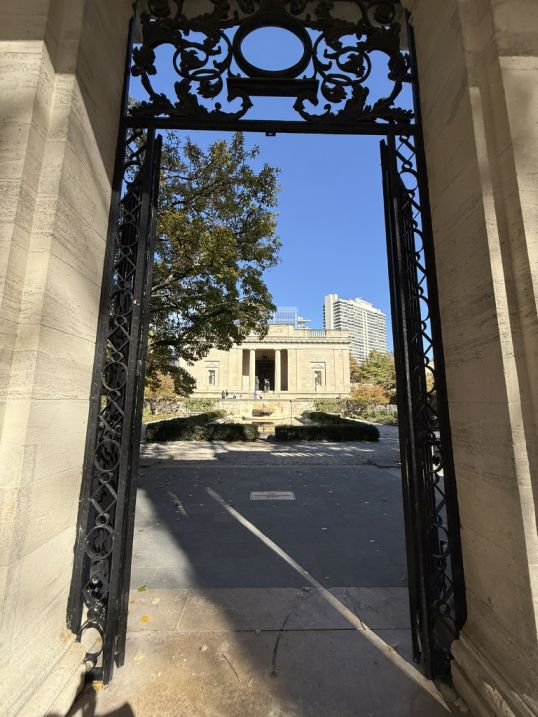 |
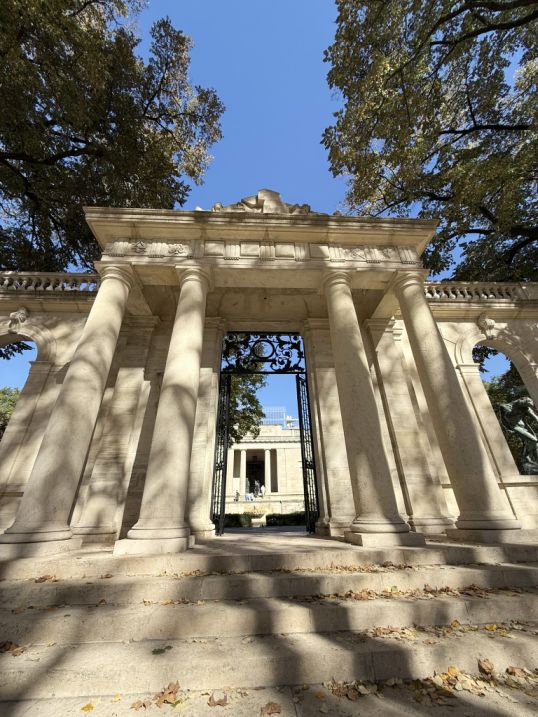
Beautiful gate before entering the museum, it is also one of the most serene and elegant museum settings in the city.
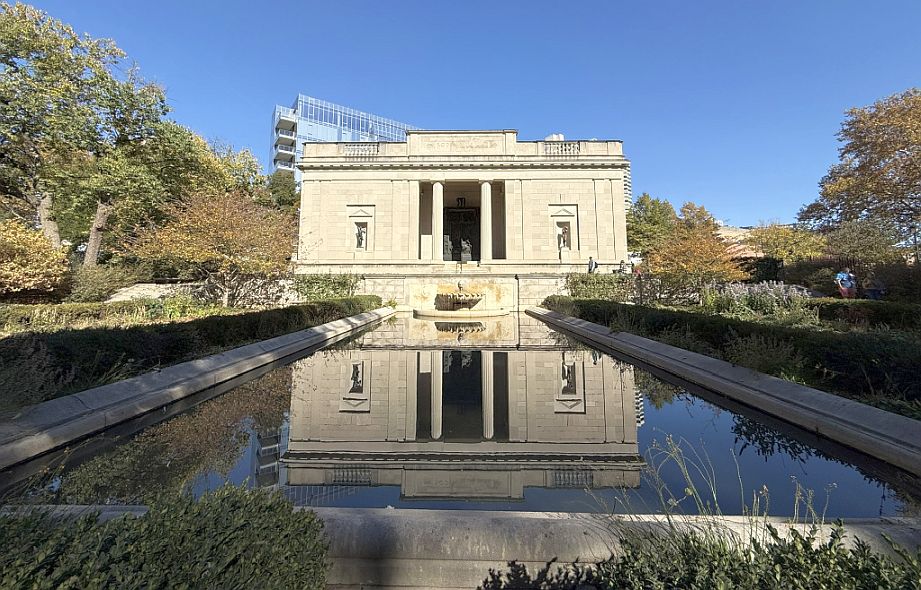
After passing the gate and moving along the path, we arrive at the long, rectangular reflecting pool, one of the most beautiful features of the museum grounds.
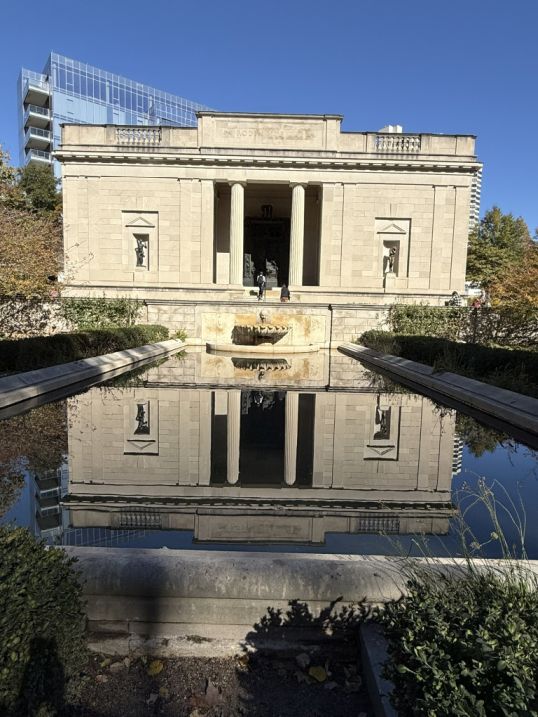
At the far end of the pool stands the Rodin Museum building itself, elegant, classical, and beautifully proportioned. Pale stone walls with graceful detailing, a symmetrical façade, balanced, calm, and formal. Set slightly above ground level, giving it a dignified presence.
 |
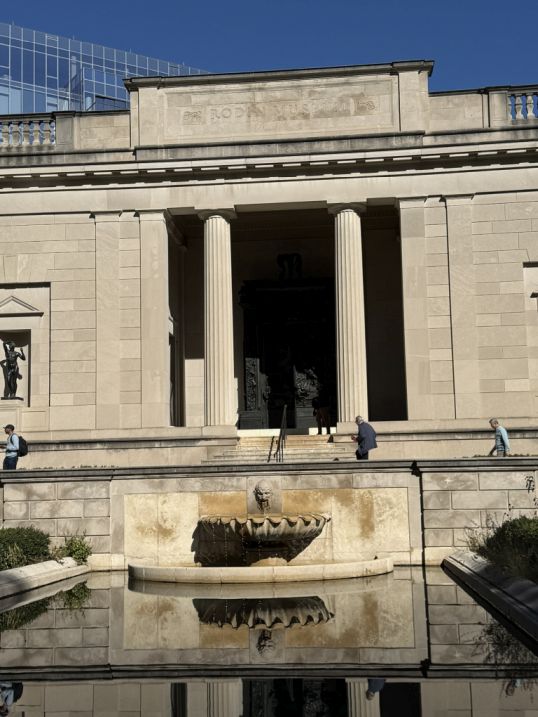 |
The building is built in the Beaux-Arts style, inspired by French classical architecture. A central entrance framed by columns and a decorative pediment.
 |
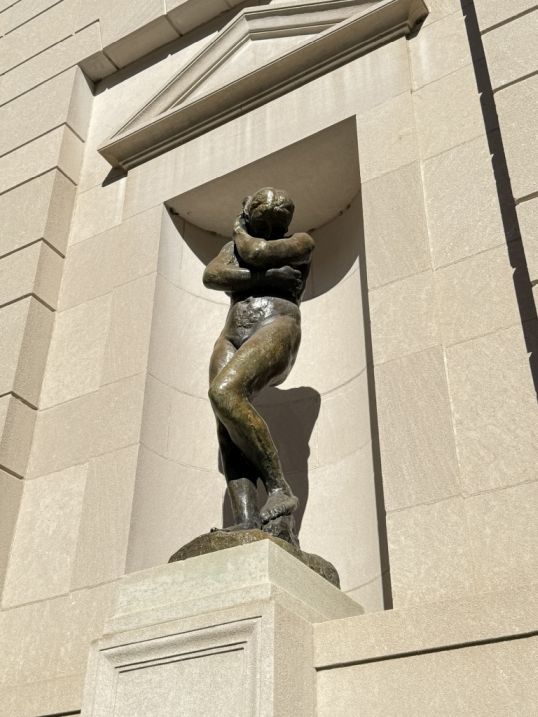 |
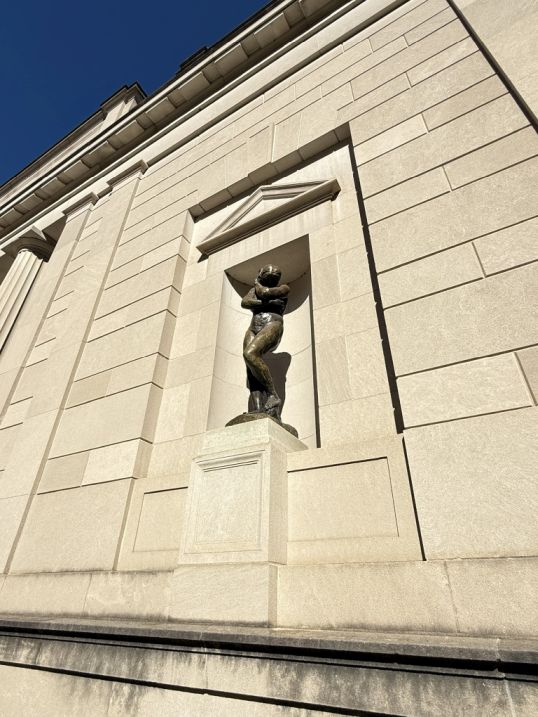
On either side of the façade, set into niches. The one on the right is Eve, Modeled in clay 1881, cast in bronze 1925, slightly turned inward, her posture modest and introspective. Her body feels both powerful and vulnerable, as if caught in a moment of self-awareness.
 |
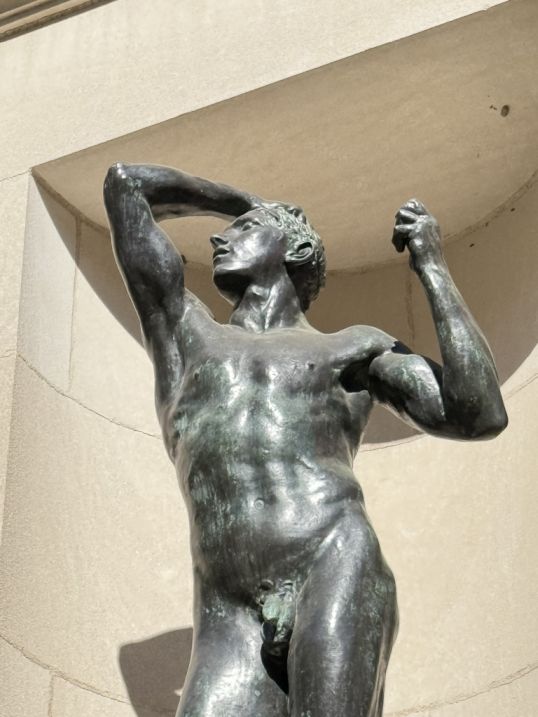 |
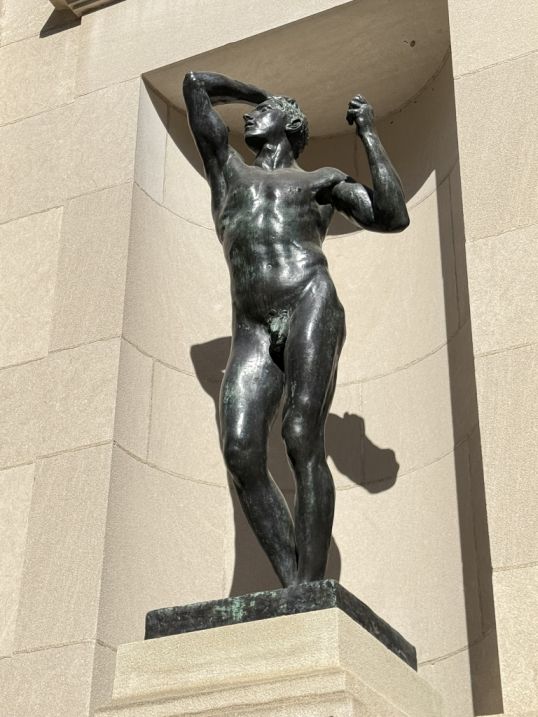
on the left is the Age of Bronze, Modeled in clay 1875-77, cast in bronze 1925, one of Rodin’s earliest masterpieces. The figure stands upright with one arm lifted, astonishingly lifelike. When first exhibited in 1877, critics accused Rodin of casting it from a live model because it was so realistic.
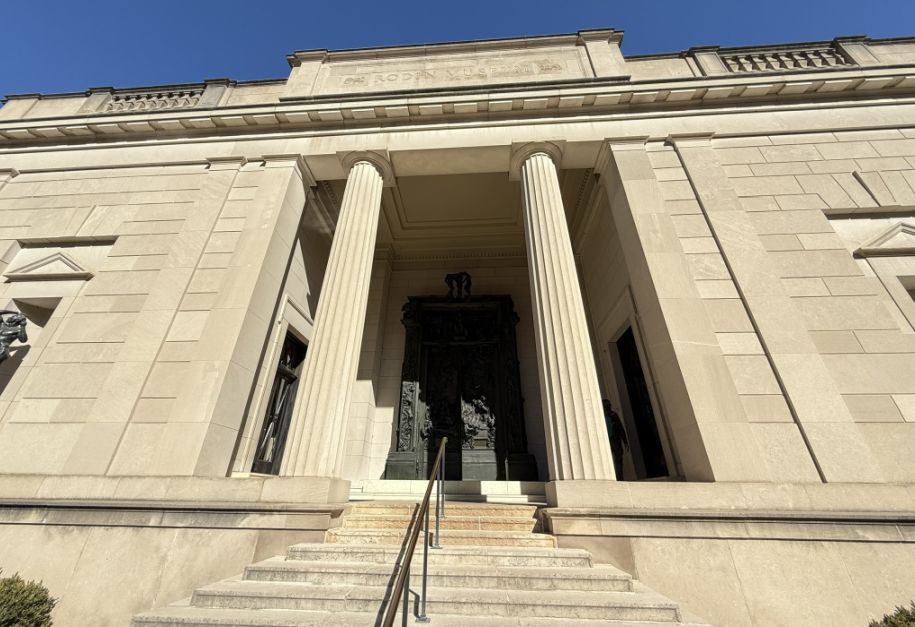
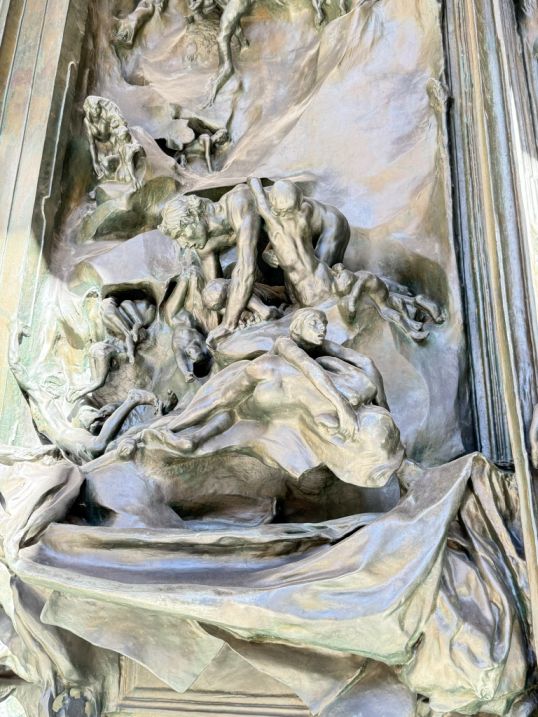
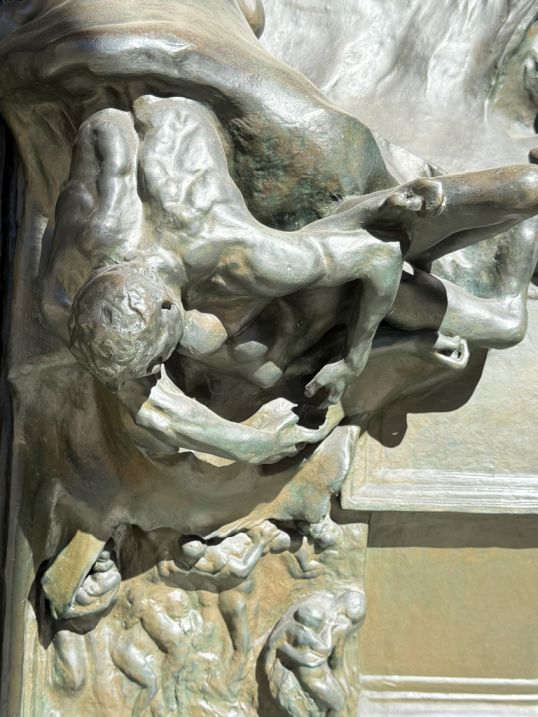
Between the columns stands Rodin’s monumental The Gates of Hell. This enormous bronze portal is covered with writhing, layered figures inspired by Dante’s Inferno.
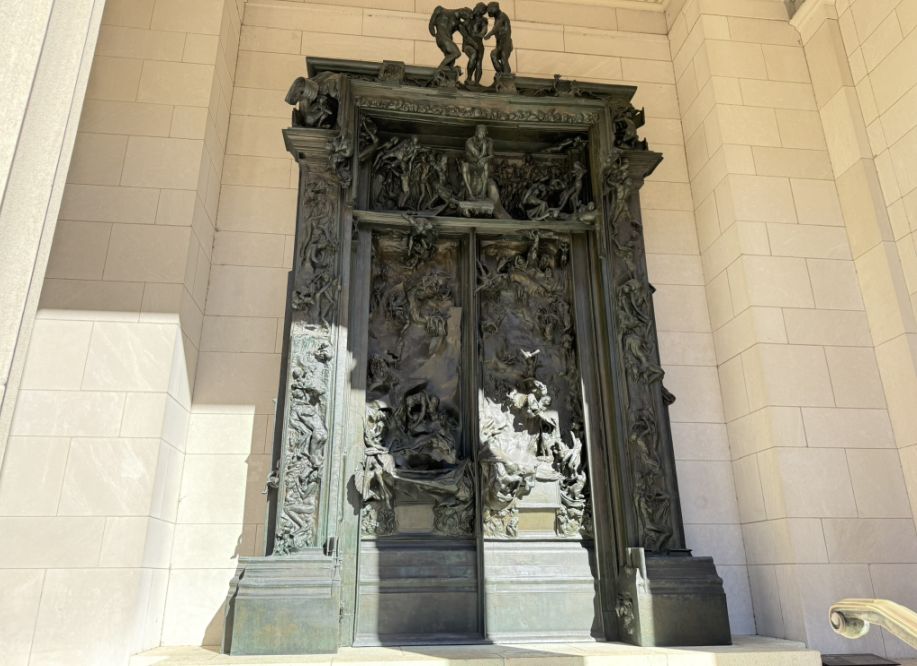
In 1880 Rodin was commissioned to create a set of bronze doors for a new museum in Paris. Inspired by the Divine Comedy, an epic poem written in the early 1300s by Dante Alighieri, Rodin planned to decorate the doors with characters that Dante met on his fictional journey through hell.
The sculptor eventually discarded the idea of a strict narrative and instead created a weightless, chaotic world filled with more than two hundred figures in the throes of pain and despair. Although the planned museum never came to fruition, Rodin worked on the sculpture for nearly thirty-seven years, periodically adding, removing, or modifying elements,
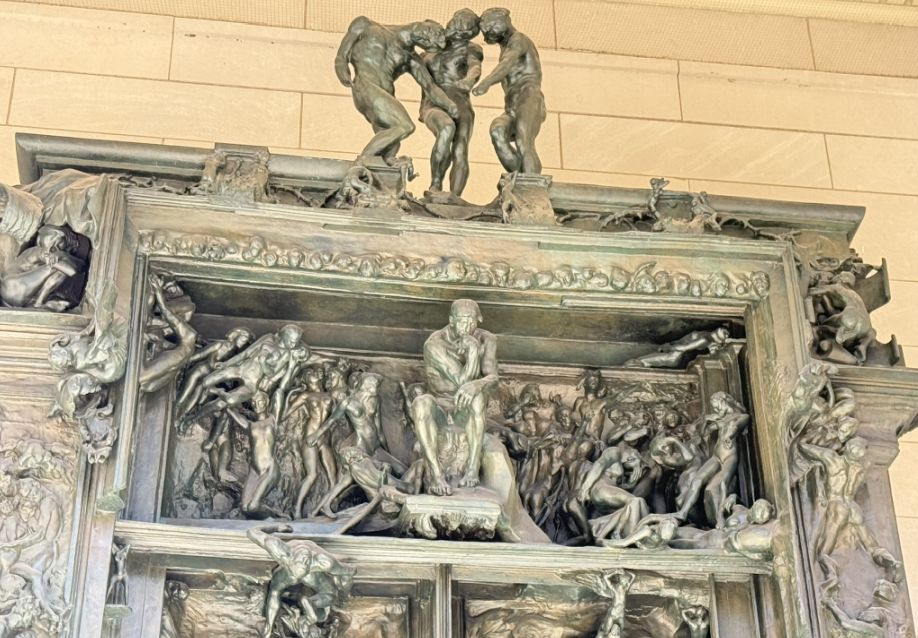
The Three Shades pointing downward at the top shows three identical male figures leaning forward, their arms extended downward, heads bowed. They are positioned in a circular arrangement so their bodies almost touch, forming a unified yet fragmented presence.
In the center you can also see The Thinker seated above the doors.
 |
 |
The gates are intense and dramatic, contrasting with the calm symmetry of the building and reflecting pool. The entire approach is theatrical: water → symmetry → classical façade → emotional, chaotic sculpture. It’s meant to move you from tranquility into contemplation.
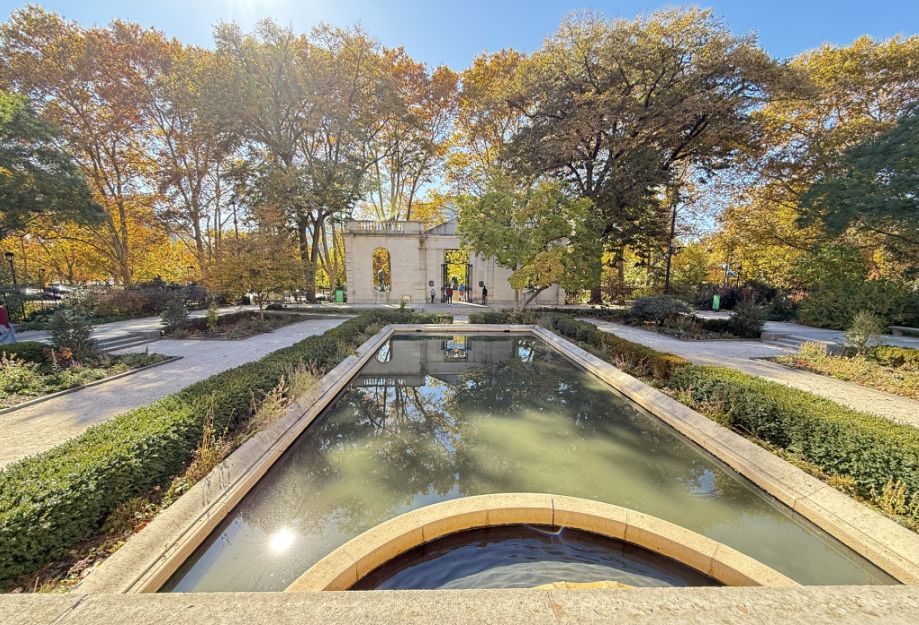
View of the courtyard from the top of the Museum.
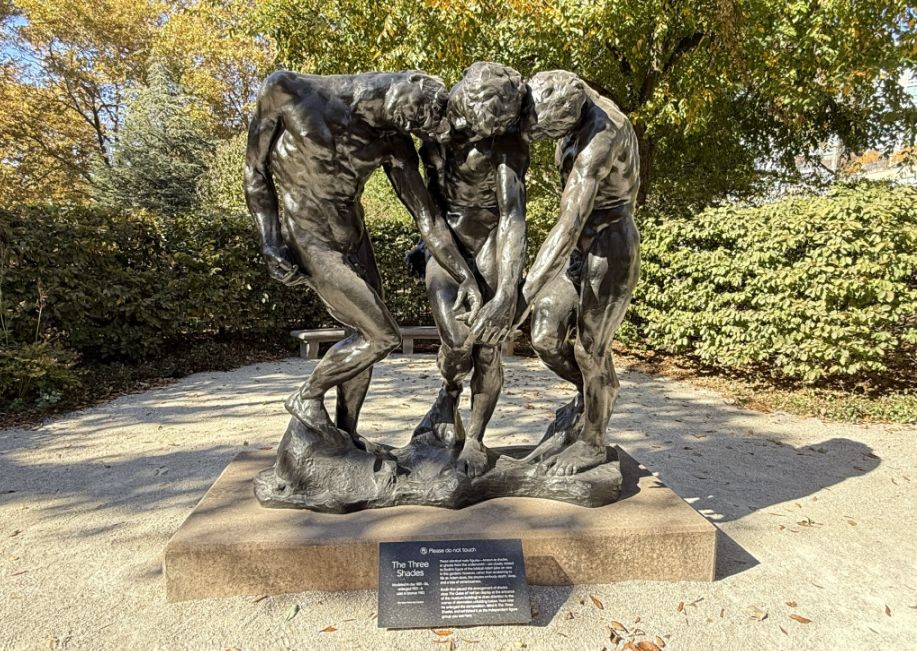
The Three Shades, Modeled in clay 1881-86, cast in bronze 1983.
These identical make figures, known as shades, or ghosts from the underworld are closely related to Rodin's figure of the biblical Adam, However, rather than awakening to life as Adam does the shades embody death, sleep, and a loss of consciousness.
Rodin fist placed this arrangement of shades atop the Gated of Hell to draw attention to the scenes of damnation unfolding below. Years later, he enlarged the composition title it "The three Shades", and exhibited it as the independent figure group as seen here.
Outside, against the open sky, the sculpture shifts meaning: On the Gates → it warns you before entering hell, In the garden → it feels like universal human sorrow, suspended in space.
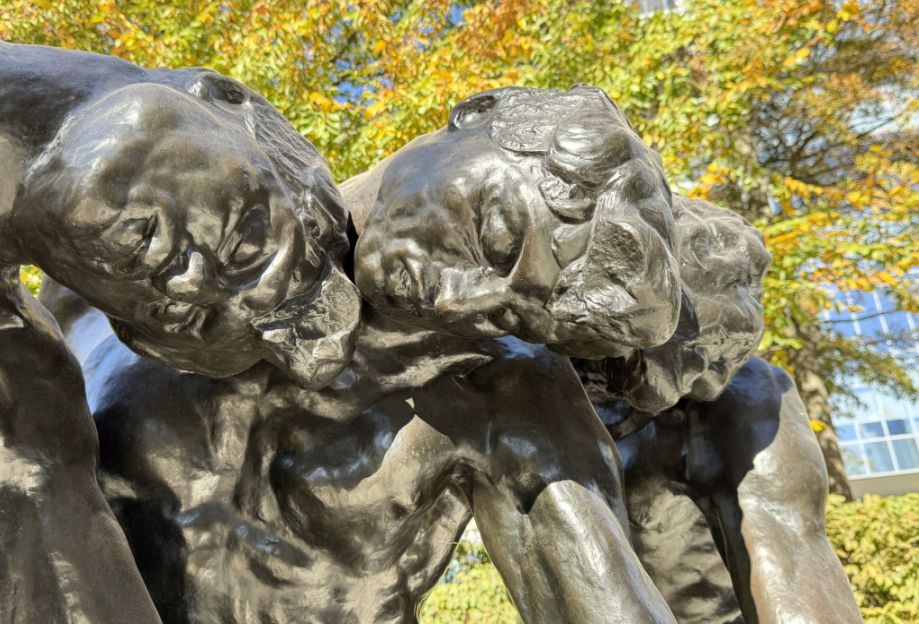
Closer view of the monumental outdoor version of The Three Shades in the garden. Standing alone and enlarged, it feels even more dramatic. Without the surrounding chaos of the Gates, you can fully see the muscular tension, the bending spines, and the emotional weight pulling them forward.
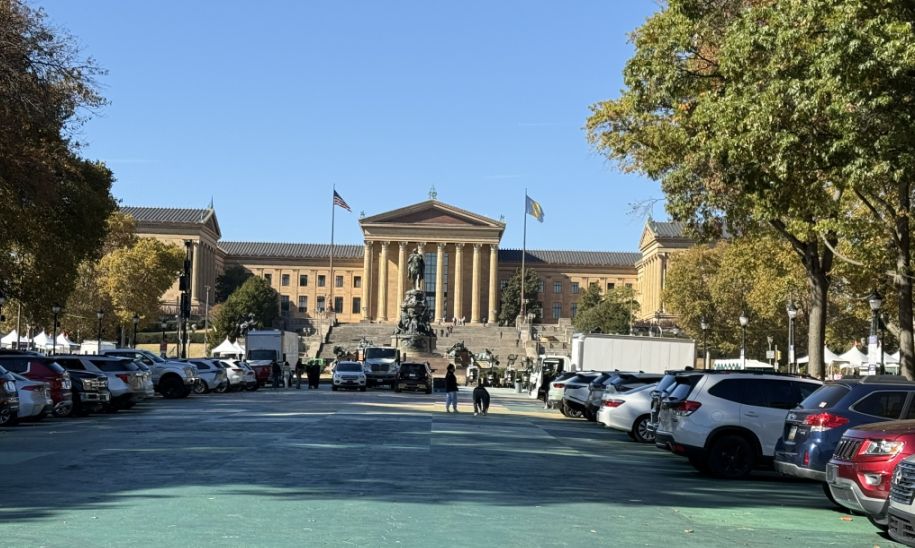
We are walking on the grand axis of the Benjamin Franklin Parkway leading straight to the Philadelphia Museum of Art.
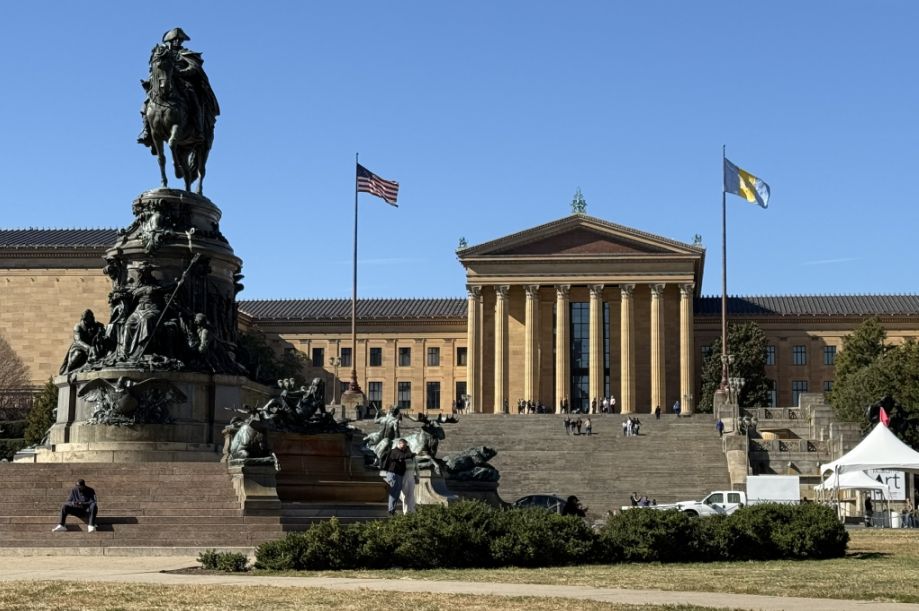
To the left of the equestrian statue of George Washington and in the center is The Philadelphia Museum of Art. The building sits high on Fairmount Hill like a Greek temple. Its long façade is defined by tall Corinthian columns supporting a triangular pediment. The symmetry, pale stone, and elevated position give it a sense of permanence and authority, very much inspired by classical antiquity.
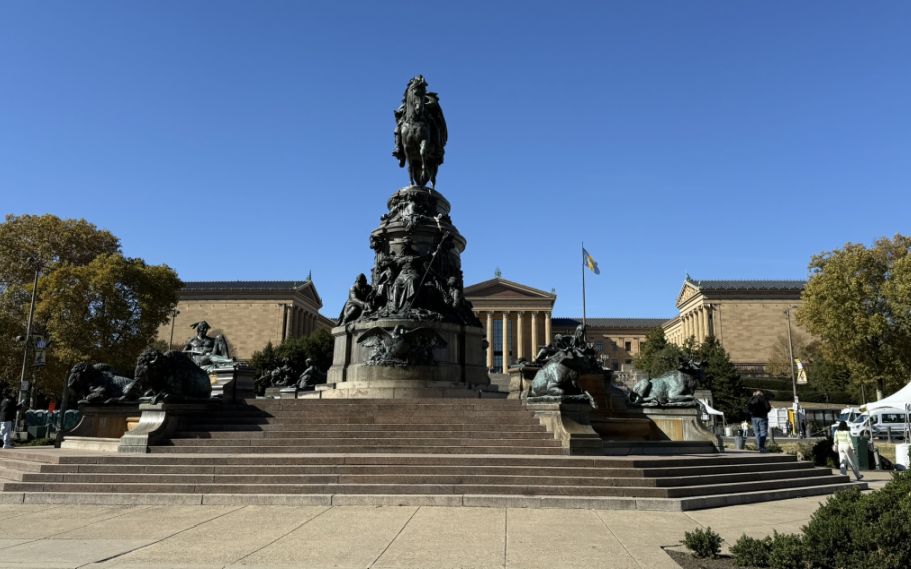
The Washington Monument at Eakins Oval, the grand equestrian statue of George Washington that anchors the foot of the Parkway before the steps of the Philadelphia Museum of Art. The monument was designed by German-American sculptor Rudolf Siemering and dedicated in 1897. It was one of the first major public monuments placed along what would later become the Benjamin Franklin Parkway.
 |
 |
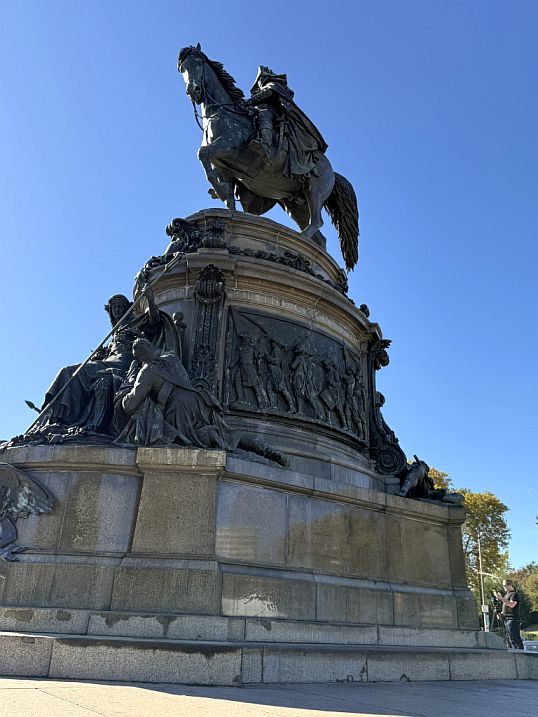
On the top tier George Washington sits on horseback, Calm, solemn, surveying the land, facing directly down the Parkway toward City Hall.
His pose is inspired by classical equestrian statues in Europe, a tribute to leadership, courage, and the founding of the nation.
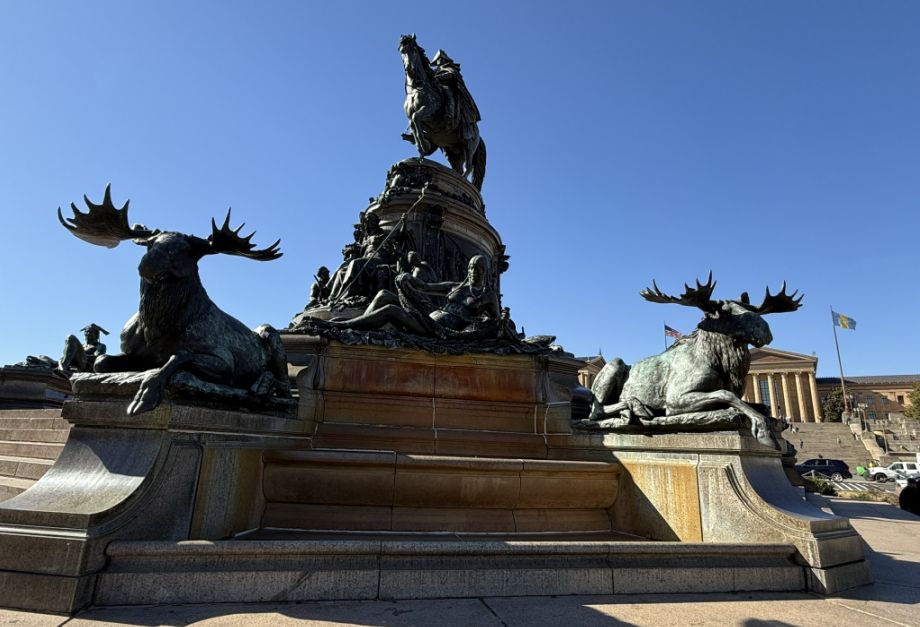
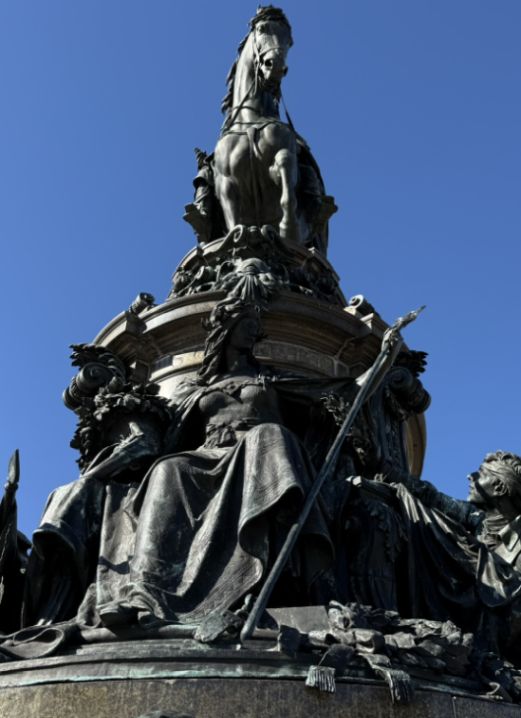
Two enormous bronze moose flank the fountain on the lowest tier. The moose represent the wildlife of North America, especially the frontier territories that Washington’s generation explored and surveyed. They also add drama and scale, grounding the monument in the natural landscape of early America.
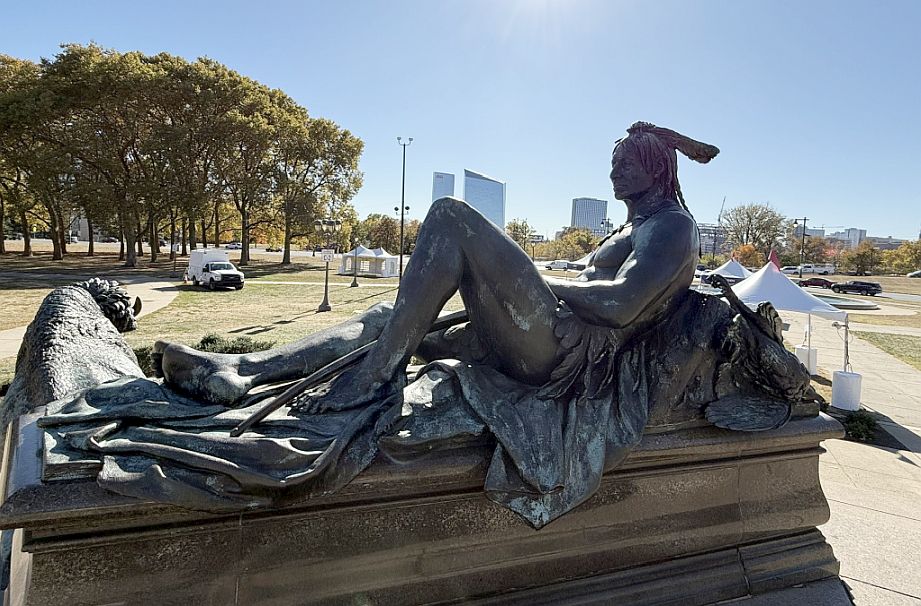
Beneath Washington on horseback is a circular group of historical and allegorical figures. American Indians are depicted in thoughtful, dignified poses, Representing the original inhabitants of the continent.
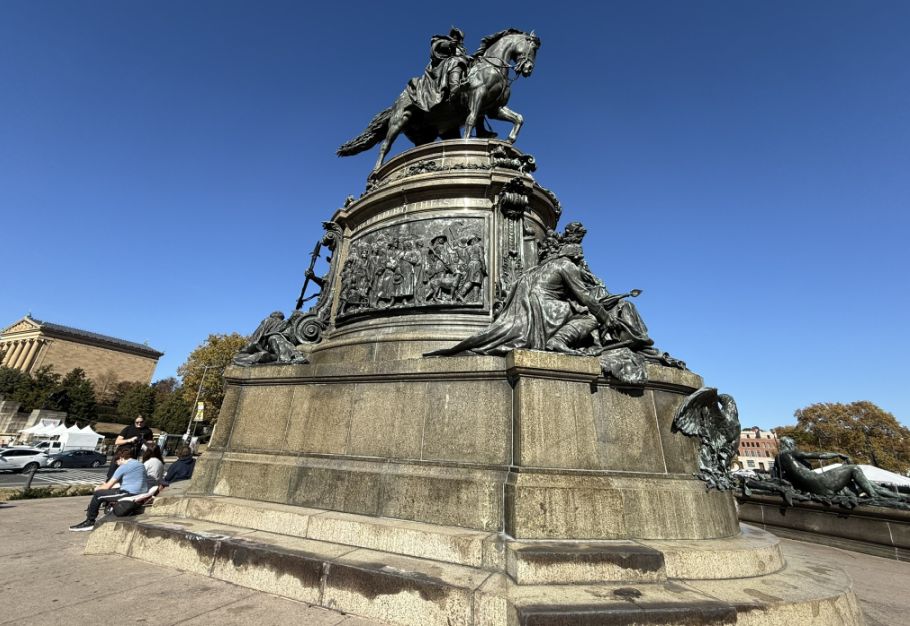
The entire monument represents: the founding of the United States, the natural landscape of early America, the indigenous history of the continent, the rivers that sustained life and travel, The animal kingdom that shaped the frontier, and Washington’s leadership as the guiding force.
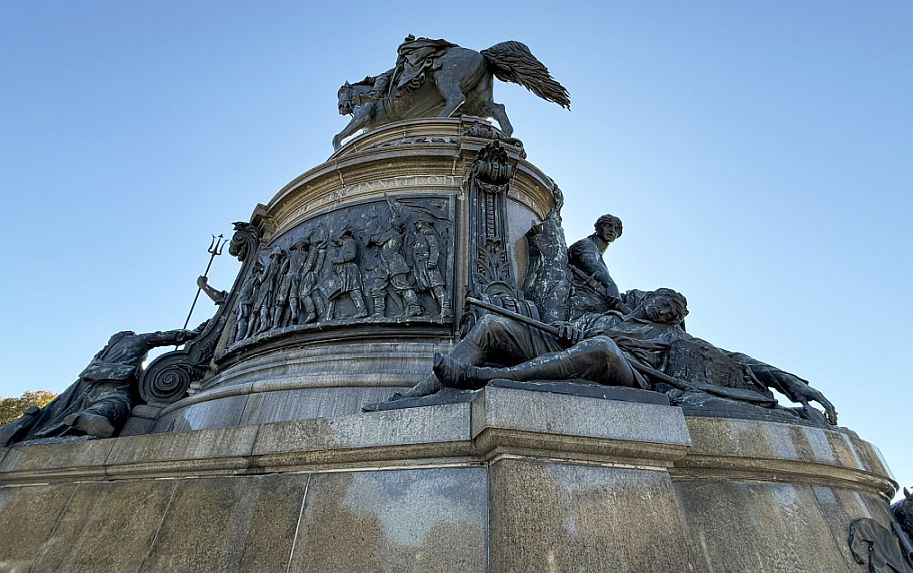
The location matters just as much as the sculpture: behind it rises the temple-like museum, in front stretches the long Parkway toward City Hall, Around it is the wide traffic circle of Eakins Oval. It’s positioned like a ceremonial gateway, Washington symbolically guarding the cultural heart of the city.
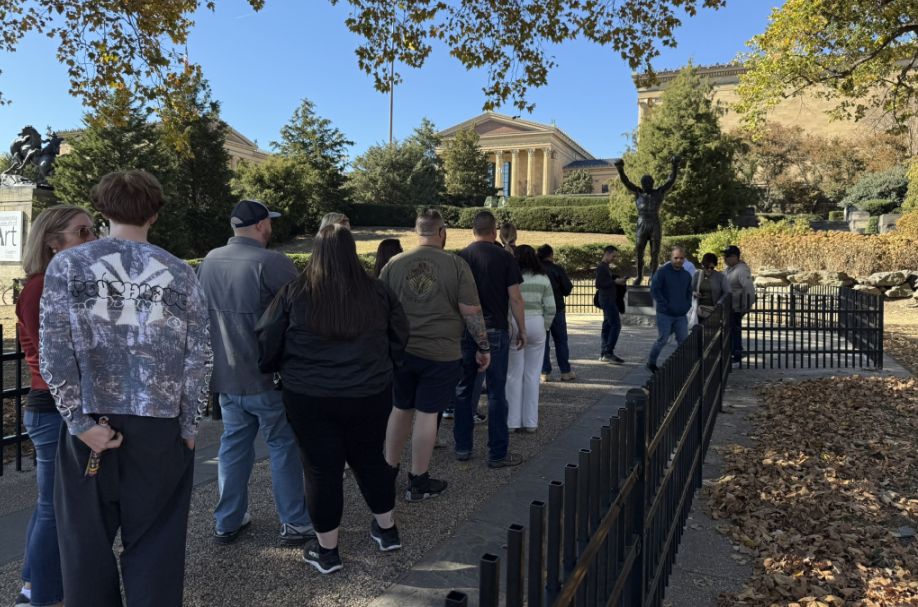
Before climbing the steps of the Philadelphia Museum of Art, stopping at the Rocky Statue is almost a rite of passage. There is a line but we waited maybe 5 minutes to get close to the statue of Rocky.
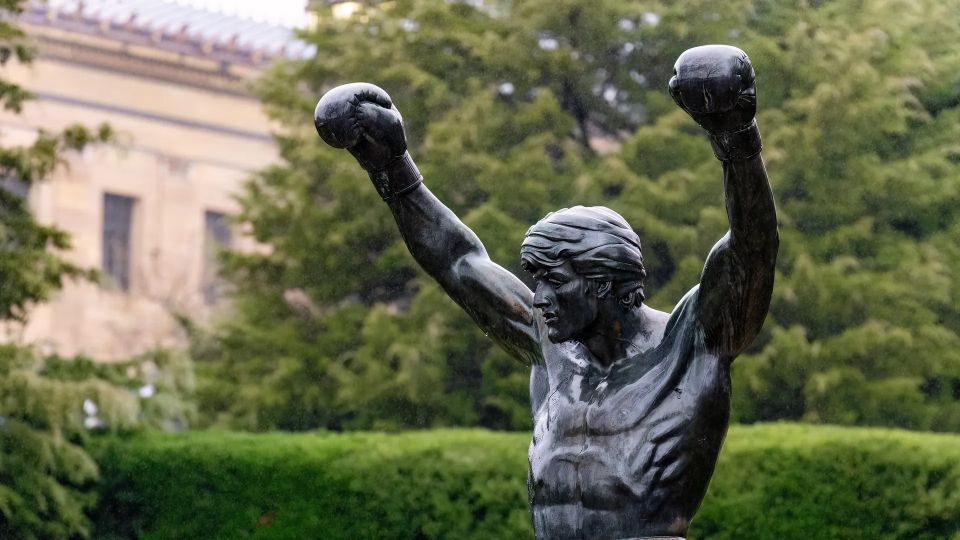
The statue exists because of Sylvester Stallone. In 1980, during the filming of Rocky III, Stallone commissioned the 8-foot bronze statue as a movie prop. It was created by sculptor A. Thomas Schomberg and briefly placed at the top of the museum steps during filming. After production wrapped, Stallone donated the statue to the city. That’s when controversy began. Many art critics and museum officials argued it was a movie prop, not “fine art,” and didn’t belong at the top of the grand neoclassical steps. The statue was moved several times: first removed from the top of the steps, placed outside the Spectrum arena, returned temporarily during later Rocky films, Eventually given a permanent home near the base of the steps in 2006.
 |
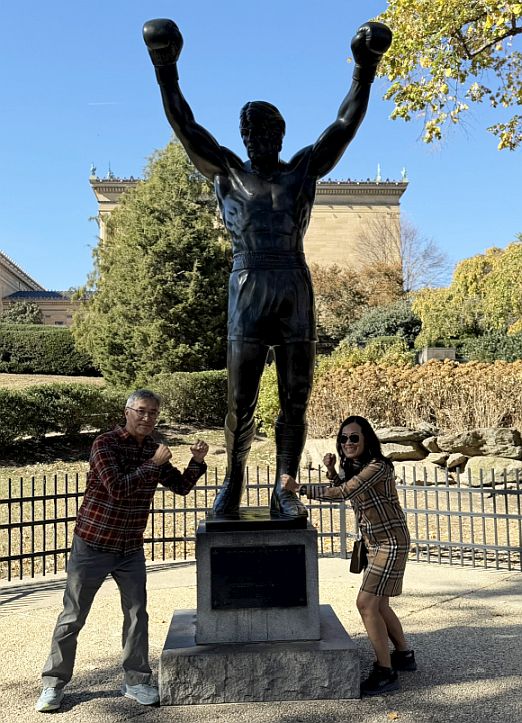 |
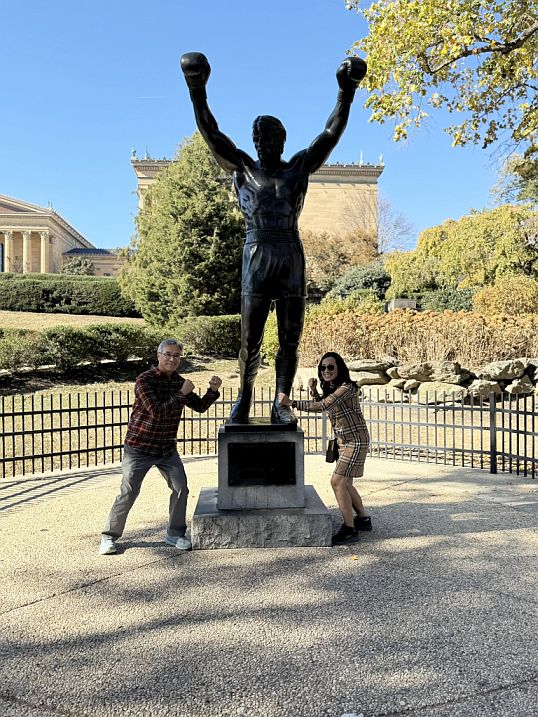
Today, it stands slightly off to the side, not crowning the museum, but still very much part of the experience. The statue may have started as a film prop, but it became something bigger: a symbol of grit, perseverance, and underdog spirit. Visitors from all over the world recreate Rocky’s raised-arm victory pose before running up the steps.
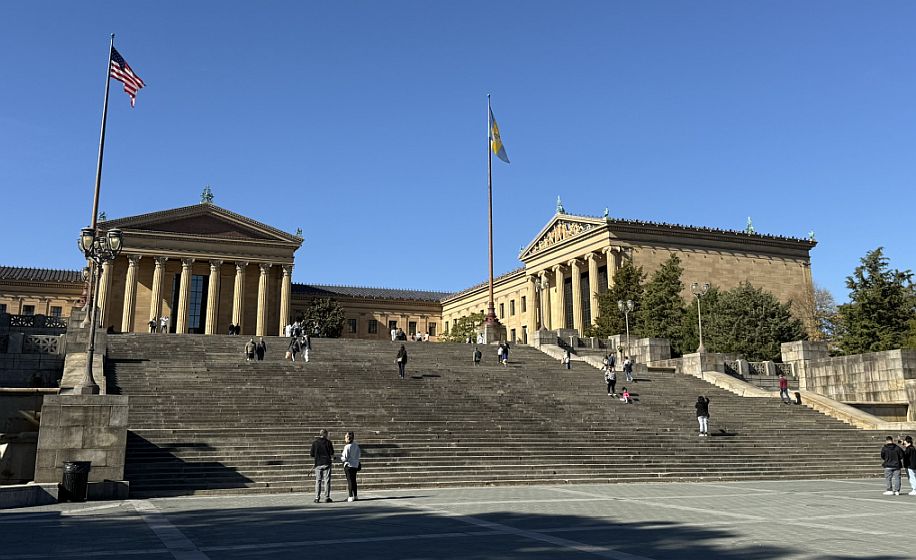
Perched high on Fairmount Hill, the museum was completed in 1928 in a grand Greek Revival style. Its long façade of Corinthian columns and triangular pediment was designed to resemble an ancient temple — symbolizing art as something timeless, elevated, and civic-minded. It was founded in 1876 during the Centennial Exposition, when Philadelphia wanted to showcase industry, culture, and progress to the world.
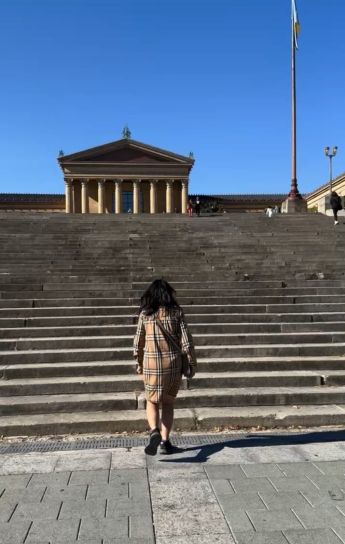
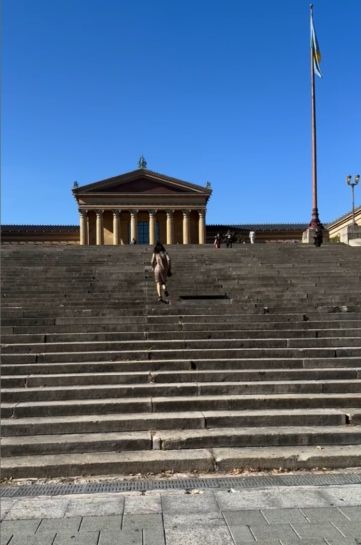
The wide staircase leading up to the entrance was originally meant to create drama and elevation. Architecturally, the climb prepares visitors for something monumental. Each step increases anticipation. Then in 1976, the film Rocky changed everything. When Rocky Balboa runs up the steps and raises his arms in triumph, the staircase becomes a global symbol of perseverance and underdog spirit.
 |
 |
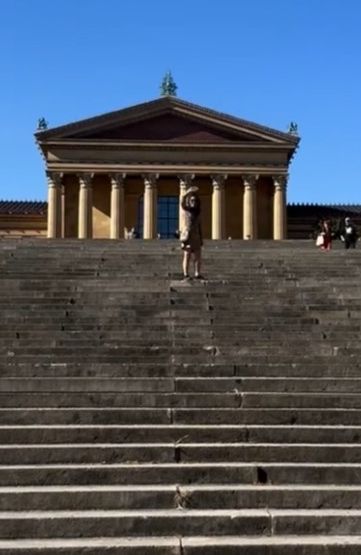 |
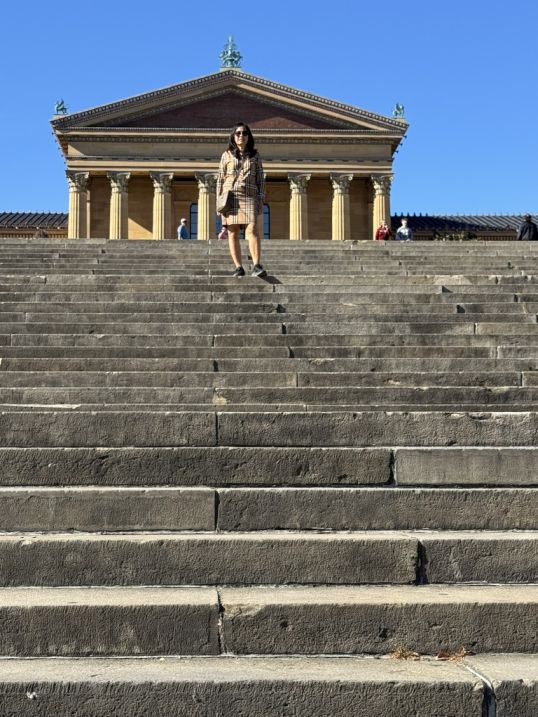
After your photo at the Rocky Statue, running up the steps of the Philadelphia Museum of Art is almost mandatory.
 |
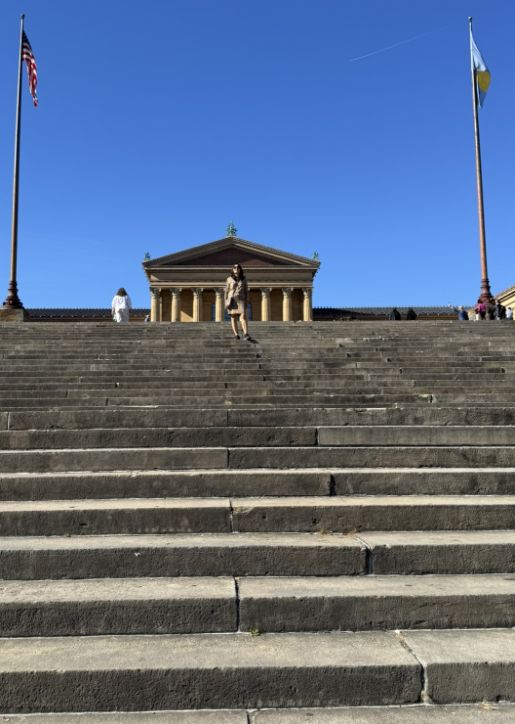 |
Today, people don’t just walk up, they run, just like in the movie.
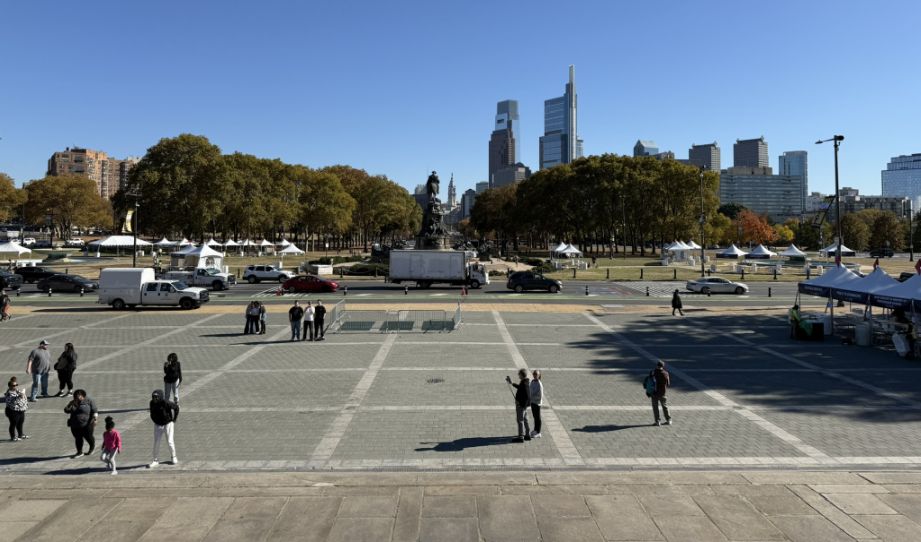
From the summit, the view is one of the best in Philadelphia, City Hall centered in the distance, fountains and flags lining the boulevard, the city unfolding right beneath.
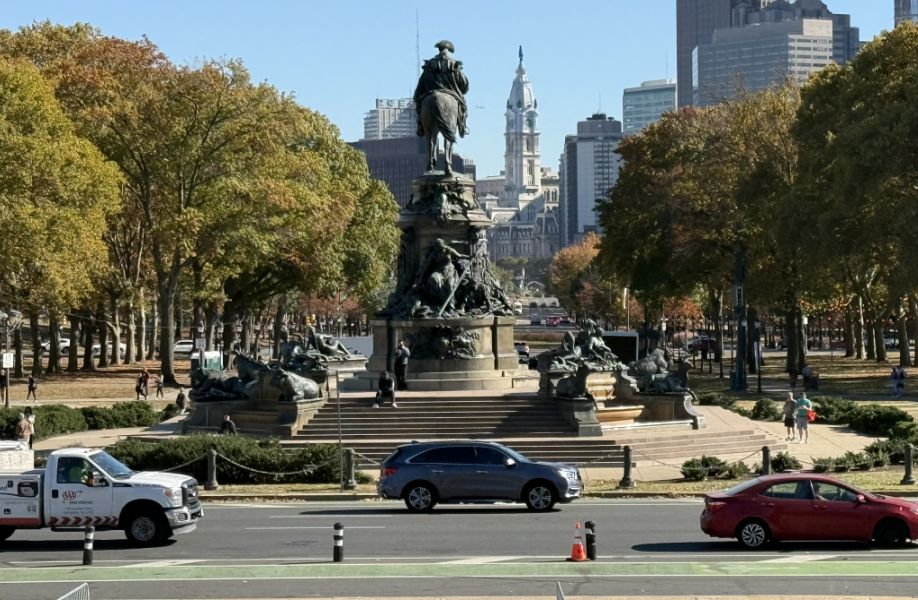
From this angle, you are looking directly at the back of Washington on horseback, framed perfectly by the Parkway. The monument looks almost like a dramatic stage set below. Below the monument, you see the Parkway stretching toward City Hall (the tall tower in the center).
This is one of the most iconic views in Philadelphia, the rear of the Washington Monument seems almost more dramatic than the front when seen from the museum.
NEXT... Day 2- cocktail and dinner at Tuna Bar