4 days in Philadelphia 10/24- 10/27/2024
| Day 1 Arrival/Dinner |
Day 2 Walking around Cocktail/Tuna Bar |
Day 3 Guided Tour Dinner at Amata |
Day 4 LibertyBell/Independence Hall City Center |
Day 4- Liberty Bell-10/27/2024
Today is our last day in Philadelphia, and we only have about six hours left to explore. We’re using this time to revisit, in more detail, the places our guide pointed out yesterday during the tour. It’s a chance to linger a little longer, learn a bit more, and take in the sites we only passed by quickly before.
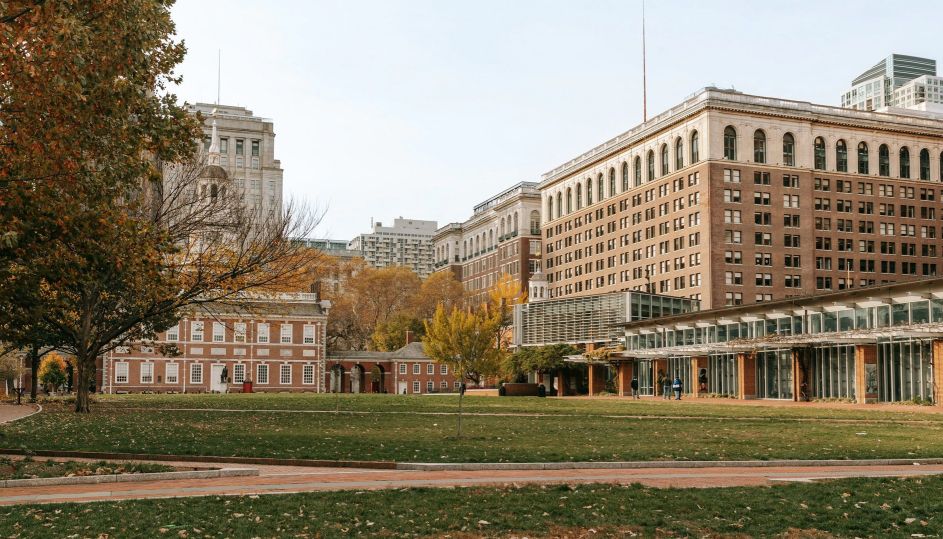
This area is one of the most historic and iconic spaces in Philadelphia. We are visiting the Liberty Bell Center and Independence Hall, two of the most significant historic sites in the United States. They sit right next to each other on Independence Mall, a beautiful open lawn surrounded by trees and historic buildings. The Liberty Bell Center, with its modern glass design, faces directly toward the brick façade and tower of Independence Hall, creating a powerful visual connection between the symbol of American freedom and the place where the nation was born. It’s an easy walk between the two sites, making this part of the city perfect for exploring the history of the Revolution and the founding of the United States.
We are getting in the Liberty Bell Center.
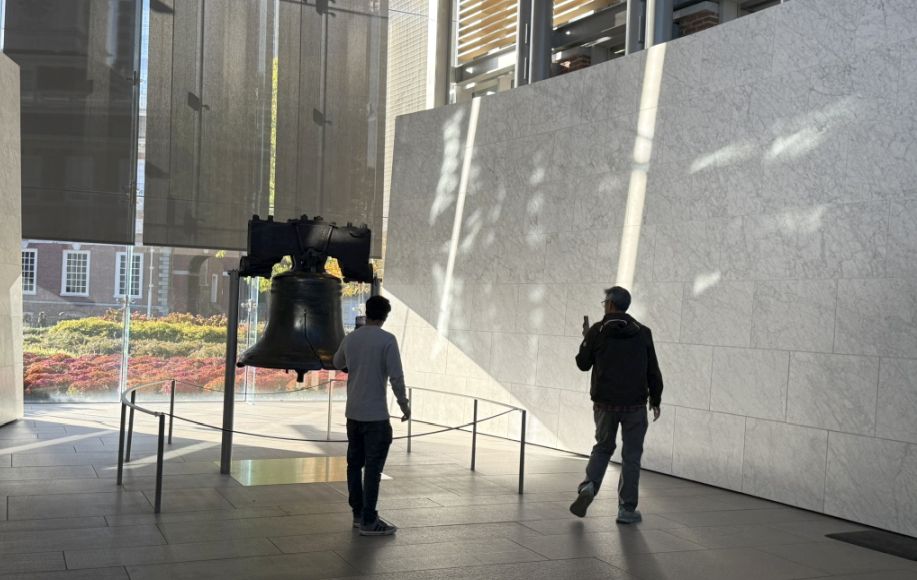
The Liberty Bell is an enduring symbol of American freedom, originally cast in 1751 and later recast in Philadelphia after it cracked. It once hung in the Pennsylvania State House, now Independence Hall, and became famous for its biblical inscription urging liberty for all. Over the years, the bell’s growing crack silenced it, but its meaning only expanded as abolitionists, suffragists, and civil‑rights leaders adopted it as an icon of equality and justice.
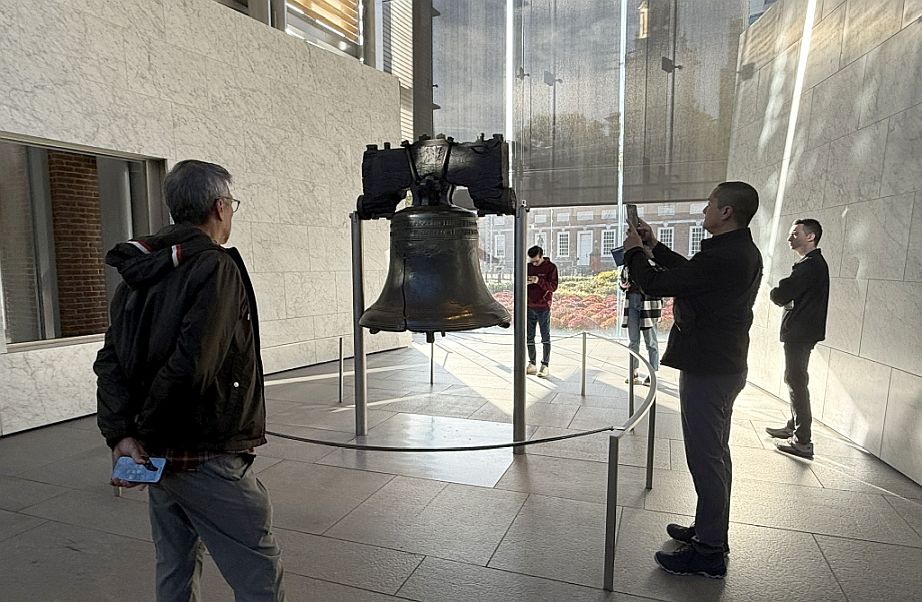
The Liberty Bell is displayed inside the Liberty Bell Center, a modern glass-and-stone museum located within Independence National Historical Park. The entire area is designed to connect the bell to the history of freedom and to the place where the United States began.
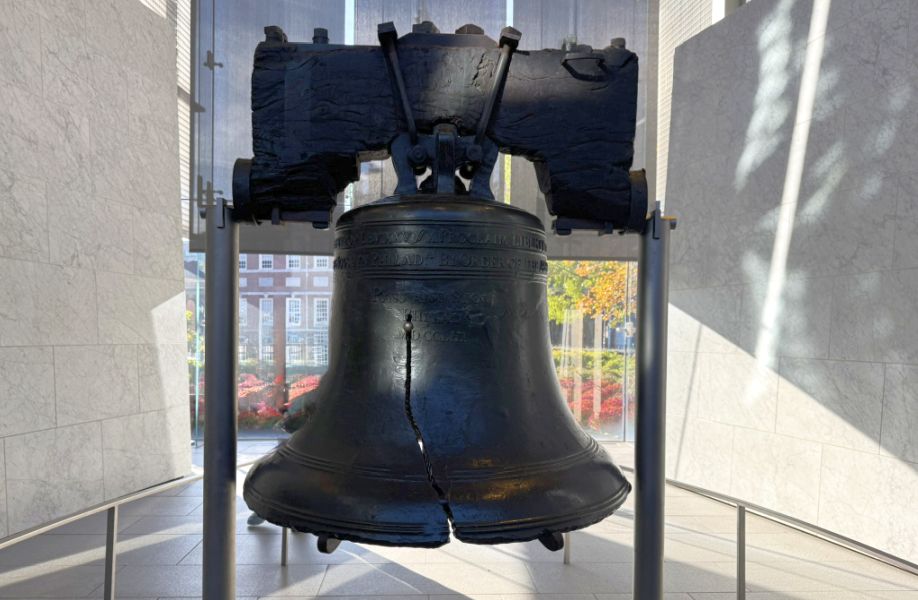
The Liberty Bell stands alone in front of a tall glass wall, giving visitors a dramatic and close-up view.
Cast in 1751 in London for the Pennsylvania State House (now Independence Hall). Commissioned to celebrate the 50th anniversary of William Penn’s Charter of Privileges, which emphasized religious freedom and democratic rights. It cracked soon after arrival.
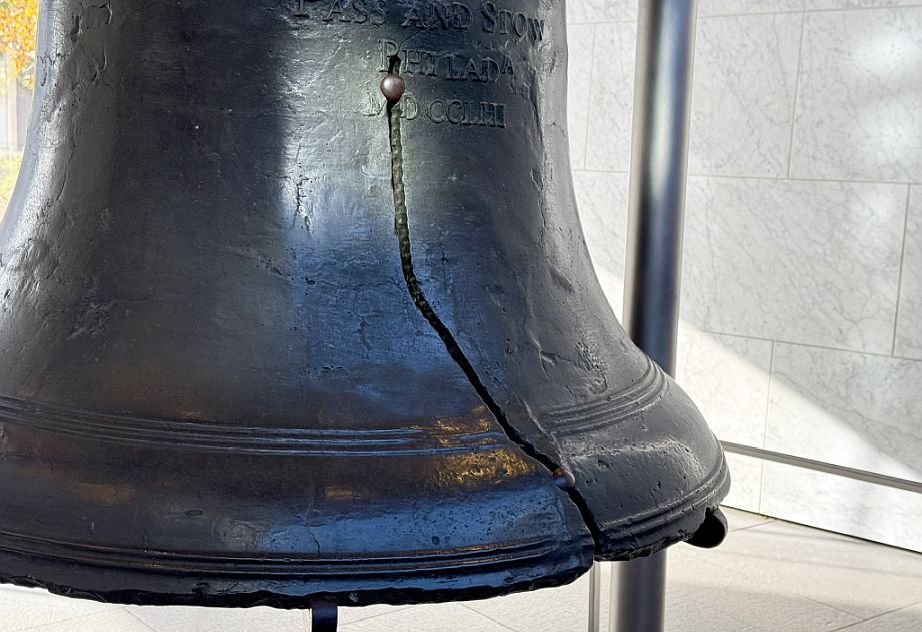
The iconic crack developed gradually in the early 1800s. A narrow crack grew worse over decades. During Washington’s Birthday celebrations in 1846, the bell split badly and went out of service forever.
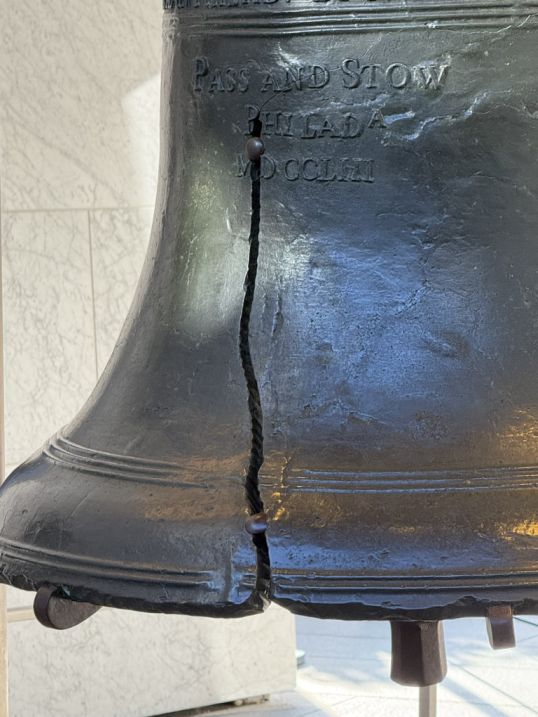
The wide zigzag you see today was an attempted repair (“stop drilling”), not the original crack. Two local founders recast it twice, creating the version you see today.
 |
 |
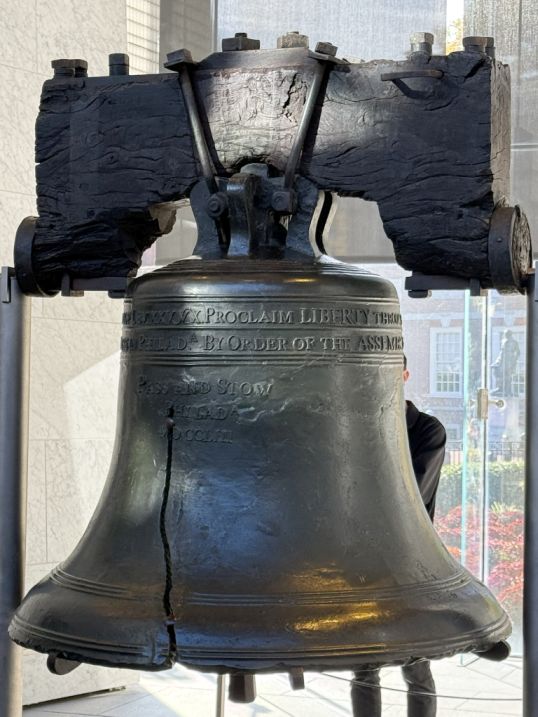
The words around the crown of the bell come from the Bible (Leviticus 25:10): “Proclaim Liberty Throughout All the Land Unto All the Inhabitants Thereof.”
These words later inspired abolitionists and civil‑rights leaders.
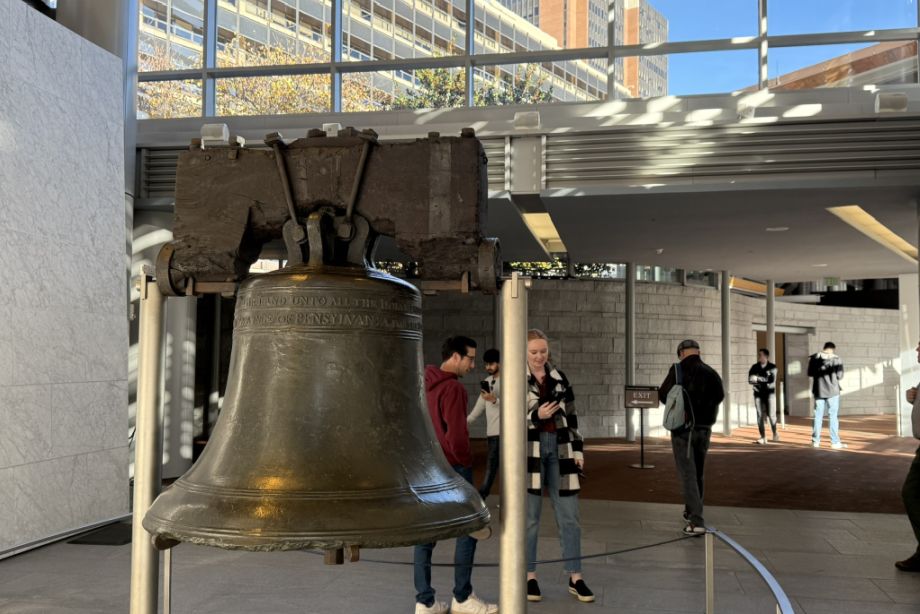
The bell originally hung in the tower of Independence Hall and rang for Meetings of the Pennsylvania Assembly, Public announcements, The first reading of the Declaration of Independence (traditional but debated, it definitely rang for public events around that period).
During the war, it was hidden in Allentown to prevent the British from melting it for ammunition.
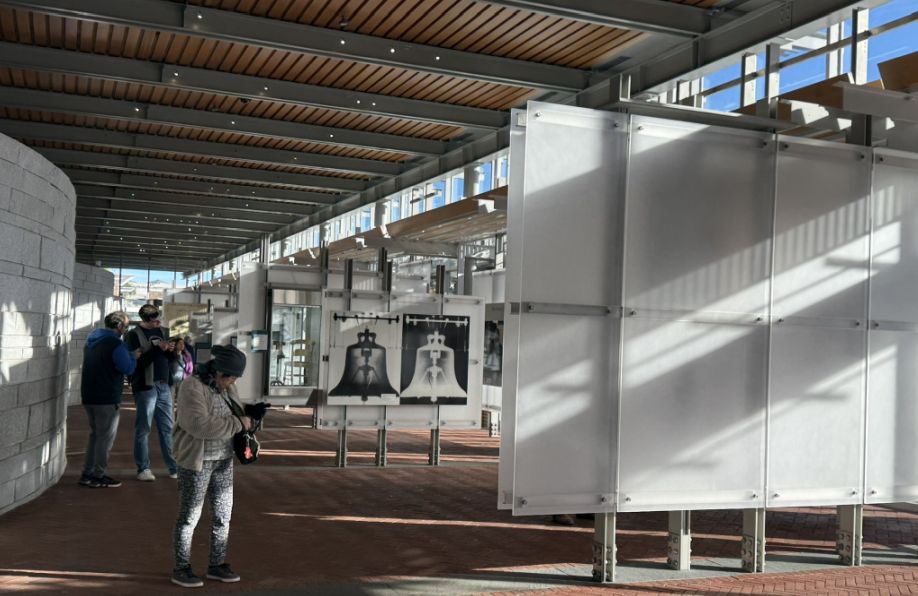
We are now in the exhibit area of the Liberty Bell Center, the long hallway leading toward the bell itself. This space is designed to tell the story of the Liberty Bell through photographs, artifacts, and historical panels before you actually see the bell at the end.
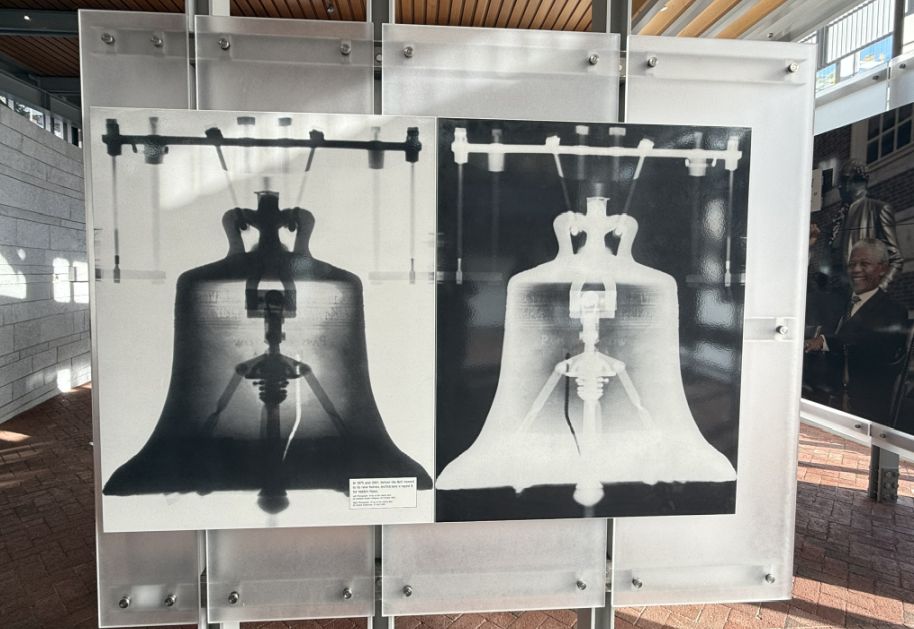
This is a display panel of X‑ray images of the Liberty Bell, one of the most interesting parts of the Liberty Bell Center’s exhibit hall.
The left image is a standard X‑ray view, and the right image is the same scan shown in reverse contrast (a “negative”), and reveal the bell’s internal structure.
They were taken to ensure the bell can remain on display safely without being moved or disturbed.
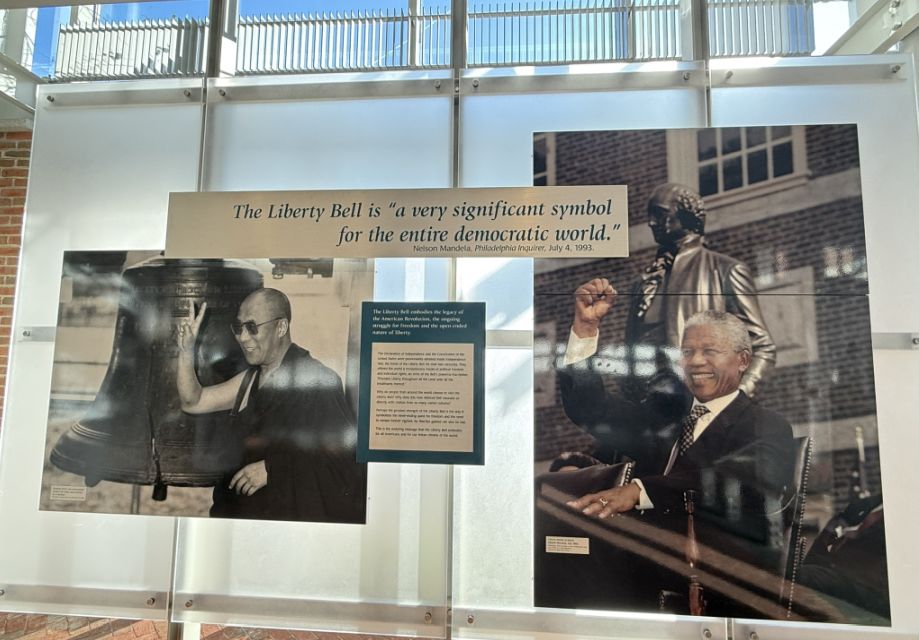
The Liberty bell is a very significant symbol for the entire democratic world.
 |
 |
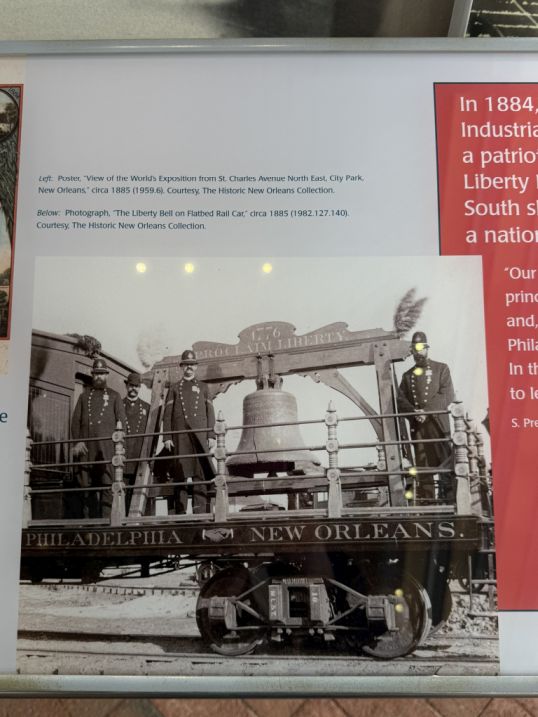
On the left is a photograph from the late 1800s or early 1900s, when the Liberty Bell went on several national tours. It was loaded onto a special flatbed railcar and traveled across the country for world’s fairs, expositions, and patriotic events. These tours helped transform the Liberty Bell from a Philadelphia object into a national icon.
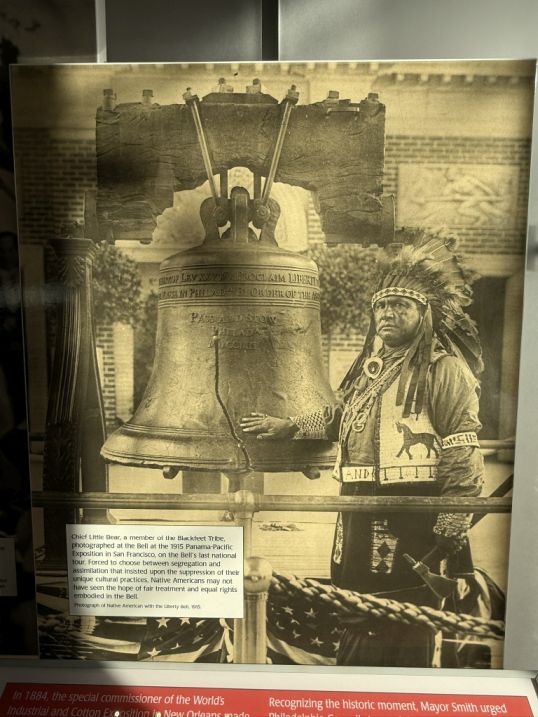
On the right the image symbolizes how the Liberty Bell grew beyond colonial and Revolutionary meaning and became a national symbol embraced by many different communities.
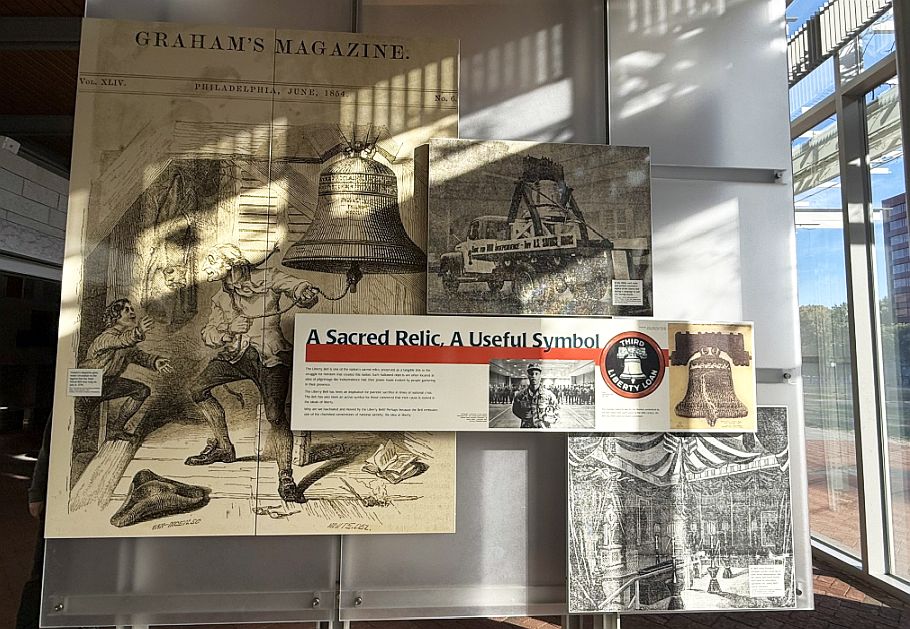
This panel explains how, by the mid‑1800s, the Liberty Bell was treated almost like a holy object of the American story.
The bell became something more than a piece of meta, it became a national relic, cherished the way some countries sacredly guard ancient artifacts.
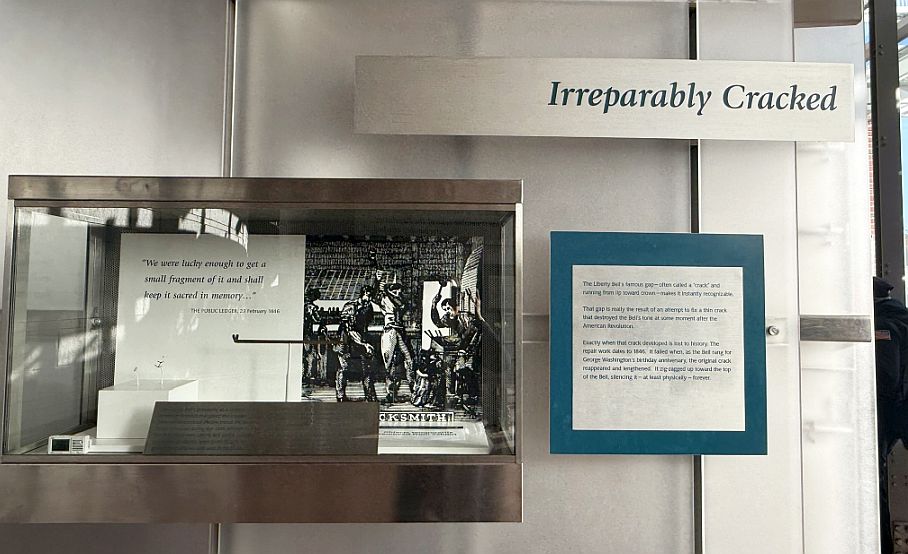
“Irreparably Cracked”, This panel explains the physical reality of the bell, that its famous crack cannot be repaired, but this is also symbolic. The crack became its identity: the flaw made the bell unique, the crack made it a symbol of struggle and endurance, and It reflects the idea that American freedom has been hard‑won and imperfect, but resilient. The crack is not just damage, it is part of the Liberty Bell’s story and meaning.
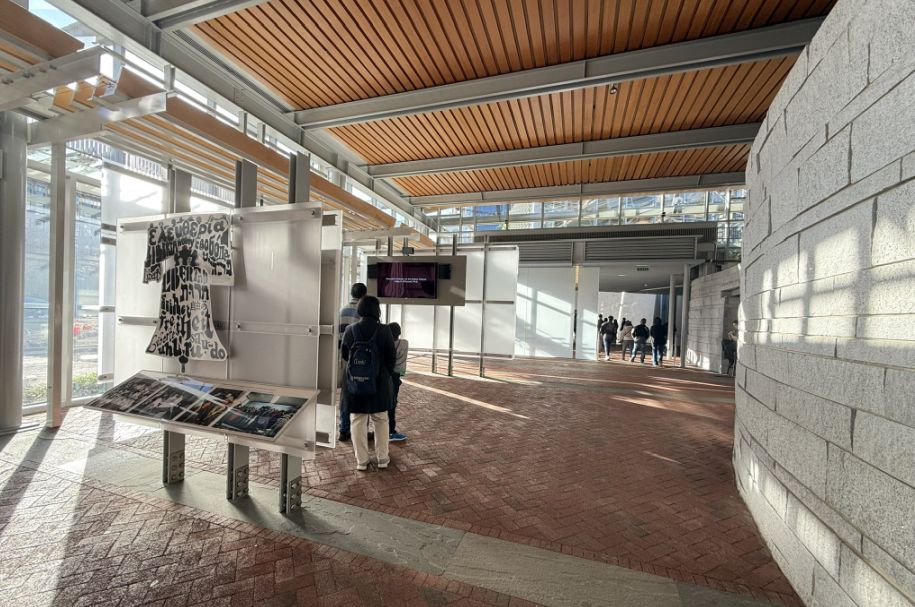
We are now leaving the exhibit.
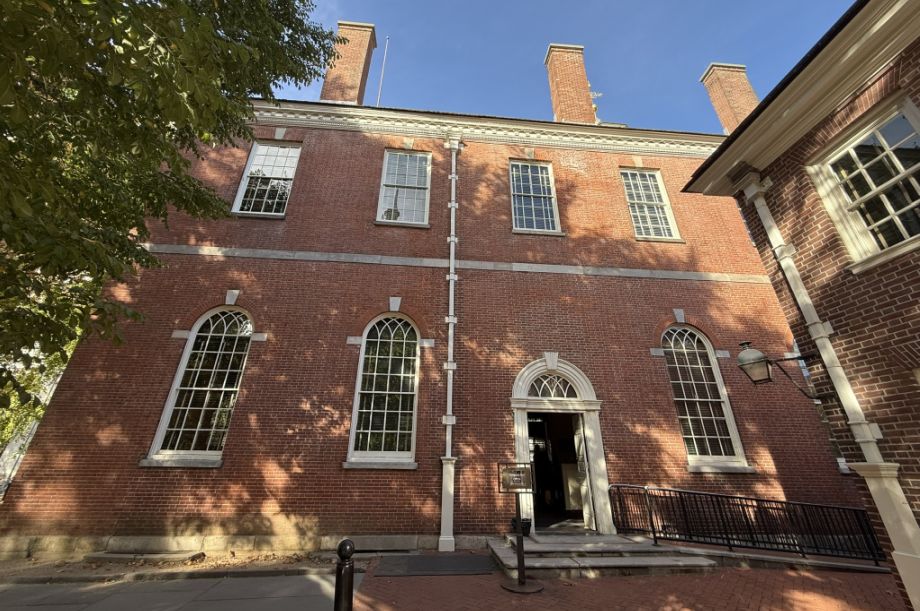
We are now in the courtyard of the Independence hall (about 5 minutes walk from the Liberty Bell center).
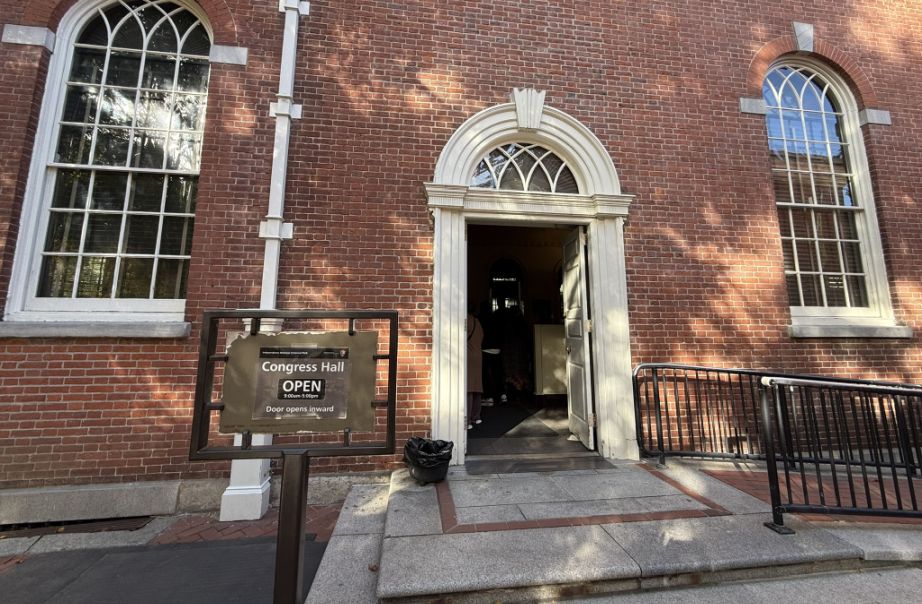
We are now visiting the Congress Hall (1790-1800).
From 1790 to 1800, both the House of Representatives and the Senate met in this building. During this time, George Washington and John Adams both took their oaths of office as President.
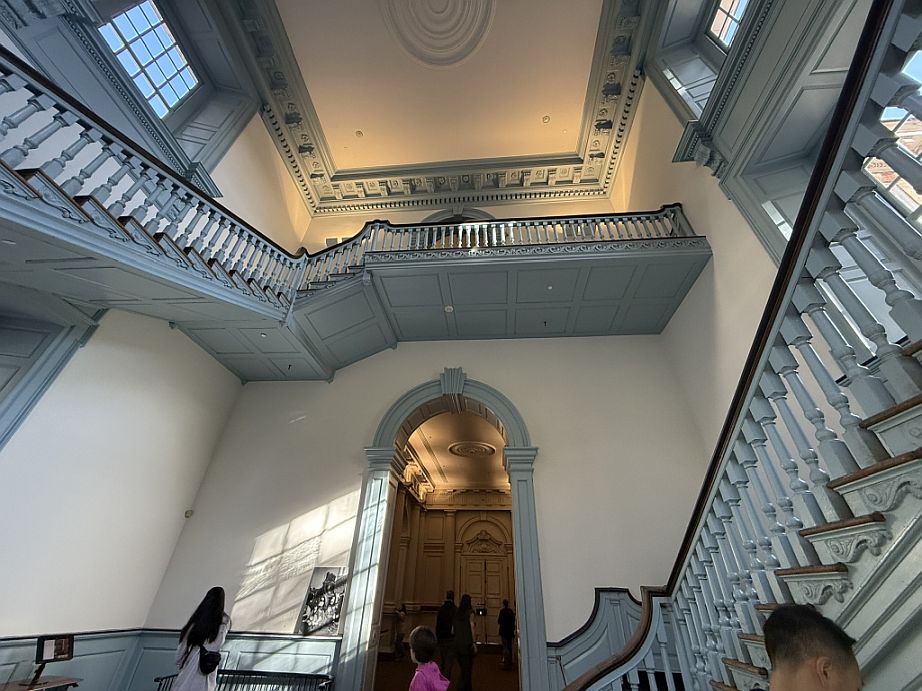
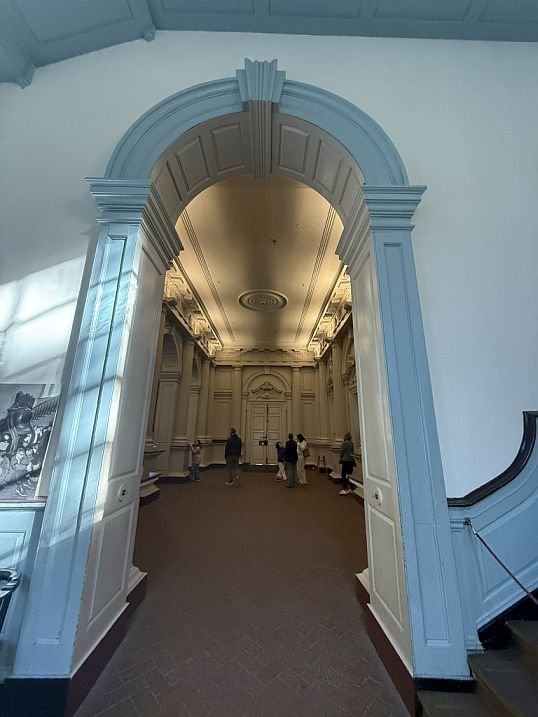
Right when you enter Congress Hall, there is a wooden staircase that rise tow flights, painted in a pale blue color, very typical of late‑18th‑century interior design.
The staircase leads to the Senate Chamber and additional committee rooms on the second floor. The stairwell is tall and narrow, giving it a very vertical, historic feel.
 |
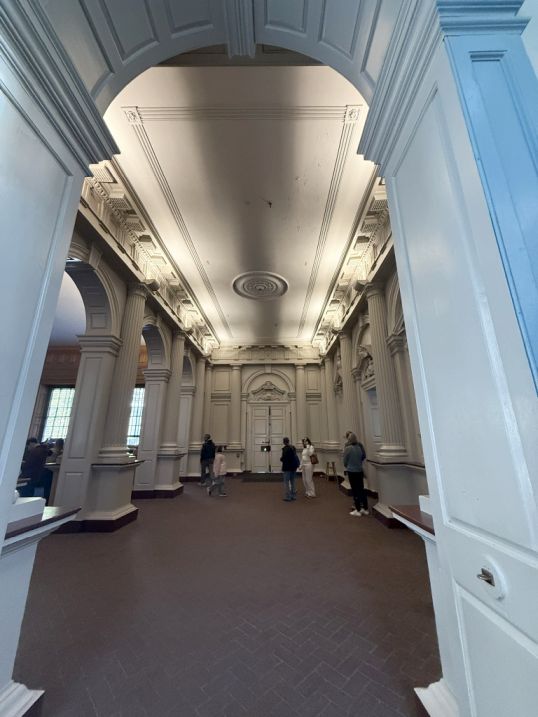 |
At the bottom of the stairs is a high, oversized door, proportioned to match the style of the time. Tall doors made rooms feel more formal and grand, that helped circulate air in buildings that heated with fireplaces. This particular door leads into the House of Representatives chamber.
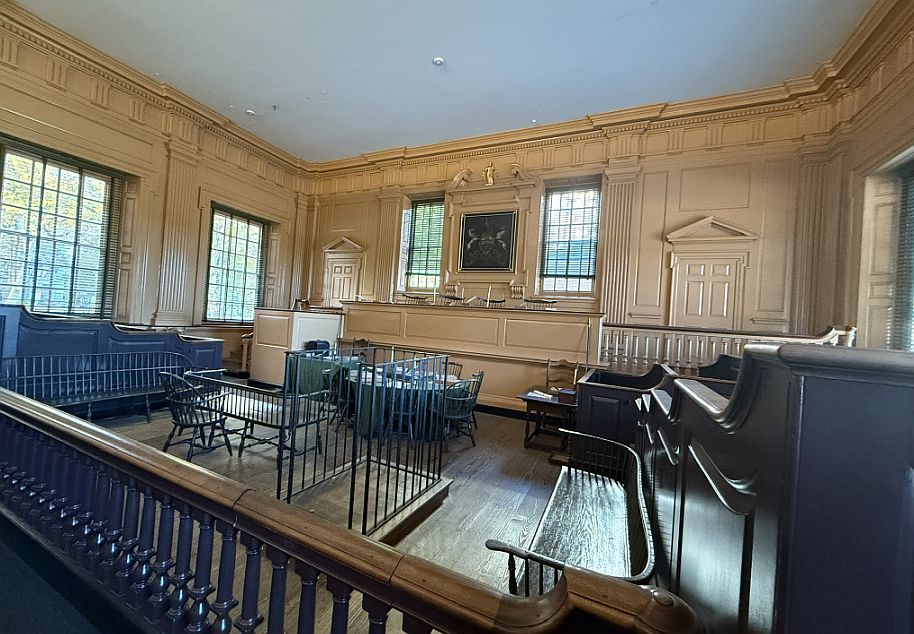
We are standing inside the Old Courtroom of Independence Hall, and this was the Supreme Court Room of the Province of Pennsylvania, located on the east side of the first floor of Independence Hall. Built in the 1730s, this room served as: The highest court in colonial Pennsylvania, a major judicial chamber during the Revolutionary era, and a courtroom used by lawyers, judges, juries, and government officials of the time. Before Congress met next door, and before the Declaration was signed, this room was a center of legal authority.
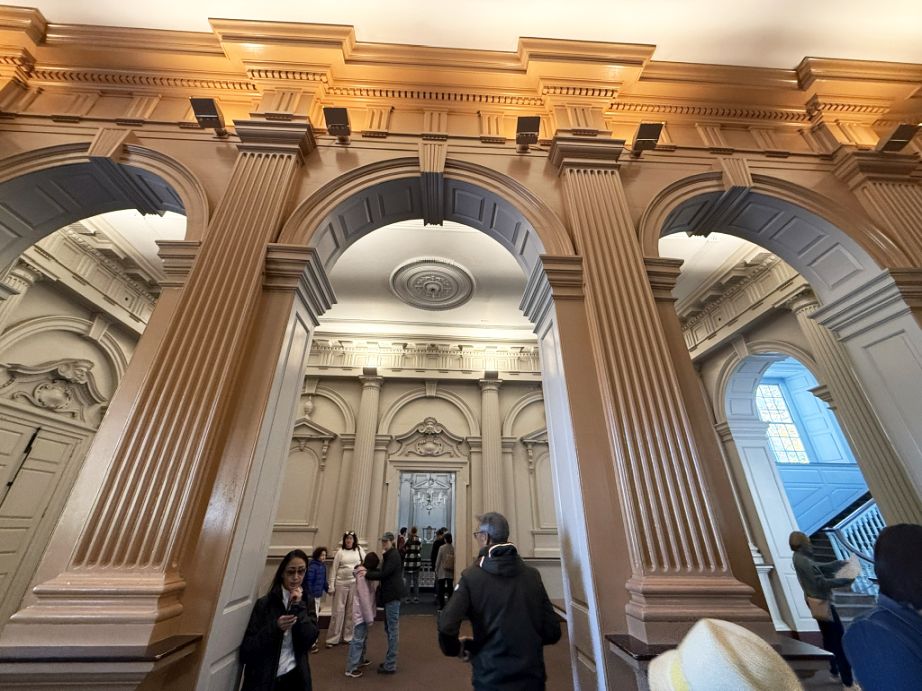
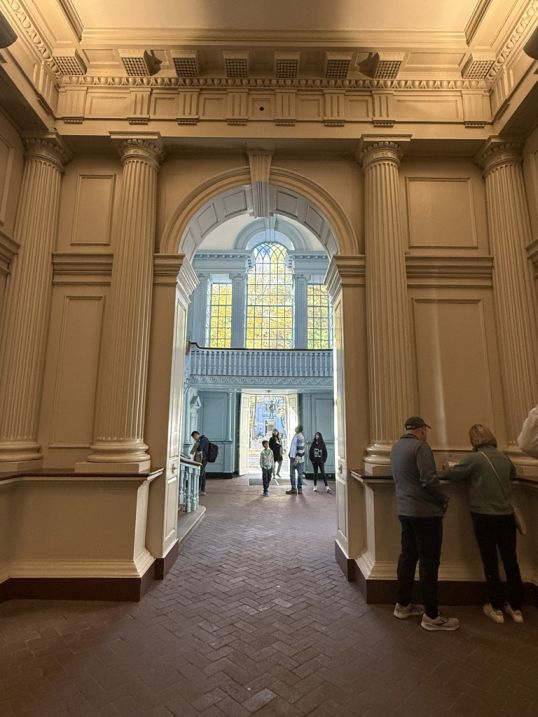
This is the central vestibule (entrance hall) of Independence Hall, one of the most impressive and architecturally grand spaces in the building.
The large vertical elements are fluted pilasters (flat columns attached to the wall). They are painted in a historically accurate buff‑brown color, a common colonial paint tone. These pilasters create a sense of height, elegance, and authority, signaling that you are inside a major public building.
 |
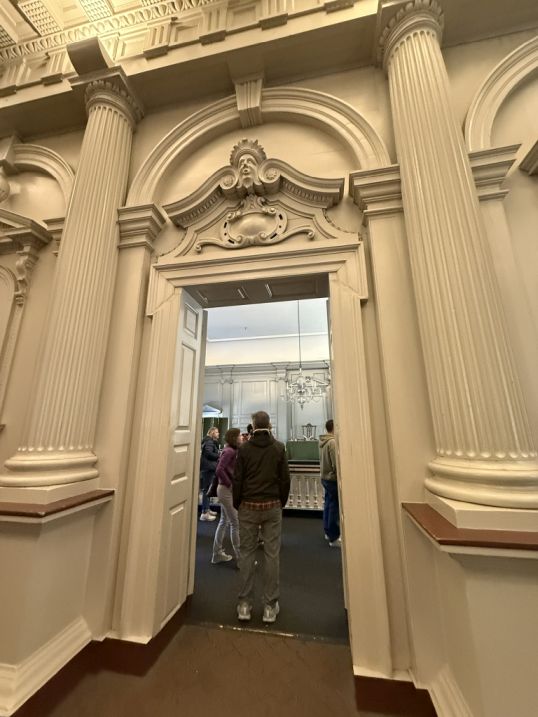 |
This room is the passageway that connects the Supreme Court Room on one side and the Assembly Room (where the Declaration and Constitution were debated) on the other.
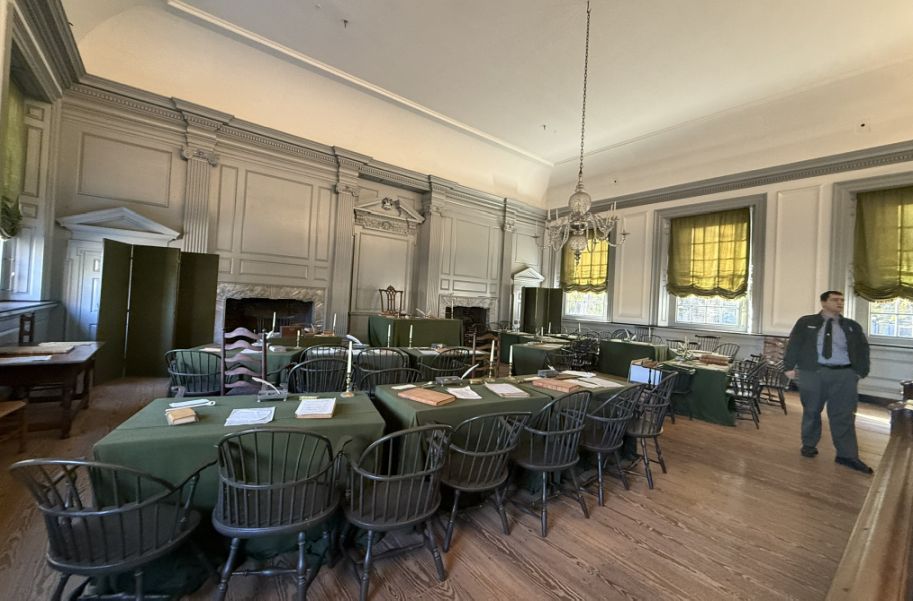
This is the Assembly Room of Independence Hall, the single most important room in the history of the United States. This is the room where both the Declaration of Independence (1776) and the U.S. Constitution (1787) were debated, drafted, and adopted.
 |
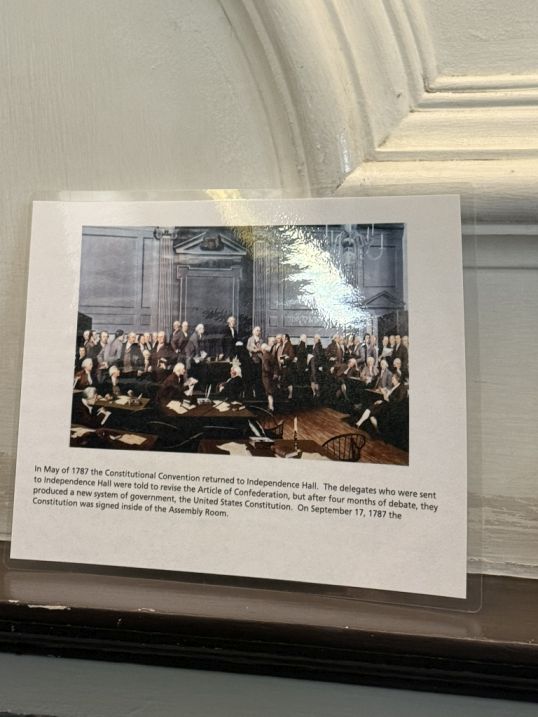 |
This room witnessed: The debates and signing of the Declaration of Independence, The meetings of the Second Continental Congress, George Washington being appointed Commander in Chief of the Continental Army, The Constitutional Convention, which created the U.S. Constitution, The formation of the early American government.
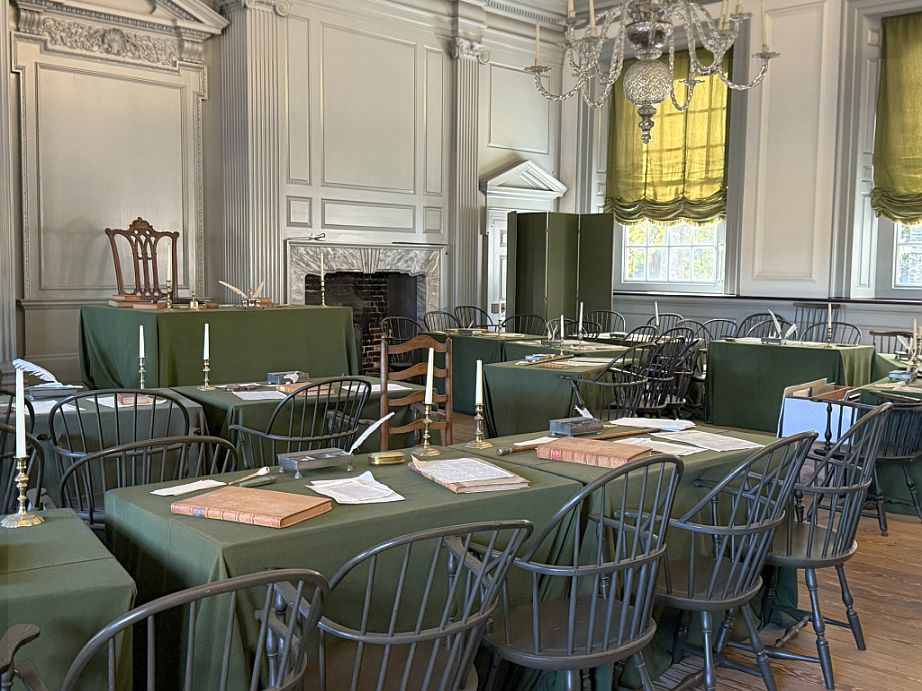
The green baize cloths were used by delegates for writing, reading documents, and sealing papers. The arrangement of the tables is very close to how it looked during the Constitutional Convention. The Windsor wooden, high‑backed chairs were standard seating for 18th‑century lawmakers. Each delegate sat in one similar to these.
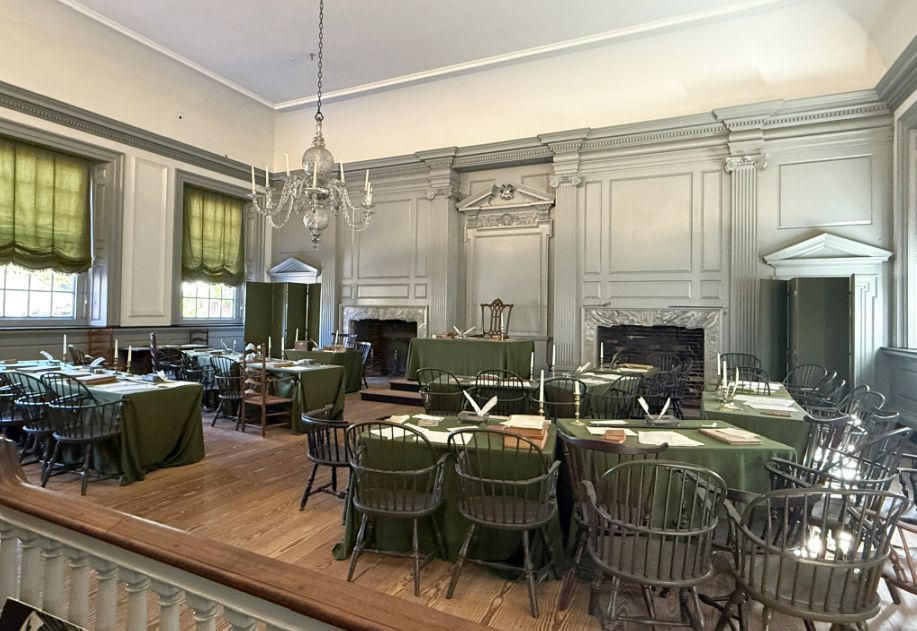
George Washington’s chair (center, raised platform).
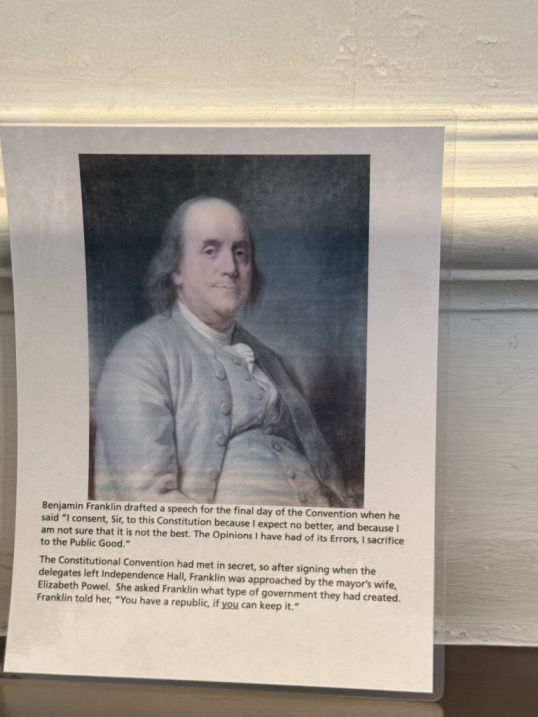
On the low dais at the front is the President’s Chair, used by George Washington while presiding over the Constitutional Convention. It features a sun carved into the crest rail, Benjamin Franklin famously said he wasn’t sure if it was a rising or setting sun until the Constitution was completed. He concluded it was a rising sun.
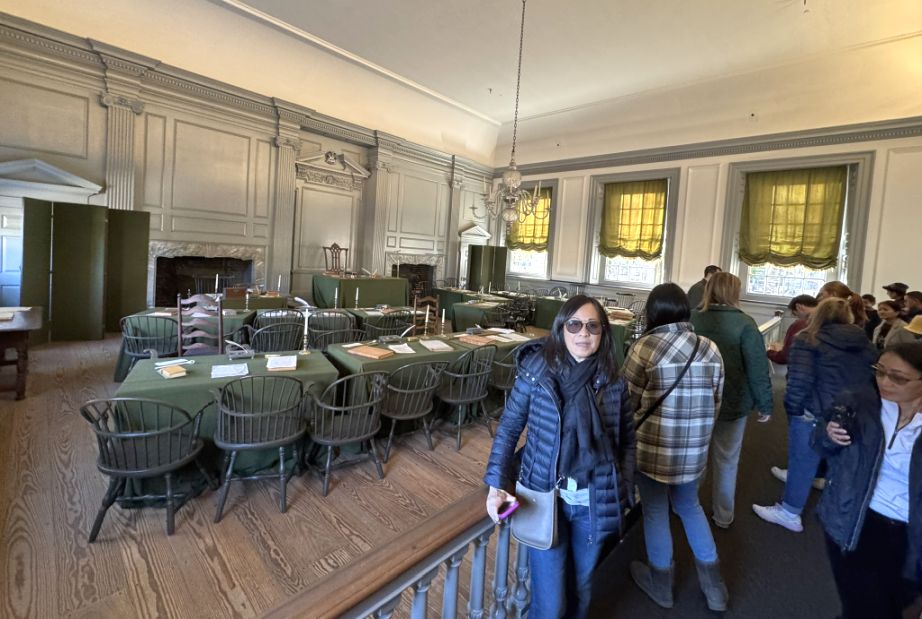
There is a divider so people can touch the decor.
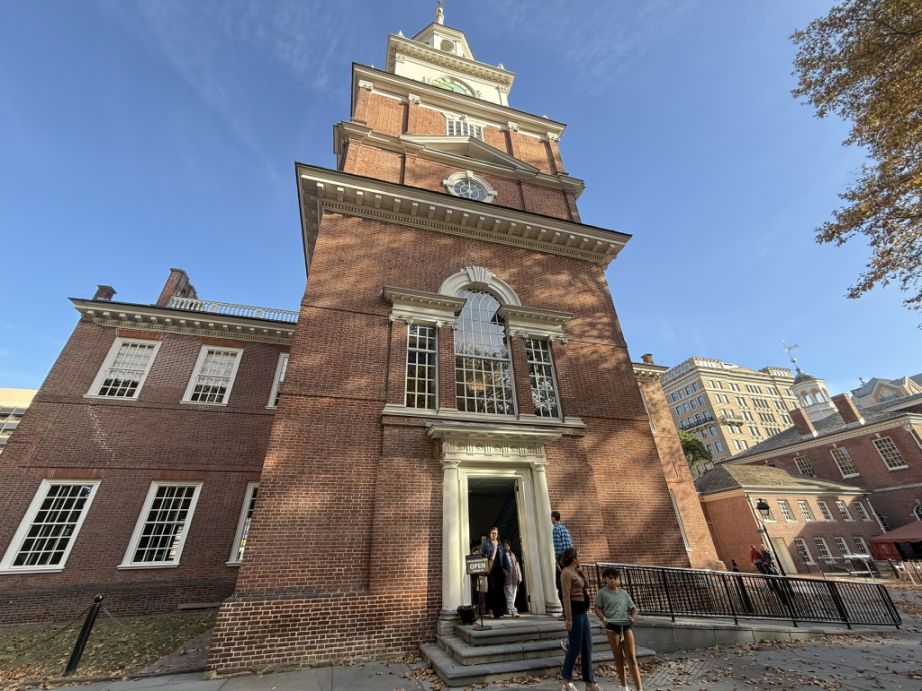
The original purpose of the tower was to house the State House bell, which we now call the Liberty Bell. For decades, the ringing of the bell was the heartbeat of political life in colonial Philadelphia. After the Revolution, the tower also held a clock mechanism that chimed the hours for the city. Early Philadelphians did not have personal clocks, so public towers were essential. The tower was one of the tallest structures in colonial America.
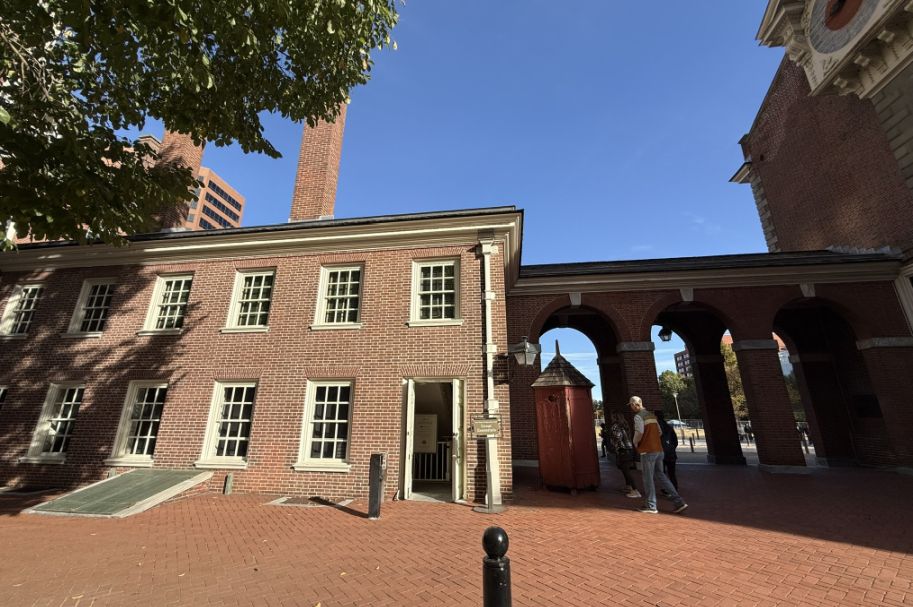
We are now in front of the West Wing of Independence Hall. It was built in the 1730s, just like Independence Hall, and originally housed: The offices of the clerks of the Assembly, Storage for official government papers, Workspaces for copying and maintaining important records. It was designed as a practical support building for the Pennsylvania State House. During the Revolution and early federal period, this wing became the place where many official documents and legislative materials were kept.
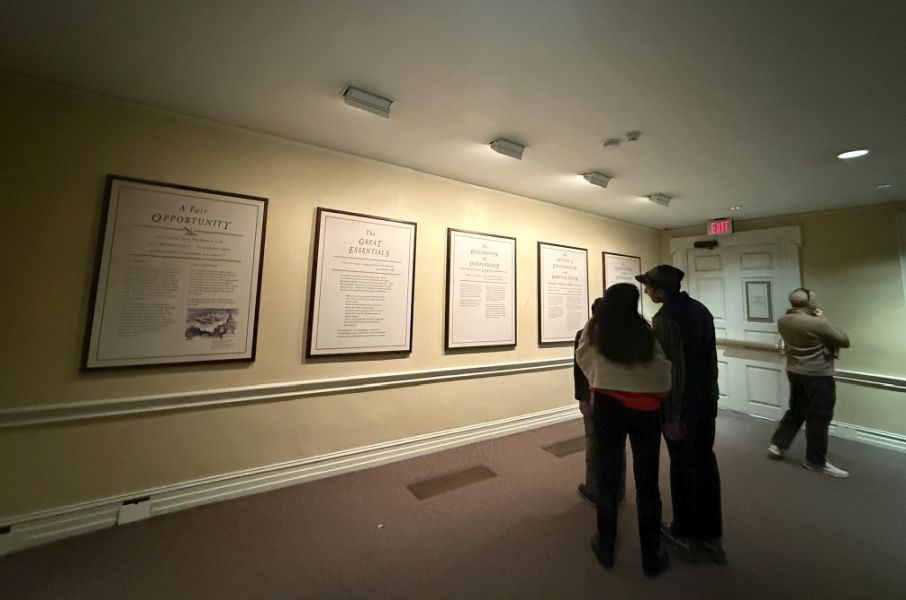
Inside the first thing you see is the introductory gallery inside the Great Essentials Exhibit. It’s essentially the entry hallway before you reach the room where the original documents are displayed.
 |
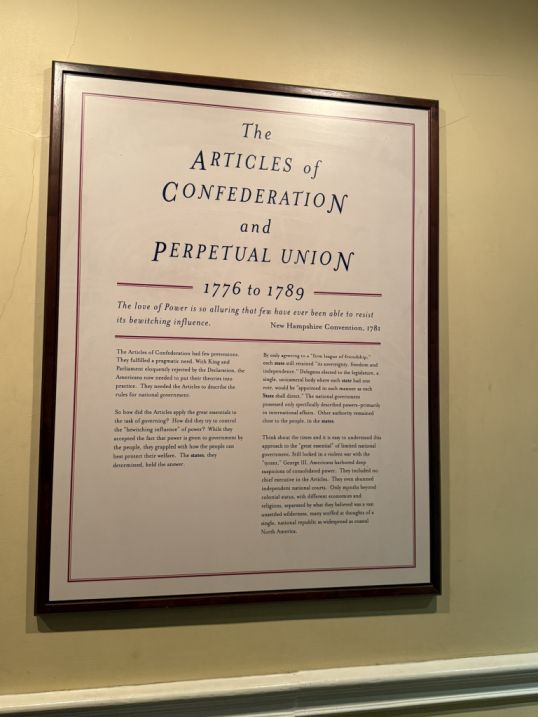 |
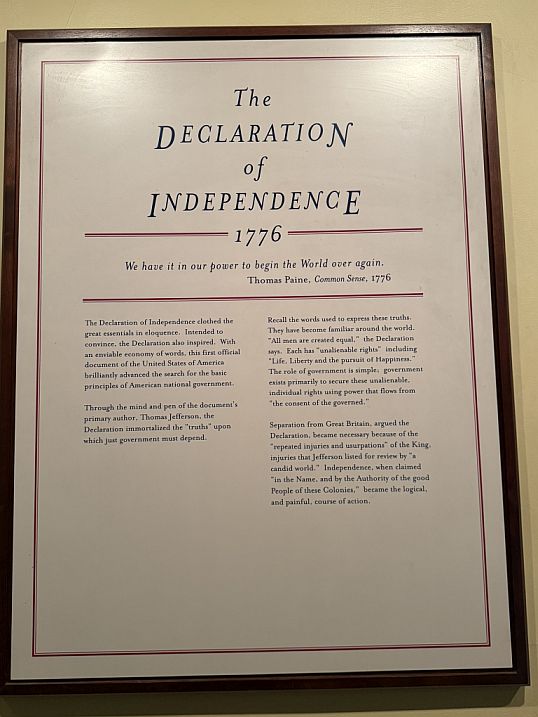
The framed panels you see summarize the core ideas of the founding era, including: The Declaration of Independence, and the Articles of Confederation.
This room introduce the themes you will see in the next room with the actual documents.
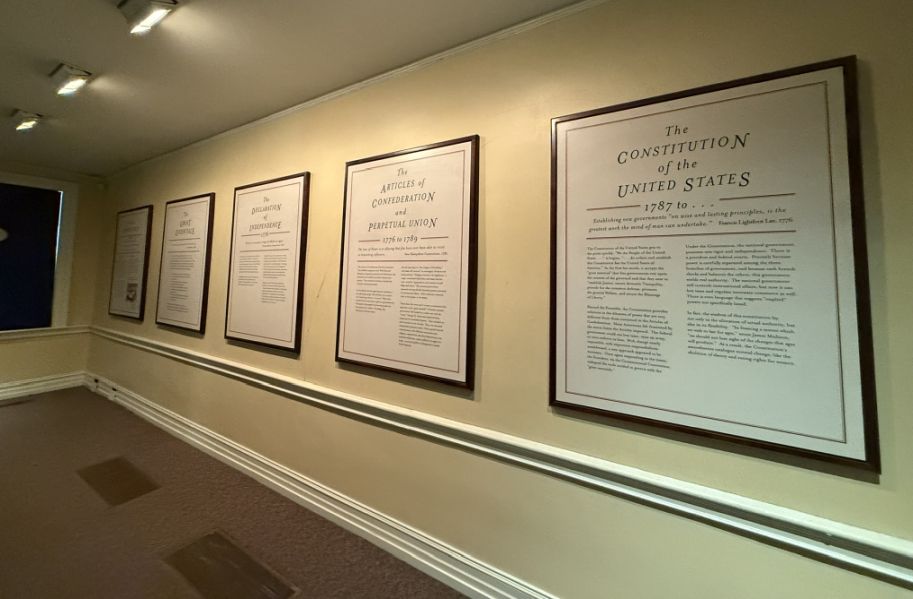
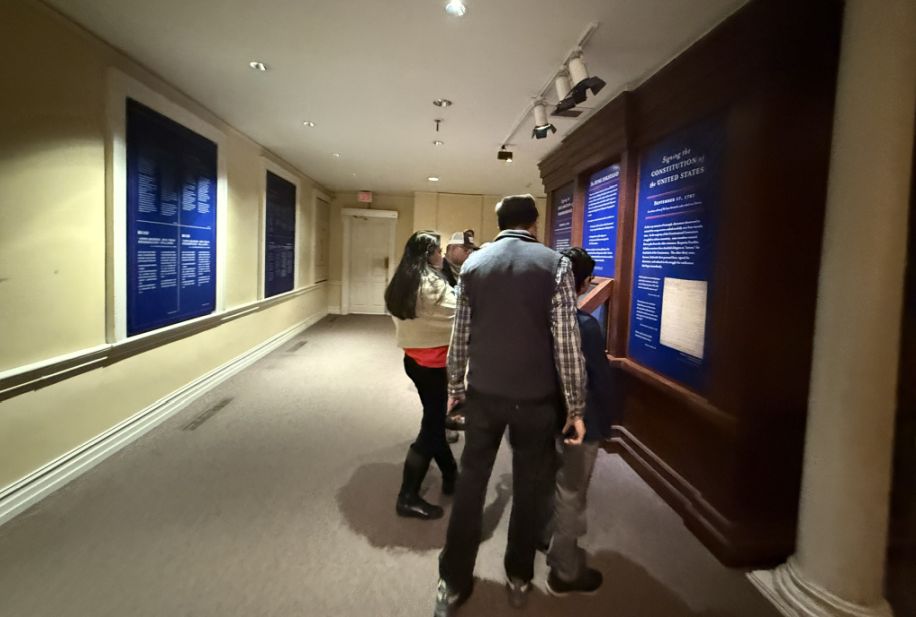
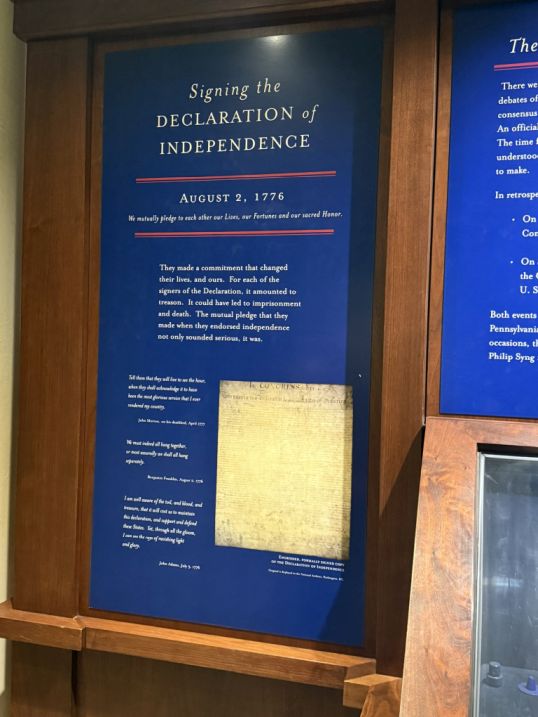
This area explained the creation, signing, and impact of foundational American documents.
 |
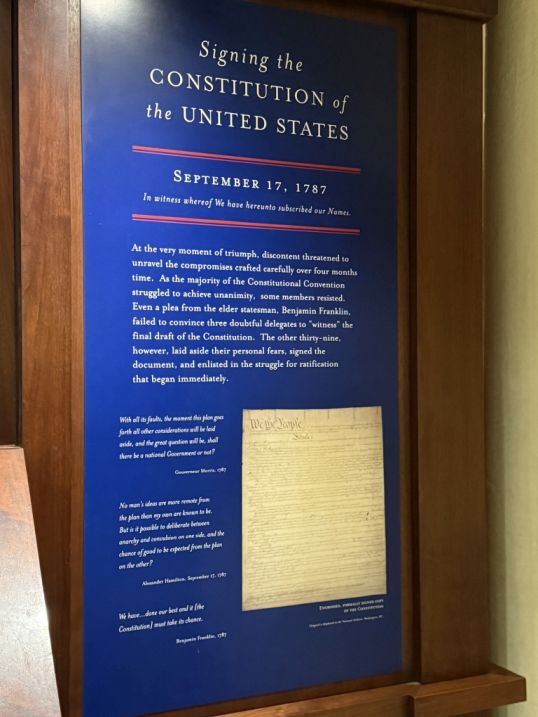 |
This hallway prepares visitors intellectually before they step into the room containing the precious original documents.
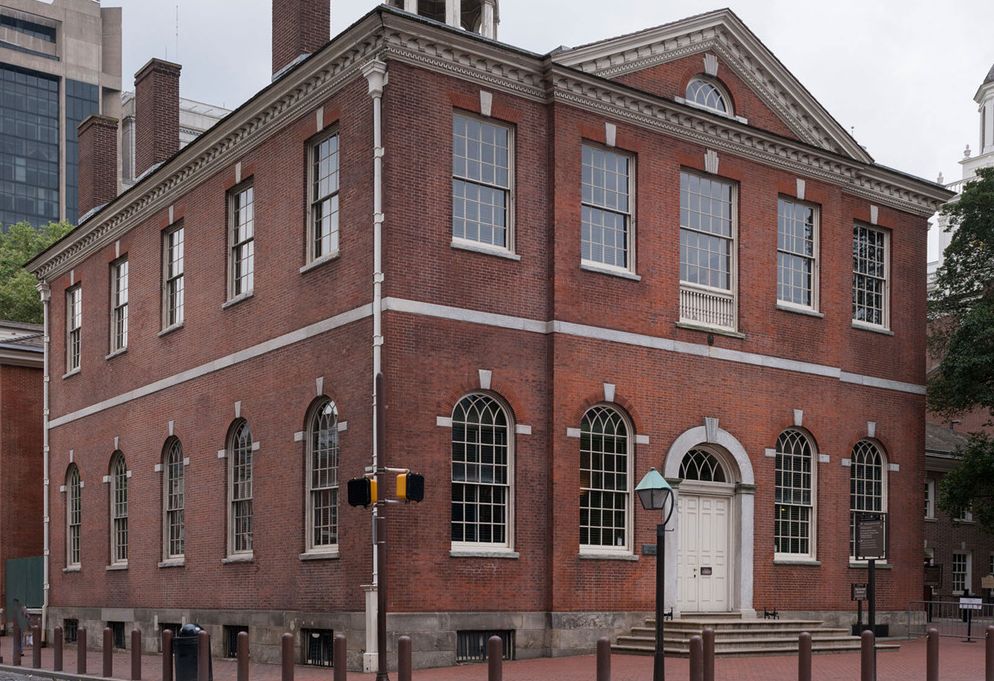
We are now in front of the Old City Hall. This building is located on the east side of Independence Hall, at the corner of 5th Street and Chestnut Street. It was part of the original three‑building Pennsylvania State House complex.
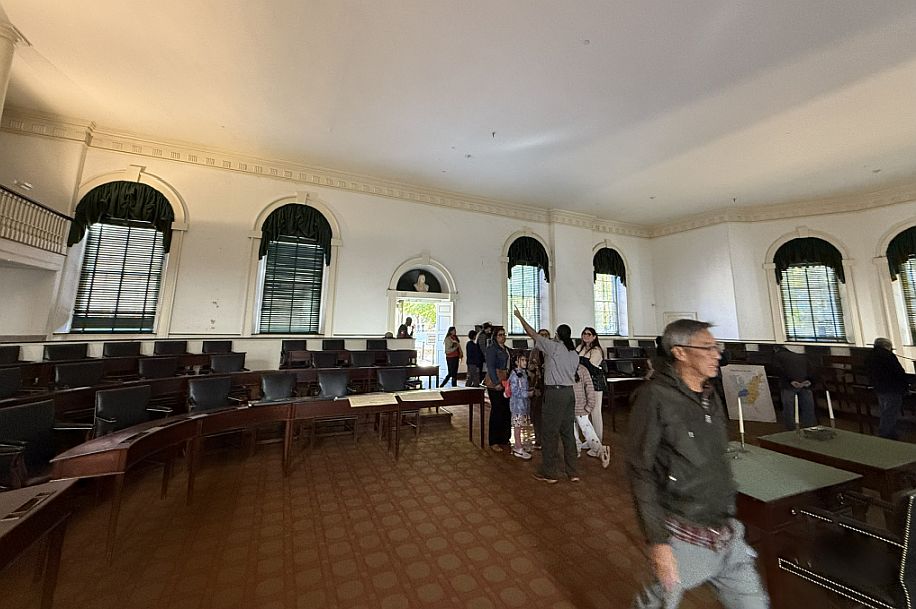
This is the he chamber where the U.S. Supreme Court met when Philadelphia was the nation’s capital (1791-1800).
This courtroom was the site of many early and foundational moments in American judicial history, and represents the beginning of the American judicial system as we know it.
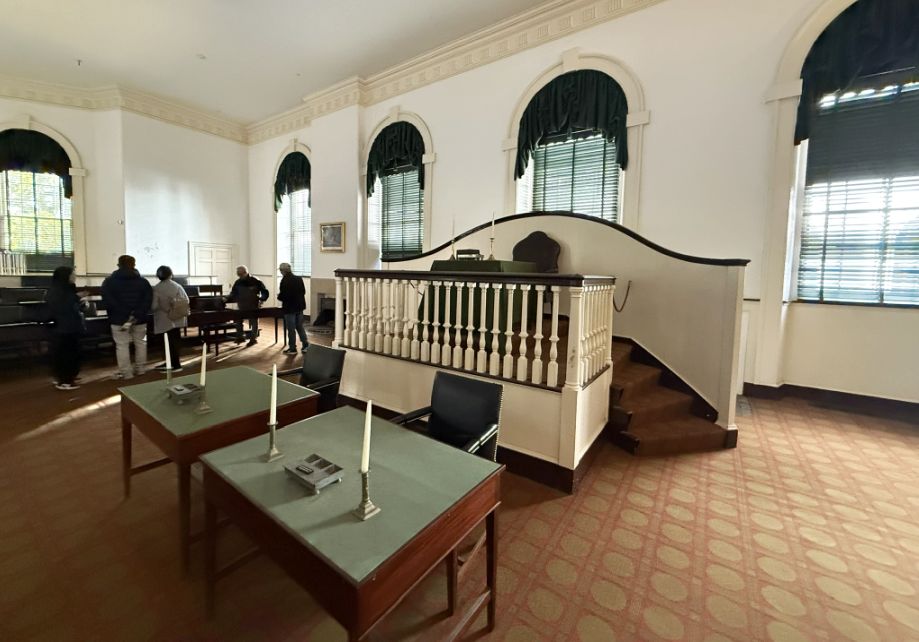
The Judge's Bench is located on the elevated platform on one side is where the Chief Justice and Associate Justices sat. Multiple large windows with tall arched windows providing needed daylight for court sessions.
Writing desks and benches below the Judge's Bench.
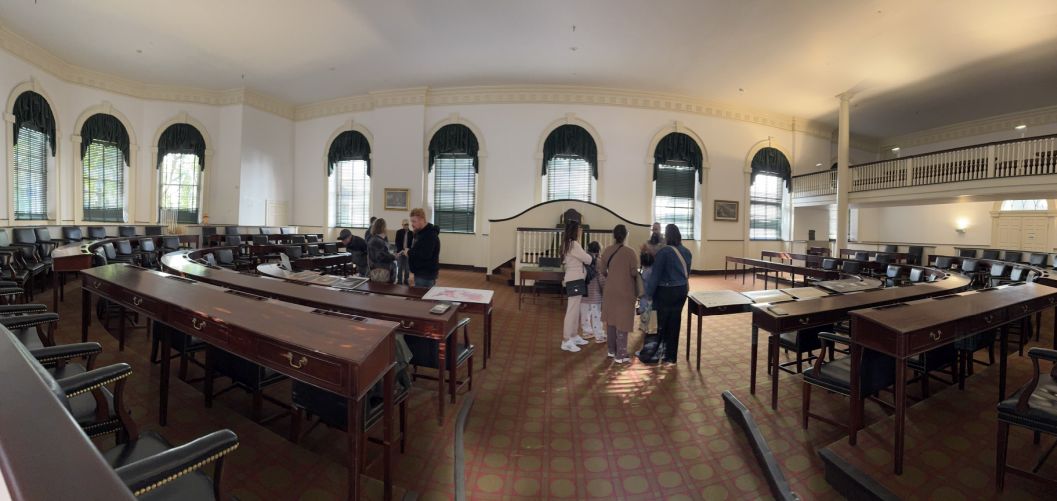
Semi‑circular seating. This arrangement accommodated lawyers, clerks, and government officials involved in trials.
 |
 |
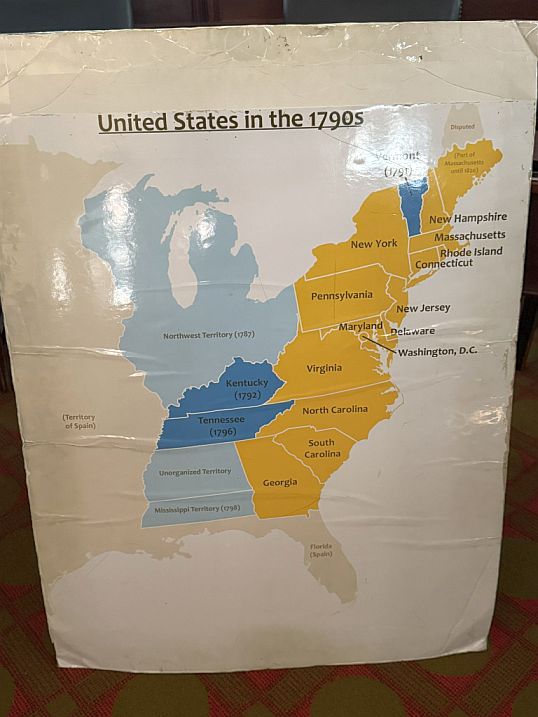
ON the left is the map of the United Stated in the 1790 with only 13 states. Everything beyond these states was territory, not yet organized into states.
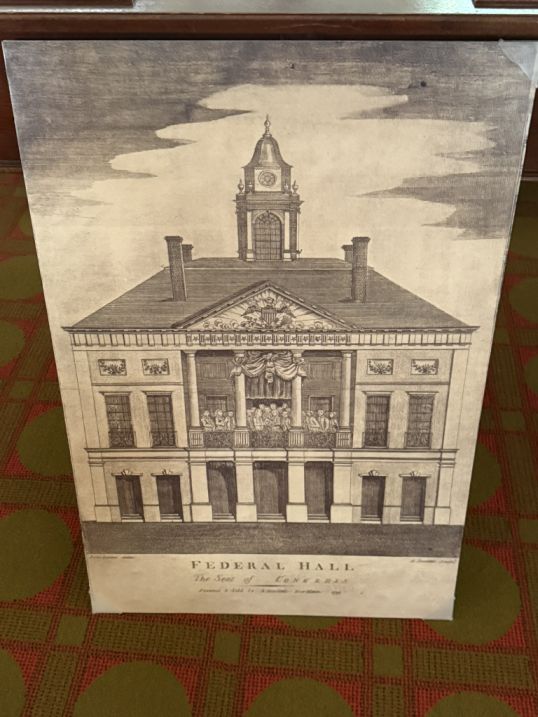
On the right is the original Federal Hall which is the place where the U.S. government truly began operating under the new Constitution.
NEXT... Day 4- City Center