4 days in Philadelphia 10/24- 10/27/2024
| Day 1 Arrival/Dinner |
Day 2 Walking around Cocktail/Tuna Bar |
Day 3 Guided Tour Dinner at Amata |
Day 4 LibertyBell/Independence Hall City Center |
Day 4- City Center-10/27/2024
We had 3 to 4 hours more in Philadelphia so we decided to walk toward the Center City.
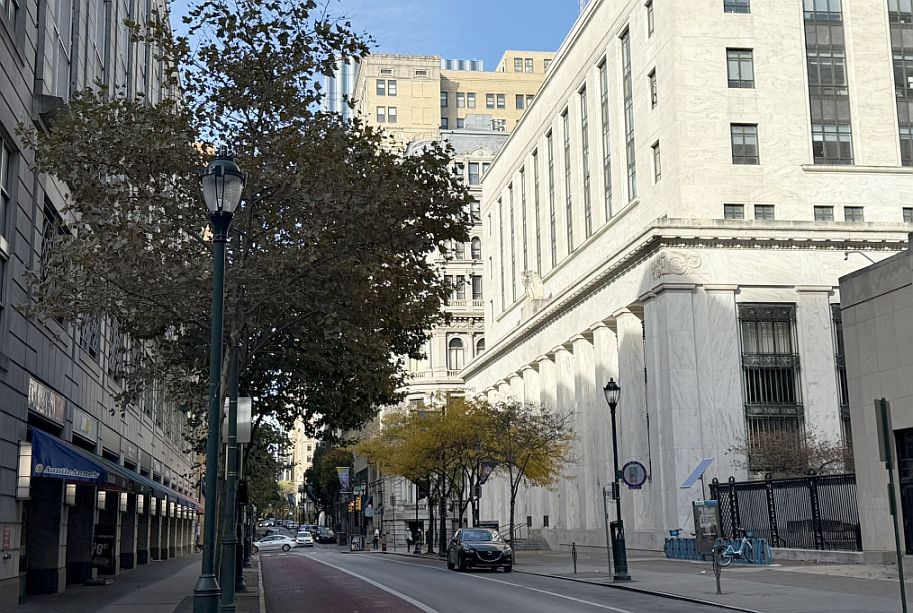
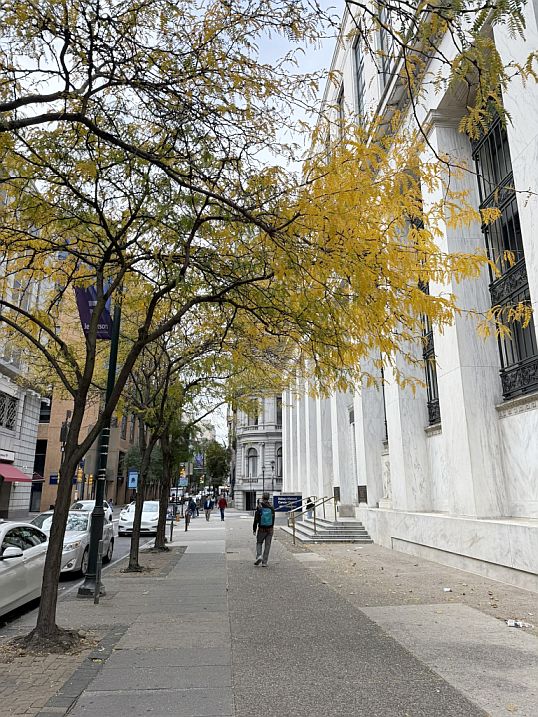
We are walking through a stretch of Center City where Chestnut Street shifts from historic Old City toward the busy commercial and retail district. On weekdays this area is packed with office workers, shoppers, buses, and delivery trucks. But on a Sunday morning, especially around 10 a.m., the streets can feel almost deserted. Many of the offices and shops aren’t open yet, and the morning traffic hasn’t begun to build. The tall buildings cast long shadows over the wide street, and only a few cars or early walkers pass by. Storefronts, cafés, and boutiques line the blocks, but the quiet gives the whole area a peaceful, paused‑in‑time feeling. It’s one of those rare moments where you can see the city’s architecture and broad streets clearly, without the usual noise and rush of everyday life.
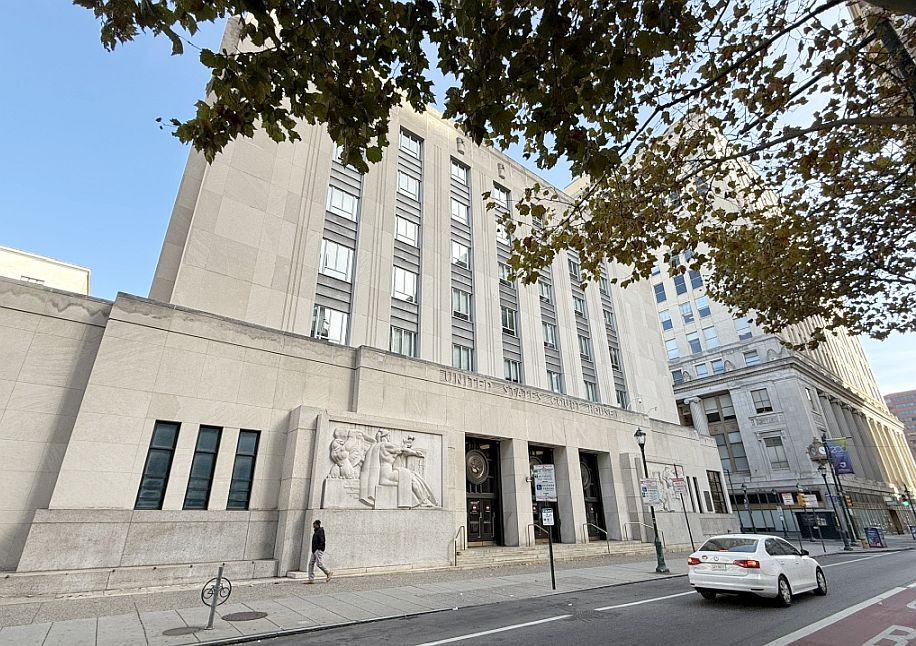
We passed by the Robert N.C. Nix Sr. Federal Building & U.S. Courthouse located on Market street.
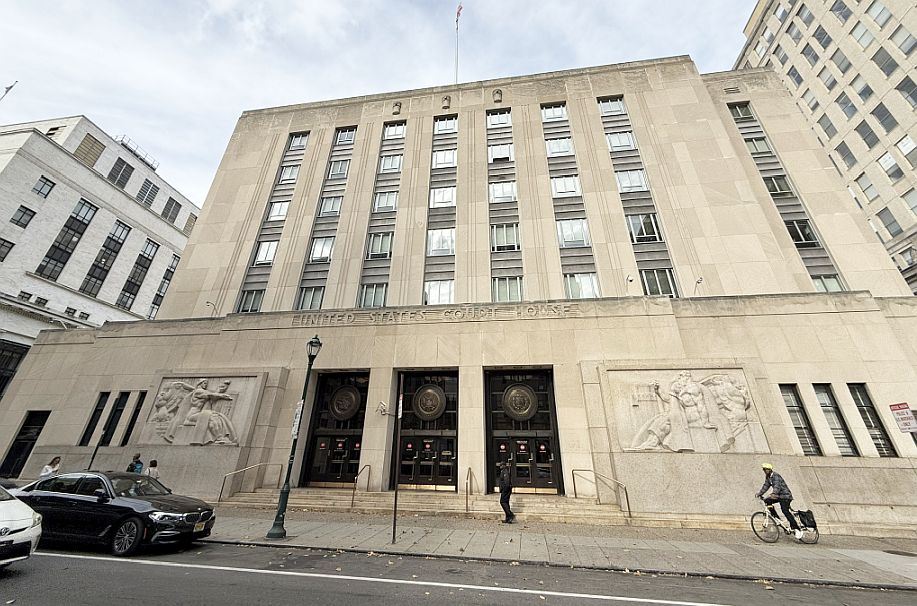
This is one of Philadelphia’s major federal buildings, home to federal courtrooms and offices. Its design reflects the bold, geometric look of 1930s government structures: strong vertical lines, limestone cladding, and a monumental presence along the street. In front of the courthouse, flanking the main entrance, are two large stone sculptures. These represent classical themes associated with justice and the rule of law. They were carved in the 1930s as part of the Works Progress Administration (WPA) effort to incorporate public art into federal buildings.
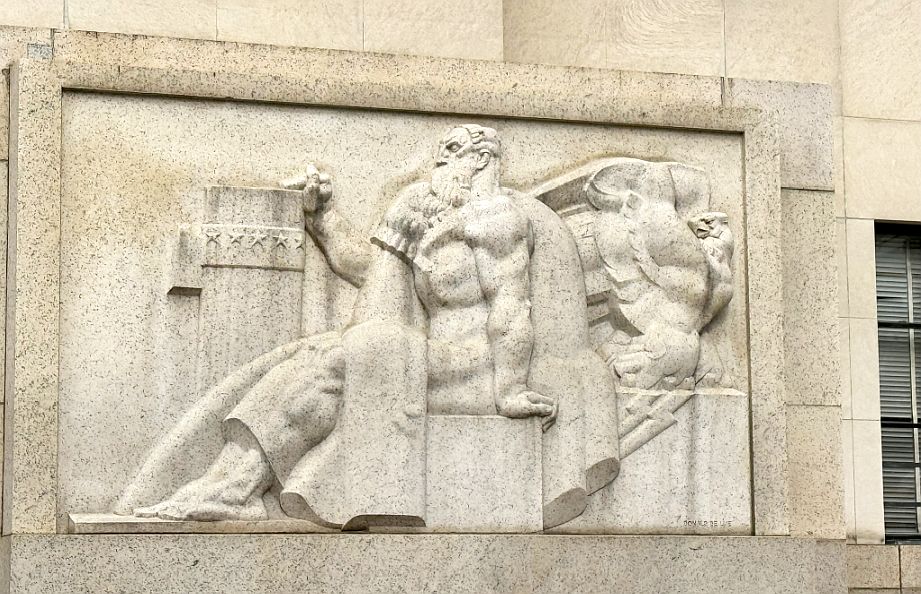
"Law", this statue represents the structure and rules that guide a fair society.
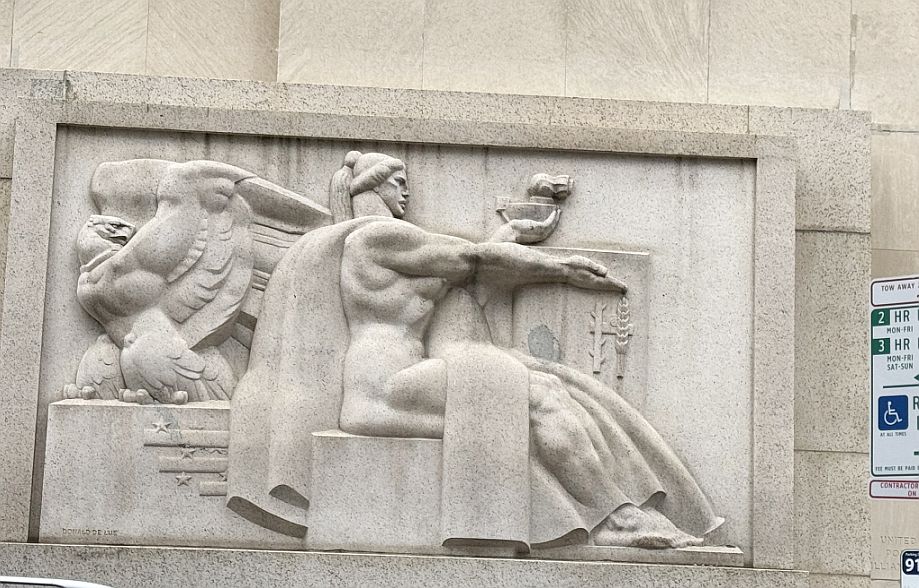
“Justice”, this sculpture portrays the moral and ethical ideals behind law, represents fairness, balance, and the guiding principles behind judicial decisions.
 |
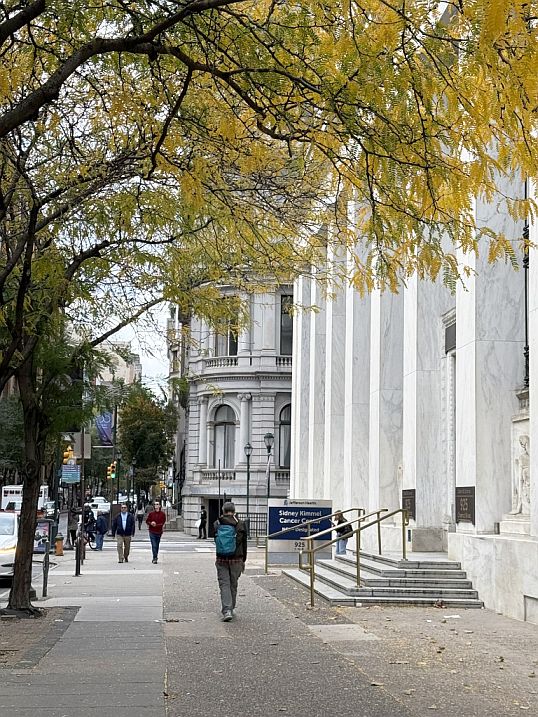 |
It was nice to walk around with barely anybody around.
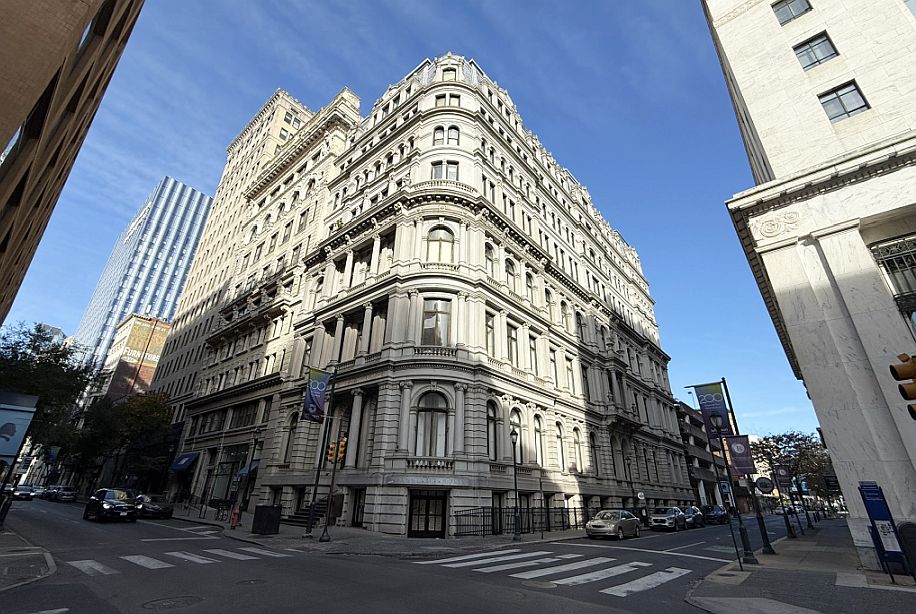
The Victory Building (1873) is one of Philadelphia’s finest surviving examples of Victorian‑era commercial architecture.
When it opened in the 1870s, this building was considered one of the most elegant and technologically advanced office buildings in Philadelphia. Over time, the building went through periods of decline and vacancy, but because of its stunning design and historic importance, it was preserved and restored. Today it is used for offices and commercial space, remaining one of the architectural gems of Center City.
 |
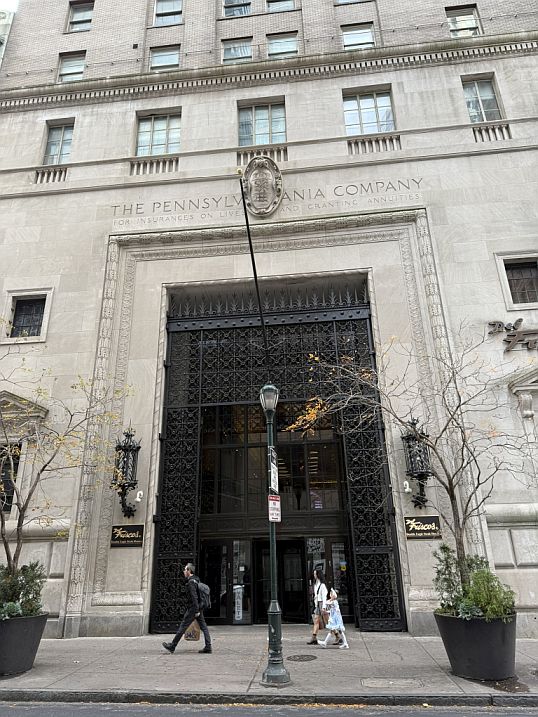 |
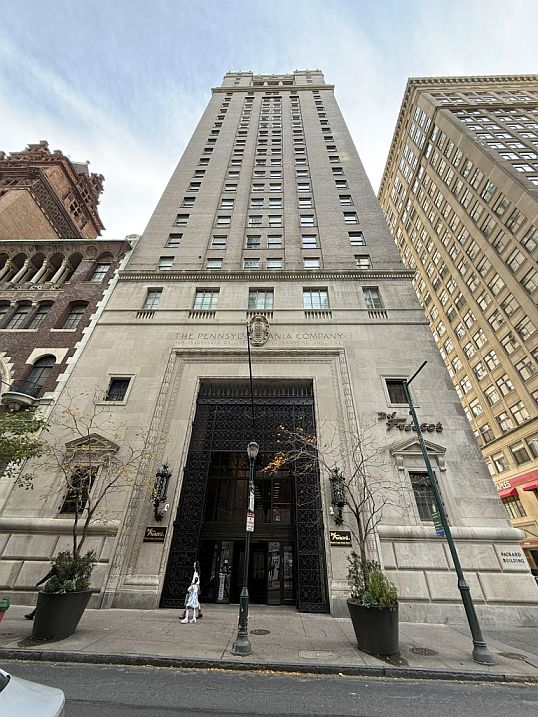
Pennsylvania Company Building was originally the headquarters of the
Pennsylvania Company for
Insurances on Lives and Granting Annuities, one of the oldest financial
institutions in the United States.
The company dates back to
1812, one of America’s earliest insurance and investment firms. Though
the original financial firm eventually merged into larger banking
institutions, the building itself survives as a
historic commercial
office structure. It contributes to the architectural character of
Chestnut Street, a corridor filled with grand turn‑of‑the‑century financial
and commercial buildings.
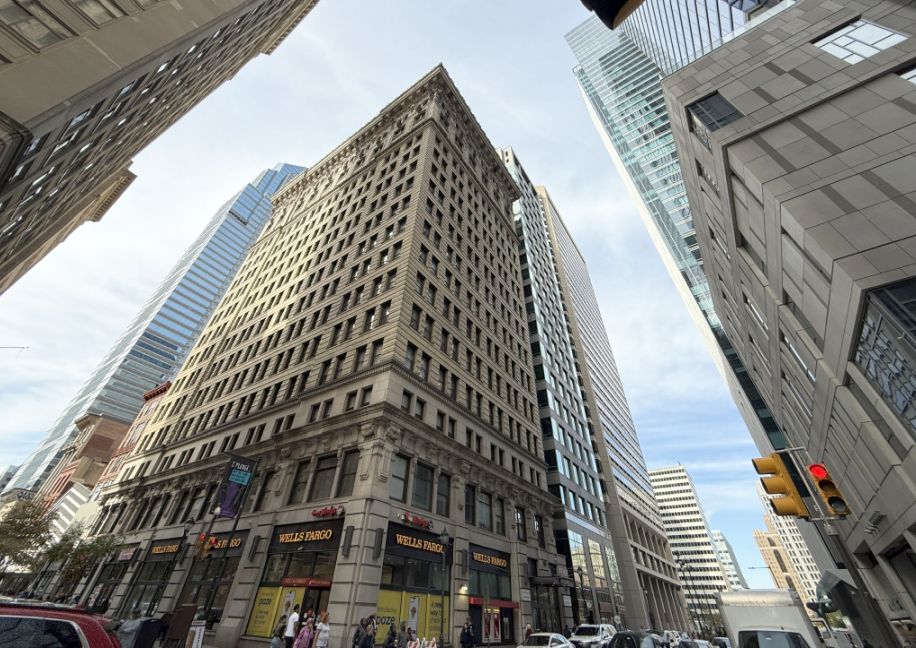
Land Title Building (1898) & Land Title Annex (1902) is one of Philadelphia’s first modern skyscrapers, built at a time when steel‑frame construction was transforming American cities. Daniel Burnham was one of the most influential architects in America, known for the Flatiron Building in New York and the Chicago Plan. The Land Title Building shows his signature Beaux‑Arts monumental style.
Today it remains an active commercial building and a key piece of Philadelphia’s architectural heritage.
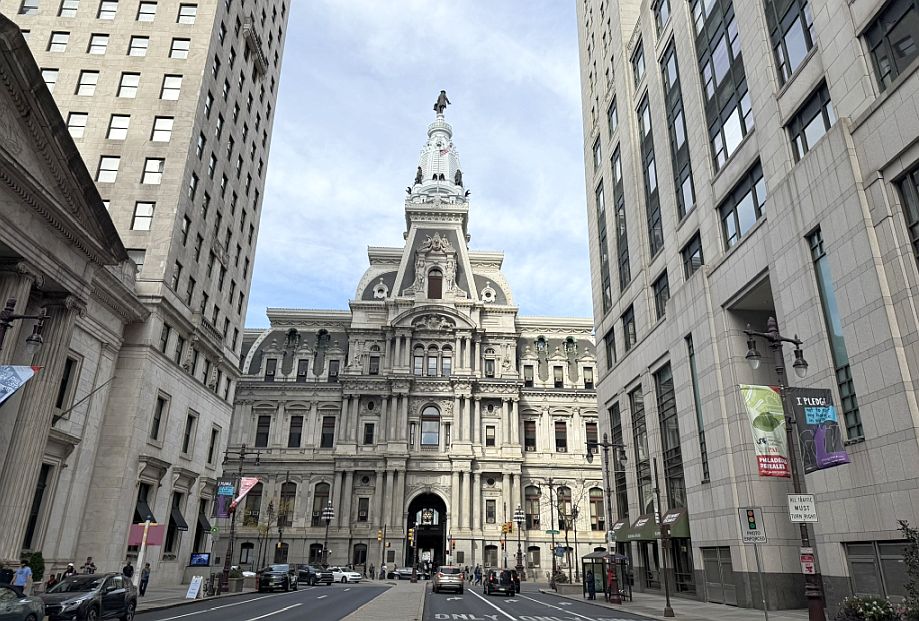
We are now on Broad street which is Philadelphia’s main north–south boulevard, and it was intentionally designed to create a straight, uninterrupted view toward City Hall.
City Hall rising in the middle of the street, the ornate tower crowned by the statue of William Penn with Historic and modern skyscrapers creating a canyon effect.
This is considered one of the most famous urban vistas in America.
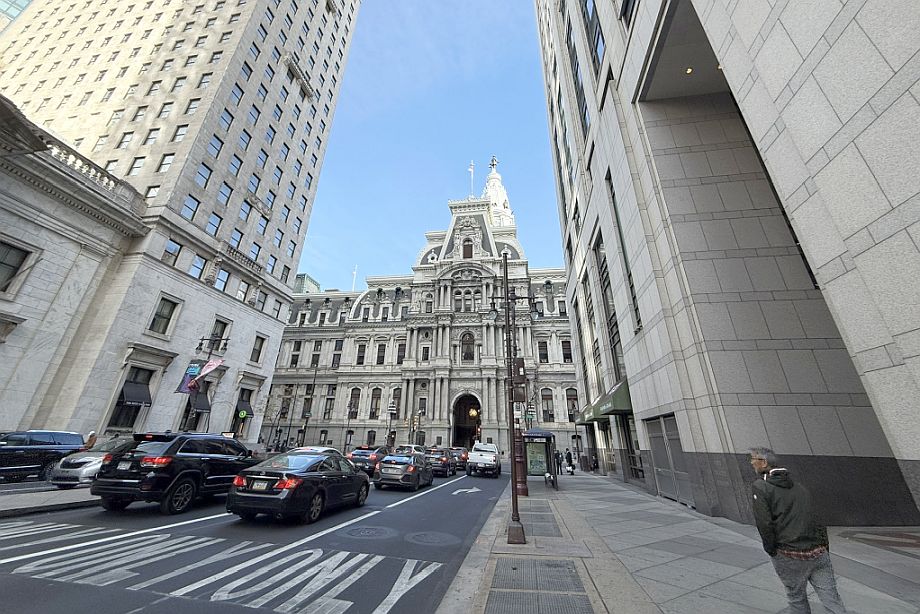
We are approaching the West Facade of Philadelphia City Hall.
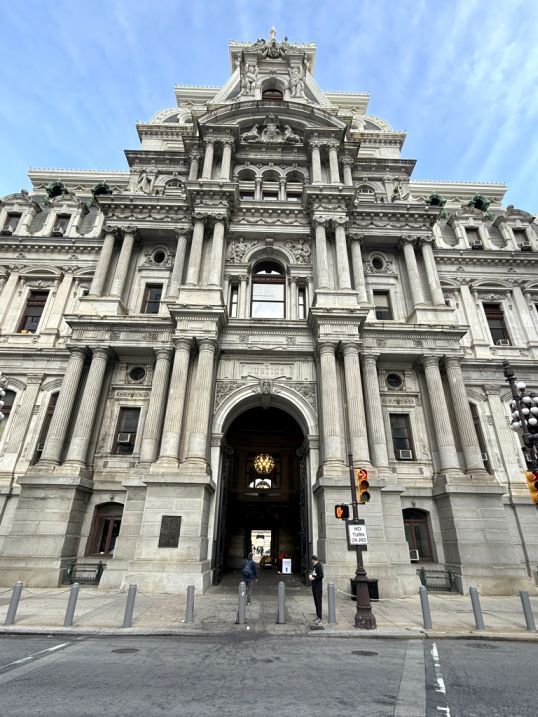
The West Facade has massive arched gateway, Heavy stonework in deep shadow, elaborate sculptures and carvings by Alexander Milne Calder, A dramatic sense of depth as you approach.
 |
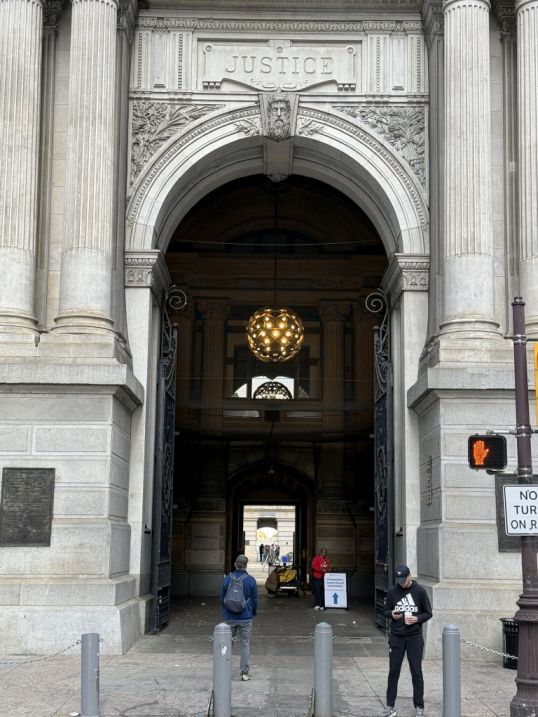 |
We have reached the West Portal, one of the most dramatic and heavily sculpted entrances to the building. Above the central archway, a carved word JUSTICE and a sculptural group created by Alexander Milne Calder, the chief artist behind much of City Hall’s exterior ornamentation. The west side of City Hall originally housed Philadelphia’s courts. Government buildings of the 19th century often marked entrances with symbolic themes. “Justice” represents the city’s judicial system and the ideals of fairness and law.
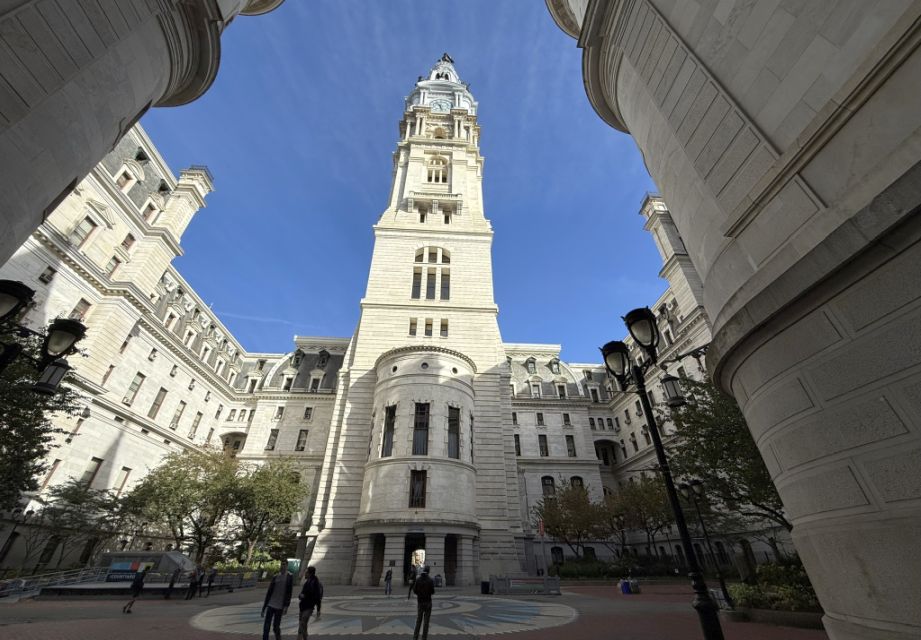
Passing through the west arch brings you into the
central courtyard,
one of Philadelphia’s most unique urban spaces. City Hall is built as a
massive four‑sided block,
and the courtyard is the open center.
This creates: Air and light for the interior rooms, a grand interior space for
the public, a dramatic vantage point to view the base of the tower, and today
it’s a peaceful place surrounded by monumental stone walls.
 |
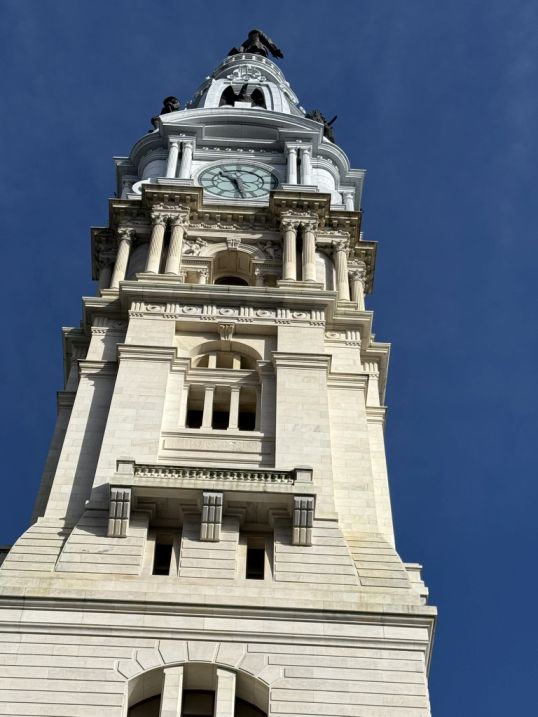 |
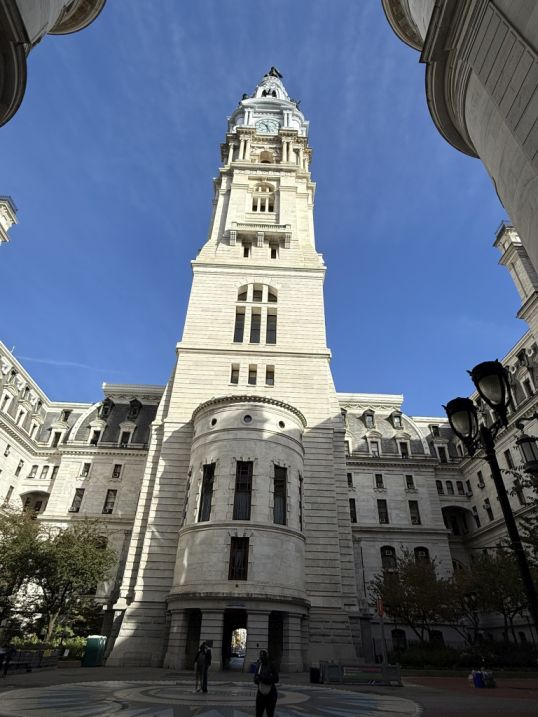
Standing in the courtyard gives you the most impressive upward view of the tower: you can see the massive granite base, the narrower brick shaft rising from it, the ornate clock level, The upper statue platform, and finally, the bronze statue of William Penn at the top.
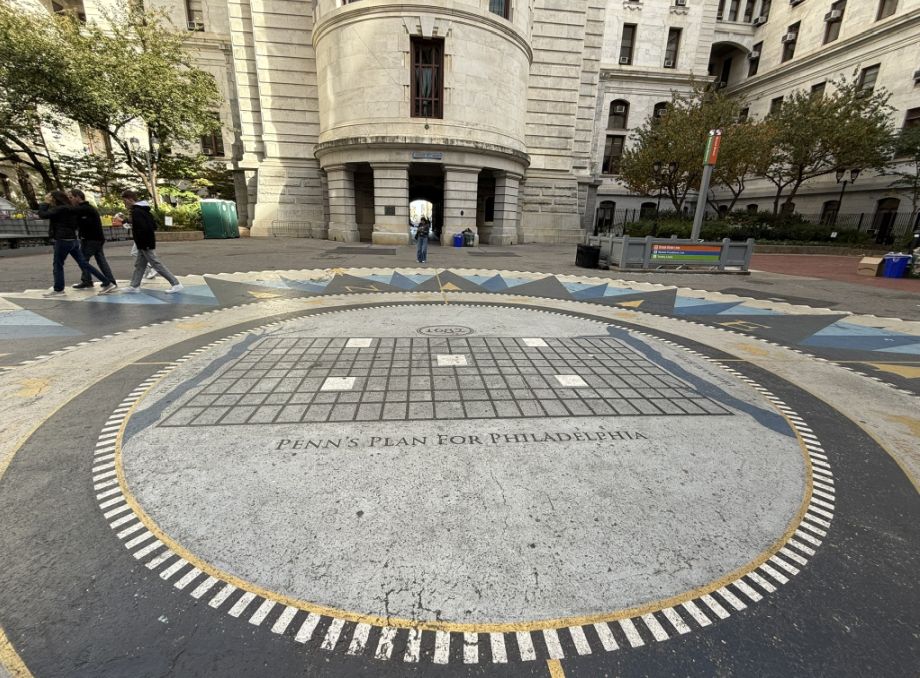
Near the center of the courtyard, there is a large circular stone marker set into the floor. This marks William Penn’s original 1682 plan for Philadelphia.
Penn’s plan featured: a central square at the intersection of Broad Street (north–south) and High Street (now Market Street), a clean grid layout, a large open public spaces, a rational, orderly, Quaker-inspired design. City Hall now stands exactly on the site Penn intended as the city’s original central square, known as Centre Square.
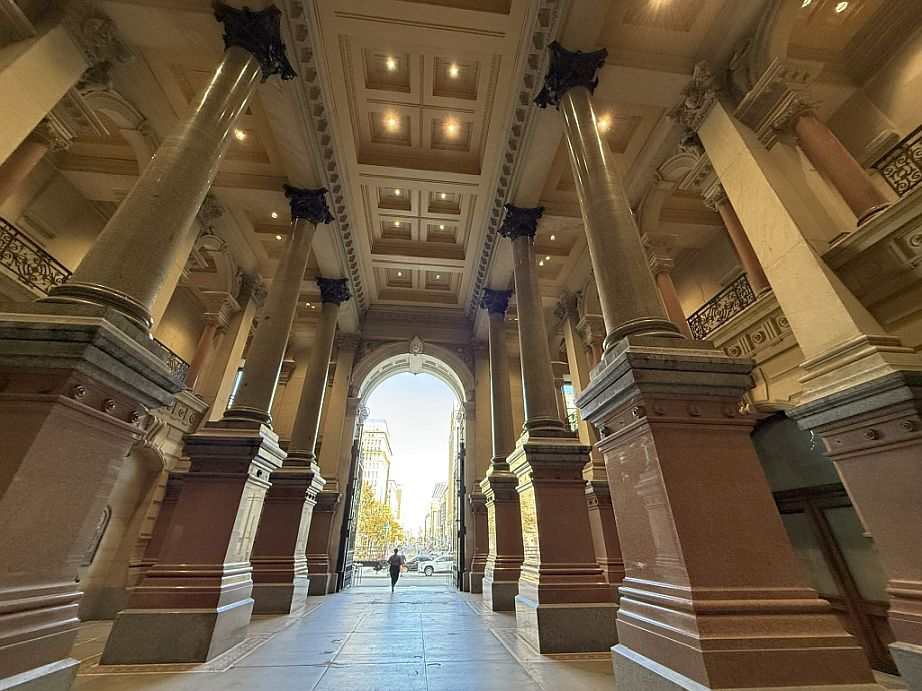
The Grand Passageway of City Hall with towering granite columns rise on both sides, creating a sense of strength and permanence. The coffered ceiling, carved in deep geometric panels, gives the space texture and depth while drawing your eyes upward. The arched opening frames Broad Street perfectly, turning the view into a dramatic “urban doorway.” It feels almost like stepping out of a palace or a European cathedral, and it’s one of the most impressive architectural features of the entire building.
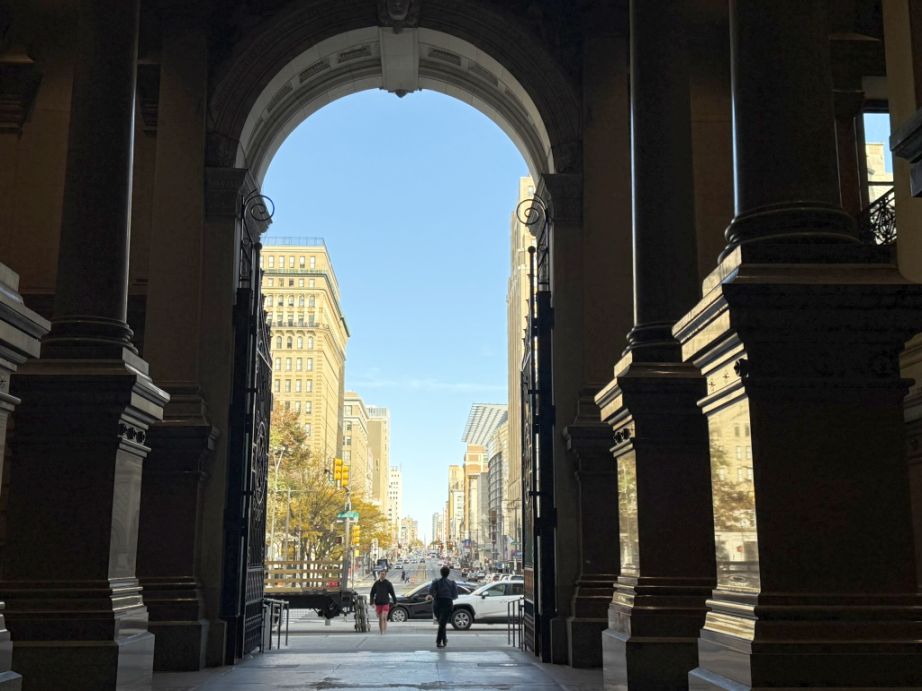
This view is one of the most spectacular spaces in Philadelphia City Hall, the grand, colonnaded passageway that connects the courtyard to the outside streets.
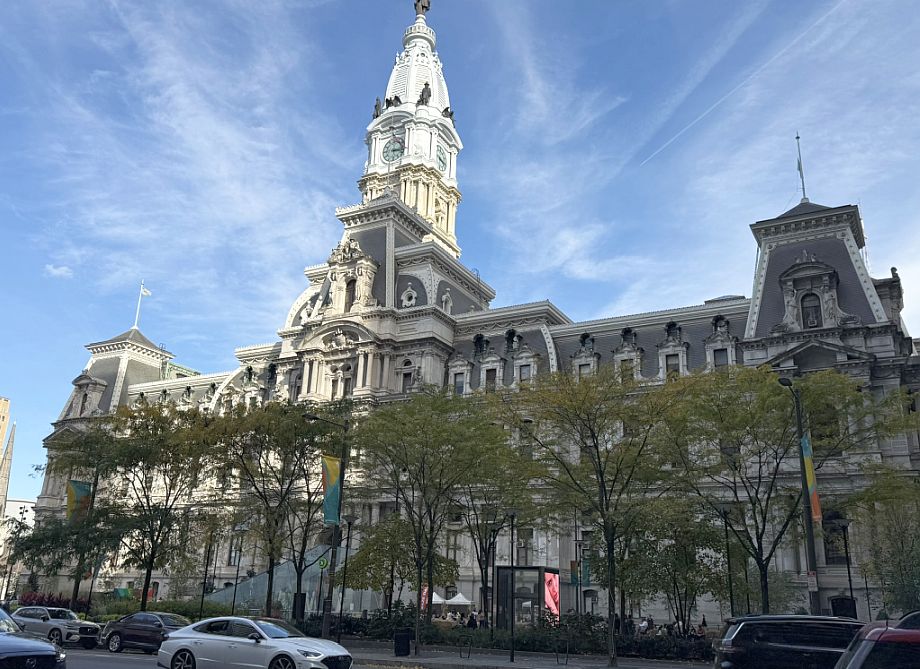
This is the south façade of Philadelphia City Hall, the side that faces South Broad Street and Dilworth Park. It is one of the grandest and most elaborate sides of the entire building, and it showcases the full power and ambition of 19th‑century civic architecture.
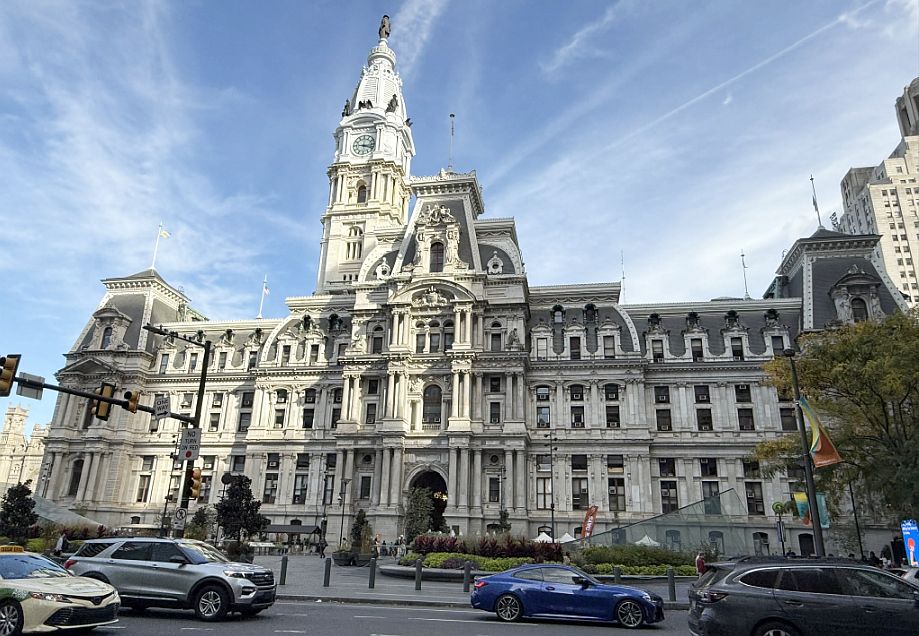
The South Facade displays classic elements of the Second Empire style, ornate dormer windows, deeply carved stone decoration, a dramatic sense of vertical rise from base to tower.
It is meant to look like a palace, because City Hall was designed to represent the civic pride and strength of Philadelphia when it was one of America’s largest cities.
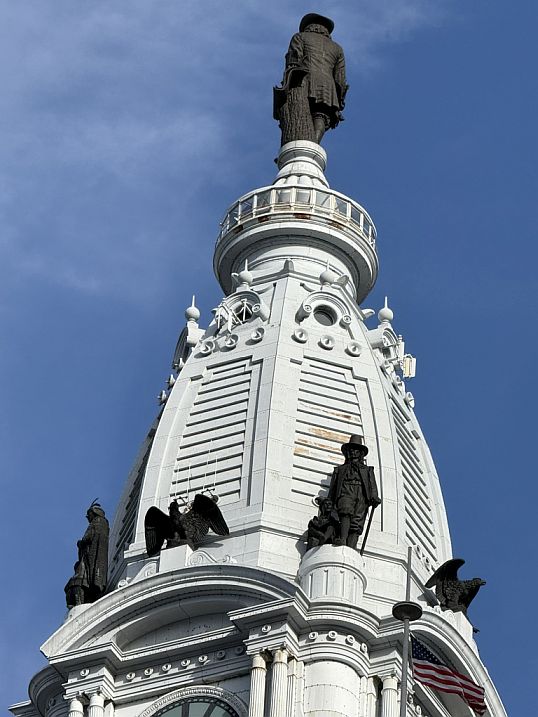
Rising above the façade is the 548‑foot clock tower, the tallest masonry‑supported tower in the world.
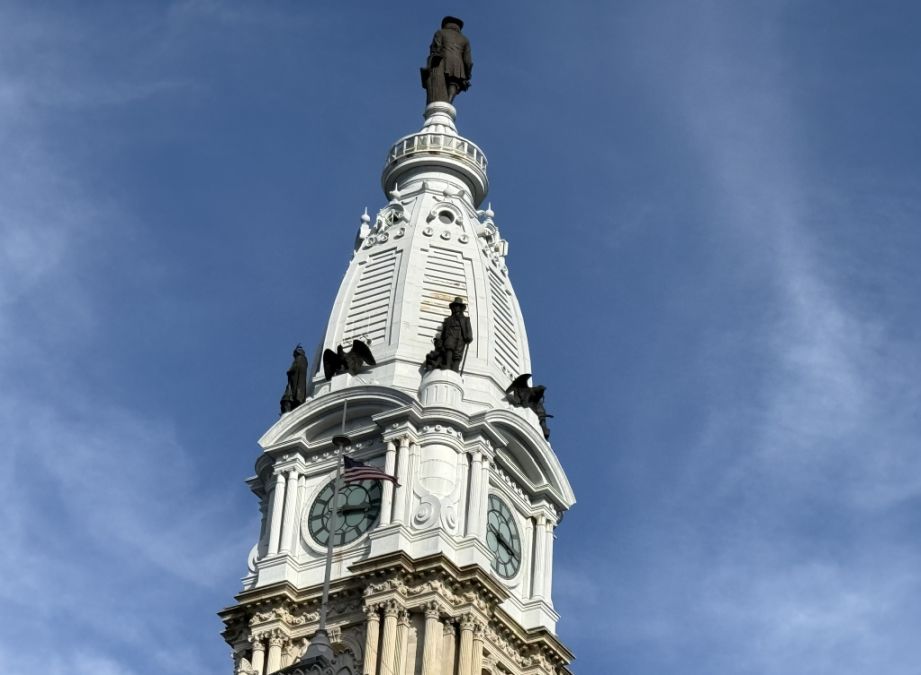
From this angle you can clearly see: The clock faces, the sculpted tiers, the narrowing upper levels, the ornate belfry, the colossal statue of William Penn at the top (37 feet tall).
The tower was meant to anchor the city visually, marking the exact center of Penn’s original Philadelphia plan.
 |
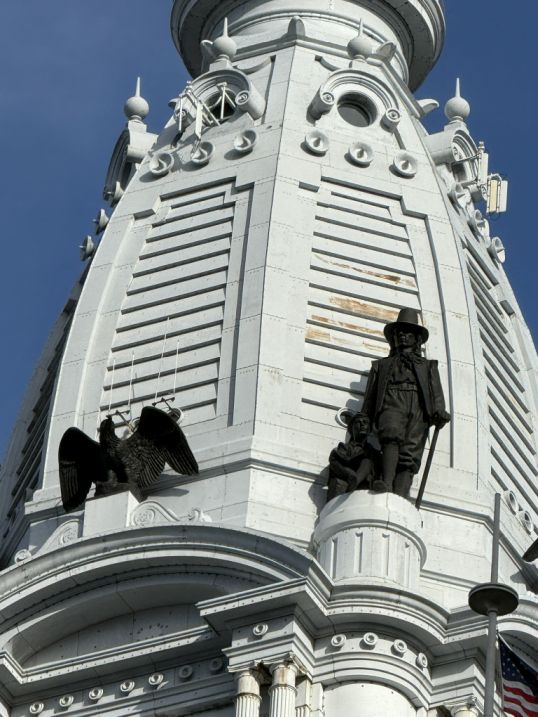 |
From this angle on the south side of Broad Street, you get a rare and very striking view of the back of the William Penn statue, one that most people don’t pay attention to, but it’s actually one of the most interesting vantage points of City Hall.
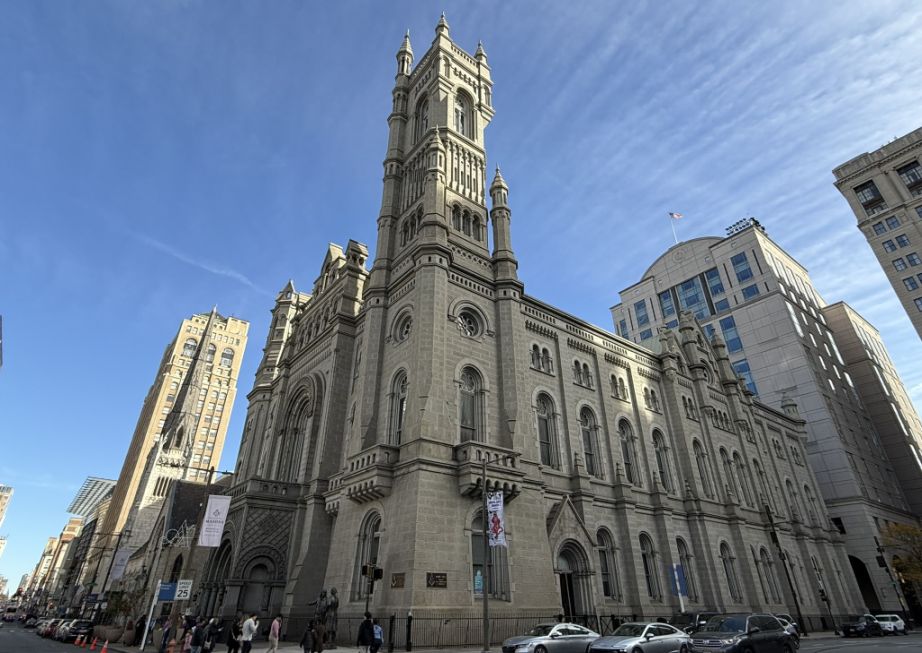
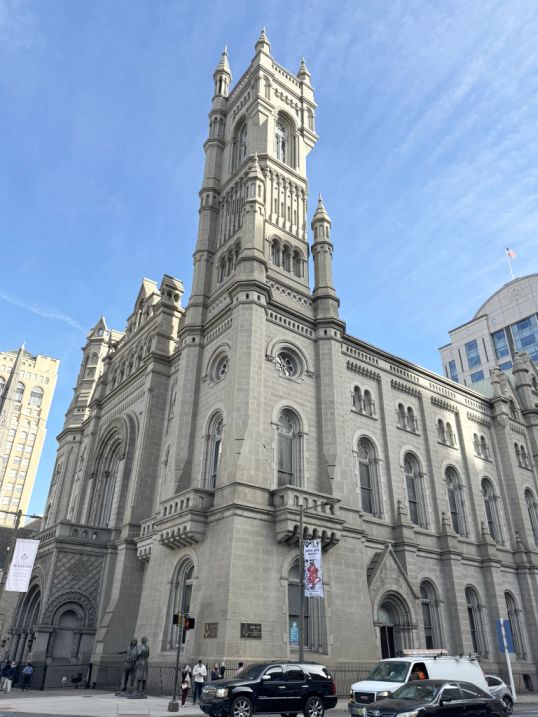
This is one of the most extraordinary and ornate buildings in Philadelphia, the Masonic Temple, directly across from City Hall on North Broad Street. It’s one of the most architecturally spectacular Masonic buildings in the world. The temple was completed in 1873 in the Norman / Gothic Revival with exotic medieval influences.
 |
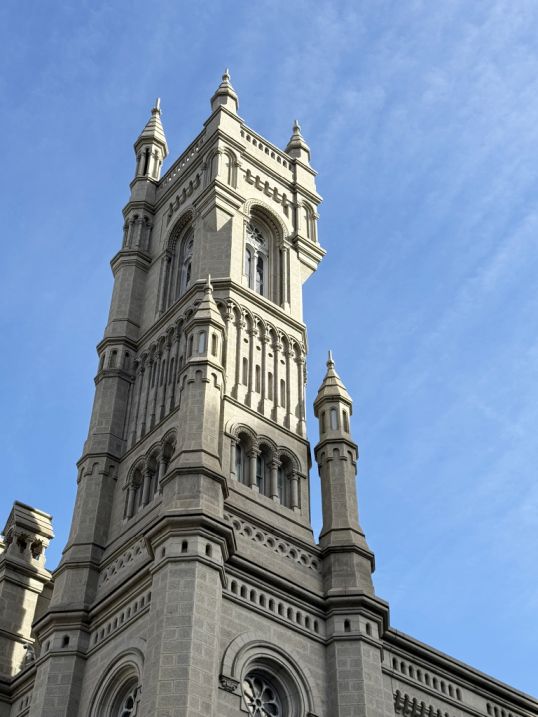 |
The Masonic Temple looks like a stone fortress or a European castle with tall, narrow arched windows, pointed turrets and pinnacles, intricate stone carvings, heavy granite and marble construction wit elaborate towers and decorative battlements. The exterior is designed to resemble medieval architecture, symbolic of ancient traditions, mystery, and craftsmanship.
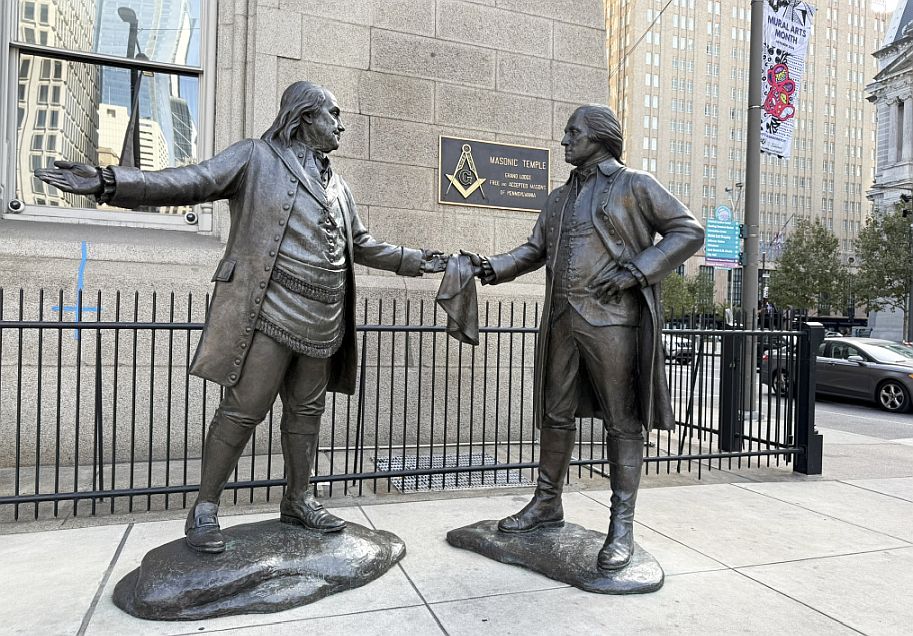
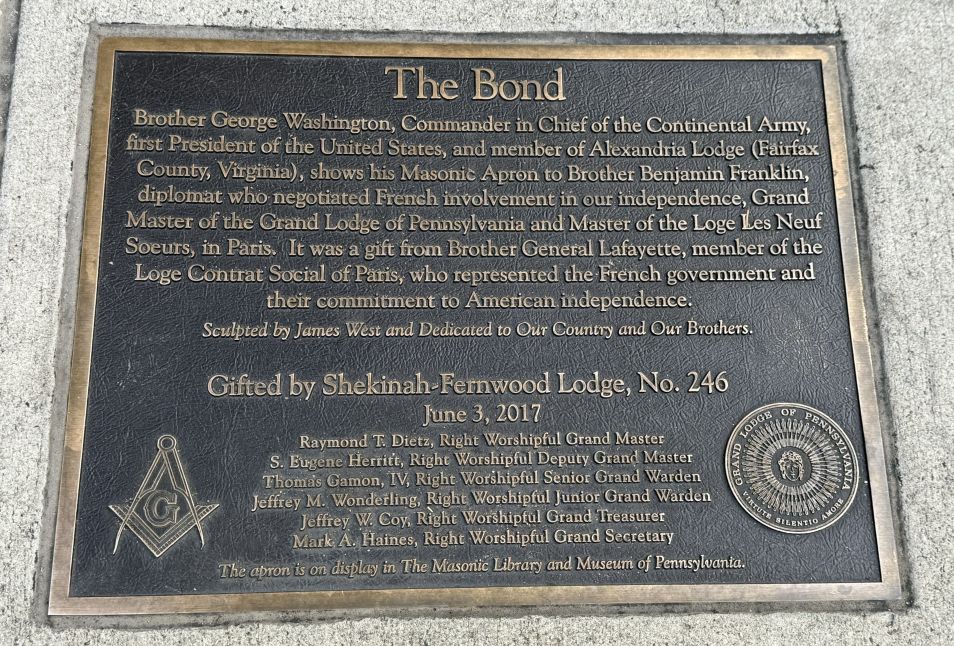
The Bond by James West, 1889. This scene shows George Washington showing his Masonic Apron to Benjamin Franklin.
Both George Washington and Benjamin Franklin were members of Freemasonry, a fraternal organization focused on morality, fellowship, education, and community service.
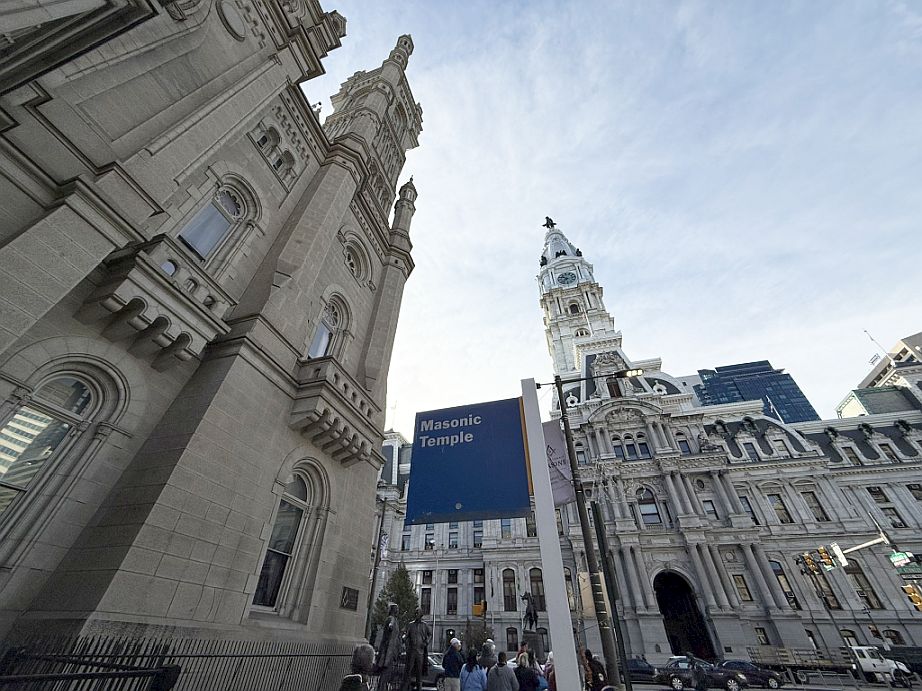
Here you can see that the Masonic Temple is right in front of City Hall
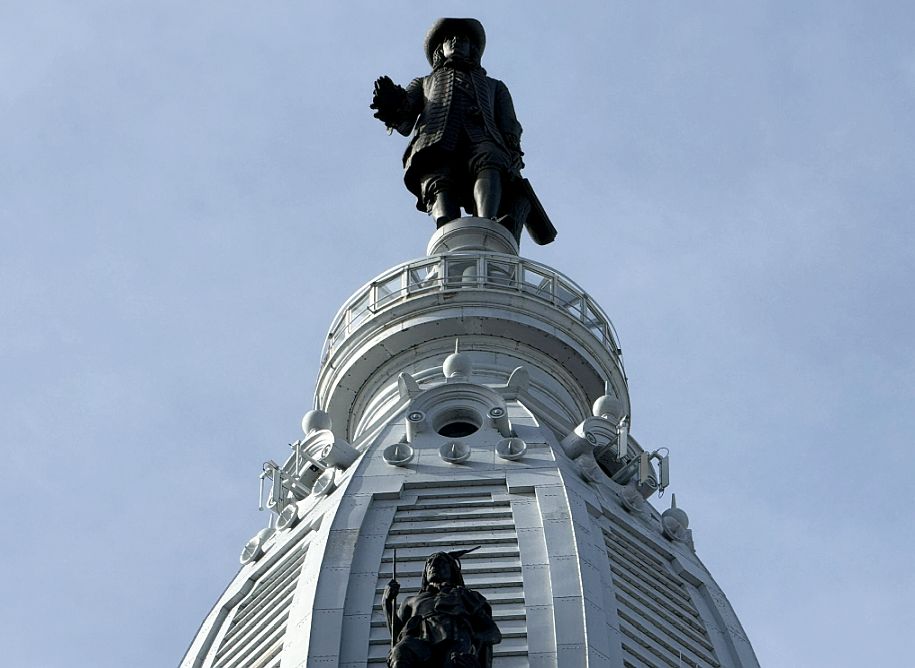
Near the Masonic Temple and looking back toward City Hall, you get one of the best and clearest views of the front of the William Penn statue at the top of the tower.
William Penn,
founder of Pennsylvania, sculpted by Alexander Milne Calder with his
wide‑brimmed Quaker hat, his long coat and simple clothing, his outstretched
right arm, and his left arm hand holding the Charter of Pennsylvania. Just
below the massive Penn statue is one of the tower’s sculptural figures, this
one representing a Native
American man, part of a larger symbolic program carved into the tower.
William Penn’s peaceful approach to Indigenous relations was unusual for his
time, and the sculptural program emphasizes this part of his legacy.
a
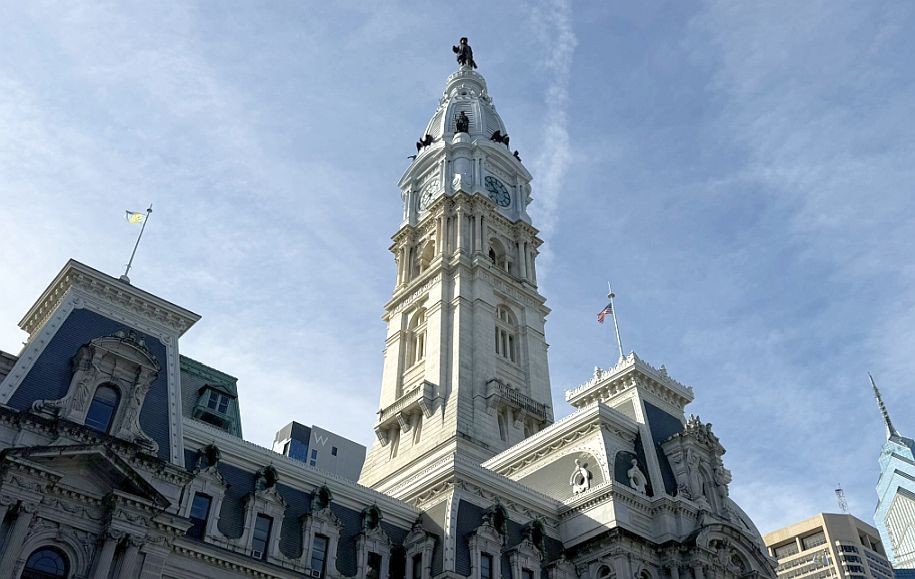
From this angle you can see Penn’s full front profile, which is not visible from most other directions.
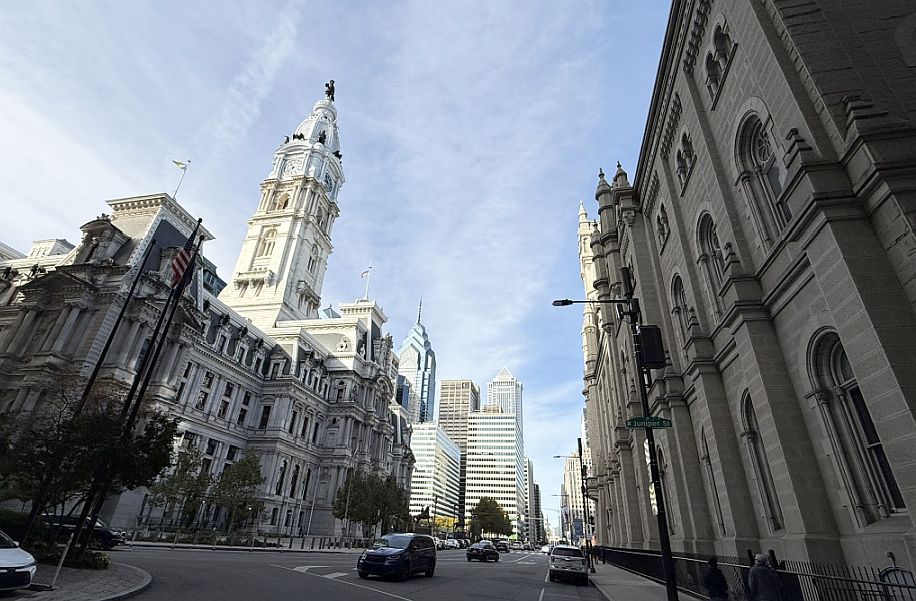
We are now leaving the City Center.
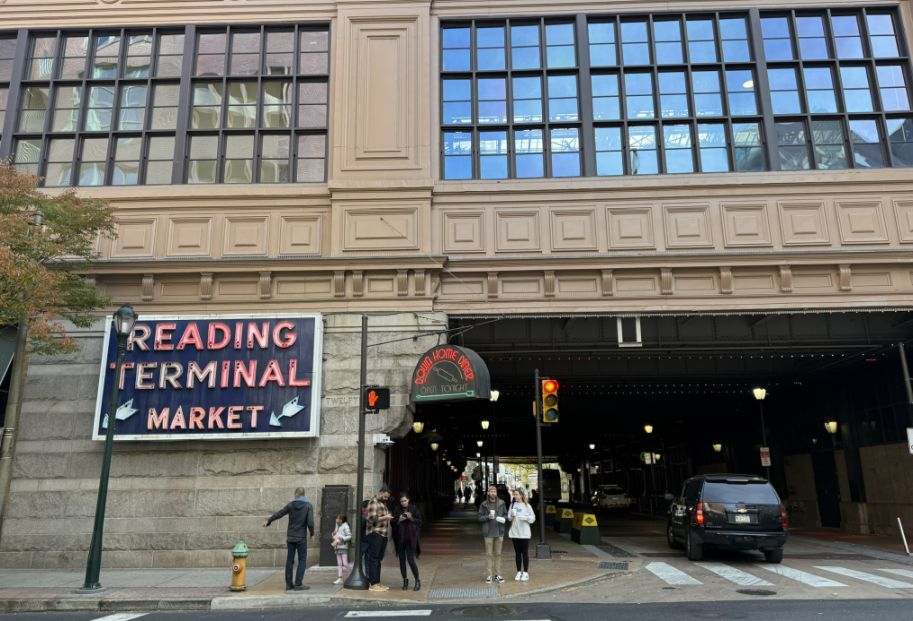
We are now at the Reading Terminal Market, one of Philadelphia’s most beloved and iconic destinations, a vibrant, historic indoor market filled with food, culture, and a true taste of the city’s character. The Marker was opened in 1893, and is one of the oldest continuously operating public markets in the United States. It began as a way to bring together street vendors, farmers, and urban shoppers in one organized indoor space.
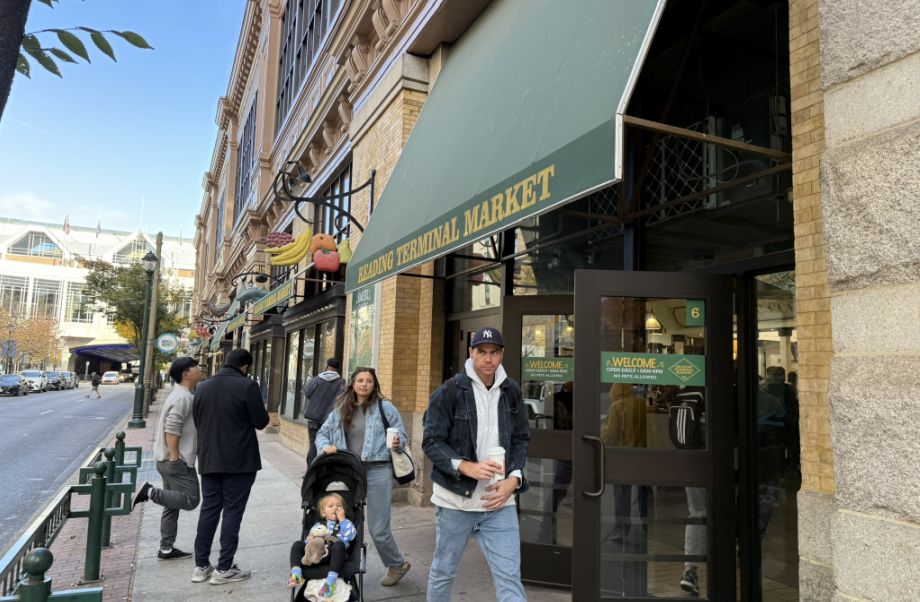
The Market is located on 12th & Arch Street
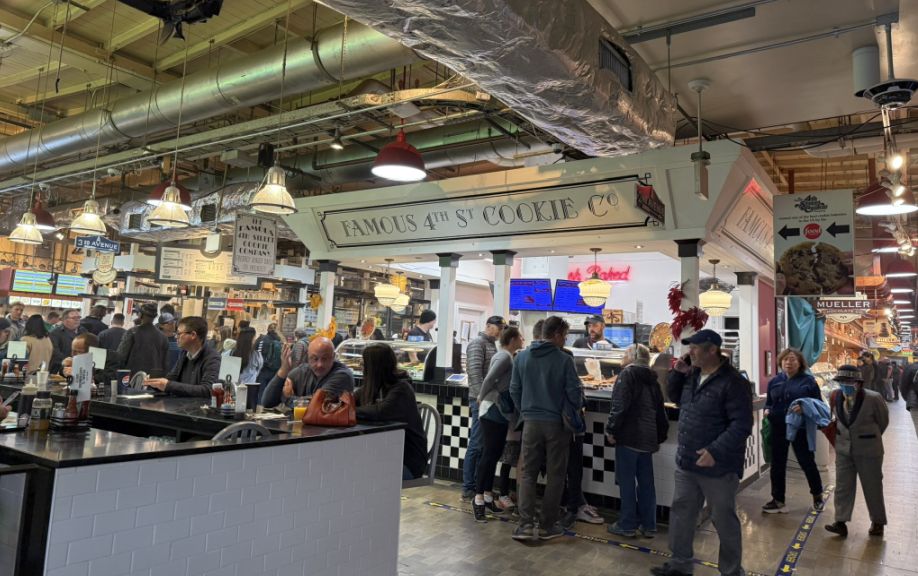
Inside is a bustling maze of food stalls.
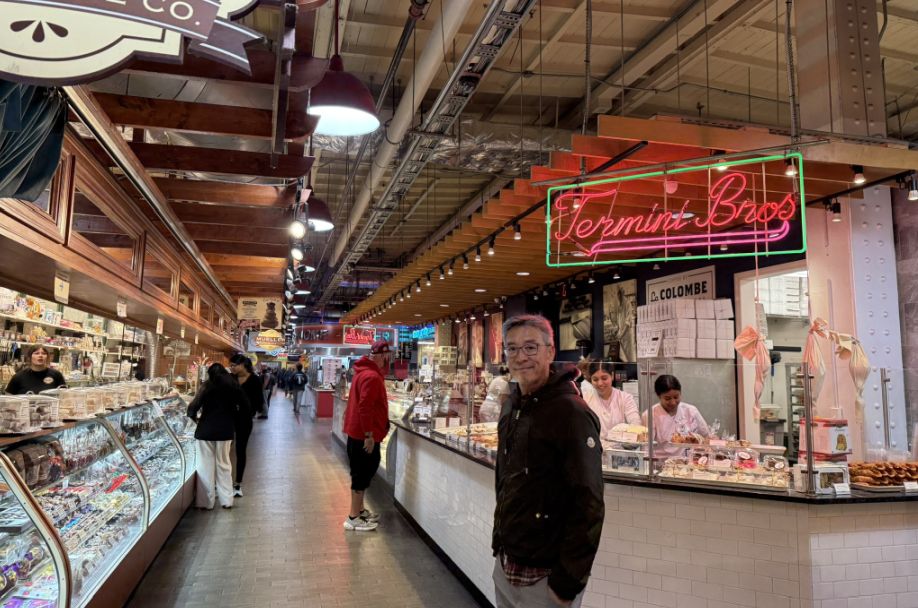
The market is packed with more than 80 merchants offering: Philly specialties, Amish baked goods, Fresh produce, seafood and meats, international foods, desserts, coffee, and pastries, and Handcrafted items and local gifts
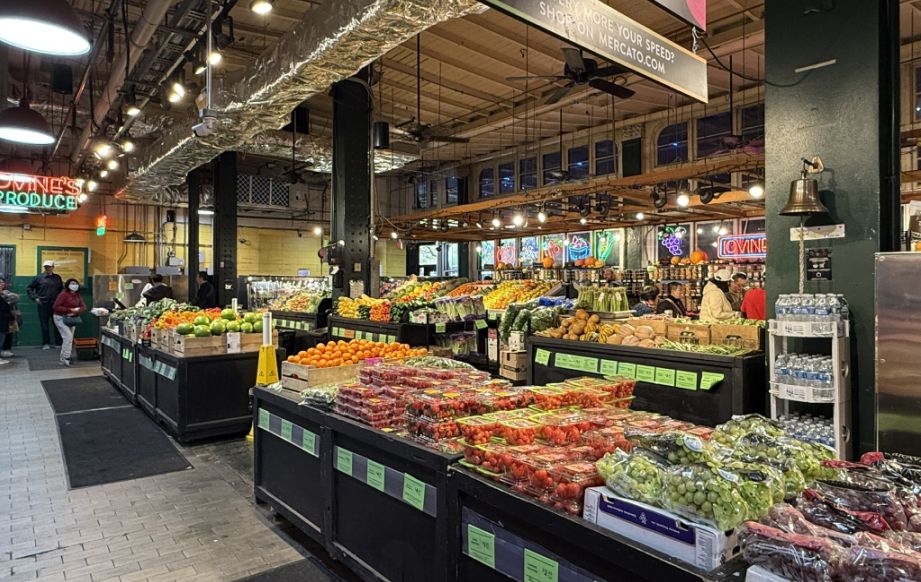
Fresh produce area.
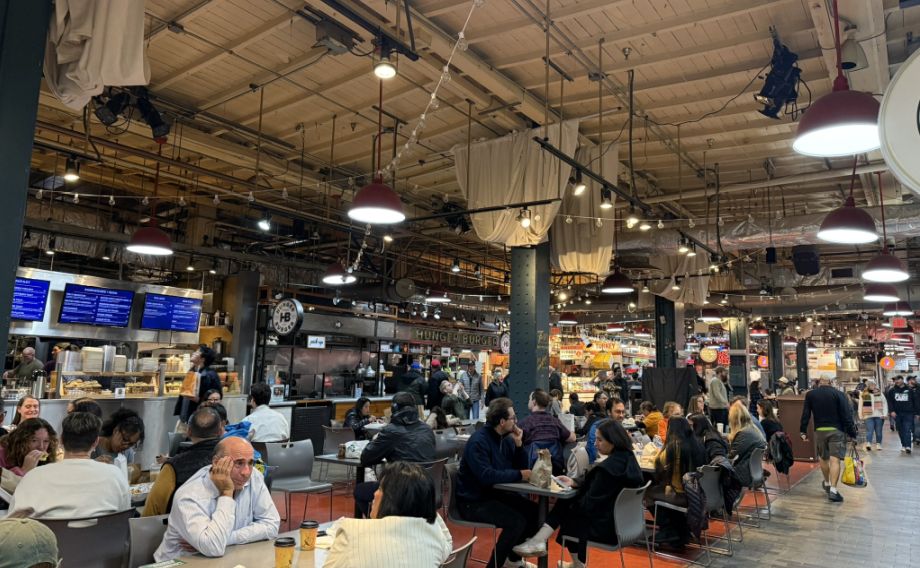
The seating area is one of the most charming parts of Reading Terminal Market, it really captures the heart and energy of the place.
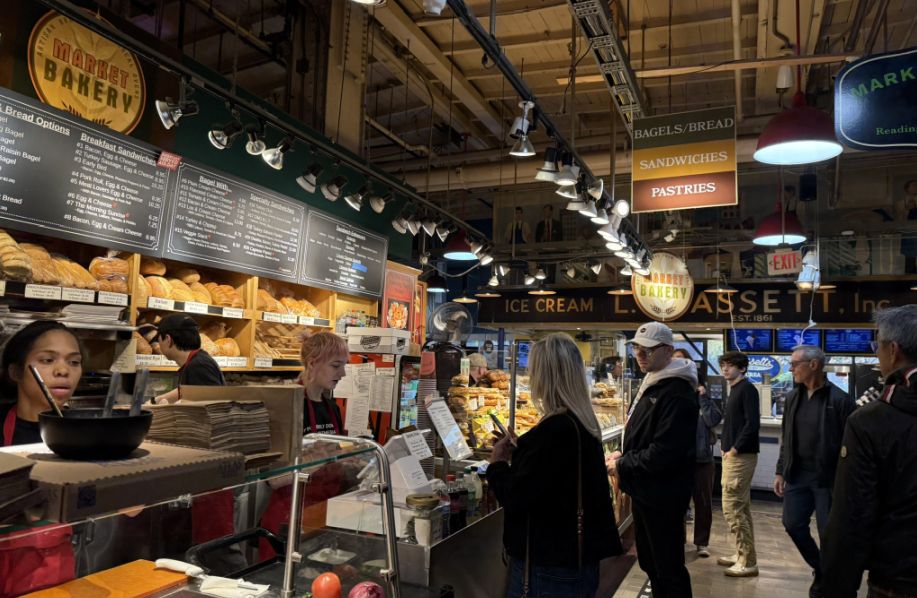
It is really fun to walk around and see all the food stalls.
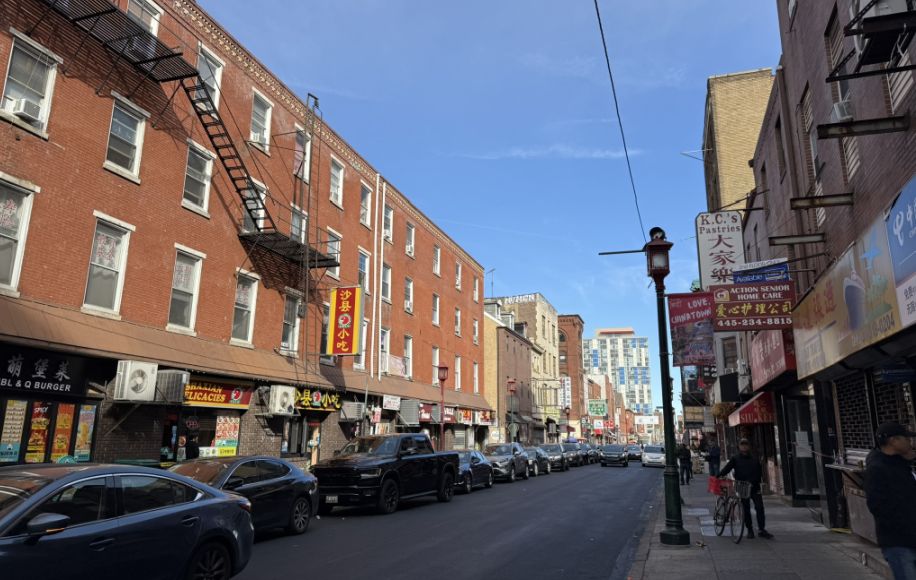
Our last stop is Chinatown
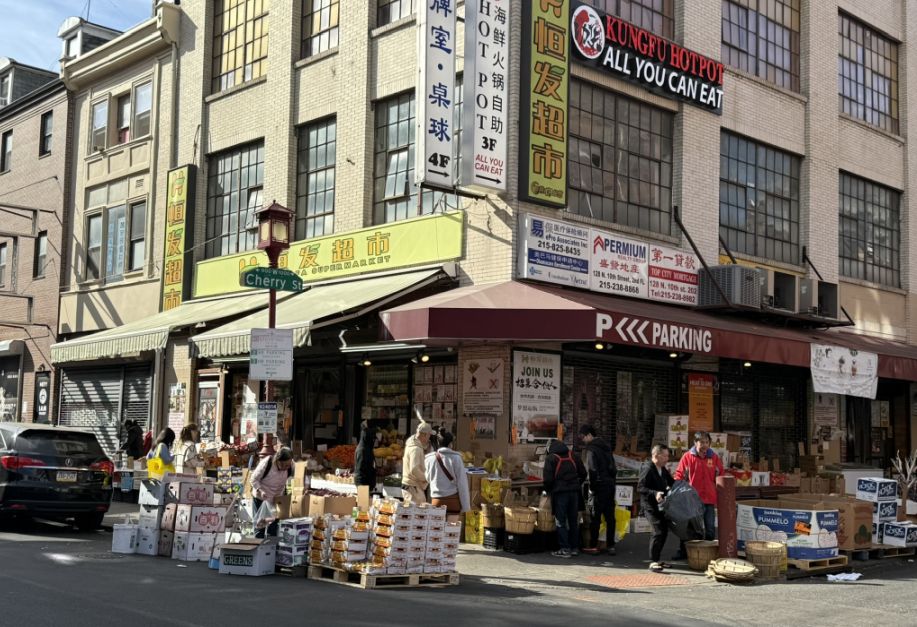
On a Sunday morning in Chinatown, the neighborhood often feels like it is just waking up. As we walked along the streets, it’s common to see vendors unloading cartons and wooden crates filled with fresh produce, leafy greens, bok choy, Chinese eggplant, bitter melon, ginger, and bundles of herbs. Many of these deliveries arrive early in the day so that restaurants, markets, and street vendors can prepare for the busy hours ahead.
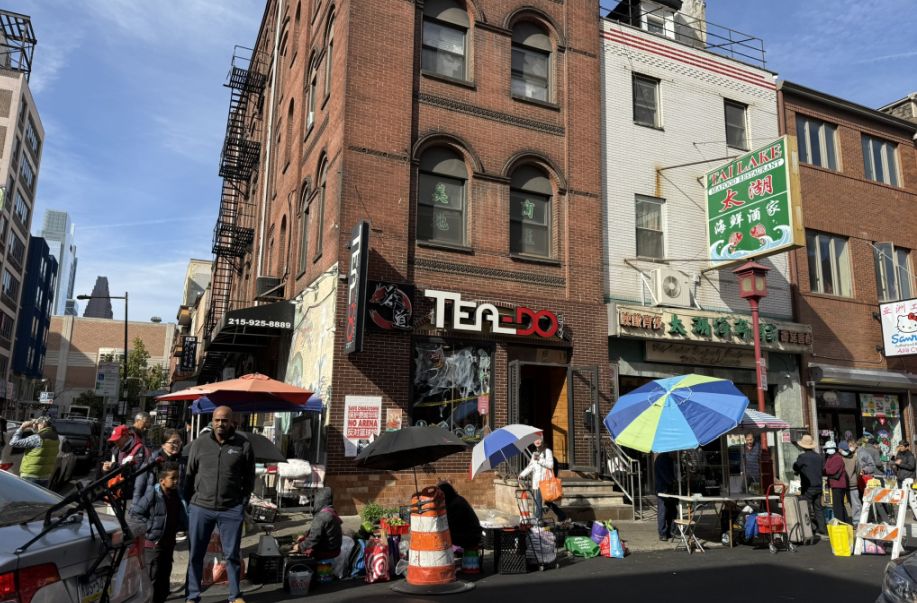
Chinatown in Philadelphia has long been a hub for Asian groceries and small family-run businesses. Produce is often delivered in simple cardboard cartons or wooden boxes, stacked right on the sidewalks before being sorted and brought inside markets or arranged for sale. The scene can feel lively and authentic, with shopkeepers chatting, workers moving boxes on dollies, and the smell of fresh vegetables and seafood filling the air.
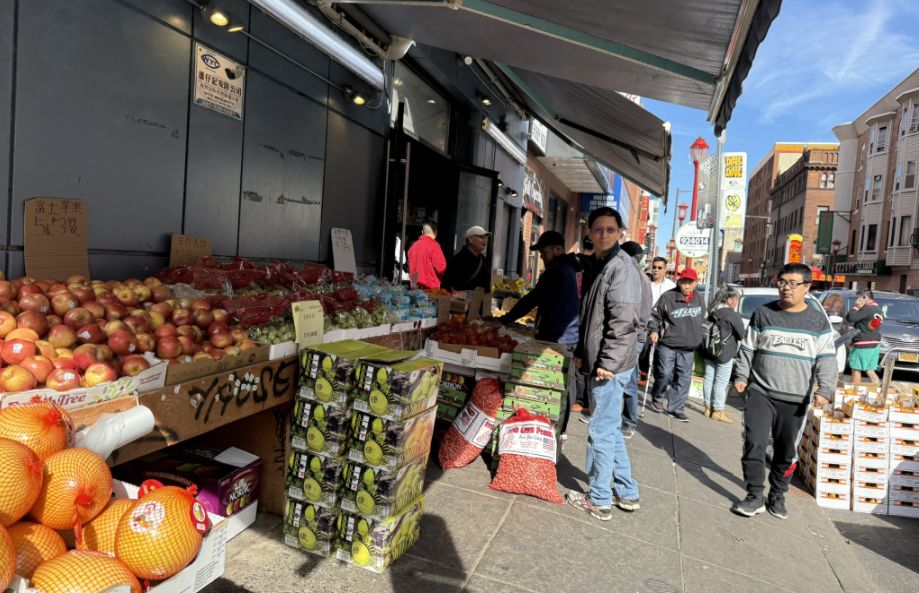
The morning activity reflects the neighborhood’s role as both a commercial and cultural center. Many restaurants in Chinatown serve dim sum brunch on weekends, and the markets supply ingredients not only for the local community but also for restaurants throughout the city. Watching the vendors unpack their goods offers a glimpse into the daily rhythm that keeps the neighborhood’s food culture alive
 |
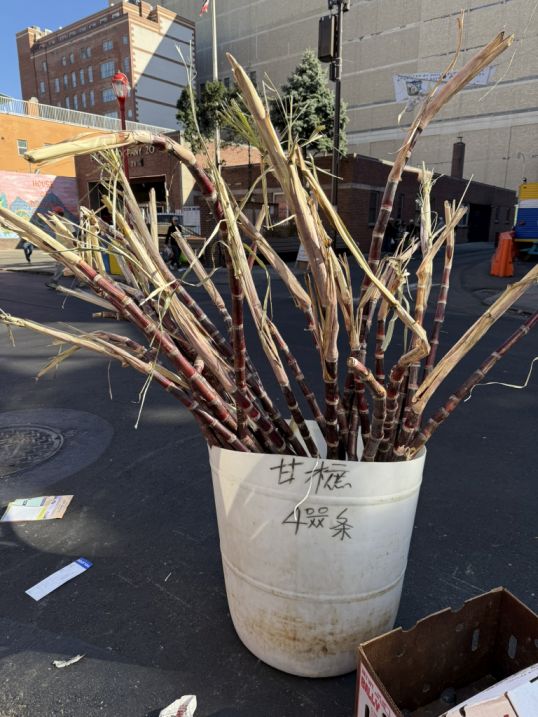 |
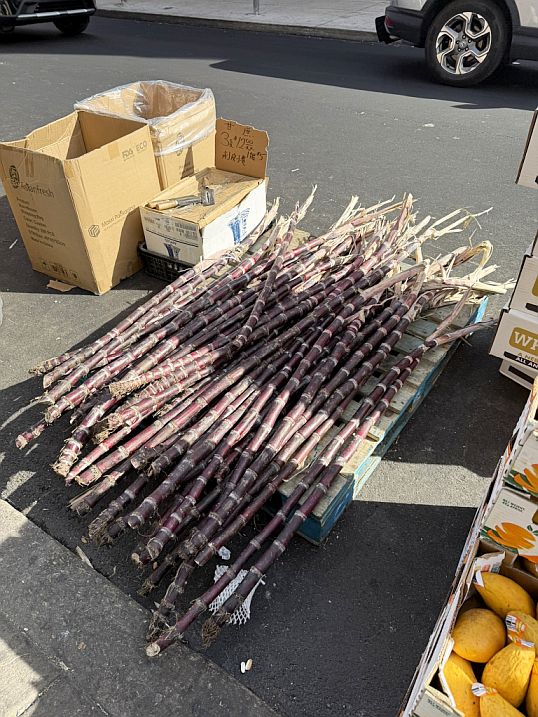
Fresh sugar came.
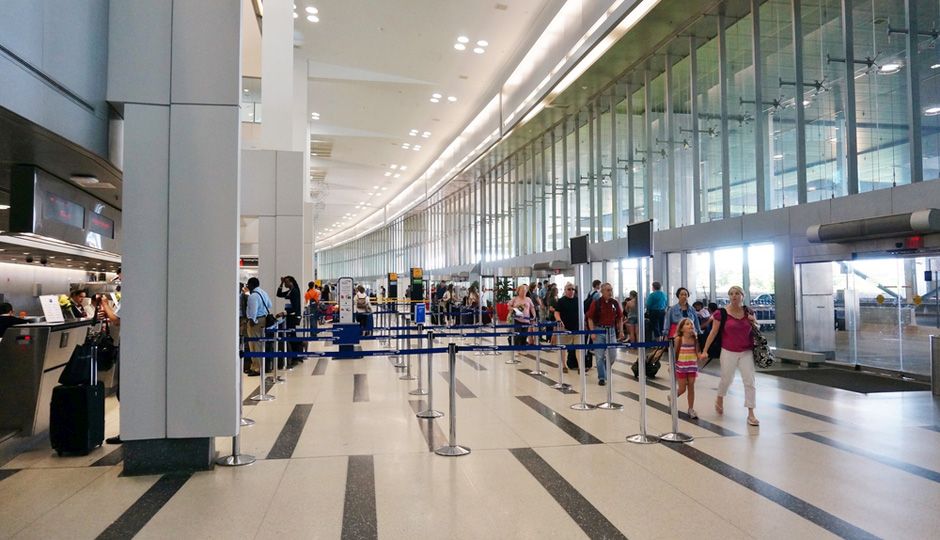
We are now done with our visit in Philadelphia and we are at the airport to catch a flight home.
Over four days in Philadelphia, we explored a city rich in history, art, and an exciting food scene. We spent time walking through historic areas connected to the founding of the United States, seeing monumental sculptures and landmarks that celebrate moments such as Washington Crossing the Delaware and the United States Declaration of Independence. Strolling through different neighborhoods also gave us a sense of Philadelphia’s character, from elegant historic streets to vibrant cultural districts. One of the highlights was discovering the city’s dynamic dining scene. We enjoyed memorable meals, including dinner at Amada, the Spanish tapas restaurant by chef José Garces, where the lively atmosphere and flavorful dishes made for a wonderful evening. Overall, the trip blended history, culture, and great food. From iconic American stories to lively neighborhoods and excellent restaurants, Philadelphia proved to be a city full of character and memorable experiences.