A week in Saigon-1/19- 1/25/2025
Day 2-Saigon-1/20/2025
The next morning began quietly, with Hoa heading out early for a round at Tan Son Nhat Golf Course.
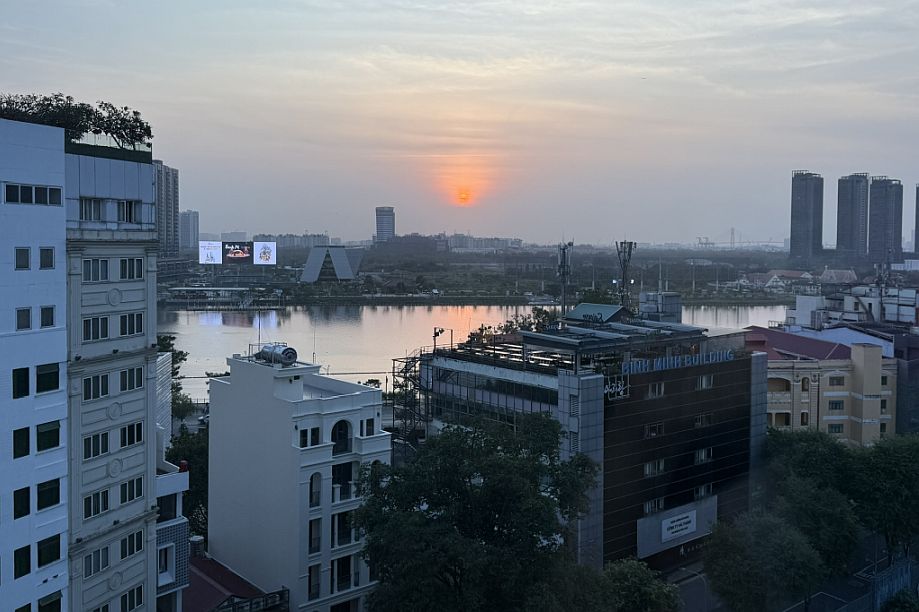
Meanwhile, my morning unfolded in a completely different rhythm. From our window, the city slowly revealed itself as the sun rose over the Saigon River. At first, a soft orange glow stretched across the horizon, gently brushing against the blue sky. The buildings stood in quiet silhouette, framing the river like a still painting. Across the water, the three tall high-rises on the right and the bold advertisement panels on the left created a kind of urban symmetry.
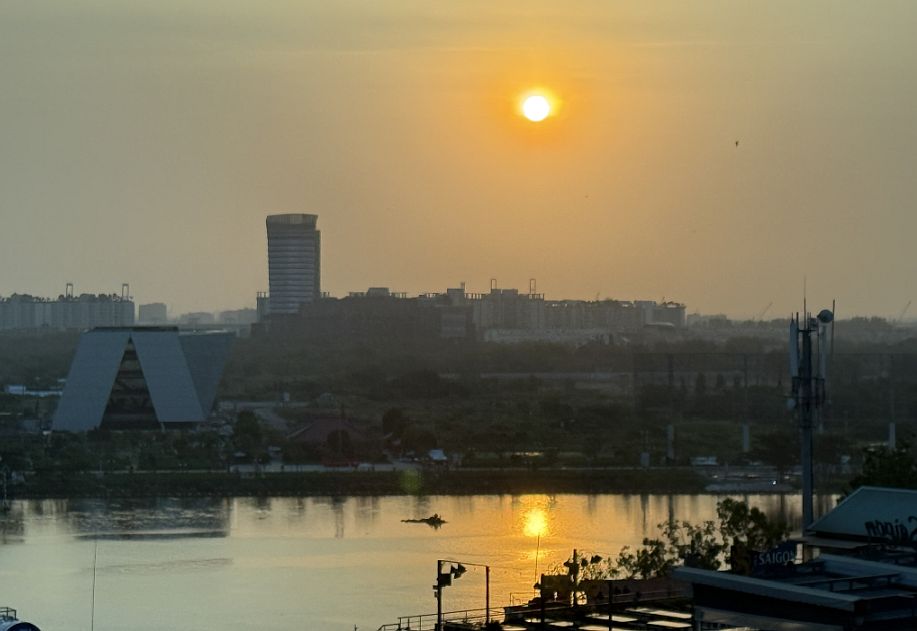
Then, as the sun climbed higher, the light transformed and the orange melted into a rich yellow, brightening the entire scene. The river caught it perfectly, reflecting that golden hue like a mirror, doubling the beauty of the moment.
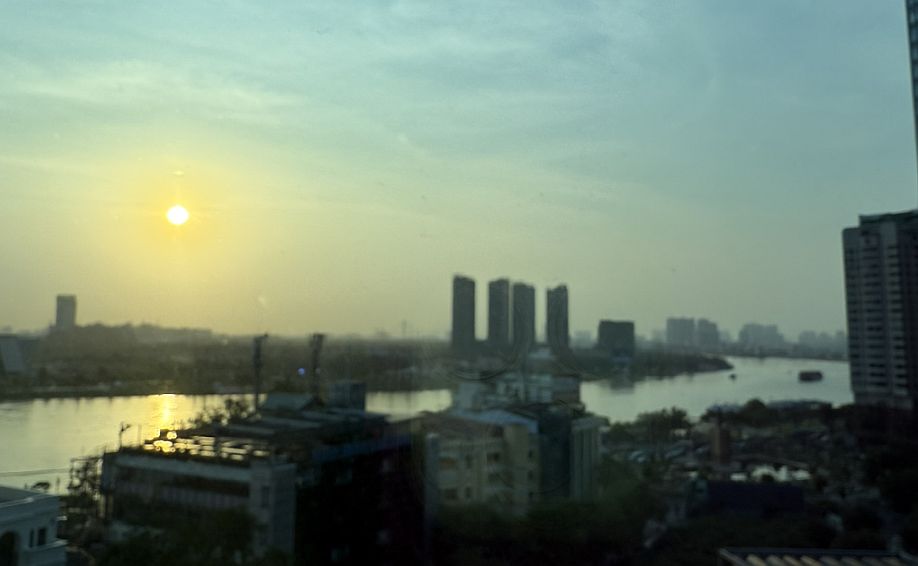
It’s one of those rare, peaceful city scenes where everything feels suspended, just for a little while before the day fully begins.

Tan Son Nhat Golf course.
 |
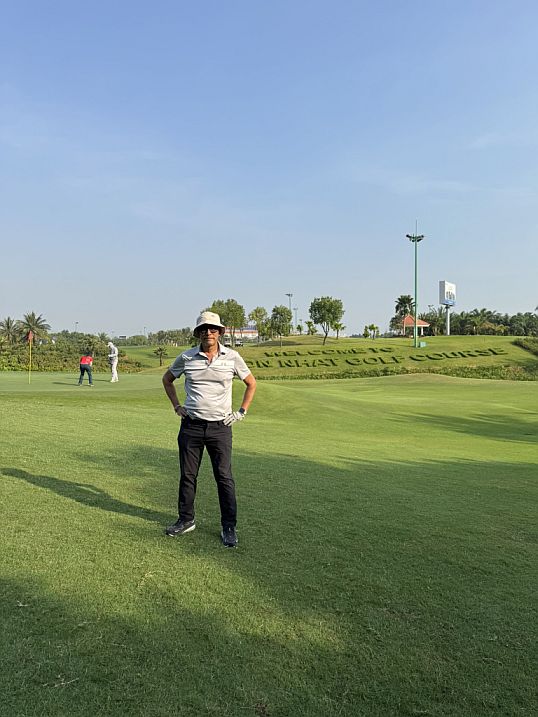 |
Tan Son Nhat Golf Course is one of the most well-known and accessible courses in Ho Chi Minh City. Conveniently located right near the airport, it’s a surprisingly lush escape from the city’s constant motion.
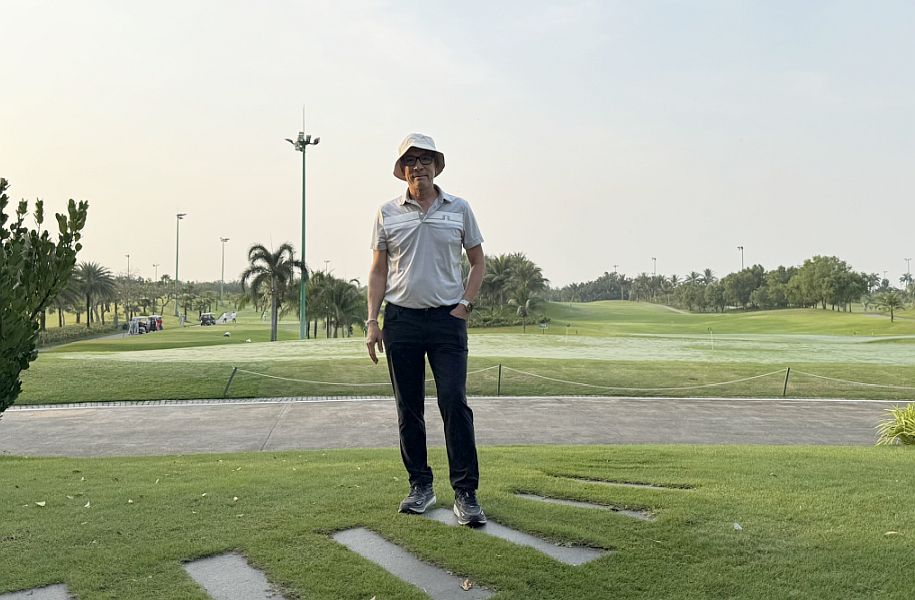
The course is modern and meticulously maintained, with wide fairways, sculpted bunkers, and water features that add both beauty and challenge. Designed to international standards, it offers multiple loops of 9 holes, making it flexible for different levels of play, but still engaging for experienced golfers.
 |
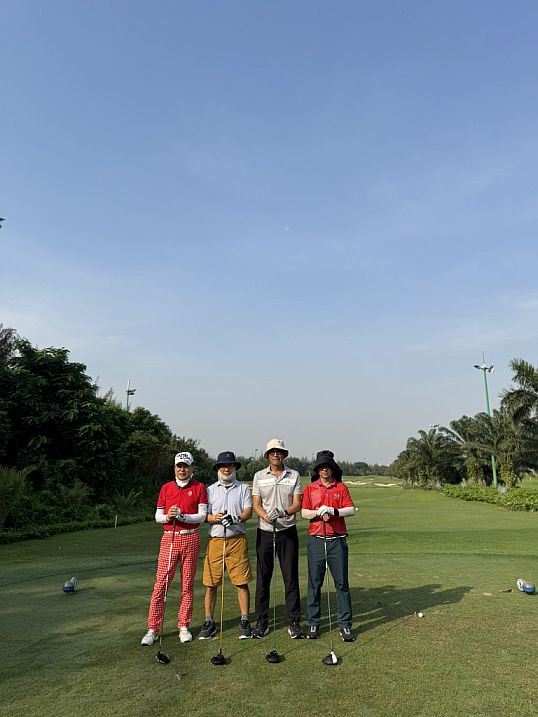 |
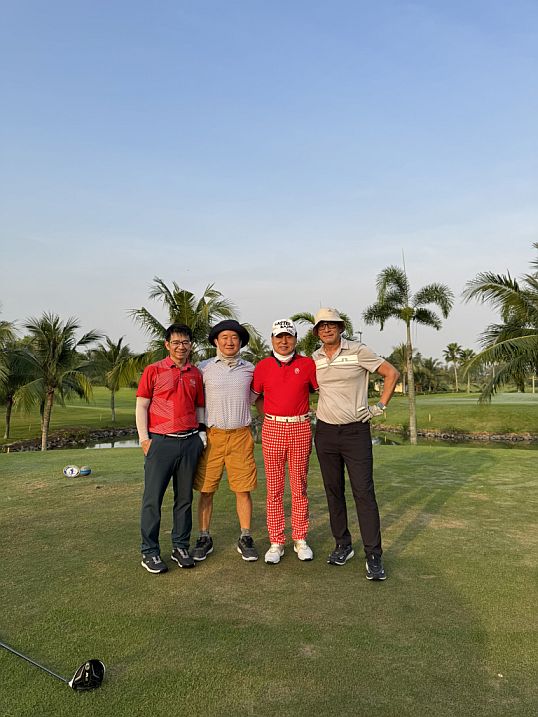
What makes it particularly special is the contrast, people golfing in a tranquil, green landscape, yet just beyond the edges lies the hum of the city and the occasional sight of planes taking off overhead. It’s that uniquely Saigon blend of calm and energy coexisting in the same space. Hoa met a group of Korean golfers in the Golf course and they had a great time playing there.
Saigon
In the late afternoon, after Hoa wrapped up his round at Tan Son Nhat Golf Course, we both set out to explore the city, starting with Ben Thanh Market, and it couldn’t have been a more perfect time to visit.
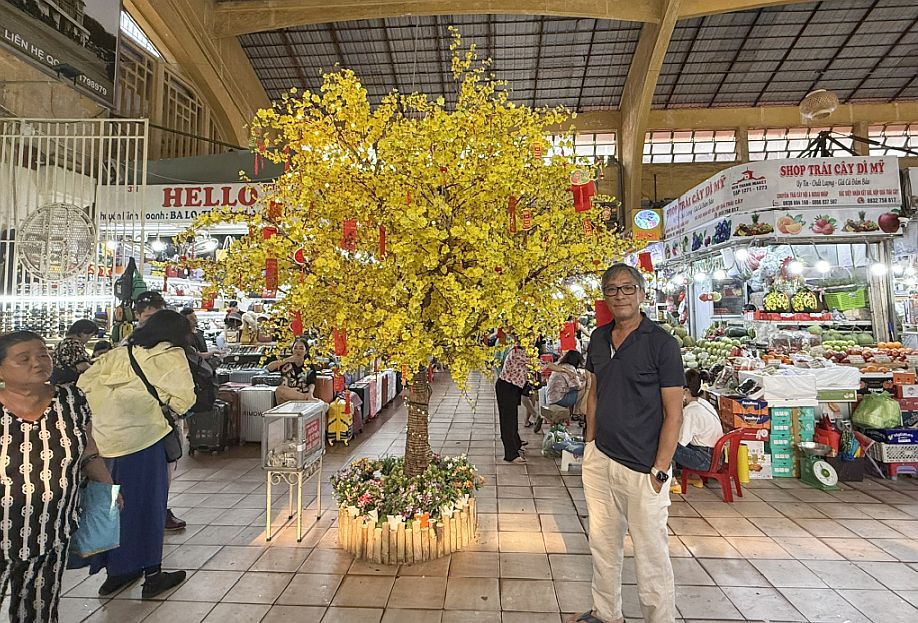
As we stepped inside, we were immediately welcomed by the festive spirit of Lunar New Year. Right in the middle of the aisle stood a large (though artificial) tree bursting with bright yellow blossoms, symbolizing prosperity and new beginnings. Hanging from its branches were vivid red envelopes, adding pops of color and a sense of celebration that filled the space with warmth and excitement. It wasn’t just decoration, it felt like the market itself was preparing to usher in the new year.
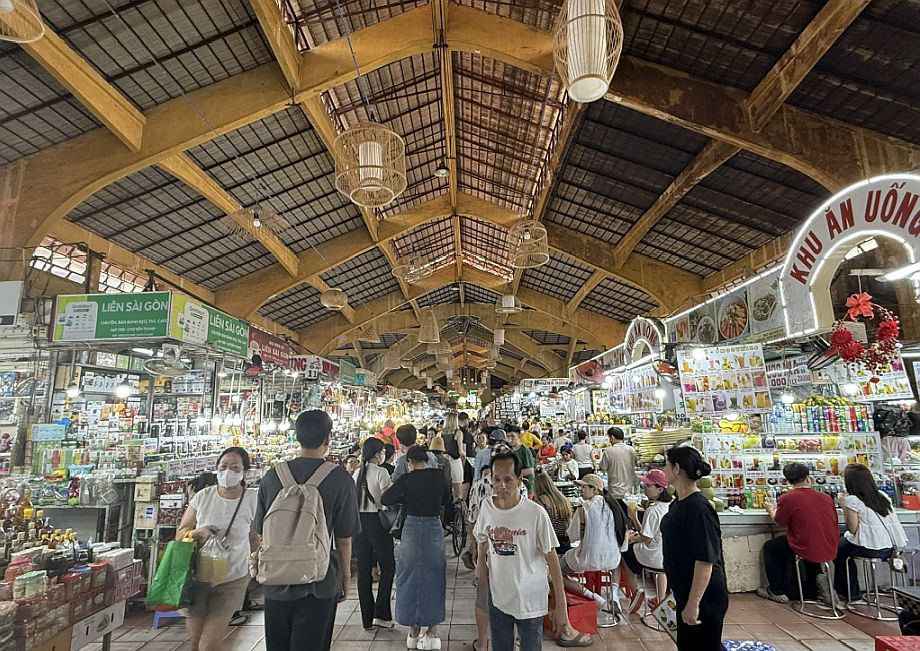
Wandering deeper inside, the market revealed its usual lively rhythm. One section buzzed with food stalls, aromas of grilled meats, simmering broths, and sweet treats mingling in the air.
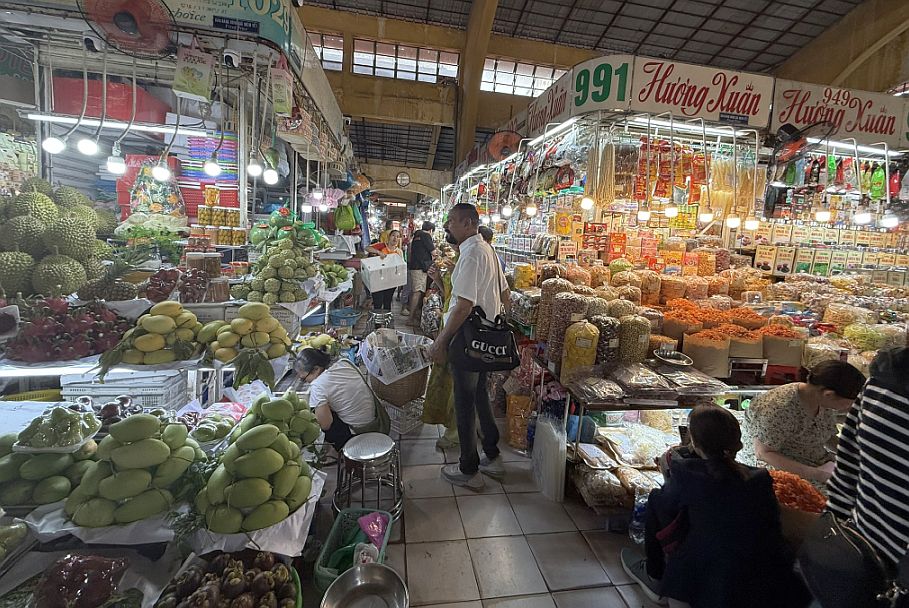
While nearby, stalls overflowed with fresh, exotic fruits in every color and shape imaginable. It was vibrant, busy, and full of life.
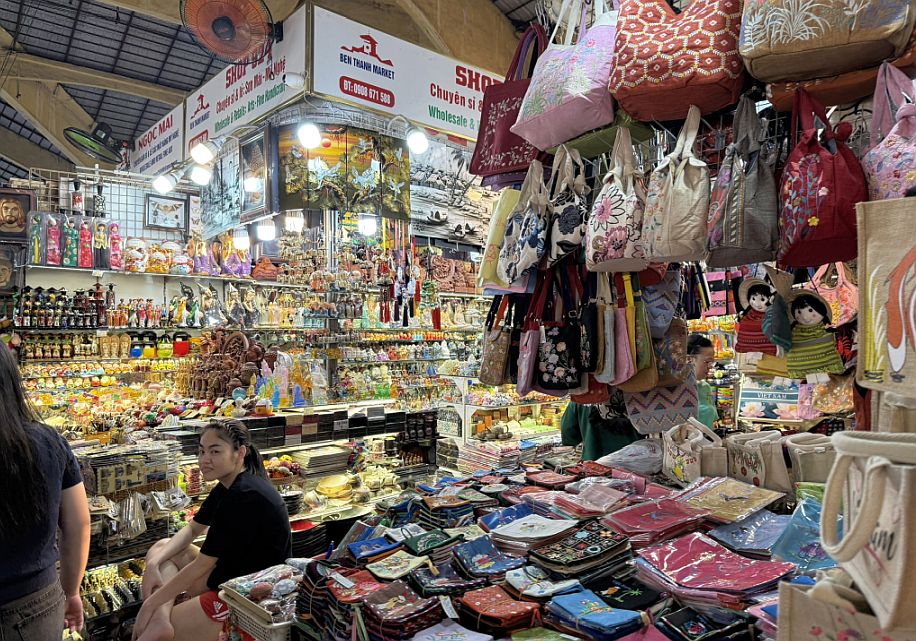
Souvenirs stalls every where.
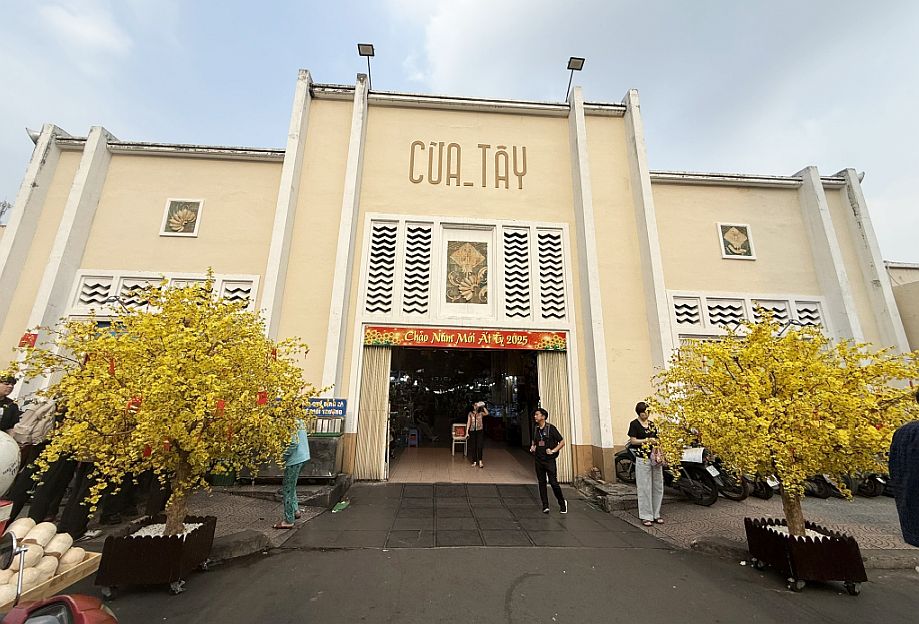
When we made your way out through the Cua Tây (West Gate), the festive scene continued. Two more yellow blossom trees stood on either side of the entrance, almost like a ceremonial frame welcoming visitors in and out.
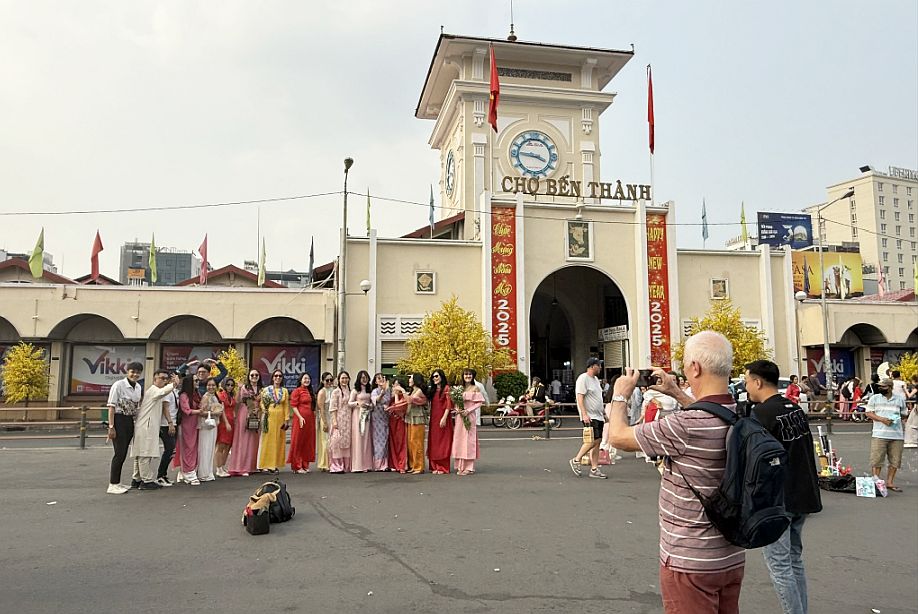
And just beyond, in the courtyard, the atmosphere turned even more joyful, groups of people dressed in elegant Vietnamese áo dài gathered for photos.
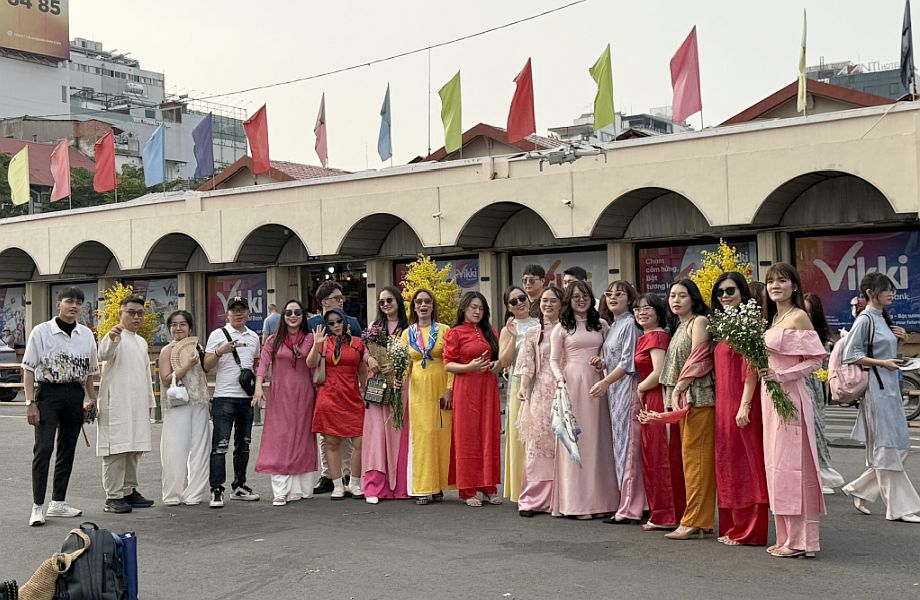
The flowing fabrics, bright colors, and intricate patterns created a beautiful contrast against the market’s historic backdrop. It was lively, colorful, and full of pride, a perfect snapshot of the season and the city.
 |
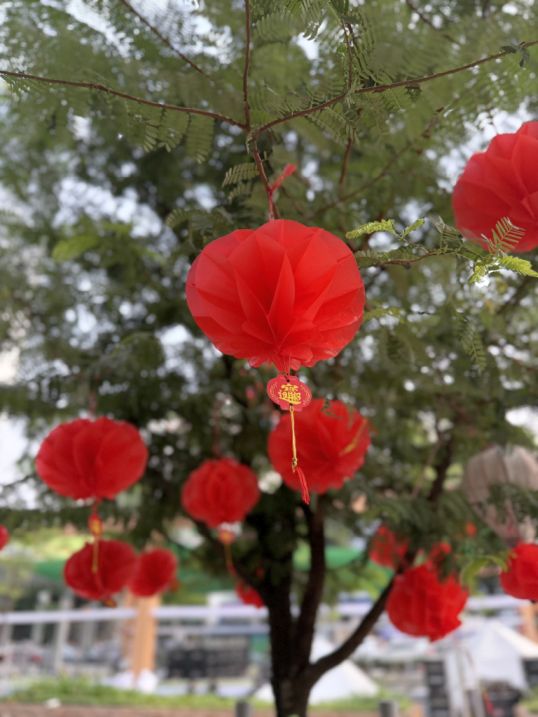 |
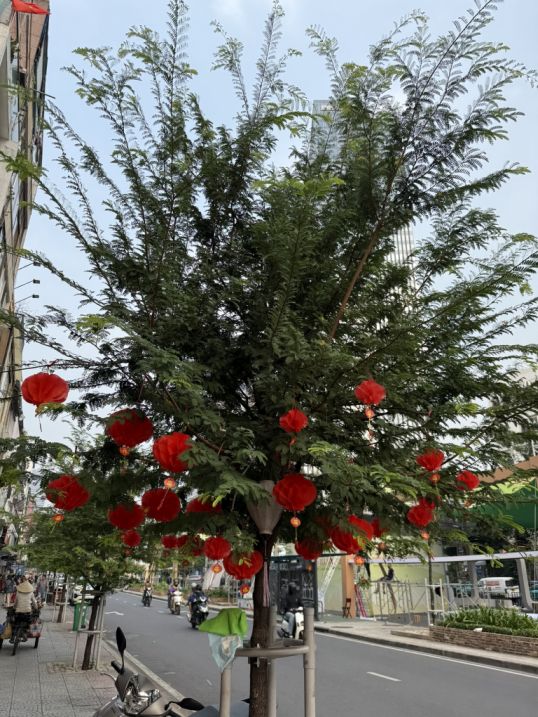
Colorful red lanterns hanging in trees along one of the main street.
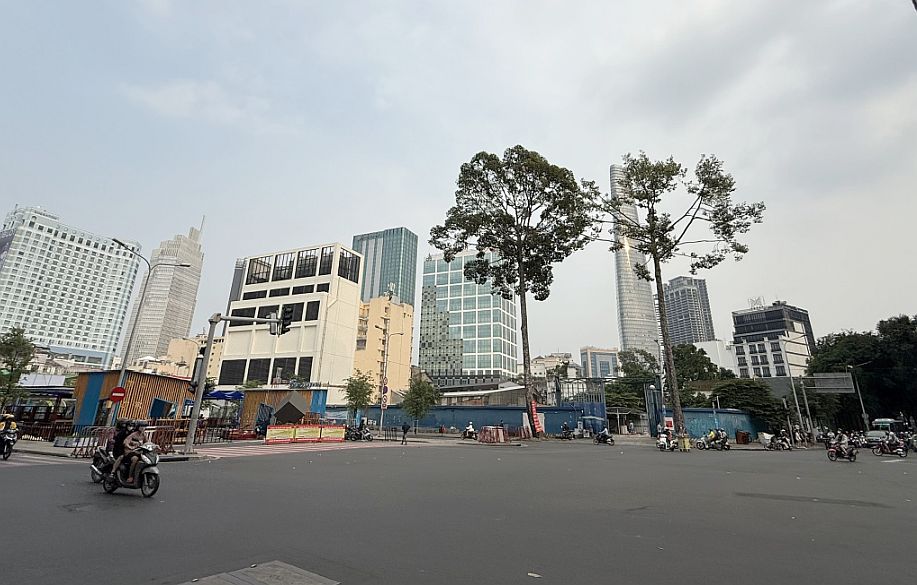
As we made your way through the busy intersection of Lê Loi and Pasteur, the energy of Ho Chi Minh City really came into focus with modern buildings rising all around.
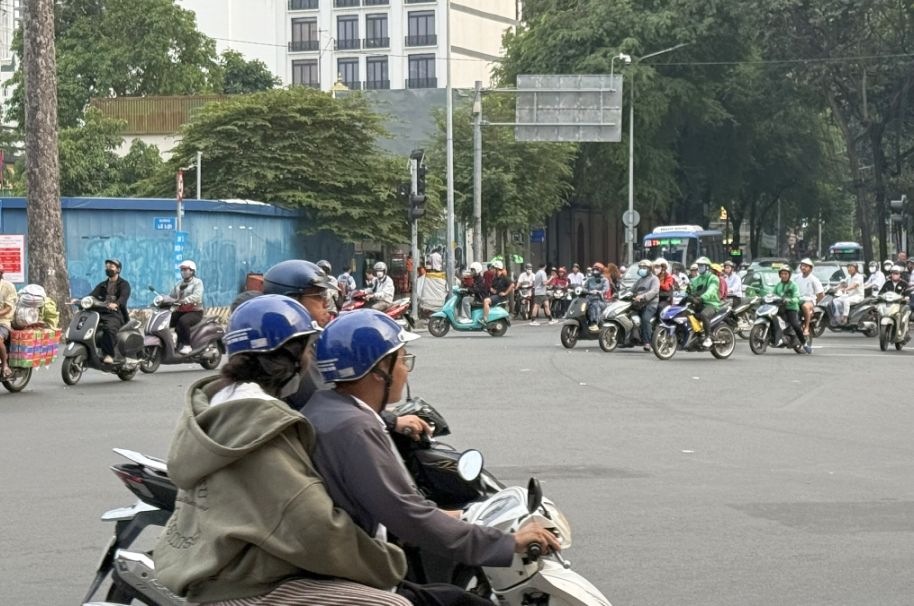
Streams of motorbikes flowing in every direction like a choreographed chaos.
 |
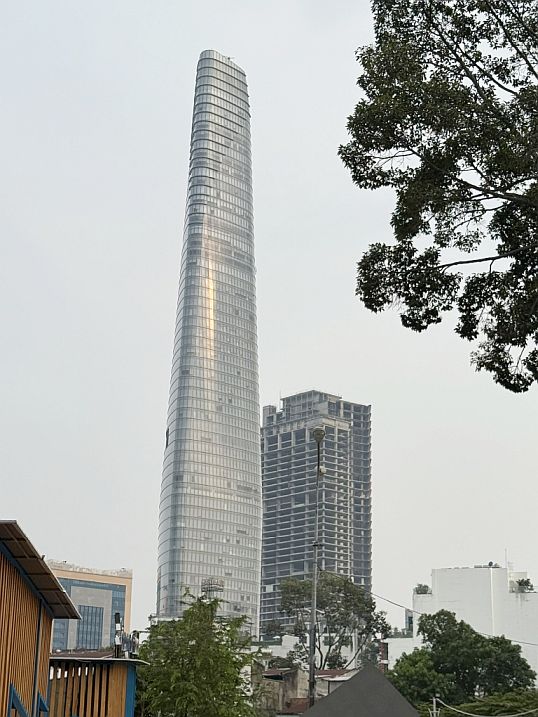 |
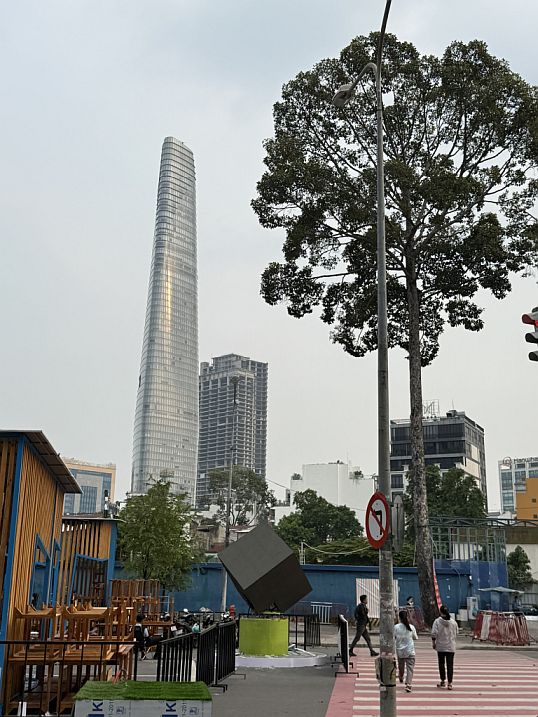
Then, looking up, you caught sight of the striking Bitexco Financial Tower. The tower is one of the city’s most recognizable landmarks, designed to resemble a lotus bud, the national flower of Vietnam that symbolize growth and aspiration. Its sleek glass façade reflects the ever-changing sky, and the structure rises elegantly above the surrounding skyline. One of its most unique features is the helipad jutting out from the side, giving it a futuristic, almost sci-fi feel. For many, it represents modern Vietnam, forward-looking, ambitious, and rapidly evolving, standing in contrast to the city’s older colonial architecture.
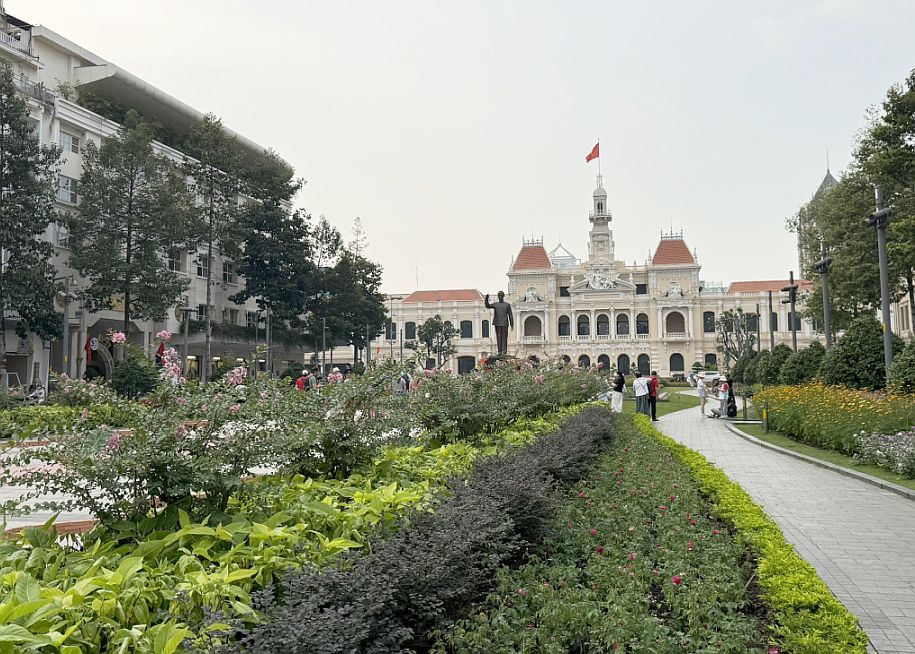
Continuing our walk, we arrived at the graceful and historic Ho Chi Minh City Hall. The transition from modern to classical is almost immediate. In front of the building, the manicured lawn stretches out neatly, creating a sense of openness and formality.
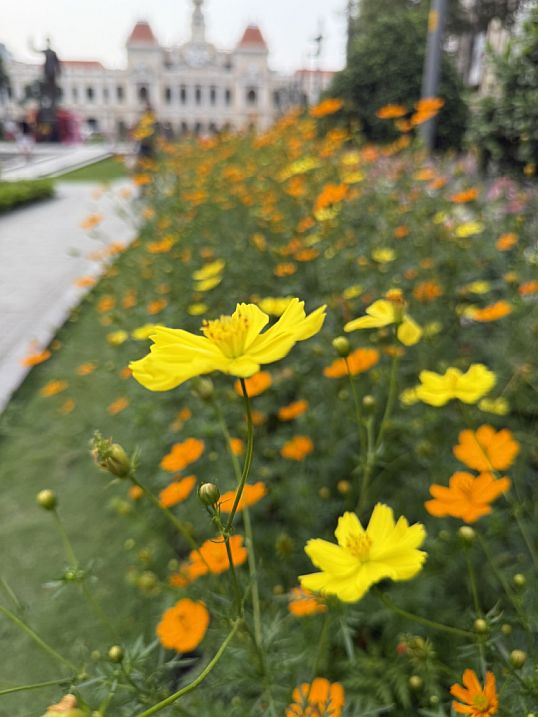 |
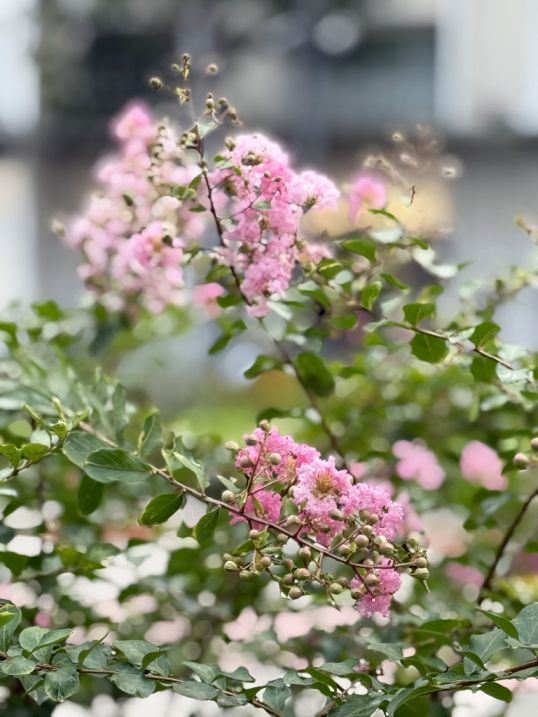 |
Beautiful flowers in the garden.
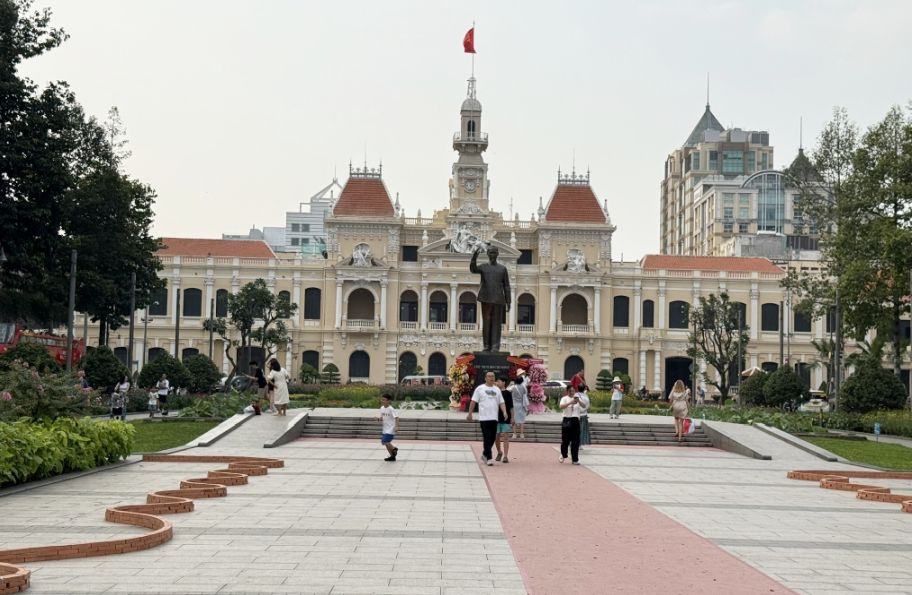
The building, with its pale yellow façade, ornate carvings, and symmetrical design, reflects strong French colonial influence. Built in the early 1900s when Vietnam was part of French Indochina, it was originally known as the Hôtel de Ville, serving as the city’s administrative center.
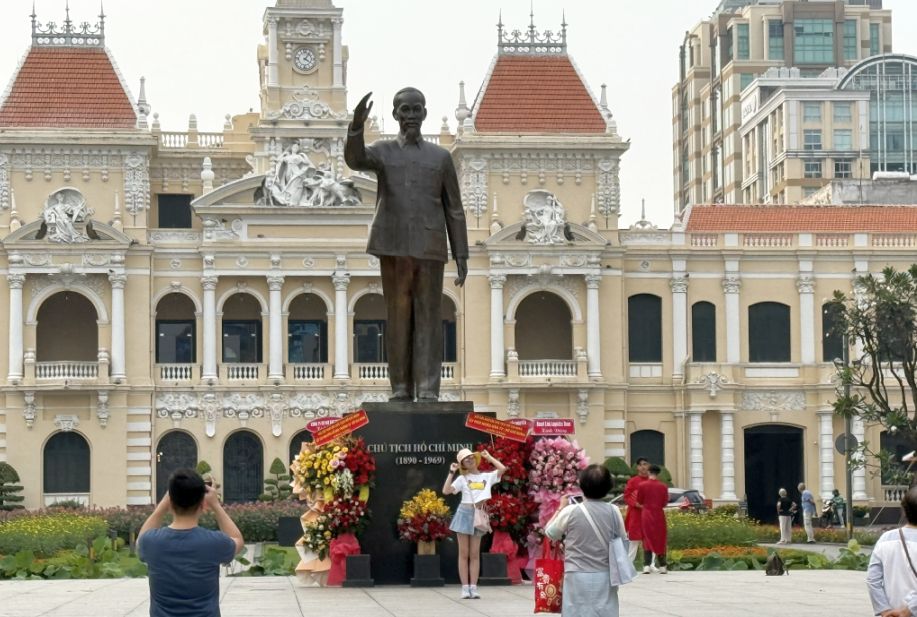
At the center stands the statue of Ho Chi Minh, affectionately known as “Uncle Ho,” facing the building with a calm and welcoming presence. The entire setting feels almost ceremonial, orderly, dignified, and steeped in history. While the building itself isn’t open to the public, it remains one of the most photographed spots in the city, especially in the evening when it’s beautifully lit. Standing there, people can really feel the layers of Saigon, its colonial past, its modern growth, and its enduring cultural identity, all coming together in one place.
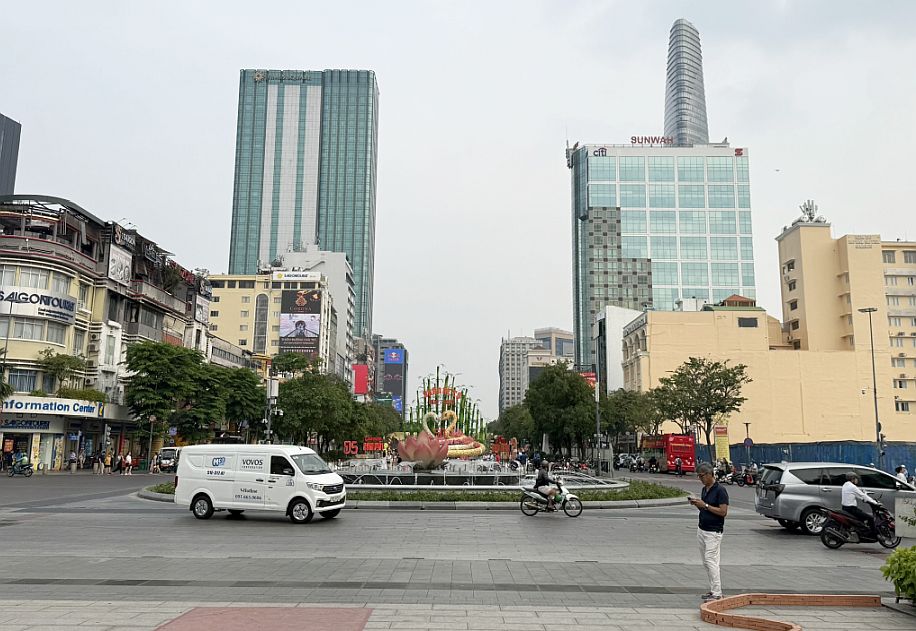
Standing at Cau Lieu Roundabout.
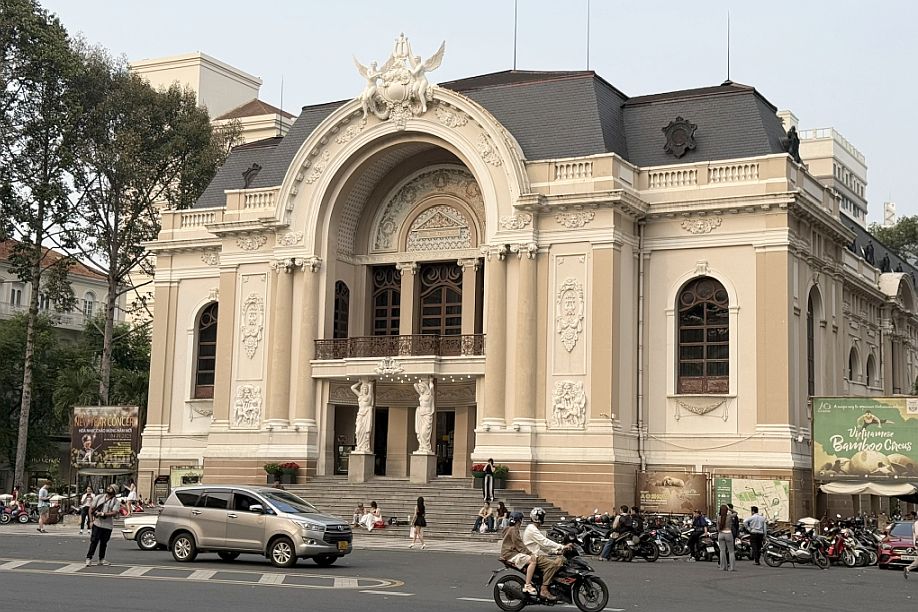
As we continued our walk, we passed by the elegant Saigon Opera House, and it’s hard not to slow down in front of it. The façade is beautifully detailed, cream-colored with ornate columns, arched windows, and sculpted reliefs that reflect its French colonial origins. Built in 1897 during the time of French Indochina, it was designed as a cultural centerpiece for the colonial elite, modeled after European opera houses. Over the years, it has served different roles, even as a government assembly building. Today it has returned to its original purpose as a venue for performances. Standing there, it feels refined and timeless, a reminder of the city’s layered past amid the rush of modern life.
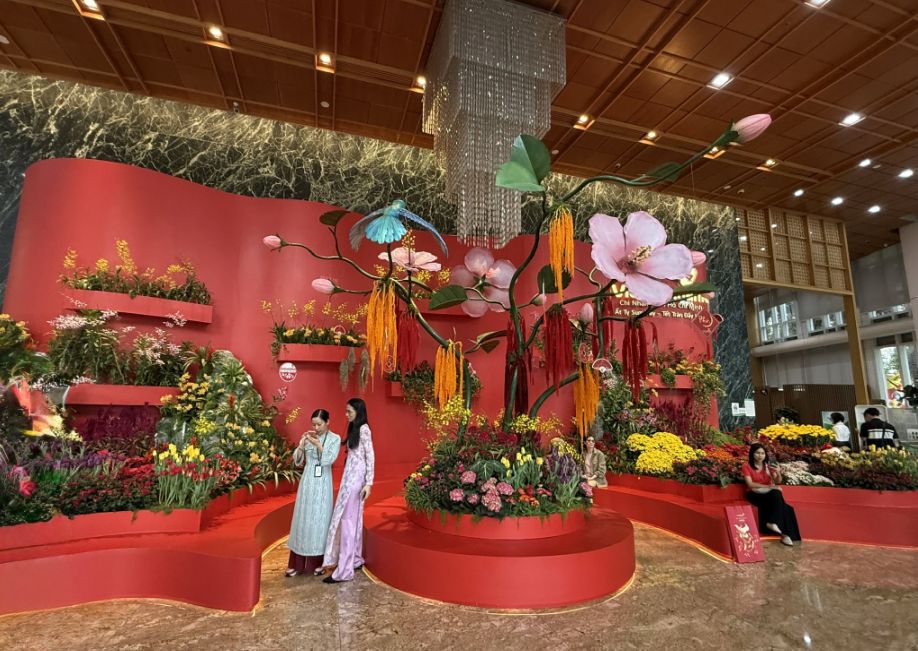
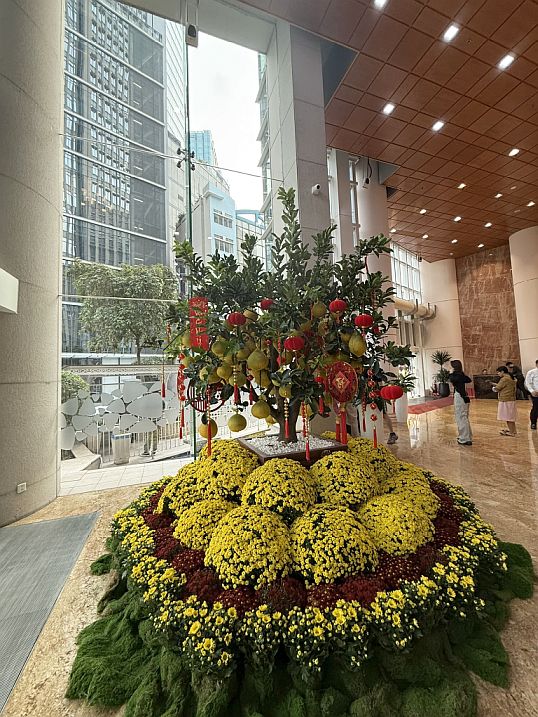
On our way to dinner, we stop at the Hilton Saigon lobby and it felt almost like stepping into a festive art installation. The huge red wall immediately sets a bold, celebratory tone, red being the color of luck and happiness for Lunar New Year. The abundance of flowers arranged so meticulously creates a sense of abundance and prosperity.
 |
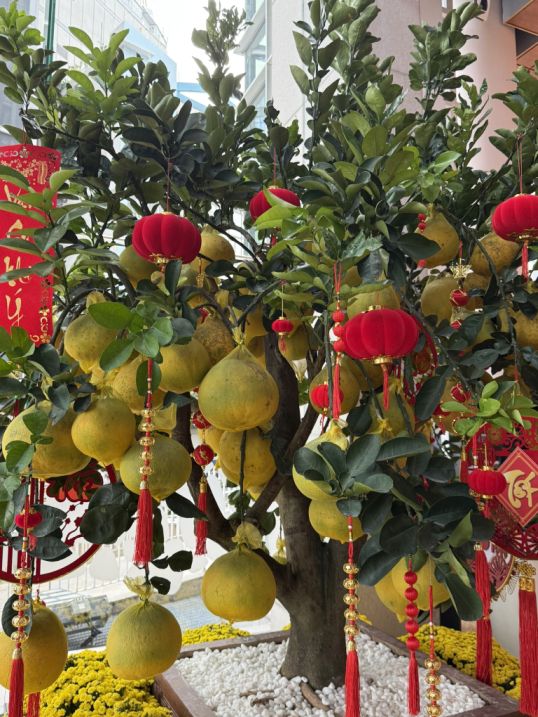 |
A tree hung with large pomelos adds a traditional touch, pomelos often symbolize fullness and good fortune. And beneath it all, the sea of yellow blossoms in full bloom ties everything together, evoking springtime and renewal. It’s the kind of display that feels both luxurious and deeply rooted in cultural symbolism.
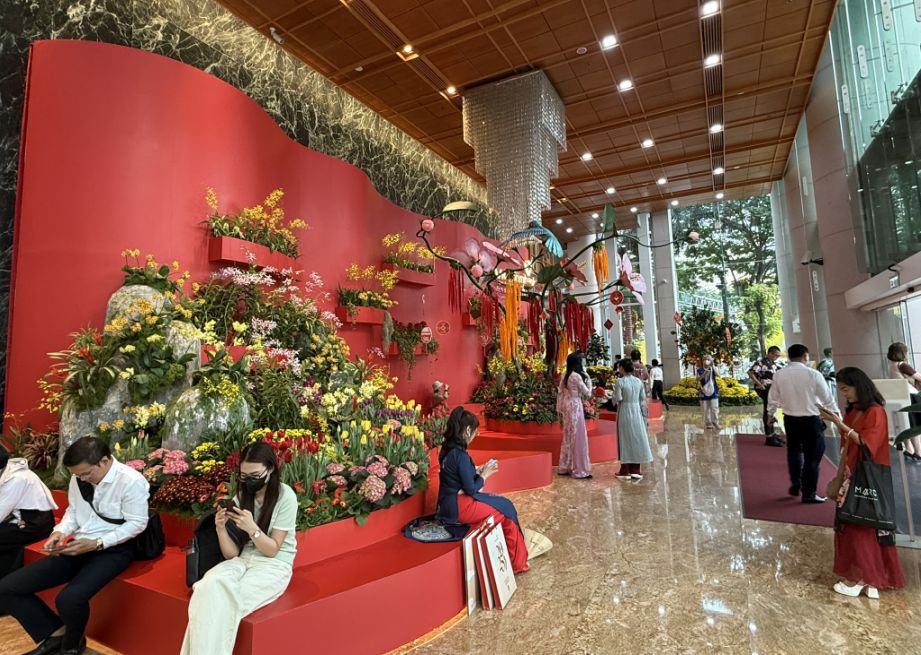
View of the lobby.
Dinner at Thuy 94
 |
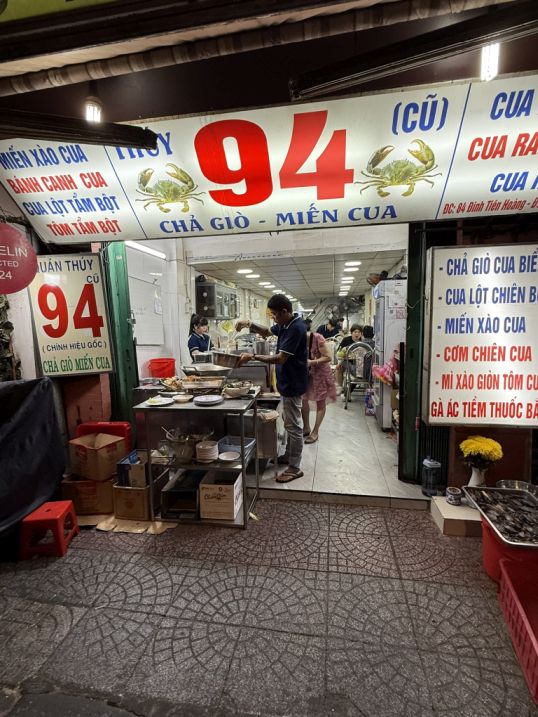 |
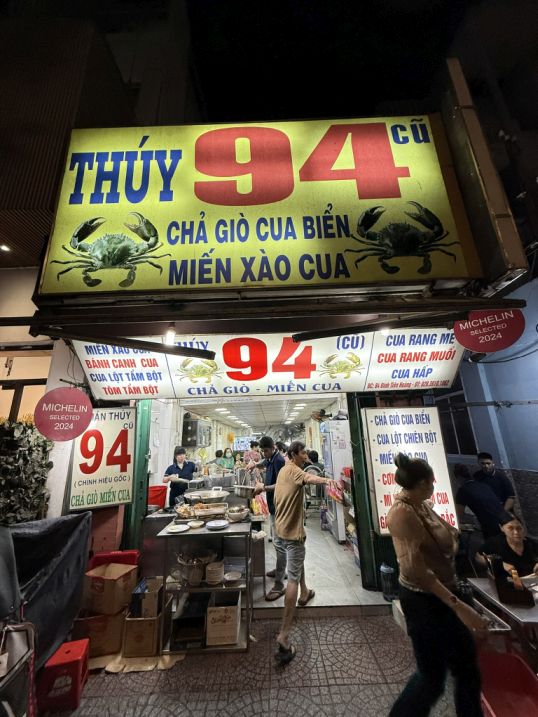
Then came dinner at Thuy 94 Cu, a place that might not catch your eye at first glance but clearly delivers where it matters most. It has that wonderfully low-key, local feel, simple setting, no frills, just a focus on the food. And what food it is!
Known especially for its crab dishes, the restaurant seems to celebrate seafood in its purest, most flavorful form.
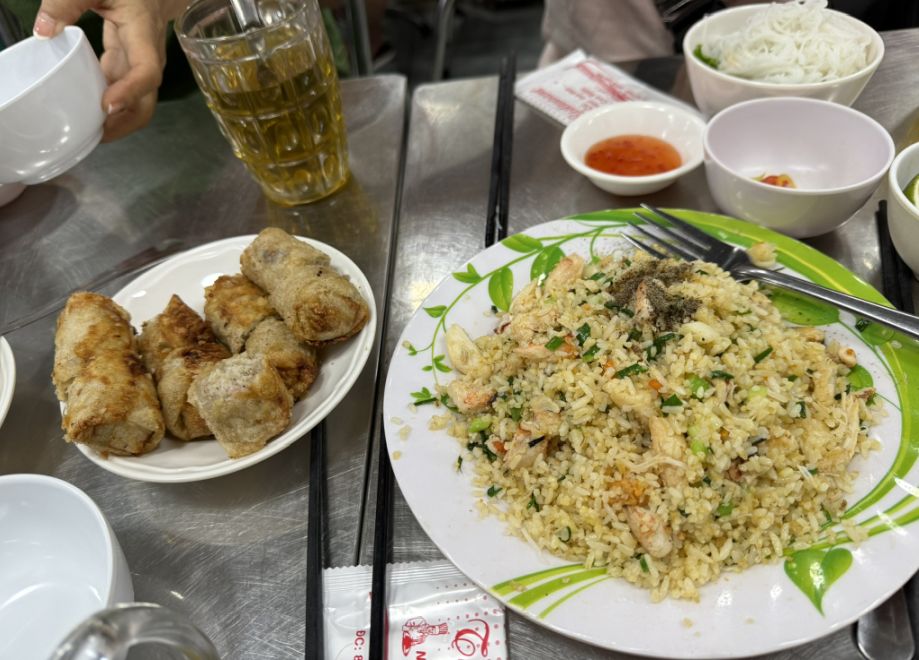
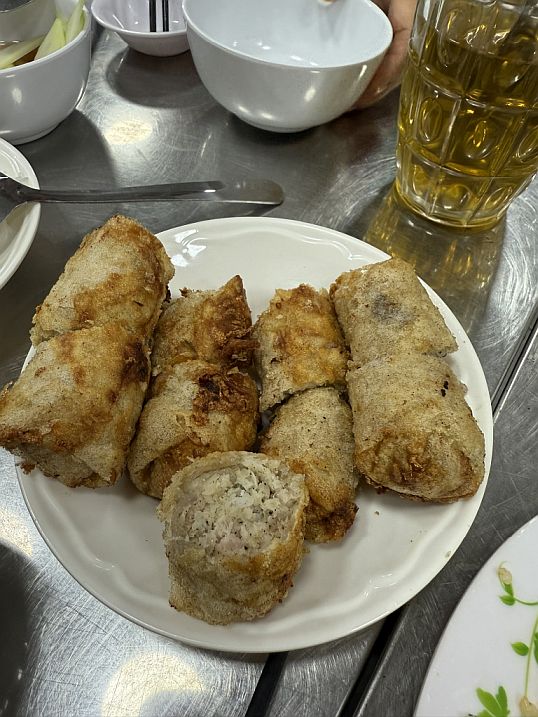
We began with crab eggrolls, perfectly crispy on the outside, giving way to a rich, savory filling packed with sweet crab, followed by a crab fried rice followed, likely fragrant and fluffy, with bits of crab folded throughout, adding bursts of sweetness and depth. Simple on the surface, but when done well, incredibly comforting.
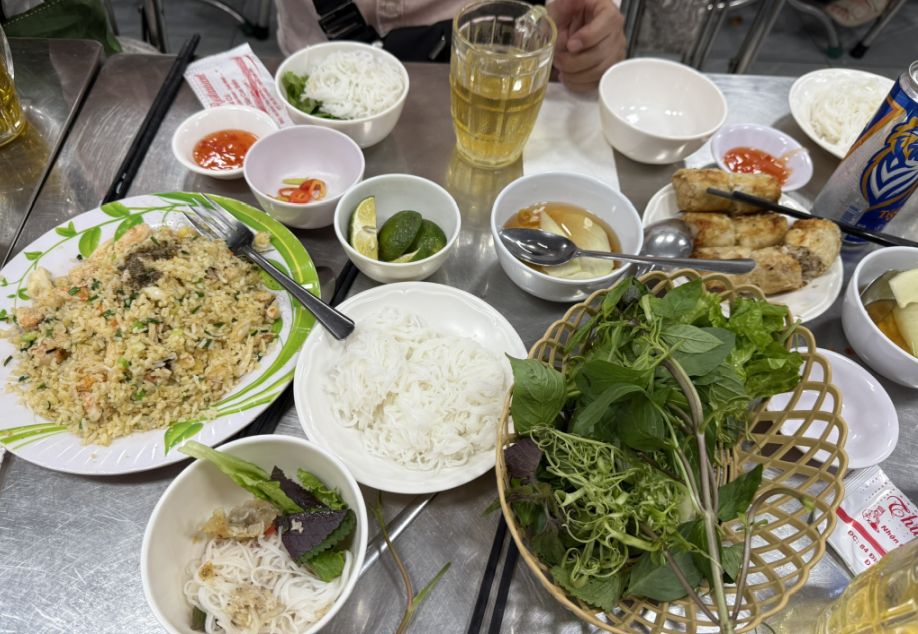
What makes the crab eggrolls even better is the way it’s meant to be eaten: wrapped in soft vermicelli noodles and an assortment of fresh herbs and greens, then dipped into that classic Vietnamese fish sauce. The combination of textures, crunchy, soft, fresh, and the balance of salty, sweet, and tangy flavors makes each bite feel layered and satisfying.
 |
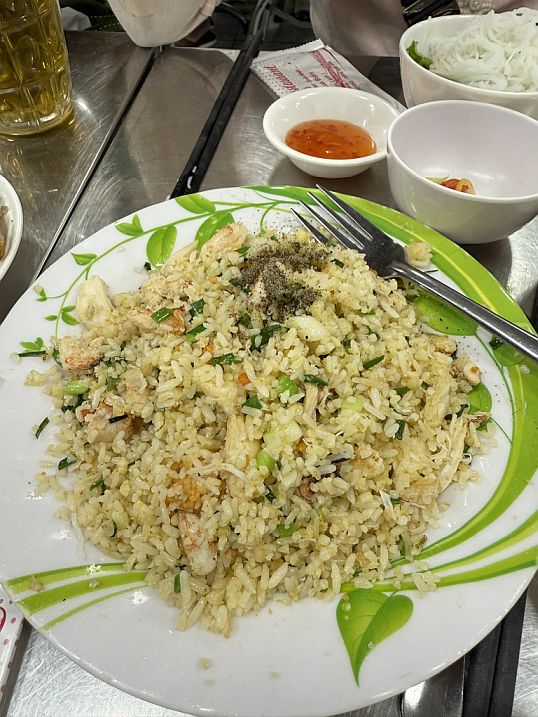 |
Crab eggrolls and crab fried rice.
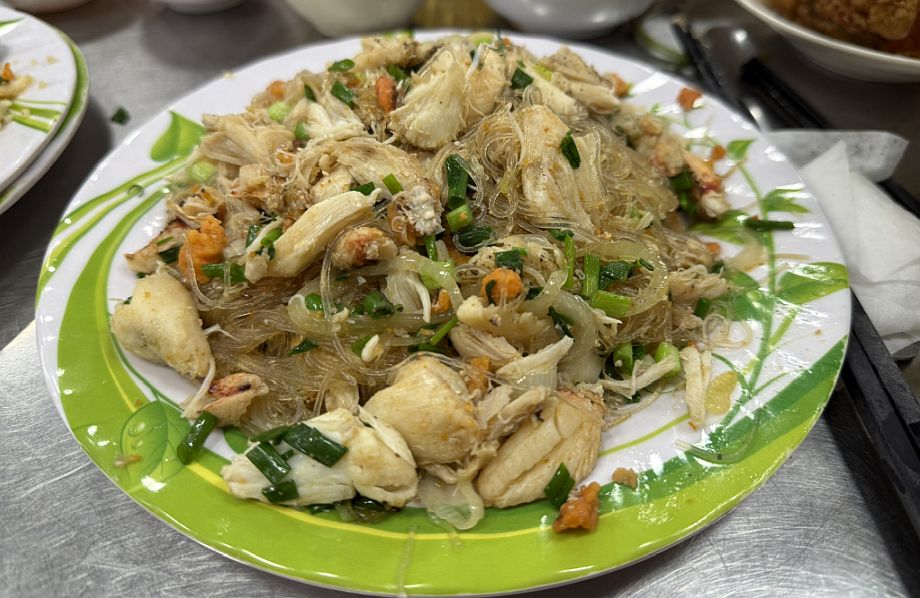
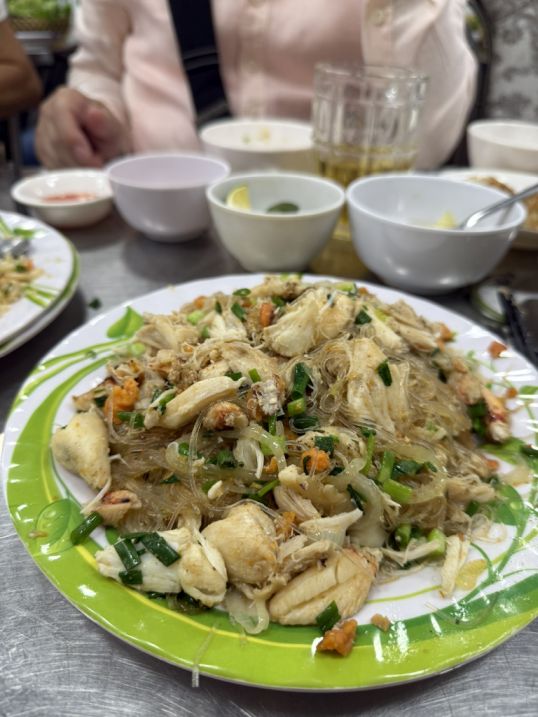
And then tae large plate of vermicelli with crab. Generous is probably an understatement. With so many lumps of crab throughout, it’s the kind of dish that feels indulgent yet still light, the delicate sweetness of the crab pairing beautifully with the noodles and herbs.
 |
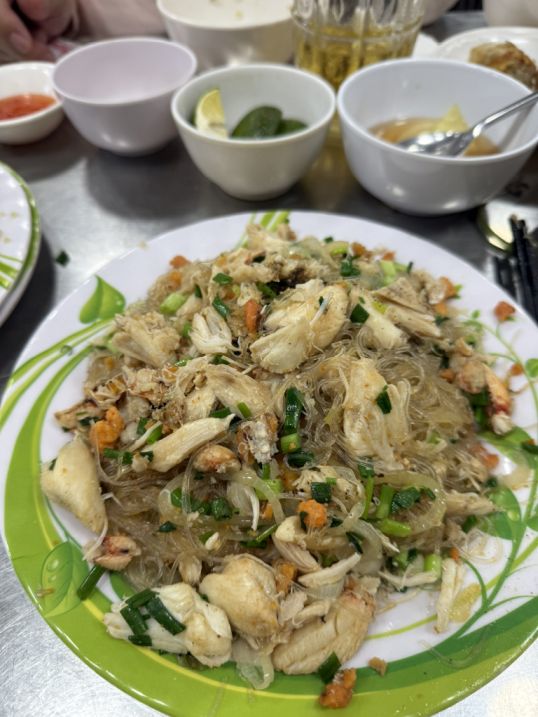 |
The crab is not just a topping, it’s the star of the dish.
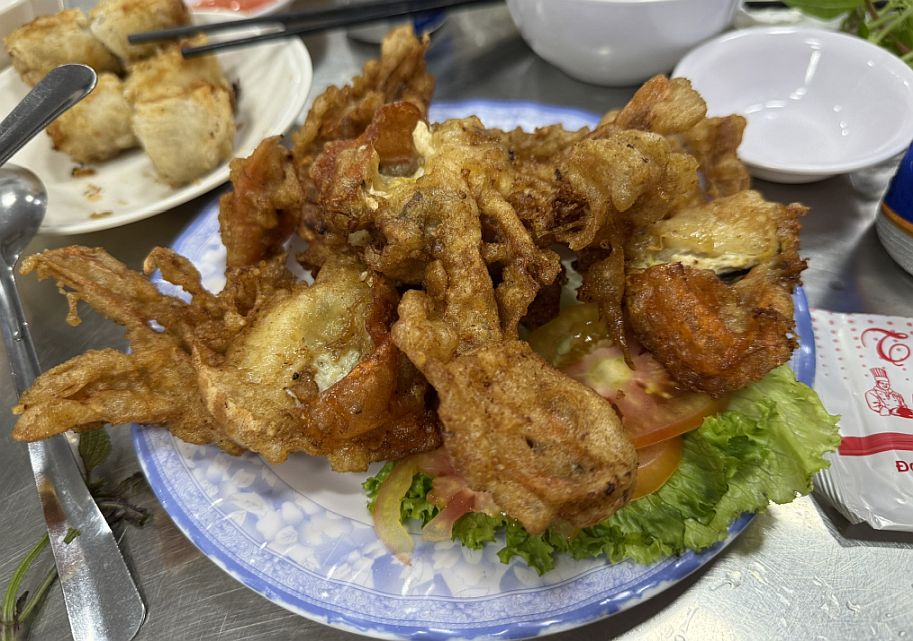
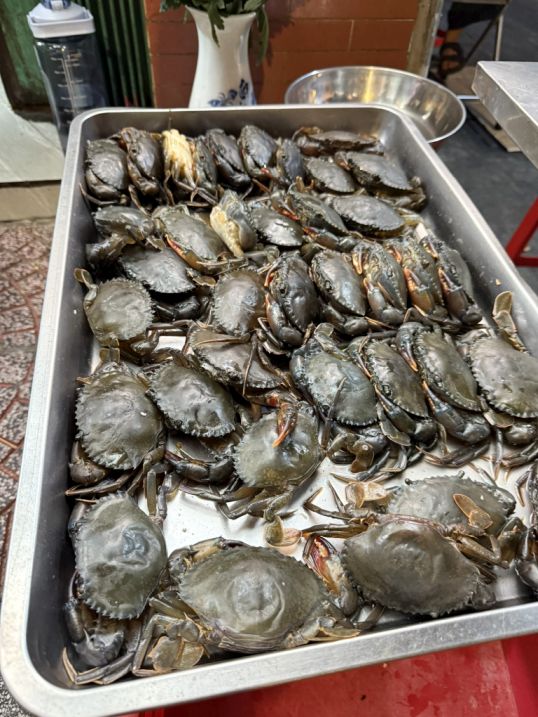
Then The fried soft-shell crab is the standout, crispy on the outside, tender and rich on the inside, perfectly seasoned without overpowering the natural sweetness of the crab. Beyond that, the variety of crab dishes shows off different preparations and flavors, likely ranging from garlic butter to tamarind or pepper sauces, each bringing out a different side of the seafood. It’s the kind of place that locals recommend to each other, not for ambiance, but for consistently delicious, satisfying dishes.
 |
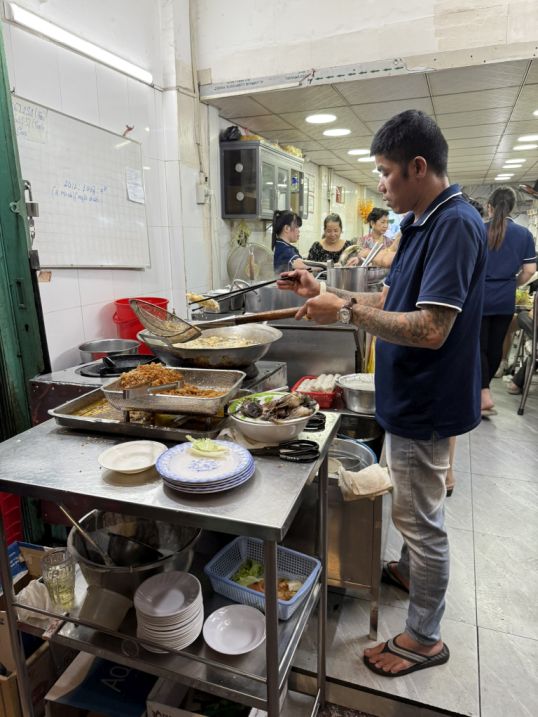 |
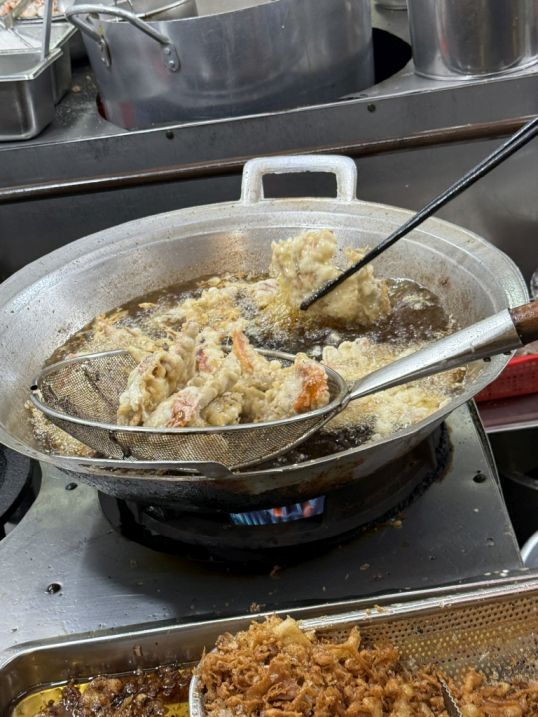
In front of the restaurant they set up a station where you can see them cook the soft-shell crab.
 |
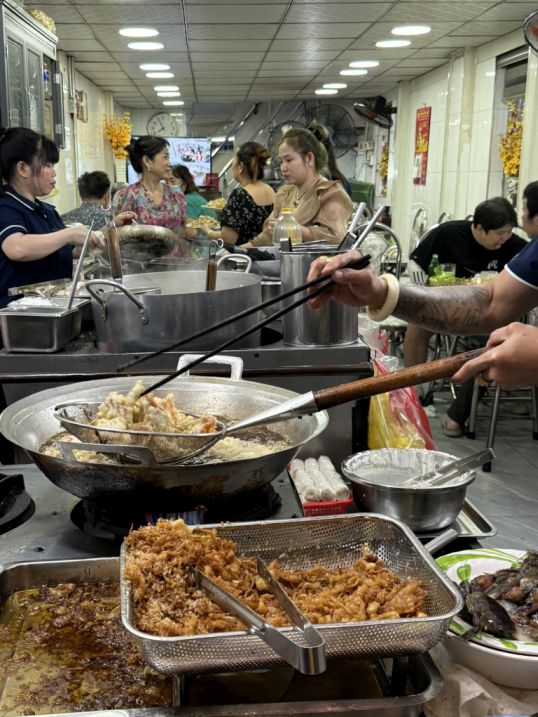 |
Fried until golden and fragrant.
With Minh and Loan’s recommendation, we ended up exactly where we should have, and finishing the day not with something flashy, but with something genuinely memorable.
NEXT... Day 3- Vung Tau