A week in Saigon-1/19- 1/25/2025
Day 3- Vung Tau-1/21/2025
First Stop: Công viên Tao Phùng
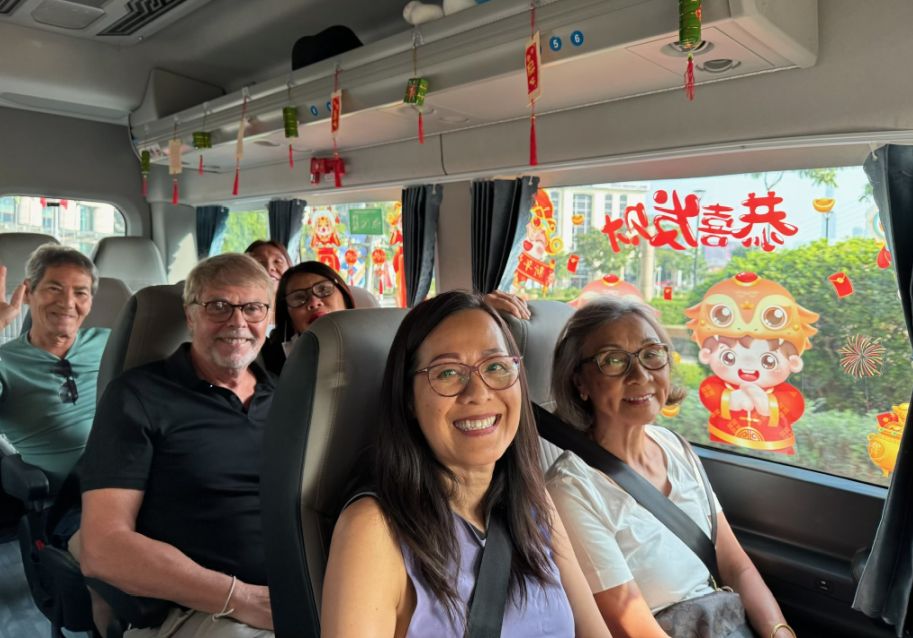
We rented a bus for our group and we are heading to Vung Tau.
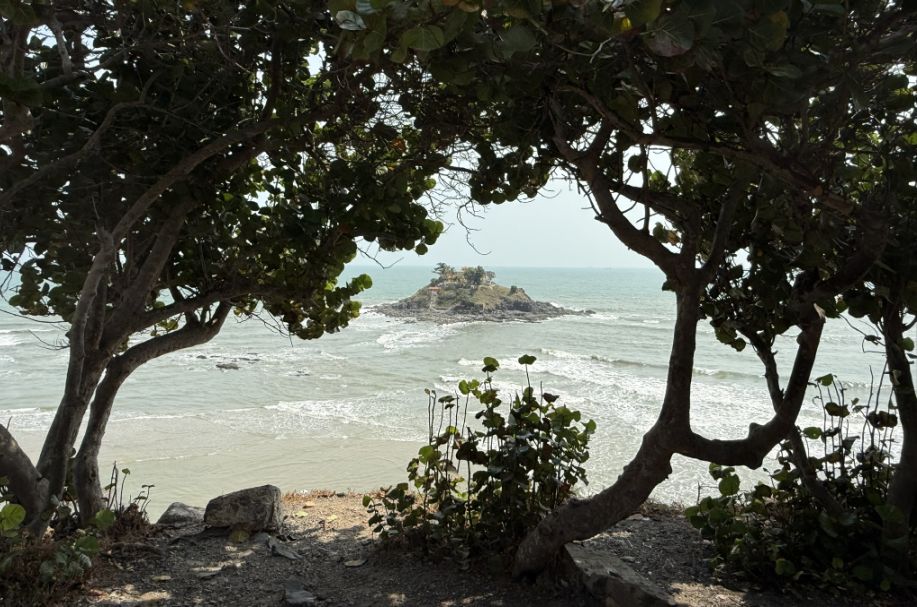
Along the way we stopped at Công viên Tao Phùng and in the back ground is Bà Islet.
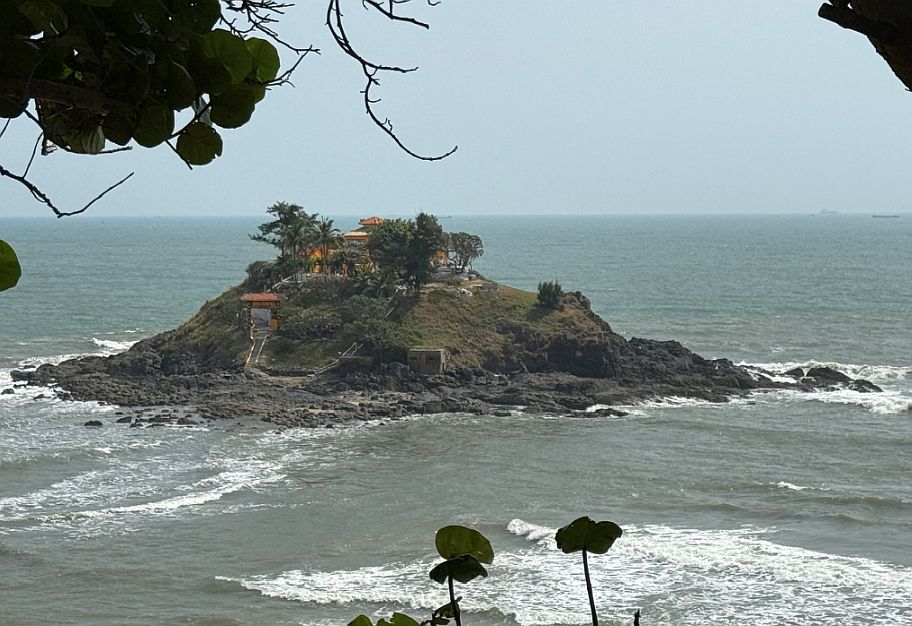
Looking out toward Bà Islet, the scenery really opens up. The islet sits just offshore, small but striking, especially with the temple perched on it. At low tide, a narrow rocky path emerges, allowing people to walk across to the islet, a unique and almost symbolic journey that draws both visitors and locals. It’s a spiritual place, with the temple dedicated to local deities, and you’ll often see people making offerings or simply taking in the view.
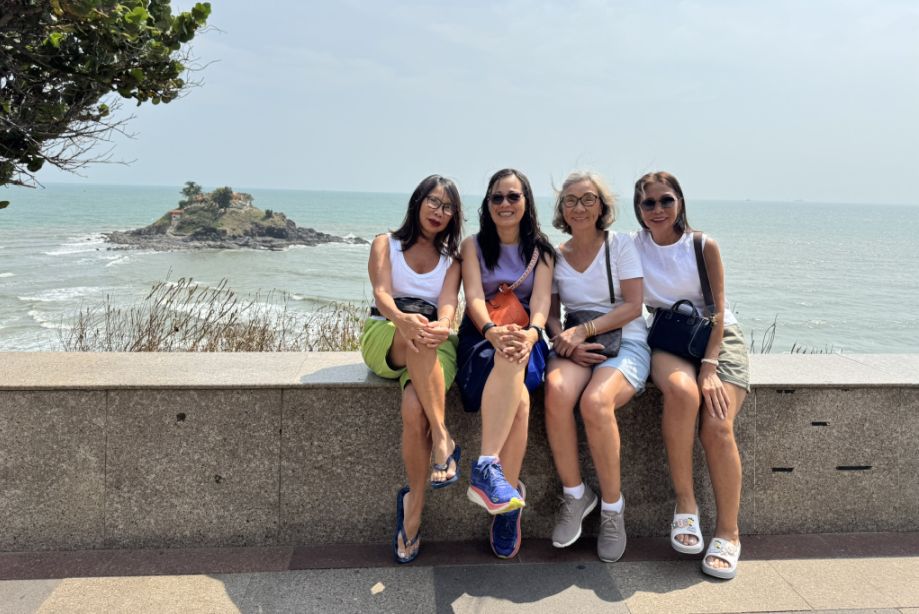
This coastal park stretches along the shoreline, with a long divider wall that naturally becomes a place for people to sit, stroll, and take in the sea air.
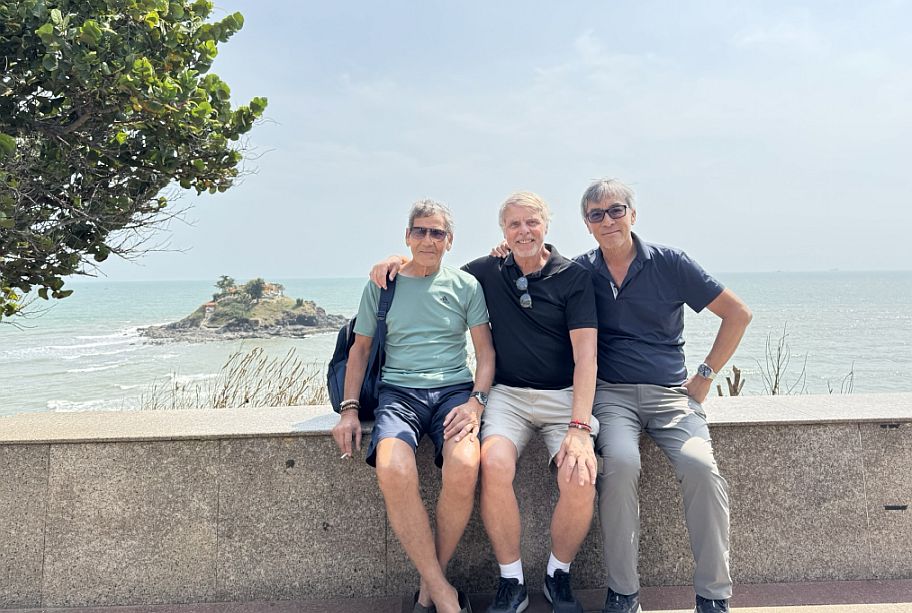
It has a relaxed, local feel, less about attractions and more about simply enjoying the view. The breeze coming off the ocean, the sound of waves, and the open horizon all create a calming contrast to the busy city you left behind.
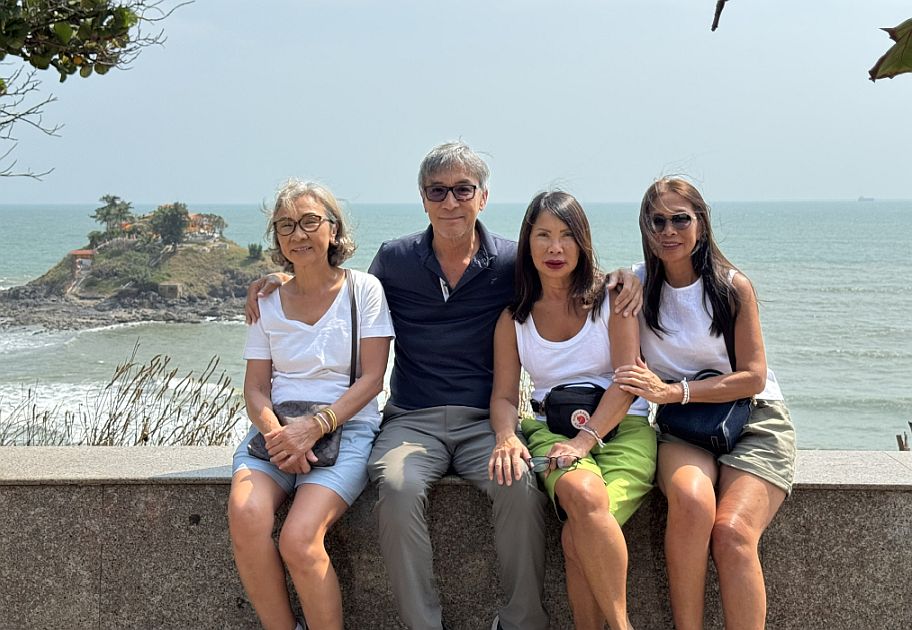
Sisters and brother together.
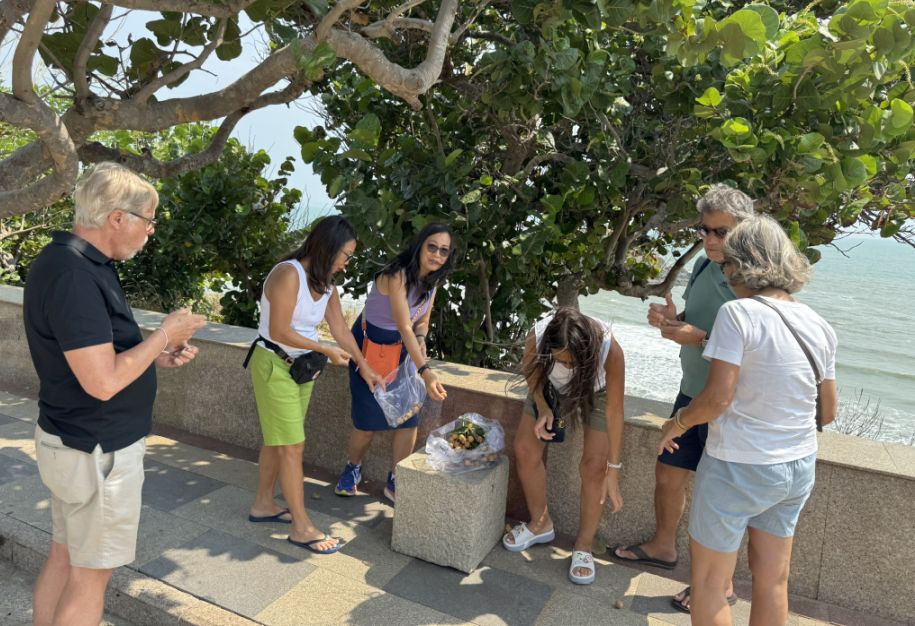
We bought some longans from a street vendor and here we are just enjoying them.

2nd stop: Christ of Vung Tau
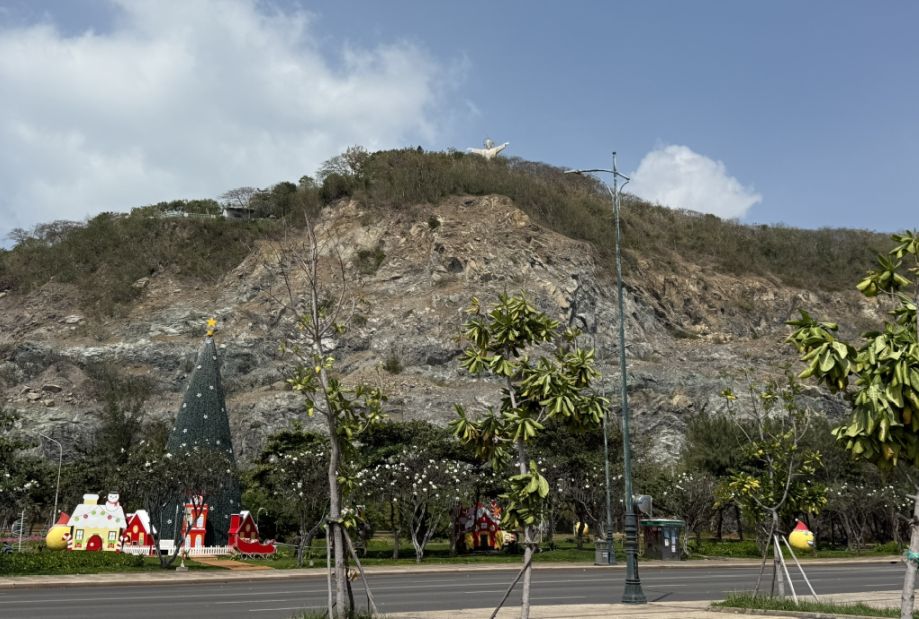
Our next stop at the towering Christ of Vung Tau is one of the most iconic and memorable experiences in the area.
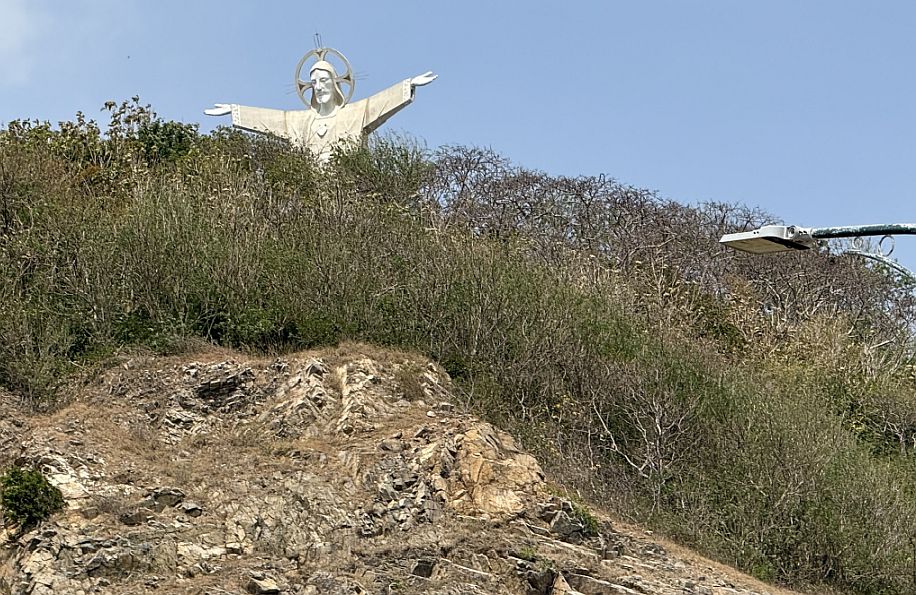
From the parking lot below, you only see the top, the white head and the outstretched arms rising above the mountain, almost like it’s floating in the sky. It builds a sense of anticipation before the climb even begins.
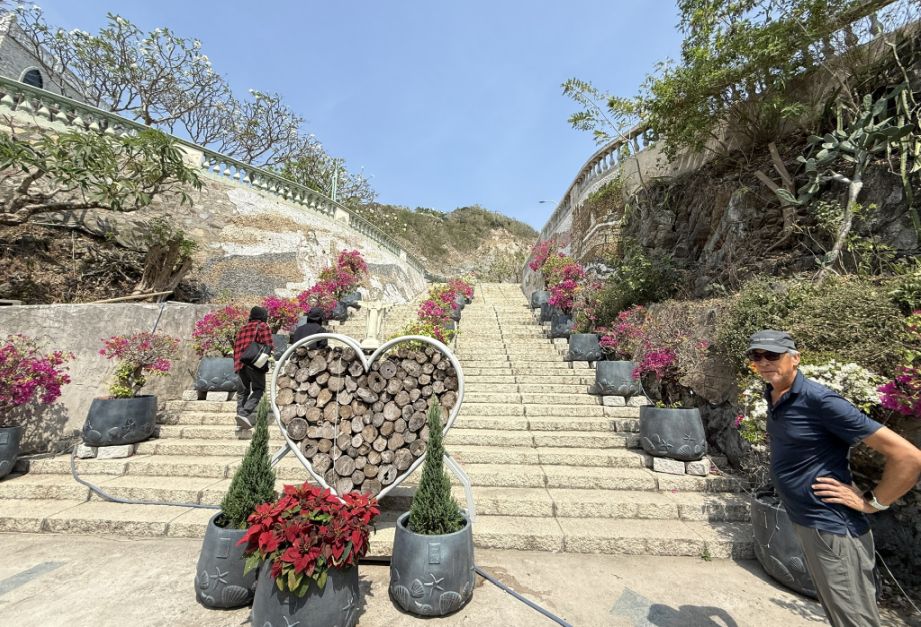
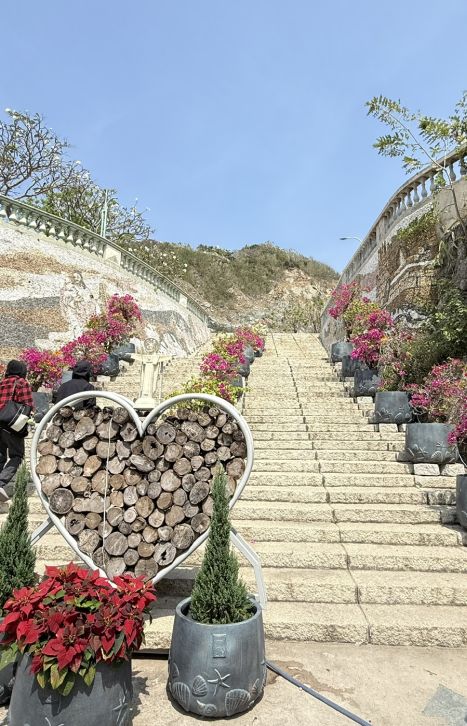
Getting to the top is part of the experience.
 |
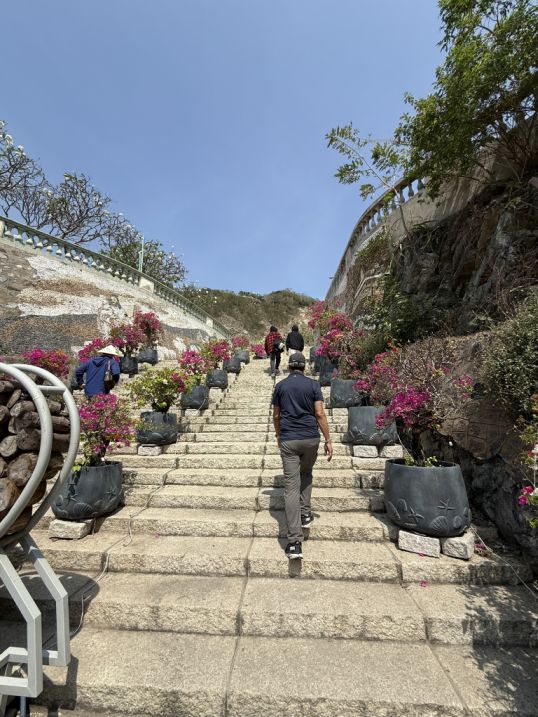 |
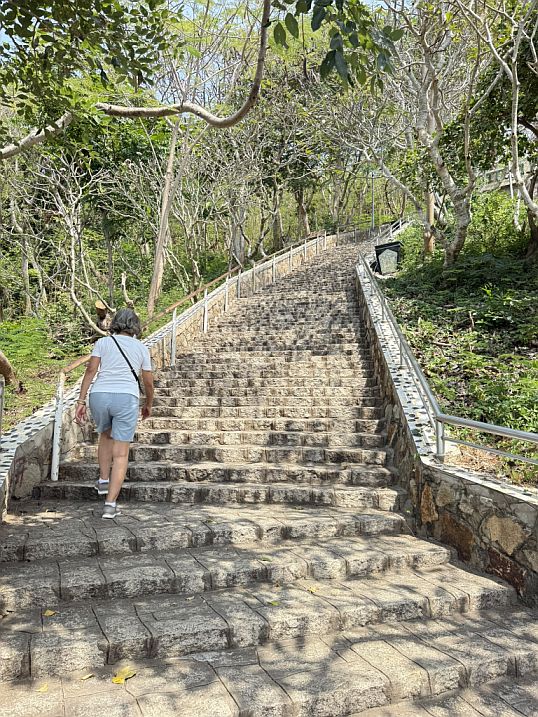
From the base, you’ll begin the ascent of roughly 800+ steps (commonly cited around 811 steps) that wind their way up the hillside. The staircase is well maintained but can feel long, especially in the heat, so most people take it slowly, stopping at shaded spots along the way. As you climb, you’ll pass small resting areas, greenery, and occasional viewpoints where the sea begins to reveal itself more and more.
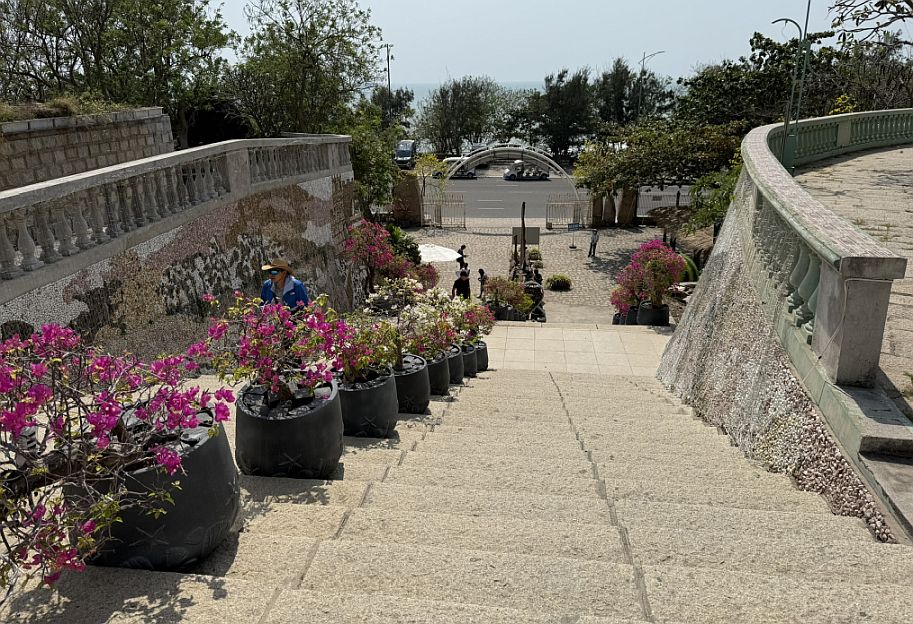
As I went up, I look back and this is the view of the entrance of the complex.
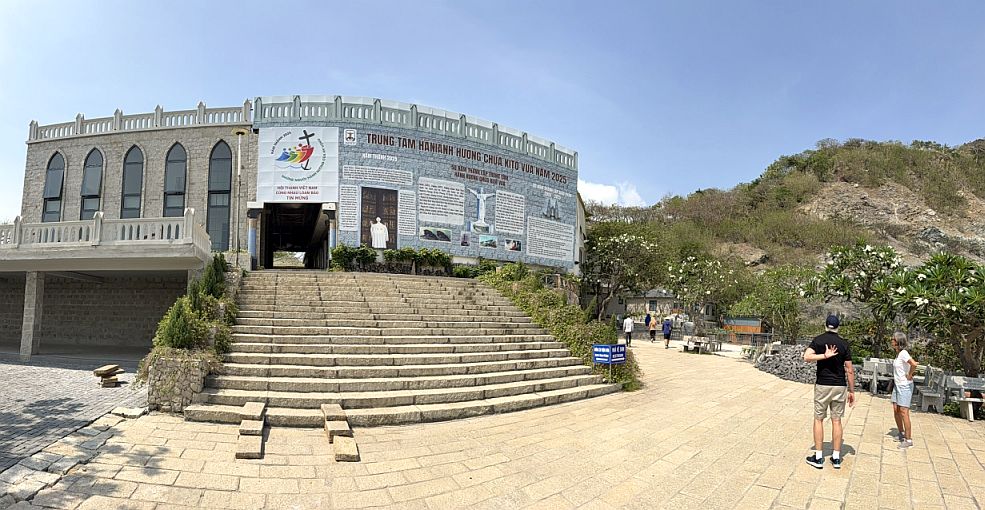
The first thing we encounter is this tall grey building and we found out that it is not the main parish church, but rather part of the religious complex on the mountain, often used as a chapel or support structure for pilgrims (sometimes associated with shrines or resting points along the way).
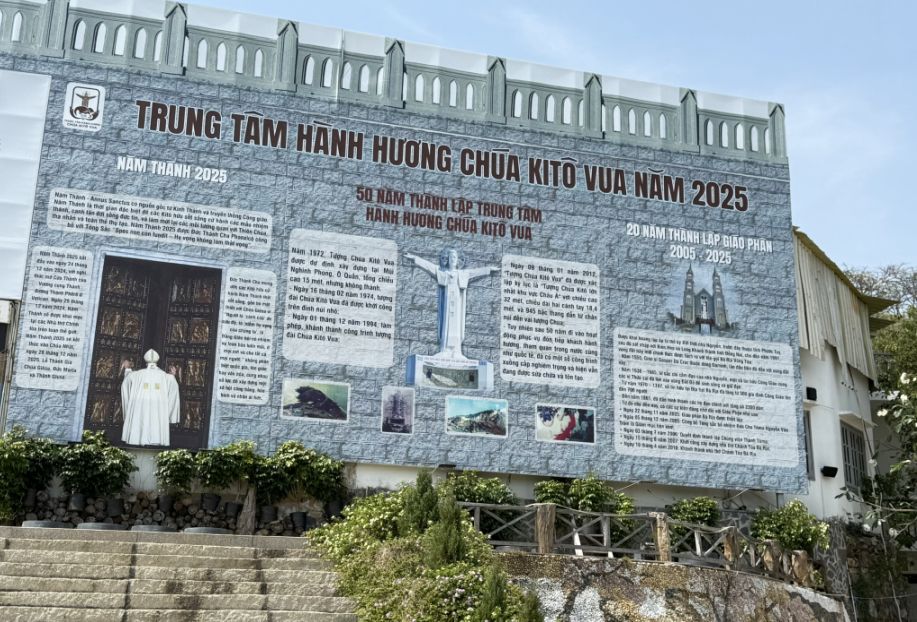
It does look relatively modern compared to older colonial churches, and that’s because much of the development around the statue, paths, buildings, and facilities was completed or renovated in the late 20th century, especially after the statue itself was finished in 1994.
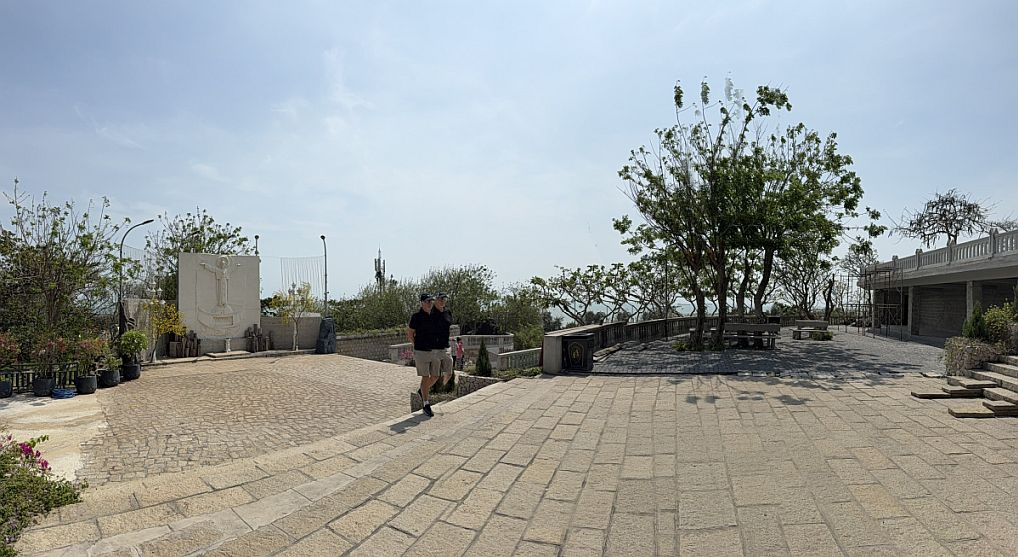
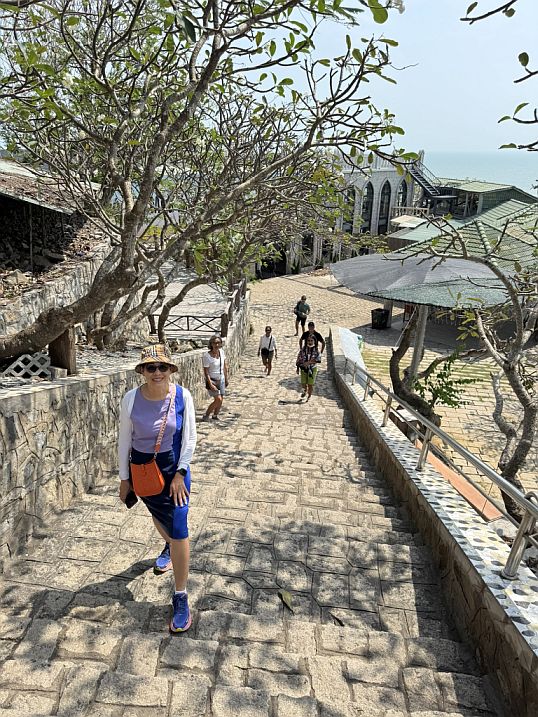
We are moving up by following the stairs.
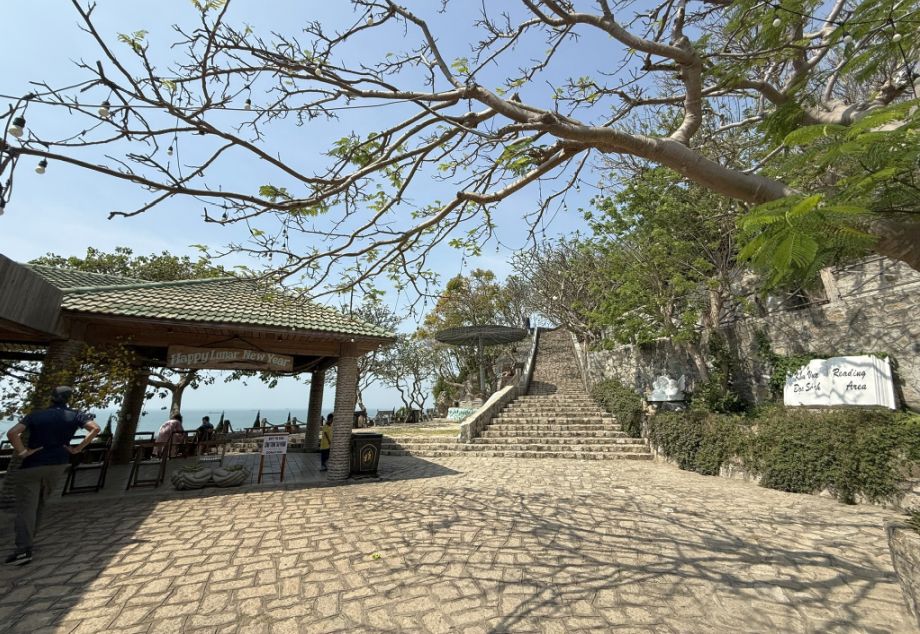
As we continued climbing higher, those first glimpses of water opening up are incredibly rewarding.
 |
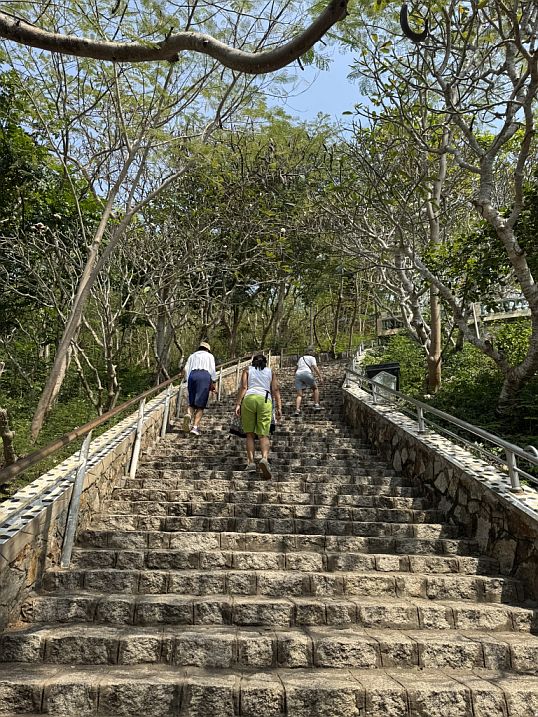 |
More stairs to climb.
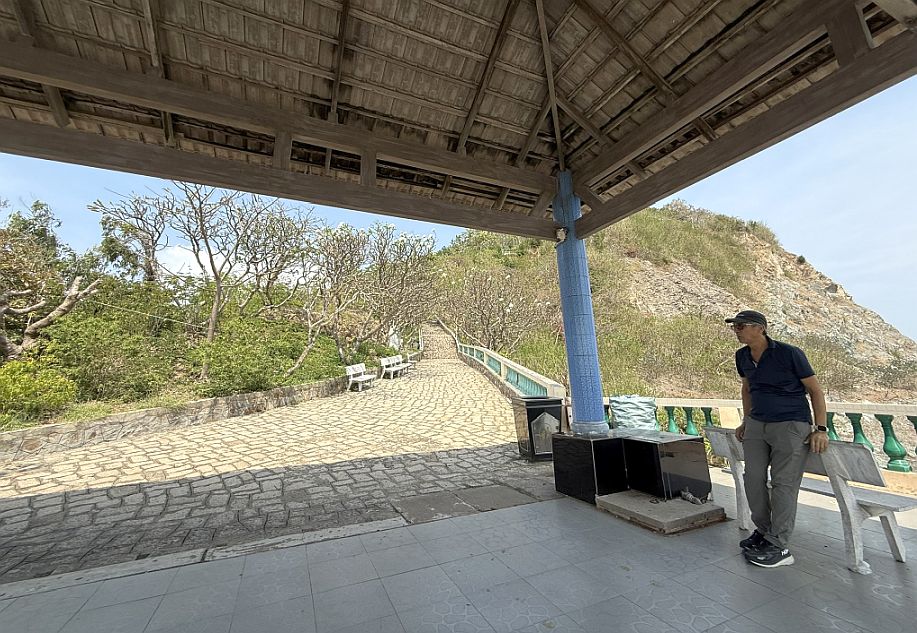
When we reached the large rest area, that’s such a real and relatable part of the experience.
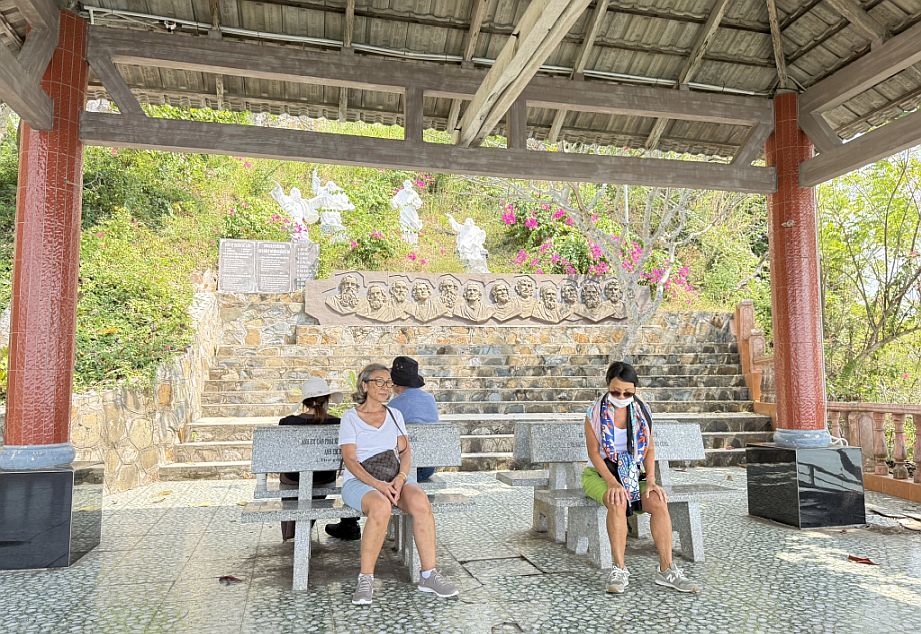
The climb is no joke, especially in the tropical humidity. Many visitors end up doing exactly what we did: stopping there, catching their breath, cooling down, and just taking it all in.
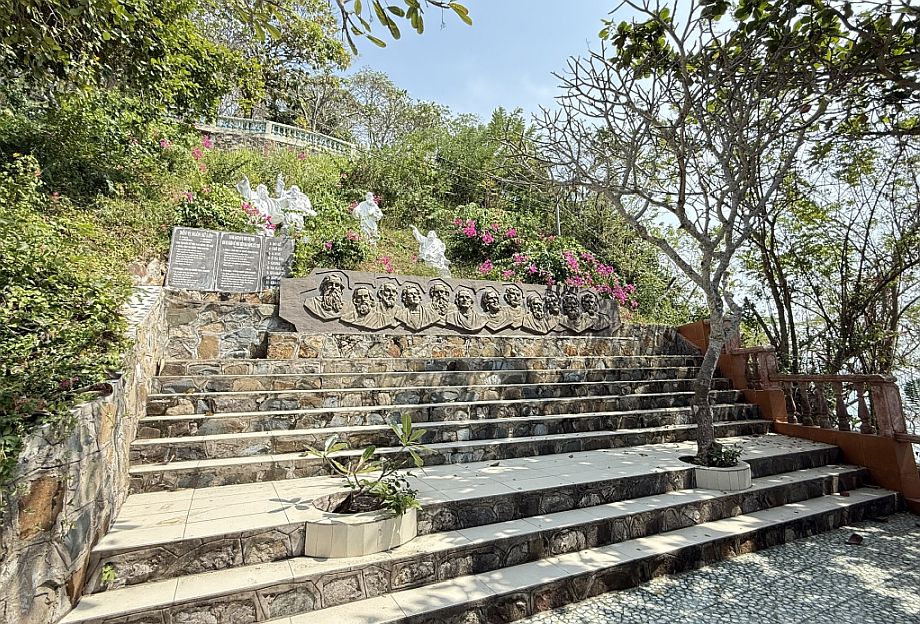
Those rest points are thoughtfully placed, almost like checkpoints, allowing you to pause and appreciate how far we have come before continuing.
 |
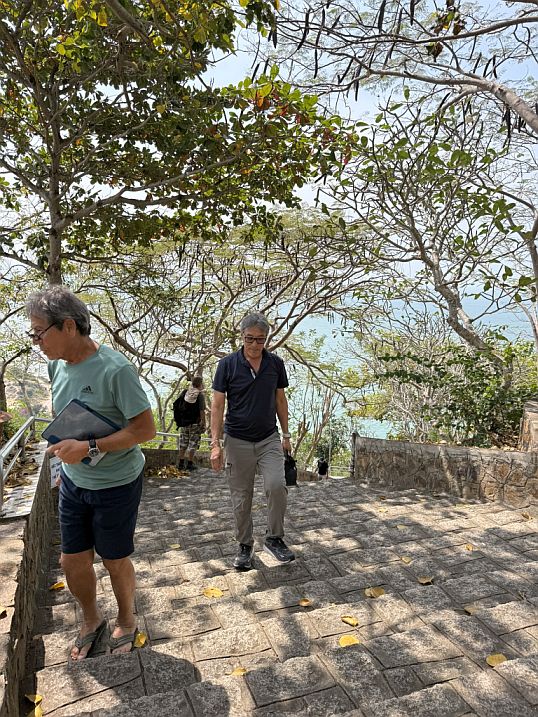 |
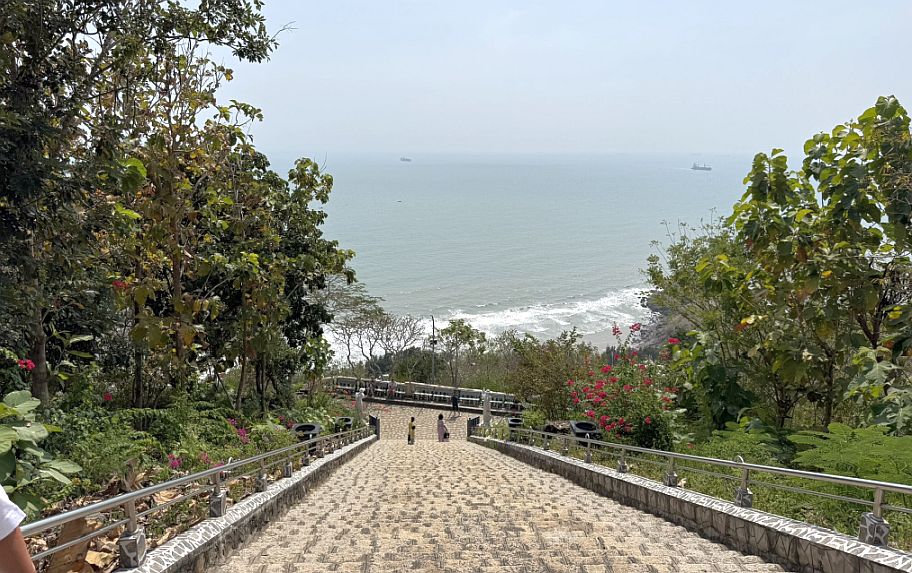
As we go higher up, we started to see the sea below us.
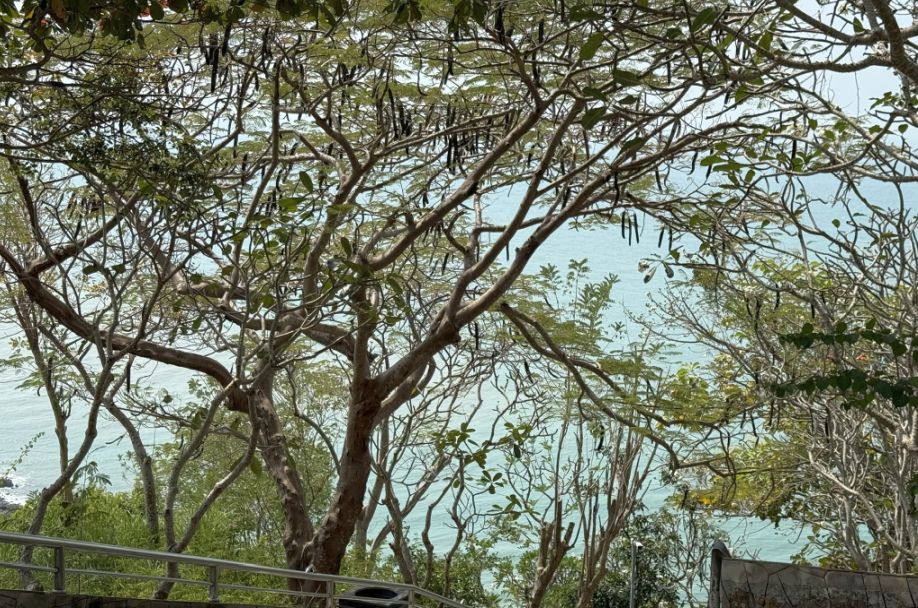
Flame trees are found all over Vietnam. When it is in full bloom, you can see bright red flowers.
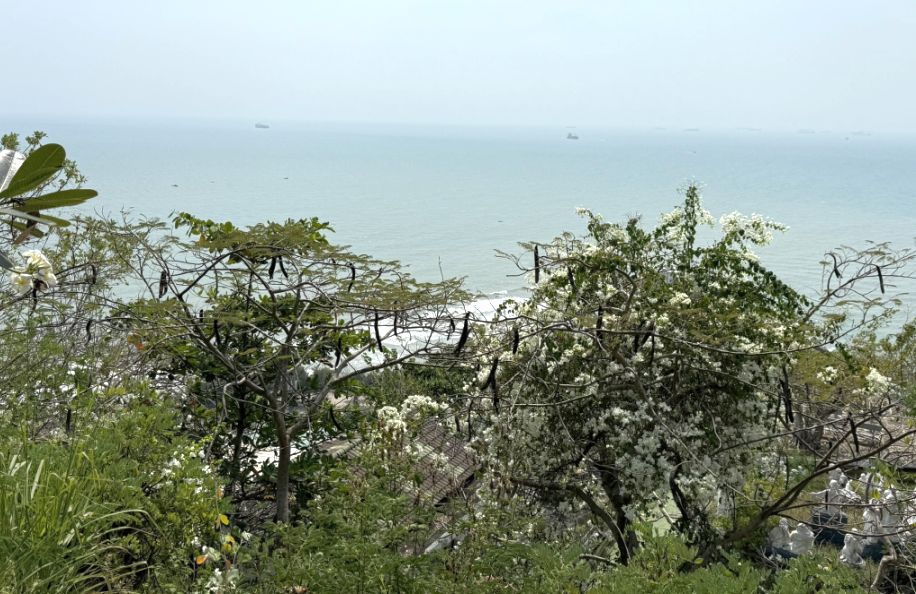
What you’re seeing is the South China Sea (in Vietnam often referred to as the East Sea). It stretches wide and uninterrupted, giving that expansive blue horizon that contrasts so beautifully with the greenery of the mountain.
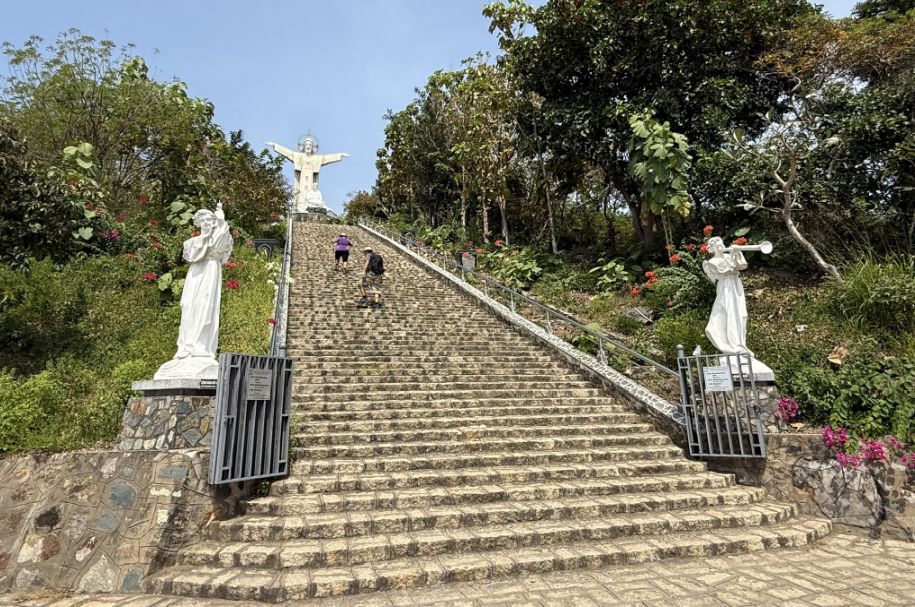
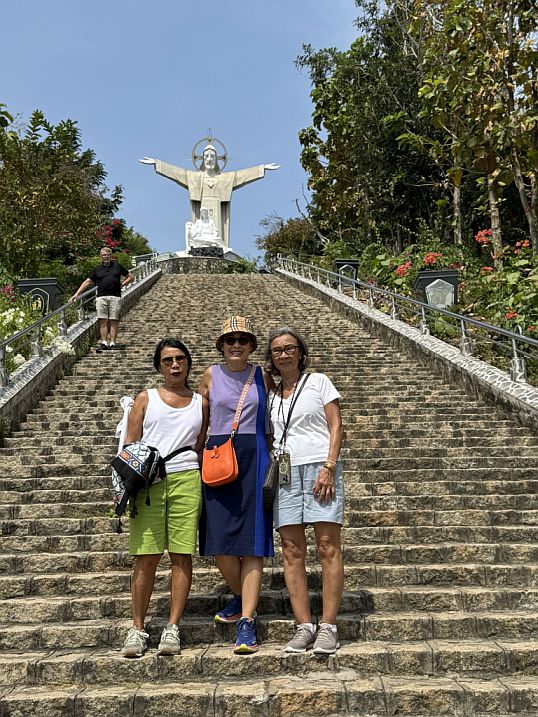
Perched on Núi Nho (Small Mountain), the statue of Christ stands about 105 feet tall.
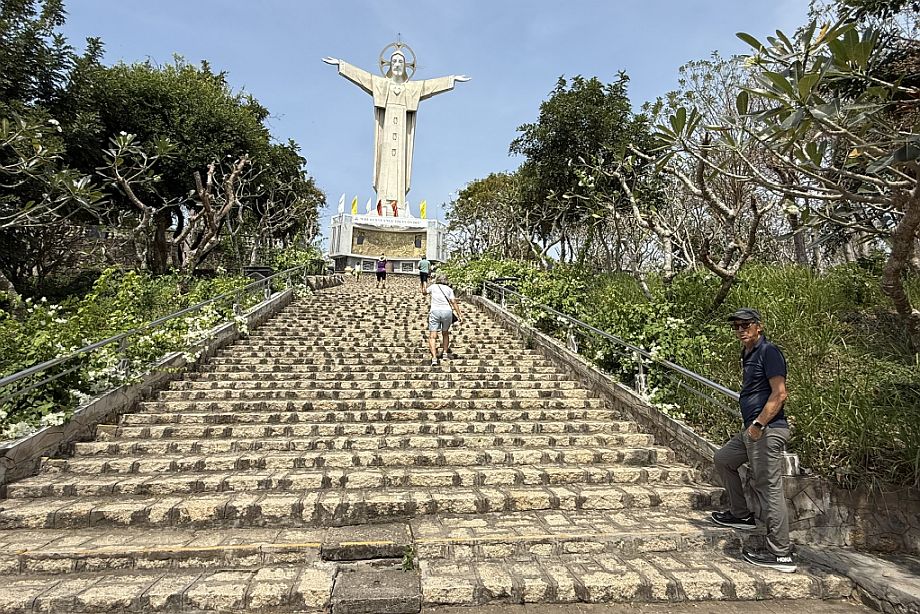
It was built between 1974 and 1994, initiated by the Vietnamese Catholic community as a symbol of faith and peace. Often compared to the Christ the Redeemer statue in Rio de Janeiro, it has become one of the most recognizable landmarks in southern Vietnam and a major pilgrimage and tourist site.
 |
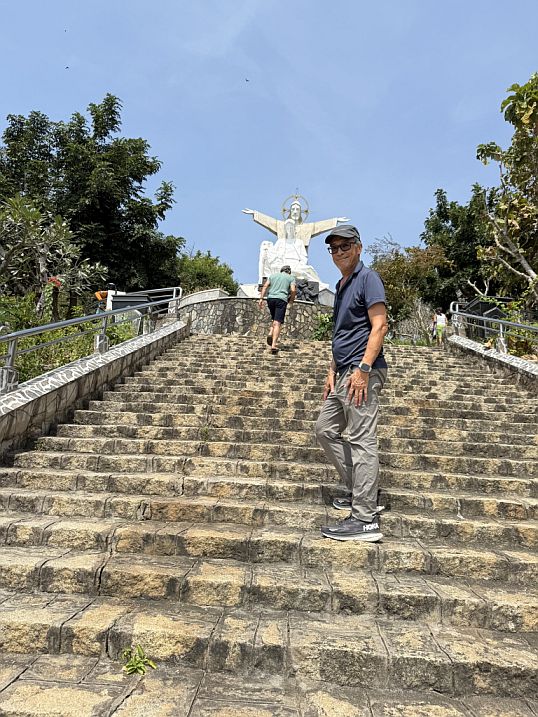 |
Climbing up the last flight of stairs before reaching the top.
Reaching the top of Christ of Vung Tau really feels like arriving at a different world after that long, humid climb.
 |
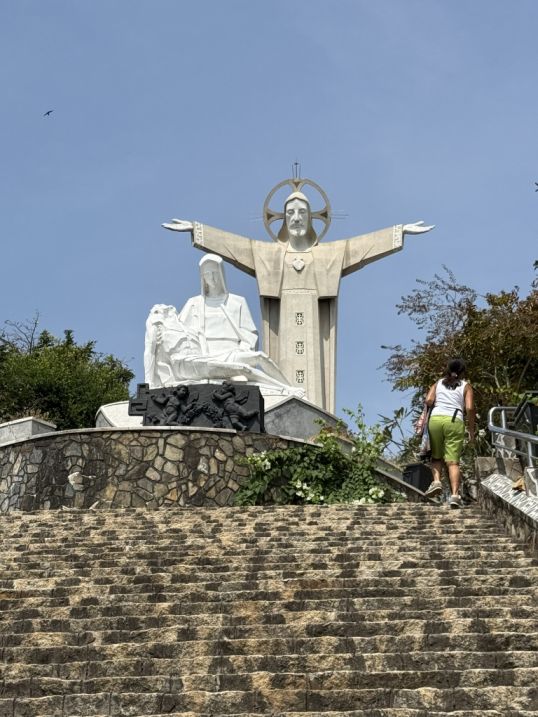 |
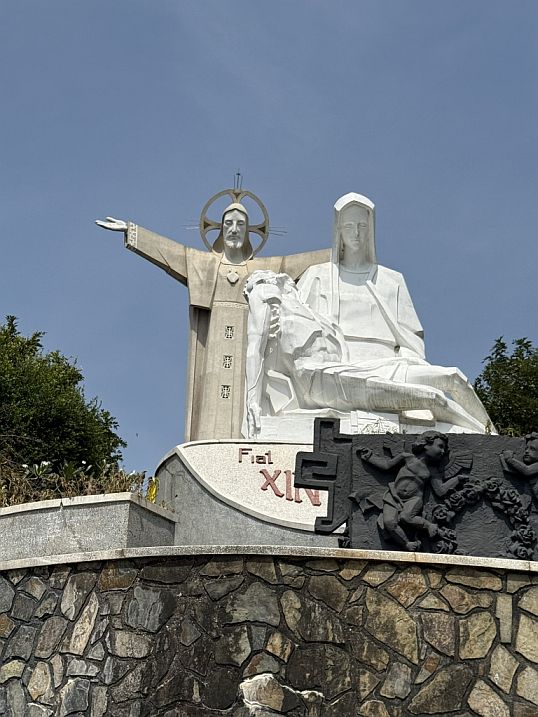
Before reaching the Christ statue, there is replica of Michelangelo's La Pieta statue (in white) just a the bottom.
 |
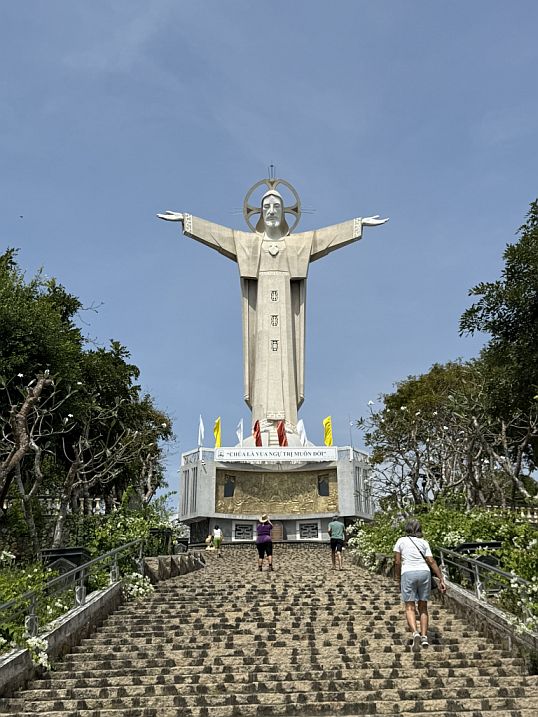 |
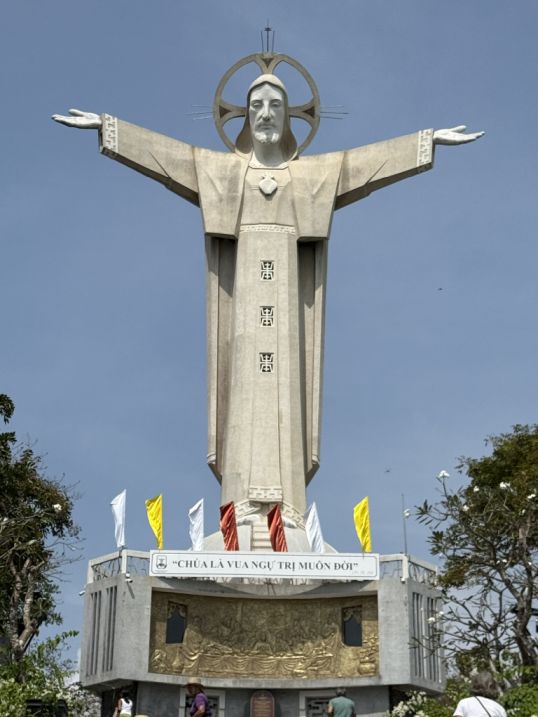
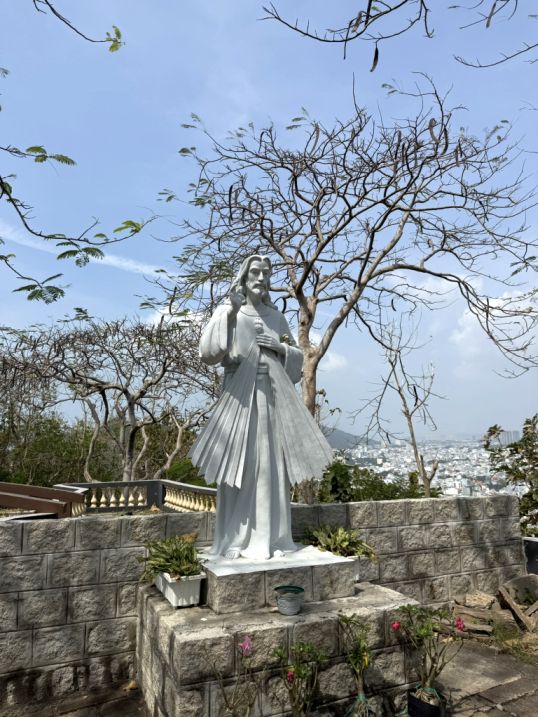
The statue of Christ is standing on 13 ft. high platform for a 118 ft. total monument height with two outstretched arms spanning 60 ft. A fun note that this statue is bigger than the one is Brazil, the one in Rio di Januaro measure is 98 ft. high, and this one is 105 ft. tall.
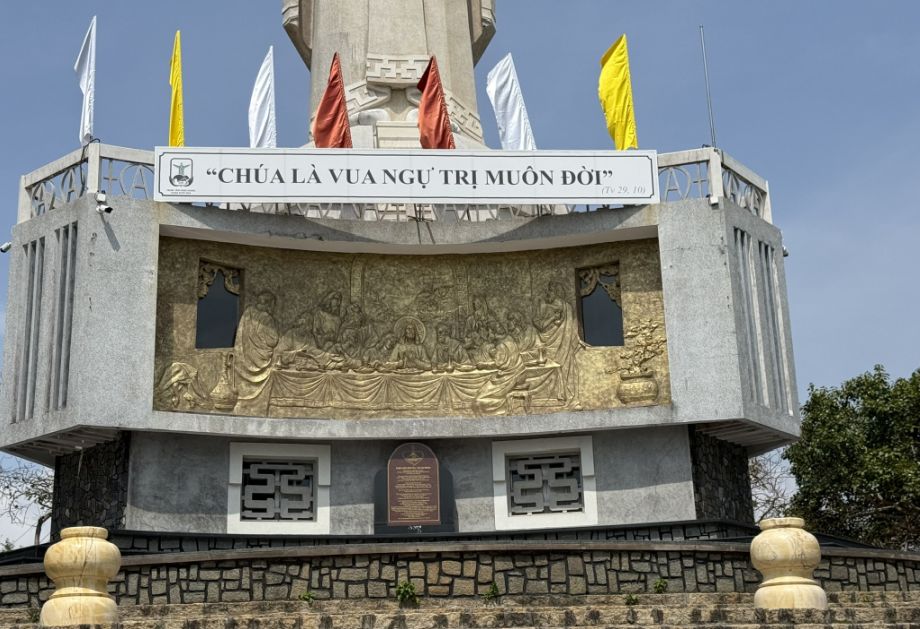
Just beneath the statue, the scene resembles the Last Supper is part of a series of religious reliefs and sculptural depictions placed around the summit. These artworks are meant to illustrate key moments from the life of Christ, helping turn the entire mountaintop into a kind of open-air spiritual space, not just a viewpoint.
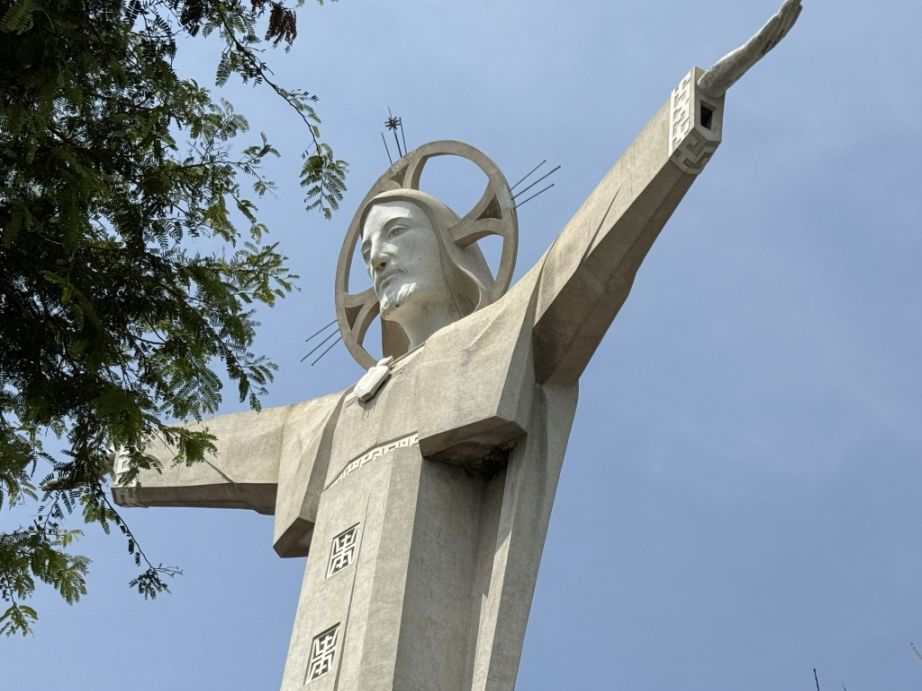
Christ statue extending his two arms.
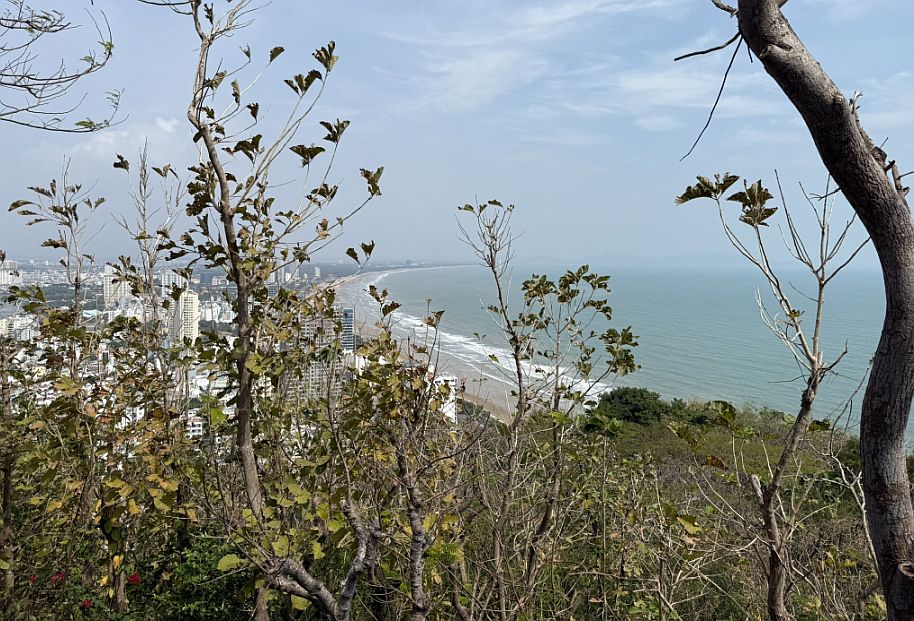
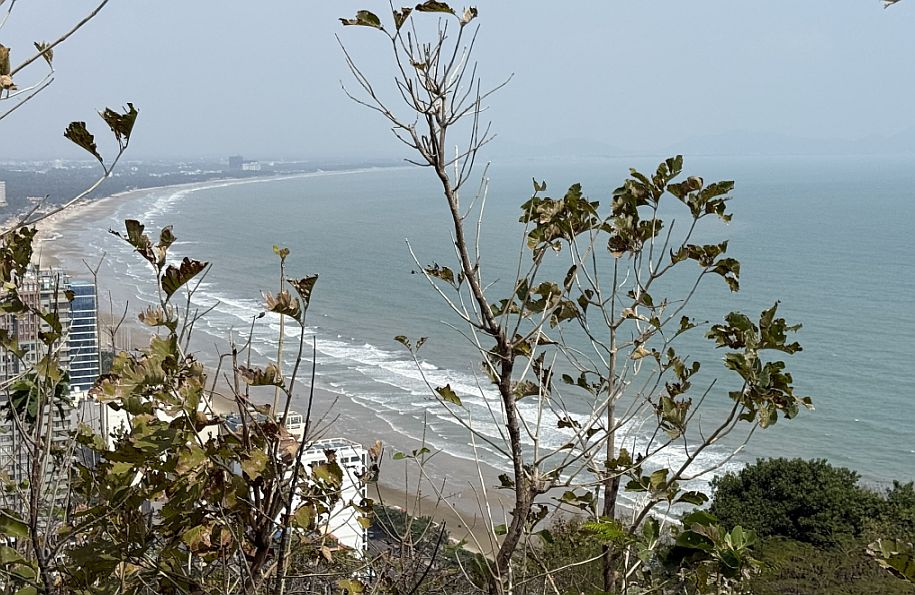
From up there, the views open up dramatically. The curved coastline is one of Vũng Tàu’s main beaches, likely Bãi Sau (Back Beach), stretching in a long arc with soft sand and clear blue water.
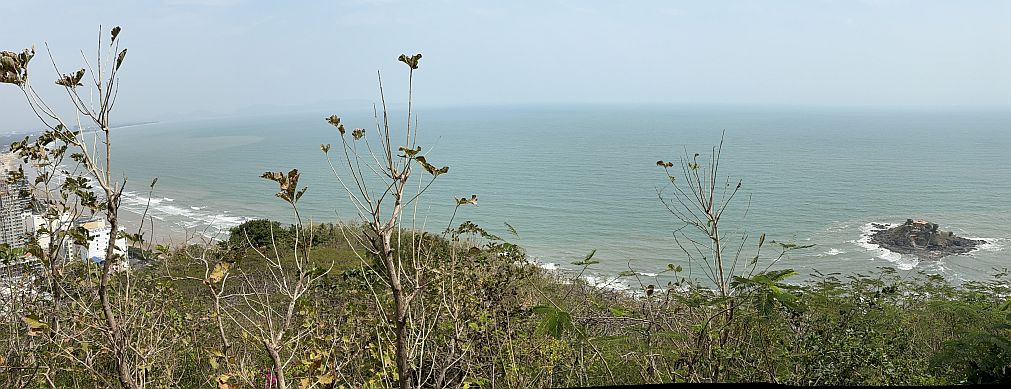
And looking farther out on the right, spotting Bà Islet again ties the whole journey together, we are now seeing from above a place we had stood near earlier.
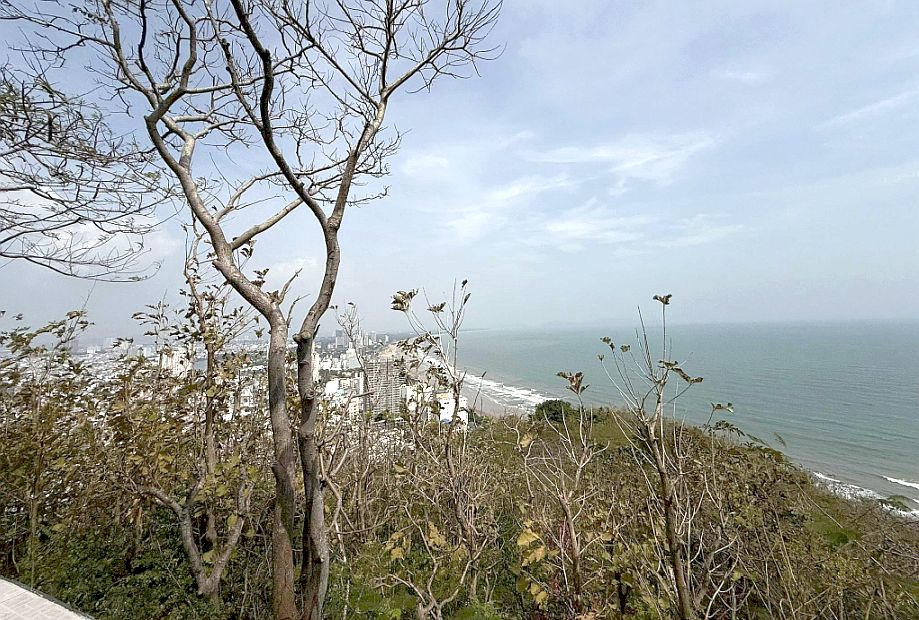
Framed by tall trees and dotted with white buildings, it creates that classic coastal panorama, both lively and serene at the same time.
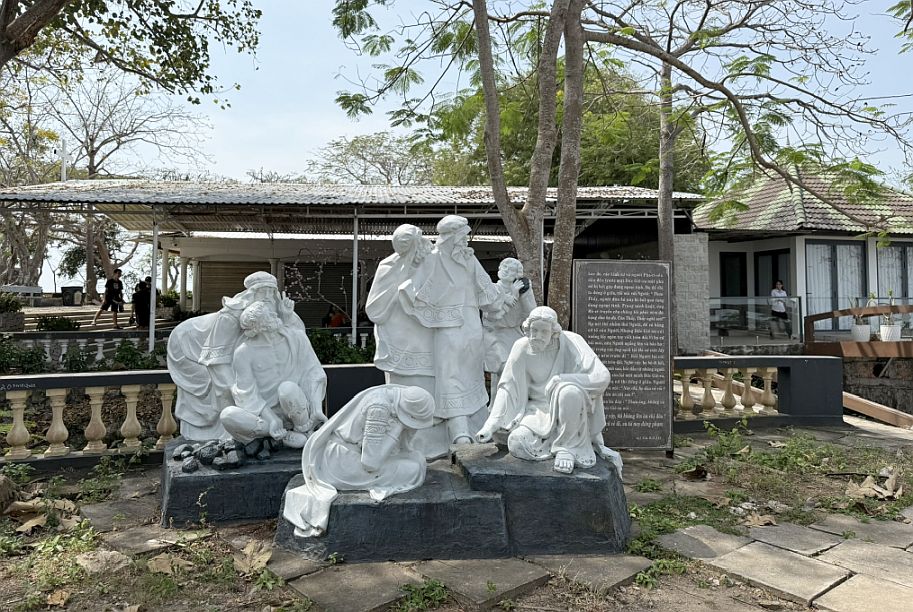
Walking around the courtyard, the statues we saw are form part of what’s often called the “Stations of the Cross” or other biblical scenes. The one with Christ seated and Mary grieving captures a moment of deep sorrow and humanity.
 |
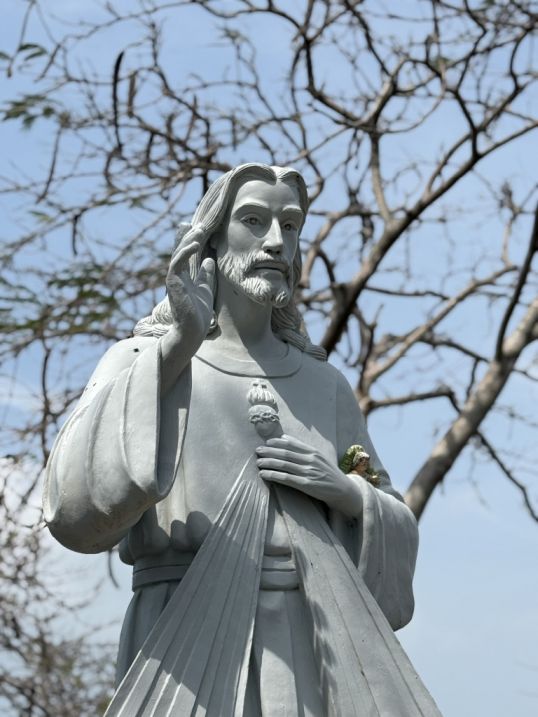 |
While the statue of Christ with his hand raised symbolizes blessing and guidance. These sculptures add emotional depth to the site, inviting reflection as much as sightseeing.
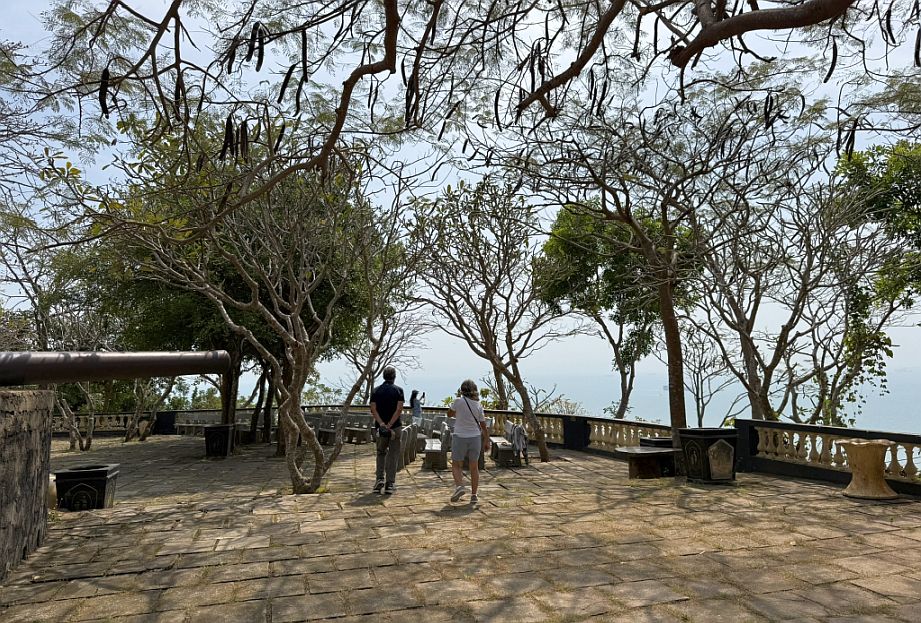
The balcony area is truly breathtaking, wide views of the bay, the city, and the endless horizon of the South China Sea. It’s one of those rare vantage points where you can see everything at once: nature, city, and sea all merging together.
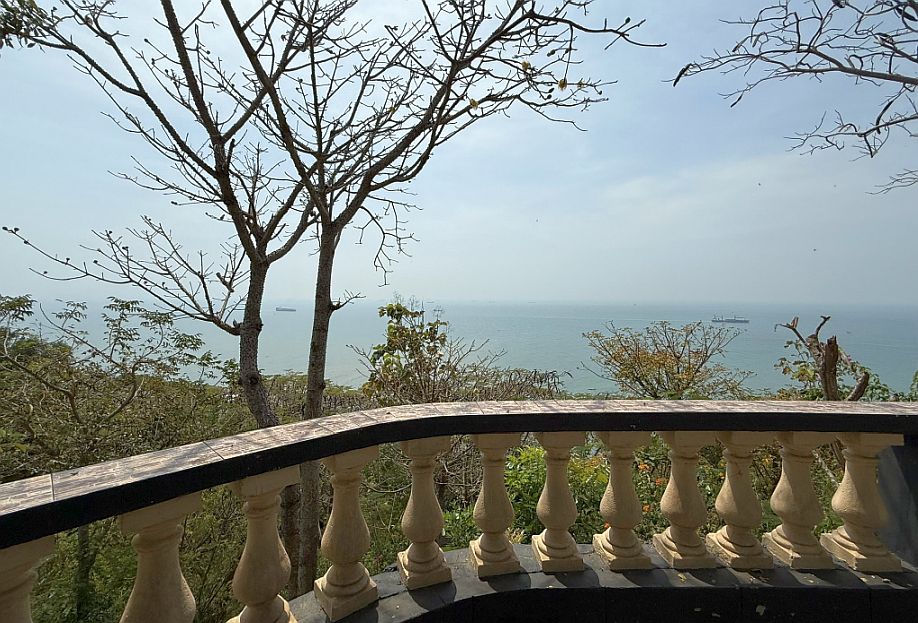
It’s one of those rare vantage points where you can see everything at once: nature, city, and sea all merging together.
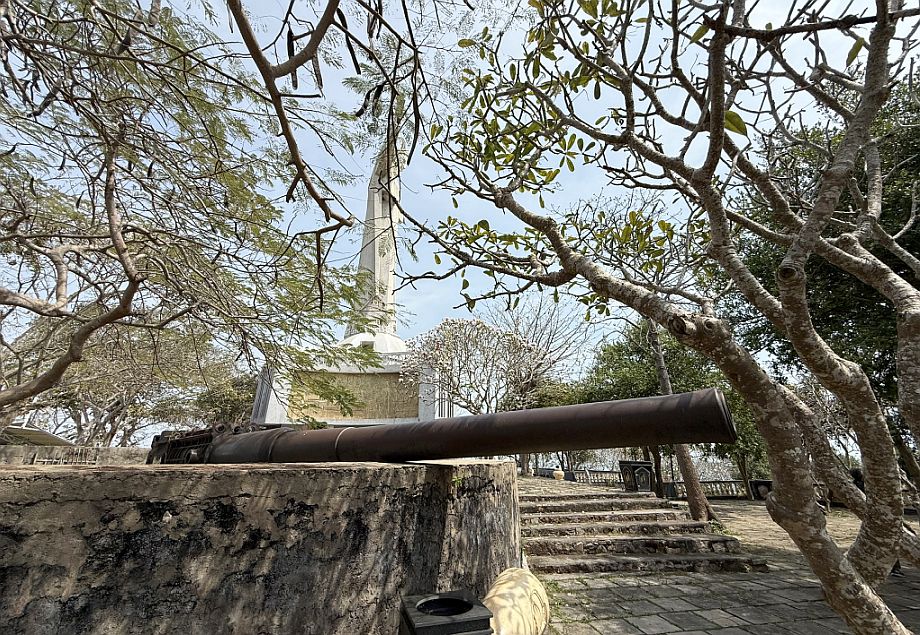
I noticed a lot of cannons in the courtyard.
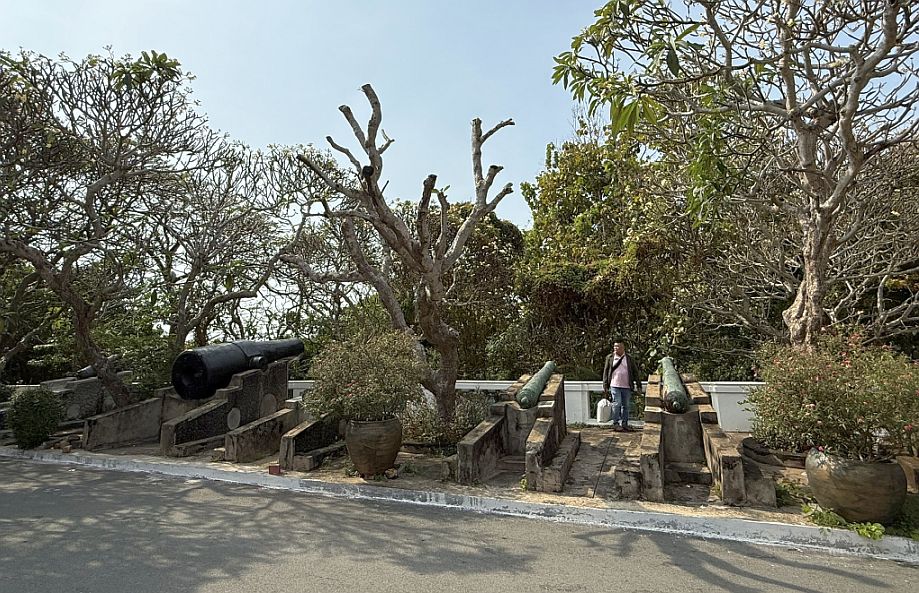
These cannons are historical remnants from the time when Vũng Tàu was strategically important during the French colonial period and later conflicts. The area around the mountain once had defensive positions overlooking the sea, and the cannons were used to protect the coastline from naval threats.
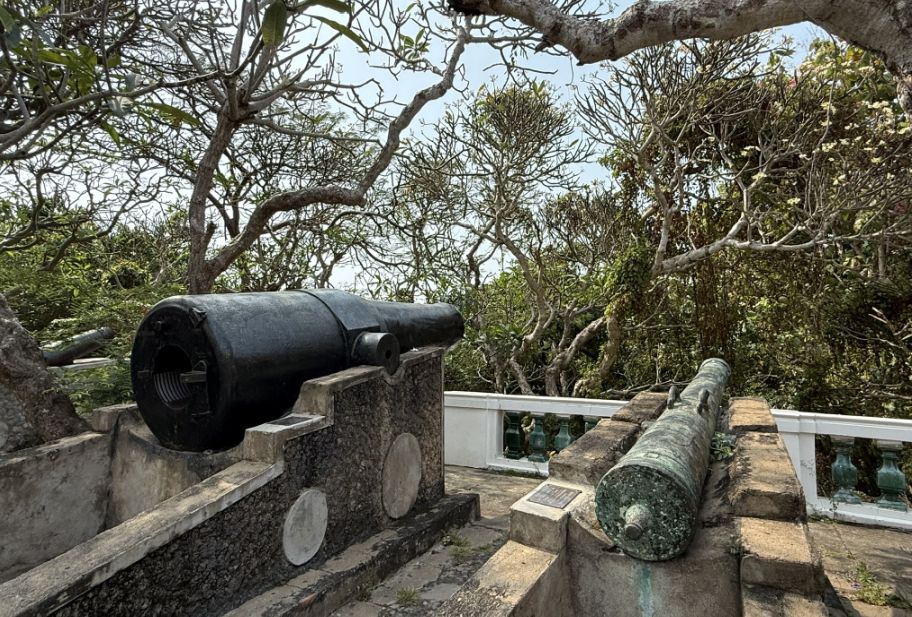
Today, they remain as artifacts, quietly reminding visitors that this peaceful, scenic place also has a layered and complex history.
Standing up there, it really feels like everything comes together, the physical effort of the climb, the spiritual elements, and the sweeping beauty of the landscape.
NEXT... Day 3- Lunch/White Palace