
4 days in Northern Vietnam 2/4- 2/7/2025
Day 1-Ninh Binh-2/4/2025
We began our day with breakfast at the Classyc Hotel, where the dining room’s floor-to-ceiling glass windows offered a wonderful view of Hanoi. From above, we could see the city already coming to life.
After breakfast, a bus picked us up for a full-day excursion to Ninh Binh.
Our tour combined cycling and boating, giving us the opportunity to experience both the natural beauty of Ninh Binh and the everyday life of its local communities. It promised to be a full and memorable day exploring one of northern Vietnam’s most spectacular landscapes. Ninh Binh is often called “Ha Long Bay on land” because it has a similar dramatic landscape, but instead of limestone islands rising from the sea, its towering karst formations rise from rice fields, rivers, and peaceful inland valleys. The difference is that Ninh Binh combines this spectacular geology with rural Vietnamese life. Along the waterways are farmers, villages, temples, rice paddies, and water buffalo. The result is a landscape that feels like Ha Long Bay transplanted into the countryside, with mountains, water, and culture woven closely together.

When we arrived in Ninh Binh, our tour guide took us to a local bicycle shop, where we collected our bikes and prepared to explore the surrounding villages.

Got our bikes and we are ready to start the adventure....

We then cycled along quiet country roads.
 |
 |
We began cycling along narrow roads that wound through the villages, passing small homes, gardens, and quiet farm paths. The ride was peaceful, with only the sounds of bicycles and rural life surrounding us.

We then stopped beside a rice field.

Because it was early February, the young rice seedlings were still very small, with their delicate green stalks growing through shallow water.

The flooded field reflected the sky and surrounding landscape, while a magnificent limestone mountain rose dramatically in the background and dominated the scenery.

The combination of water, young rice, village paths, and towering karst peaks created a beautiful introduction to the countryside of Ninh Binh.
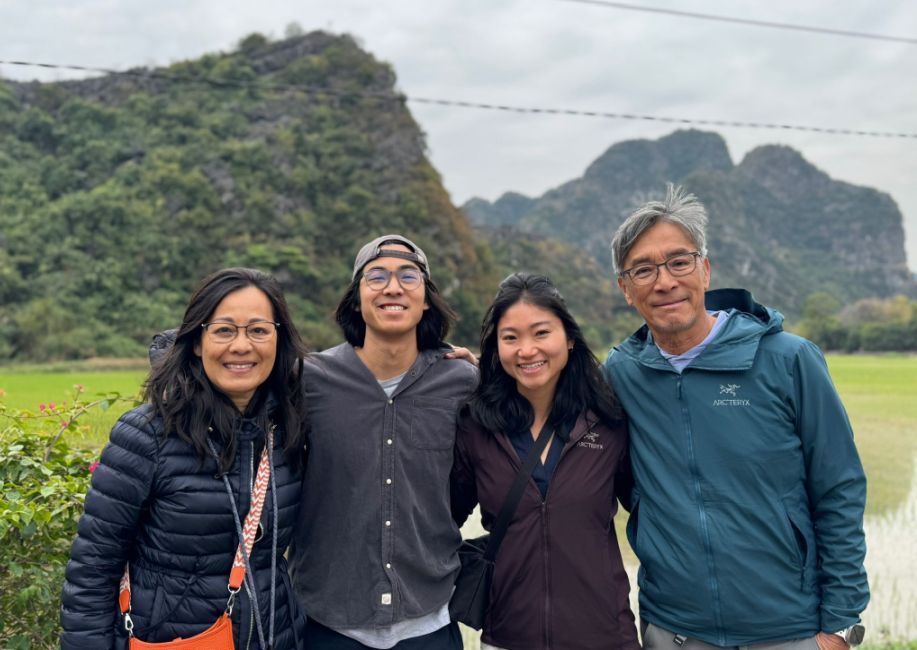

As we continued cycling through the villages, we saw several elderly women coming out to the roadside to sell small packets of salt. Each package cost only a few cents, and none of us actually needed salt, but many people bought one as a way to support the local villagers. Our tour guide told us that the woman holding one of the packets was in her nineties. Selling the salt provided her with a small source of income and helped support her family. It was a touching reminder that even a very small purchase could make a meaningful difference to the local community.

We stopped at the ornate entrance bridge to Hoa Lu Ancient Capital, one of Vietnam’s most important historical sites. The bridge crosses a calm section of the Hoàng Long River and is decorated with detailed carvings of dragons, clouds, and other traditional Vietnamese designs. The Vietnamese flags and dramatic limestone mountains make the location especially recognizable.
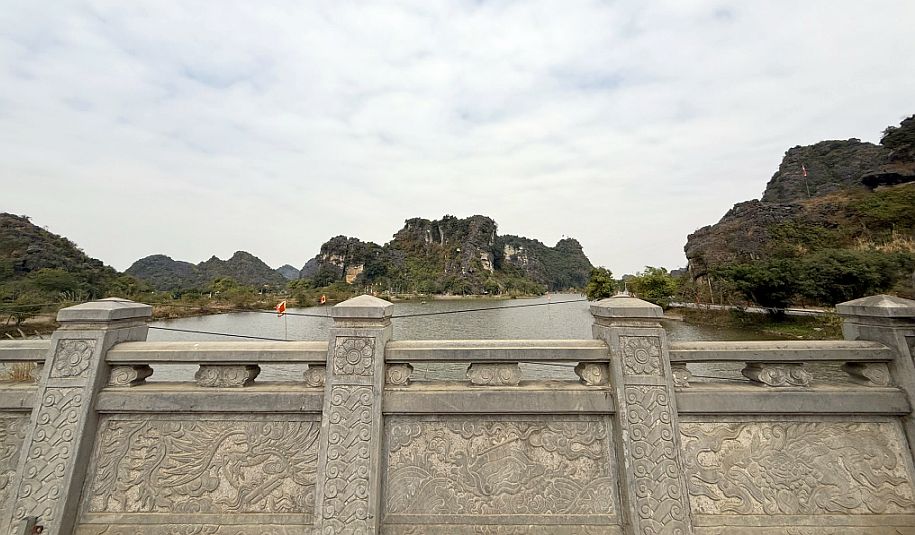
The bridge crosses a calm section of the Hoàng Long River and is decorated with detailed carvings of dragons, clouds, and other traditional Vietnamese designs. The Vietnamese flags and dramatic limestone mountains make the location especially recognizable.

The karst mountains surrounding the bridge are one of Ninh Binh’s most distinctive features. These dramatic limestone formations were created from layers of ancient seabed that were lifted over millions of years. Rainwater and underground rivers gradually dissolved and carved the rock, leaving behind steep cliffs, hidden caves, and jagged green peaks.
 |
 |
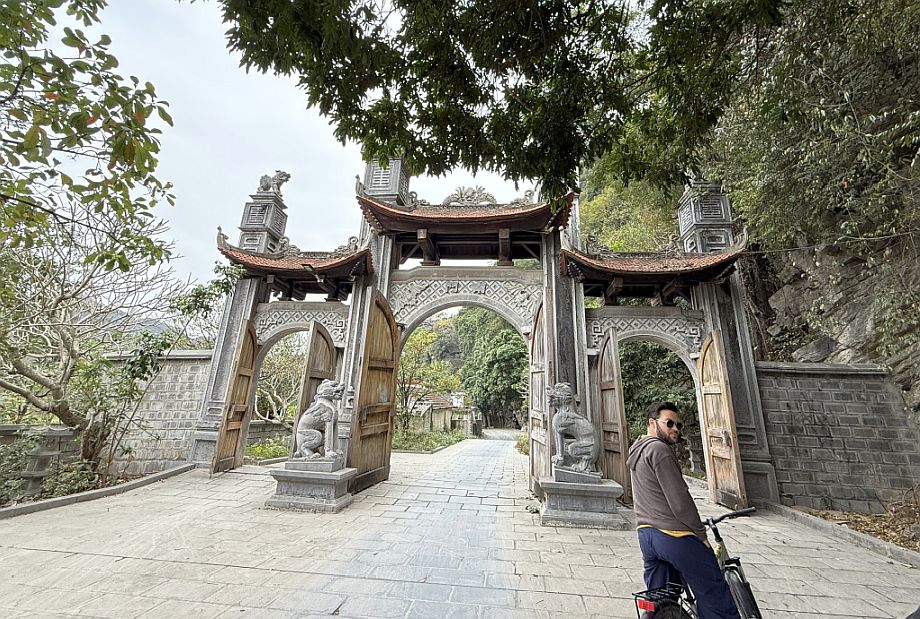
We biked into Hoa Lu Ancient Capital through the western entrance, rather than the main visitor entrance. We approached by bicycle through an ornate three-arched gate, with traditional upturned tile roofs, carved stone pillars, and wooden doors opened wide for visitors.
The gate was built against the limestone mountains, making the entrance feel especially dramatic. Stone guardian figures stood on both sides, while the paved path led directly into the former capital. Entering this way by bicycle gave us a more peaceful and intimate experience, as though we were arriving through one of the old access routes into the ancient royal city.
Hoa Lu Ancient Capital is one of the most important historical sites in Vietnam. It served as the capital of Đai Co Viet, the early Vietnamese kingdom from 968 to 1010. After years of civil conflict, Đinh Bo Lĩnh united the country in 968 and became the first emperor of the Đinh Dynasty, known as Đinh Tiên Hoàng. He chose Hoa Lu as his capital because the surrounding limestone mountains formed a natural fortress. Rivers, valleys, and mountain walls protected the royal city, making it difficult for enemies to attack.
Hoa Lu was also the capital of the Early Lê Dynasty under Lê Đai Hành, who succeeded Đinh Tiên Hoàng. The ancient citadel once included palaces, temples, homes, defensive walls, and military areas. In 1010, the Lý Dynasty moved the capital to Thăng Long, present-day Hanoi because it offered more room for the kingdom to expand. Hoa Lu then became known as the “ancient capital.”
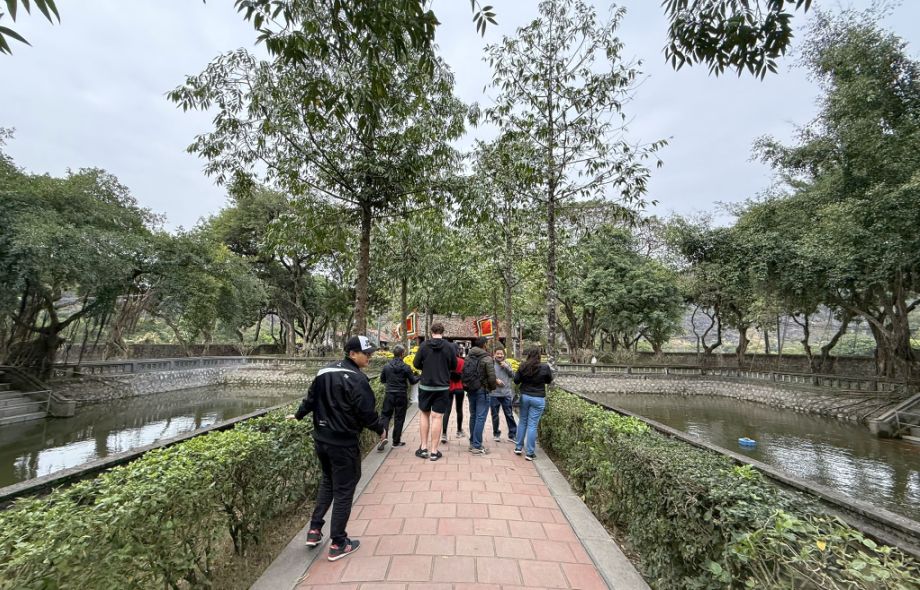
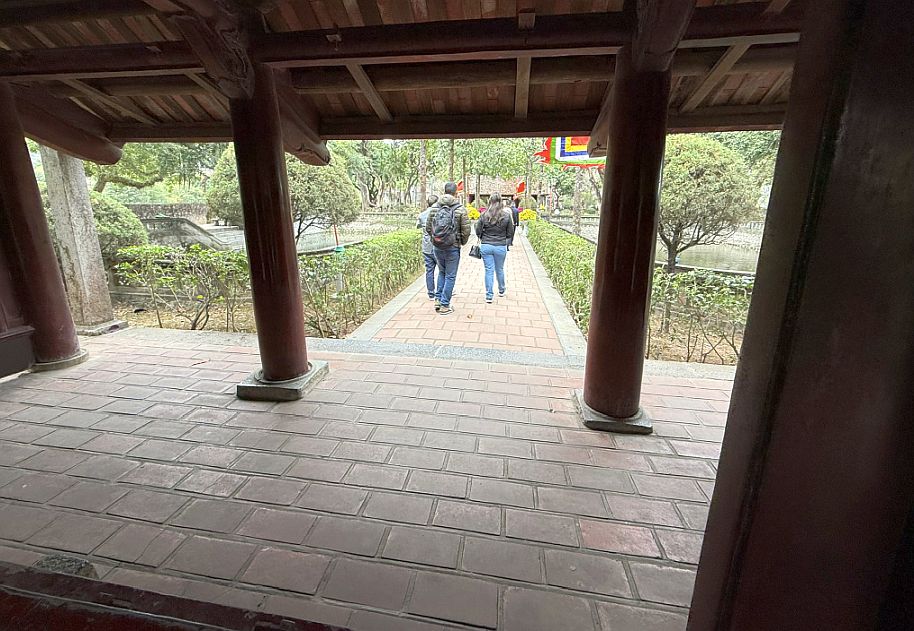
We walked along a peaceful path with ponds on both sides. In the past, water surrounding the approach would have helped define and protect the royal compound, while also reflecting the importance of water in the landscape of Hoa Lu Today, the ponds are primarily part of the restored heritage setting, often decorated with lotus plants and used to create a calm, ceremonial atmosphere. The gate marks the transition from the open grounds into the temple area, where visitors come to honor Vietnam’s early emperors.
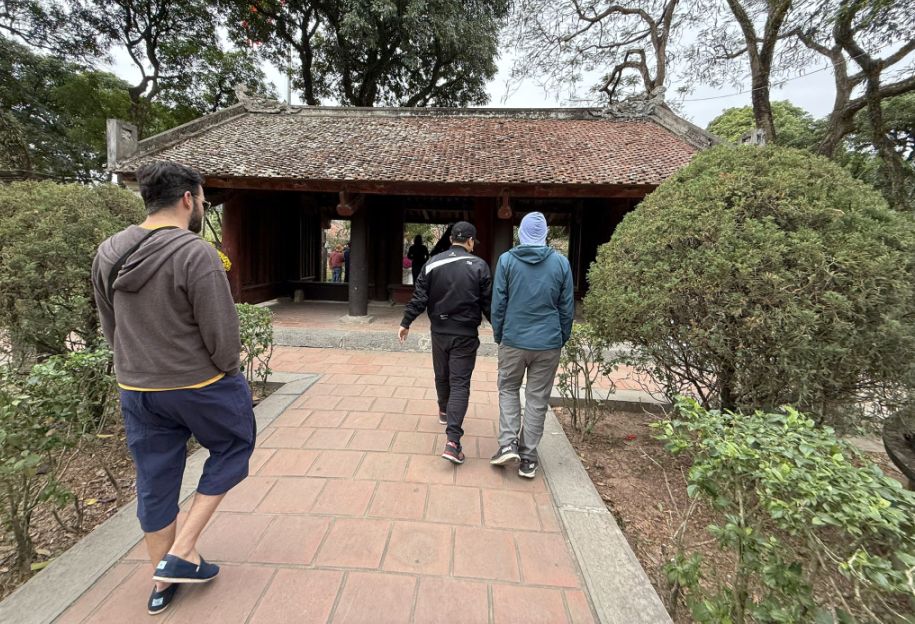
, then passed through another traditional gate before reaching the main temple building. The ponds and gate formed a formal entrance approach, guiding visitors from the outer grounds into the sacred and historical heart of the site.
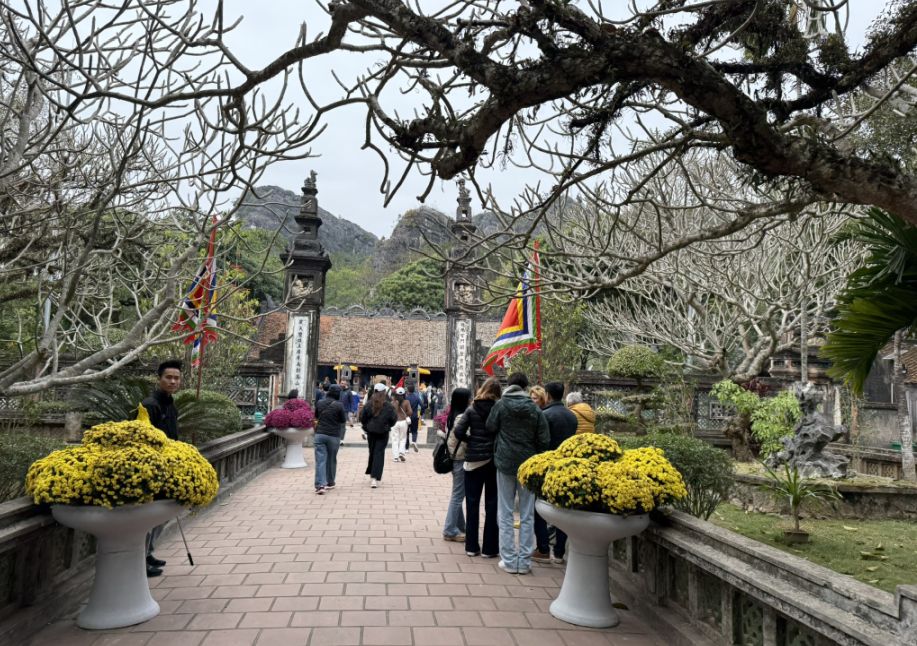
We are heading into the main courtyard where the temple of Emperor Đinh Tiên Hoàng, one of the two principal temples at Hoa Lu.
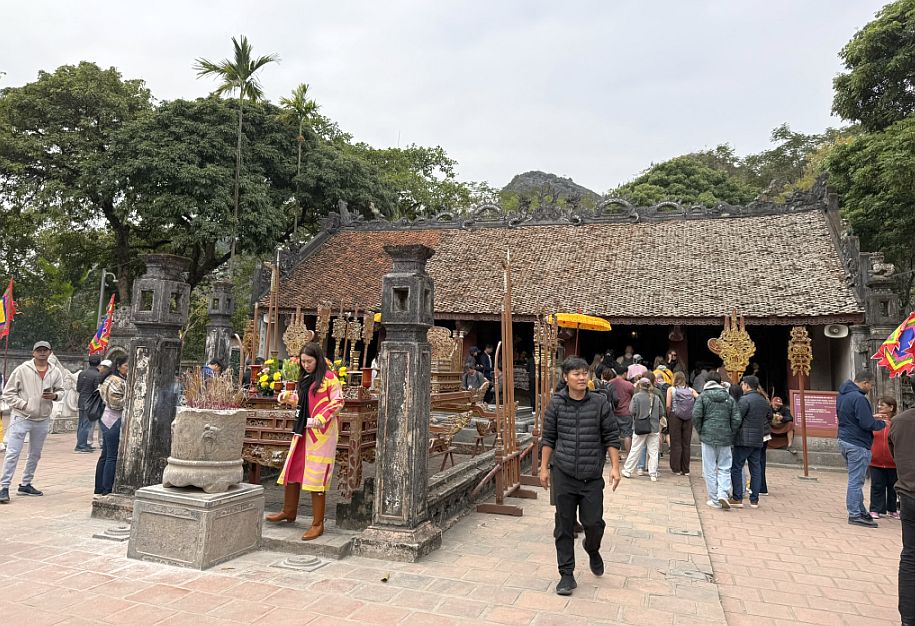
The temple stands on the site of the former royal palace and was built in the 17th century to honor Đinh Bo Lĩnh, who unified Vietnam in 968 and established Hoa Lu as the capital.
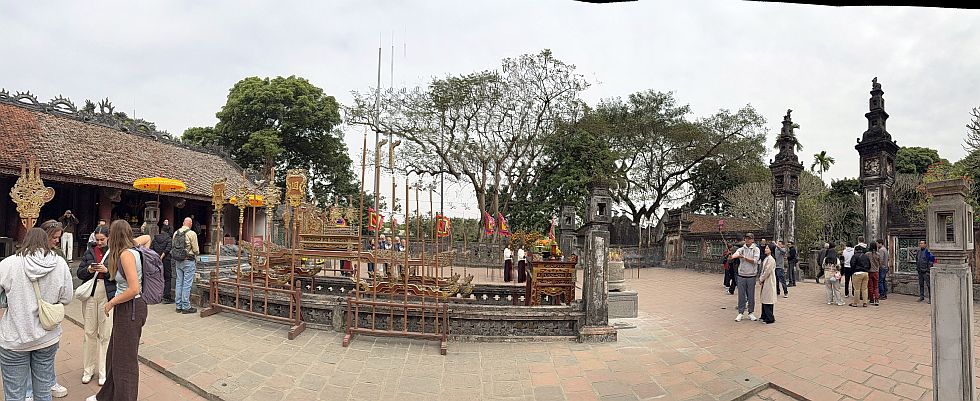
IN front of the temple, we noticed an important stone feature in the center of the courtyard.
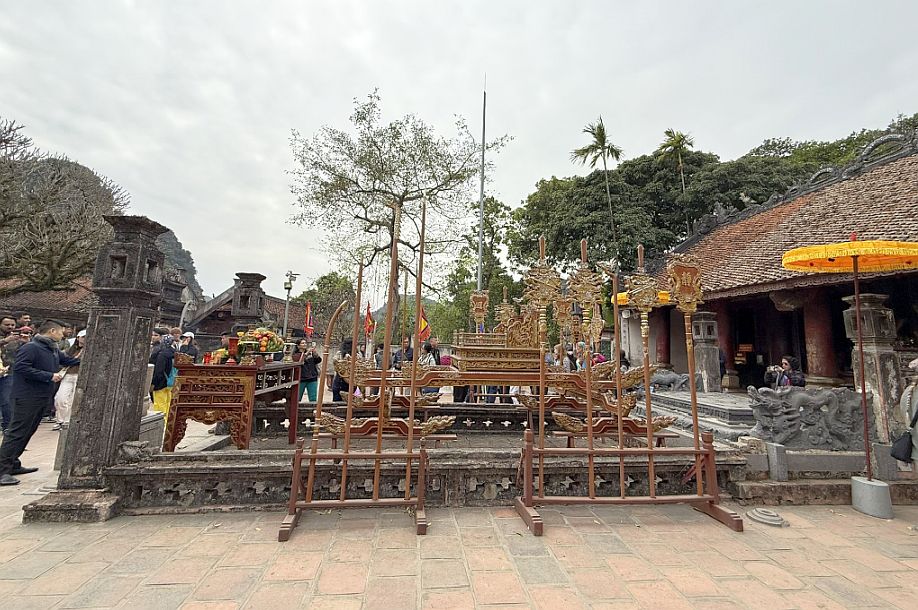
It is known as a long sàng, or “dragon bed.”
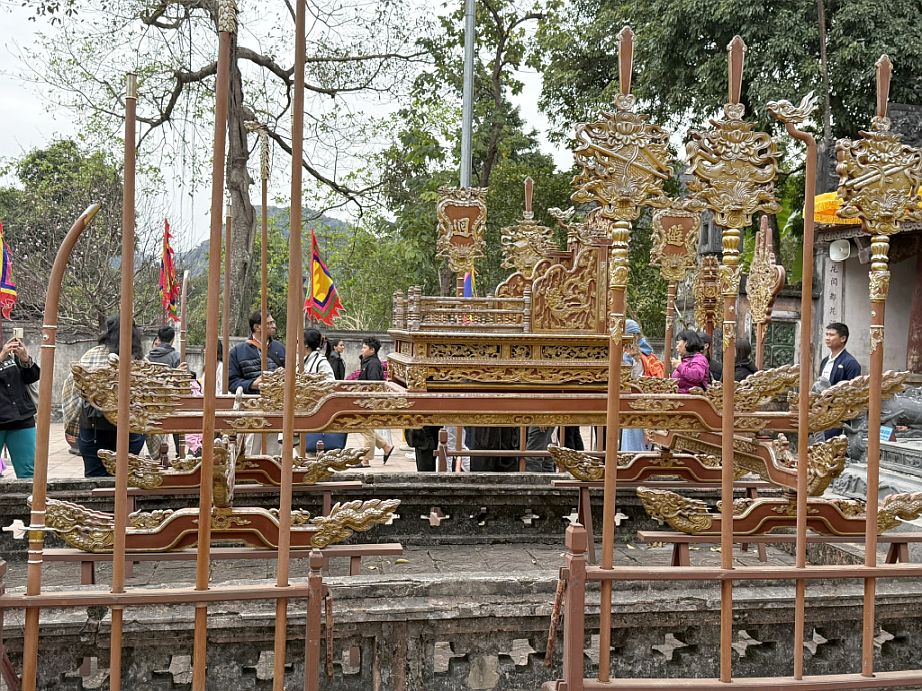
Rather than being a bed for sleeping, it was a ceremonial stone platform associated with the king and the royal court.

Its surface is richly carved with dragons, clouds, and other traditional designs, symbolizing imperial power and protection.
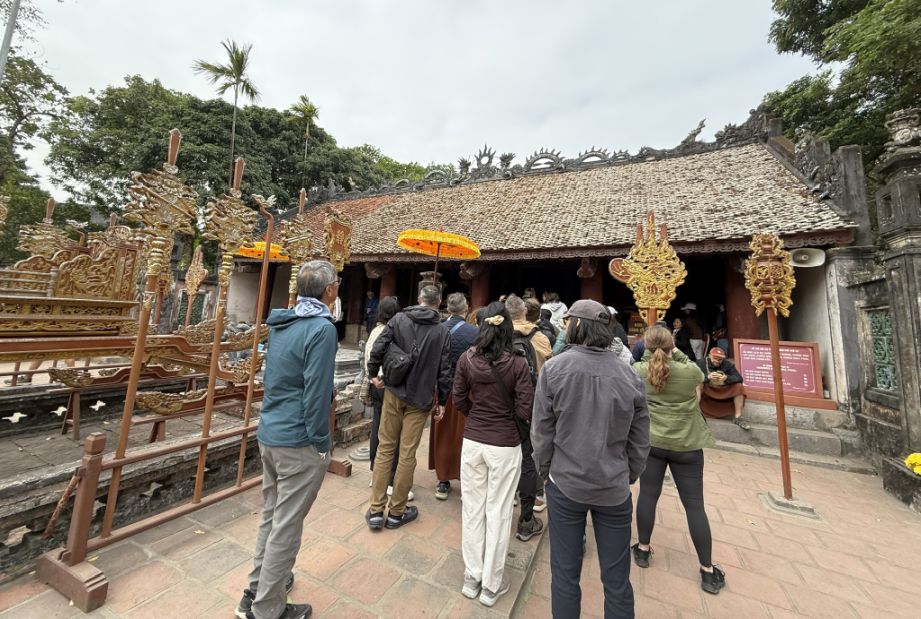
Staying in line to enter the Temple. The current temple is a later reconstruction, but it preserves the memory of the original palace and the first great imperial dynasty of Vietnam.
Our guide also pointed out the details on the roof.

The curved roof edges and ridge are decorated with dragons, while the circular ornament in the center resembles a glowing flame or sun. This central symbol represents light, power, and the heavens, while the dragons traditional symbols of Vietnamese kingship appear to guard and surround it. Together, the roof decorations express the connection between the emperor, divine authority, and the protection of the nation
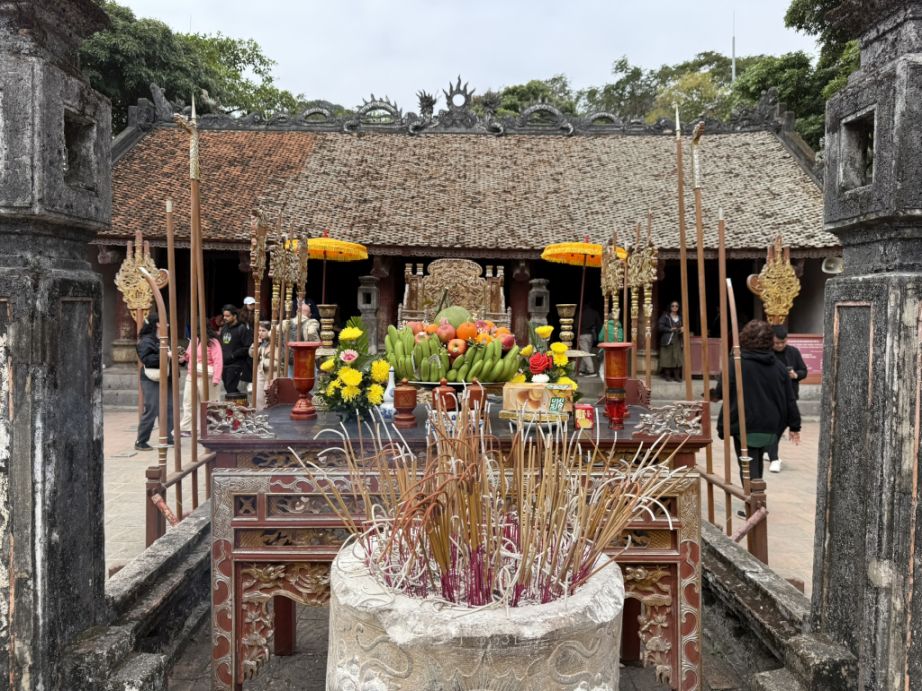
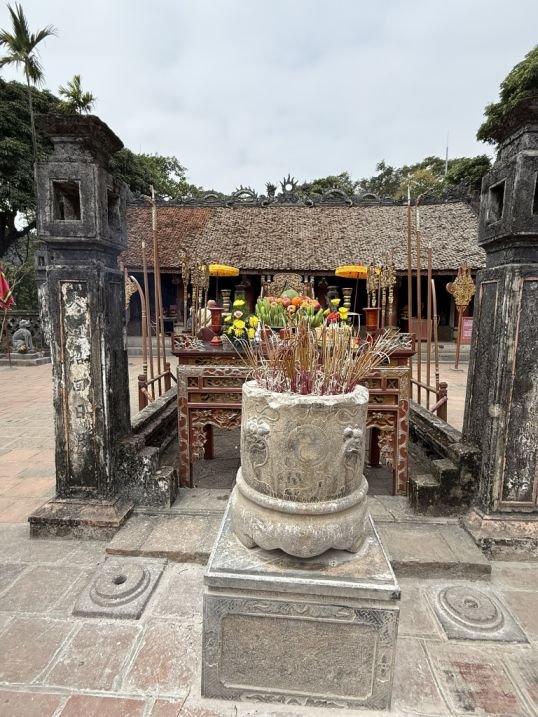
In front of the temple, there was also a large offering table covered with fresh fruit, flowers, and burning incense. These offerings are presented as signs of respect and gratitude to Emperor Đinh Tiên Hoàng and the other figures honored at the temple
 |
 |
Beside the table stood a large earthenware incense urn where visitors could place their incense sticks. As the smoke slowly rose into the air, it added to the peaceful and spiritual atmosphere of the courtyard. The offerings and incense showed that this is not only a historical site, but also a living place of worship where people continue to come and pay their respects.
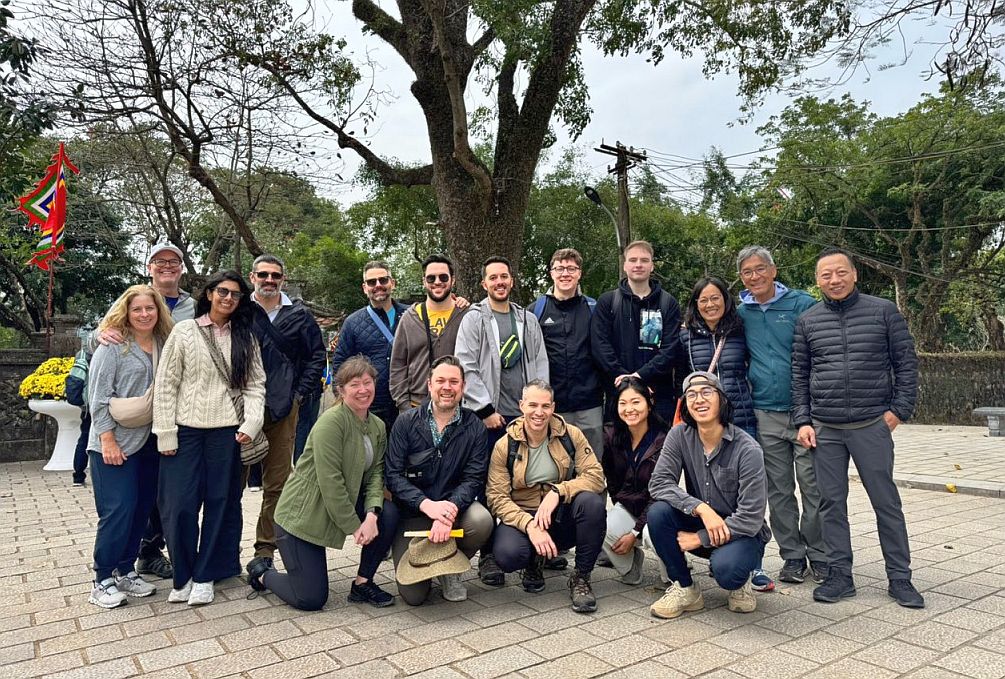
There were seventeen people on our tour bus, and most of them were American. Everyone was lively, friendly, and talkative, which made the day even more enjoyable. The cheerful group atmosphere added a lot of energy to the tour as we explored Ninh Binh together.
Before leaving Hoa Lư for our next destination, Tam Cốc, our tour guide gathered everyone for a group picture. It was a nice way to capture the people who had shared this memorable morning with us before we continued our adventure.
NEXT... Tam Coc