A week in Saigon-1/19- 1/25/2025
Day 6- Mekong Delta guide tour-1/24/2025
2nd Stop: Unicorn Island
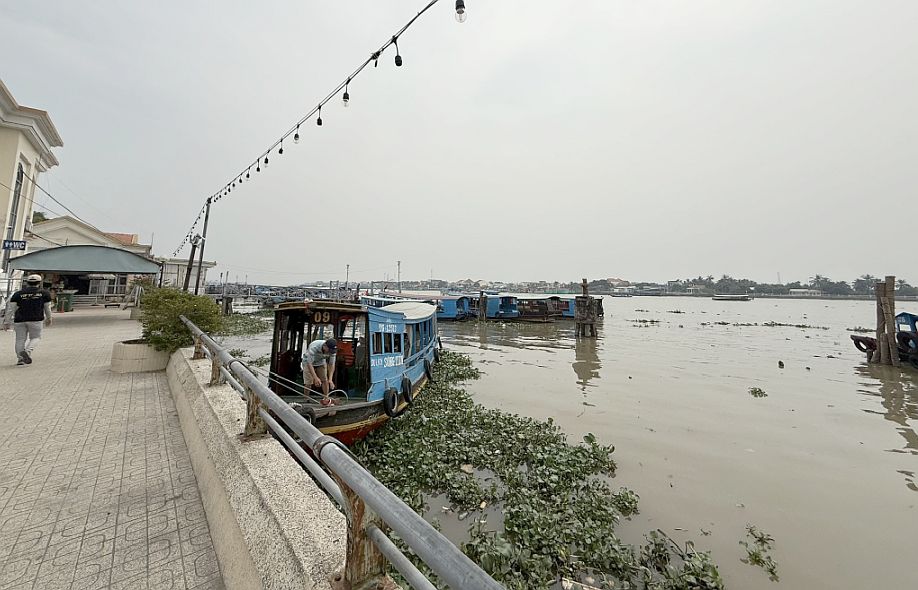
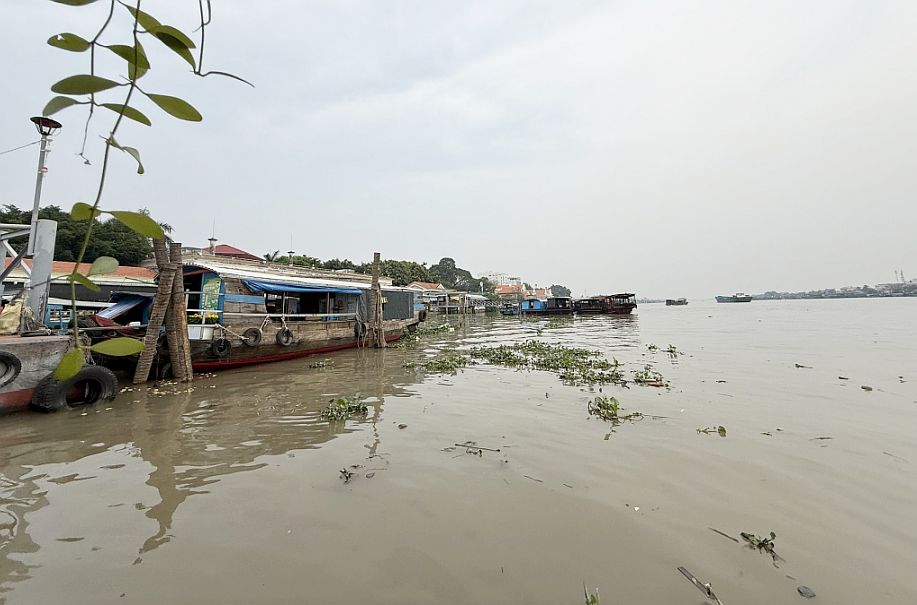
From the peaceful grounds of the temple, the journey shifts into something much more local and lived-in as we arrived at the pier in My Tho, at Ben Tau Du Lich Chuong Duong. The setting here feels simple and unpolished, very much part of everyday life along the Mekong.
The brown water we noticed is completely natural for this part of the Mekong River.
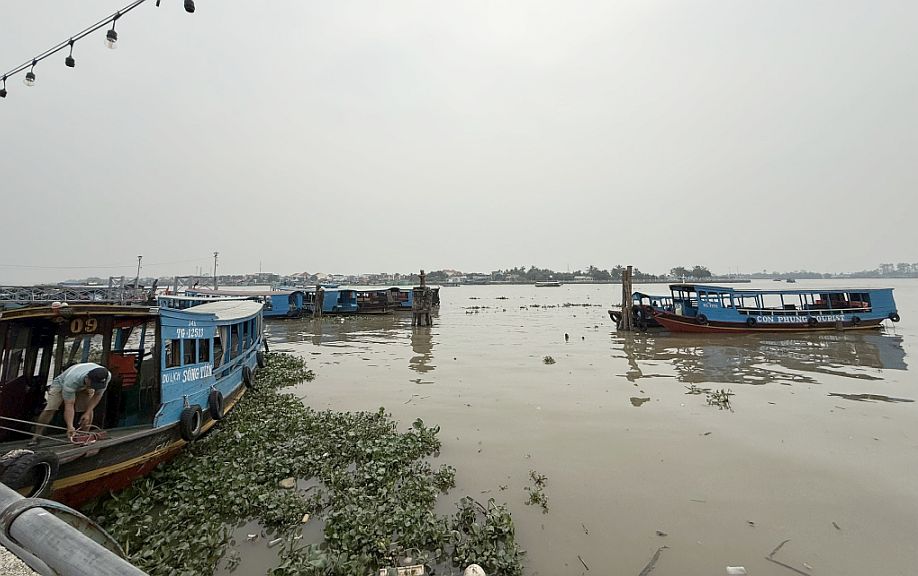
It carries rich sediment from upstream, which actually makes the delta one of the most fertile agricultural regions in Vietnam.
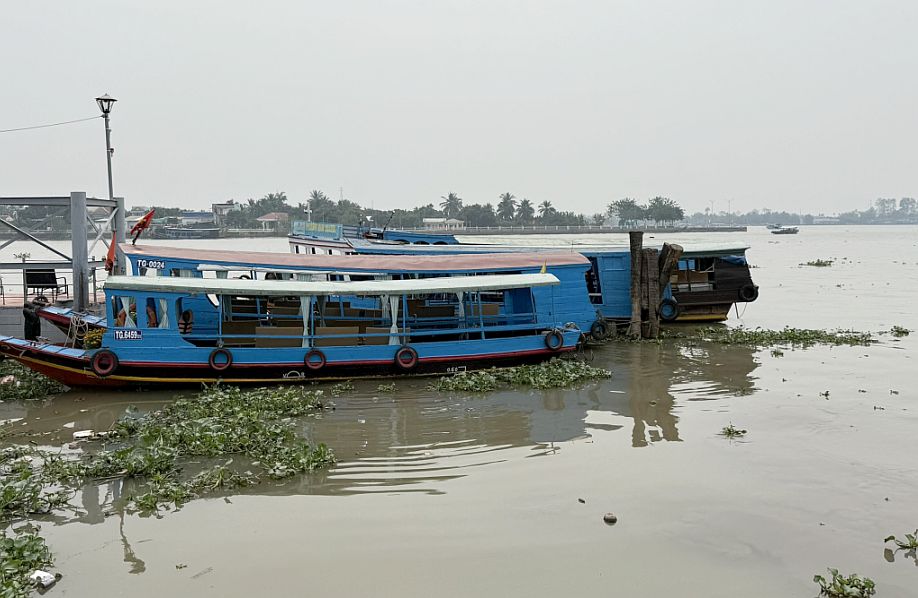
Floating across the surface are clusters of water hyacinths, the green leafy plants with bulbous stems that drift slowly with the current. They’re very common here, sometimes gathering in thick patches along the banks.
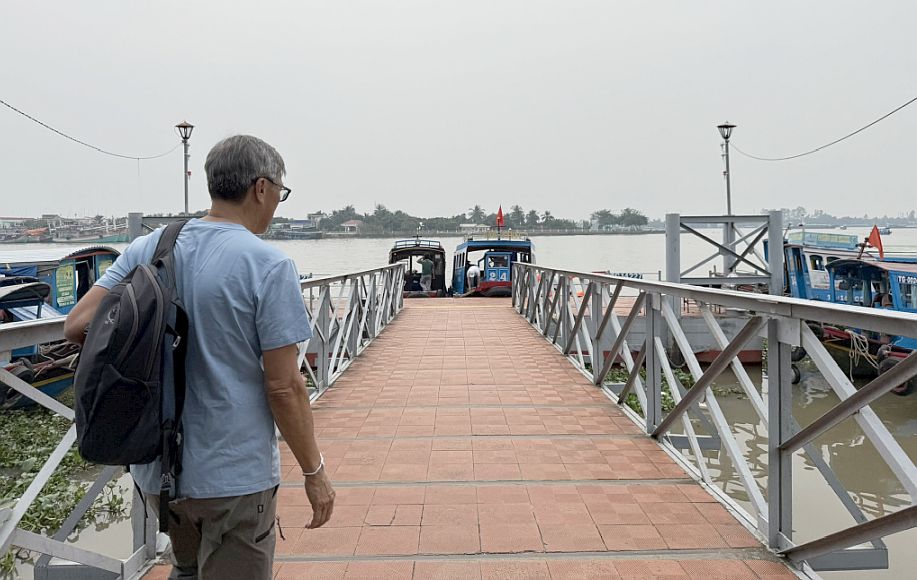
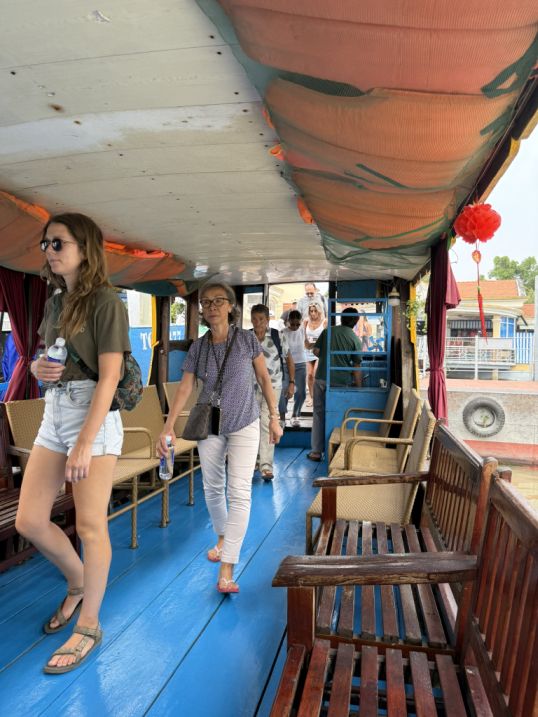
The boats lined up at the pier, wooden hulls painted in blue with small white cabins are classic Mekong Delta transport boats.
 |
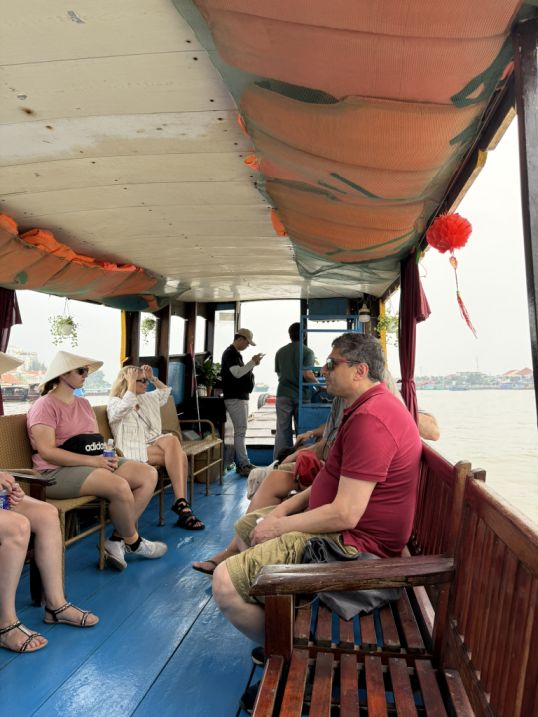 |
The boat is sturdy, practical, and built for navigating these wide, slow-moving waters. Some are used for tourists, like ours, while others are part of daily life, fishing, transporting goods, or moving between islands.
As your boat pulls away, the ride toward Thoi Son Islet is gentle and scenic.
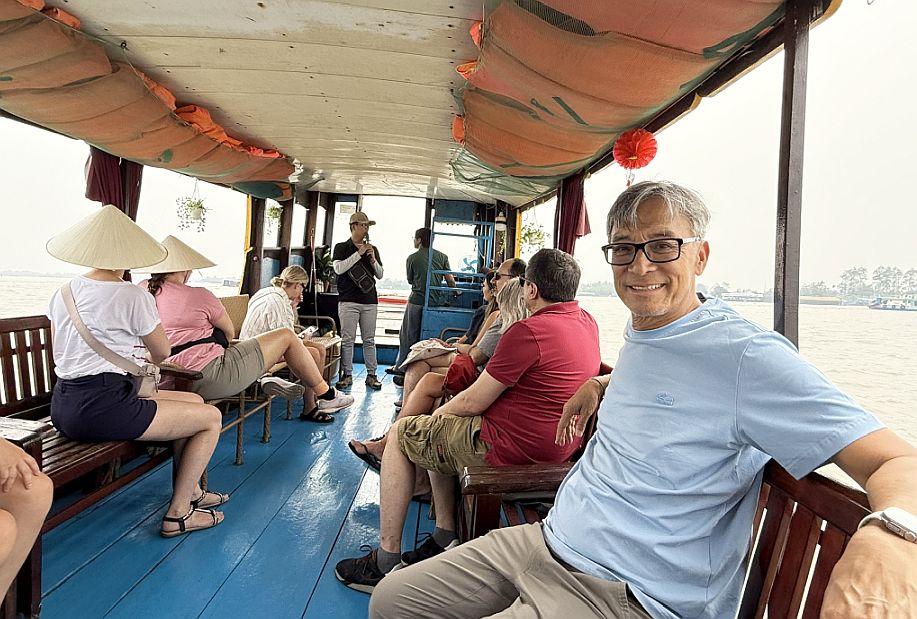
Our Tour guide explaining how the locals live on the Mekong Delta.
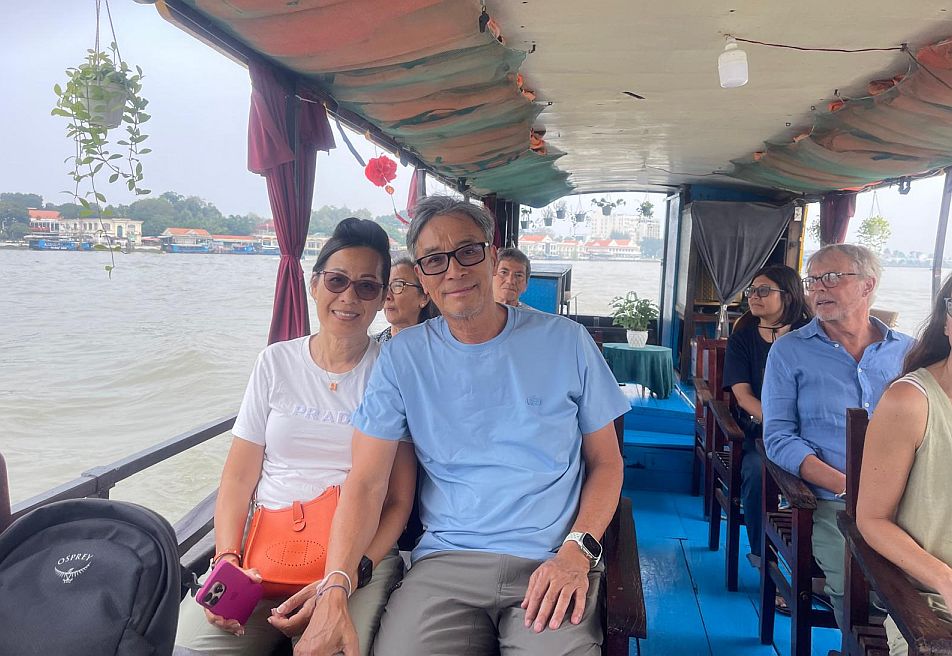
The river here is broad and calm, with muddy banks lined by dense greenery, coconut palms, nipa palms, and low riverside homes on stilts. We passed other boats gliding by, sometimes loaded with produce or supplies, giving you a glimpse into how important the river is as a lifeline.
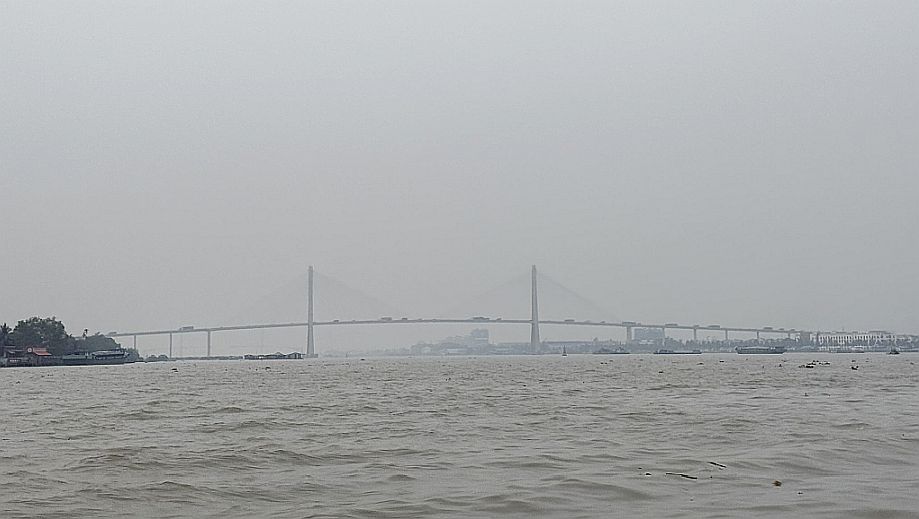
At one point, you saw in the distance a large bridge, which is most likely the Rach Mieu Bridge. It spans the Mekong and connects different provinces, a modern contrast to the otherwise traditional river scene. Seeing it from the water gives a sense of how vast the river really is.
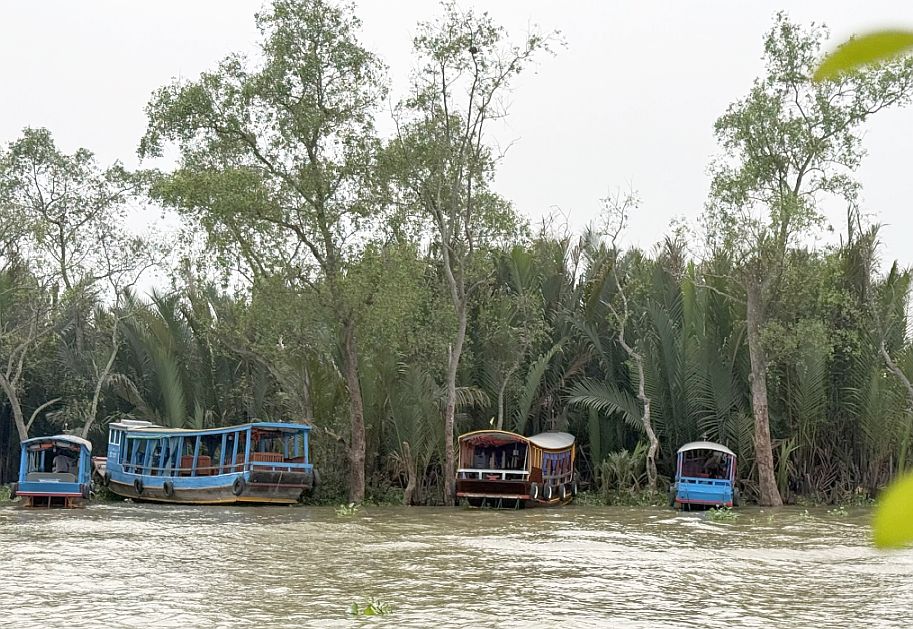
We are now arriving at Thoi son islet often called “Unicorn Island”. This is one of the four famous islets in this stretch of the Mekong River, each traditionally named after mythical animals (Dragon, Unicorn, Tortoise, and Phoenix). Despite the grand name, Thoi Son feels very grounded and authentic, a place where people still live closely connected to the land and water.
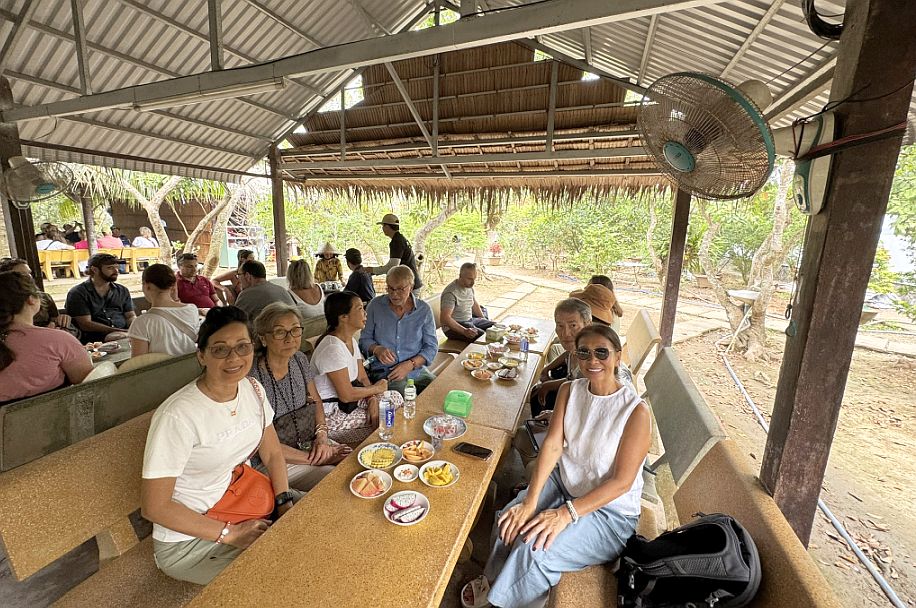
We were led to a shaded area where fresh-cut tropical fruits are served.
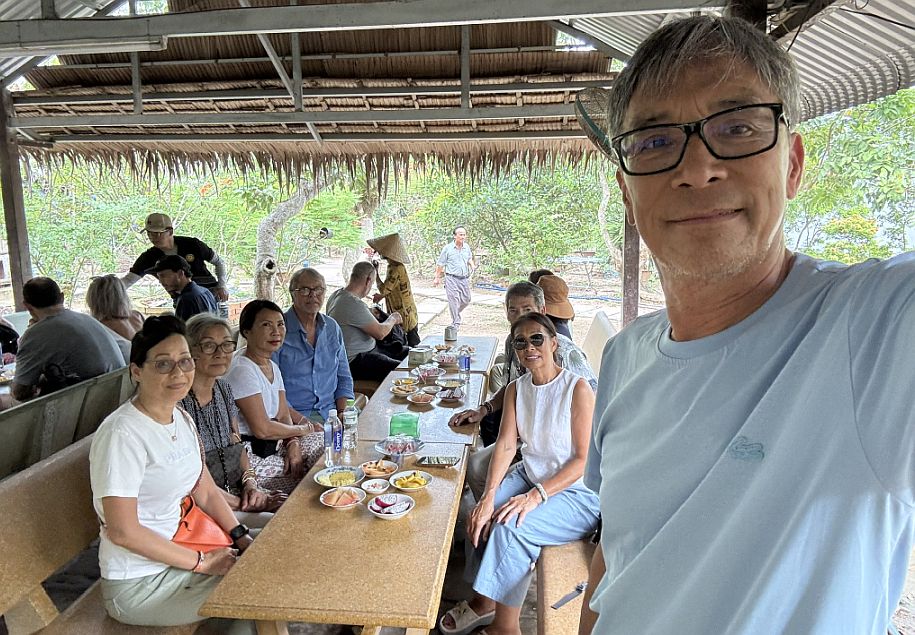
Group picture.
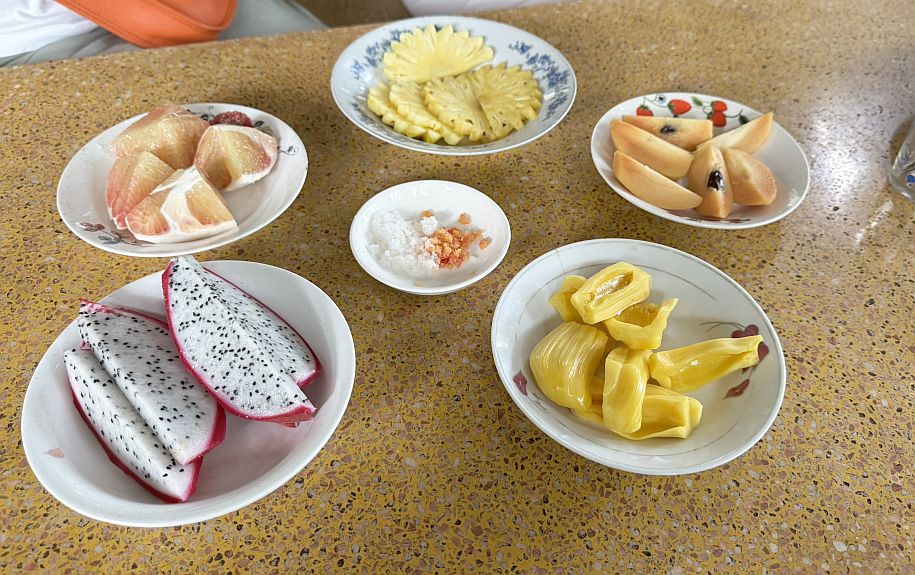
Slices of dragon fruit, pineapple, sapote, jackfruit, and pomelo all grown locally.
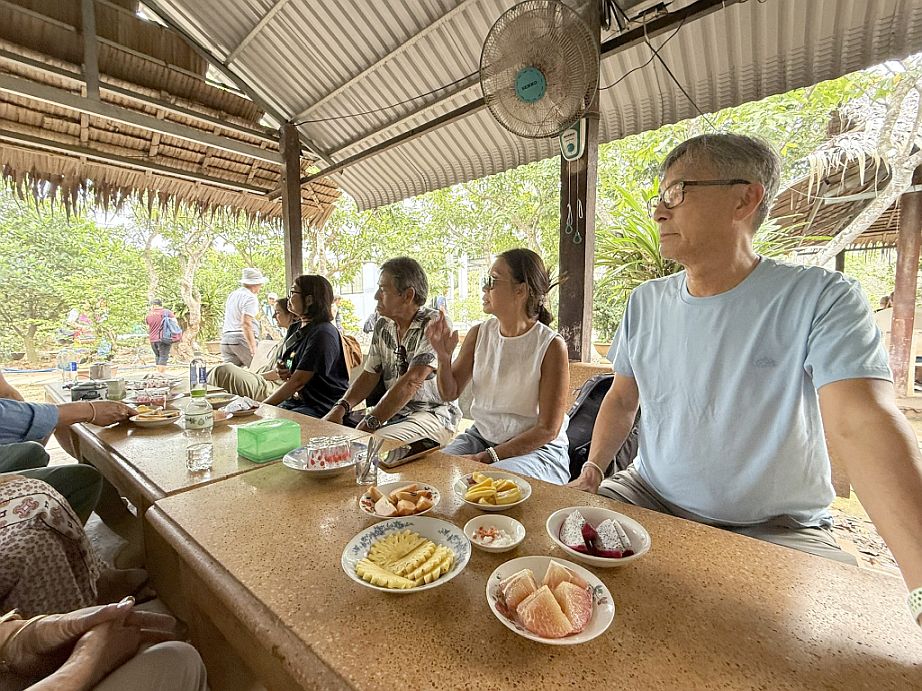
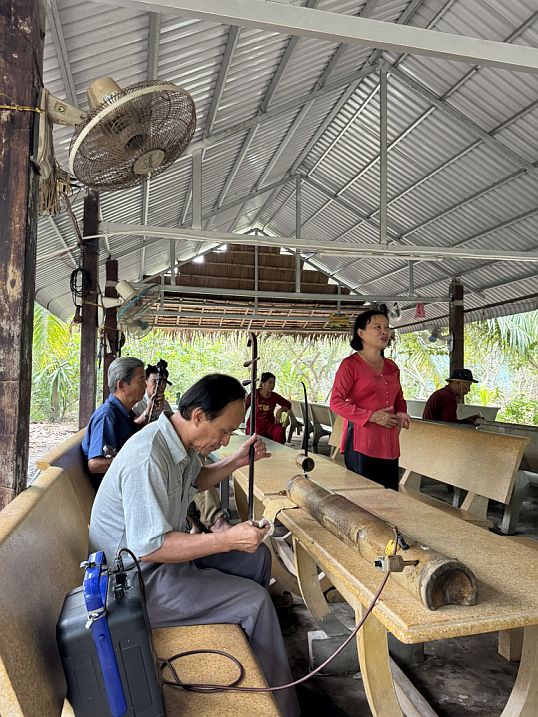
As we all sit and enjoy the fruit, the sound of traditional Southern Vietnamese folk music begins
 |
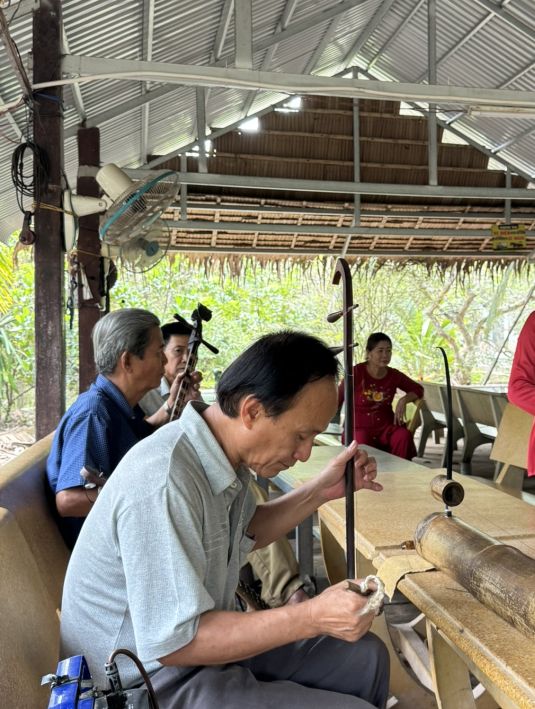 |
Local artists performed with simple instruments and soft vocals. It’s intimate and unpretentious, with local musicians playing just a few steps away. The combination of fresh fruit, live music, and the surrounding greenery creates a moment that feels both cultural and deeply relaxing, a gentle introduction to life on the island.
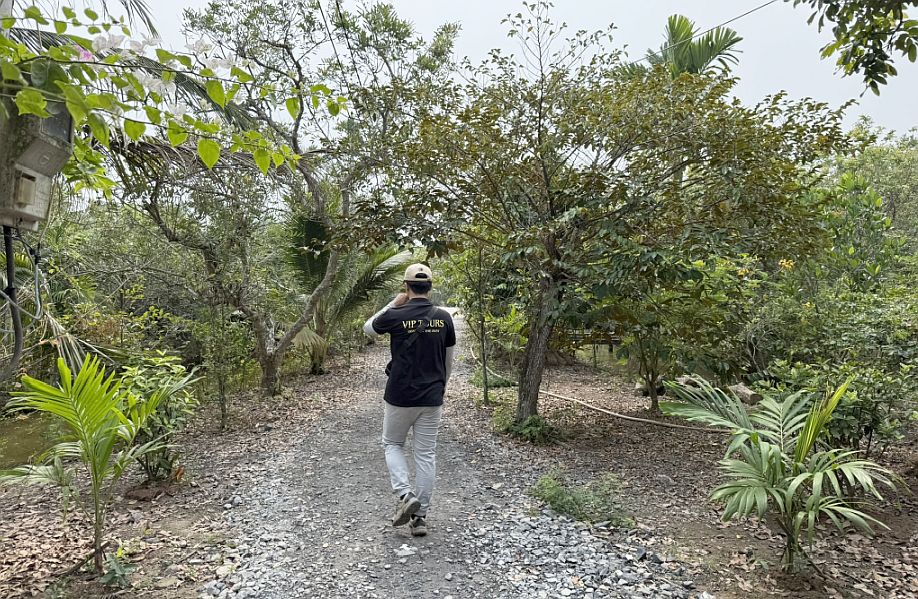
Our tour guide leading the way. Walking through the island, what stands out most is how lush and alive everything feels. The narrow dirt paths, scattered with small rocks, wind through dense greenery, almost like natural corridors.
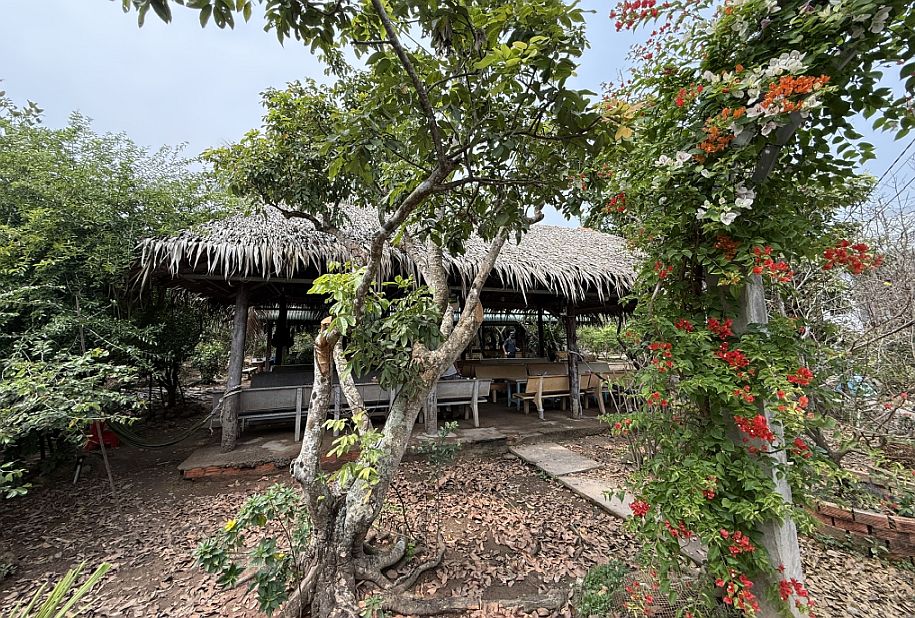
A simple hut with roofs made from dried palm or nipa leaves, materials that are traditional to the delta, cool, breathable, and perfectly suited to the tropical climate.
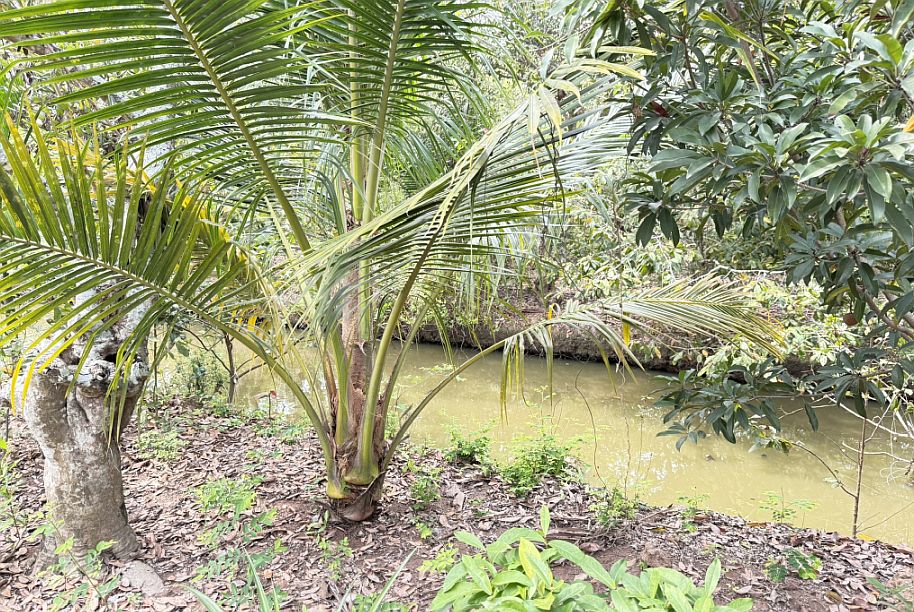
The canal we passed is just as important as the main river. This smaller waterway weave through the island like veins, lined with water coconut palms that arch over the water, creating shaded, almost tunnel-like passages. Boats can quietly pass through these canals, and they’re essential for daily life, transport, irrigation, and fishing.
 |
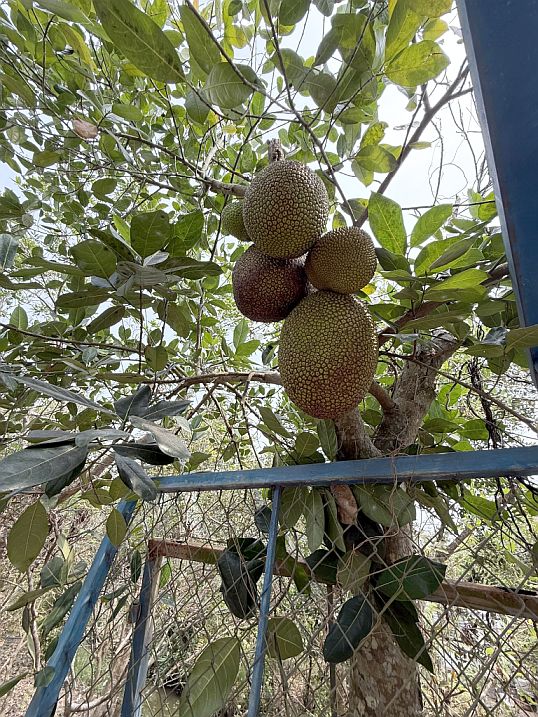 |
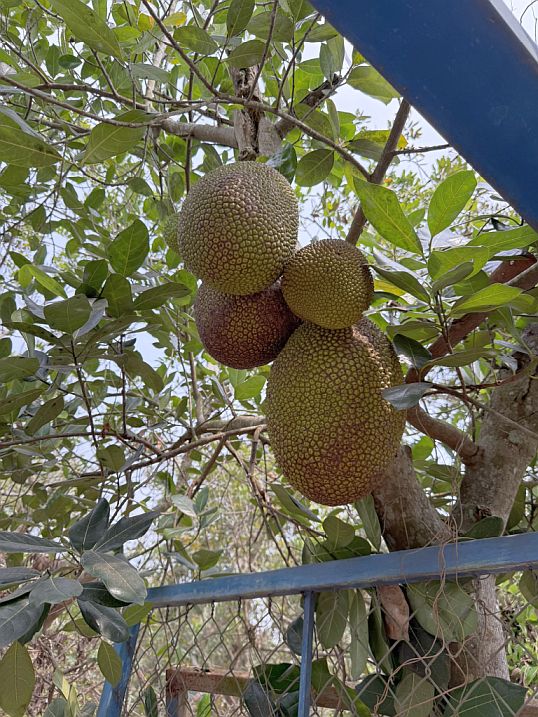
The fruit trees are part of what makes the island so fertile. Jackfruit trees, with their massive fruits hanging directly from the trunk, look almost unreal up close.
 |
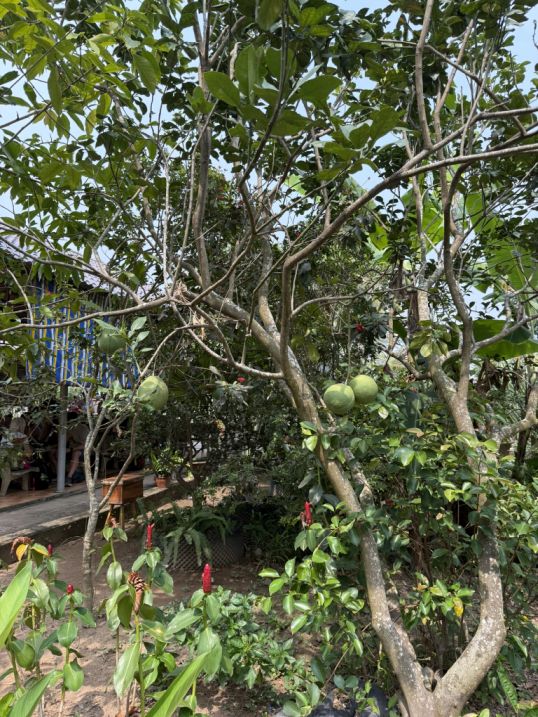 |
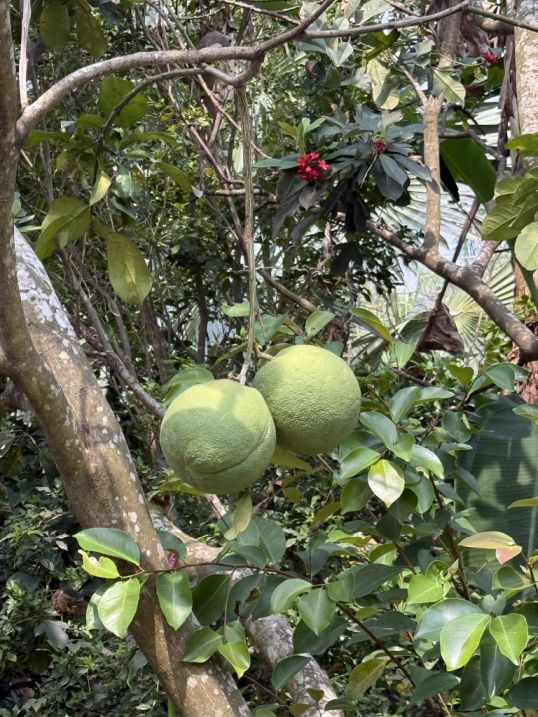
Nearby, pomelo trees grow with large, round citrus fruits, a specialty of the region. Everything grows abundantly here thanks to the nutrient-rich soil brought in by the river.
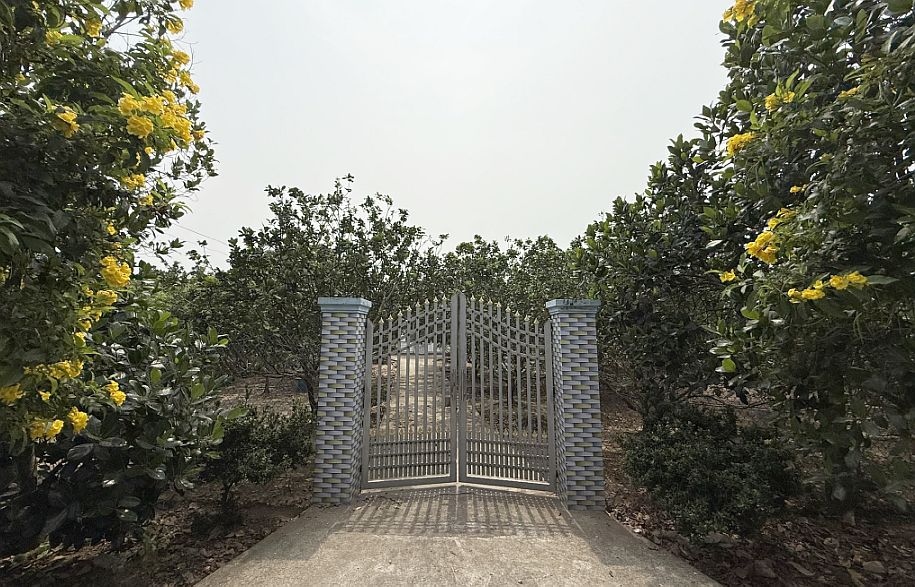
Along the way, we also caught glimpses of more private spaces, like this beautiful iron gate, likely leading to a family home tucked behind the greenery.
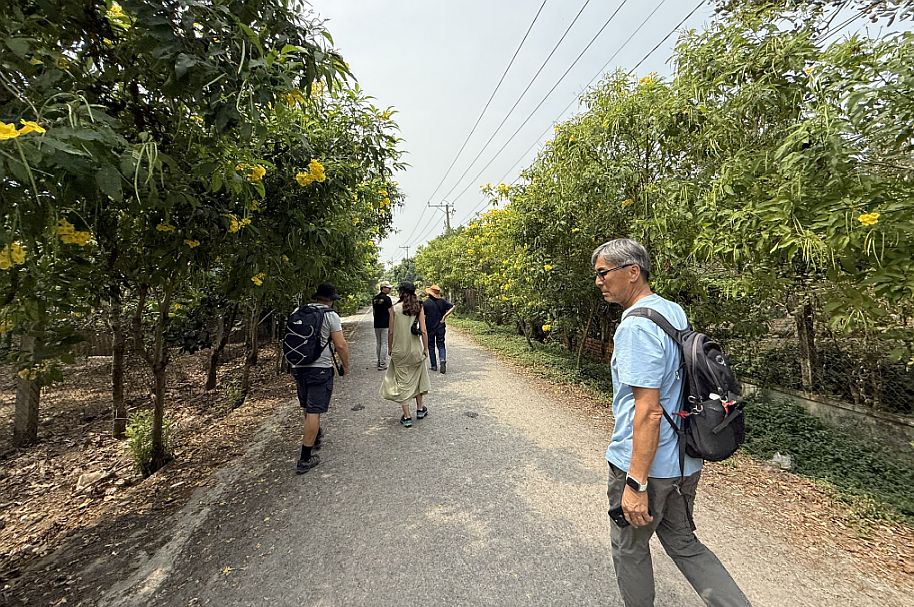
We walked quietly along bright yellow blossoms.
 |
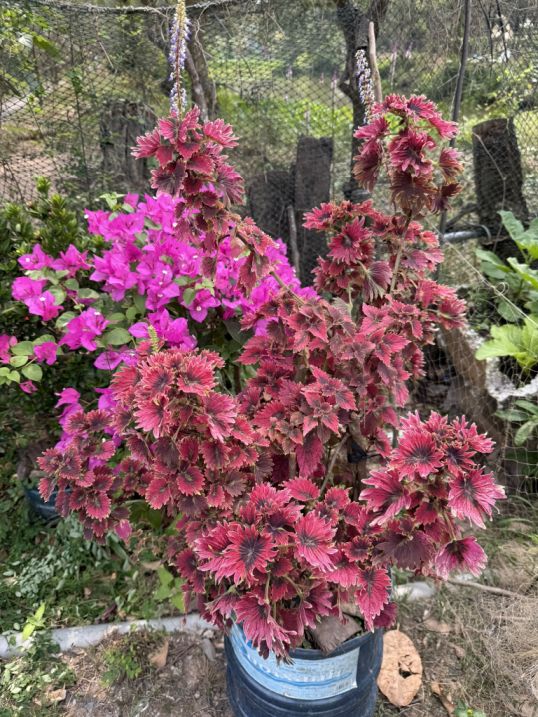 |
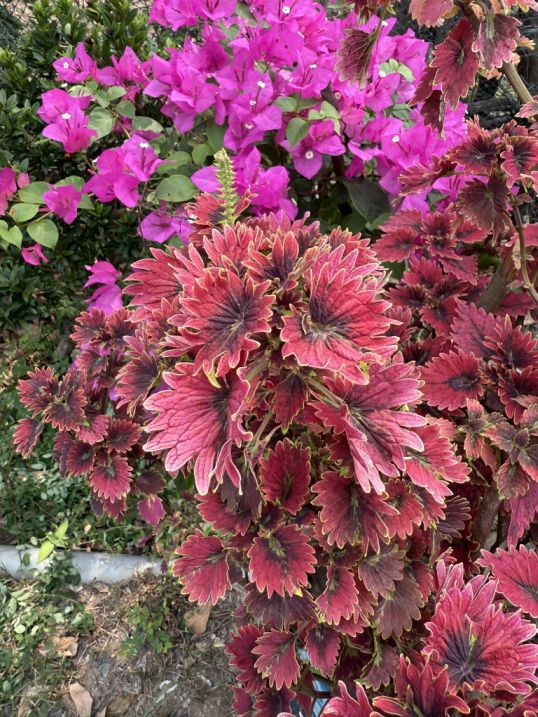
Vibrant Coleus. The leaves are used to flavor meats, soups and herbal teas.
 |
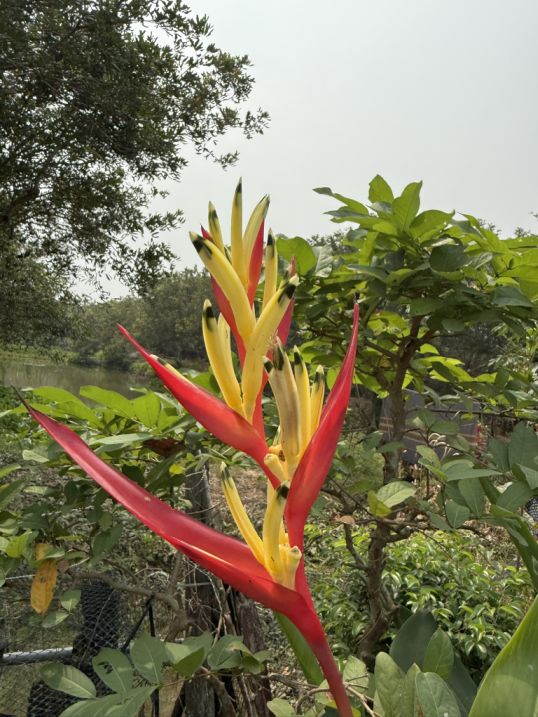 |
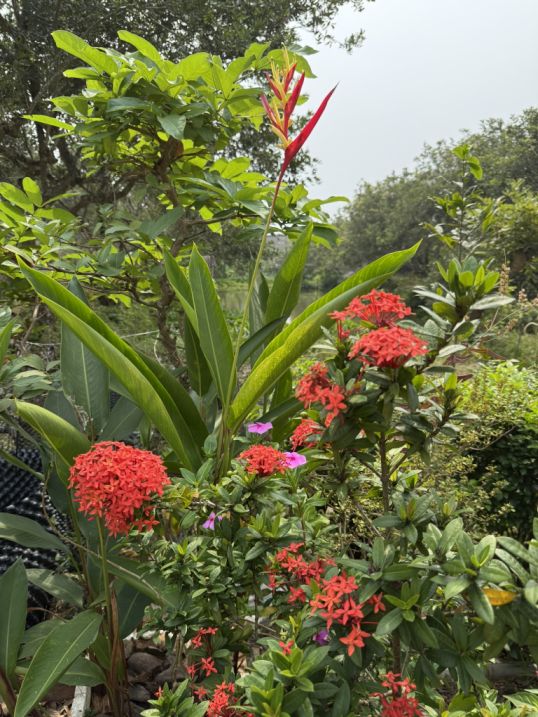
Colorful tropical flowers with their bright colors.
 |
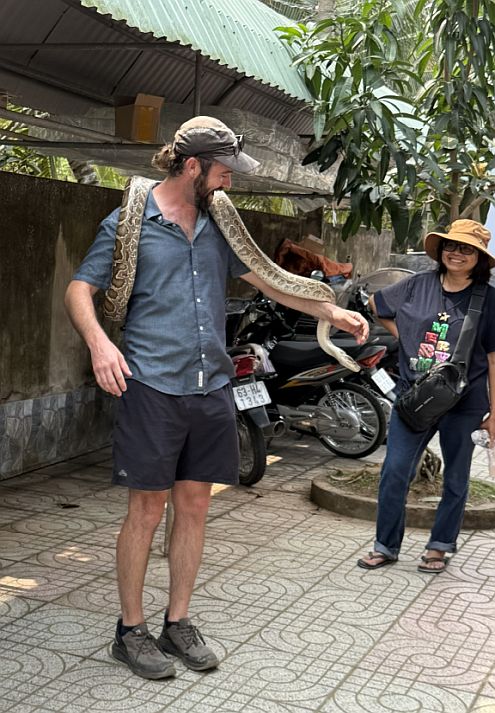 |
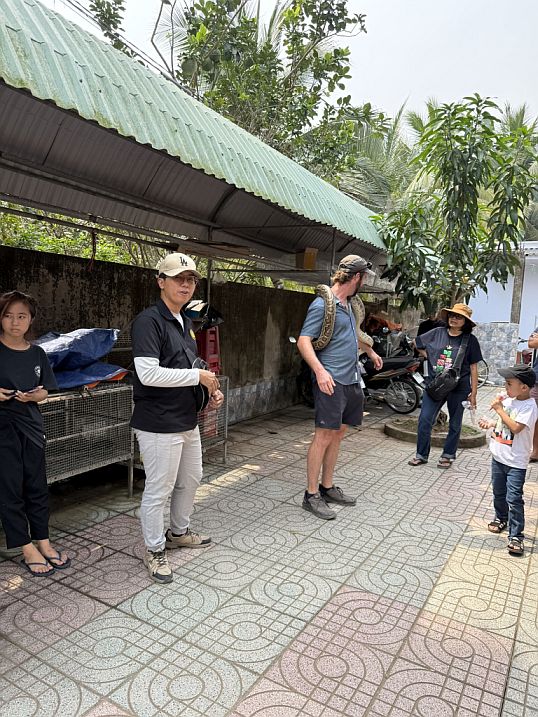
We are now at a Honey farm. Just at the entrance where people pose with a large live snake, usually a python. is a bit of a tourist tradition. It’s meant to be a fun, slightly daring photo opportunity, contrasting with the otherwise peaceful, rural surroundings.
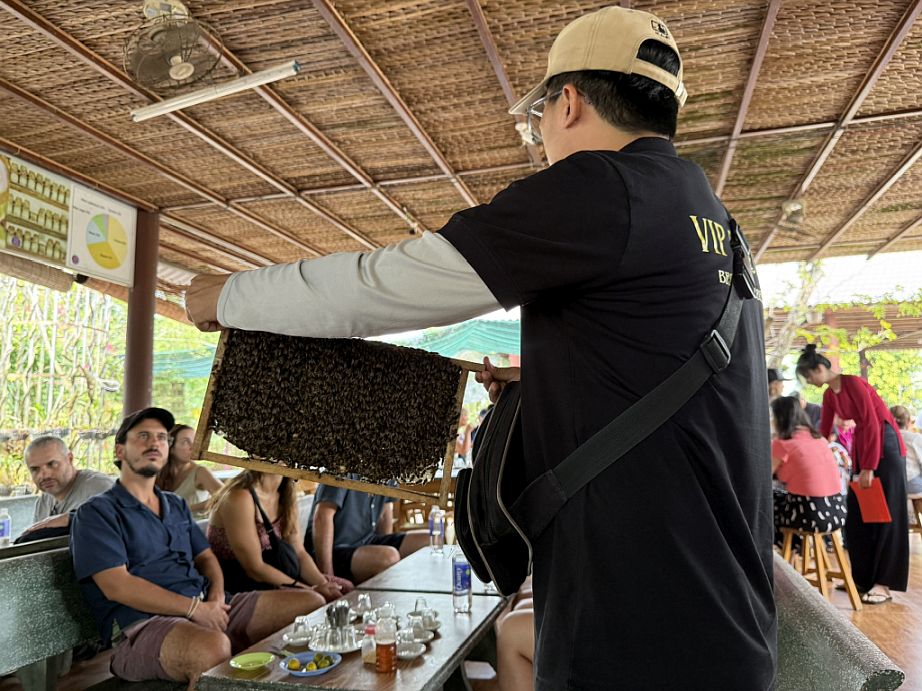
We all sat down and our tour guide showed us a beehive box used in traditional beekeeping. Inside that box are wooden frames where bees build their honeycombs.
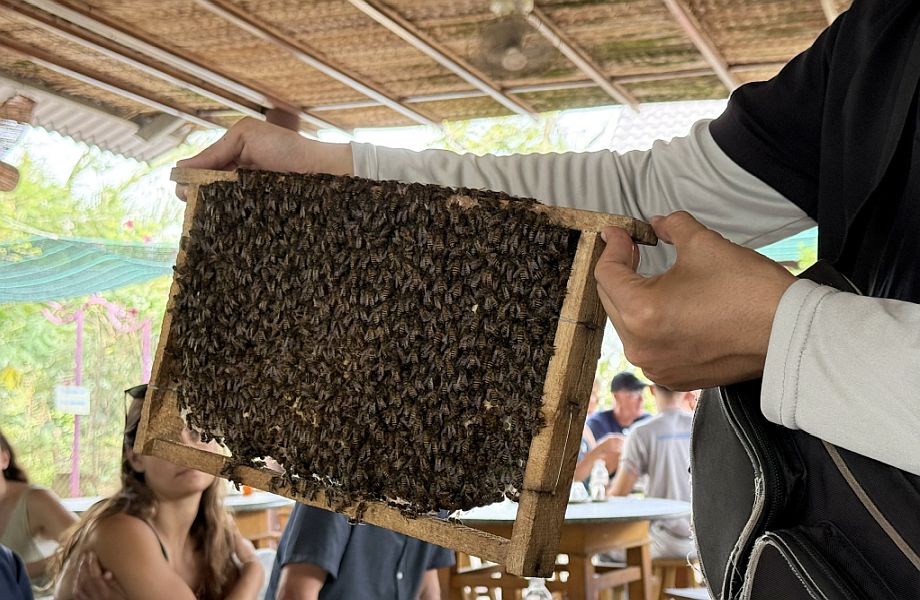
The bees move in and out through small openings, collecting nectar from the surrounding flowers and fruit trees all over the island. Because the Mekong Delta is so lush and diverse in plant life, the bees here have an abundant and varied source of nectar, which gives the honey a rich, floral flavor.
 |
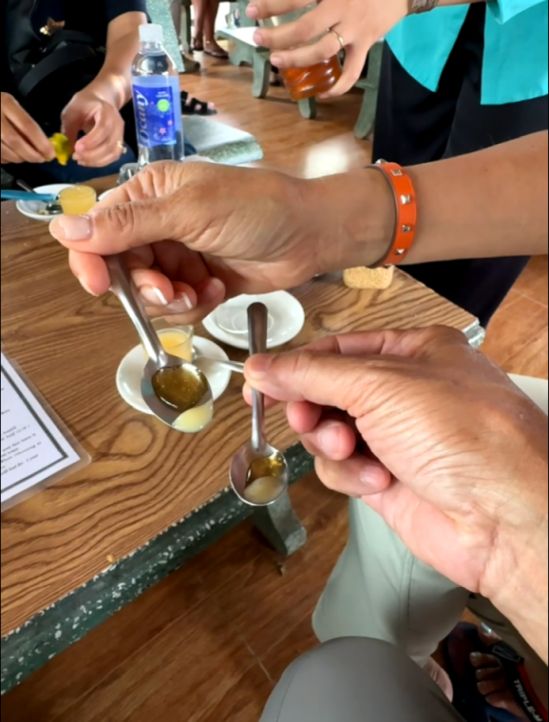 |
The different types of honey they introduced usually vary slightly in color, thickness, and taste, depending on which flowers the bees have been feeding on. Some are lighter and more delicate, while others are darker and more intense.
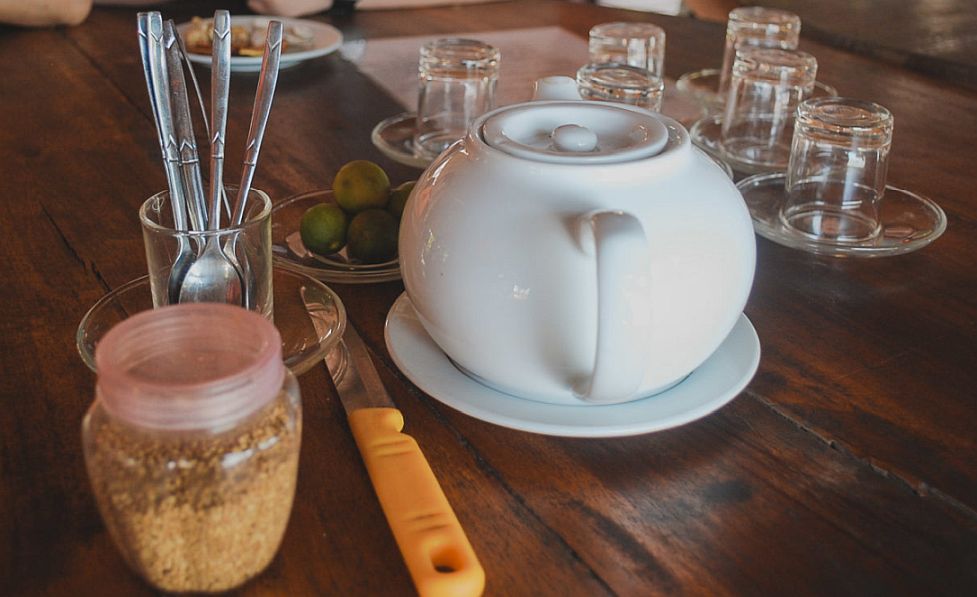
Then came the tea, which was very nice, It’s a simple warm tea mixed with fresh honey, you can also add a squeeze of local lime or kumquat. It’s light, fragrant, and naturally sweet, served in small cups as we sit and relax in the shaded garden setting.
NEXT... Day 6-Boat ride through the canal