A week in Saigon-1/19- 1/25/2025
Day 6- Mekong Delta guide tour-1/24/2025
3rd Stop: Boat ride through the canal
We are back on the water between
Thoi Son Islet (Unicorn Island)
and
Tan Long Islet, the river scene
becomes more active and layered.
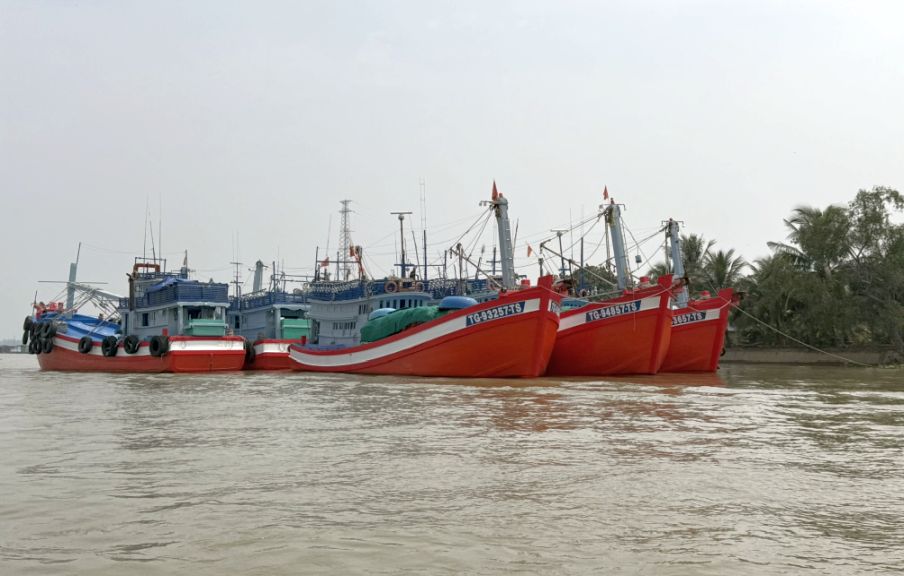
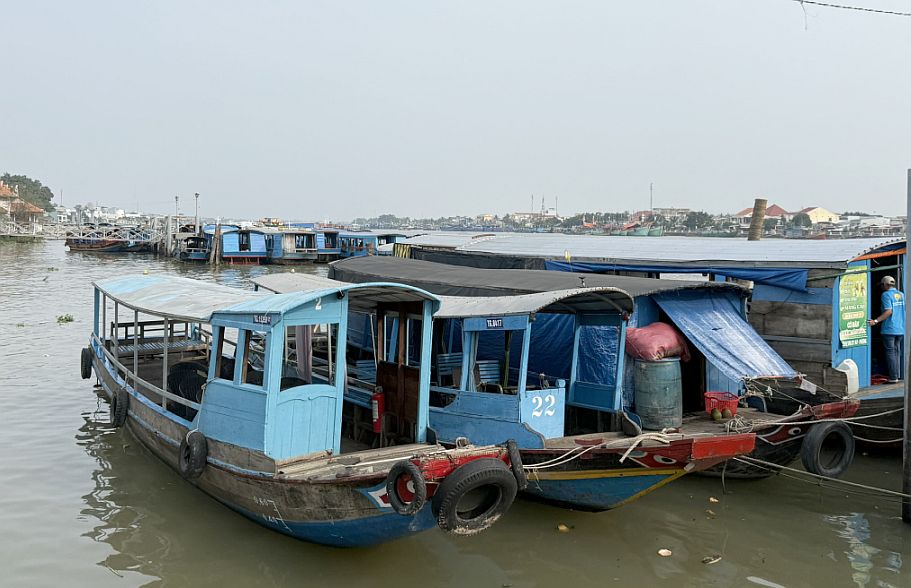
As you reach the tip of Unicorn Island, the number of boats increases noticeably. The larger red-painted boats docked near the shore are often used for transporting bigger groups of tourists or even goods along the river. Their bold color makes them stand out against the muddy water and green banks.
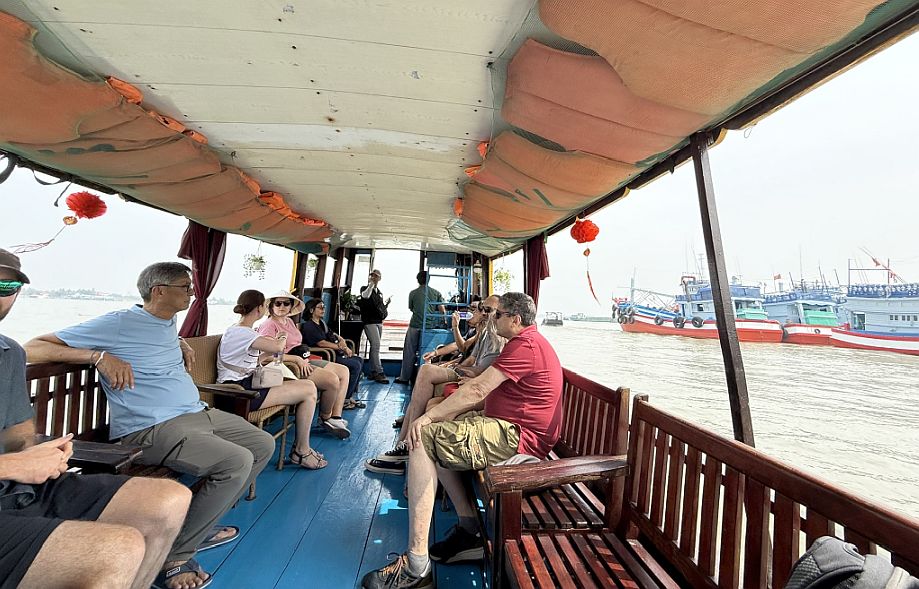
Nearby, the familiar blue-and-white wooden boats cluster together, these are the everyday workhorses of the Mekong, used for shorter trips, fishing, and ferrying visitors like you between stops. This area feels like a small river hub, where different types of boats gather before branching off into narrower waterways.
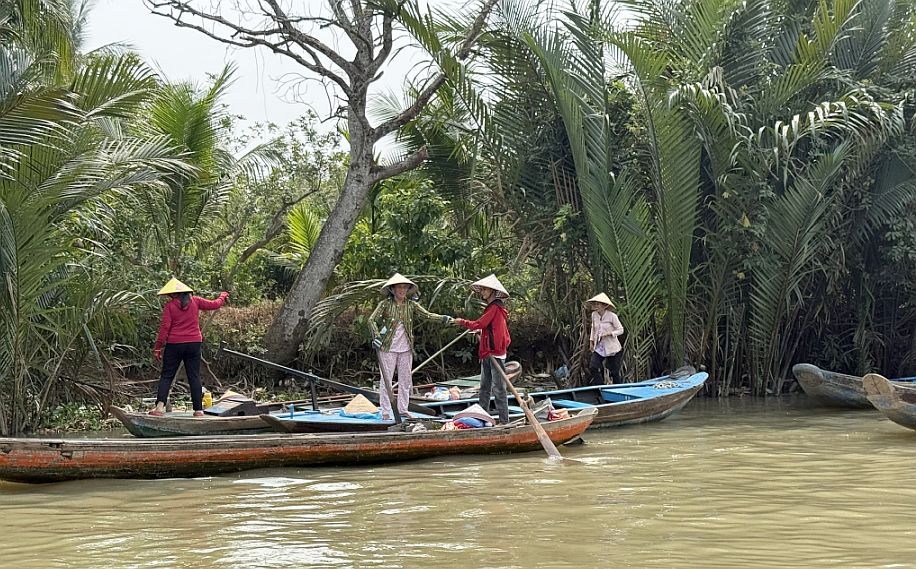
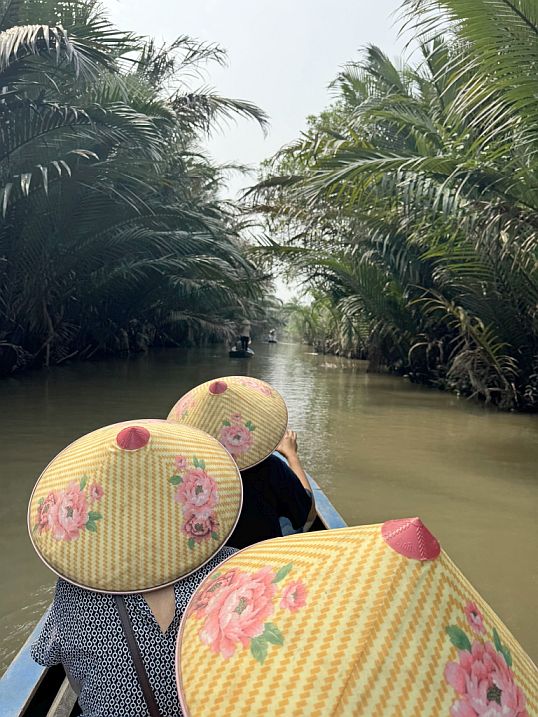
Then the experience changes completely as our boat enters one of the small canals. The wide, open river gives way to a much more intimate setting, shaded, quiet, and enclosed by dense rows of water coconut palms.
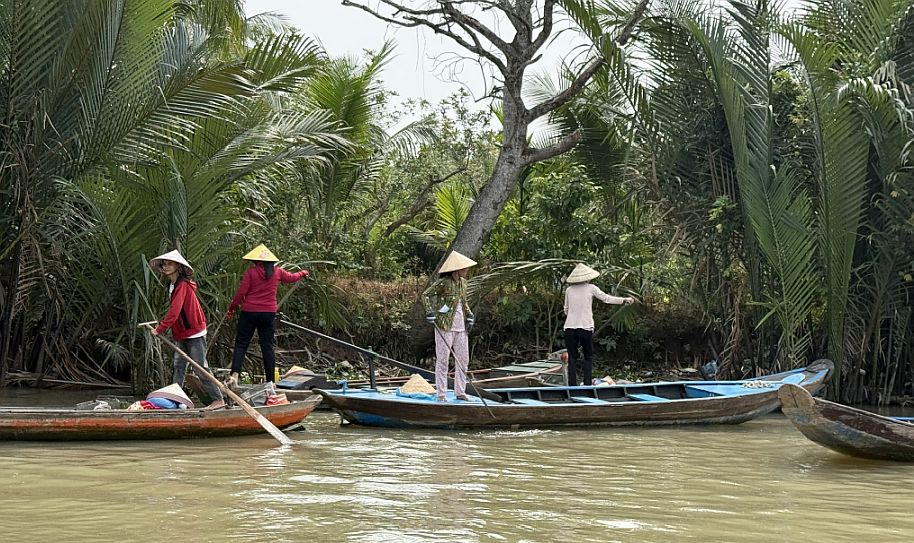
This type of boat is commonly called a sampan (or “xuong ba lá” in Vietnamese). It’s a traditional hand-rowed wooden boat, very narrow and low to the water, designed perfectly for these tight canals.
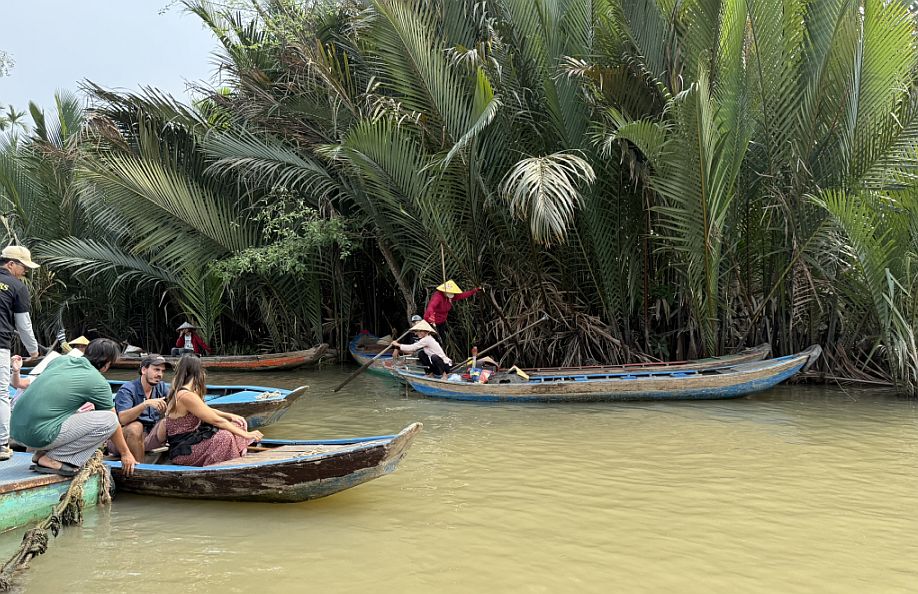
Here, we switched to the small, and elongated boat.
 |
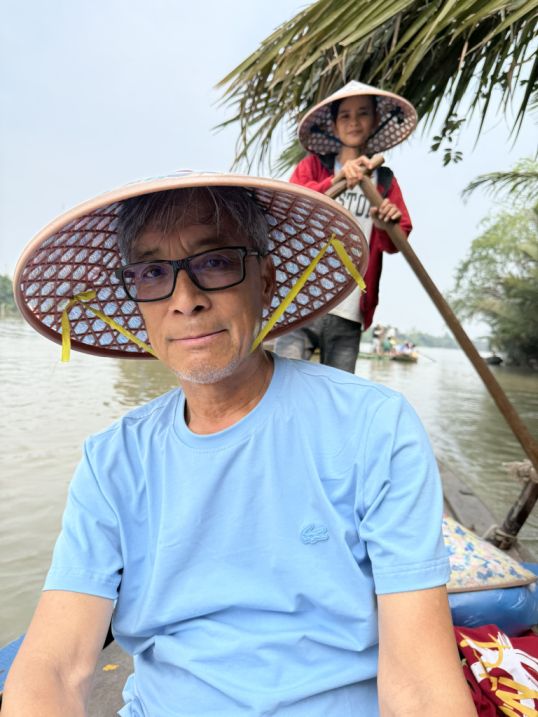 |
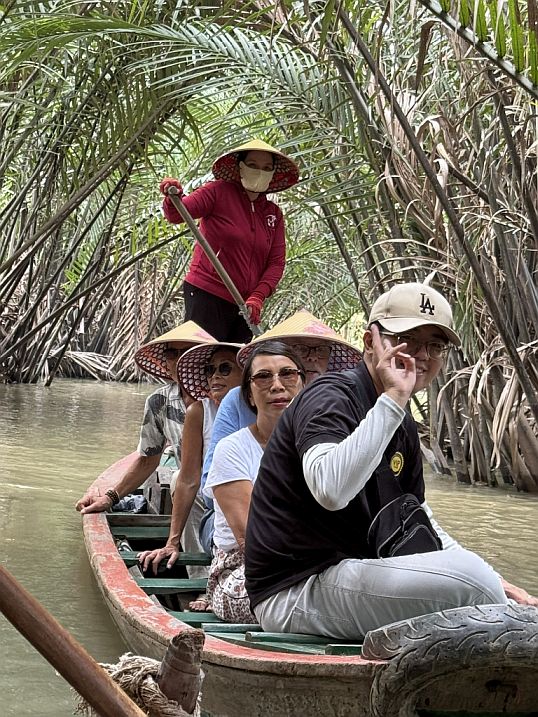
Each sampan is guided by a local rower standing at the back, using long oars, sometimes one on each side to steer and propel the boat.
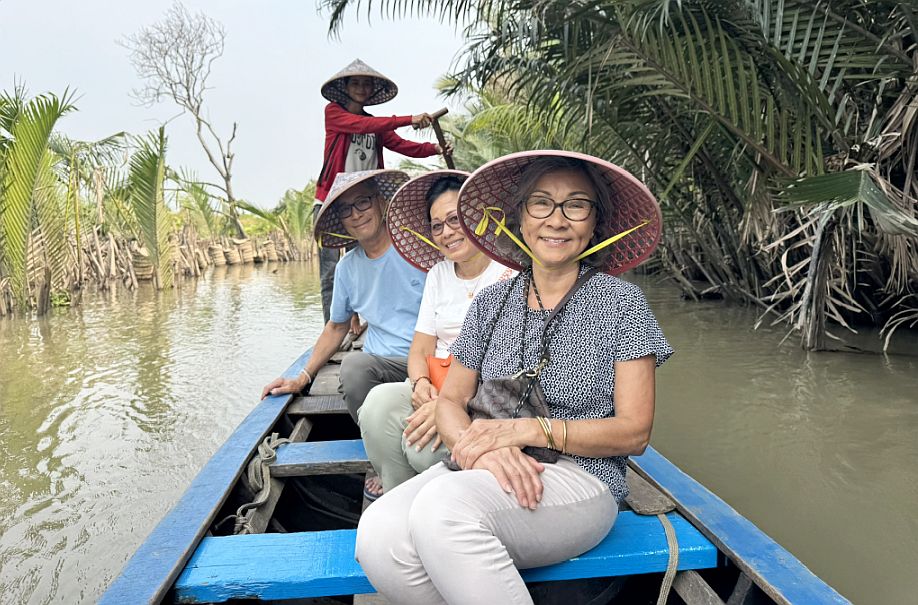
The rowing style is smooth and rhythmic, almost effortless to watch. With three passengers on our boat, the ride feels quiet and personal.
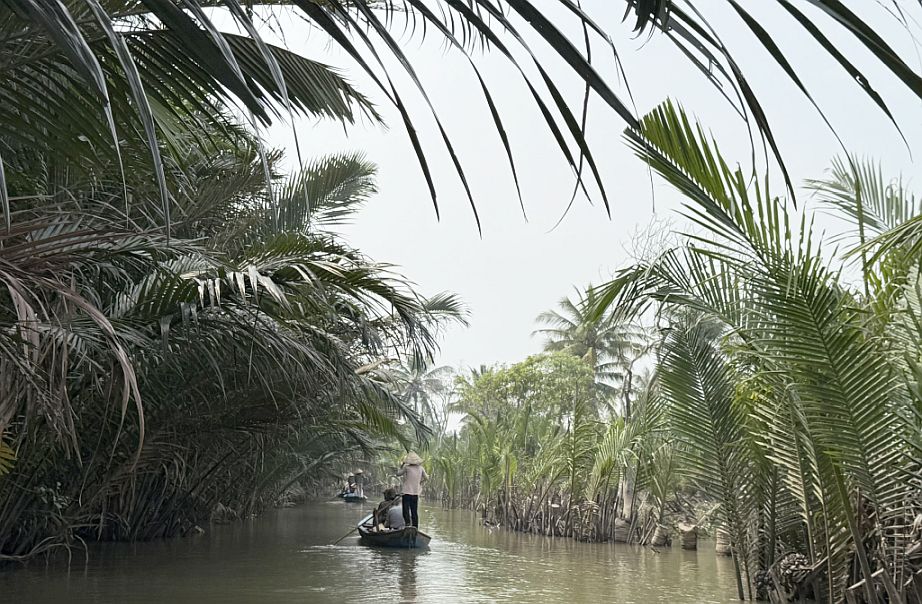
As we glide through the canal, the atmosphere becomes almost serene, the water is calmer, the sounds softer, and the overhanging palms create a natural tunnel.
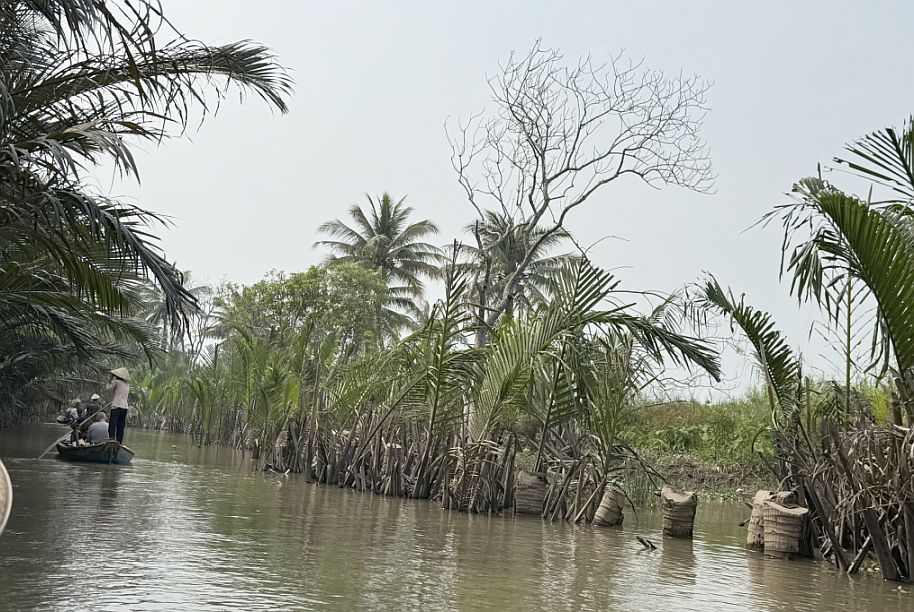
It’s one of the most iconic experiences of the Mekong Delta, offering a glimpse into a slower, more traditional way of life where these small boats are still essential for getting around.
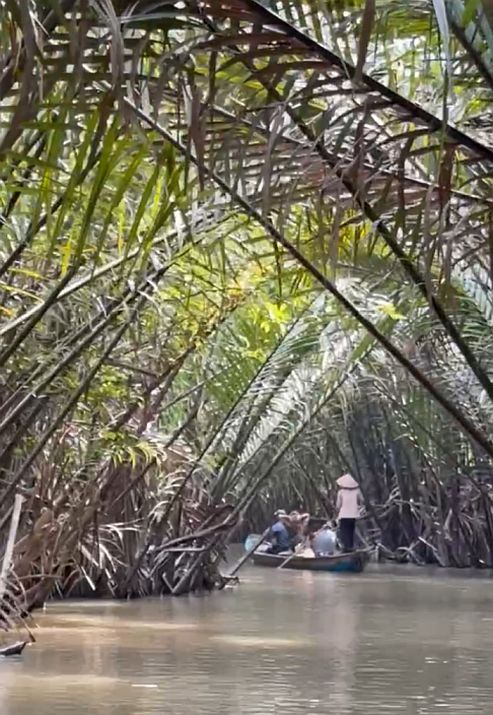
As our sampan glides deeper into the canals around Thoi Son Islet, the world feels quieter and more enclosed. The water coconut palms growing right out of the water line both sides of the canal, their roots hidden below the surface and their long fronds stretching outward. In many places, the trunks have been cut back, leaving short, weathered stubs rising from the water like natural markers of the tide and time.
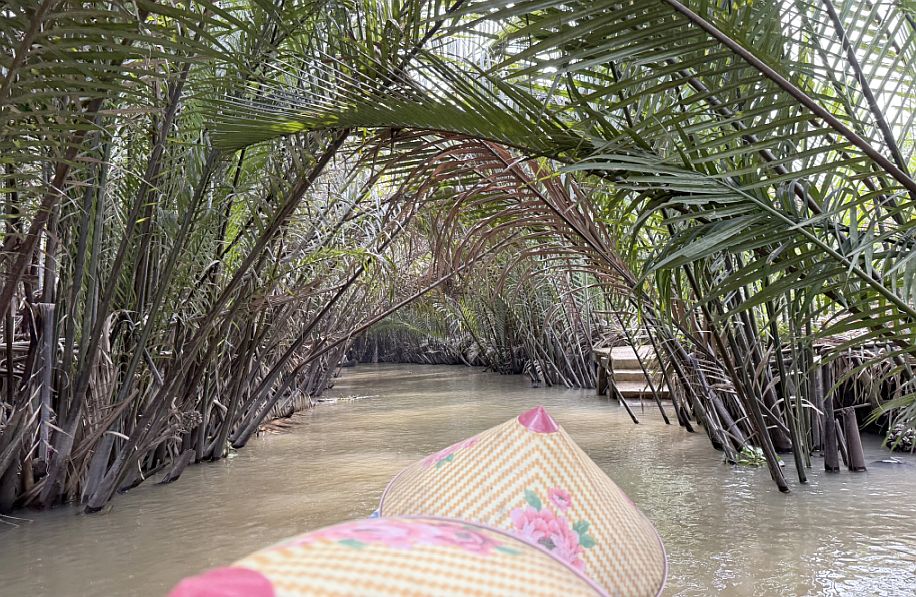
Above us, the palms begin to lean inward and overlap, forming a soft green canopy. Sunlight filters through in broken patches, flickering on the brown water as your boat moves gently forward.
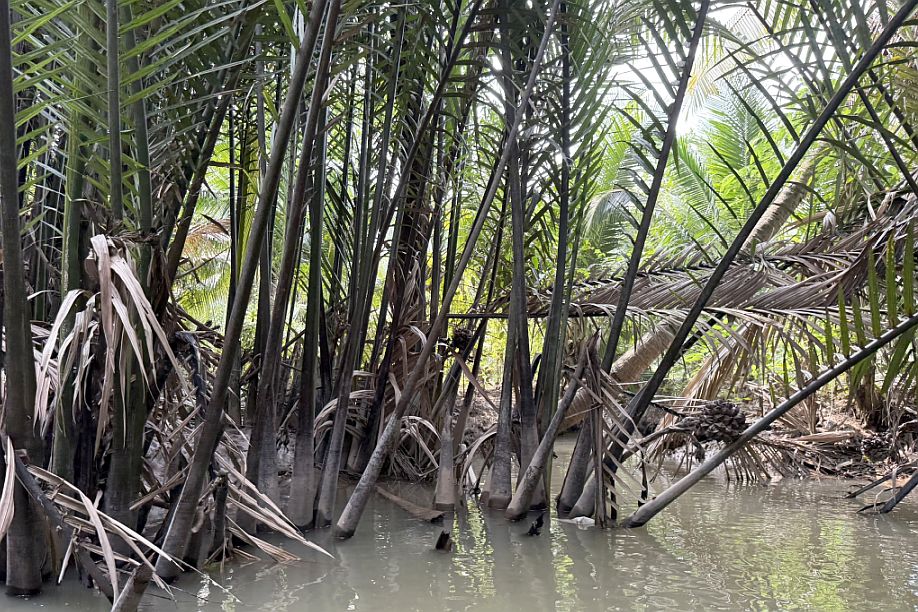
The sound of paddles dipping in and out of the water is steady and rhythmic, and every so often you pass another sampan drifting quietly in the opposite direction. It’s a slow, almost meditative ride, cooler in the shade, with the dense greenery making it feel like a hidden passageway through the island.
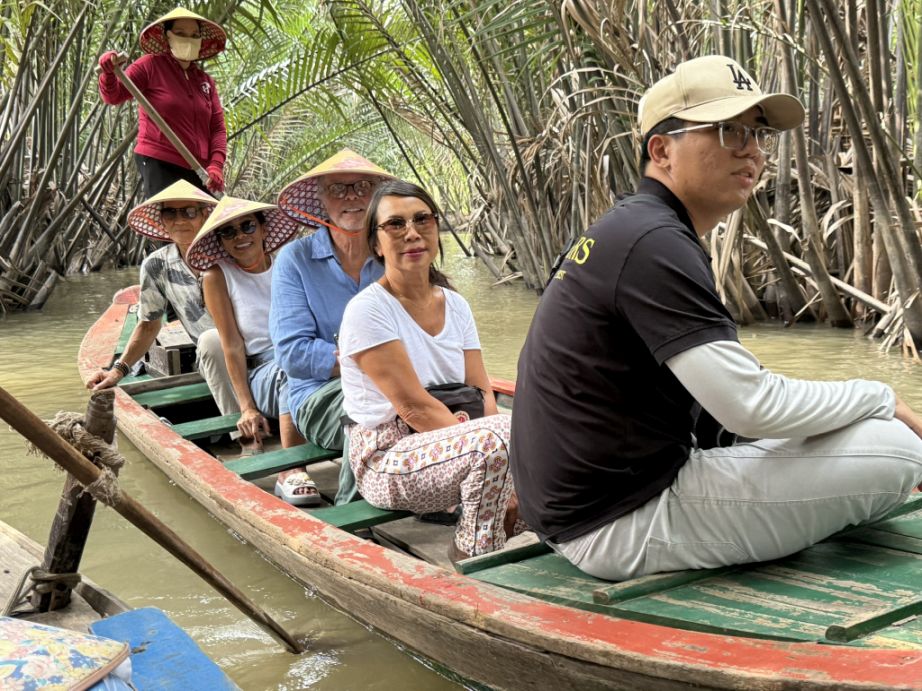
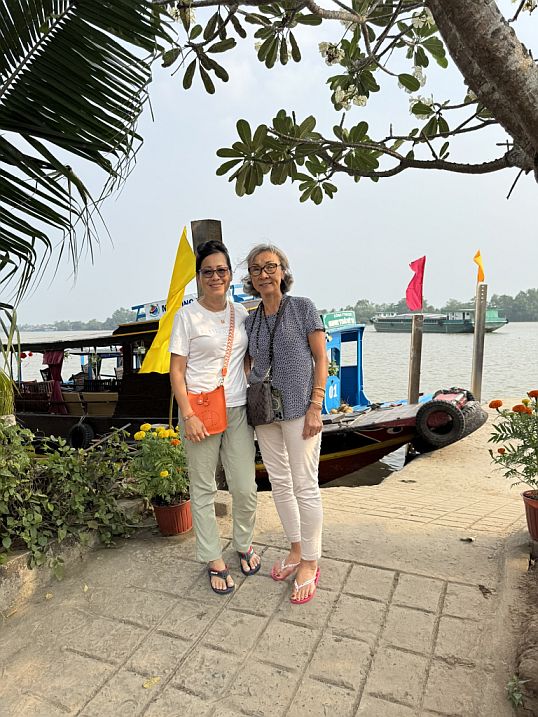
George, Canh, Thierry, Mai, and our tour guide on a separate boat.
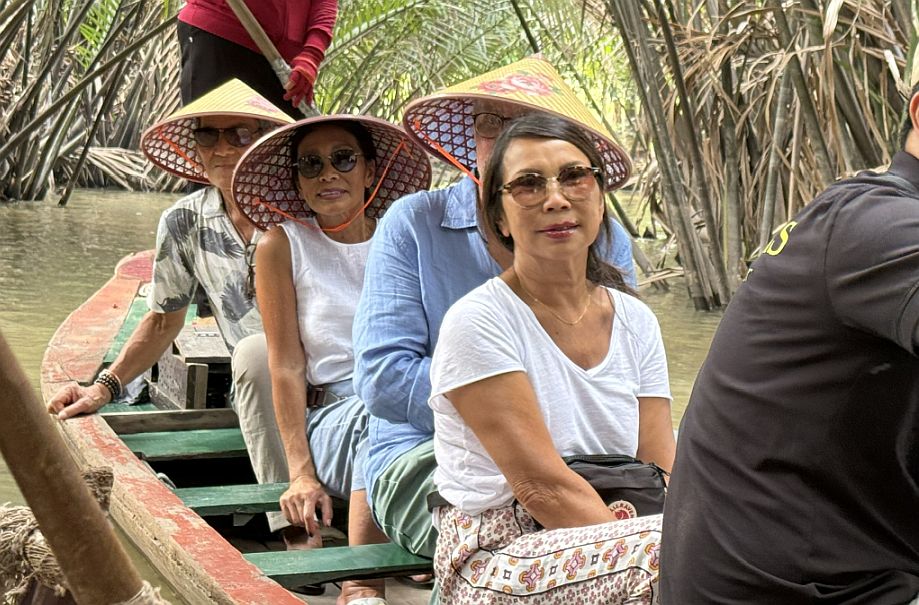
It is really a quiet and relaxing boat ride.
 |
 |
We are now arriving at the docking pier.
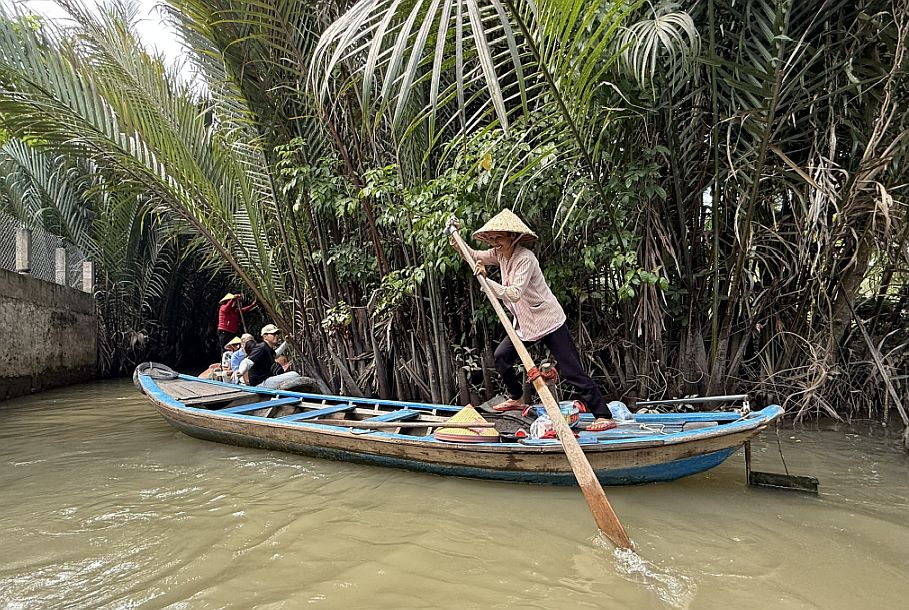
A lady rower.
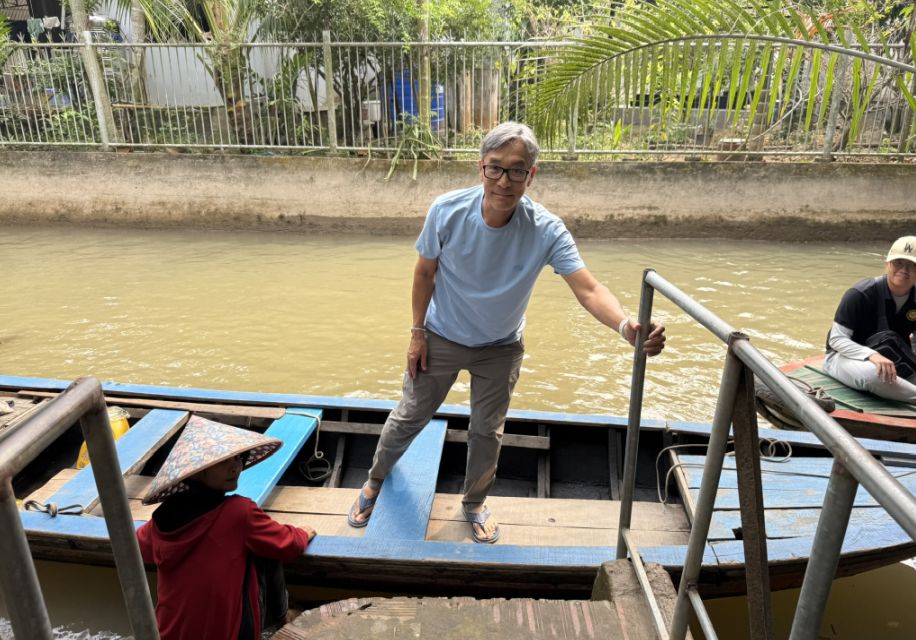
We are now stepping off the boat.
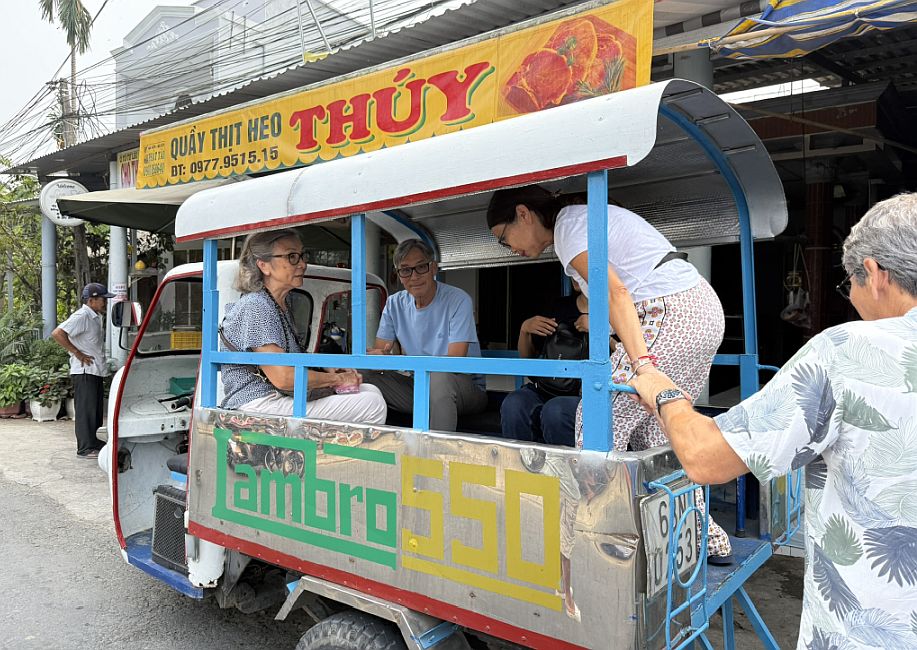
When we stepped off the boat, the shift back to land is immediate, and then comes another local experience, a small, improvised tuk-tuk–style vehicle. Unlike the ones you might see in cities, this version is more rustic: a motorbike or small engine pulling a rectangular open cart fitted with simple bench seating for about six people. Open on all sides, it lets the breeze pass through as you ride along narrow village paths.
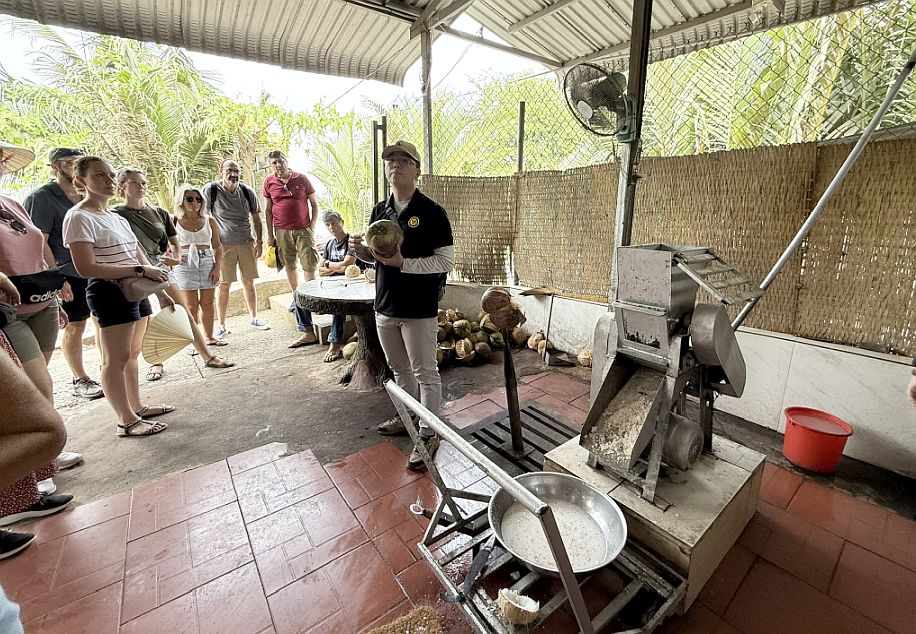
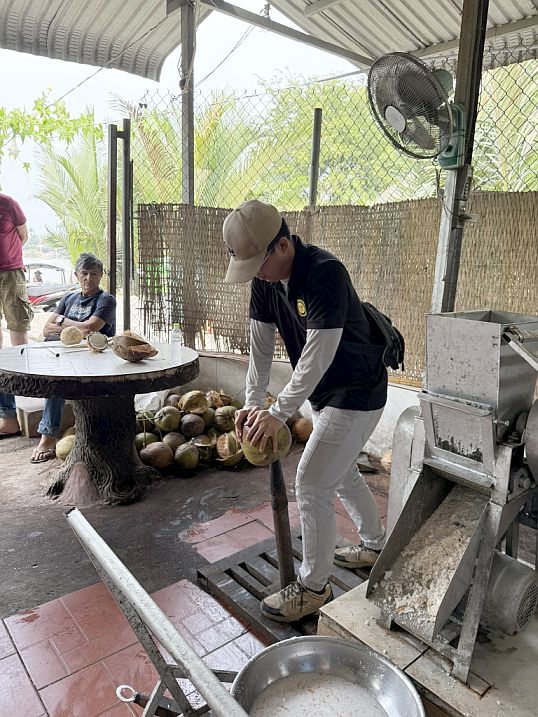
The short ride took us through more of the island’s everyday scenery, trees, small homes, and glimpses of local life before arriving at a coconut candy workshop like Lo Keo Dua Dat Dua. Here our group is gathering around our tour guide for a quick demonstration.
 |
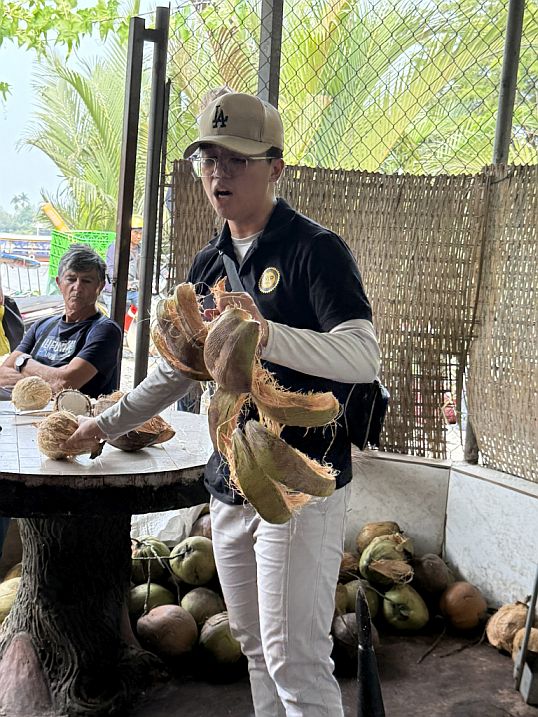 |
Here, everything becomes hands-on and close-up. Our guide demonstrating how to peel a coconut is the first step in a long traditional process. Using a simple but sharp tool, the thick outer husk is stripped away to reveal the hard inner shell. It’s done quickly and skillfully, showing just how familiar locals are with this fruit, which is such a big part of life in the Mekong Delta.
 |
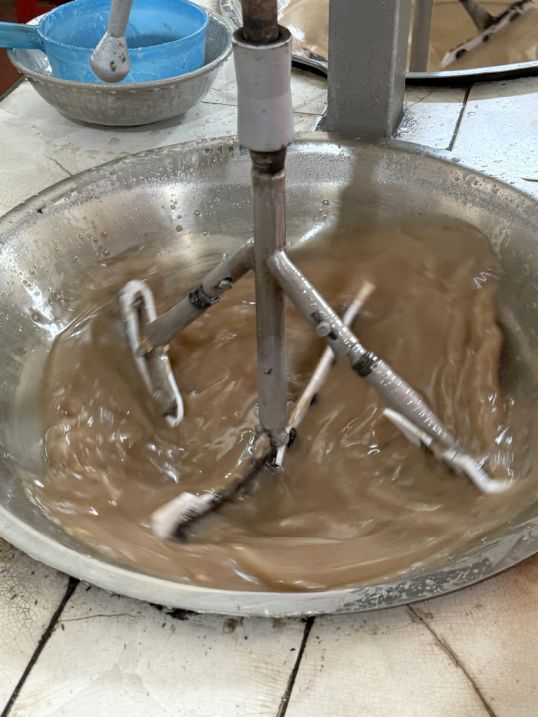 |
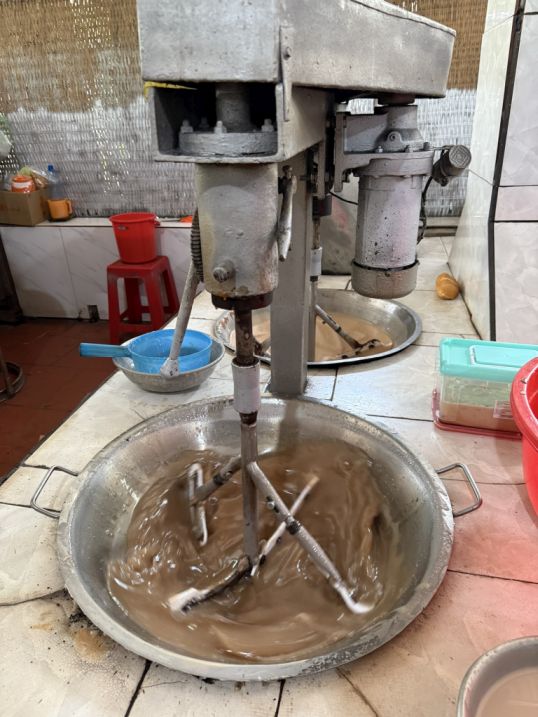
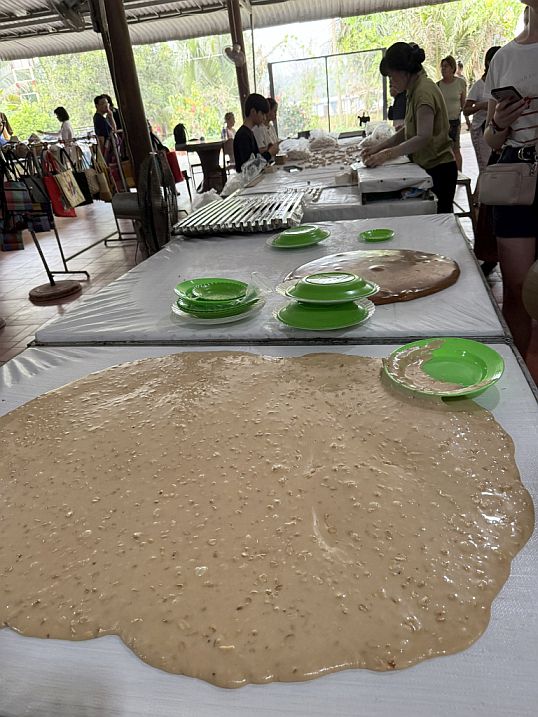
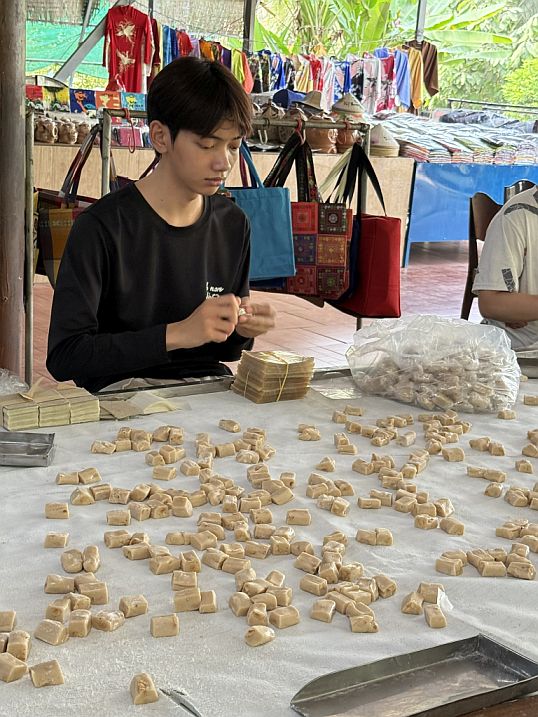
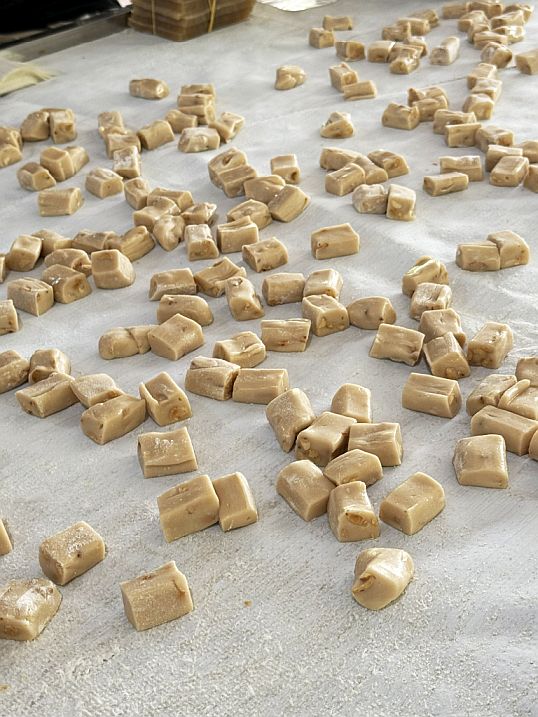
From there, coconuts are used to make the region’s famous keo dua (coconut candy), a sweet, chewy treat made from coconut milk, sugar, and sometimes malt or peanuts.
 |
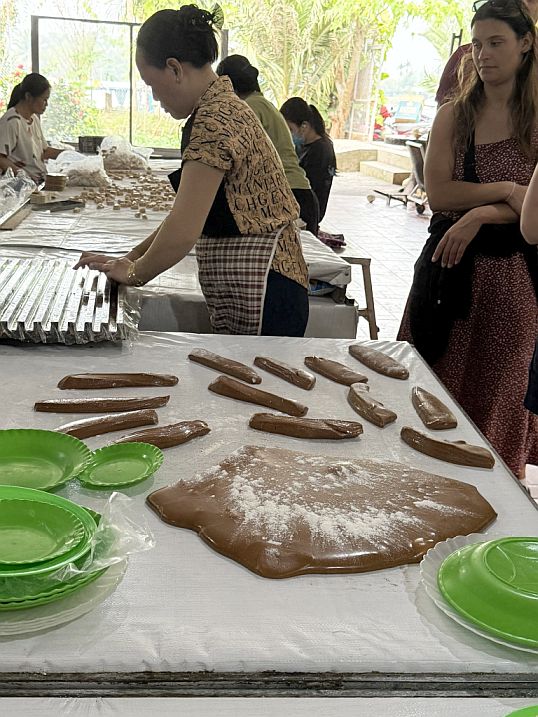 |
The entire process from cracking, scraping, cooking, and stretching the mixture is done right there in front of us.
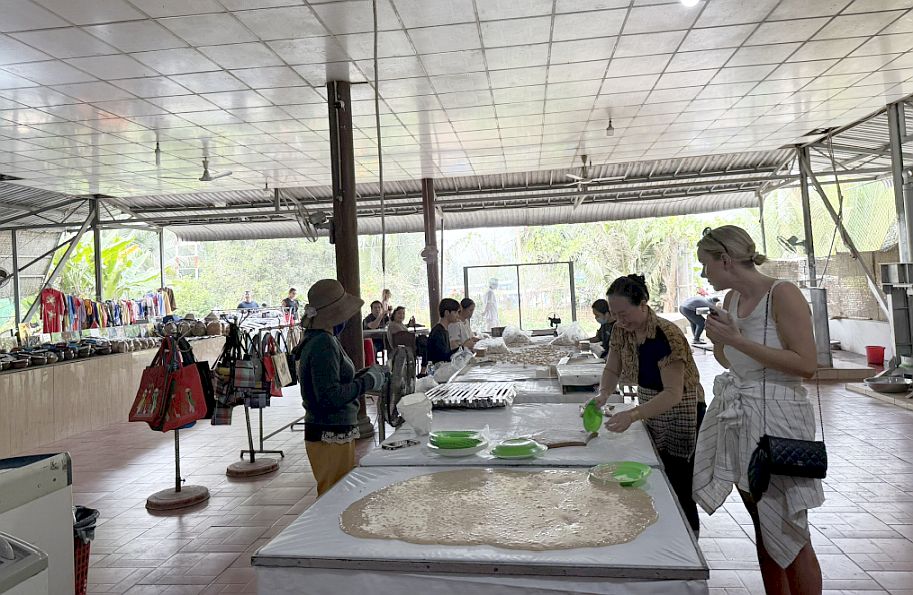
Watching the workers work make it feel less like a factory and more like a traditional craft passed down through generations.
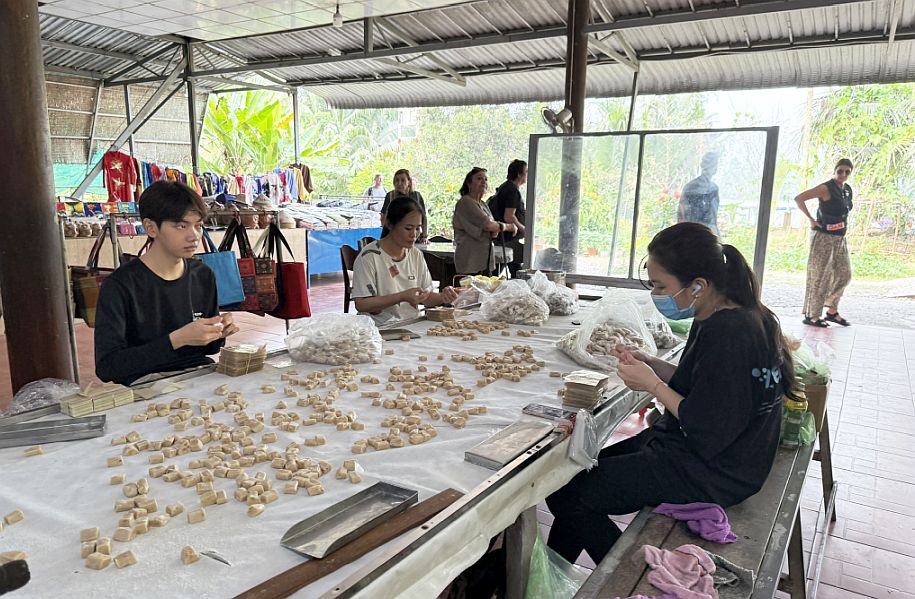
Assembly line to cut the candies into small pieces.
 |
 |
A young boy wrapping the candies.
 |
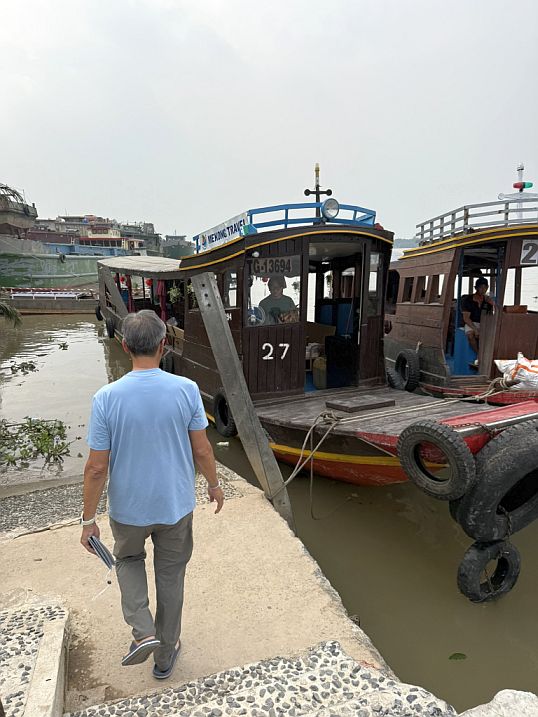 |
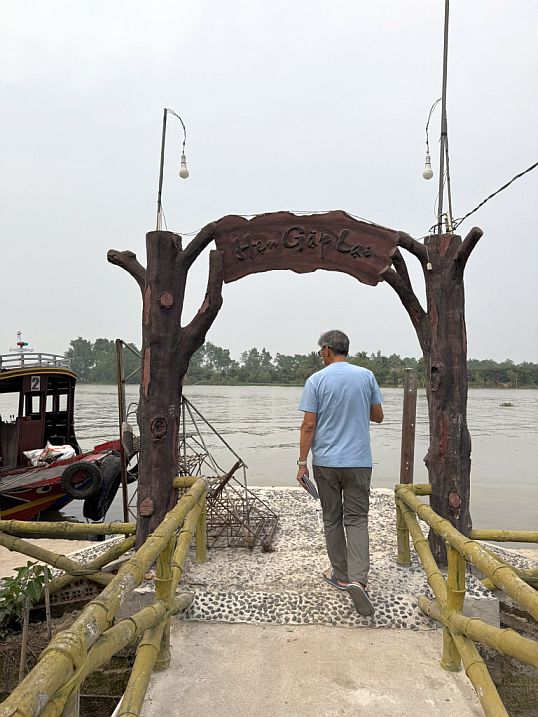
After visiting the candy factory we are back on our boat.
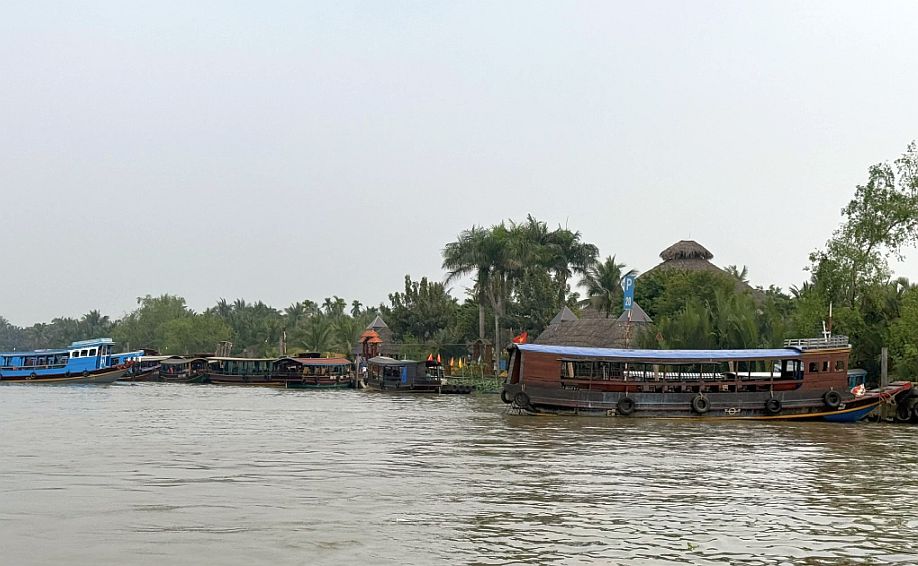
Sailing further along the Mekong River, we arrive at Phung Islet (often called Phoenix Island), where lunch is set at Diem Phuong Restaurant.
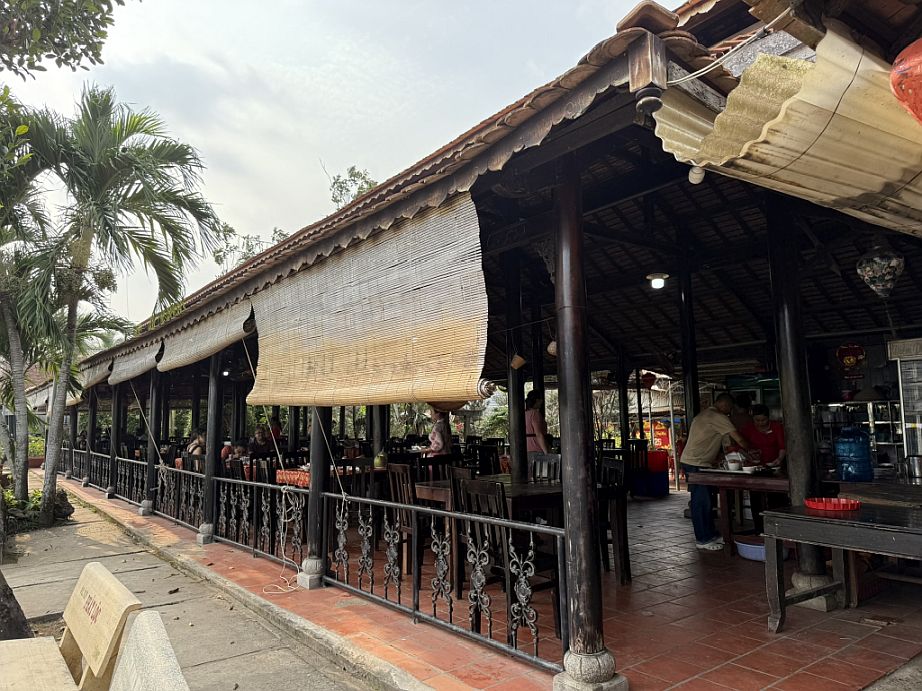
Arriving at Diem Phuong restaurant.
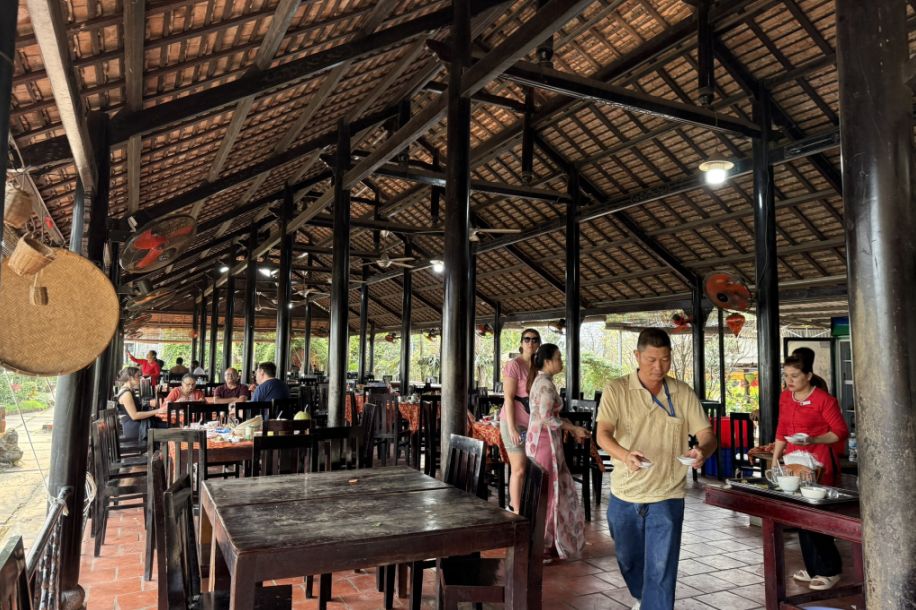
The restaurant itself feels spacious yet very much rooted in traditional Mekong Delta design. Built mostly of dark, polished wood, the structure is open and airy. The main dining hall has a high ceiling and is open along the sides, allowing natural light and river breezes to flow through. Thick wooden beams support the roof, adding to the sense of height and openness. It doesn’t feel enclosed like a typical restaurant, instead, it blends into the surrounding landscape, with views of greenery just beyond the open sides.
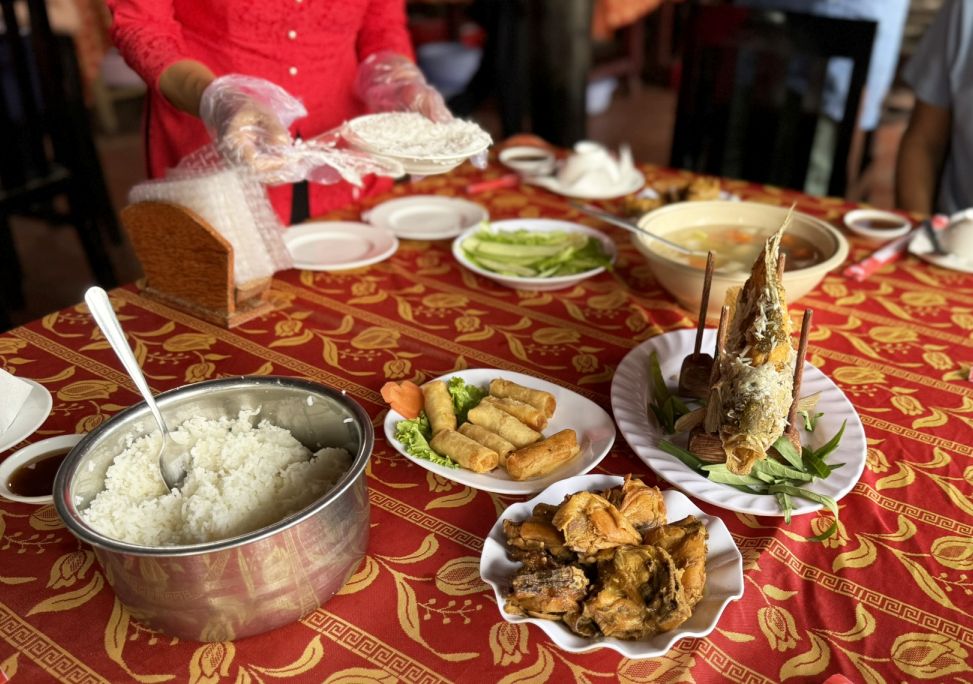
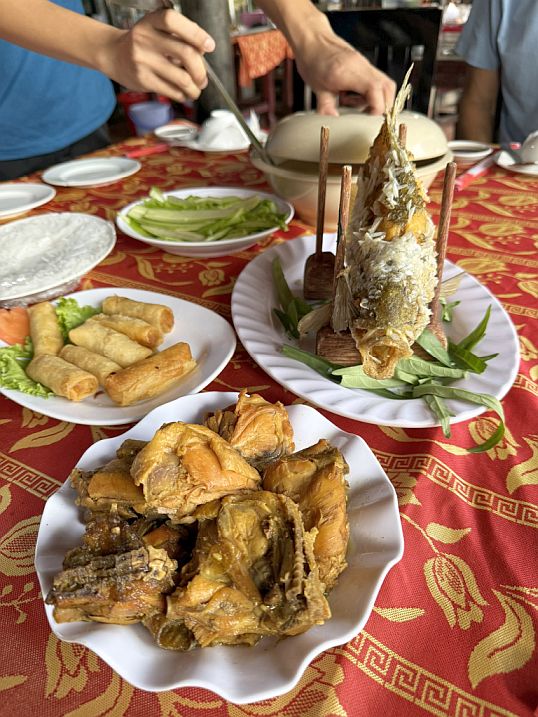
Lunch is waiting for us. Fried golden fish, cha giò (fried spring rolls), crunchy and savory, and fried chicken with steamed rice, simple but comforting dishes that round out the meal.
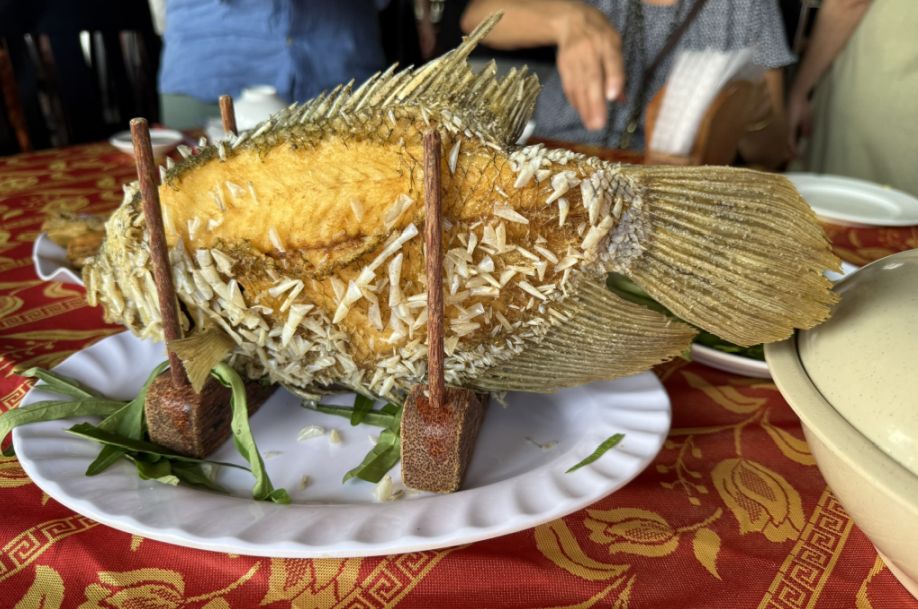
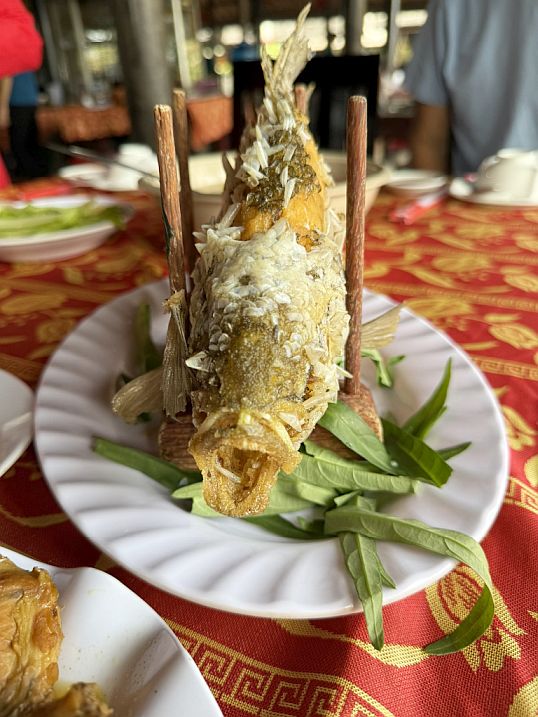
At the table, the highlight is unmistakable, a whole fried fish, deep golden and dramatically presented standing upright, supported by a wooden frame.
 |
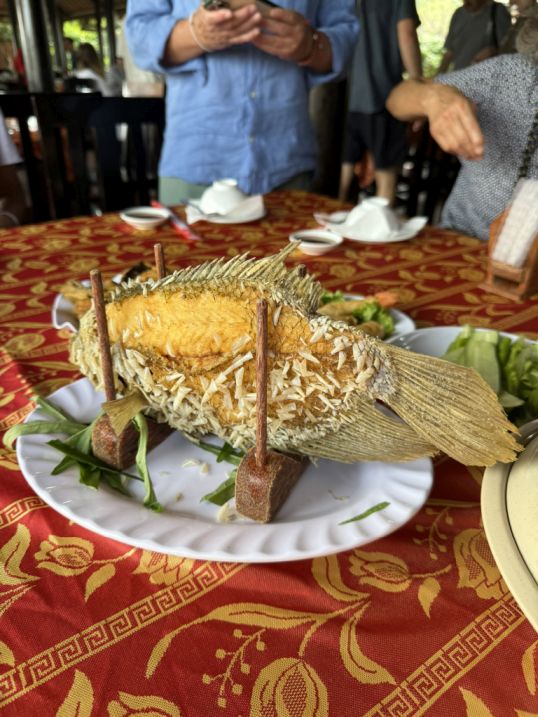 |
This is a classic Mekong Delta dish known as elephant ear fish (cá tai tuong chiên xù). The fish is fried until the skin becomes incredibly crisp, almost sculptural, while the inside remains tender.
 |
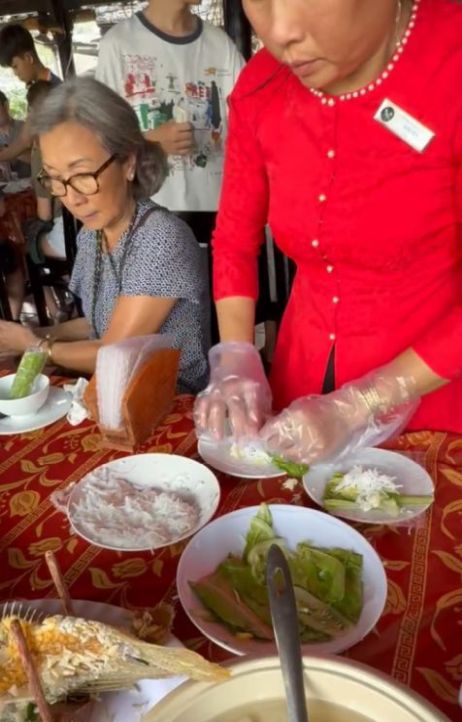 |
Then comes the interactive part: the waitress skillfully takes the fish apart, gently pulling flakes of meat from the crispy body. She places it onto rice paper, layering it with fresh herbs, mint, basil, leafy greens, and pickled vegetables. She then roll it up into a fresh spring roll and gave one to each one of us to dip it into a tangy sauce. It’s a perfect balance of textures, crispy fish, soft rice paper, and fragrant herbs.
 |
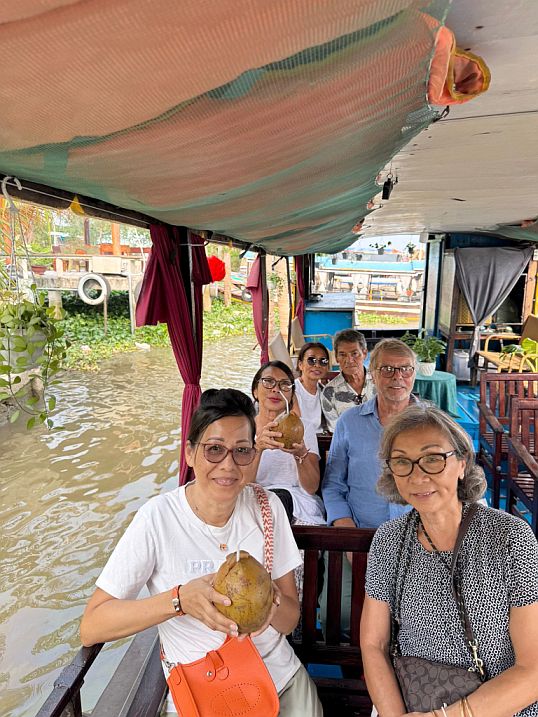 |
Our tour is now nearing the end. We hopped back into the boat and during the ride, our tour guide offered each one of us fresh coconut juice, which was delicious and refreshing/
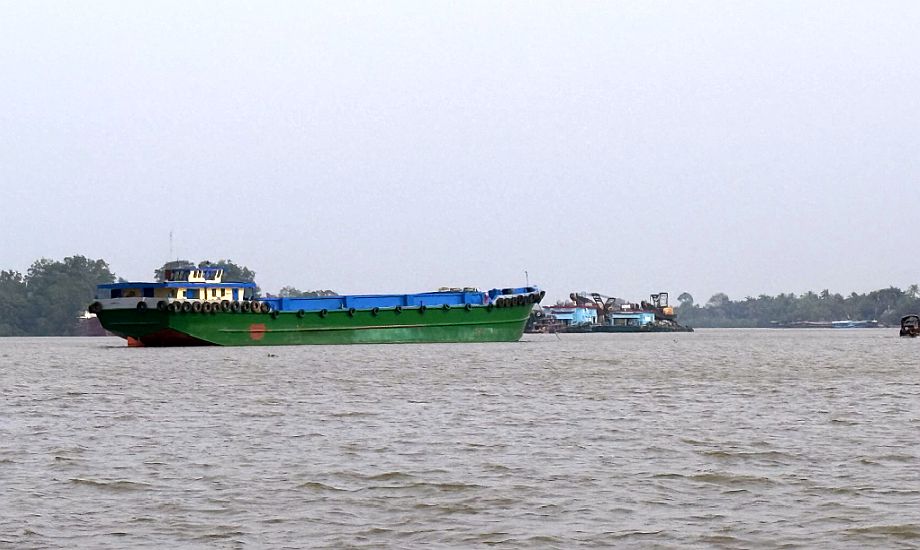
Sailing through the Mekong Delta.
Our Mekong Delta day was a smooth journey from culture to countryside. It began at Vinh Trang Pagoda, where we explored its historic temple and peaceful gardens, before heading to My Tho to board a boat along the Mekong River.
On Thoi Son Islet, we enjoyed fresh fruit and music, walked through lush village paths, visited a honey farm, and glided through shaded canals on a small sampan. After a quick stop at a coconut candy workshop, you had lunch on Phung Islet at Diem Phuong Restaurant, highlighted by the crispy elephant ear fish.
The day ended with a relaxing boat ride back, sipping fresh coconut juice as you took in the last views of the river before returning to Saigon.
.
NEXT... Day 6-Dinner at Nha Tu