12 days in Thailand 1/7- 1/28/2025
Day 4-Walking around the old town-1/10/2025
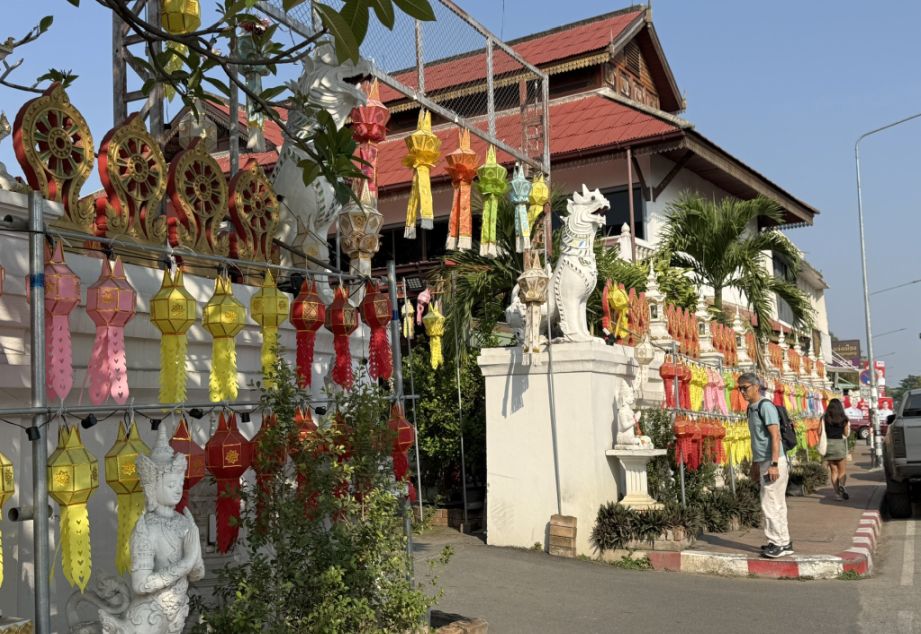
After visiting Pratu Chiang Mai Market, we decided to continue walking through the old town of Chiang Mai. One of the first temples we passed was Wat Fon Soi.
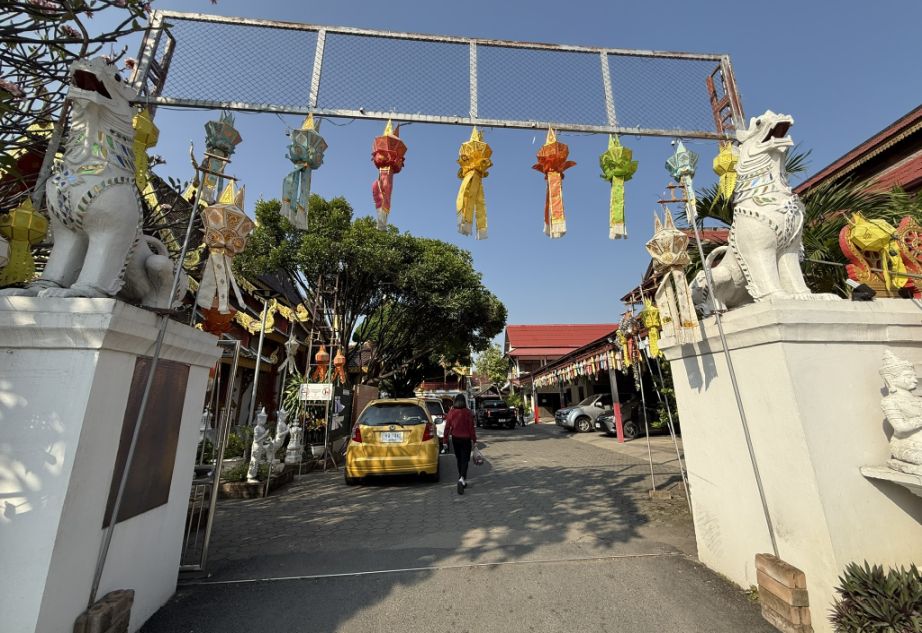
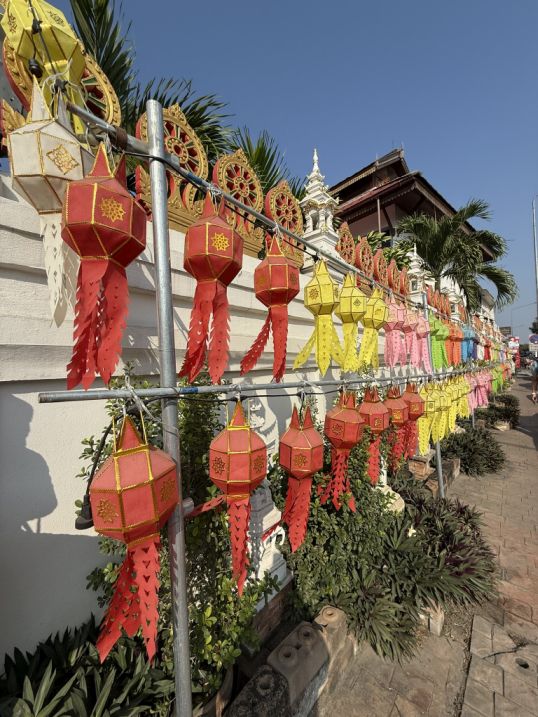
The outside of the temple was beautifully decorated with many colorful lanterns hanging around the entrance and along the walls. These lantern decorations are actually quite common in northern Thailand, especially around temples.
 |
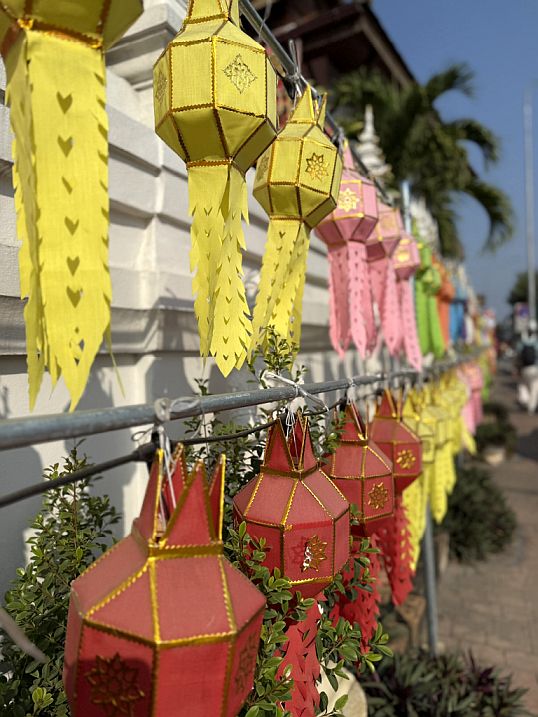 |
In Chiang Mai, temples are often decorated with hanging lanterns during religious celebrations and festivals. The most famous of these is the Yi Peng Festival, when the entire city is filled with lanterns as offerings of light to the Buddha. During this time, homes, streets, and temples are decorated with colorful lanterns that symbolize merit, good fortune, and spiritual illumination.
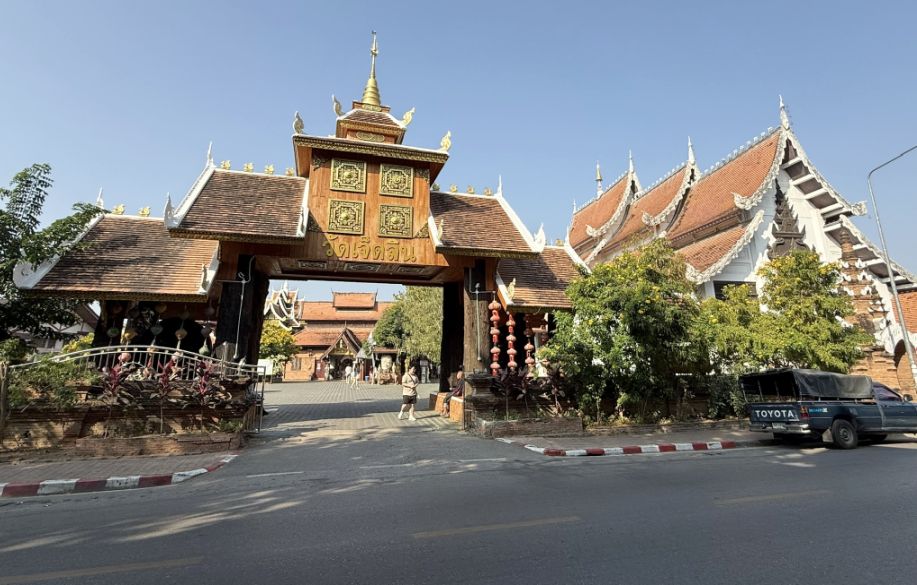
Continuing our walk, we arrived at Wat Chet Lin. The entrance to the temple is large and impressive, with a beautifully designed gateway that immediately draws visitors inside.
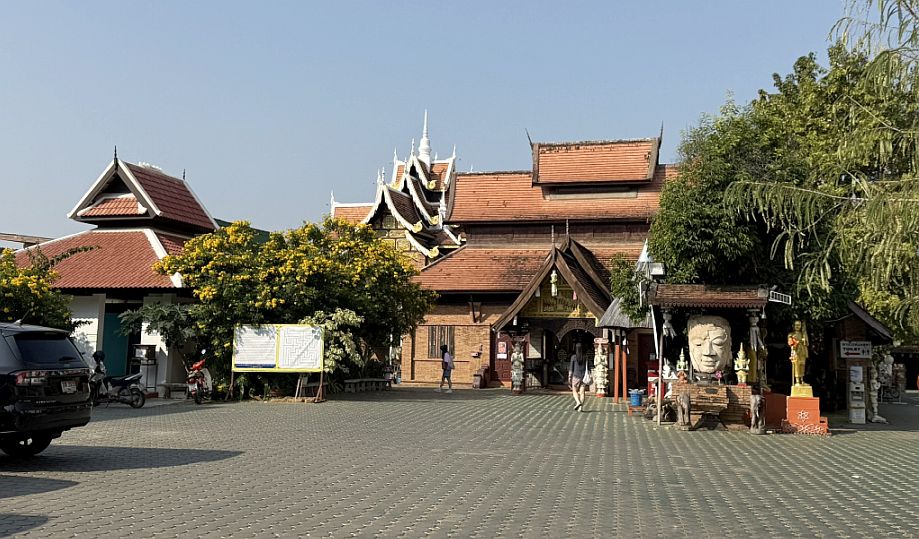
Once in the courtyard, the temple grounds feel open and peaceful.
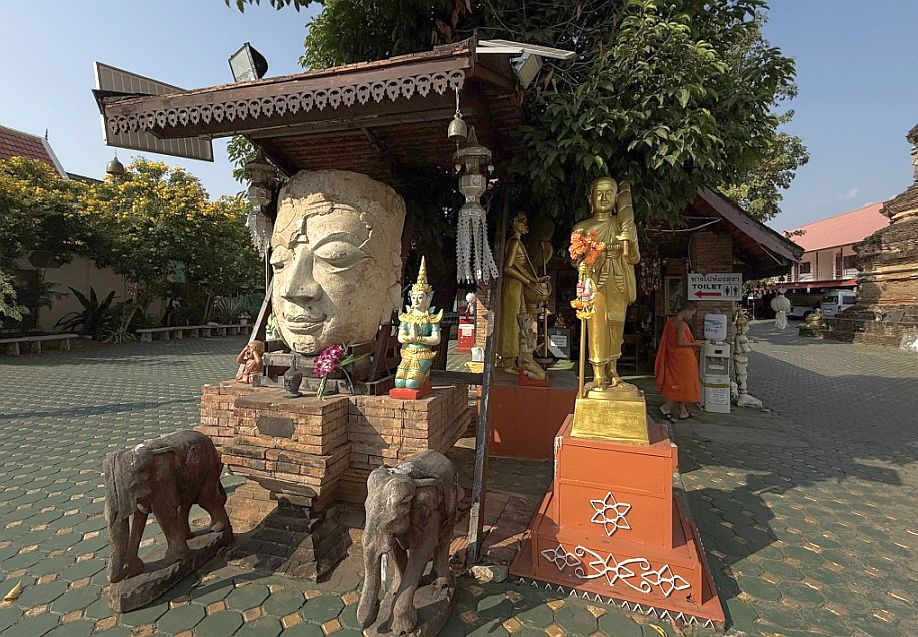
We noticed several statues around the courtyard, including elephant figures and a striking sculpture featuring a large serene face of the Buddha. Elephants are often used in Lanna temple decoration because they symbolize strength, protection, and royal power.
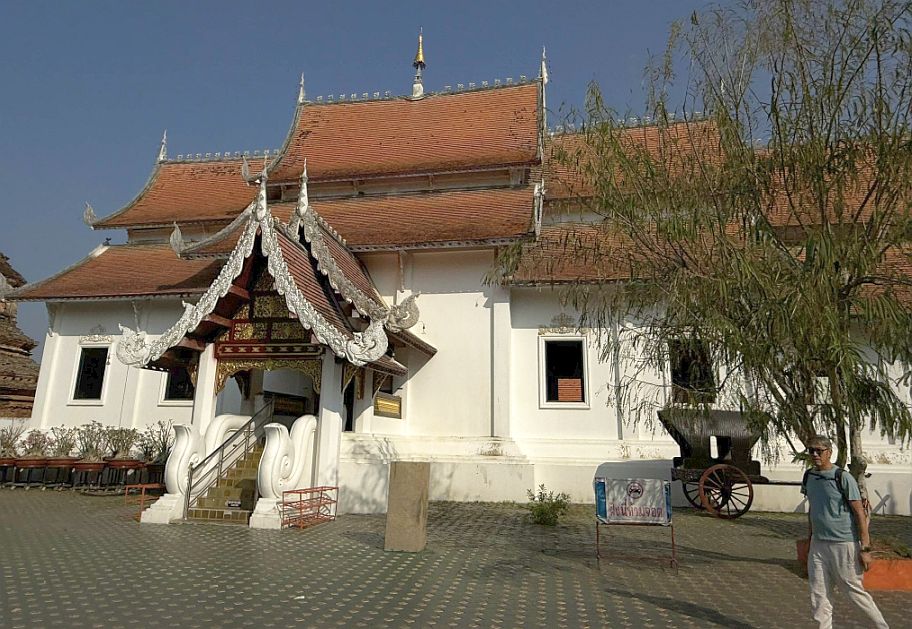
Walking in the courtyard of the temple.
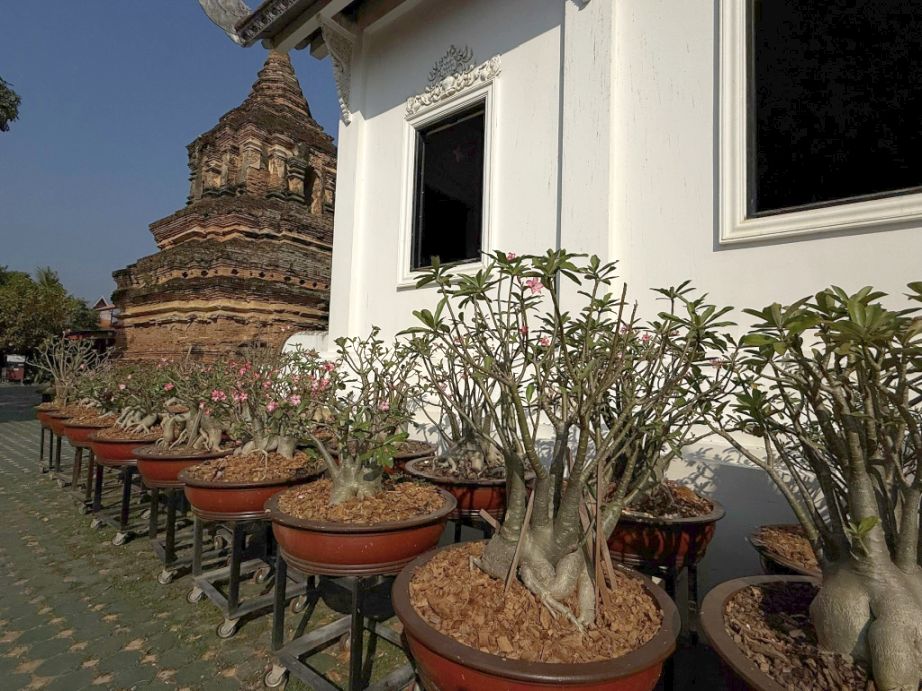
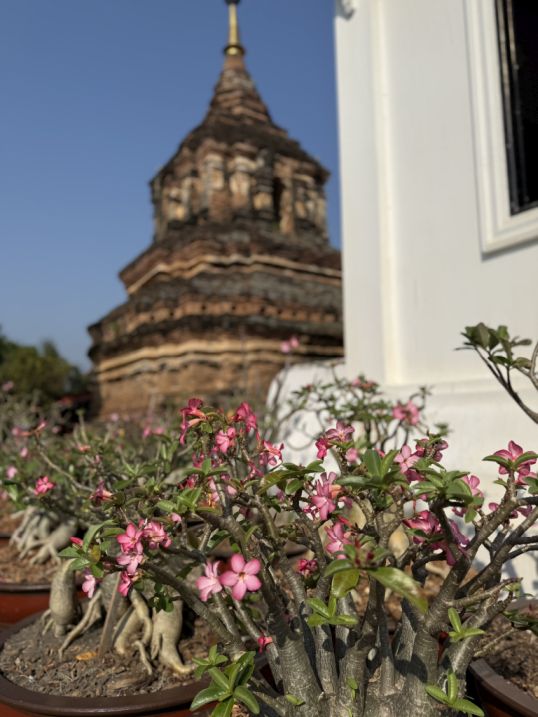
Wat Chet Lin has a long history dating back to the Lanna Kingdom, which ruled northern Thailand for centuries. Historically, this temple played an important ceremonial role. It was used by monks and royal attendants to prepare sacred water for royal rituals, especially for ceremonies connected to the nearby royal temple Wat Phra Singh.
 |
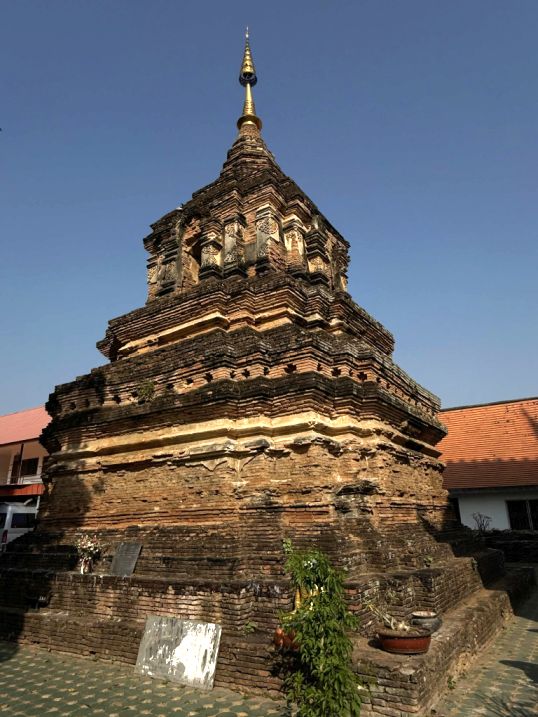 |
One of the most interesting features of the temple grounds is the old stupa (chedi). This ancient structure is one of the oldest parts of the temple and likely dates back several centuries. In Buddhist temples, a stupa is usually built to enshrine sacred relics or to commemorate important monks or historical events. The presence of this old chedi is a reminder of the temple’s long spiritual history within the old city.
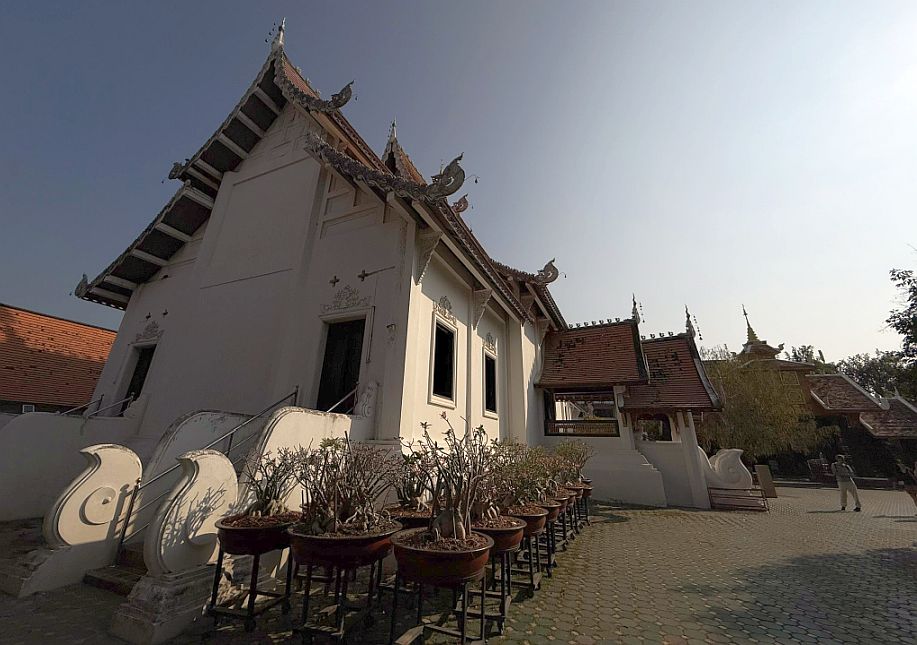
The exterior of the main hall.
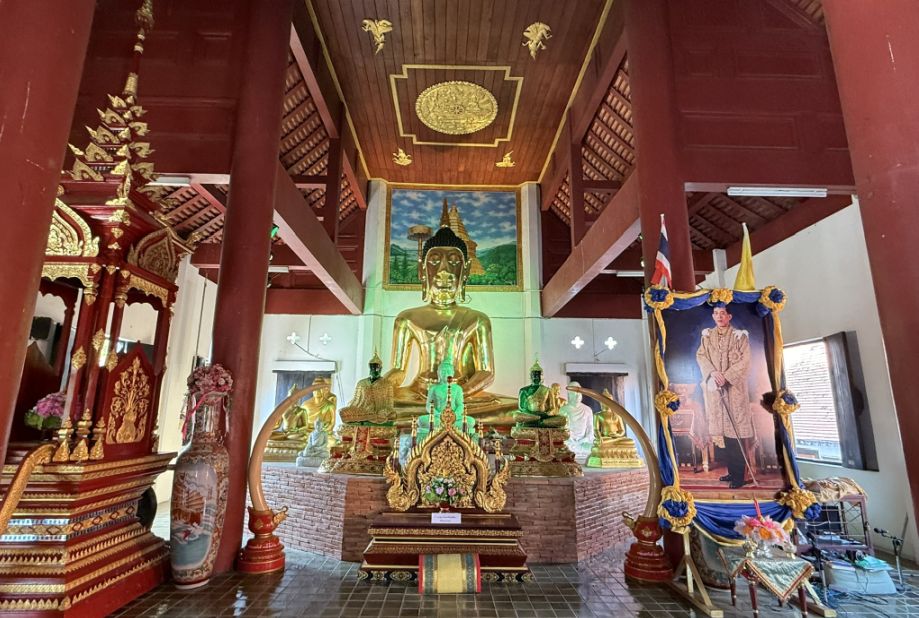
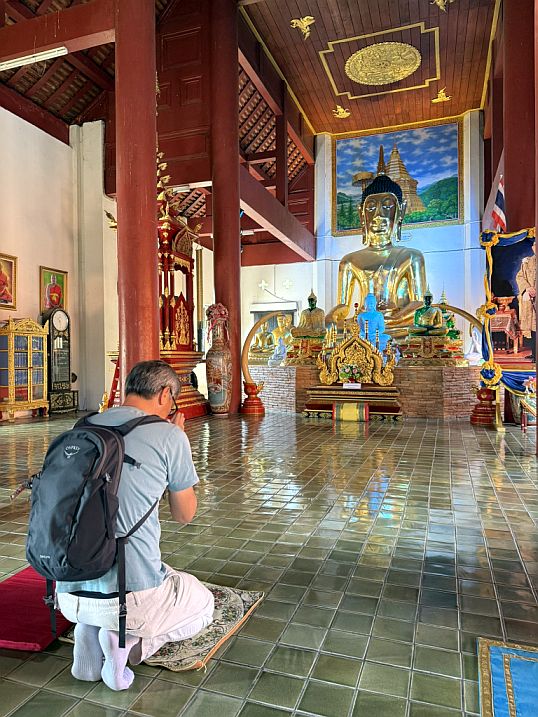
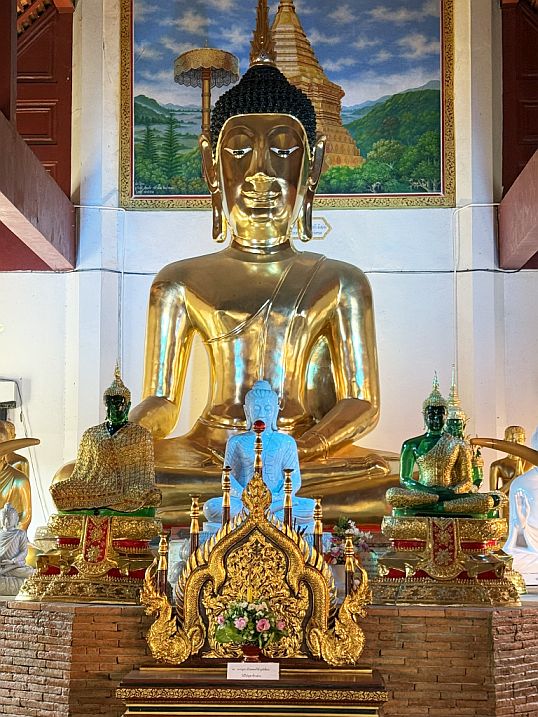
Once inside the main hall (viharn), there is a large golden Buddha statue seated at the altar.
 |
 |
\Visitors and locals often come here to pray, make offerings, and spend a few quiet moments in meditation.
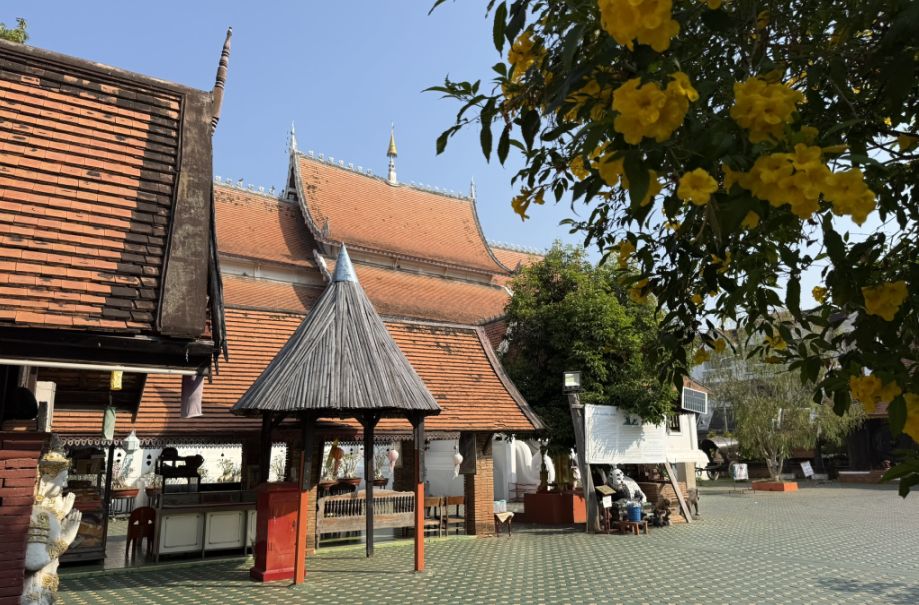
We are now leaving the courtyard.
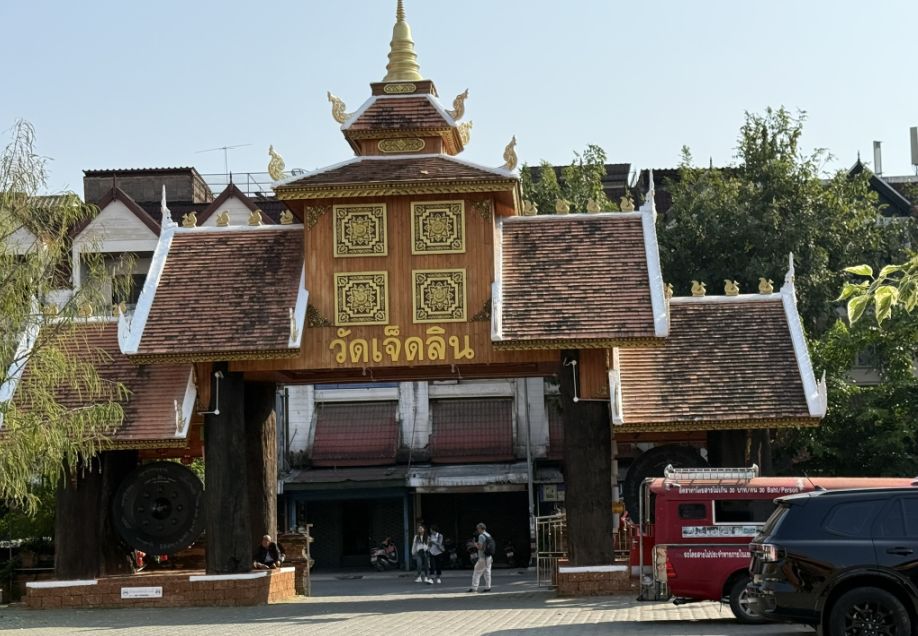
The front gate, view the inner court of the temple.
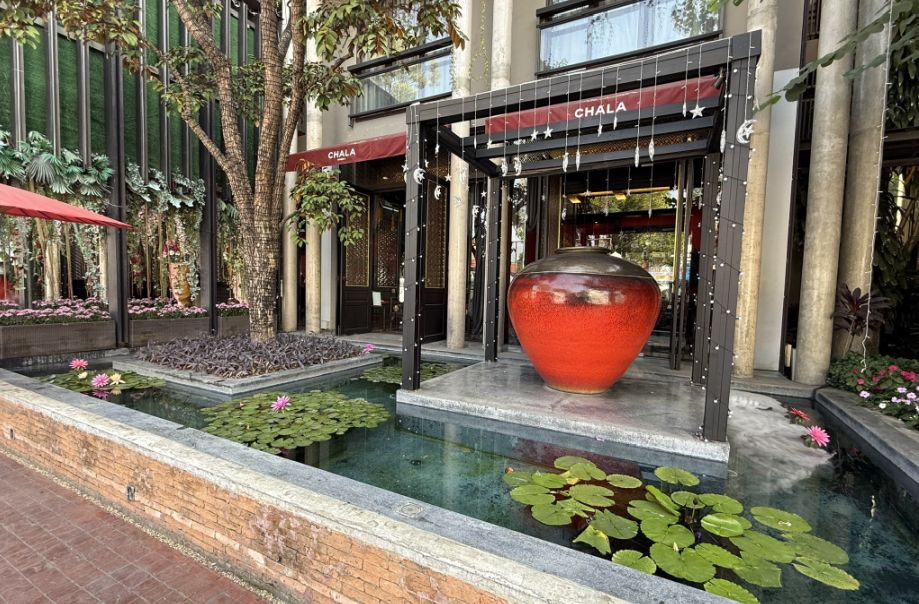
We are now on Prapokklao Road a significant road located right in the heart of the Old City. This is the front of the Chala Hotel with a lotus pond.
 |
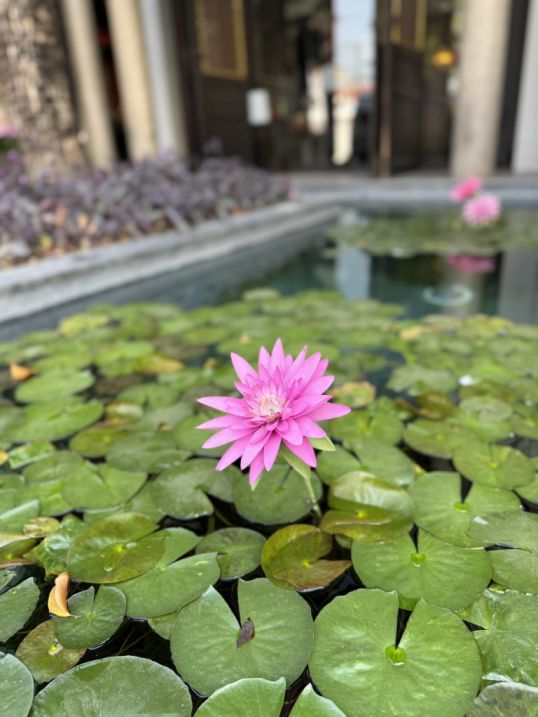 |
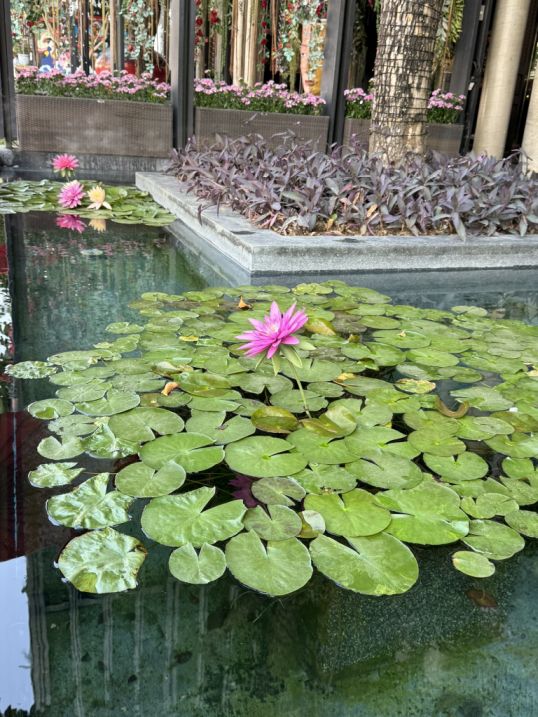
Beautiful lotus flower.
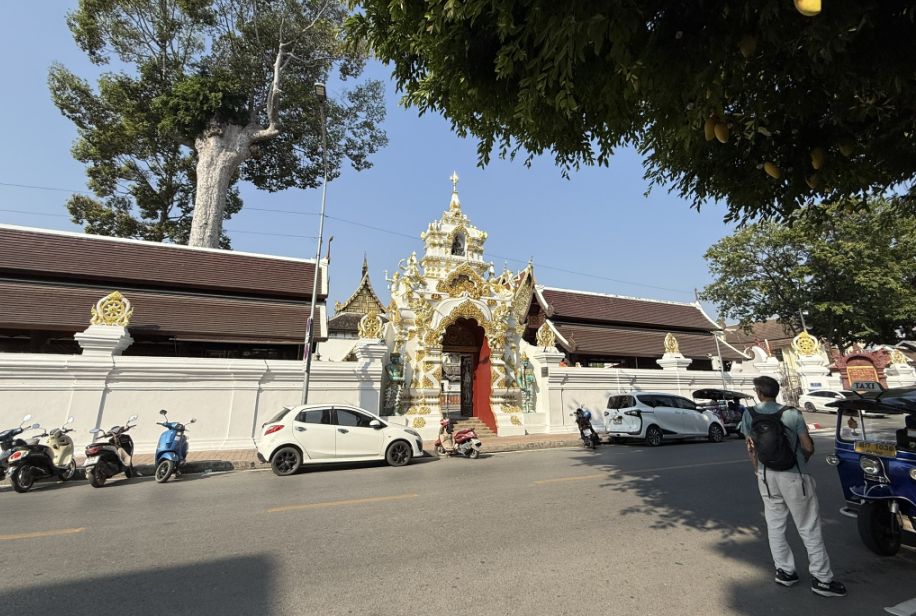
Walking along Prapokklao Road in the old city of Chiang Mai, it is striking how many temples stand close to one another. This is not unusual in Chiang Mai. The city was the capital of the Lanna Kingdom for centuries, and during that time kings, nobles, and wealthy families built temples to gain religious merit and demonstrate devotion to Buddhism.
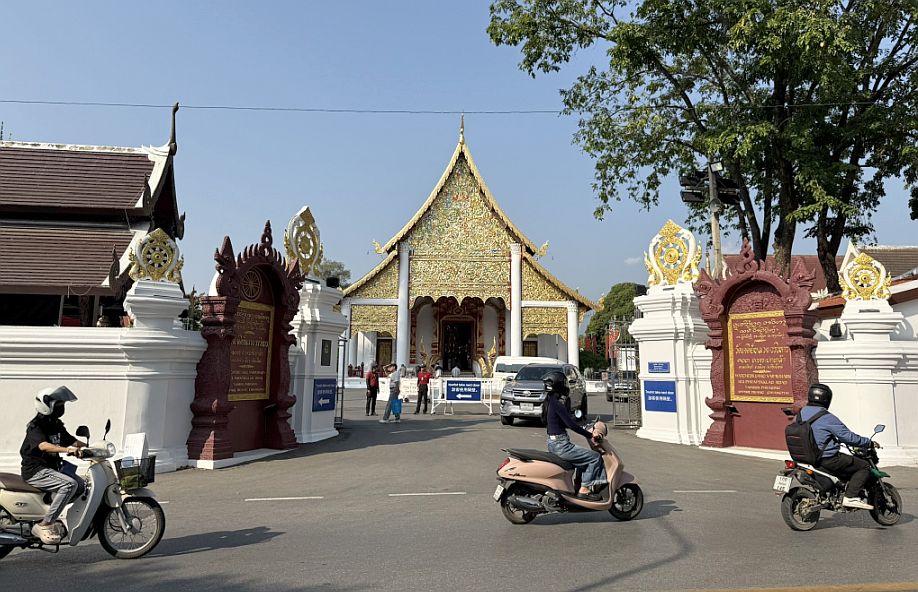
At one point there were over 300 temples within the old city walls. Many neighborhoods built their own temple, which served as the spiritual and community center for local residents. That is why today, as you walk only a few blocks, you can encounter temple after temple.
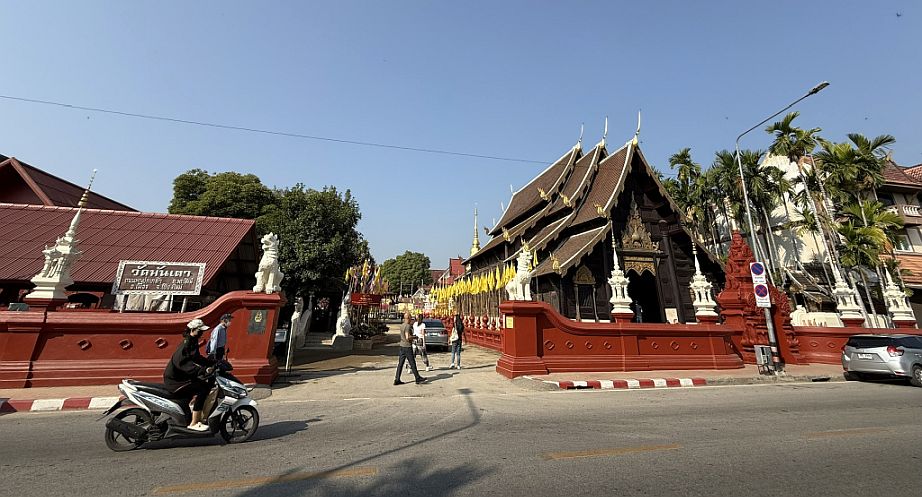
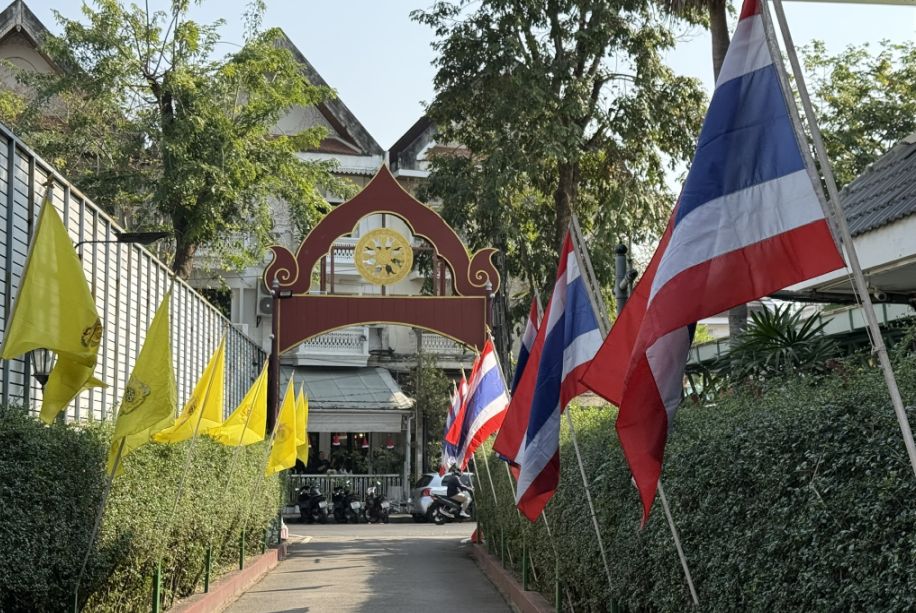
The next templeswe stopped was Wat Phan Tao.
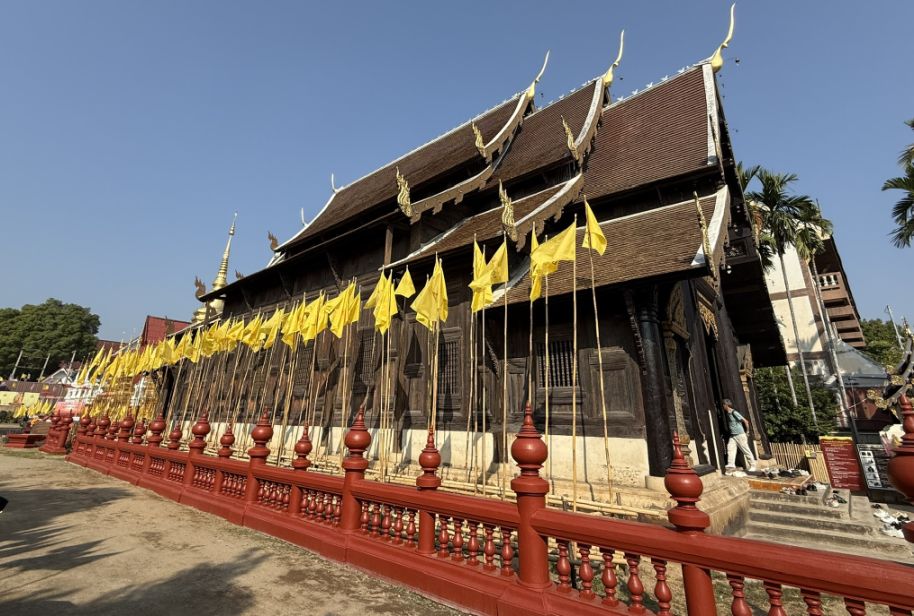
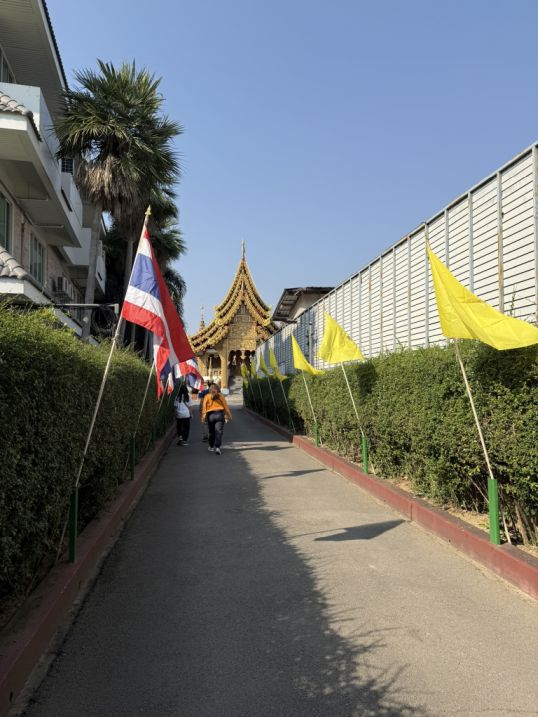
The approach to the temple is quite memorable: a narrow, long pathway lined with rows of yellow flags, which symbolize Buddhism and are often used during religious ceremonies.
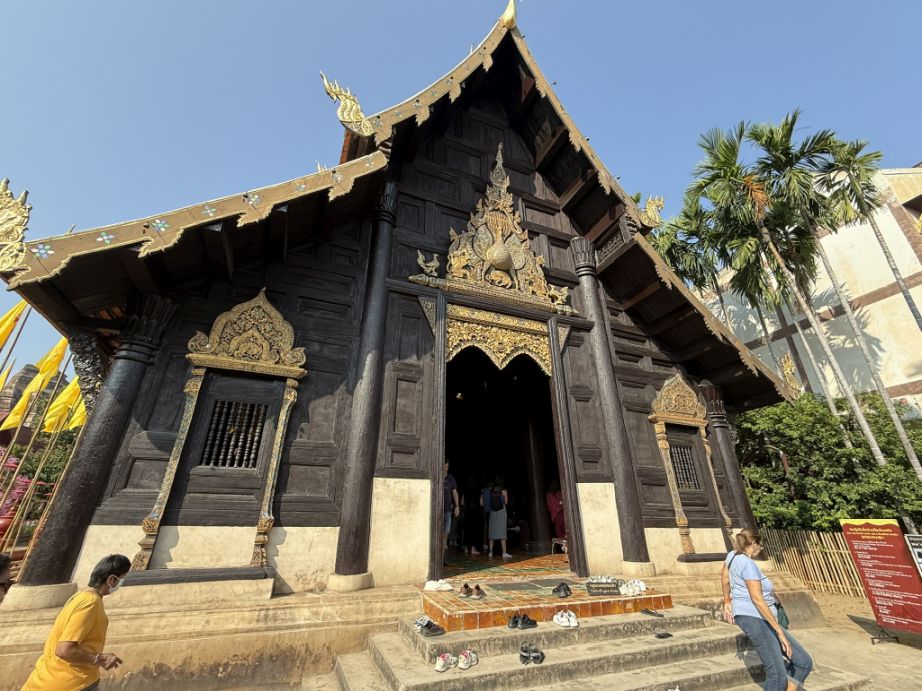
Wat Phan Tao is especially known for its beautiful wooden viharn (main hall). Unlike many temples in Chiang Mai that are covered in gold and bright colors, this hall is built almost entirely from dark teak wood in traditional Lanna architecture, giving it a very elegant and serene appearance. Historically, the building was once used as a royal palace hall before being converted into a temple structure in the 19th century during the reign of King Kawila.
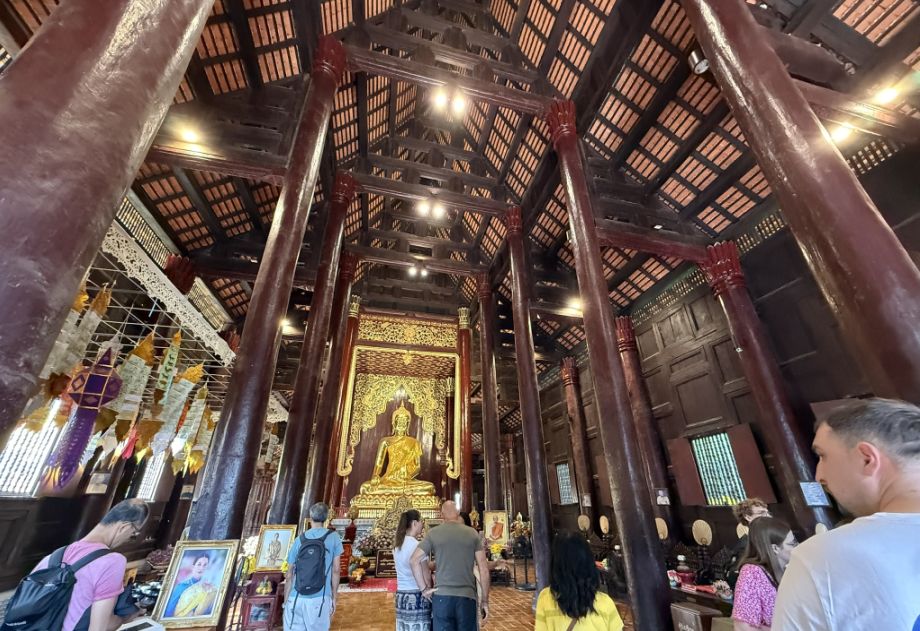
Inside the hall, there is a seated golden Buddha at the altar. The assembly hall, made of teak, is 69 ft. long, 36 ft. wide and46 ft. high, supported by 28 wooden pillars.
 |
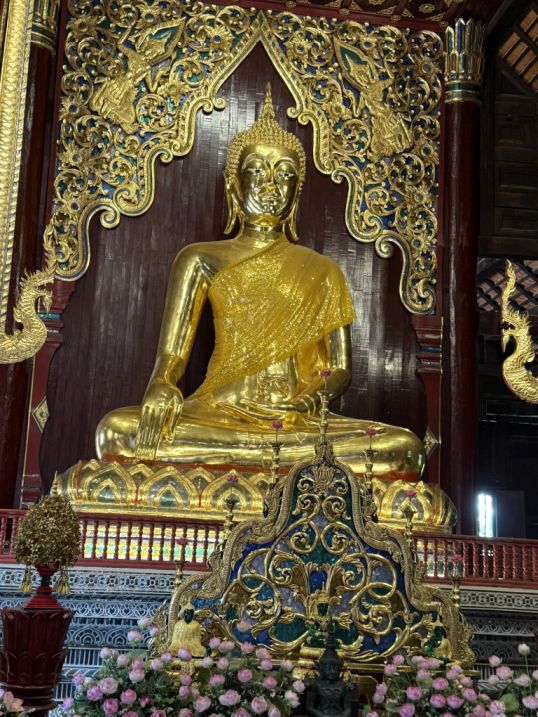 |
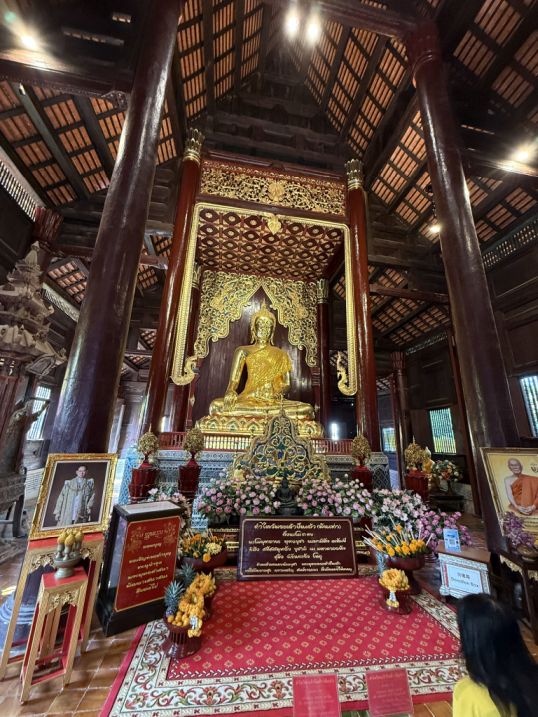
The golden Buddha, Phra Chao Pan Tao, seated on the main altar in
the Maravijaya attitude, was cast in 1498
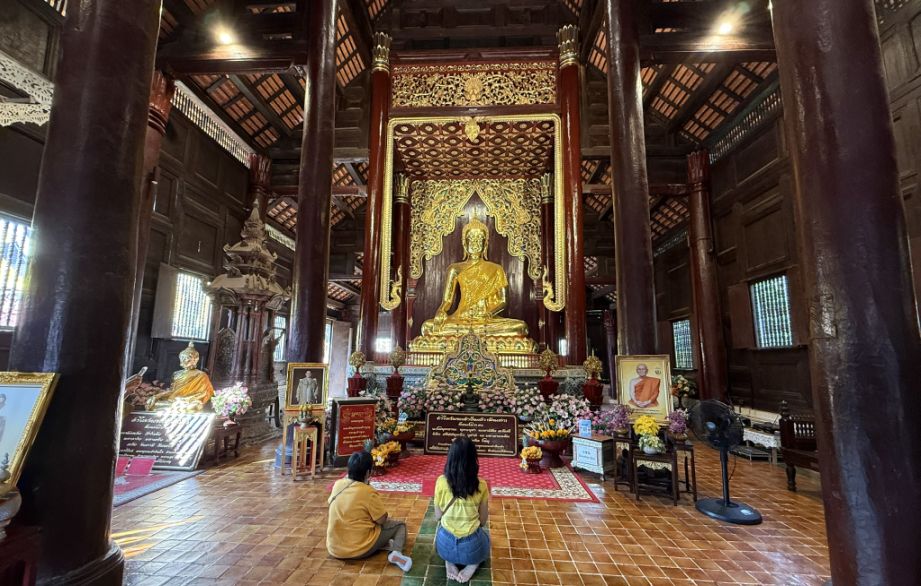
Locals sat quietly to pray in front of the golden buddha.
 |
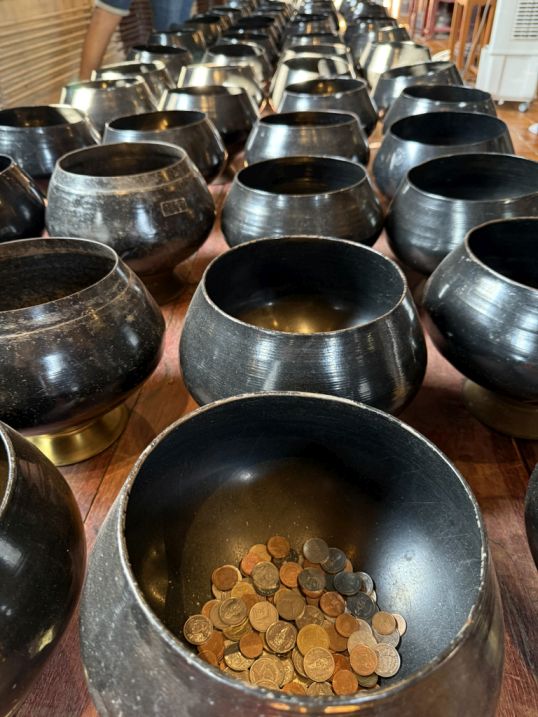 |
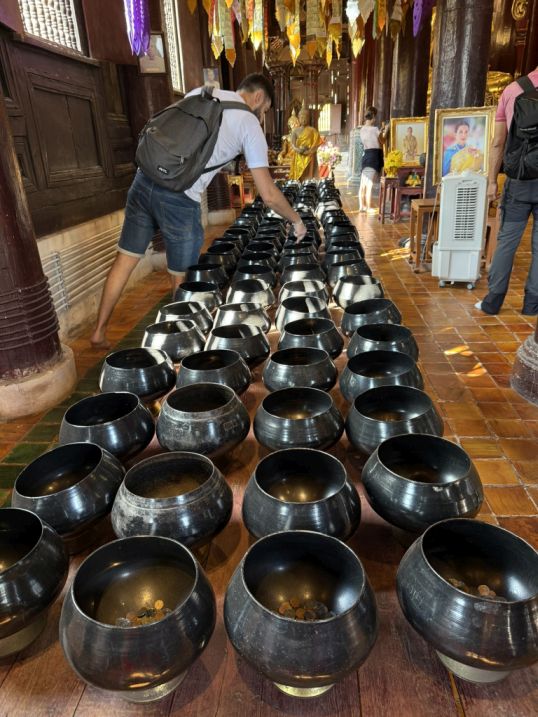
The rows of metal bowls are part of a traditional Buddhist practice. Visitors place small coins into each bowl one by one while walking along the row. Each bowl represents an act of merit-making. By placing coins into many bowls, people symbolically practice generosity and mindfulness, while also supporting the temple. The sound of the coins dropping into the bowls is also said to remind people of the teachings of the Buddha.
 |
 |
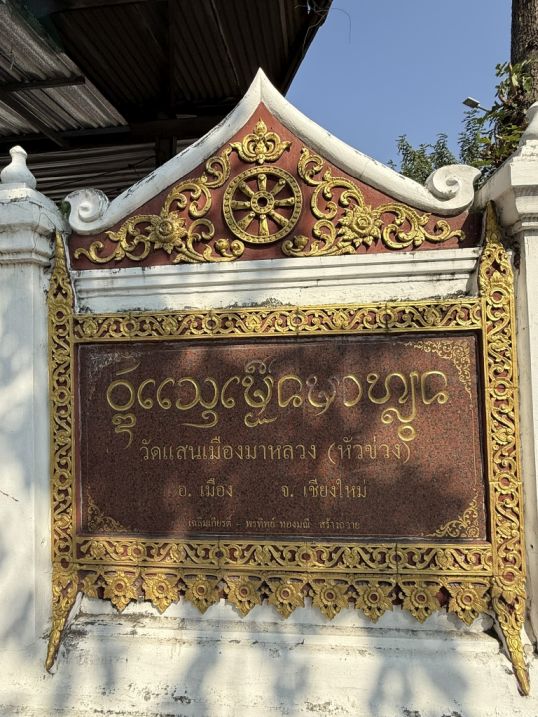
Not far away we visited
Wat Saen Muang Ma Luang.
Its name translates roughly to “Temple of a Thousand Cities,” reflecting its
former importance as a center of local culture and Buddhist learning. Although
many of its early records have been lost, the temple has long been tied to the
Lanna Kingdom and its rich artistic traditions.
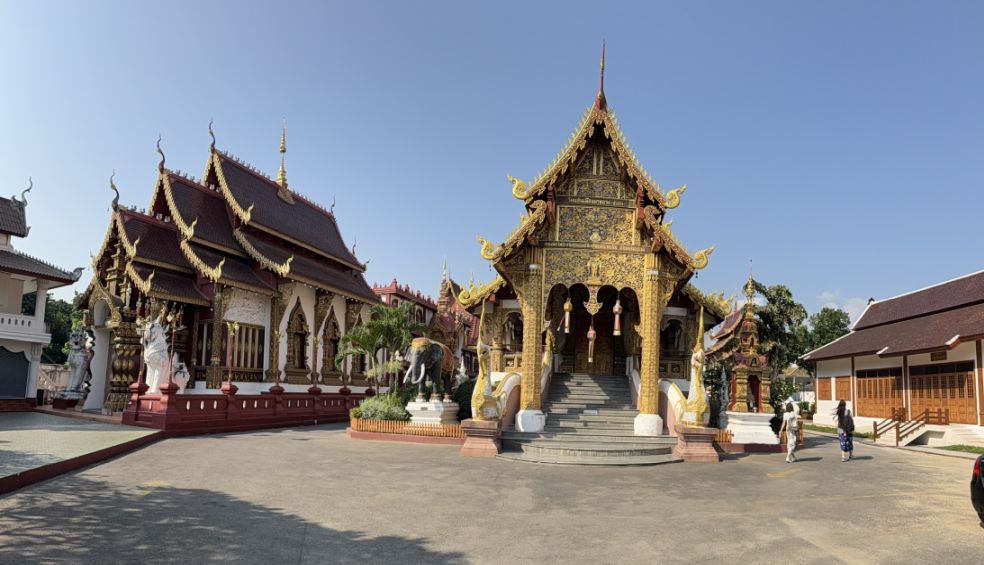
This temple complex is much larger and less visited by tourists, giving it a more local atmosphere. The grounds are extensive and include multiple temple buildings, prayer halls, and courtyards.
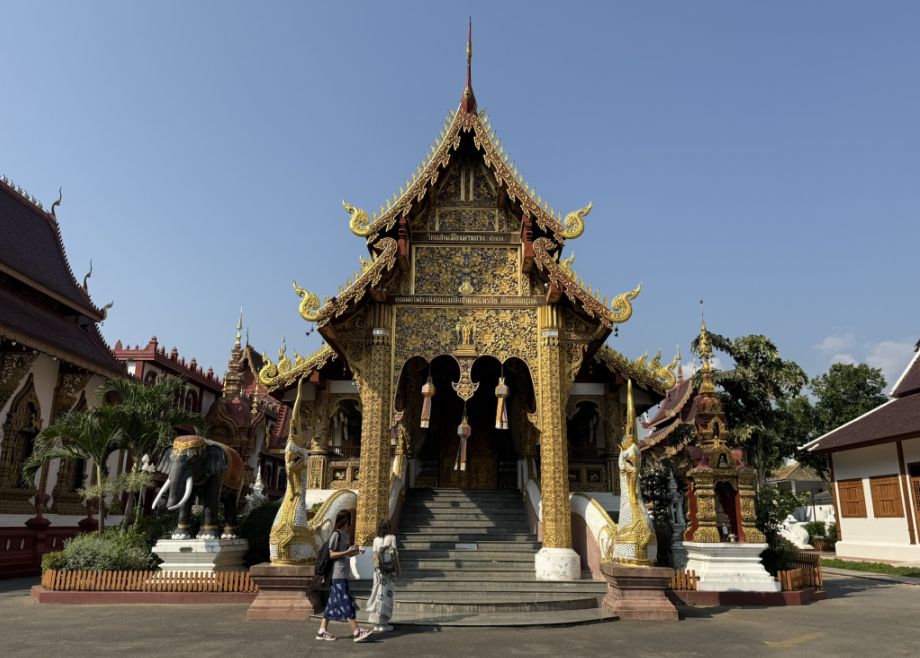
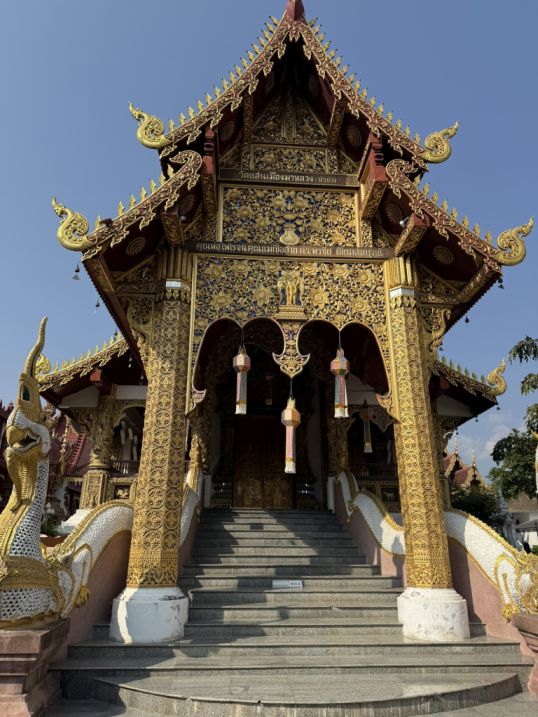
The temple dates back to the 15th century, during the height of the Lanna Kingdom. The architectural highlight of the temple is its beautifully crafted Main Wihan.
 |
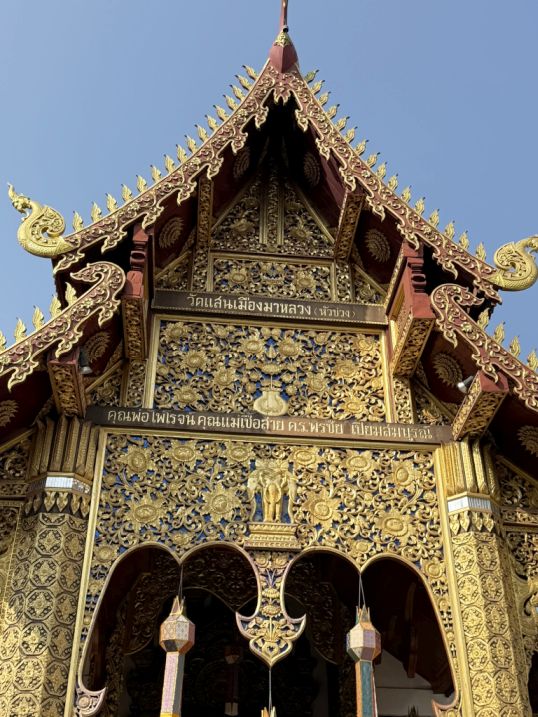 |
The steep, sweeping Lanna roofline immediately catches the eye, while the carved wooden façade displays floral motifs and mythical creatures traditional to northern Thai design.
 |
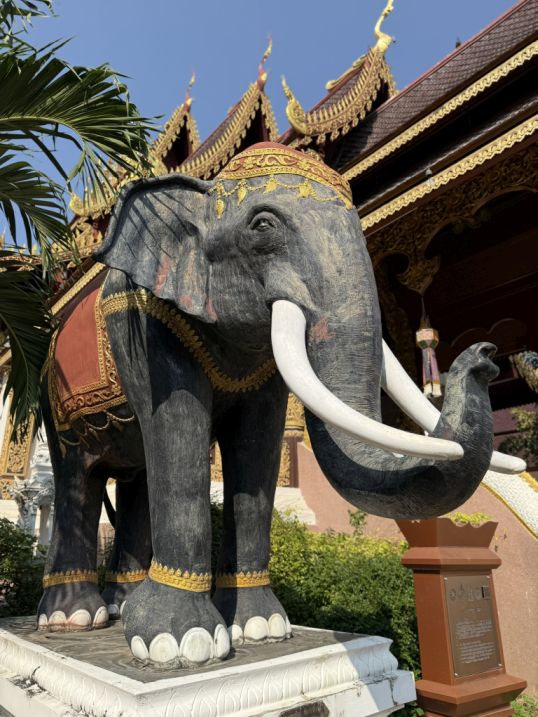 |
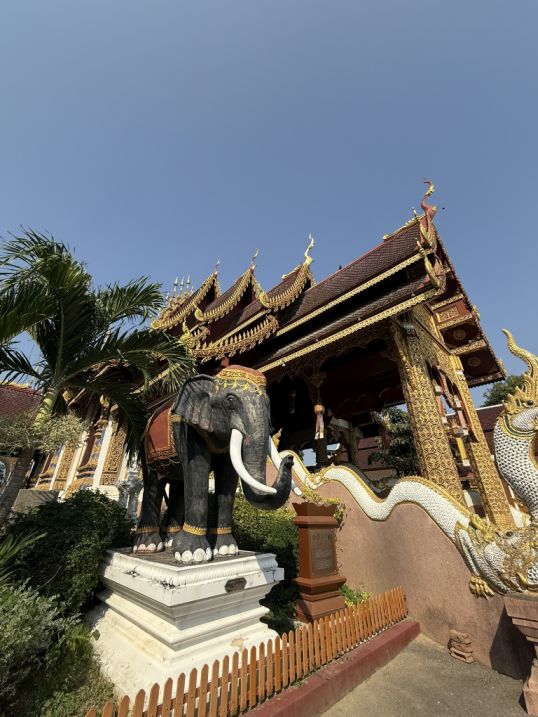
A large elephant statue standing at the entrance. Elephants again symbolize strength and protection and are closely associated with northern Thai royal and religious traditions
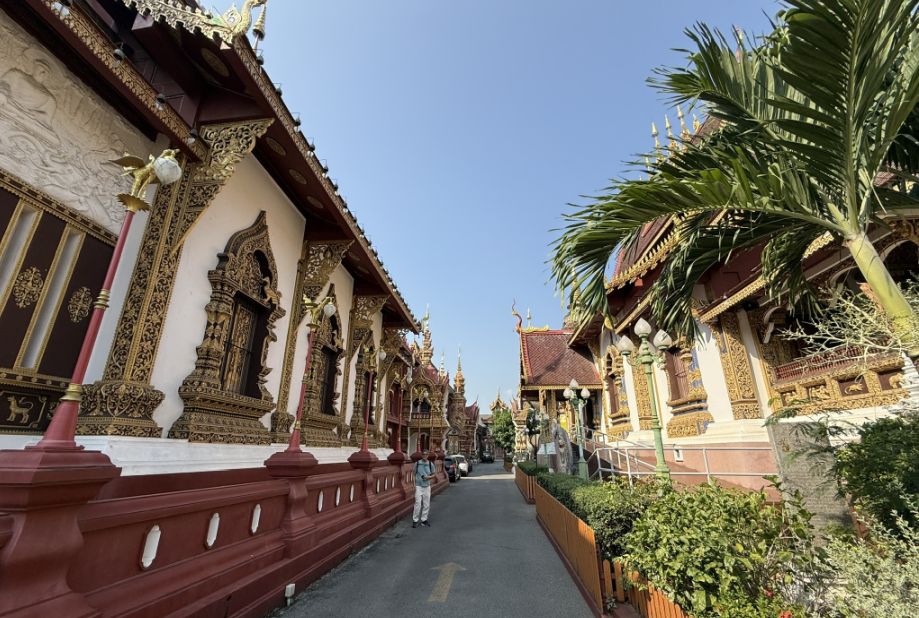
As we continued walking, we passed along a long corridor lined with smaller shrines and temple buildings.
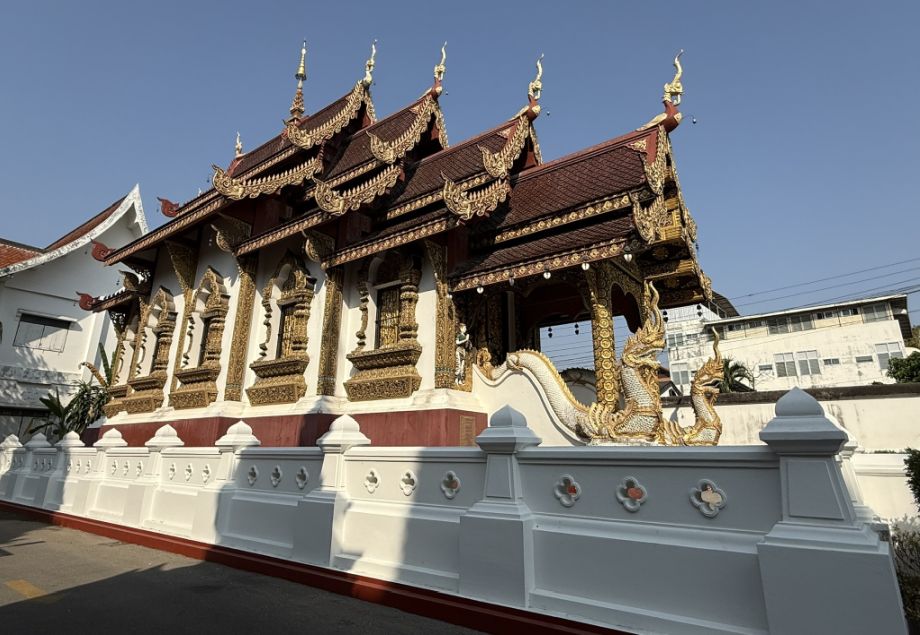
Historically it was an important religious center for the local community. Over time additional structures were added, which explains why the complex feels so large and contains several halls and shrines.
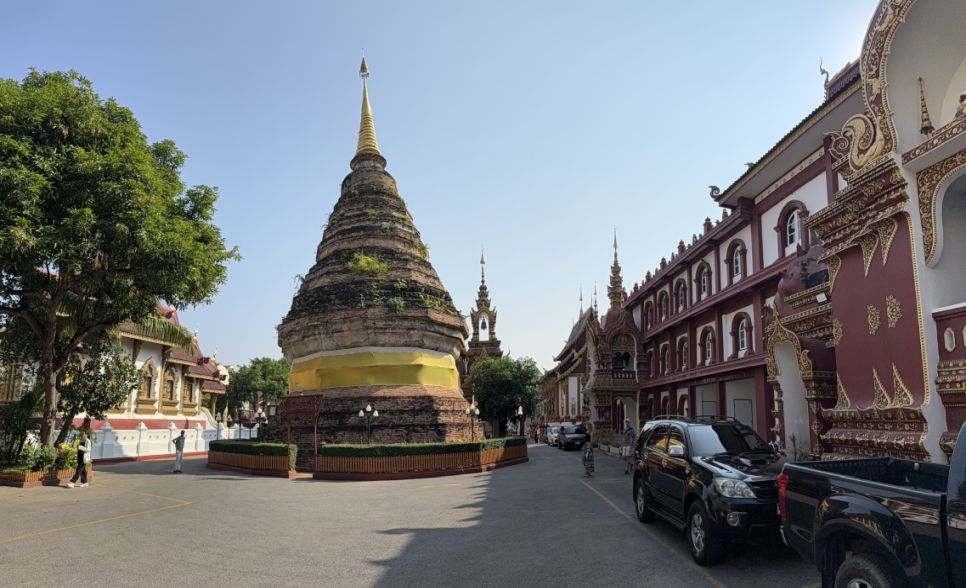
Eventually reaching a courtyard where an old chedi (stupa) stands. Like many stupas in Chiang Mai, it likely houses sacred relics or commemorates important monks from the temple’s history.
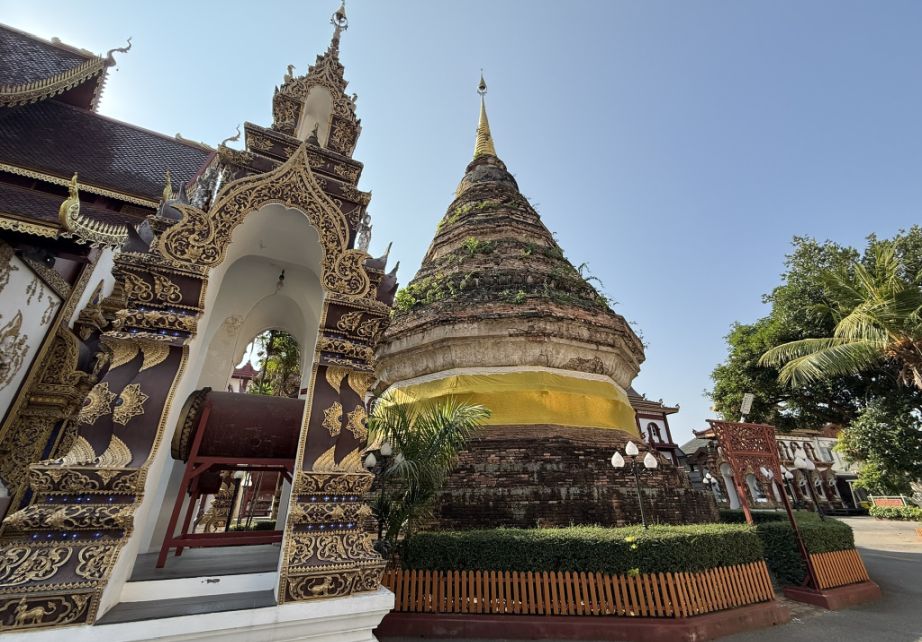
Over the centuries, Wat Saen Muang Ma Luang has served as a community temple where residents gather for daily worship, Buddhist festivals, and religious ceremonies. Unlike larger and more famous temples, its role has remained intimate and local, giving it a strong connection to neighborhood life.
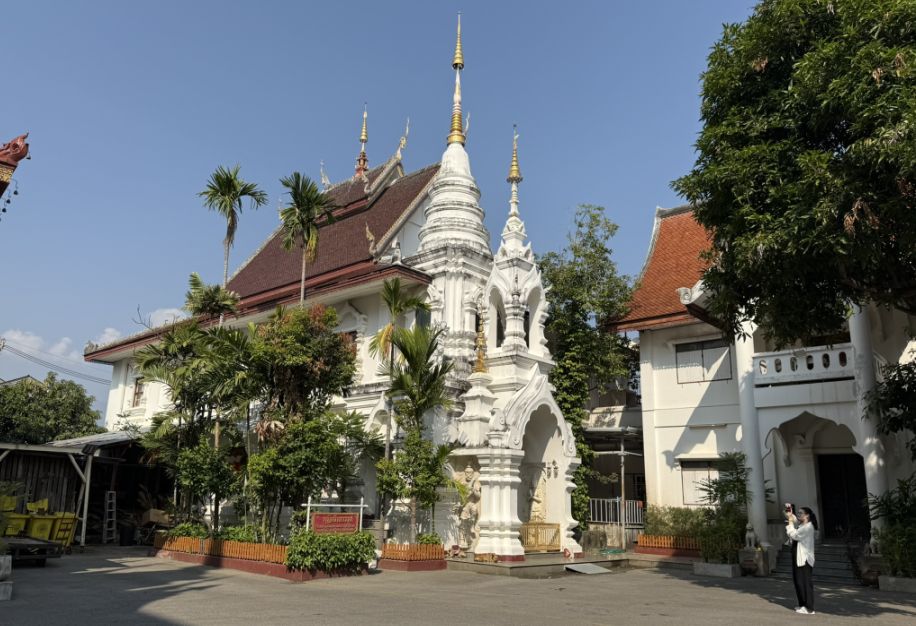
The temple grounds also include smaller shrines, guardian statues, and shady spots ideal for sitting and taking in the quiet ambiance.
We are now leaving the temple.
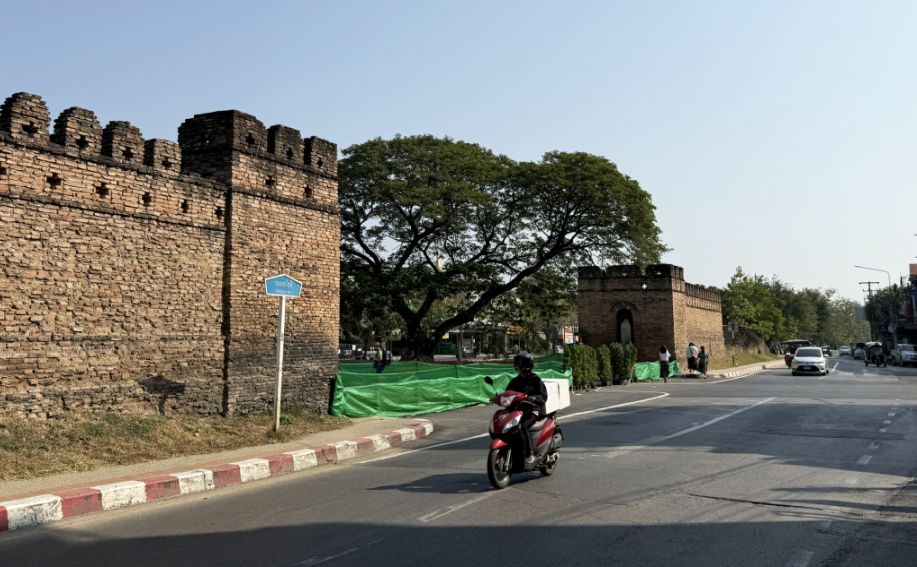
When have reached the North Gate of the old city. It is an important part of the historic defenses of Chiang Mai. The gate itself is known as Chang Phuak Gate, one of the main entrances through the ancient walls.
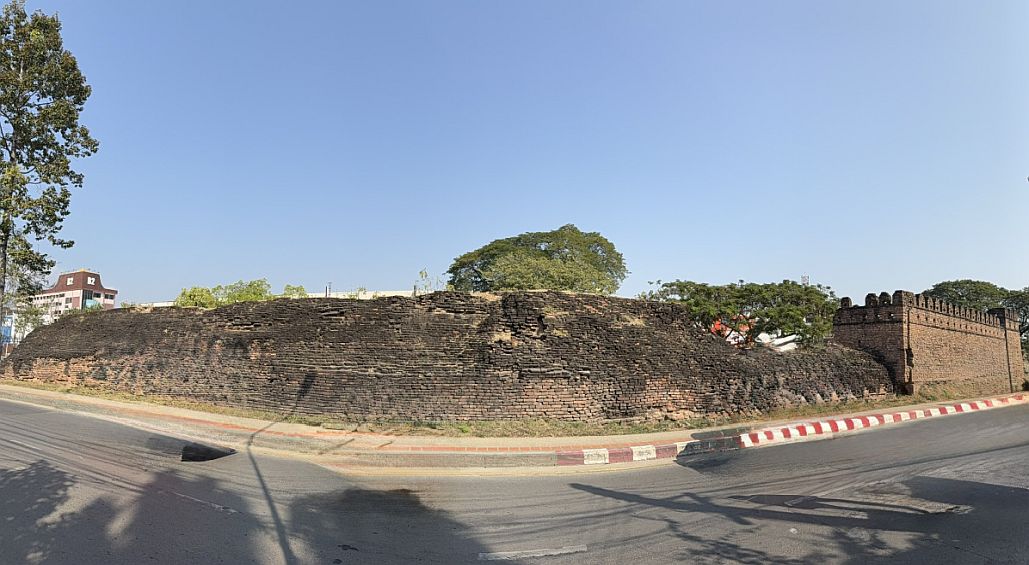
Chiang Mai was founded in 1296 by King Mangrai, who established the city as the capital of the Lanna Kingdom. To protect the new capital, the city was built in a rectangular plan surrounded by defensive walls and a moat. These fortifications were designed to protect the city from invasions by neighboring kingdoms such as Burma and Siam. Originally, the walls were made of brick and earth, reinforced by a wide moat that surrounded the entire old city. The city had four main gates, each facing a cardinal direction, plus several smaller gates used by local residents. Over the centuries, the walls were damaged by warfare, abandonment, and natural erosion. During the 18th century, after conflicts with the Burmese, much of the wall fell into ruin.
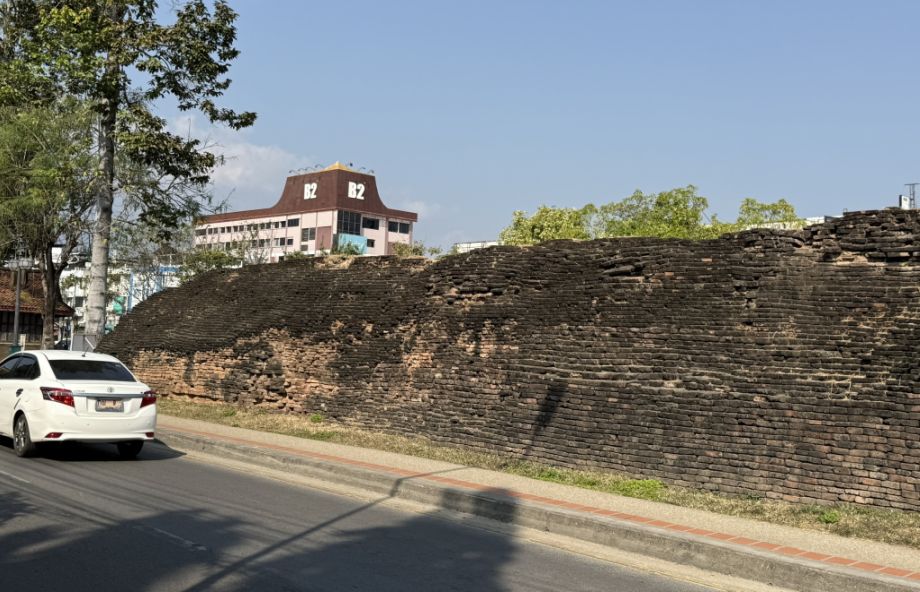
Today, only sections of the brick wall remain, but you can still see fragments near several gates. The moat, however, is still very visible and forms a clear boundary around the old city. Even though much of the structure has disappeared, the square layout of the historic city remains exactly as it was planned more than 700 years ago.
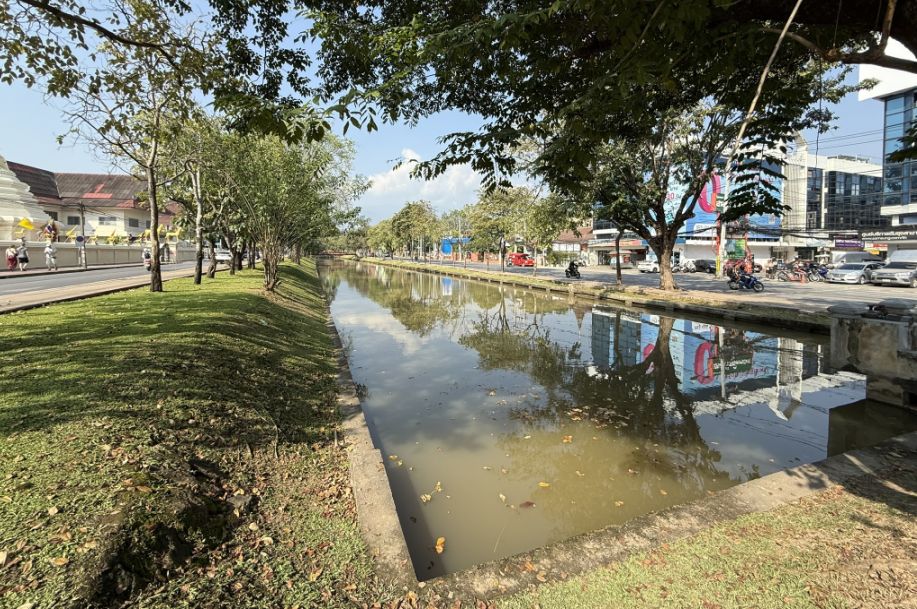
As we continued walking along Si Phum Road, we noticed a long rectangular pond or basin in the middle of the street. These basins are part of the old water management system of Chiang Mai.
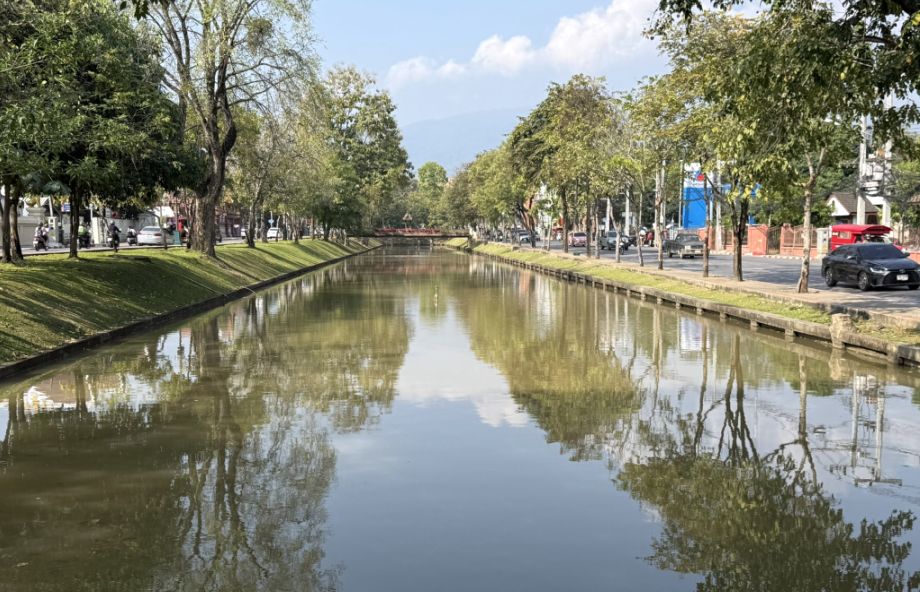
Historically, water played an important role in the city’s design. Channels carried water from the nearby mountains into the city and the moat. The basins served several purposes: water storage for the surrounding neighborhood, fire protection, providing a water source in case of fires in the densely built wooden city, Community use, where residents could access water for daily needs, and Drainage and flood control, helping manage rainwater during the monsoon season.
Today, they remain as historical features that hint at how carefully the city was planned. Walking through the old town, these ponds are small reminders of the sophisticated urban design of the Lanna capital centuries ago.
NEXT... Day 4- walk continuation