12 days in Thailand 1/7- 1/28/2025
Day 4-Walk continuation-1/10/2025
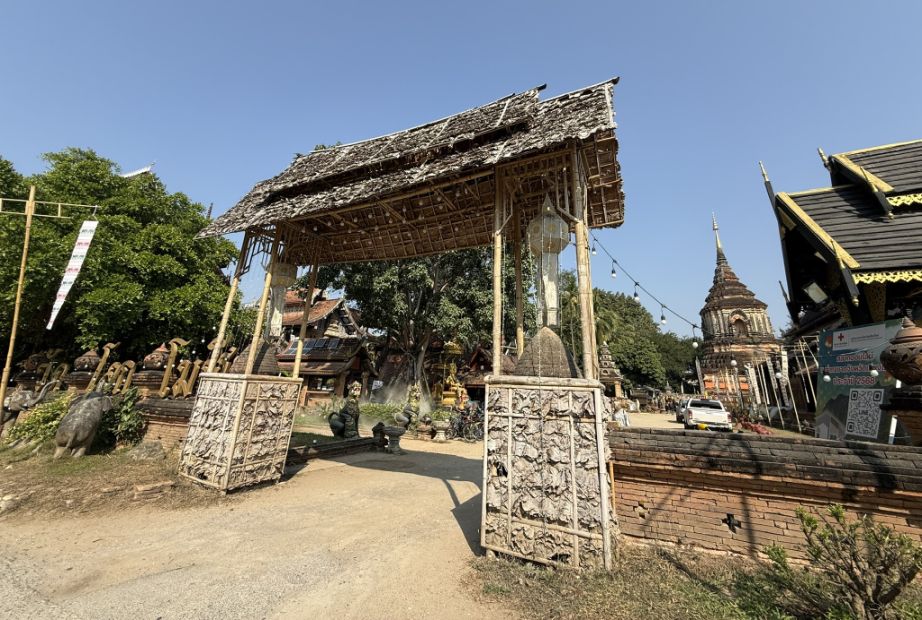
We arrived at Wat Lok Moli, one of the most historic temples in the northern part of the old city of Chiang Mai. From the street, the entrance is surprisingly modest, almost easy to miss.
Wat Lok Moli dates back to the 14th century, during the time of the Lanna Kingdom. Historical records suggest the temple was established around 1367 when King Kuena invited monks from Burma to settle in Chiang Mai and teach Buddhist scriptures. Later, the temple became closely connected to the Lanna royal family, and several members of the ruling dynasty were cremated here. Their ashes were placed in the temple’s large chedi.
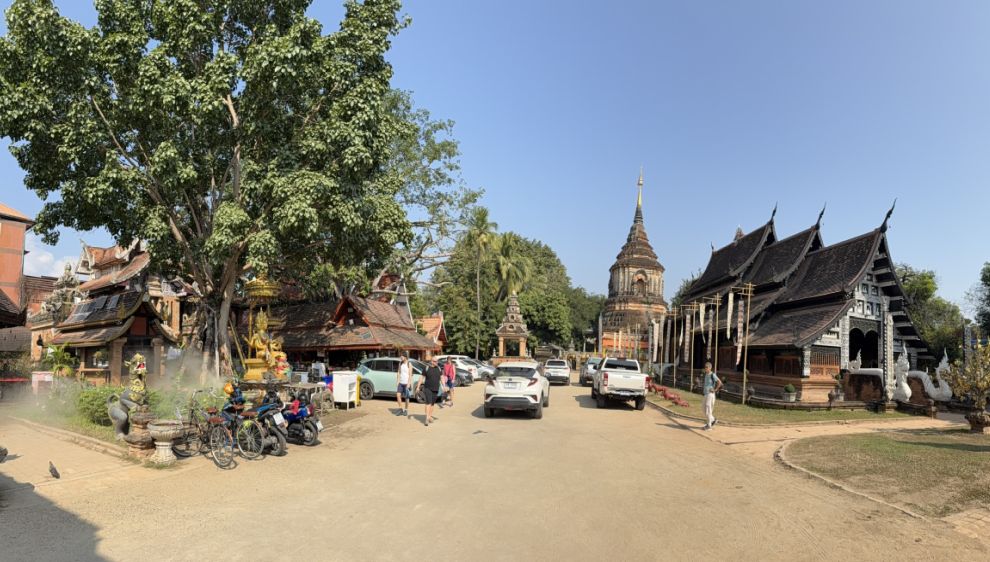
But once you pass through the gate, the temple opens into a large, quiet compound with a wide dirt courtyard filled with statues, shrines, and ancient structures.
 |
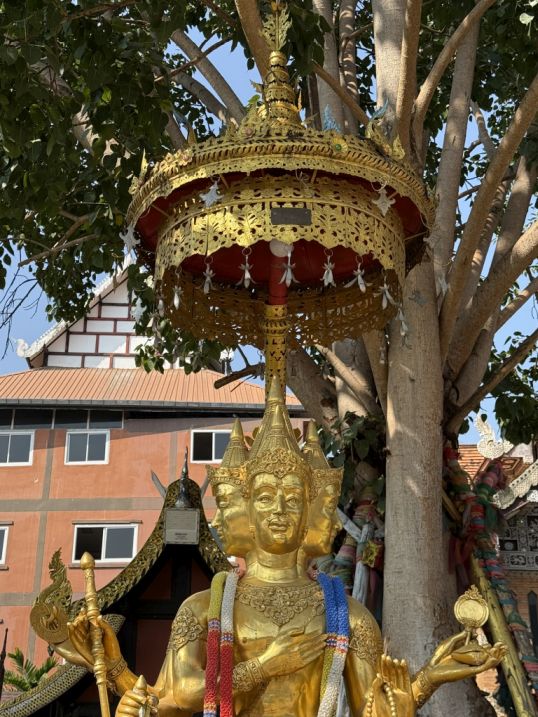 |
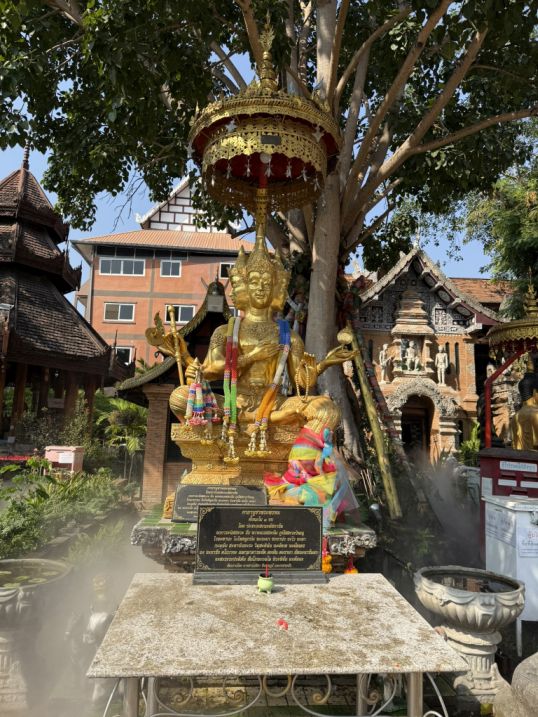
The golden Buddha with four faces sitting beneath a golden parasol is a striking figure. In Thai Buddhist symbolism, a multi-faced Buddha or deity represents the ability to see in all directions, symbolizing wisdom and awareness that extends everywhere.
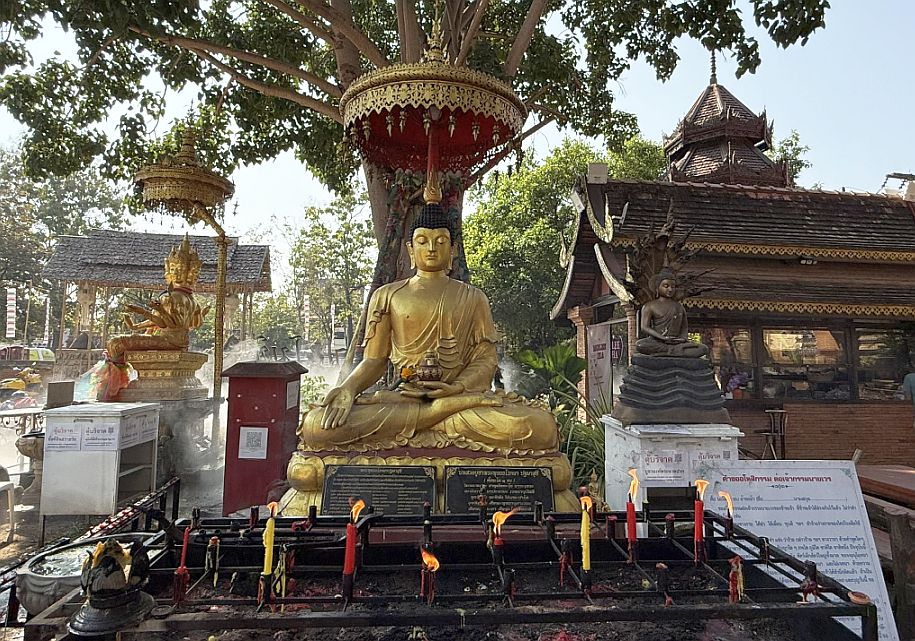
Seated Buddha statues with golden parasols above them represent reverence and protection. The parasol (or umbrella) is a traditional Buddhist symbol of royal honor and spiritual protection, often placed above sacred statues or relics.
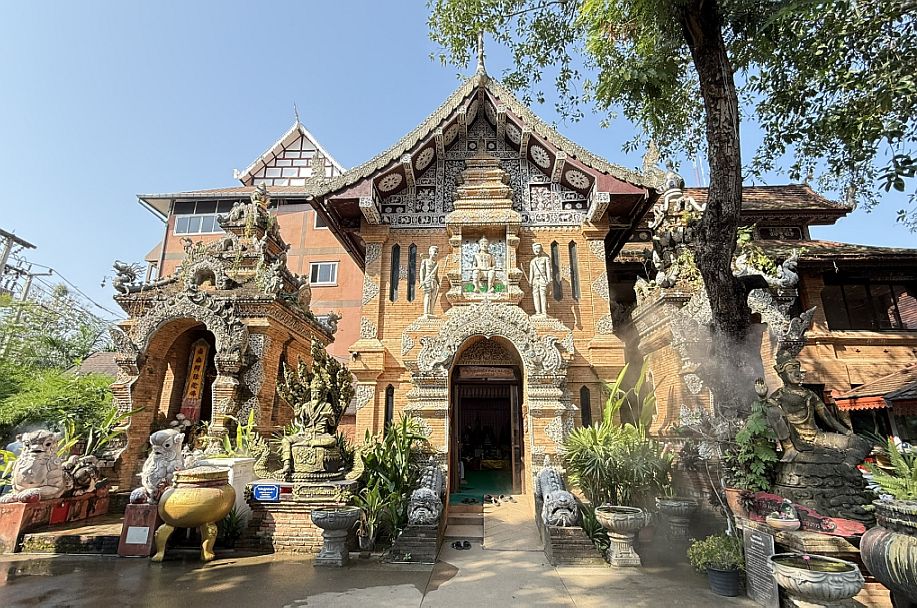
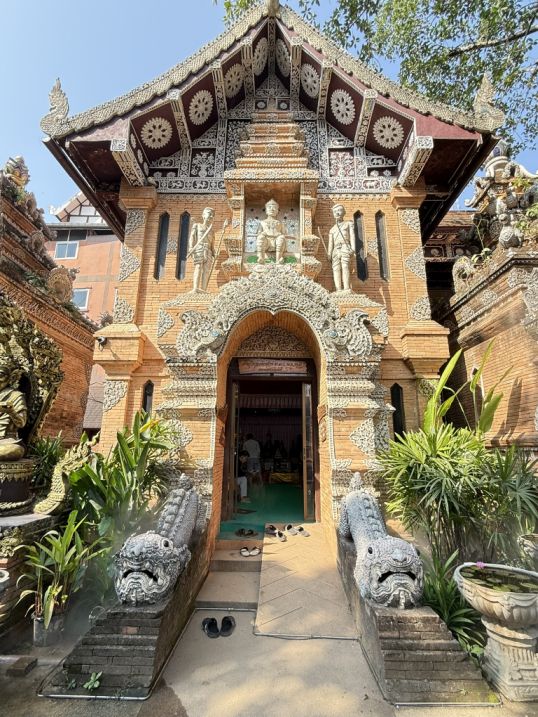
This ornate orange building is most likely a memorial hall honoring important monks or teachers associated with the temple.
 |
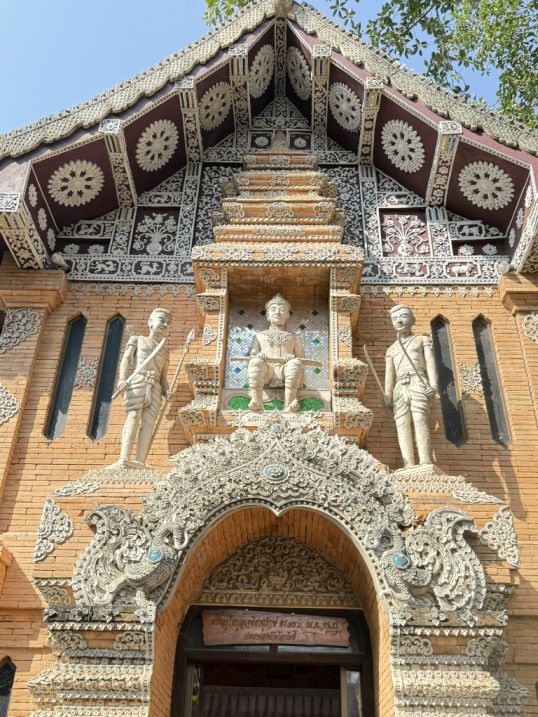 |
The statues above the door often represent respected abbots who played an important role in the temple’s history. These halls are used for prayer, remembrance, and sometimes for ceremonies honoring past spiritual leaders.
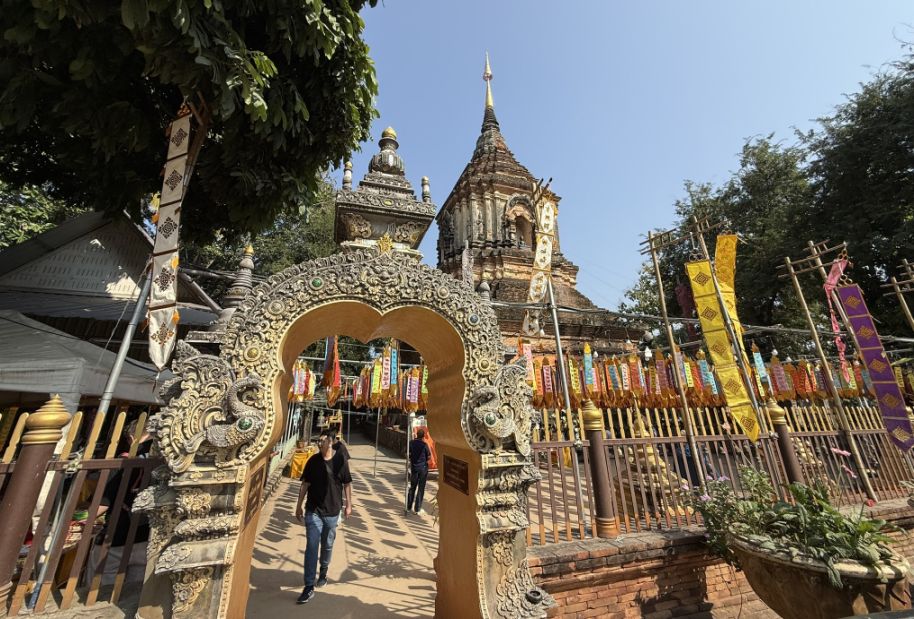
As we continued walking, we reached the largest and most impressive part of the temple complex.
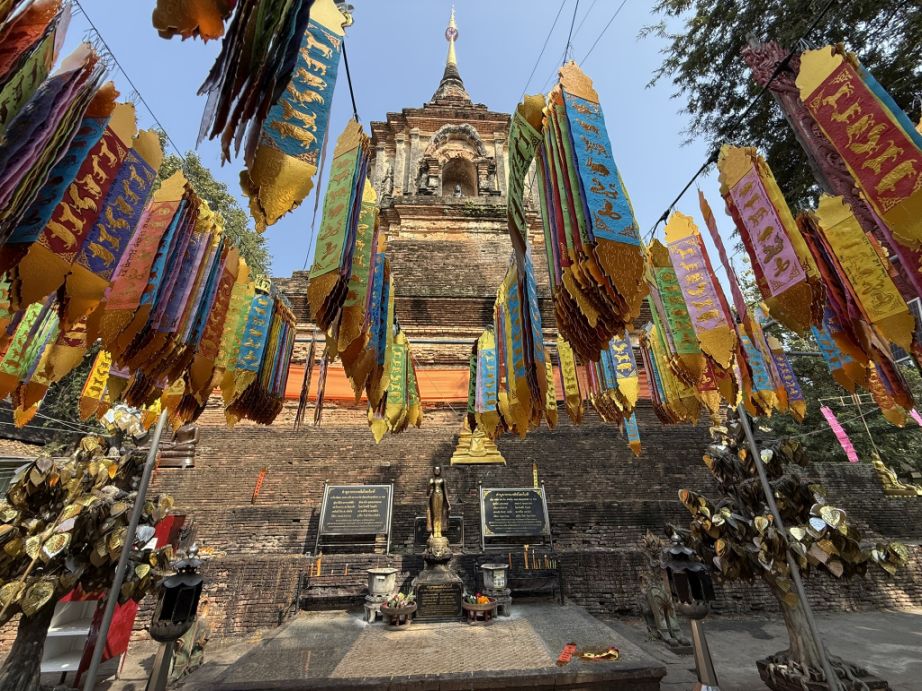
The courtyard containing the most striking feature of the temple grounds is the large pyramid-shaped chedi, one of the most distinctive structures in the old city of Chiang Mai. Unlike the tall bell-shaped stupas found in central Thailand, this chedi has a stepped pyramid form typical of Lanna architecture. Each level narrows as it rises, creating a monumental yet grounded appearance. The brick structure is massive and somewhat austere.
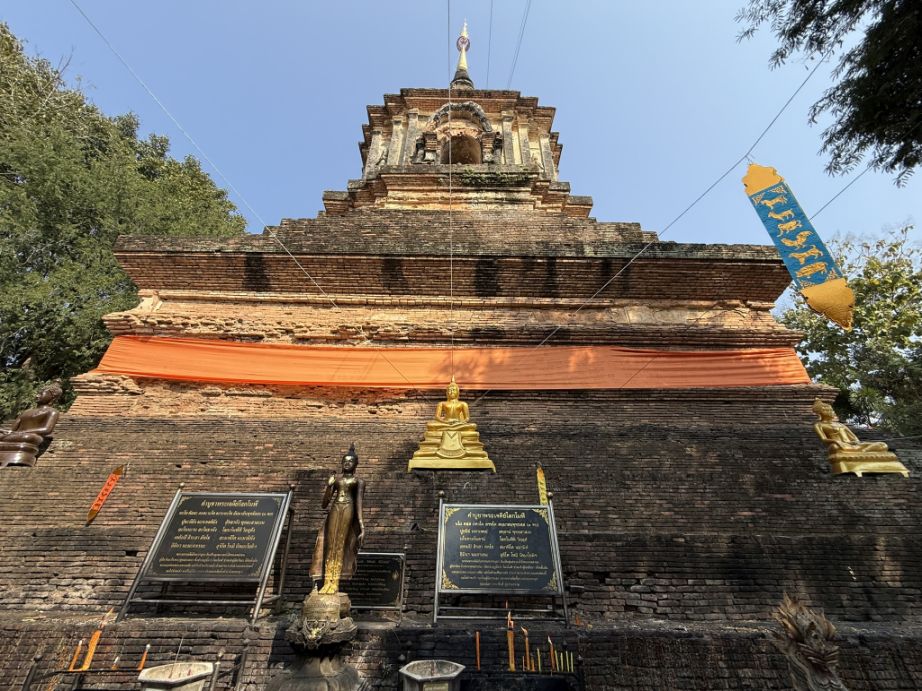
This chedi dates mainly to the 15th century, during the height of the Lanna Kingdom, and it served as a royal funerary monument where the ashes of members of the Lanna royal family were placed. The design symbolizes the spiritual journey upward, from the earthly level at the base to the enlightened realm represented at the top.
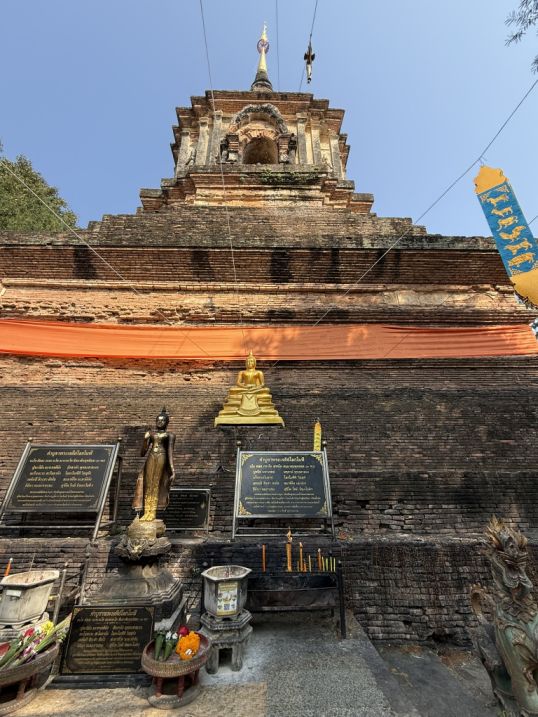 |
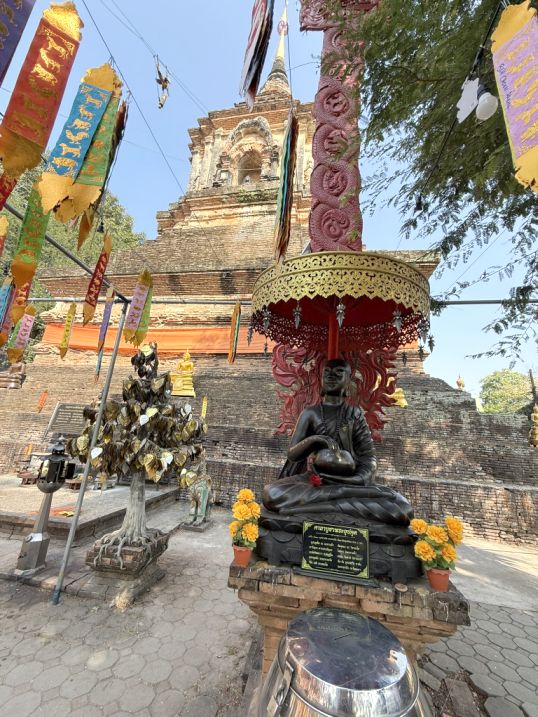 |
At the base of the chedi, we noticed a seated golden Buddha statue, which acts as a focal point for prayer. Just below it were standing Buddha statues and an urn where people light incense. This is a typical arrangement in Thai temples, allowing visitors to make offerings before the sacred monument. Lighting incense symbolizes respect, gratitude, and devotion..
 |
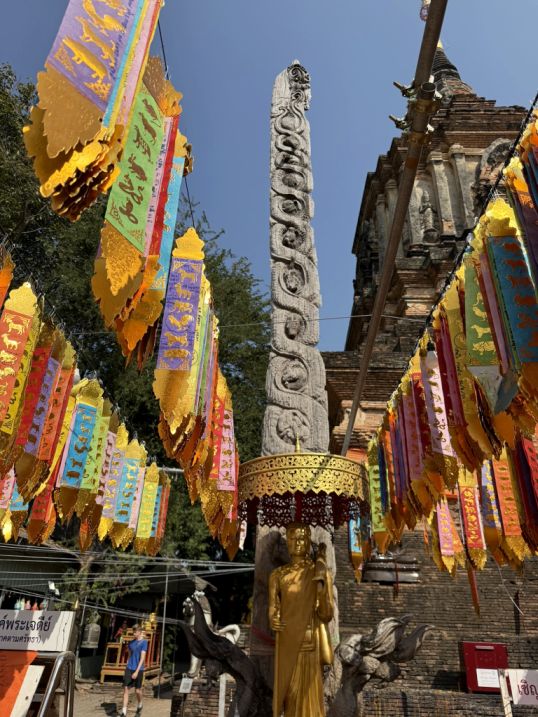 |
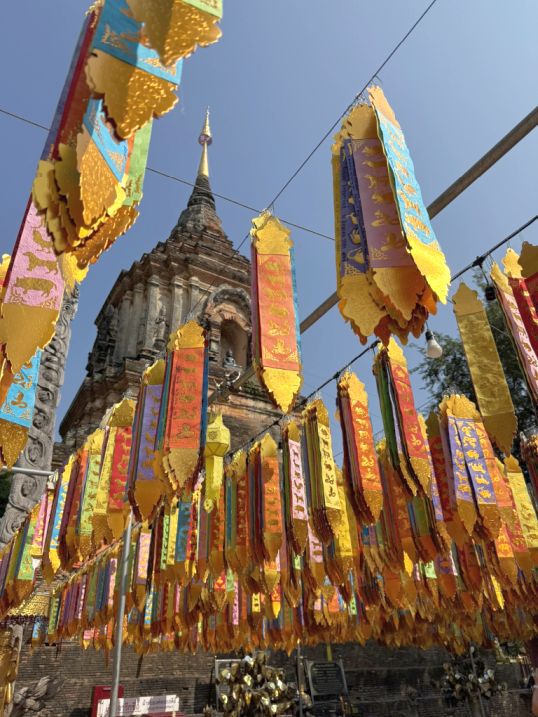
Below the chedi are colorful flags hanging across the courtyard.
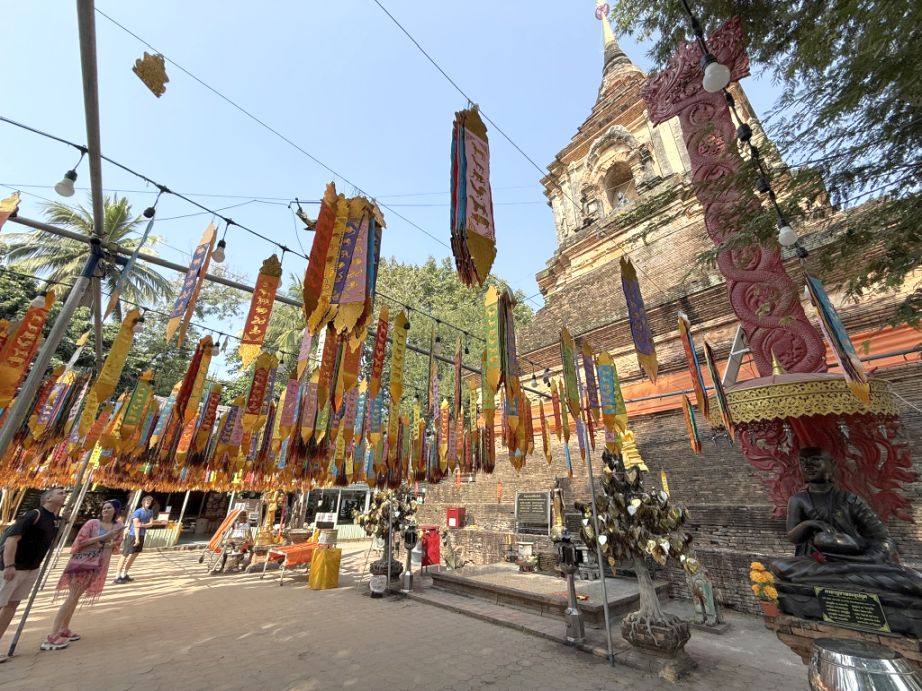
These are Buddhist ceremonial flags that symbolize blessings, merit, and offerings to the temple. They are commonly used during religious ceremonies and festivals.
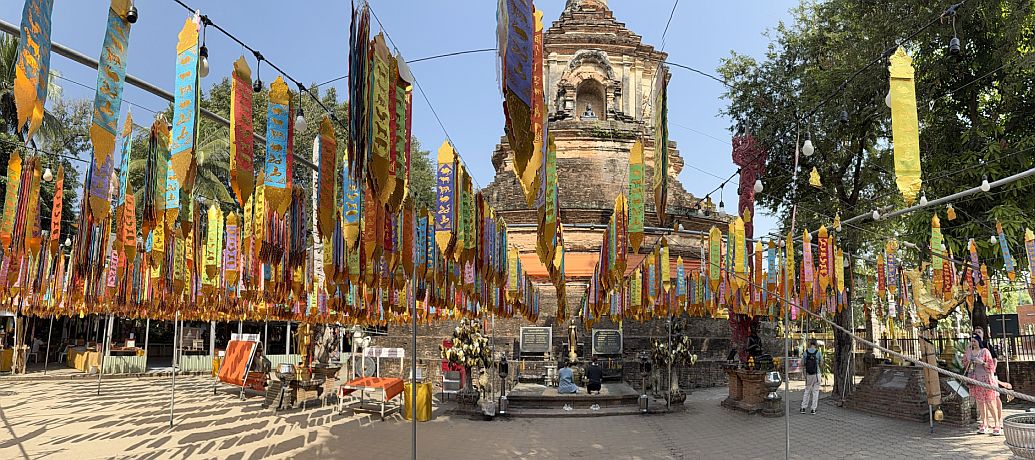
Panoramic view.
 |
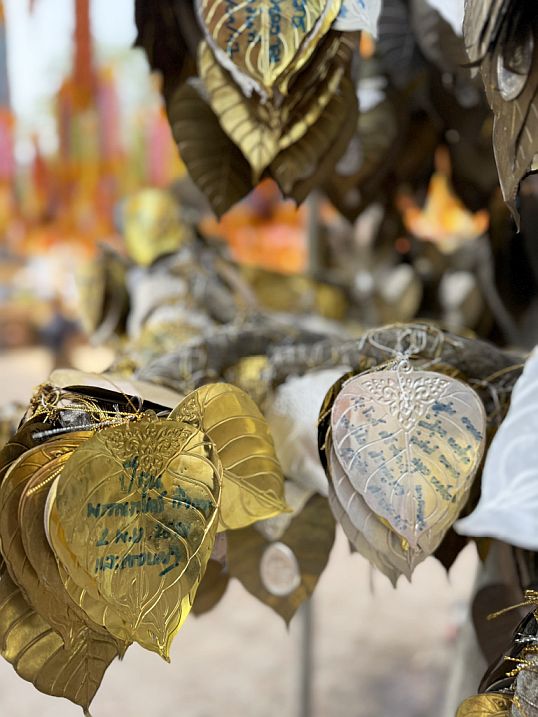 |
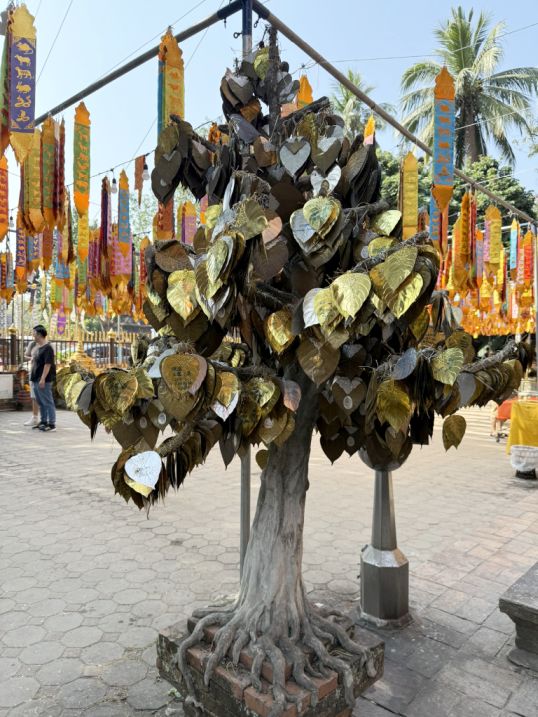
Nearby we also saw a metal “tree” with golden leaves. This is a merit tree. Visitors write their names or short prayers on the thin golden leaves and hang them on the branches. The act symbolizes making merit and offering support to the temple. The inscriptions are usually names, wishes for good fortune, or prayers for family members.
 |
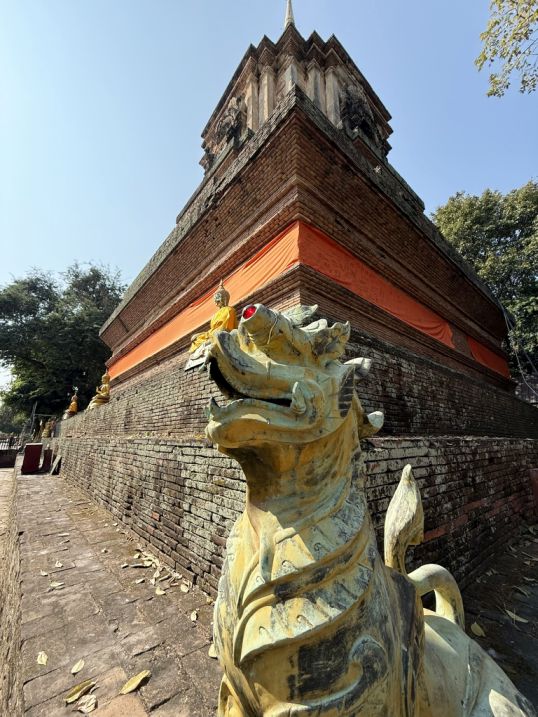 |
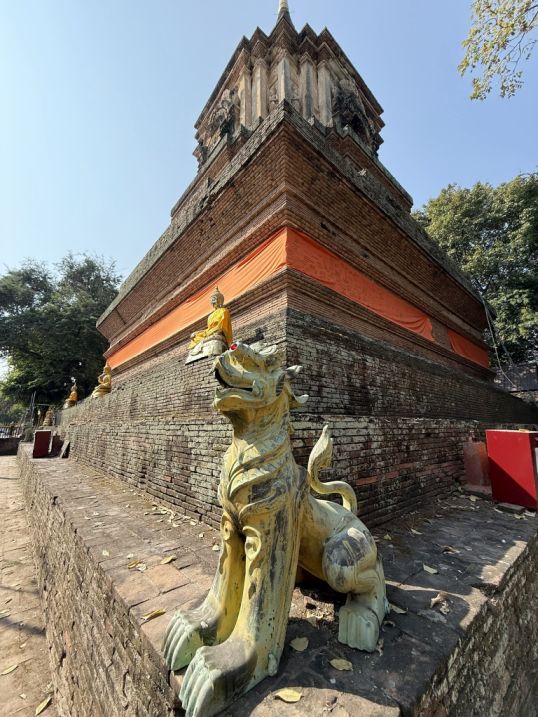
As we walked around the chedi, lion-or dog-like statues placed at the corners of the lower levels. These figures are known as guardian lions (often called Singha in northern Thai tradition). They are protective creatures placed around sacred structures to guard the temple and ward off negative spirits.
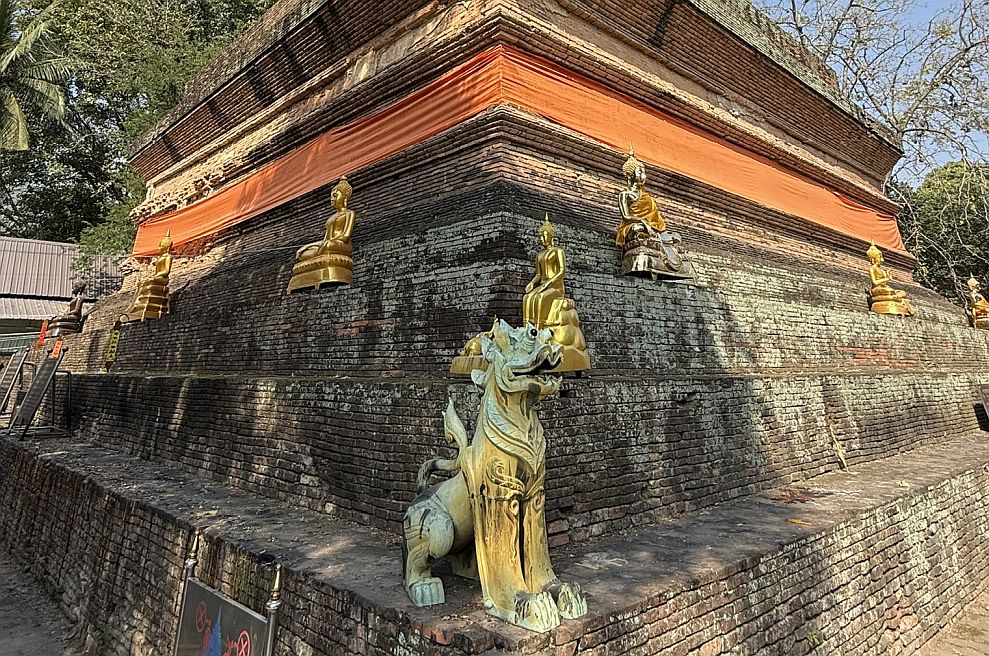
On the third tier of the pyramid, there many golden Buddha statues placed in niches around the structure. These statues serve several symbolic purposes. They represent the Buddha spreading his teachings in all directions. They transform the chedi into a cosmic spiritual monument, with Buddha images radiating outward, and they encourage visitors to look upward, reminding them of the path toward enlightenment.
 |
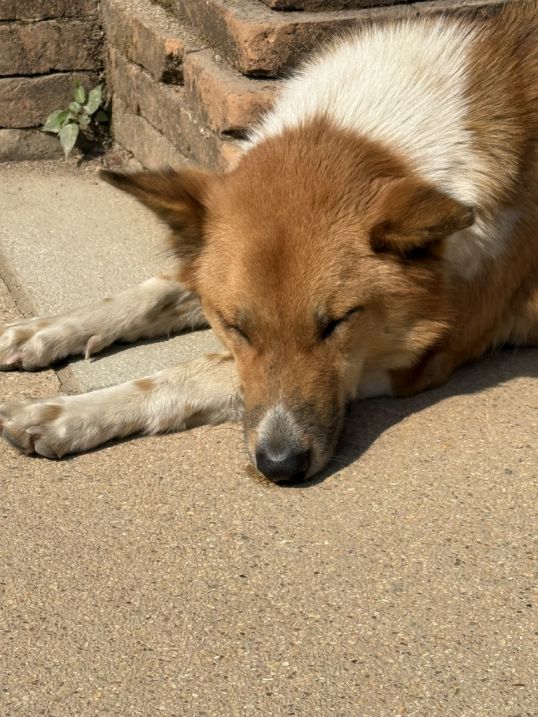 |
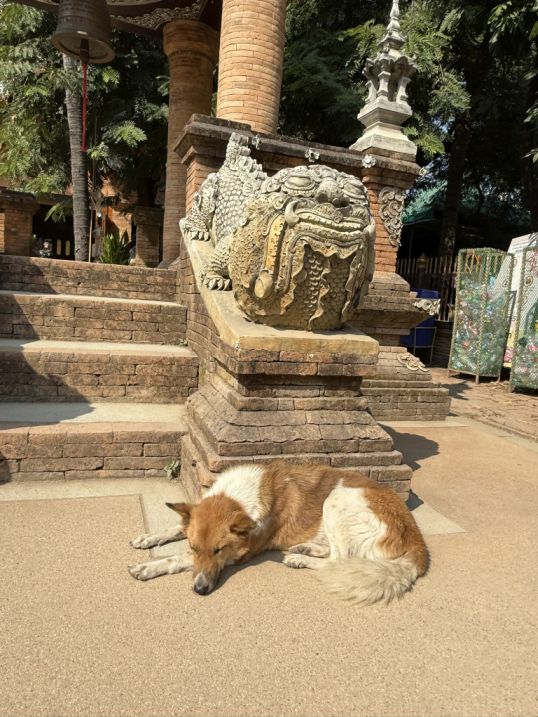
A Temple's dog resting peacefully on the temple's ground.
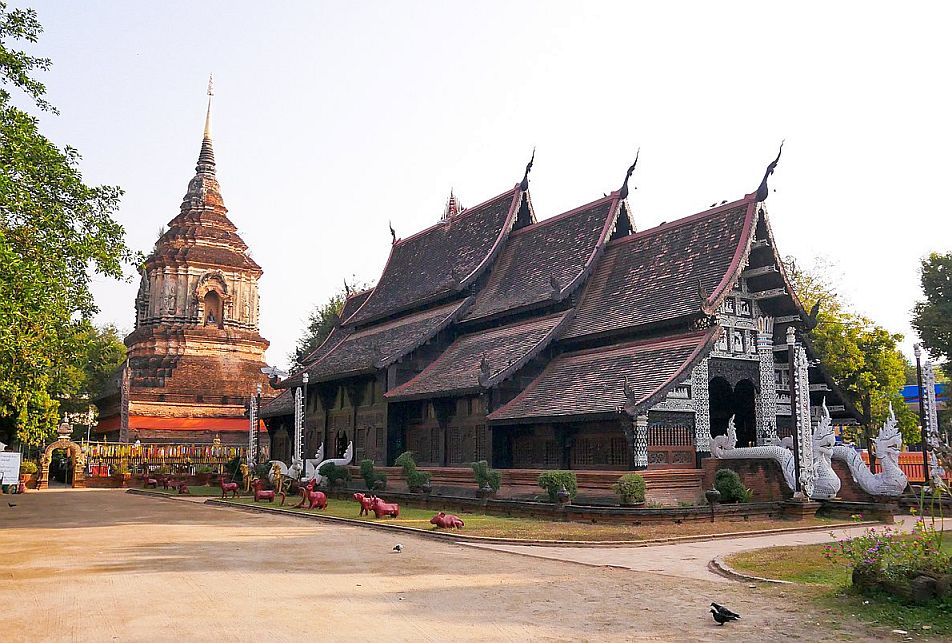
After exploring the chedi courtyard, we are heading to the main Hall.
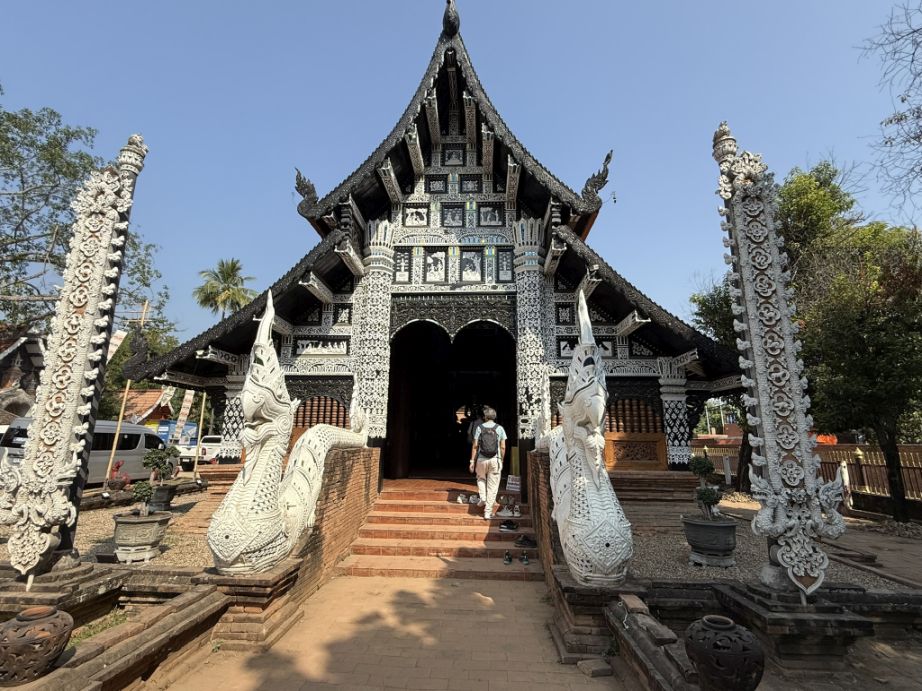
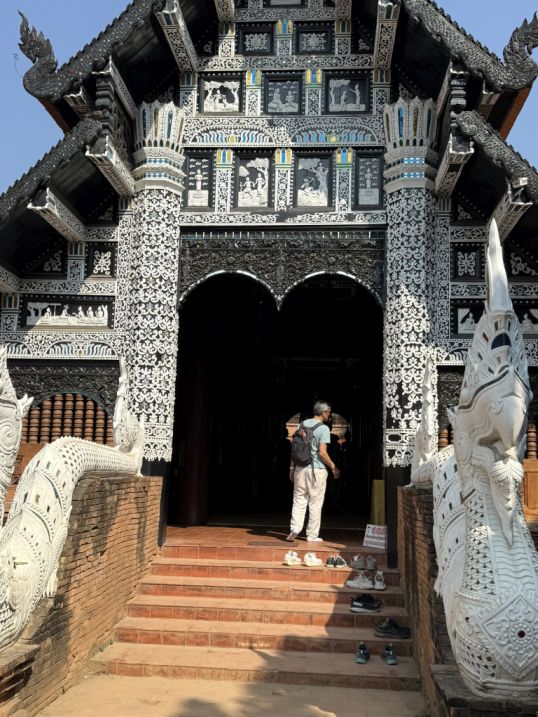
At the entrance there are two large sculpted Nagas, large serpents that came into Thai culture from Indian mythology. Their bodies often form the railings or flank the entrance steps.
 |
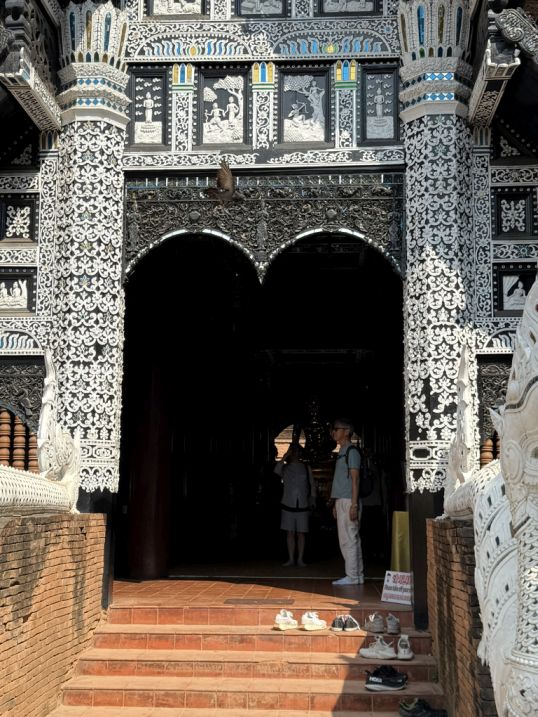 |
Entering the Main Hall.
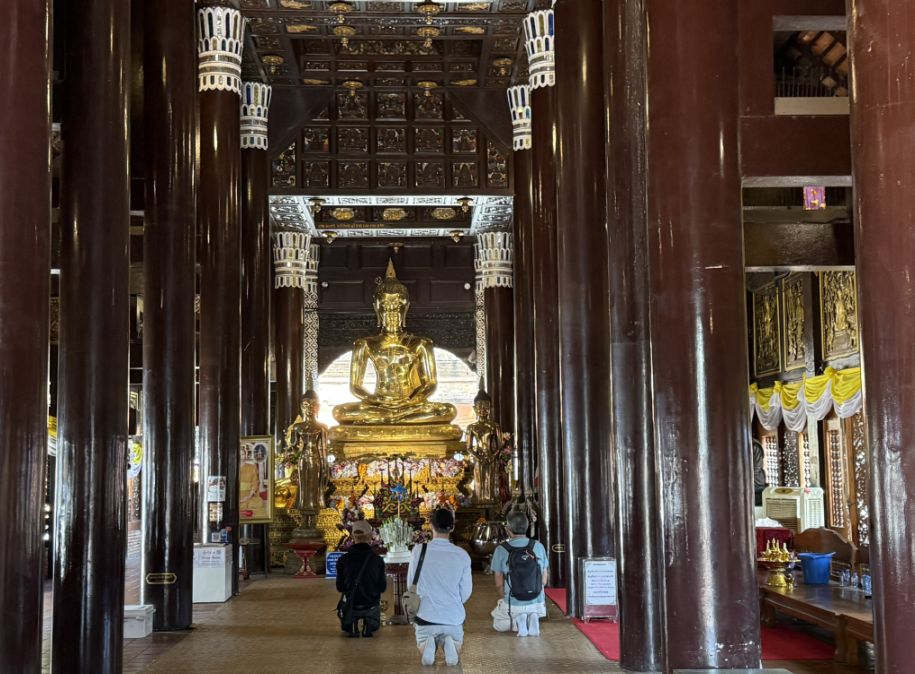
Inside the hall sits the main Buddha statue, where monks and local worshippers come to pray and meditate. The interior space is calm and dimly lit, creating a peaceful atmosphere that contrasts with the bright open courtyard outside. The hall itself, with its high wooden ceiling and dim interior, creates a peaceful atmosphere that encourages reflection.
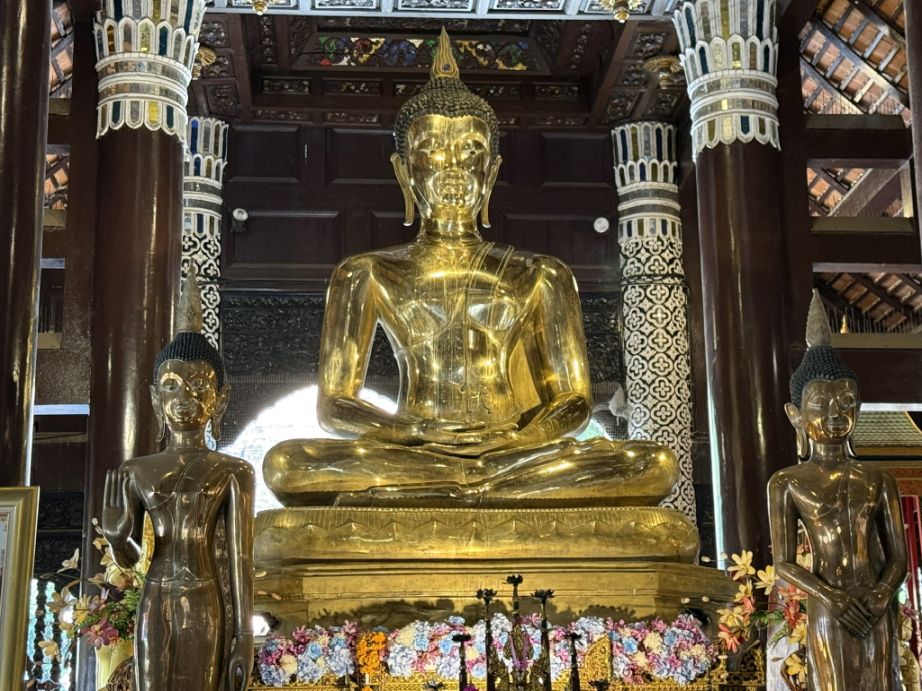
The large golden Buddha is the principal image of the temple. The statue is seated in the meditation posture, with a calm and serene expression typical of northern Thai (Lanna) Buddha images. These statues are meant to represent the Buddha at the moment of deep meditation leading to enlightenment. The gold surface reflects light from candles and offerings, symbolizing purity, wisdom, and spiritual illumination. Locals often come here to sit quietly in front of the statue, make offerings of incense, flowers, or candles, and spend a few moments in prayer or meditation.
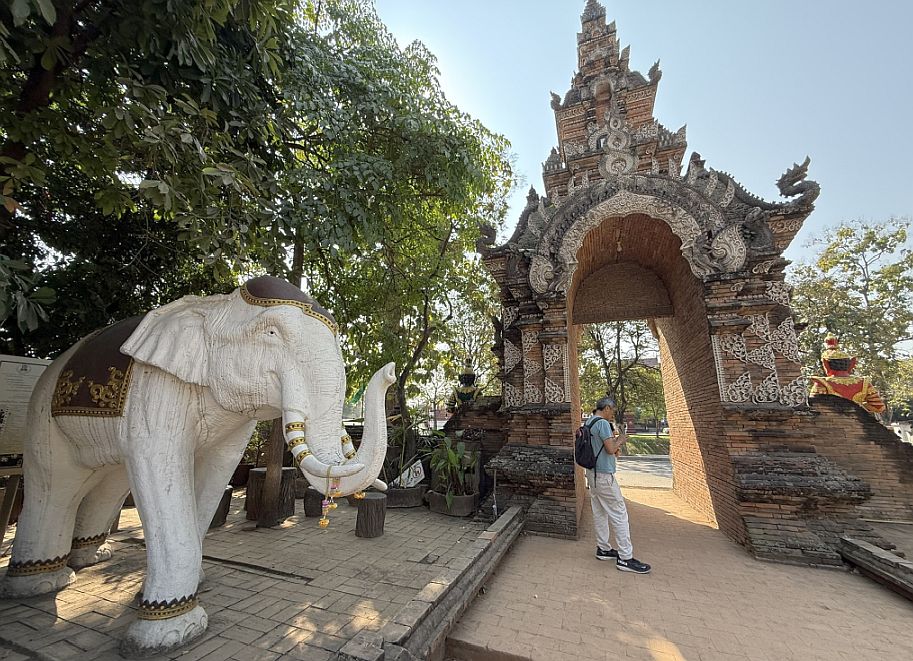
When we exited the hall, there is a large white elephant statue on the temple grounds. Elephants are extremely important symbols in Thai culture and Buddhism. The white elephant in particular represents royalty, power, and sacredness. In Buddhist tradition, the Buddha’s mother, Queen Maya, is said to have dreamed of a white elephant before the Buddha was born, making the animal a symbol connected to the Buddha’s life. Because of this story, white elephants often appear in temple grounds and royal imagery throughout Thailand.
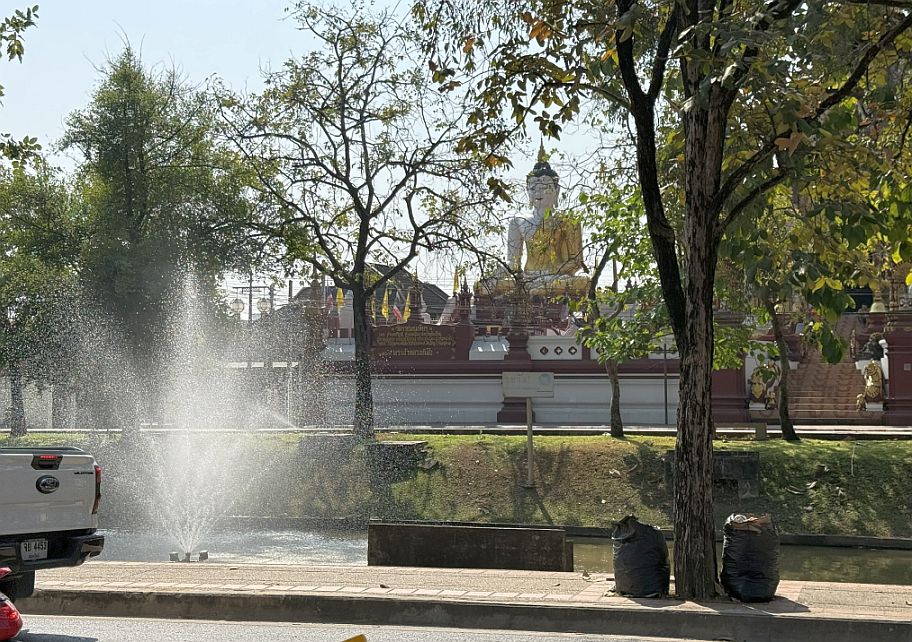
After leaving the temple area, you walked back toward Manee Nopparat Road. Across the long rectangular water basin we noticed a very tall standing Buddha statue rising above the surrounding buildings. That statue most likely belongs to Wat Lok Moli itself, as the temple complex extends close to that area and some of its statues can be seen from the street. Large standing Buddha statues like this are often placed high so they are visible from afar. The standing posture usually represents the Buddha offering reassurance and protection, reminding people passing by of compassion and mindfulness.
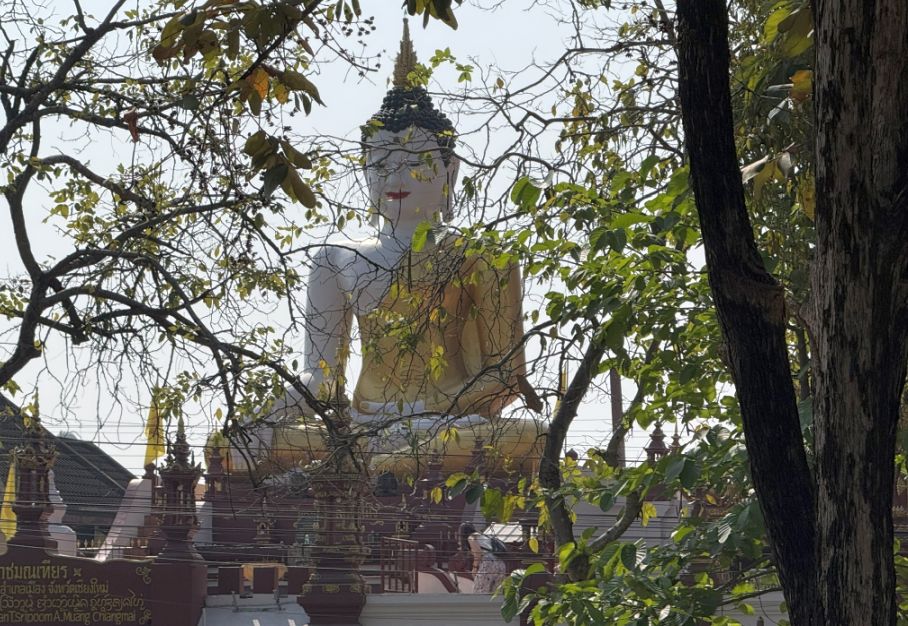
Seeing the statue from across the water basin creates a beautiful visual moment: the reflection of the water, the old city streets, and the tall Buddha rising above the neighborhood, another reminder of how deeply Buddhist temples shape the landscape and daily life of Chiang Mai.
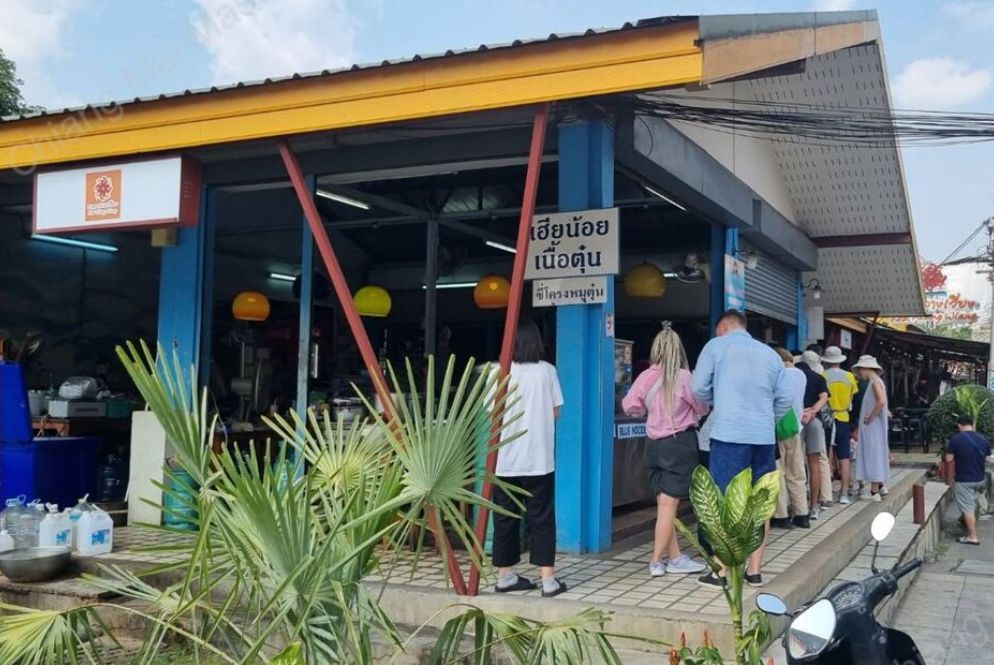
After resting at Bodhi Serene Chiang Mai, we walked a short distance to the very popular Blue Noodle Shop for dinner. This small local restaurant is well known for its beef noodle soup, and it has built a loyal following among both locals and visitors. Despite its simple appearance, there is almost always a line outside the shop, which is usually a good sign that the food is excellent.
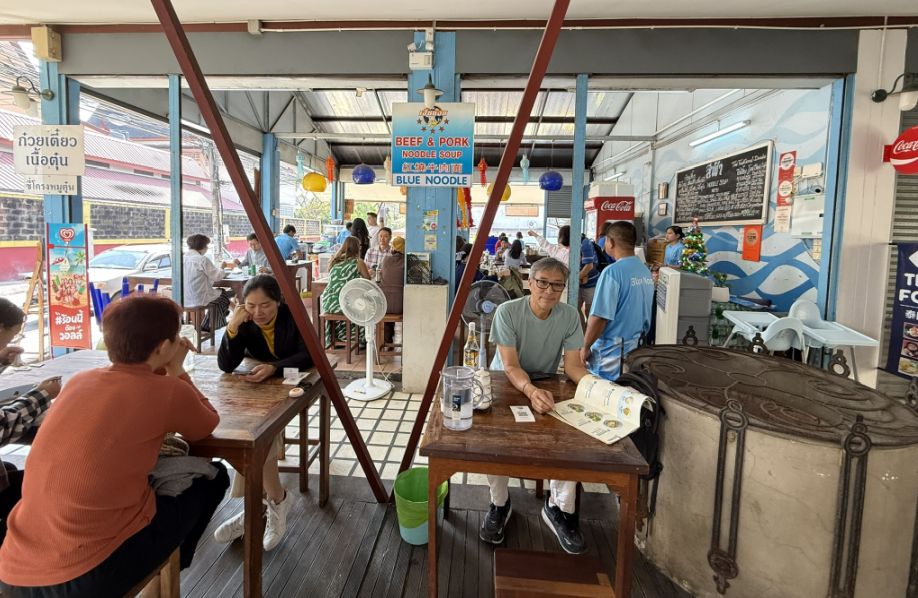
We waited in line for about 10/15 minutes to got a table.
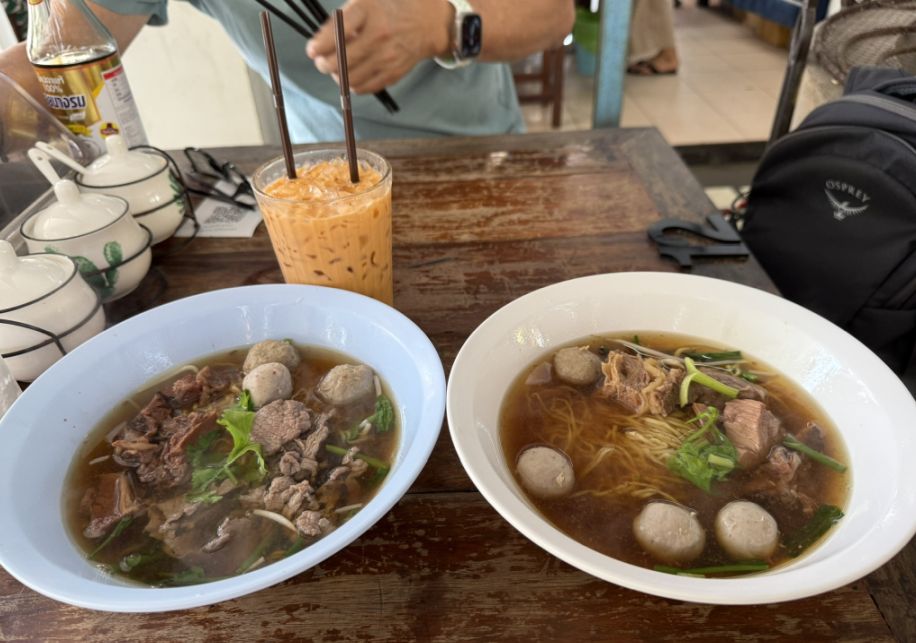
The restaurant specializes in Thai-style beef noodle soup, where tender slices of beef and noodles are served in a rich, aromatic broth that has been slowly simmered with herbs and spices. The bowls are simple but incredibly satisfying, and one of the best things about places like this is the price. Even a full bowl of noodle soup costs very little, making it an everyday meal for many locals. Small neighborhood noodle shops like this are a cornerstone of Thai food culture, quick, flavorful, and affordable.
 |
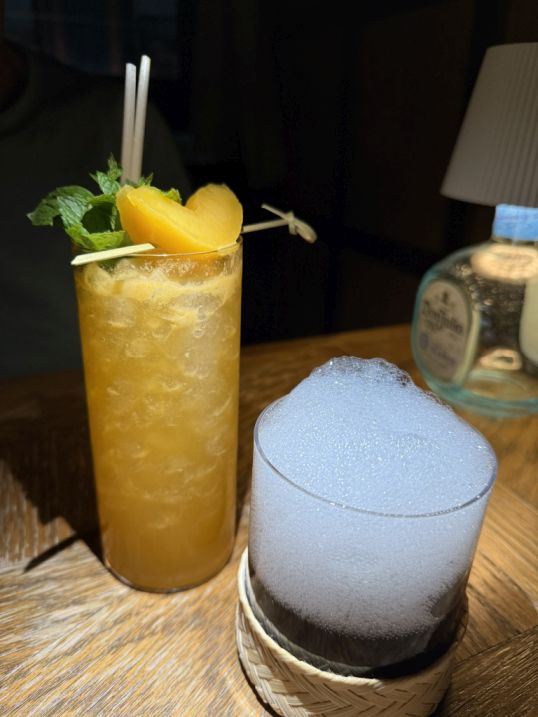 |
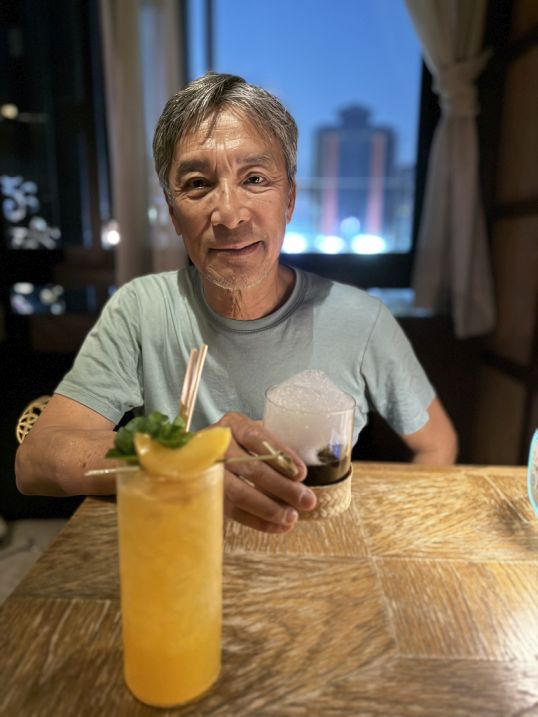
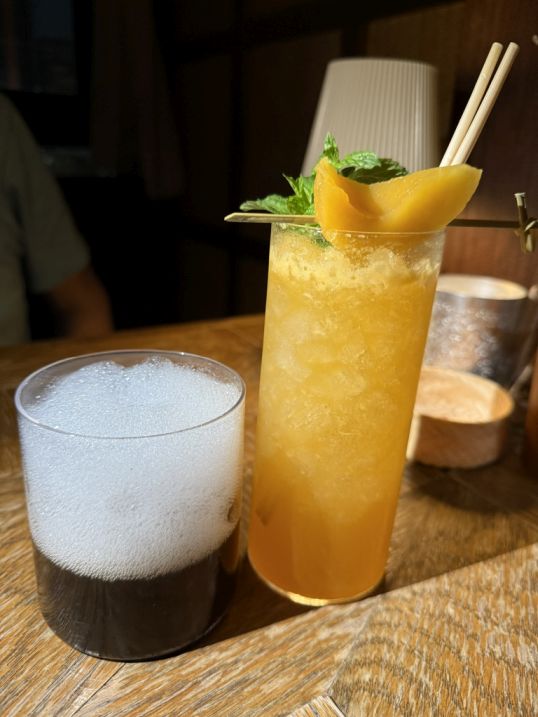
After dinner, we went out into the old town of Chiang Mai to look for a place to have cocktails. The atmosphere in the old city was relaxed and pleasant, although the cocktails themselves were not particularly memorable.
 |
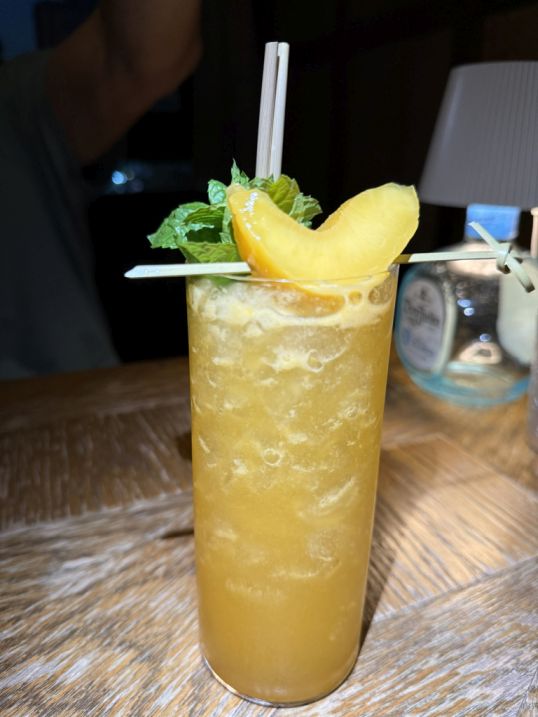 |
Looks are very deceiving. I had a pineapple cocktail and Hoa got a really lousy cocktail that was recommended in house.
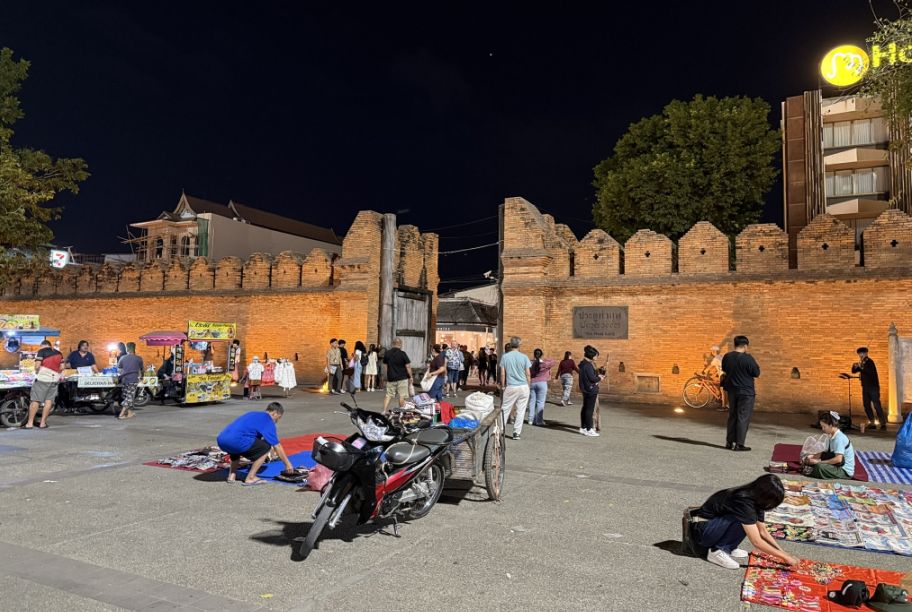
Later in the evening, we walked toward Chang Phuak Gate, the North Gate of the old city. At night the area becomes very lively. Vendors line the sidewalks and nearby streets, many simply spreading a blanket on the ground to display their merchandise. You can find everything from clothing and souvenirs to small street snacks.
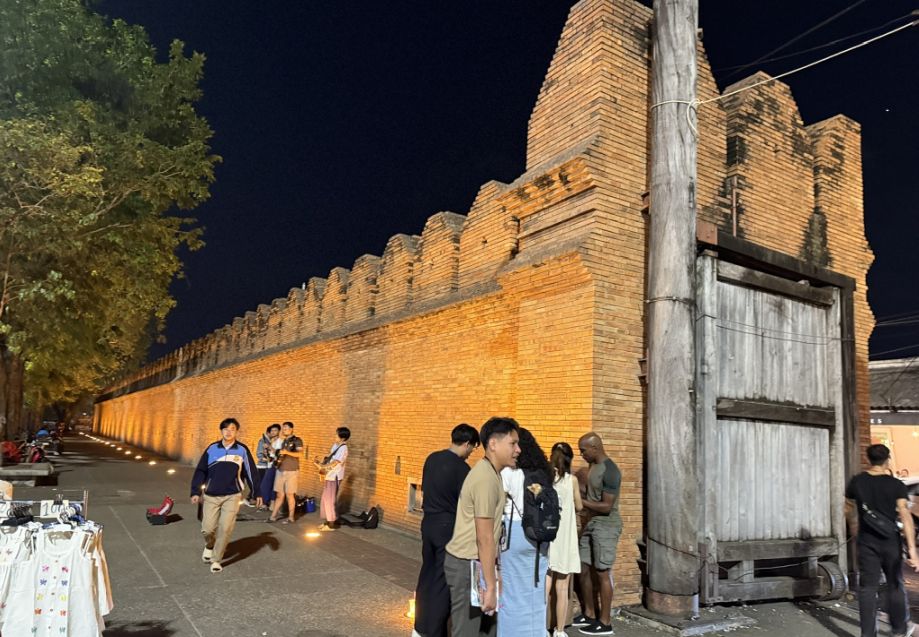
The gate area is also famous for its night street food stalls, attracting a mix of locals, students, and travelers who gather there to eat and socialize. The energy of the place is very different from the quiet temples of the daytime, bright lights, sizzling food stalls, and crowds of people moving through the market late into the evening. It’s a lively snapshot of Chiang Mai at night, where food, shopping, and street life all come together in one bustling corner of the old city.
NEXT... Day 5-Doi Inthanon guided tour (coming soon)