5 days in Laos-1/31- 2/3/2025
| Day 1 Vientiane |
Day 2-Vientiane Patuxai That Luong Buddha Park Tamnak restaurant |
Day 3-Vientiane Cope Museum Wat Si Muang |
Day 4-Luang
Prabang Mekong River cruise Pak Ou Caves Lunch at Manifa Kuang Si waterfall Main Waterfall Manda de Laos |
Day 5-Luang
Prabang Mount Phousi |
Day 5-Last morning, Luang Prabang-2/3/2025
Mount Phousi
Today was our last day in Luang Prabang. With our flight departing around 5:00 p.m., we had the entire morning to explore more of the downtown area.
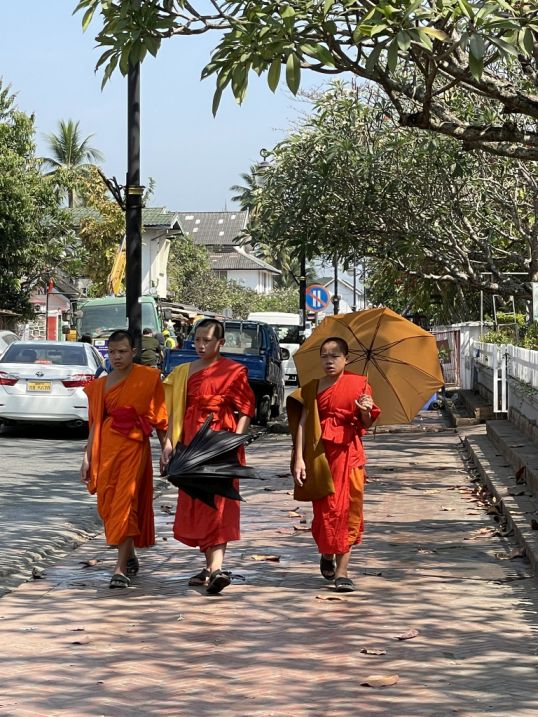
After breakfast, we walked along the main street and noticed three very young monks walking quietly through the neighborhood.
 |
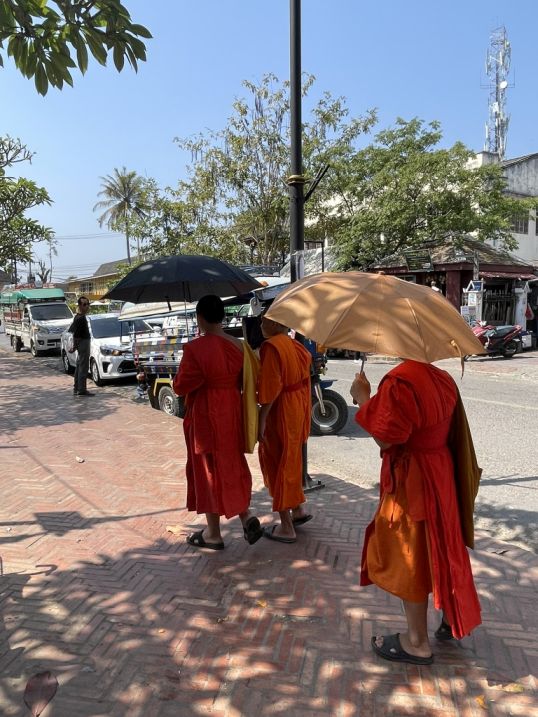 |
Their saffron robes stood out against the old buildings and peaceful morning streets.
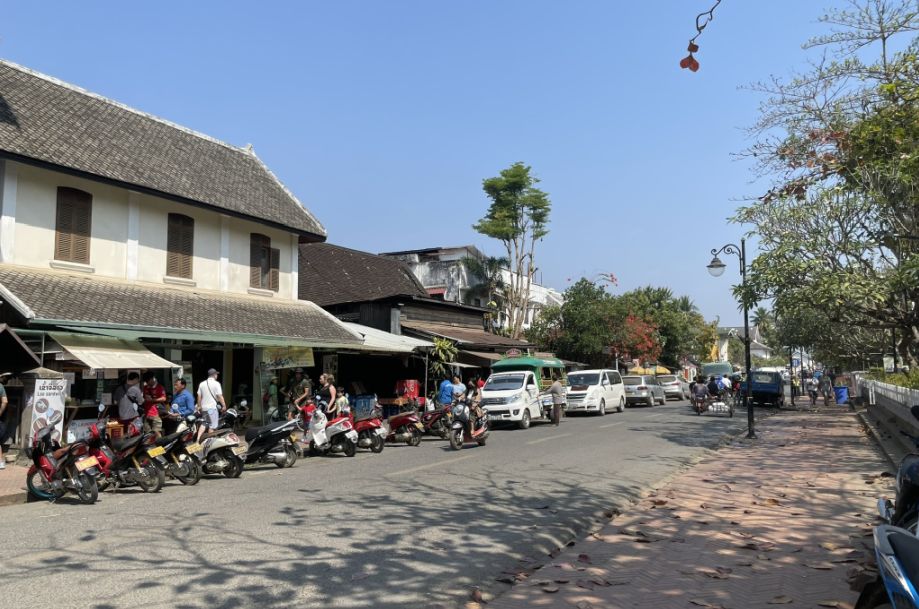
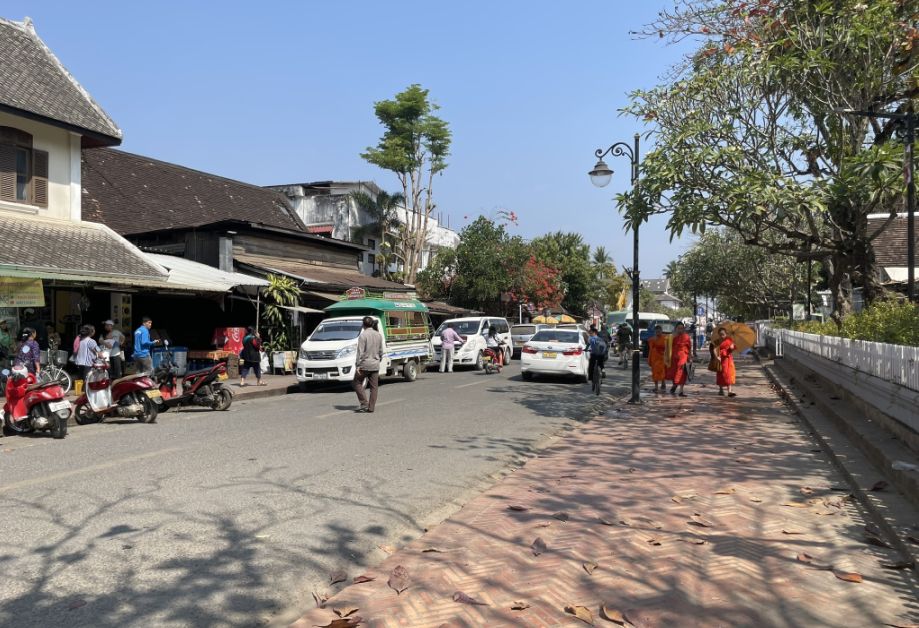
We were now heading toward Mount Phousi, the sacred hill in the center of Luang Prabang. Mount Phousi is located right in the heart of downtown Luang Prabang, making it easy to reach on foot. To get there, we walked along the town’s main street, passing historic buildings, shops, cafés, and temples along the way.
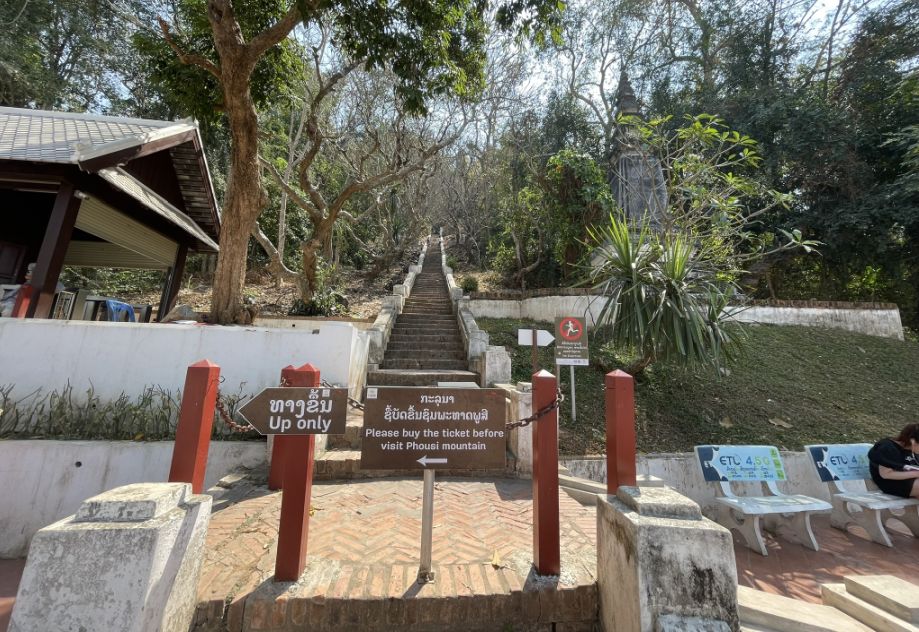
We had now reached the entrance to Mount Phousi, the sacred hill rising in the center of Luang Prabang’s old town. Mount Phousi is famous for its spiritual importance, its golden Wat Chomsi stupa at the summit, and its panoramic views over the city, the Mekong River, the Nam Khan River, and the surrounding mountains. It is especially popular at sunset, when visitors climb to the top to watch the sky change color over Luang Prabang.
 |
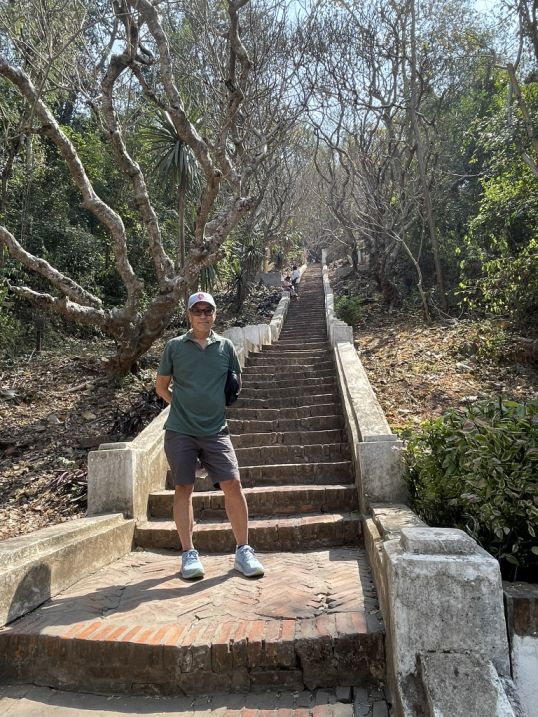 |
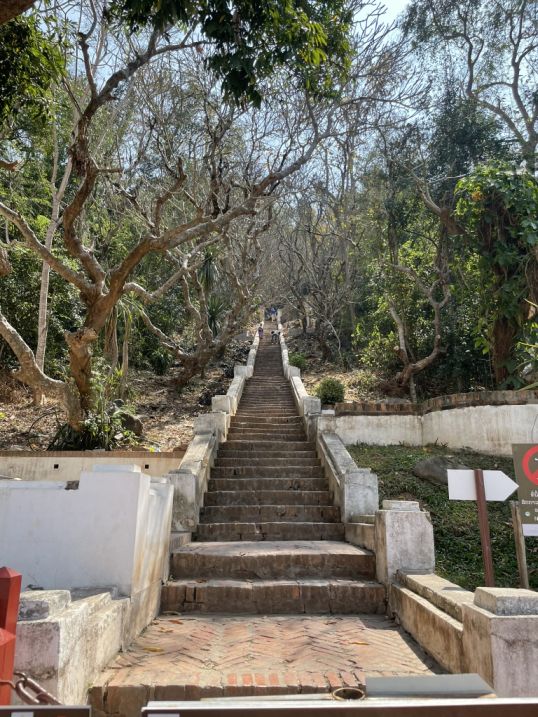
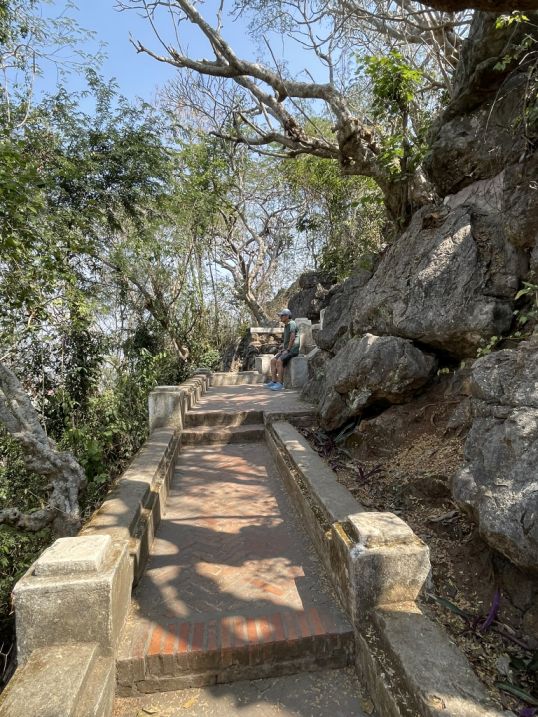
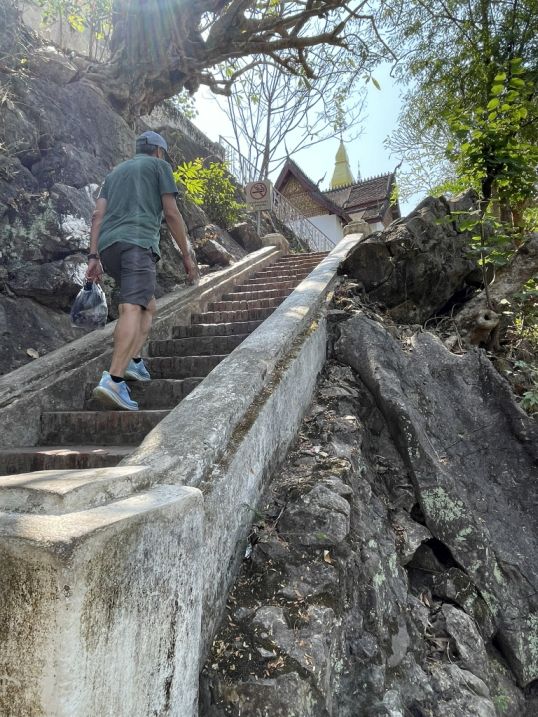
Standing at the bottom of the staircase, we could see that the climb would be quite a workout. There are 328 steps leading to the summit, with smaller shrines and Buddha images along the way.
We took a moment to prepare ourselves before beginning the climb to the top.
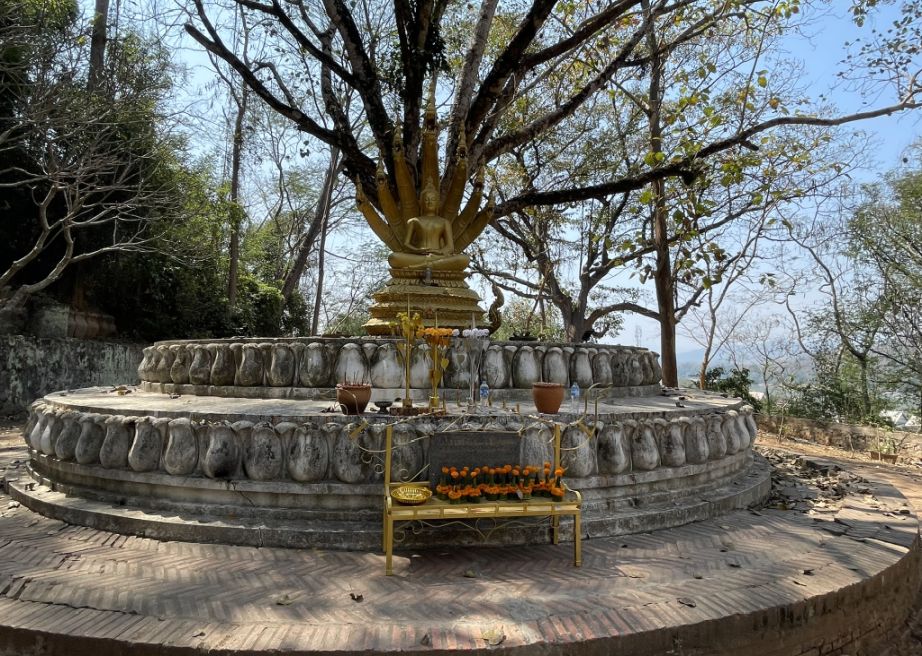
As we climbed Mount Phousi, we noticed several flat resting areas built along the sides of the staircase. We stopped at one of them, where a circular lotus-shaped structure made of cement held a golden Buddha seated on a raised platform. Behind him, a naga spread its hood protectively over the Buddha.
This image represents the Buddha meditating under the protection of the serpent king Mucalinda, who sheltered him from a storm after his enlightenment. The lotus base symbolizes purity and spiritual awakening.
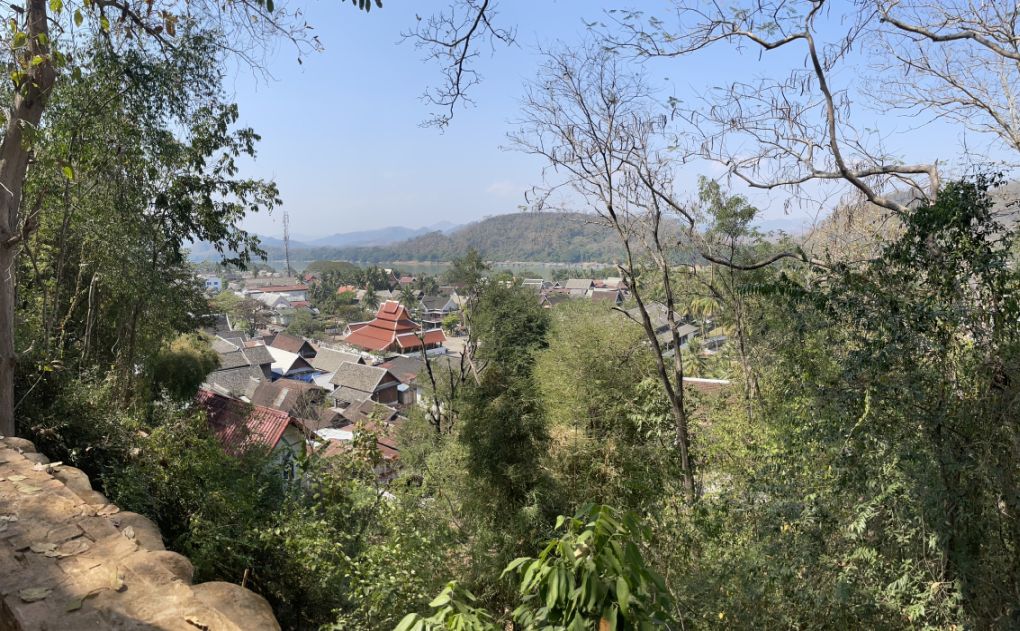
With every step, the view became more beautiful. Through the trees, we could see the rivers winding through the landscape, mountains stretching into the distance, and the red-tiled roofs of Luang Prabang’s buildings and temples below.
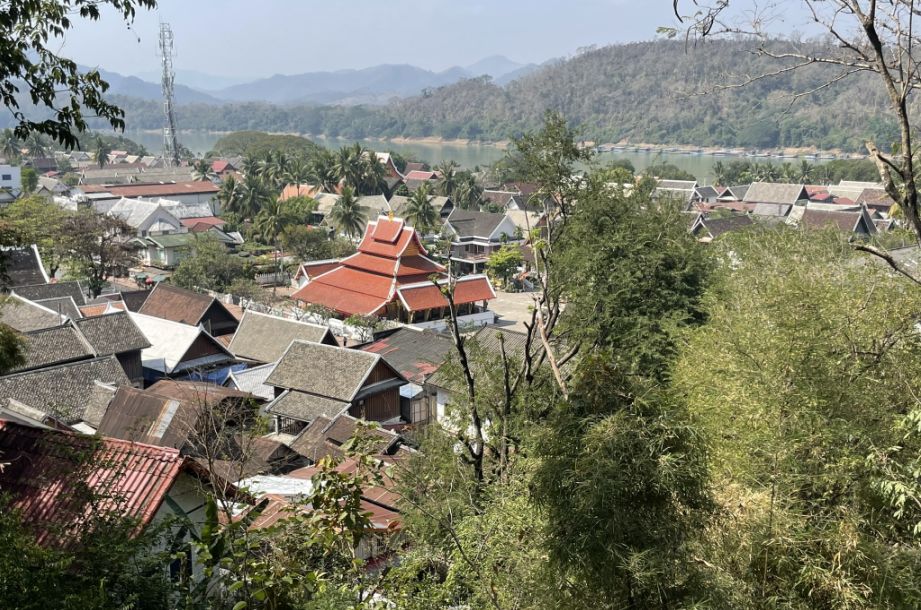
Buildings below Mount Phousi.

As we climbed higher, we reached the same level as the treetops. Looking down, the forest appeared lush and dense, although we could still glimpse the red-tiled roof of a temple hidden among the trees below.
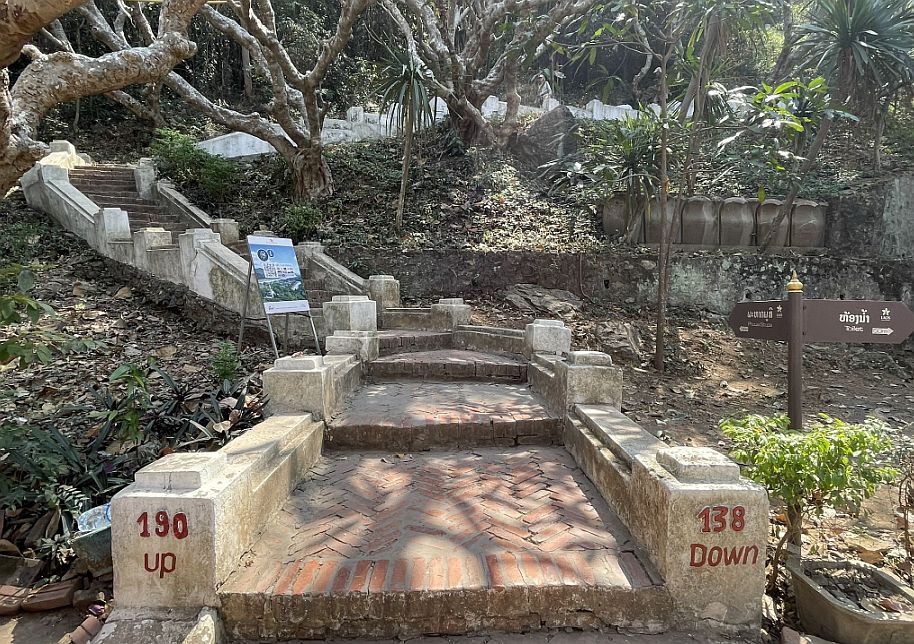
We were now about halfway up the hill. Beside the staircase, a cement marker showed “190 Up” on one side and “138 Down” on the other, indicating the number of steps in each direction. Seeing the marker gave us a sense of how far we had already climbed, and how many more steps remained before reaching the summit.
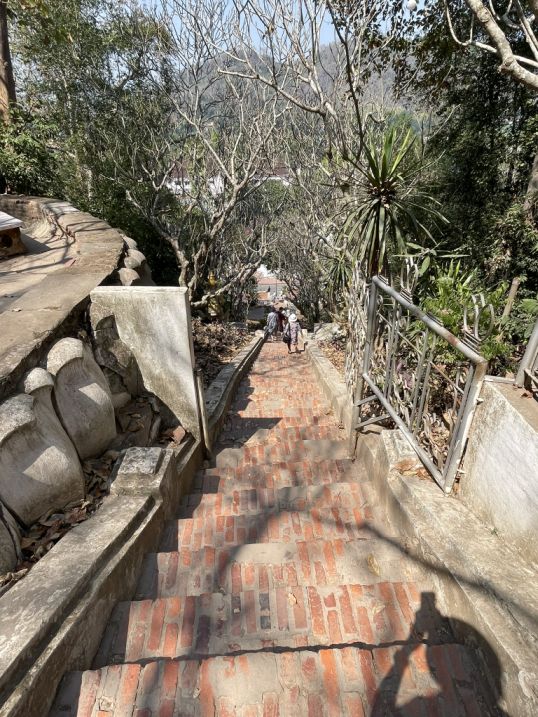 |
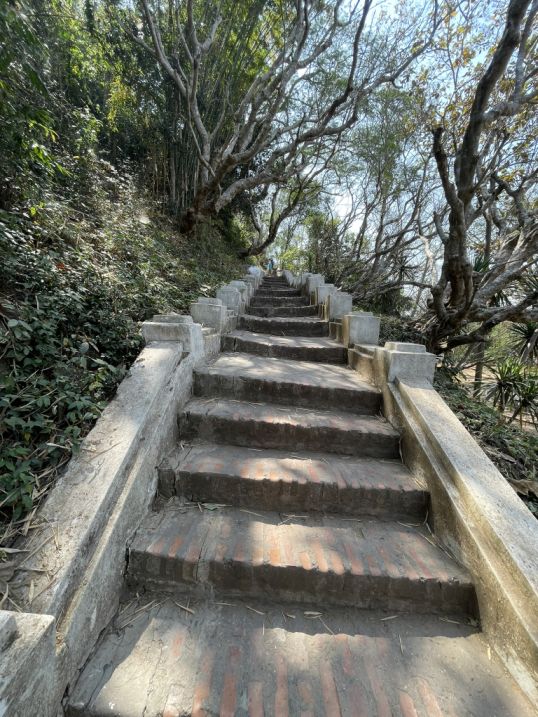 |
On the left, I am looking down at the stairs we just walked up. On the right are more stairs going up to the summit.
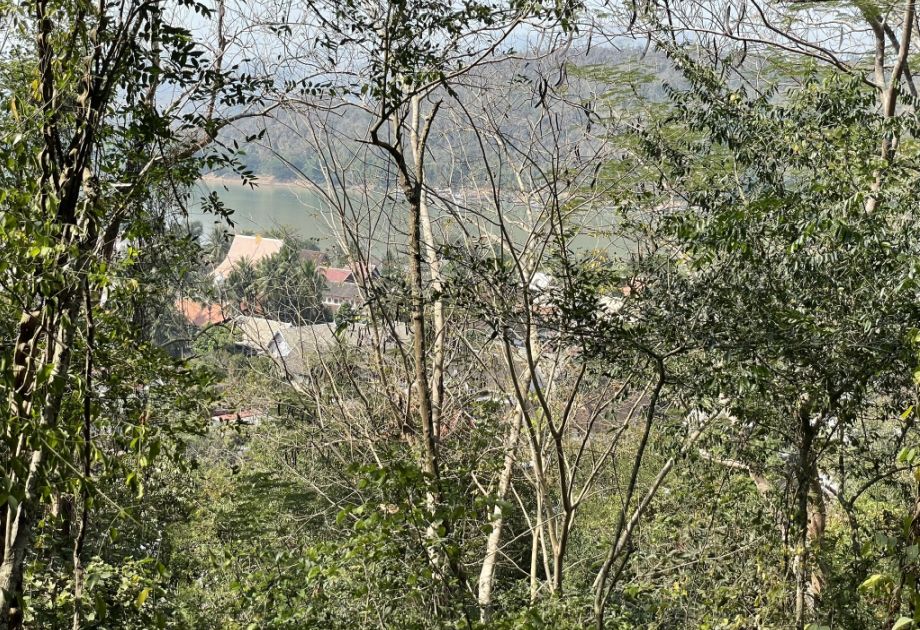
Beautiful view as we are going up.
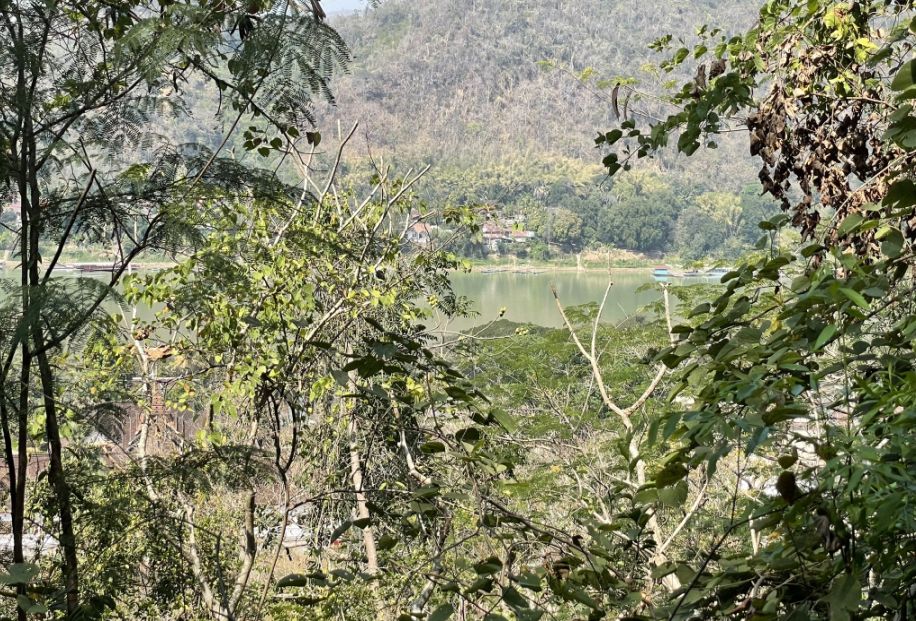
As you climbed, the Mekong would have appeared beyond the town’s red-tiled roofs, with mountains stretching across the distance.
 |
 |
Resting a bit before continuing to the summit
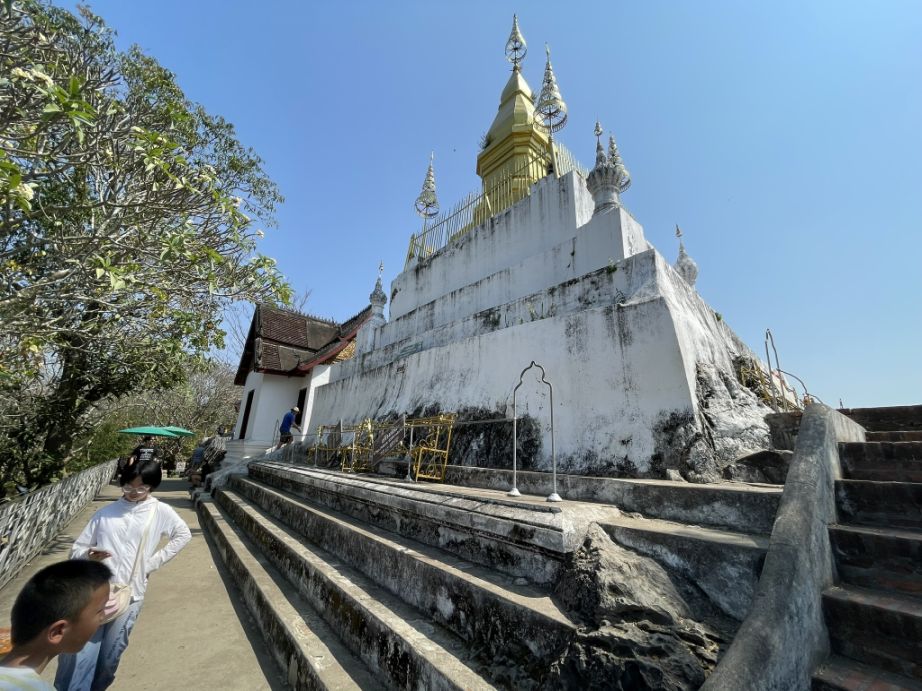
We are now at the summit and in the center is Wat Chomsi, also called That Chomsi, the golden stupa at the top of Mount Phousi.
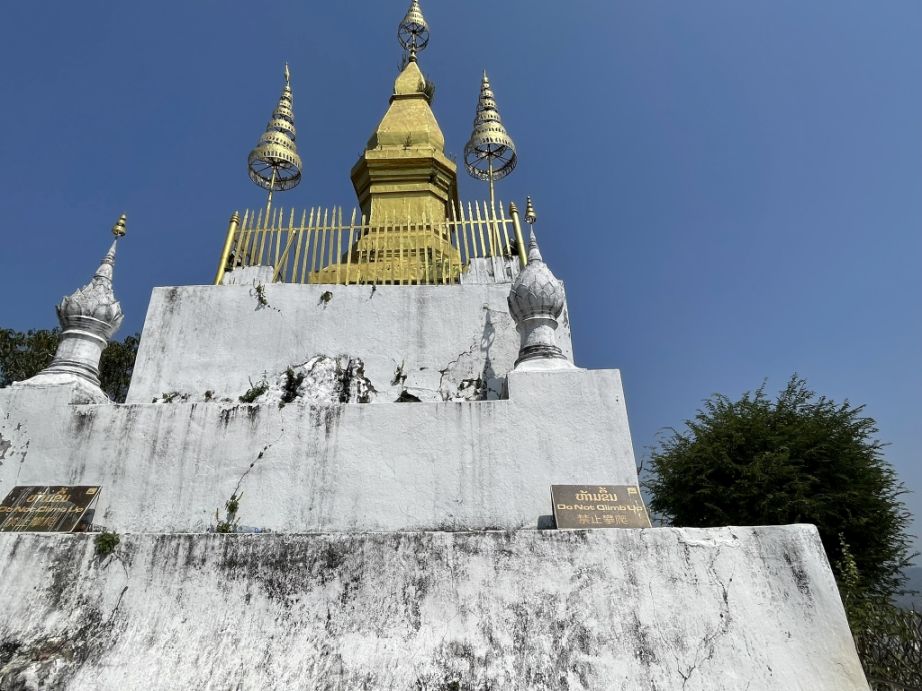
The stupa rises above a white temple structure and is topped with a slender, ornate finial. Its golden surface catches the sunlight and makes it one of the most recognizable landmarks in Luang Prabang. Wat Chomsi was built in 1804 during the reign of King Anourouth and is considered a sacred place where local people come to pray and pay their respects.
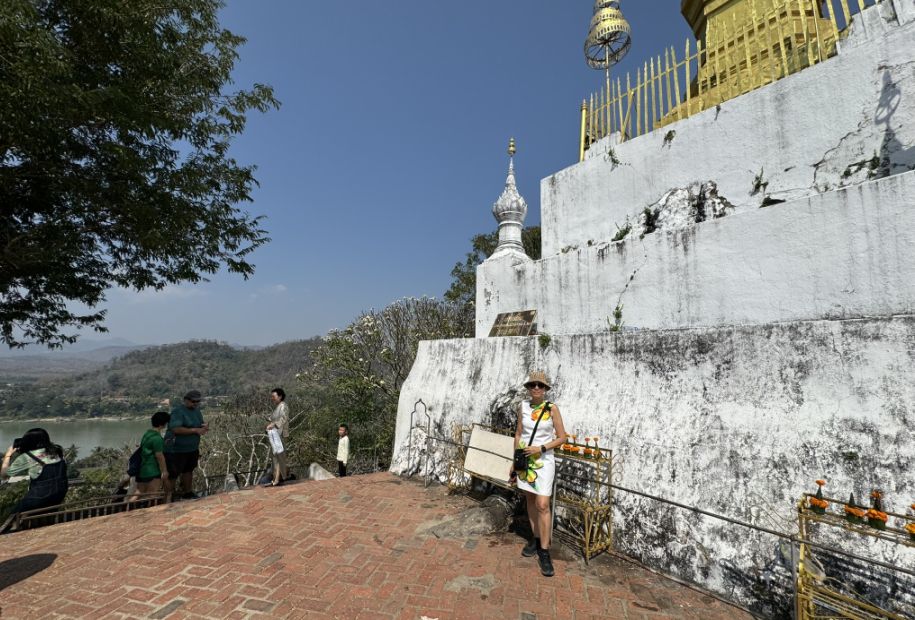
Standing beside it, we could look out over the Mekong River, the distant mountains, and the red-tiled roofs and temples of Luang Prabang. Because it stands at the highest point in the center of town, Wat Chomsi is both an important religious site and one of the city’s most famous viewpoints.
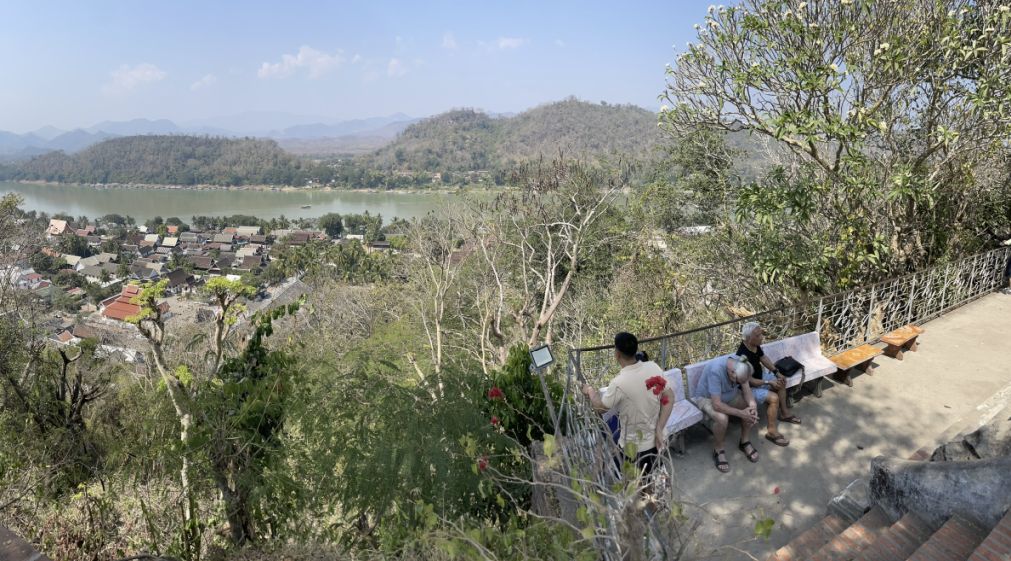
People stood along the edge of the summit, where a metal fence provided safety for visitors gathered to admire the view.
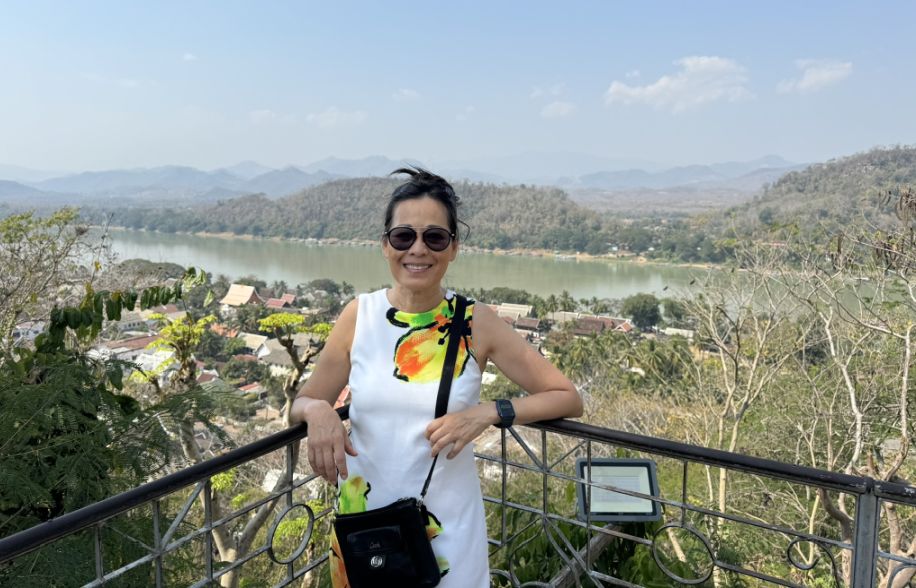
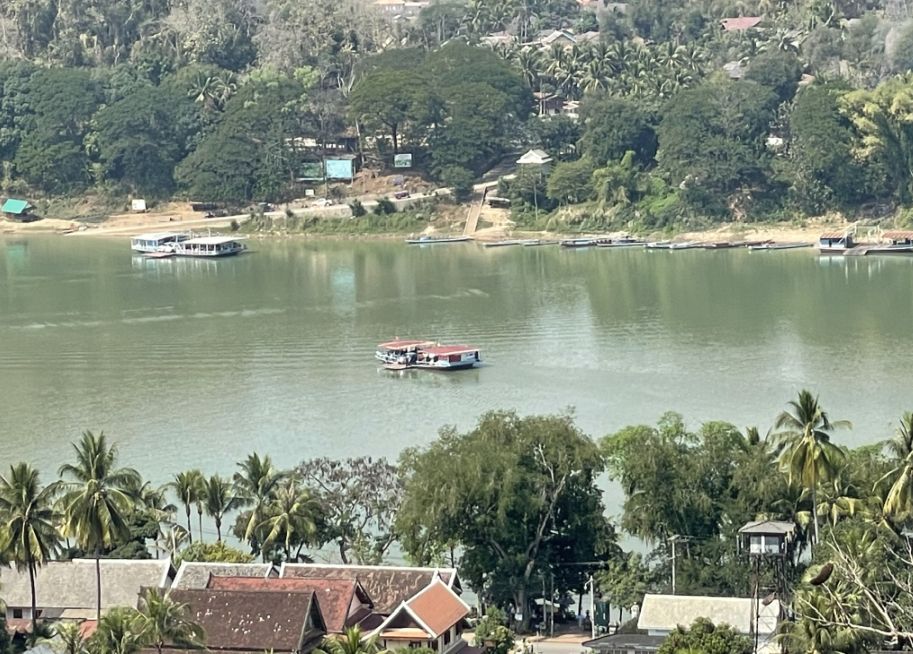
The Mekong river.
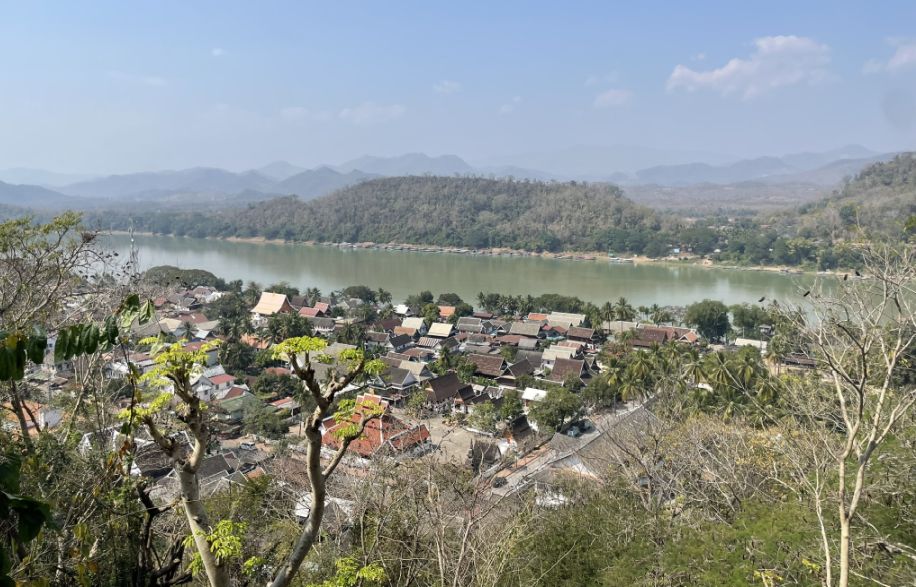
From this vantage point, we could see Luang Prabang’s colorful rooftops, the winding river, and the mountains rising on the opposite bank.
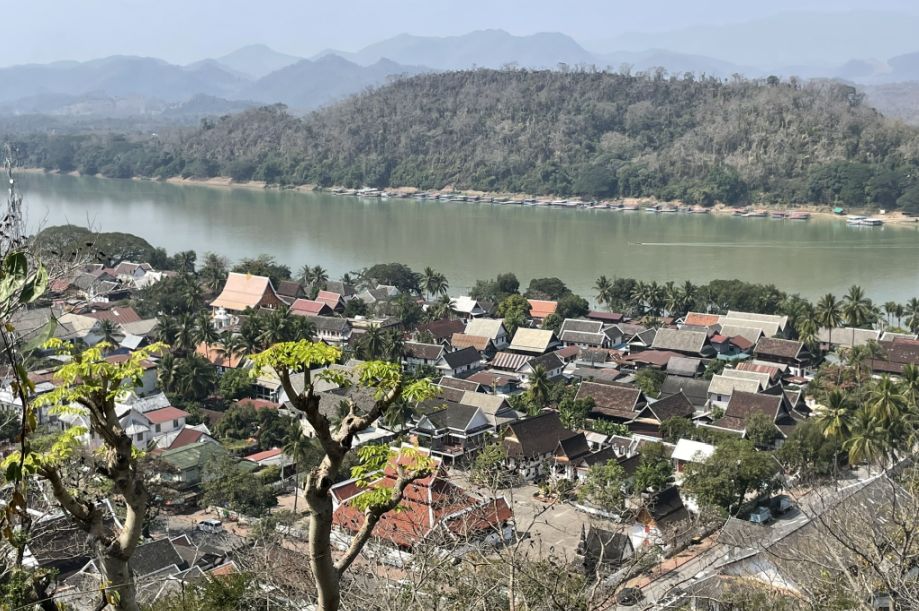
Closer view of the area.
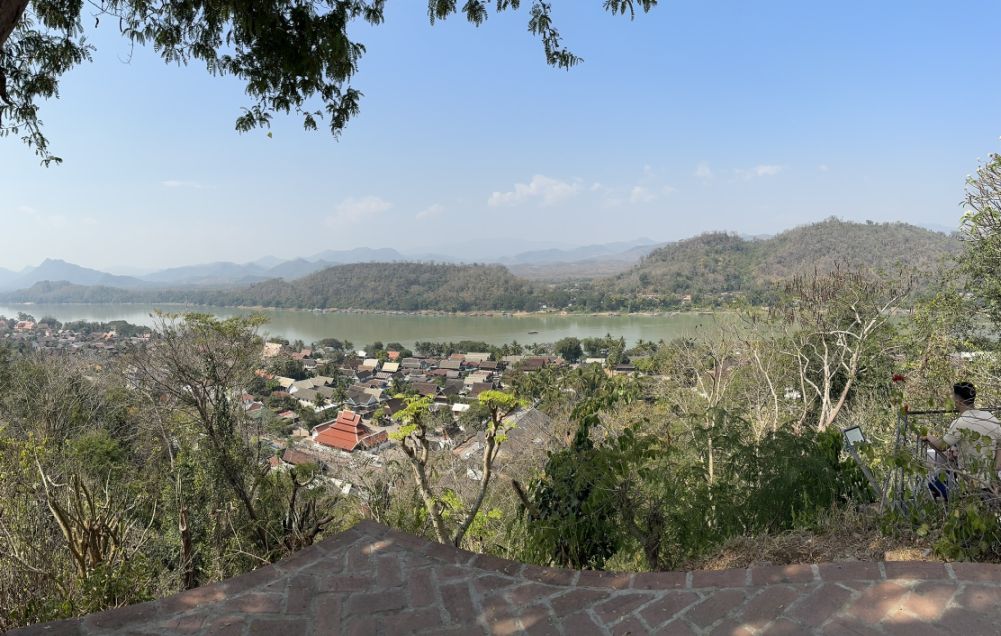
Nearby, a brick viewing platform gave visitors a perfect place to stop and take pictures. With the town below, the river stretching into the distance, and the mountains forming a dramatic backdrop, it was one of the most beautiful viewpoints of our trip.
 |
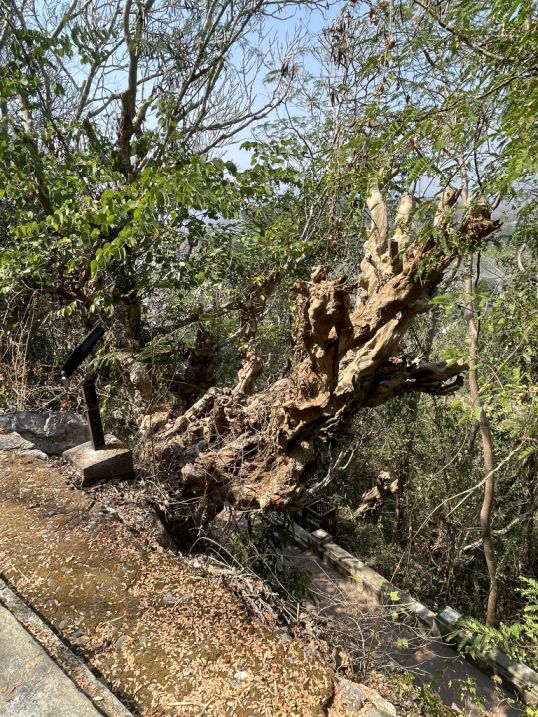 |
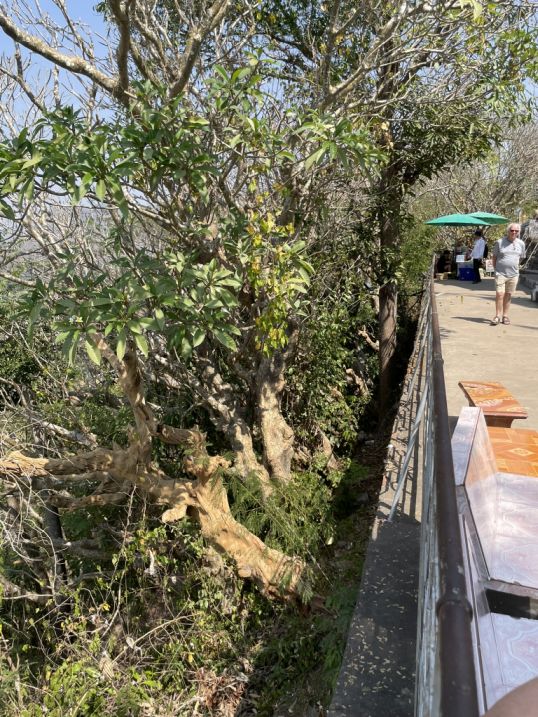
As we walked around the back of the summit, we noticed trees growing sideways along the edge of the hill. Their trunks and roots seemed to cling to the rocky slope, reaching outward and upward toward the sunlight. This gave the hillside a wild, natural appearance and showed how the trees had adapted to the steep terrain.
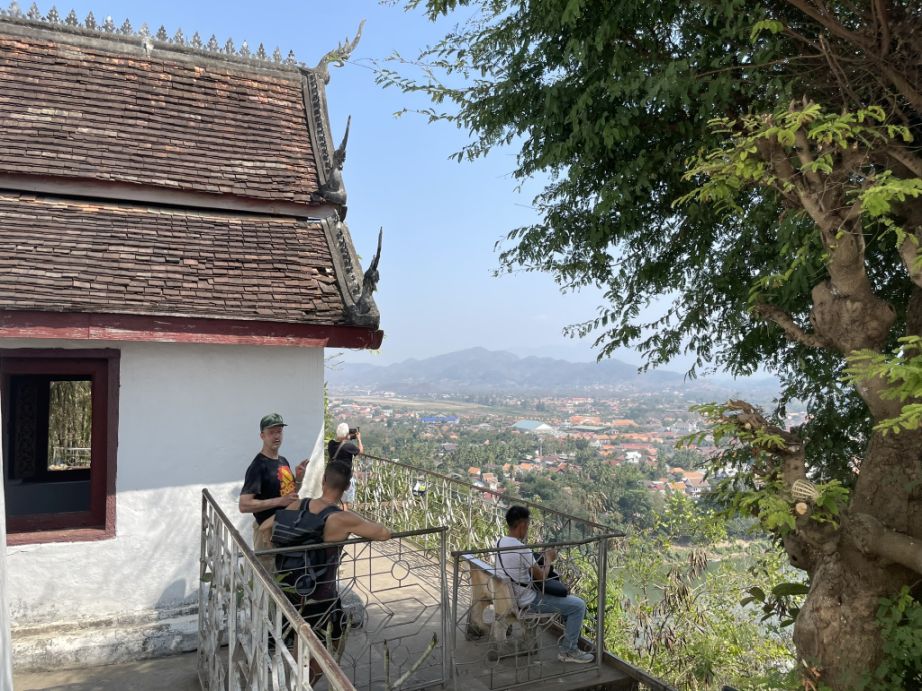
We walked to the back and the view from this side was just as beautiful.
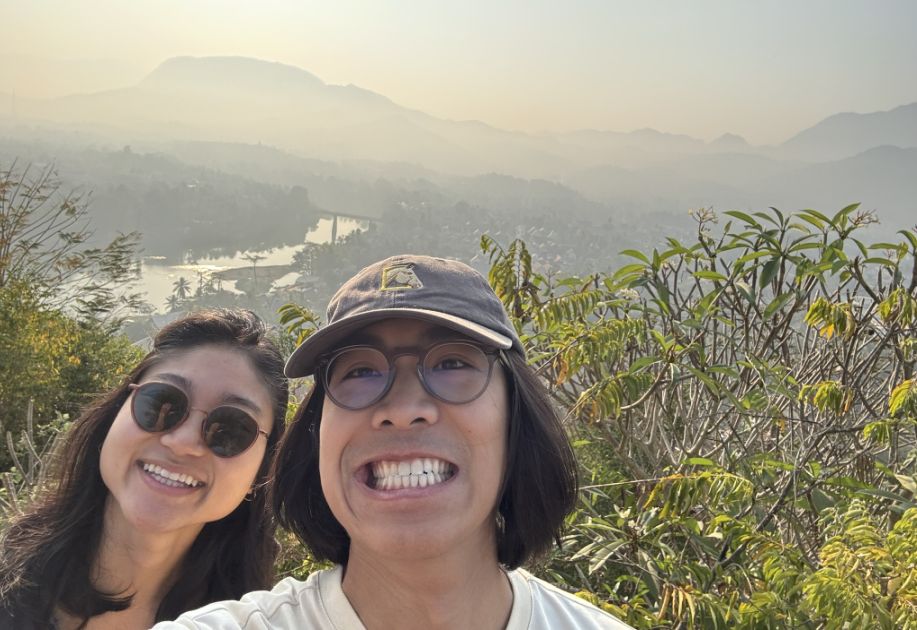
Kristie and Kevin went really early in the morning and sent us this picture.
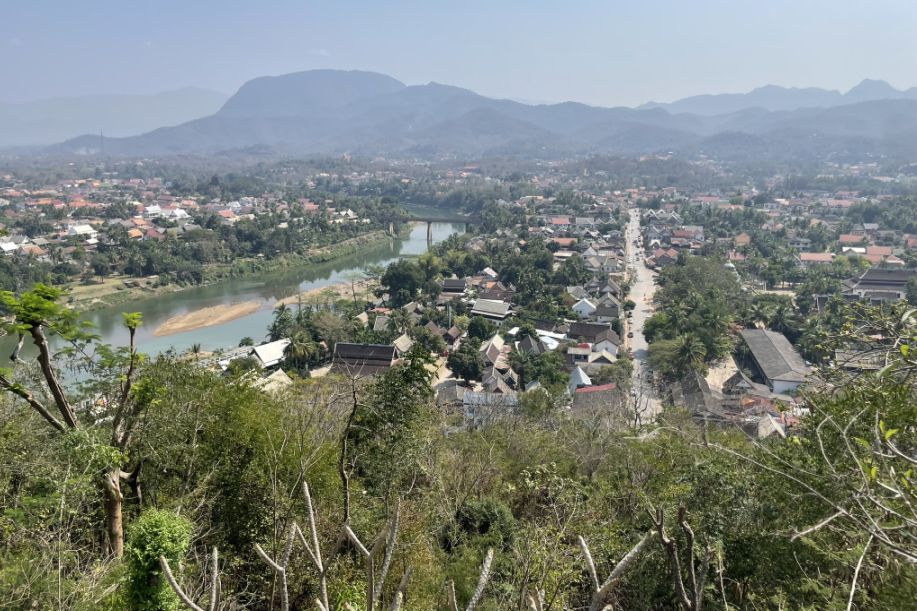
We were looking toward the Nam Khan River, which runs along the other side of Luang Prabang’s peninsula. Below us, the river curved through the town, with houses, temples, and lush greenery along its banks.
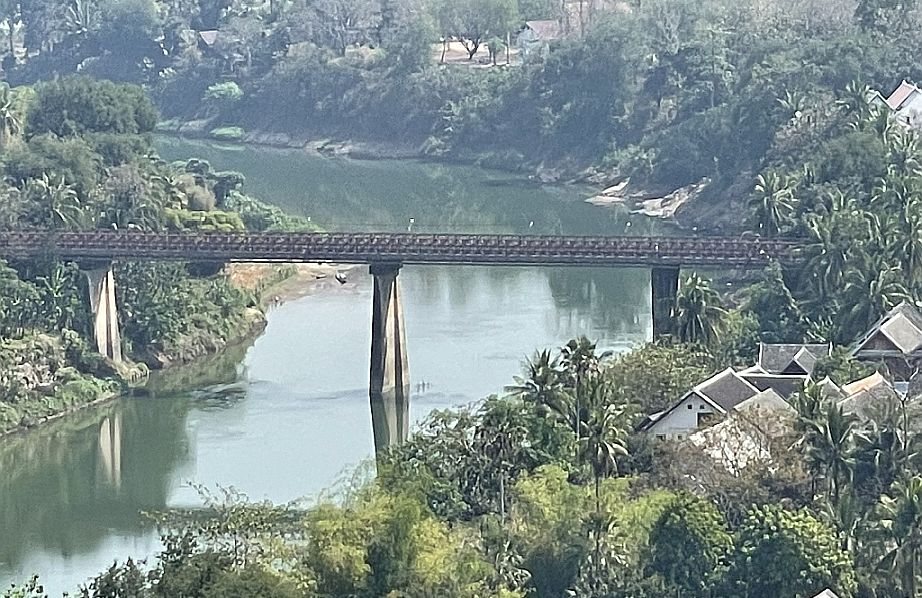
The bridge in the distance is likely the old French bridge, which crosses the Nam Khan near Mount Phousi. If it was a narrow, rustic-looking bridge, it may have been one of the seasonal bamboo footbridges nearby.
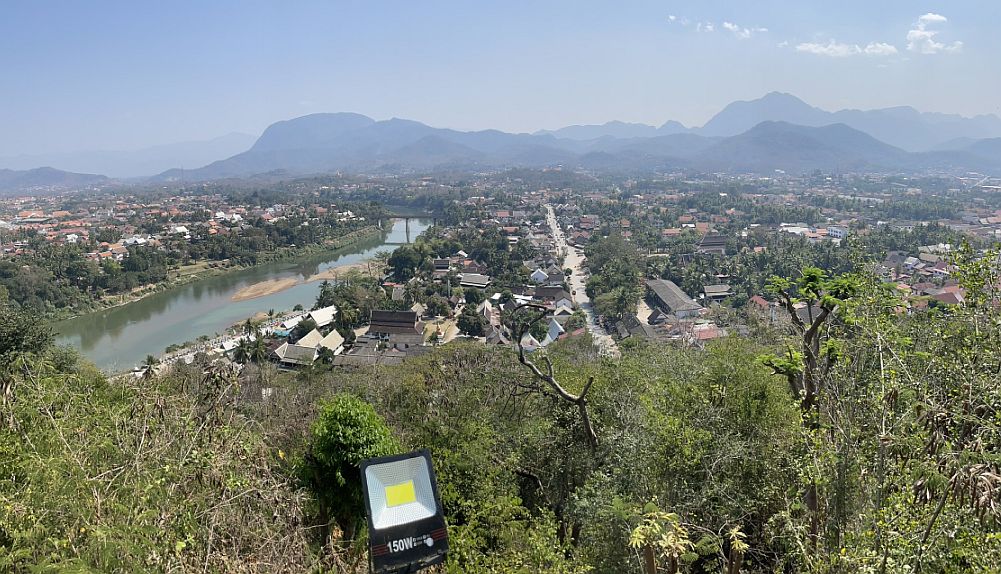
Panoramic view
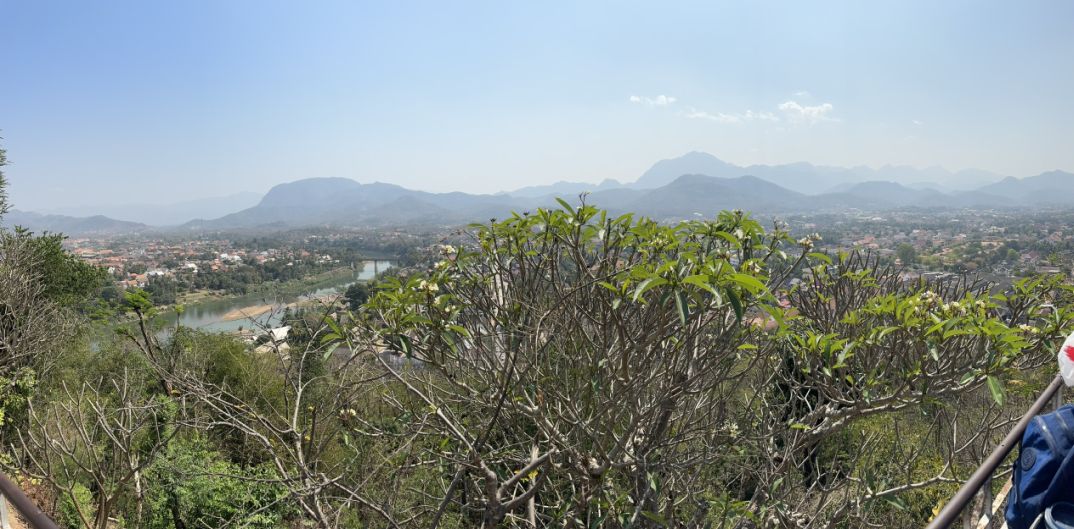
Before leaving Mount Phousi, we paused for one last look at the bridge and the surrounding landscape. The Nam Khan River curved peacefully below, framed by green trees, colorful rooftops, and distant mountains. From this elevated viewpoint, the bridge looked small against the wide natural setting, while the quiet river and lush surroundings gave us a final beautiful glimpse of Luang Prabang before we began our descent.
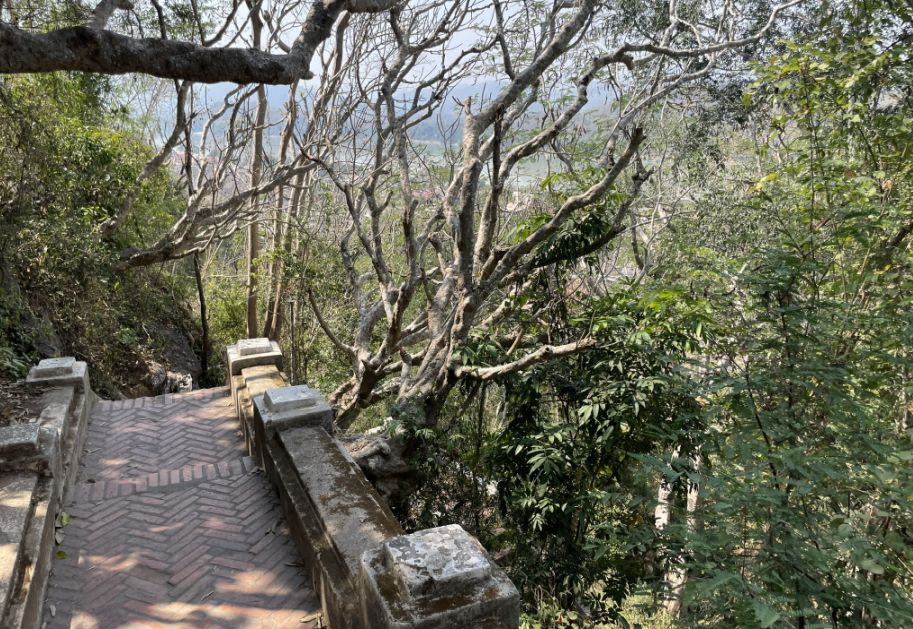
We then began our descent from Mount Phousi.
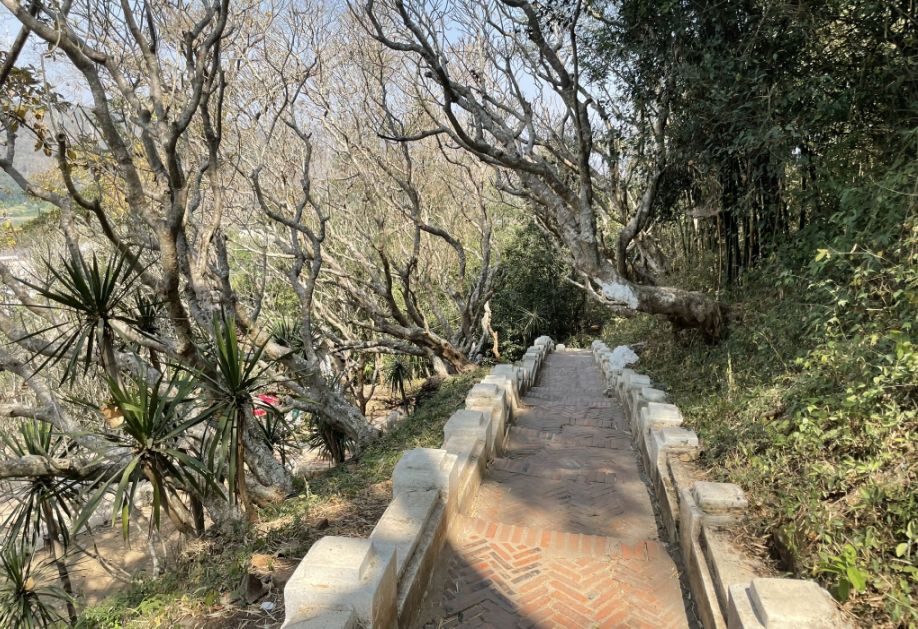
Somehow, the view looked completely different on the way down. From this angle, we noticed details that we had missed while climbing, the rooftops, temples, trees, and winding river appeared in a new perspective. The descent was easier on our legs, and we took our time enjoying one last look at the beautiful scenery surrounding Luang Prabang.
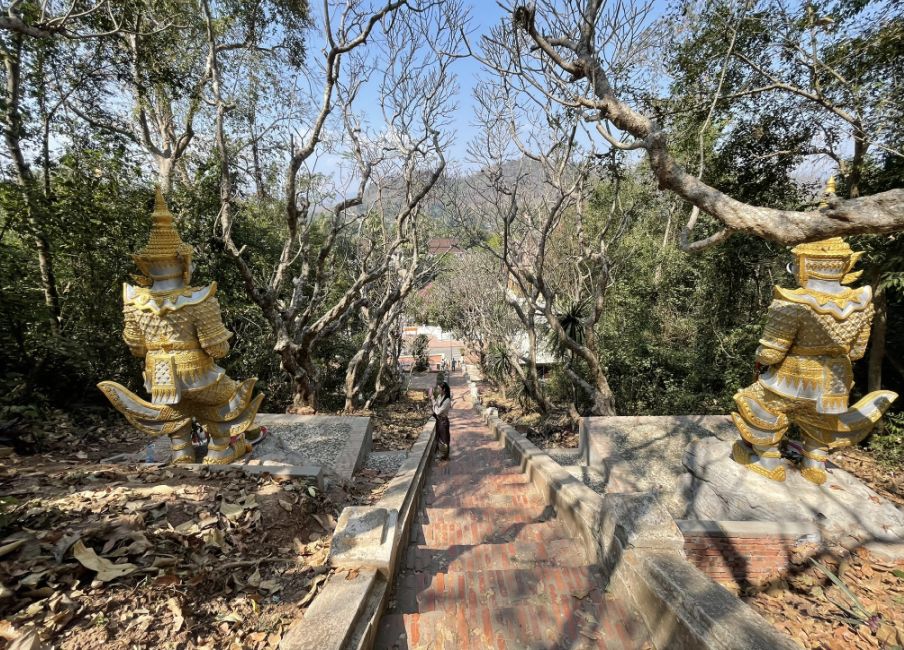
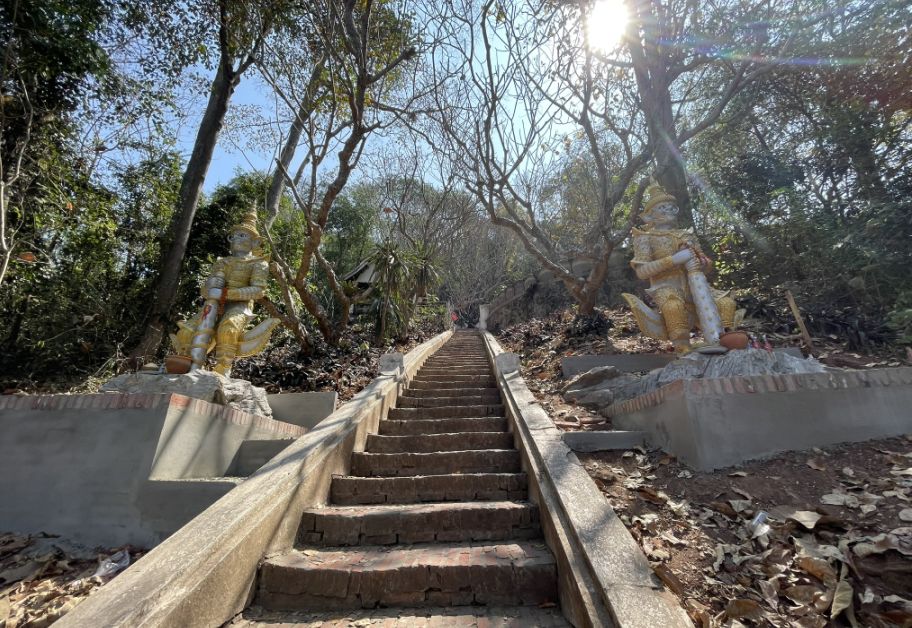
The two large statues beside the staircase were most likely naga figures, the mythical serpent guardians commonly found at Lao Buddhist temples. They represent powerful protective spirits believed to guard sacred places, temple entrances, and stairways leading to religious sites. In Lao tradition, the naga is closely associated with water and is believed to live in rivers such as the Mekong and Nam Khan. Standing beside the stairs, the statues marked the transition from the ordinary streets below to the sacred grounds of Mount Phousi.
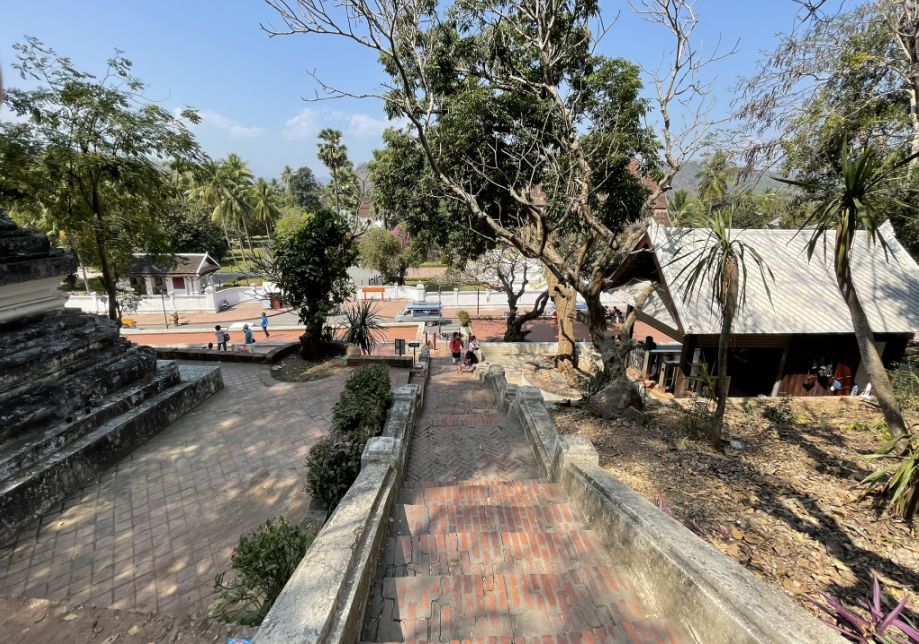
We are now almost at street level. Our visit to Mount Phousi was a wonderful way to spend our last morning in Luang Prabang. Located in the heart of downtown, the sacred hill required climbing 328 steps to reach the summit. Along the way, we saw Buddha images, resting areas, guardian naga statues, and beautiful views through the trees. At the top, we visited Wat Chomsi, the golden stupa built in 1804, and admired panoramic views of the Mekong River, the Nam Khan River, Luang Prabang’s temples and red-tiled rooftops, and the surrounding mountains. The climb was a little tiring, but the scenery and peaceful atmosphere made it well worth the effort.
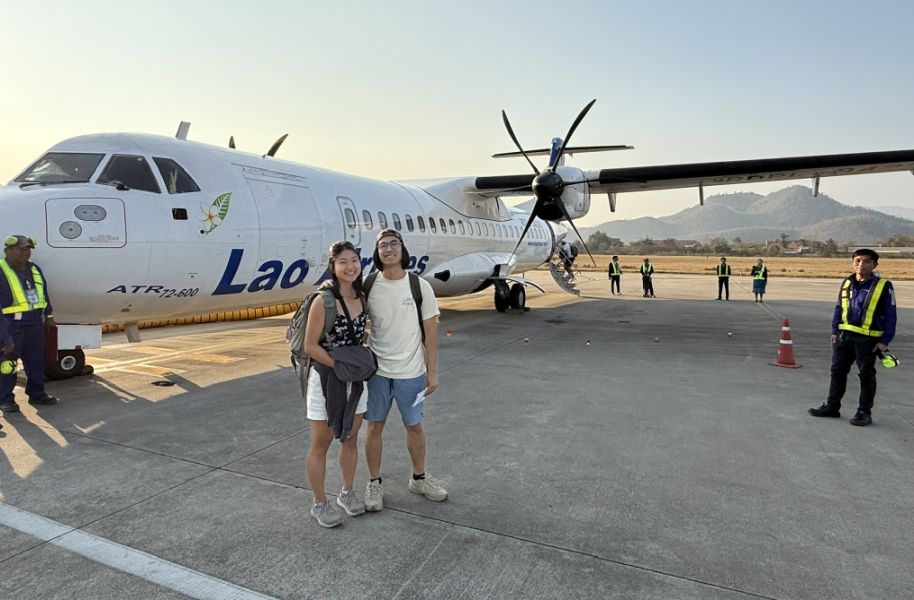
We then boarded a small plane and flew to Hanoi, bringing our memorable visit to Laos to an end.
Our time in Vientiane introduced us to Laos’s spiritual traditions and recent history. We visited Buddha Park, with its imaginative and sometimes mysterious sculptures, explored Wat Si Muang, and learned about the country’s wartime legacy at the COPE Visitor Centre. We also enjoyed traditional Lao food and music at Tamnak Lao.
In Luang Prabang, we discovered a quieter and more deeply historic side of Laos. We visited beautiful temples, watched the sunset along the Mekong, enjoyed dinner at Bouang and Manda de Laos, and cruised to the Pak Ou Caves and Kuang Si Waterfalls. Our visit ended with a climb up Mount Phousi, where we admired Wat Chomsi and panoramic views of the rivers, mountains, temples, and rooftops of the city.
We were especially happy to share this journey with Kevin and Kristie to show them the places where we were born and grew up. It was meaningful to return to Laos together and let them experience our homeland, its culture, history, food, and beautiful landscapes firsthand.
NEXT... Ninh Binh, Vietnam