4 days in Laos-1/31- 2/3/2025
Day 4-Guided tour, Luang Prabang-2/2/2025
Pak Ou Caves
Our next destination is Pak Ou Caves. The caves complex consists of two main caves: the lower cave, Tham Ting, which is closer to the river and receives natural light, and the darker upper cave, Tham Phum. Inside are thousands of Buddha images in different sizes and styles. Over many generations, local people and pilgrims brought Buddha statues to the caves as offerings, especially old or damaged images that were treated with respect rather than discarded.
According to local tradition, the caves were also once associated with spirits and river deities before Buddhism became established in Laos. Today, the Buddhist statues and the natural caves exist together, reflecting the way ancient local beliefs and Buddhist traditions became woven into Lao spiritual life. Surrounded by the Mekong, towering mountains, and the unusual limestone cliff, the setting felt both peaceful and sacred.
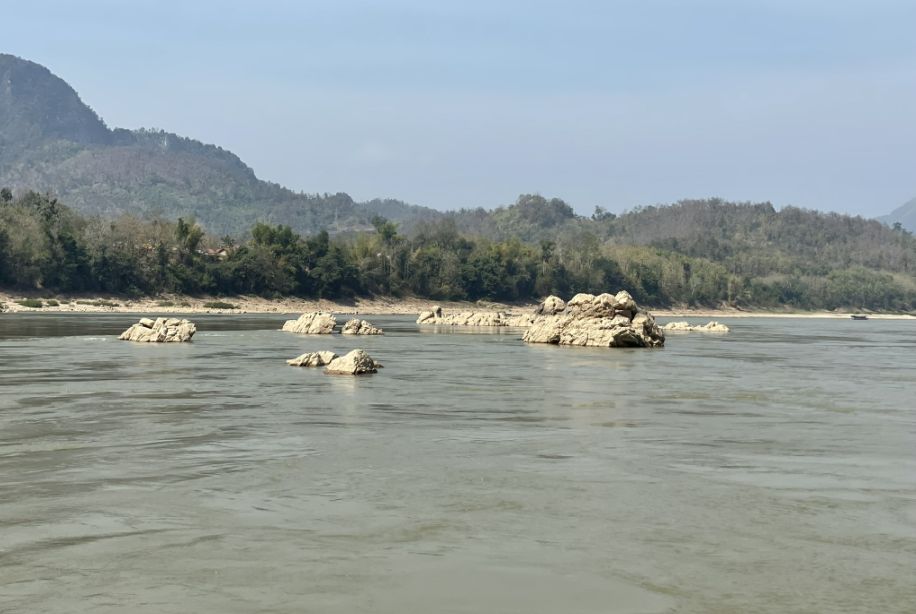
After sailing for about 15 minutes, the landscape began to change. The Mekong became shallower in places, with large rocks rising from the water.
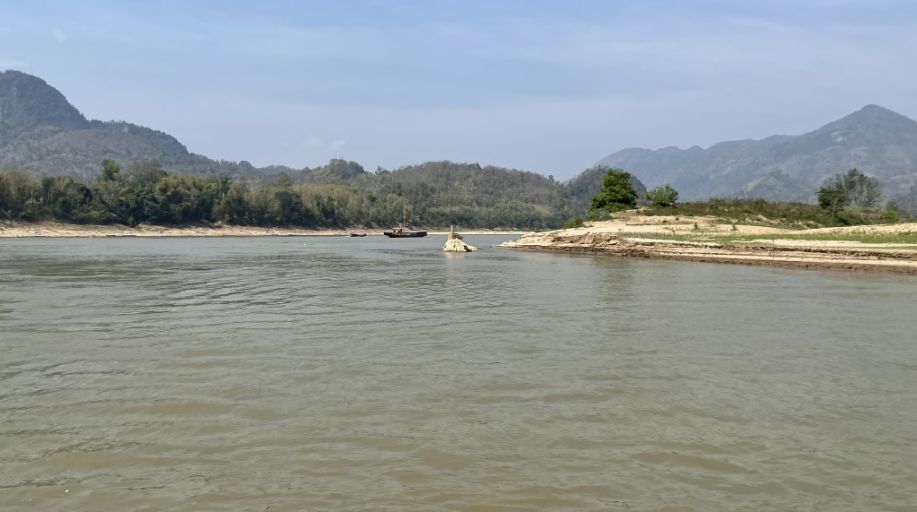
This area is really calm and beautiful.
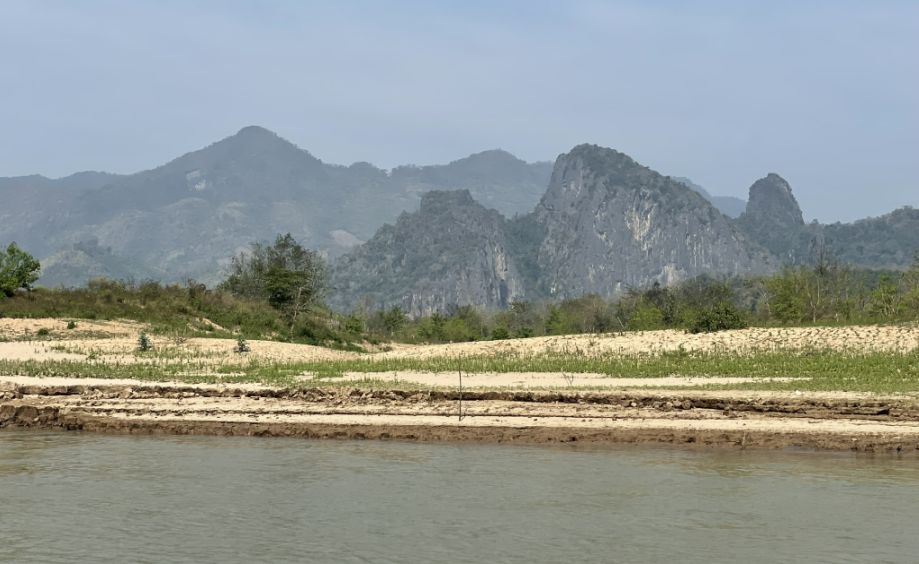
Along the riverbank, we saw stretches of white sand backed by tall, forested mountains.
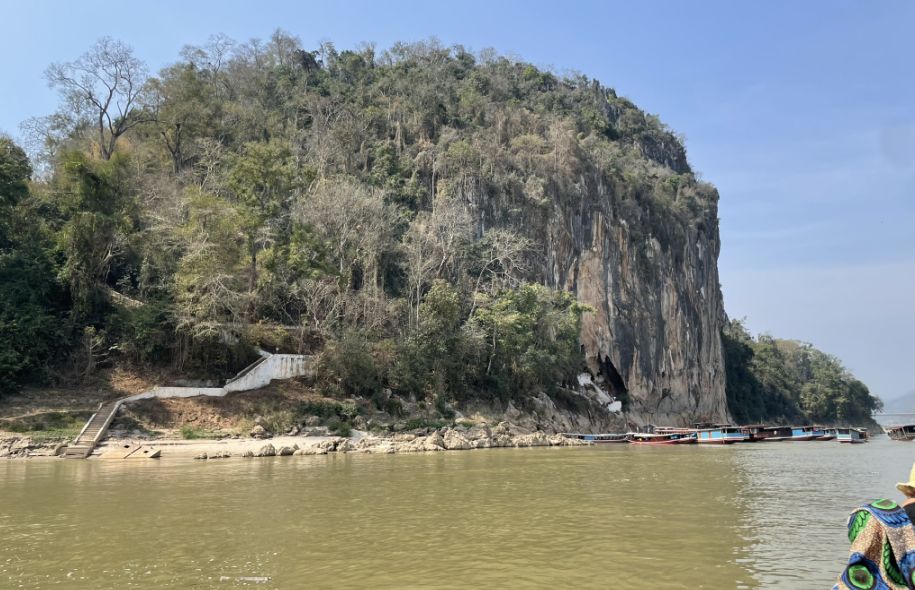
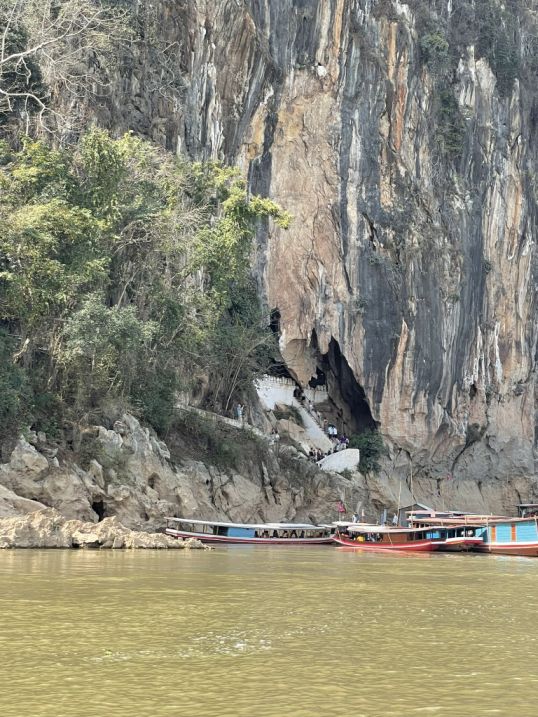
Soon, a massive, almost circular limestone formation came into view. Trees covered its rocky summit, while colorful boats gathered around the shoreline.
 |
 |
We had arrived at the Pak Ou Caves, located at the meeting point of the Mekong and Ou Rivers.
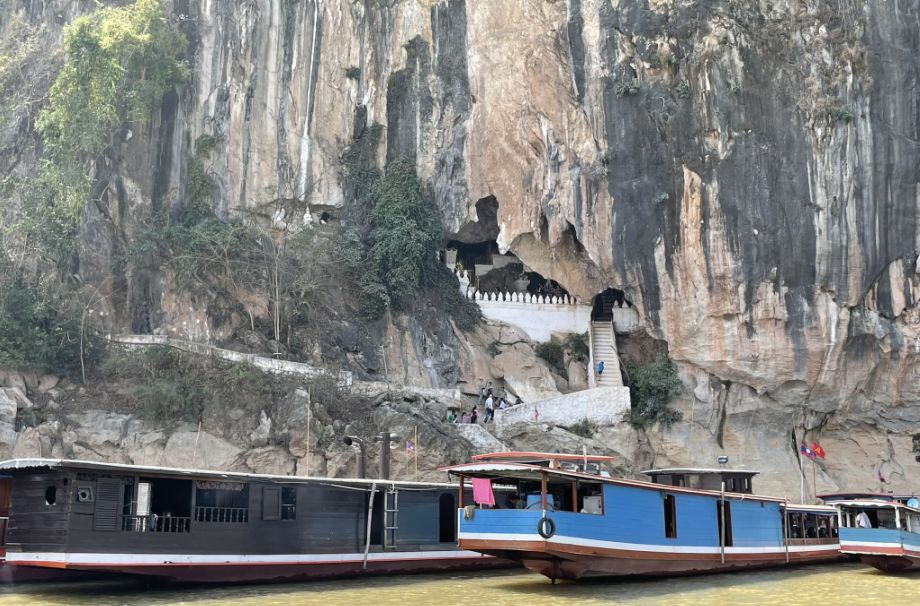
From the boat, we had a beautiful view of the Pak Ou Caves high above the river. A long flight of white stairs climbed up the rocky hillside, leading from the riverbank to the cave entrance. The bright steps stood out against the dark limestone cliff and lush green trees, making the caves easy to spot as we approached. The scene was especially striking from the water, with the Mekong in the foreground and the forested mountains rising behind it.

We got off the boat and walked along a narrow walkway leading to the shore.
 |
 |
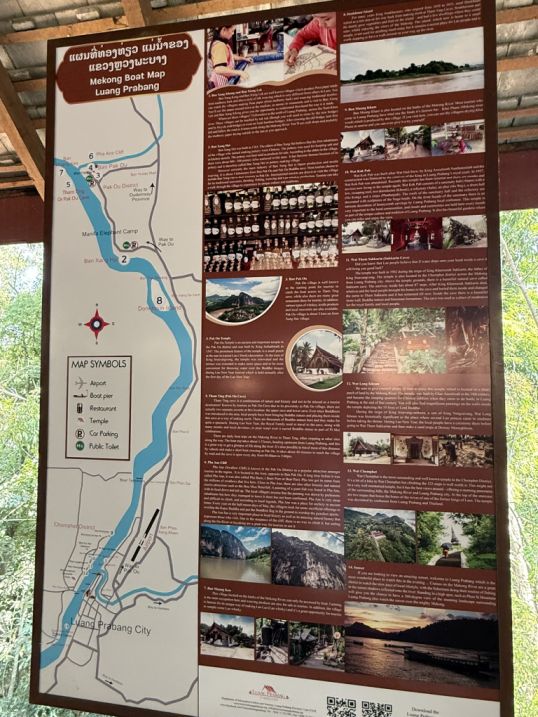
Near the entrance, we saw a large sign displaying a map titled “Mekong Boat Map,” which helped orient us to the surrounding area.
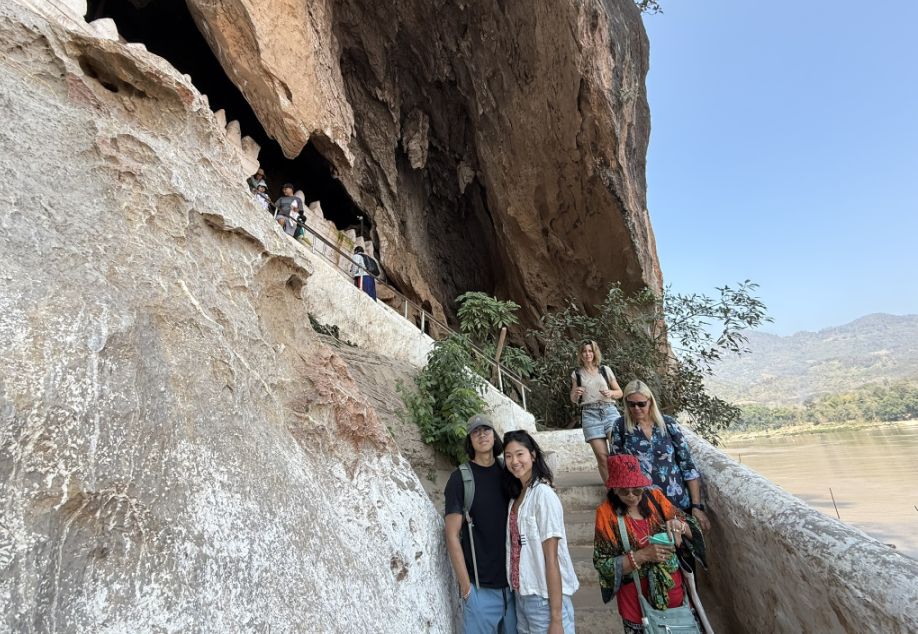
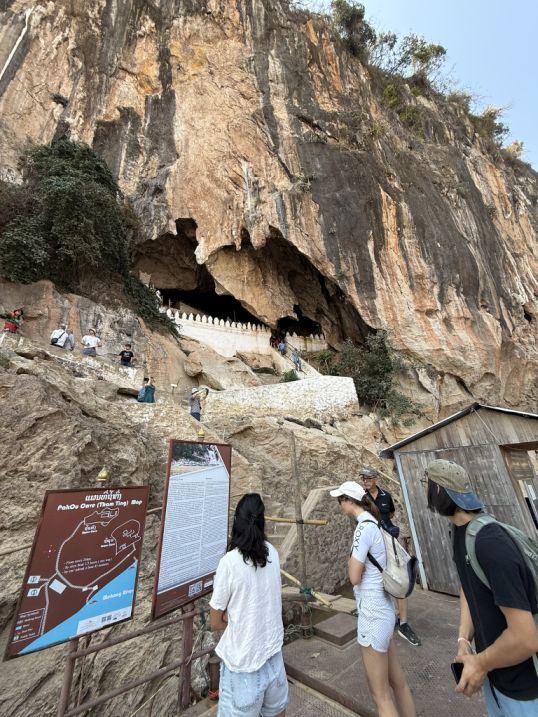
From there, we began climbing toward the caves.
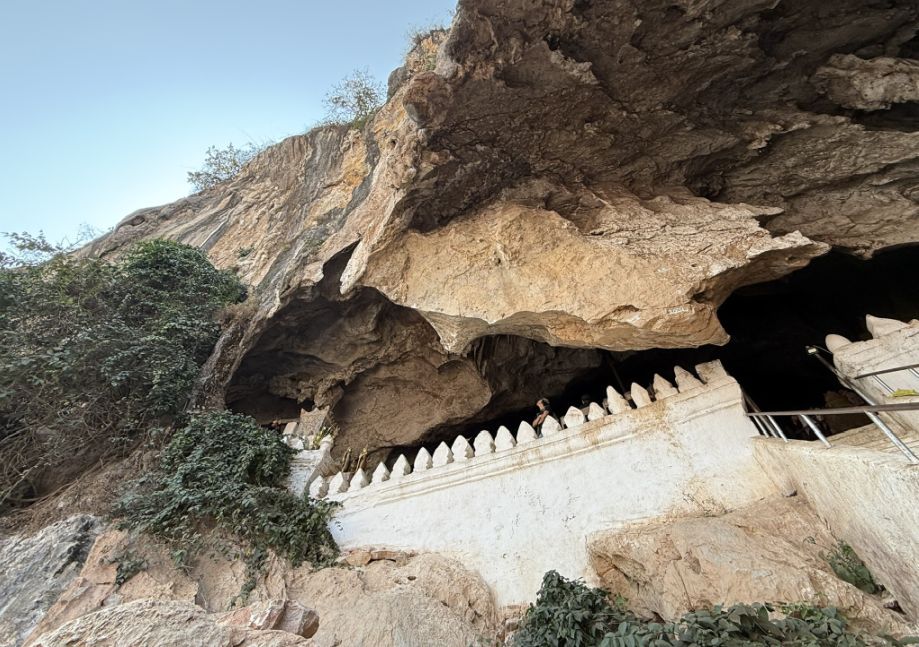
Looking up from below.
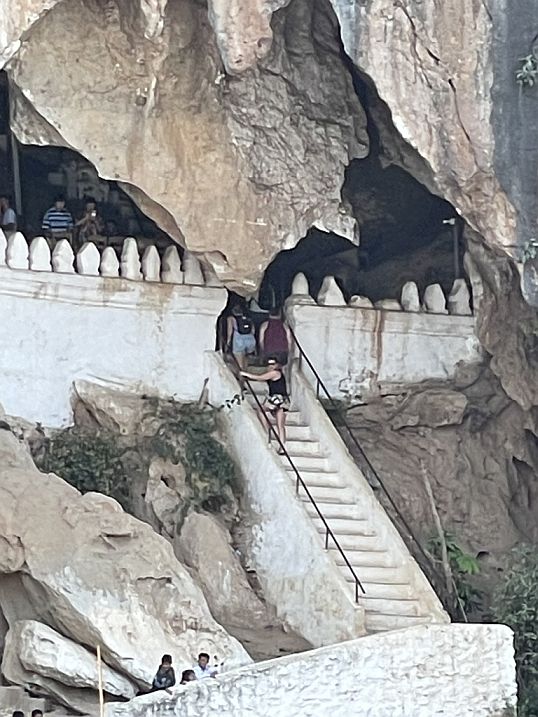 |
 |
The white staircase and matching retaining wall stood out beautifully against the rugged limestone cliff and lush green vegetation, creating a striking contrast as we made our way upward.
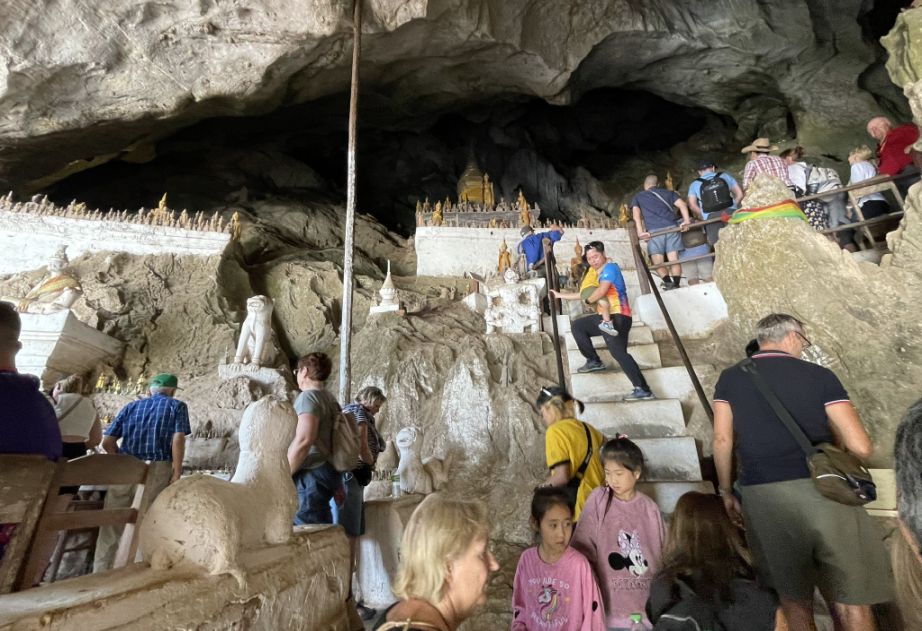
After climbing the white stairs, we reached a broad landing at the entrance to the upper cave. From there, another set of steps continued even higher into the rocky hillside. At the top, we could already see rows of Buddha images gathered inside the dim cave, waiting to be discovered. The combination of the steep stairs, limestone walls, and hundreds of statues created a feeling of entering a sacred mountain sanctuary.
 |
 |
We are now inside the upper cave.
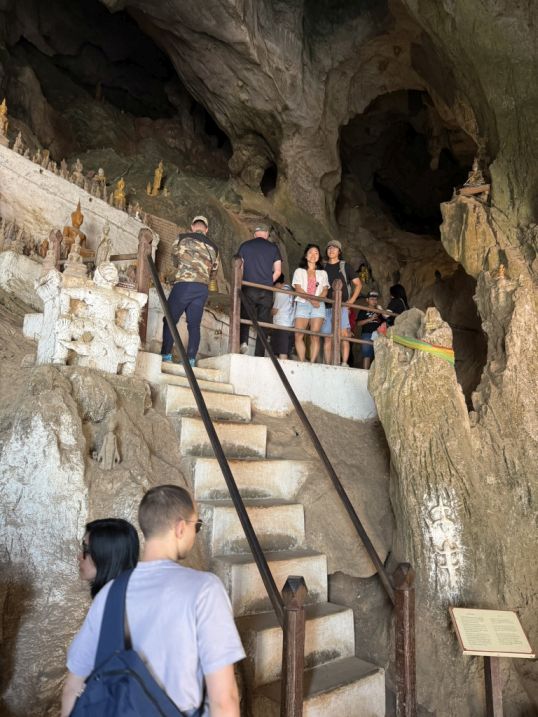 |
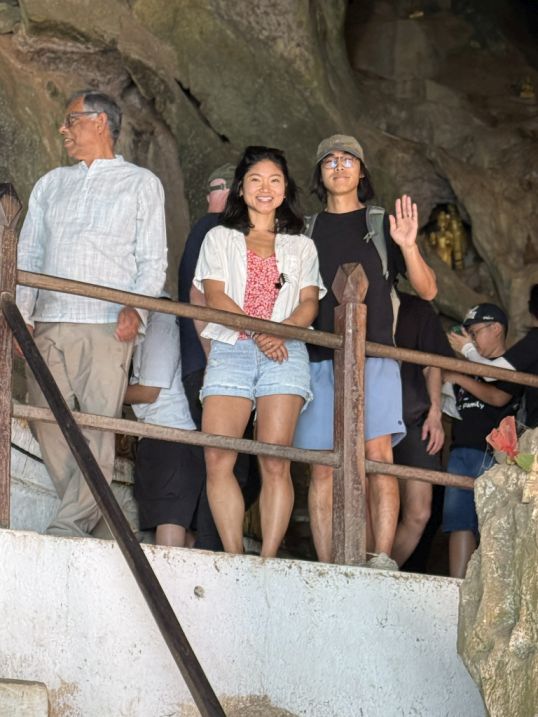 |
Kevin and Kristie standing at the upper portion of the cave.
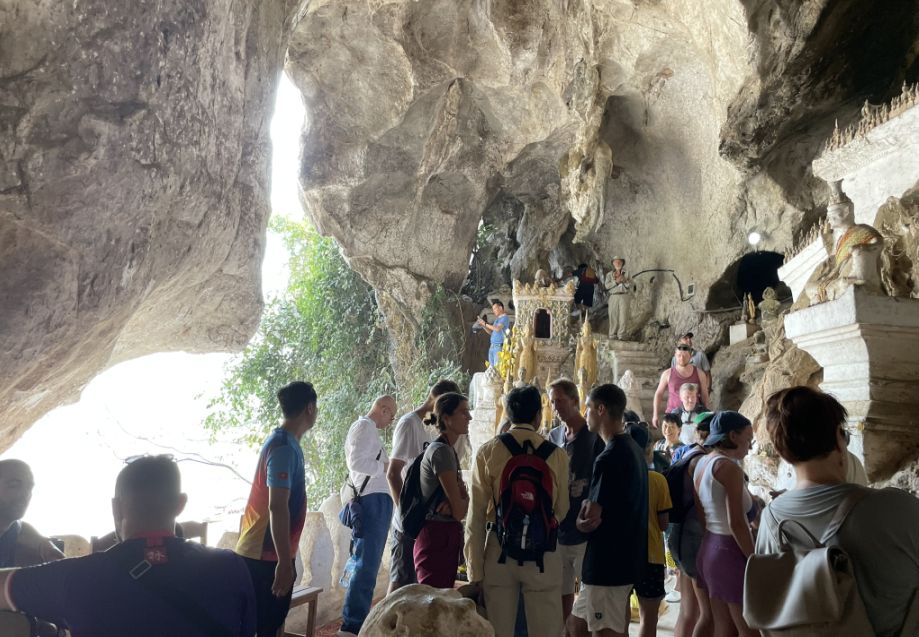
To our left, more Buddha images were arranged beside an opening in the rock.
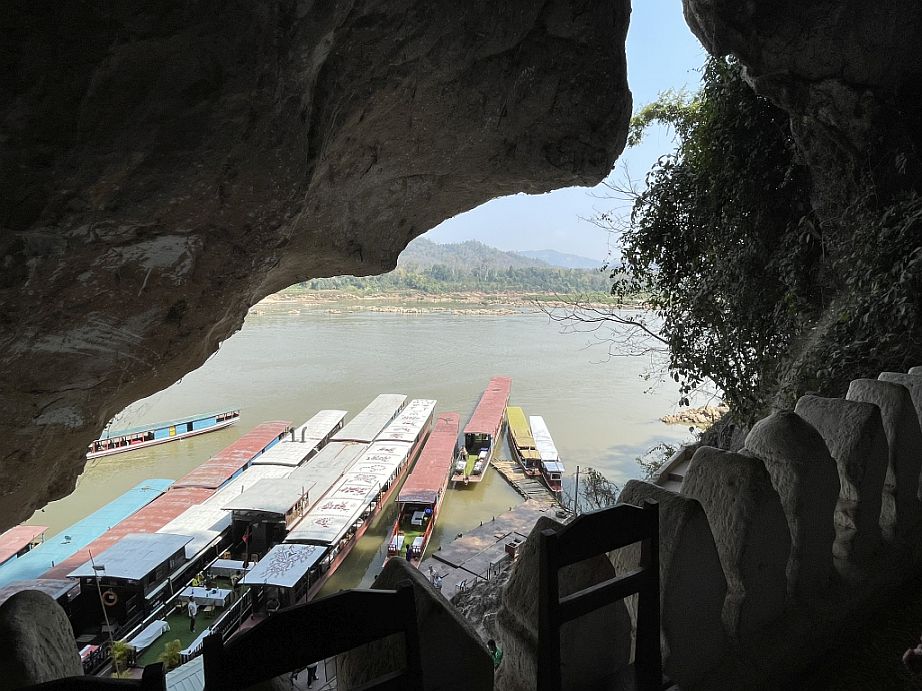
As I look down I could see our boat below.
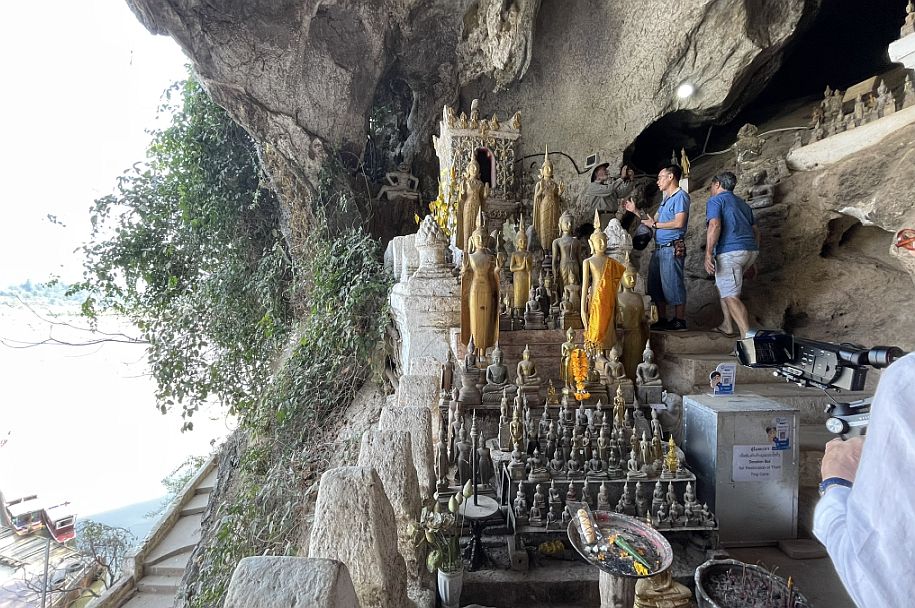
Some were placed on natural ledges, while others sat together in the shadows near the cave entrance.
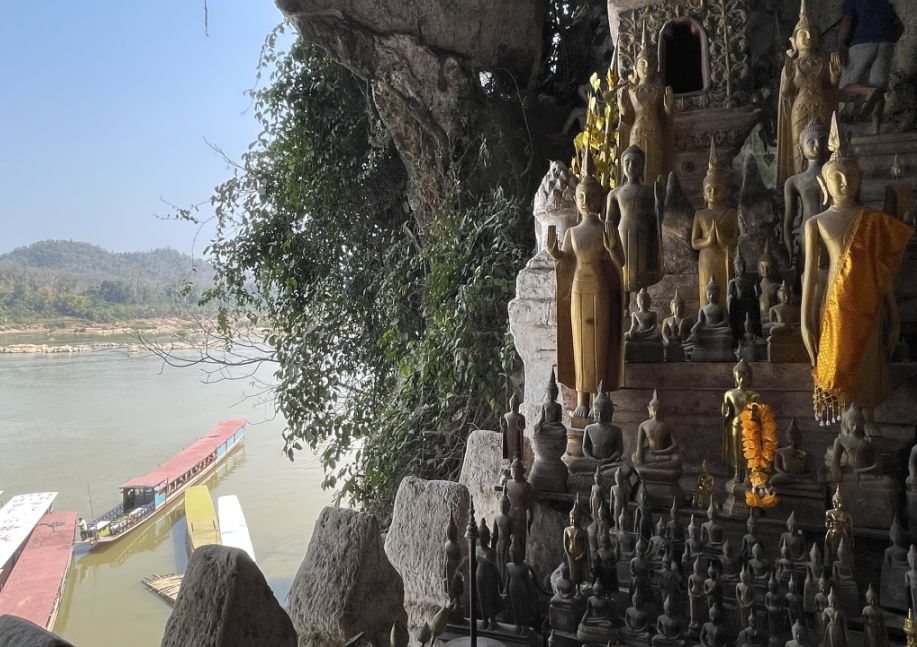
The statues seemed to blend naturally with the rugged limestone, making the cave feel like both a sacred sanctuary and a part of the mountain itself.
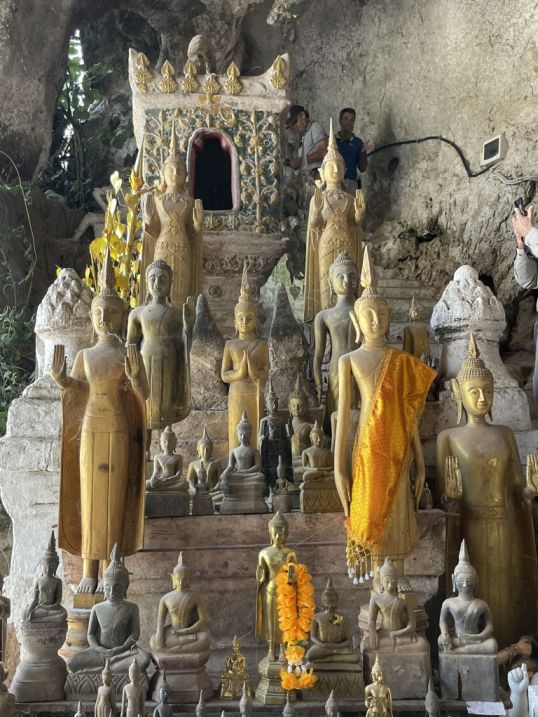 |
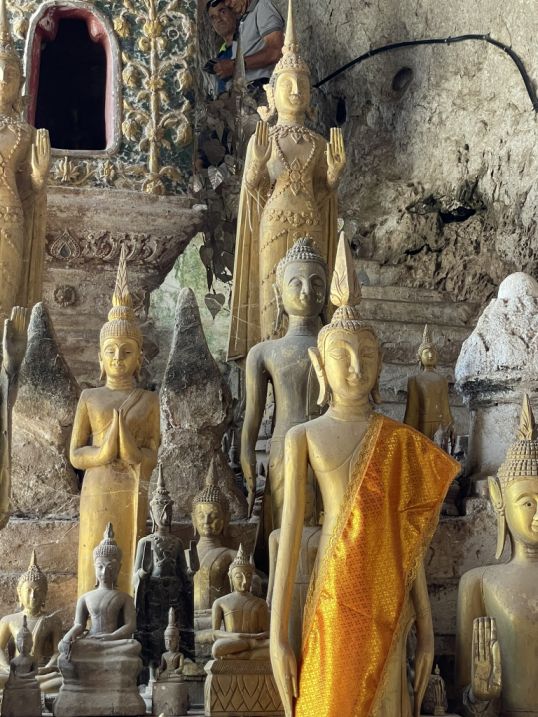 |
Some of the Buddha statues were dressed in bright orange robes, while others held small strands of fresh yellow flowers. These simple offerings added vivid color to the dim cave and reflected the continuing devotion of the visitors who come to pray and pay their respects.
 |
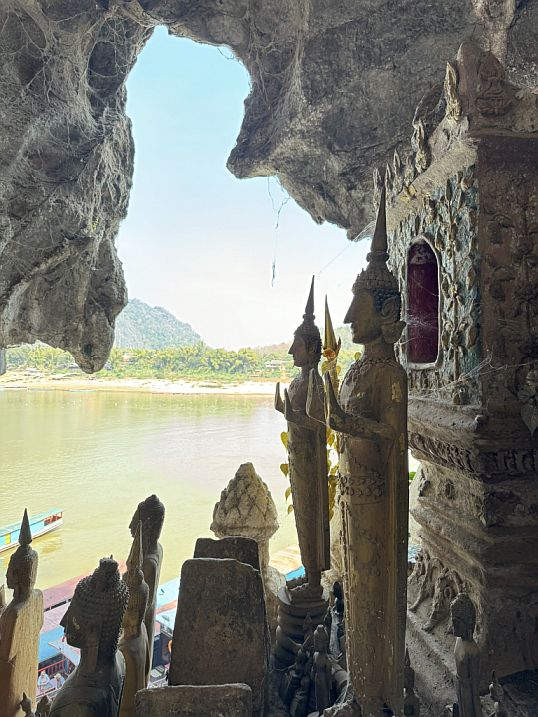 |
The view is really beautiful from here.

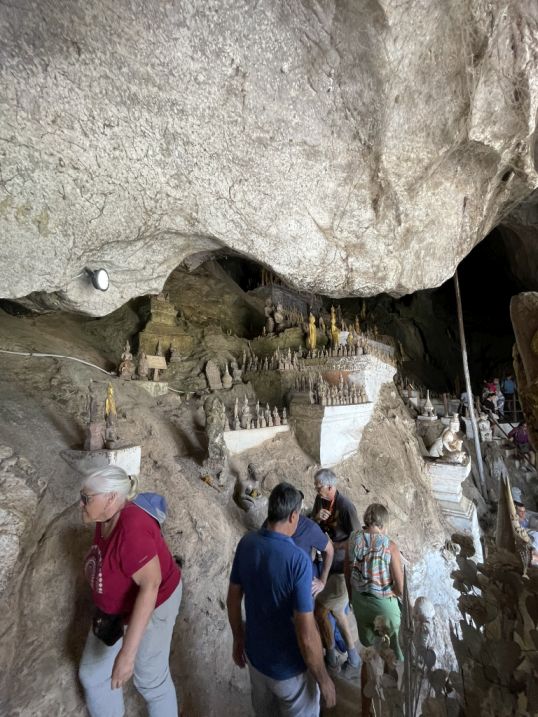
We then made our way down to the main landing. From there, we could see many visitors gathered inside the cave, exploring the sacred space and viewing the Buddha images.

Looking upward, we noticed even more statues arranged along the upper sections of the cave, tucked into natural ledges and shadowy recesses in the limestone. The sheer number of Buddha images made the cave feel both peaceful and awe-inspiring.
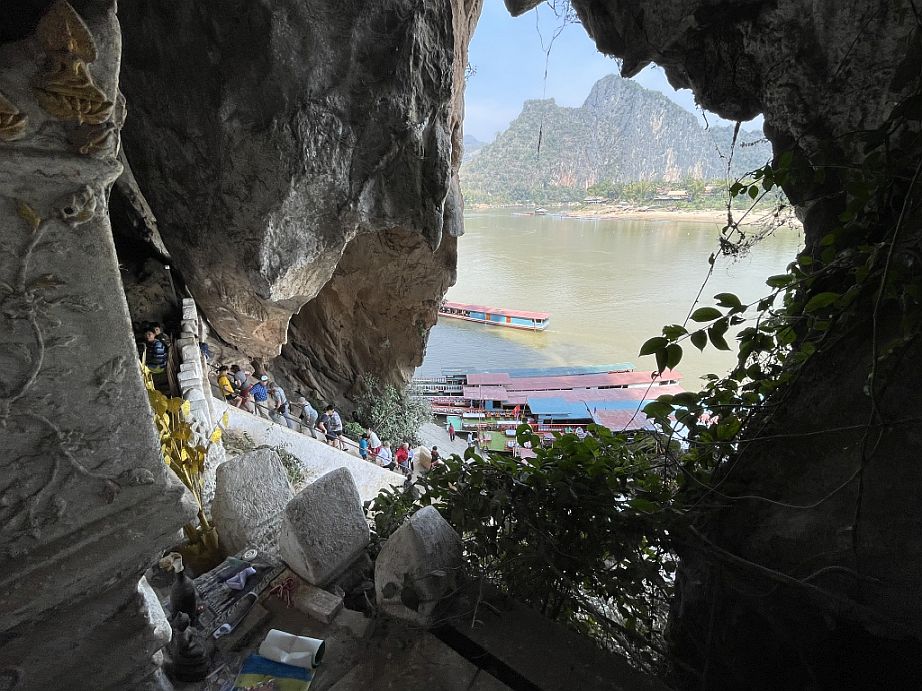
View from the cave looking down.
 |
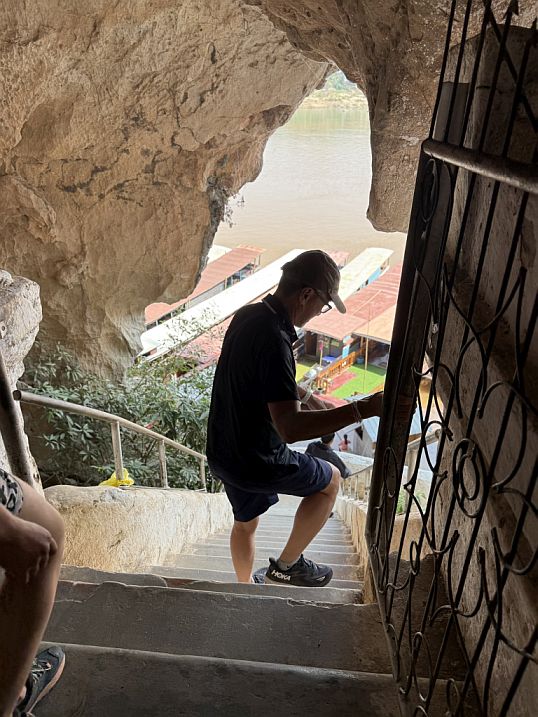 |
We then left the cave and carefully made our way down the white staircase toward the riverbank.
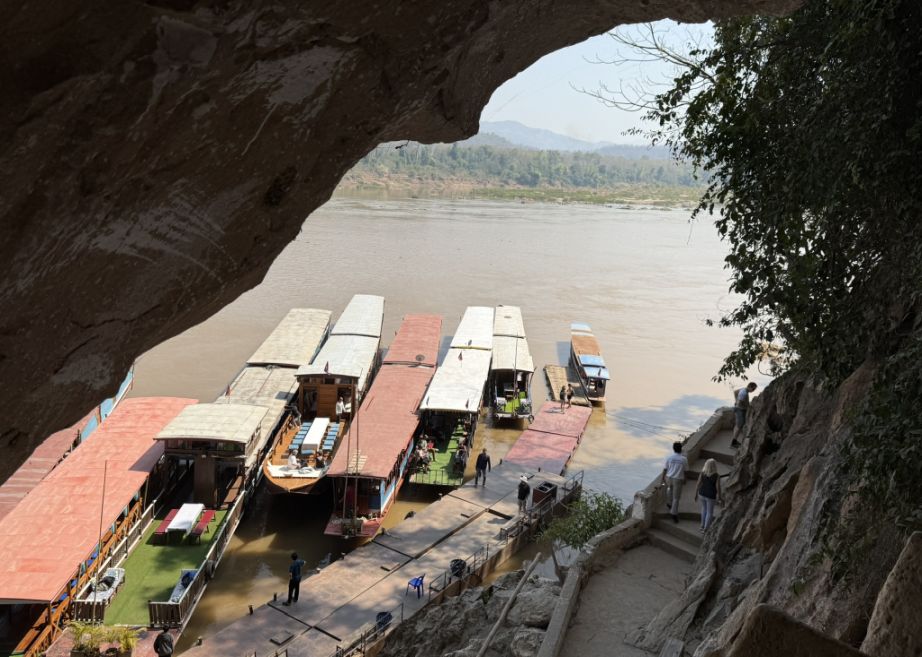
As we walked down the stairs, we had a beautiful view of the river below, where colorful boats were gathered along the shore. I could also see a narrow cement walkway extending beside the riverbank, connecting the landing area with the boats and cave entrance. From above, the boats, walkway, river, and surrounding limestone cliffs created a lovely scene.
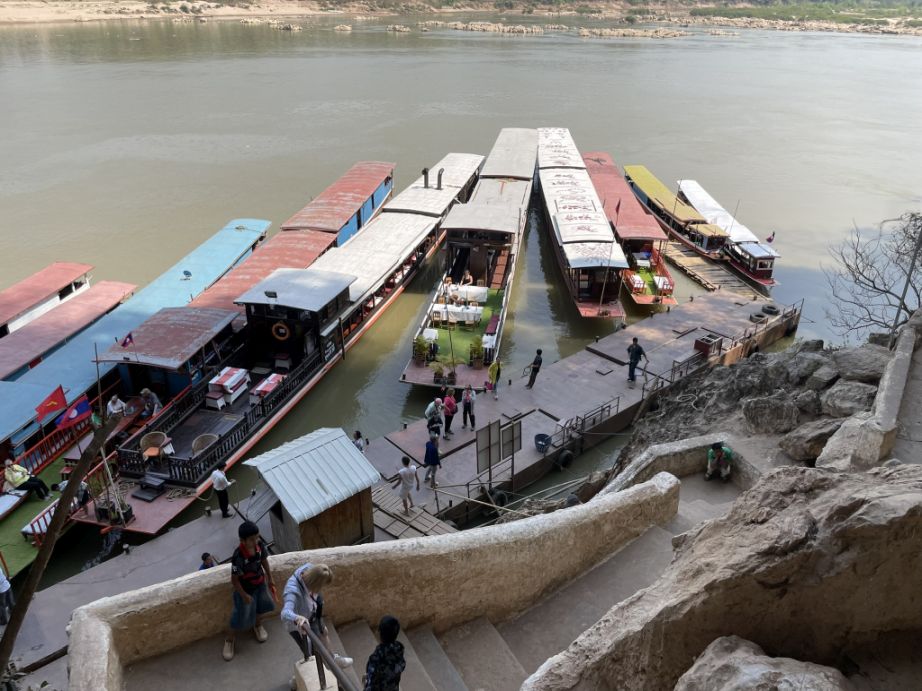
We are now leaving the upper cave.
 |
 |
After leaving the upper cave, we began descending the long flight of stairs toward the lower cave.
 |
 |
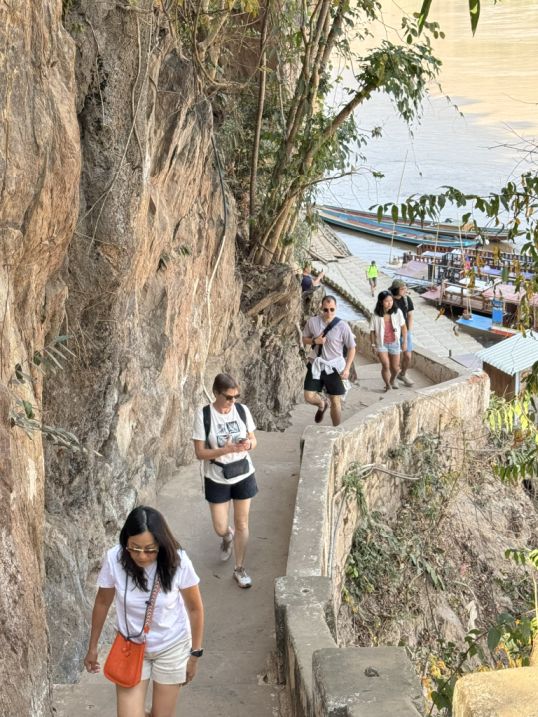
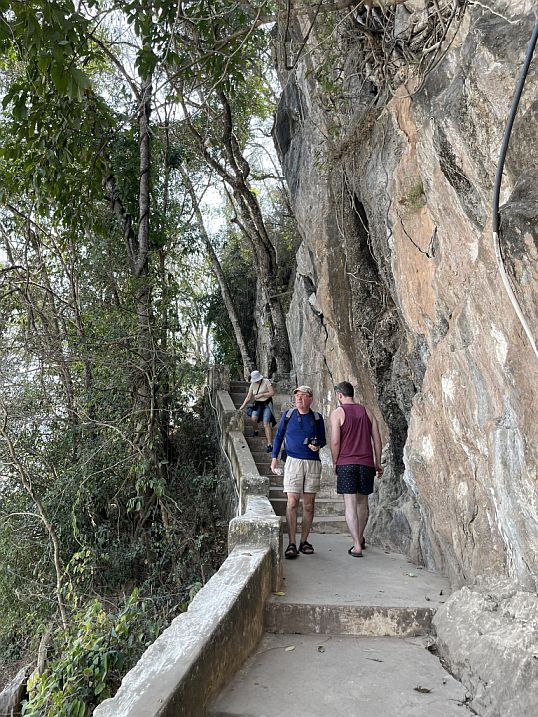
As we descended, we enjoyed beautiful views of the Mekong below. Colorful boats were gathered along the riverbank, and a narrow cement walkway connected the landing area with the shore.
 |
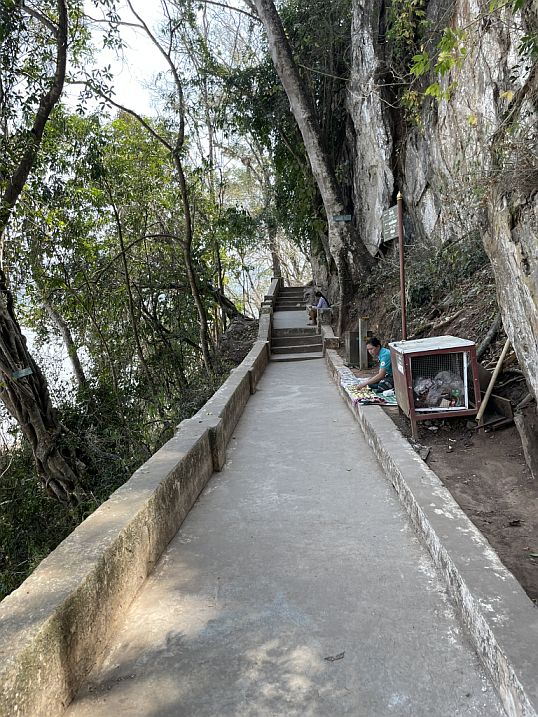 |
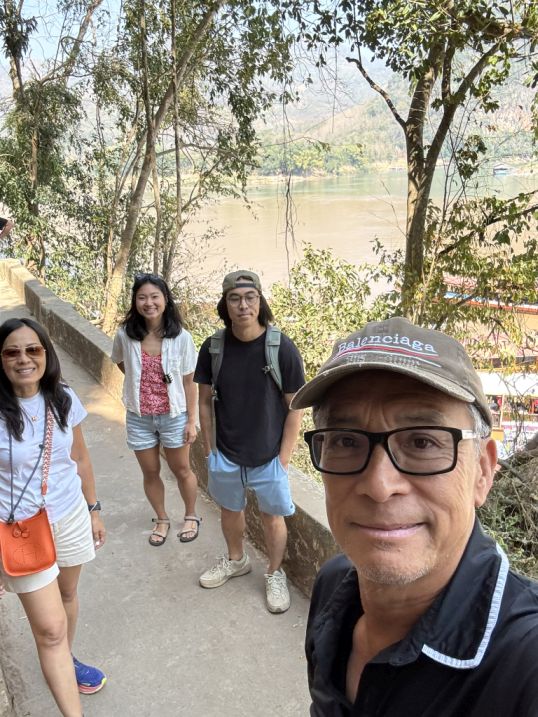
Walkway leading to the lower cave
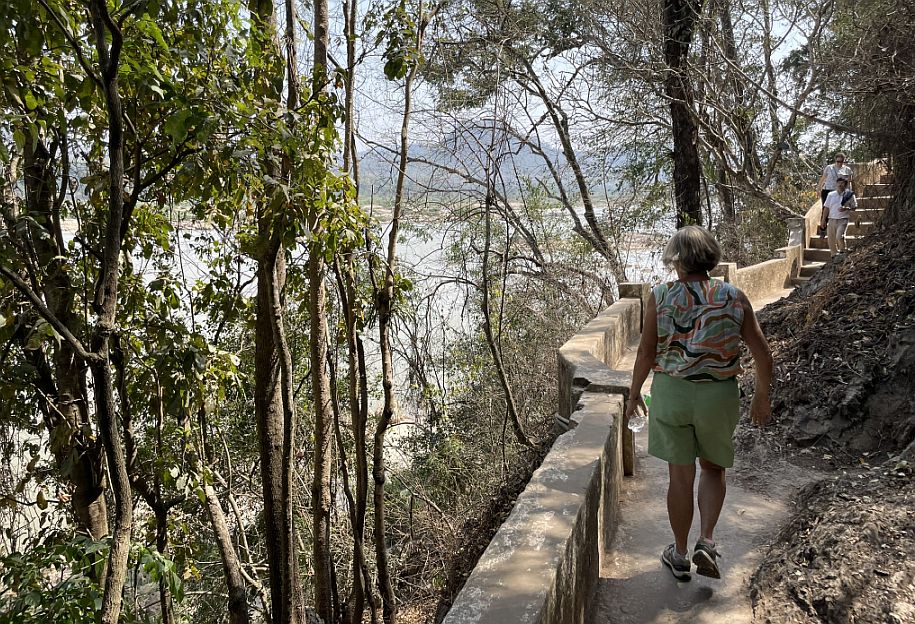
As we walked along the cement walkway toward the lower cave, the scenery became even more beautiful. Tall trees lined the path, creating a peaceful, shaded passage beside the river.
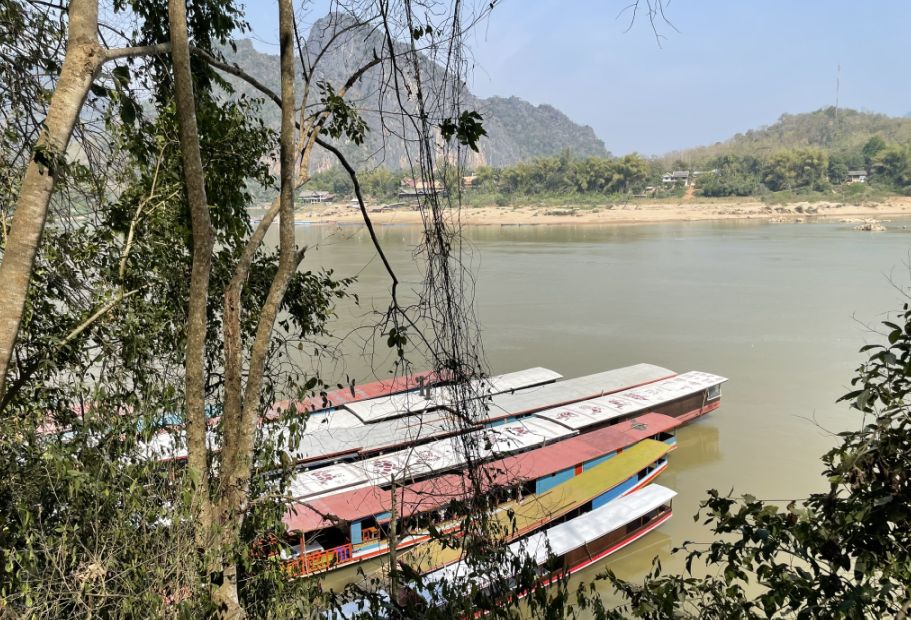
Across the Mekong, we could see a sandy shoreline stretching beneath the mountains in the distance. The combination of the trees, river, sand, and layered mountains made this short walk especially scenic.
 |
 |
I did not realize that visiting the lower and upper caves would involve so much climbing. The steep staircase between them has roughly 200 steps, and after walking up to the upper cave, we had to make our way back down toward the lower cave. By that point, our legs were definitely feeling the effort, but the beautiful river views and the thousands of Buddha images made the climb worthwhile.

We finally reached the lower cave, known as Tham Ting. From the outside, its wide opening was set into a dramatic limestone cliff overlooking the Mekong River. The pale rock, white staircase, and lush green trees created a beautiful contrast, while the cave’s entrance appeared almost like a natural window opening toward the water. Unlike the darker upper cave, the lower cave receives more natural light, making it easier to see the Buddha images inside.
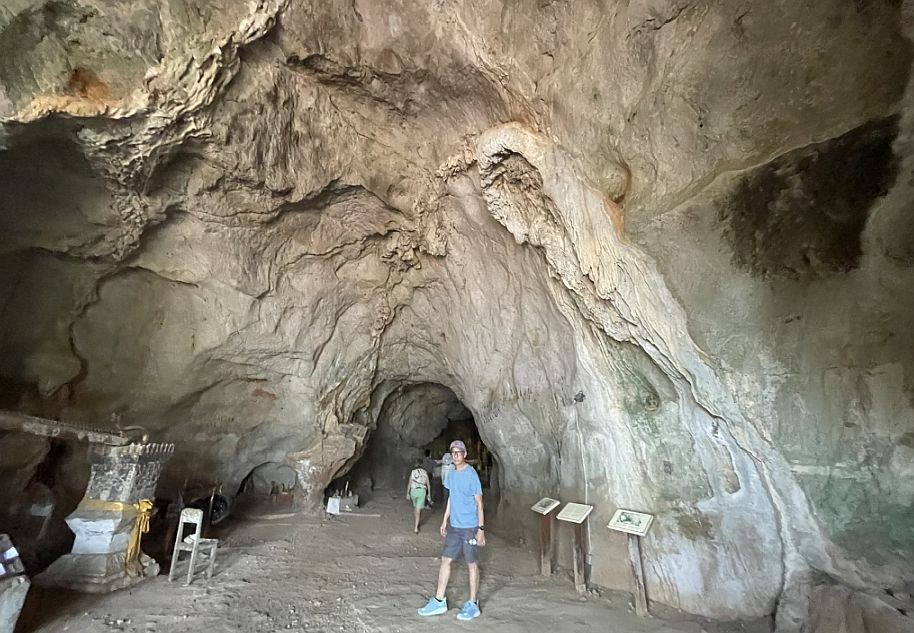
Pak Ou Caves have been an important spiritual site in Laos for centuries. The caves were originally connected with local beliefs in river spirits and nature deities before becoming a Buddhist sanctuary. Over time, pilgrims and local families brought Buddha images to the caves as offerings. Some statues were old or damaged, but they were respectfully preserved rather than thrown away. The caves eventually became home to thousands of Buddha images and were also visited by Lao kings during annual religious ceremonies. Today, Tham Ting and the upper cave, Tham Theung, remain an important place of worship and one of Luang Prabang’s most meaningful cultural landmarks.

Inside the lower cave, we noticed a large historical panel describing the earliest known drawing of Tham Ting. It explained that the cave was documented in a report by the French explorer Francis Garnier during his Mekong expedition in the 1860s. His expedition traveled through Indochina and carefully recorded the landscapes, rivers, villages, and cultural sites encountered along the journey. The drawing provided an interesting glimpse of how the cave looked to Western explorers more than 150 years ago, long before it became a popular destination for visitors
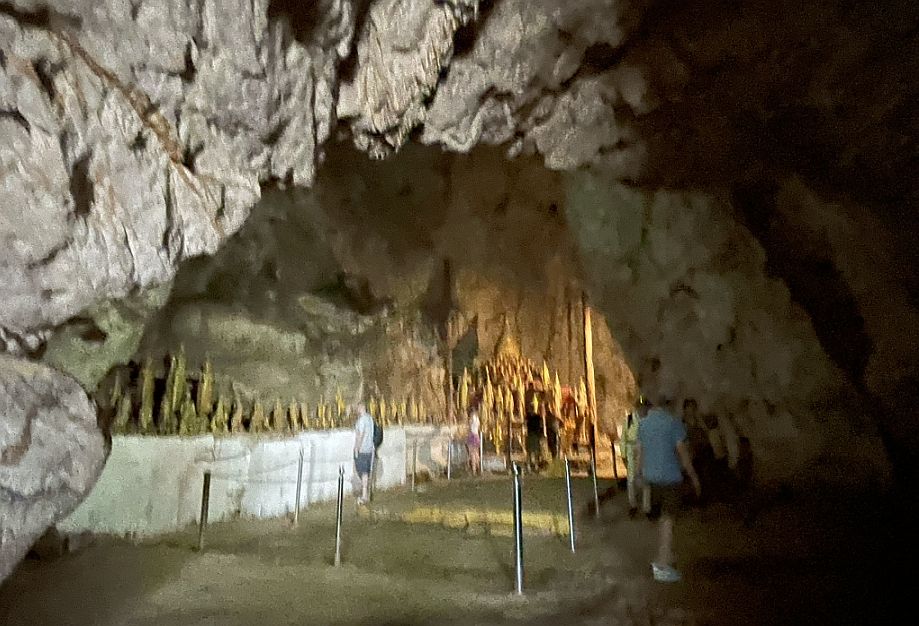
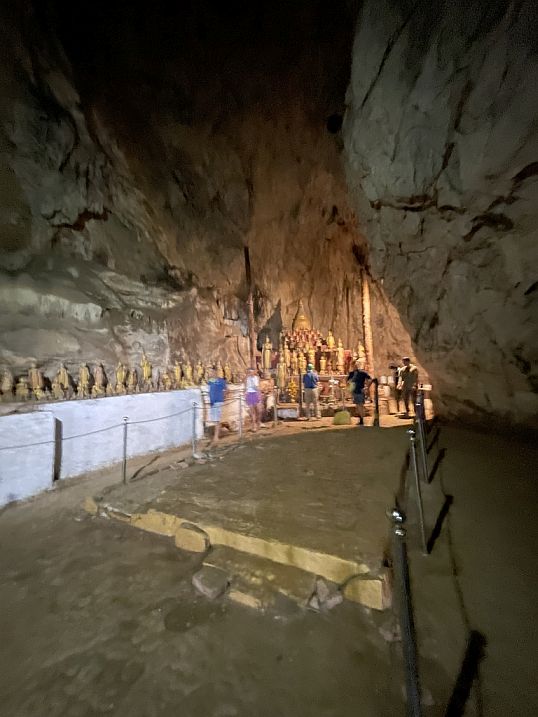
As we walked deeper into the lower cave, we saw Buddha images filling nearly every available space, resting on shelves, ledges, and the uneven floor of the limestone chamber.
 |
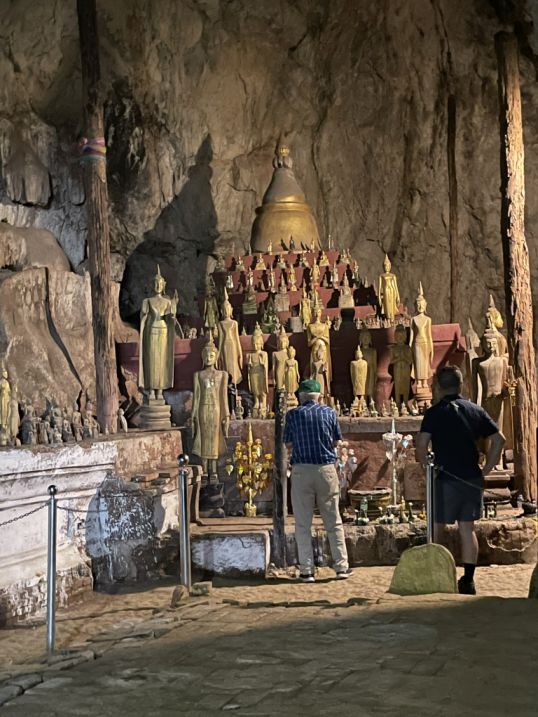 |
The statues were placed there over many generations as offerings by local families and pilgrims. Some people brought them to express gratitude, ask for blessings, or seek protection, while older or damaged statues were respectfully preserved rather than discarded.
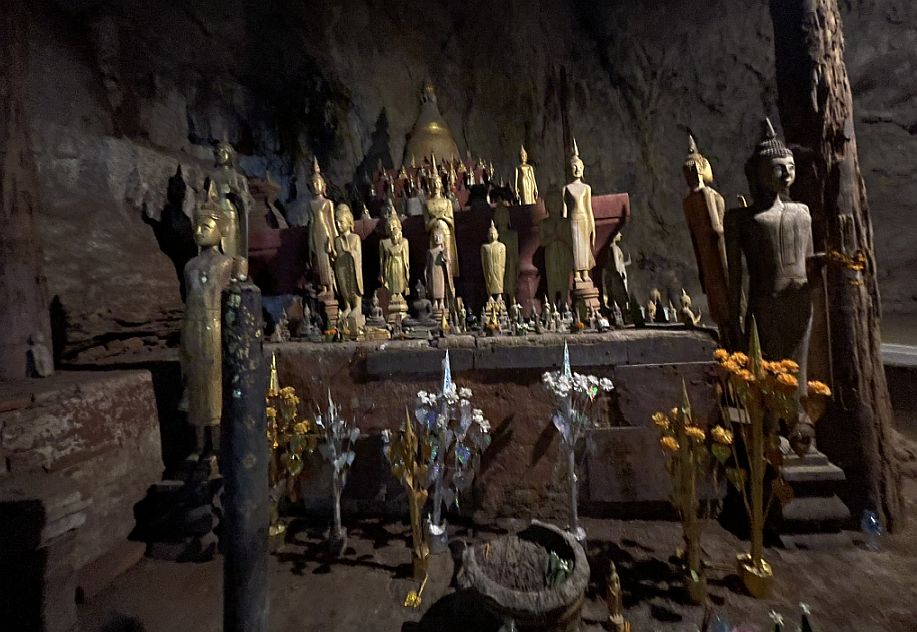
The cave also provided a natural, sheltered place for these sacred images. Before Buddhism became established in Laos, the grottoes were associated with local beliefs in river and nature spirits.

Over time, those earlier traditions blended with Buddhist practices, transforming the caves into a revered sanctuary.
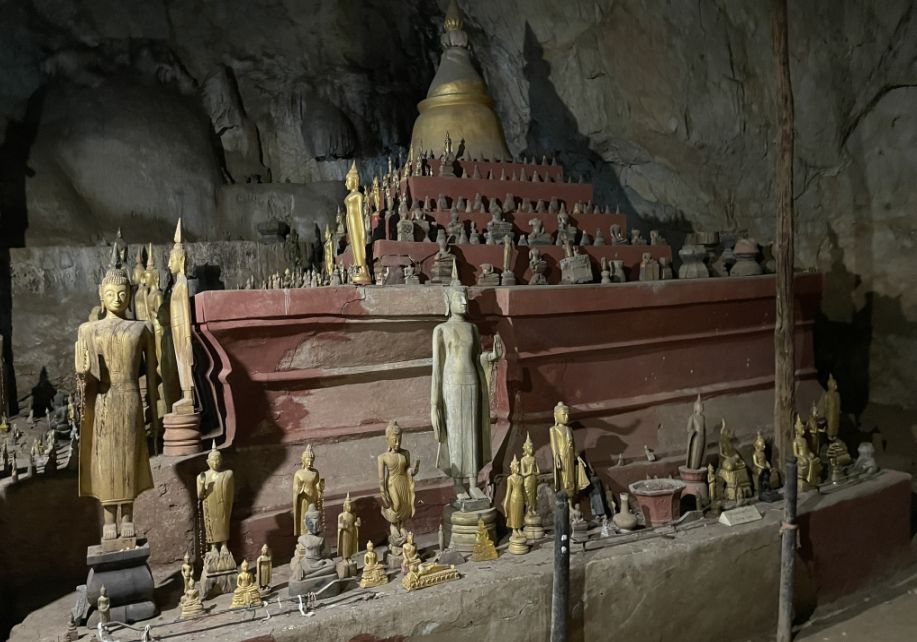
The thousands of Buddha images therefore represent not only religious devotion, but also centuries of Lao history and the continuing connection between the people, the Mekong River, and the spiritual world.

We continued to the deepest part of the lower cave, where the light became softer and the limestone walls felt more enclosed and mysterious.
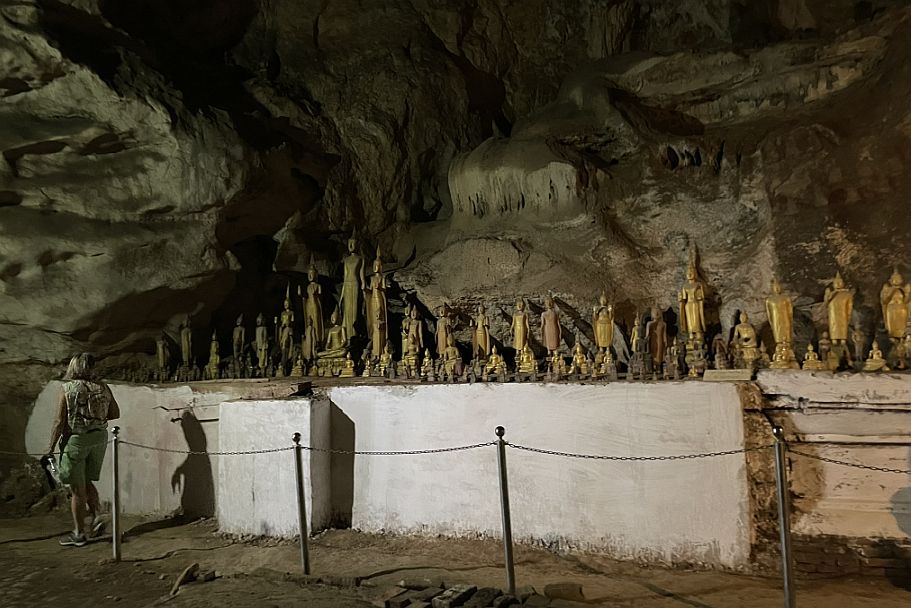
More Buddha lining the cave.
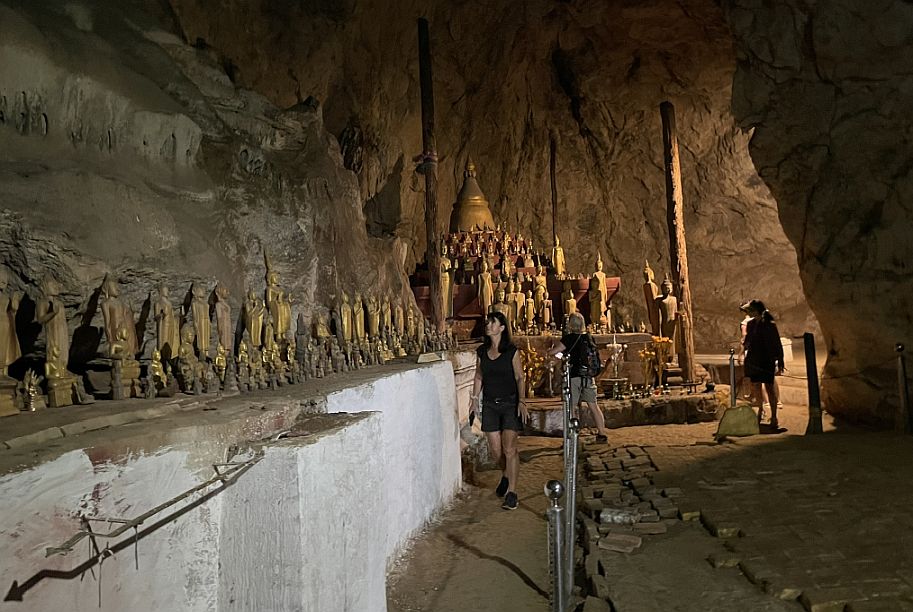
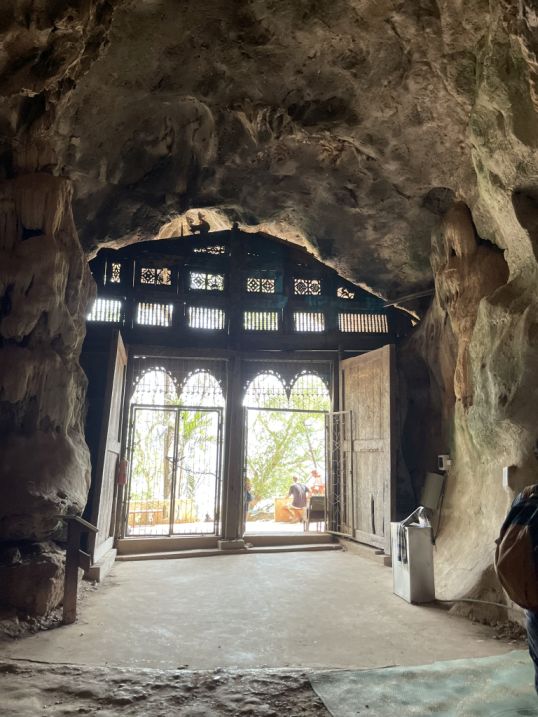
After taking in the rows of Buddha images and the peaceful atmosphere, we began making our way back toward the entrance.
 |
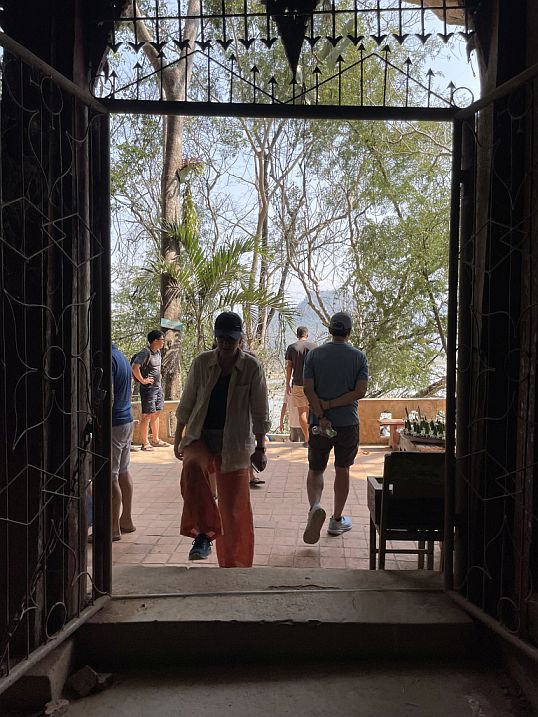 |
As we left the cave, the daylight gradually grew brighter, and the view of the Mekong outside welcomed us once again.
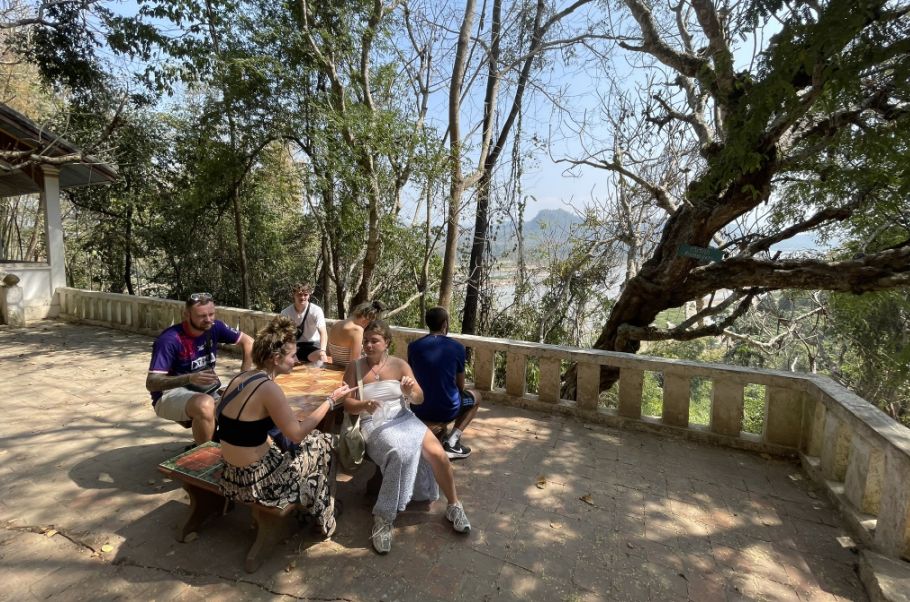
People resting in the patio with a great view of the Mekong river.
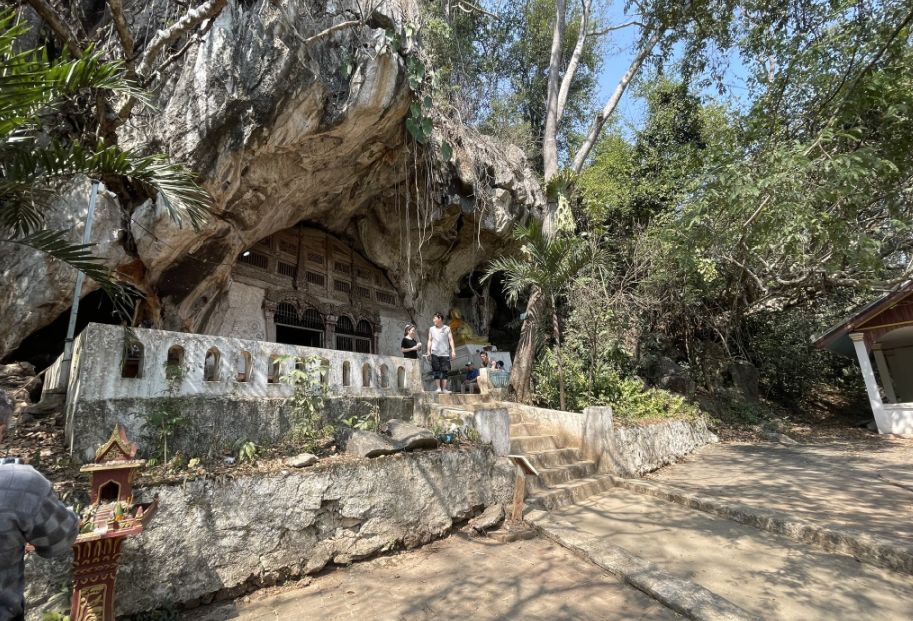
We are now leaving the area.
 |
 |
We continue our descent...
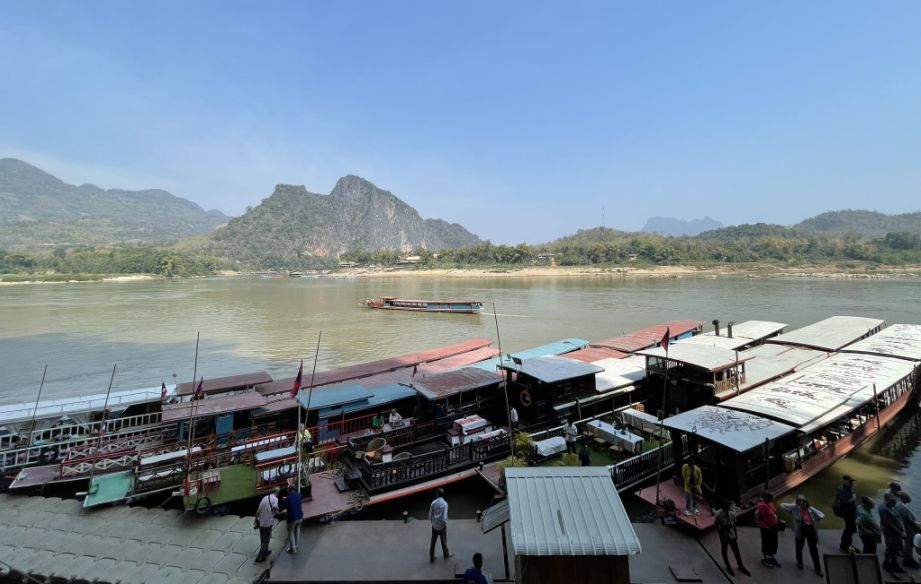
Heading toward our boat.

We hopped on our boat and continue to the next destination.
NEXT... Day 4-Lunch at Manifa