9 days in Japan- 6/23- 7/1/2024
| Day
1-Niigata Arrival In Niigata Dinner at Echigo Banya |
Day
2-Niigata Fish Market Downtown/Lunch Dinner at Sushi Arai |
Day
3-Niigata Hakusan Shrine Sake Brewery Tour Lunch/Dinner |
Day
4-Niigata Northern museum Farm Land |
Day
5-Niigata Fukushimagata Walking around Dinner at Ebisudai |
Day
6-Tokyo Dinner at Jomon |
Day
7-Tokyo Arakawa Arakawa Cont. Ginza Dinner at les Copains |
Day
8-Tokyo Yoyogi Park Uneno Park Dinner at Uoshin Golden Gai |
Day
9-Tokyo Metropolitan office |
Day 1-Arrival in Niigata-6/23/2024
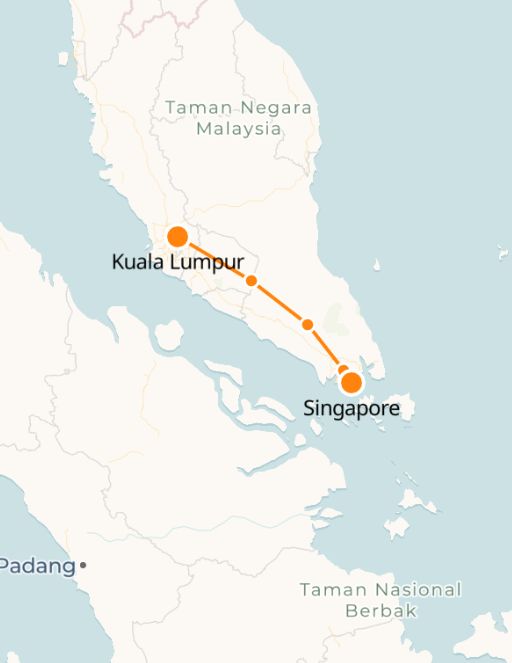
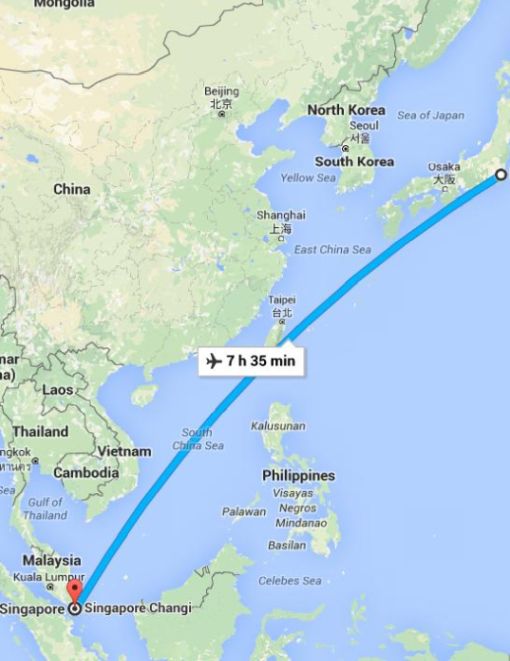
From Kuala Lumpur airport we made a stop at Singapore before flying to Haneda airport.
|
|
We arrived Haneda airport quite late and had to overnight there.
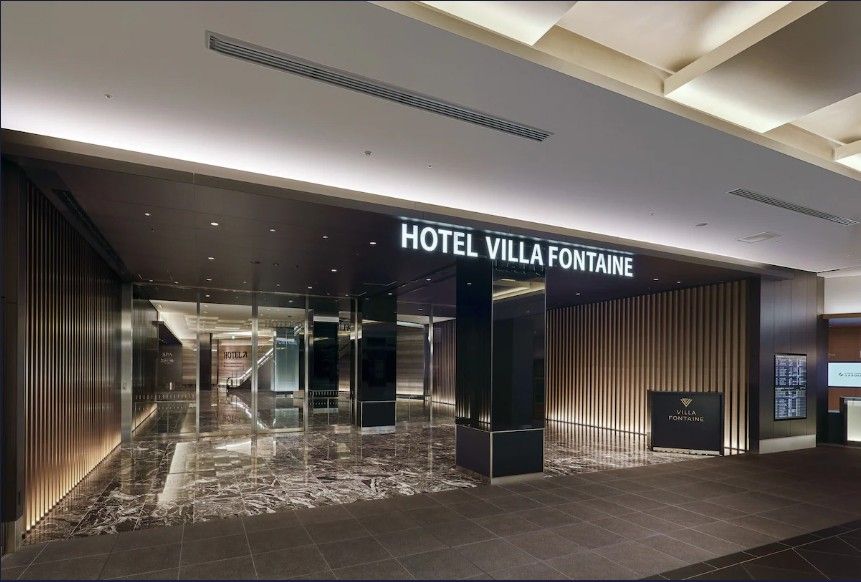
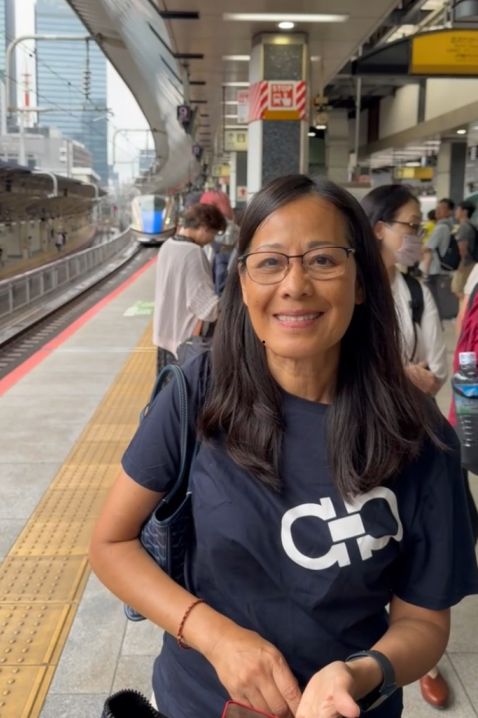
Trains are no longer in service and we overnight at the Hotel Villa Fontain which is connected to Haneda Airport Terminal 3. It was very convenient.
 |
 |
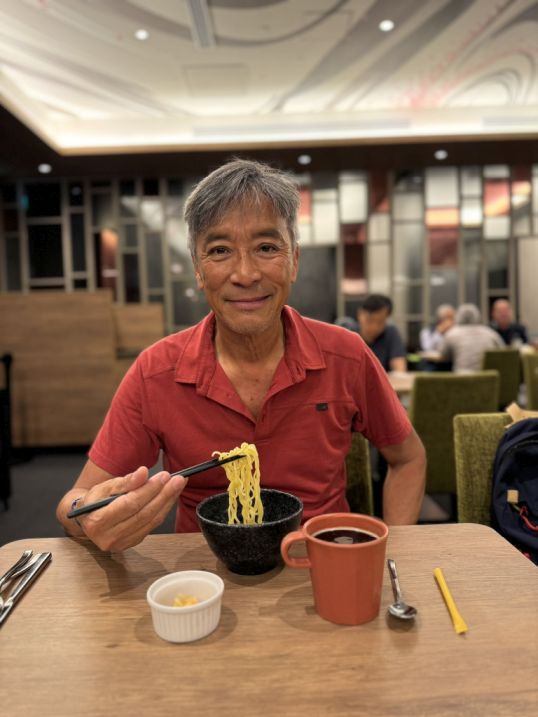
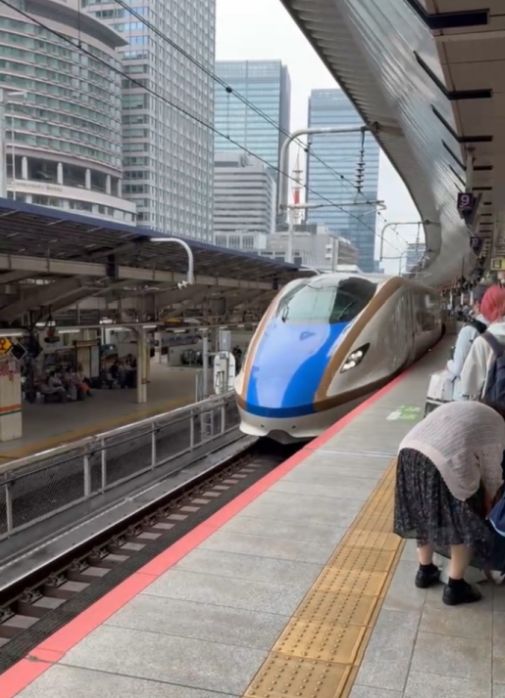
The next morning, after breakfast at the hotel, we made our way back into Haneda Airport to catch the train to Niigata.
 |
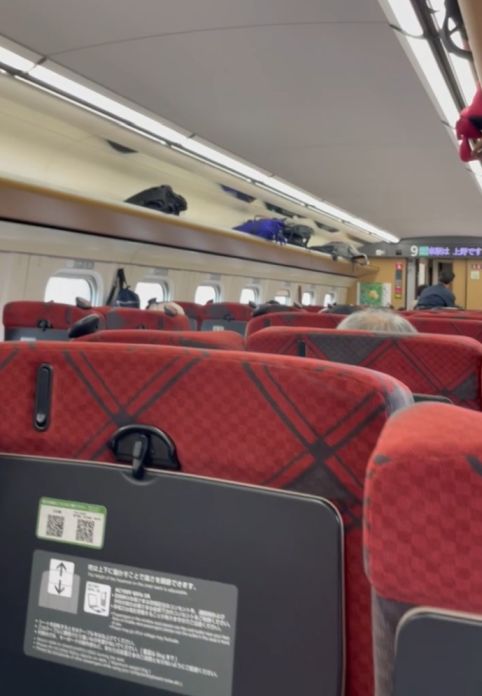 |
Riding the Shinkansen felt like stepping into a different rhythm of travel, quiet, smooth, and incredibly efficient.
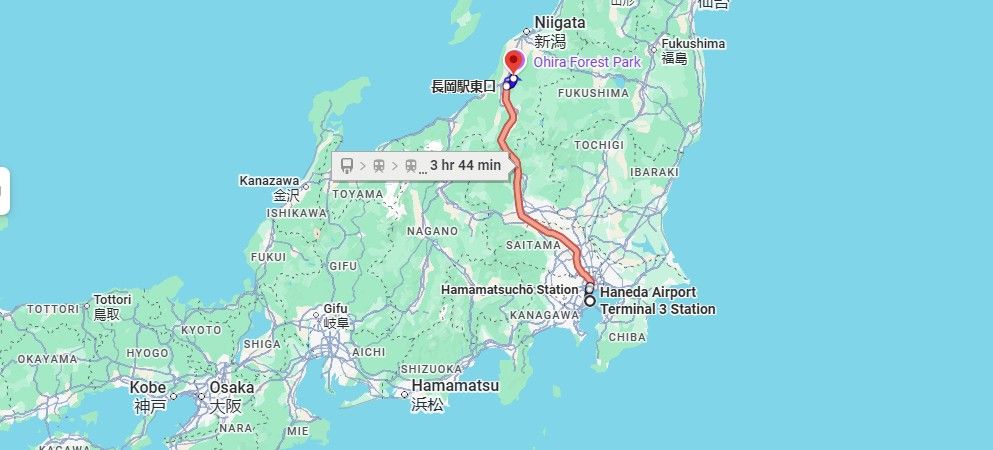
The train ride is about 4 hours from Haneda to Niigata. Niigata is primarily known as a major port city located on the northwest coast of Honshu along the Sea of Japan. While often described as a "port town" due to its historical roots, it is actually a bustling metropolis and the largest city on the west coast of Japan's main island. Niigata is famous throughout Japan for having the best rice (Koshihikari) and the highest number of sake breweries in the country.
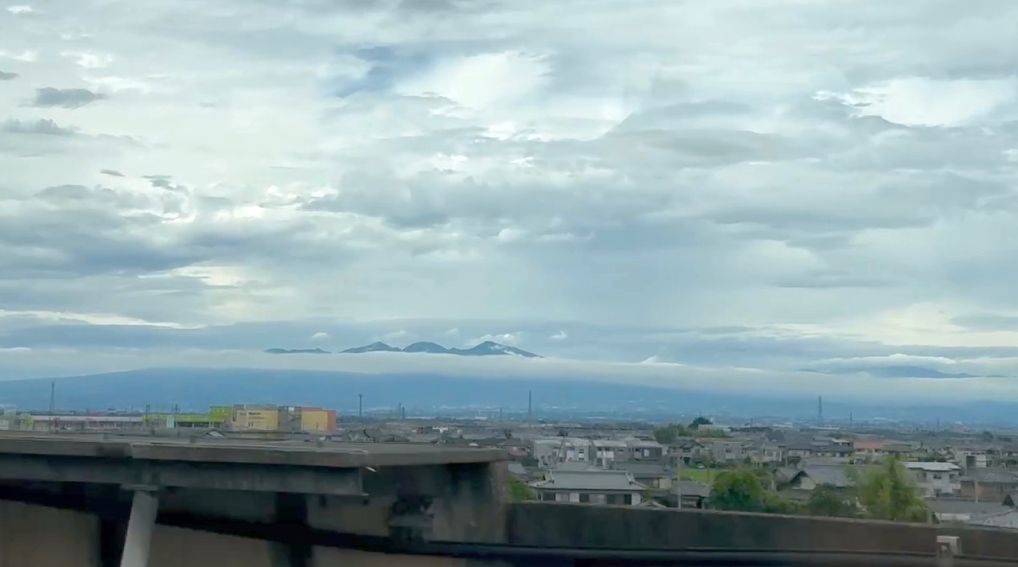
As the train sped out of Tokyo, the dense city slowly loosened its grip, giving way to open land, small towns, and wide stretches of countryside.
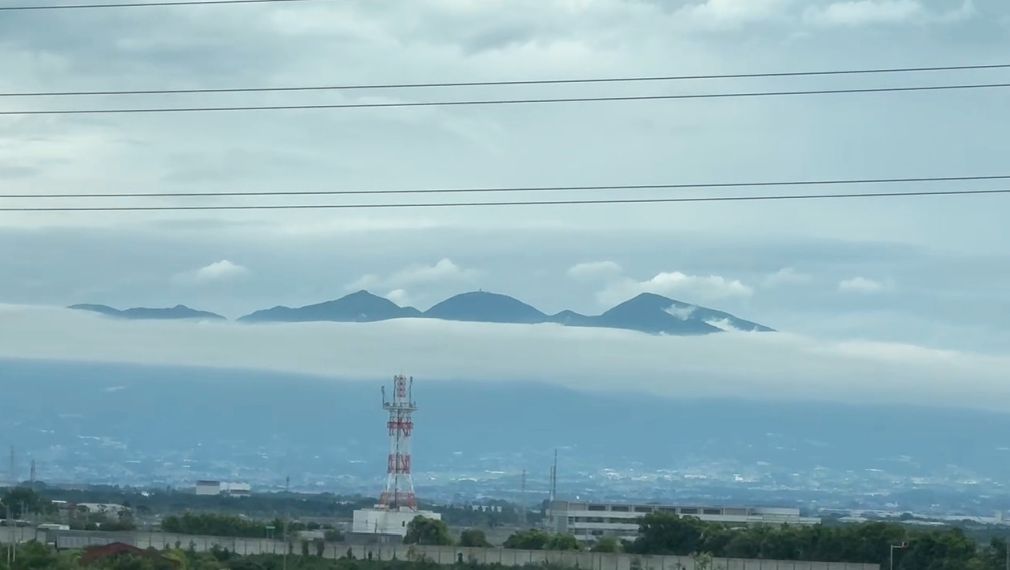
Outside the window, the scenery unfolded like a moving painting. On this cloudy day, the mountains were the true stars. We could not see the lower slopes but the upper peaks stood majestically above a soft layers of cloud.
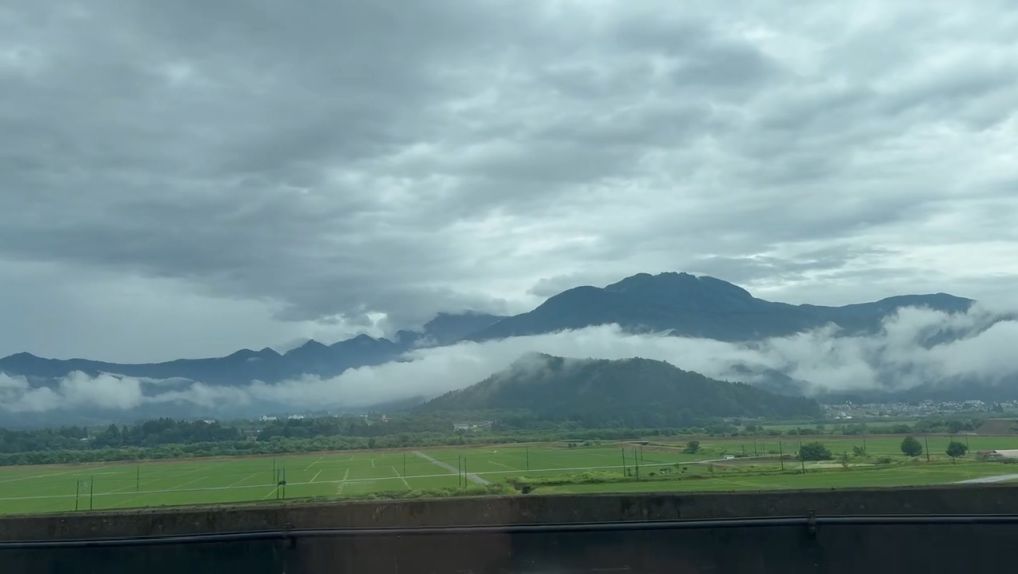
It was calm, quiet, and deeply soothing, one of those journeys where you forget to check the time because the view keeps pulling you back to the window.
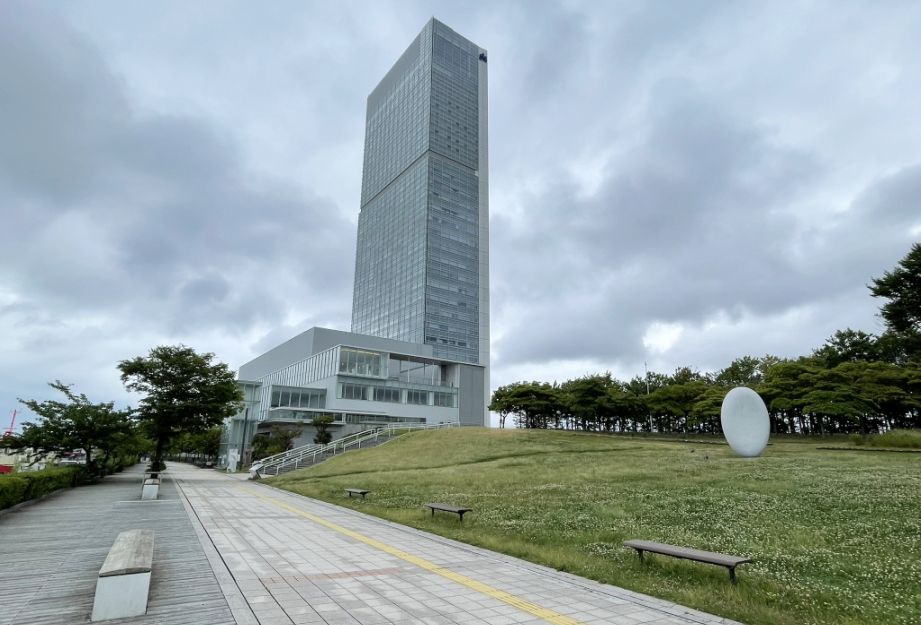
We checked in the Nikko Niigata is a waterfront landmark hotel set right on the edge of the Shinano River and near the Sea of Japan, just adjacent to the Toki Messe international convention center in Niigata’s Bandaijima area. The hotel is one of the tallest buildings on this side of Japan.
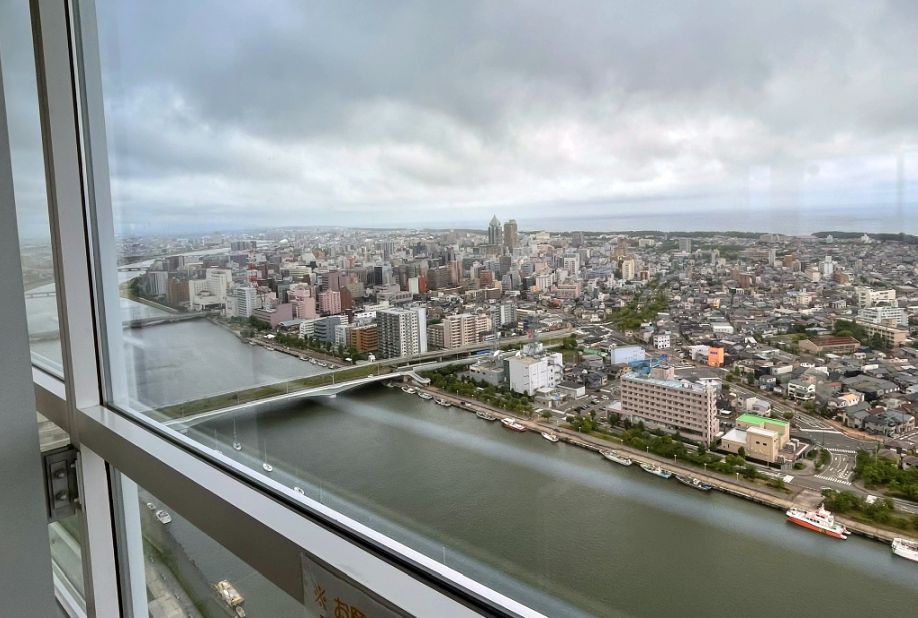
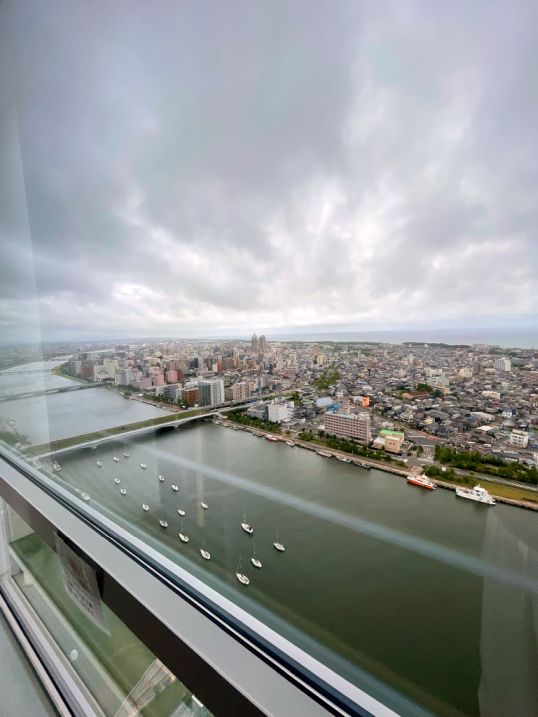
Our room was on the 25th floor and we had a sweeping view of the city, the river, and out toward the water, including distant views of the harbor and, on clear days, Sado Island on the horizon,
 |
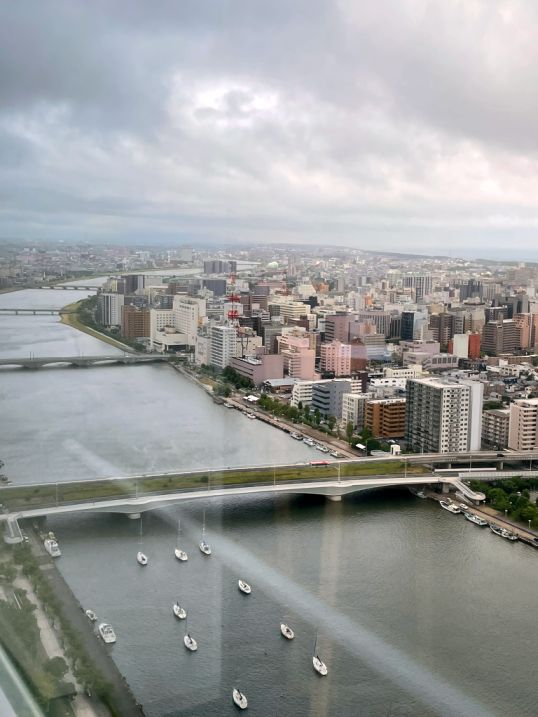 |
From your view up on the 25th floor of Hotel Nikko Niigata, we were looking out over one of Japan’s most important waterways, the Shinano River, which is actually the longest river in Japan before it empties into the Sea of Japan right by Niigata City.
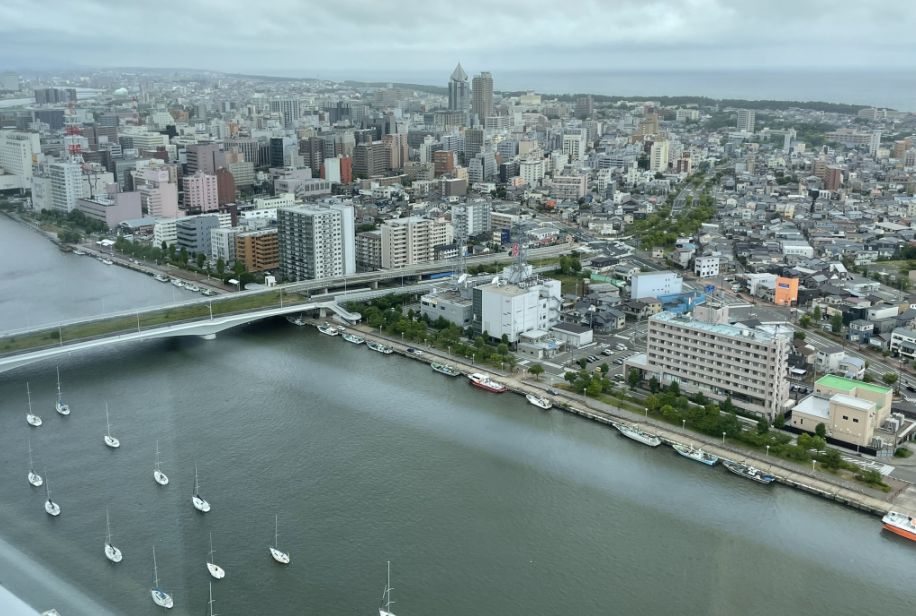
The Bandai Bridge is an elegant arch bridge that is not only an important transportation link across the Shinano River but also a beloved symbol of Niigata City, so iconic that it’s been designated a national Important Cultural Property.
Lots of smaller boats and even larger colorful vessels, since this area near Niigata’s waterfront is active with maritime traffic from leisure craft to fishing boats and working ships.
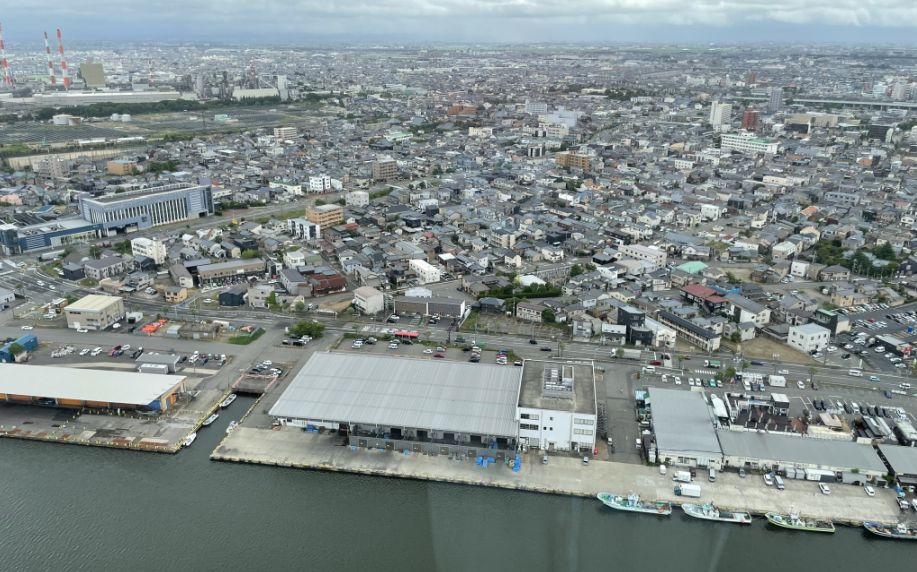
The view from across the river is a mix of city, river, port, and waterfront structures, and those large flat-roofed shapes across the Shinano River, Japan’s longest river, are part of the Bandaijima waterfront area where modern development meets the port and convention facilities.
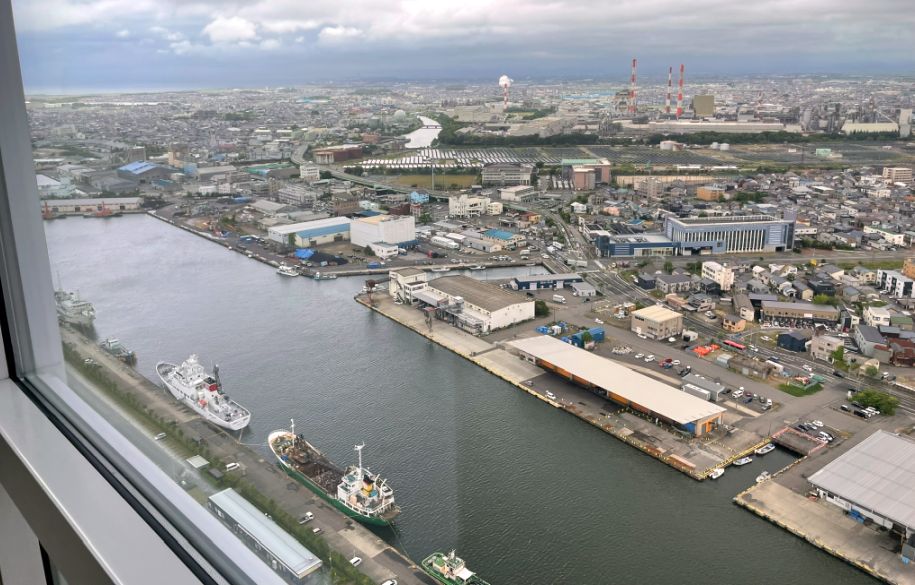
View of the Shinano river from above.
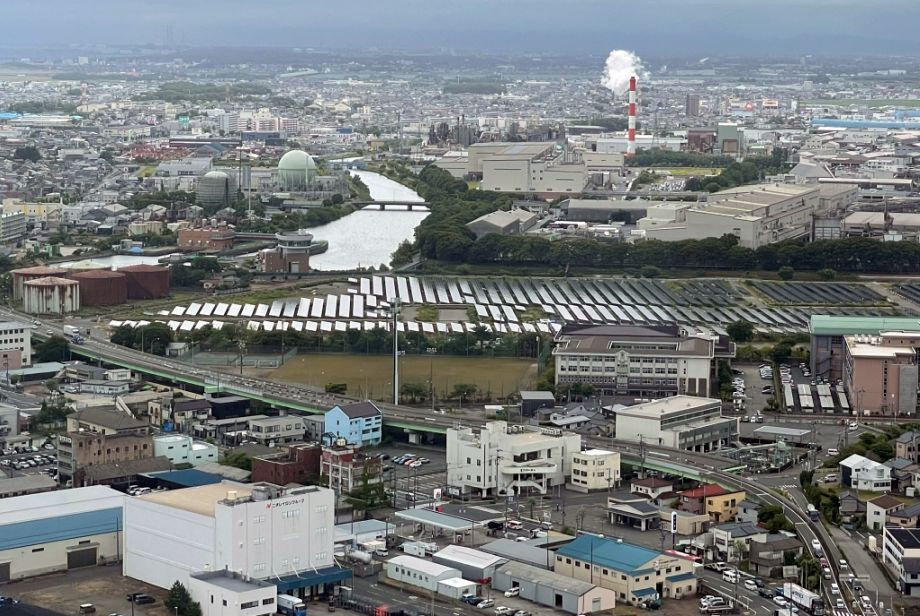
View of the city below.
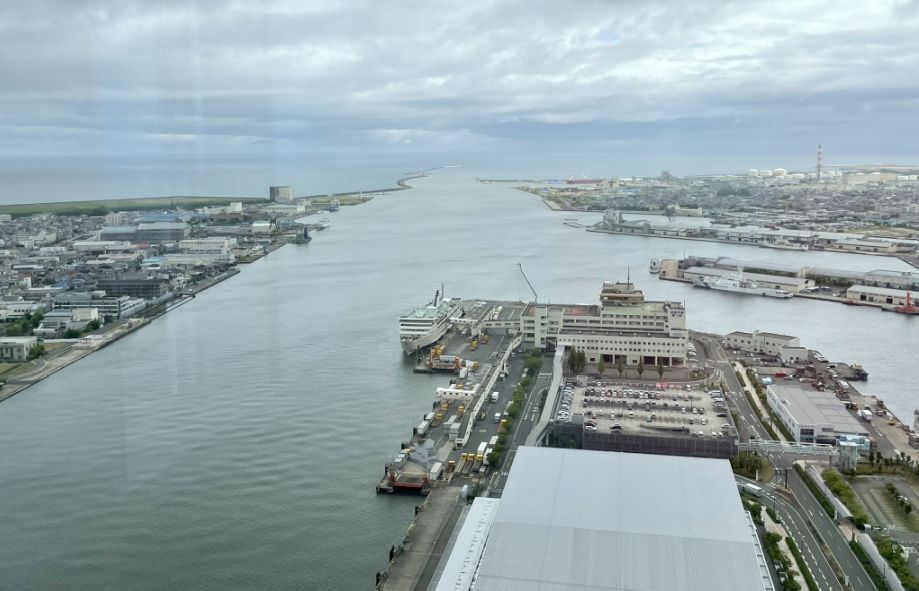
I am now turning to my right and I see that the Shinano River gracefully completes its journey from the mountains all the way to the Sea of Japan.
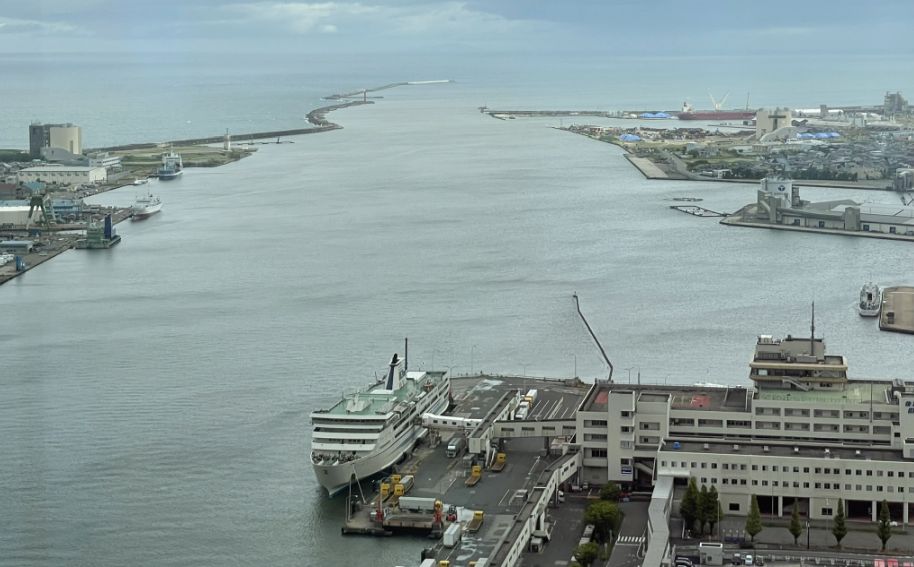
From high above, that broad river is flowing through Niigata doesn’t just stop at the city, it actually merges with the open water of the Sea of Japan right beyond the urban shoreline. This is the mouth of the Shinano River, the longest river in Japan, as it spreads out, slows down, and spills into the sea.
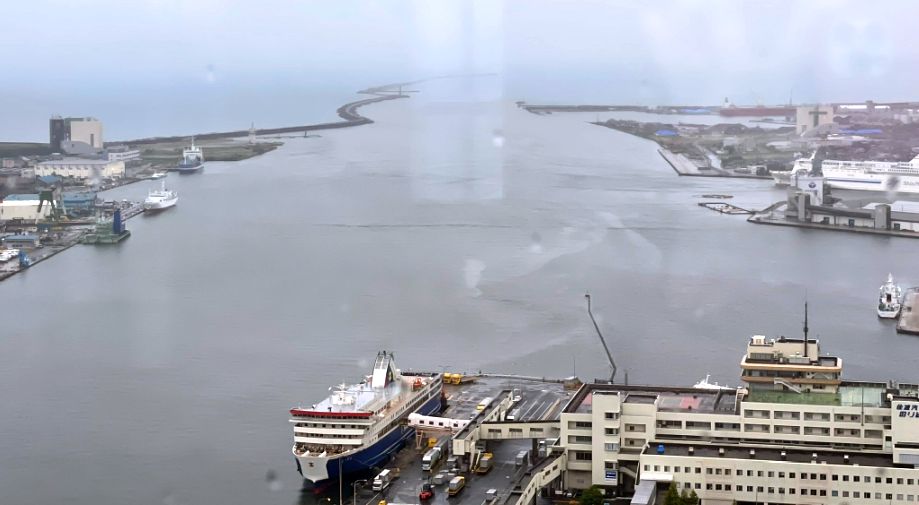
The river widening and flattening as it approaches the shoreline, giving way to harbor waters and coastal flats that blend into the Sea of Japan.
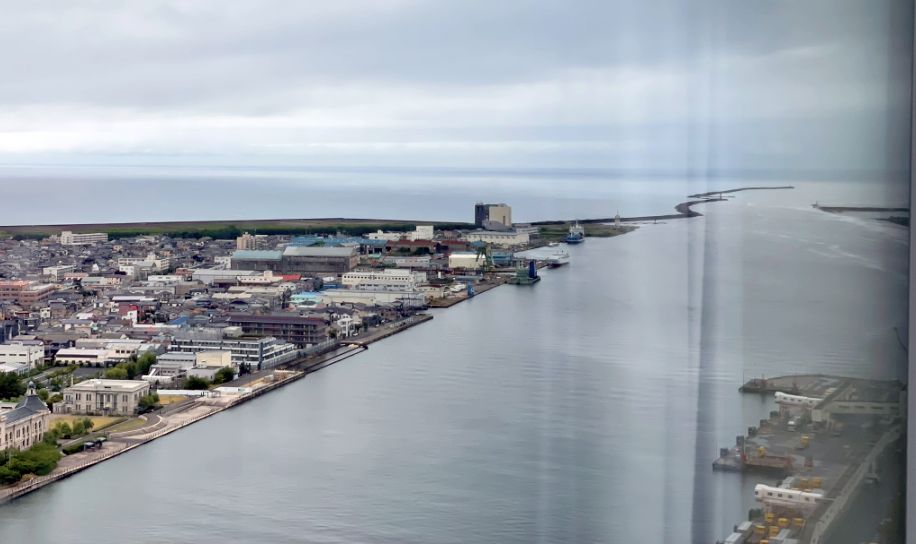
The shoreline curves gently, and you may see breakwaters or harbor structures that help calm the water and protect the port, these are often long, straight seawalls stretching into the bay from the river’s mouth.
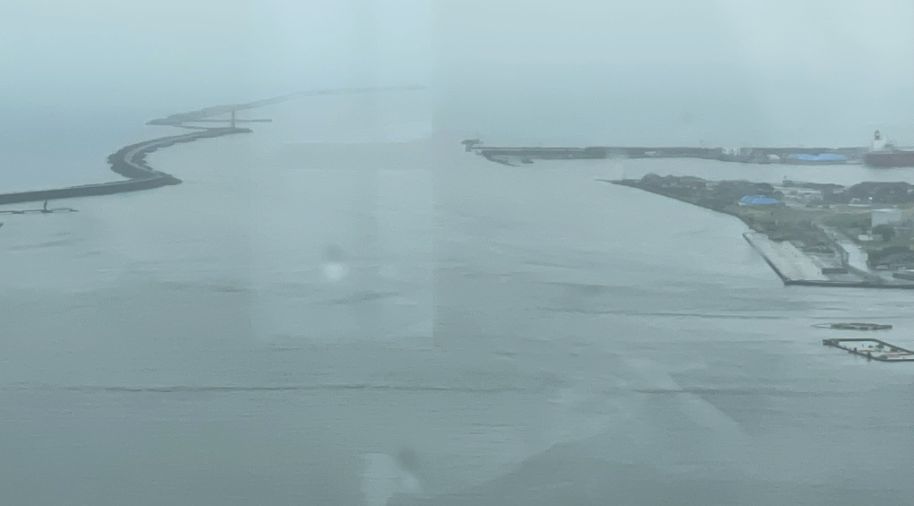
That stretch where river and sea come together is one of the most dynamic parts of Niigata. From above, the effect is peaceful.
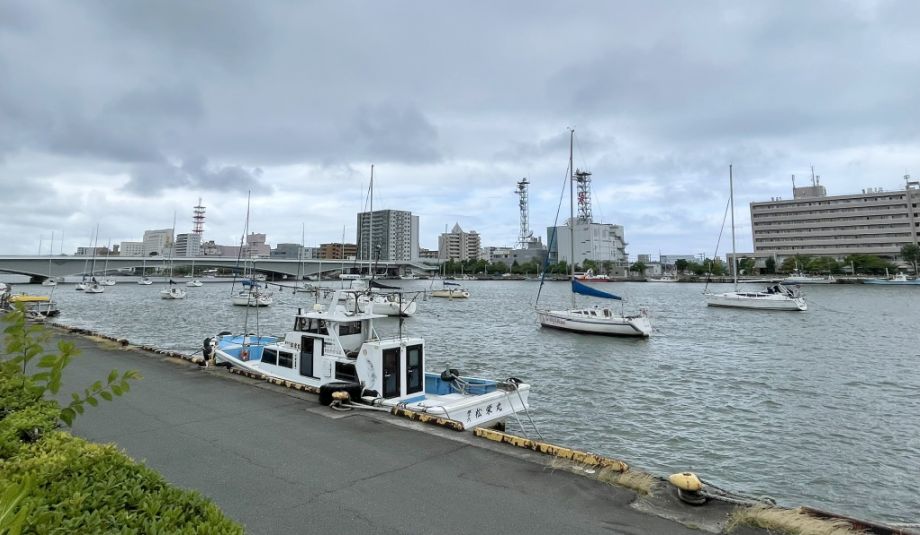
After resting for a bit, we went downstairs and turned left out of the hotel, and almost immediately found ourselves on a quiet walkway running along the riverbank. I don’t know the name of this path, but it follows the edge of the Shinano River, and it feels completely different from the view above.
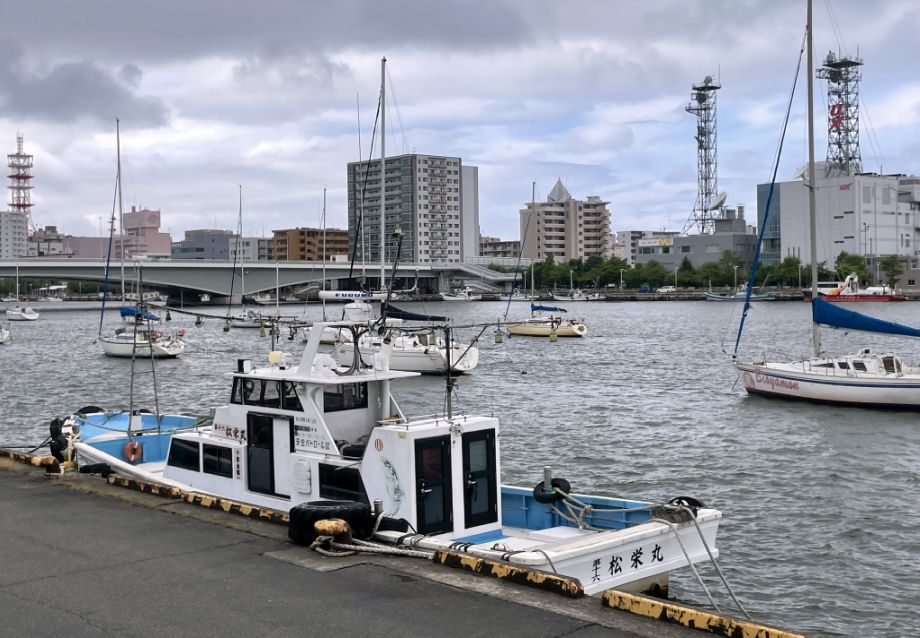
At street level, everything slows down. The river is wide and calm, with many small boats along the bank.
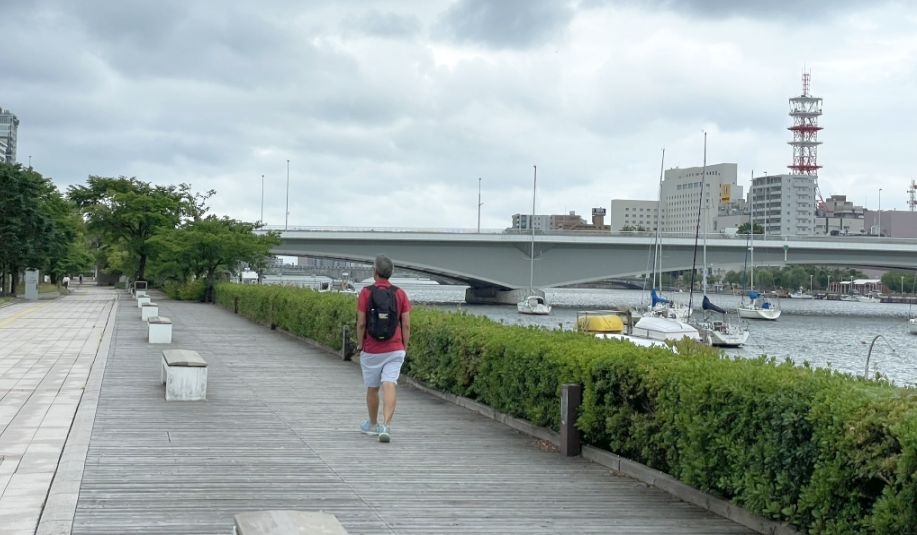
What surprised me most was how empty it was. No crowds, no traffic noise, just the sound of water, and the wind. From the 25th floor, Niigata looked busy and spread out, full of bridges and buildings. But down here, by the river, it felt peaceful and hidden, like a quiet side of the city that only reveals itself if you take the time to walk slowly.
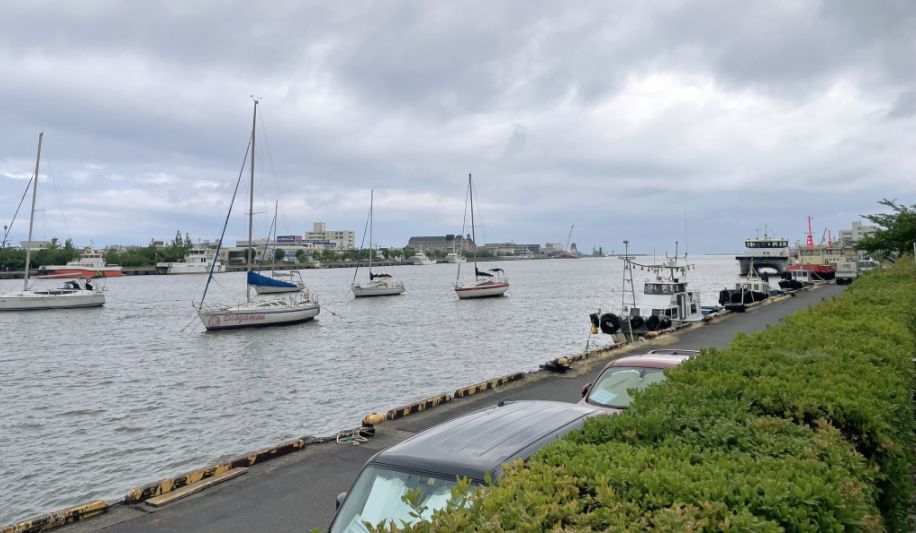
Along this stretch of the Shinano River, the riverbank feels more like a working waterside neighborhood than a tourist spot.
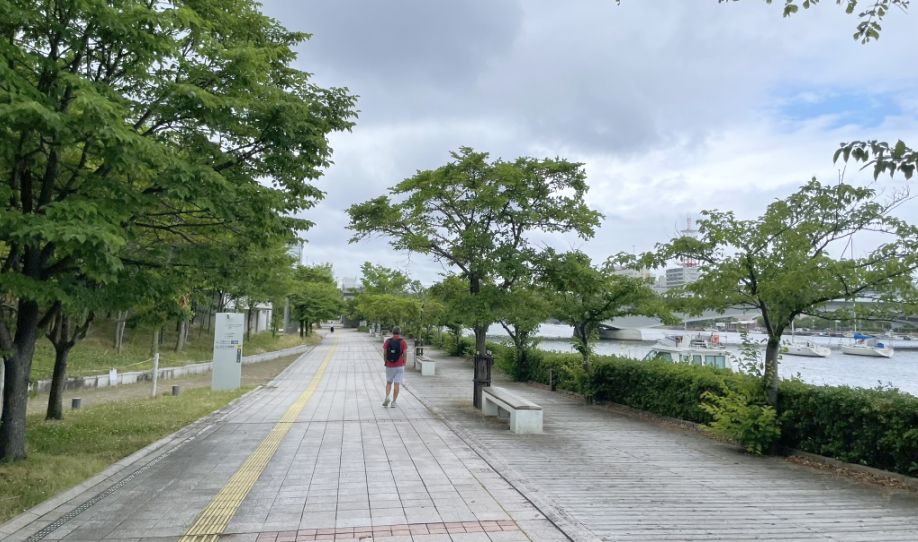
With the trees shading the walkway and the river stretching open beside it, the scene feels calm and slightly timeless.
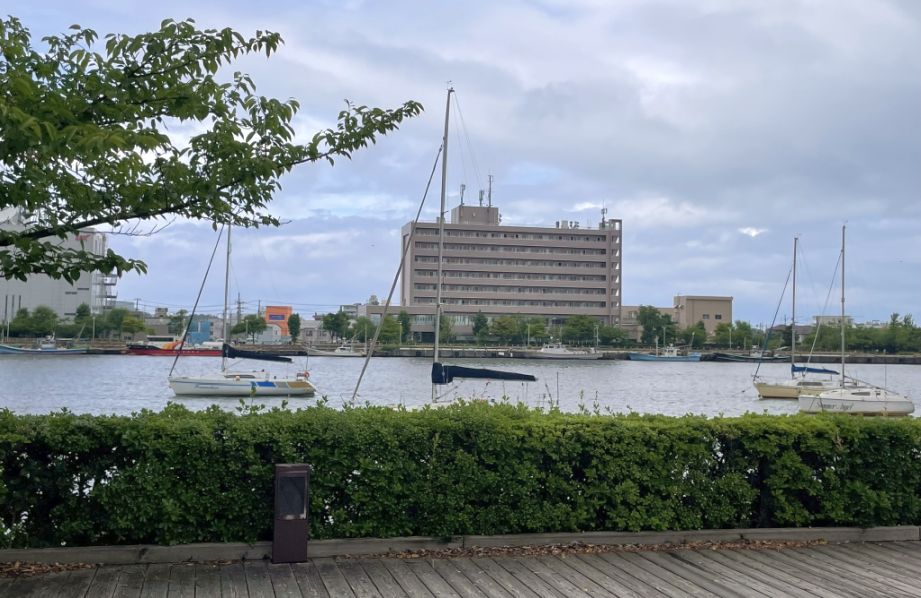
The boats pass by one after another, white against the dark water, their soft engine sounds echoing faintly between the banks. It gives the whole area a quiet, everyday rhythm, less like a city center, more like a peaceful riverside town continuing its routine just out of sight of the busy streets.
 |
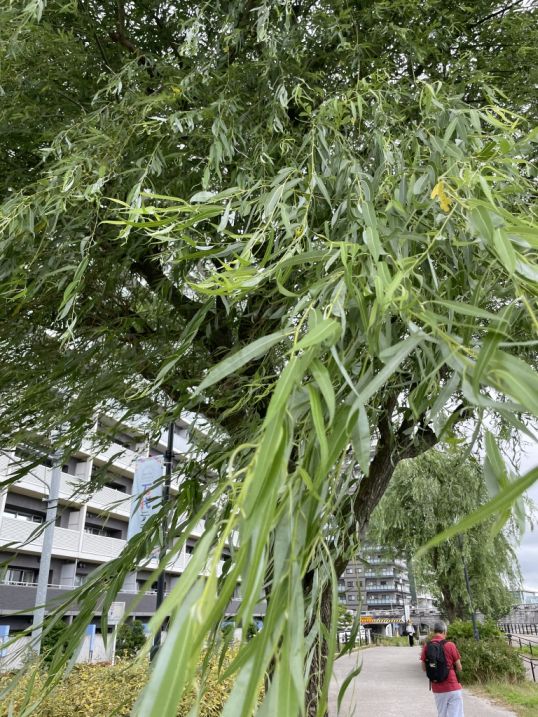 |
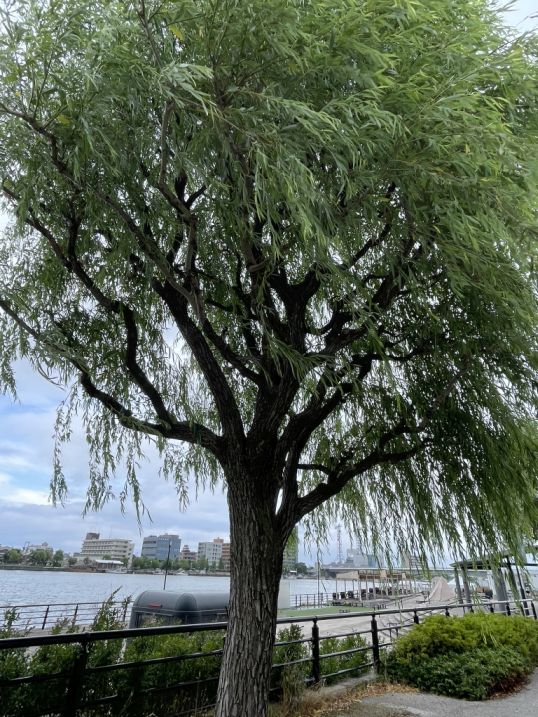
The trees are beautiful and so lust.
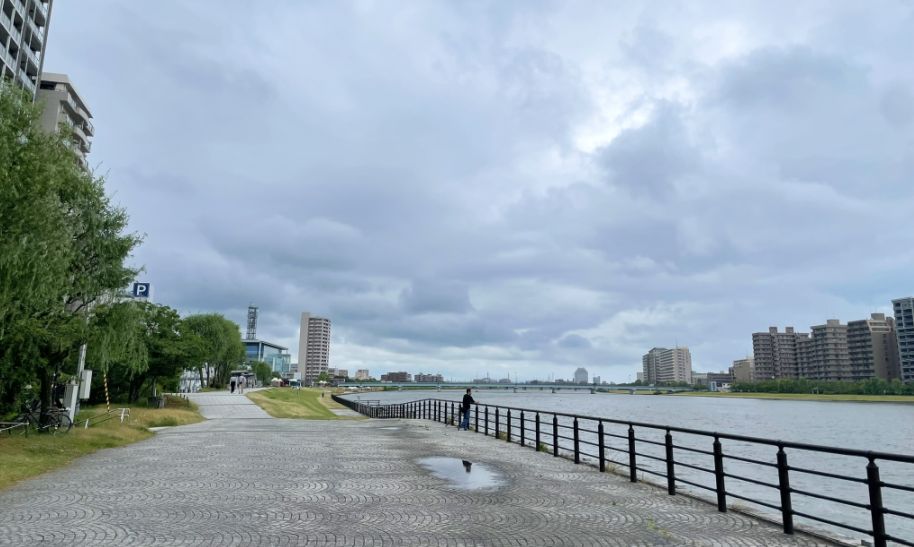
This area is so quiet.
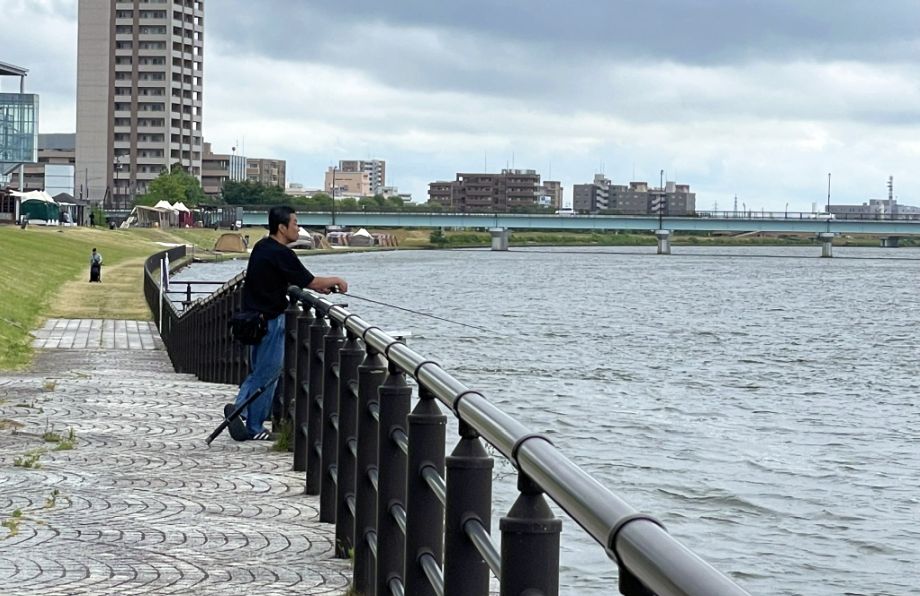
A man fishing.
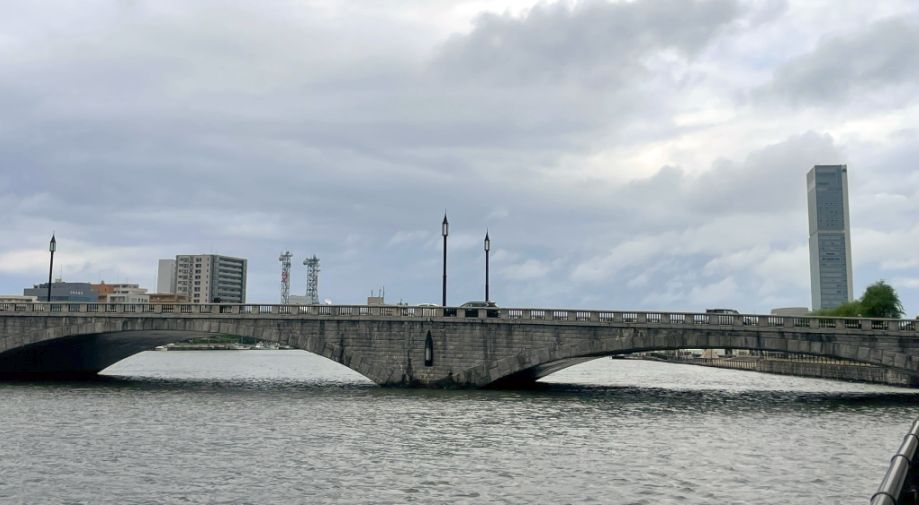
The Bandai bridge view from the street level.
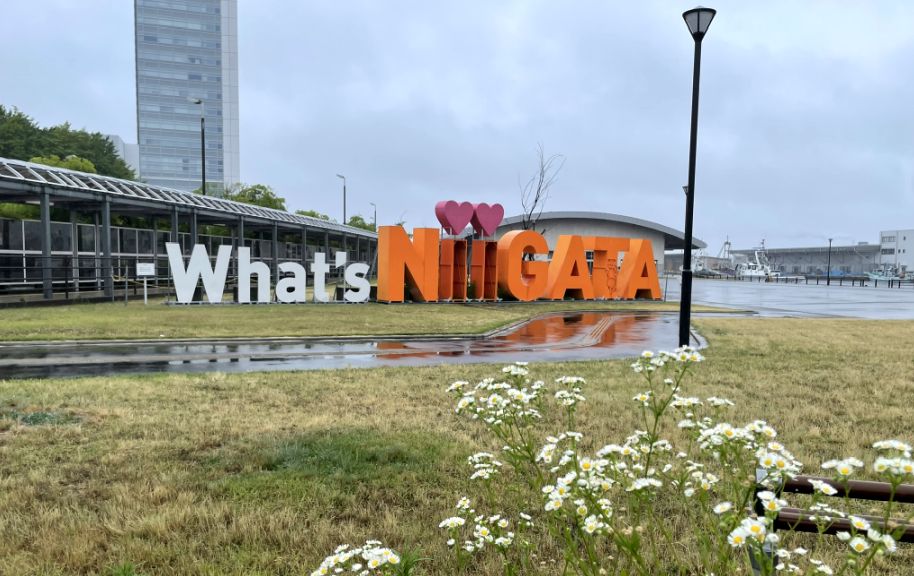
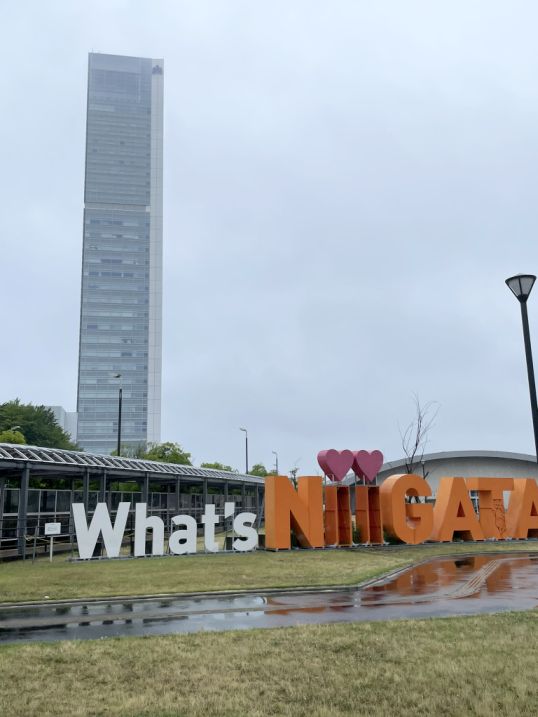
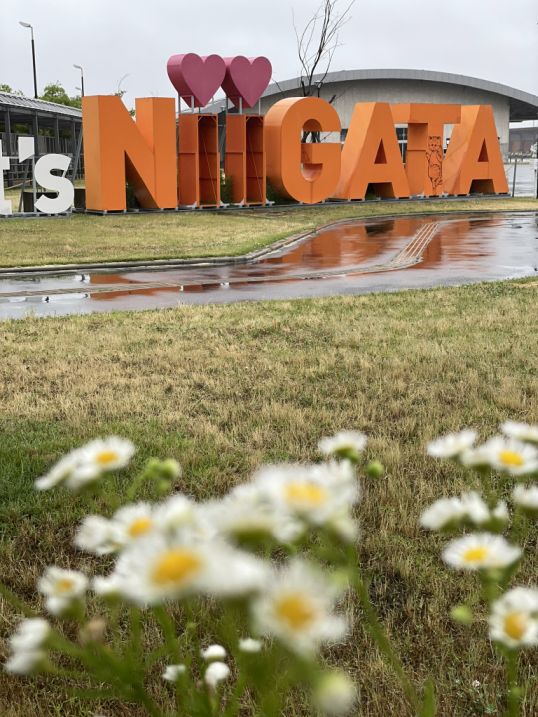
When we walked back toward the hotel, the quiet riverside slowly gave way to the modern waterfront again. Behind the building, a huge sign caught my eye: “What’s Niigata”, written in bold white and bright orange letters.
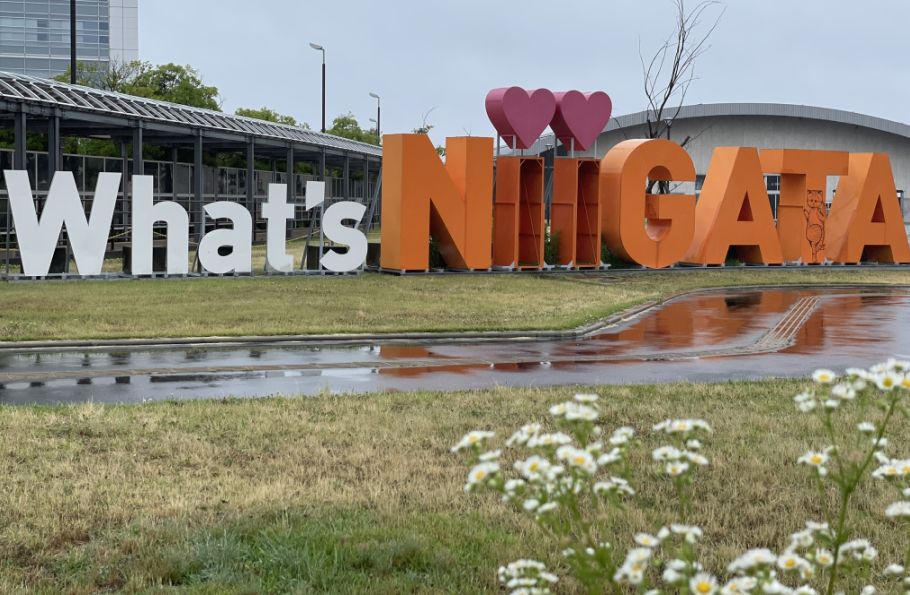
The two i’s were hollowed out, not just for design, but clearly made so people could stand inside them and take photos. It felt playful and welcoming, like an invitation to become part of the sign and, in a small way, part of the city itself.
 |
 |
ON the left, the tall building you see is our hotel the Nikko Niigata.
NEXT... Dinner at Echigo Banya Sakaba