9 days in Japan- 6/23- 7/1/2024
Day 7-Jinjuku to Ginza, Tokyo -6/29/2024
We are now heading to Ginza.
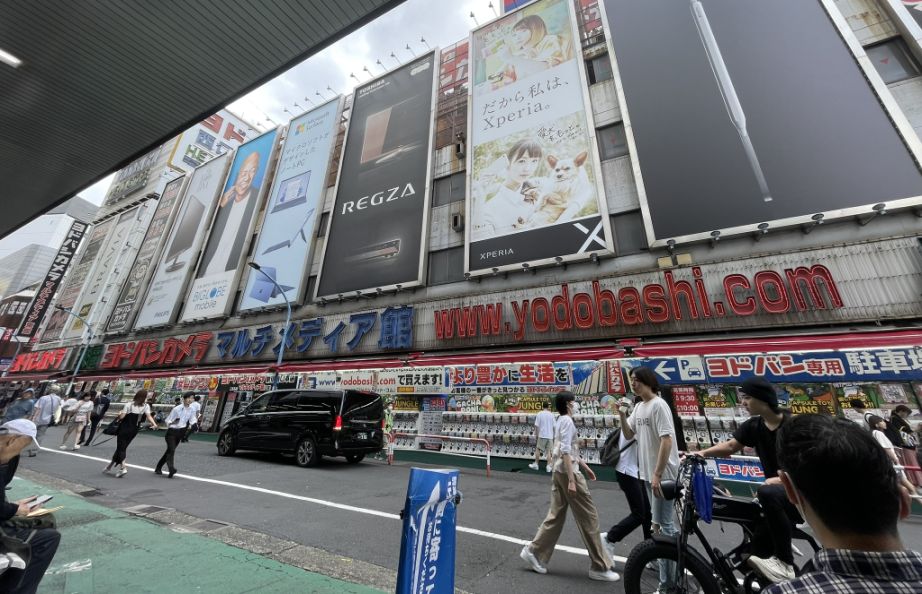
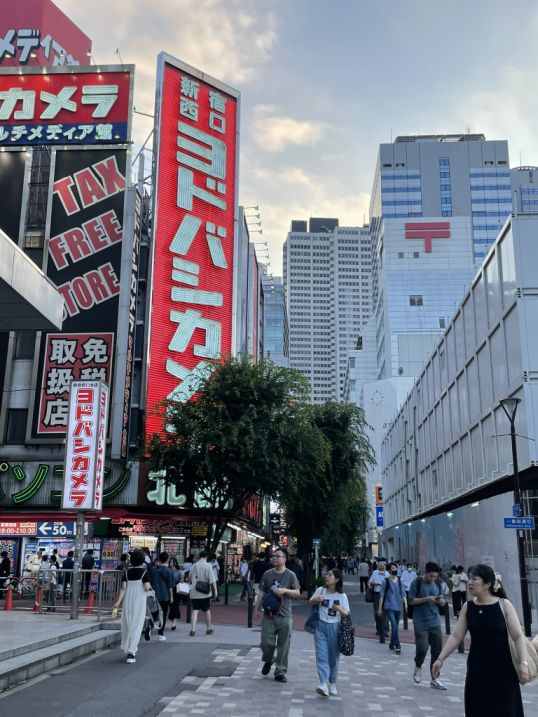
Leaving our hotel near Shinjuku, we walked past a whole street glowing with electronics shops,
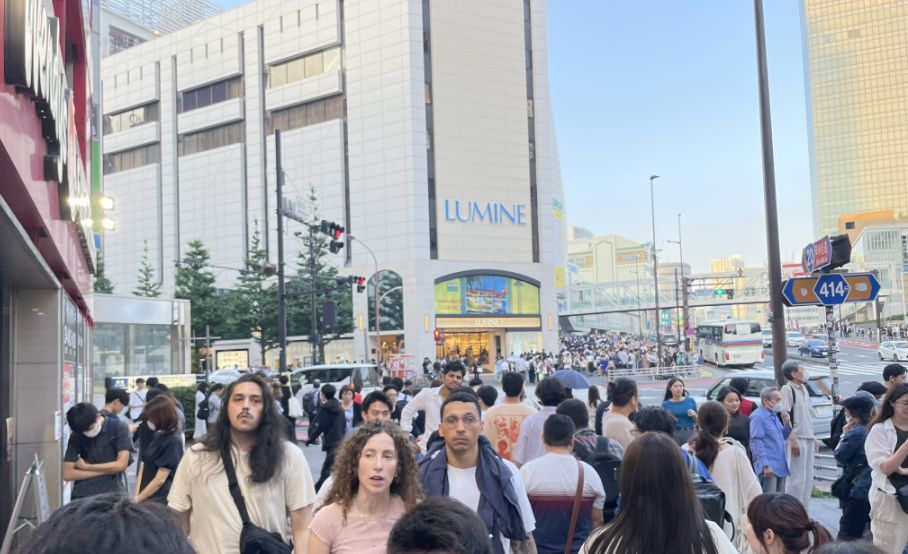
We walked by Shinjuku Station, where thousands of people streamed in every direction.
 |
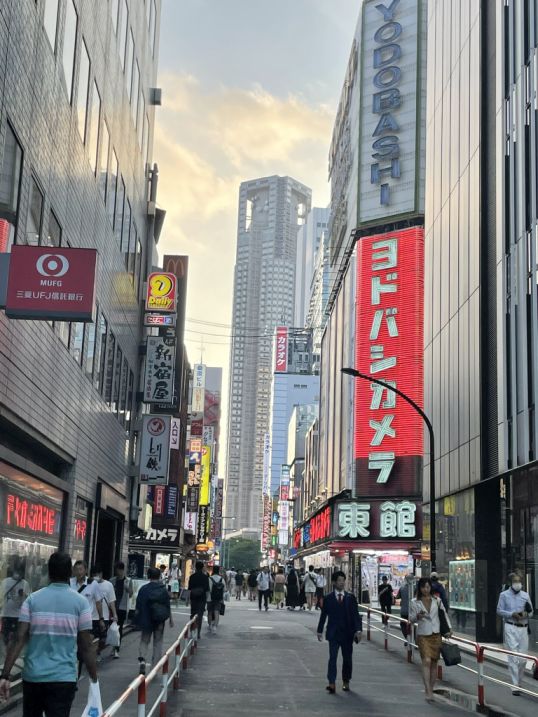 |
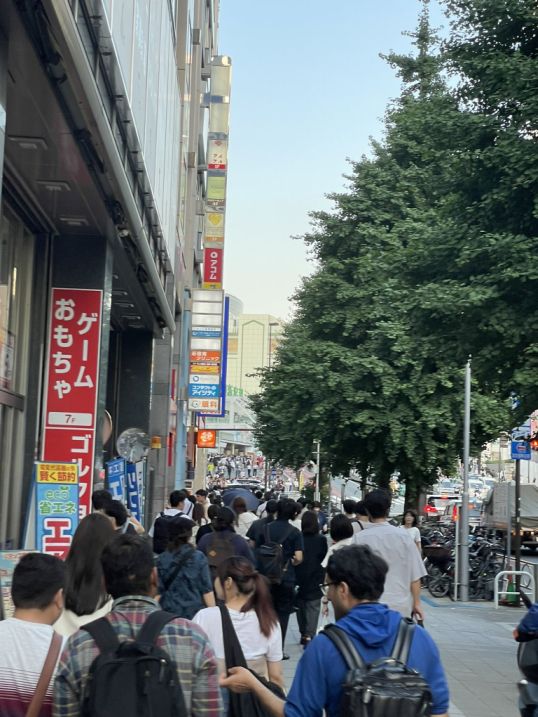
Passing Shinjuku Station, the color only intensified. Huge red signs climbed the sides of buildings, stacked one above another. The streets felt loud even without sound.
 |
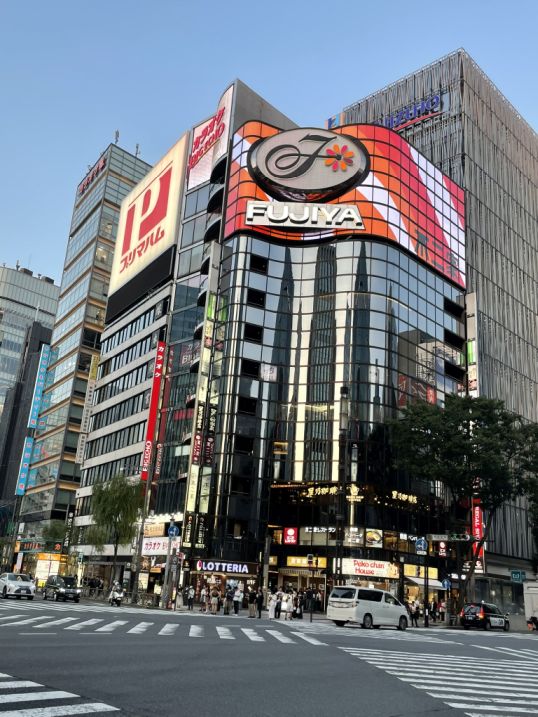 |
Across the road stood the giant FUJIYA Camera store, its bold sign shining like a landmark for anyone navigating the chaos of Shinjuku.
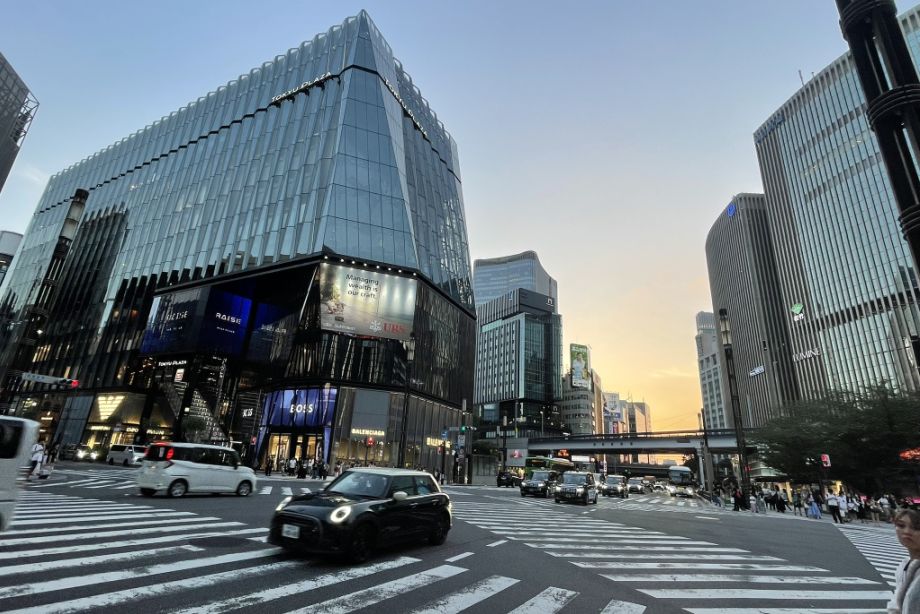
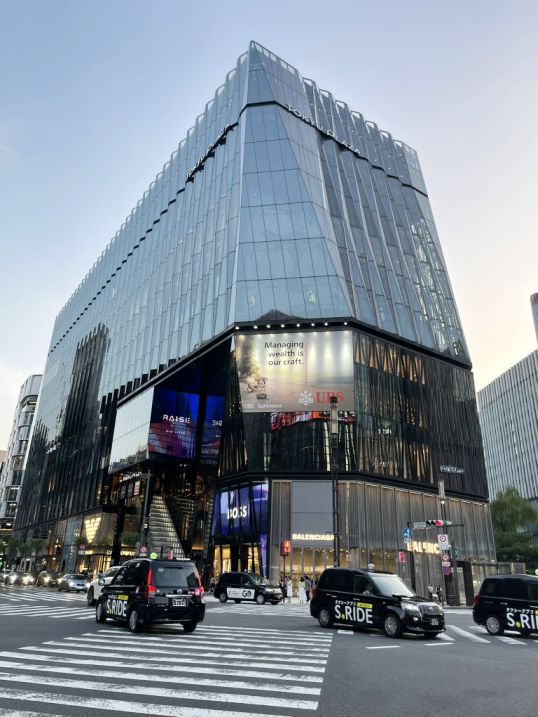
Then, almost gradually, the city changed. By the time you reached Ginza, the atmosphere had softened and refined. The buildings became taller and more sculpted, dressed in glass, stone, and steel instead of blinking billboards.
 |
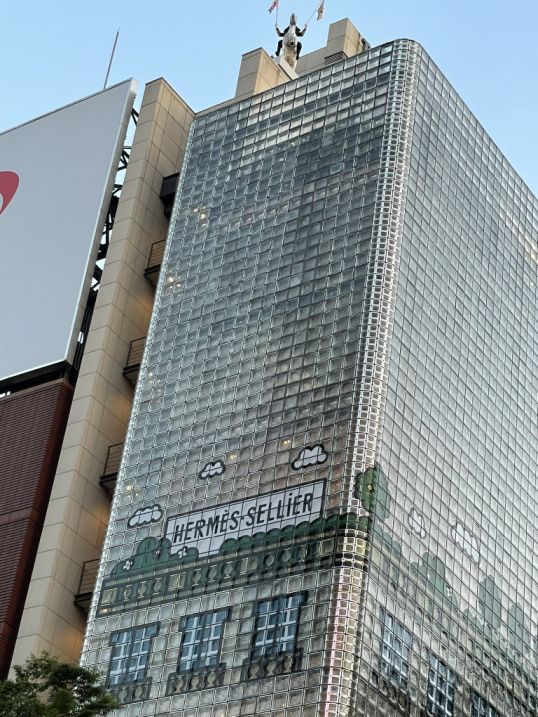 |
Ginza is Tokyo’s most elegant and prestigious neighborhood, a place where luxury, history, and modern design come together. Originally, Ginza began in the early 1600s as the location of the city’s silver mint (that’s where the name “Ginza,” meaning “silver guild,” comes from). After a massive fire in the 19th century, the area was rebuilt in Western style, with brick buildings and wide streets, and it gradually became the symbol of modern Tokyo.
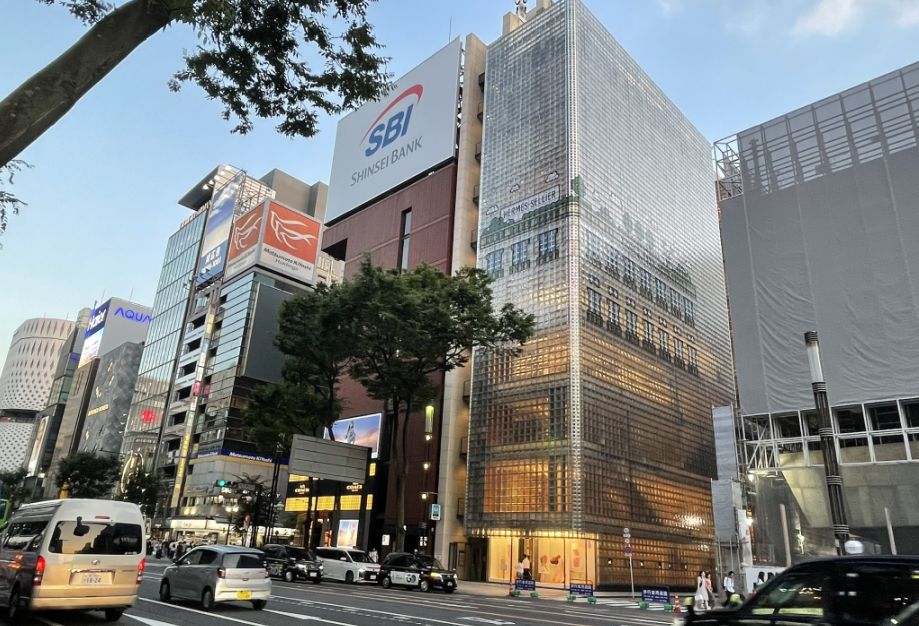
It is Tokyo’s high-end shopping district, home to flagship stores like Hermes, Cartier, Chanel, Dior, Louis Vuitton, Gucci, and many others. Japanese department stores such as Mitsukoshi, Wako, and Matsuya Ginza are destinations in themselves, offering everything from fashion and cosmetics to exquisite food halls in their basements.
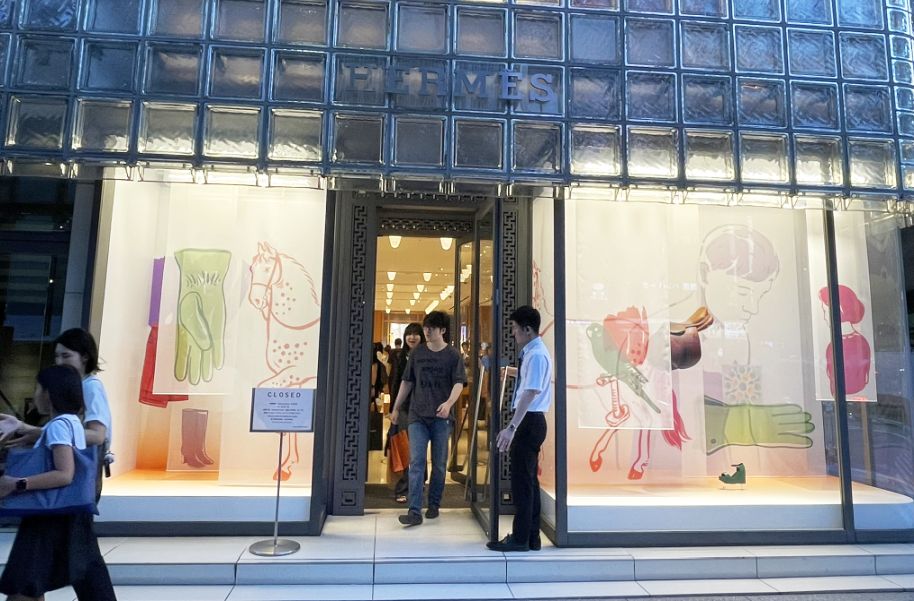
Hermes store front.
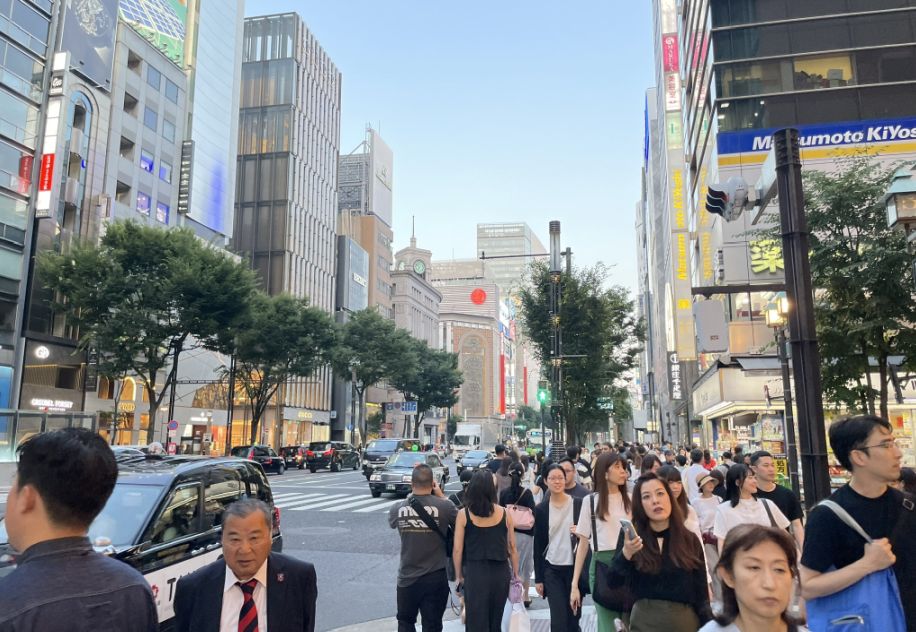
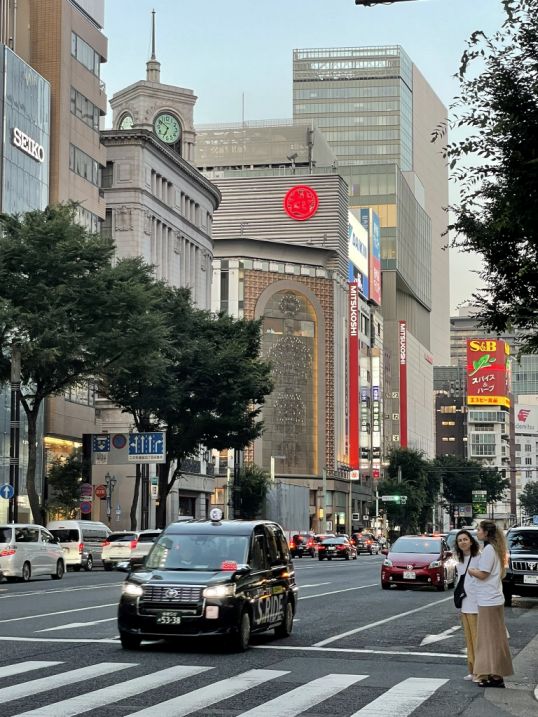
The boulevards are very wide with modern buildings.
 |
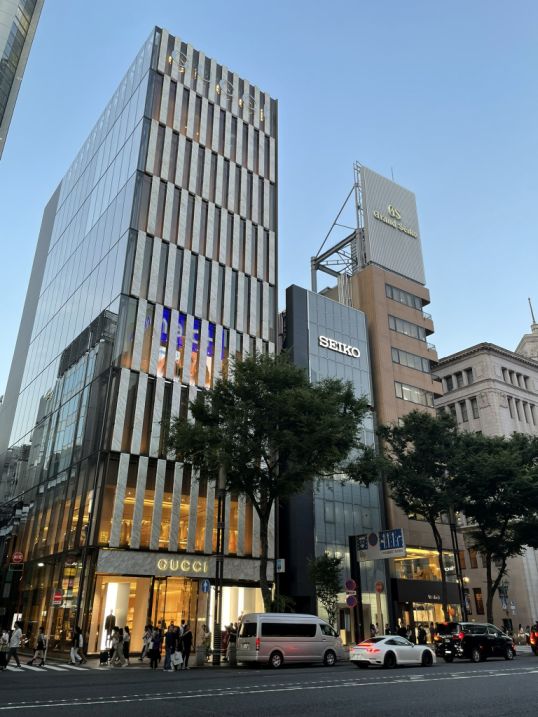 |
We are now in the heart of Ginza.
 |
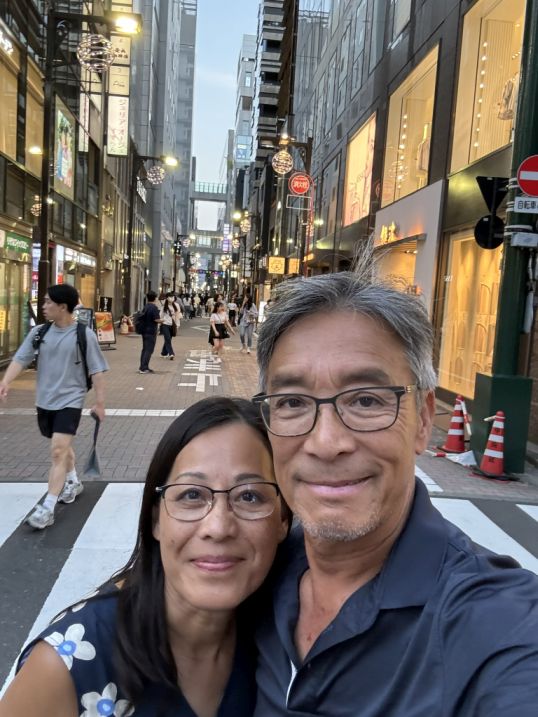 |
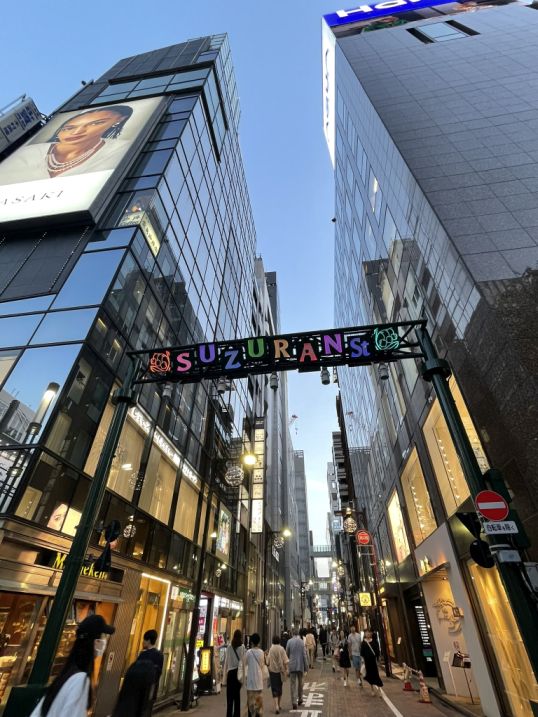
Ginza Suzuran Street is one of the most character-rich "backstreets" in the district. While the main Chuo-dori is famous for massive department stores, Suzuran Street is where you find the intimate, small boutiques. The street is named after the suzuran flower, known in Japanese culture for its delicate, bell-shaped white blooms.
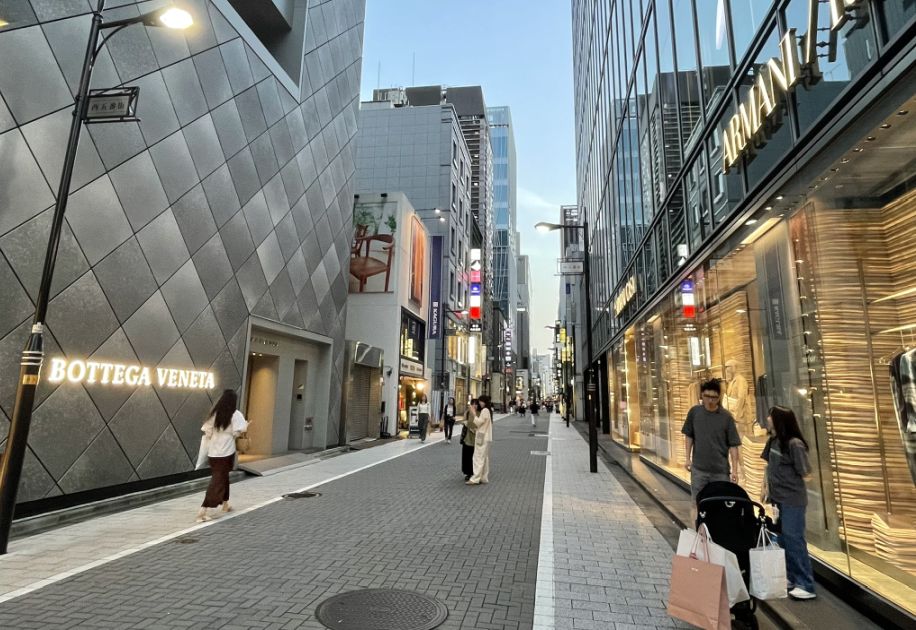
Bottega Veneta is situated directly on Ginza Suzuran Street. It is the brand's largest flagship store in Asia and serves as a major architectural landmark in the district.
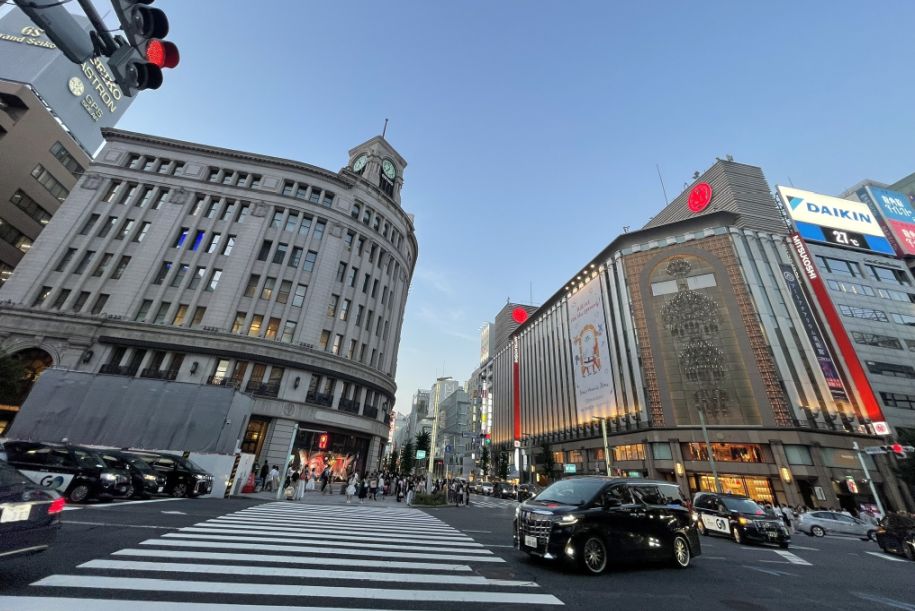
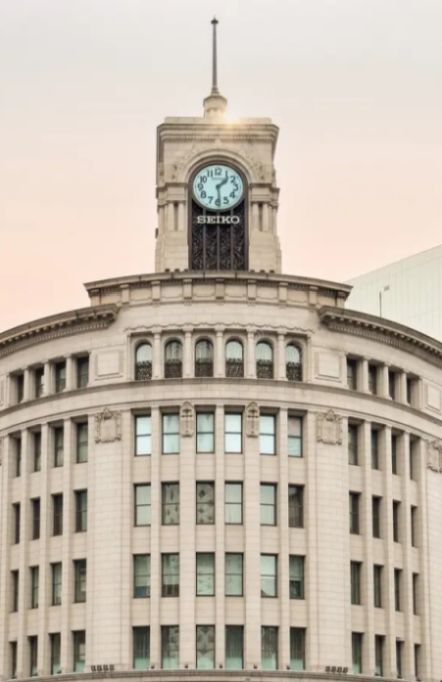
On the left, the elegant cream-colored building with the clock is the Wako Department Store, owned by Seiko. Built in 1932, it’s one of Ginza’s most important landmarks.
Inside, Wako sells high-end watches, jewelry, and refined Japanese gifts.
 |
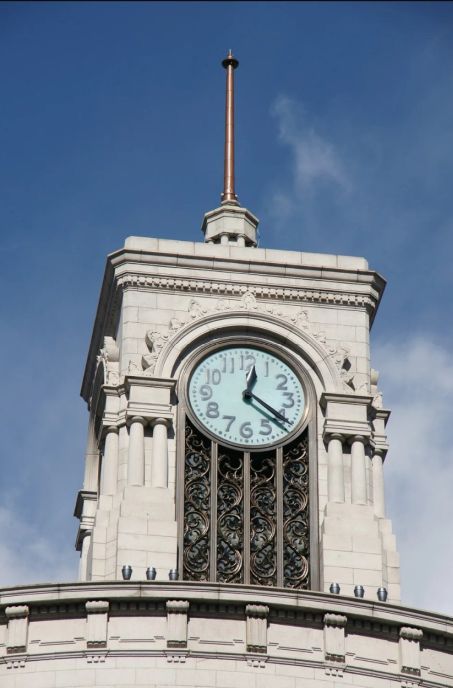 |
The clock chimes every hour and has become a symbol of the district.
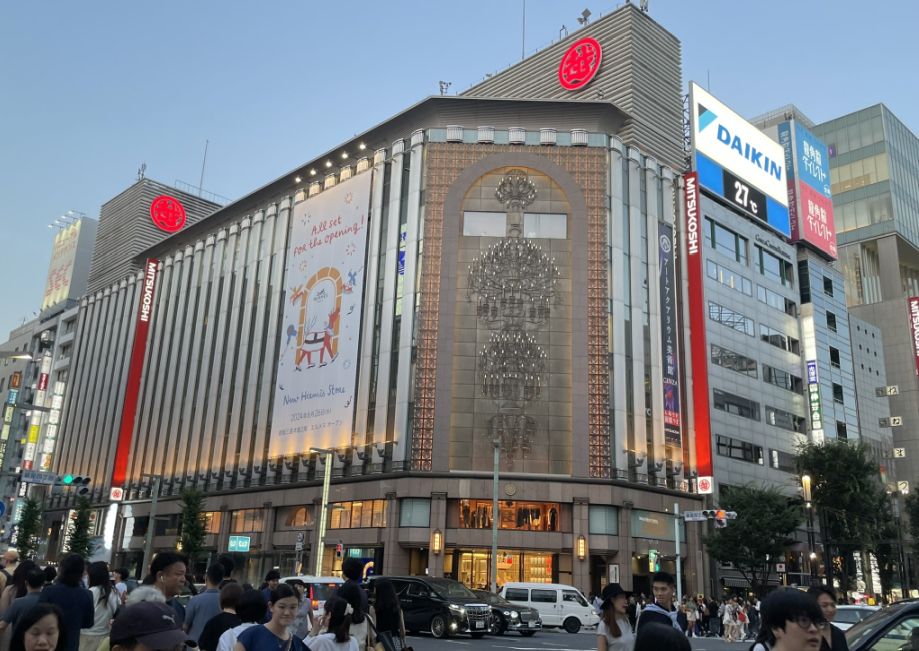
Across the street is the Mitsukoshi Ginza, one of the most historic and prestigious department stores in Japan. The building stands out as a grand European classical style, with pale stone walls, tall vertical windows, and elegant symmetry. The design feels almost like an old palace or opera house, which fits perfectly with Ginza’s refined atmosphere.
Above the main entrance you’ll see the lion statues (Mitsukoshi’s symbol), often used as a meeting point.
 |
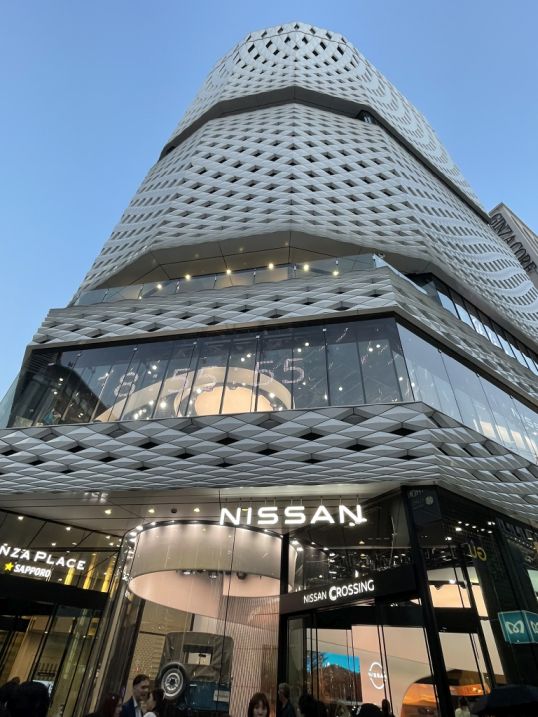 |
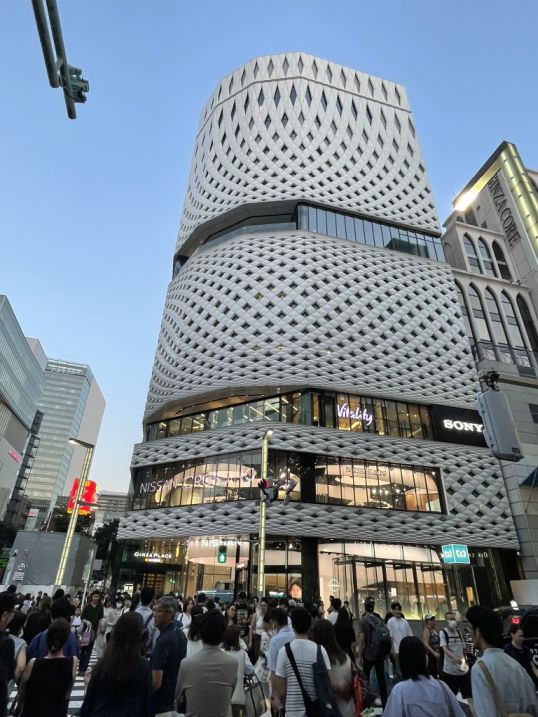
We are headed to the Nissan Crossing (Nissan Ginza Gallery). The building is modern, bright white, and very minimalist, it almost looks like a sculpture itself among the luxury boutiques.
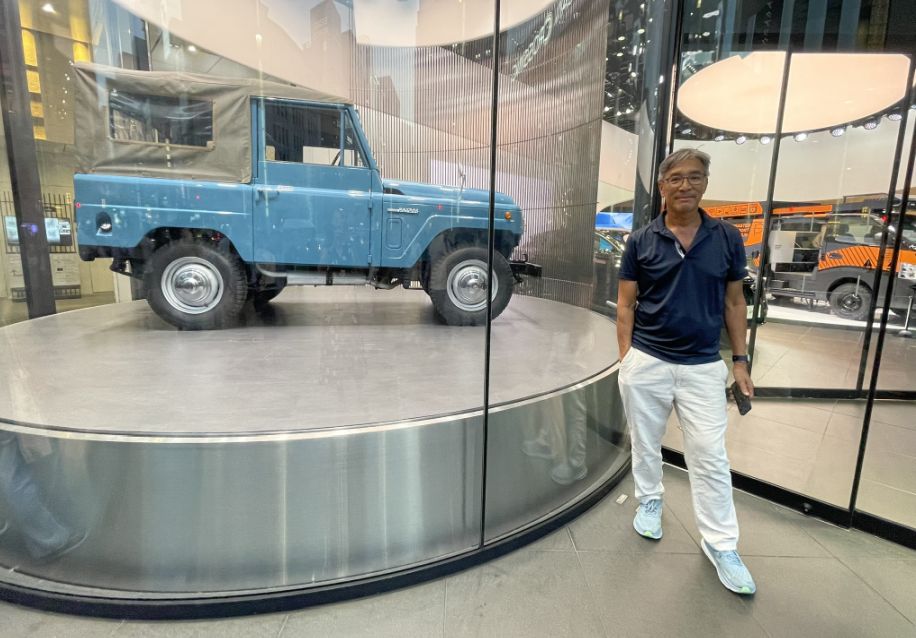
On the ground floor, Nissan always displays a few cars, often concept models or special editions, placed right behind glass like works of art.
The “jeep” in the window is ond of Nissan SUV or off-road concept vehicles, designed to catch attention from people walking through Ginza. At night, the interior lighting makes the cars glow softly, turning the showroom into part of the street scenery.
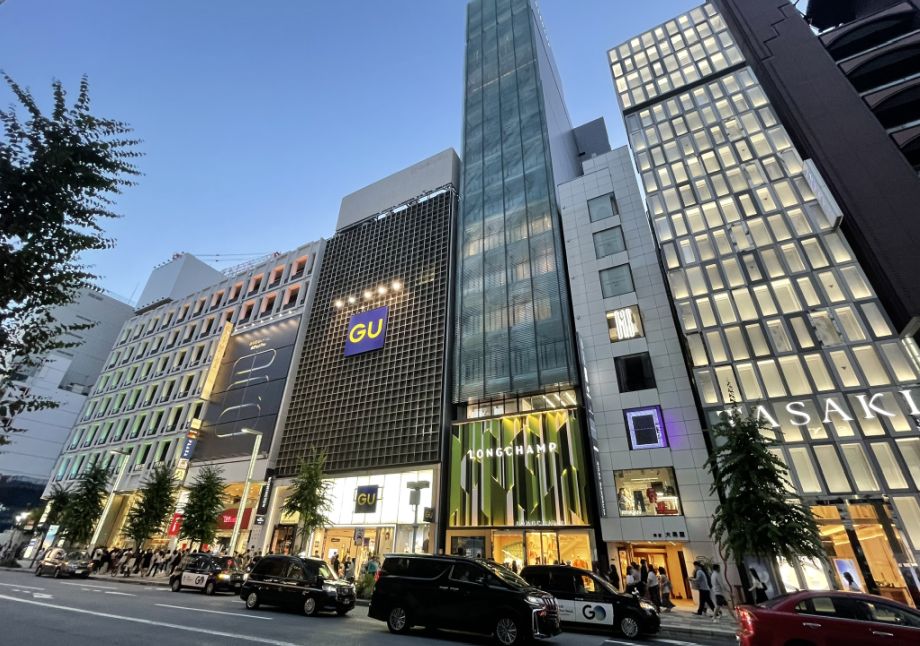
As we walked further we saw Longchamp, the French luxury brand known for its leather bags, especially the famous Le Pliage totes. The store is sleek and elegant, fitting Ginza’s upscale style.
Next to it was Guess (GU), more youthful and flashy, with bold window displays and Western pop-fashion energy.
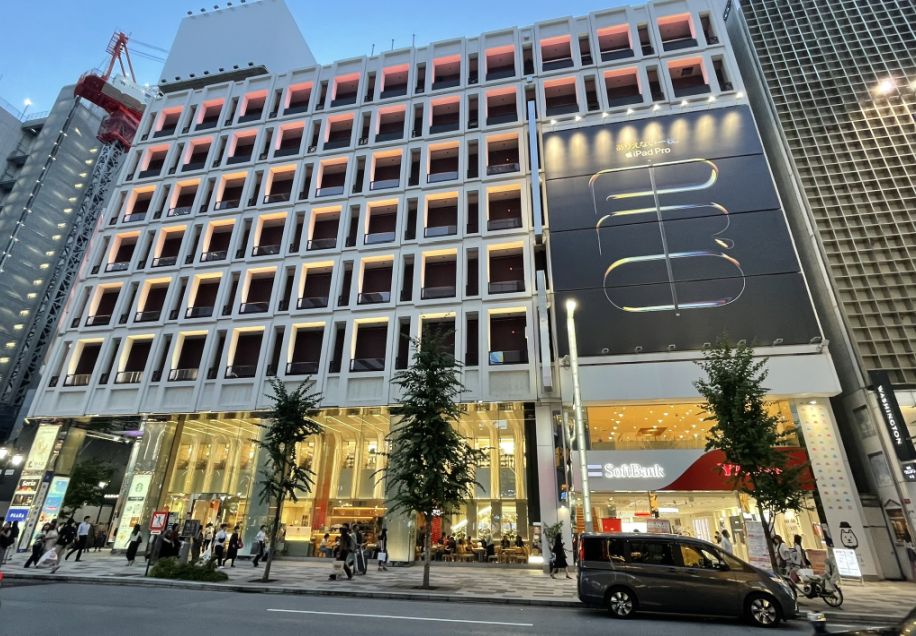
SoftBank is the Japanese telecom giant. Their stores are everywhere, but in Ginza they are larger and very polished, often with big screens and futuristic interiors showing phones, robots (like Pepper), and new tech.
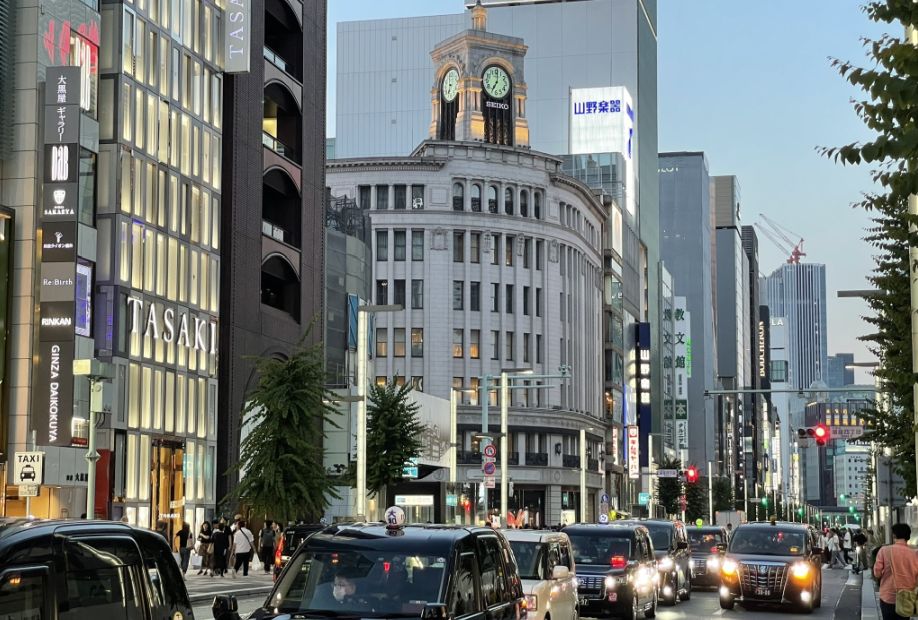
Luxury brands, global fashion, cutting-edge technology, and Japanese precision, all lined up on clean, wide sidewalks where people stroll slowly, window-shopping instead of rushing.
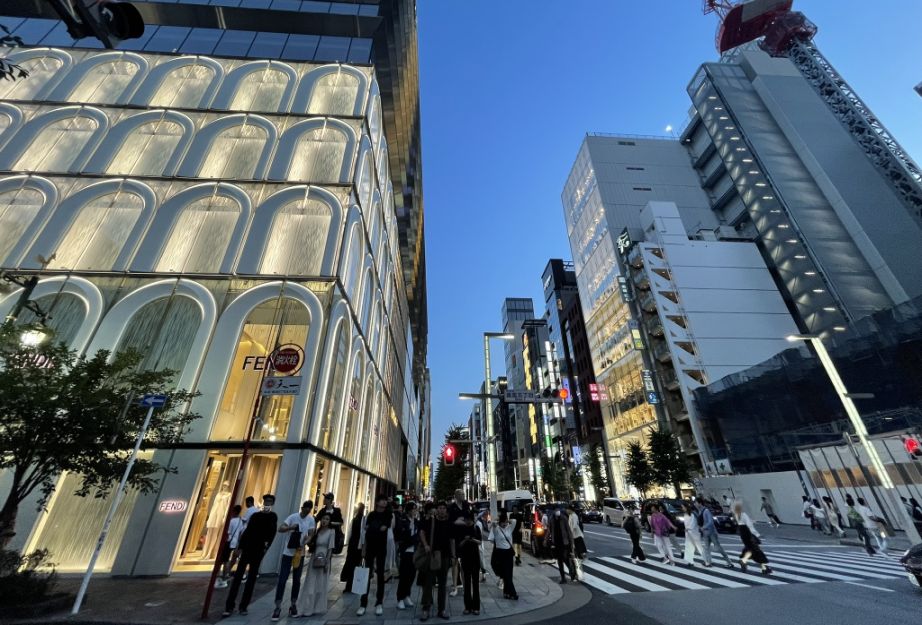
The Fendi store sits right on a prominent corner, designed to stand out like a piece of modern architecture. At night, its glass façade glows softly, and the interior lighting highlights the bags and clothing like they’re in a gallery. Corner locations in Ginza are some of the most expensive retail spots in Japan, so brands like Fendi use bold architecture to make a statement before you even step inside.
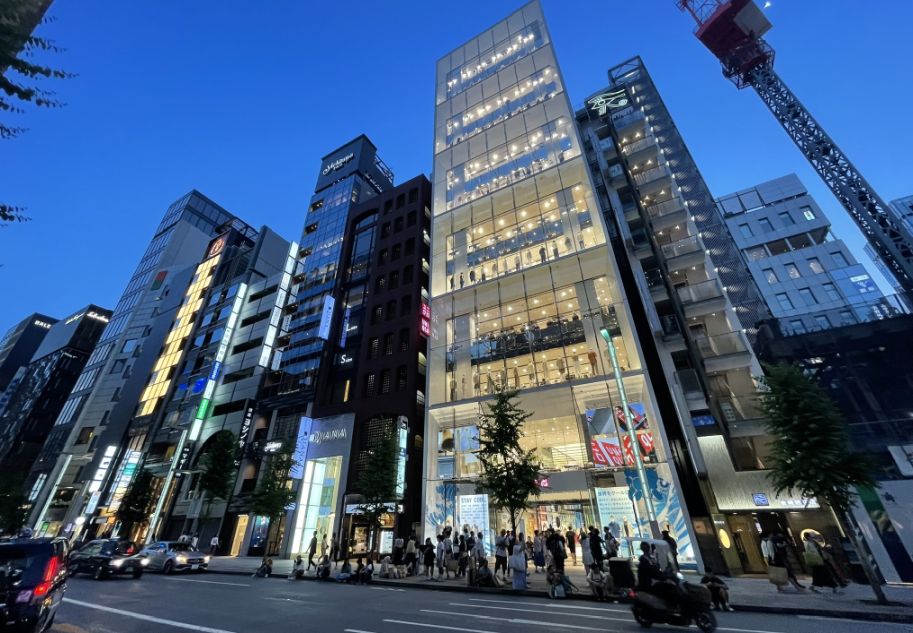
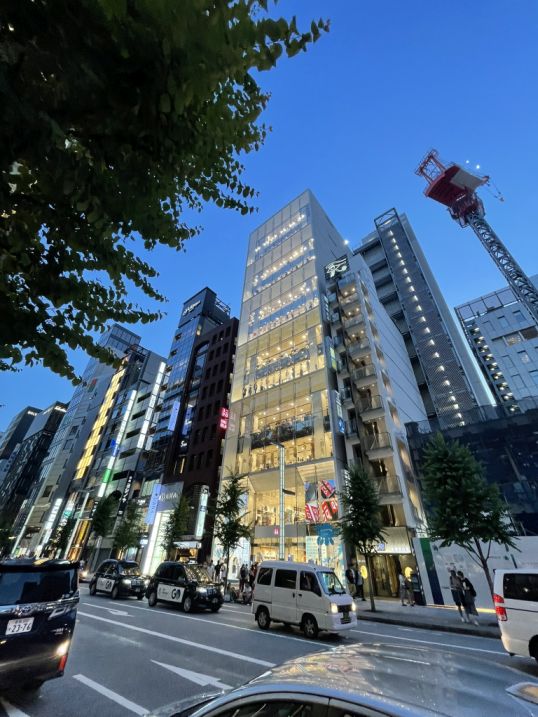
Uniqlo Flagship store is one of the most famous Uniqlo locations in the world, visible from far down the street. At night, when the lights are on and people are moving up and down the escalators behind the glass walls, it feels almost like watching a living display case.
 |
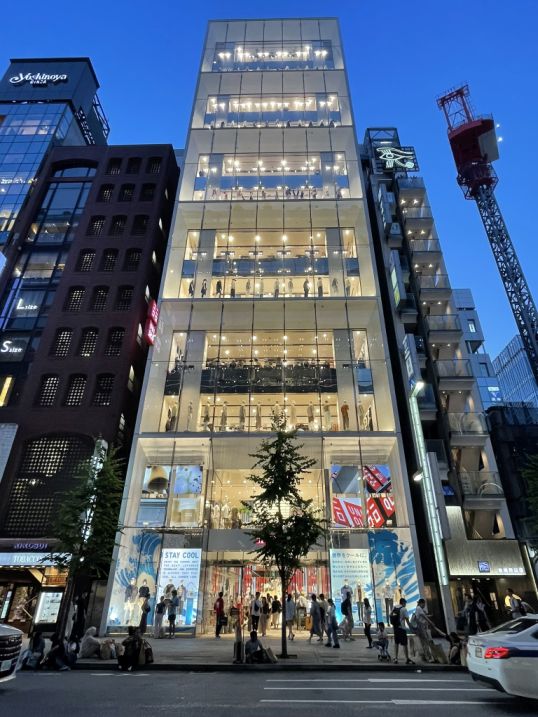 |
About 12 floors tall, floor to ceiling glass, fully illuminated in the evening, like a giant lantern.
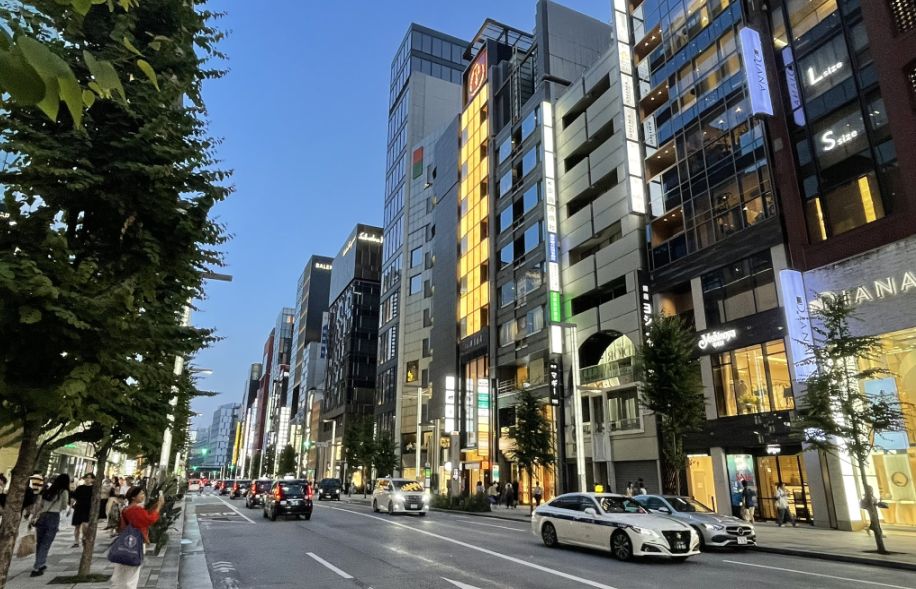
As we kept walking straight, we are on Ginza Chūō-dōri, the main artery of the district.
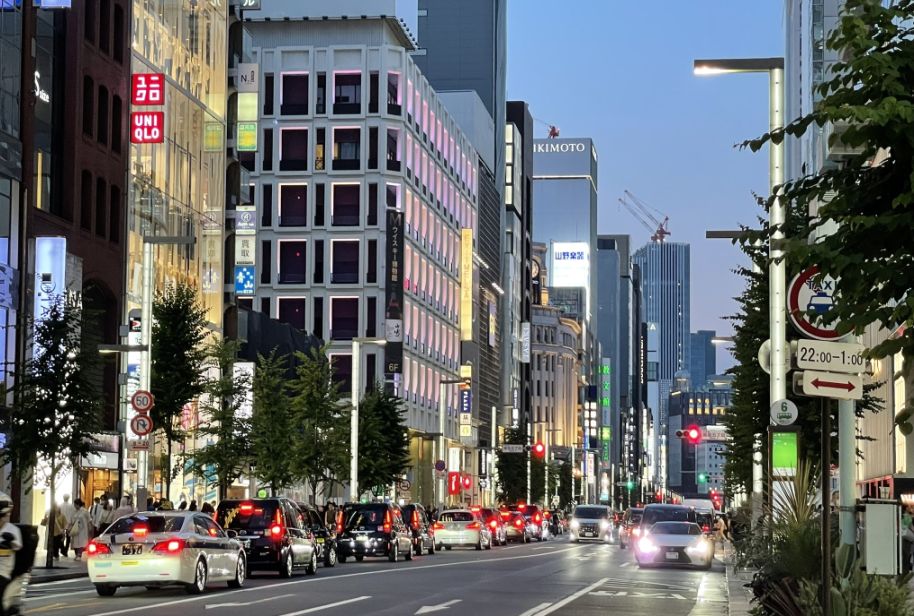
This street is known for luxury brands and flagship stores every few steps.
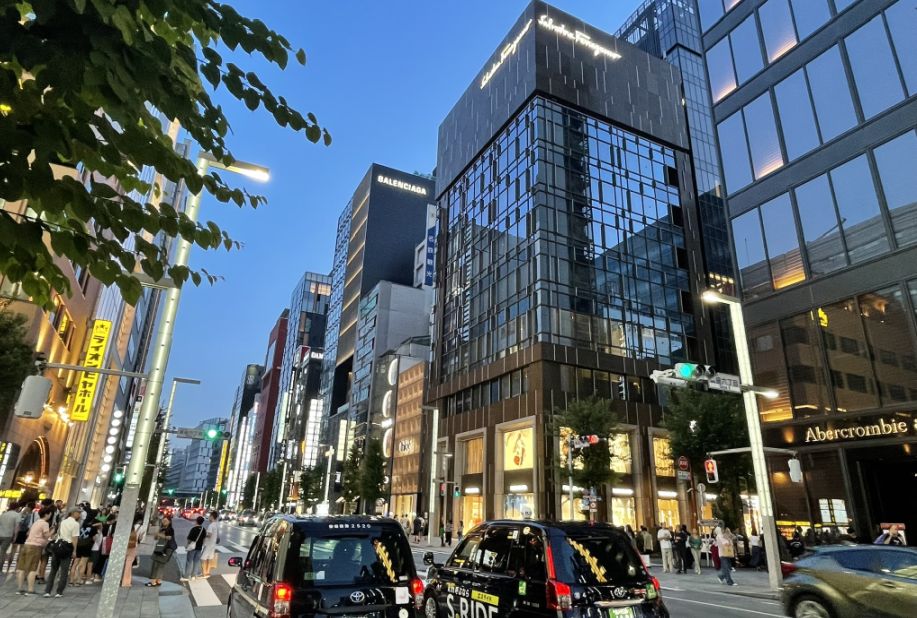
The sidewalks are wide with a constant flow of well-dressed shoppers, slow-moving traffic of taxis and high-end cars. Walking farther along Ginza Chūō-dōri, the fashion houses begin to feel almost like an outdoor museum of modern design.
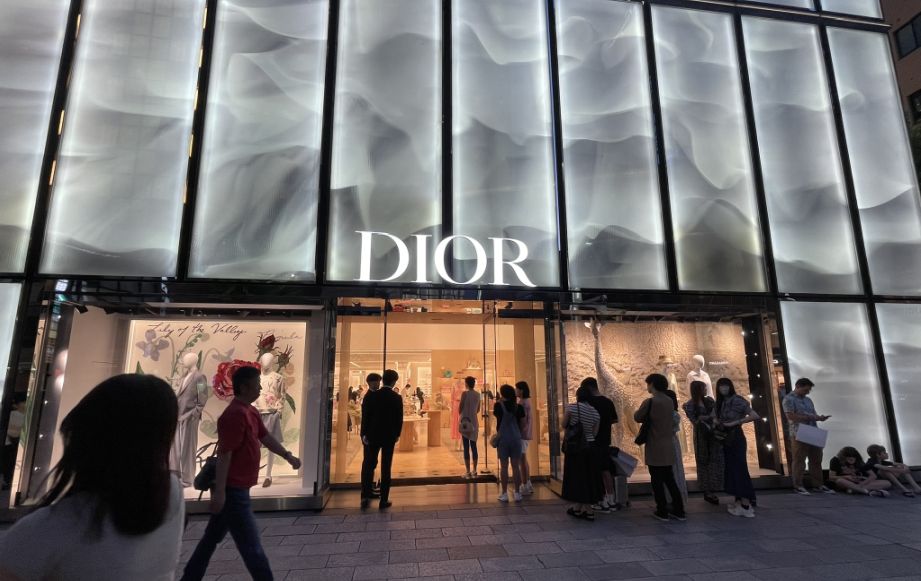
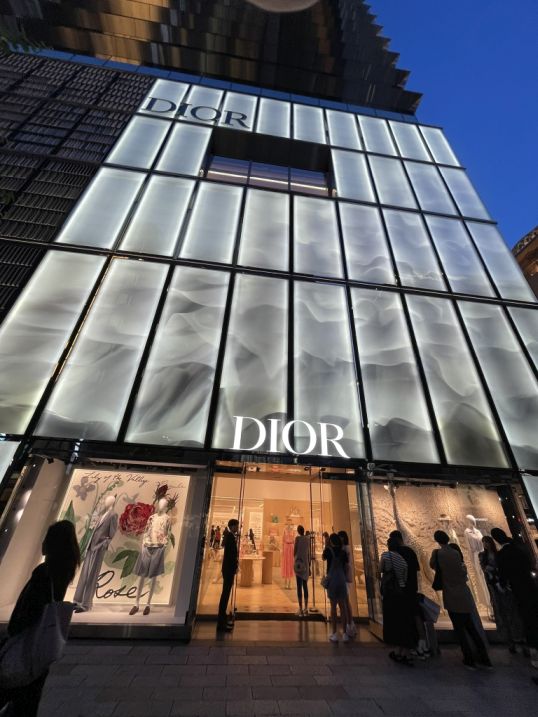
The Dior building is one of the most striking. At night its huge façade glows in a soft, milky white light, created by layers of translucent glass that look like folded fabric. The windows don’t clearly reveal the inside; instead, the whole building becomes a lantern , elegant, calm, and unmistakably Dior.
 |
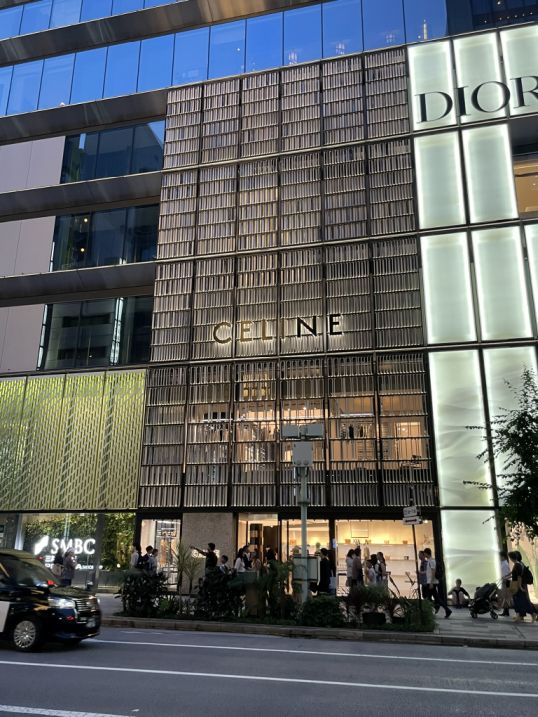 |
Dior and Celine next to each other.
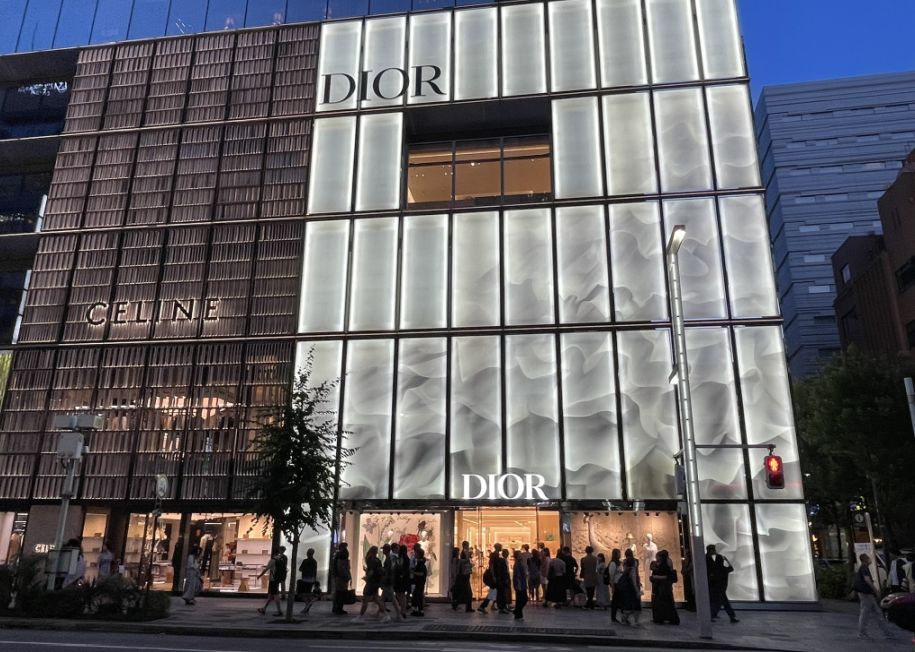
Right beside it, Céline is quieter and more restrained, with clean lines and warm lighting that feels minimalist and modern, a contrast to Dior’s dramatic presence.
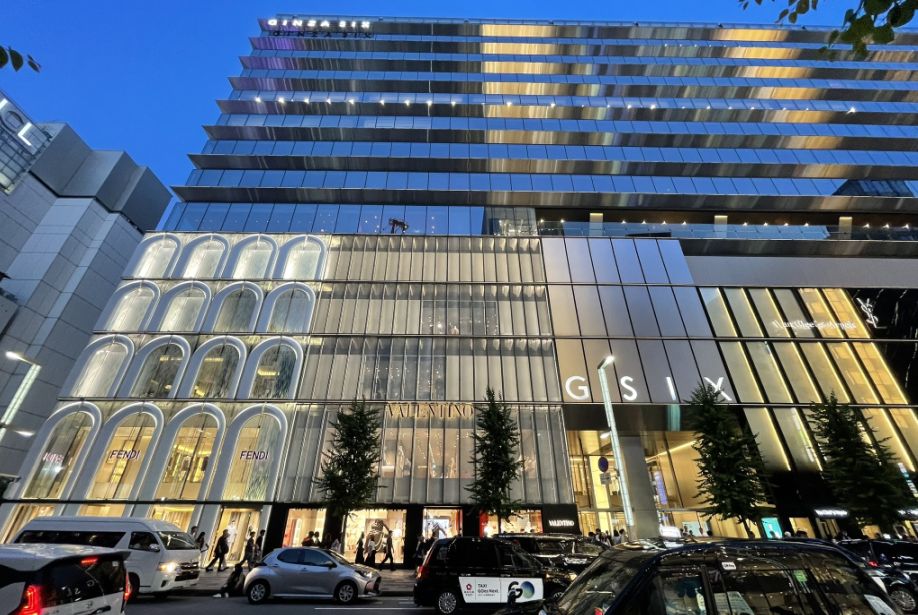
Fendi at the corner and Valentino next to it.
 |
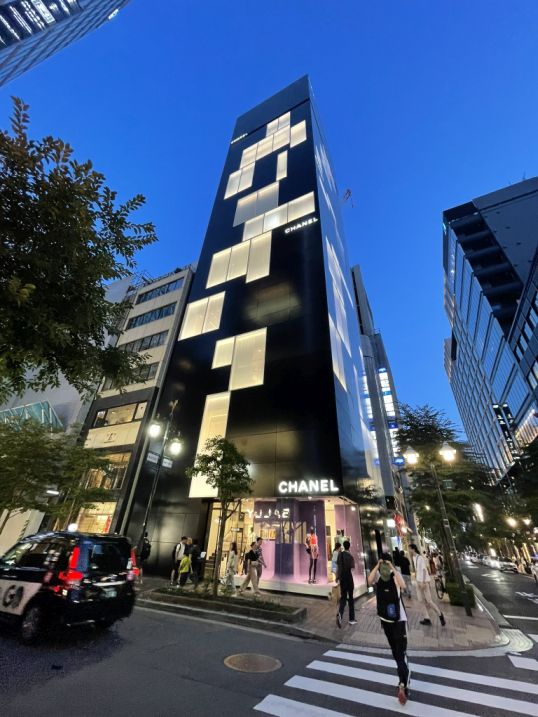 |
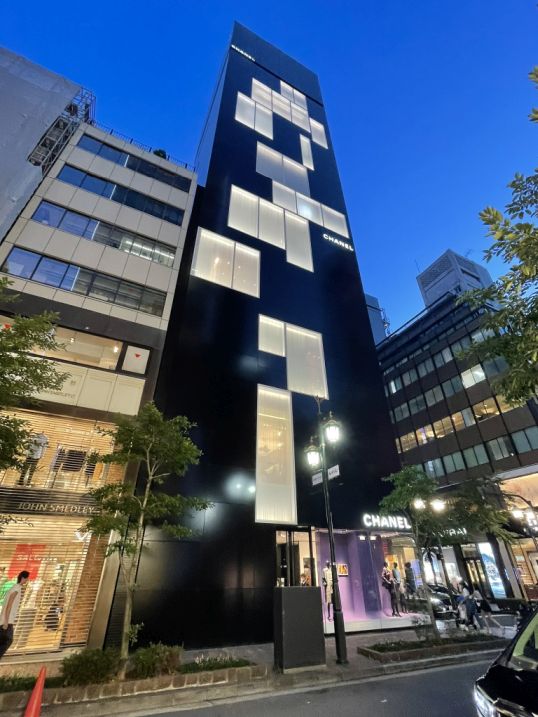
Then comes Chanel, instantly recognizable in its signature black-and-white design. The building is sharp and graphic, almost cinematic, with bright white light against deep black frames, reflecting Coco Chanel’s timeless style, simple, bold, and luxurious without excess.
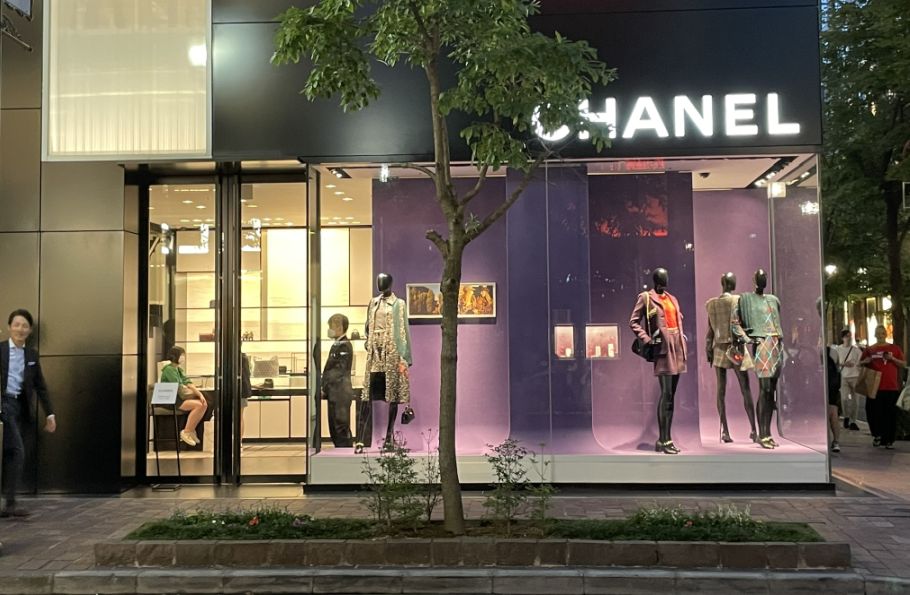
Chanel store front.
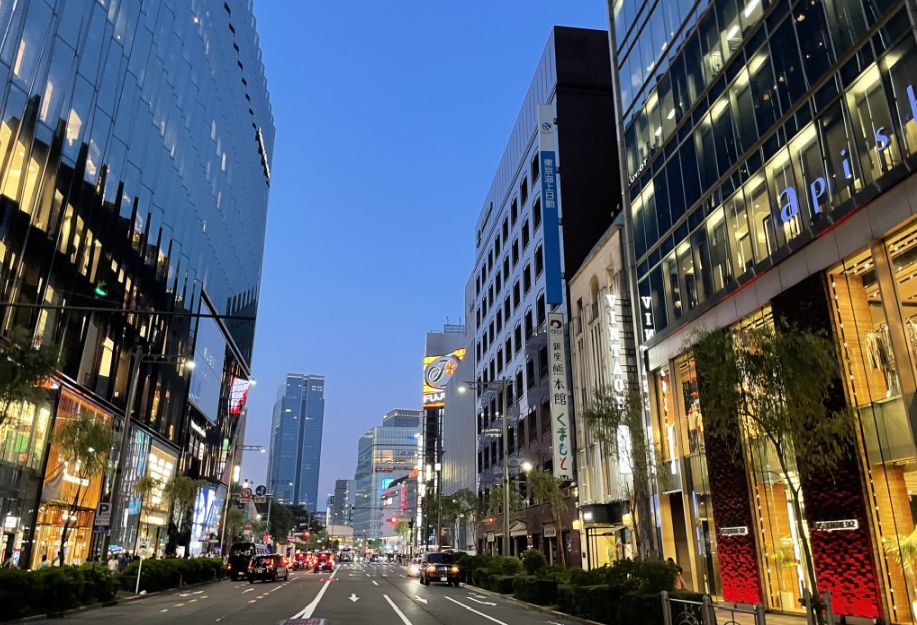
After passing glittering fashion palaces, we are headed to Dinner.
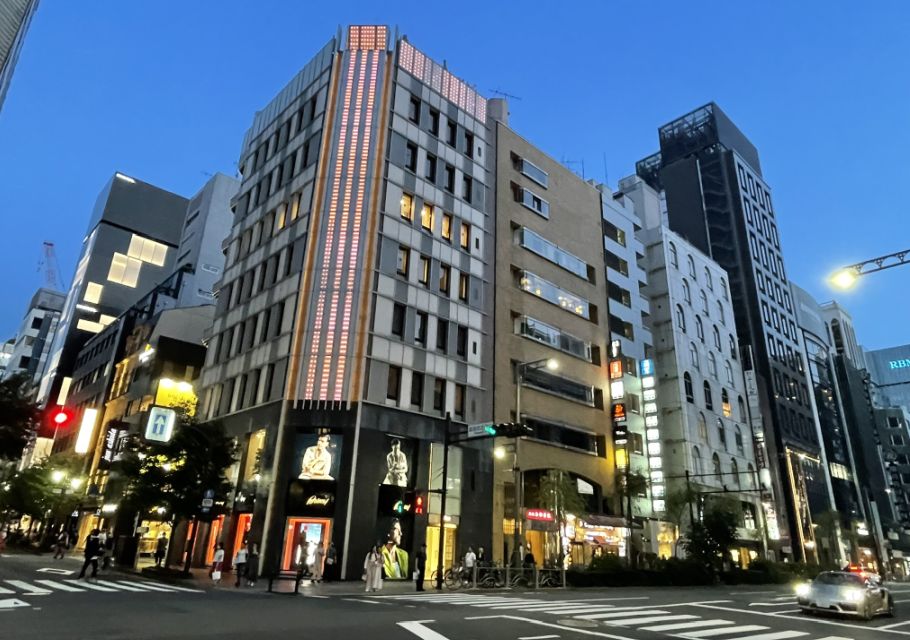
We are heading to the Ginza MS Building, as the restaurant is located in one of the large building.
NEXT... Day 7- Dinner at Les Copains de Dominique Bouchet