9 days in Japan- 6/23- 7/1/2024
Day 7-Dinner at les Copains de Dominique, Tokyo -6/29/2024
We are headed to Les Copains de Dominique Bouchet, a highly regarded French bistro tucked into the basement of a building in the heart of Ginza. It’s not just another restaurant, it’s one of those places that’s earned recognition in the Michelin Guide with a Bib Gourmand, which means it’s celebrated for offering excellent quality and great value in French cuisine right in one of Tokyo’s most sophisticated neighborhoods.
|
|
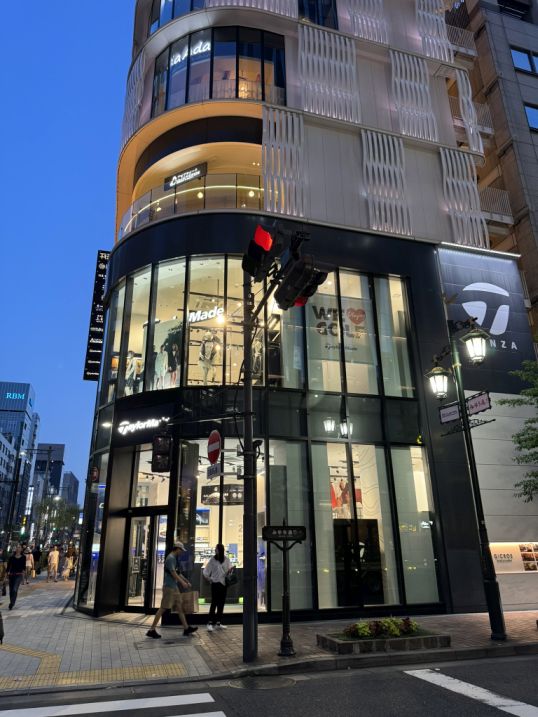
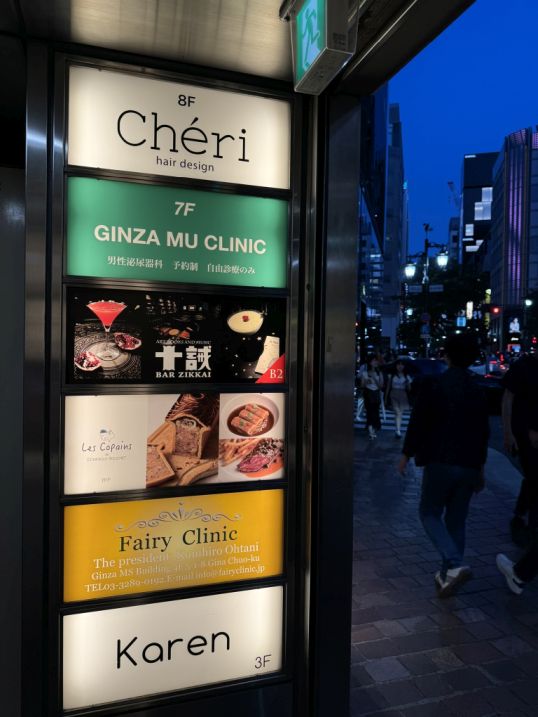
Finding Les Copains de Dominique Bouchet is like discovering a secret club, it’s very "Ginza" in that it hides its best spots from plain view. it’s a bit of a mystery to find. The restaurant is tucked away inside the Ginza MS Building. When you're standing on the street, you won't see a big sign or a storefront, you actually have to walk into the building's lobby first just to see the name.
First, you have to walk through the main glass doors of the building, and then you will see a directory plaque for "Les Copains" once you are inside the foyer.
 |
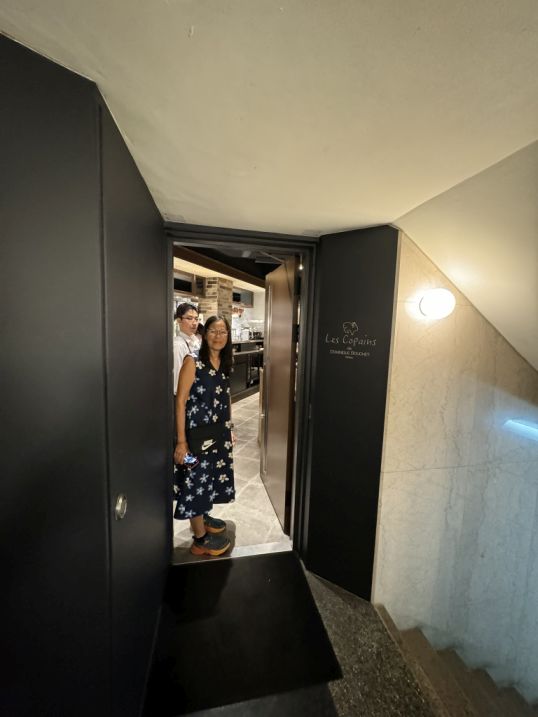 |
From there, the real challenge begins: figuring out how to get to the basement (B1F). There is a small elevator or a discreet set of stairs that leads you underground into what feels like a private Parisian bistro, worlds away from the busy Ginza streets above."
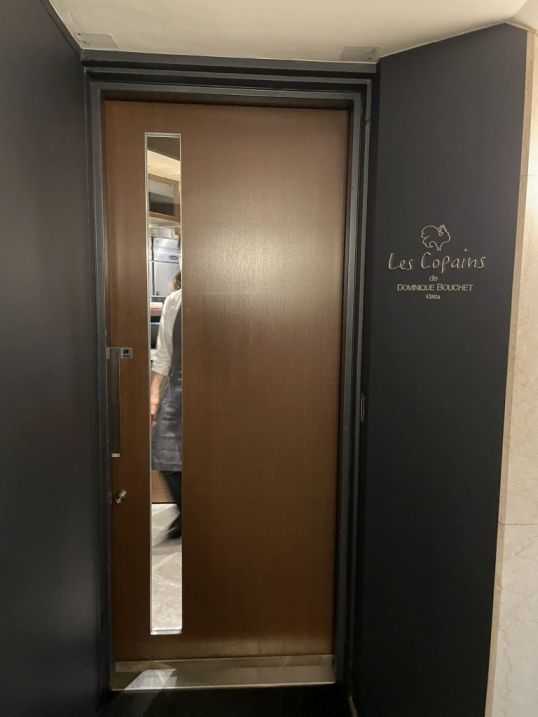
Once you pass through that glass-paned door and are greeted, the transition from a sterile office building to a Parisian hideaway is immediate.
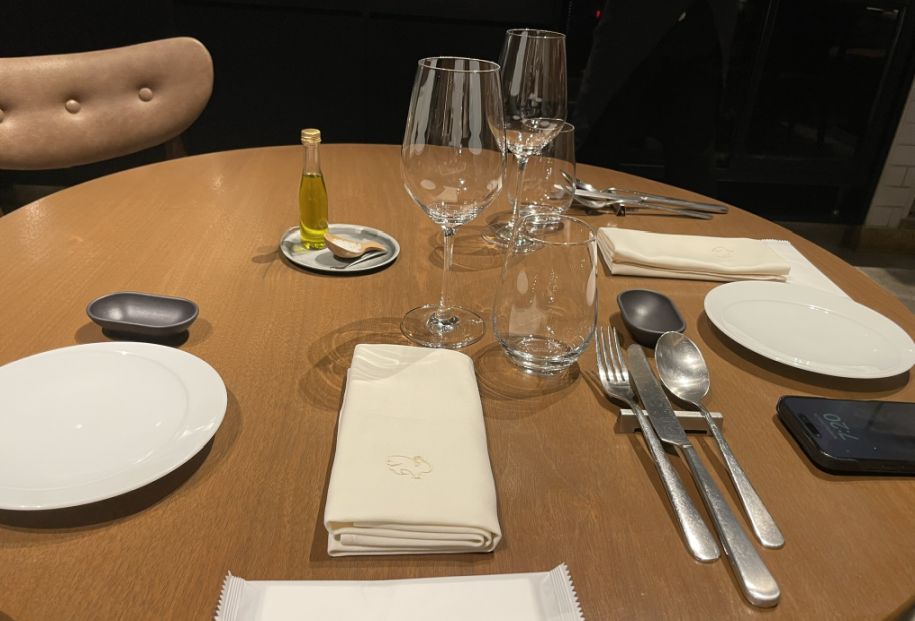
We were seated at a small round table for two, perfectly positioned with a clear view of the open kitchen. From our seats, the entire rhythm of the restaurant unfolded in front of us.
The concept here is bistronomy, a fusion of bistro comfort and refined gastronomy. The restaurant was created by Chef Dominique Bouchet, a chef with deep roots in classic.
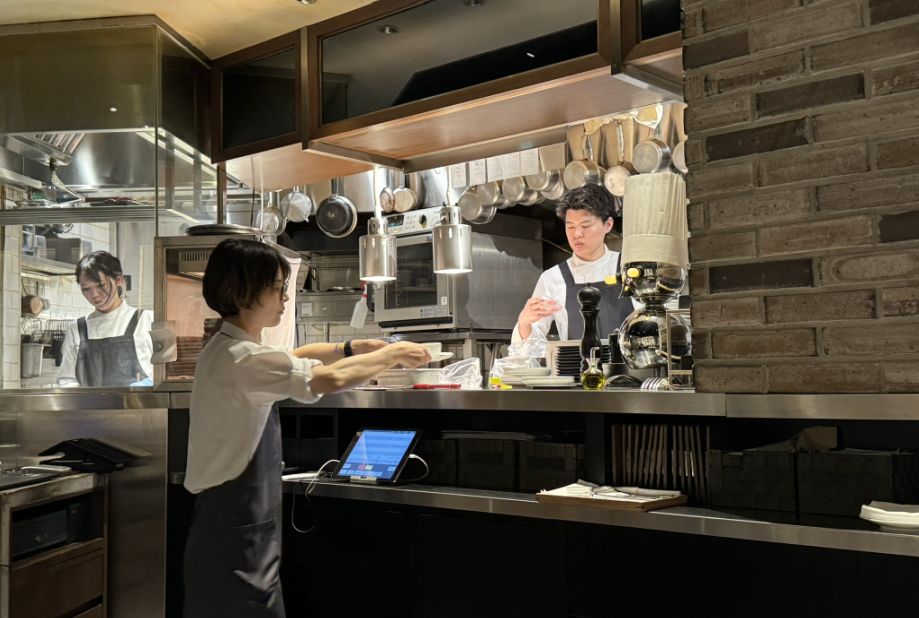
From our seats, the entire rhythm of the restaurant unfolded in front of us. Behind the glass and stainless-steel counters, the chefs moved with calm precision, wiping plates, arranging sauces with careful spoons, lifting pans from the flame, calling out short instructions in low voices. The kitchen wasn’t loud or chaotic, it felt controlled and almost graceful, like watching a quiet performance.
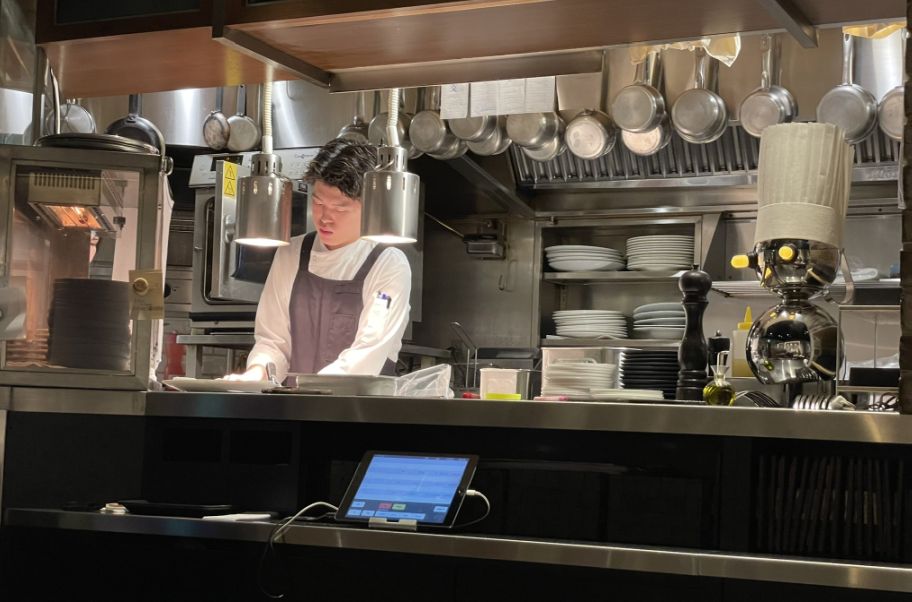
We didn’t see Chef Dominique Bouchet himself that evening, but behind the counter a team of young Japanese chefs carried the kitchen with quiet confidence. Dressed in crisp whites and a brown apron, they worked with focus and respect for detail, moving smoothly between stations, plating, tasting, and adjusting sauces with careful hands.
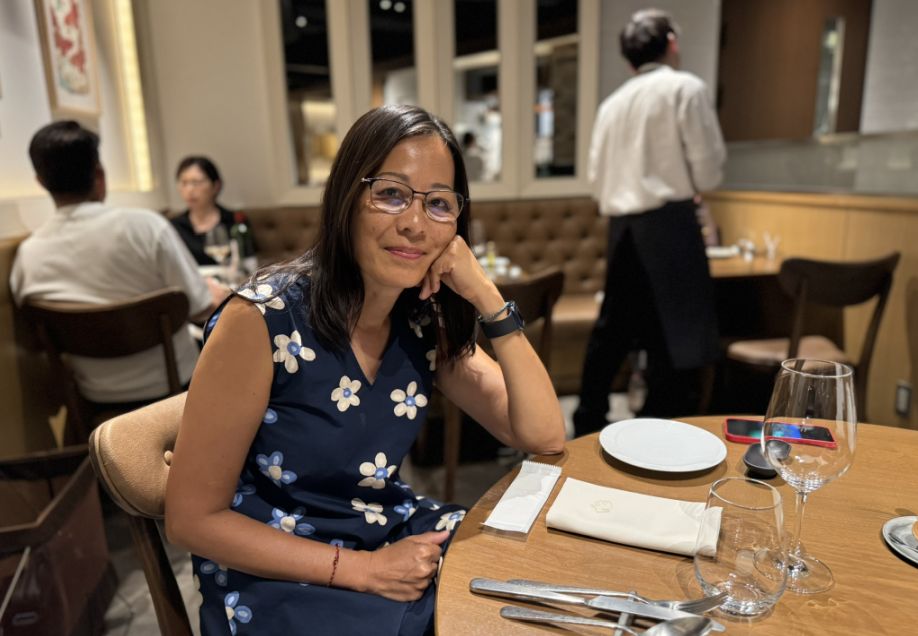
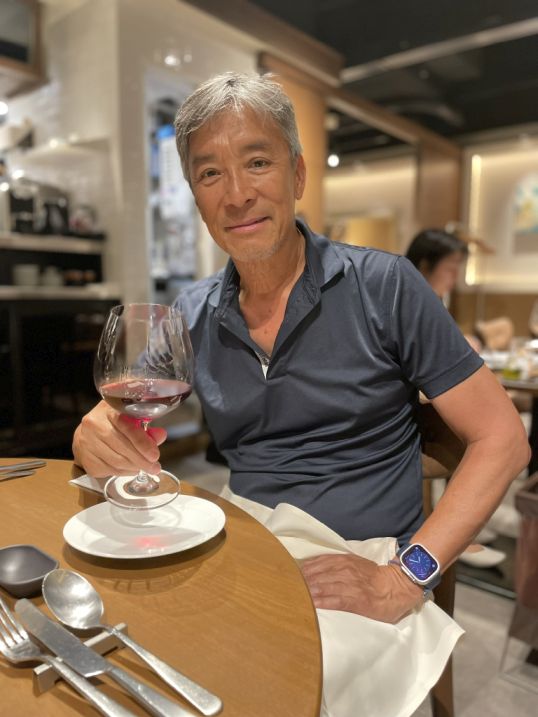
The lighting is warm and soft, reflecting off dark wood, polished surfaces, and neatly set tables, creating an atmosphere that is refined but never stiff.
 |
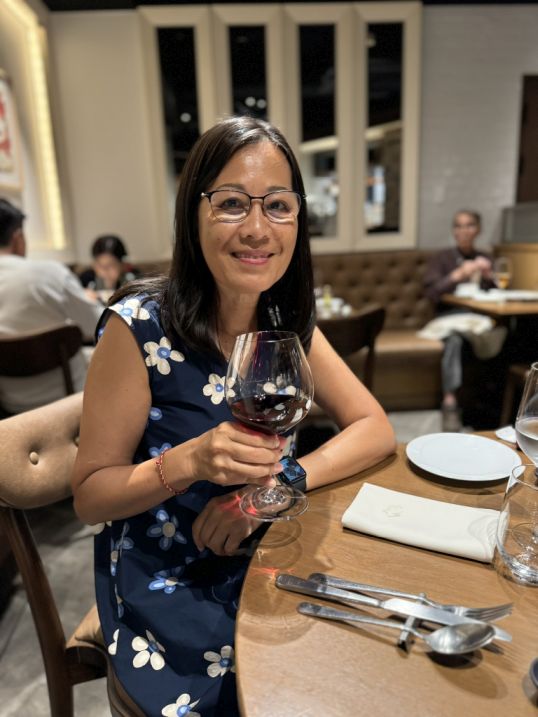 |
Cheers!
 |
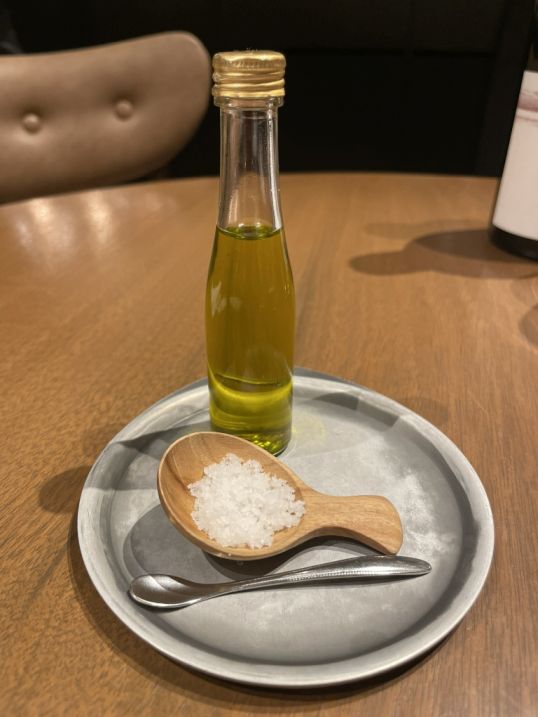 |
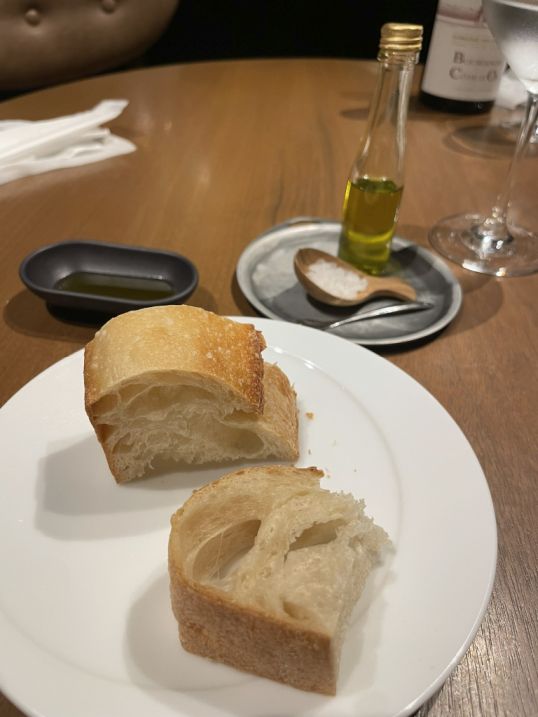
Warm baguette with olive oil and sea salt.
We chose the 5-course tasting menu, and every course felt carefully composed, elegant and comforting.
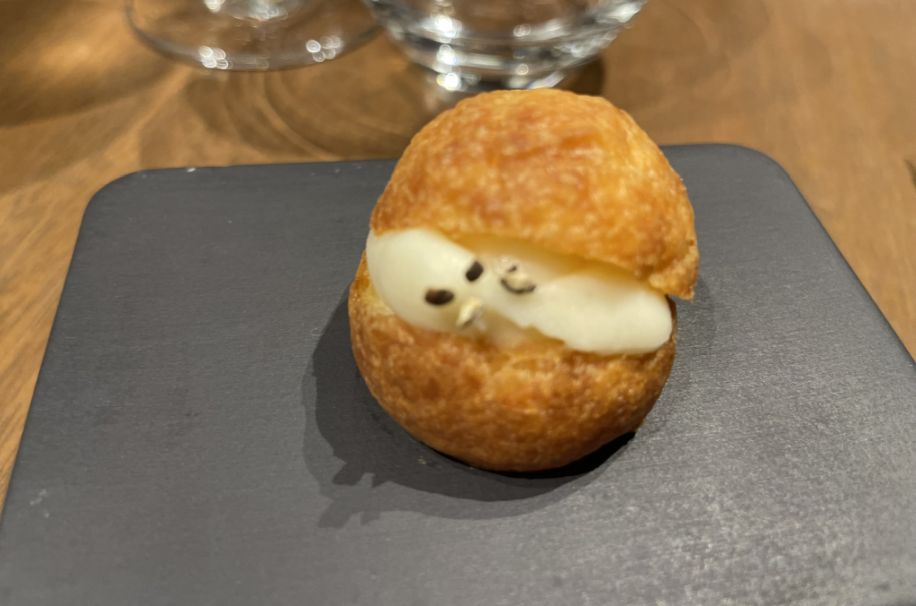
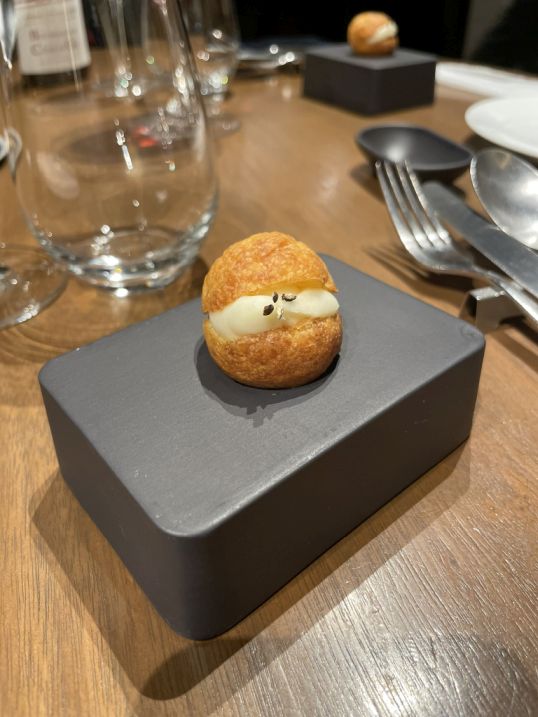
The meal began with a warm, airy gougère, its delicate choux pastry lightly crisp on the outside and soft inside.
 |
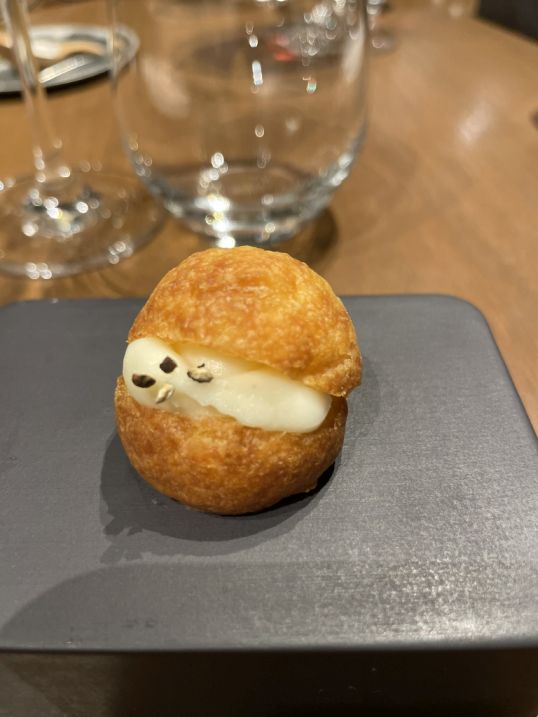 |
When we bit into it, a silky béchamel sauce flowed gently out, rich and buttery, a small but perfect opening note that hinted at classic French technique.
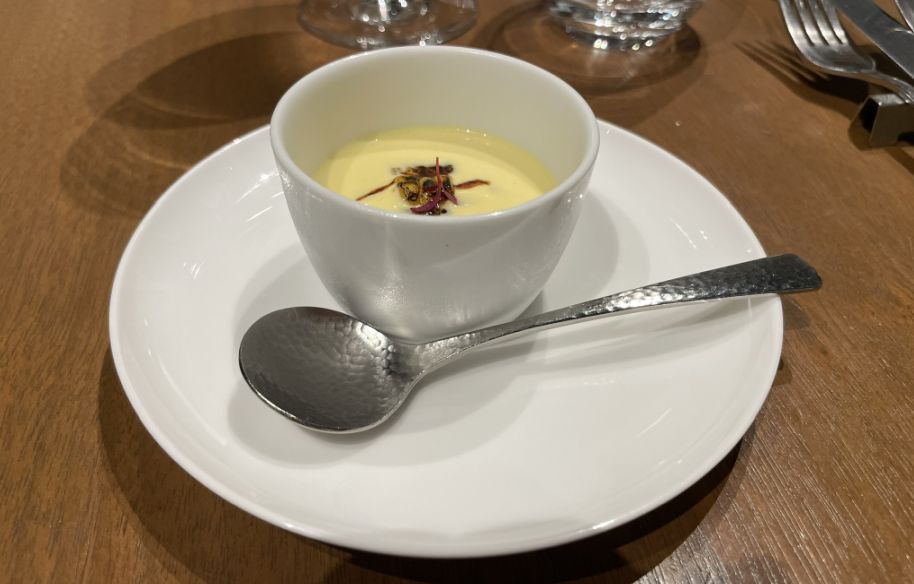
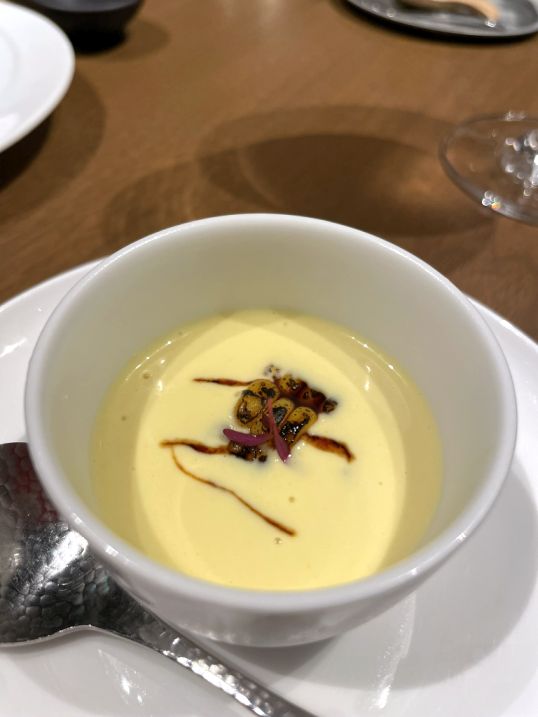
First course – Corn soup
 |
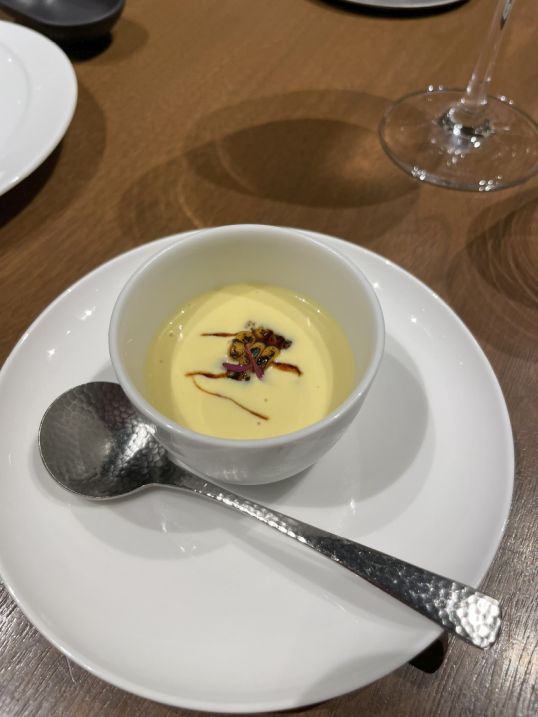 |
Next came a bowl of golden corn soup, impossibly smooth and naturally sweet. A few kernels of charred corn floated on top, adding a smoky contrast, along with a drizzle of deep brown sauce that brought a savory, roasted undertone. It tasted like summer, refined into velvet.
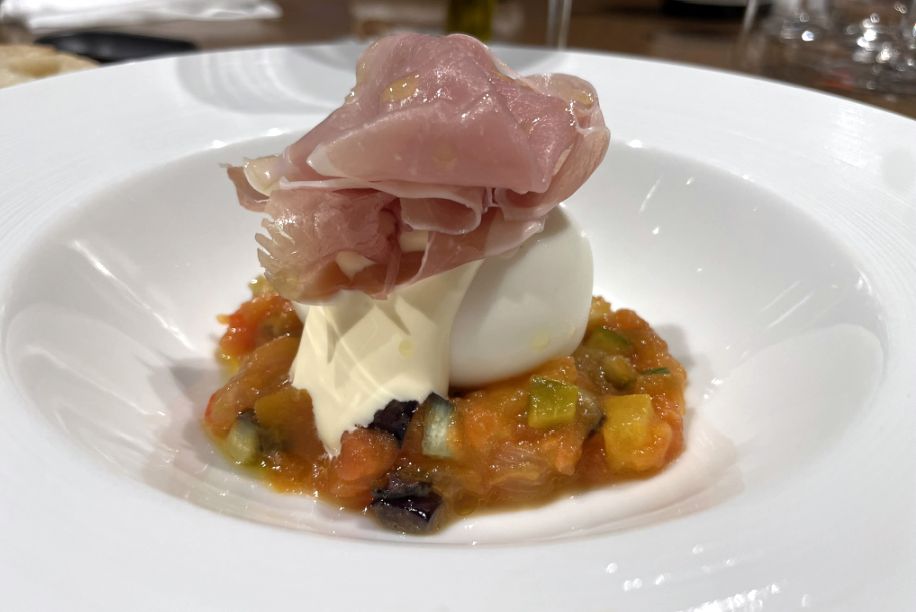
Second course – Ratatouille with poached egg and ham
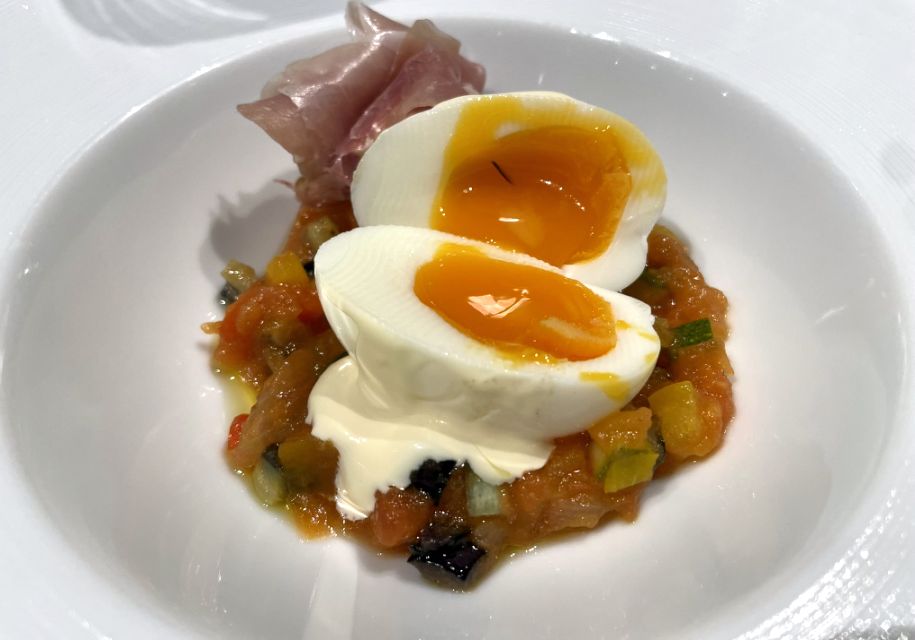
The ratatouille arrived beautifully layered, the vegetables tender but still distinct. On top sat a poached egg, and when we cut into it, the yolk slowly spilled out, becoming a sauce of its own. Thin slices of intensely flavorful cured ham rested over everything, adding salt and depth to the sweetness of the vegetables.
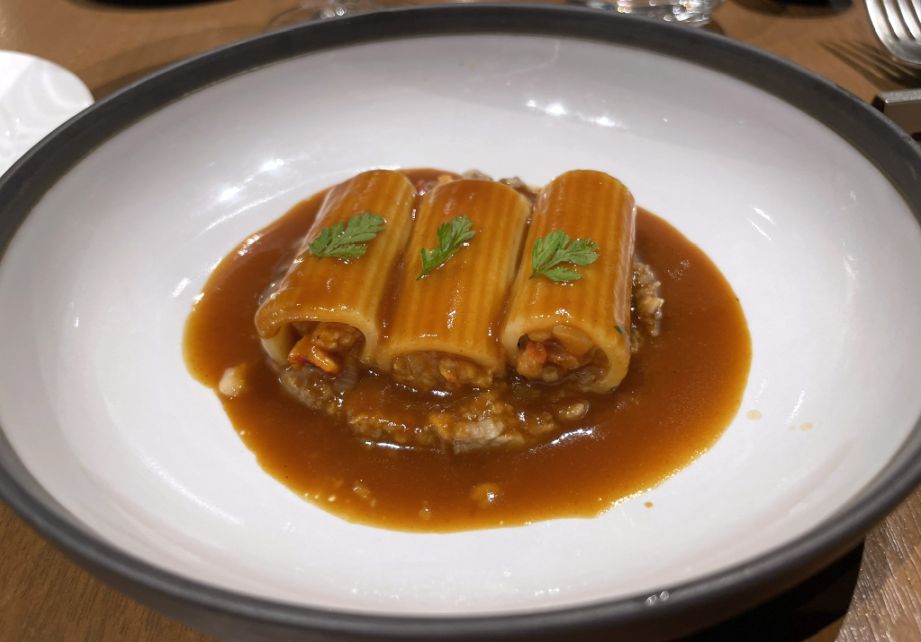
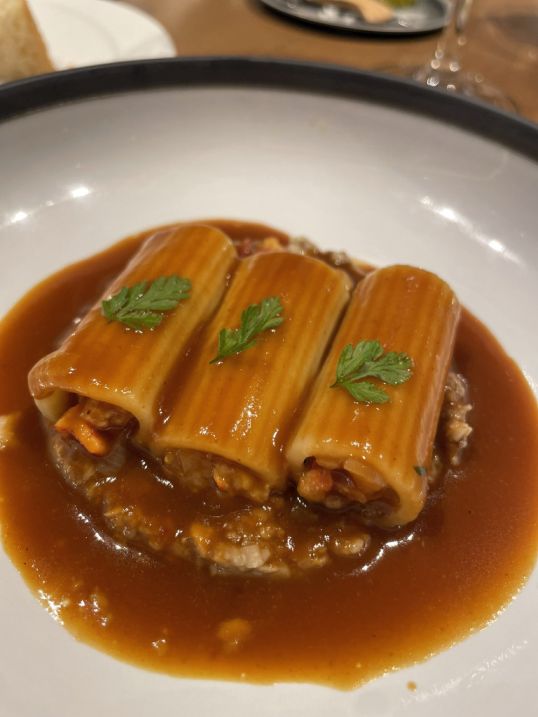
Third course – Signature stuffed pasta (Dominique Bouchet’s famous dish).
This was the restaurant’s legendary creation: a large pasta tube (macaroni) stuffed with a luxurious filling of foie gras, often mixed with mushrooms and truffle. It was napped in a glossy veal demi-glace.
 |
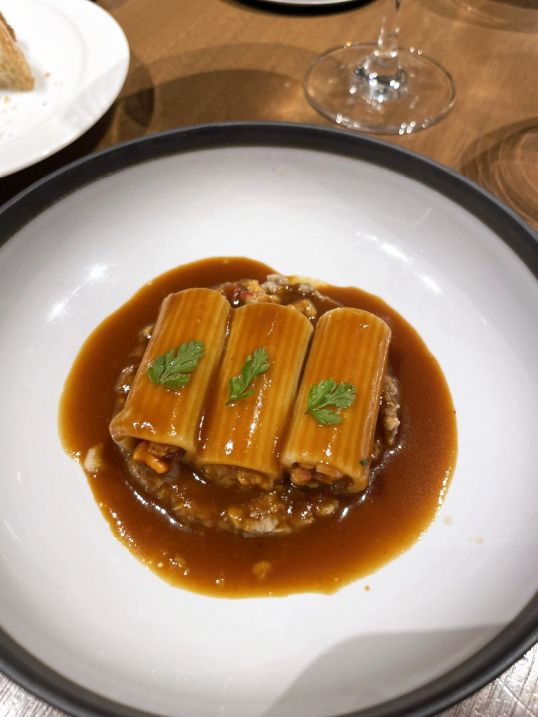 |
From the outside it looked simple, but inside it was incredibly rich and smooth, almost creamy, with deep, earthy flavors. This dish is one of Chef Dominique Bouchet’s signatures and is widely known in Tokyo’s French dining scene, understated in appearance, unforgettable in taste.
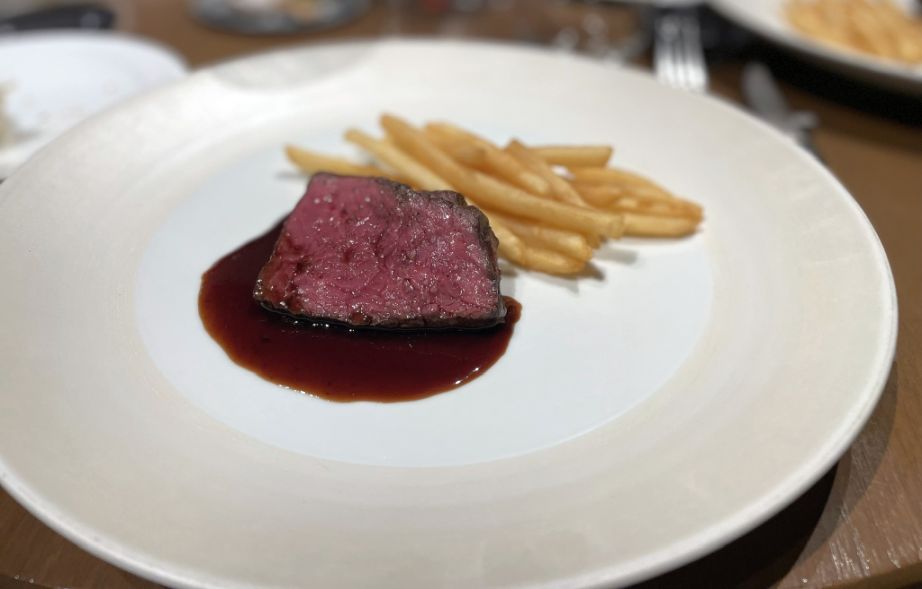
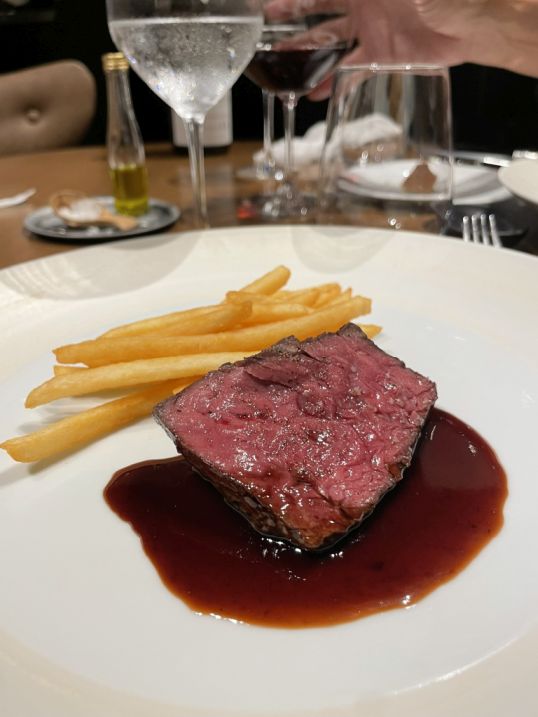
Main course – Wagyu Beef
 |
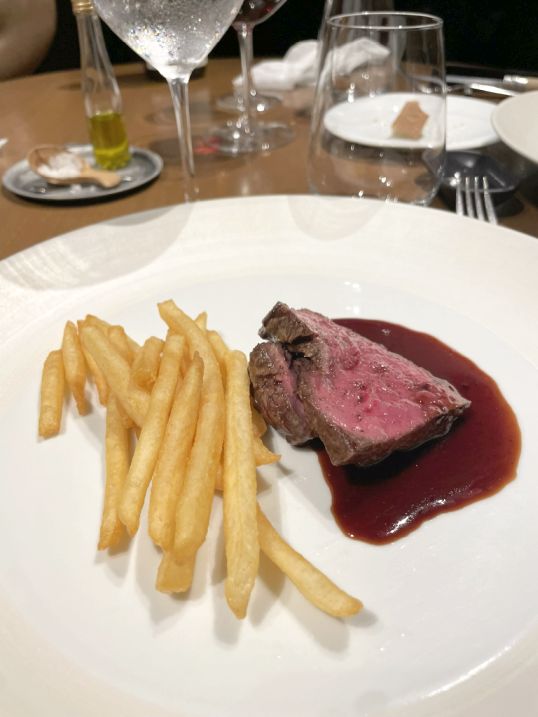 |
Then came a stunning piece of beef, a Japanese wagyu: perfectly seared on the outside, deeply caramelized, and ruby-red inside served with a deep and flavorful Bordelaise sauce . It was tender enough to cut with the side of a fork. Alongside were crispy French fries, golden and thin, offering a casual contrast to the refined meat. Simple, confident, flawless.
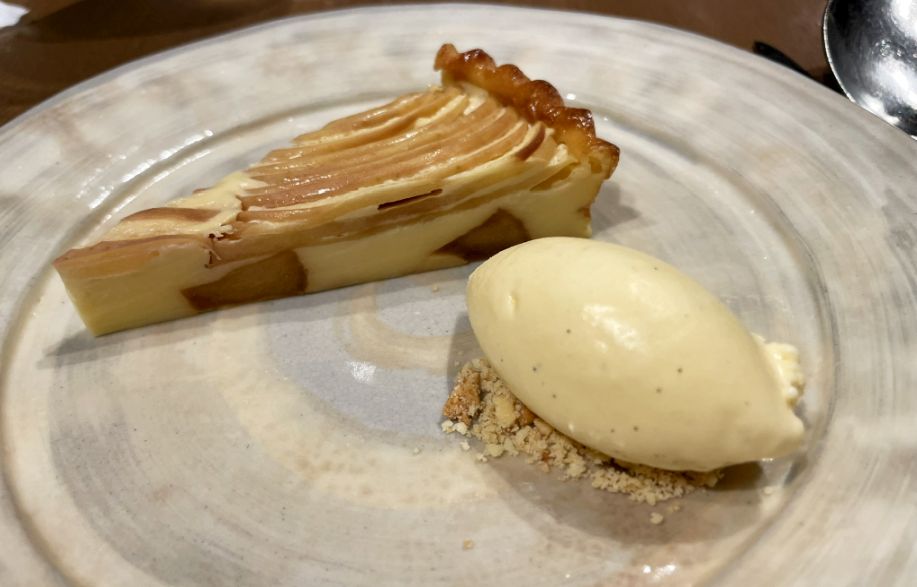
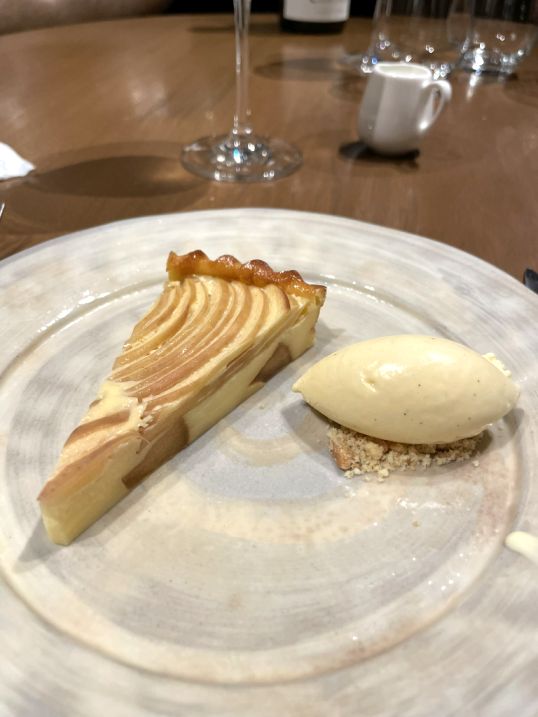
Fifth course: Dessert – Tarte Normande and ice cream
 |
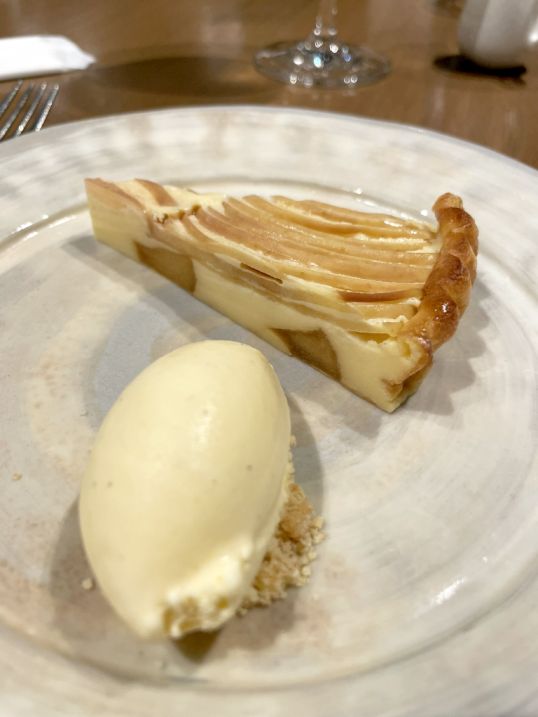 |
To finish, a warm apple custard pie, its pastry delicate and buttery, filled with soft, gently spiced apples. It was served with a scoop of cold vanilla ice cream, and a layer of crushed nuts underneath for texture. Warm and cold, creamy and crisp, a classic ending done with quiet elegance.
 |
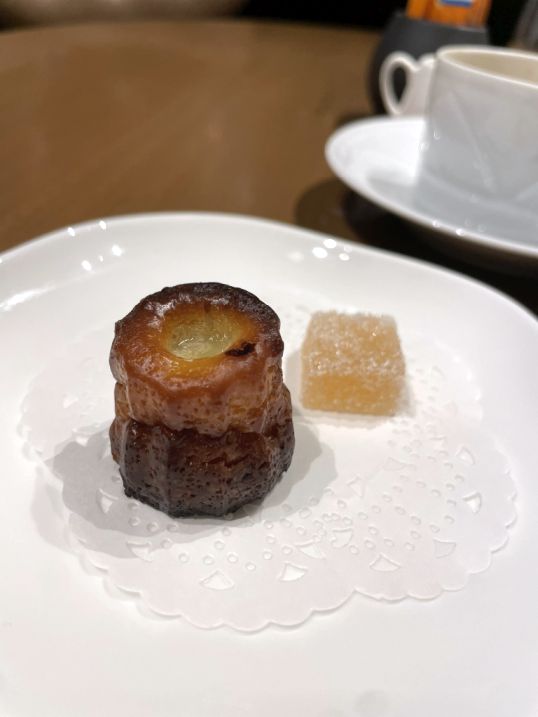 |
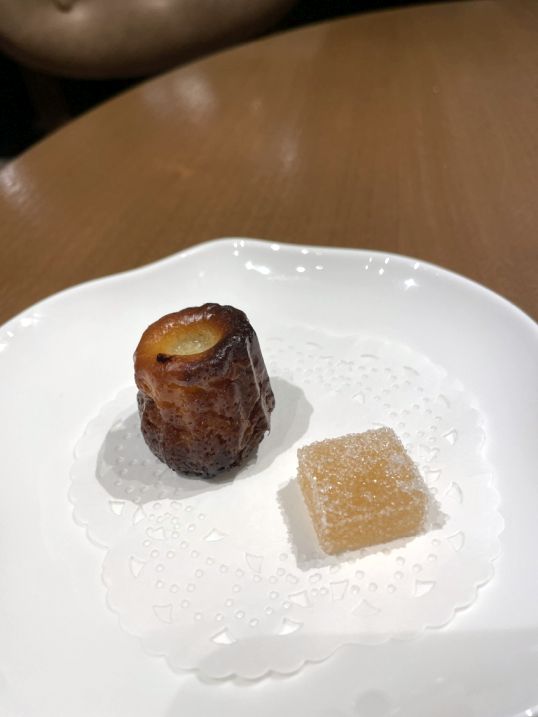
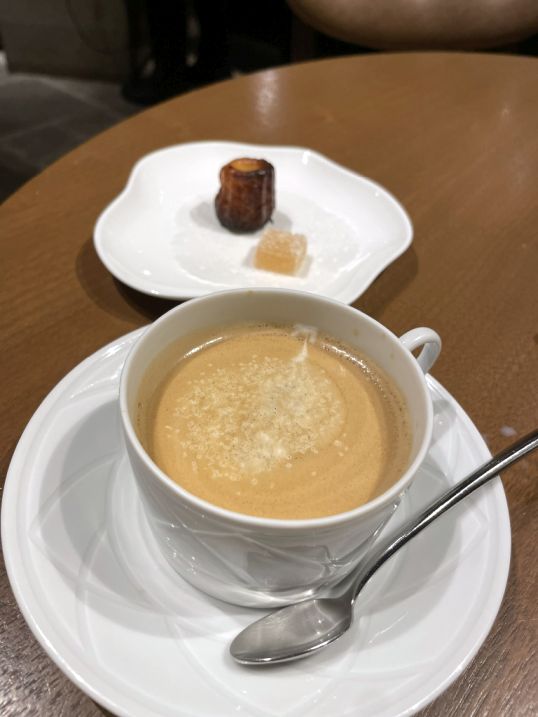
The meal ended with a final, thoughtful touch: a small plate of mignardise (the last sweet treats afte the main dessert), a perfectly baked cannelé, its dark shell delicately crisp and caramelized, and a jewel-like square of pâte de fruit, bright and fragrant.
 |
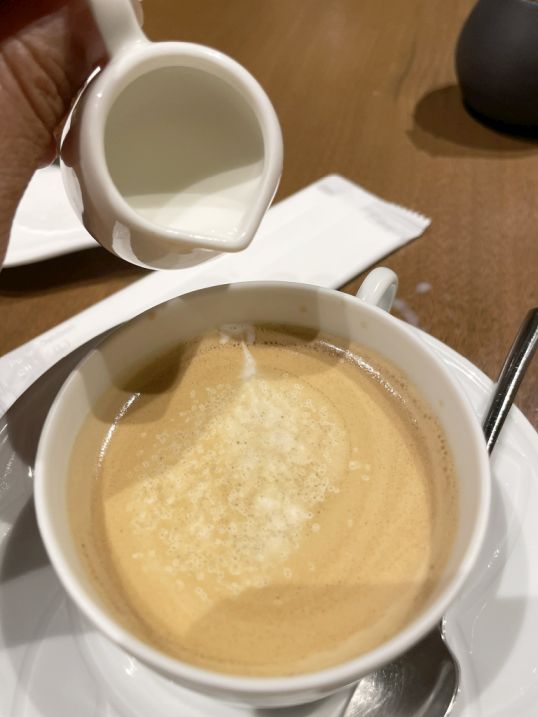 |
I ordered a coffee to go with it, enjoying the familiar contrast I love so much, the deep bitterness of the espresso against the lingering sweetness of dessert.
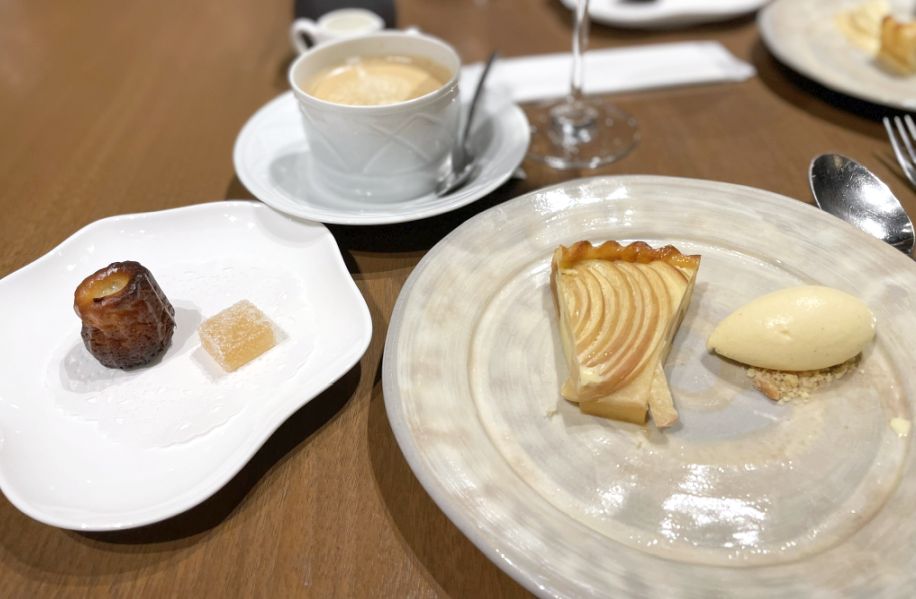
A perfect ending of very good meal.
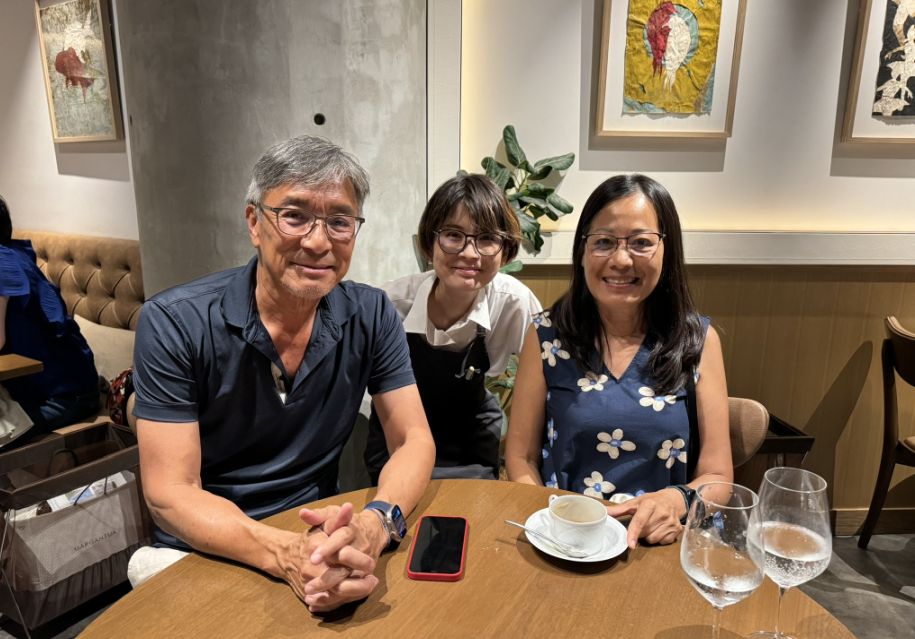
But what stayed with us just as much as the food was the warmth of the service. Our waitress was gentle, attentive, and quietly joyful in the way she explained each dish and watched over our table. We asked if she spoke French; she smiled and said only a few words, but her hospitality needed no translation.
By the end of the evening, after such a memorable meal, we asked if she would take a photo with us. She laughed, a little shyly, and agreed. It felt like the perfect way to close the night, not just having enjoyed remarkable cooking, but having shared a small human moment too. We highly recommend this restaurant if you are in Tokyo.
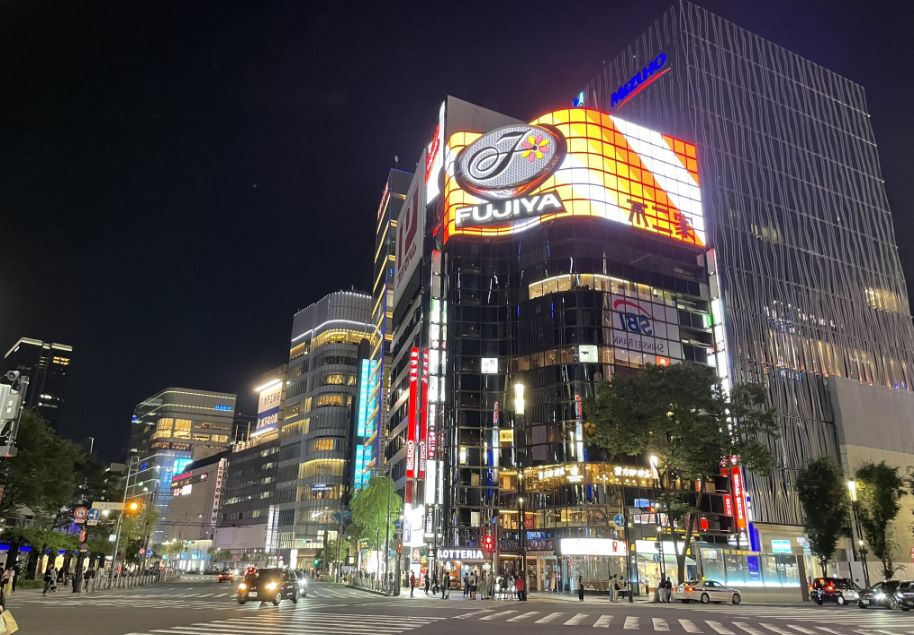
After dinner we walked back to our hotel and in the distance is the Fujiya Building, a historic landmark in Ginza, famous for its massive, glowing neon signage that has defined the Sukiyabashi crossing for decades. The bright light at the top prominently features the logo of Fujiya, one of Japan's most famous confectionery and restaurant chains (known for their mascot, Peko-chan). Visitors often describe the building as a "beacon" of Ginza; its bright, multicolored neon is one of the few remaining large-scale classic neon signs in a district increasingly dominated by LED screens.
 |
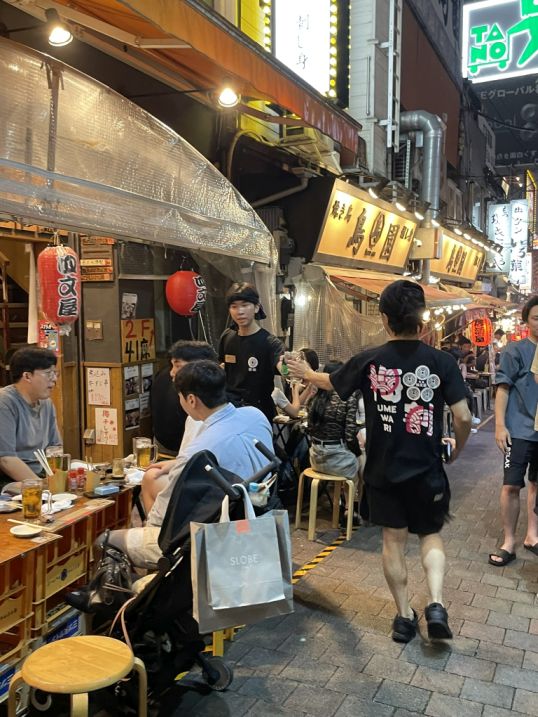 |
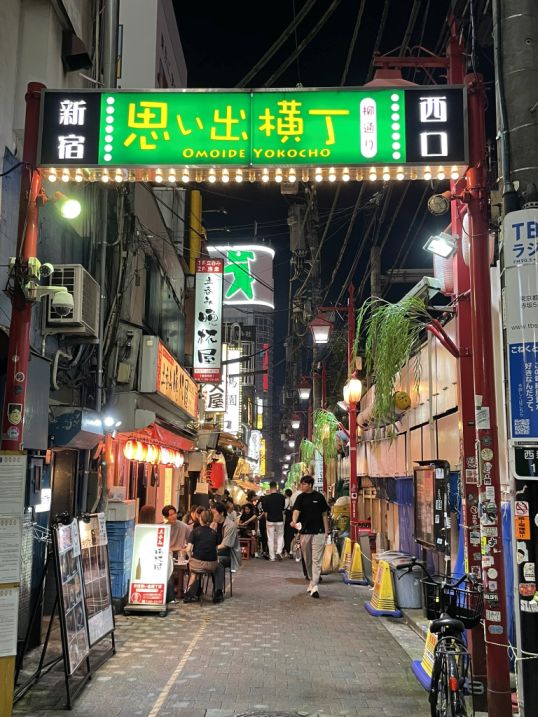
Omoide Yokocho (Memory Lane) is located right next to Shinjuku Station, is a narrow, atmospheric alleyway that feels like a portal back to the 1940s. While it is officially named "Memory Lane," it is still affectionately known by locals as "Piss Alley" (Shonben Yokocho), a nickname from its post-war roots when it was a rough-and-tumble black market area. Today, it is a beloved destination for both locals and travelers seeking an authentic "Old Tokyo" vibe
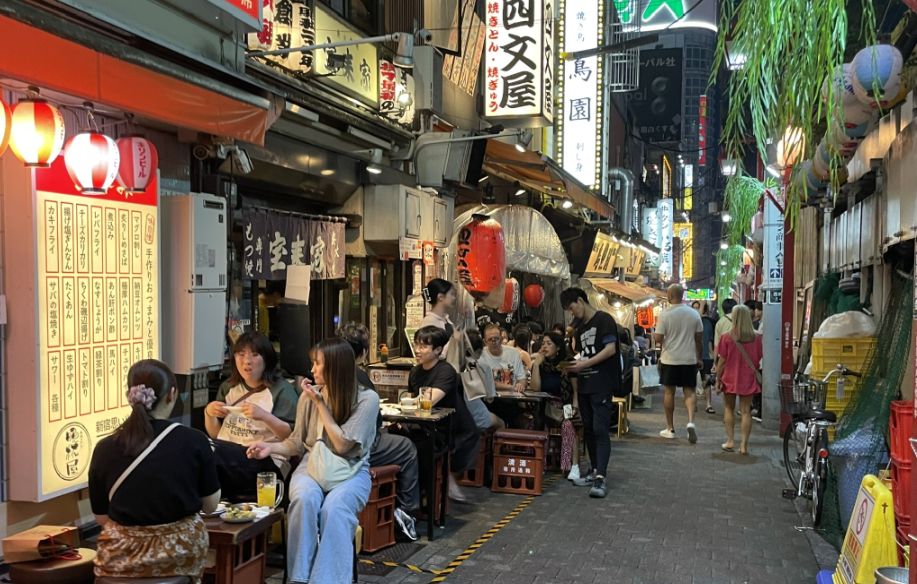
It is one of the liveliest pockets in Tokyo with people enjoying sitting al fresco.
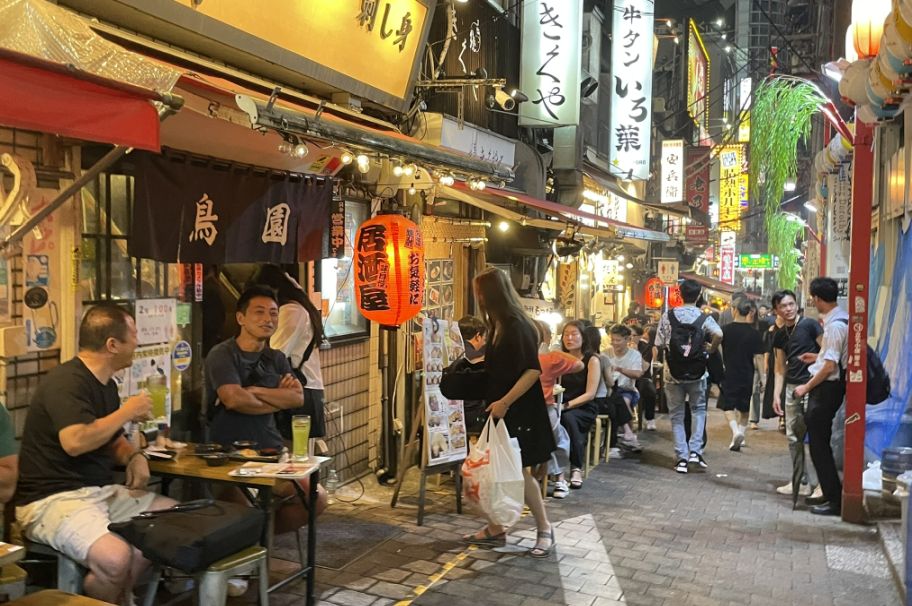
Many of the tiny restaurants simply don’t have enough space inside, so they spill out into the alley, setting up low tables, folding chairs, or narrow counters right along the walkway.
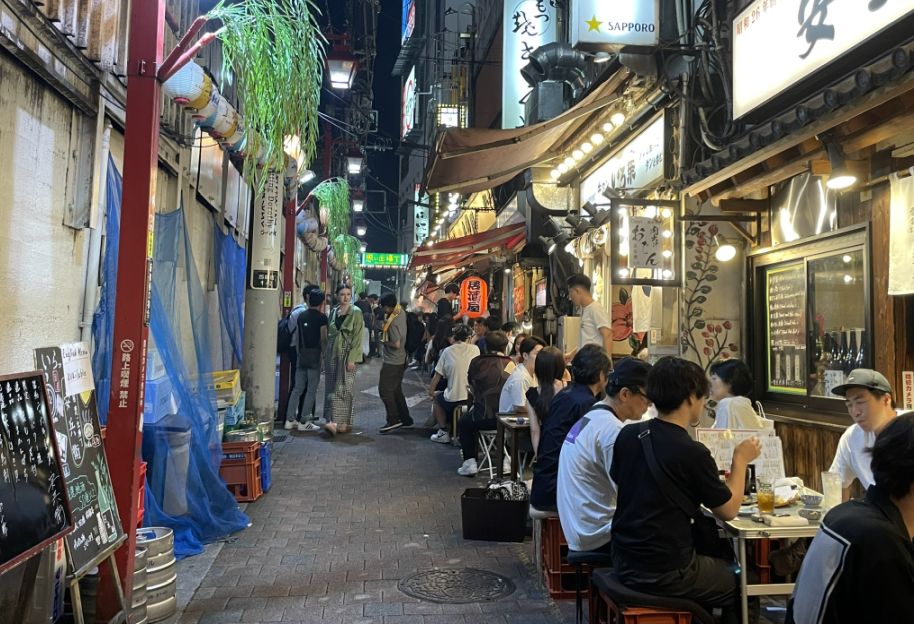
There’s no real boundary between restaurant and street, diners, pedestrians, cooks, and servers all share the same narrow space. You walk just inches from people eating, clinking glasses, and laughing with friends or coworkers after a long day
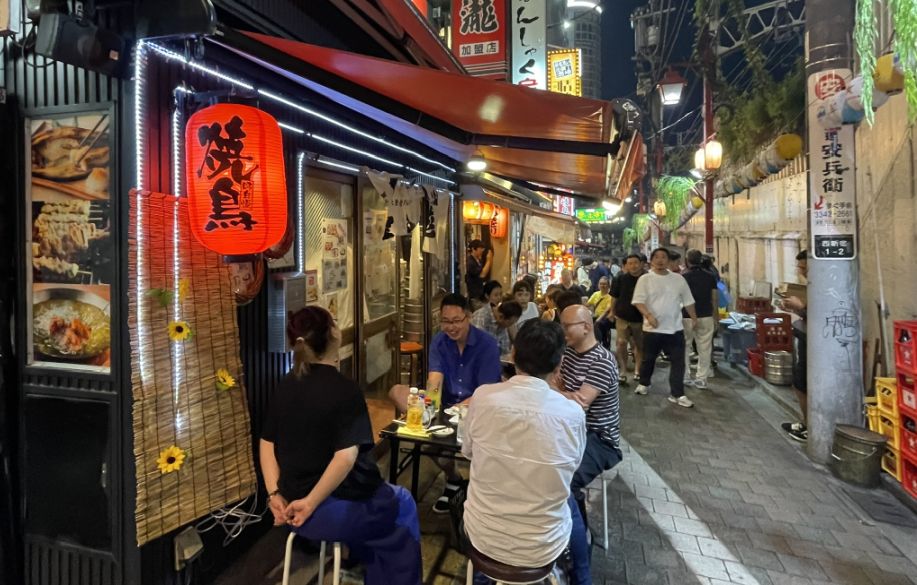
At night, it feels almost like an open-air festival. Lanterns glow overhead, grills crackle, and conversations overlap in every direction. You see groups leaning close together, strangers striking up conversations, and solo diners chatting easily with the chef in front of them. The smiles, the raised beer mugs, the constant motion, it all creates a warm, human energy that’s hard to find in more polished neighborhoods.
 |
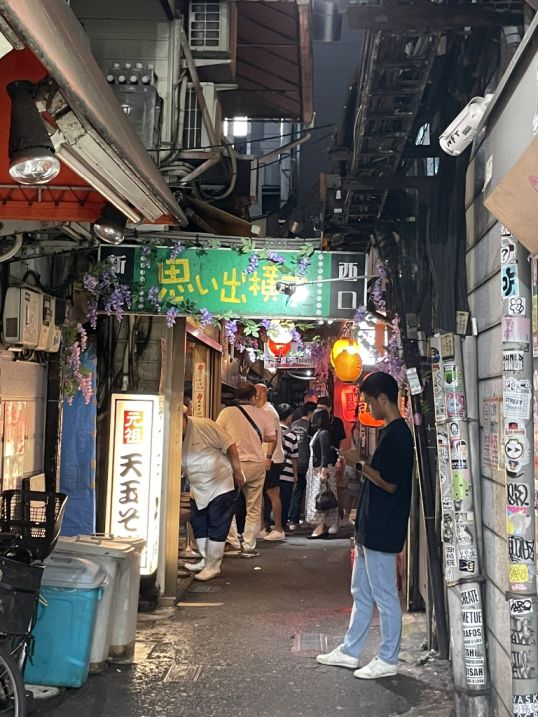 |
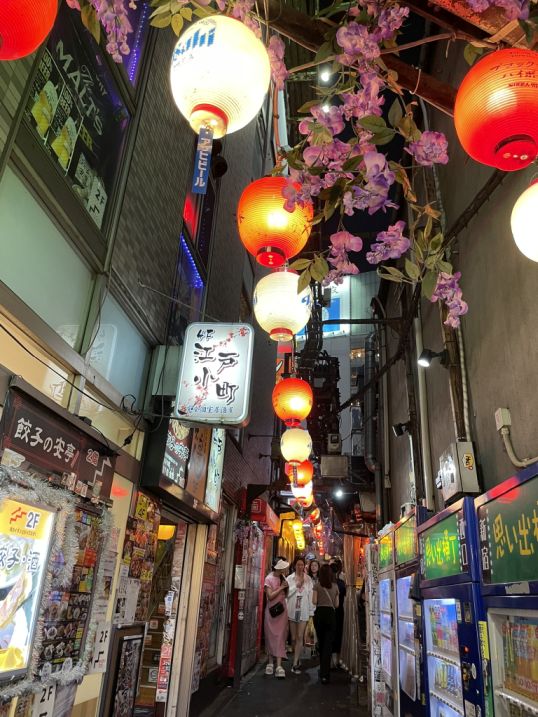
As you moved deeper in, Omoide Yokocho began to feel even more intimate, almost secret. The alley narrowed until two people could barely pass without turning sideways. Overhead, strings of round paper lanterns came into view, some glowing red, others soft white, mixed with strands of faded artificial flowers that fluttered slightly whenever someone brushed past.
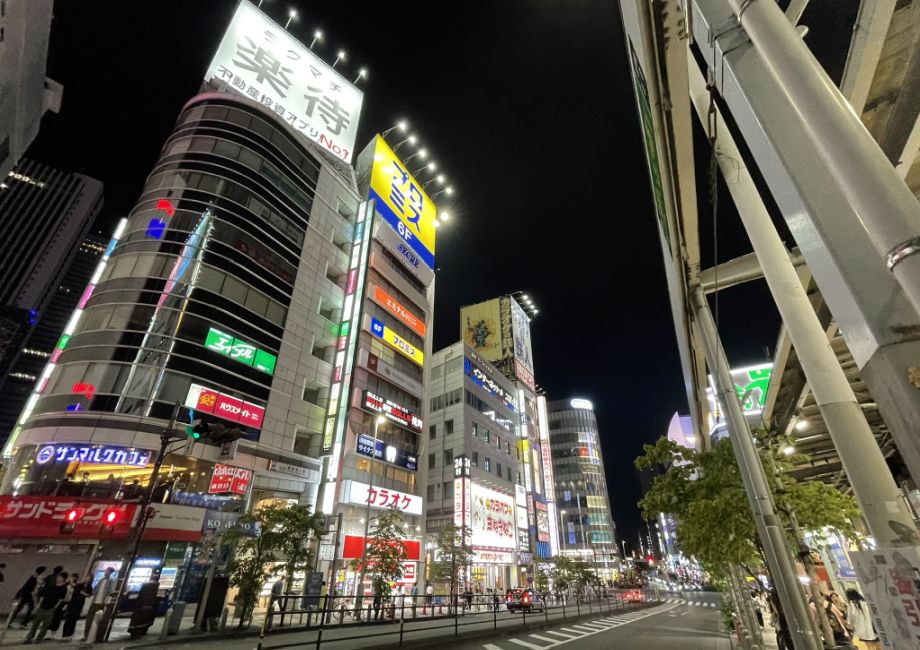
We walked passed Shinjuku area, but now with only small clusters of people drifting through instead of the earlier crowds.
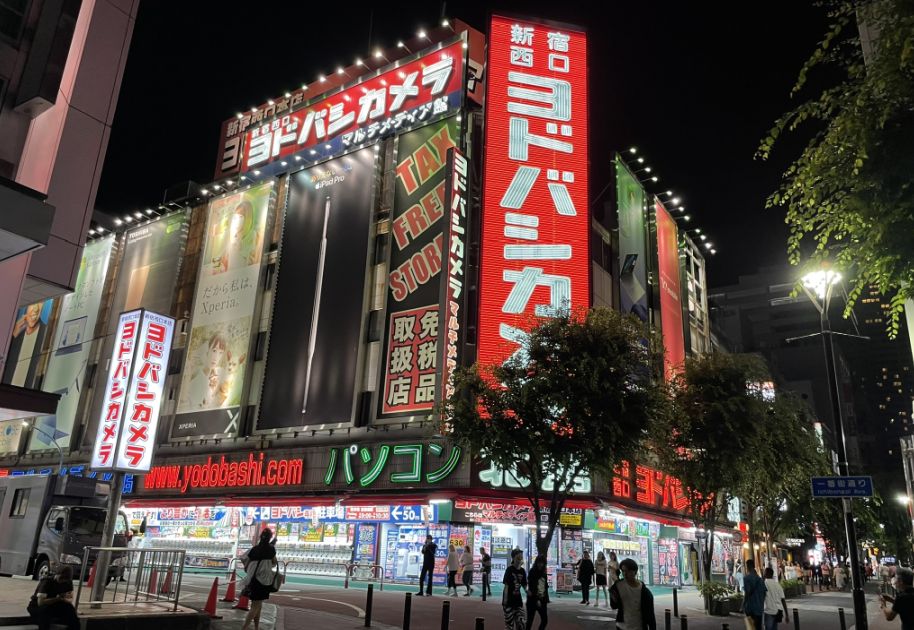
Then the Yodobashi Camera building came into view. Its huge red sign shone steadily against the dark sky. Without the daytime noise and rush, the building felt almost monumental, a silent landmark watching over the emptying streets. The city hadn’t gone to sleep, but it had softened, letting us walk the last part of the way back in a rare, peaceful version of Shinjuku.
NEXT... Day 8- Yoyogi Park, Tokyo