9 days in Japan- 6/23- 7/1/2024
| Day
1-Niigata Arrival In Niigata Dinner at Echigo Banya |
Day
2-Niigata Fish Market Downtown/Lunch Dinner at Sushi Arai |
Day
3-Niigata Hakusan Shrine Sake Brewery Tour Lunch/Dinner |
Day
4-Niigata Northern museum Farm Land |
Day
5-Niigata Fukushimagata Walking around Dinner at Ebisudai |
Day
6-Tokyo Dinner at Jomon |
Day
7-Tokyo Arakawa Arakawa Cont. Ginza Dinner at les Copains |
Day
8-Tokyo Yoyogi Park Uneno Park Dinner at Uoshin Golden Gai |
Day
9-Tokyo Metropolitan office |
Day 8-Yoyogi Park, Tokyo-6/30/2024
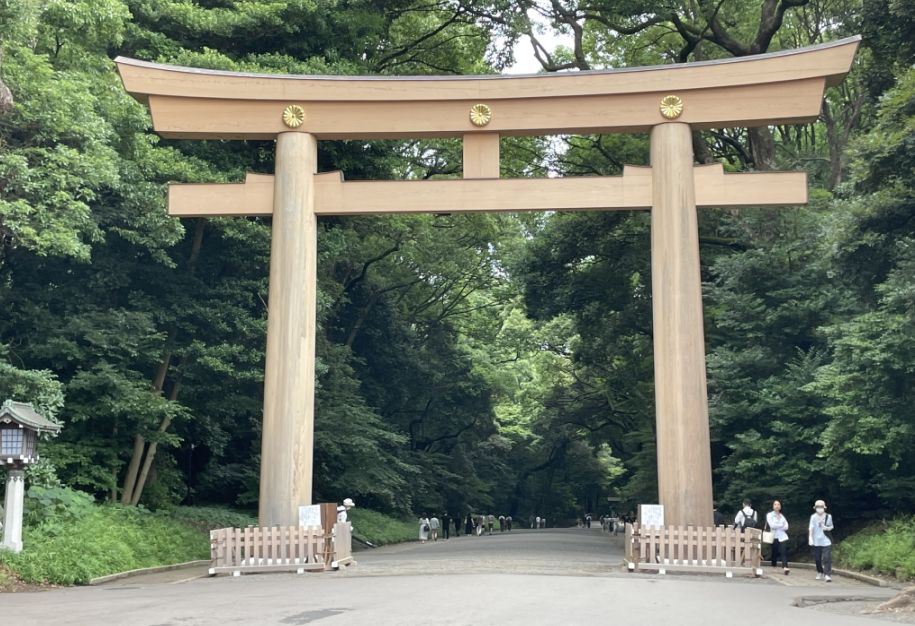
This morning we are headed to Yoyogi park and I did not realized it was located right next to Meiji-Jingu Shrine which we have visited twice in our previous travel.
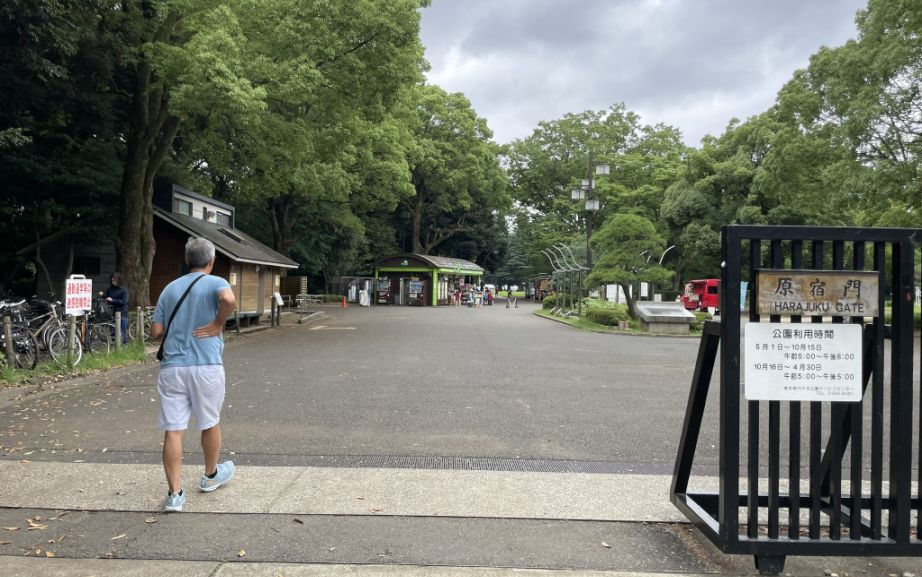
We are now entering the park.
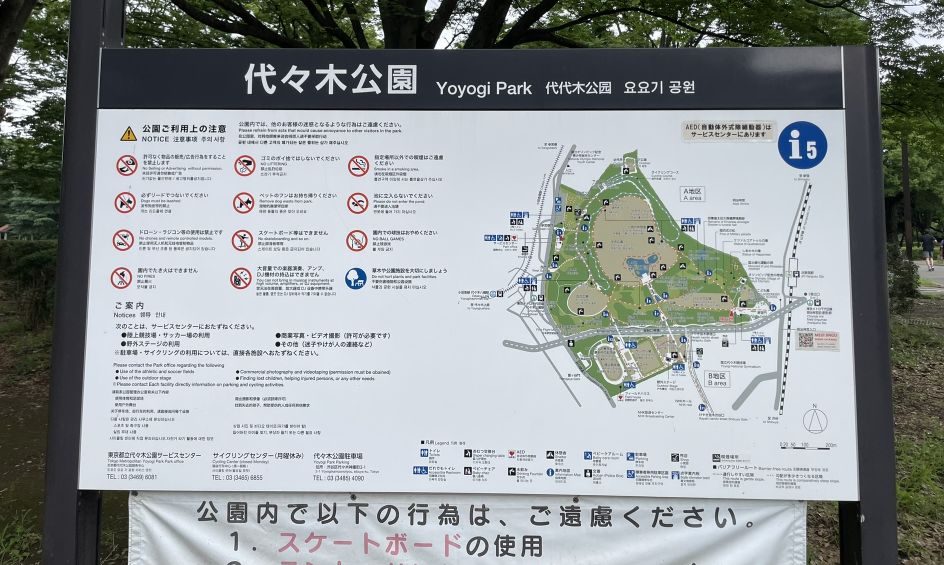
Map of the Park. Yoyogi Park is one of Tokyo’s largest and most beloved urban parks, covering about 134 acres. To give a sense of scale, it is roughly the size of 75 football fields, big enough that once you are inside, the noise of Shinjuku and Harajuku fades away and it truly feels like a forest in the middle of the city. Unlike many Japanese gardens that are tightly designed, Yoyogi has wide lawns, long tree-lined paths, and natural wooded areas. People come here to jog, picnic, walk dogs, practice music or dance, and simply lie on the grass. It feels relaxed and spacious , very different from the crowded streets just outside.
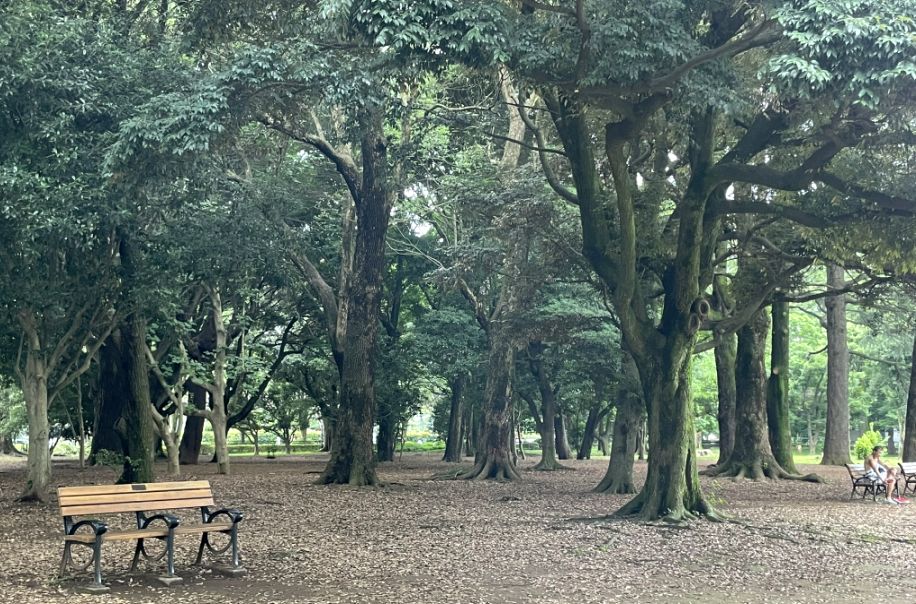
Entering the gates, wide paths unfold beneath tall zelkova and ginkgo trees, their branches forming a soft green canopy overhead.

The park is lively, with runners moved steadily along the paths, couples walked their dogs, and small groups stretched on the grass.
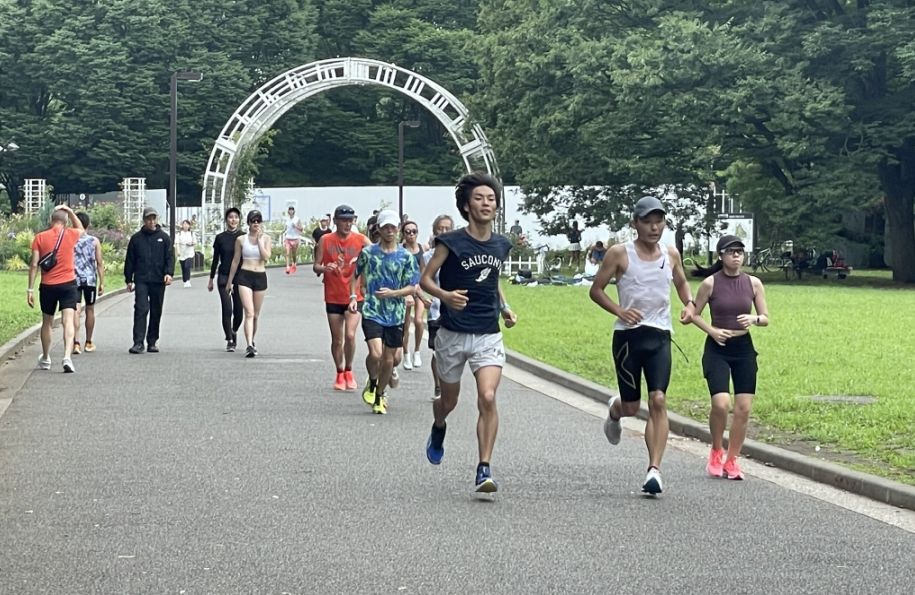
So many are jogging in this area.
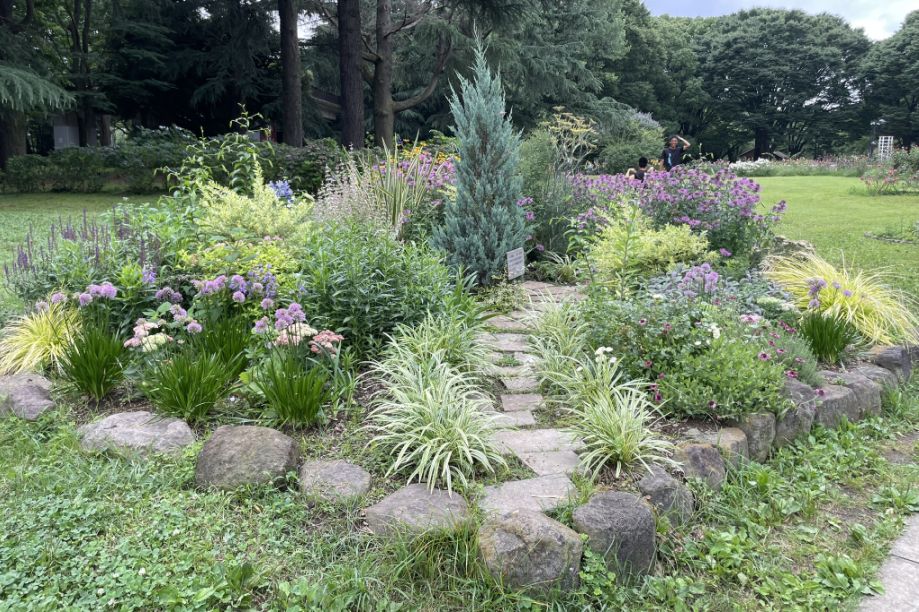
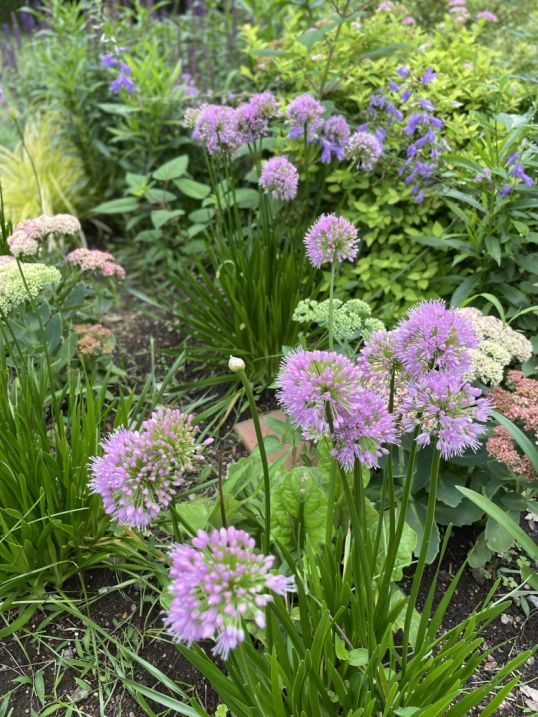
Nearby, a circular garden bed was planted with ornamental allium, tall stems topped with perfect purple spheres, sometimes called ornamental onions or German garlic.
 |
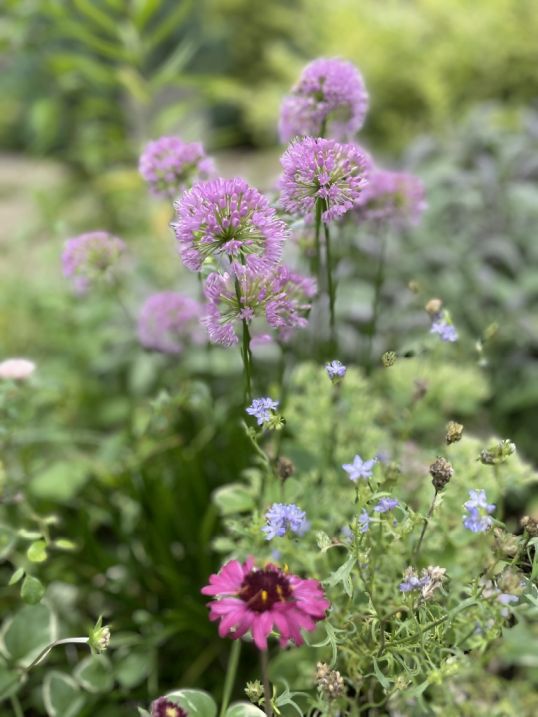 |
Beautiful purple flowers in full bloom.
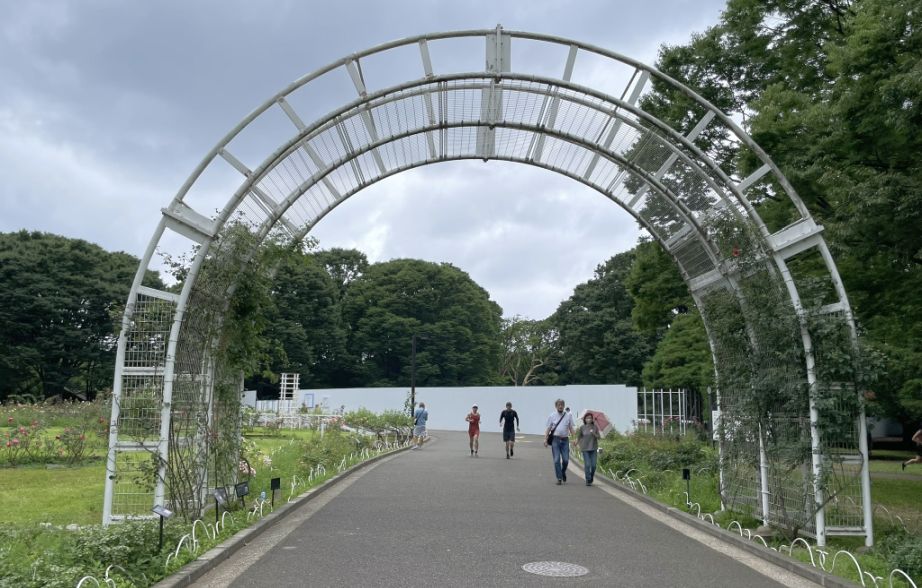
The white metal arch is the entrance of the Rose garden inside the park. While there are multiple paths into the garden, the white archway serves as the formal "visual" entrance, designed to allow climbing roses to eventually cover the metal frame, creating a tunnel of flowers.
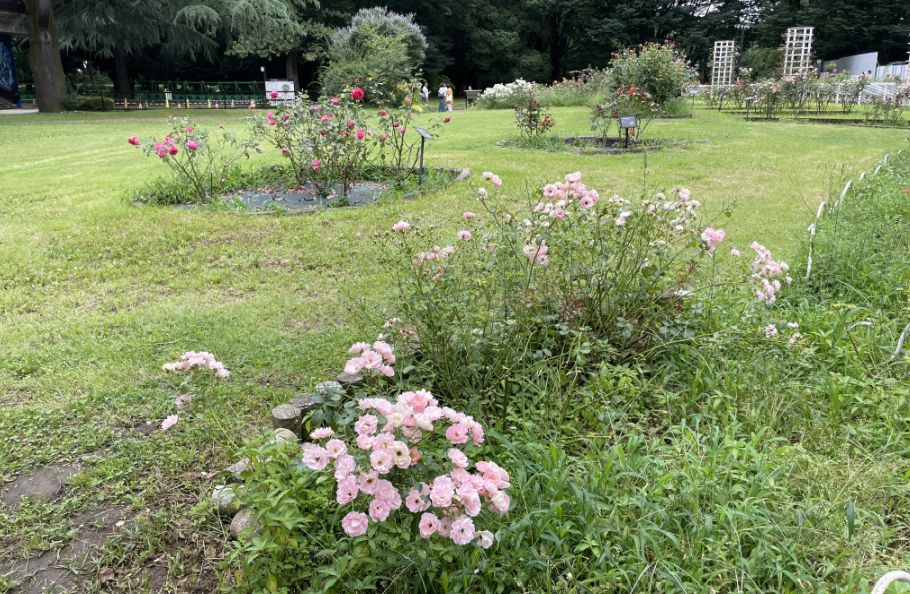
We timed our visit perfectly for the tail end of the Spring Rose season. Roses in Tokyo have two peak periods: Spring (mid-May to late June) and Autumn (mid-October to mid-November).
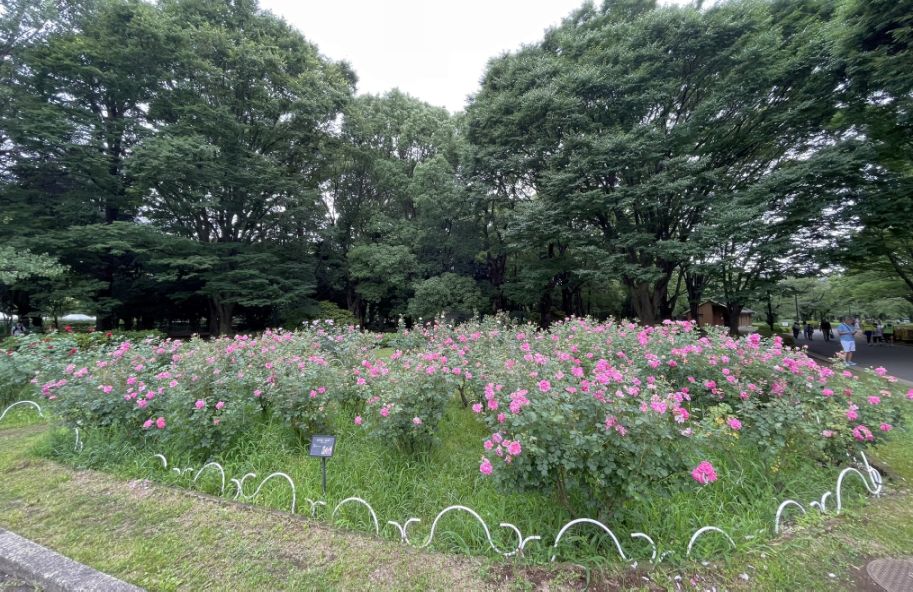
A patch of pink single flowered Rose.
 |
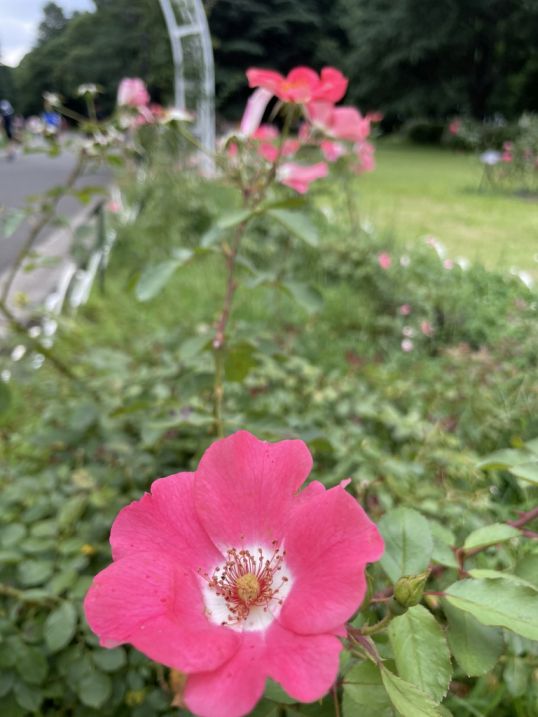 |
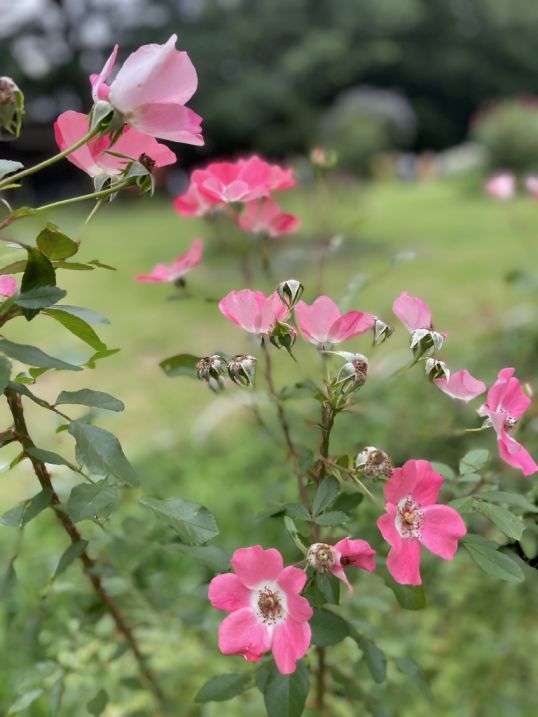
While many famous roses are "double-flowered" (packed with dozens of petals like a peony), single-flowered roses typically have only 5 to 8 petals. This gives them a simple, elegant look that more closely resembles a wild flower or a cherry blossom.
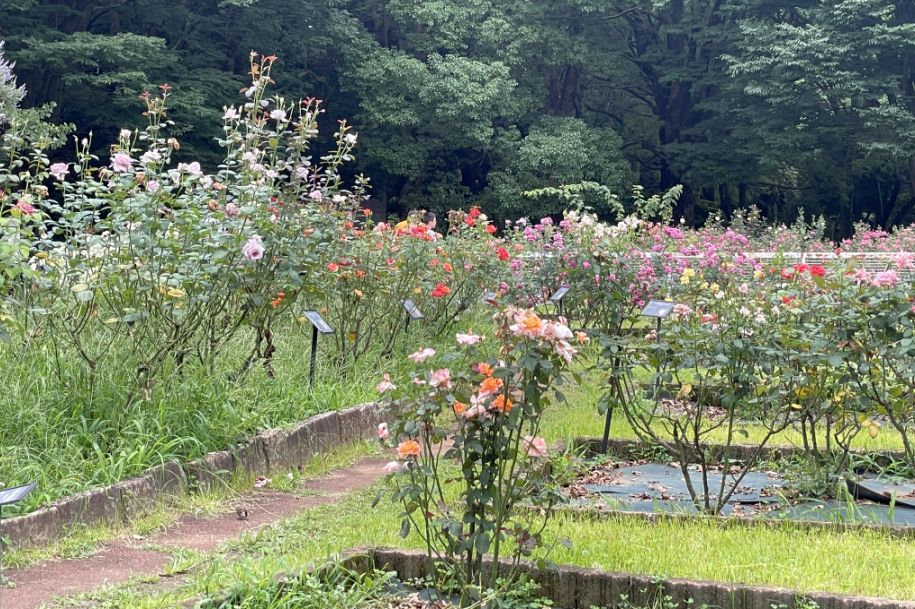
The Yoyogi Rose Garden is unique because it is managed largely by local volunteers. Unlike the manicured, fee-paying gardens like Shinjuku Gyoen or Jindai, this garden has a more community-focused, "secret garden" feel despite being in one of Tokyo's busiest parks. We saw, pink, orange, yellow, purple, and lavender roses that represent the incredible diversity of the 700 rose plants in this garden.
 |
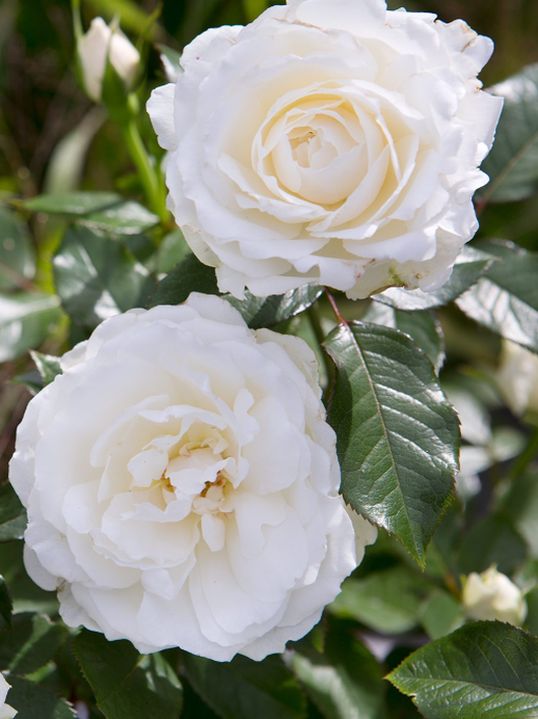 |
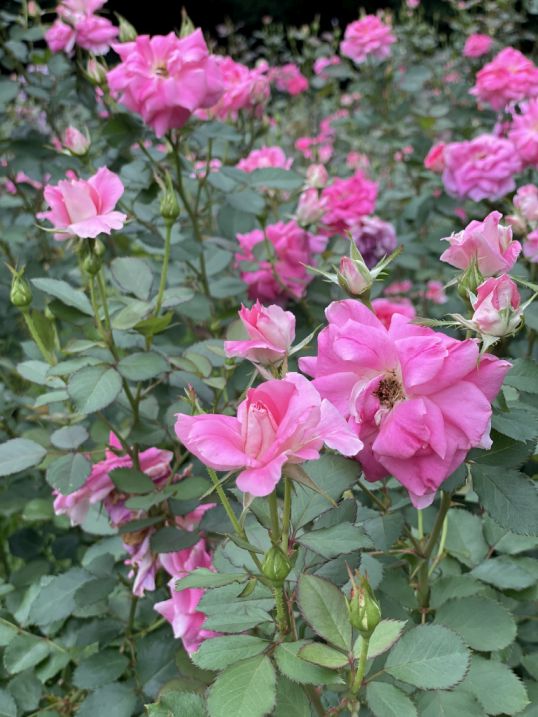
Pink and white roses.
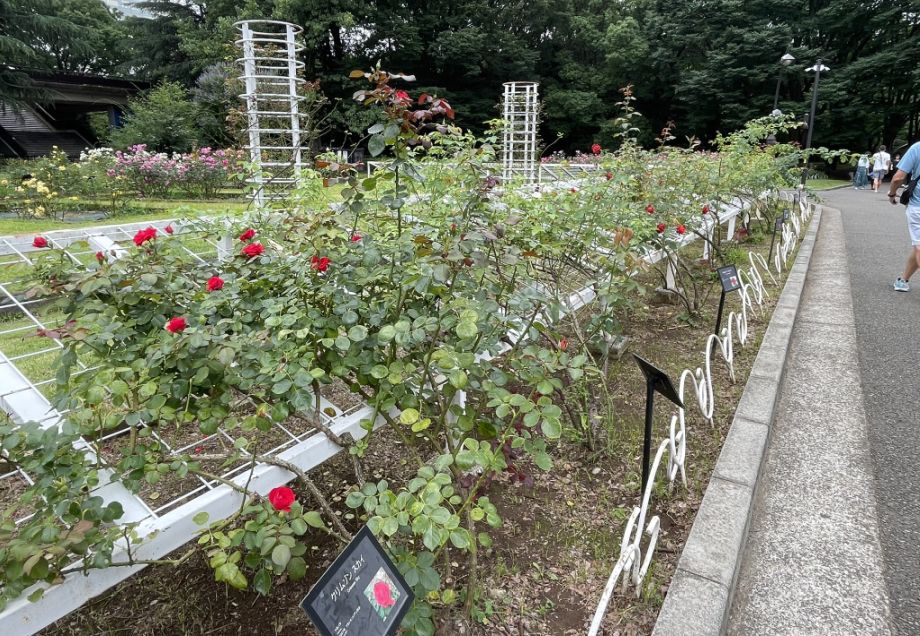
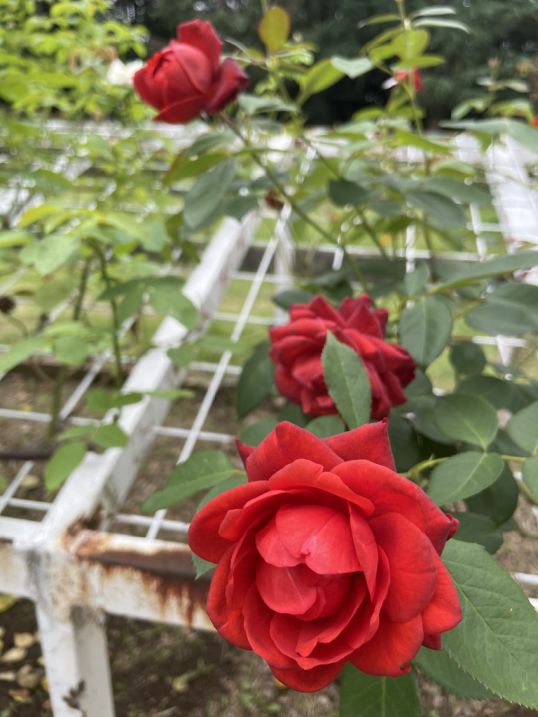
Rosa chinensi growing along the walkway.
 |
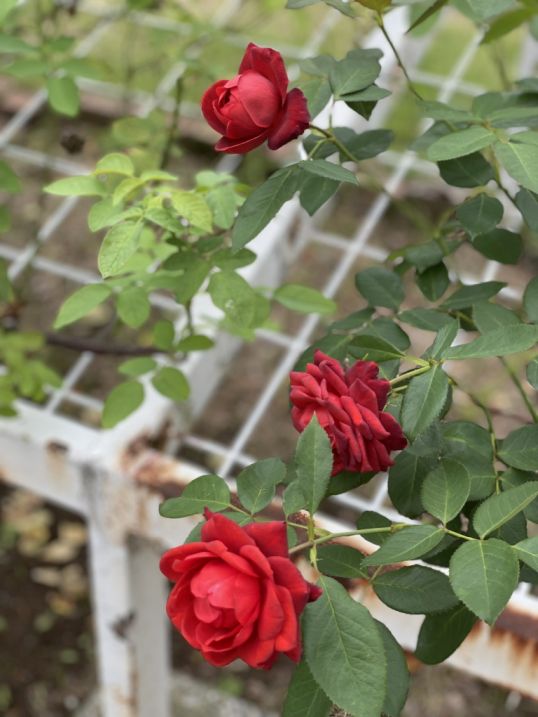 |
Rosa chinensis varieties are ancestors of many modern roses and are famous for their "repeat-blooming" nature, which is why they were still looking so good in late June.
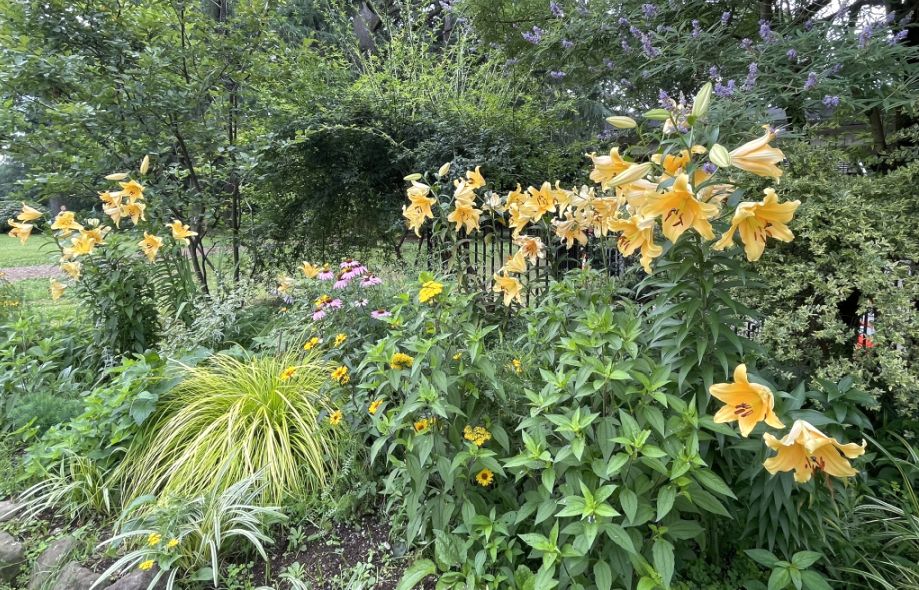
This area is next to the Rose garden with a mixed of yellow lilies, cone flowers, and yarrow. The lilies provide a massive pop of saturated yellow that stands out even from across the park.
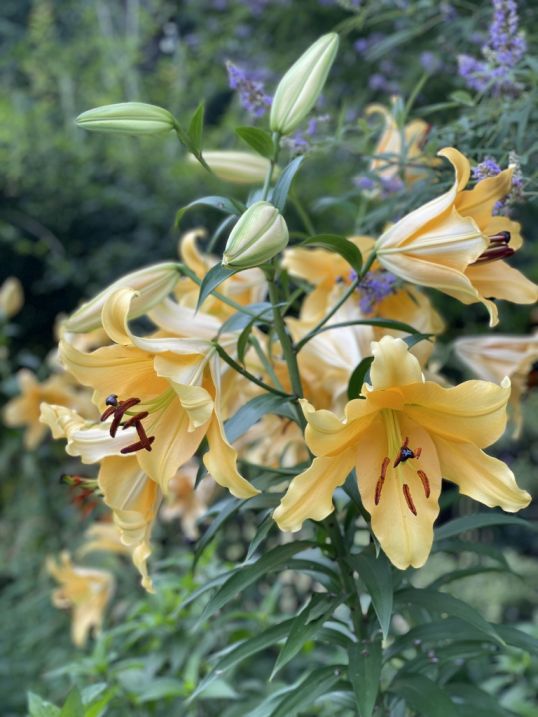 |
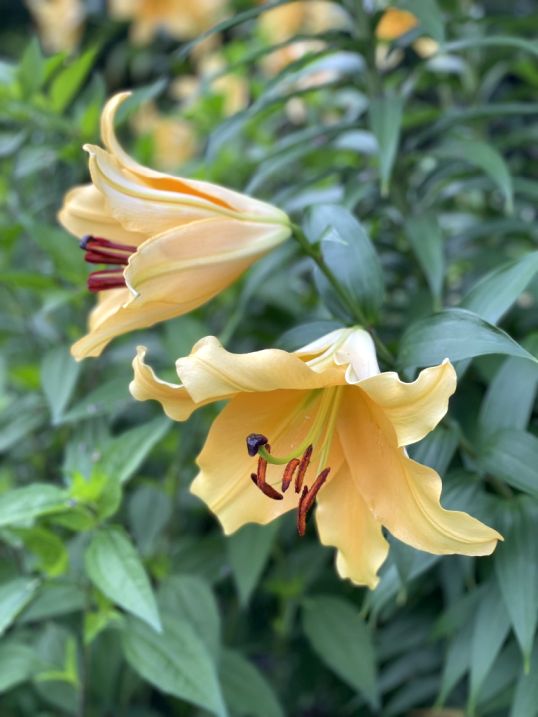 |
The Lilies were in full bloom, each individual flower only lasts one day, but the plant produces so many buds that the whole area stays in "full bloom" for weeks.
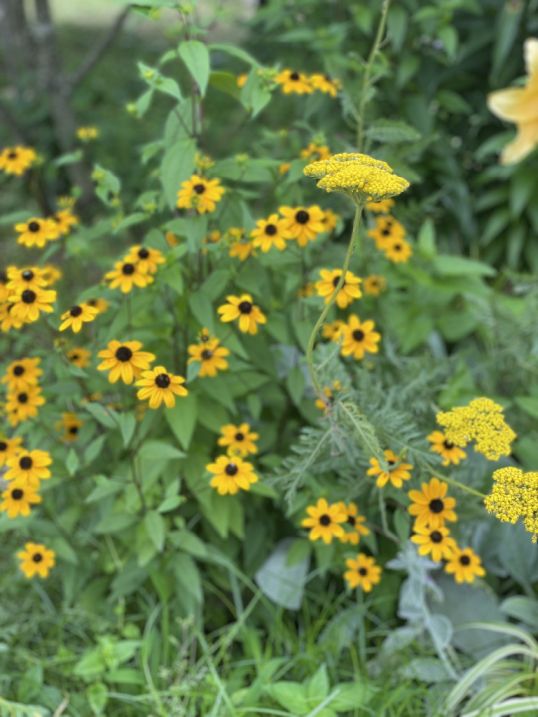 |
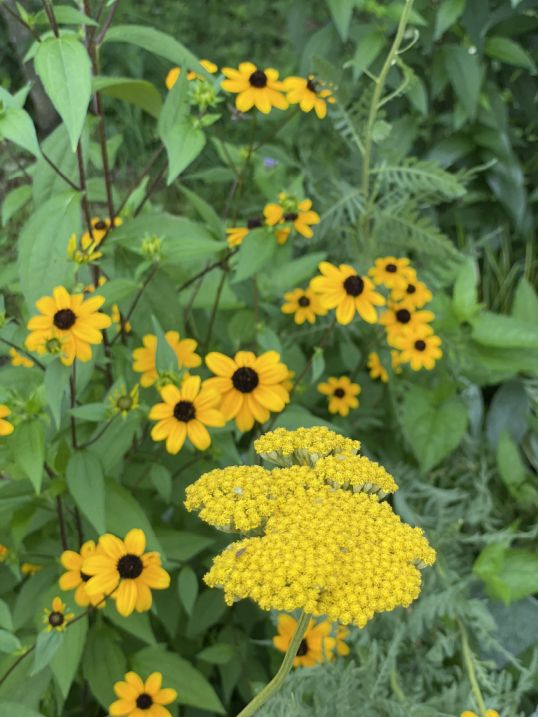 |
Coneflowers with their distinct "pinwheel" petals and prominent raised centers. They are incredibly tough and start their long blooming season right at the end of June. Next are he bright yellow flower heads with flat topped are called Fernleaf Yarrow. They add a wonderful colors to the garden.
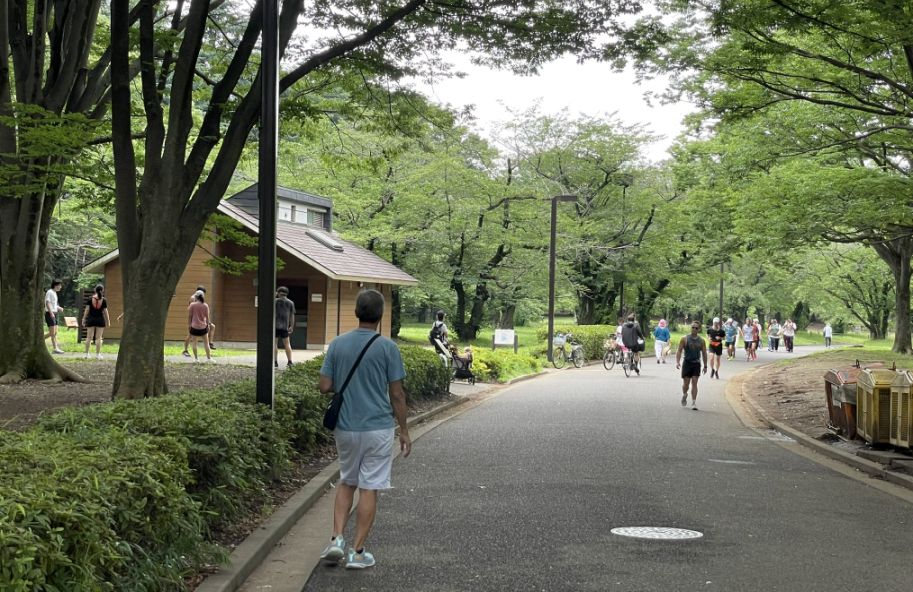
We walked past the rose garden and continued along a path where tall trees leaned toward one another, forming a soft green tunnel of shade.
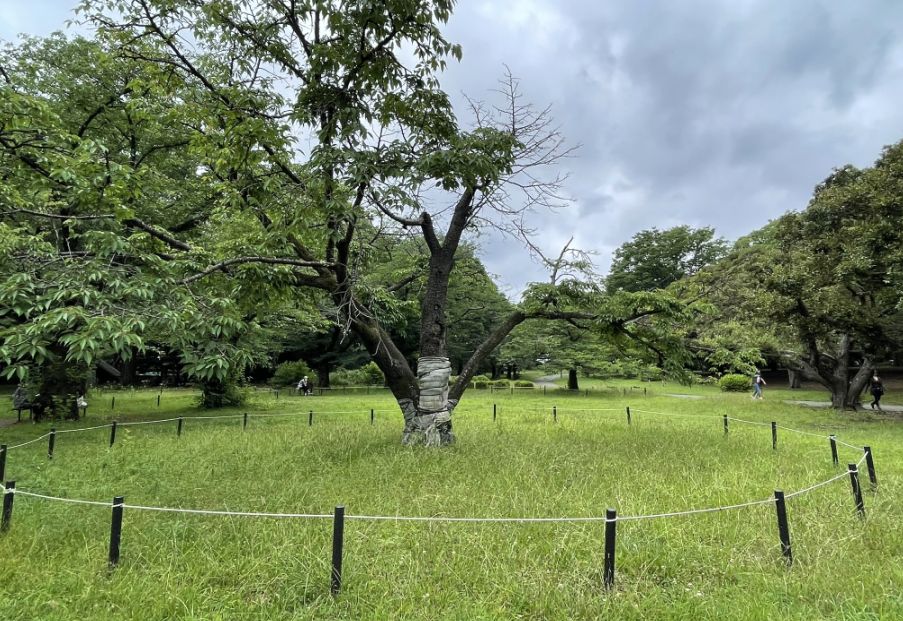
In one grassy clearing, a single cherry tree stood apart. Part of its trunk was carefully wrapped in cloth, and around it was a small circular fence made from wooden stakes and rope. The protection made it feel special, almost ceremonial.
In Japan, old or weakened cherry trees are often wrapped and fenced to protect the bark, prevent insects and disease, and support the tree’s health. Sakura trees are deeply loved, and even when they are not in bloom, they are treated with great care and respect. The simple rope fence marks the tree as something to be looked after, not touched or climbed.
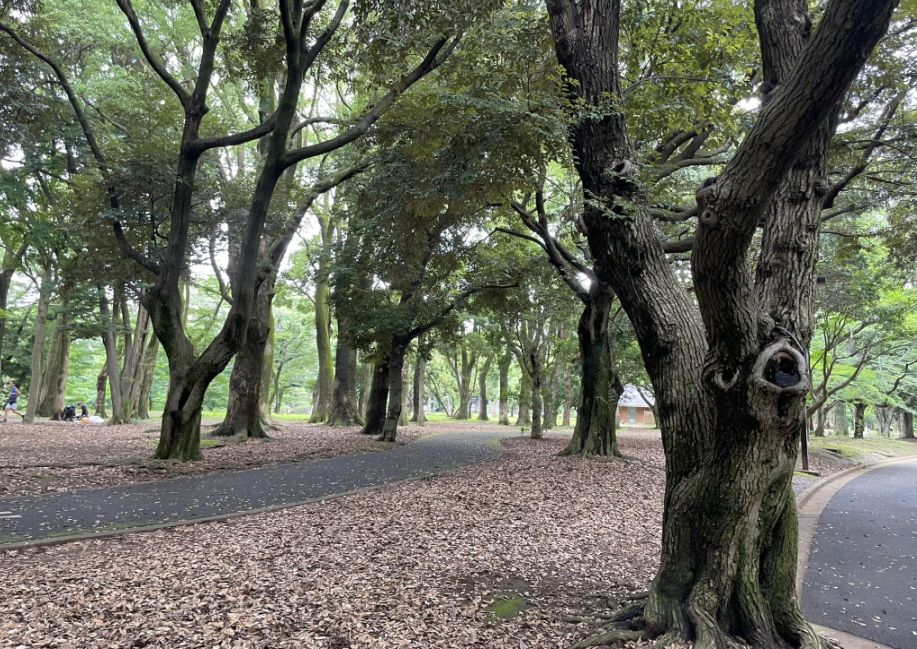
Beautiful tall trees with wide canopies which is perfect for summer shade, and give Yoyogi Park its peaceful, forest-like feeling. Standing beneath them, it was easy to forget that Shinjuku’s skyscrapers were only minutes away.
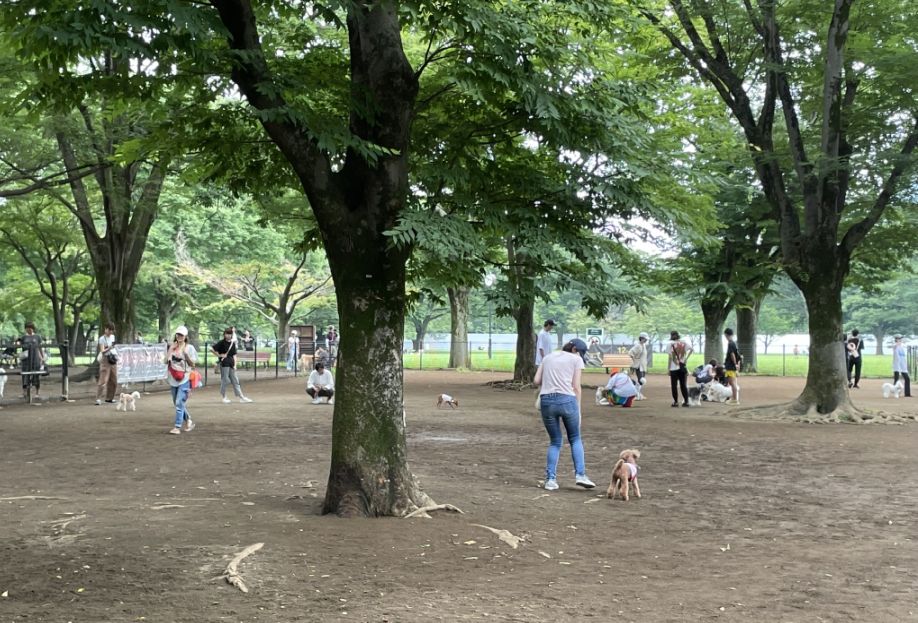
Further along the path, we came upon a fenced-in dog park. Inside, dogs were running freely while their owners watched from benches along the edge. A small sign at the entrance explained that only visitors with dogs were allowed to enter, so we stayed outside the fence, leaning against the railing for a moment to watch.
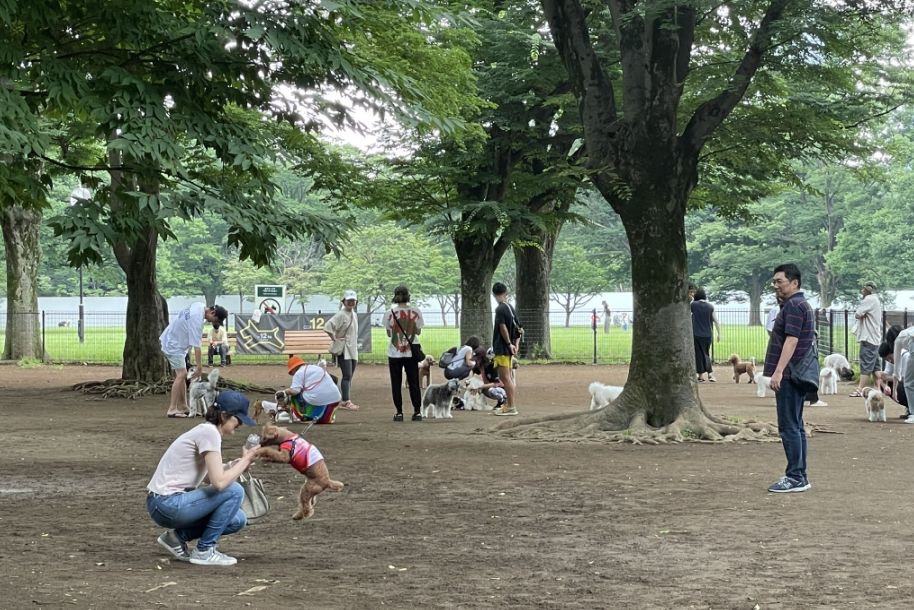
The dogs chased each other across the grass, tails wagging wildly, their joyful energy filling the quiet corner of the park with laughter and barking. Even from outside, it was charming to see how carefully the space was kept just for them, another small, thoughtful detail of Yoyogi Park’s everyday life.
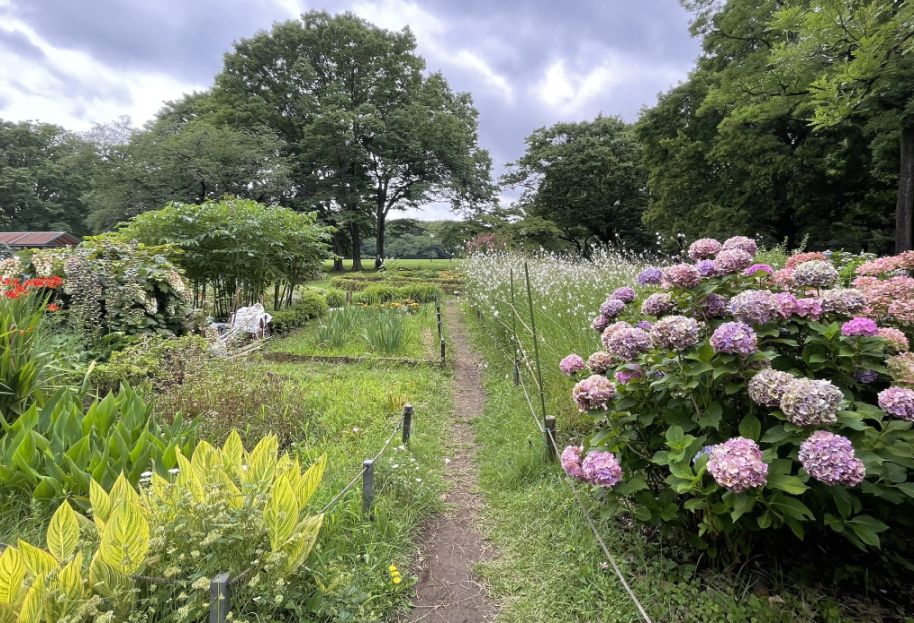
We reached the central field where a series of small garden plots were gently fenced off with wooden poles and rope. Inside, delicate pink penny mac flowers swayed in the breeze .
The simple rope barriers made the gardens feel protected yet open, like quiet islands of color within the wide lawn, carefully tended but still part of the natural rhythm of the park.
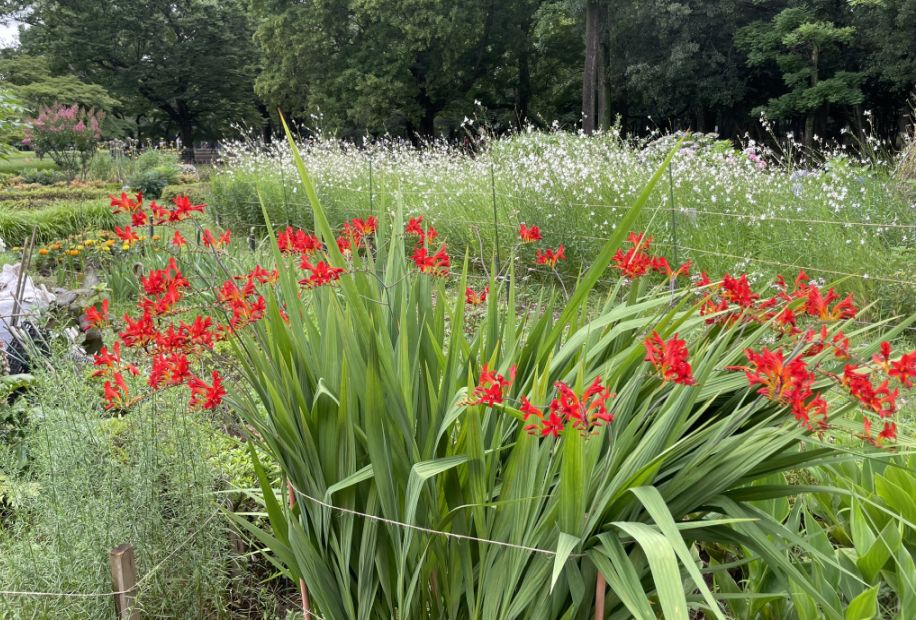
Red montbretia with their fiery colors standing out against the green grass.
 |
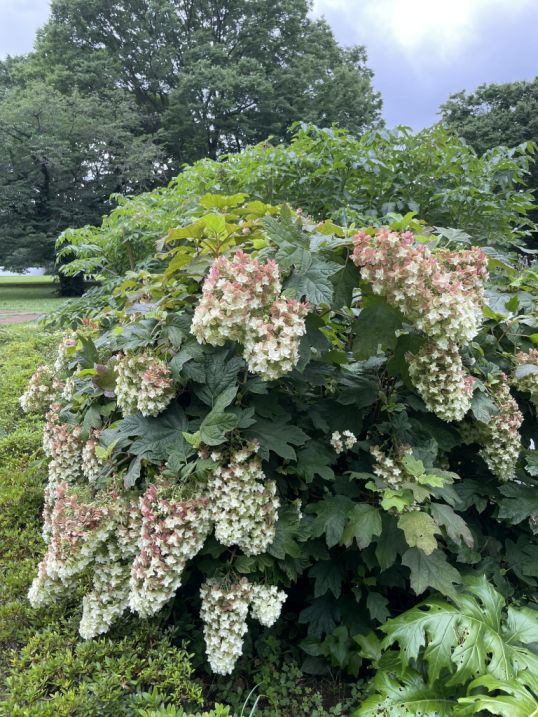 |
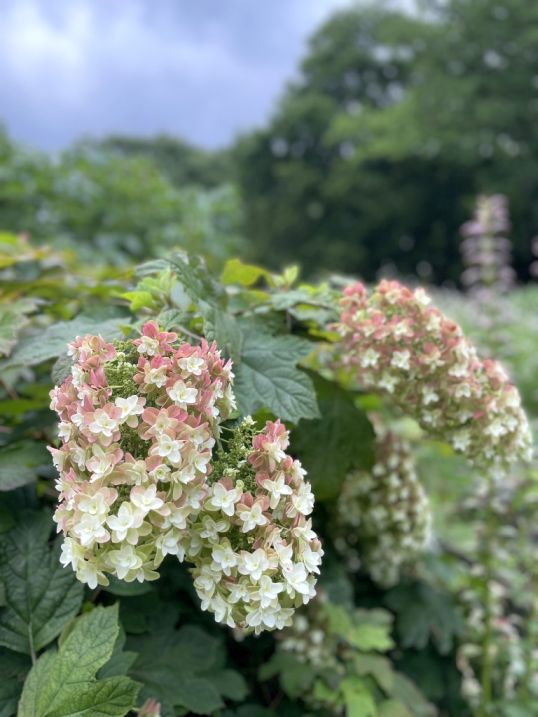
Nearby, clusters of oakleaf hydrangeas were beginning to bloom, their large, creamy blossoms resting above broad, deeply veined leaves.
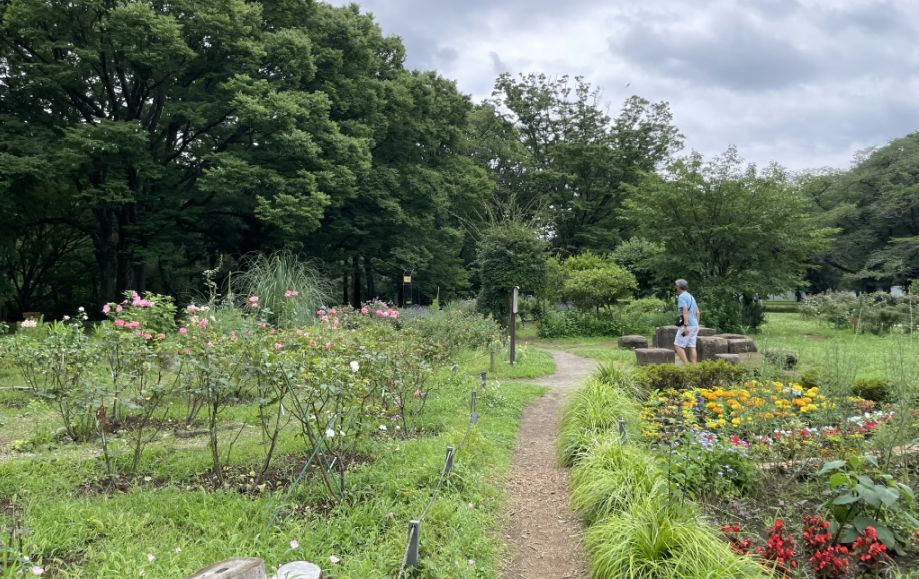
The garden is really peaceful.
 |
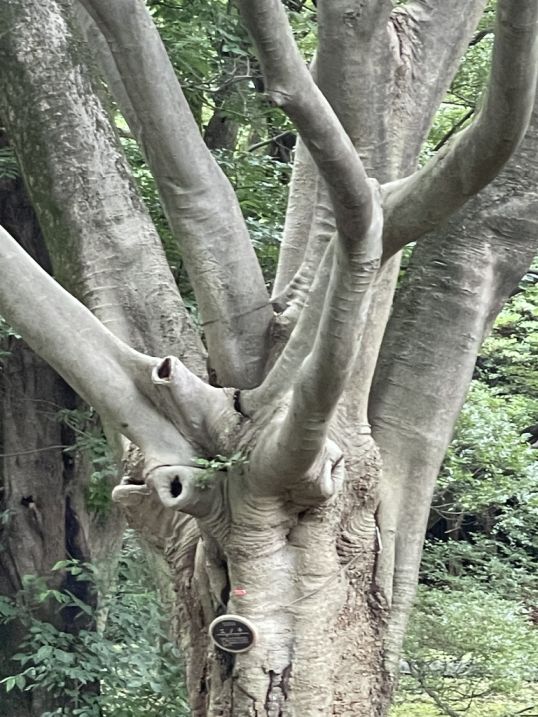 |
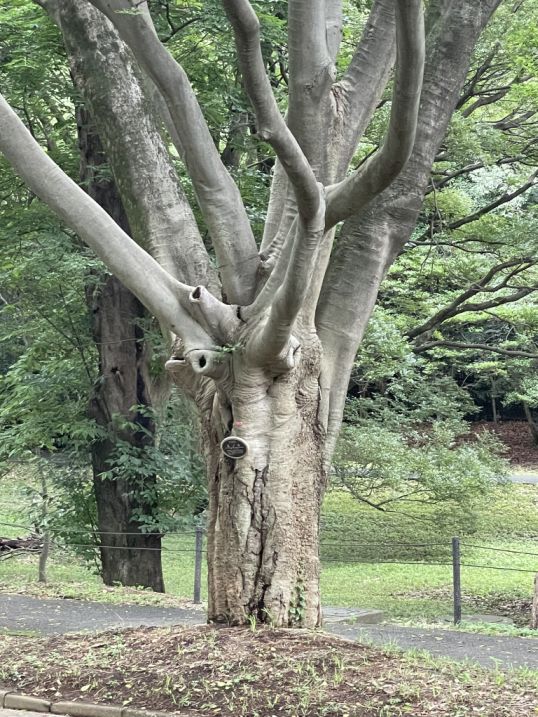
Along the path, one tree trunk caught my attention immediately. Its shape looked uncannily like the head of a deer, with two dark knots forming eyes and long protruding branches rising like slender antlers. It felt as if the forest itself was quietly watching the people passing by.
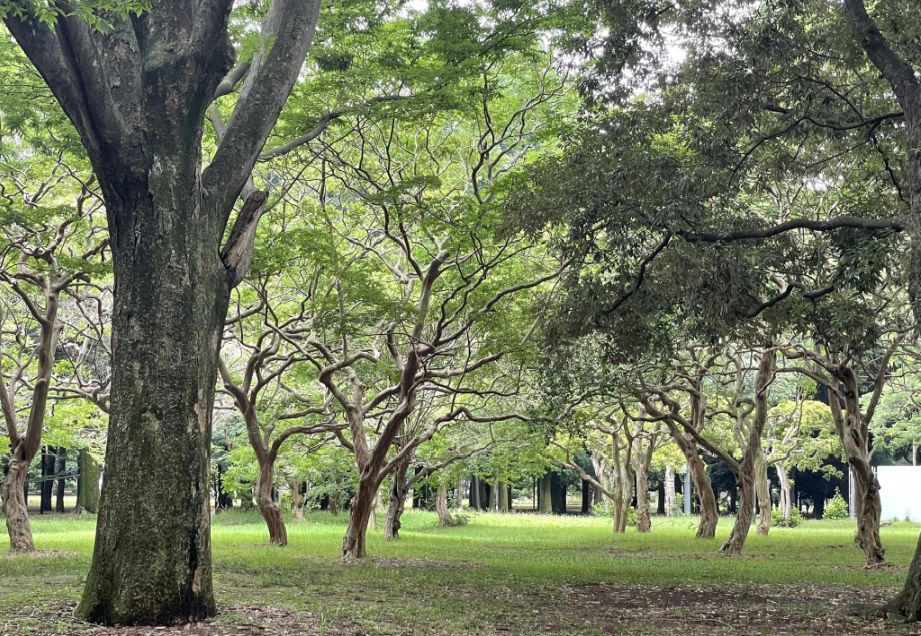
We then entered an area that felt like a small woodland tucked inside the park. Tall oak trees lined both sides of the path, their branches twisted and spreading outward until they met overhead, forming a natural tunnel of leaves and shadow. Sunlight filtered through in soft patches, dappling the ground and giving the whole walkway a calm, almost storybook atmosphere. Walking beneath the arching branches, the city seemed to fade away, replaced by the cool, earthy stillness of the forest.
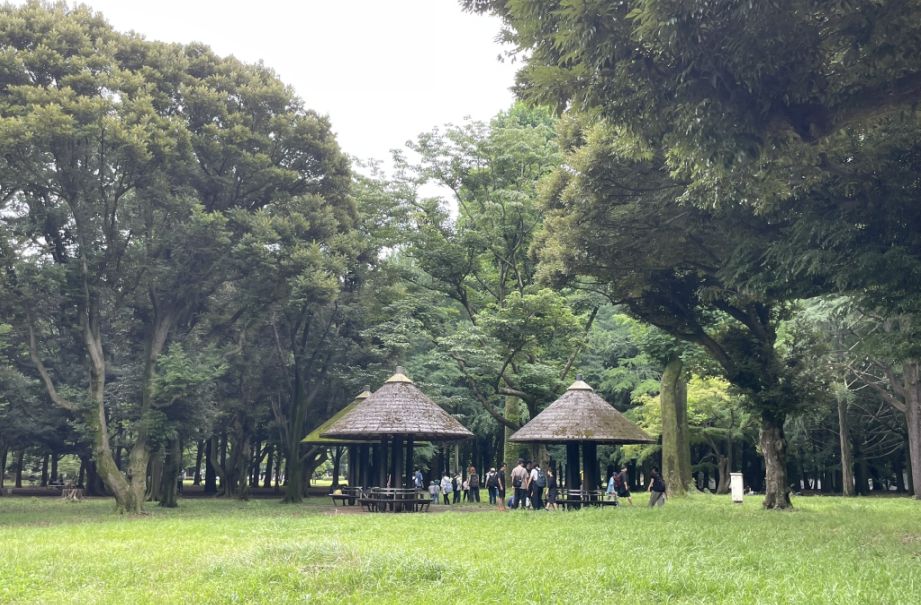
Deeper inside the park, we came across several open rest shelters with roofs shaped like wide cones. From a distance they looked almost like giant mushrooms rising from the ground.
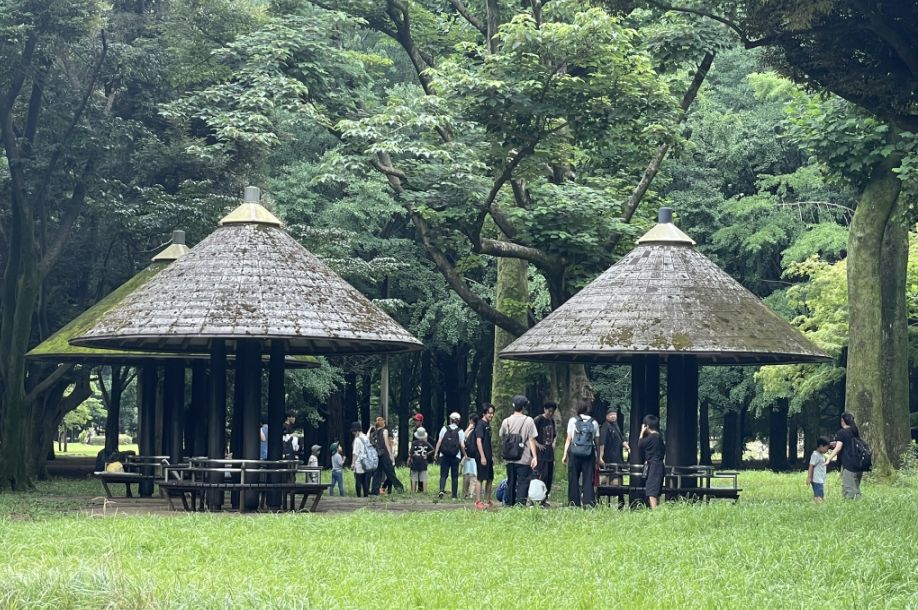
People were sitting/standing underneath, chatting softly, drinking from vending-machine bottles, or simply resting in the shade. The shelters were tucked among tall, lush trees, and the sound of the city felt very far away.
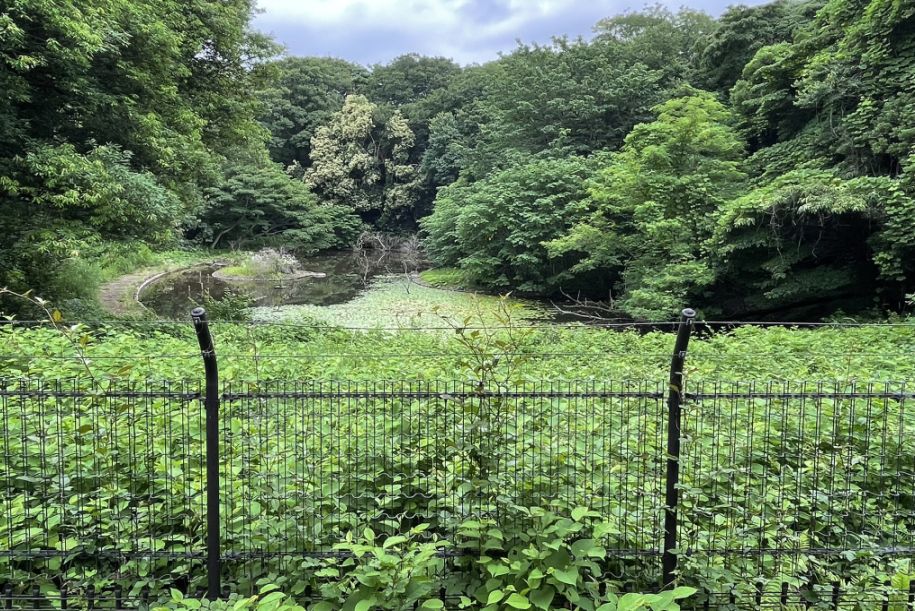
We walked on and soon reached a fenced-off area where a broad body of water appeared between the trees. Most of its surface was hidden beneath a thick layer of round lotus leaves, floating quietly and overlapping like green tiles. Only small patches of dark water reflected the sky.
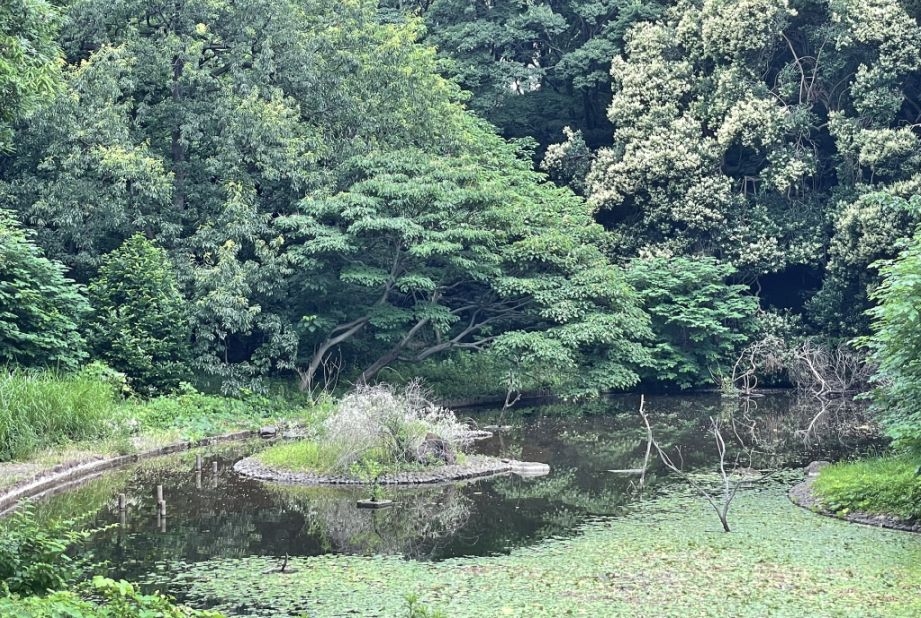
This pond is area , created when the park was developed after World War II on the former site of a military parade ground and, earlier, a village. It was designed both for landscape beauty and as a small ecological habitat. Over time, lotus and aquatic plants took over much of the surface, turning it into a peaceful wetland-like scene. Dragonflies often hover here in summer, and birds use it as a resting place, adding to the feeling that this corner of the park belongs more to nature than to the city.
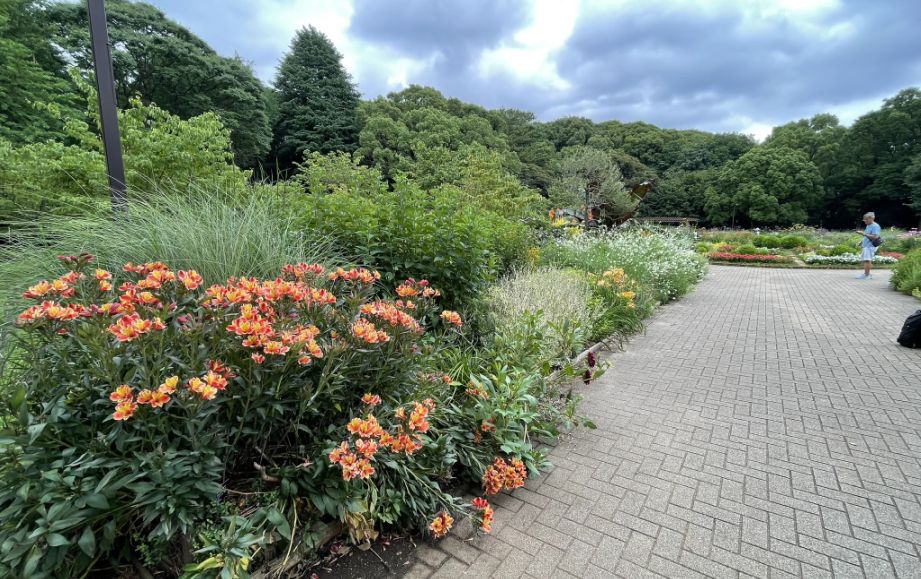
We continued walking and soon came upon another beautiful, carefully manicured garden.
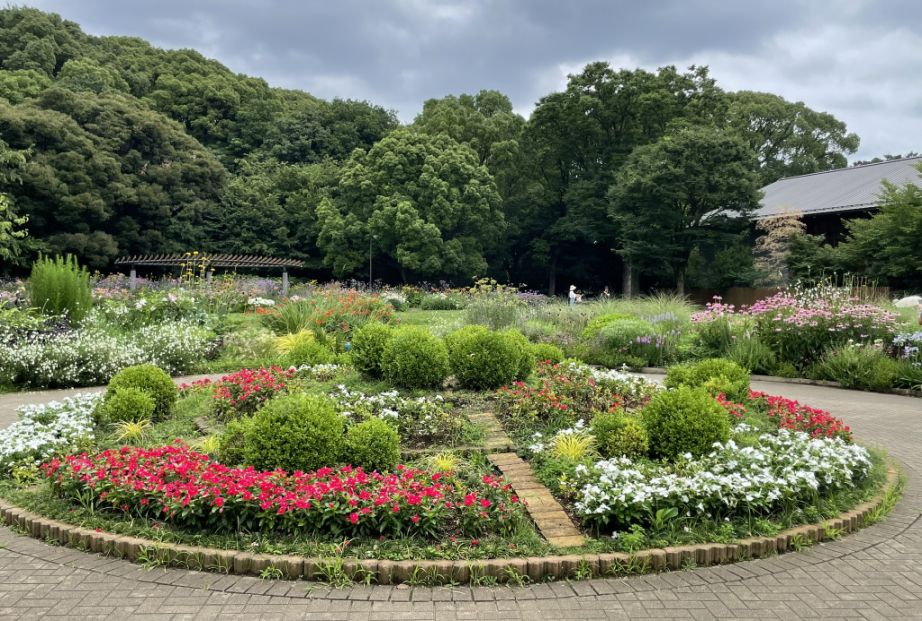
One of the flowers were planted inside circular beds edged with low red bricks, like small floral islands. Inside each circle, layers of blossoms spilled outward — yellows, purples, soft pinks, and bright reds woven together in cheerful patterns.
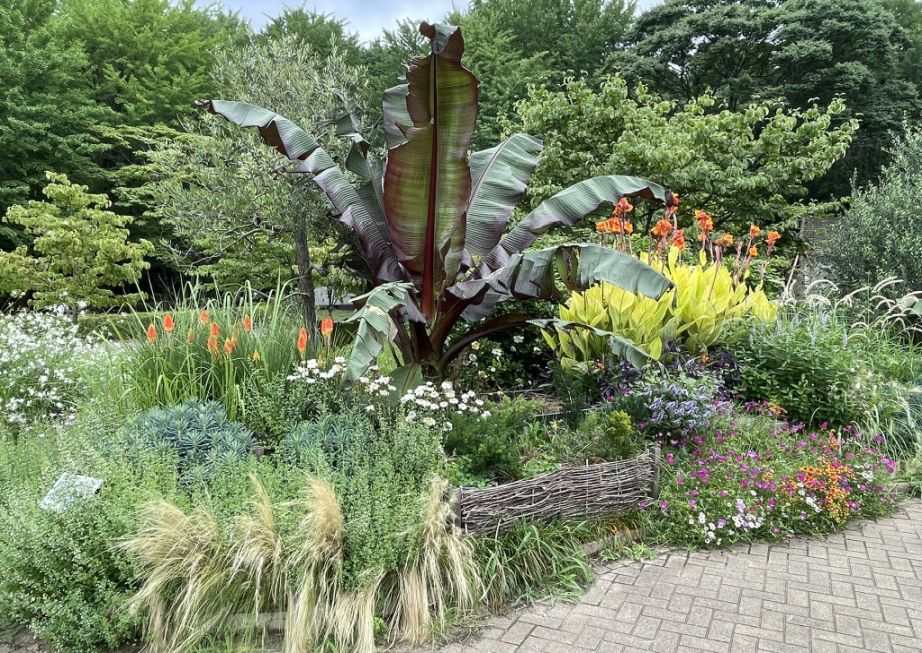
Everything here felt intentional and serene, with curved paths and neatly trimmed greenery framing beds of flowers in full color.
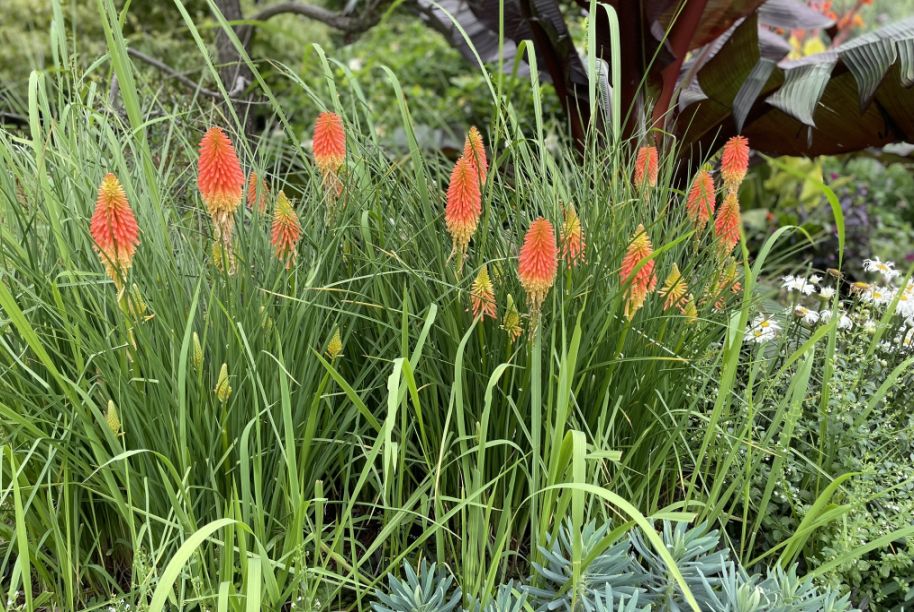
Bright and vibrant torch lilies.
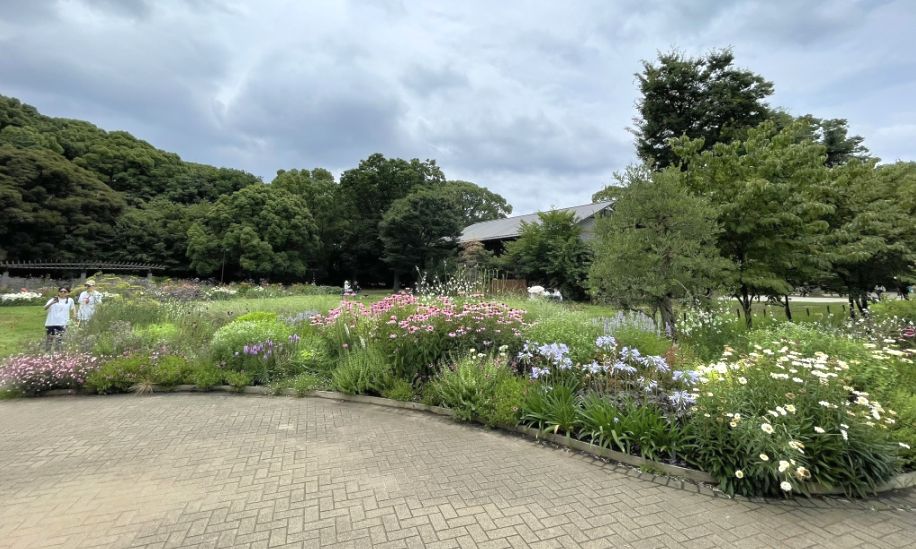
Beautiful flowers in bloom.
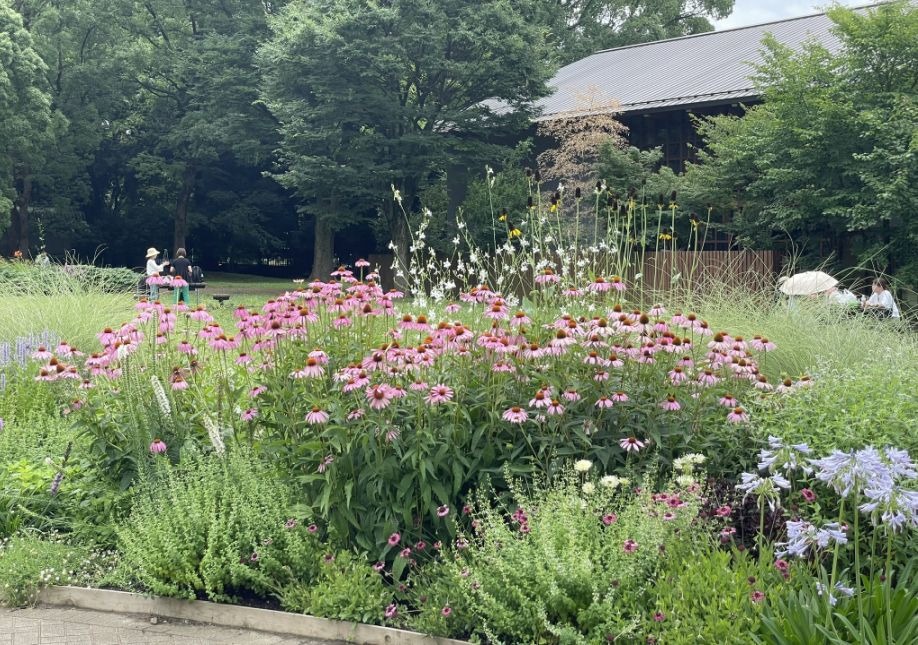
A cluster of purple Pink Perennial Geranium or Creeping Phlox. These often have that delicate, fuzzy leaf and vibrant pink hue that mimics the look of a violet but survives in the garden.
 |
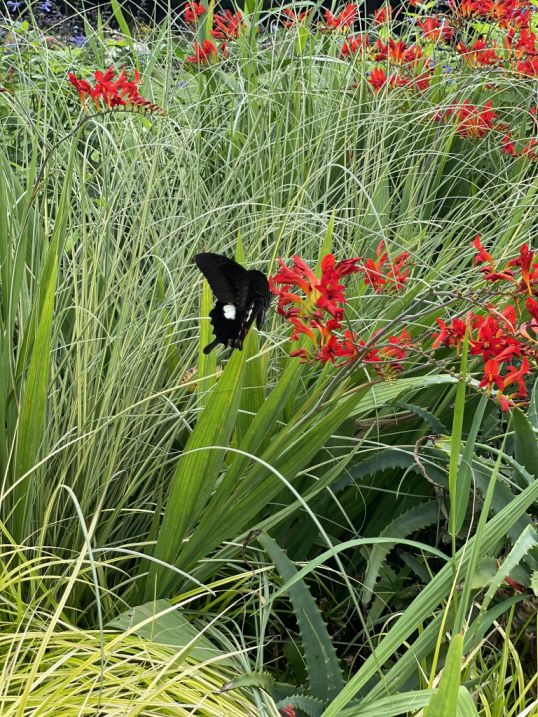 |
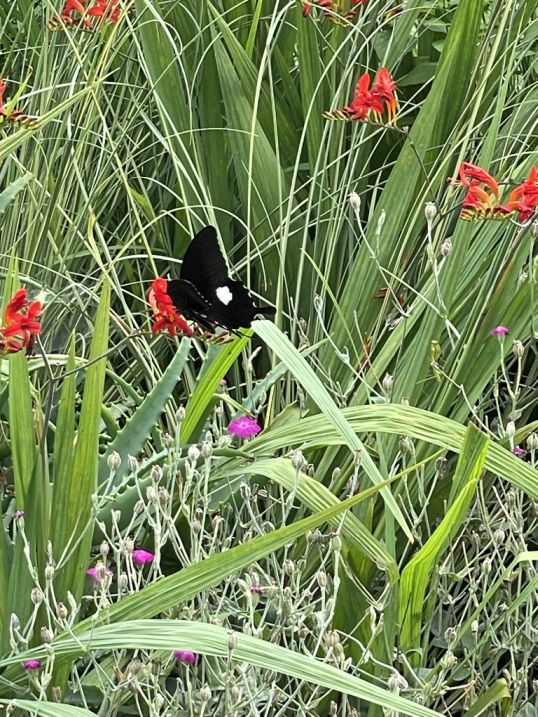
A Red Helen butterfly is mostly black, but it has a very prominent creamy-white patch on its hind wings. Interestingly, when the butterfly is at rest with its wings closed, it often hides this white patch, only "flashing" it when it takes flight. Large butterflies like the Red Helen are highly attracted to the fiery reds and oranges of the Montbretia. The plant’s arching stems also provide a sturdy "landing pad" for the butterfly to hold onto while it feeds.
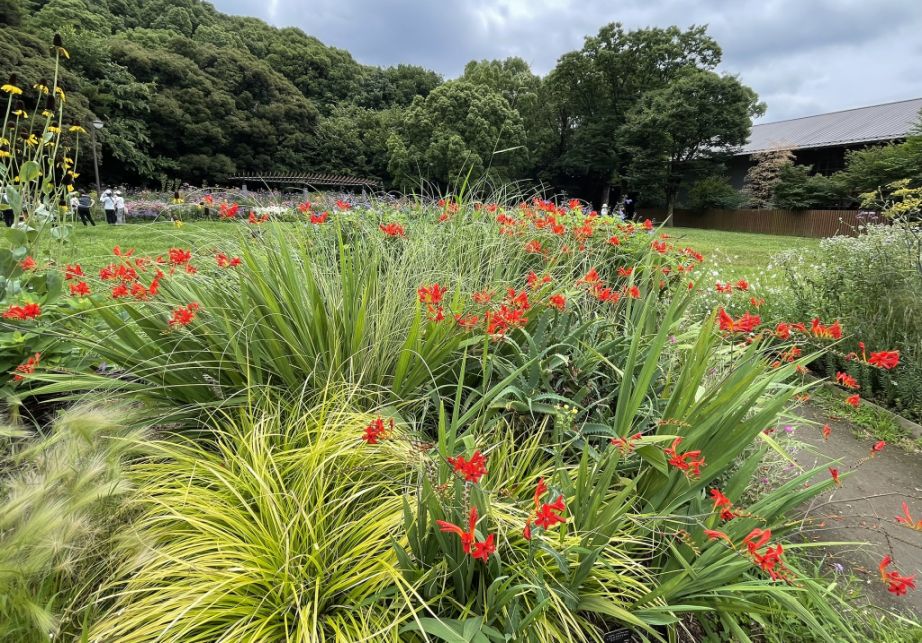
The Montbretia flowers at its absolute peak. They are famous for their "long bloom" through the humid summer months when other flowers might struggle.
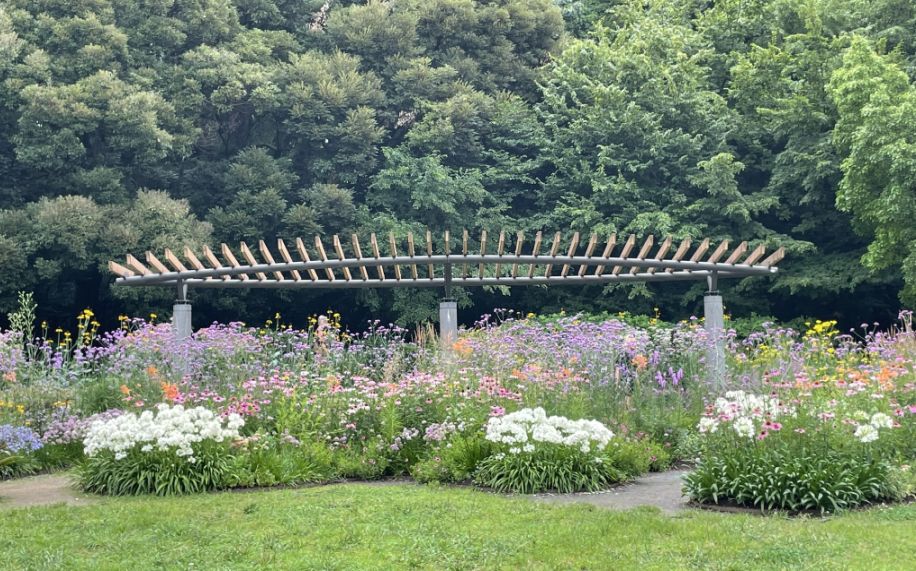
Nearby stood a charming wooden pergola, its pale beams forming a gentle archway overhead. Climbing plants were beginning to wind their way up the posts and across the roof, promising even more shade and flowers later in the season. Beneath it, dense clusters of colorful blooms filled the space, turning the walkway into a tunnel of petals and soft fragrance.
NEXT... Day 8- Takeshita Street