9 days in Japan- 6/23- 7/1/2024
Day 7-Arakawa continuation, Tokyo-6/29/2024
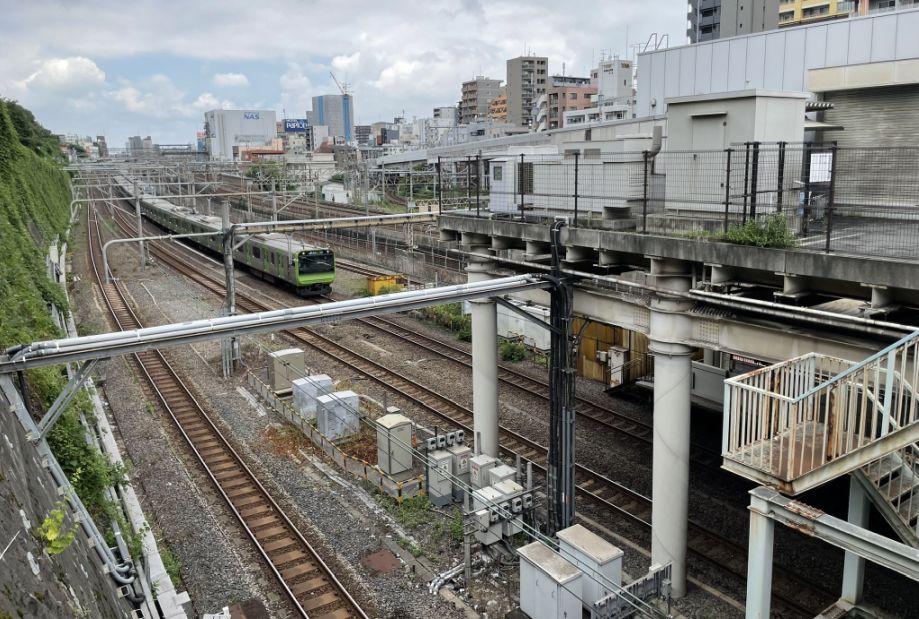
As we crossed the bridge, train tracks opened up below us, and a green JR train slid past quietly between the buildings, one of those everyday Tokyo scenes where modern life moves straight through old neighborhoods.
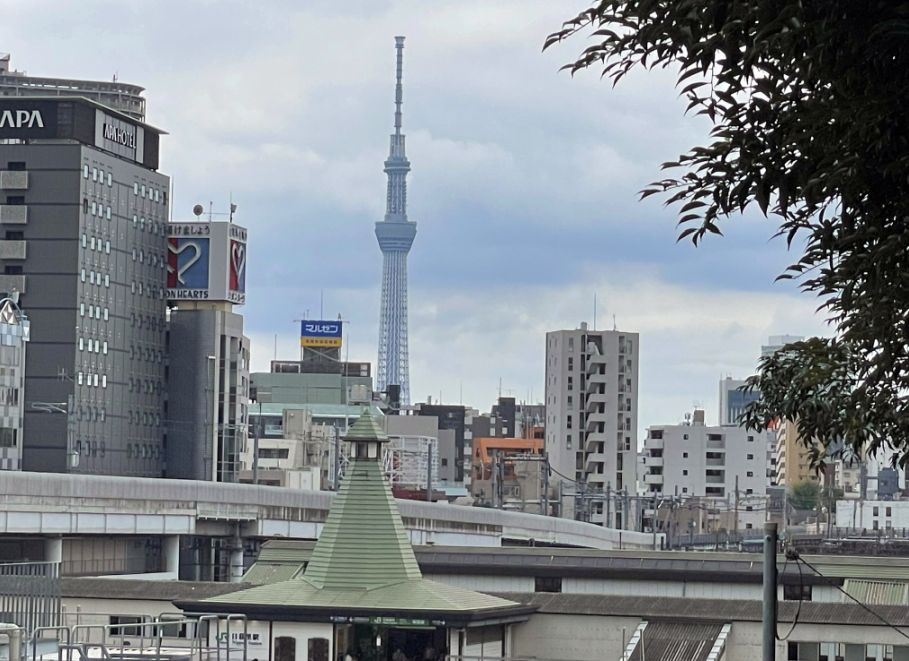
We walked through Nishi-Nippori neighborhood and we saw the Tokyo Skytree standing tall in the distance. It is Japan's tallest structure and serves as a television and radio broadcast tower for the Kanto region. Because this neighborhood sits on a high bluff, it provides an excellent, unobstructed line of sight across the lower "Shitamachi" districts toward Sumida, where the Skytree is located.
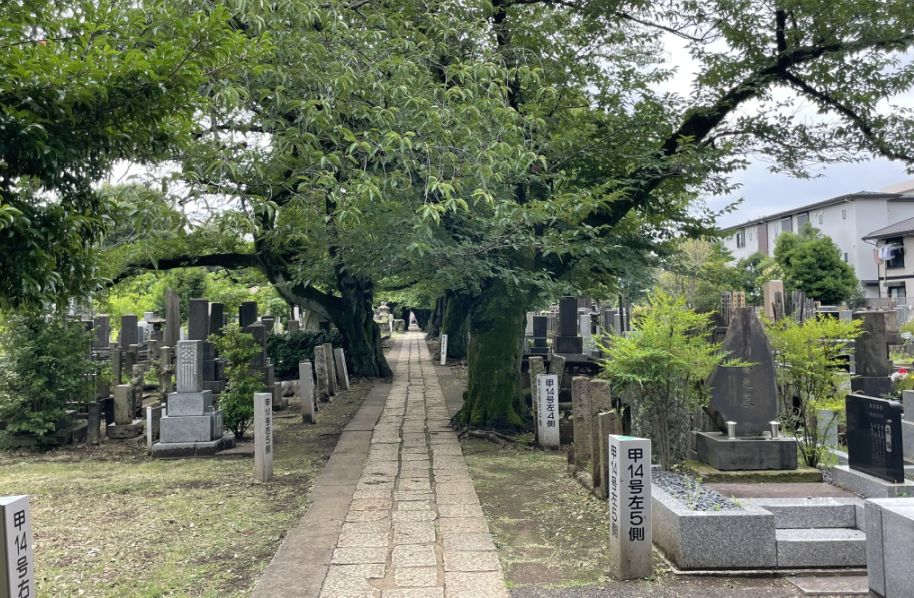
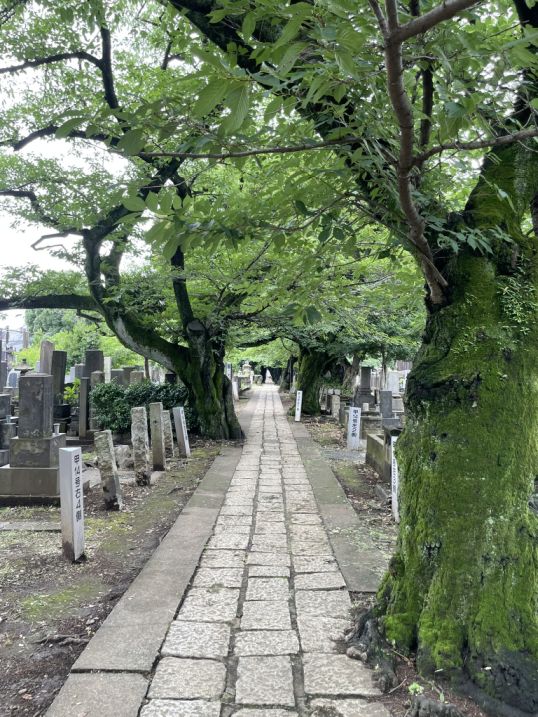
Then the neighborhood softened into silence as we arrived at Yanaka Cemetery. Yanaka Cemetery is one of the most atmospheric and historic cemeteries in Tokyo. It was established in 1874, early in the Meiji period, on land that once belonged to temples. Today it spreads across a gentle hill in long, straight paths lined with trees, stone lanterns, and thousands of family graves.
 |
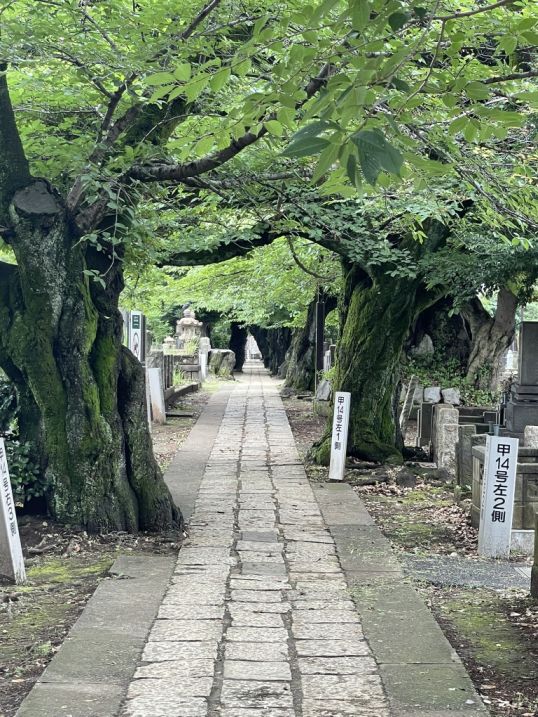 |
The cemetery is famous for several things: over 7,000 graves, arranged like quiet streets, many tombs belong to samurai families, writers, artists, and political figures from the late Edo and early modern Japan.
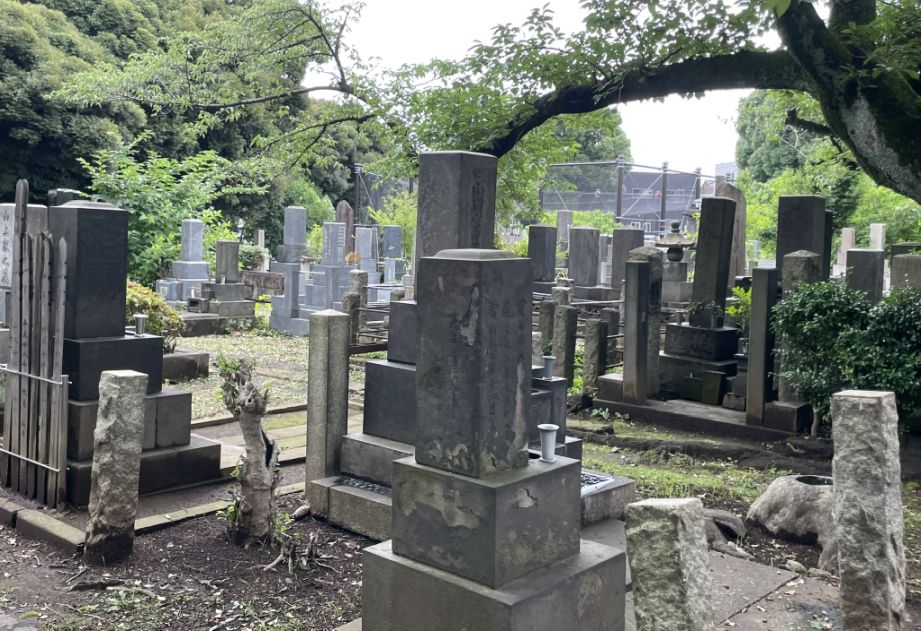
Graves are typically family plots, marked by tall stone monuments engraved with kanji, with small vases for flowers and spaces for incense. Some are carefully tended, others weathered and mossy, slowly blending into the landscape.
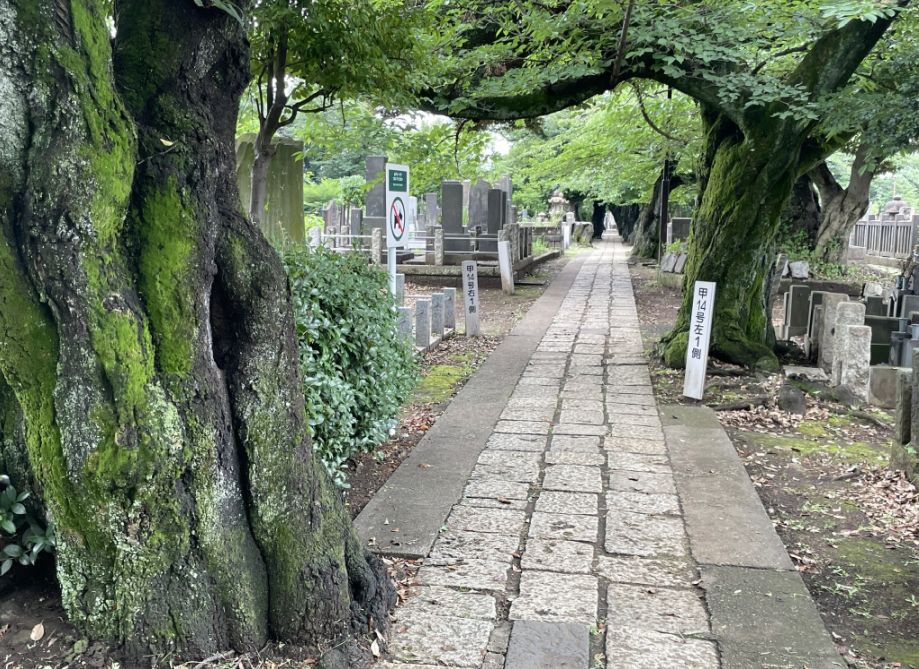
In the spring, the central avenue becomes one of Tokyo’s most beautiful and least touristy sakura tunnels.
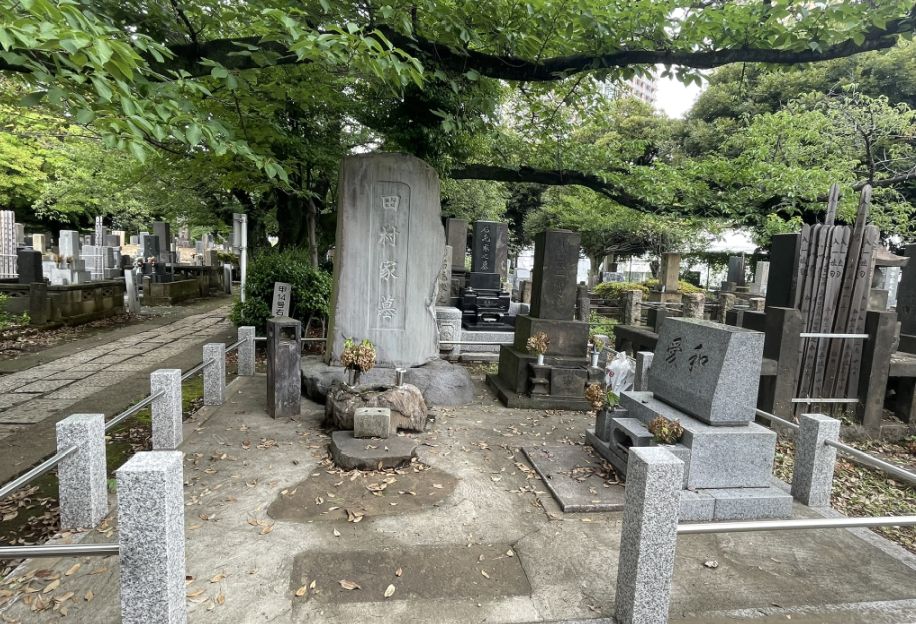
Many of the headstones here are tall and imposing, carved from dark granite and covered in vertical lines of Japanese characters.
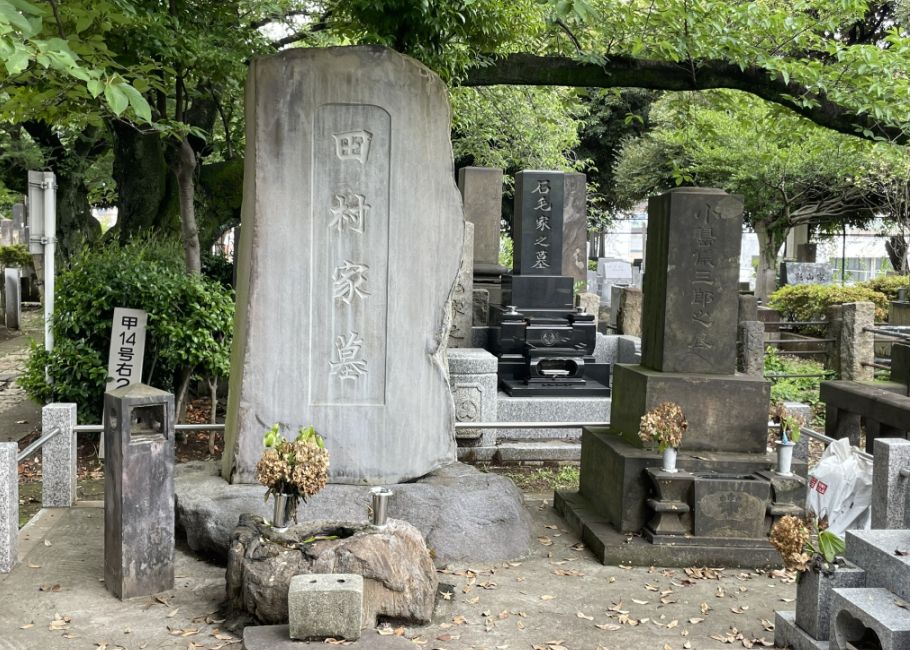
These inscriptions usually record the family name, Buddhist posthumous names, and dates, written in a formal style that feels timeless and restrained.
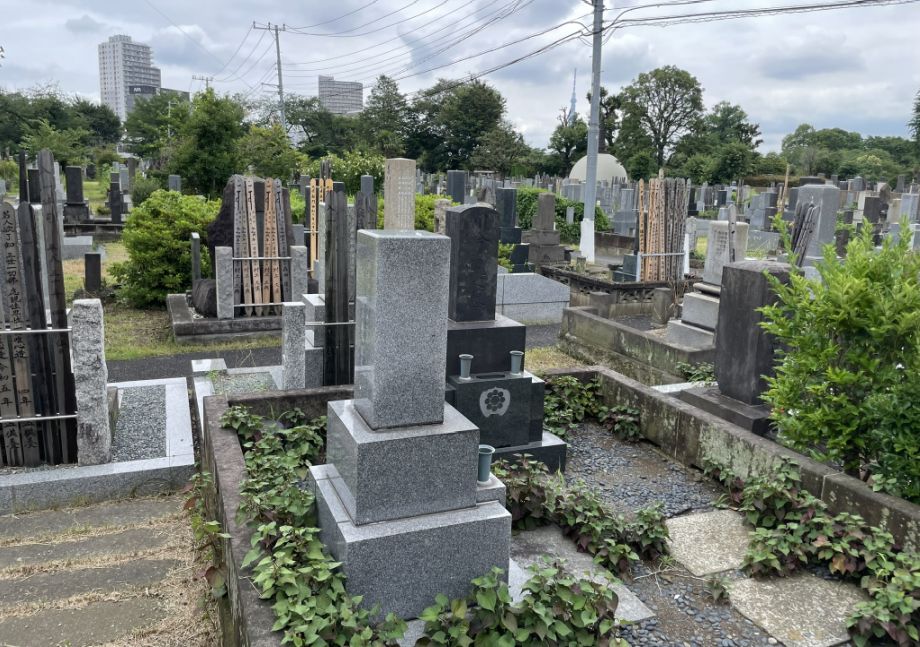
There are no photographs of the deceased, no carved faces, no personal portraits. Unlike some cemeteries in other countries, Japanese graves rarely show an image of the person. The focus is not on an individual’s appearance in life, but on their place within the family line and the continuity between generations.
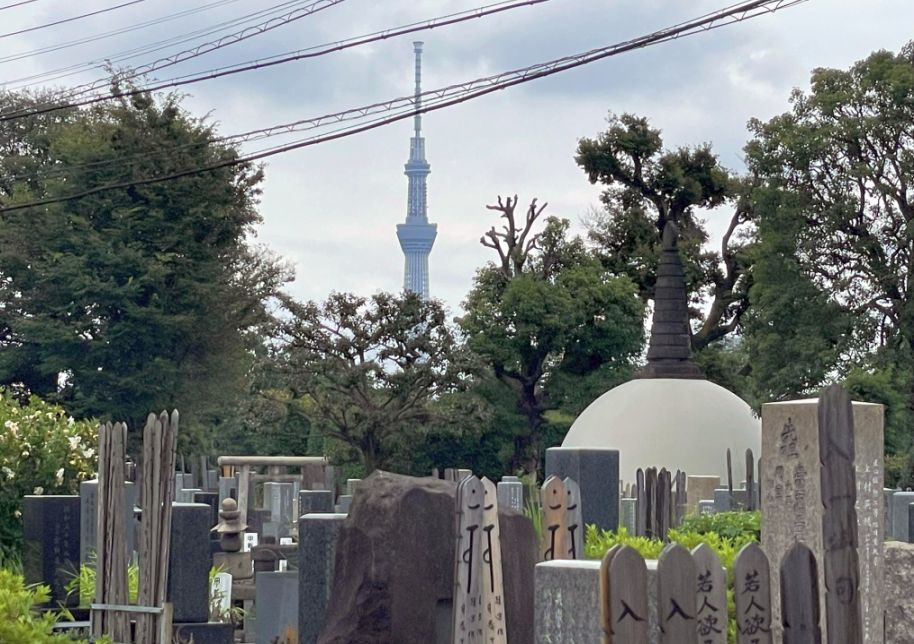
Even from the cemetery you can see the Tokyo Skytree.
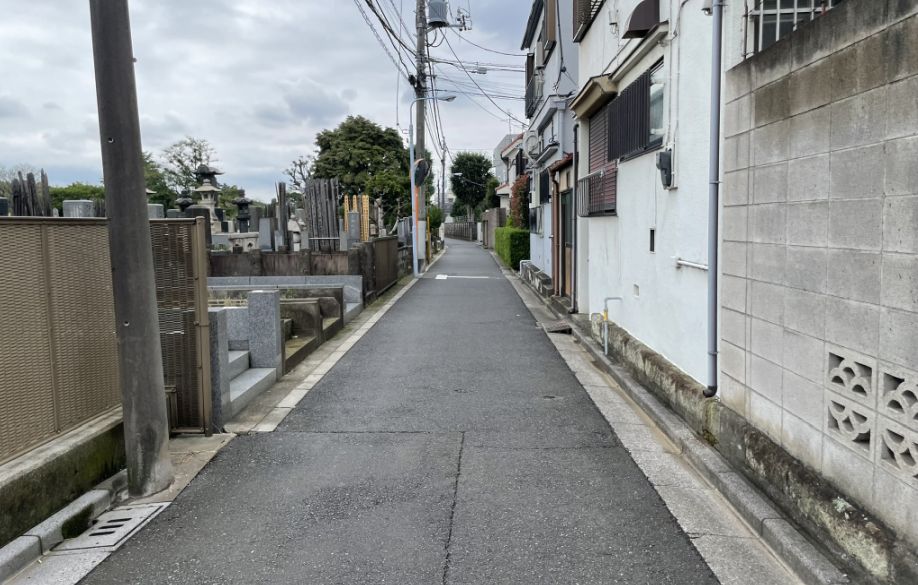
Walking through Yanaka Cemetery doesn’t feel dark or heavy. Instead, it feels peaceful and spacious, like a park where memory lives quietly among trees and stone.
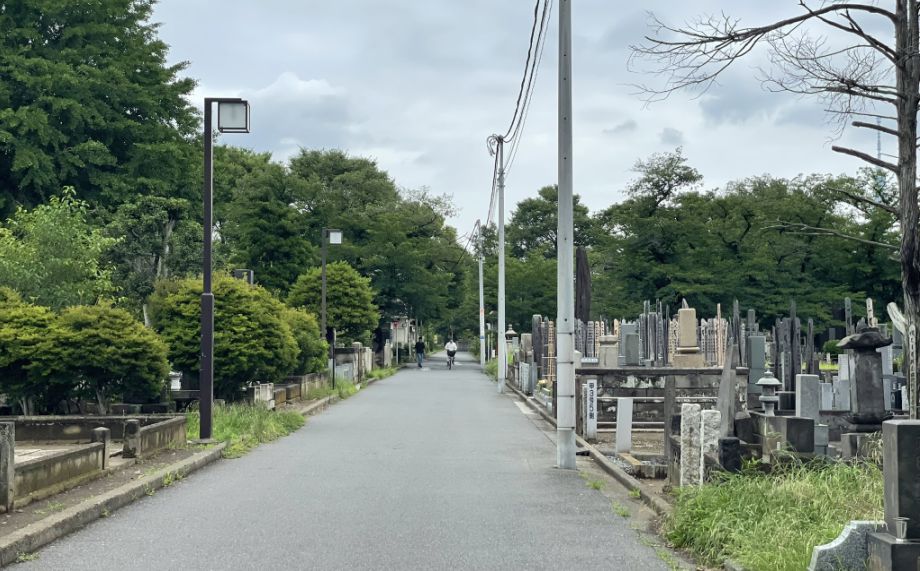
We then stepped onto a wide avenue that cut straight through the cemetery, tombs lining both sides of the road like quiet neighbors.
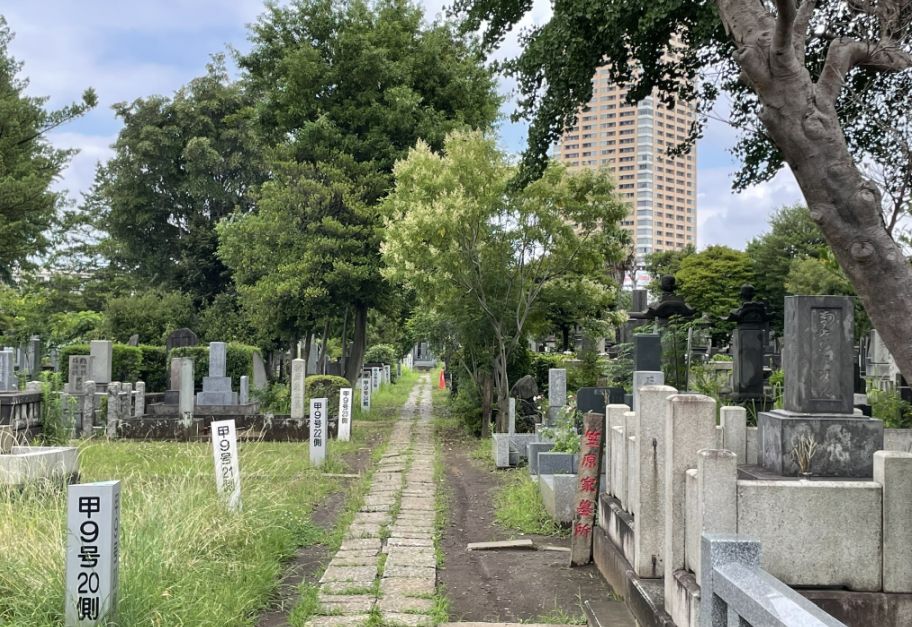
The stone markers stood close together, some newly polished, others softened by age, their surfaces pale with dust and rain.
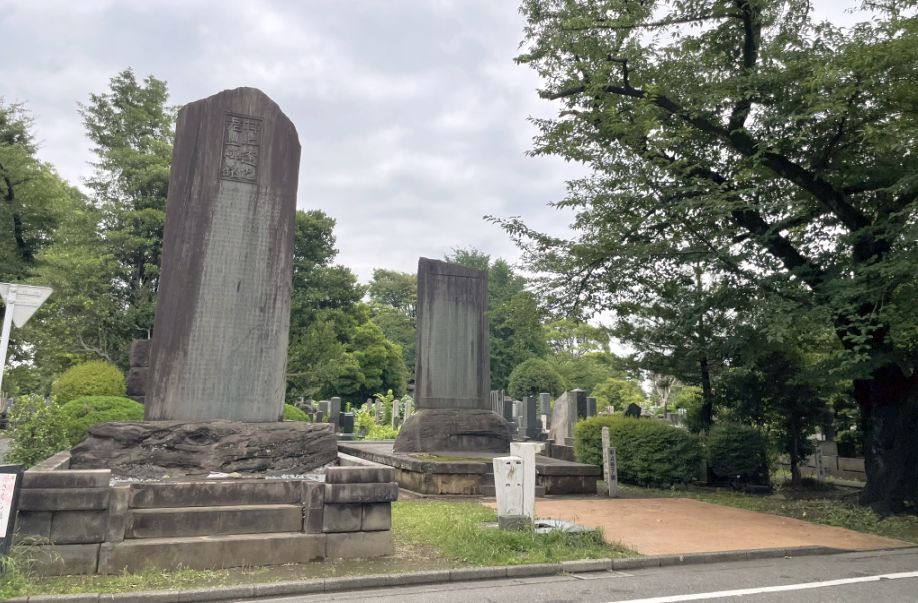
The two tall, flat stone monuments are likely commemorative stelae rather than standard graves. These are often erected to honor the life achievements of a prominent person or to mark a historically significant event related to the city or a specific clan.
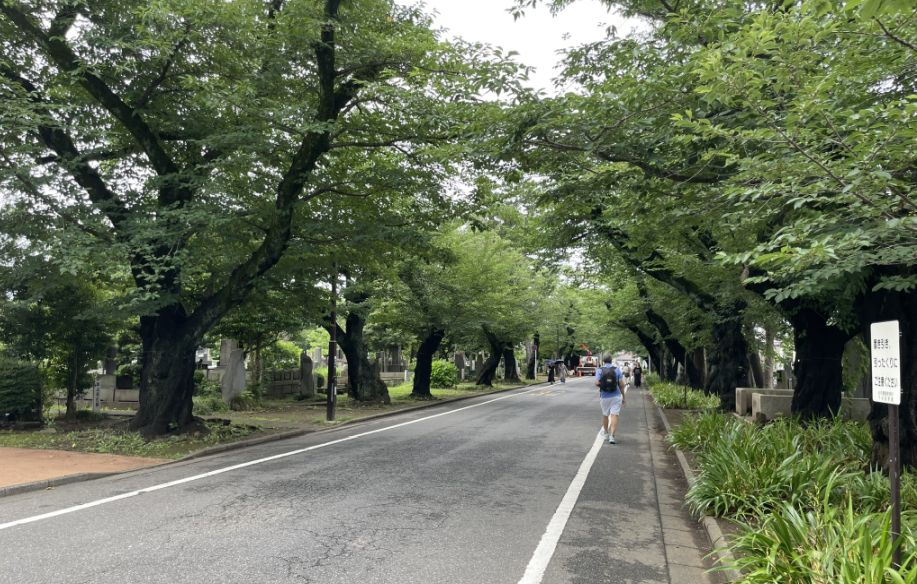
In the spring, I can only imagine how beautiful this avenue is with all the cherry blossom.
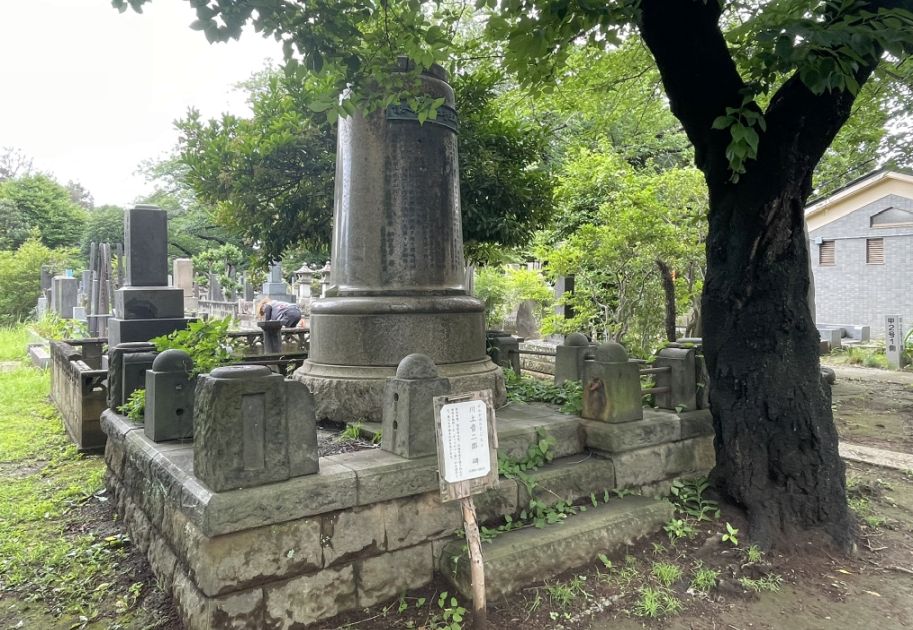
More headstones.
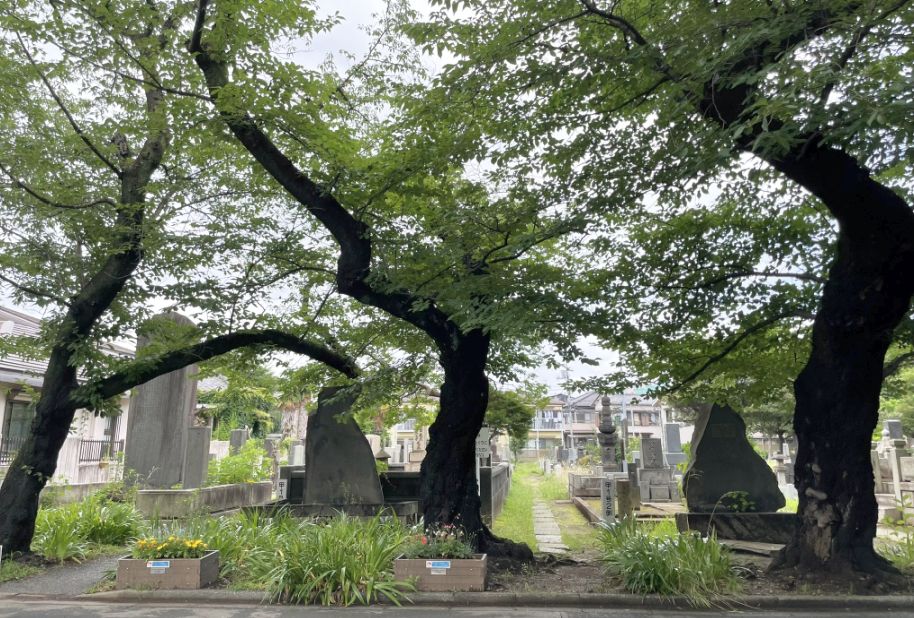
In Japanese tradition, large trees are often seen as dwellings for spirits or guardians of the land, adding to the sacred feeling of the cemetery.
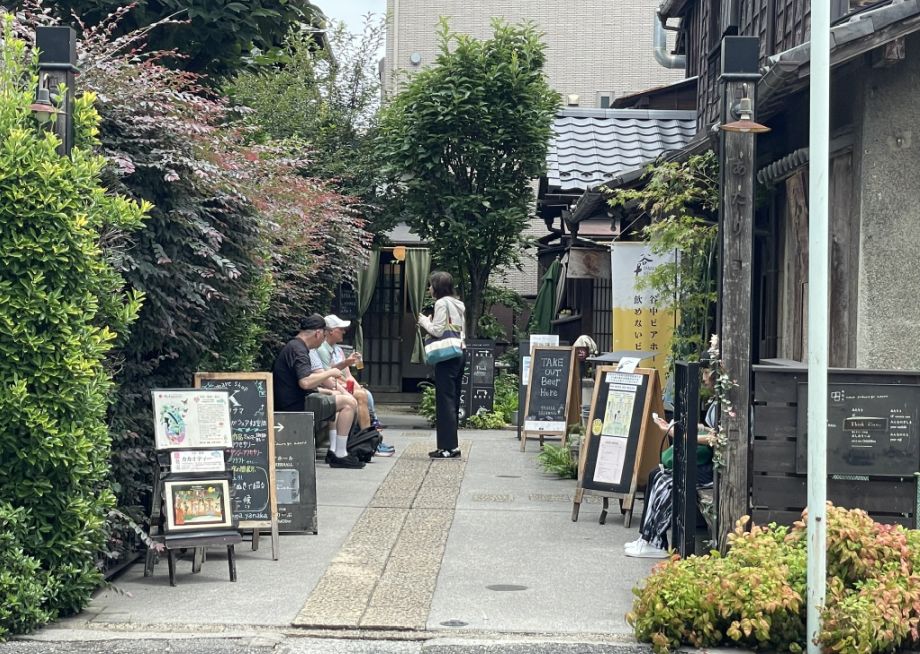
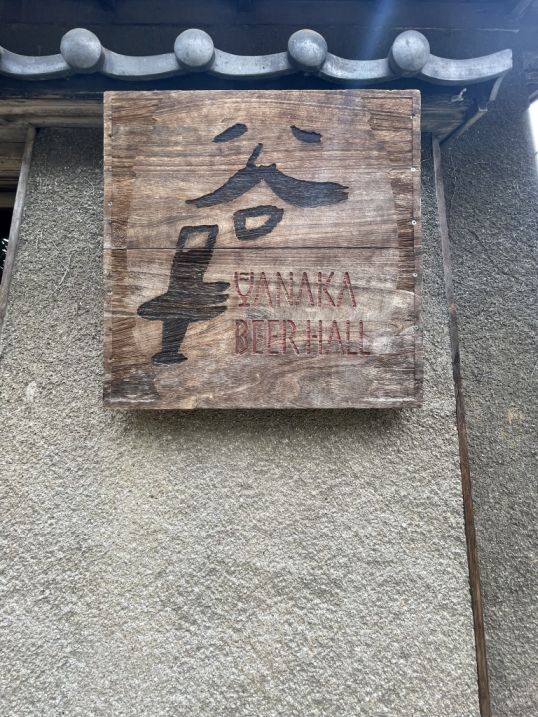
We stopped for lunch at Yanaka Beer Hall, a relaxed little spot tucked along the old streets of the neighborhood. Out front, several blackboards covered in handwritten Japanese menus leaned against the wall, listing the day’s beers and simple dishes in chalk. A few people were already sitting outside, chatting softly with glasses in hand, giving the place the feel of a friendly local hangout rather than a tourist stop.
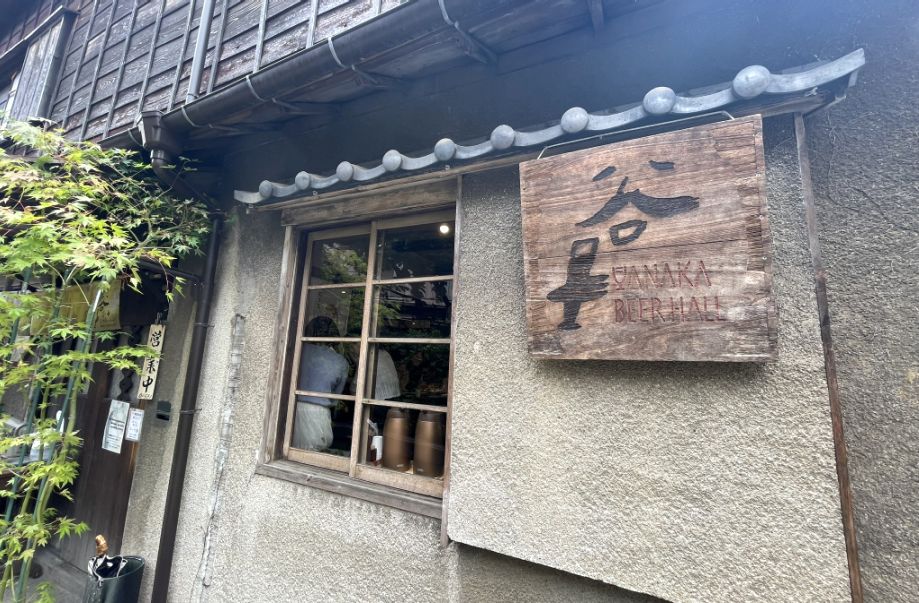
Yanaka Beer Hall is quite popular, especially with locals. It’s well known in the Yanaka /Nippori/Arakawa area as a relaxed spot for craft beer and casual Japanese-style food. Many people come after visiting Yanaka Cemetery or walking along Yanaka Ginza, so it often fills up around lunch and early evening. The small tables outside and the handwritten blackboard menus are part of its charm, and regular customers treat it almost like a neighborhood living room.
 |
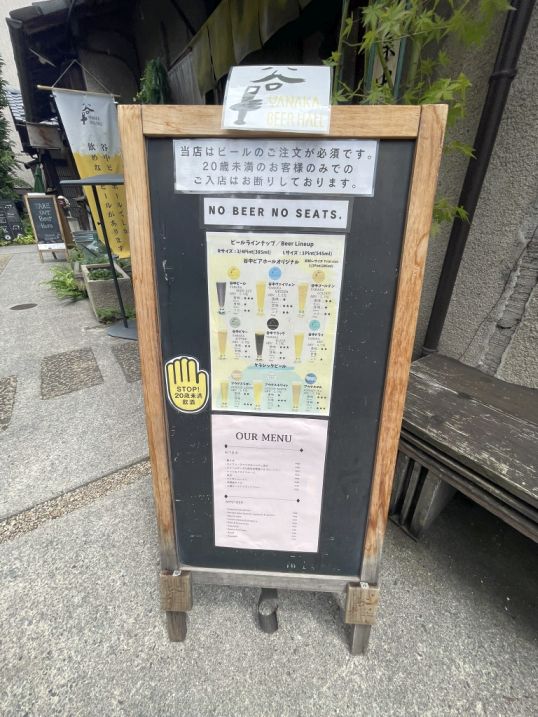 |
At the entrance, a playful sign read “No beer, no seats,” setting the tone right away, this was a place that took its drinking seriously, but with humor.
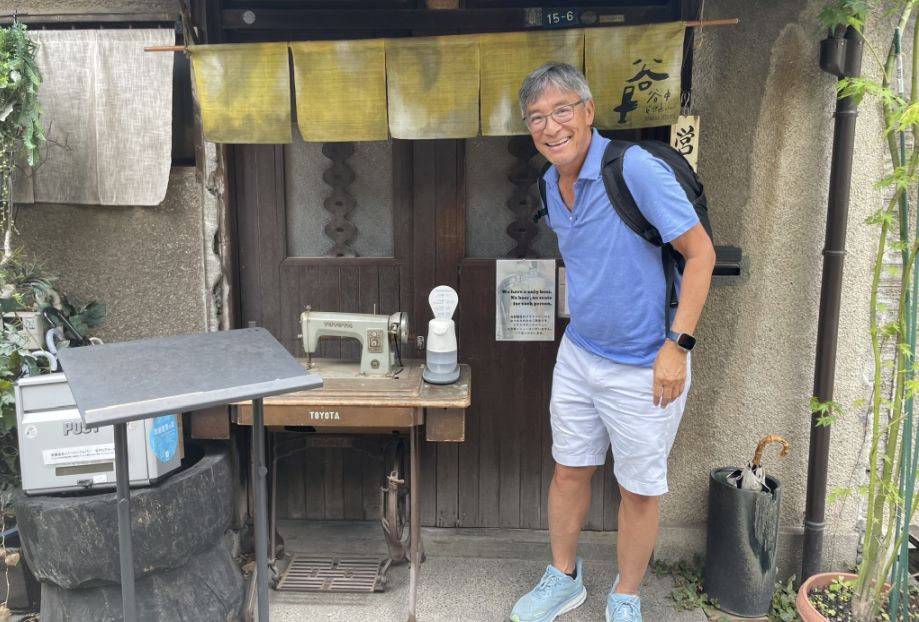
Beside the door sat an old sewing machine, an unexpected decoration that felt like a small tribute to the area’s past, when many neighborhood shops were family-run workshops.
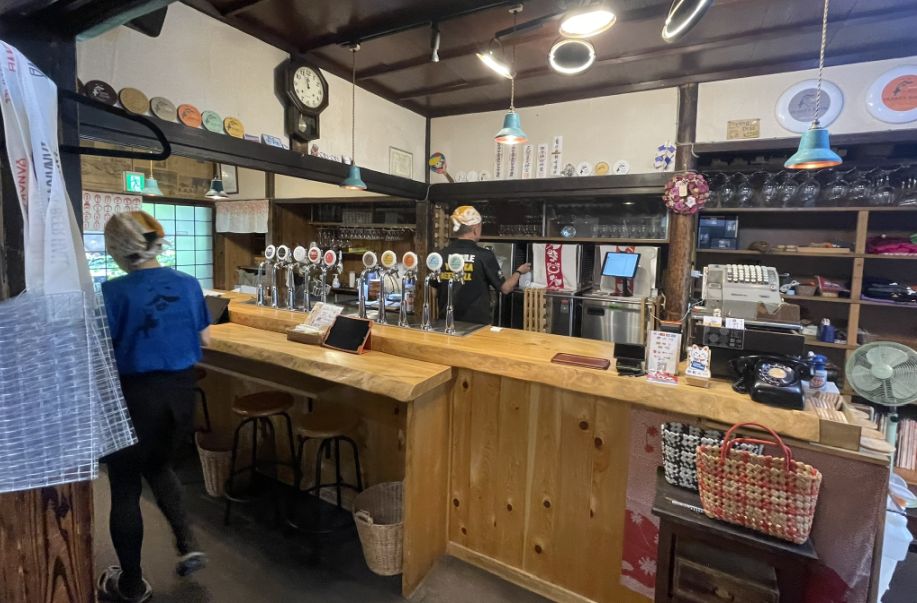
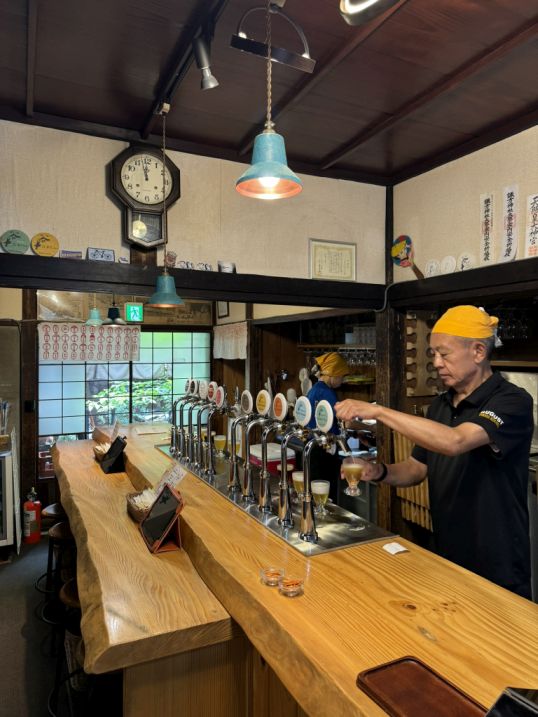
Inside, the atmosphere was casual and warm, centered around craft beer and hearty, straightforward food, the kind of place where you linger without realizing how much time has passed. After a morning of walking through temples and cemeteries, it felt perfect to slow down here, rest our feet, and enjoy something cold in a neighborhood that still moved at its own gentle pace.
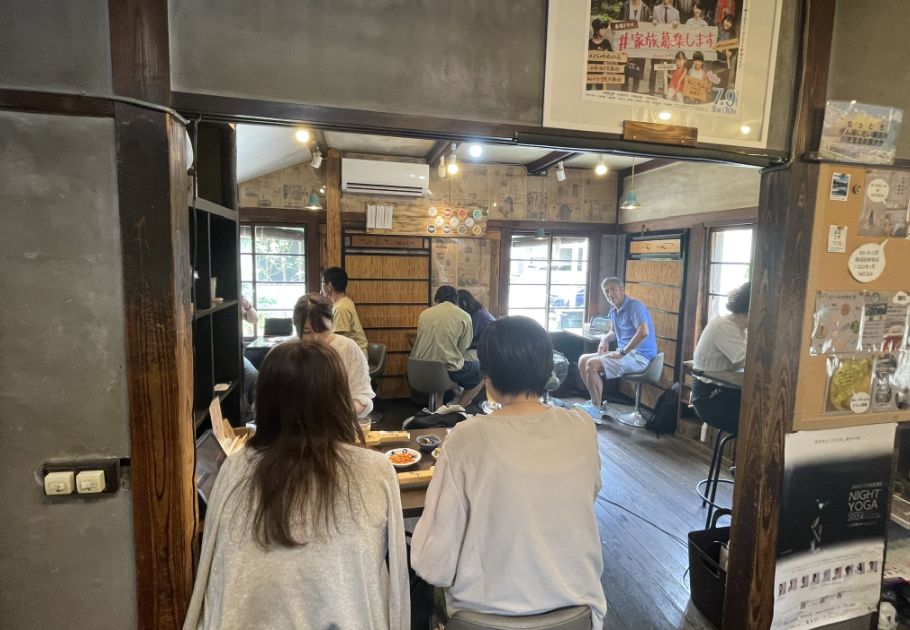
We stepped inside and were shown to a table by the window.
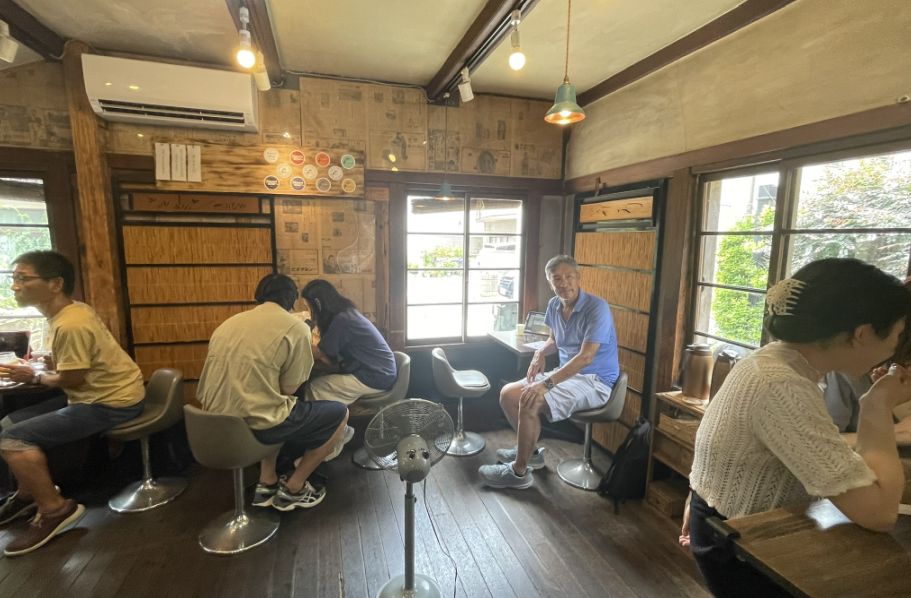
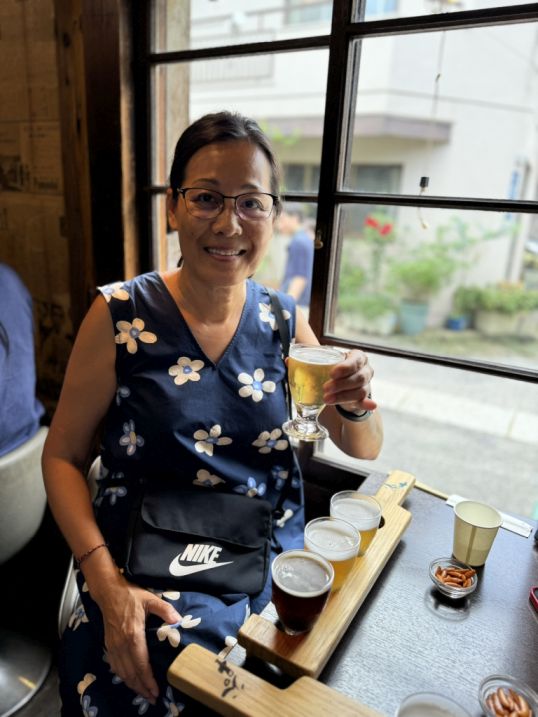
From there, we could watch people drift by on the quiet street while waiting for our beers, the light filtering in softly and mixing with the low chatter inside. It felt simple, local, and perfectly Yanaka.
 |
 |
Cheers!
 |
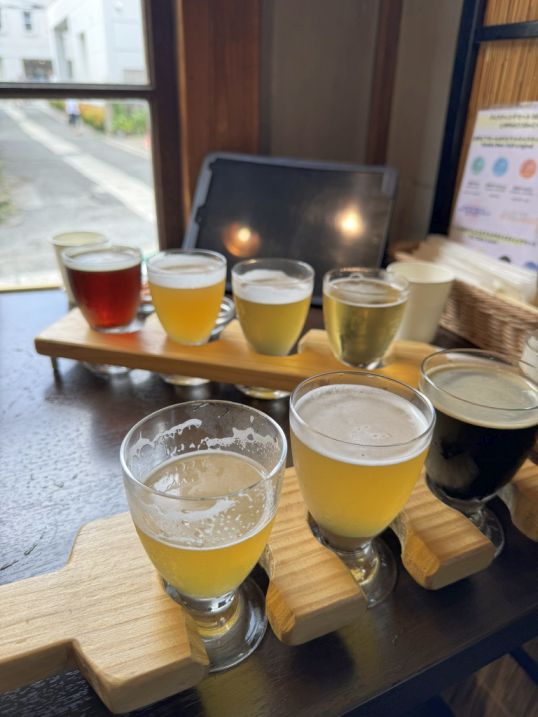 |
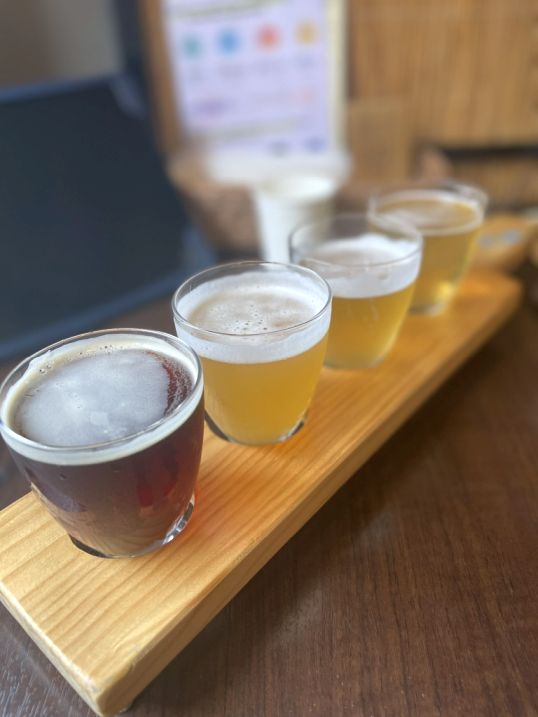
We both ordered a tasting set of four different beers, small glasses lined up like a little flight, each one a different shade of gold and amber.
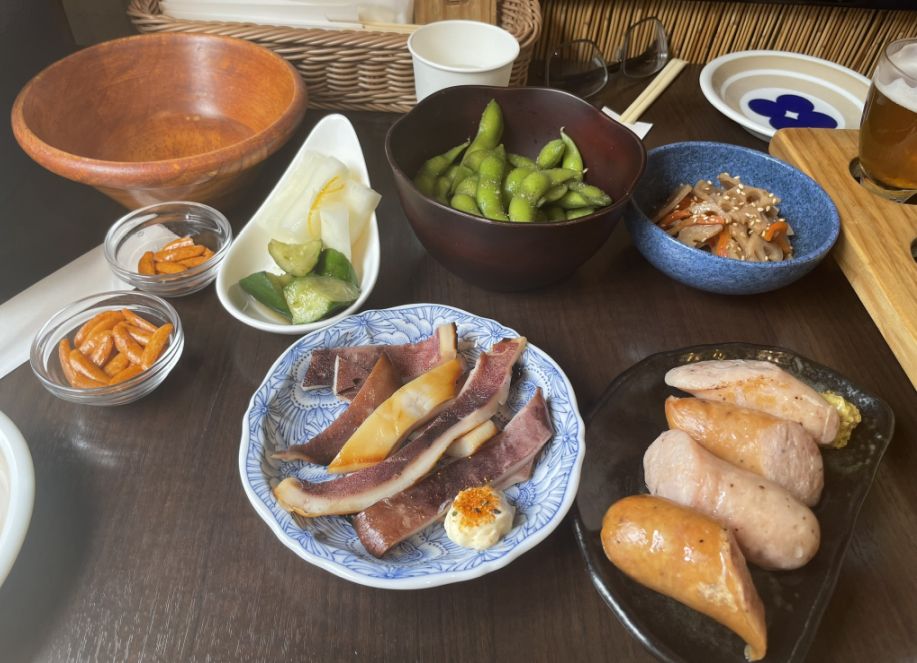
Along with them came plates of grilled squid, juicy sausages, tiny sausages with cucumber, edamame, and a simple but refreshing bowl of lotus root mixed with sesame and carrot. Everything tasted fresh and comforting, perfect with the cold beer.
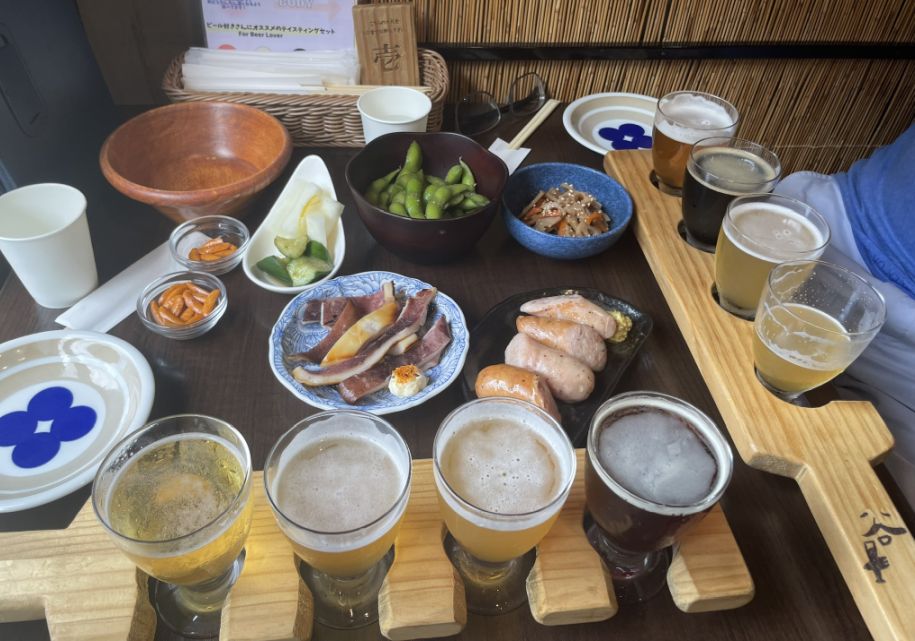
We truly enjoyed this meal with all the beer and food. We were so happy to find this little shop.
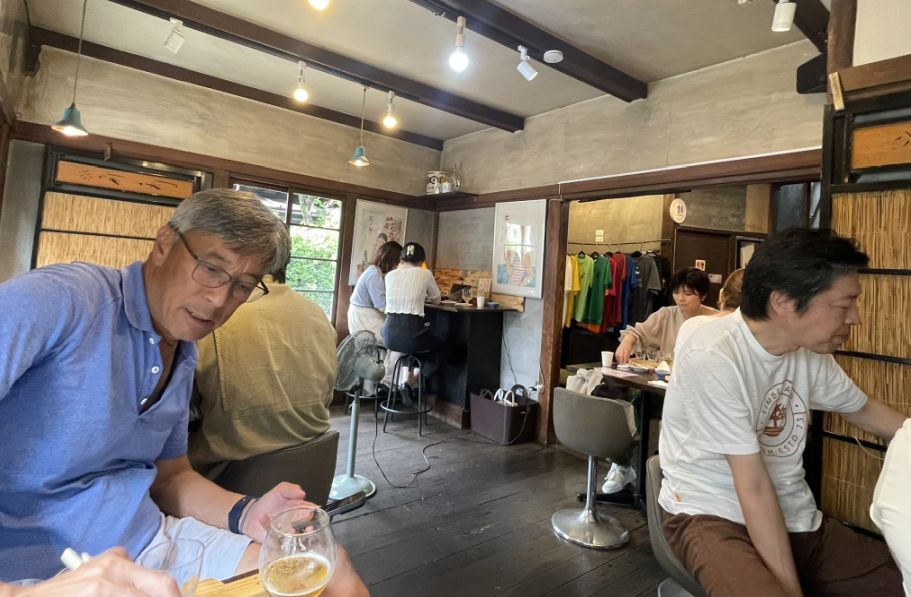
Halfway through the meal, Hoa accidentally knocked one of the glasses onto the floor. It shattered, beer spreading quickly across the floor. We froze for a second, embarrassed, but the waiter rushed over with a calm smile, cleaned everything up efficiently, and waved away our apologies as if it were nothing at all. When it was time to pay, we tried to leave a tip to say thank you. They immediately refused, almost in shock, insisting politely but firmly that it wasn’t necessary. It was such a small moment, but it stayed with us, the kindness, the professionalism, and the quiet pride in doing their job well, without expecting anything extra in return.
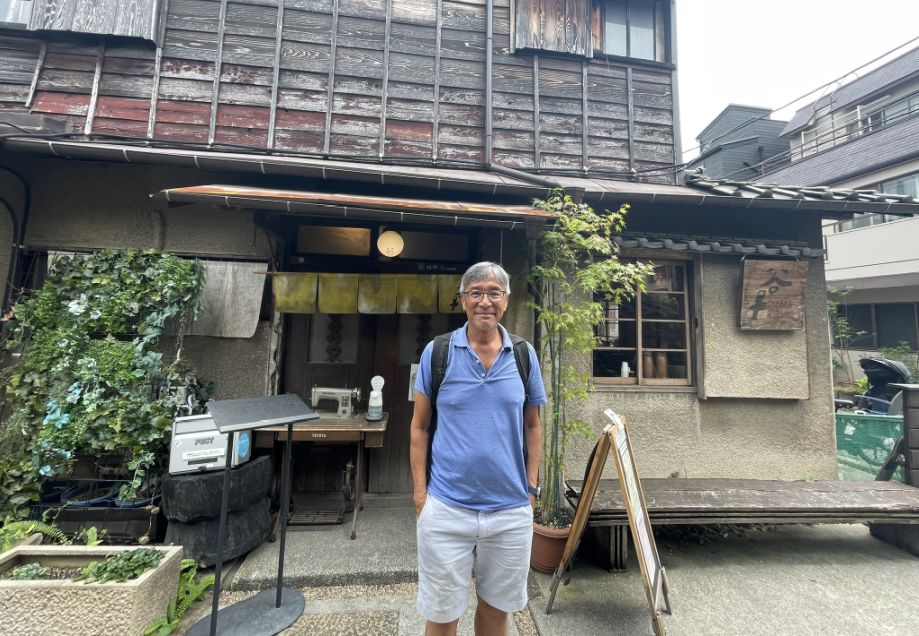
What made your experience special is that it’s popular without feeling touristy. Most of the customers are locals, office workers, retirees, and people from the neighborhood stopping by for a beer and a simple meal. Finding a place like that, where you’re surrounded by everyday life rather than tour groups, is rare in Tokyo. Moments like with good food, good beer, a small accident handled kindly, and no expectation of tips, are exactly the kind of quiet, authentic experiences that stay in your memory long after the trip ends.

Temple Walk.
We are now on the "Temple Walk" because this is one of the highest-density temple districts in the world. There are roughly 76 temples in the Yanaka district alone.
In 1625, the Shogunate built the massive Kan’ei-ji temple in nearby Ueno to protect the city from the "unlucky" northeast direction (Kimon). Because of this, dozens of other temples were ordered to move to Yanaka to act as a spiritual defensive line. Most of Tokyo was destroyed by the Great Meireki Fire (1657), the 1923 earthquake, or WWII bombings but Yanaka was miraculously spared from all three. The temples you see are the original wooden structures of Old Edo.
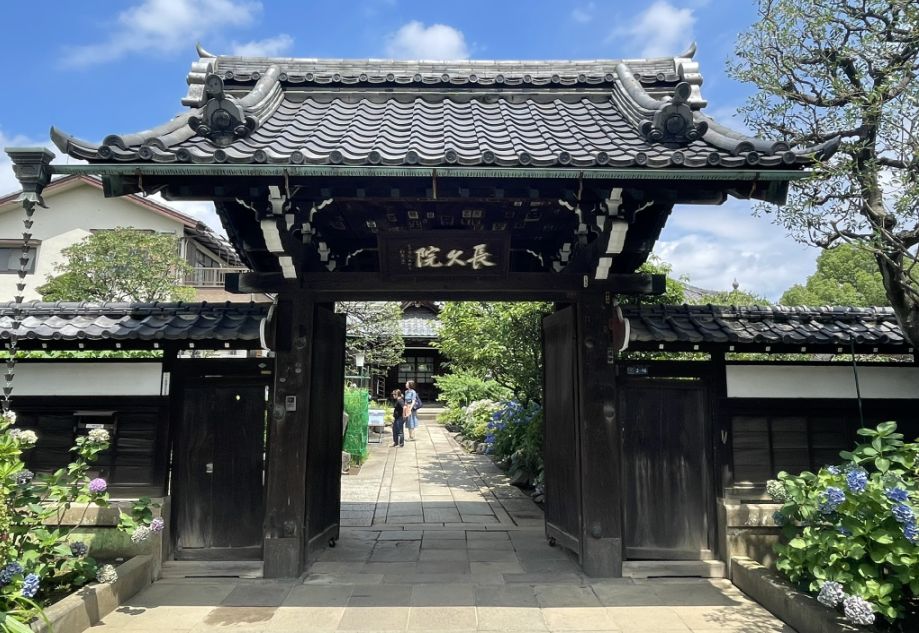
The first temple we saw was Chōkyū-in which is one of the most historically significant temples on that specific path between the Beer Hall and the Train station.
This is a Shingon sect temple, and the gate is a classic example of Edo-period timber work that has remained largely unchanged for centuries. The gate is not just an entrance, it is a survivor of a civil war and you can still find bullet holes. These are from the Battle of Ueno in 1868, during the Boshin War. Shogun loyalists (the Shogitai) retreated into Yanaka, and the gate stood right in the crossfire between them and the Imperial forces.
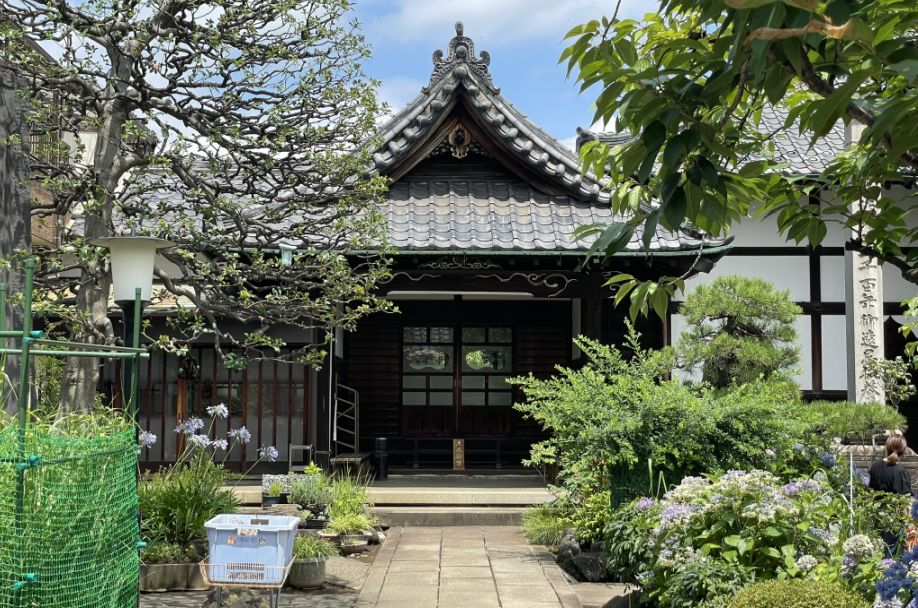
Beyond the gate, the temple grounds are known for being exceptionally lush and green.
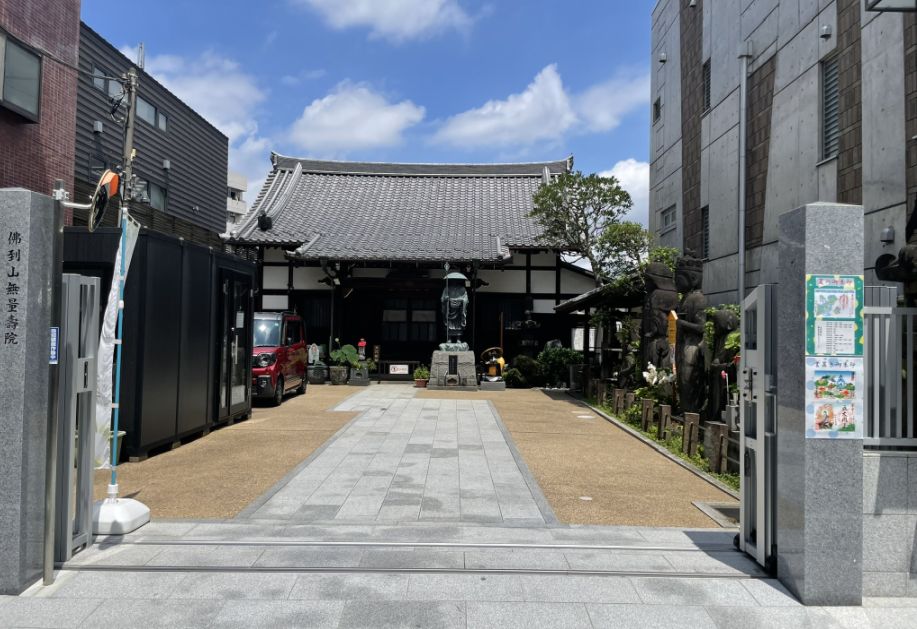
Next, we passed by Muryōju-in with a modern stone gate and the clean, paved path, this temple has a very different feel from the older wooden gates.
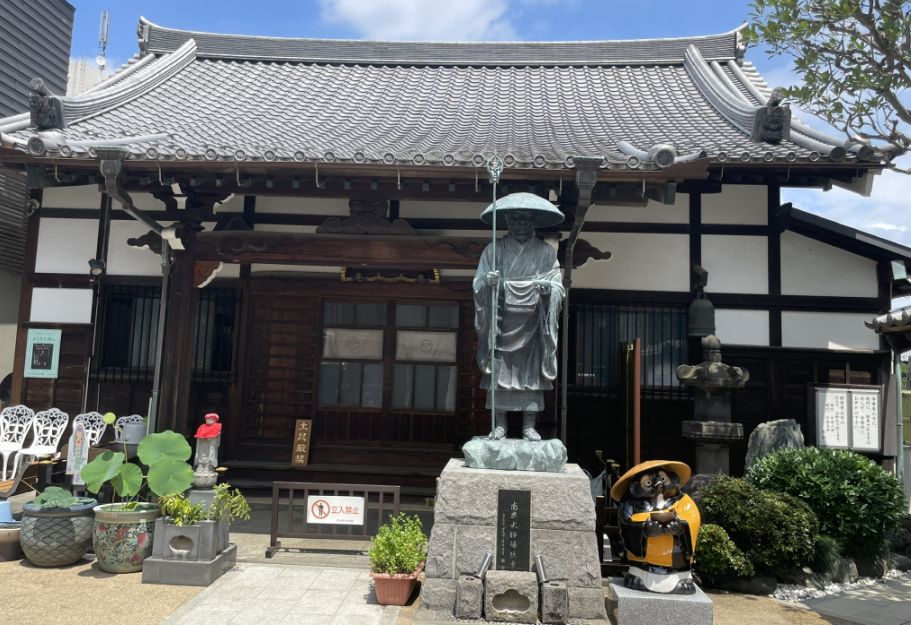
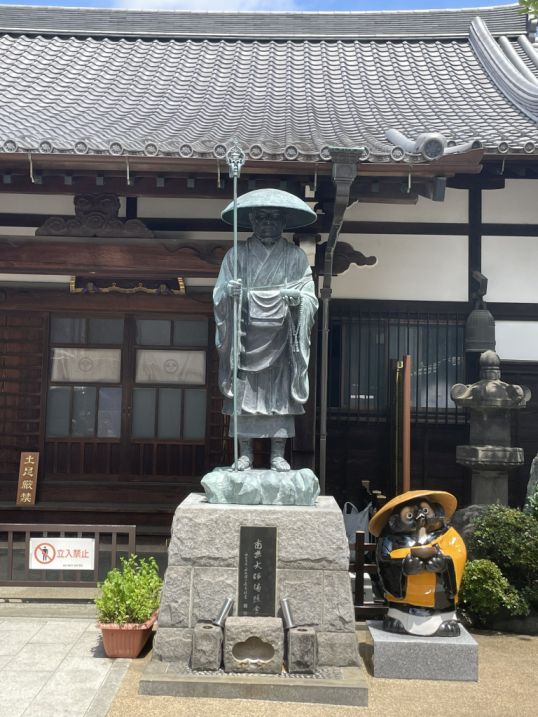
The Central Statue, standing prominently in the middle of the courtyard is a bronze statue of Kōbō Daishi (also known as Kūkai), the founder of Shingon Buddhism.
 |
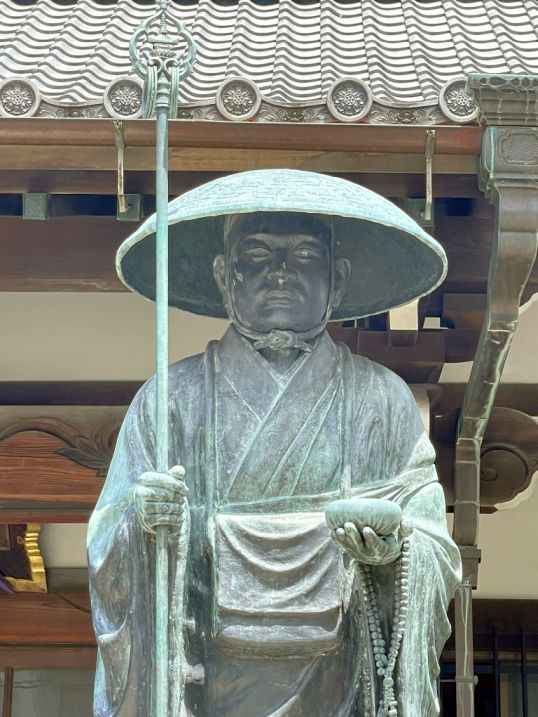 |
He is depicted in his traditional traveling attire, wearing a large rounded straw hat (ajiro-gasa) and holding a staff, representing his pilgrimage across Japan.
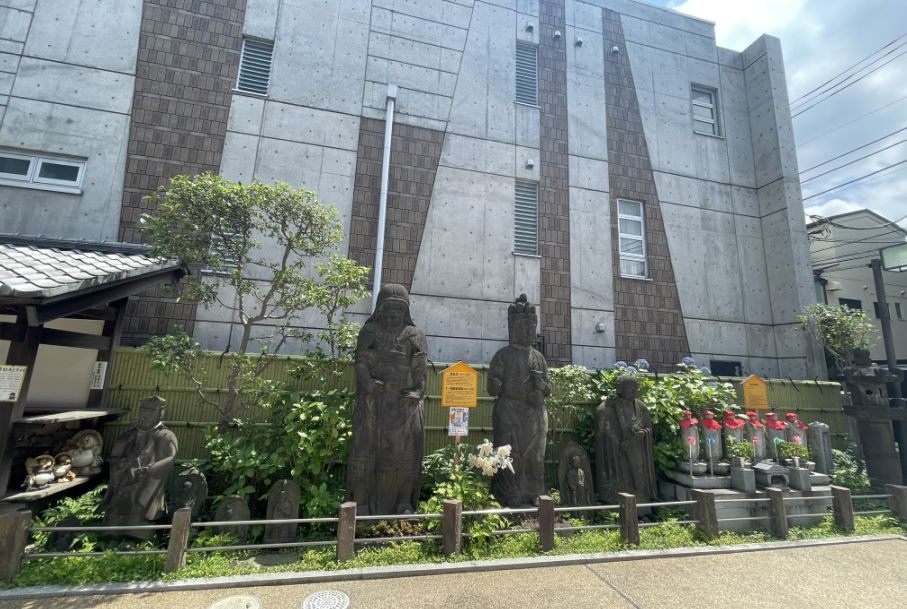
To the right of the path, there are several stone statues. These are likely the Roku Jizō (Six Jizō), who are believed to protect beings in the six realms of existence.
Like many temples in this area, it is tucked tightly between modern residential buildings and local businesses, showing how integrated these spiritual spaces are with everyday life in the Yanaka district.
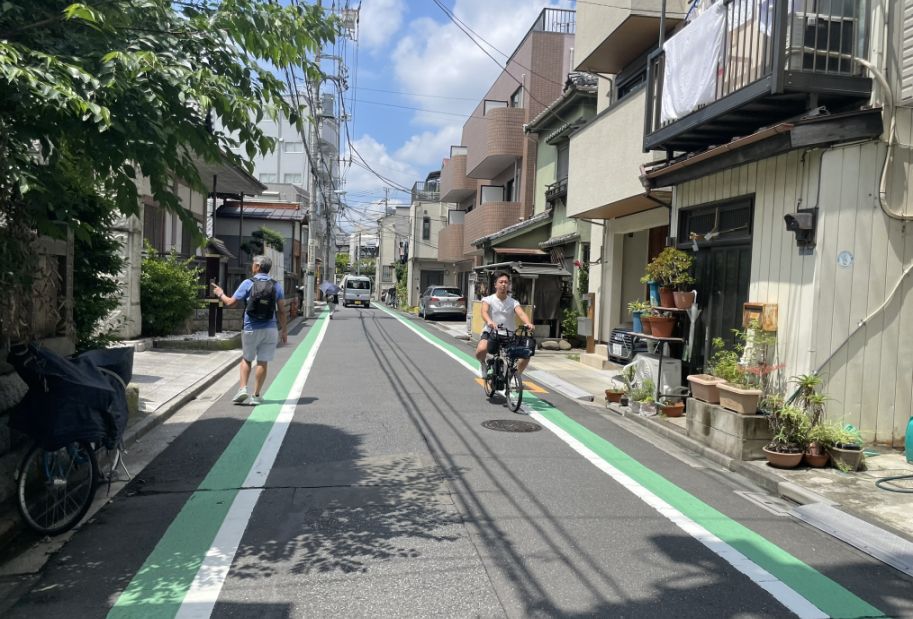
Walking through Teramachi (Temple Town)
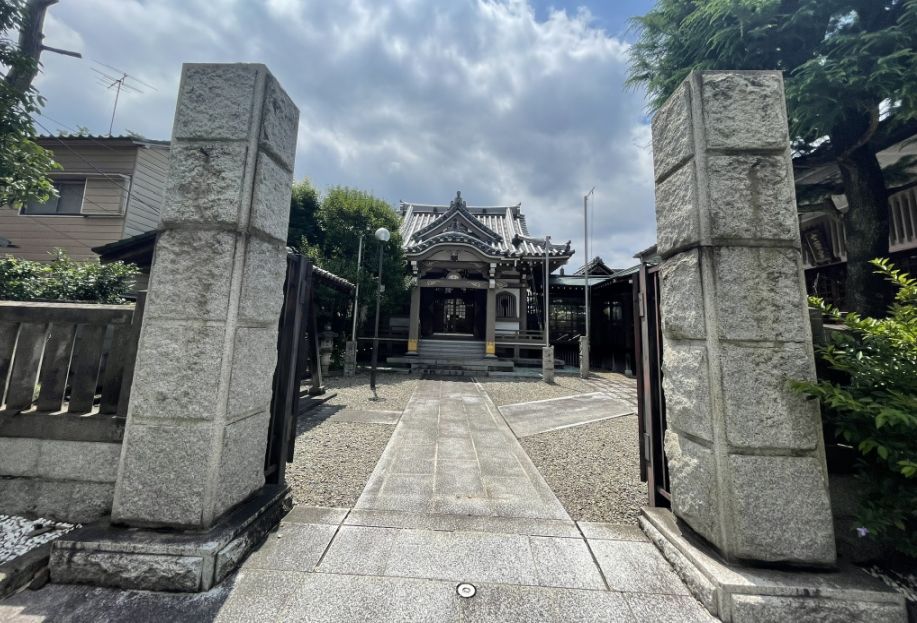
Shoun-ji temple belongs to the Rinzai Zen sect. Rinzai temples are often characterized by their clean lines and orderly stone paths, which you can see leading directly to the main hall.
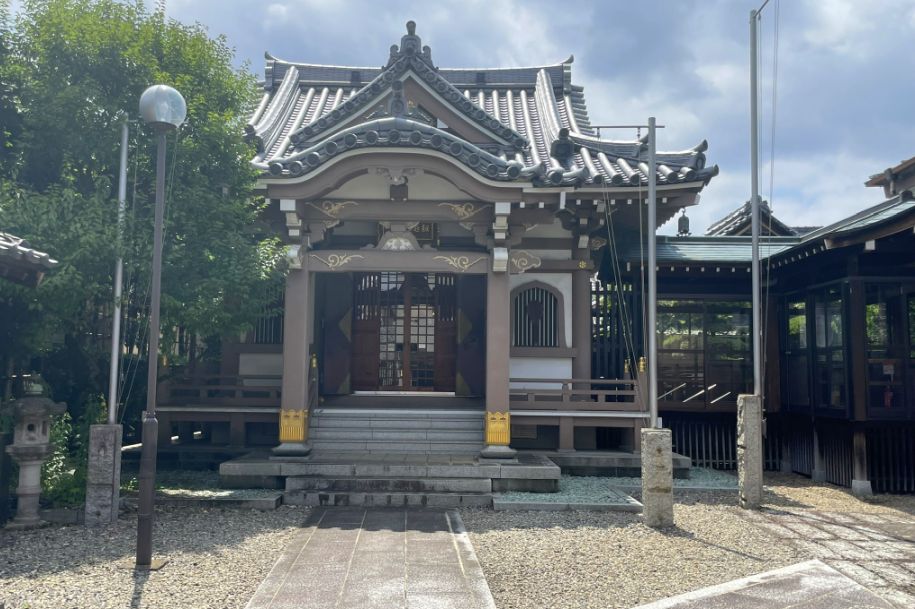
Inside the courtyard is the Main Hall (Hondō): The building in the center features a classic Japanese tiled roof with a curved gable (karahafu) over the entrance, which is a common architectural feature in Zen temples to signify importance and welcome.
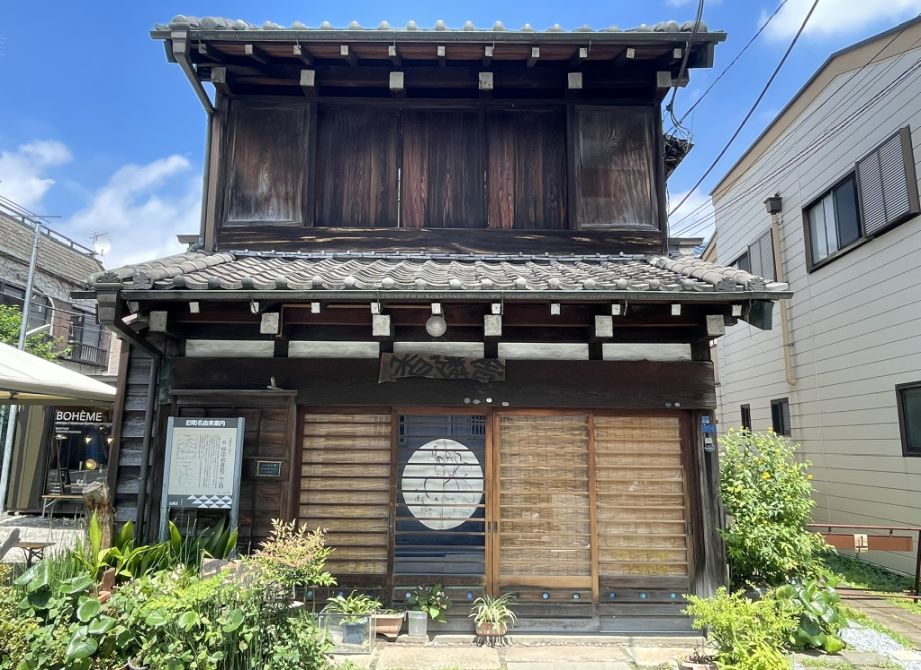
A beautiful house along the way.
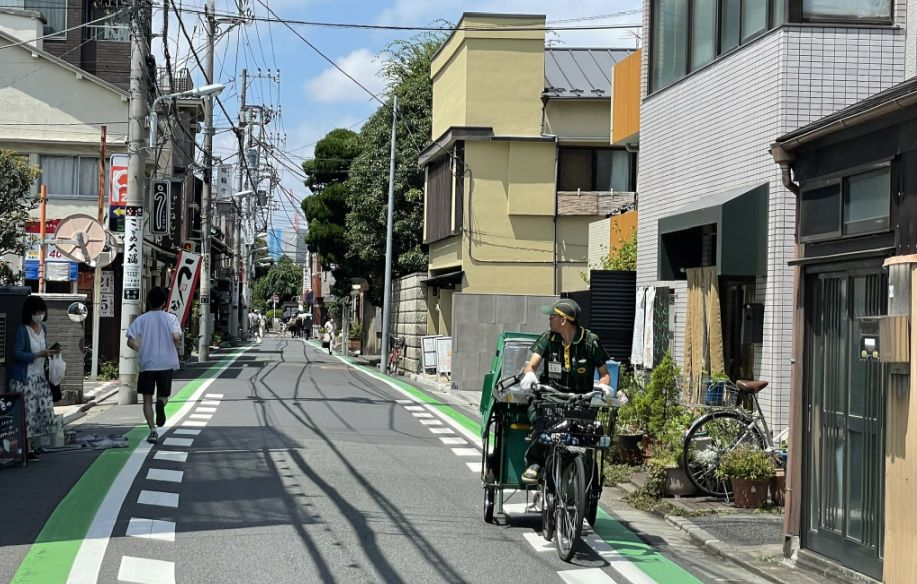
You can see how the temple is literally nestled among the residential houses of the town. In Yanaka, there is often no clear boundary between where the neighborhood ends and the sacred temple grounds begin; they coexist side-by-side.
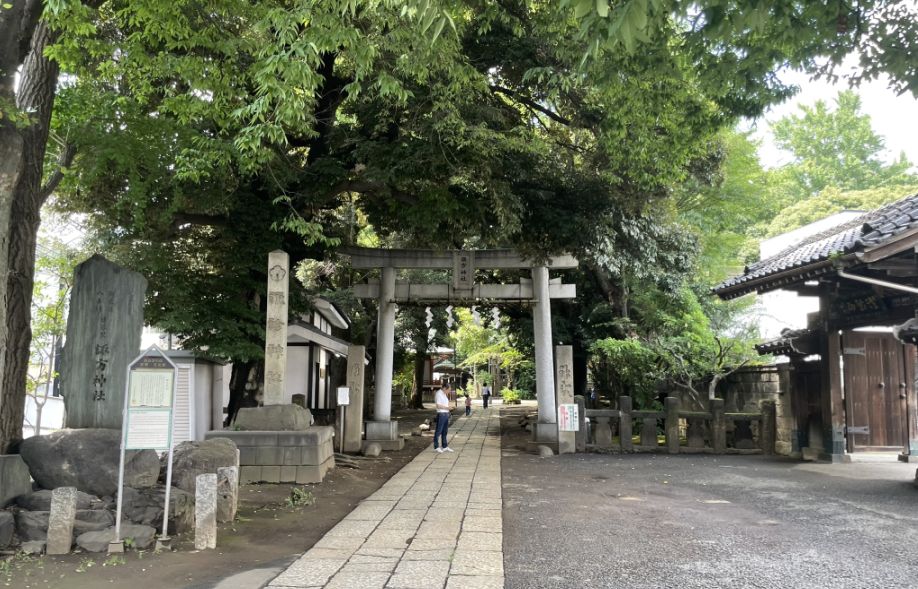
The main entrance of Suwa shrine with the large stone Torii gate that marks the transition into the sacred grounds.
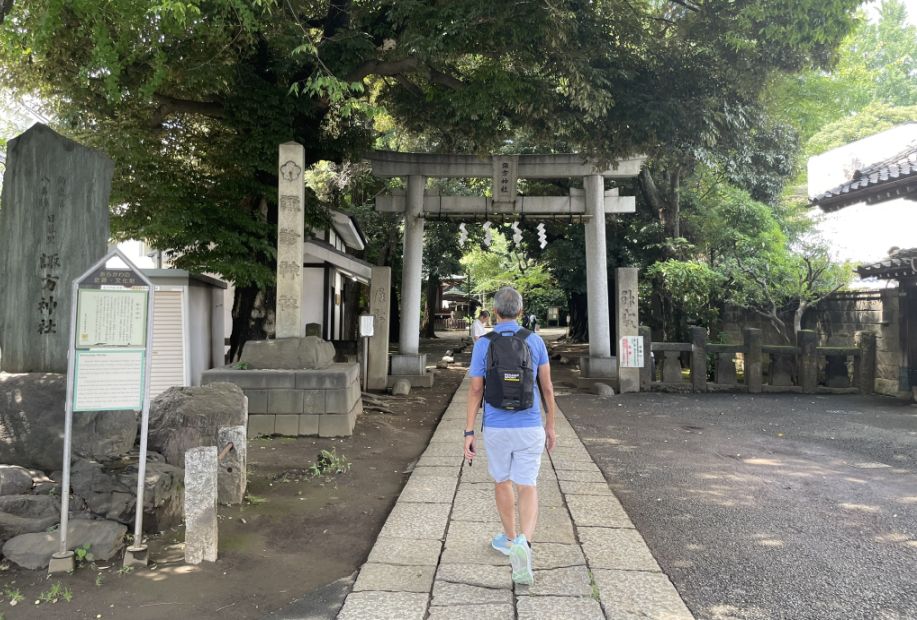
Entering the temple.
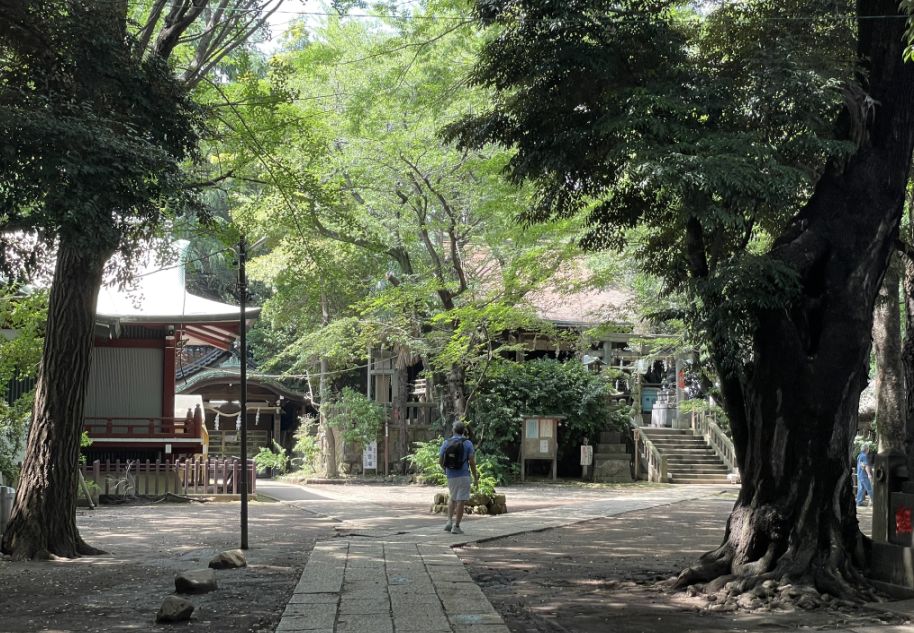
The grounds are "huge" and filled with ancient, towering trees. These trees create a natural canopy that makes the shrine feel like a hidden forest in the middle of the city.
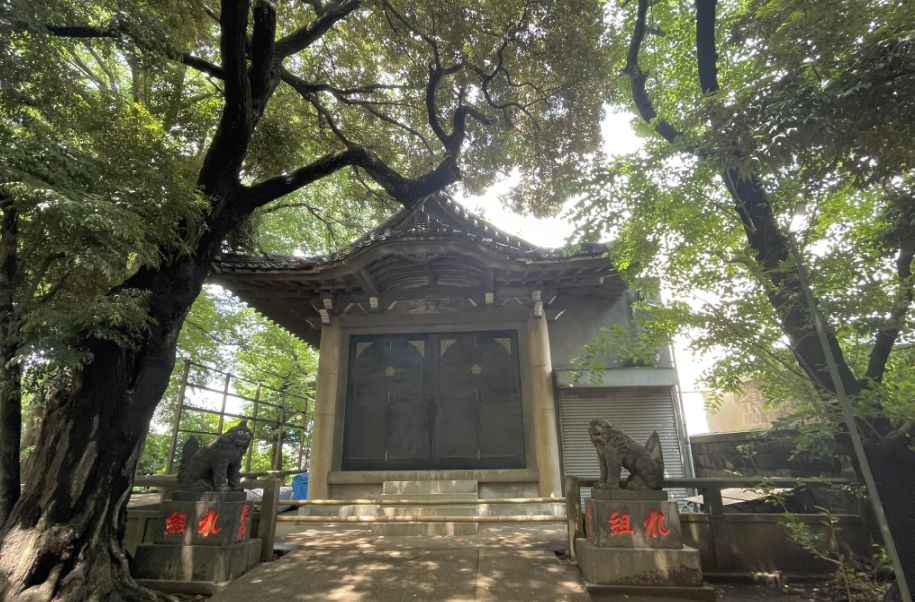
This shrine has been the guardian of the local Yanaka and Nippori area for over 800 years.
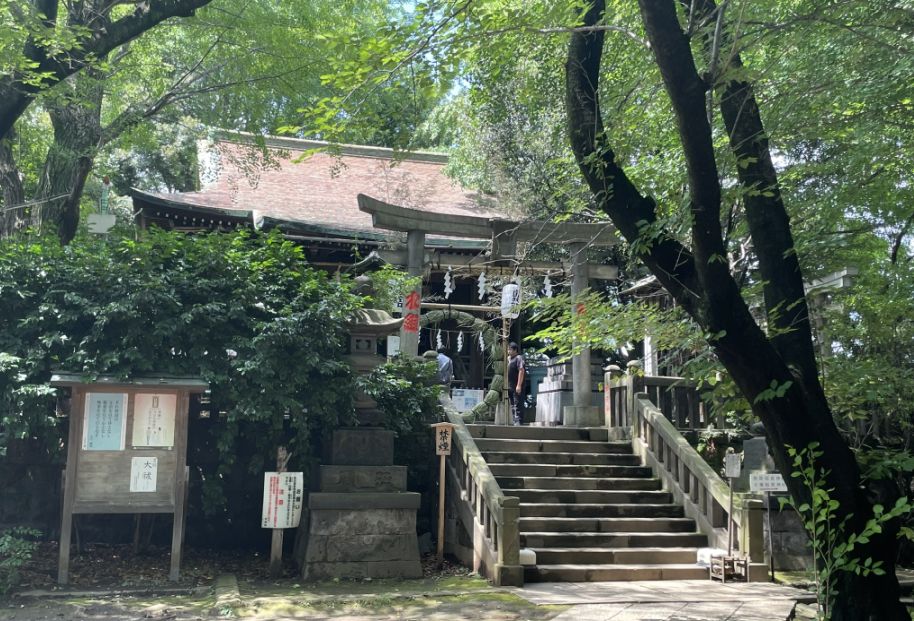
This is the main Hall is the primary place of worship. Even though the shrine has a history dating back to around 1205 AD, the hall itself is kept clean and well-maintained by the local community.
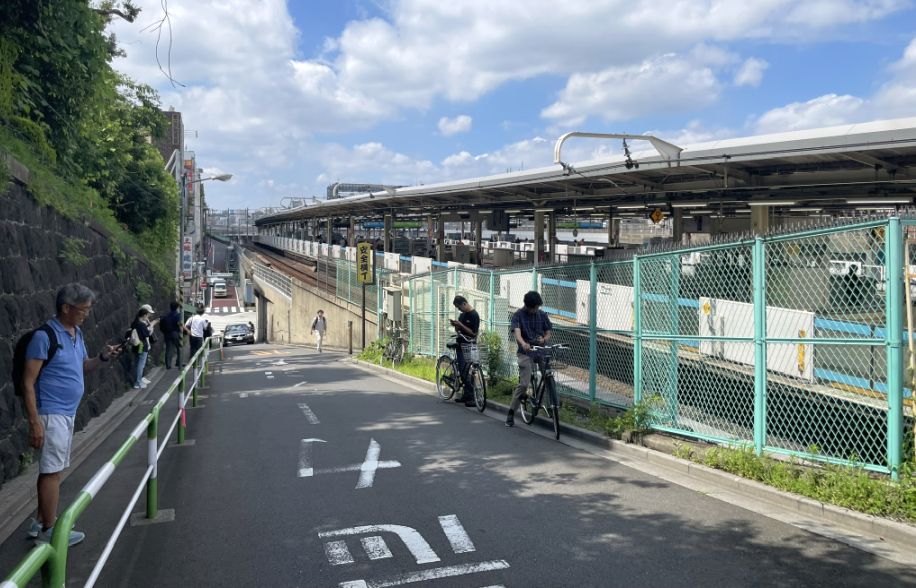
We are now at the train station going back to Jinjuku.
NEXT... Day 7- Jinjuku to Ginza