9 days in Japan- 6/23- 7/1/2024
Day 6-Arrival in Tokyo/Dinner at Jomon Roppongi-6/28/2024
This morning we took the Joetsu Shinkansen train from Niigata station to Tokyo Station. From the Tokyo station we transferred to JR Shinjuku station. The whole trip took us about 3-4 hours.
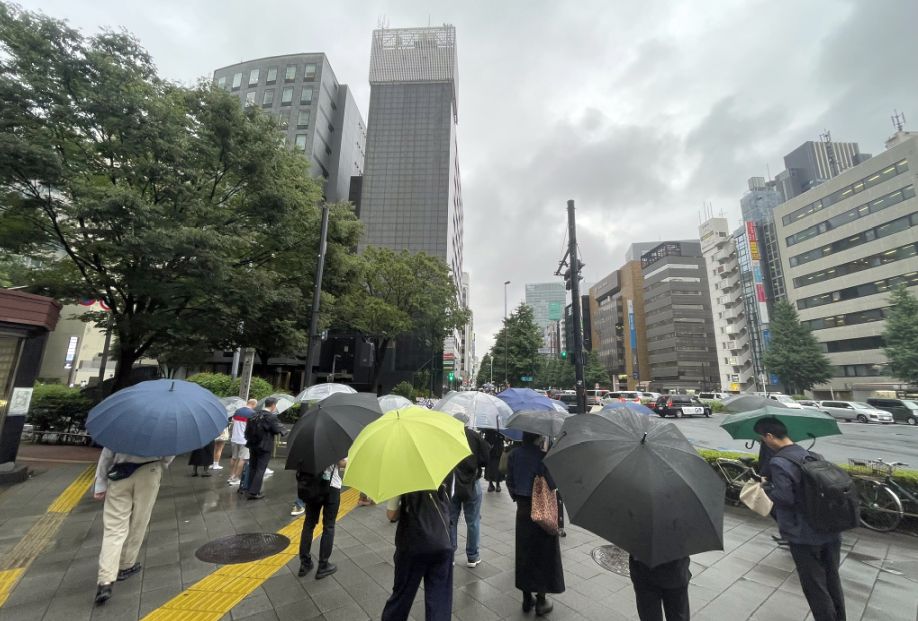
Shinjuku felt like a sudden leap from quiet countryside into the heart of modern Japan. After days of rice fields and wetlands in Niigata, stepping out of the station into light rain and moving umbrellas was almost surreal.
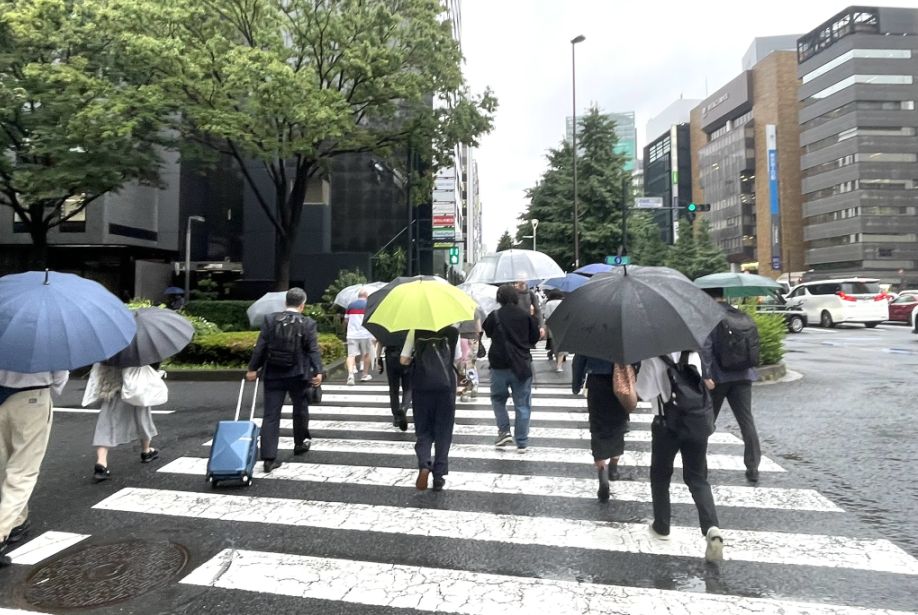
We are heading to our hotel in the Shinjuku area.
 |
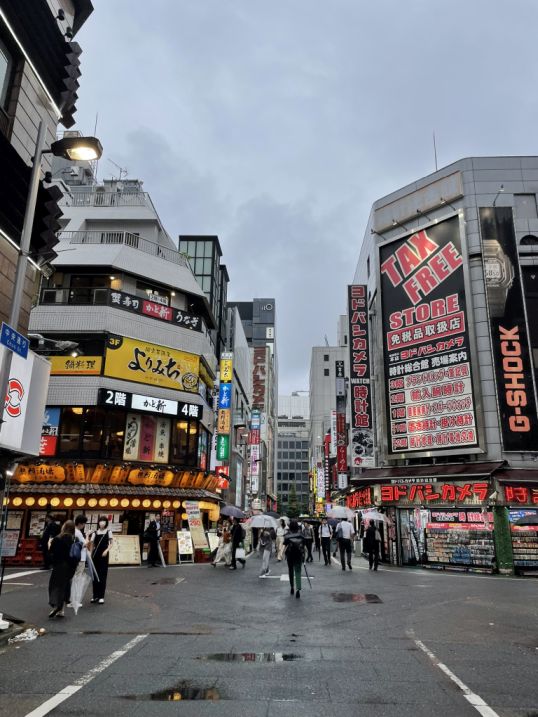 |
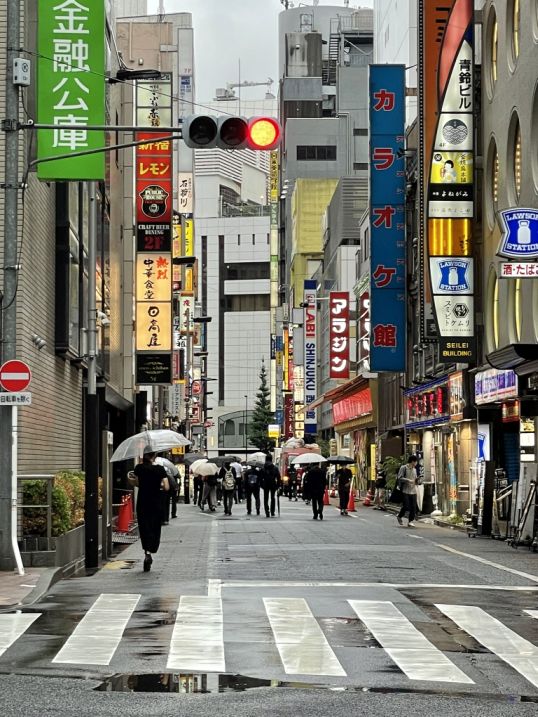
After resting a bit, we are heading out to dinner. On our way we passed by Shinjuku’s electronics district which is a world of light and motion.
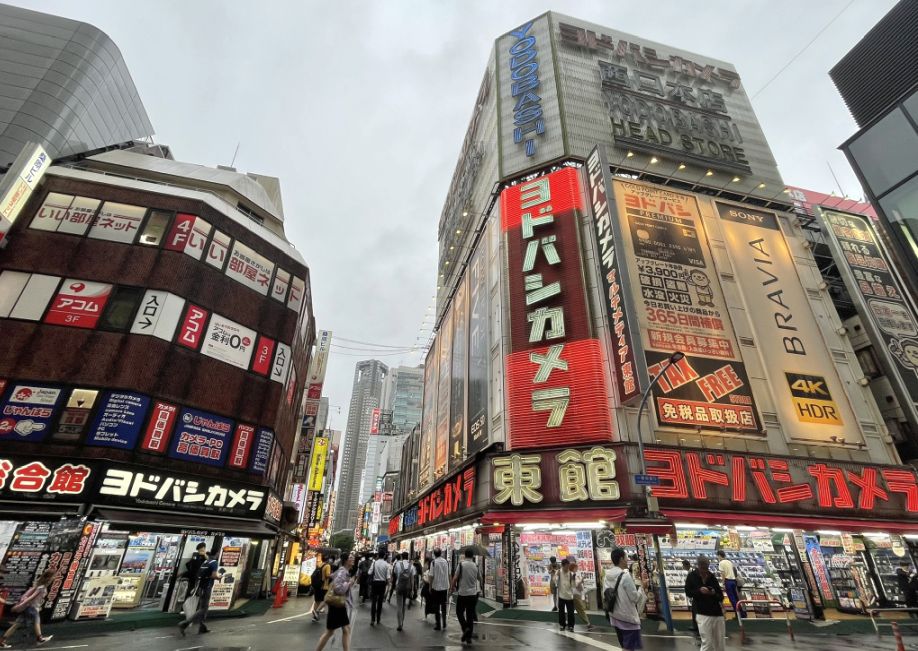
Tall buildings are wrapped in giant neon signs and LED screens that flicker with advertisements for cameras, headphones, games, and the newest gadgets. Stores like Yodobashi Camera and Bic Camera stretch across entire city blocks, each floor stacked with technology, from rice cookers and beauty devices to drones and high-end cameras. The signs climb upward in layers, turning the streets into narrow canyons of color.
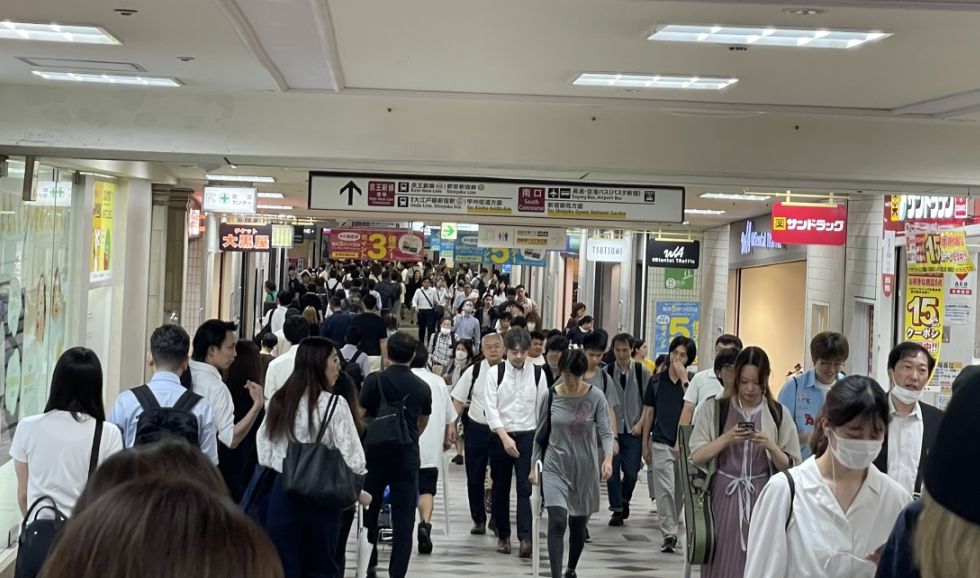
We are now taking the subway to Roppongi for dinner.
 |
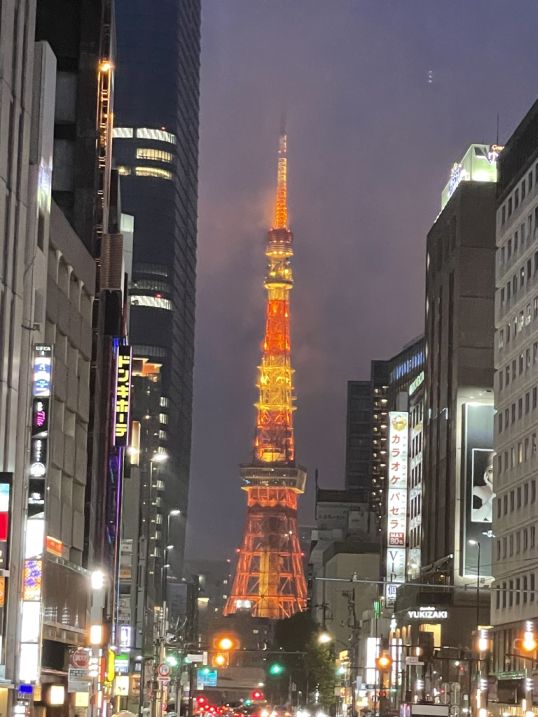 |
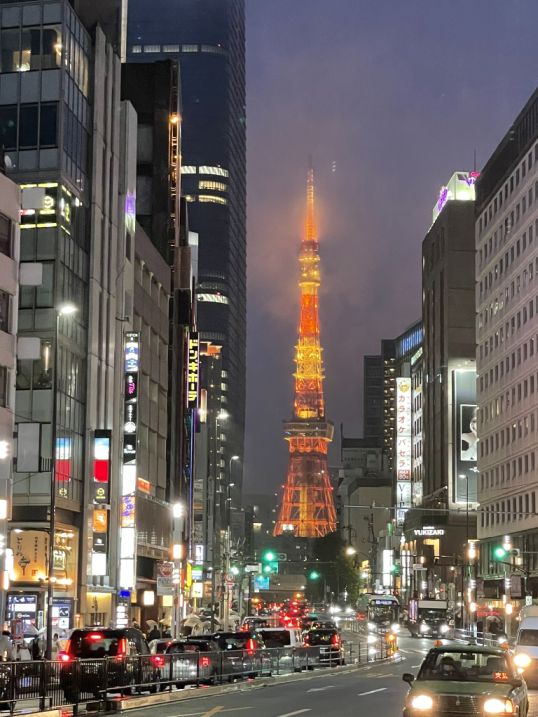
As we stepped out of Roppongi Station, the night air felt heavier and quieter than Shinjuku’s electric chaos. Iin the distance is the Tokyo Tower rising like a glowing beacon. Its steel frame was lit in warm bands of red and soft golden yellow, almost like a Japanese echo of the Eiffel Tower, but brighter and more dramatic against the black sky.
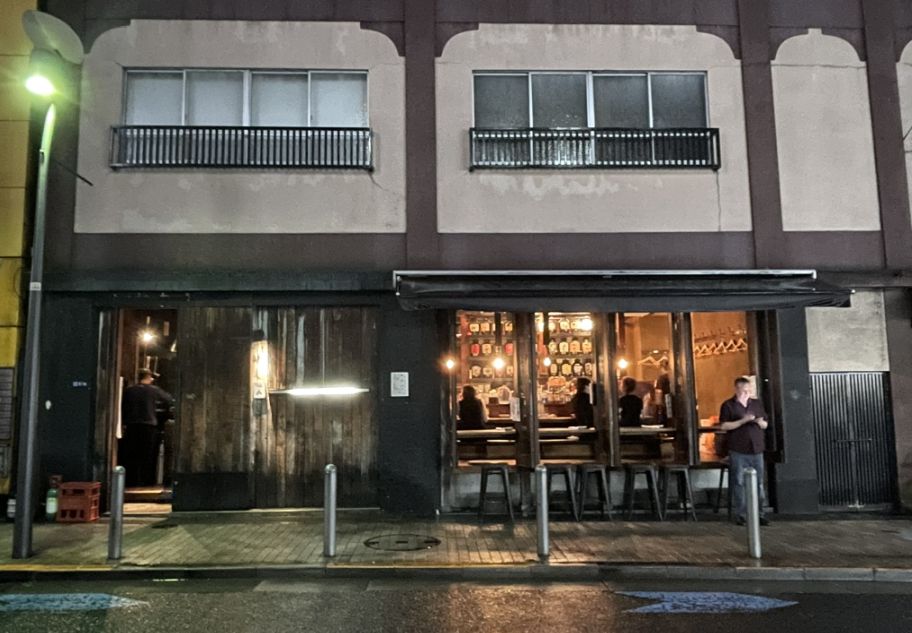
When we arrived at Jomon Roppongi, it felt like coming to a familiar space, our sixth or seventh visit, and now one of our favorite arrival-in-Tokyo traditions. This izakaya has a reputation that stretches far beyond the neighborhood: locals, expats, and travelers alike flock here for juicy charcoal-grilled skewers (yakitori), crisp vegetables, hearty sides, and a warm, welcoming atmosphere that never feels rushed.
From the outside, Jomon has a strong presence on the street. The façade is dark wood and warm lighting, and an inviting signal in the evening glow of Roppongi’s nightlife.
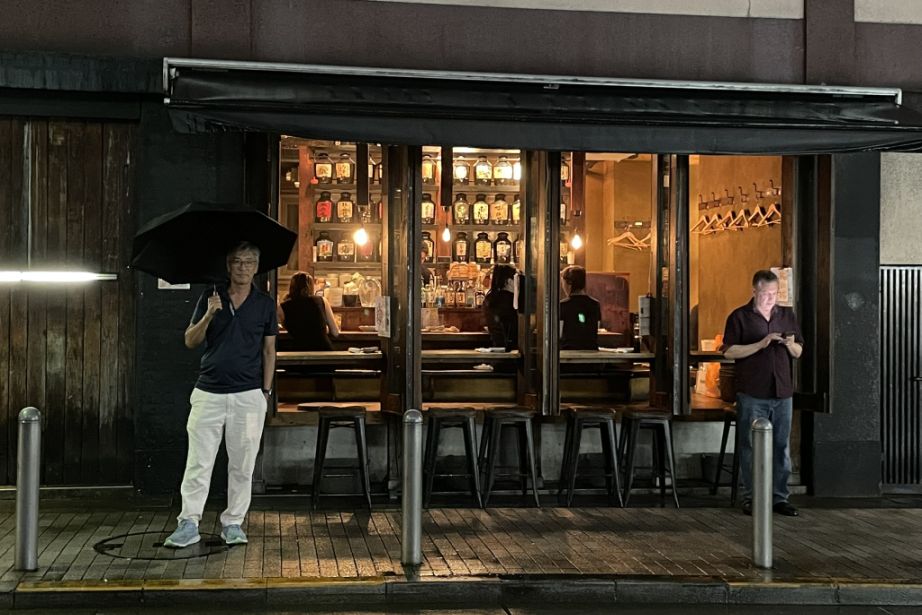
To one side, there’s a covered outdoor seating area where diners can sit on low stools or benches and watch the ebb and flow of the street while still peering into the restaurant through large windows. It’s a lively spot, perfect for people-watching, sipping a drink, or waiting for a table. Even on cooler nights, blankets or wind barriers often make it comfortable, and the sight of friends laughing under the lanterns feels quintessentially Tokyo.
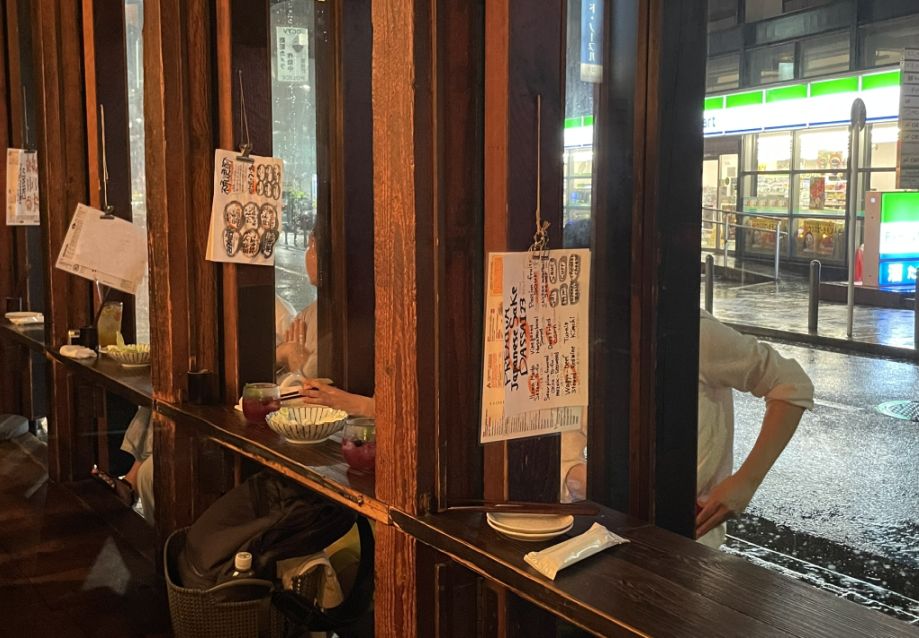
This is the view from the inside of the restaurant where you can see people sitting outside and facing the interior of the restaraunt.
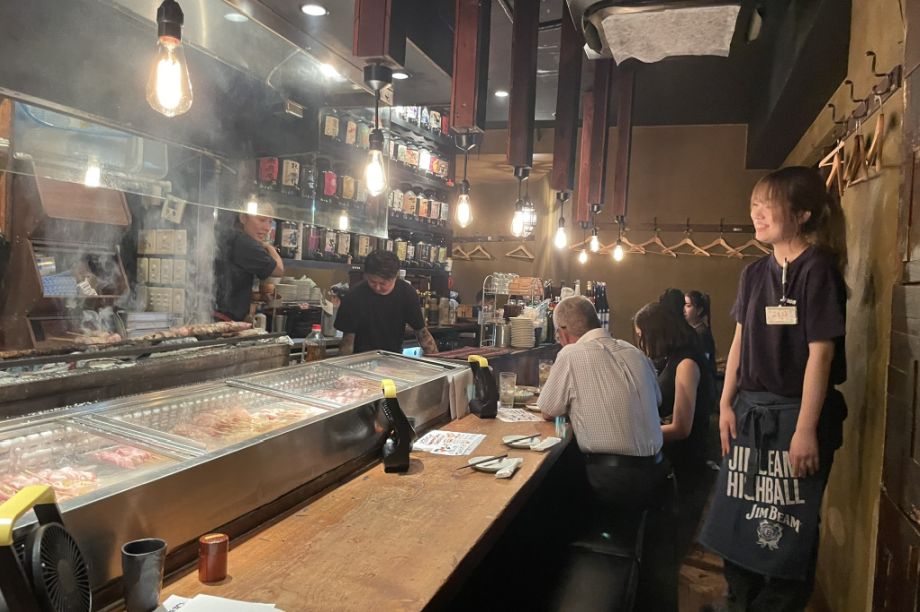
The waitress showing us our place in front of the counter.
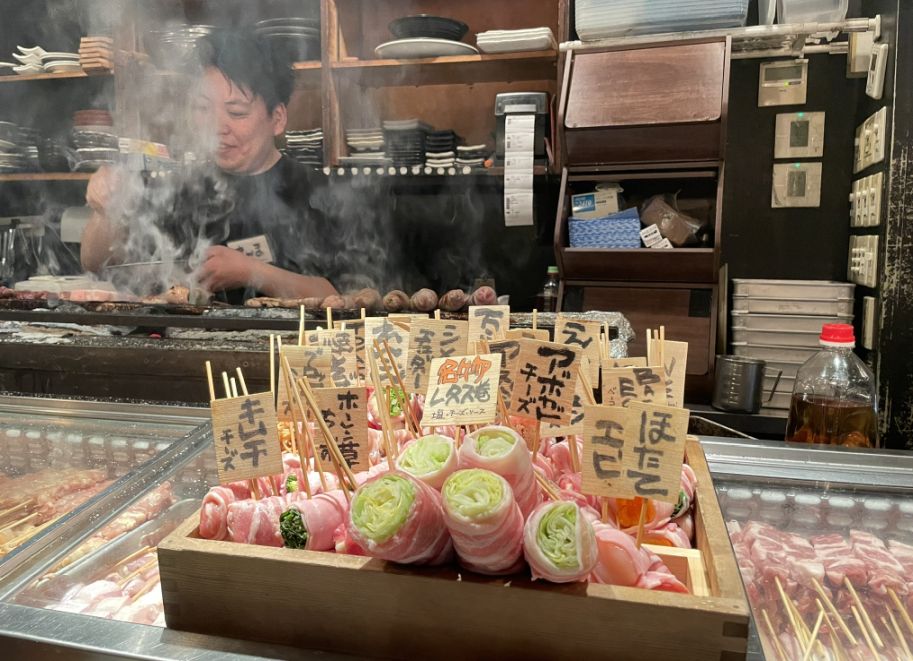
The restaurant itself is popular for good reason: the food is consistently excellent, from the perfectly grilled skewers of chicken and vegetables to richer dishes like stewed pork and seasonal specials. The drinks are equally inviting, with cold beer, sake, and creative cocktails flowing freely, ideal after a day of travel.
 |
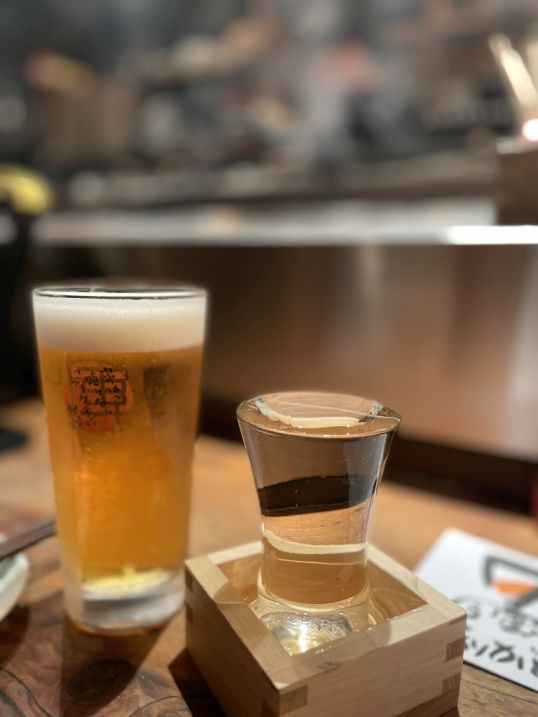 |
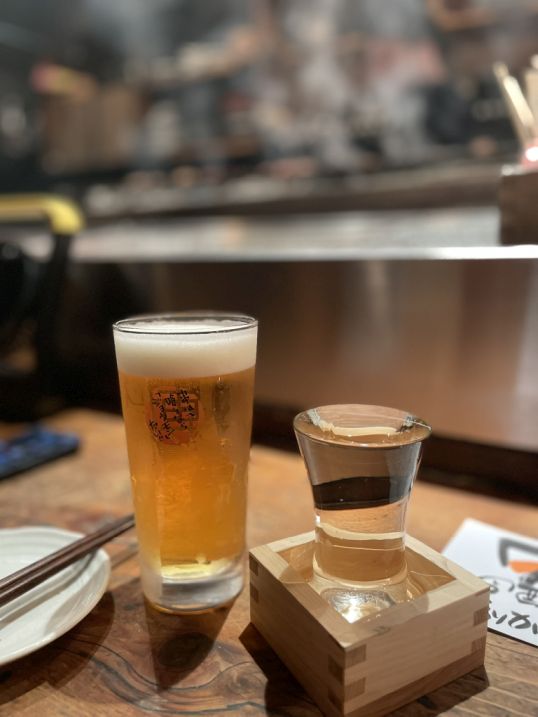
Beer and Sake to start the meal!
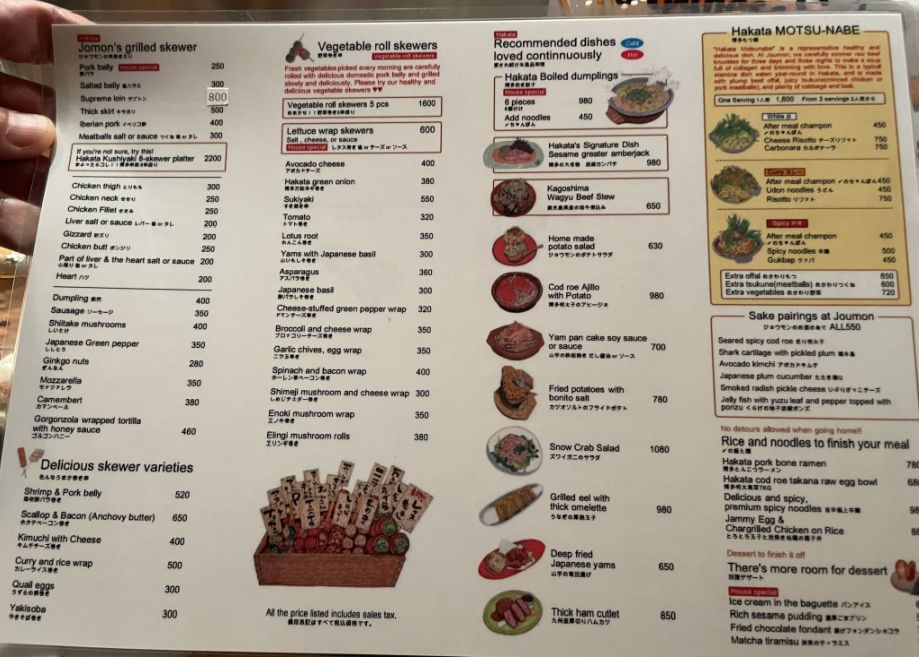
The menu
 |
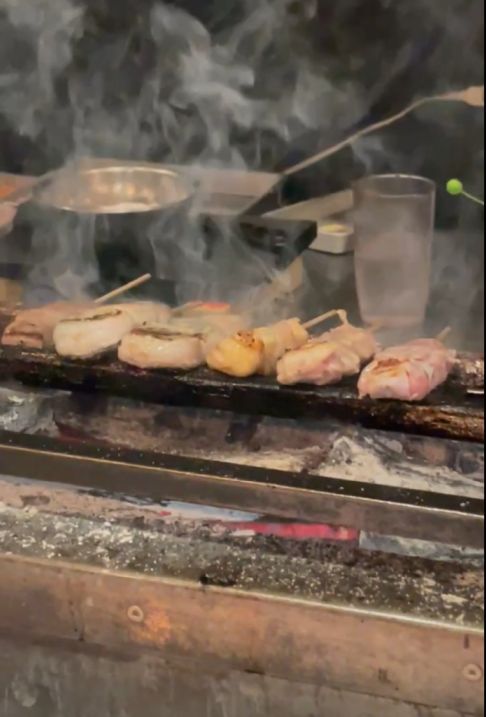 |
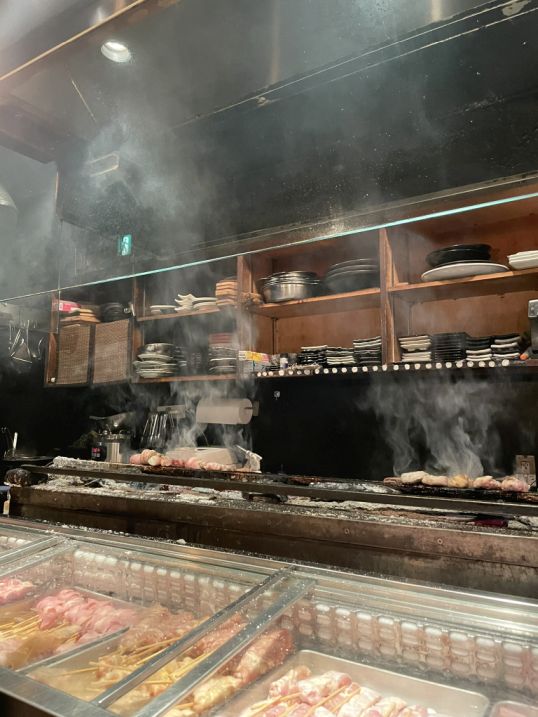
We were seated at the counter, the best seat in the house. Right in front of us, the grill glowed with hot charcoal, and we could watch every skewer being turned by hand, the fat slowly dripping and flaring into soft bursts of flame. Smoke curled upward in pale ribbons, carrying that deep, irresistible smell of salt, fire, and meat.
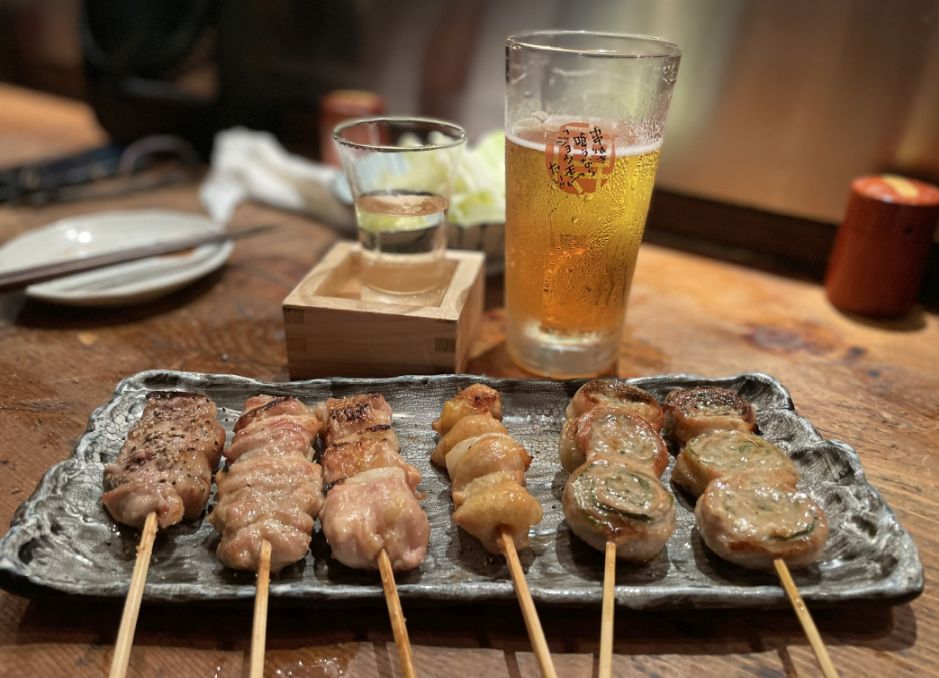
We ordered a platter of 6 of six different yakitori: Iberian pork, chicken thighs, thick skirt steak, salted pork belly, scallop wrapped in bacon, and supreme loin.
 |
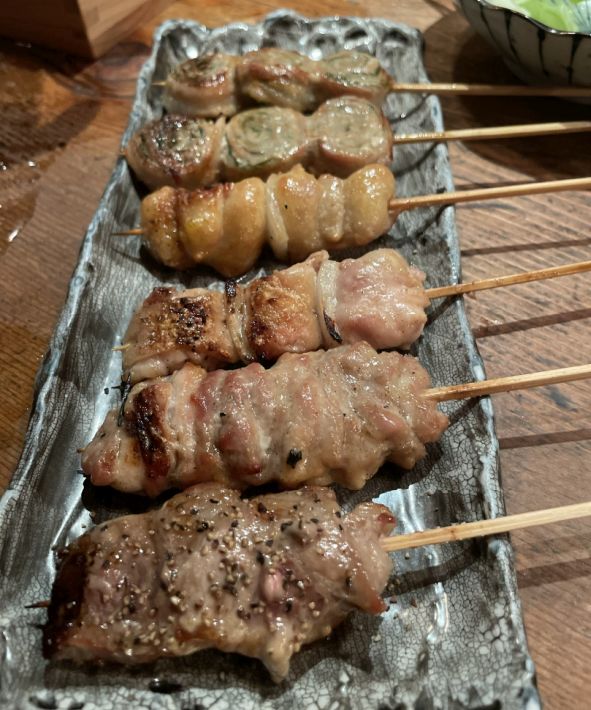 |
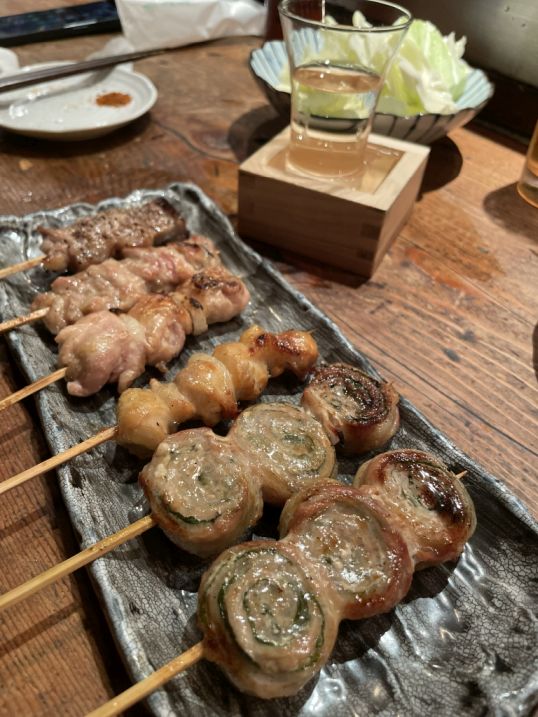
One by one they arrived, lined up like a work of art on warm ceramic plates, each skewer glistening slightly from the grill.
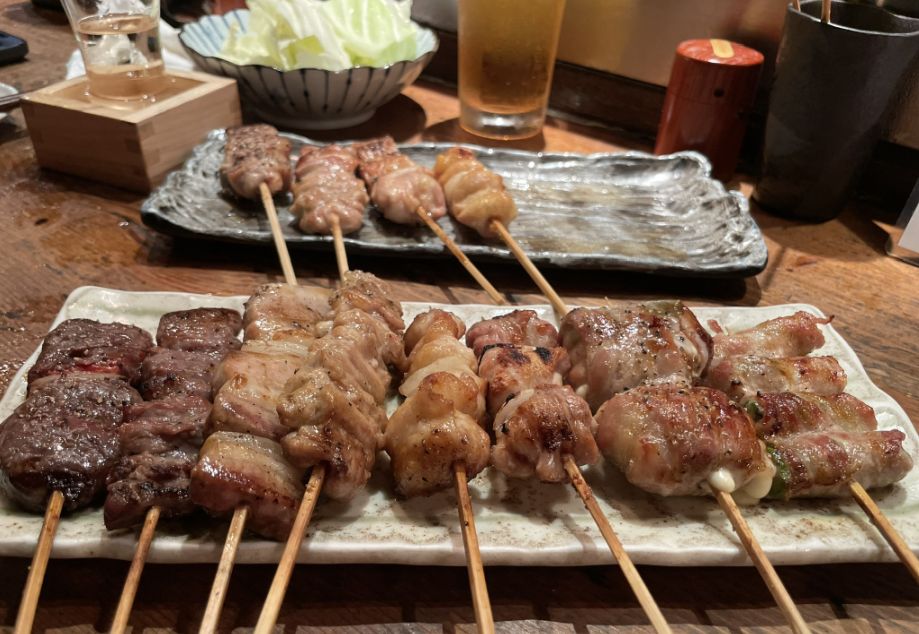
The next platter is the Akhata kushiyaki 8-skewer platter that was recommended by the chef.
Every bite was perfect,. smoky on the outside, tender inside, seasoned simply so the natural flavor of the meat could shine. The pork was rich and juicy, the chicken impossibly soft, the skirt steak deeply savory, and the scallop with bacon a small explosion of sweetness and salt. Sitting there, watching the next order crackle over the fire while savoring our own, it felt like the purest form of comfort.
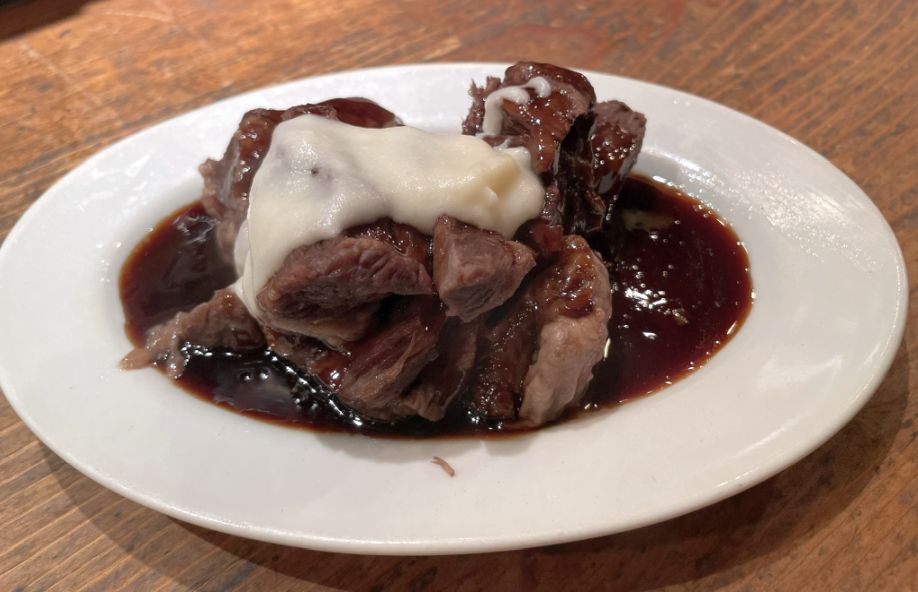
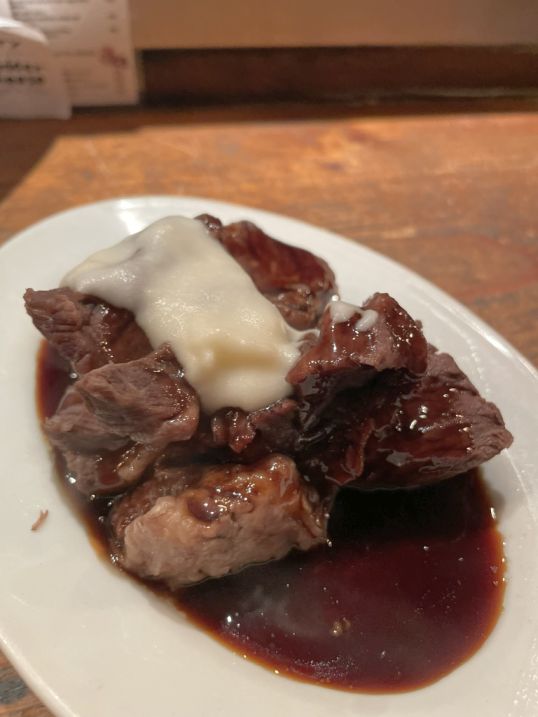
After the last of the yakitori, we couldn’t resist ordering a few more dishes. The Kagoshima wagyu beef stew arrived first, the meat slow-cooked until it was impossibly soft, almost melting into the rich, dark sauce.
 |
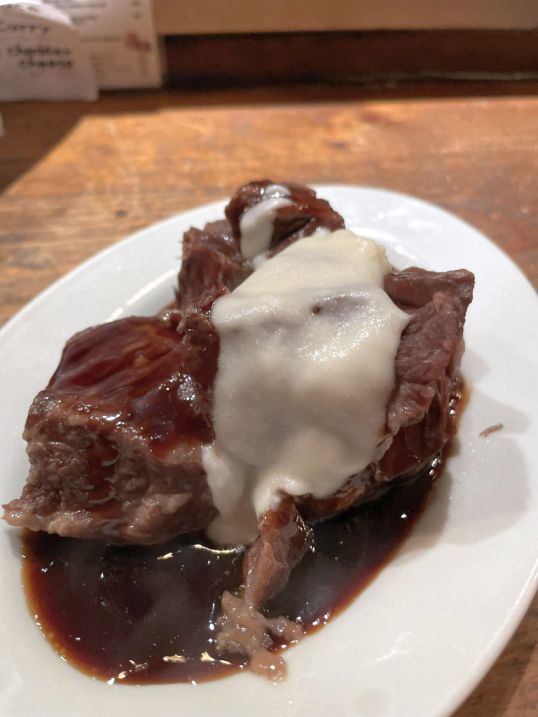 |
The dish was deep, comforting, and full of that buttery wagyu flavor that lingered long after each bite.
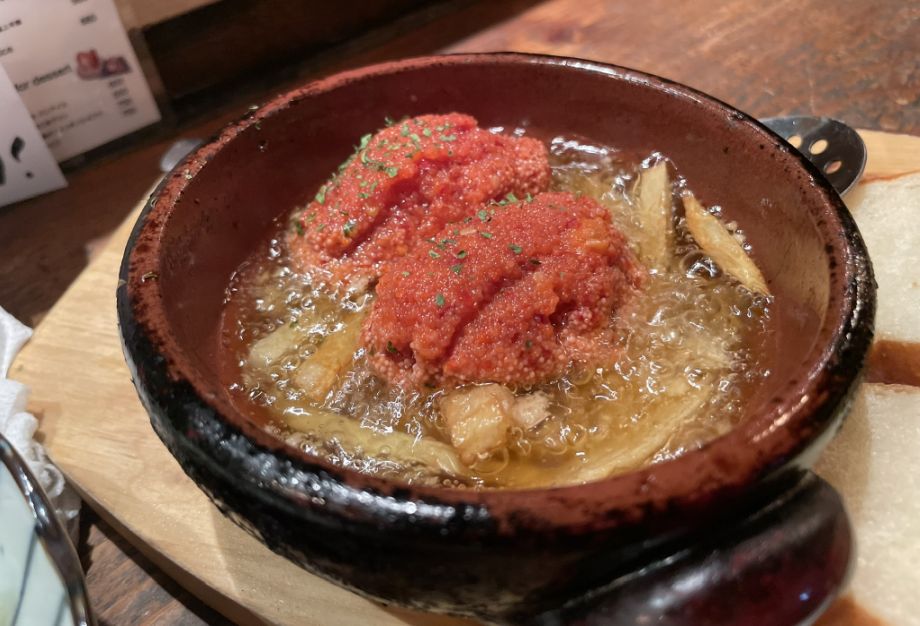
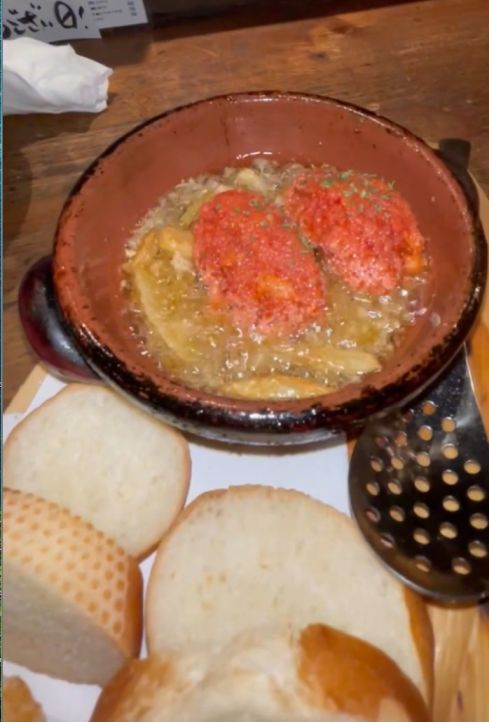
Next came the cod roe ajillo with potatoes, bubbling furiously in a small dish of boiling olive oil when it hit the table. The heat released a warm, garlicky aroma, and we had to wait a moment before dipping in. The potatoes were tender, the cod roe creamy and slightly briny, everything coated in that golden, sizzling oi, simple and addictive.
 |
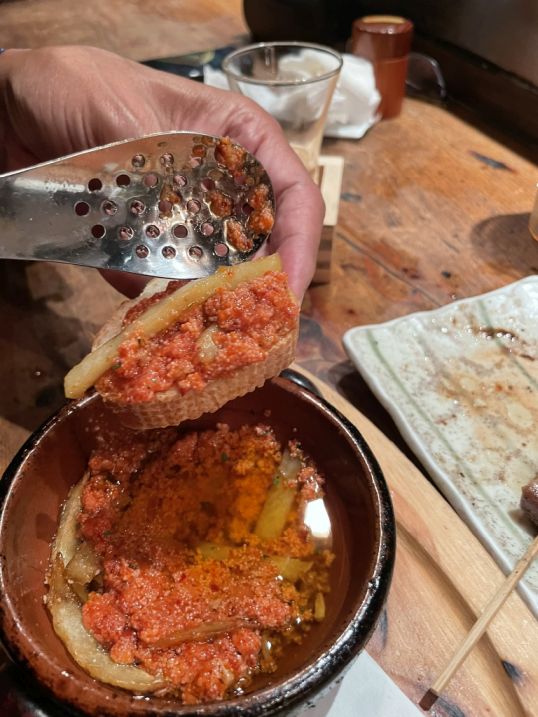 |
We ordered this dish many times and it does not dissapoint. So delicious.
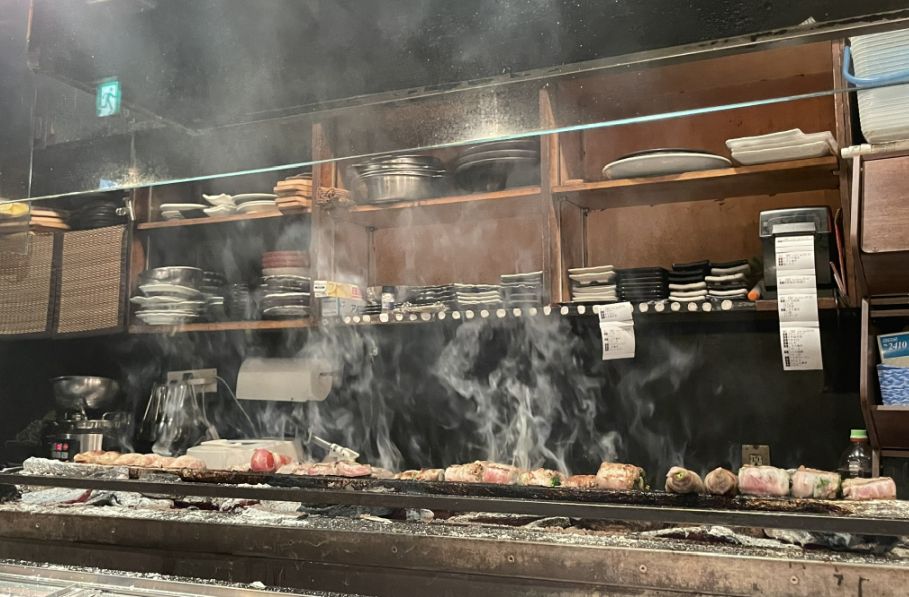
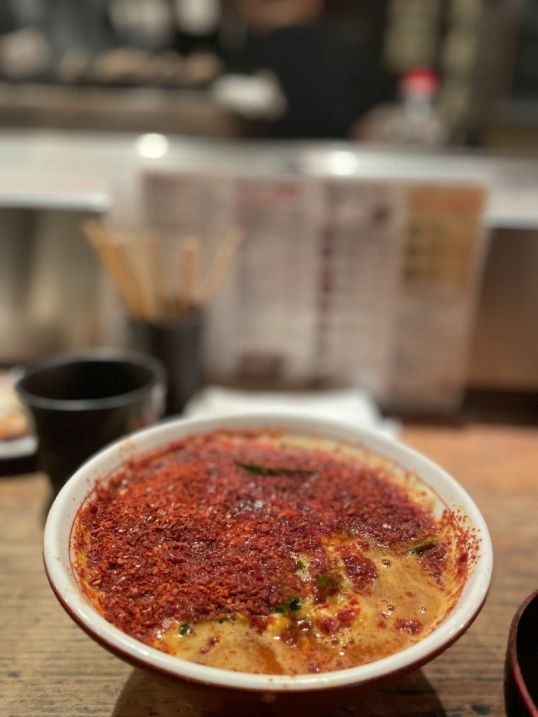
The spicy ramen took a while to arrive, so we sat there watching the rhythm of the kitchen. In front of us, the chefs moved back and forth along the long metal grill, turning skewers with quick, practiced hands, brushing them with sauce, sliding them closer to the heat, then lifting them away just in time. Flames flared up now and then, briefly lighting their faces, while smoke curled upward and disappeared into the vents above. It felt almost hypnotic, like watching a performance that never stopped.
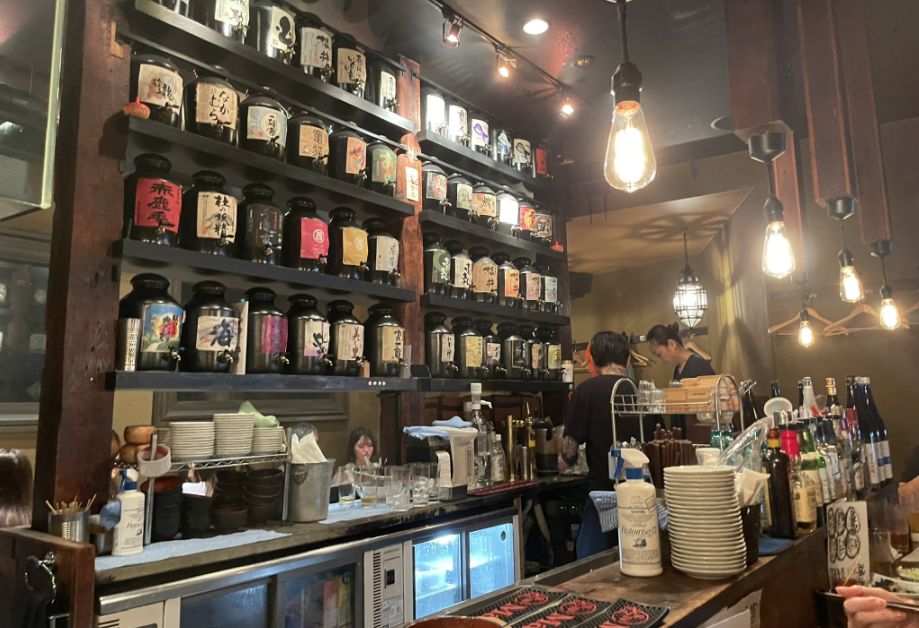
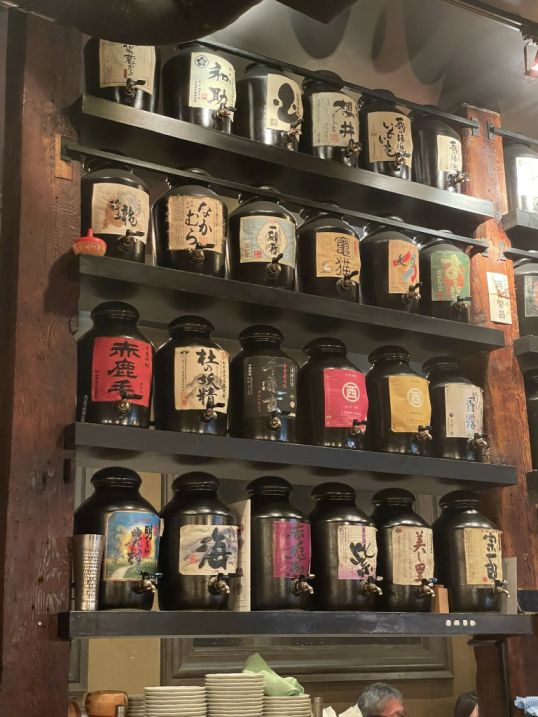
Behind the counter was a row of large black containers, each one tied with a bright, colorful tag written in bold Japanese characters. They were jars of house-infused shōchū and sake, spirits steeped with things like yuzu, plum, herbs, or spices, slowly developing flavor over time.
 |
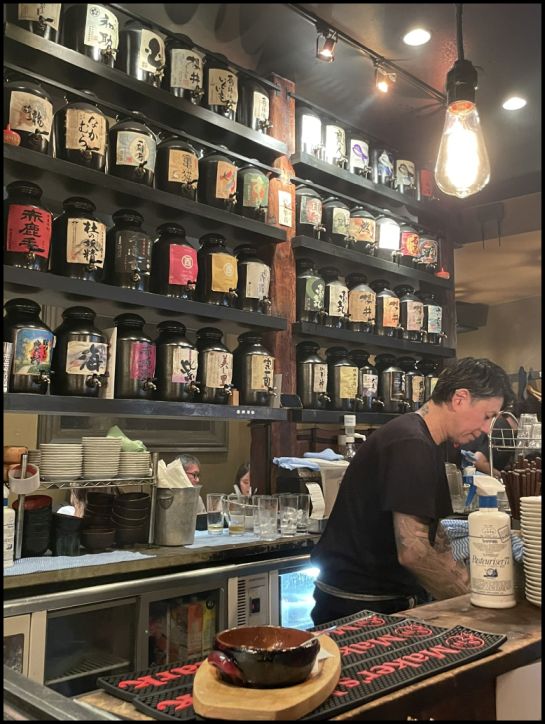 |
Some had likely been aging there for months. The tags marked what was inside and when it had been started, turning the bar itself into a kind of quiet gallery of drinks in progress.
 |
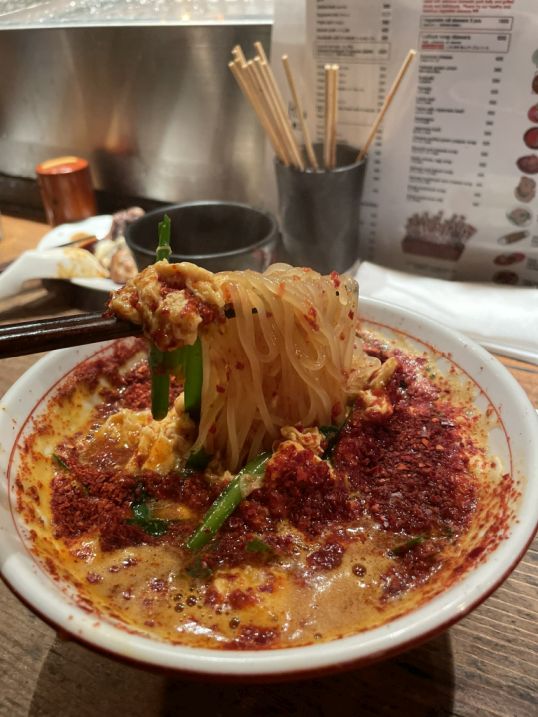 |
By the time the spicy ramen finally arrived, the room was hazy with smoke, the air warm, loud with conversation and clinking glasses, and we felt perfectly at home, continuing a tradition that somehow gets better every time.
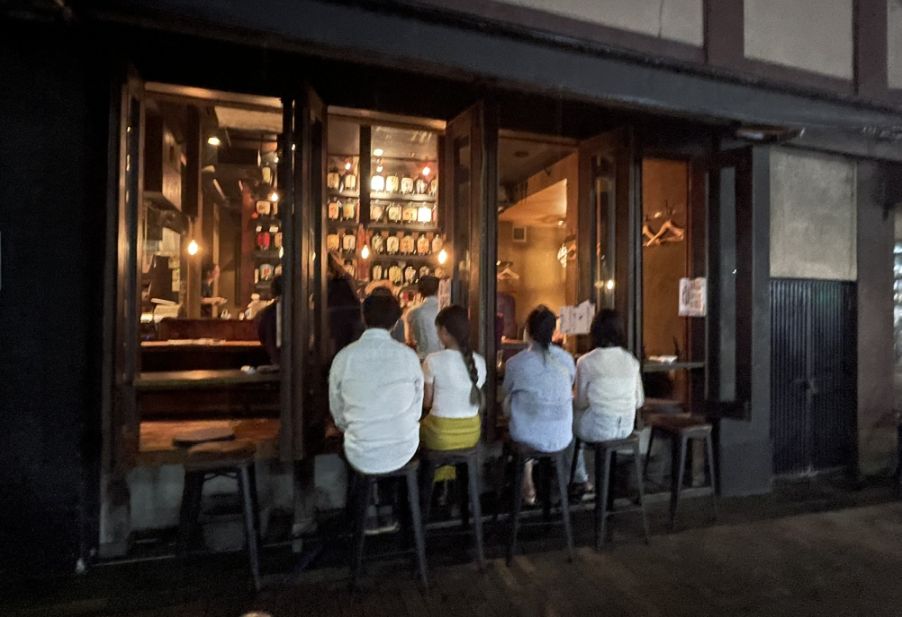
By the time we left the restaurant, we werer full, happy, and a little dazed from smoke and heat, we stepped back into the Tokyo night, already knowing this would be another Jomon dinner we’d remember.
NEXT... Day 7- Arakawa, Tokyo