A week in Saigon-1/19- 1/25/2025
Day 5- Tet in Saigon-1/23/2025
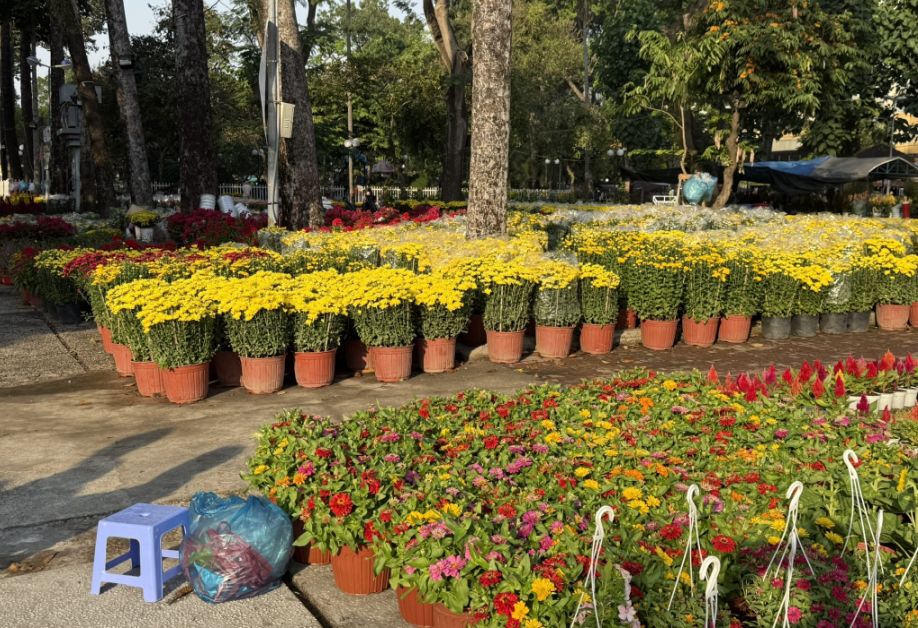
The next morning in Saigon, we took things slow, simply enjoying a walk through the city. As we stepped out of our hotel and passed along Tran Hung Dao Street and Pham Ngu Lao Street, near a small park, we were greeted by vibrant displays of flowers prepared for Tet.
Flowers play a deeply important role in Tet celebrations in Vietnam.
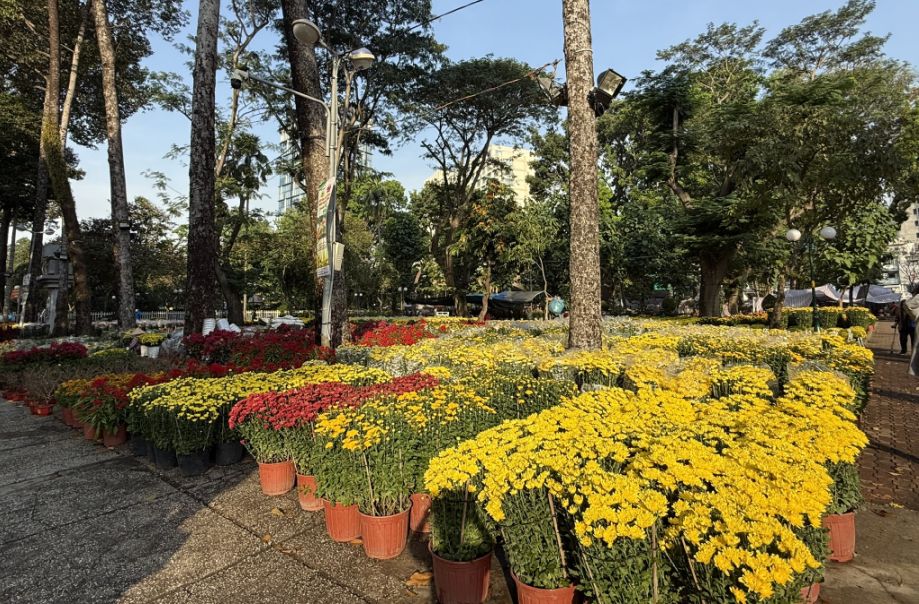
They symbolize renewal, luck, and prosperity for the coming year. Streets, homes, and businesses are all decorated with carefully chosen plants, each carrying its own meaning.
 |
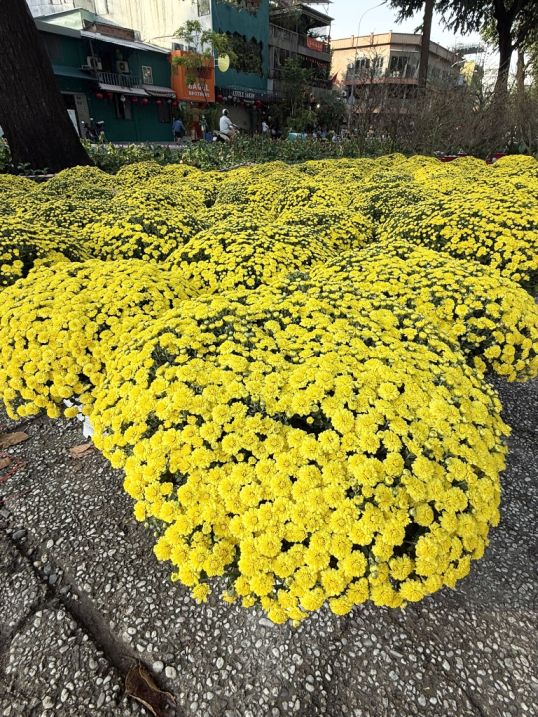 |
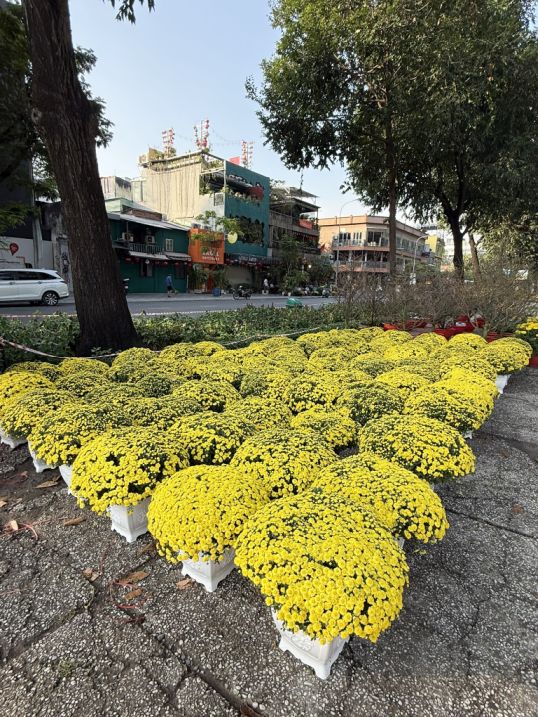
Chrysanthemums represent longevity and stability.
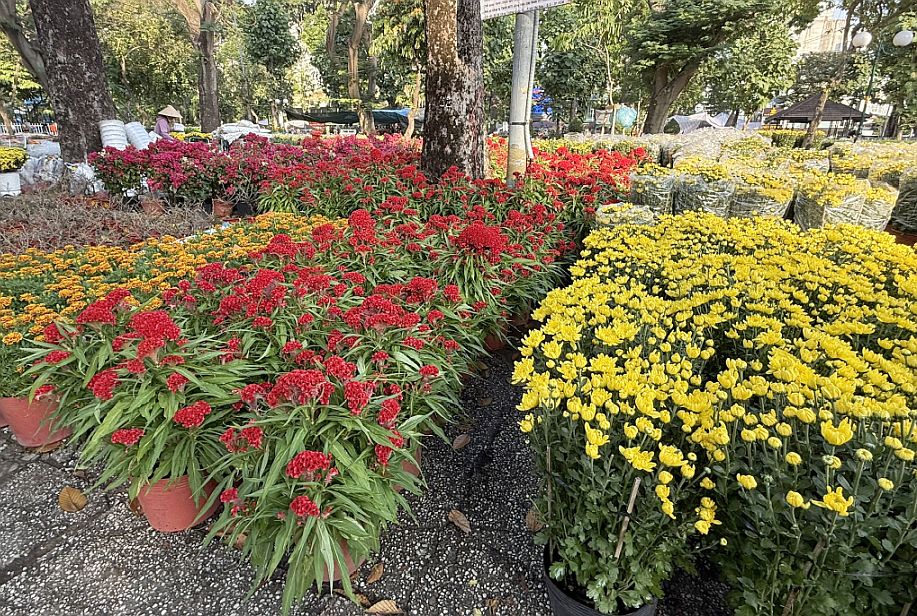
So many flowers on display.
 |
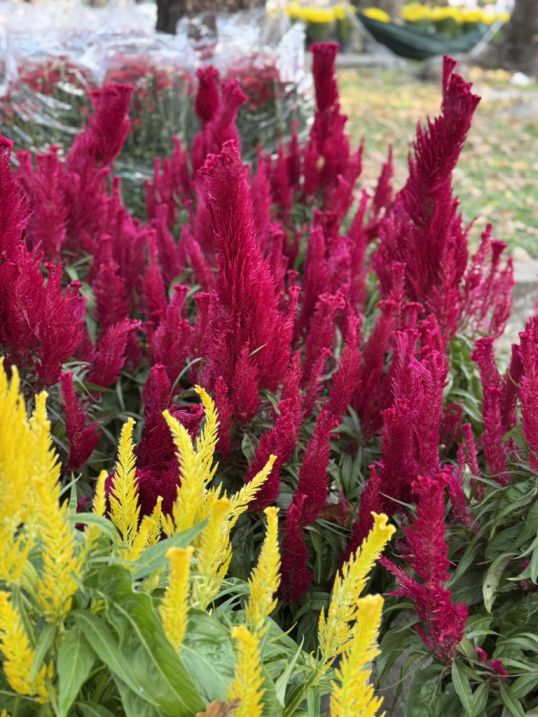 |
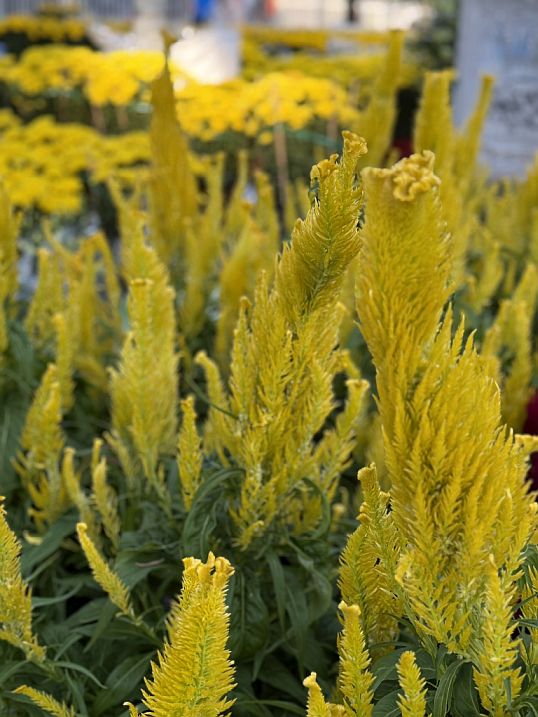
Bright red and yellow celosia (cockscomb) symbolize good fortune and happiness, with red tied to luck and yellow associated with wealth and prosperity.
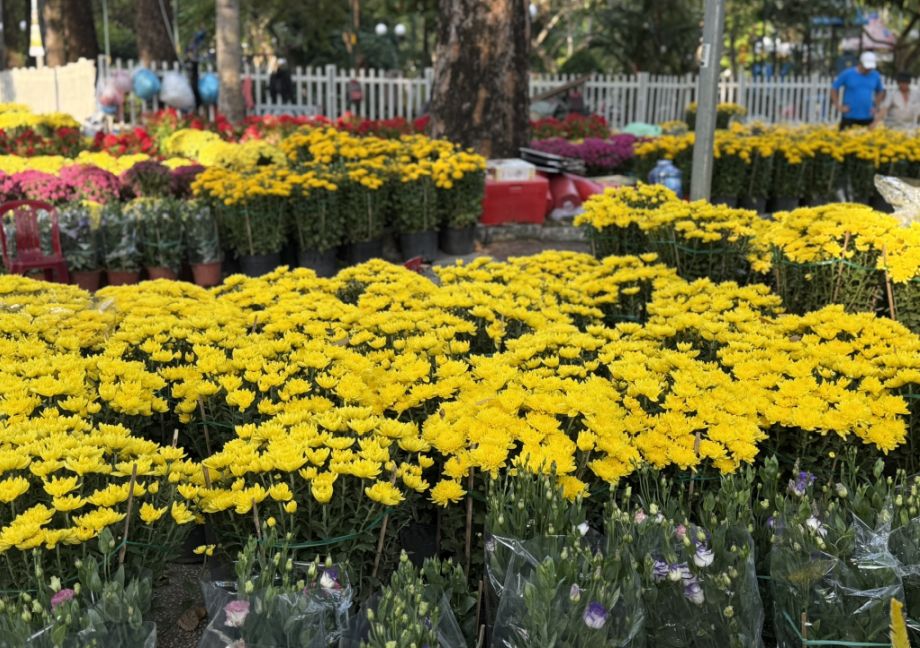
During Tet, buying and displaying flowers is more than decoration, it’s a tradition rooted in hope and intention.
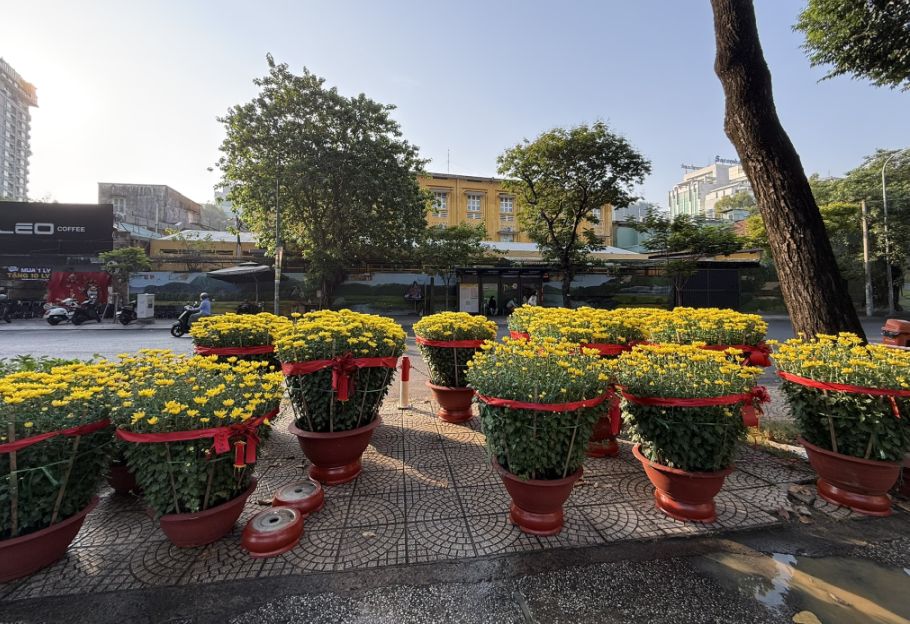
Families select flowers they believe will bring blessings for the new year, and the vibrant colors help create a festive, joyful atmosphere throughout the city.
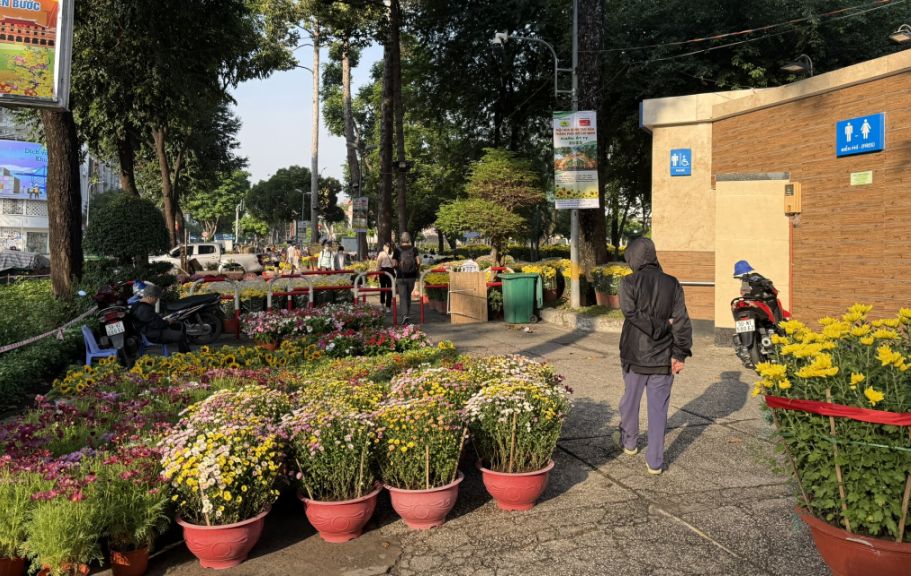
Walking past those displays, it’s easy to feel how alive and meaningful this time of year is, as the whole city prepares to welcome a fresh start.
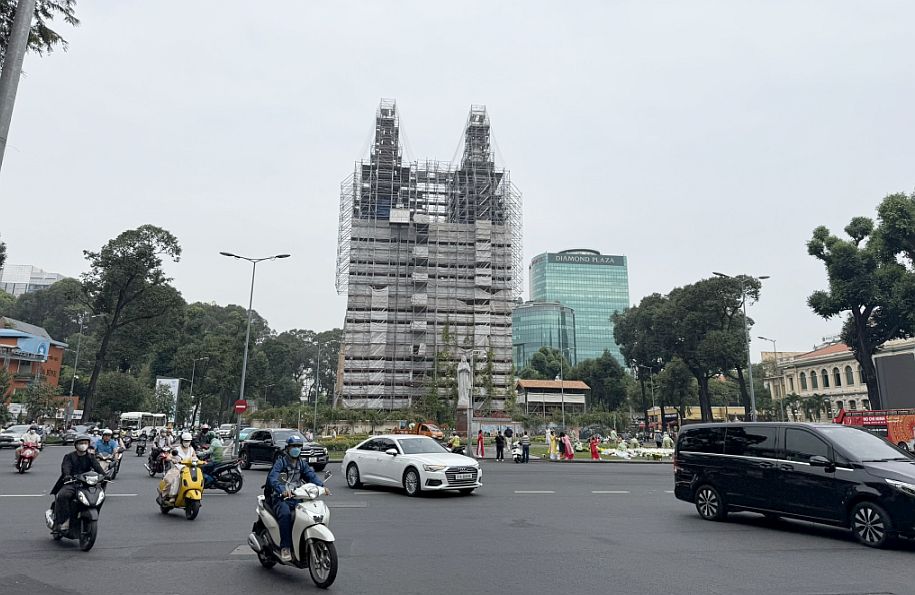
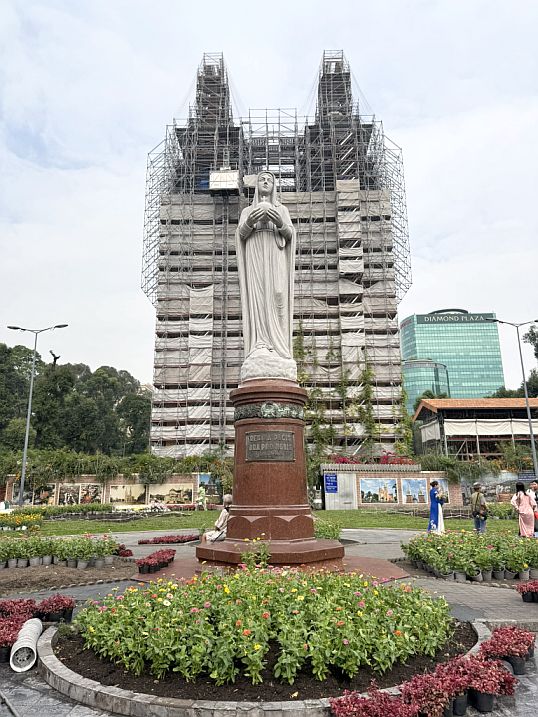
We continued walking toward the roundabout where Notre-Dame Cathedral Basilica of Saigon stands. Unfortunately, when we visited on January 22, 2025, the cathedral was under renovation, and was covered in scaffolding and white sheeting, hiding its familiar red-brick façade.
E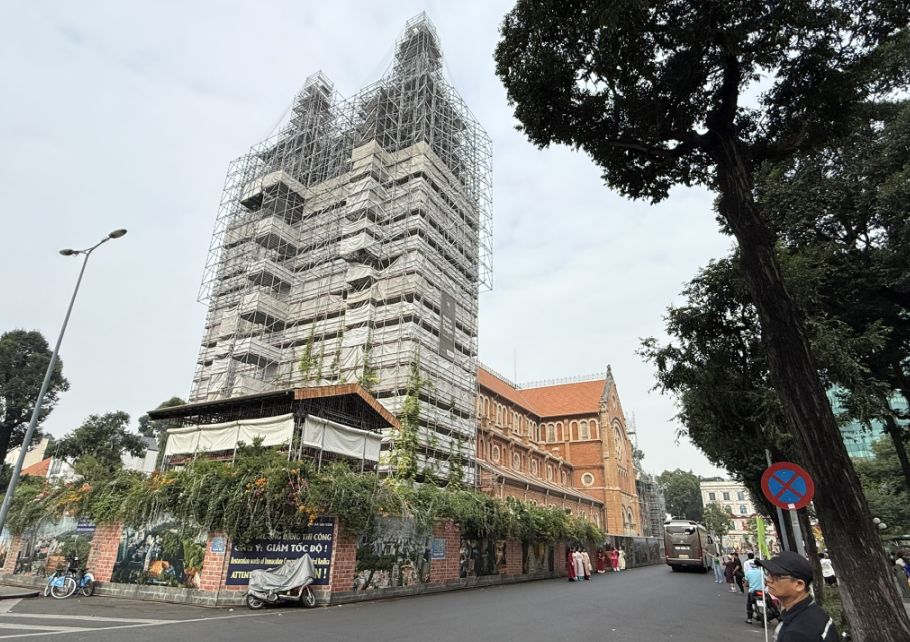
The cathedral itself has a long and fascinating history. Built between 1877 and 1880 during the French colonial period, it was constructed by the French as a symbol of their presence in Vietnam and as a center for the growing Catholic community. Almost all the building materials, including the distinctive red bricks were imported from France, which is why the exterior has such a unique color and has resisted weathering over time.
 |
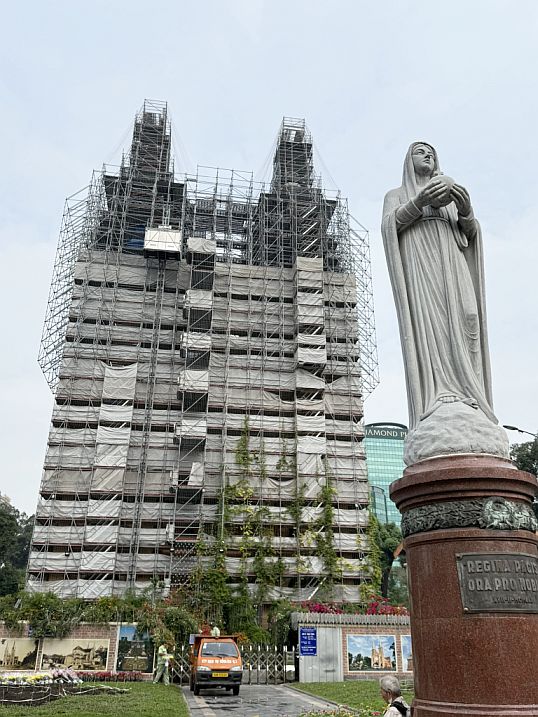 |
Nearby stood the large statue of the Virgin Mary, tall and watchful, adding a sense of calm to the busy square. Designed in a neo-Romanesque style, the cathedral features two bell towers that rise about 197 ft. high, making it one of the most recognizable landmarks in the city. Over the years, it has remained an important religious site and a cultural icon of Ho Chi Minh City, witnessing the city’s transformation from colonial Saigon to the vibrant metropolis it is today. Even hidden behind scaffolding, its historical presence is still strongly felt in the heart of the city.
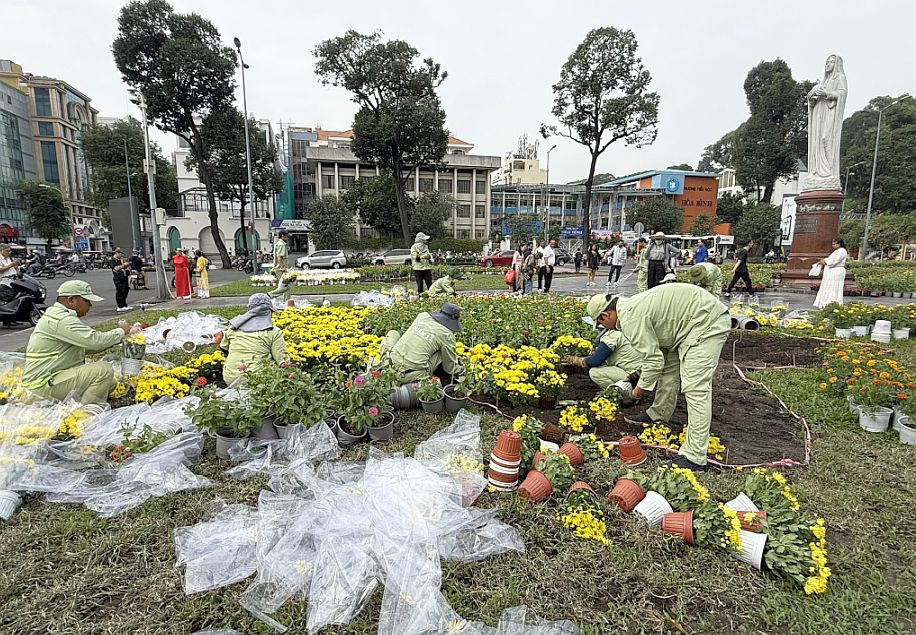
In front, gardeners were busy bringing in pots of chrysanthemums.
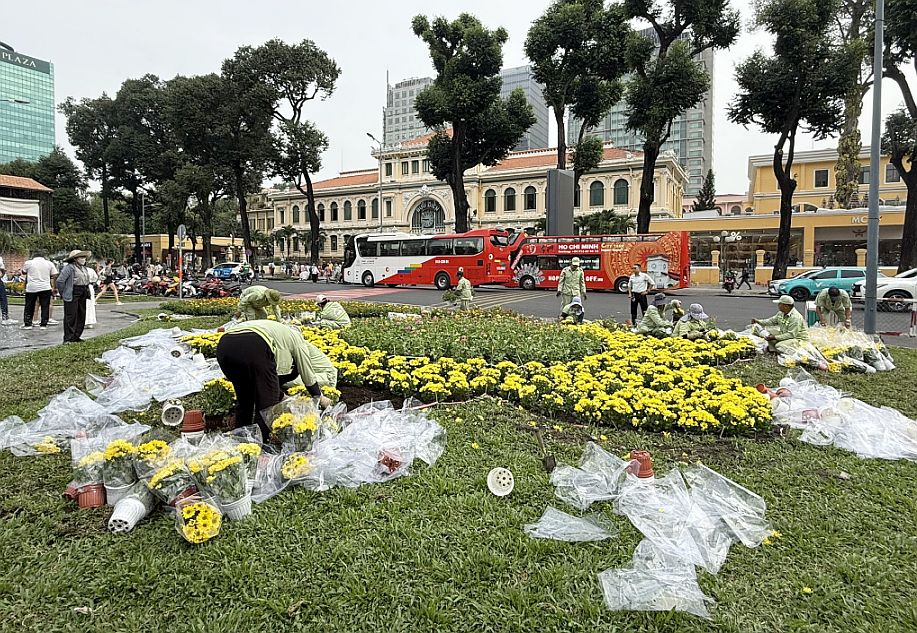
They are carefully arranging and replanting them in preparation for Tet.
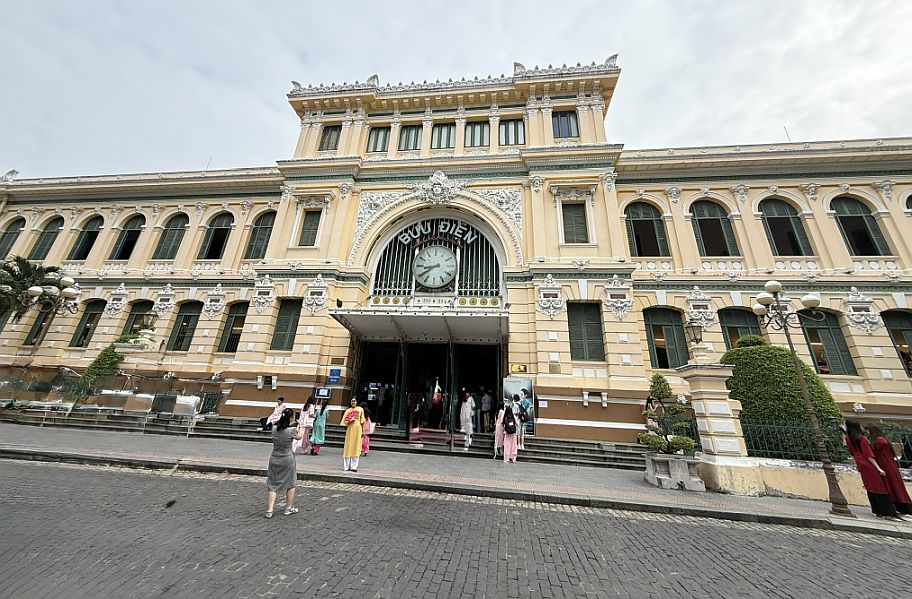
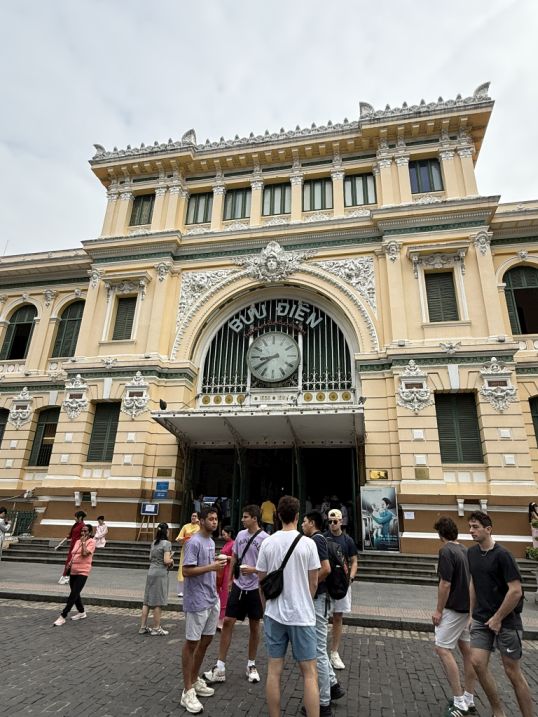
Not far from there, we made our way to the beautiful Saigon Central Post Office, and it immediately stood out as one of the most impressive buildings in the city.
 |
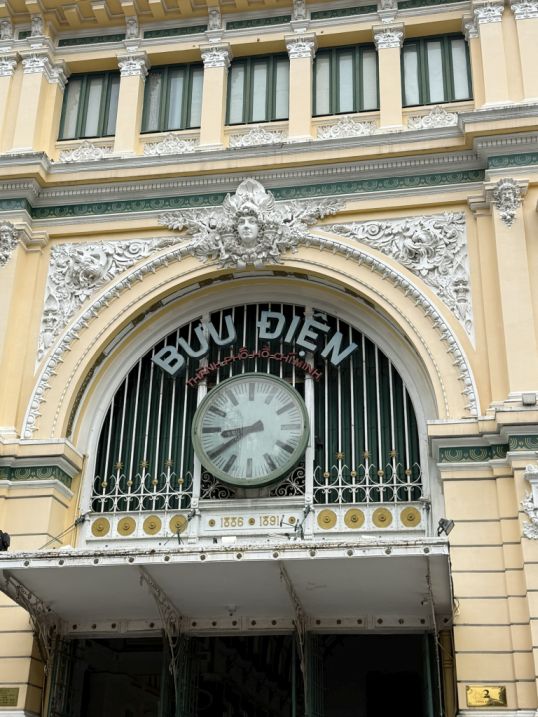 |
Built between 1886 and 1891 during the French colonial period, the post office reflects strong European influence. Its design is often associated with Gustave Eiffel, though it was actually completed by French architects working in that era. The façade is elegant and symmetrical, painted in a soft yellow with white trim, featuring arched windows and green shutters. Above the entrance, you can see a large clock and decorative details that give it a distinctly old-world charm.
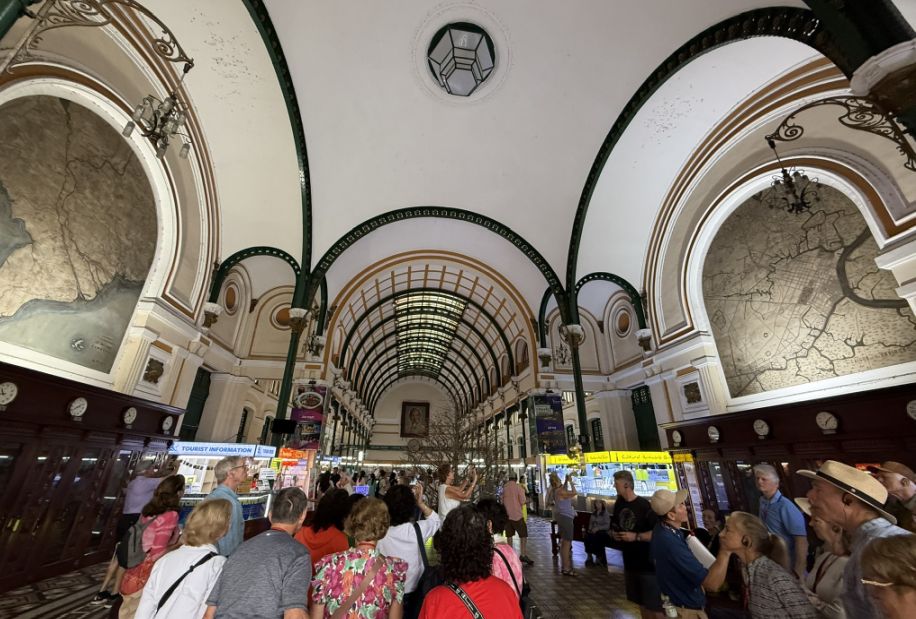
Stepping inside is even more breathtaking. The interior opens into a grand hall lined with high, sweeping arches and a vaulted ceiling that stretches the entire length of the building.
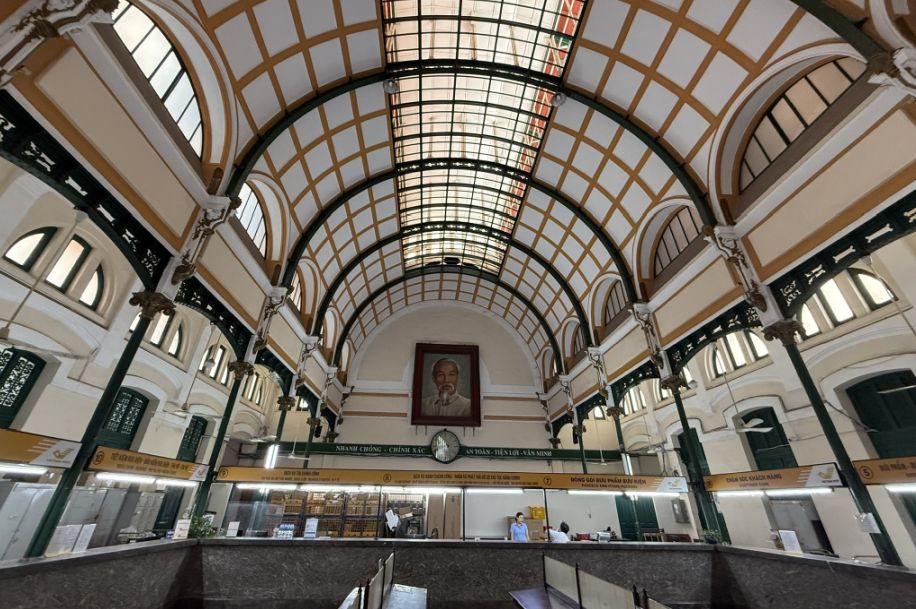
The structure feels almost like a train station from another era.
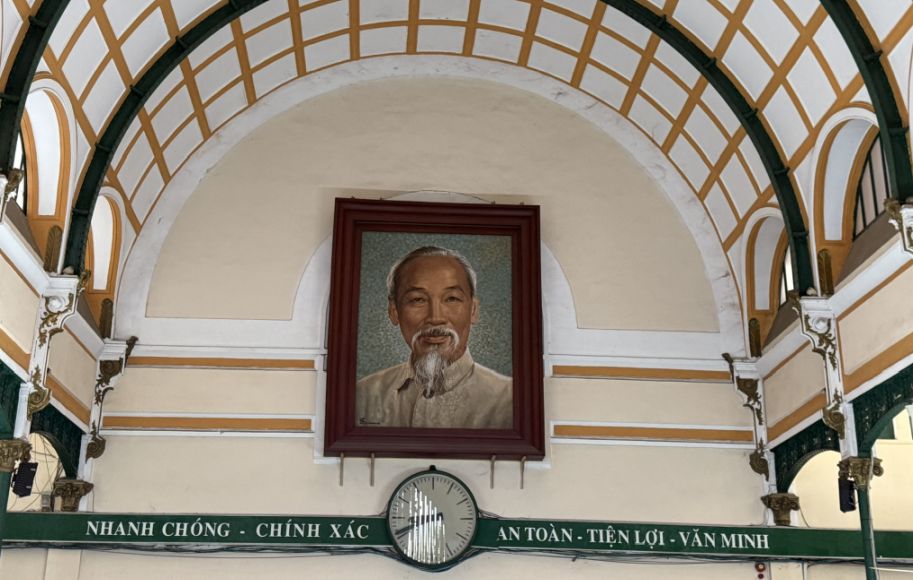
At the far end, there is a large portrait of Ho Chi Minh, watching over the space.
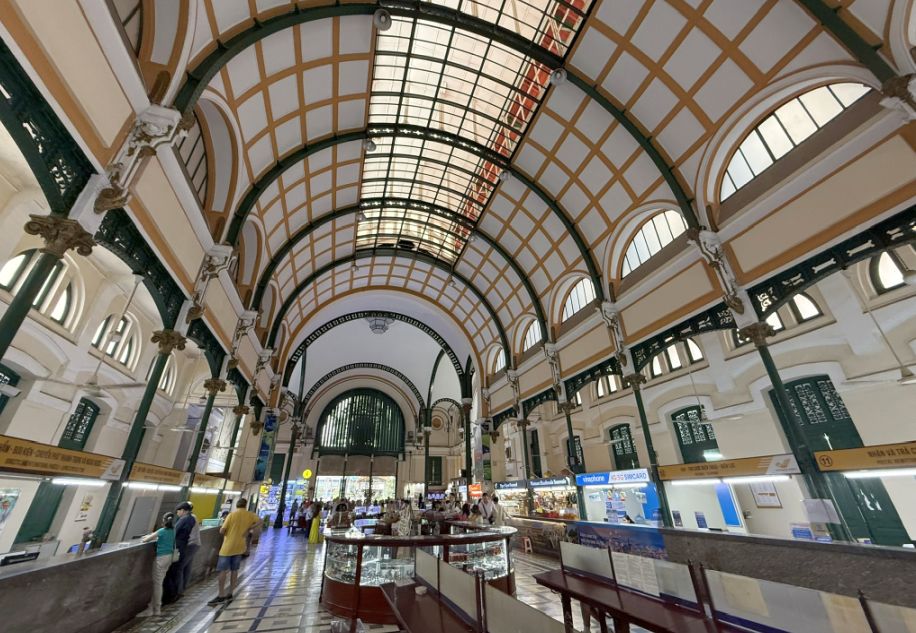
Today, the post office is still a functioning postal service, where you can send letters and postcards. But it has also become a popular tourist destination. Many of the counters now host vendors selling souvenirs, handicrafts, and local goods. So while it still serves its original purpose, it has evolved into a lively mix of history, architecture, and everyday commerce, where the past and present blend seamlessly in one magnificent space.
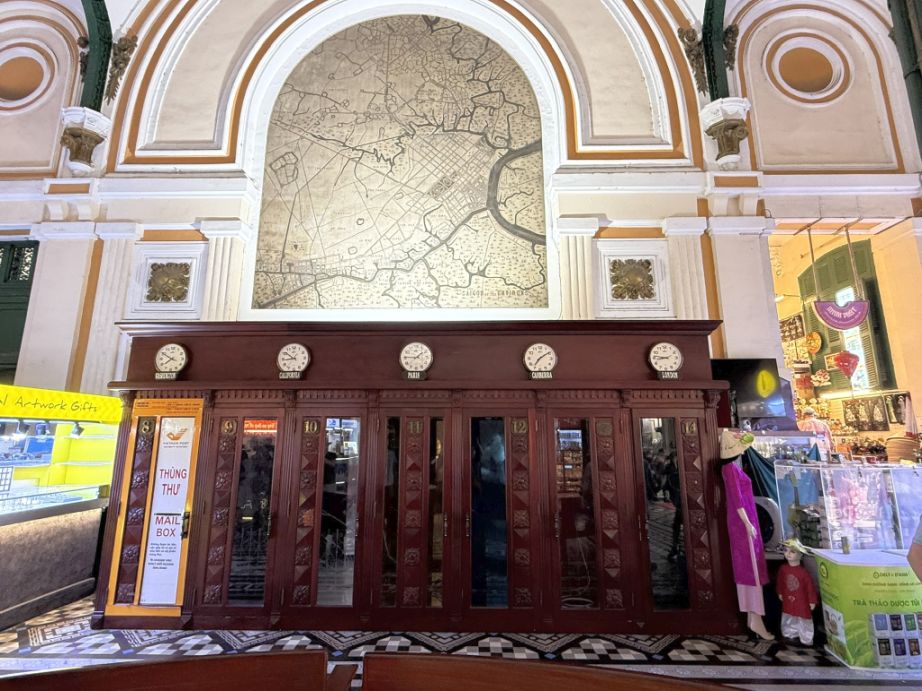
These small wooden booths I noticed are indeed remnants of the past, back when international phone calls had to be scheduled in advance. People would step into those cabins for a private, timed connection, which felt like a special occasion in itself.
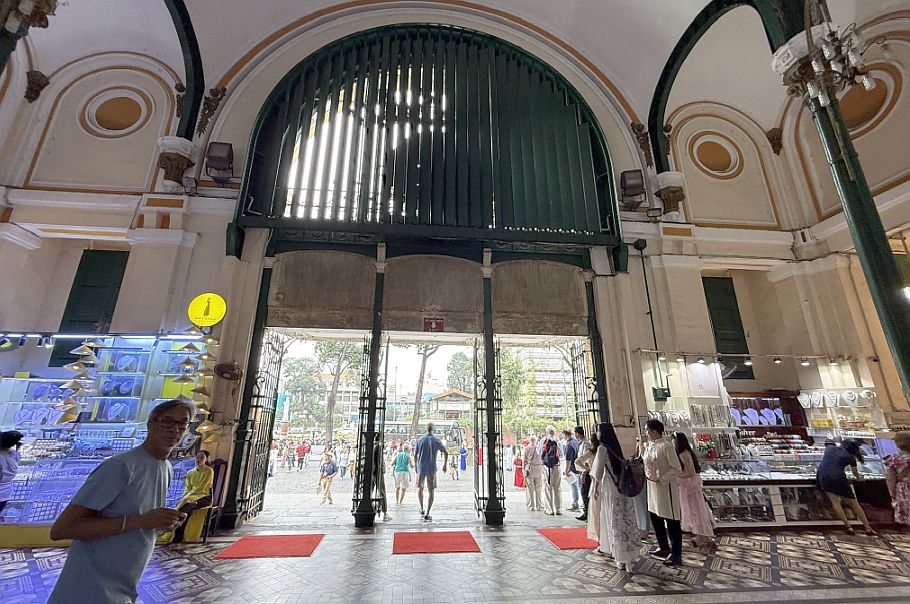
We are now leaving the post office.
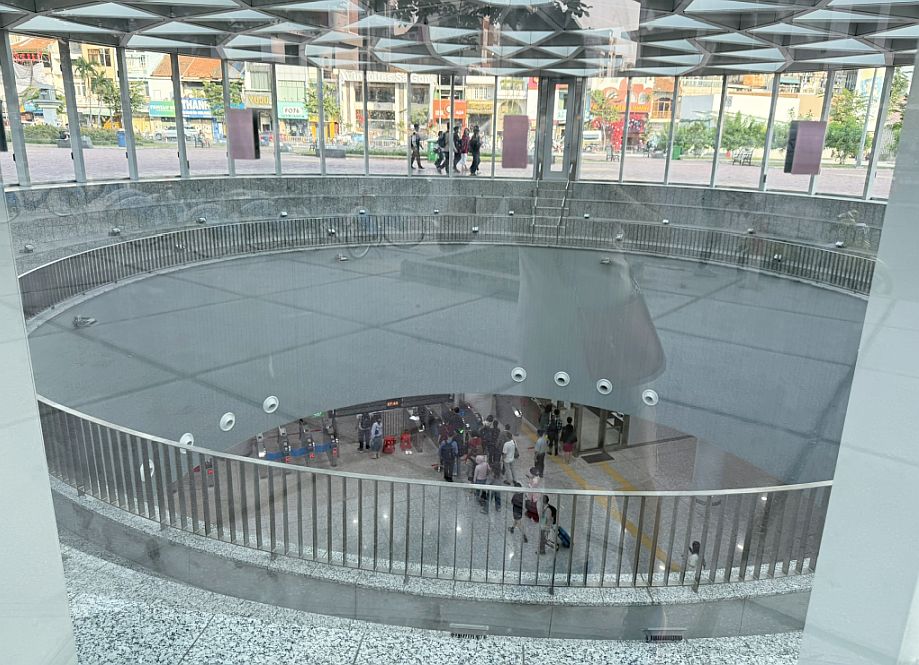
As we continued our walk, we passed by the newly opened metro, part of the Ho Chi Minh City Metro, a major step forward for the city’s transportation. Long known for its endless stream of motorbikes, Ho Chi Minh City is now beginning to modernize with this new subway system. The first line connects the city center to the eastern districts, helping to ease congestion and offering a faster, more efficient way to get around. It’s a big shift, blending the city’s fast-paced, traditional street life with a more modern urban future.
 |
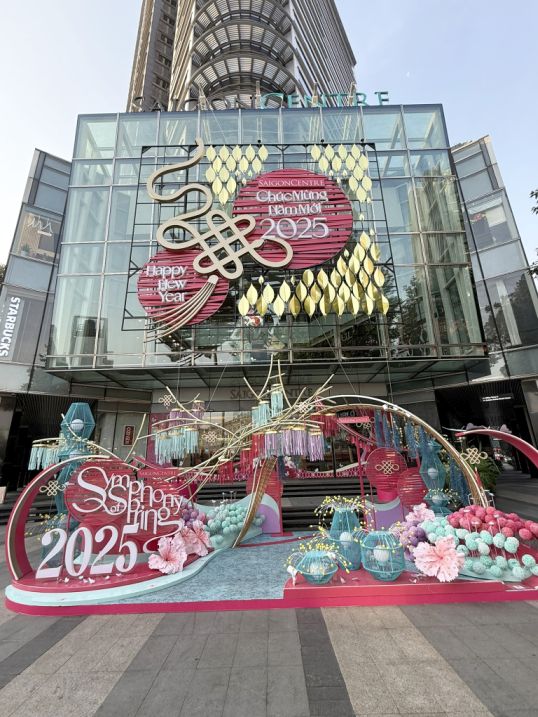 |
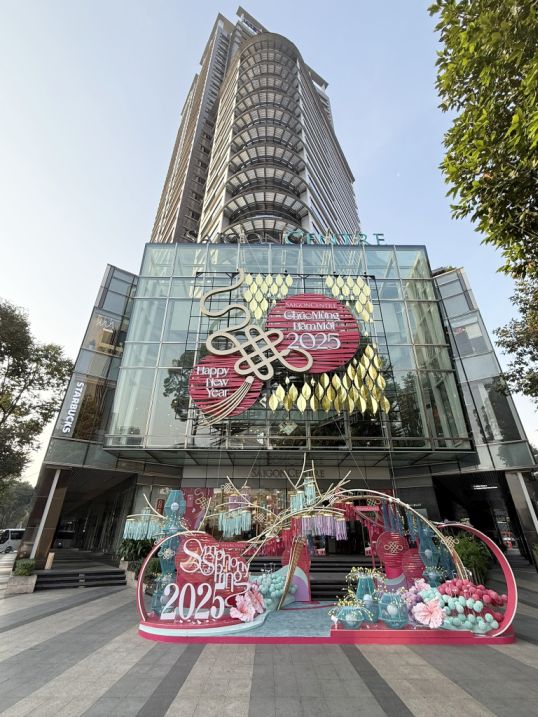
A shopping center all decorated for the arrival of the new Vietnamese year.
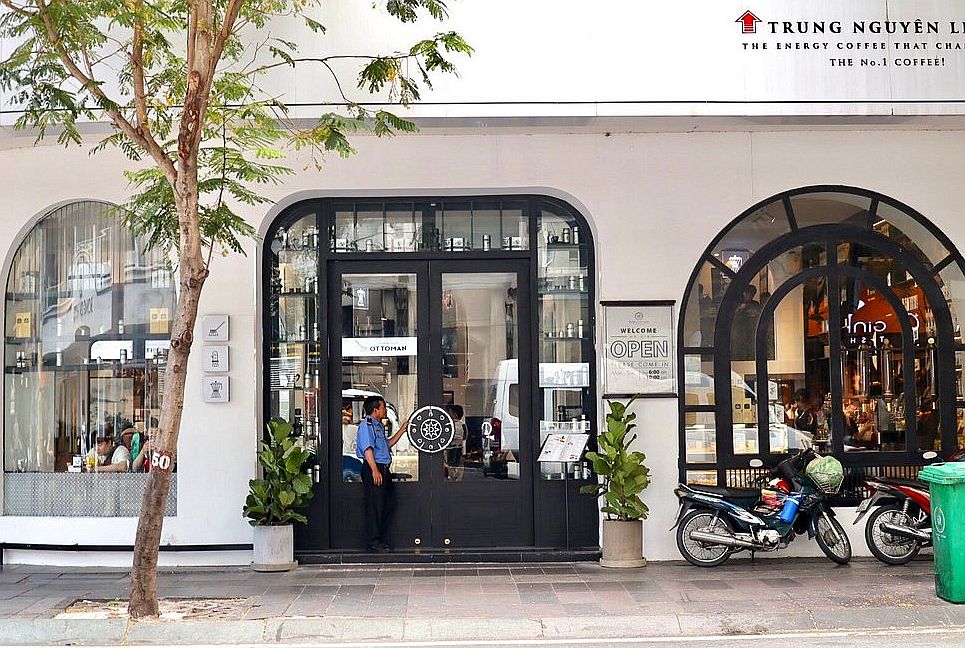
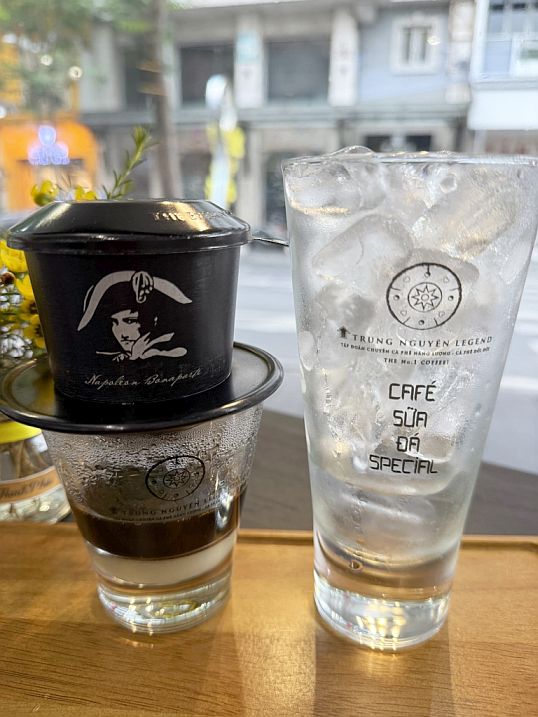
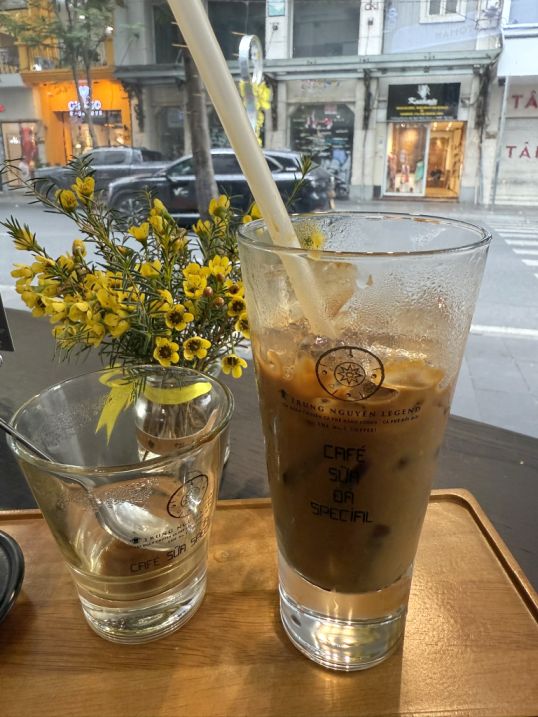
Not long after, we paused for coffee at Trung Nguyen Coffee on Dong Khoi Street.
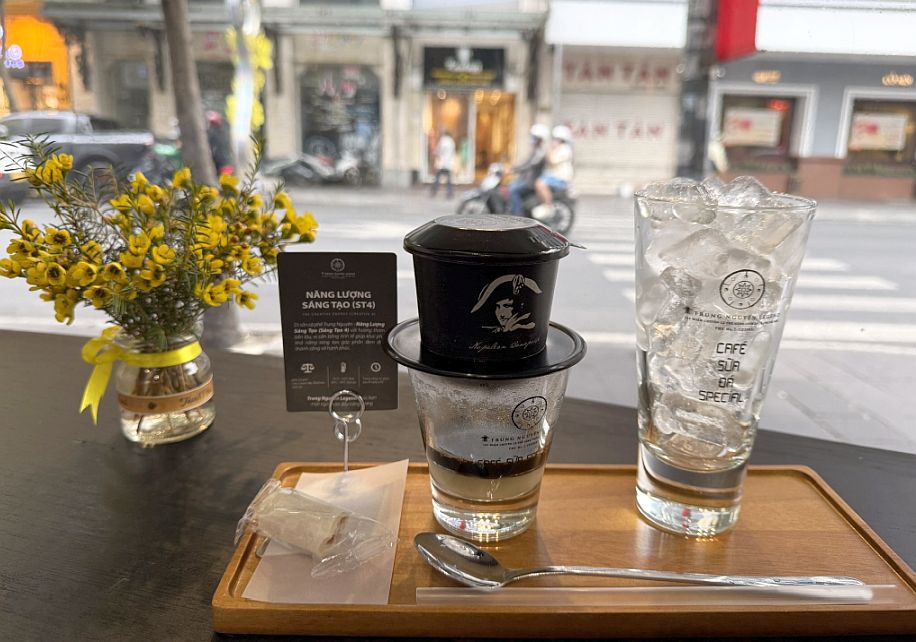
Sitting there, we slowed down again and enjoyed a classic Vietnamese coffee experience.
 |
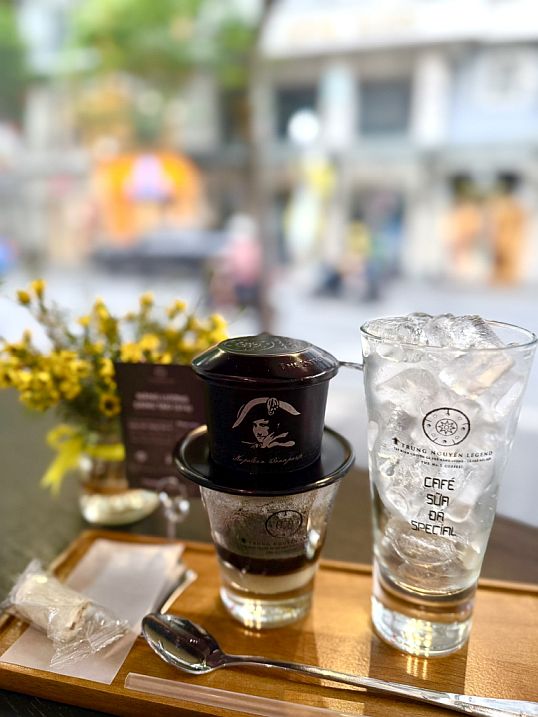 |
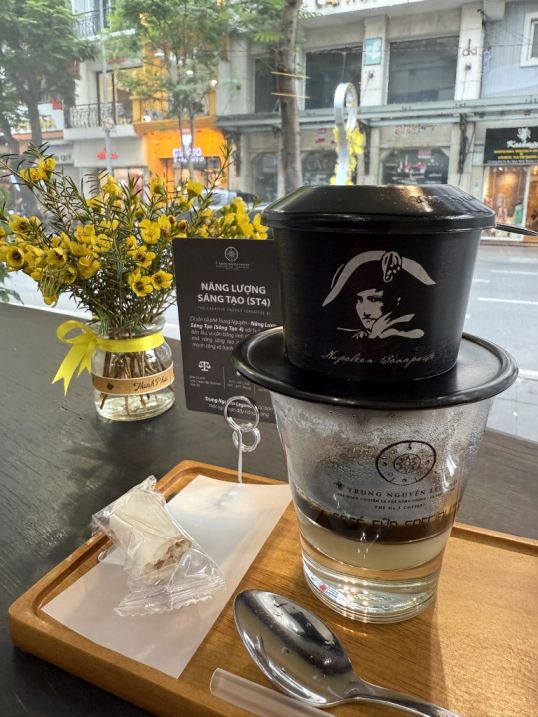
The slow-dripped coffee, brewed through a small metal filter, came out rich, bold, and deeply aromatic.
 |
 |
I chose one with the logo of Napoleon Bonaparte, which added a unique touch to the experience. It felt almost symbolic, sitting in a city shaped in part by French history, sipping a carefully brewed coffee that reflects both Vietnamese tradition and that lingering European influence.
NEXT... Day 5-Dinner at Cuc Gach