A week in Saigon-1/19- 1/25/2025
Day 4- Vung Tau-1/22/2025
3rd Stop: White Sand Dunes
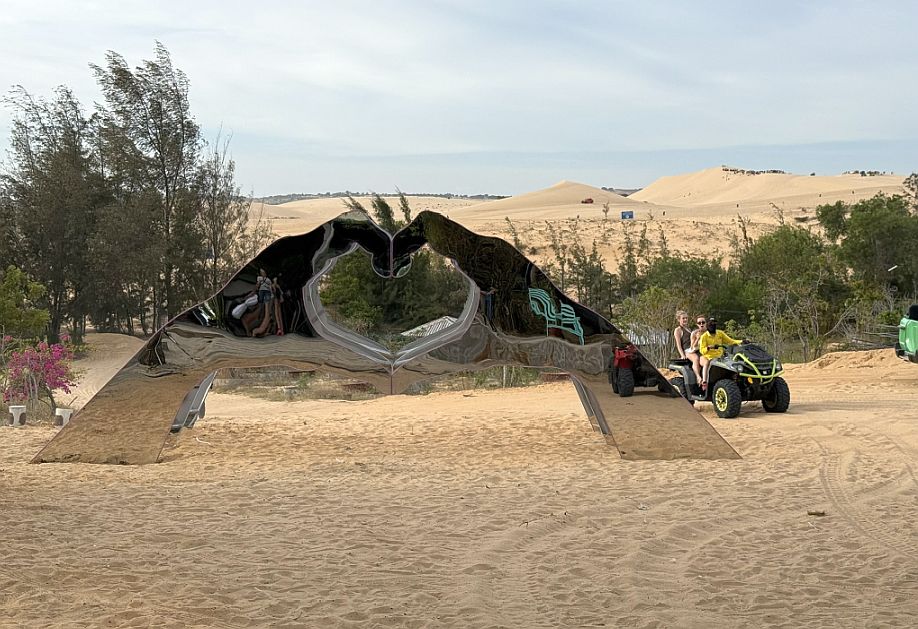
Next, we arrived at the famous White Sand Dunes, and the landscape immediately felt different, almost surreal.
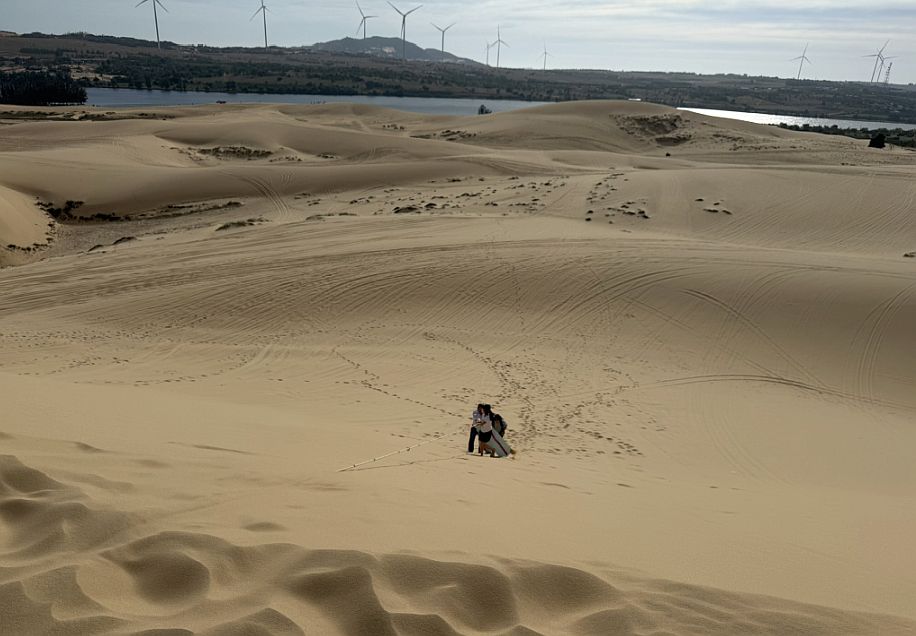
From the parking area, the dunes appeared in the distance like pale, rolling hills, glowing under the sun. It didn’t feel like Vietnam anymore; it looked more like a desert.
 |
 |
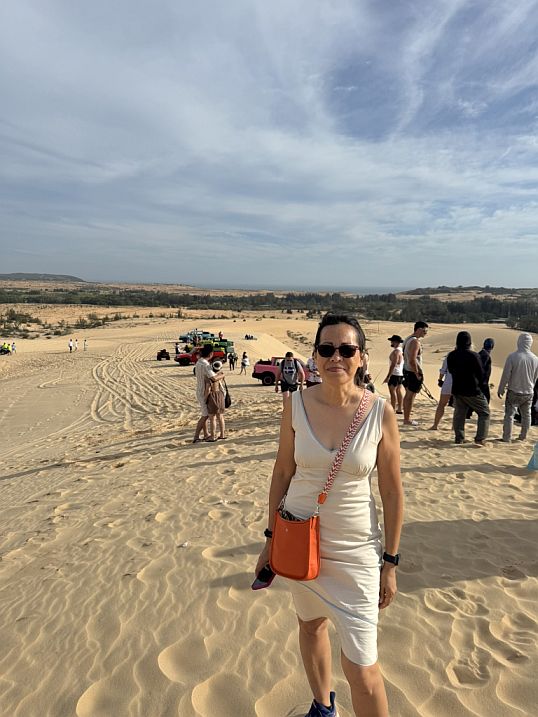
At the entrance, our guide offered us a choice: we could either drive an ATV (the off-road motorbikes designed for sand) ourselves or sit back and let a driver take us across the dunes. We chose the latter, and soon we were climbing into a vehicle built for the terrain, ready to cross the vast stretch of sand.
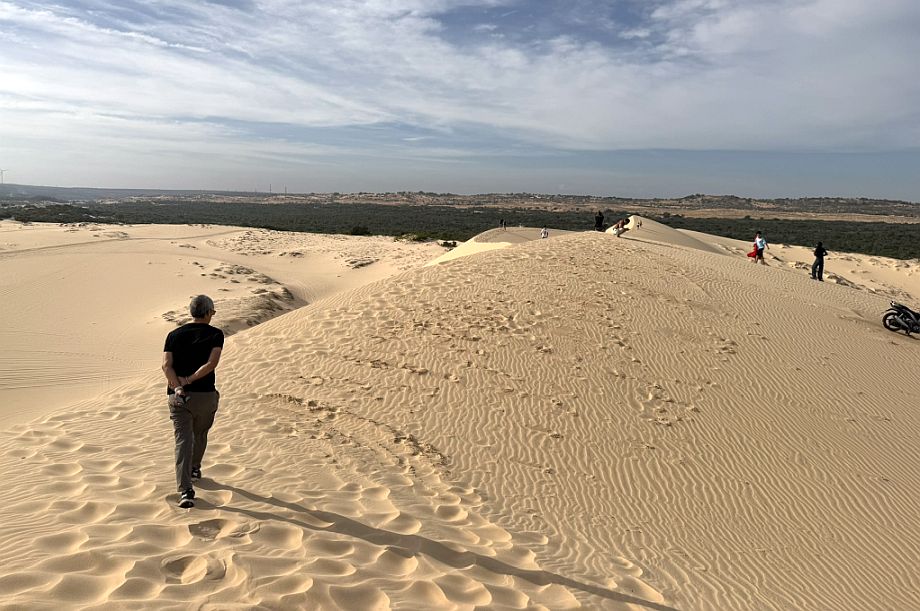
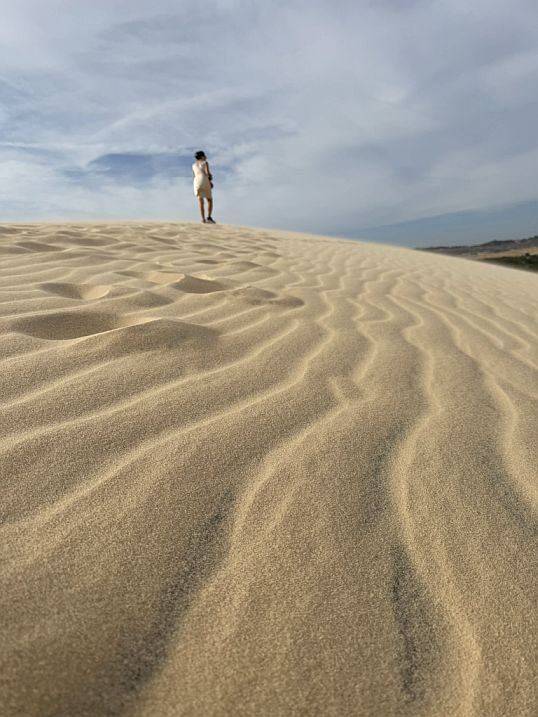
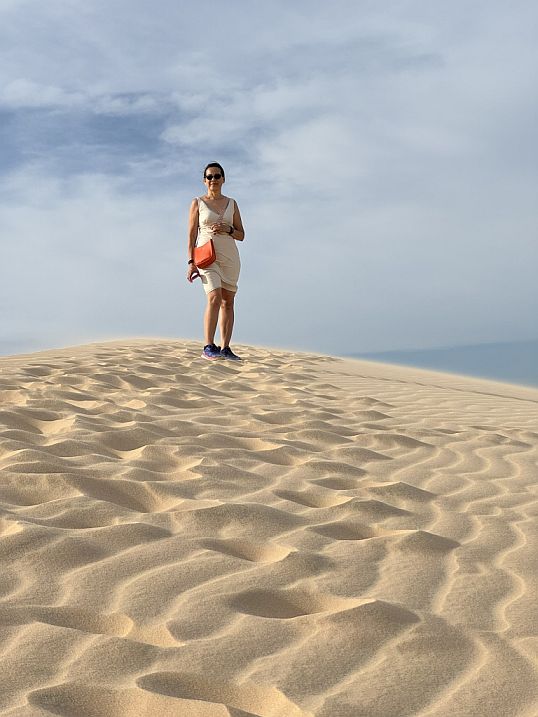
Walking on the dunes revealed their true scale, wide, undulating hills of soft white sand shaped continuously by the wind.
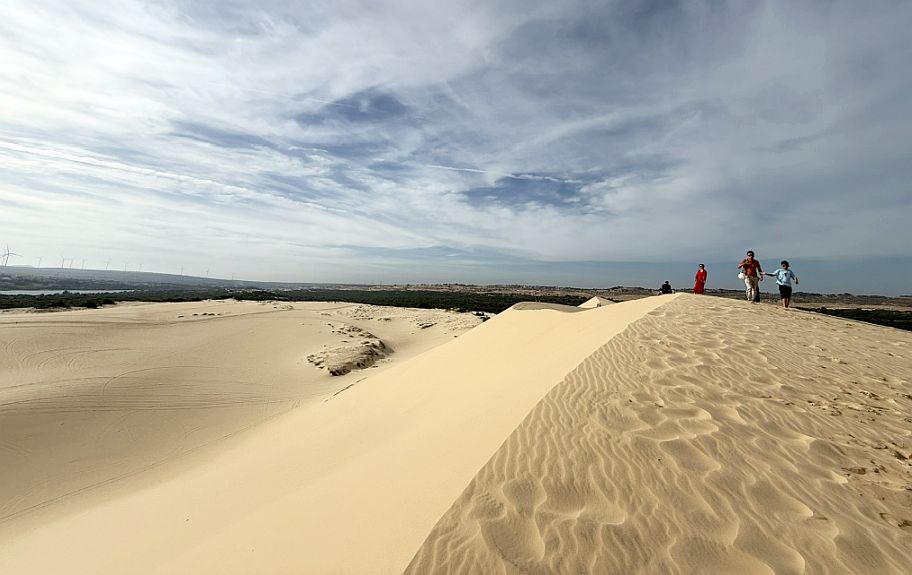
The reason these dunes exist here is actually a mix of geography and climate. This part of Bình Thuan Province is one of the driest regions in Vietnam, with strong coastal winds coming off the Bien Đông.
 |
 |
Over time, these winds have carried and deposited fine sand inland, gradually building up the sand dune system we see today.
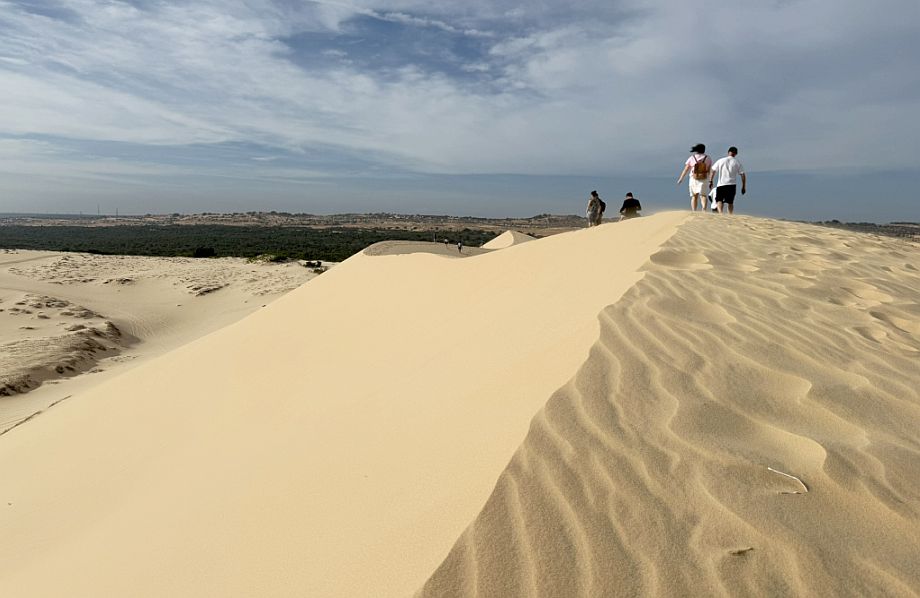
Because there is very little vegetation to hold the sand in place, the dunes are constantly shifting, changing shape and height depending on the season and wind patterns.
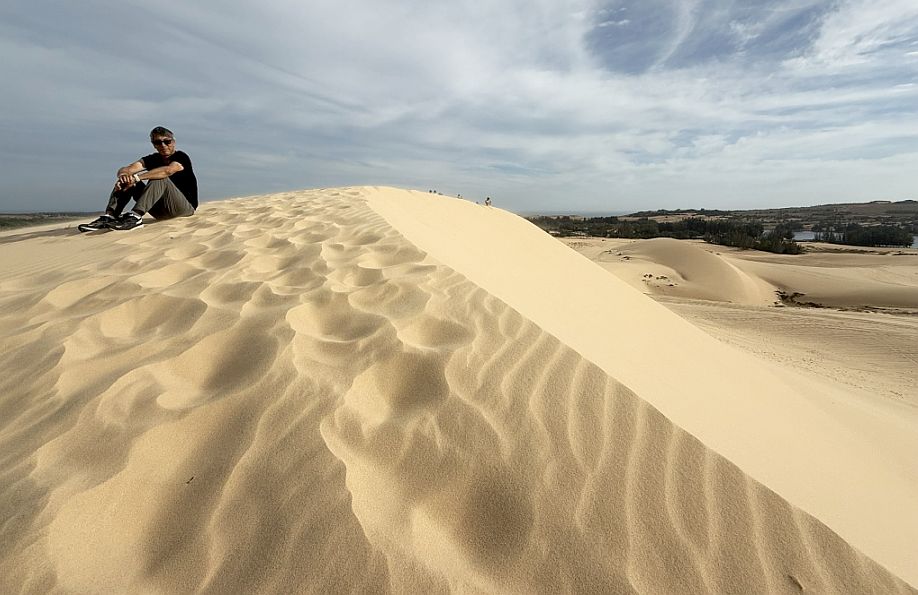
The sand itself is strikingly light in color, almost white, which reflects the sunlight intensely, making the entire area feel bright and expansive.
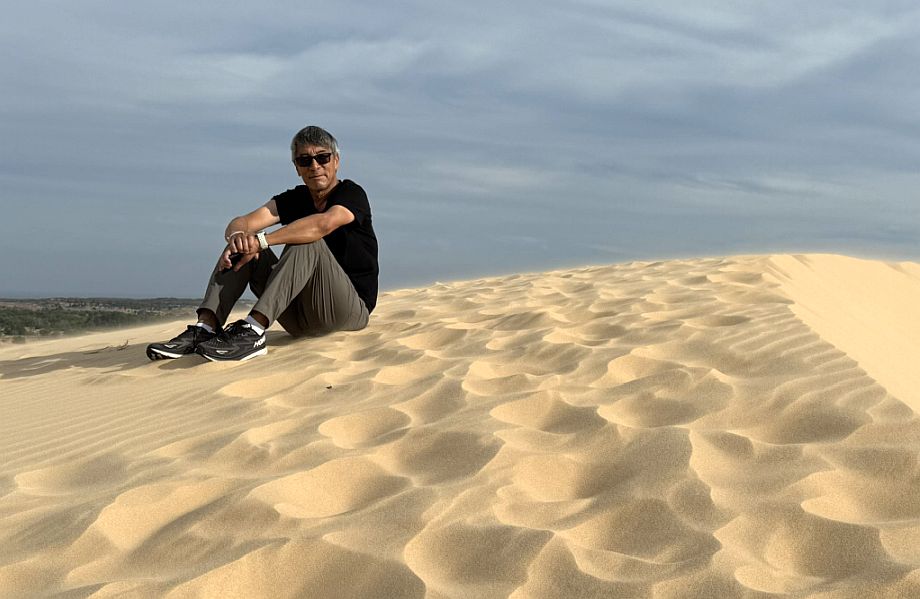
We definitely did not expect how beautiful the Sand Dunes are.
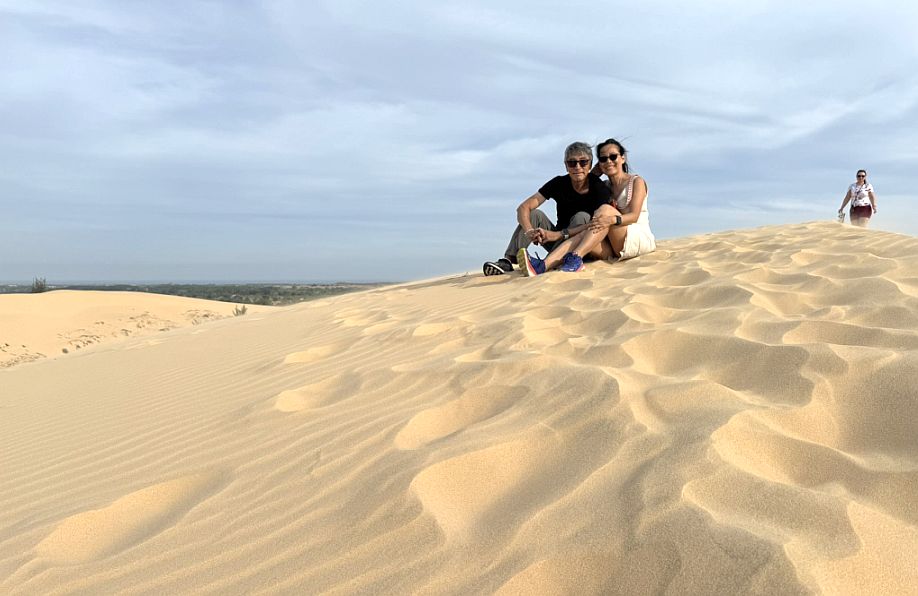

The sand dunes are so vast.
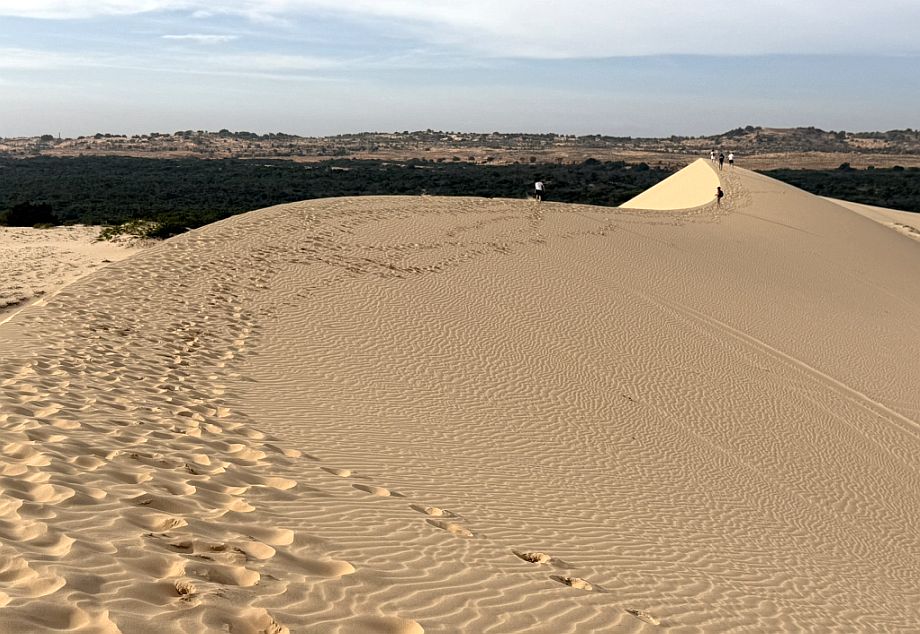
Despite the harsh environment, the dunes have a quiet beauty.
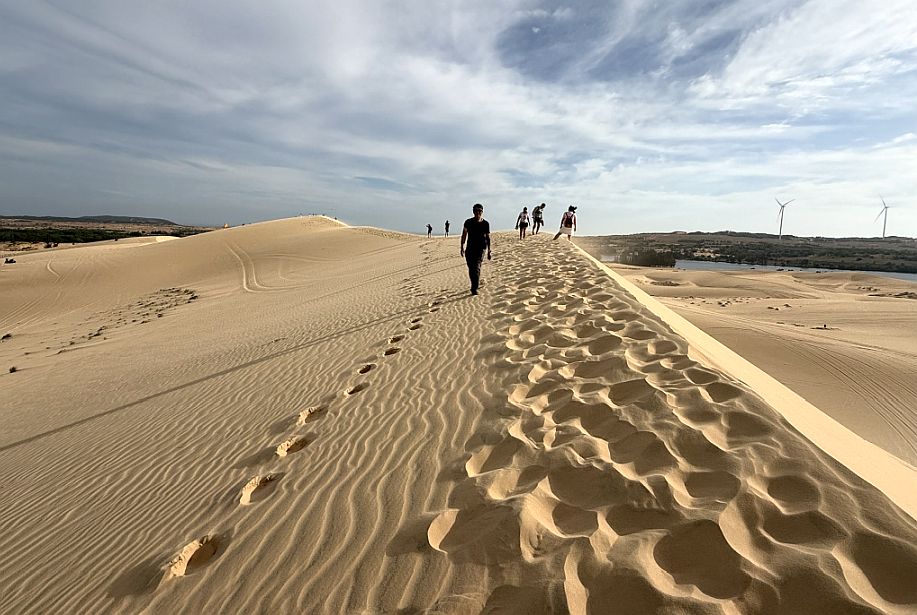
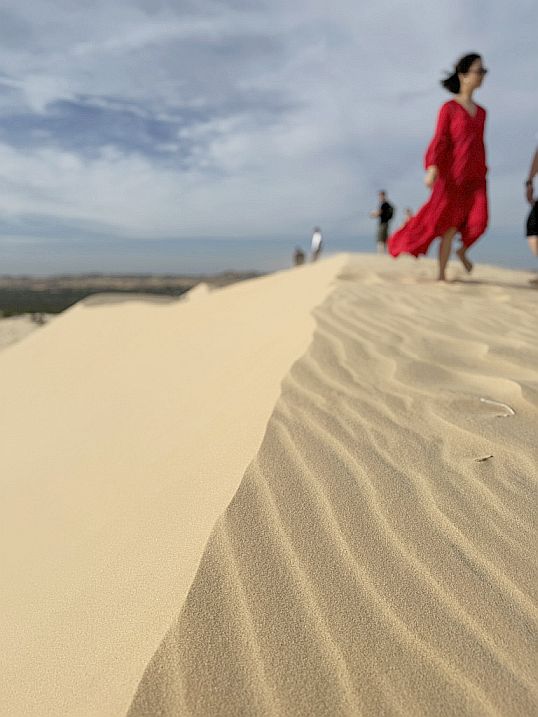
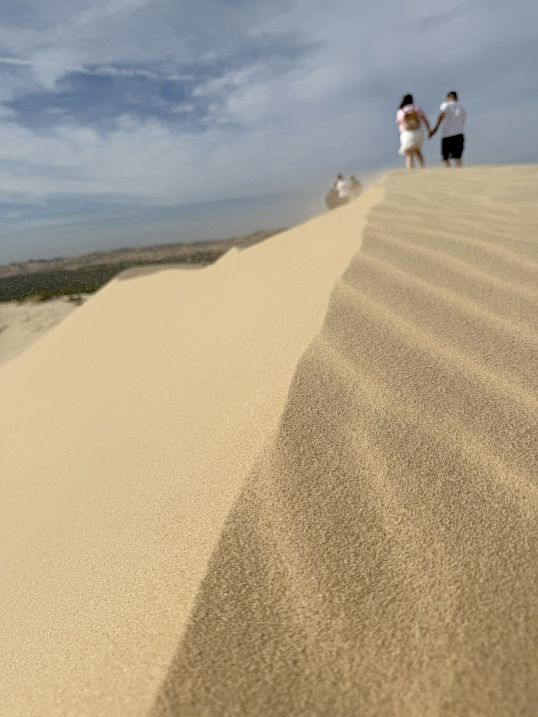
Standing along the crest of the dunes at White Sand Dunes, you begin to notice how dramatically the landscape changes from one side to the other.
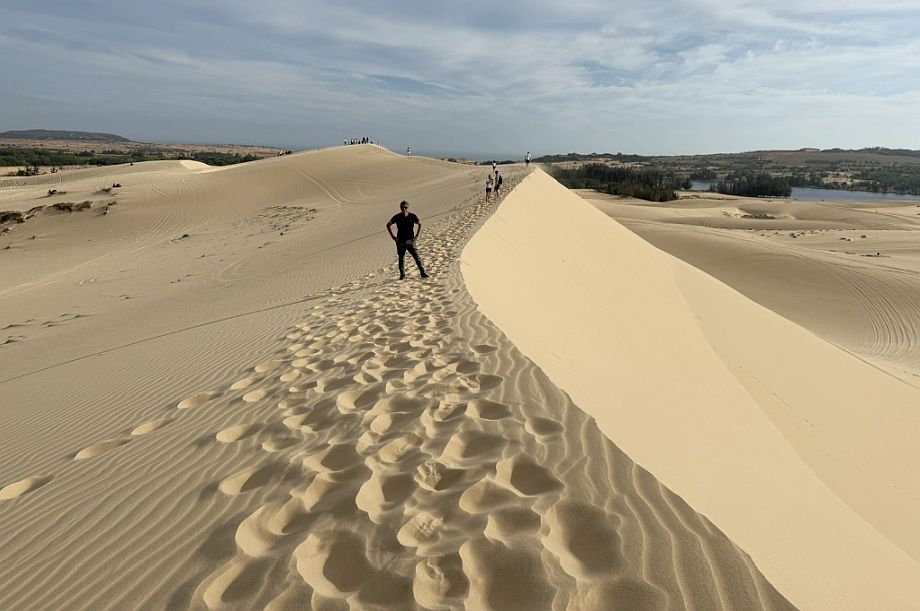
On one side of the ridge, the sand drops off steeply into a smooth, sweeping slope, almost like a frozen wave. This is the side shaped by the wind, where grains of sand are constantly being pushed upward and then cascading down. The surface here is perfectly uniform, untouched and silky, with no marks at all, just soft ripples that catch the light and shadow in delicate lines.
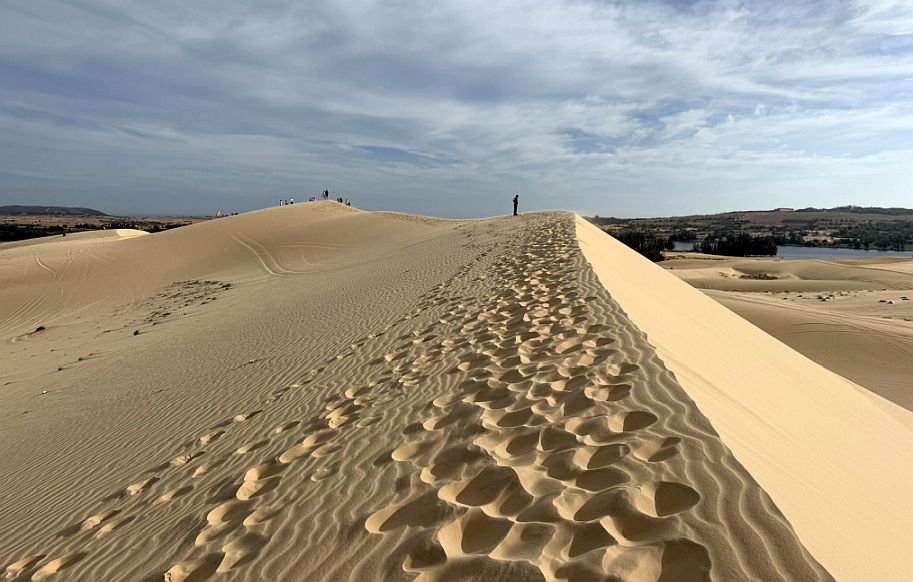
Then you turn to the other side, and the contrast is striking. Instead of that flawless surface, the sand is scattered with footprints, evidence of people who have climbed, slid, and wandered across the dunes.
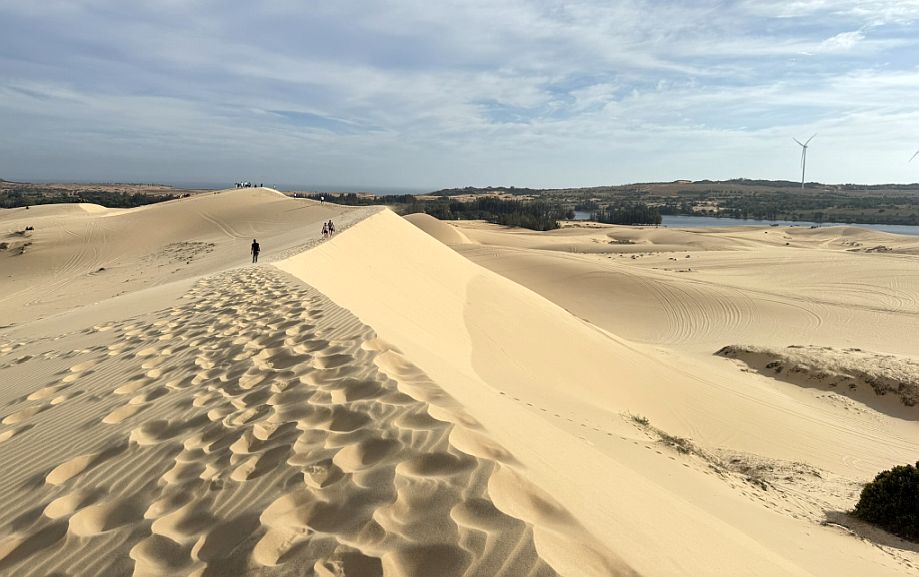
It’s a landscape shaped entirely by nature’s forces, wind, sun, and time, and standing here, you really feel how unusual and unique this place is compared to the rest of Vietnam.
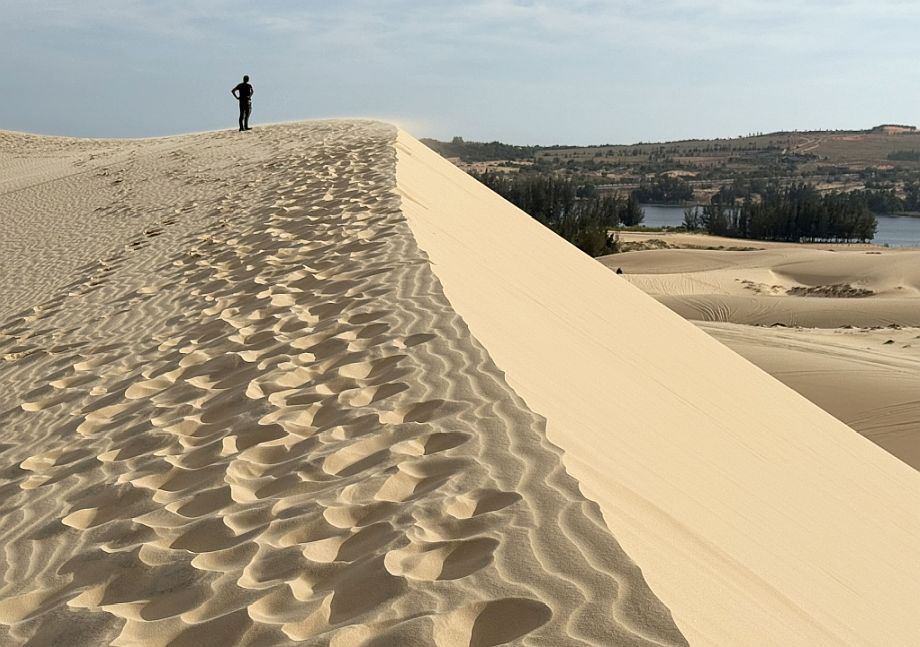
Each step leaves a small imprint, breaking the smoothness and giving the slope a textured, almost chaotic feel. It’s a quiet but beautiful contrast: one side shaped purely by nature, the other gently marked by human presence.
 |
 |
As I reached the summit at White Sand Dunes, the wind picked up, and suddenly you could see the landscape in motion. Tiny grains of sand were lifted into the air, streaming across the surface like a fine veil.
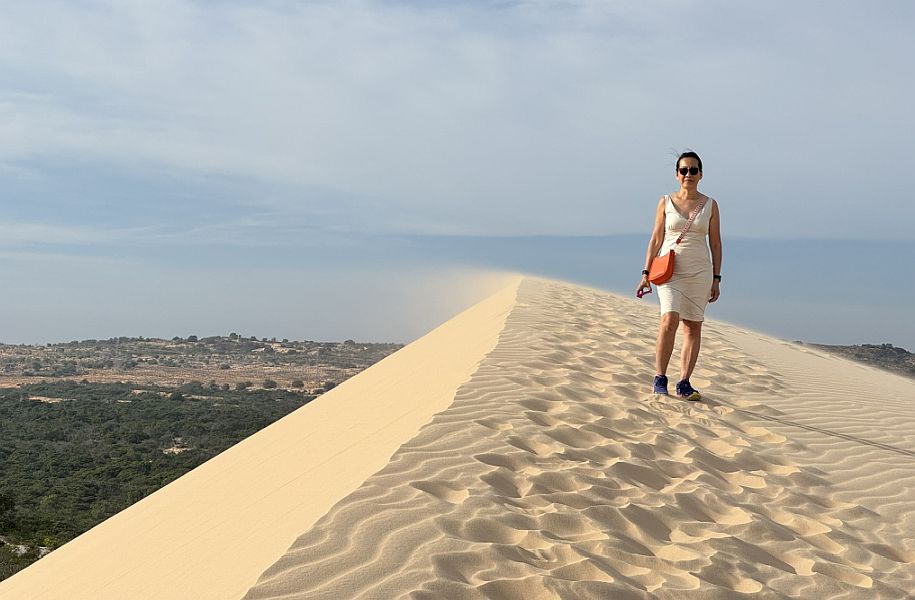
At the very edge of the dune, the wind swept the sand over the crest in a steady flow, almost like the dune itself was slowly dissolving and reshaping in real time. Standing there, you could feel the force of it, the wind brushing past, carrying sand with it, constantly carving and refining the shape of the ridge beneath our feet. It made the whole place feel alive, never still, always changing.
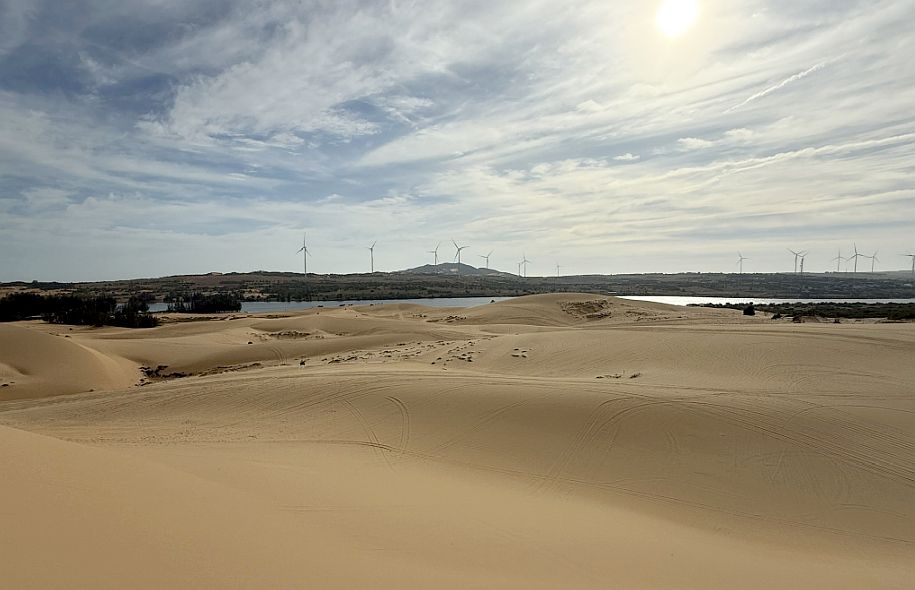
Looking further out beyond the dunes, there is a stretch of water winding through the landscape.
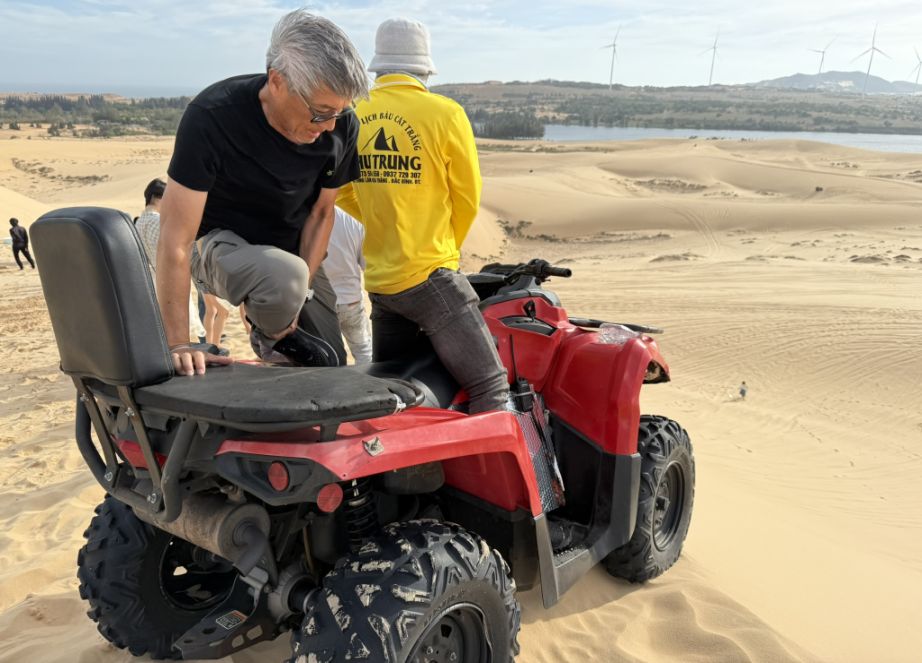
We heading to the other side near the lake, and our guide is taking us there by ATV. Riding the ATV down the dunes at White Sand Dunes was honestly one of the most thrilling, and nerve-wracking—parts of the experience. Standing at the top, the slope looked much steeper than expected, dropping sharply into a deep, soft valley of sand. It almost felt like looking over the edge of a sandy cliff.

As the ATV started descending, we could really feel how loose the terrain was. The sand gave way beneath the tires, and the vehicle slid and powered its way down in a way that felt both controlled and slightly unpredictable. It quickly became clear why only ATVs or specialized vehicles could handle these slopes, walking down them is a completely different story. When we tried to go on foot, every step sank deep into the sand. Our feet got buried almost immediately, and instead of moving forward, it felt like we were struggling just to stay upright. The sand shifted constantly under our weight, making it exhausting to walk even a short distance. Climbing back up was even harder, with each step sliding back half a step.
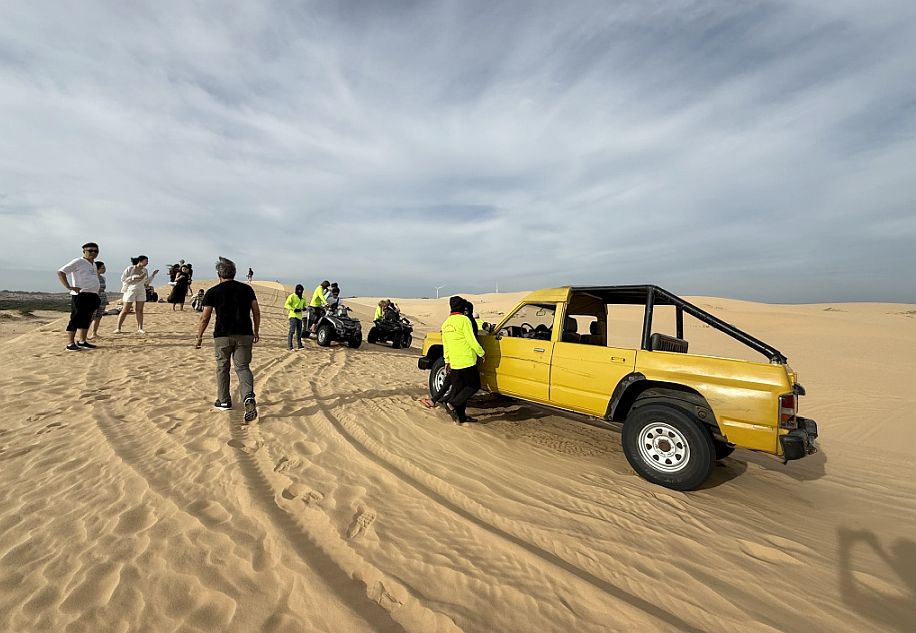
We are now heading toward the Lake.
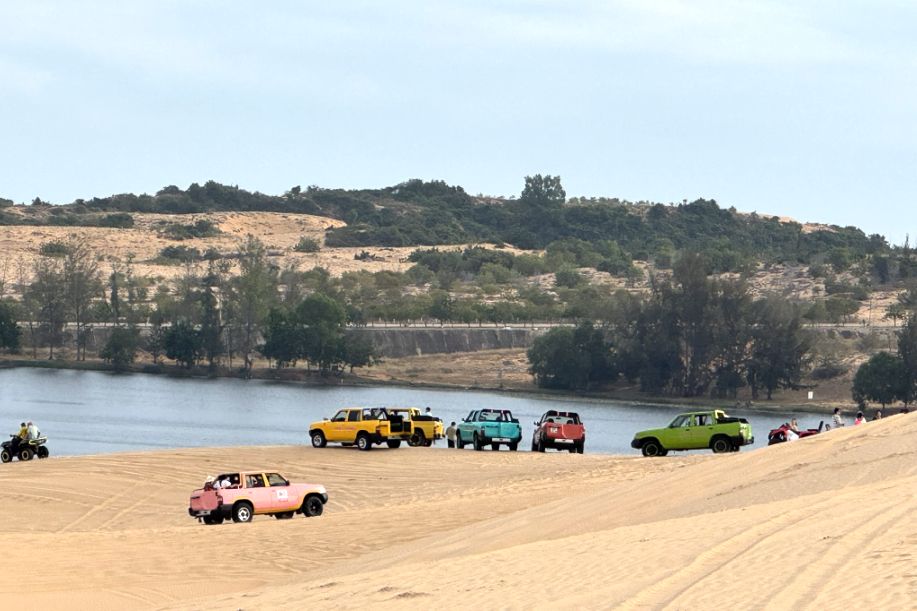
This area is Cát Soi 2, lots of car are dropping off their customers here for a great view of the Lake.
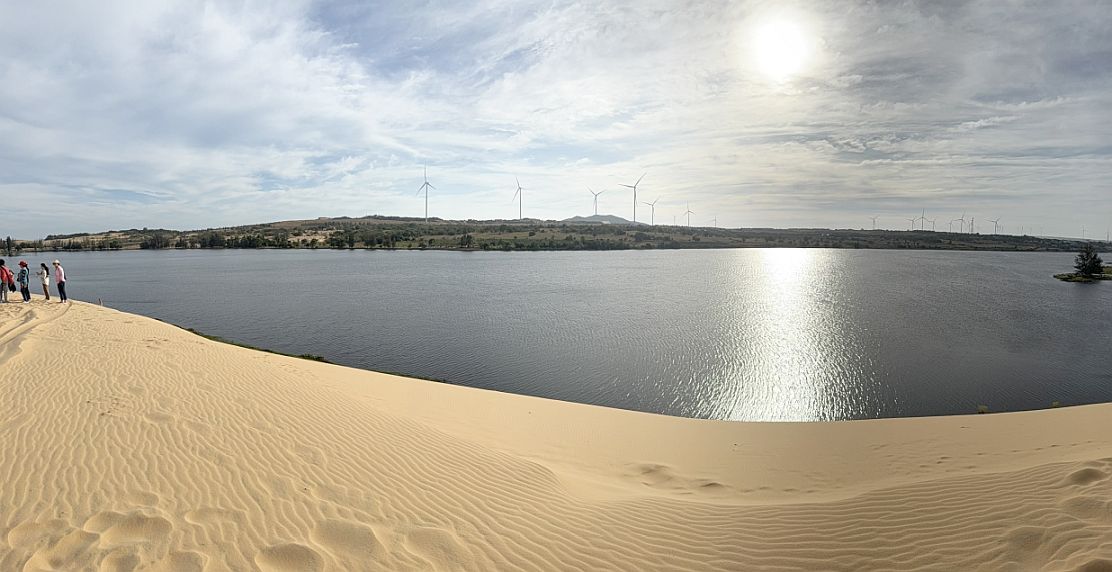
The landscape becomes even more striking, as we approached Bàu Trắng. Bàu Trắng is a natural freshwater lake set right in the middle of the sand dunes, which is what makes it so unusual.

In a region that feels almost desert-like, with dry air and constant wind, finding such a large body of calm water feels completely unexpected. The lake is actually made up of two parts (Bàu Ông and Bàu Bà), and its water level changes with the seasons, but it remains a vital source of freshwater in this arid landscape
 |
 |
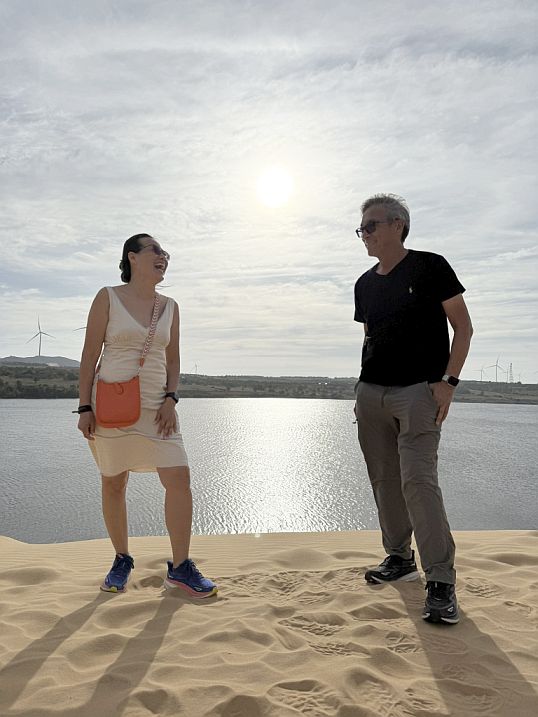
What makes the scene truly unforgettable is the contrast between the lake and the surrounding dunes at White Sand Dunes. On one side, you have soft, rolling hills of pale sand shaped endlessly by the wind. On the other, the still, glassy surface of the lake reflects the sky, often appearing deep blue under the sun. The boundary between the two feels almost surreal. like a desert meeting an oasis.
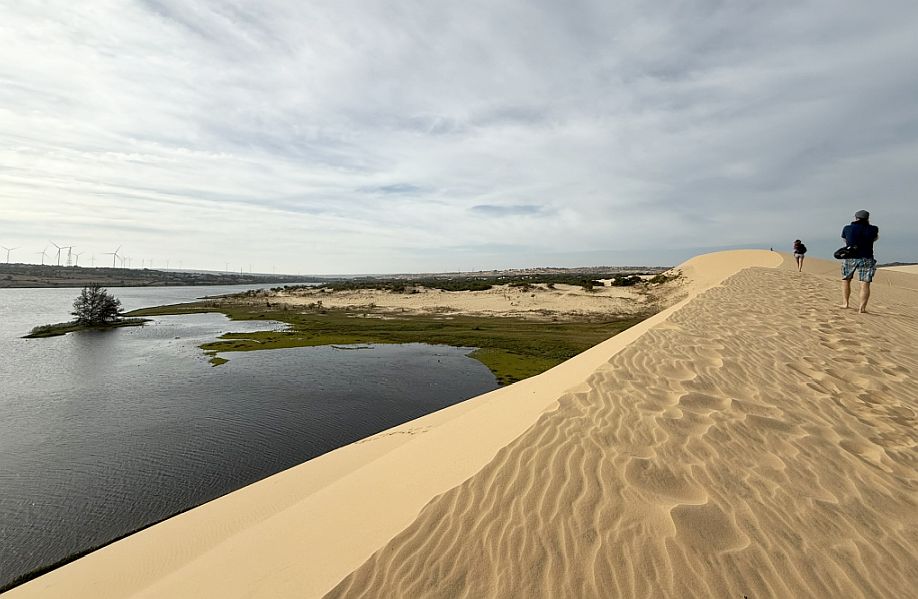
Geologically, the dunes and the lake exist together because of the same forces: wind and time. From the top, the view stretched out in two completely different directions. On one side, you could see Bàu Trang, calm and reflective, framed by patches of greenery, low bushes and vegetation clinging to life around the water’s edge. The contrast of blue water and green tones against the pale sand was striking.
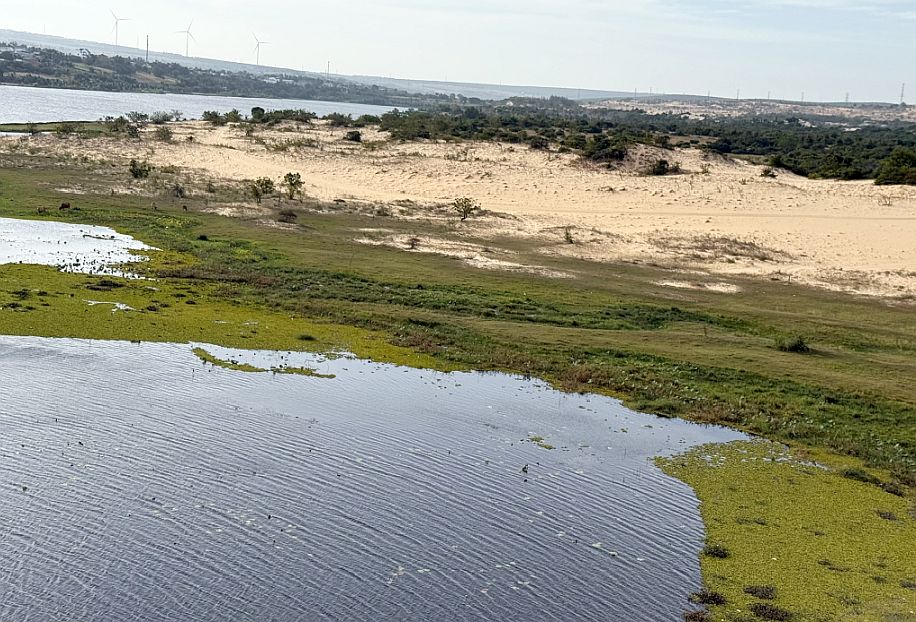
Sand carried inland from the Bien Đông has built up into vast dunes, while lower-lying areas between them have collected rainwater and underground sources, forming lakes like Bàu Trang. The dunes continue to shift, but the lake remains, creating this ever-changing yet balanced landscape.
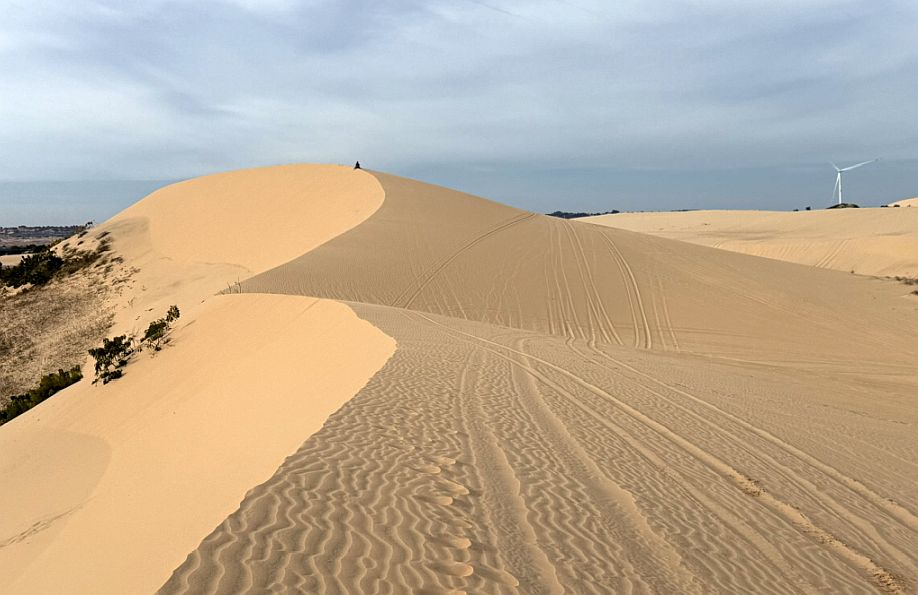
From this side of the dunes at White Sand Dunes, the landscape opened up into a series of soft, rolling hills that almost formed the shape of an “M” in the distance.
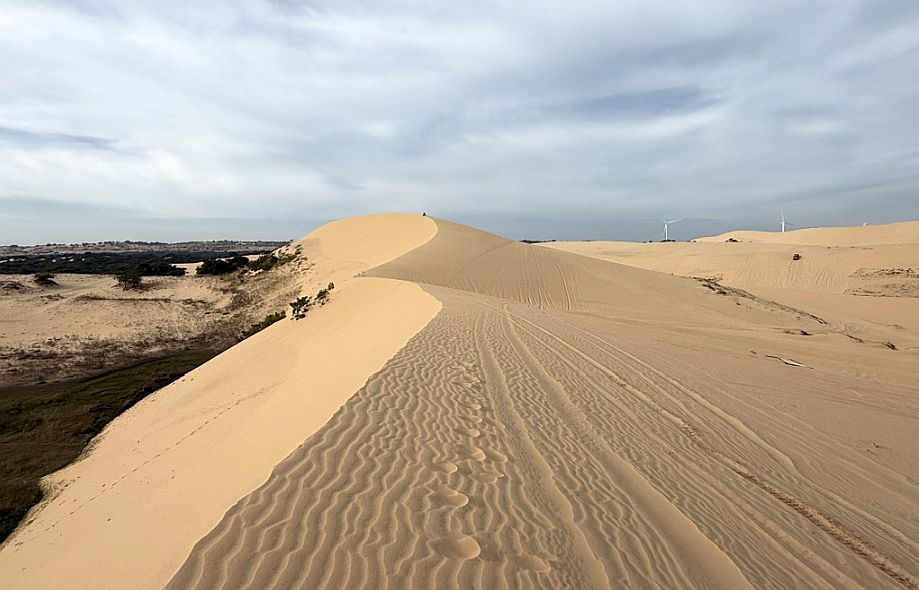
Each dune had two distinct faces: one side smooth and flowing, where the wind had sculpted the sand into a perfect, uninterrupted slope; the other side more rugged, with delicate ridges along the crest and scattered footprints tracing the paths of those who had climbed up before us.
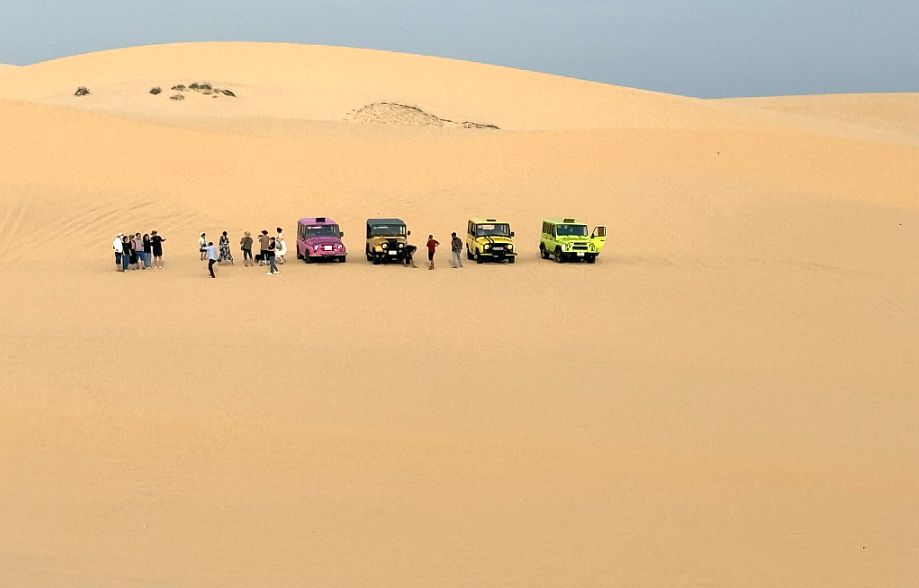
In the valley between these two dunes, there was a burst of activity—colorful jeeps moving in and out, dropping off tourists who looked small against the vastness of the sand. From above, they added bright dots of red, yellow, and green to an otherwise pale, monochrome landscape, bringing a sense of scale and life to the scene.
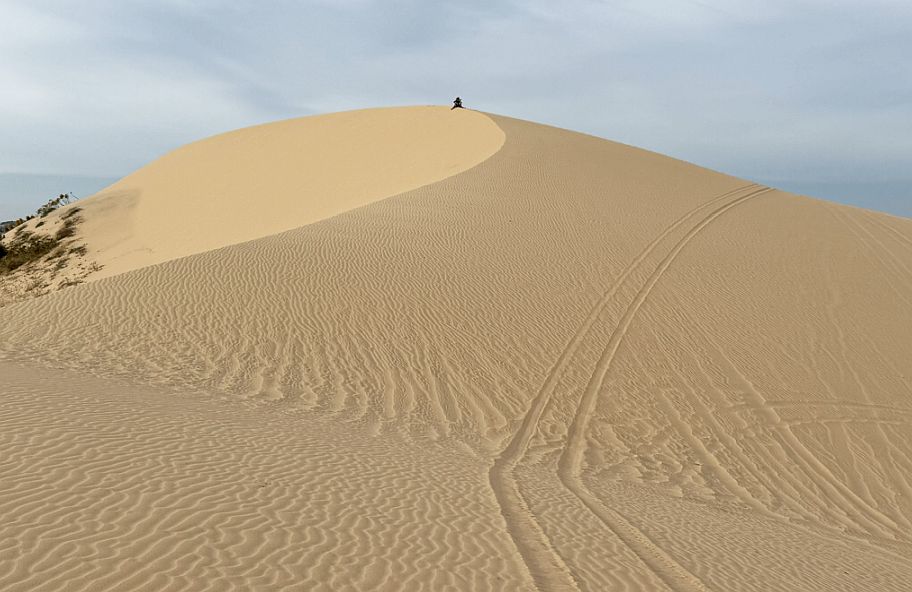
That is the furthest we could go.
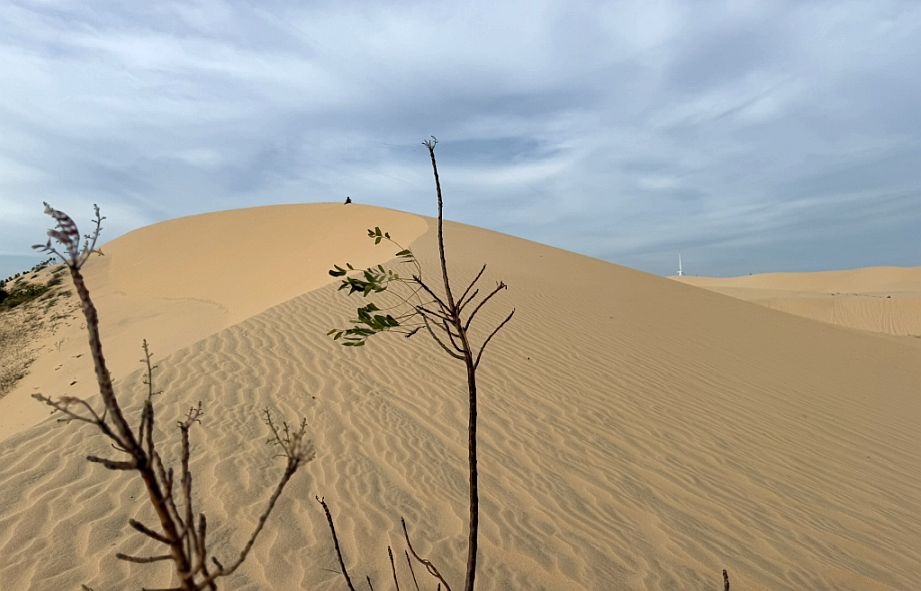
There are occasional patches of grass or small shrubs clinging to life.
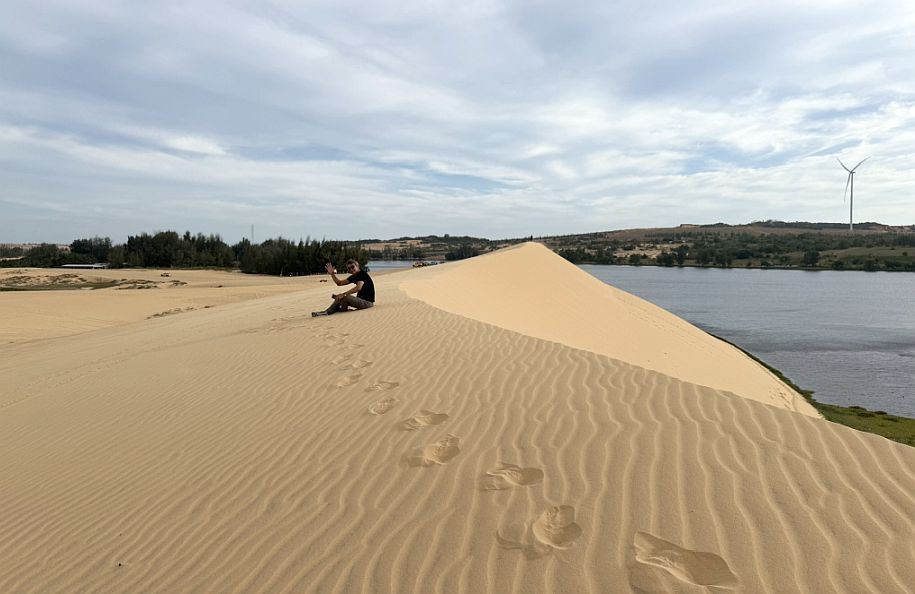
We sat at the top of the dune for a while, taking it all in.
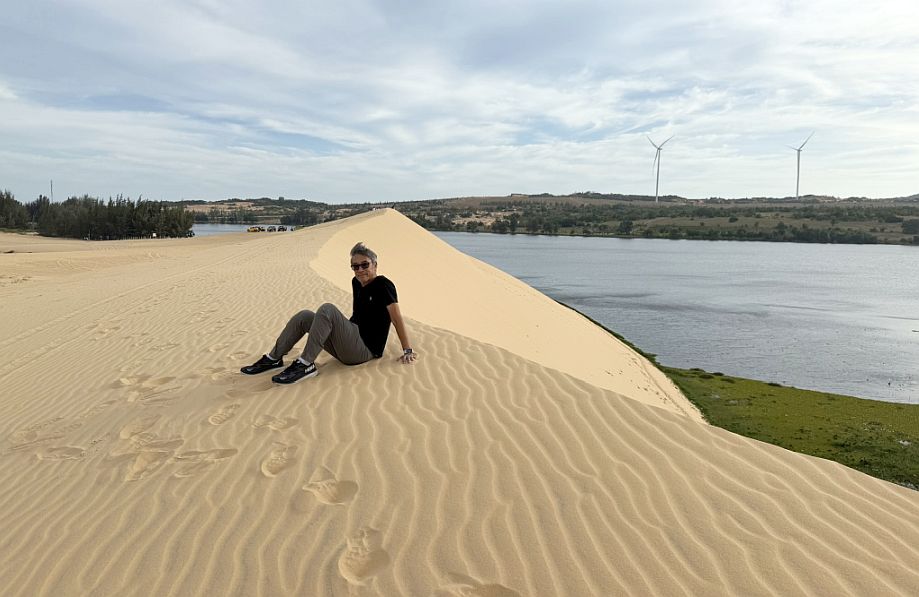
Behind us lay the calm waters of Bàu Trang, still and reflective, while in front of us stretched nothing but endless sand dunes, rising and falling like waves. It felt like being suspended between two worlds, water and desert, quietly observing both at once.
NEXT... Day 4-Sunset at Red Sand Dunes