9 days in Japan- 6/23- 7/1/2024
| Day
1-Niigata Arrival In Niigata Dinner at Echigo Banya |
Day
2-Niigata Fish Market Downtown/Lunch Dinner at Sushi Arai |
Day
3-Niigata Hakusan Shrine Sake Brewery Tour Lunch/Dinner |
Day
4-Niigata Northern museum Farm Land |
Day
5-Niigata Fukushimagata Walking around Dinner at Ebisudai |
Day
6-Tokyo Dinner at Jomon |
Day
7-Tokyo Arakawa Arakawa Cont. Ginza Dinner at les Copains |
Day
8-Tokyo Yoyogi Park Uneno Park Dinner at Uoshin Golden Gai |
Day
9-Tokyo Metropolitan office |
Day 8-Ueno Park, Tokyo -6/30/2024
After Takeshita street we left the chaos of Harajuku behind and headed toward Ueno Park, trading neon signs and fashion crowds for wide paths, museums, and the calm green heart of old Tokyo.
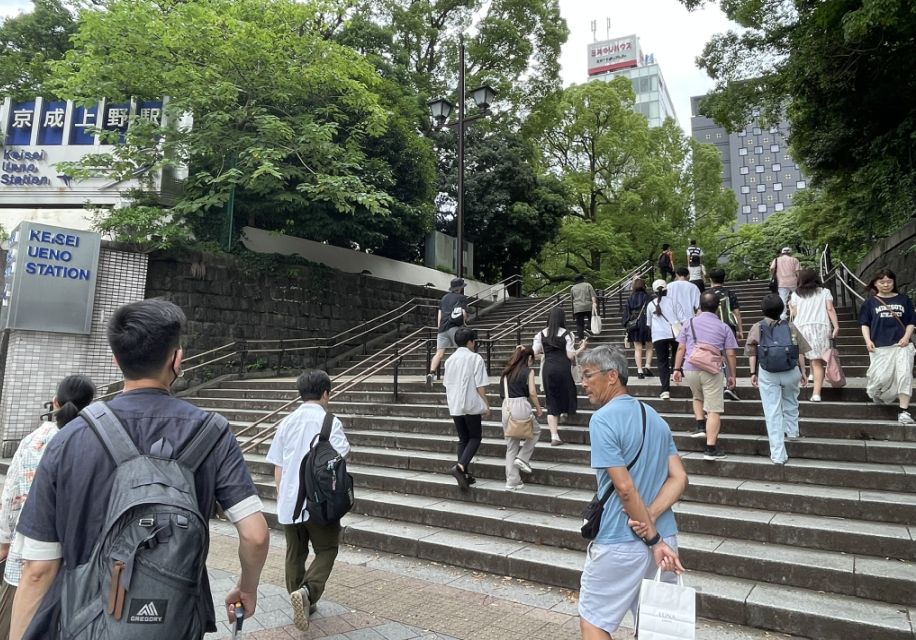
We arrived at Ueno Park again, a place that already held a special memory for us. Back in April 2017, we had walked these same paths beneath clouds of pale pink cherry blossoms, surrounded by picnics, laughter, and drifting petals.
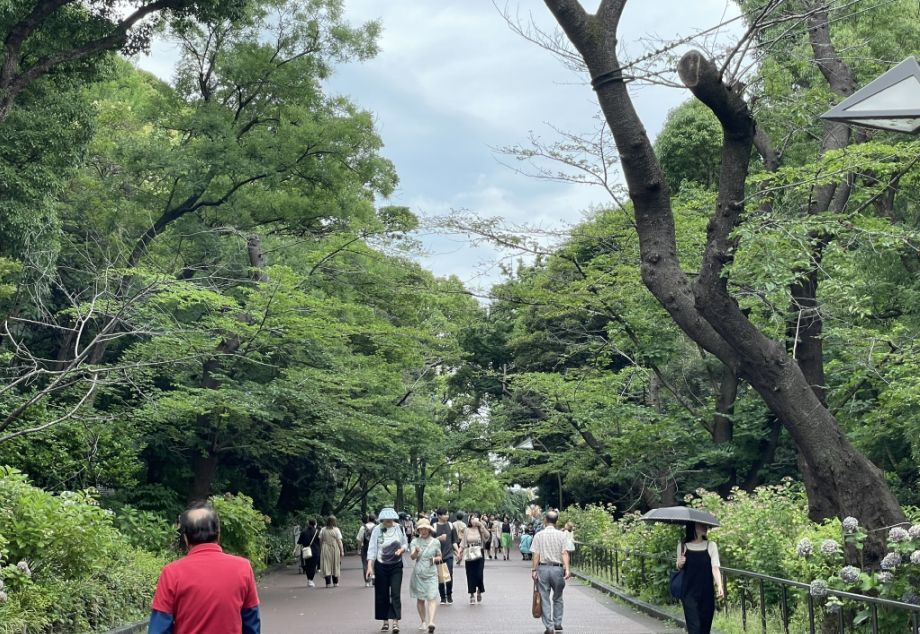
This time, in early summer, the park felt completely different, quieter, greener, and more spacious, as if it had taken a deep breath after the intensity of spring.
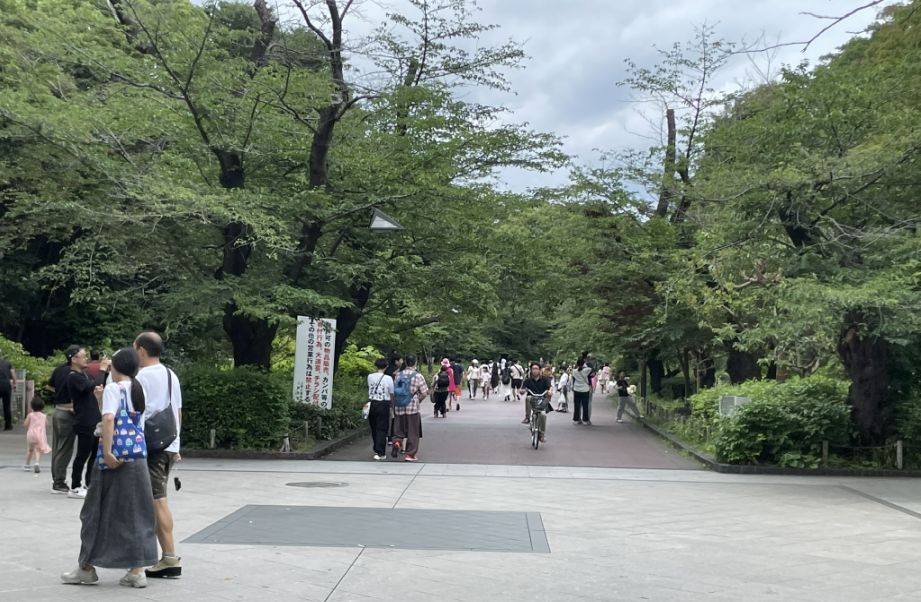
Without the sakura, the park revealed its true shape: wide gravel paths lined with tall trees, museums rising calmly behind the foliage, and locals strolling at an unhurried pace.
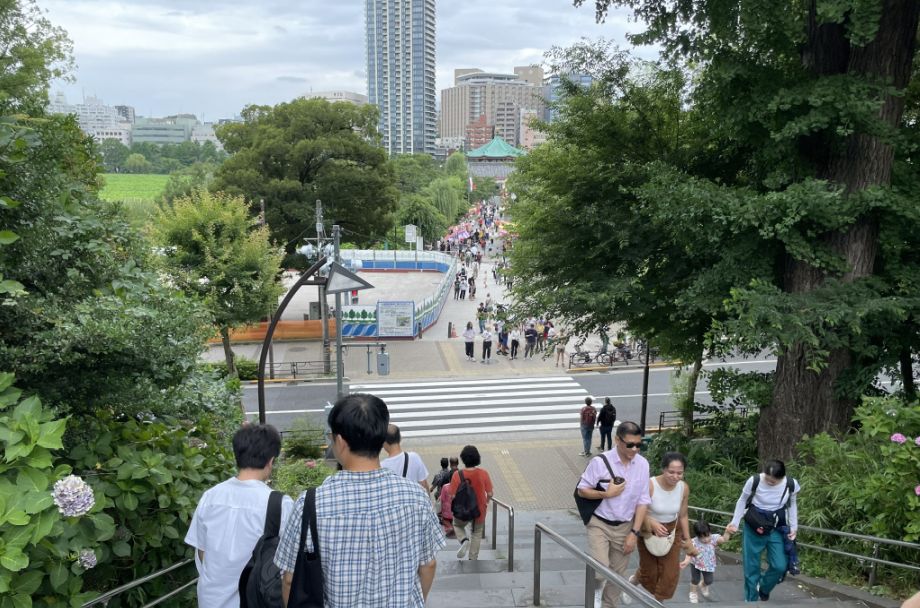
To reach the pond, we walked down a long set of stairs, crossed a busy street, and stepped onto the bridge leading toward Shinobazu.
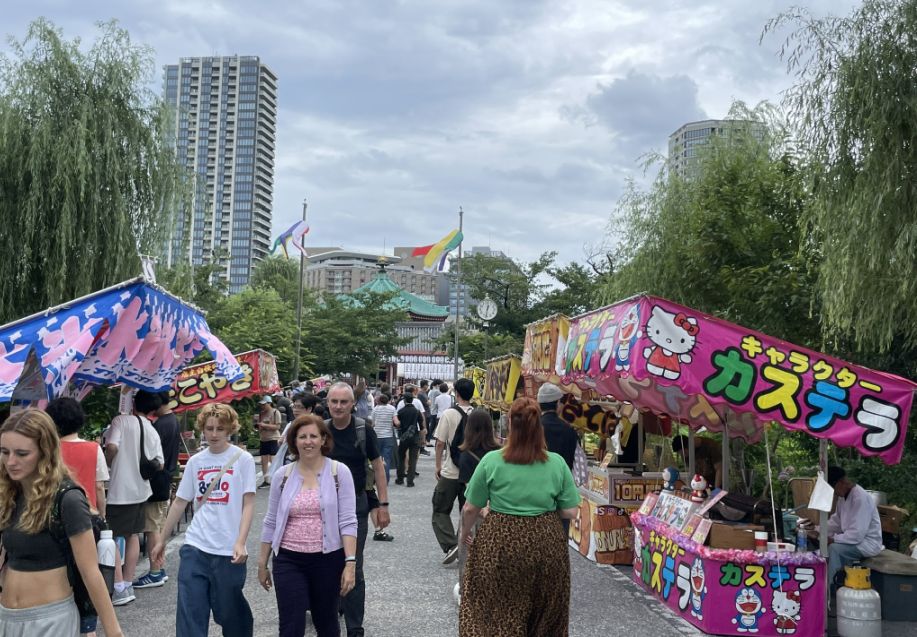
The atmosphere changed immediately. The bridge was lively and crowded, lined with small food stalls selling snacks and cold drinks, and packed with tourists pausing for photos. It felt festive and energetic, a sharp contrast to the quiet paths inside the park.
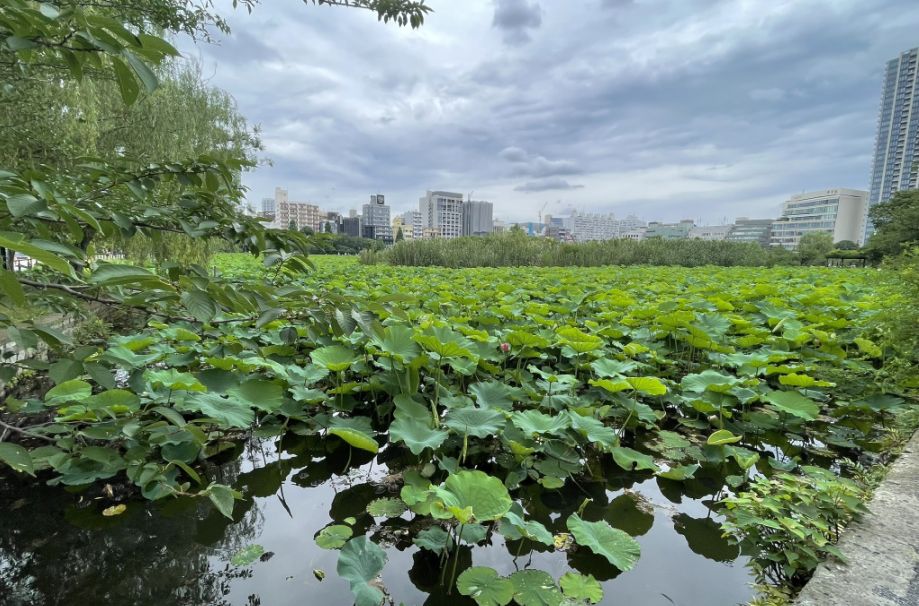
Beyond the bridge, the pond opened up before us, a vast expanse of lotus plants stretching in every direction.
 |
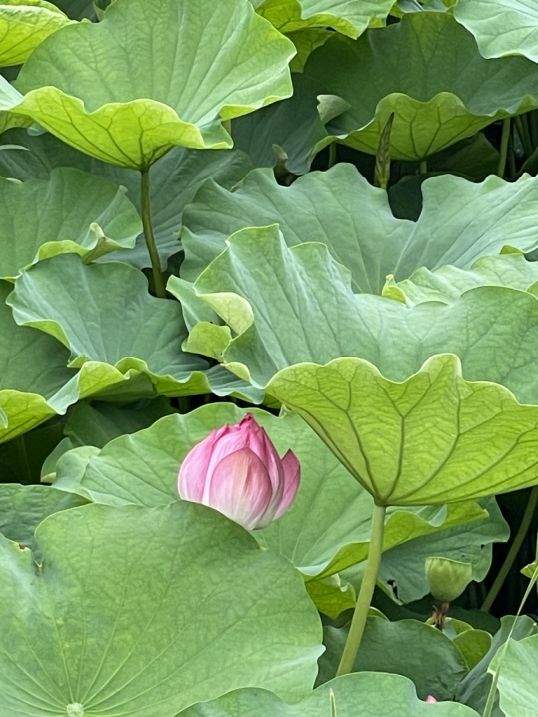 |
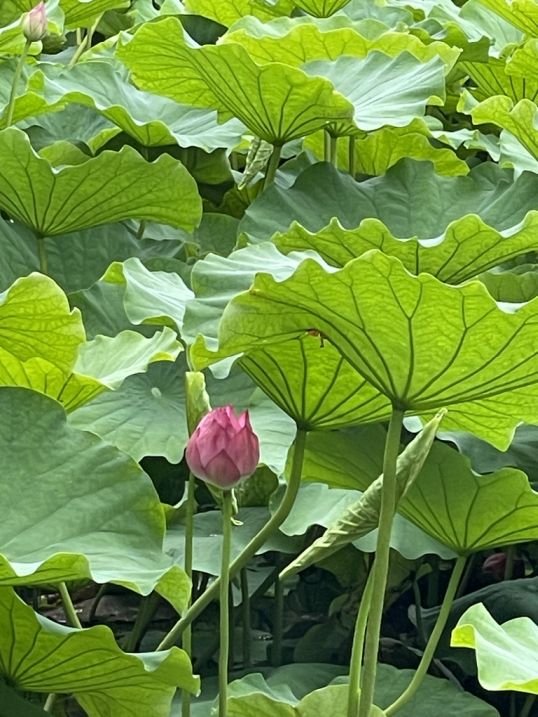
Thick layers of round green leaves covered the water like a floating carpet, and rising gently above them were the first soft pink lotus flowers of the season, just beginning to bloom, delicate against the endless sea of green.
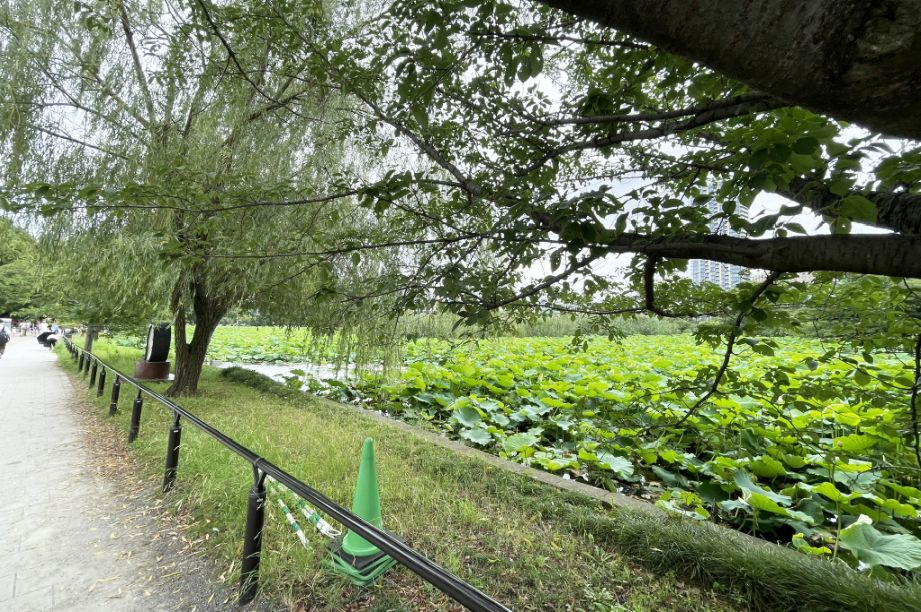
Shinobazu Pond is the famous lotus pond spread out before us like a living green carpet. Thousands of broad lotus leaves floated tightly together across the water, their tall stems rising like a miniature forest.
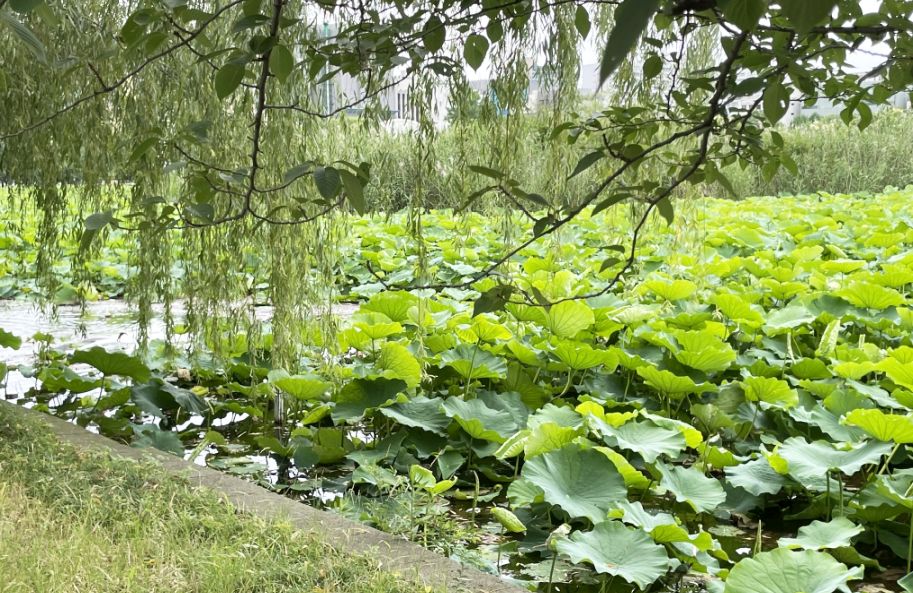
When we were here in April 2017, the pond looked completely different, bare and open, with dark water reflecting the sky and hardly any lotus in sight. This time, it felt transformed. The plants had taken over almost the entire surface, their broad leaves overlapping so densely that the water below was nearly invisible.
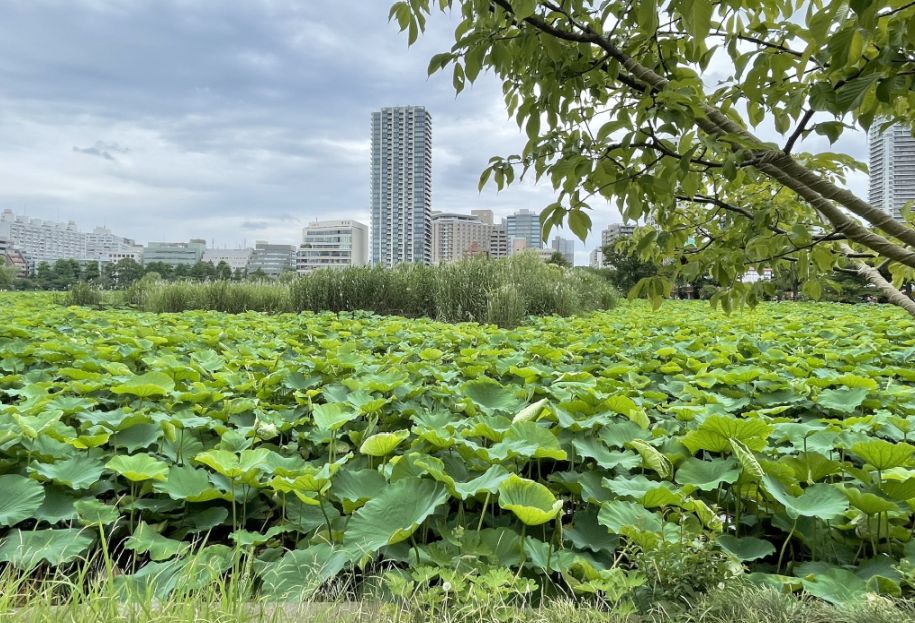
It was amazing to see how alive and full the pond had become over the years. Standing at the edge, with this natural scene in front of us and tall modern skyscrapers rising in the distance behind it, the contrast was striking, on one side nothing but lotuses and then glass and steel towers on the other, Tokyo quietly showing how nature and the city exist side by side.
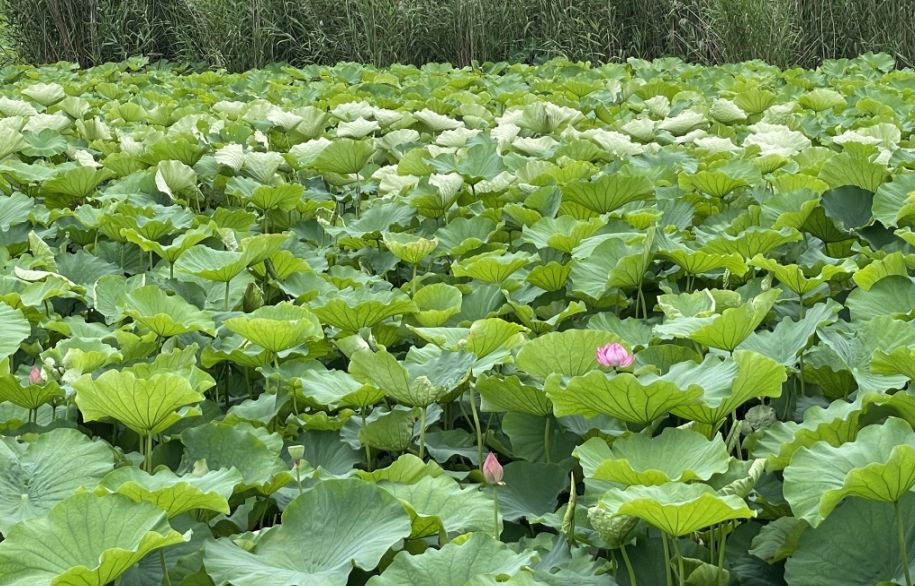
The pink flowers emerging from the pond.
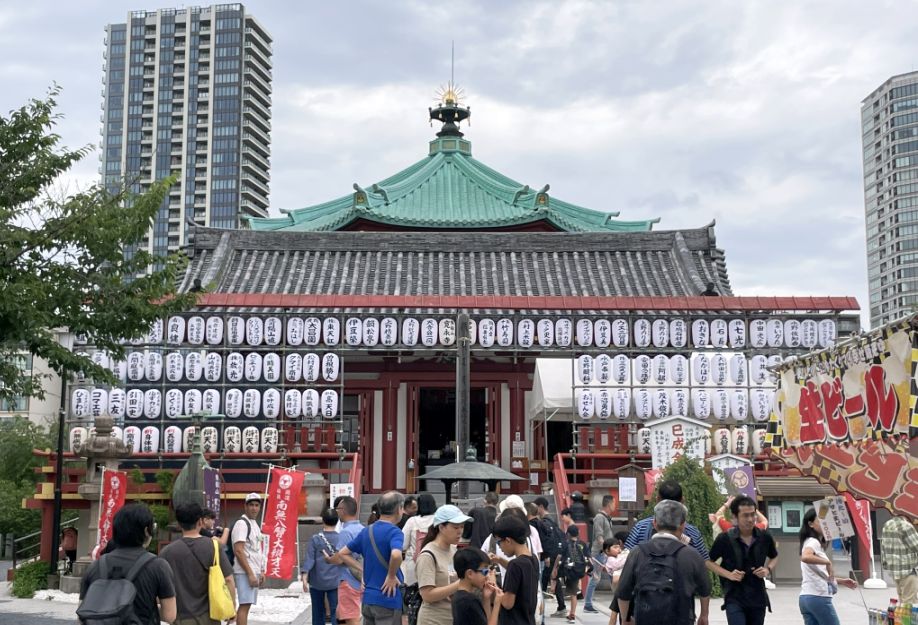
Near the pond, we visited Bentendo Temple, the small shrine sitting on its island, reached by a narrow bridge. The bright red of the hall stood out against the deep green of summer, bold and peaceful at the same time. People moved quietly, offering prayers, washing their hands at the basin, ringing the bell, simple gestures repeated for centuries. Standing there, surrounded by water and lotus leaves, it was easy to forget we were in the middle of one of the world’s largest cities.
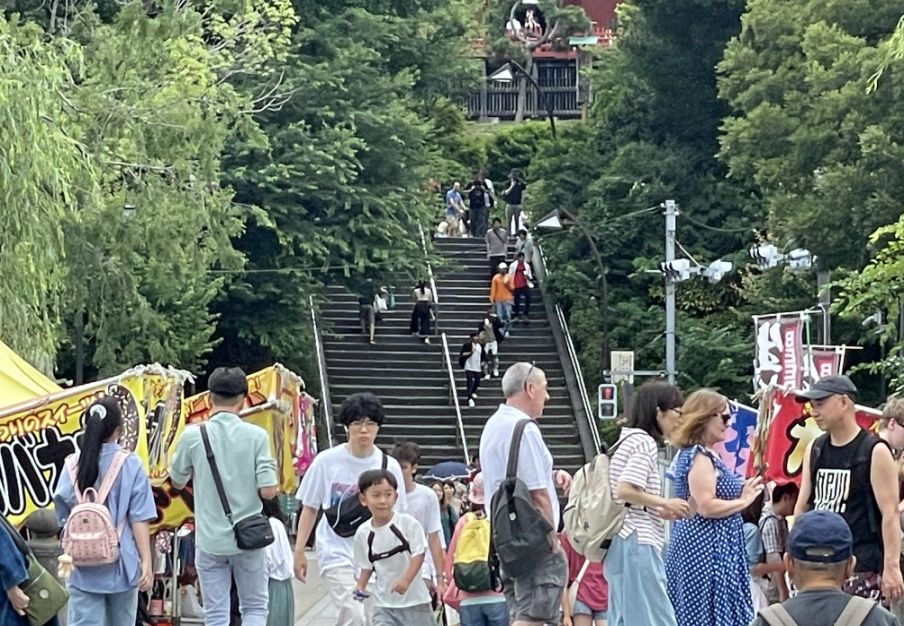
We are now leaving the park. seeing Ueno Park again, without the cherry blossoms, felt like meeting an old friend in a new season. Different, calmer, less dramatic but just as beautiful in its own way
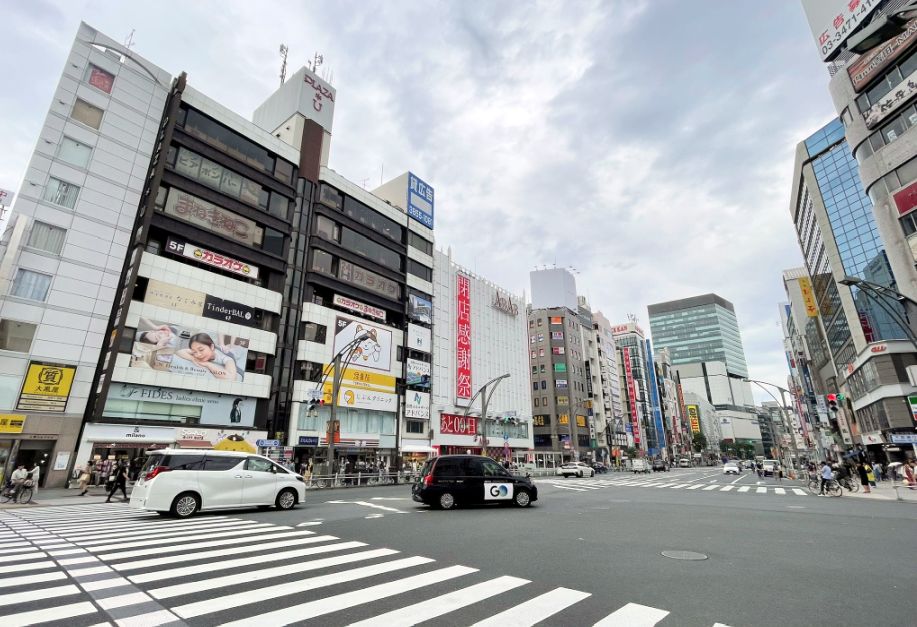
We are now heading to Ameya-Yokoco, usually called Ameyoko.
 |
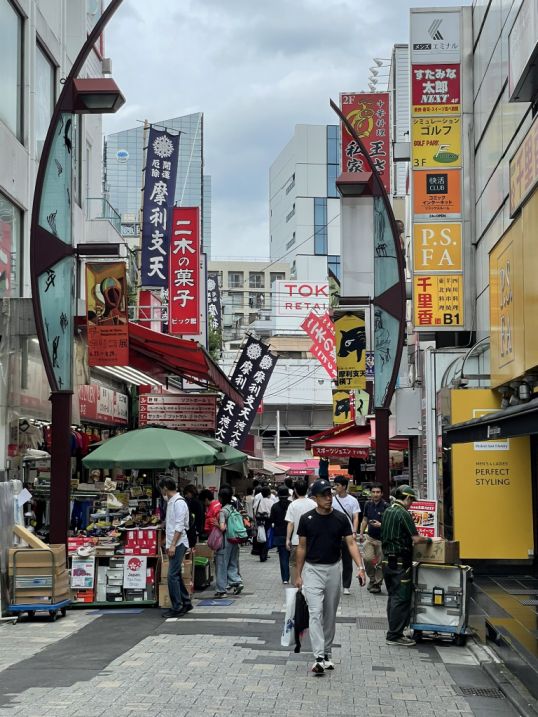 |
Leaving the calm of Ueno Park, we stepped straight into a completely different world at Ameyoko. The narrow streets were packed with people, music, shouting vendors, and the smell of grilled food drifting through the air. It felt lively, noisy, and wonderfully chaotic.
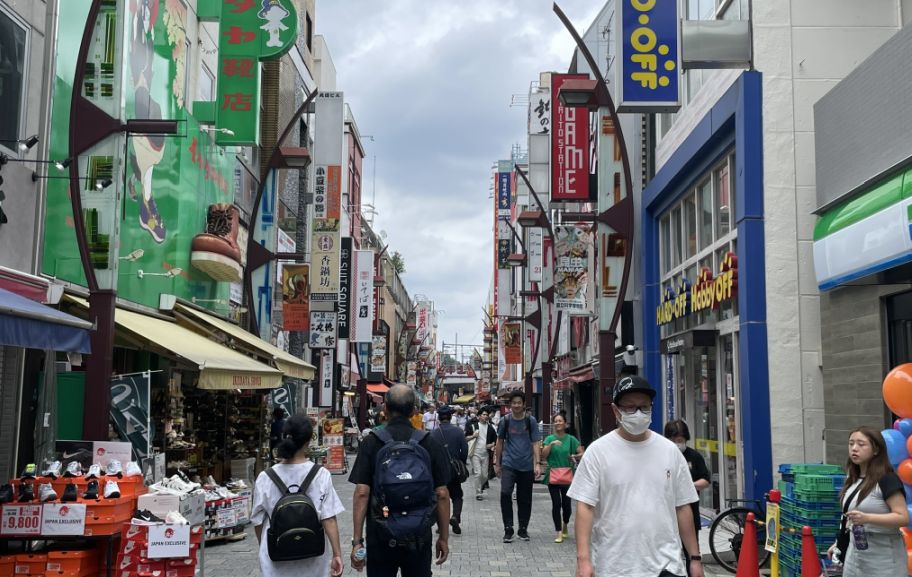
Ameyoko began as a black-market area after World War II, where goods such as sugar and candy (ame in Japanese) were sold cheaply, which is how the street got its name. Over time, it grew into one of Tokyo’s most famous open-air market districts.
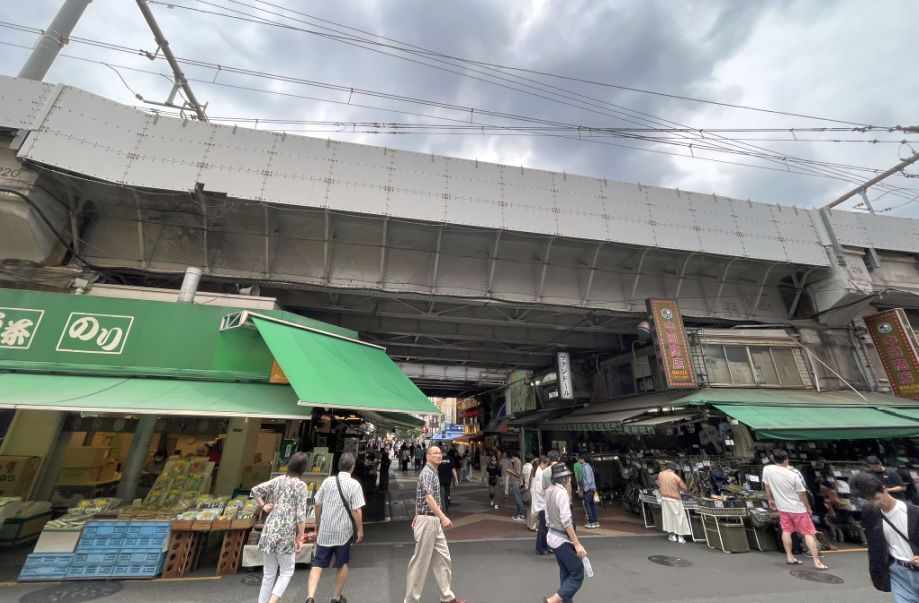
Today, it stretches along the railway tracks between Ueno and Okachimachi stations and is lined with hundreds of small shops and stalls.
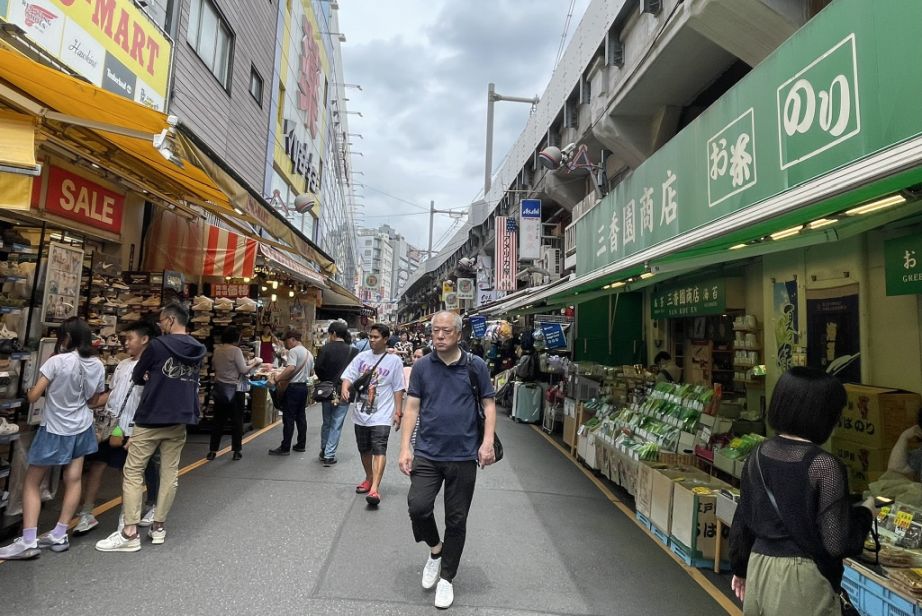
You can find almost everything here: fresh seafood piled high on ice, dried snacks, spices, fruit, cosmetics, sneakers, clothes, luggage, souvenirs, and street food. Vendors call out their prices loudly, bargaining is common, and the energy never seems to slow down.
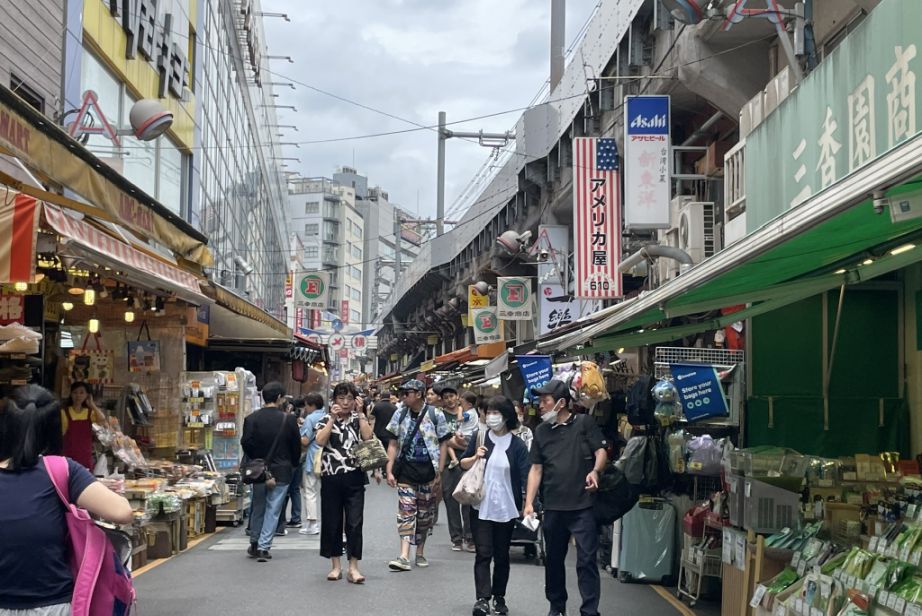
As we walked deeper into Ameya-Yokocho, we came upon a street lined with vegetable stalls, crates stacked high with tomatoes, onions, daikon, cabbage, eggplant, and bright green bundles of herbs. Prices were written in bold marker on cardboard signs, and vendors were calling out deals to people passing by. Local shoppers stopped to inspect the produce, filling their baskets while weaving through the crowds.
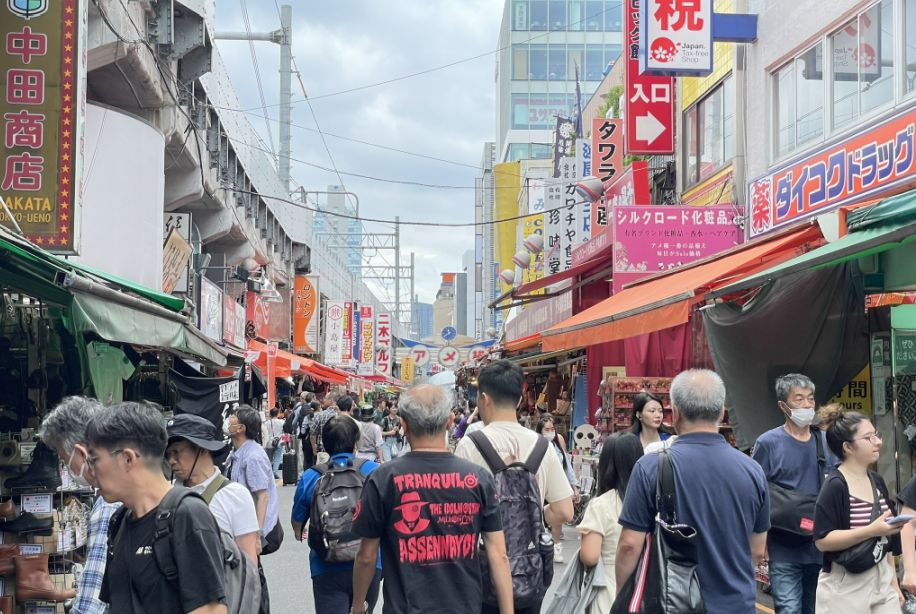
Ameyoko is still a working market where Tokyo residents come to shop for dinner. The mix of fresh vegetables, street food smoke, and the constant hum of voices made the area feel even more alive and authentic.
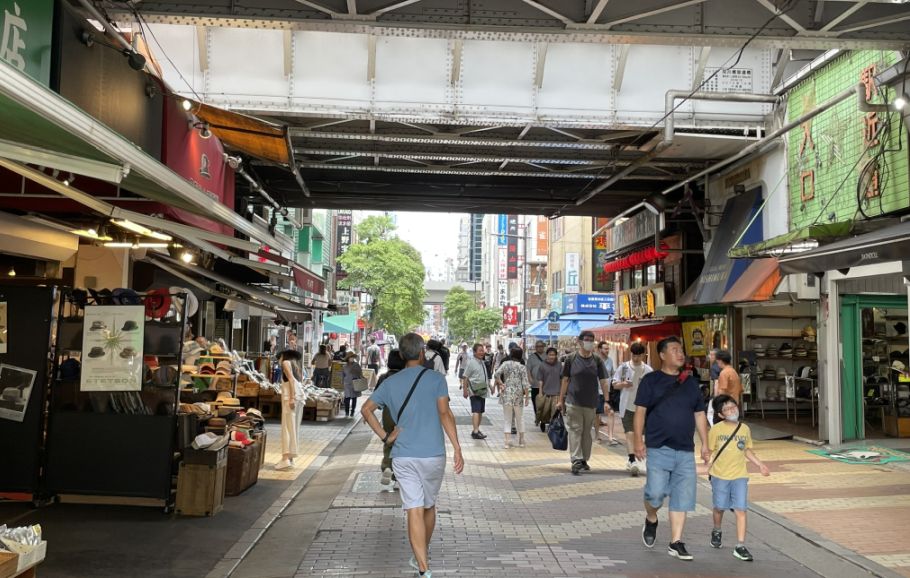
A little farther on, the street narrowed and suddenly felt darker and more enclosed. Above us was the elevated train line, its metal structure forming a roof of beams and tracks overhead.
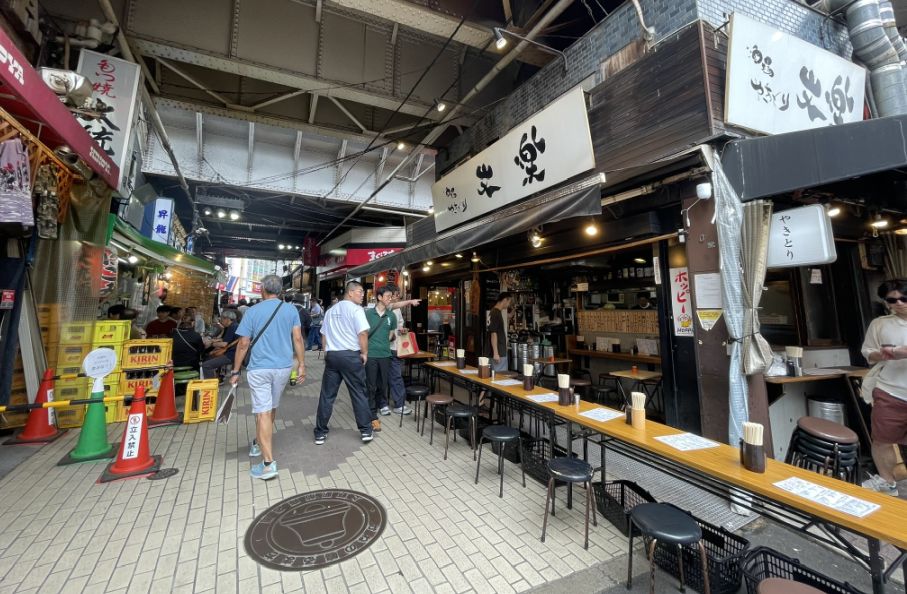
Beneath it, a long row of tiny restaurants spilled out onto the walkway, their tables and stools pressed right up against the narrow path. People were eating shoulder to shoulder, bowls of noodles steaming, skewers in hand, beer glasses clinking, conversations blending with the rumble of trains passing above.
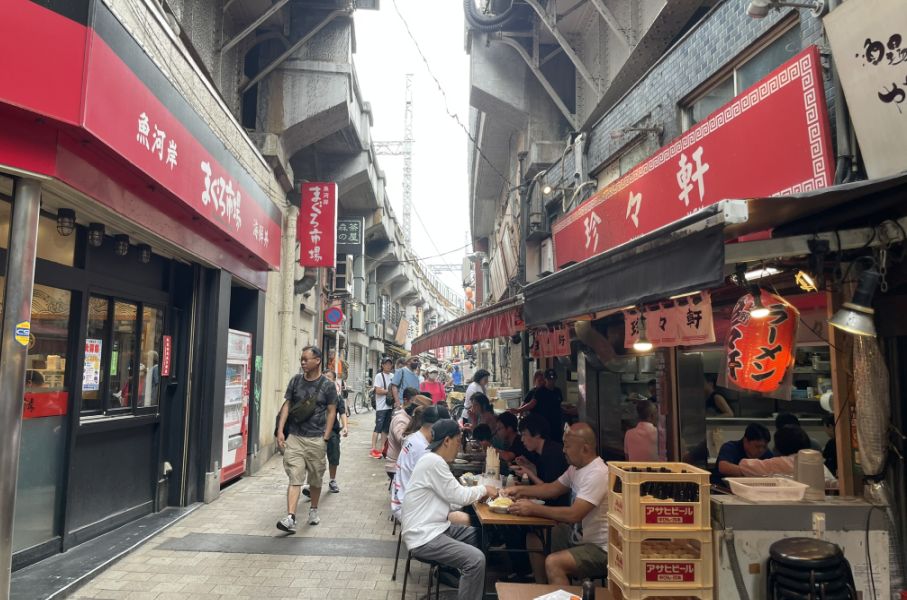
The space was cramped but full of life, it felt raw and energetic, like a hidden world tucked under the railway.
 |
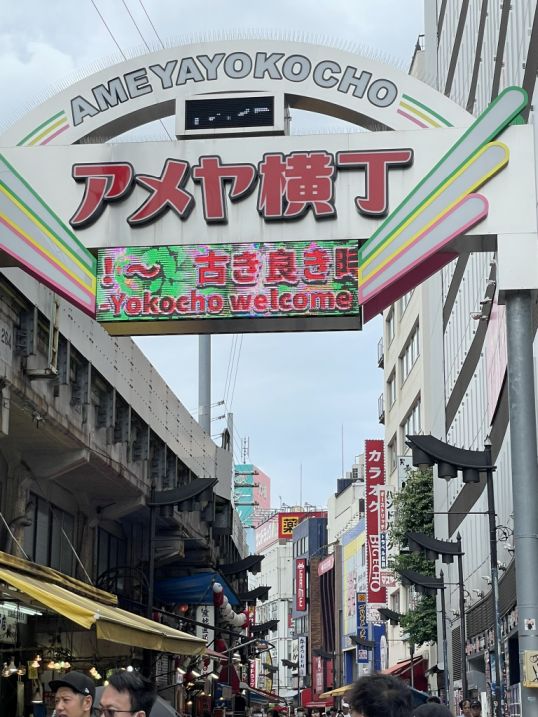 |
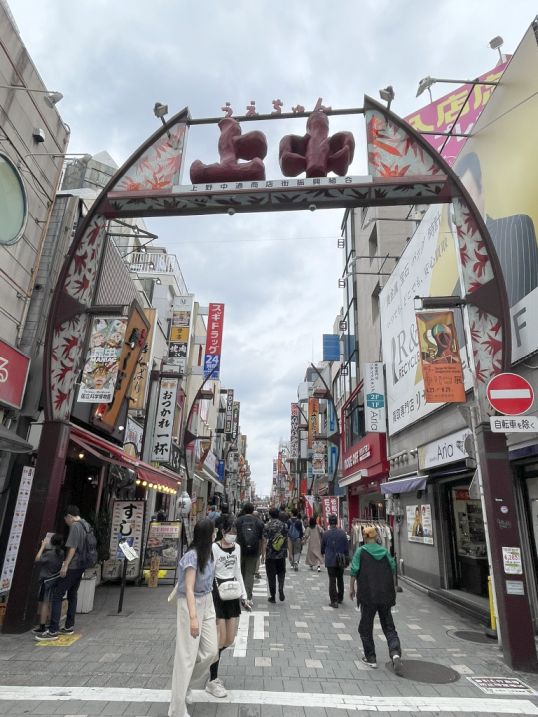
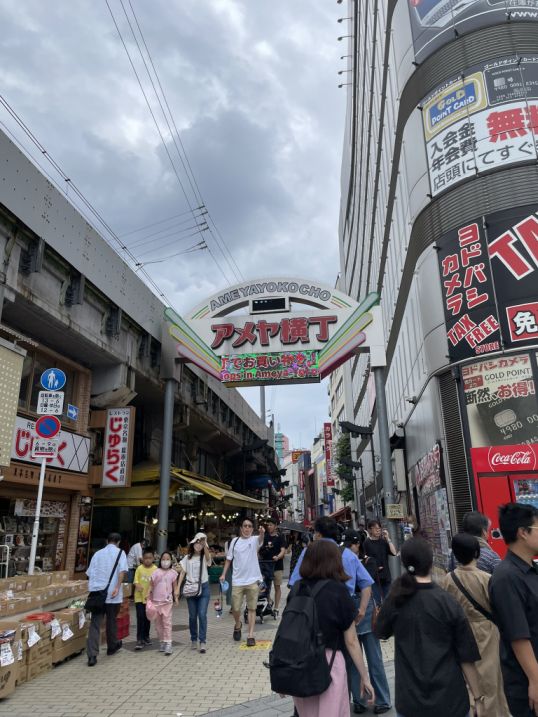
Then ahead we finally saw the Ameya-Yokocho sign hanging high between two streets, marking the heart of the market.
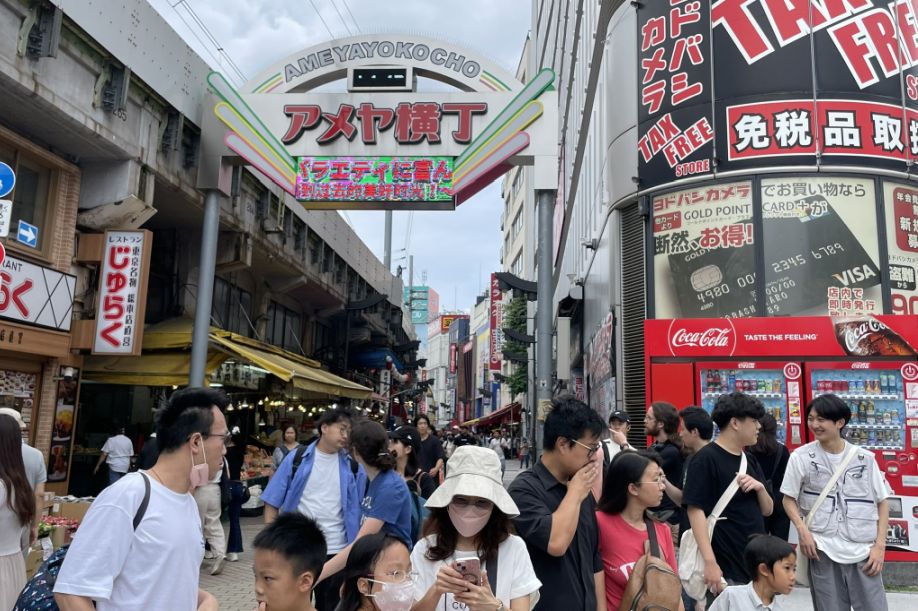
It felt like we had truly arrived, right in the pulse of one of Tokyo’s most vibrant and chaotic neighborhoods.
NEXT... Day 8- Dinner at Uoshin Nogizaka