6 days in Washington DC- 10/18- 10/23/2024
Day 6- National Museum of American History-10/23/2024
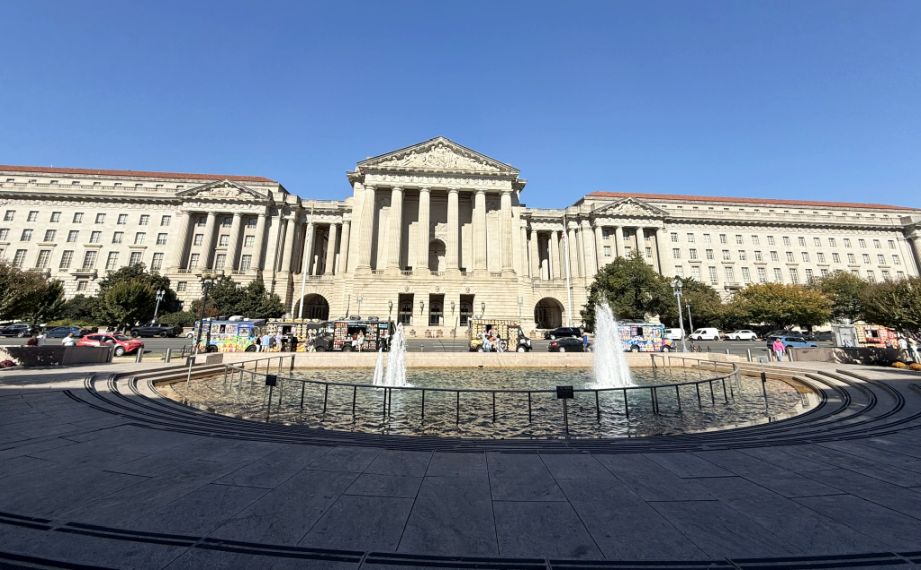
We are now back in DC and we are headed towards National Museum of American History, the fountain we passed is actually one of the most elegant, and often overlooked monuments along Constitution Avenue.
The Andrew W. Mellon Memorial Fountain, located directly in front of the Andrew W. Mellon Auditorium in the Federal Triangle area. Dedicated in 1952, the fountain was designed by sculptor Sidney Waugh. At the time, the largest bronze basin was among the biggest ever cast, emphasizing the monumental ambition of post-war Washington planning.
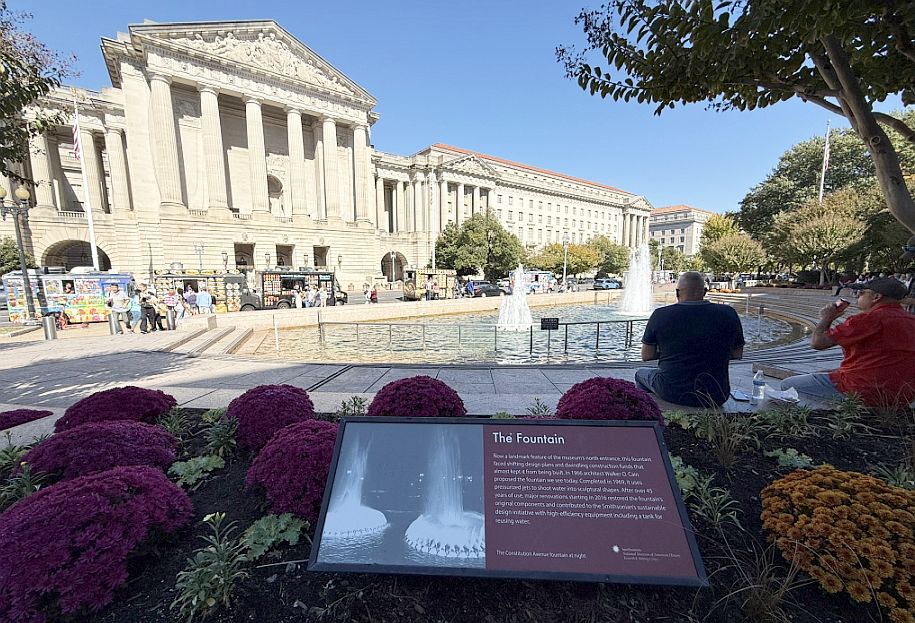
The fountain is not just decorative, it’s a memorial to Andrew W. Mellon, one
of the most influential figures in shaping modern Washington. Andrew W.
Mellon was the U.S. Secretary of the Treasury (1921–1932)., Ambassador to
Great Britain, Industrialist and philanthropist, Founder and benefactor of the
National
Gallery of Art. He donated both his art collection and funds to create the
National Gallery, helping transform the National Mall into a world-class
cultural center.
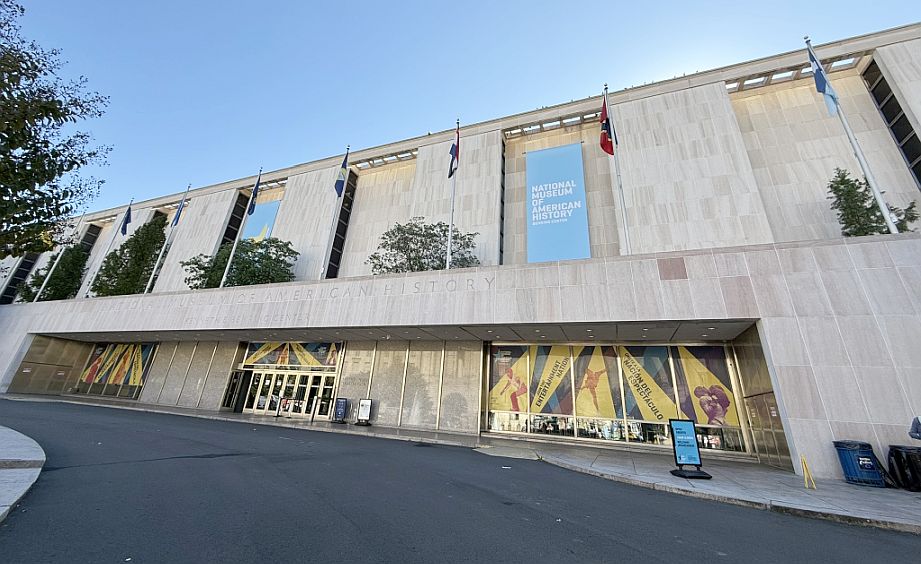
We are now at one of the most beloved museums on the National Mall, the National Museum of American History, a place devoted not to art or science alone, but to the story of everyday America: invention, culture, politics, transportation, and national identity. Unlike many classical Smithsonian buildings nearby, this museum feels distinctly mid-20th century modern.

Opened in 1964 (originally called the Museum of History and Technology), designed in a modernist style to symbolize progress and innovation, Long rectangular form clad in Tennessee marble with Clean lines rather than columns or domes.
The building sits slightly elevated above the Mall, creating a quiet plaza before you enter, almost like a pause before stepping into America’s collective memory.
When you walk inside, the museum opens into a large central atrium filled with iconic objects meant to immediately signal American innovation and mobility.
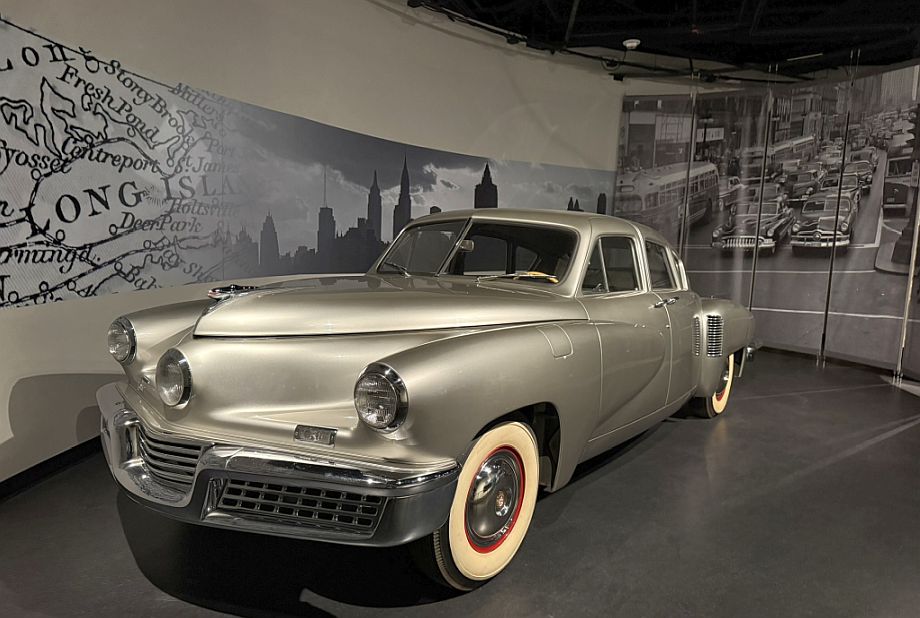
The first thing we saw was the Tucker 48, often called the “Tucker Torpedo.”
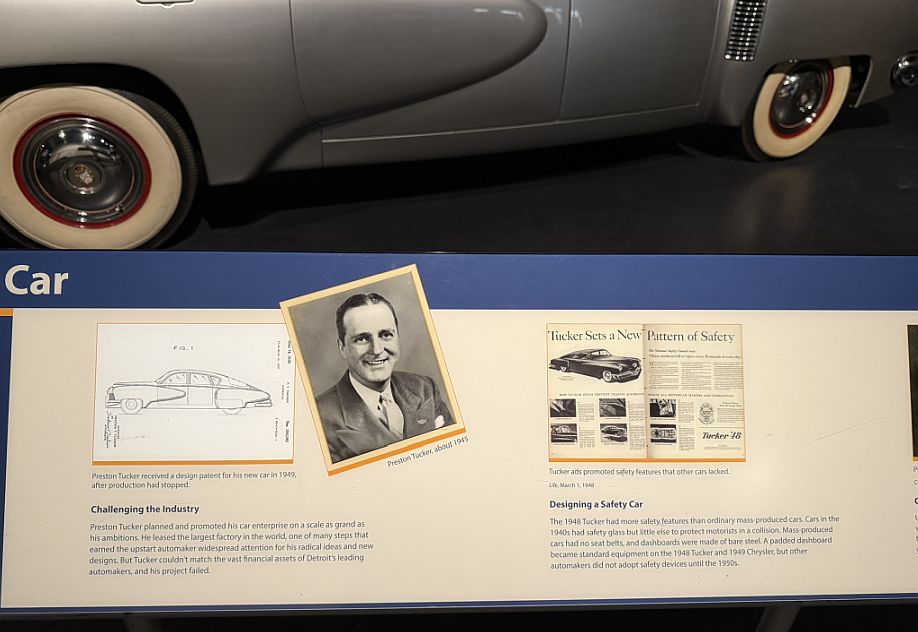
Preston Tucker was an ambitious automobile designer who tried to revolutionize the car industry after World War II. He promised a car that was radically ahead of its time.
he Tucker 48 included features decades ahead of competitors: Rear-mounted engine, Pop-out windshield for crash safety, Padded dashboard, Seat belts (rare at the time), A third center headlight that turned with the steering wheel. It represented postwar optimism, the belief that technology could build a better future.
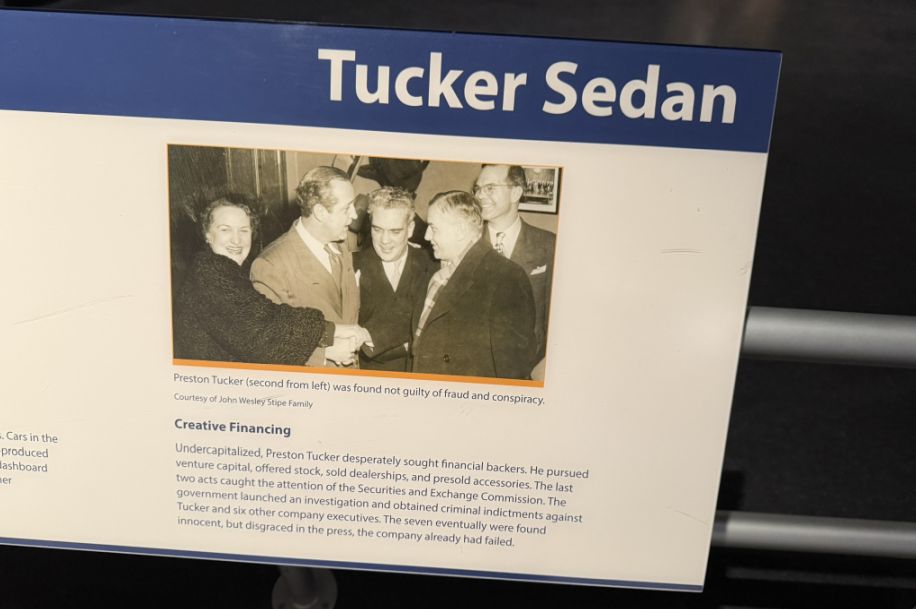
Tucker’s company collapsed amid accusations that he defrauded investors. In 1949, Tucker and his executives were charged with fraud and conspiracy. After a long, highly publicized trial: He was found NOT guilty on all counts. However, even though he won legally, the company was financially destroyed during the investigation. Only 51 cars were ever completed.
The story became a powerful American narrative: innovation vs. big industry, entrepreneurship vs. regulation, dream vs. reality. Many visitors see the Tucker as a symbol of the independent American inventor.
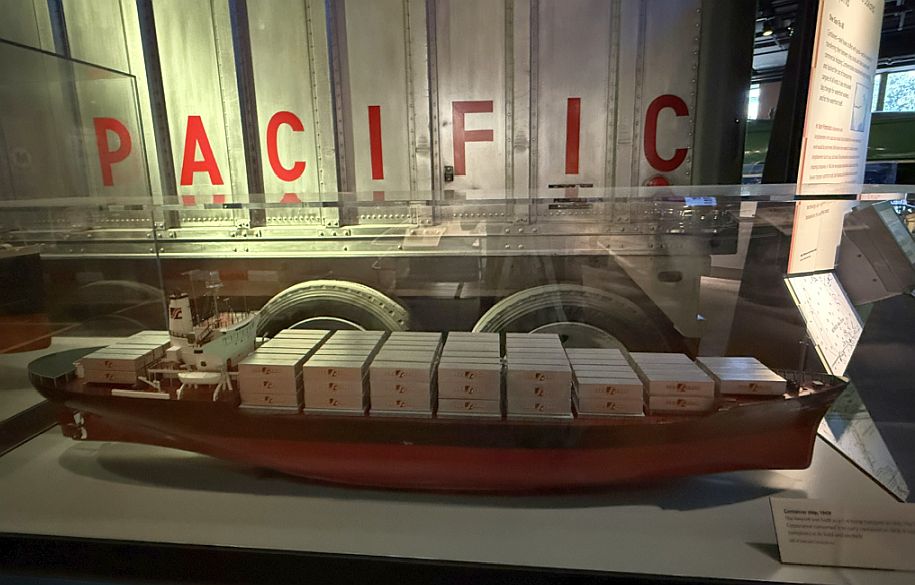
We are now in the war and global logistics gallery. The section labeled Pacific belongs to exhibitions about World War II in the Pacific Theater. The small boat loaded with wooden crates represents the massive, and often overlooked logistics operation that supported U.S. forces across the Pacific Ocean. Unlike Europe, the Pacific War was fought across: thousands of islands, vast ocean distances, remote jungles with little infrastructure, and everything had to arrive by ship. Those crates symbolize supplies essential for survival and victory. The U.S. military essentially built floating supply chains, turning islands into stepping-stones toward Japan. In many ways, WWII became a war won through industrial and organizational power as much as combat.
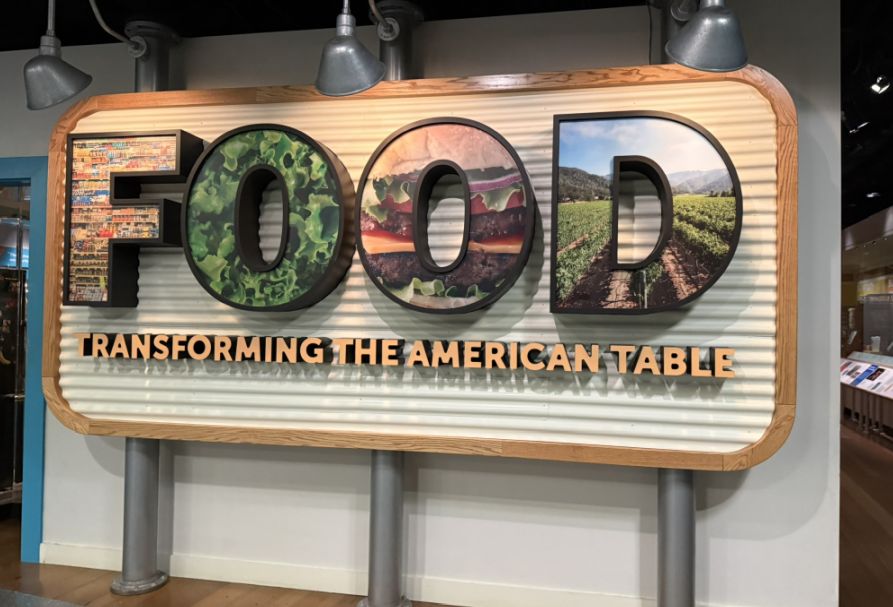
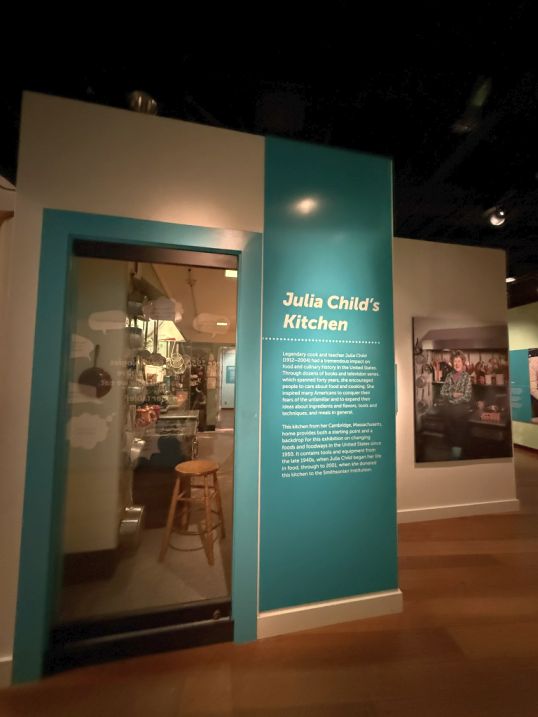
We are now moving into the “Food: Transforming the American Table”, one of the museum’s most loved exhibitions that is a cultural shift from war to everyday life. It shows how American cooking moved from regional traditions to a more international cuisine.
 |
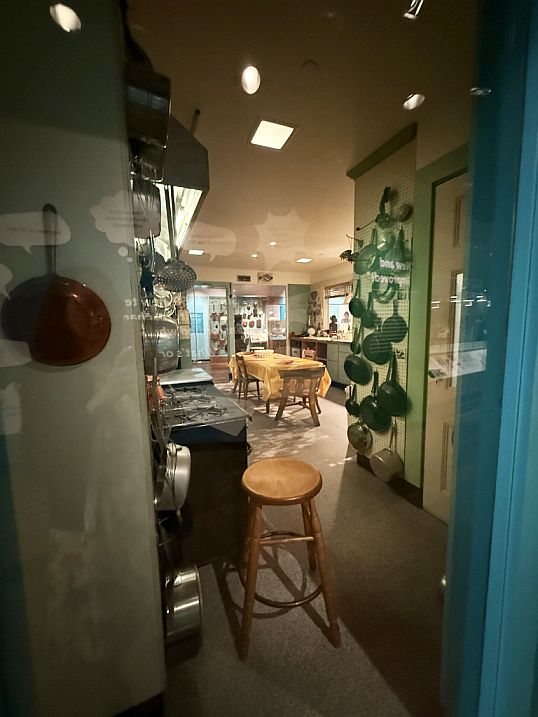 |
At the heart of the exhibit is the actual kitchen of Julia Child.
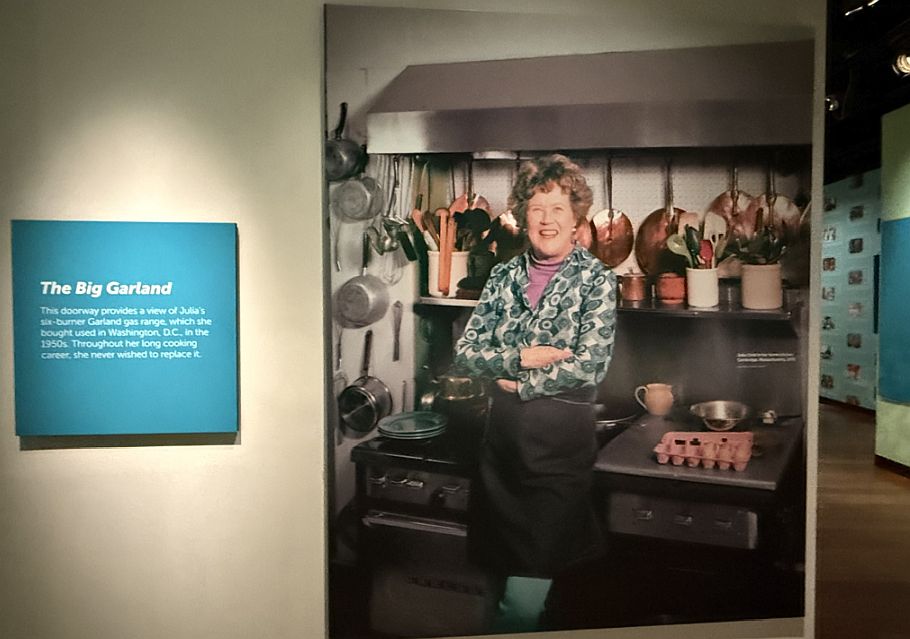
In the early 1960s, most Americans associated “foreign food” with something intimidating or elite. Julia Child changed that through: her TV show "The French Chef", humor and warmth, teaching technique rather than strict recipes, She made French cooking feel accessible and joyful.
Her famous message: Anyone can cook — mistakes included.
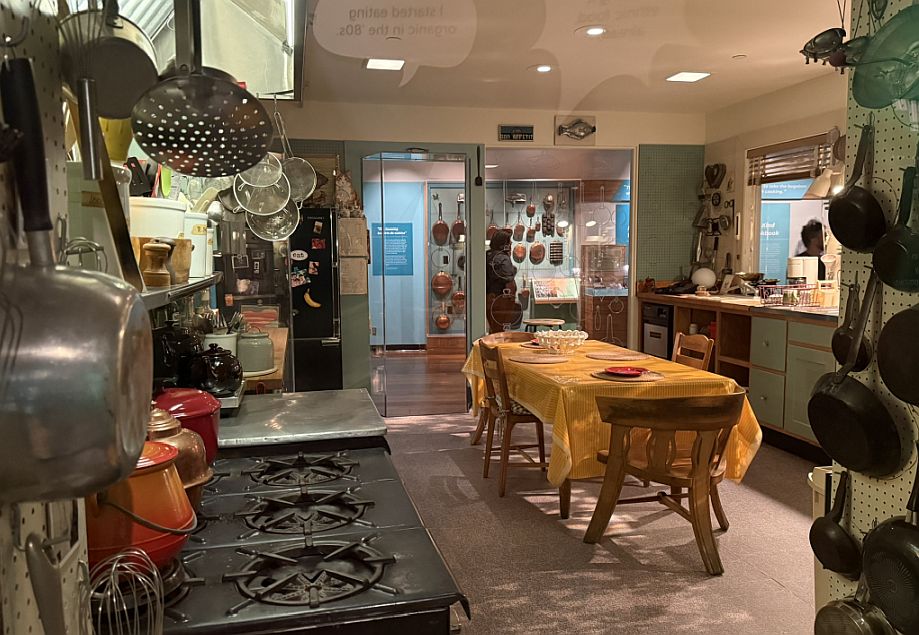
Yes, this is her real kitchen, moved piece by piece from her home in Cambridge, Massachusetts. It is a truly iconic exhibit! It's not just a kitchen; it's a meticulously preserved workspace that offers a fascinating glimpse into her culinary world. The large, professional-grade gas range is central to the kitchen. Julia was known for her love of cooking with gas, which offers precise temperature control.
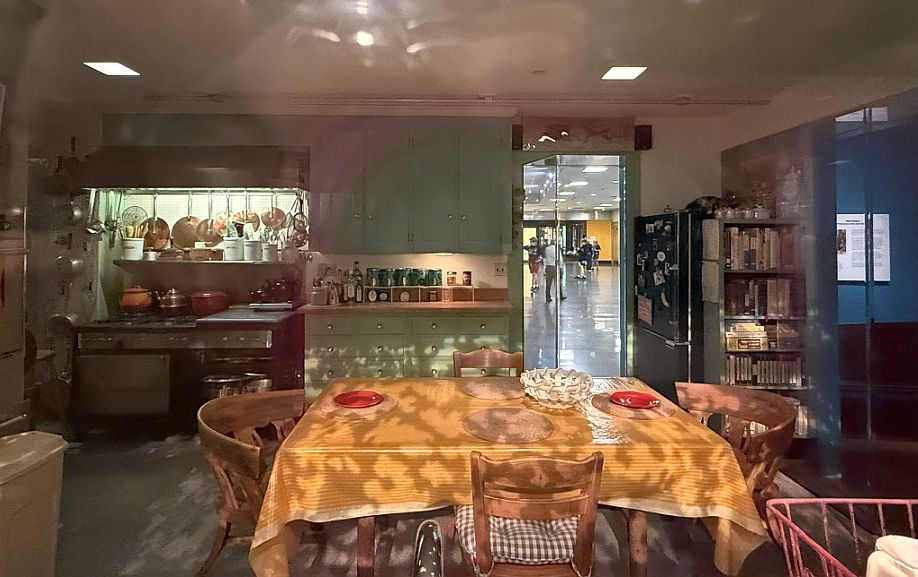
On the left, above the stove you can see a significant collection of gleaming copper pots and pans. Copper is an excellent heat conductor, favored by professional chefs for its even heating and responsiveness to temperature changes. These weren't just decorative; they were her workhorses. While it's a professional kitchen, it also has personal touches that reflect her personality, like a collection of colorful oven mitts or a charming trinket or two.
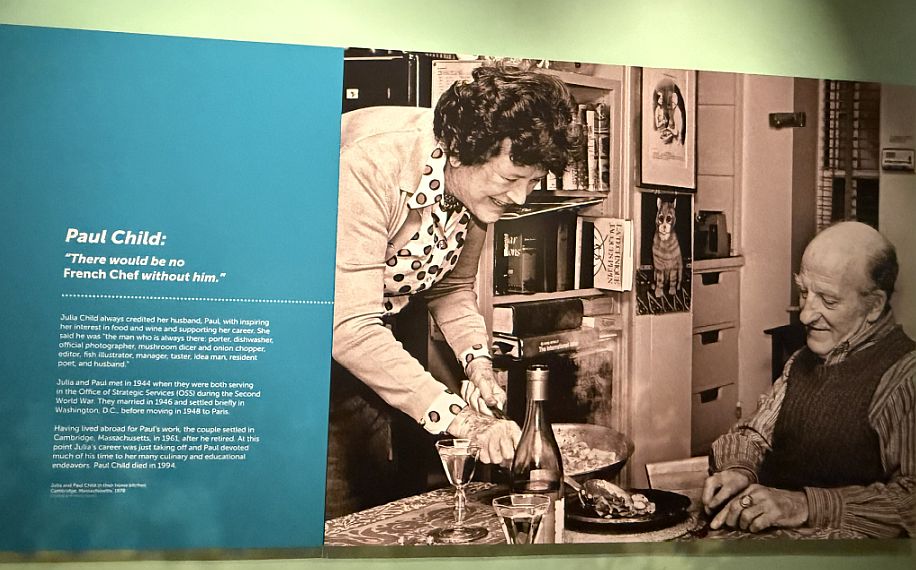
Paul Child “There would be no French Chef without him”. The panel highlights Paul Child, Julia’s husband, and a crucial but often overlooked figure. Paul Child worked as a diplomat in France after WWII, and was important because he introduced Julia to French cuisine, encouraged her culinary training at Le Cordon Bleu, photographed her food and helped shape the visual style of her shows, supported her career at a time when celebrity chefs barely existed.

The "Judgment of Paris" is one of the most famous and influential events in the history of wine. It refers to a blind tasting competition held in Paris on May 24, 1976, organized by Steven Spurrier, a British wine merchant and educator. The tasting pitted top French wines (Bordeaux reds and Burgundy whites) against emerging Californian wines.
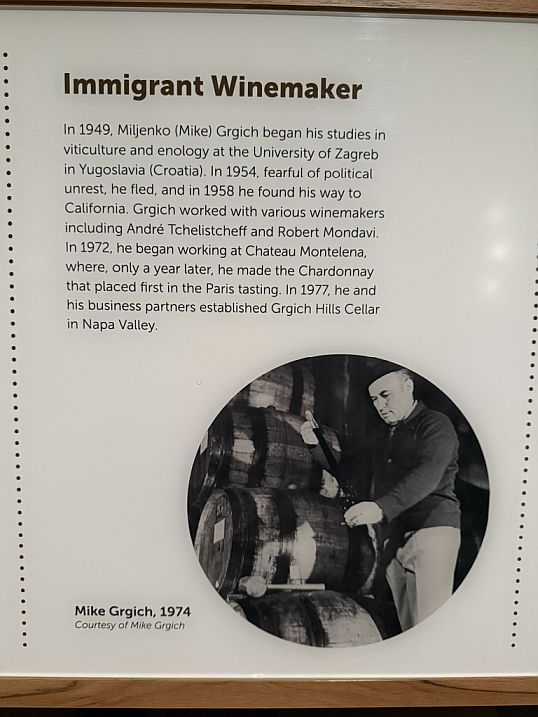
The results were astounding and sent shockwaves through the wine world: California wines won both the red and white wine categories. The winning red wine was a 1973 Stag's Leap Wine Cellars Cabernet Sauvignon, and the winning white wine as a 1973 Chateau Montelena Chardonnay, crafted by Miljenko "Mike" Grgich.
The Judgment of Paris shattered the long-held belief that only French wines could be considered world-class. It put California, and indeed American wine in general, firmly on the global wine map, demonstrating its quality and potential. It forever changed perceptions and opened doors for winemakers outside of traditional European regions. The panel "American Wine Comes of Age," perfectly encapsulates this watershed moment.
 |
 |
Mike Grgich was a Croatian immigrant who had arrived in the U.S. with just a few dollars, fleeing communism. He dedicated his life to winemaking in Napa Valley, believing wholeheartedly in the potential of Californian terroir. His victory in Paris was not just a personal triumph but a huge validation for American winemaking.
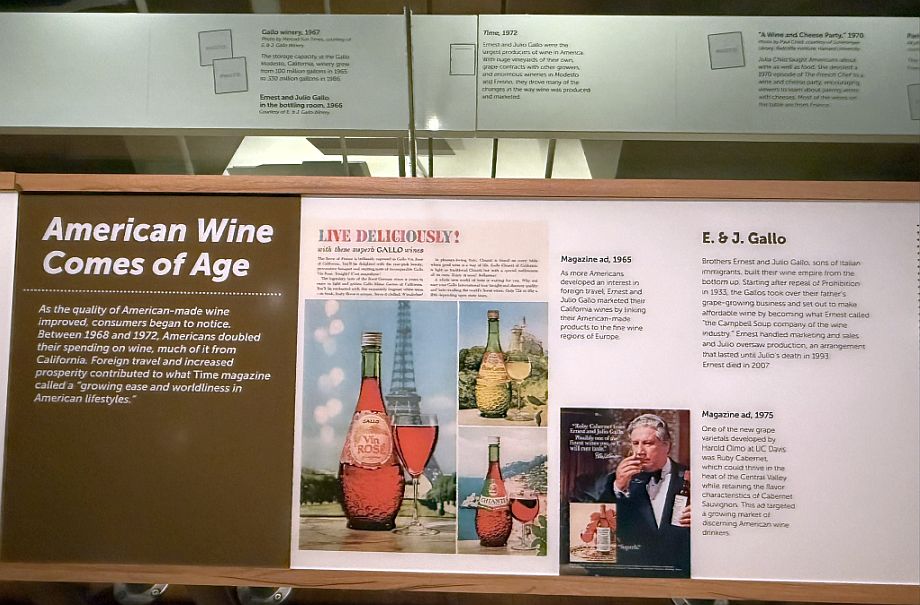
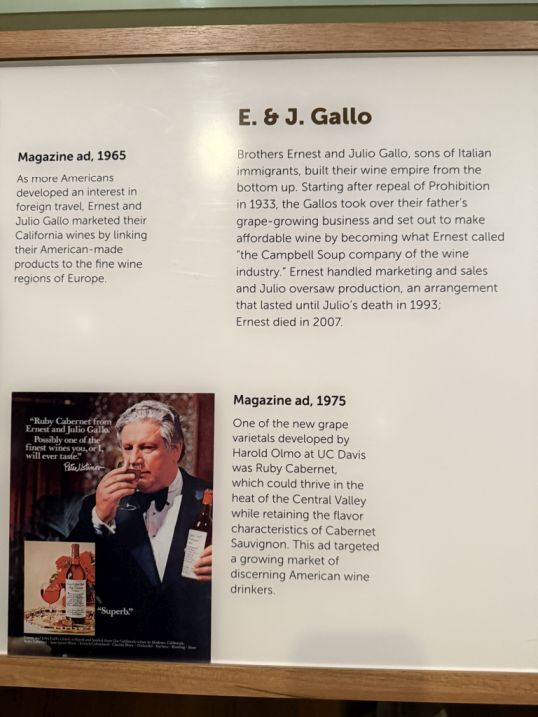
Seeing a picture of Peter Ustinov doing a commercial for Gallo is another interesting historical tidbit. E & J Gallo Winery is a colossal name in American wine, known for its pioneering role in making wine accessible to a broader American audience. During the latter half of the 20th century, as American wine began to gain more recognition (partially thanks to events like the Judgment of Paris), wineries like Gallo invested heavily in marketing and advertising. Employing respected and recognizable personalities like Sir Peter Ustinov (a celebrated British actor, director, and screenwriter known for his wit and charm) was a strategy to lend an air of sophistication and credibility to their products.
 |
 |
This would have been particularly significant in an era when wine consumption in America was still growing, and there might have been a perception among some that American wines, especially those produced on a larger scale by companies like Gallo, were not as refined as their European counterparts. Ustinov's endorsement would have helped elevate the brand's image and make wine more appealing to a wider demographic.
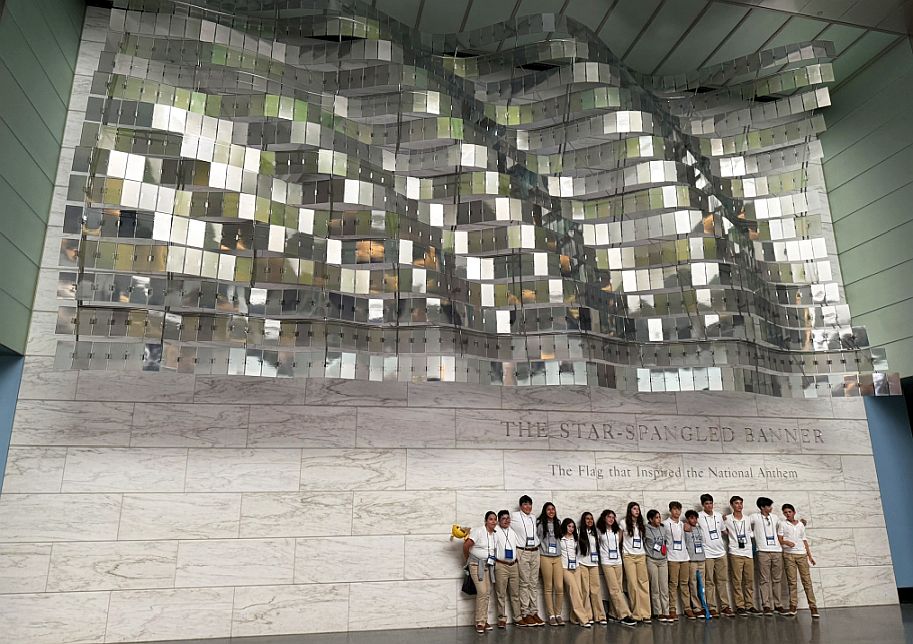
This artwork serves as a powerful artistic interpretation of the Star-Spangled Banner. By creating a sculptural representation rather than displaying the original flag (which is kept in a very dimly lit, climate-controlled environment to preserve it), the museum can offer visitors a dramatic and visually impactful experience that still conveys the flag's grandeur and its symbolic meaning.
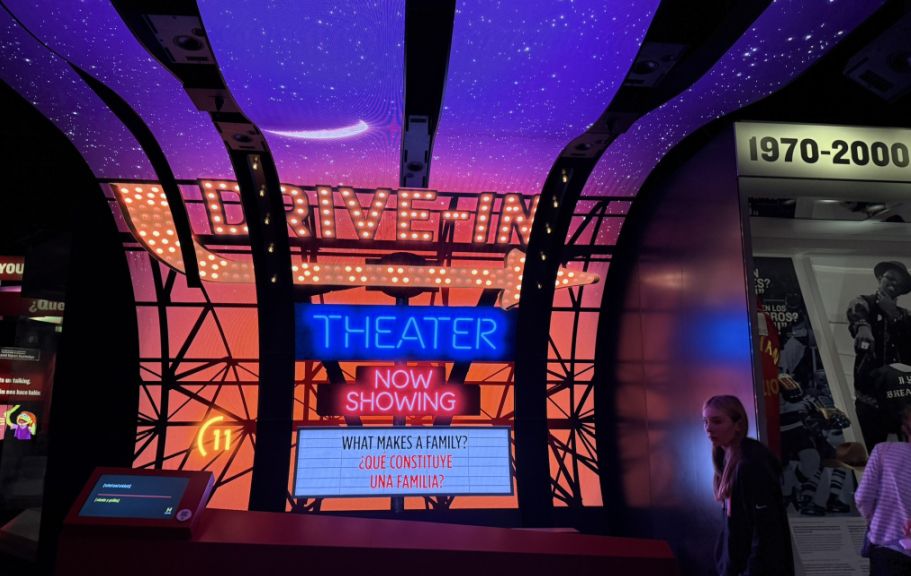
Moving from historical artifacts to the entertainment section of the American History Museum usually means delving into the vibrant world of American popular culture.
Drive-In: A classic symbol of post-WWII American culture, particularly from the 1950s onward. Drive-in theaters offered a unique, often family-oriented or romantic, way to watch movies from the comfort of your car. They represent a sense of nostalgia, car culture, and a relaxed, informal approach to cinema that shaped many childhoods and dating experiences.
Theater: This refers to the traditional movie theater experience, from grand picture palaces of the golden age of Hollywood to modern multiplexes. It evokes the shared communal experience of a darkened room, a large screen, and dedicated viewing. The "theater" also signifies the art and business of filmmaking itself.
 |
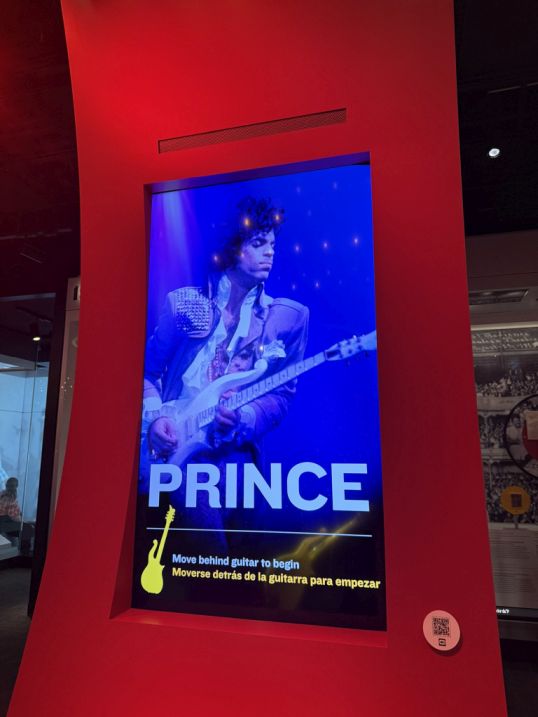 |
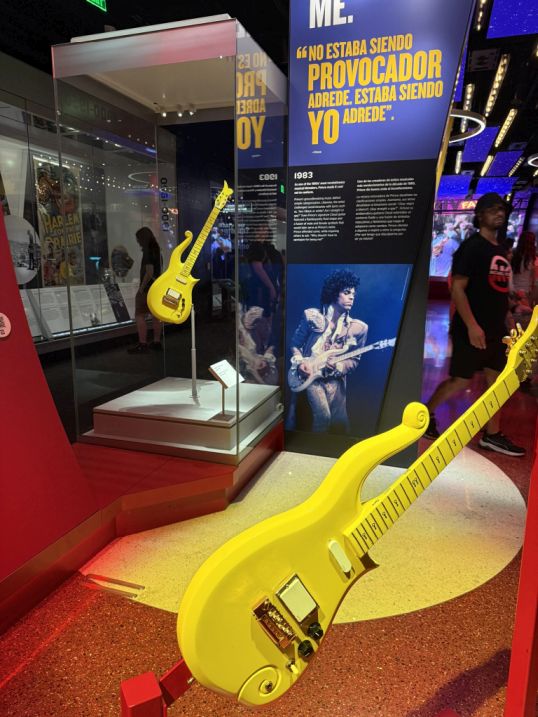
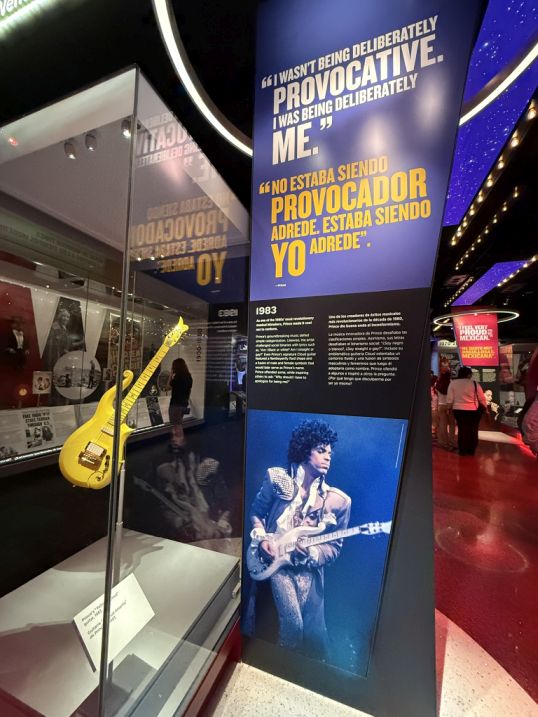
This is where the exhibit zooms in on the individual impact of a cultural icon. Prince (Prince Rogers Nelson) was one of the most influential and innovative musical artists of all time. His presence in such an exhibit, especially with his iconic yellow guitar, highlights several aspects: Prince was a prolific songwriter, multi-instrumentalist, producer, and performer who blended genres like funk, R&B, soul, pop, rock, and new wave. His music pushed boundaries, both musically and lyrically. He was renowned for his electrifying stage presence, flamboyant fashion, and unique visual aesthetic. The yellow "Cloud" guitar is instantly recognizable and became synonymous with his image. It wasn't just an instrument; it was a prop that contributed to his mystique and theatricality.
 |
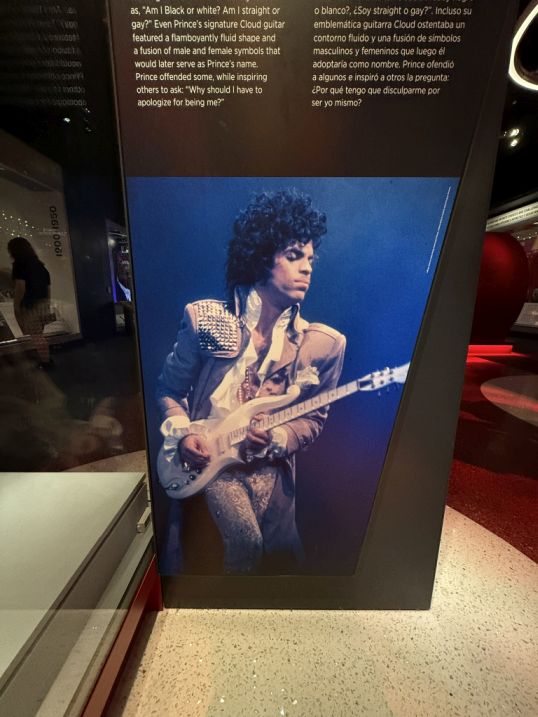 |
Prince broke down racial and musical barriers, challenged societal norms, and maintained fiercely independent control over his art. He influenced countless artists across generations. His career spanned decades, producing global hits and critically acclaimed albums like Purple Rain, Sign o' the Times, and 1999.
Seeing "Prince and a yellow guitar" in the entertainment section is a nod to his legendary status and his profound contribution to American music and pop culture, showcasing how individual artistry can become a central part of the nation's historical tapestry. It probably signifies a transition from the broader context of film exhibition to the specific, powerful impact of musical artists on American identity.
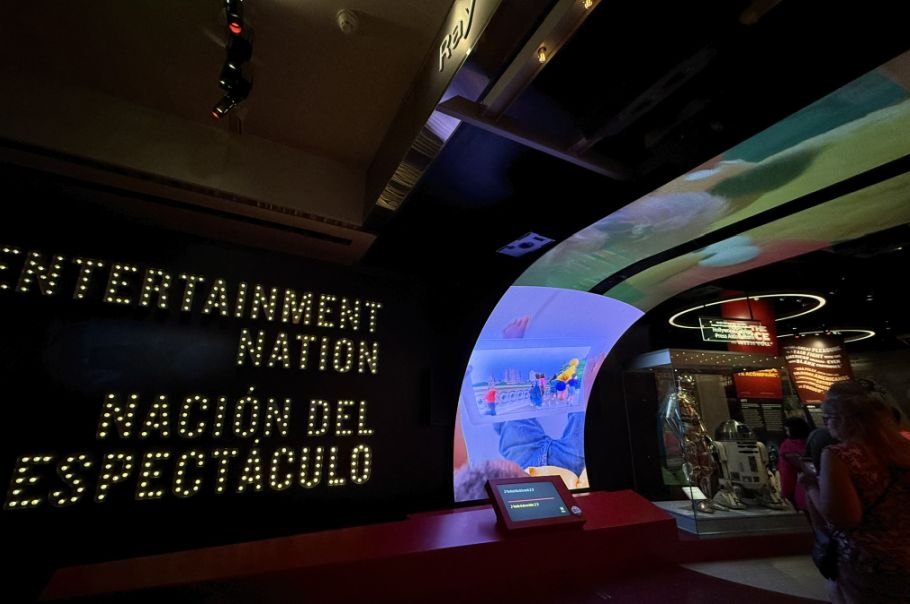
Entertainment gallery.

We are now moving to the second floor of the museum

We are now in the section of the museum dedicated to American political history, specifically the presidency! This is a large panel with all the United States Presidents which is a very common and impactful exhibit in museums focusing on American history.
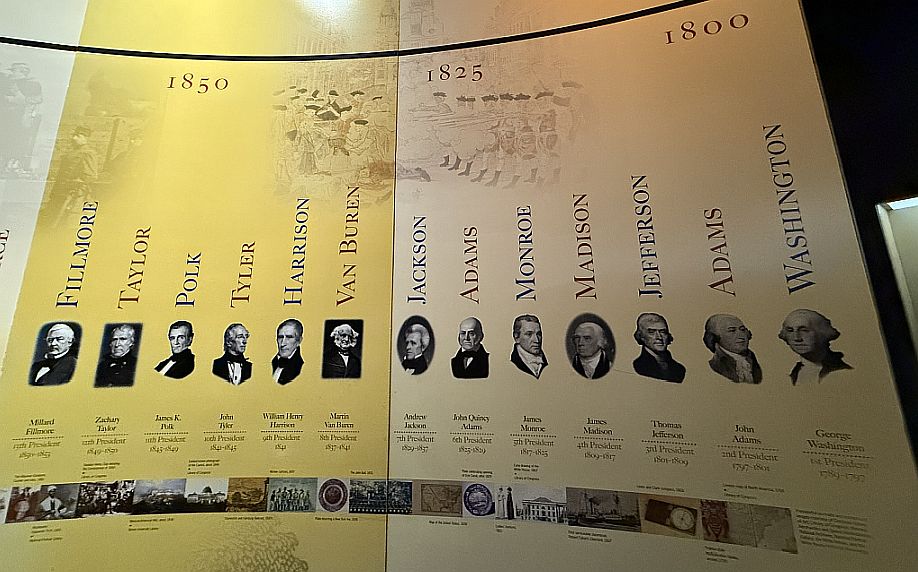
The primary purpose is often to present a chronological listing or display of every person who has held the office of President of the United States, from George Washington to the current commander-in-chief. Each president is usually represented by a portrait, photograph, or bust, along with their name and dates in office. This creates a powerful visual narrative of the continuum of American leadership.
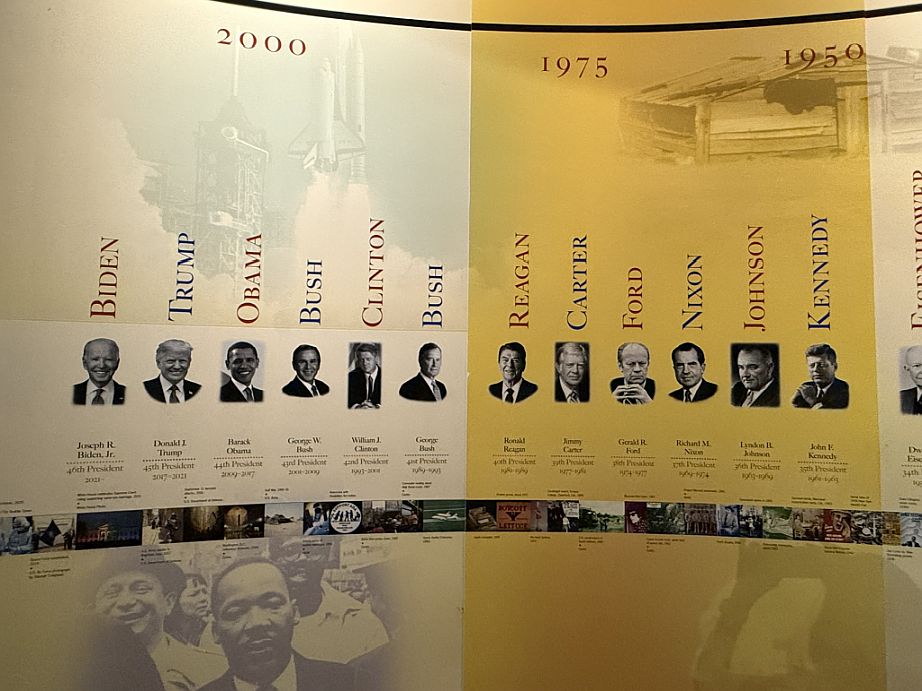
Collectively, the biographies and policies of these individuals tell the story of the nation's development, its challenges, expansions, conflicts, triumphs, and evolving identity. From the founding fathers establishing the republic to leaders navigating civil war, industrialization, world wars, civil rights movements, and the digital age, the presidency mirrors the American journey.
 |
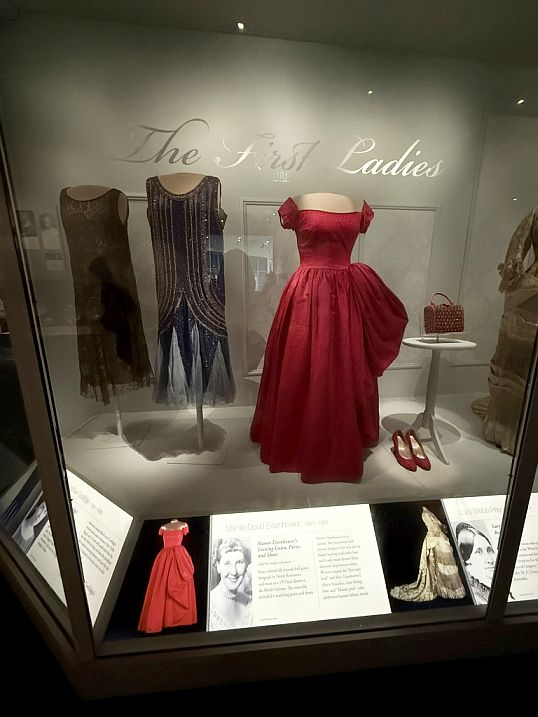 |
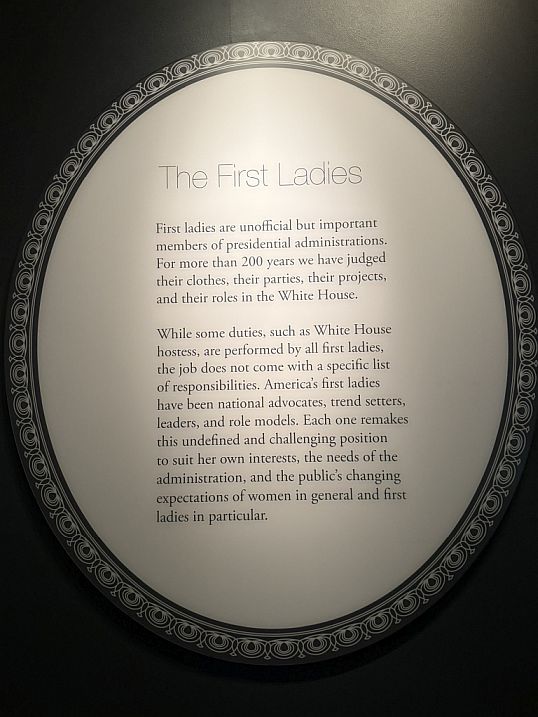
We are now in one of the most popular and culturally revealing galleries, the First Ladies exhibition, officially called The First Ladies Collection.

This gallery uses fashion to tell political and social history, showing how First Ladies shaped national identity through style, symbolism, and public roles. The inaugural gowns you’re seeing are not just clothing, they reflect the mood, values, and expectations of each era.
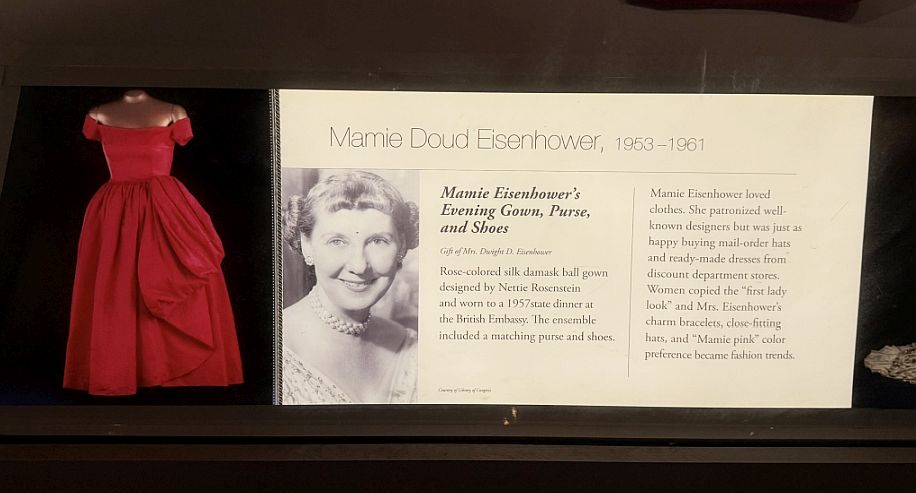
The Red Dress wore by Mamie Eisenhower. Mamie Eisenhower’s bright red inaugural gown (1953/1957 era style) reflects post-World War II optimism. The dress represent a return to glamour after wartime austerity, feminine elegance and prosperity of the 1950s, The First Lady as a warm, approachable hostess.
Mamie helped popularize the idea of the White House as a welcoming home, not just a political center. Her fashion was widely copied by American women.

Jackie Kennedy’s soft yellow inaugural gown (1961) marked a dramatic cultural shift.
 |
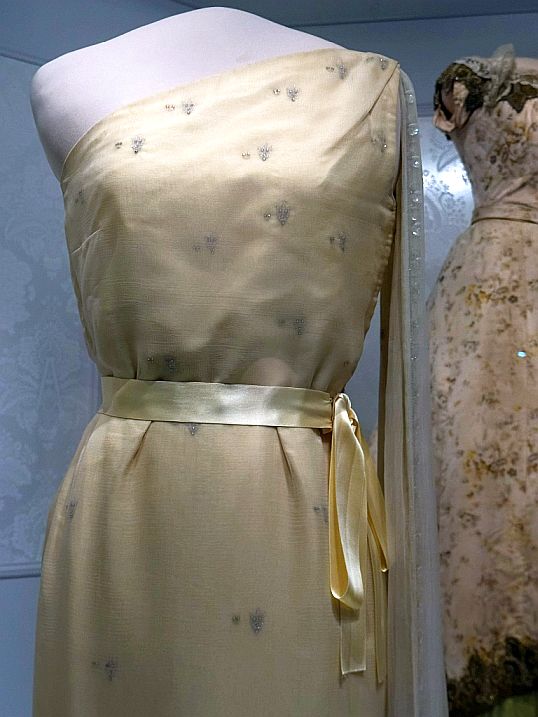 |
Designed with European-inspired sophistication, signaled youth, modernity, and cultural refinement, helped rebrand America internationally during the Cold War.
She consciously used fashion as diplomacy, presenting the United States as cultured, artistic, and globally sophisticated. Many historians see her style as redefining what a First Lady could be: a cultural ambassador.
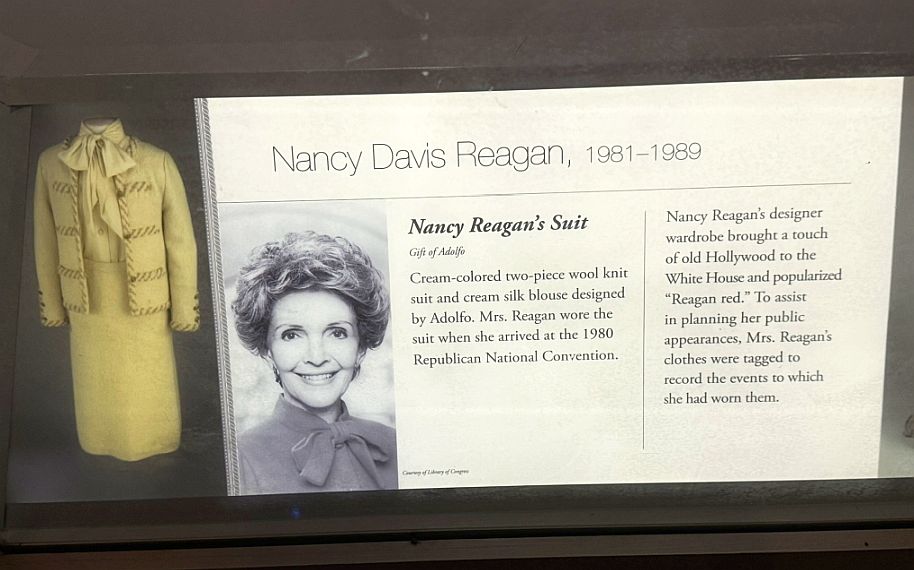
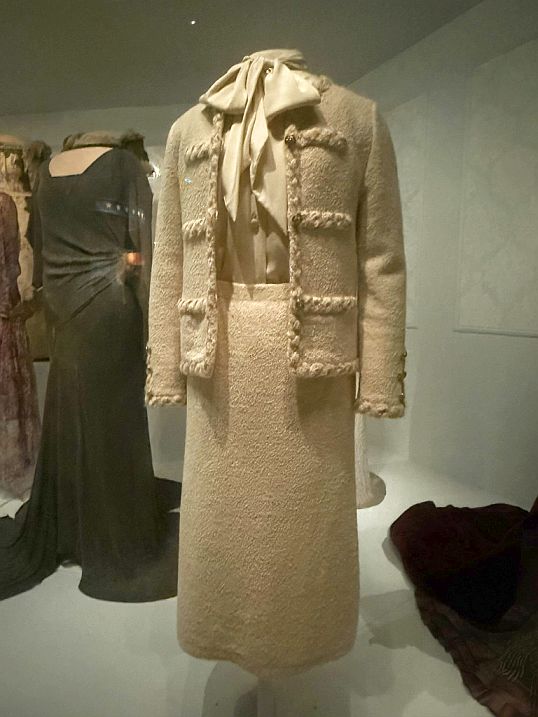
Nancy Reagan’s elegant cream ensemble reflects the tone of the 1980s.
 |
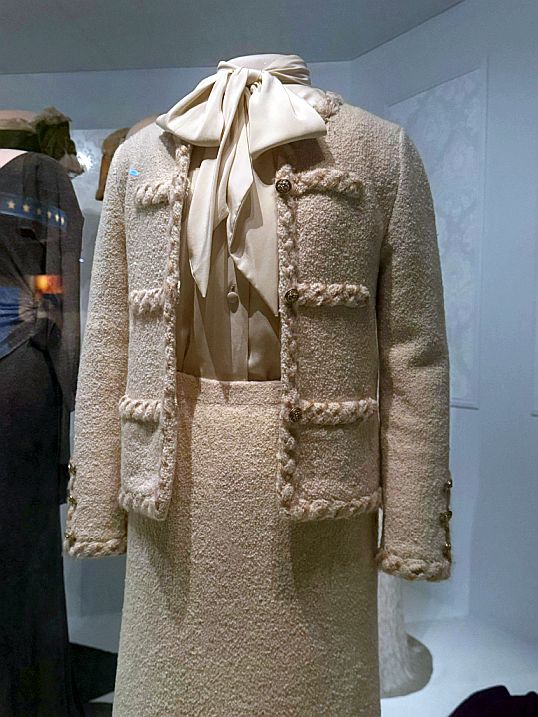 |
Nancy represents Hollywood polish (reflecting the Reagans’ California background), Formal elegance during a period of renewed American confidence, careful image management in the television age.
She was deeply involved in shaping presidential image and ceremony, understanding media presentation better than most predecessors.
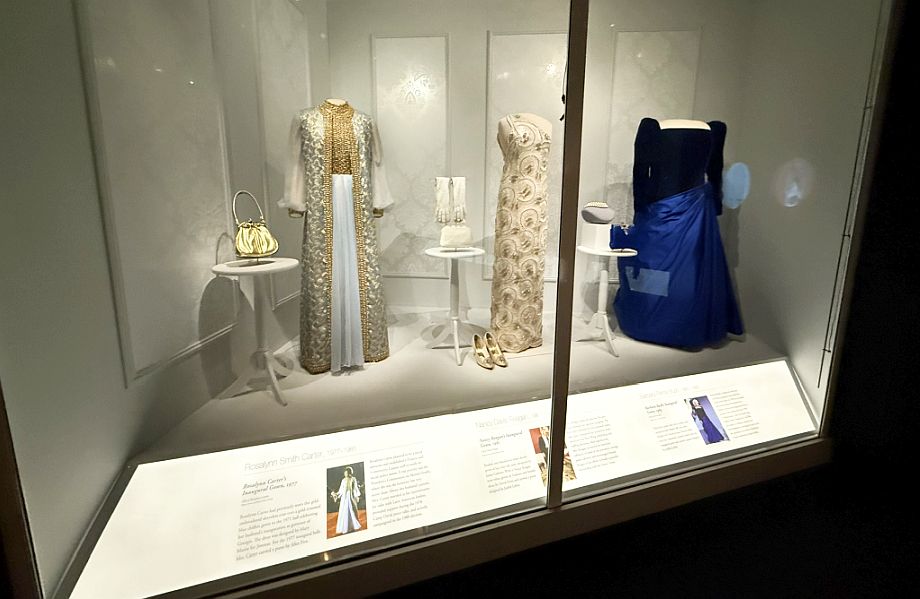
The Smithsonian began collecting First Ladies’ gowns in 1912, making it one of the museum’s oldest collections. Over time, visitors realized these dresses reveal: changing roles of women in politics, evolving media culture, economic moods of the nation, ideals of femininity across generations.
Visitors are essentially walking through American social history told through fashion.
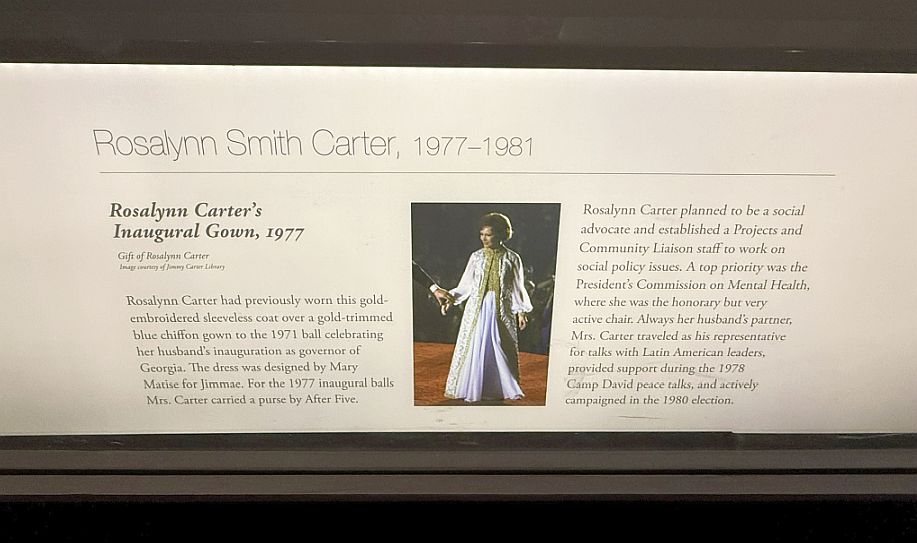
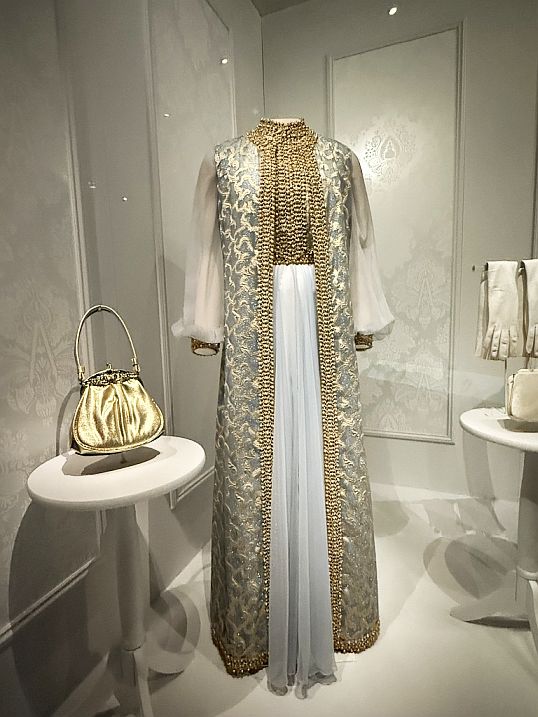
Rosalynn Carter’s gown is historically significant for a different reason.
 |
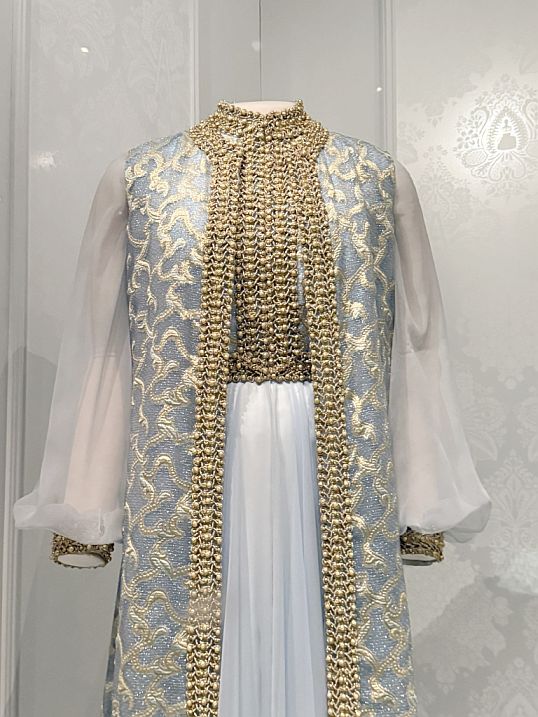 |
She re-wore a dress she had previously owned instead of commissioning a new one. Reflected the Carter administration’s emphasis on modesty and relatability after the Watergate era. Signaled frugality and connection to ordinary Americans. This choice challenged expectations that First Ladies must display luxury.
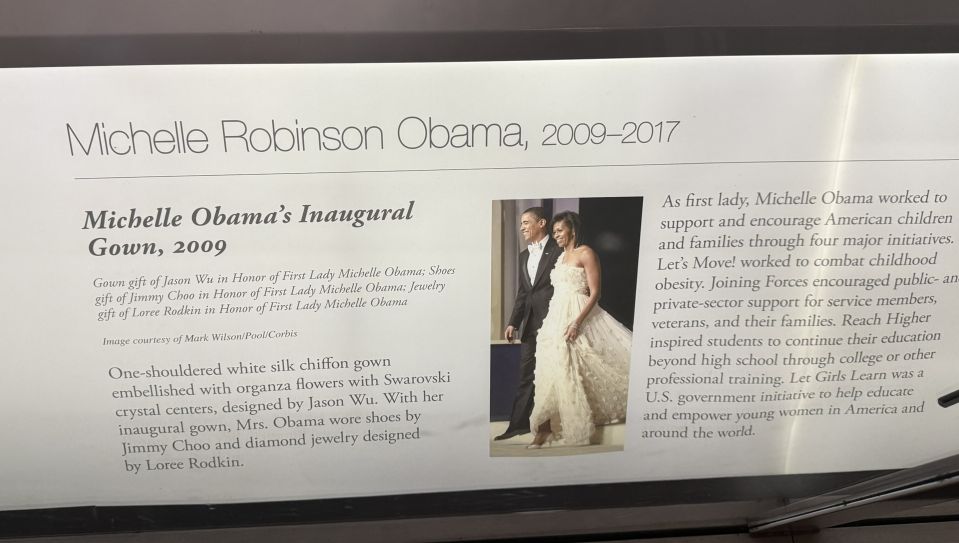
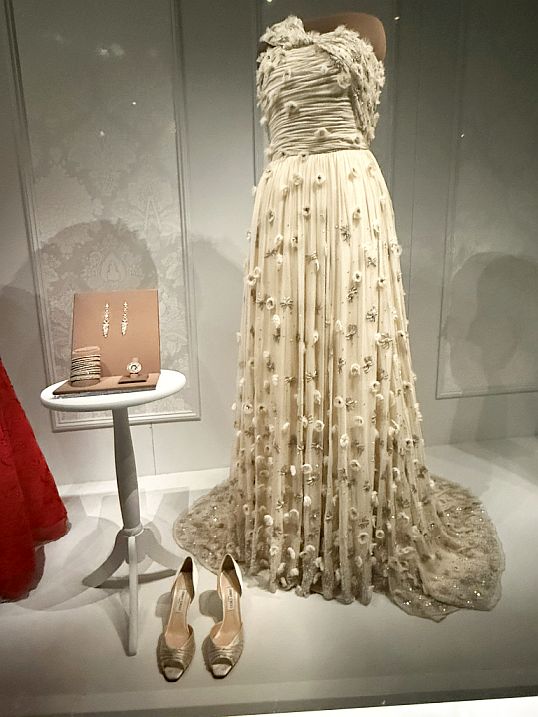
Michelle Obama 2009 Inaugural ball gown by Jason Wu, then a relatively unknown, young Taiwanese-Canadian American designer. Michelle Obama's choice immediately launched his career into the stratosphere. The dress was an ivory, one-shoulder, floor-length gown made of silk chiffon, intricately embellished with floral appliqués and Swarovski crystals. The gown struck a balance between classic grace and modern sophistication, reflecting her personal style and the image of the new administration.
 |
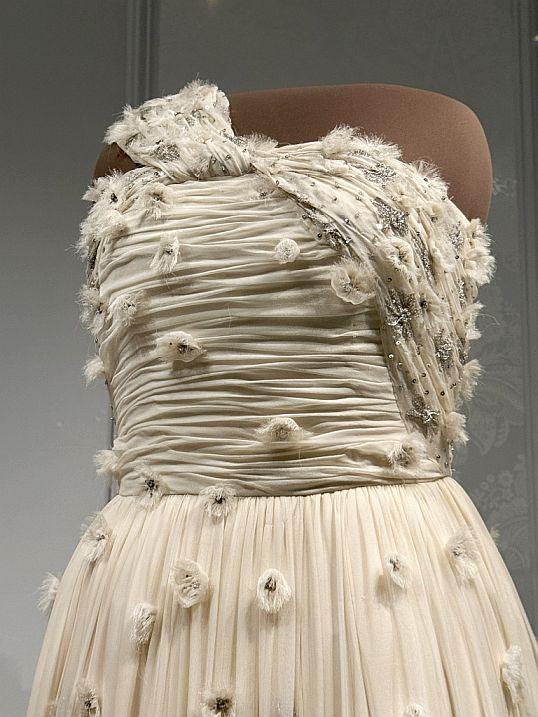 |
Her decision to wear a lesser-known designer was lauded as a statement of support for up-and-coming American talent, rather than established fashion houses. This was a deliberate choice to highlight diversity and new voices in American fashion. As the first African American First Lady, her choice of gown for such a momentous occasion instantly became iconic, symbolizing hope, change, and a new beginning.
 |
 |
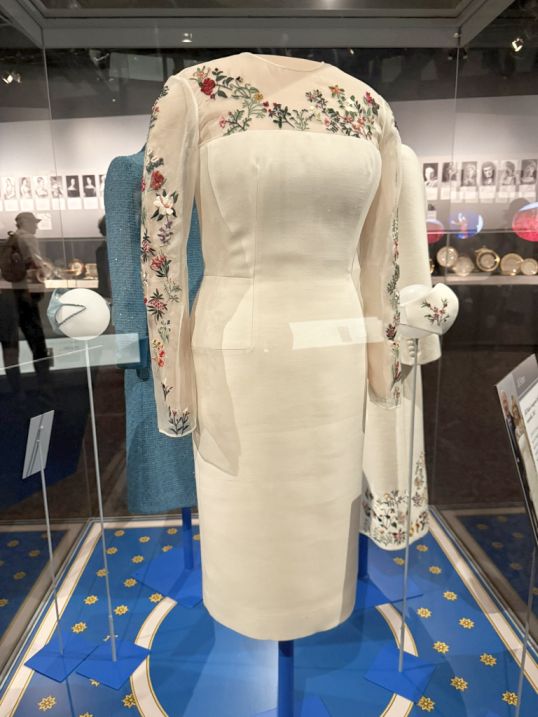
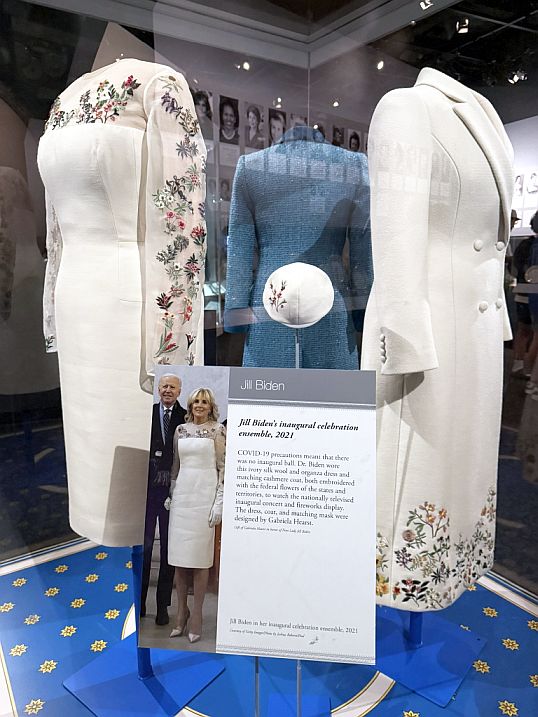
Jill Biden’s inaugural outfit (2021) carries unusually explicit symbolism.
 |
 |
Embroidered flowers representing every U.S. state and territory. Message of unity after a deeply divided political period. Designed by an American designer to emphasize national craftsmanship
The embroidery turns the garment into a literal map of the country, fashion used as a message of inclusion.
Quote from President Harry Truman
NEXT... Day 6- walking in D.C.