6 days in Washington DC- 10/18- 10/23/2024
Day 5- D.C. at night-10/22/2024
After dinner at Centrolina, we stepped back into the cool evening and walked toward the National Mall.
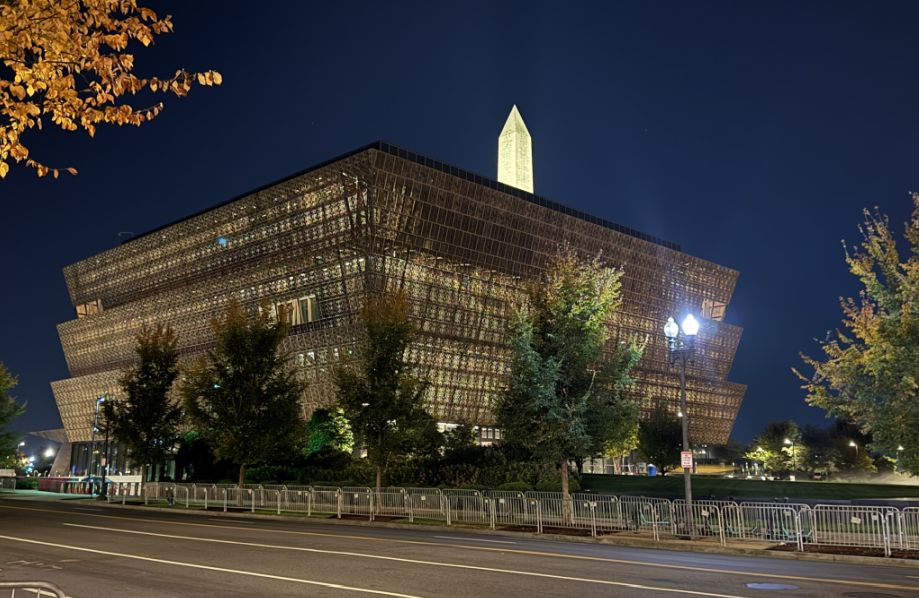
As we passed the African American museum, its bronze-colored metal façade glowed softly from within, the patterned lattice illuminated against the dark sky. Above it, the Washington Monument stood brilliantly lit, rising like a pale beacon over the city.
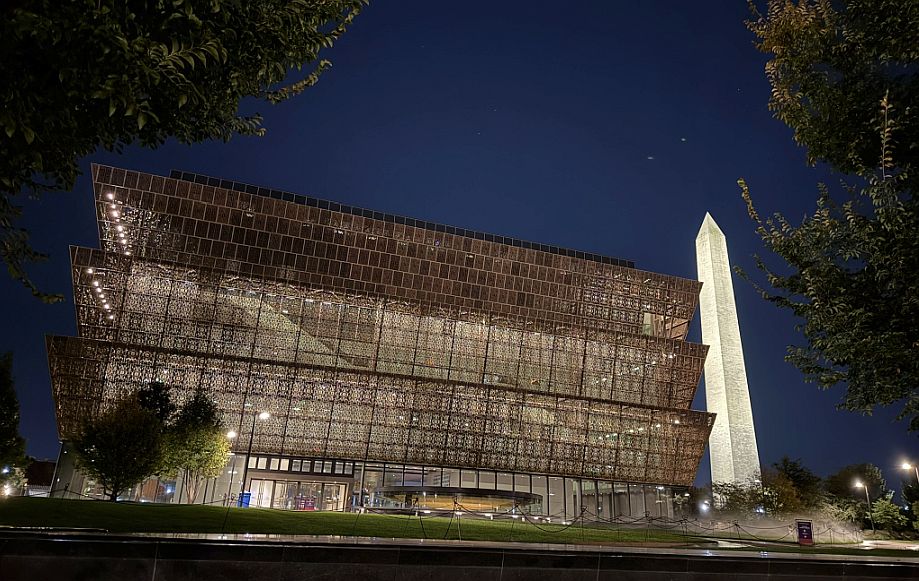
To the right, the Washington Monument rises tall and luminous, its pristine marble surface bathed in white light, a powerful contrast to the museum’s golden tones. The two landmarks, side by side, form a stunning visual dialogue between past and present: one a symbol of the nation's enduring ideals, the other a testament to the depth and resilience of its history. The surrounding trees and quiet pathways add a sense of calm, allowing the illuminated structures to stand in powerful, beautiful balance.
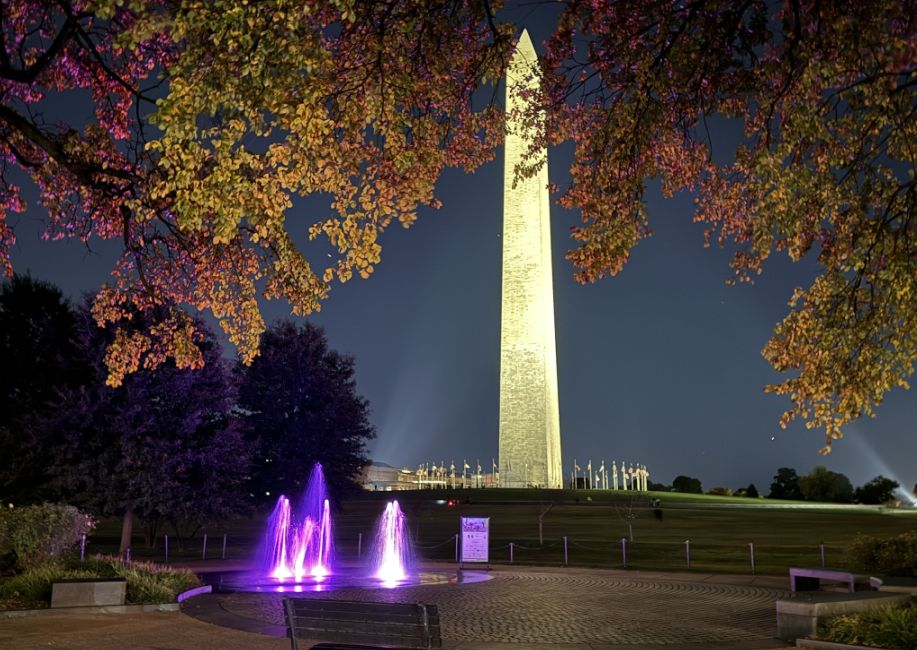
From Constitution Avenue NW, near the striking African American History and Culture Museum, I captured a breathtaking sight. A vibrant fountain commanded attention, its waters dancing with a mesmerizing, shifting palette of purples, blues, and greens. It perfectly framed the magnificent Washington Monument, which stood proudly in the background, fully illuminated against the dark sky. At its base, a solemn circle of flags added a touch of national pride.
 |
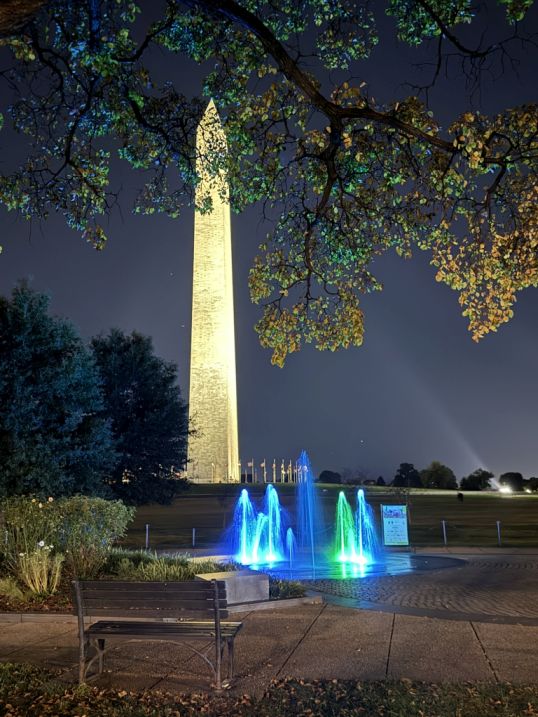 |
The entire scene was artfully framed by the rich, autumnal embrace of tree leaves, a picturesque border of red, gold, and deep green.
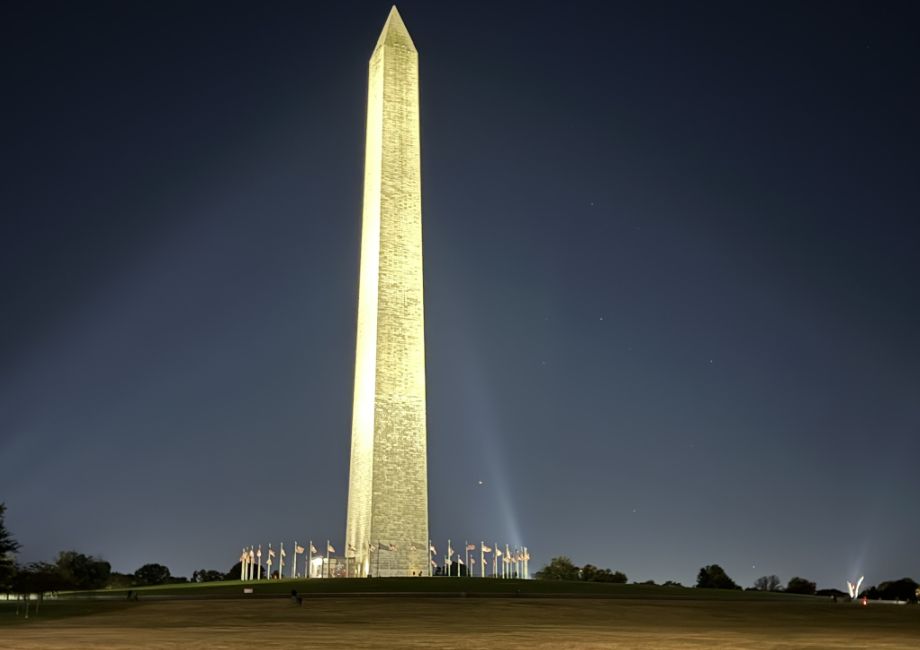
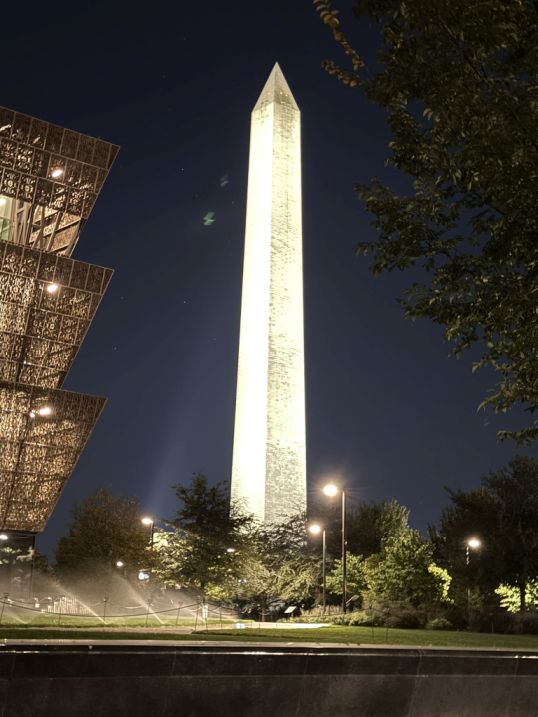
At night, the Washington Monument rises with an awe-inspiring presence, its towering form gleaming brilliantly against the dark sky. The lighting accentuates every facet of the marble, making it appear almost luminous, a shining white pillar that commands the entire landscape.
Below, the circle of flags encircling the base seems small in comparison, their flagpoles dwarfed by the monument’s immense height. The contrast is striking, the monument soaring skyward in radiant light while the flags ripple softly in the night breeze. The brightness of the illumination casts a gentle glow across the grounds, emphasizing just how tall and commanding this national icon truly is.
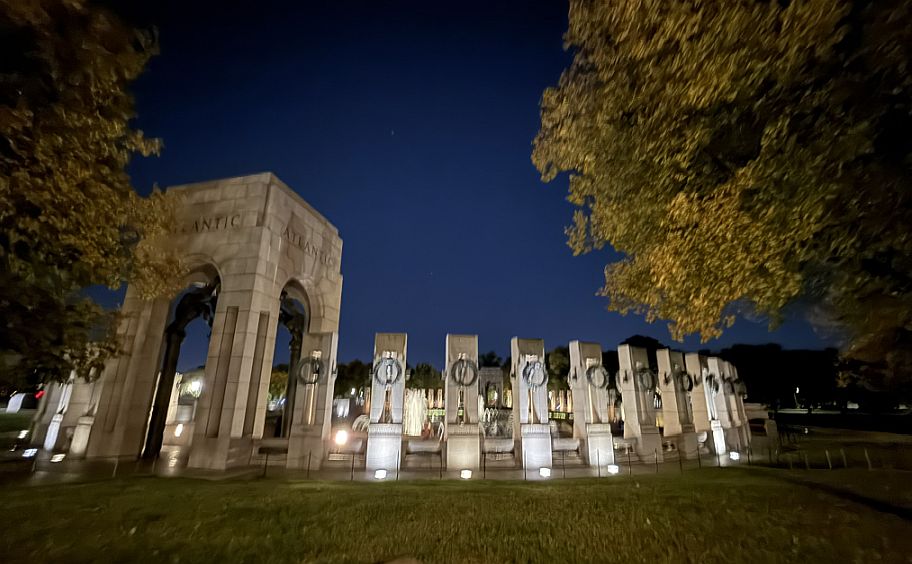
Continuing our walk, we entered the World War II Memorial from the Atlantic Theater Pavilion .
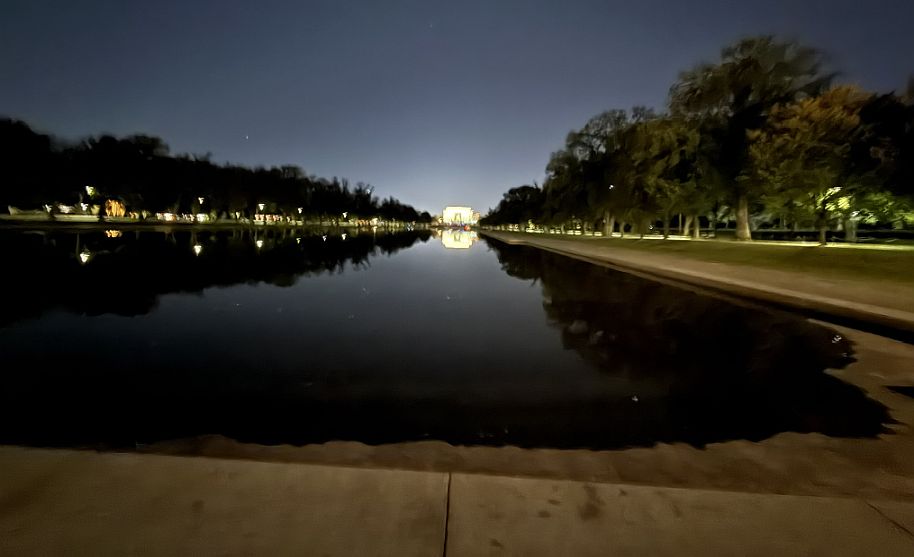
From the quiet Atlantic side opened onto a reflective pool with the Lincoln memorial at the end.
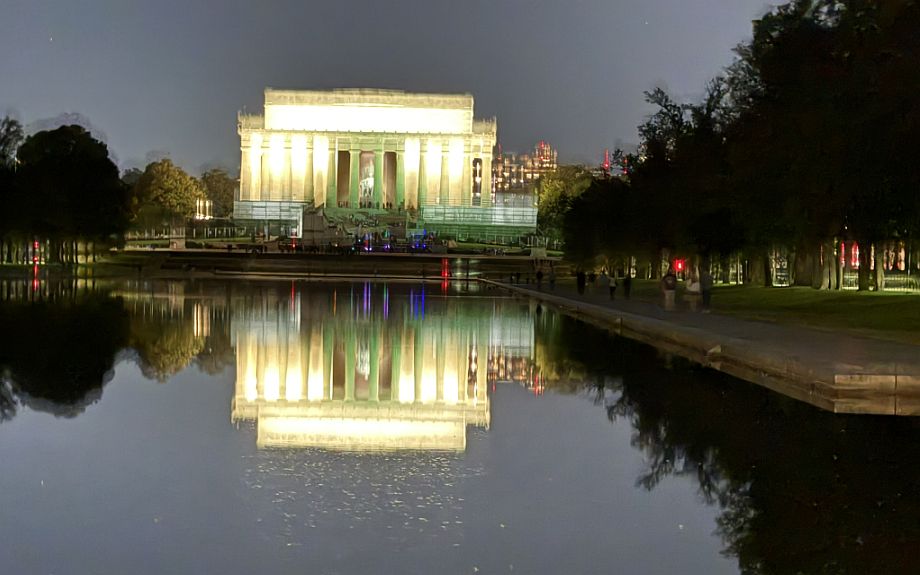
At the end of the reflective pool the Lincoln Memorial appeared serene and luminous, its white marble reflected across the water, creating a calm and almost timeless scene.
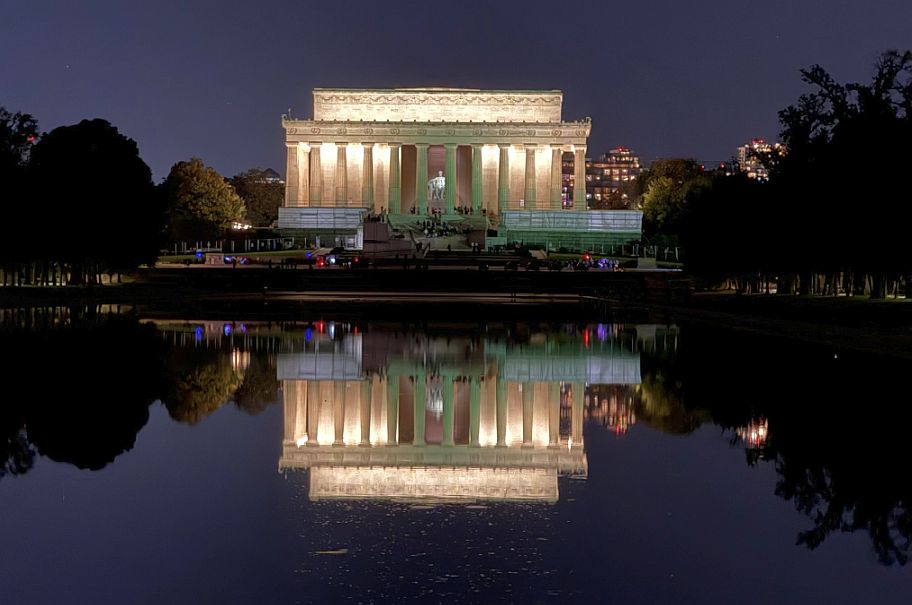
From the Atlantic side of the World War II Memorial, the Lincoln Memorial at night is a vision of serene majesty. The entire structure is brilliantly illuminated, bathing its classical columns and iconic statue in a warm, ethereal glow that cuts through the darkness. This radiant image is then perfectly mirrored on the still surface of the Reflecting Pool, creating a breathtaking double image that shimmers with every subtle ripple. The reflection, a near-perfect duplicate, extends the grandeur of the memorial, lending an almost dreamlike quality to the historical landmark as it seems to float on the water.
 |
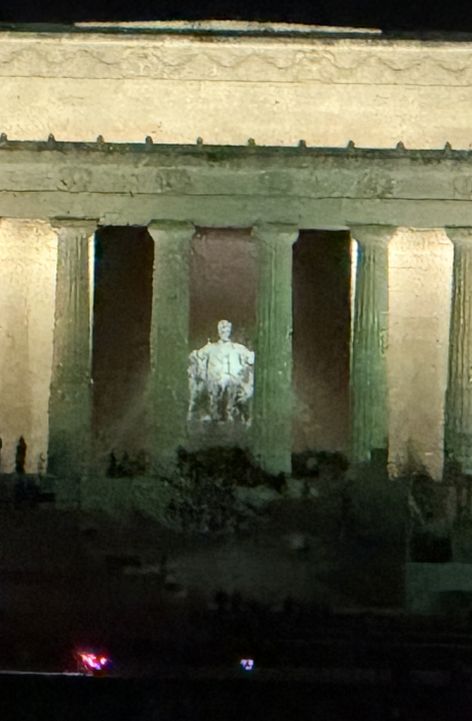 |
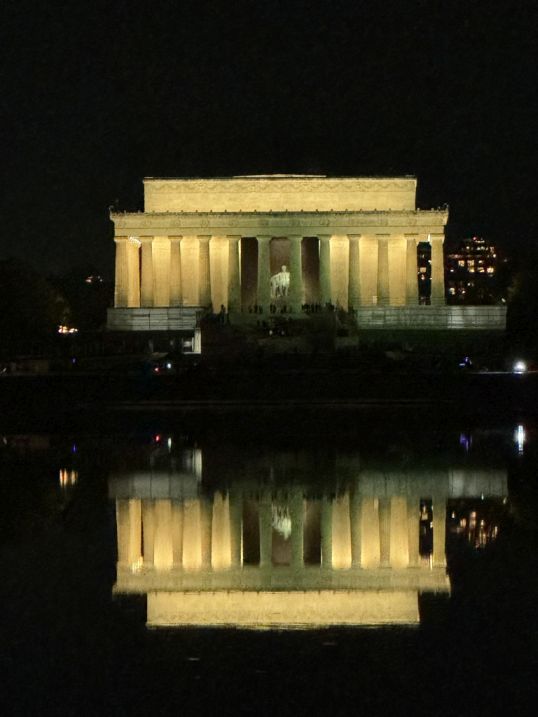
This one of the most iconic and quietly powerful views in Washington, D.C. , the moment when the Lincoln Memorial appears across the Reflecting Pool, glowing in symmetry with its own reflection. The soft illumination inside the memorial highlights the seated figure of Abraham Lincoln, making the sculpture visible even from far away. As I zoomed in, the marble statue seems to emerge from the darkness, calm, watchful, and monumental.
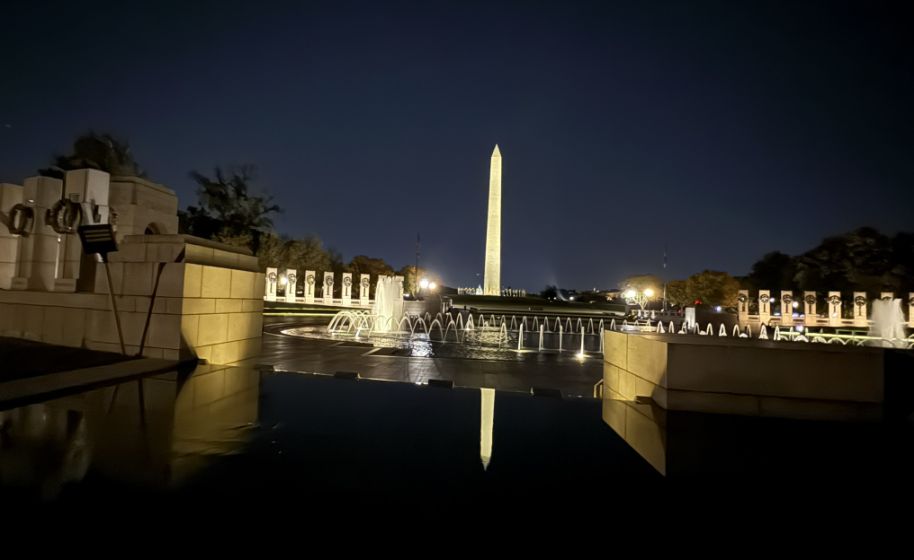
As we walked through the Atlantic Theater (referring to the Atlantic side of the WWII Memorial), our gaze is immediately drawn to a captivating scene. We caught a partial glimpse of the fountain, hinting at its grandeur, with the magnificent Washington Monument majestically rising above it in the distance.
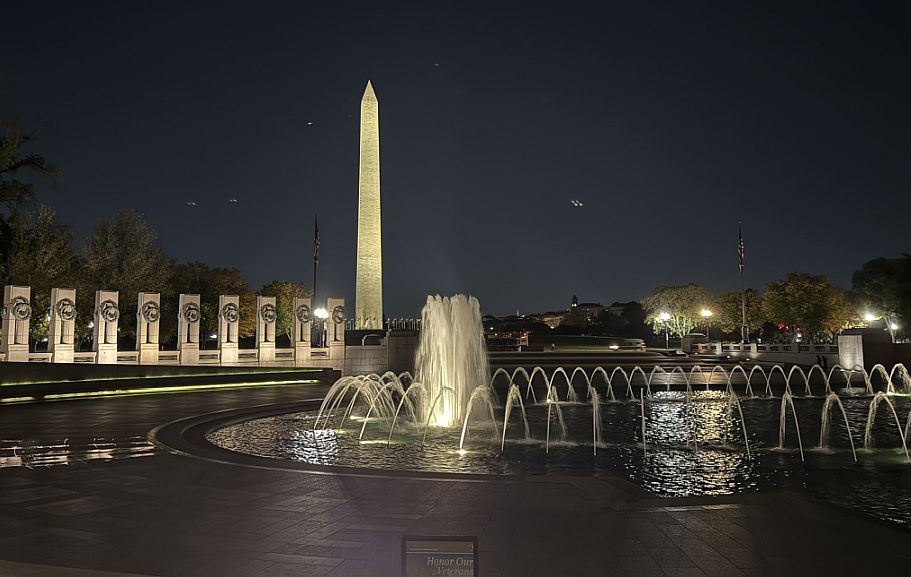
As we draw closer, the fountain reveals its full splendor. Its water jets dance and soar, creating a dynamic and visually stunning display. From this nearer vantage point, the Washington Monument stands out even more clearly, its illuminated form visible and commanding amidst the playful arcs and sprays of the fountain's water.
 |
 |
What a beautiful scene.
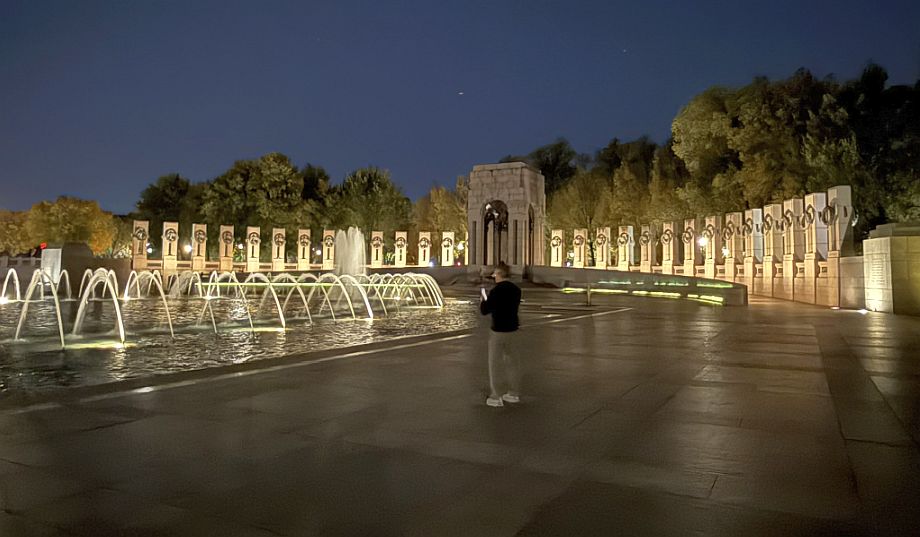
Walking through the Atlantic Theater section of the World War II Memorial at night feels almost magical.
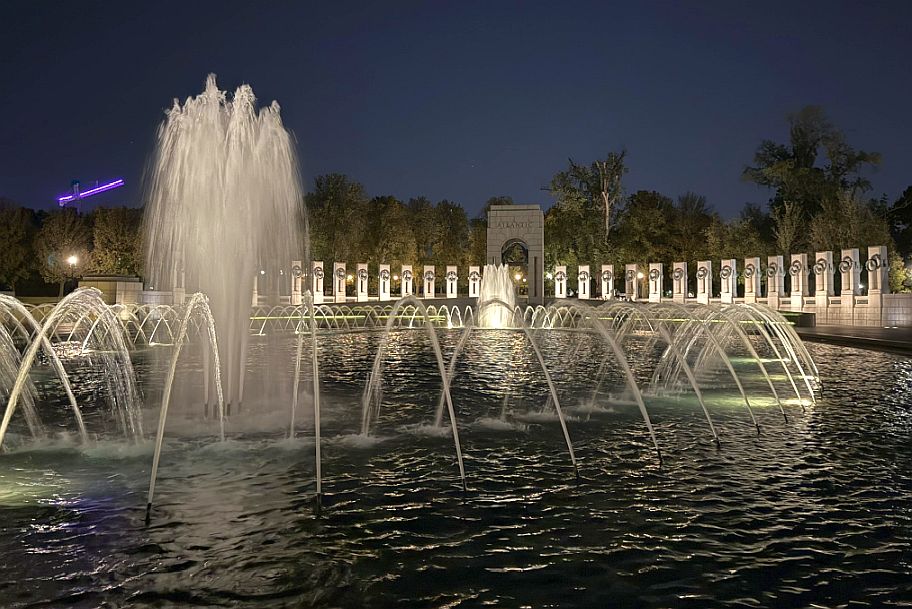
The fountain’s jets arc gracefully through the air, each stream illuminated so that the water glows and dances in the darkness, filling the space with energy and a soft, rhythmic sound. The gentle roar of the fountains creates a sense of calm and reverence at once—a tribute brought to life through motion and light.
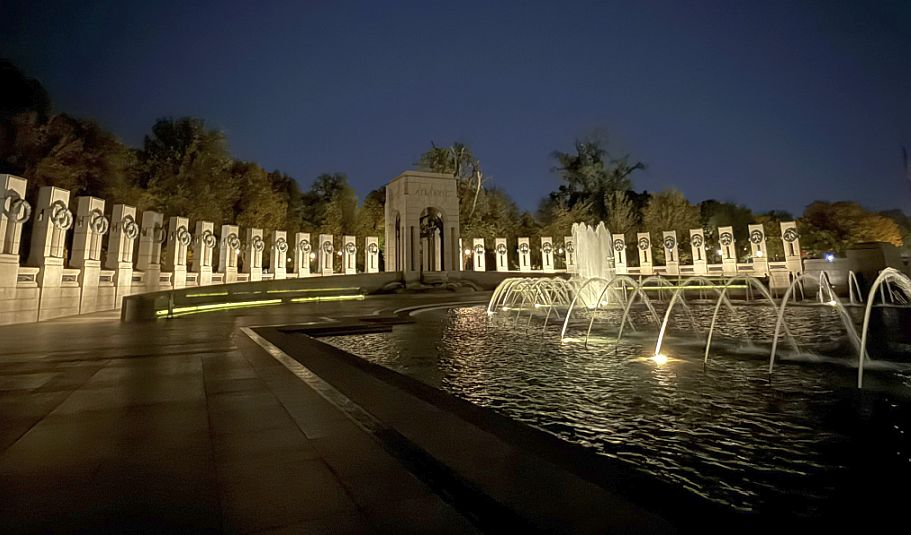
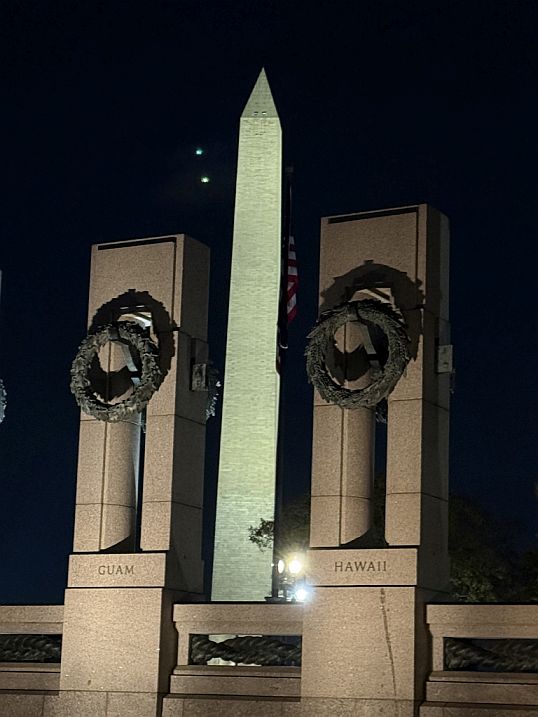
All around, the granite columns rise in quiet grandeur, each crowned with a bronze wreath and softly lit from below. The illumination highlights their fine details, casting elegant shadows that circle the plaza. The reflection of the light on the wet stone adds a subtle shimmer, wrapping the whole space in a sense of dignity and timeless beauty. It’s a place that feels both powerful and peaceful, alive with history and reflection.
 |
 |
We are now heading to the Washington Monument.

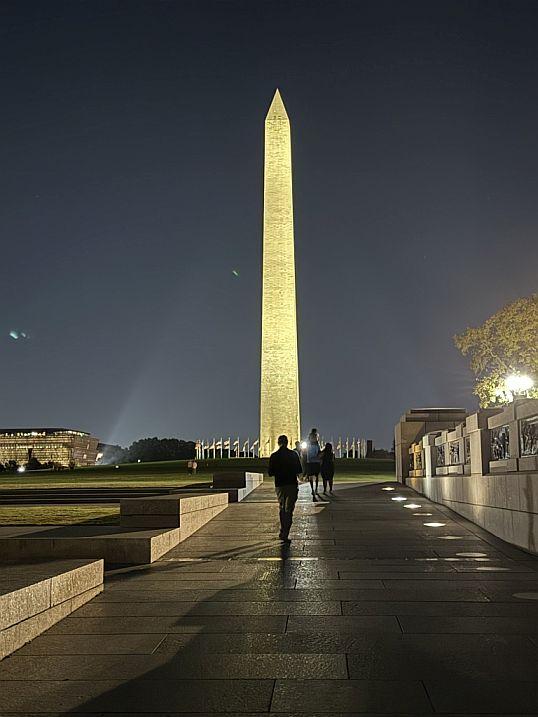
As you leave the World War II Memorial and walking toward the Washington Monument, We are moving through one of the grandest open spaces in the United States, a landscape designed to unfold slowly as a series of symbolic views.
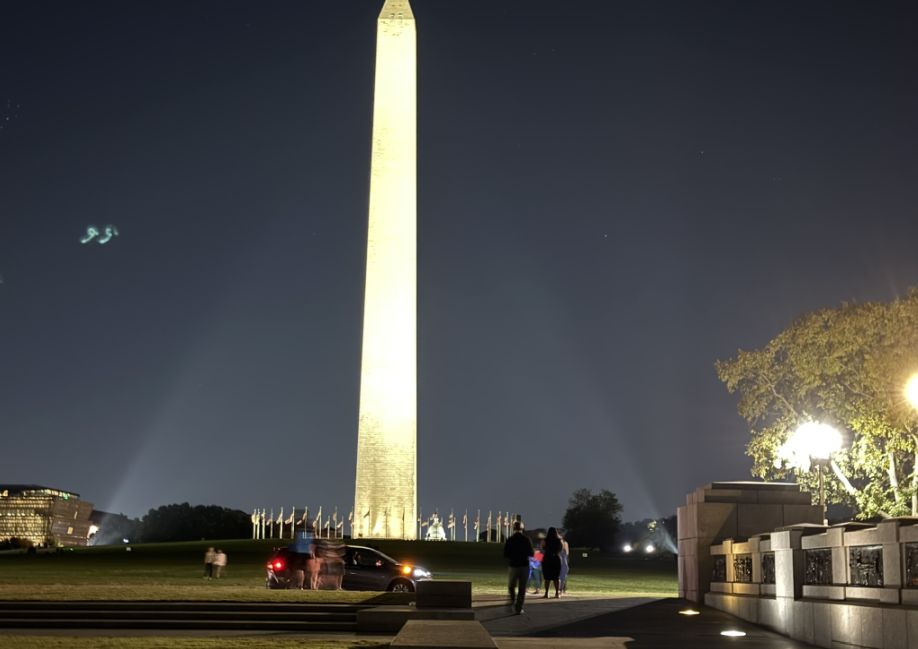
Crossing the wide lawn, the perspective opens dramatically.
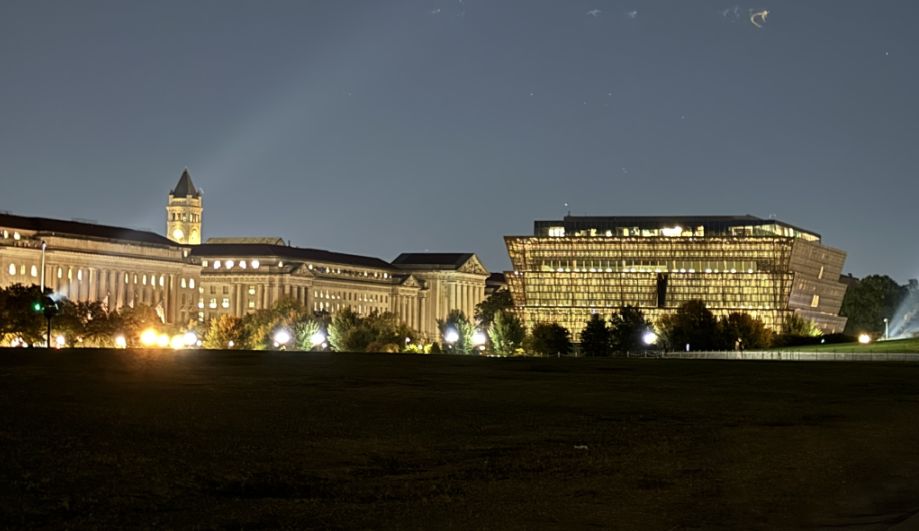
To the rigt rises the striking bronze-colored lattice of the National Museum of African American History and Culture, its tiered corona shape inspired by Yoruba art and African American craftsmanship. Nearby, the classical museum buildings lining the Mall create a contrast between modern expression and neoclassical tradition.
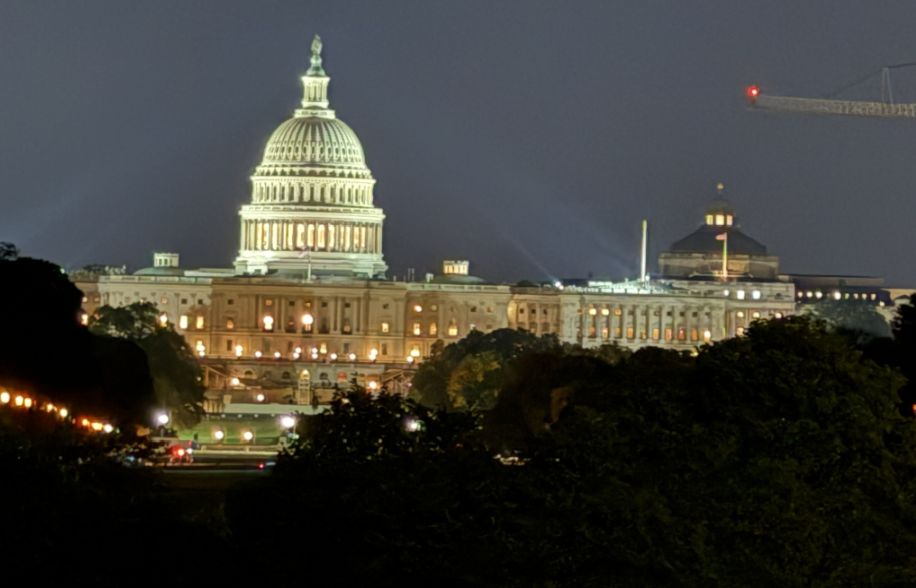
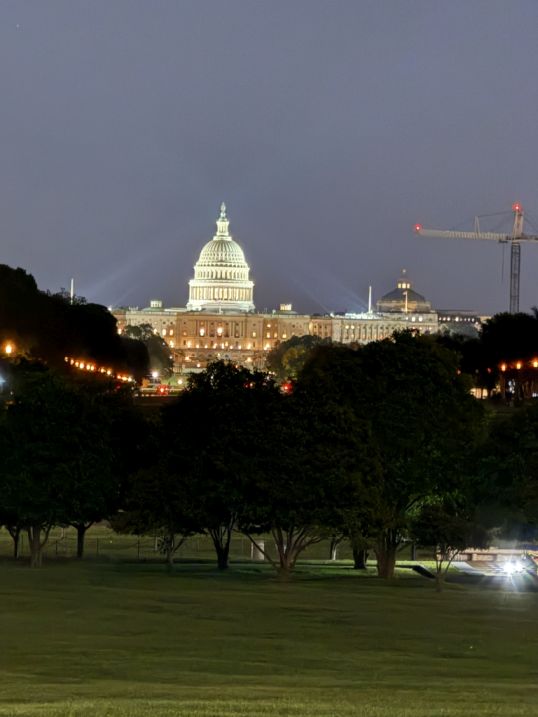
Looking farther east, you can see the dome of the United States Capitol, anchoring the far end of the National Mall, a reminder that this entire landscape connects memorials, museums, and government into one continuous civic story.
 |
 |
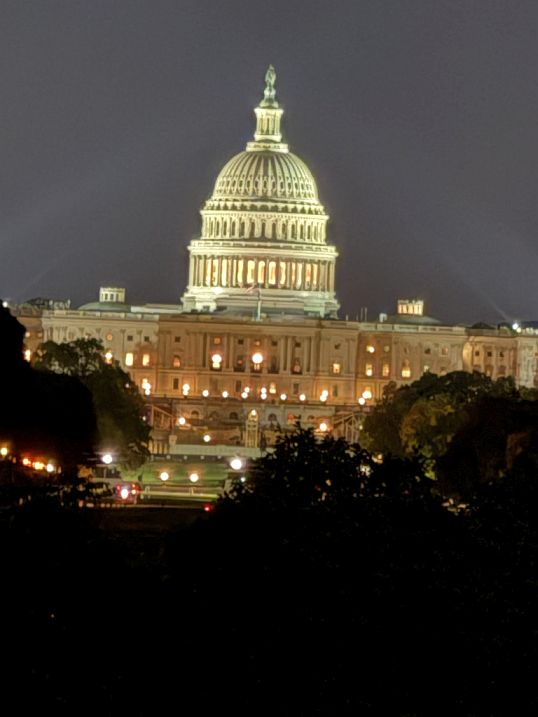
The Dome of the United States Capitol at night.
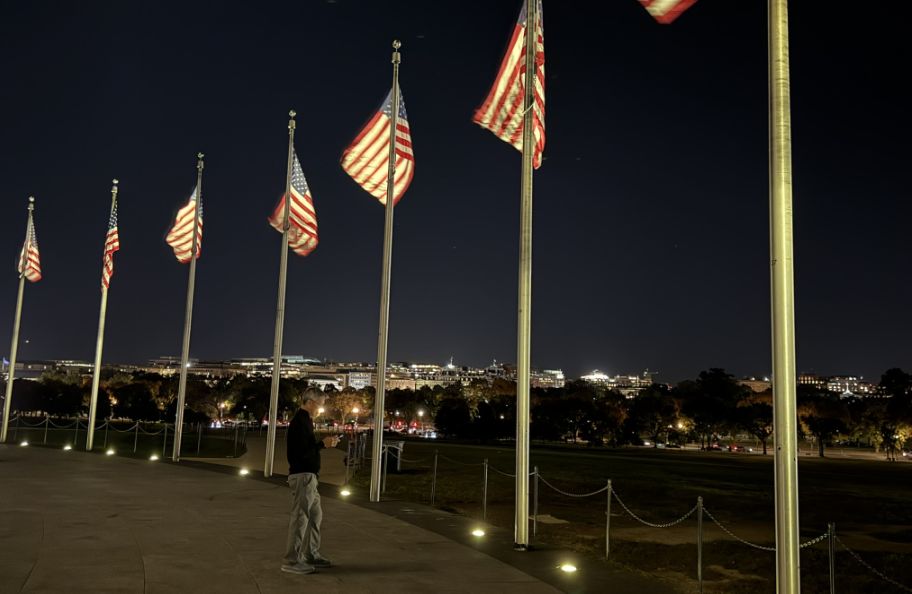
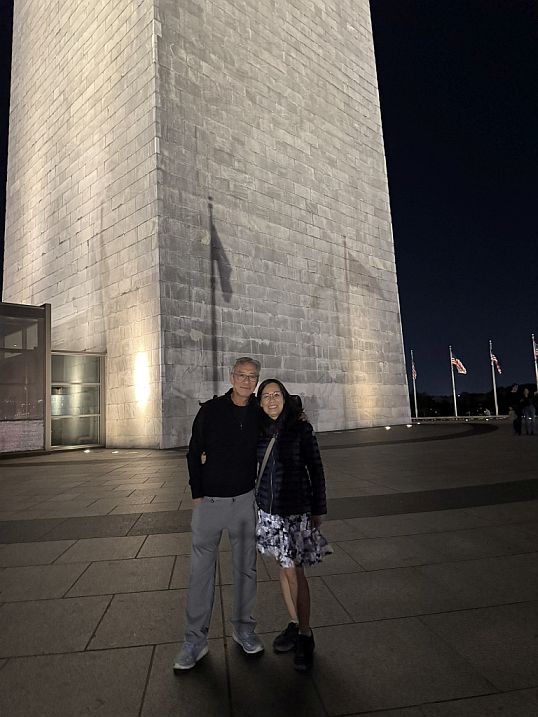
Walking around the base of the Washington Monument, we encountered the circle of fifty American flags surrounding the obelisk.

They represent the states of the Union, arranged in a perfect ring that seems to move gently with the wind.
 |
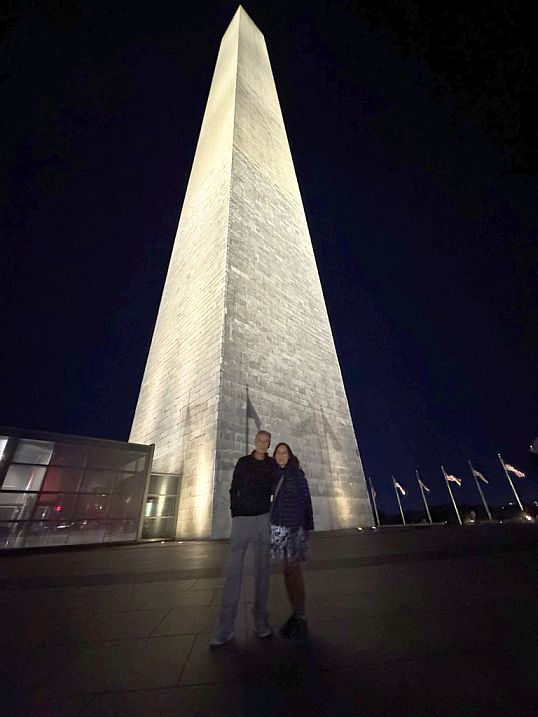 |
Standing there, the monument feels less like a distant landmark and more like a vertical axis of the city, 555 feet of pale stone rising straight into the sky, visible from nearly everywhere in Washington.
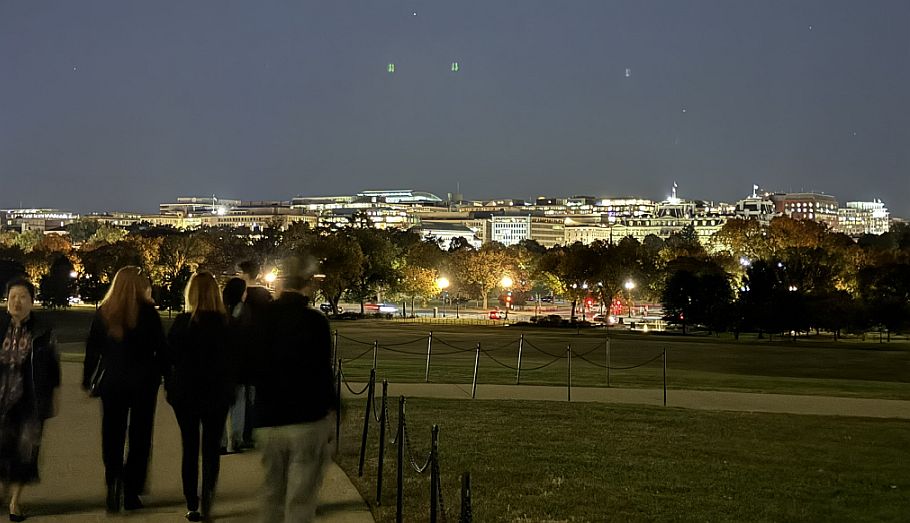
Walking here is a moment many visitors remember: open sky, sweeping views in every direction, and the feeling of standing at the geographic and symbolic center of the National Mall.
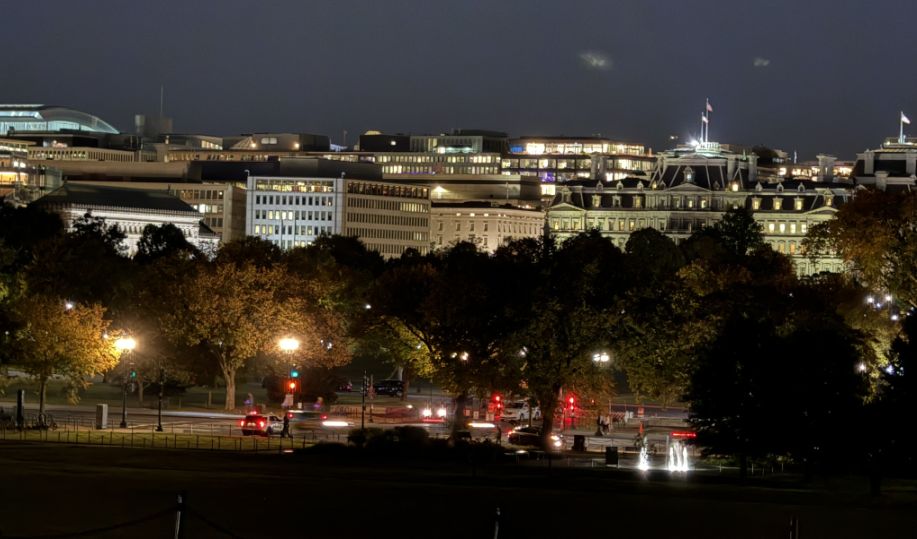
View from the Washington Monument. The White House is on the where you can see the flags.
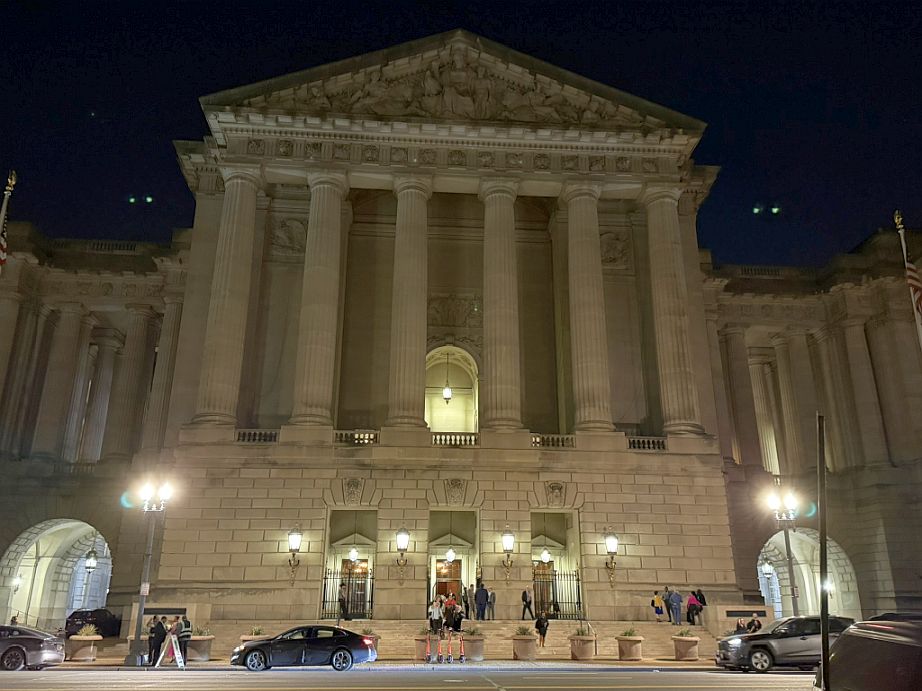
A we walked back, you were moving through an area where Washington’s architecture shifts from monumental memorials to the grand civic buildings of the federal city.
The Andrew W. Mellon Auditorium stands out immediately for its powerful neoclassical exterior. Designed in the 1930s as part of the Federal Triangle complex, the building resembles a Greek temple: a long façade of massive limestone columns, wide ceremonial steps, and perfectly balanced proportions.
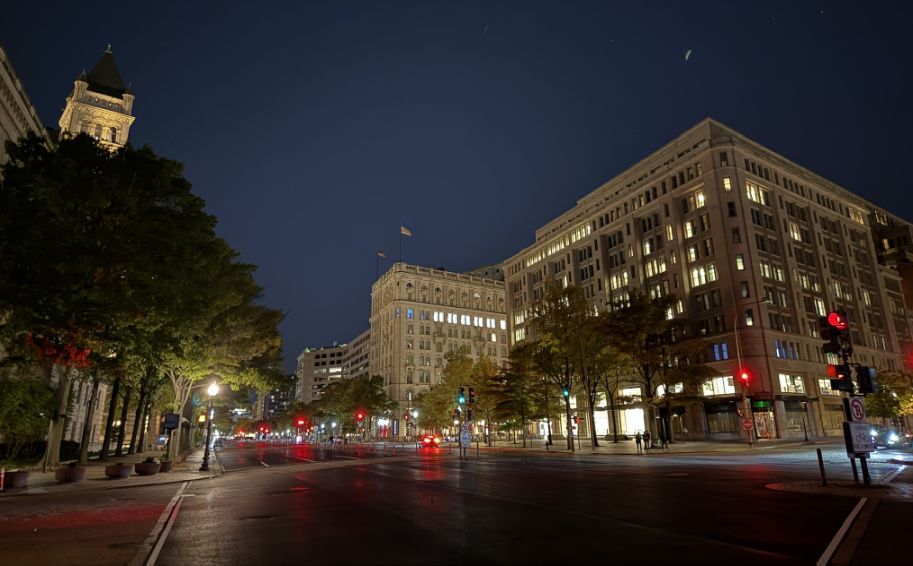
Continuing along Pennsylvania Avenue, often called “America’s Main Street,” the view naturally pulls your eyes eastward.
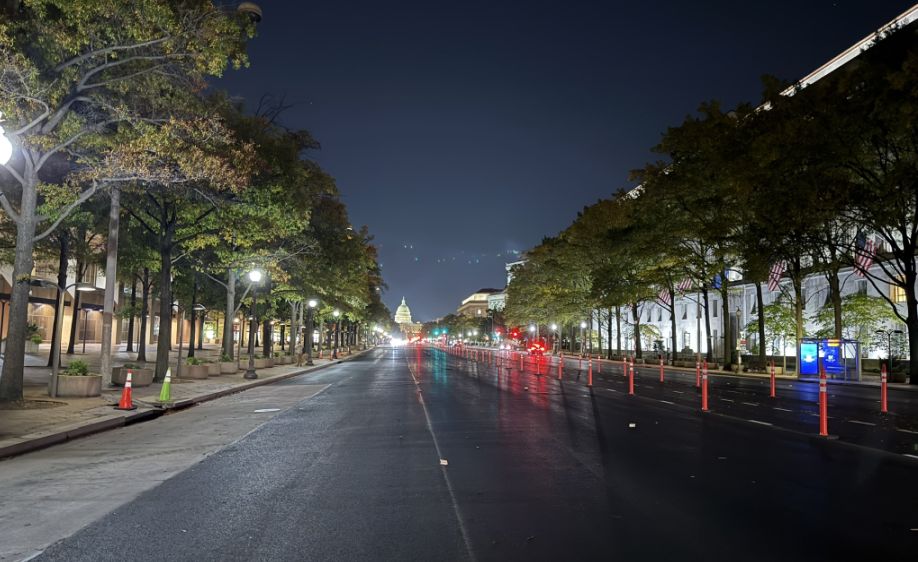
As we crossed the street, the distant roofline and dome of the United States Capitol appeared at the end of the avenue, a classic Washington sightline intentionally planned by Pierre L’Enfant so important buildings would frame long perspectives across the city.
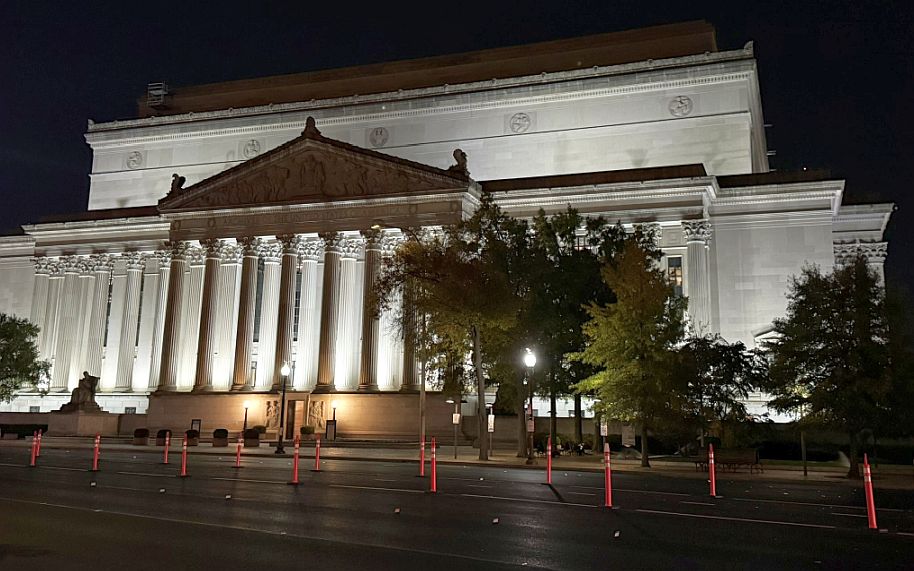
Nearby, we passed the National Archives Building, recognizable by its grand Corinthian columns and broad steps guarded by large sculptural figures symbolizing the protection of history and knowledge.
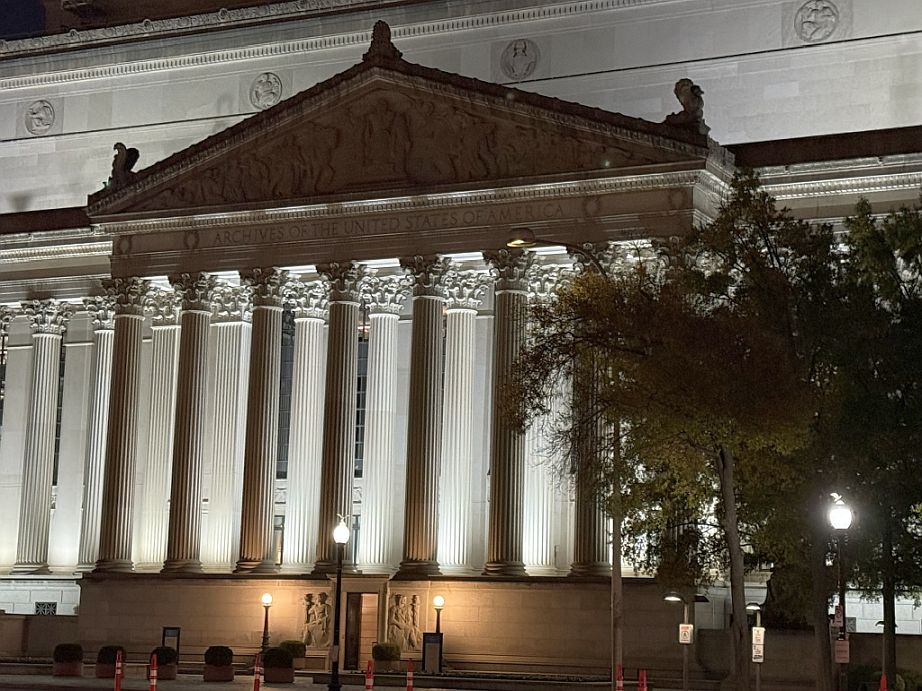
Inside are the nation’s founding documents, making the building both architecturally and symbolically central to American democracy.
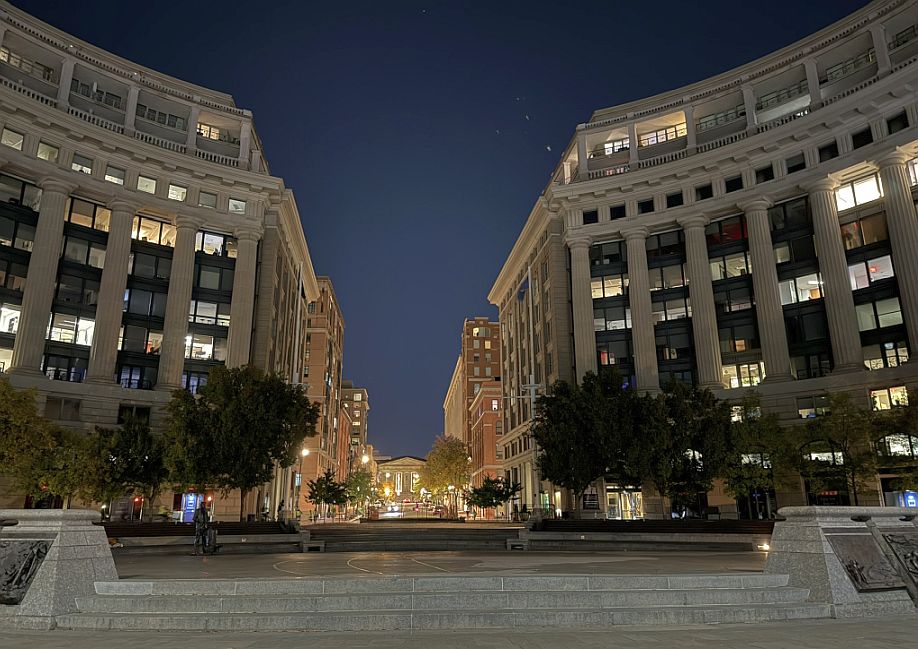
A little farther along sits the United States Navy Memorial, a more open and modern space. Its circular plaza, fountains, and engraved granite panels honor sailors past and present, offering a quieter, reflective contrast to the massive stone buildings surrounding it.
NEXT... Day 6- Georgetown