6 days in Washington DC- 10/18- 10/23/2024
Day 5- National Art Gallery-10/22/2024
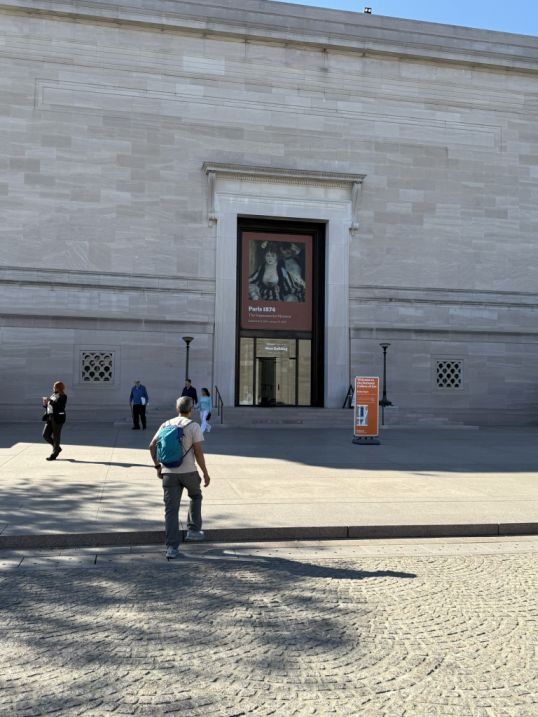
The National Gallery of Art in Washington D.C. is one of the most prominent art museums in the world, renowned for its extensive collection spanning European and American art. The museum consists of two main buildings but we are only visiting the West Building which is this neoclassical structure, designed by John Russell Pope, opened in 1941. It houses the museum's collection of European art from the medieval period through the late 19th century, including works by masters like Leonardo da Vinci, Rembrandt, Vermeer, and Monet.
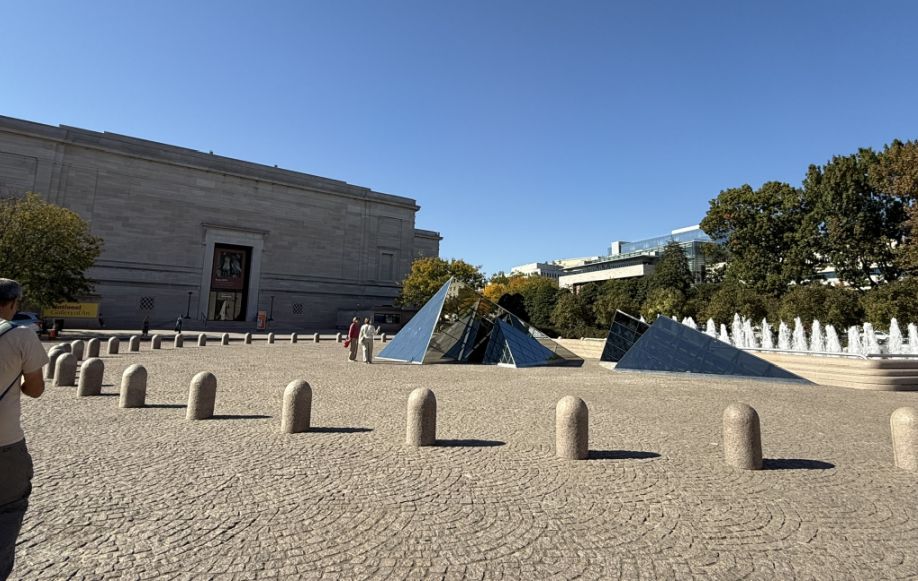
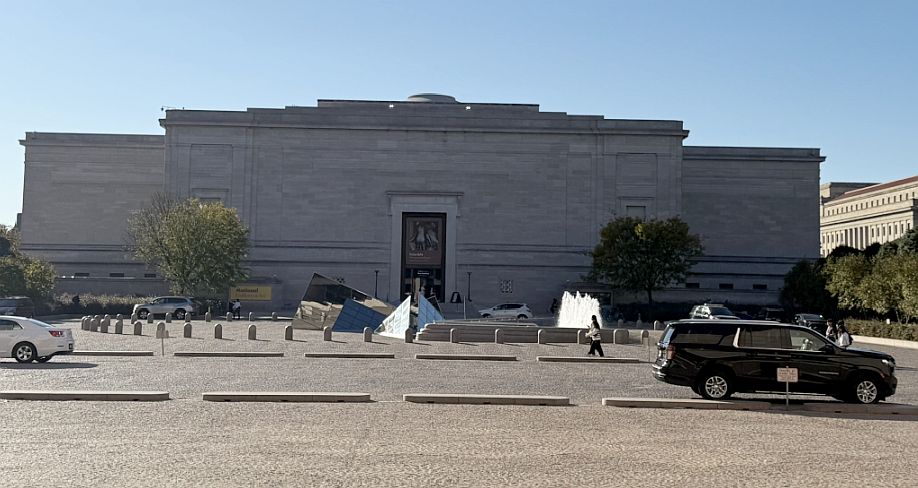
Standing outside the West Building, the glass pyramids immediately catch your eye because they contrast sharply with the museum’s architecture.
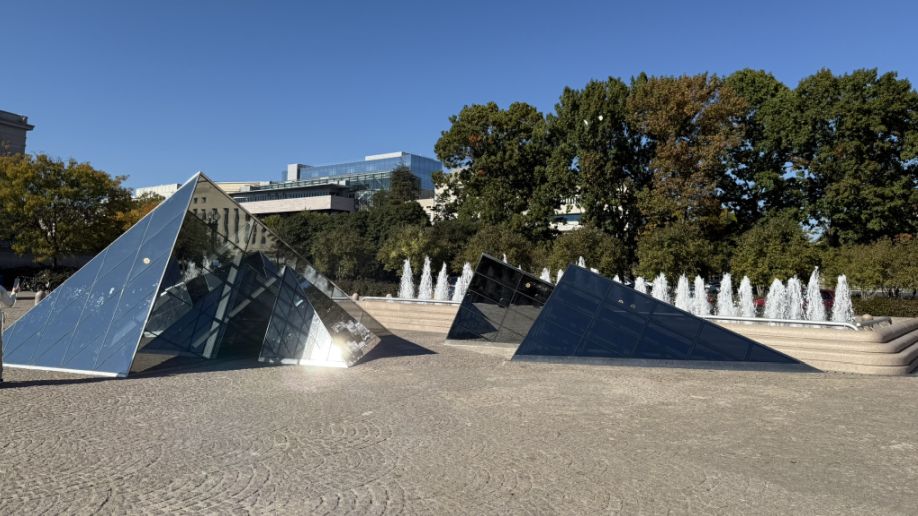
The glass pyramids, added much later (completed in 1978), introduce modern transparency and light into that classical setting. The pyramids act as a subterranean entrance pavilion rather than a traditional doorway. This was revolutionary museum thinking in the 1970s, museums were moving away from dark, formal interiors toward light-filled, welcoming public spaces.
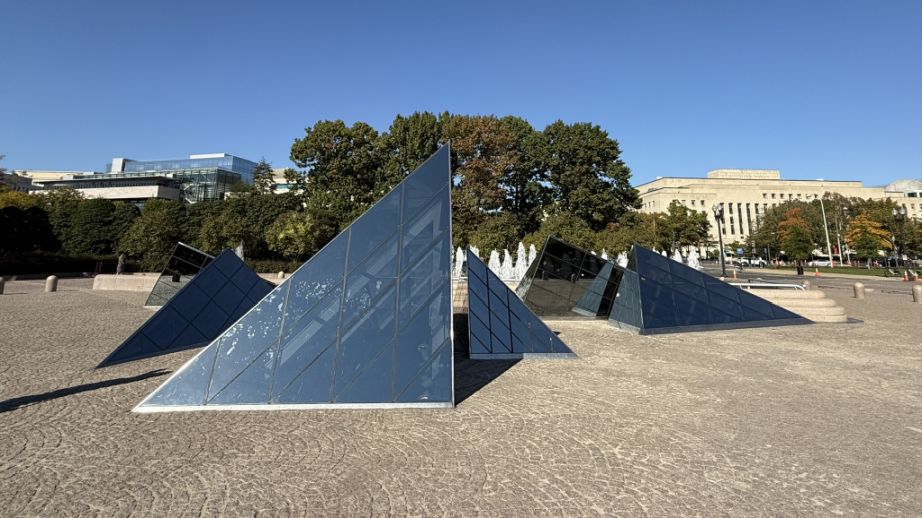
Architect I. M. Pei, who designed the East Building, used geometric forms, especially triangles as a unifying idea across the entire campus. They visually link modern and classical architecture without copying either style. So even though the pyramids sit closer to the West Building, they are conceptually part of the East Building’s modern design language.
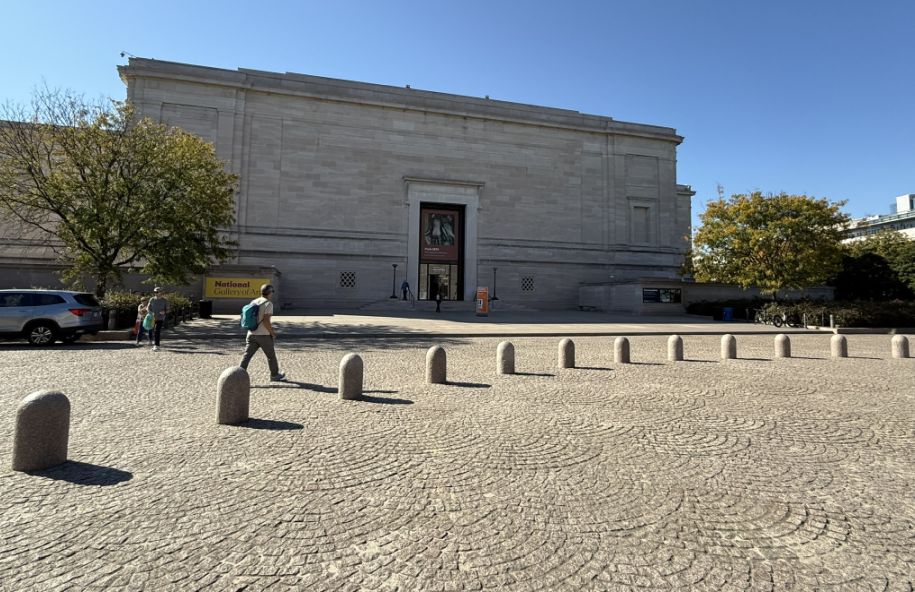
The West Building (1941) was designed in a neoclassical style, inspired by Roman temples, marble walls, columns, symmetry, and permanence.
 |
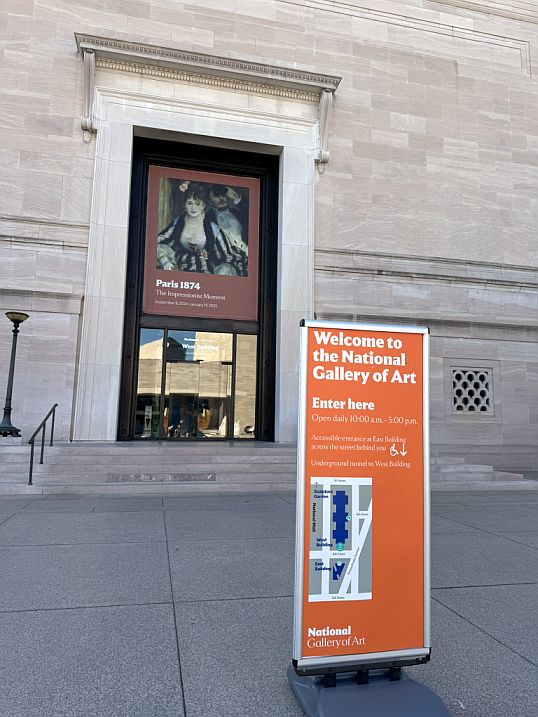 |
Walking toward the entrance of the West Building.
 |
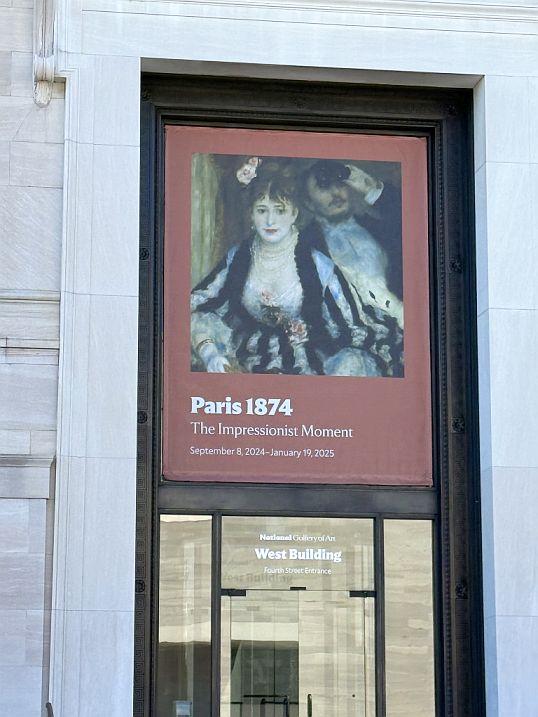 |
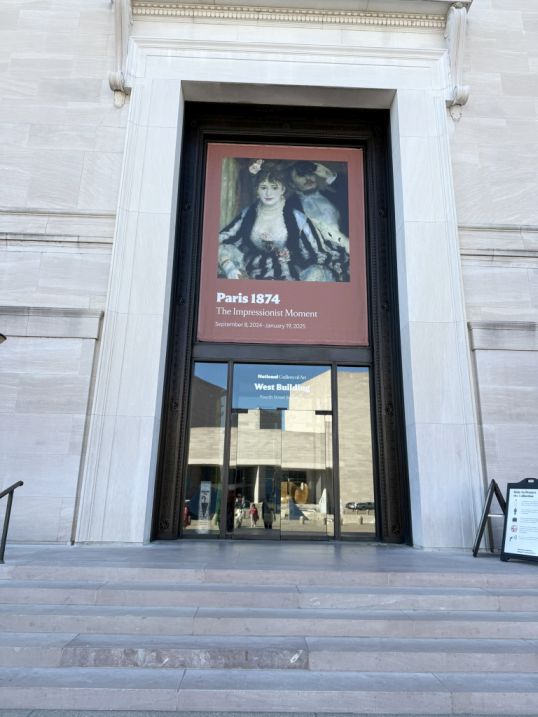
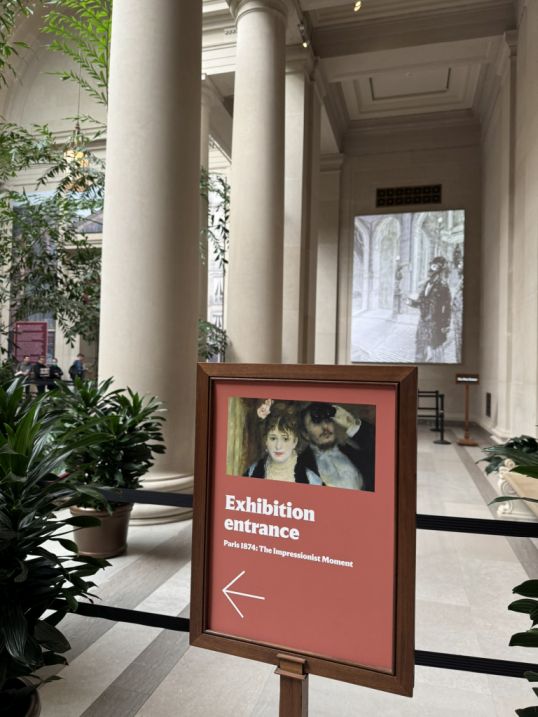
We were lucky to see that the museum had an exhibit about Paris 1874, The impressionist Moment.
 |
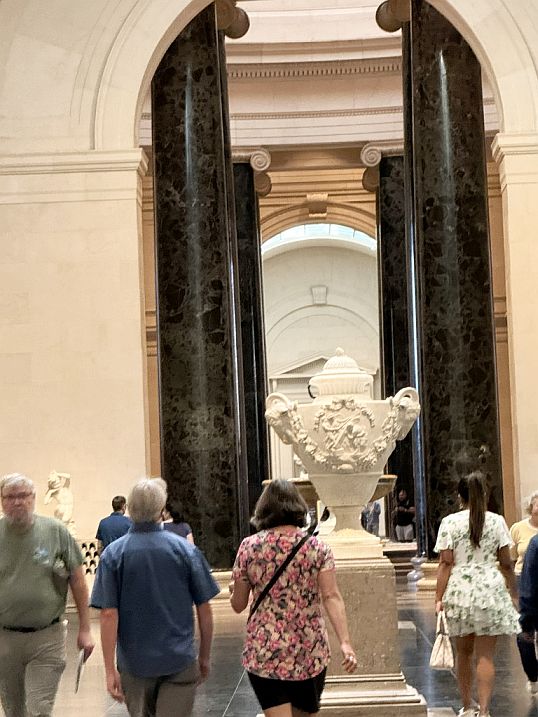 |
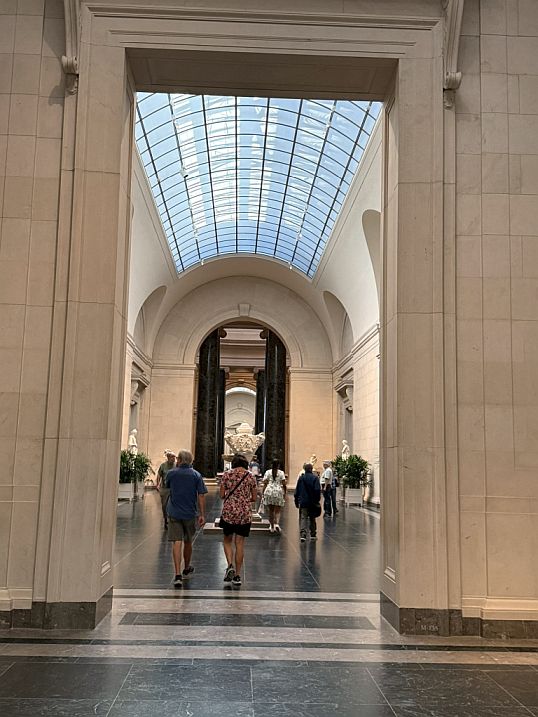
Once you enter the museum, we passed through transitional halls.
 |
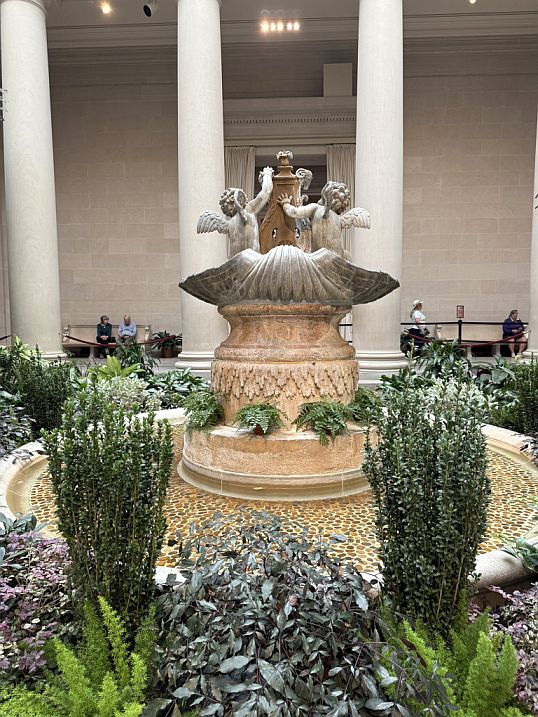 |
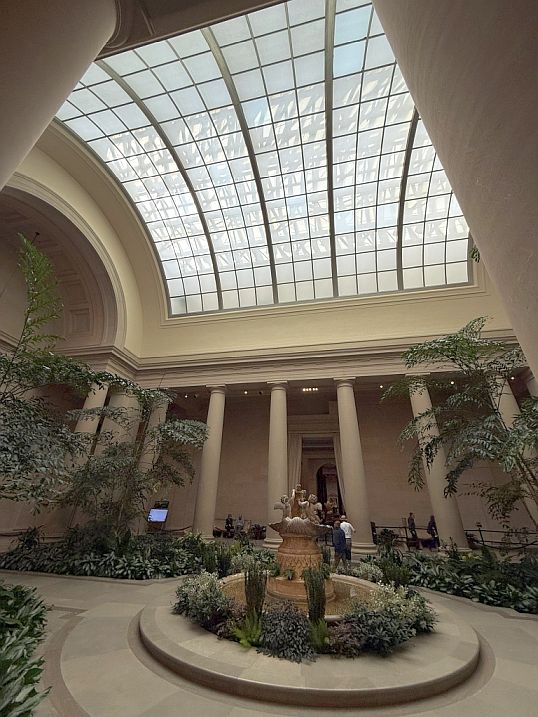
And then suddenly we arrived in this light-filled courtyard. This grand space is officially called the West Garden Court, and it serves as the central atrium of the West Building. It’s designed to feel almost like stepping into an Italian Renaissance palace courtyard, which is why it feels calm, luminous, and ceremonial as you enter the museum. At the center is a marble fountain topped by three playful cherubs, a classical motif symbolizing joy, beauty, and artistic inspiration. The gentle sound of water is intentional, helping soften the vast marble space.
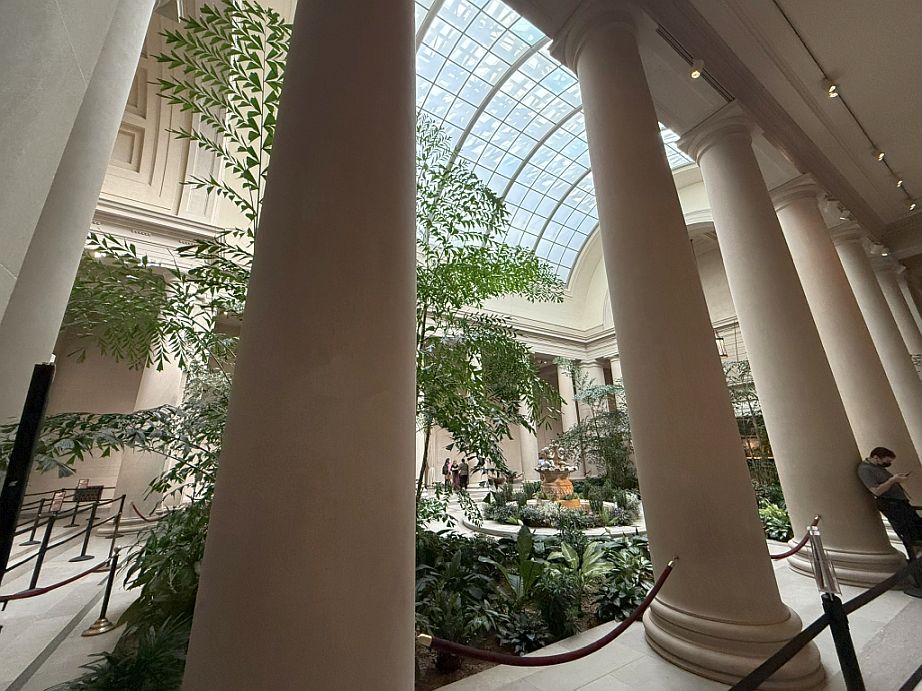
The surrounding columns reflect classical Roman and Renaissance architecture, reinforcing the museum’s identity as a “temple of art.”
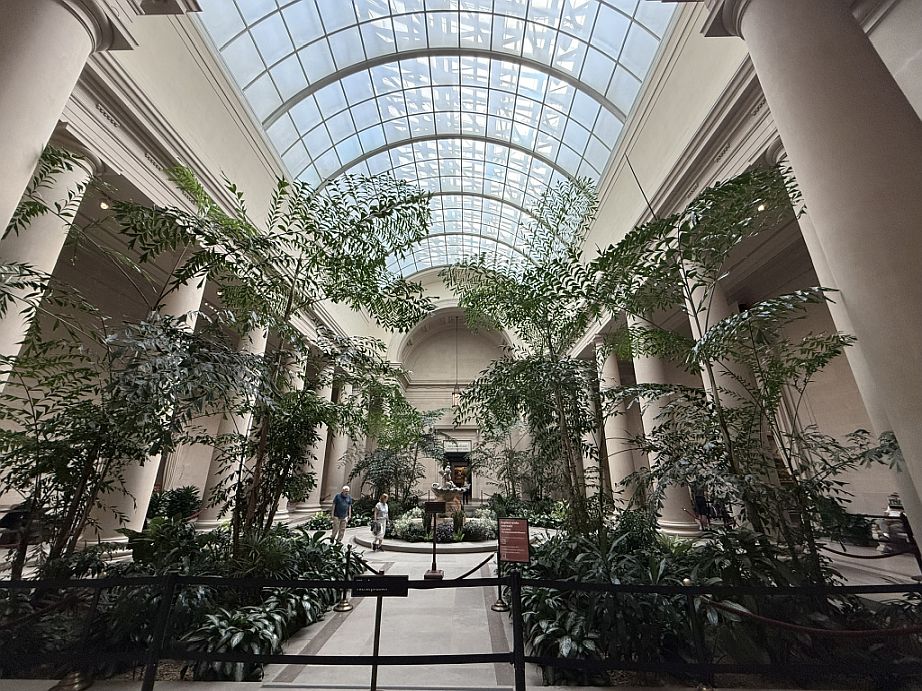
Above is a large skylight that floods the court with natural light. The architects wanted visitors to experience art in daylight rather than in dim, enclosed galleries ,quite progressive for a museum built in 1941.
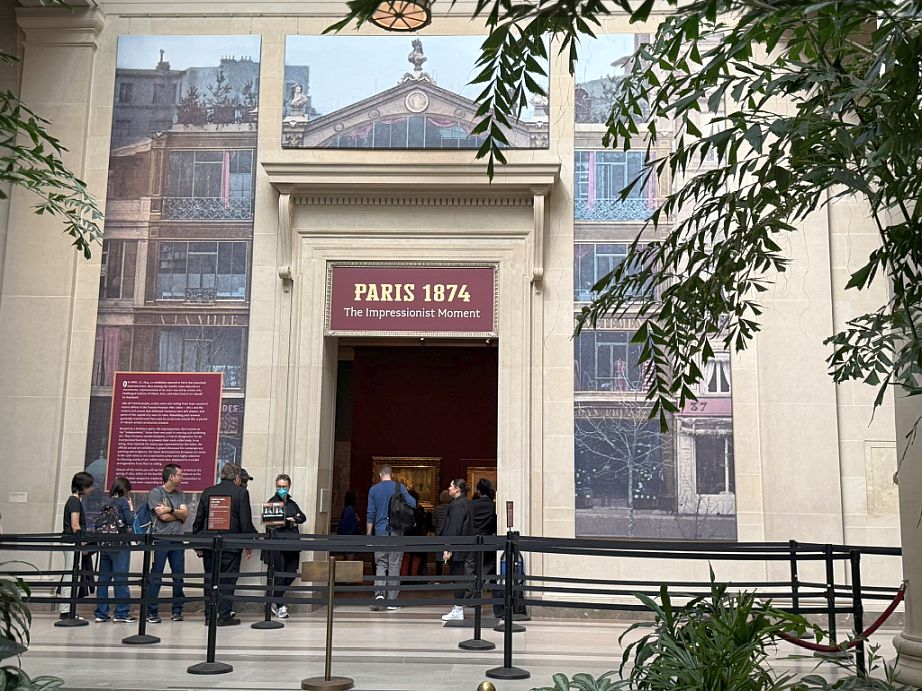
On April 15, 1874, an exhibition opened in Paris that launched impressionism. Now among the world's most beloved art movements, impressionism at its start was led by artist who challenged notions of where, how, and what kind of art should be displayed.
 |
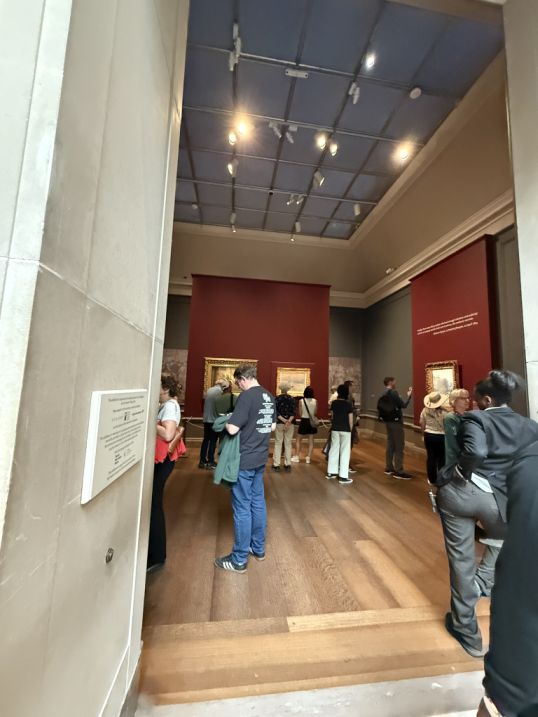 |
Entering the exhibition. Paris 1874: The Impressionist Moment was built around one of the most important turning points in art history: the moment when artists broke away from the official art world and changed modern art forever.
 |
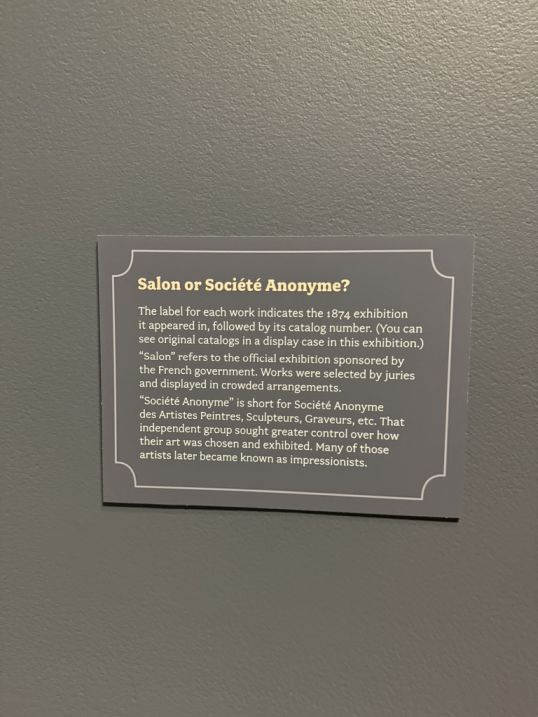 |
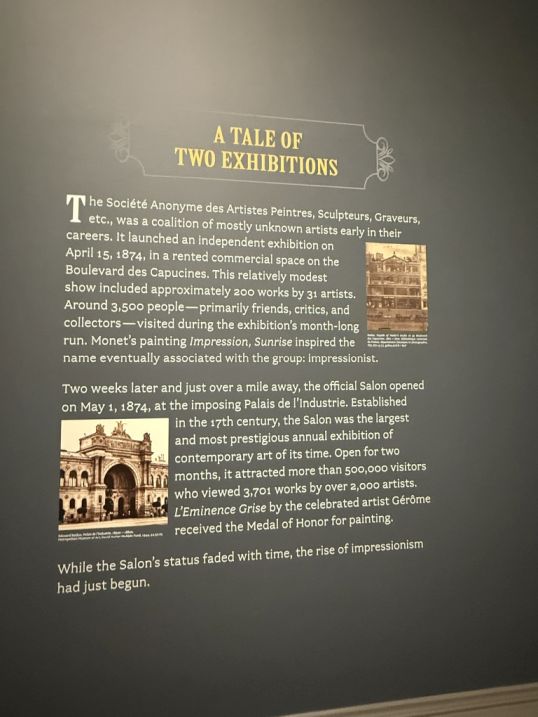
The exhibition tells the story of a decisive split in the art world. often described as the story of the Salon versus the Société Anonyme. In 1874, artistic success in Paris depended on acceptance into the official Paris Salon, a government-sanctioned exhibition that favored traditional subjects such as history, mythology, and highly polished painting techniques. The Salon represented authority, academic standards, and the established definition of “good art.”
Frustrated by repeated rejection, a group of younger artists formed the independent Société Anonyme des Artistes Peintres, Sculpteurs, Graveurs and organized their own exhibition outside the system. Instead of idealized scenes, they showed modern life, outdoor landscapes, and paintings filled with visible brushstrokes and changing light, works that critics initially mocked but that later became known as Impressionism.
The Salon stood for tradition and official approval. The Société Anonyme represented artistic independence and innovation. Together, these two exhibitions mark the moment when modern art began, when artists claimed the freedom to define art on their own terms.
 |
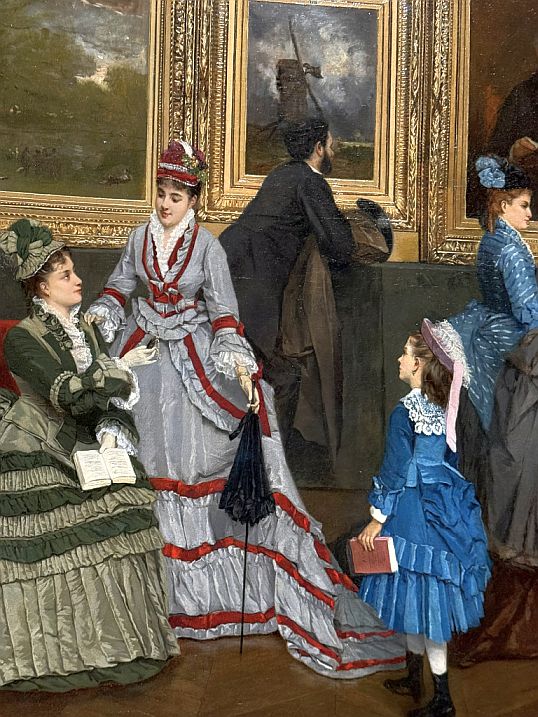 |
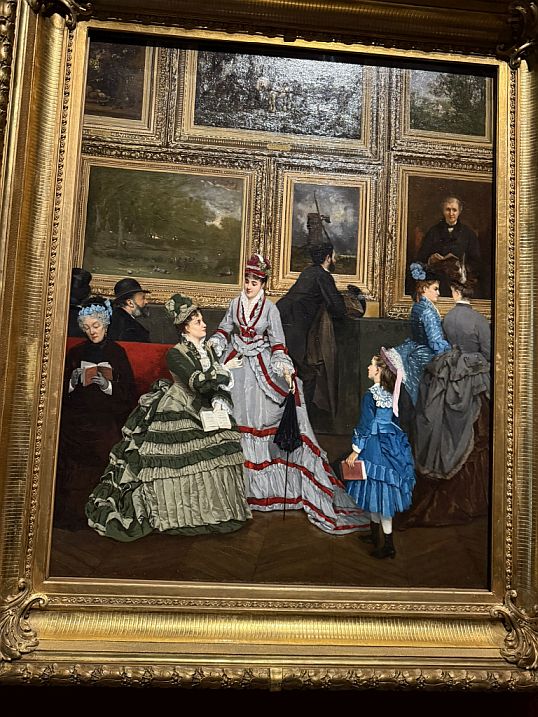
The Salon of 1874, Camille Cabailot-Lasalle, French, 1939-1902 From Musee D'Orsay, Paris-Salon 1874, no. 292
Although Cabaillot-Lasalle is credited as the artist, this work was a true collaboration. He painted most of the picture but invited six of his fellow artist to paint within it scaled-down representations of the works they planned to exhibit at the 1874 Salon. These artists include Camille Corot, Henriette Browne. The frames are inscribed "Example de l'examen du jury d'admission" (Exempt from examination by the admission jury) meaning not in competition. Because these works were by artist who had achieved official recognition and were automatically accepted by the jury, Cabaillot-Lassalle could complete this composition in advance, confident these paintings would be on view at the Salon of 1874.
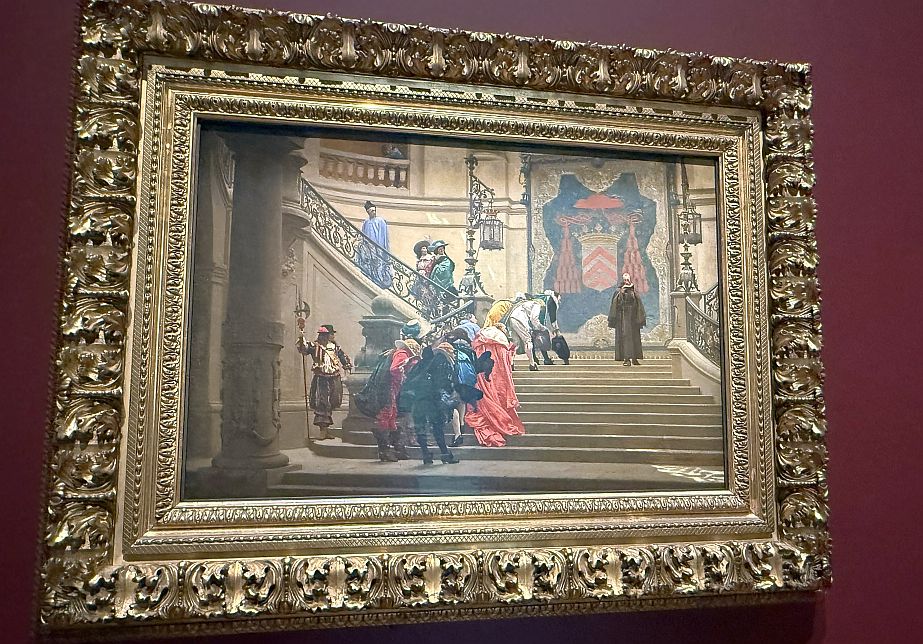
L'eminence Grise, 1873, oil on canvas by Jean-Leon Gerome, French, 1824-1904- Salon 1874- no. 798
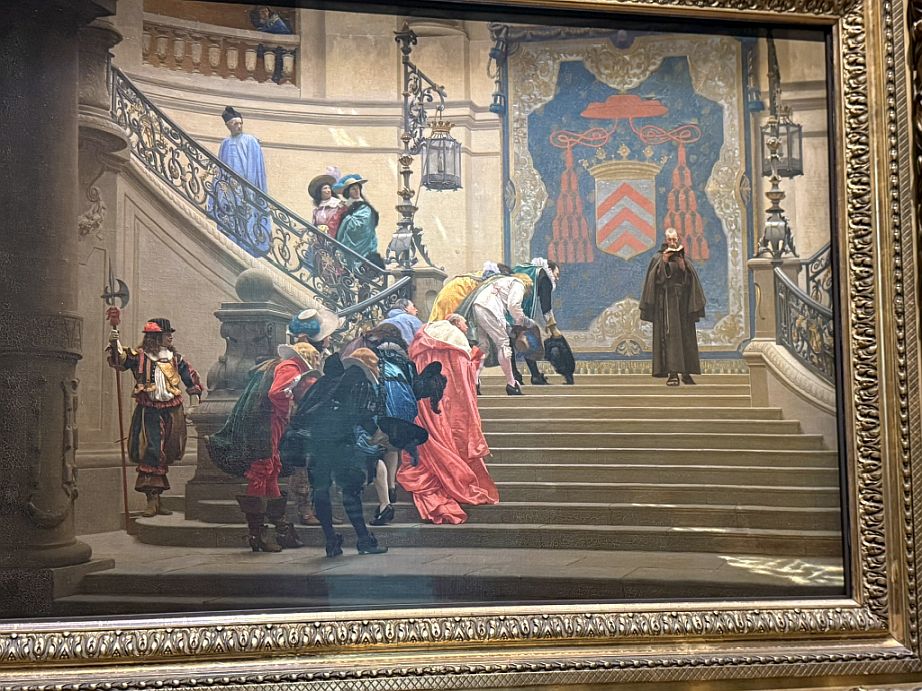
Gerome won a medal at the 1874 Salon for this painting of 17th-century court life under Louis XIII. The friar Francois Leclerc du Tremblay descend the grand steps of the royal palace absorbed by a book, oblivious to the king's entourage. Wearing garish costumes, the courtiers bow to the friar in his simple brown robe. Du Tremblay was considered the Eminence gris, a term for a behind the scenes power broker of Cardinal Richelieu, who held outsized power in France due the King's young age. Gerome may have been making a veiled critique of the Catholic Church's covert political power in the early 1870s.
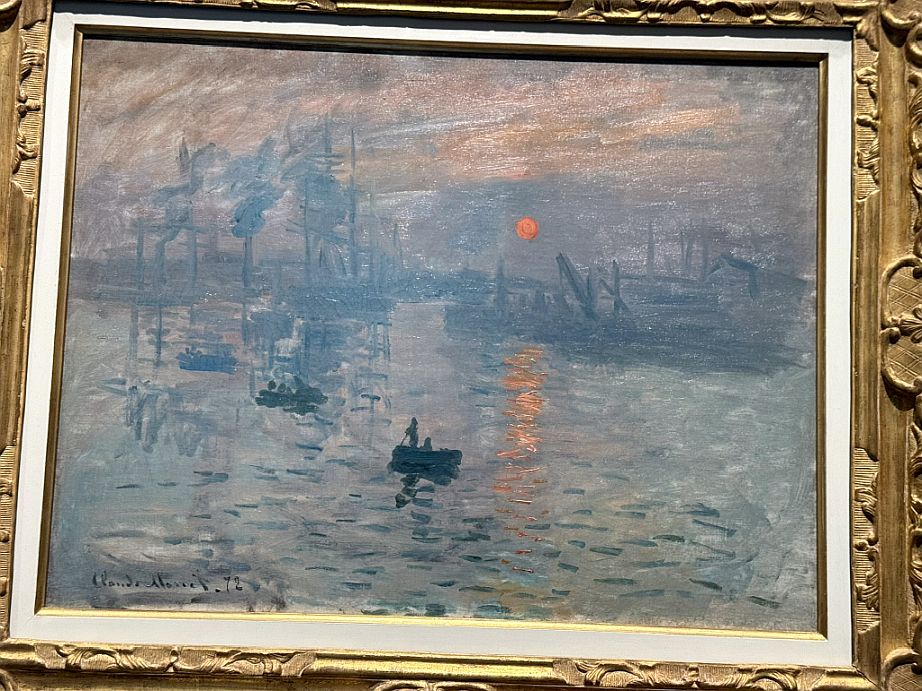
Impression, Sunrise, 1874, Oil on Canvas-Claude Monet, French, 1840-1926 -Société Anonyme 1874, no. 98
Monet painted this view of the sun rising through smog in the industrial harbor at Le Havre, his native town on the northern coast of France. The atmospheric conditions of the this humid early morning scene have disperse the light into a purple-green haze tinged with the sun's warm orange. For visitors to the first impressionist exhibition who were not accustoms to this style, the appearance of the barely legible color-filed may have been bewildering.
Several critics focused on Monet's word of choice for the title "impression" as an indication of the quick, summary nature of the artist's painterly vision. This sense of immediacy was central to impressionism. Monet's use of broad, gestural brushstrokes suggest this sketchy picture was done quickly on the sport before the light changed.
 |
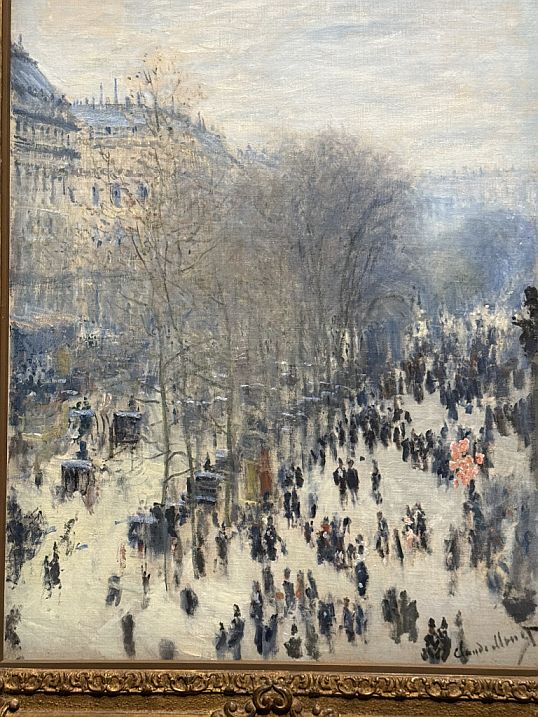 |
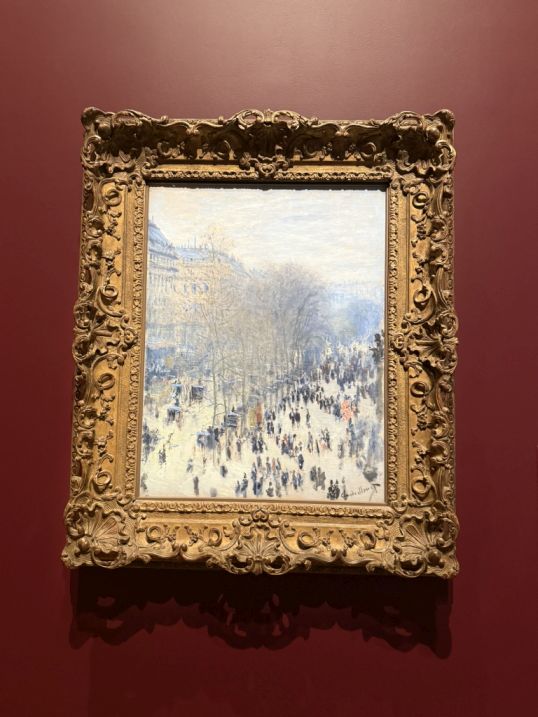
Boulevard des Capucines, 1873-1874, Oil on Canvas, Calude Monet, French, 1840-1926-Société Anonyme 1874, probably no. 97
Using quick brushwork to echo the accelerated pace of modern life, Monet depicts a broad boulevard, sidewalks, apartment buildings, and the traffic patterns of vehicles and pedestrians. The view is from the space of the Society Anonym exhibition held in the photographer Nadar's studio. Midway up the right edge, two dark and brushy shapes suggest figures in top hats on the neighboring apartment terrace. Like Monet, they observe the hustle and bustle below. Nadar's studio , a 35 Boulevard des Capucines, was in a neighborhood that served as hub of Parisian tourism, leisure activities, and finance. The exhibition was therefore perfectly placed for this new, overtly commercial art.
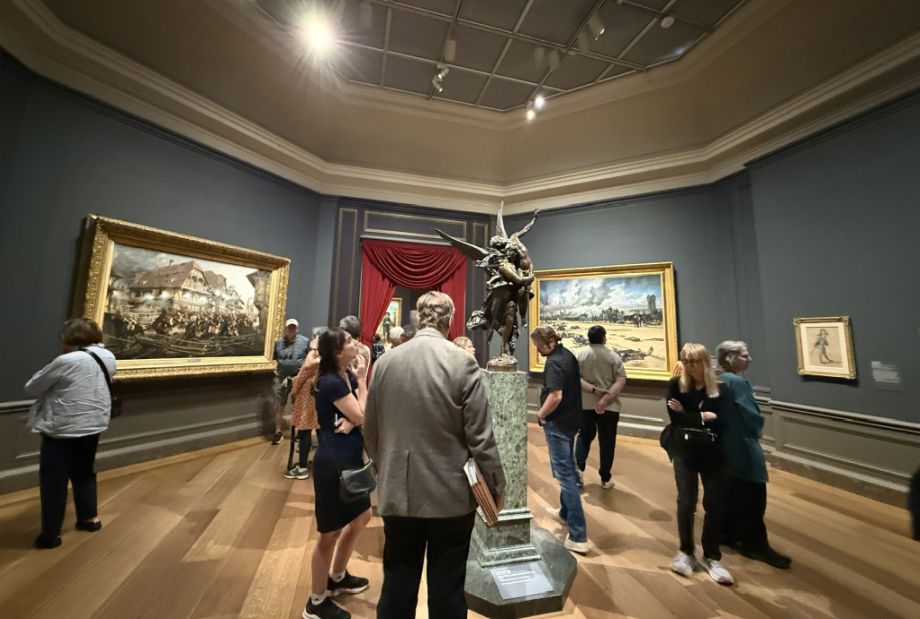
We are now leaving the special exhibition we are moving into the permanent collection galleries of the National Gallery of Art West Building,
 |
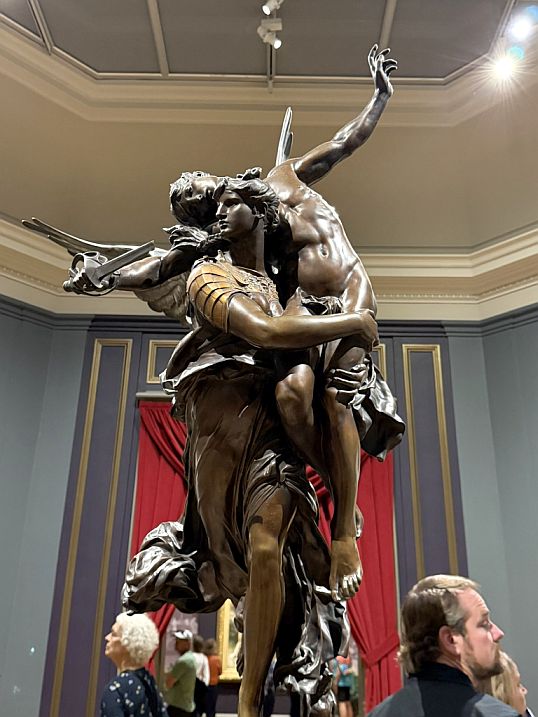 |
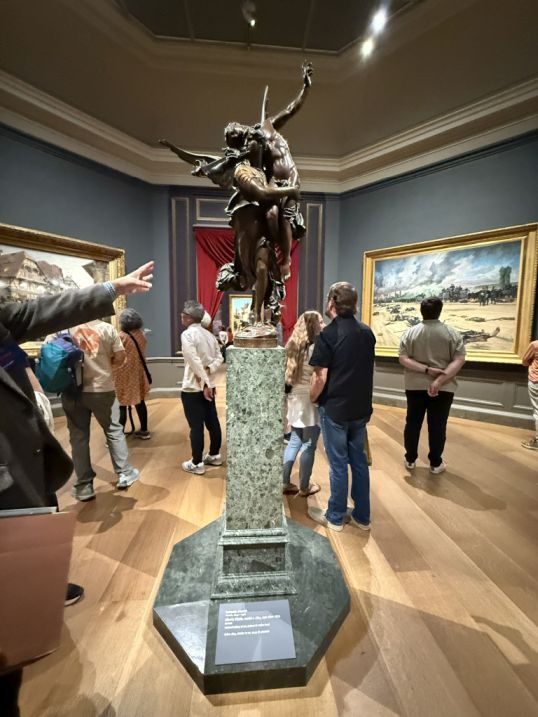
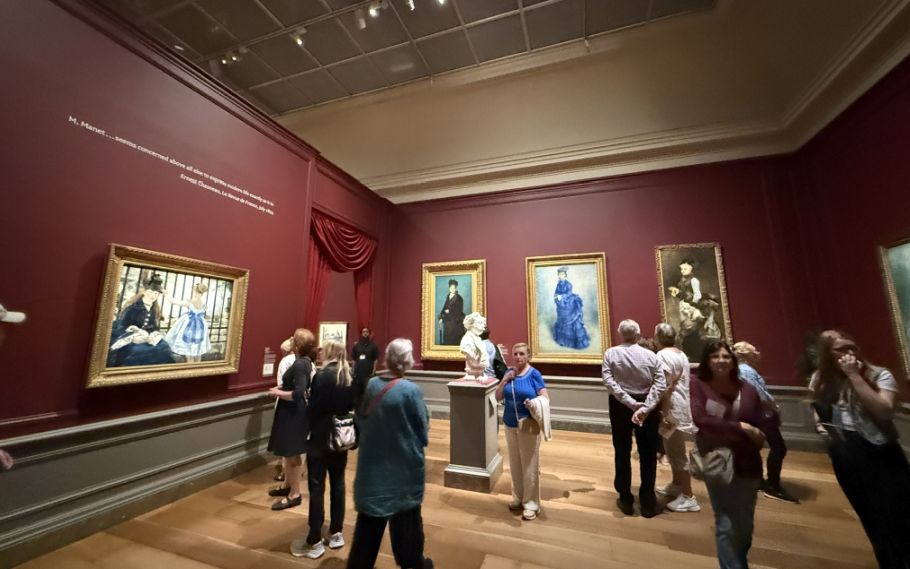
We are in the French Nineteenth-Century Sculpture Gallery.
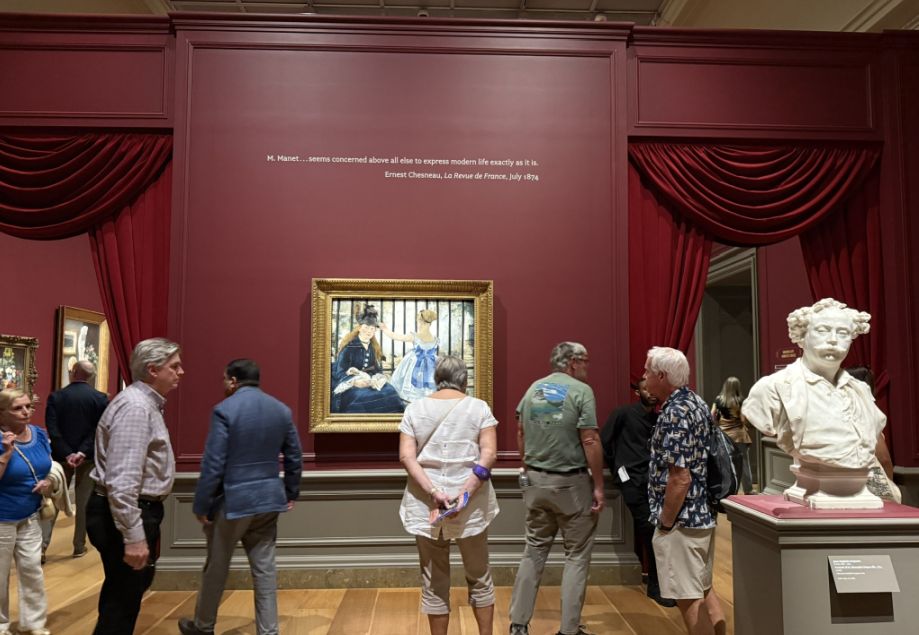
On the wall it is written: M. Manet.... seems concerned above all else to express modern life exactly as it is. Ernest Chesneau, La Revue de France, July 1874
Manet is often placed prominently in these rooms because he is the bridge between the Salon world and Impressionism. Although he never officially exhibited with the Impressionists, his paintings: shocked the Salon, depicted modern Parisian life, used flatter space and bold contrasts.
Museums often position Manet near Impressionists to show how modern art began with him.
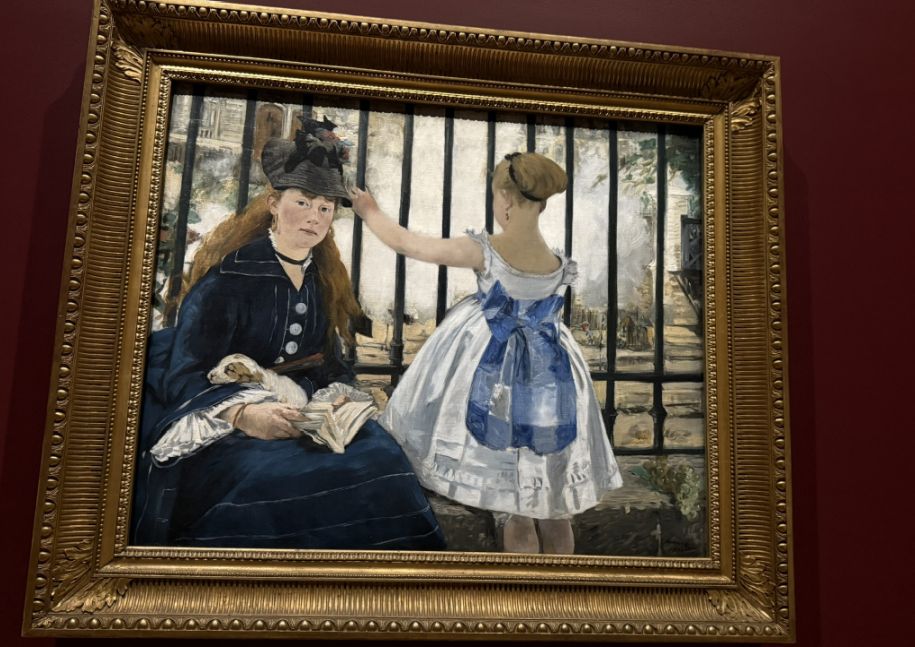
The Railway, 1873, oil on canvas, Edouard Manet, French, 1832-1883-display in the Salon 1874, no, 1260
This painting beard the hallmarks of Manet's embrace of modernity and his focus on the present day: the fashionable figures, he sense of a moment captures as the girl watches a steam locomotive pass by, the ambiguity of the space they occupy, and finally , the closed, blank expression of the young woman.
Manet was the recognized leader of avant-garde art in the 1870s but the never exhibited wit the impressionists. Instead, he reserved his ambitions for the large public and the critical exposure offered by the Salon, Whit this picture, he succeeded. Caricaturists, in particular was delight in its uncategorizable strangeness.
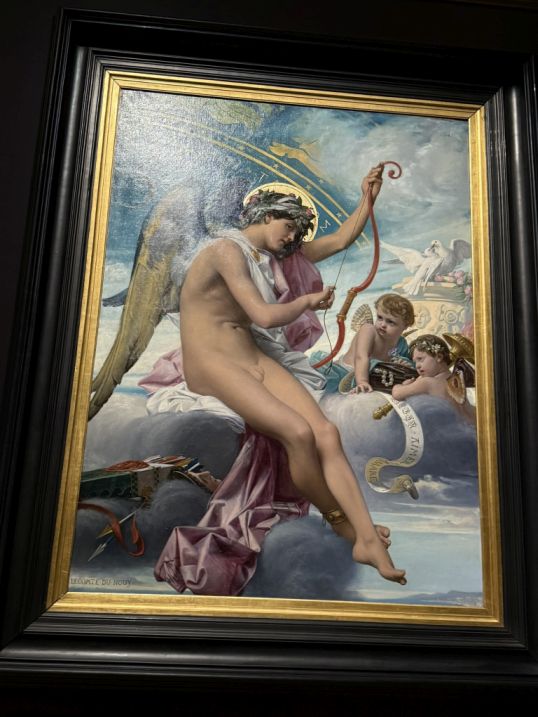 |
 |
On the left: Eros, Cupido, 1873, oil on Canvas, Jean Jules Antoine Lecomte de Nouy, French, 1842-1923 -Display in the Salon 1874, no, 1128
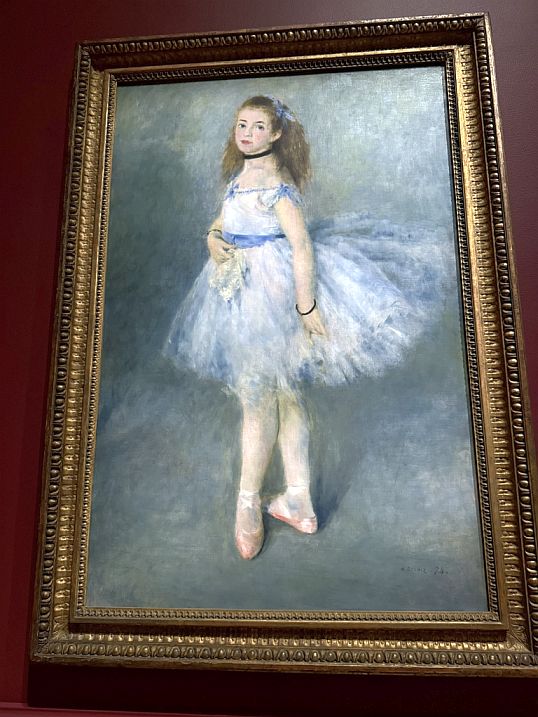
On the right: The Dancer, 1874, oil on canvas, August Renoir, French, 1841-1875 -Société Anonyme 1874-no, 141
 |
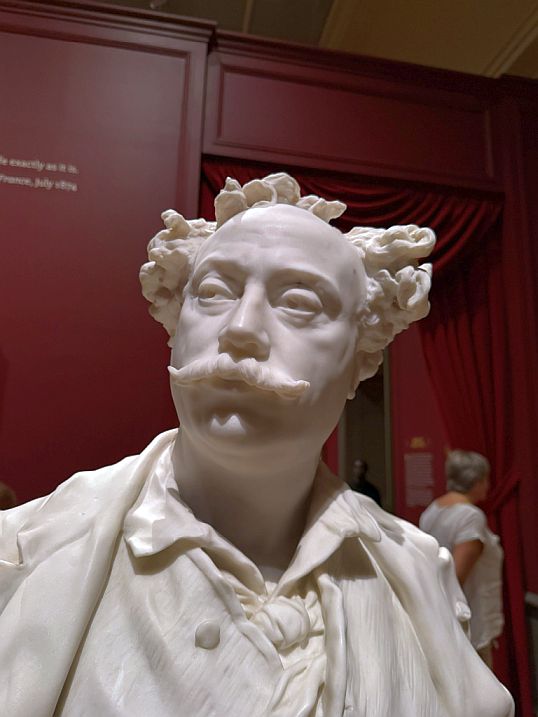 |
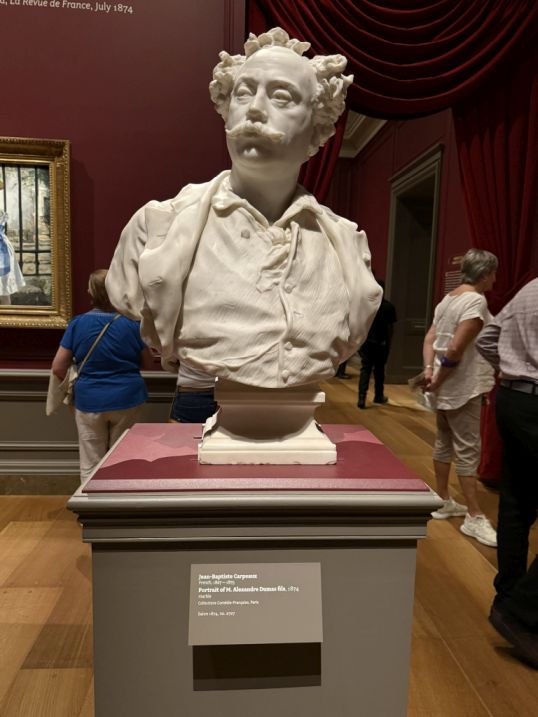
The sculpture of Alexandre Dumas fils, created by the French sculptor Jean-Baptiste Carpeaux around 1873. His grandfather was Thomas-Alexandre Dumas, the first Black general in the French army. The bust is therefore a rare 19th-century portrait of a celebrated public figure of partly African descent, an important cultural detail scholars note today.
Alexandre Dumas fils (1824–1895) was a famous playwright and novelist that became renowned for La dame aux Camelias.
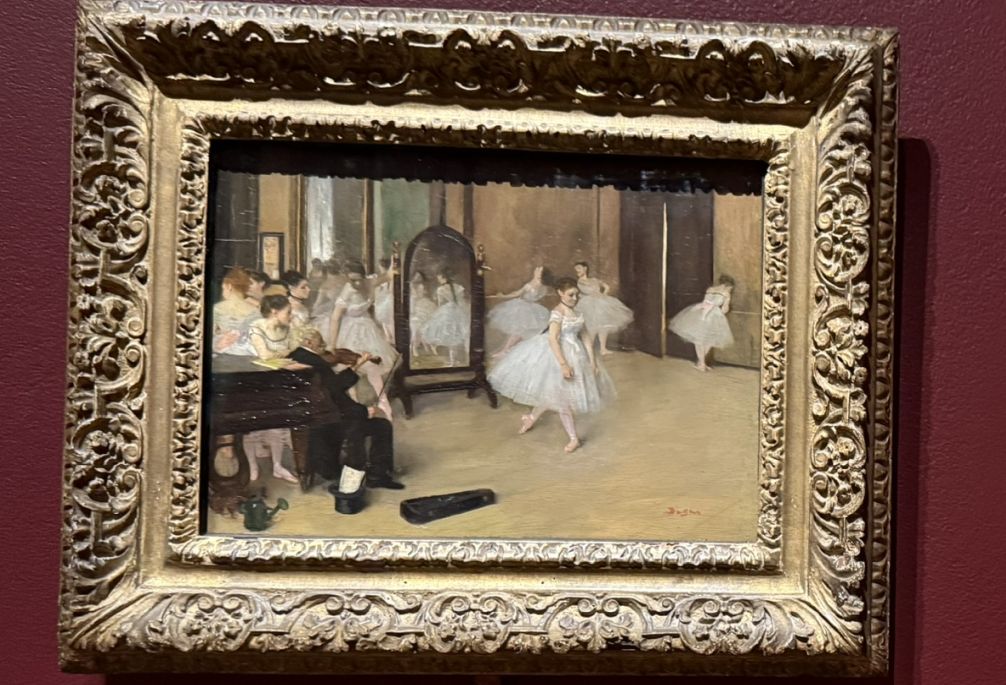
The Dancing Class, 1870, oil on canvas, Edgar Degas, French, 1834-1917 - Société Anonyme 1874,, no. 55
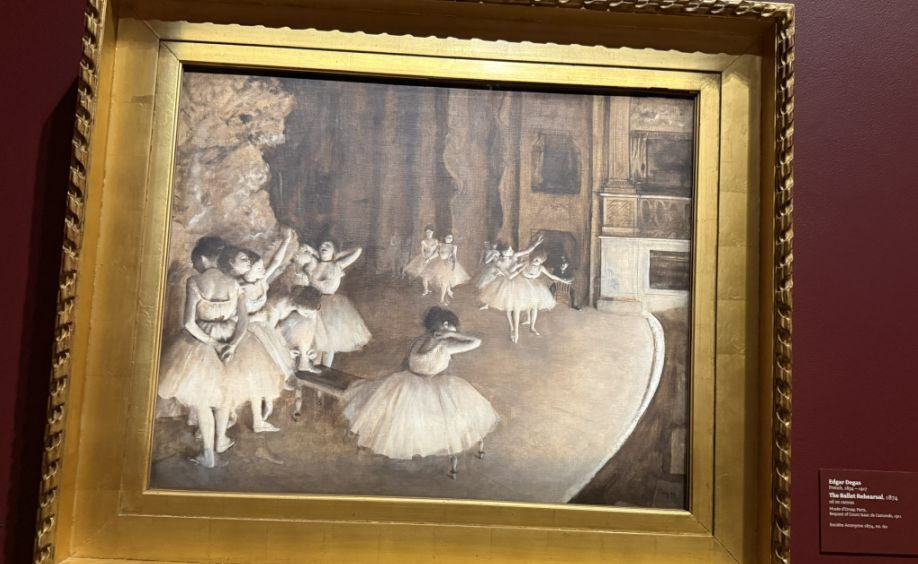
The Ballet Rehearsal, 1874, oil on canvas, Edgar Degas, French, 1834-1917- Société Anonyme 1874, 1874, no. 60
 |
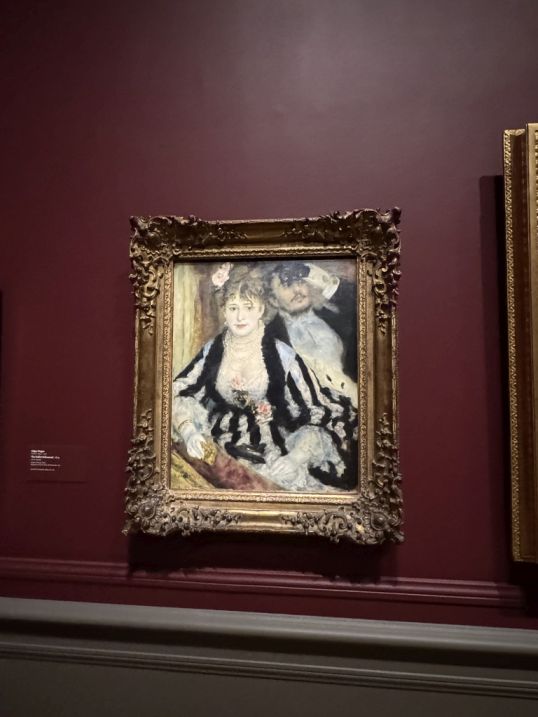 |
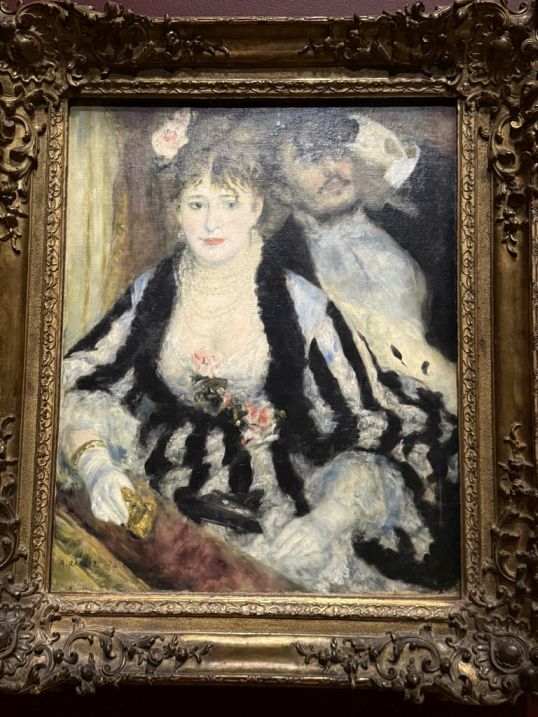
La Loge "The theatre Box", oil on canvas, 1874 , Pierre August Renoir
The painting, La Loge, depicts a young woman, Nini Lopez, sitting a theatre box, while her male companion behind her uses a pair of binoculars to observe something above him.
 |
 |
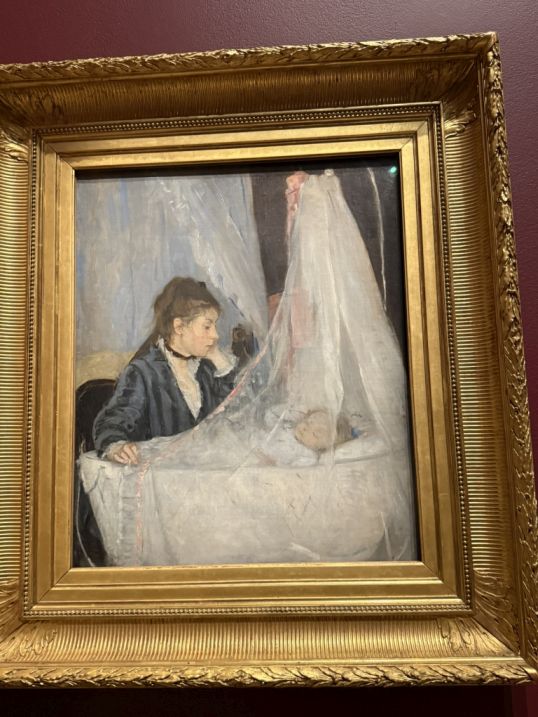
On the left: The Cradle, 1872, oil on canvas, Berthe Morisot, French, 1841-1895. The Cradle shows Morisot's sister Edma watching over her infant. It is a tender and intimate depiction of motherhood, the first of many by the artist, Edma gazes intently at her daughter, her finger touching the gauzy curtain of the bassinet.
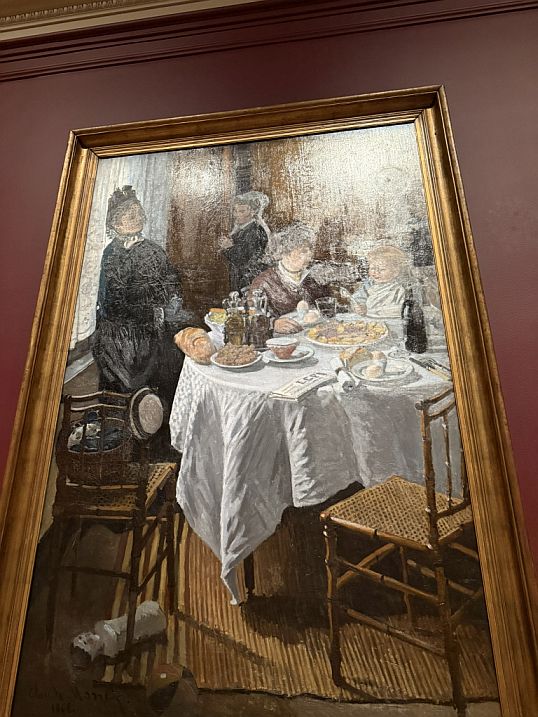
On the right: The Luncheon, 1868-1869, oil on canvas, Claude Monet, French. 1840-1926. The Luncheon may seem like a surprising work to show at the Society Anonyme exhibition, especially when compared with the freely painted landscaped Monet also chose to display. Including it was an intentional statement on the artist's part. He took pride in the ambitions and complex canvas, which had been rejected the Salon jury of 1870. Four years later, the independent artist of the Society Anonyme gave Monet the opportunity to exhibit the painting publicly. he boldly priced it at 5,000 francs, making it the most expense work offered for sale at the exhibition.
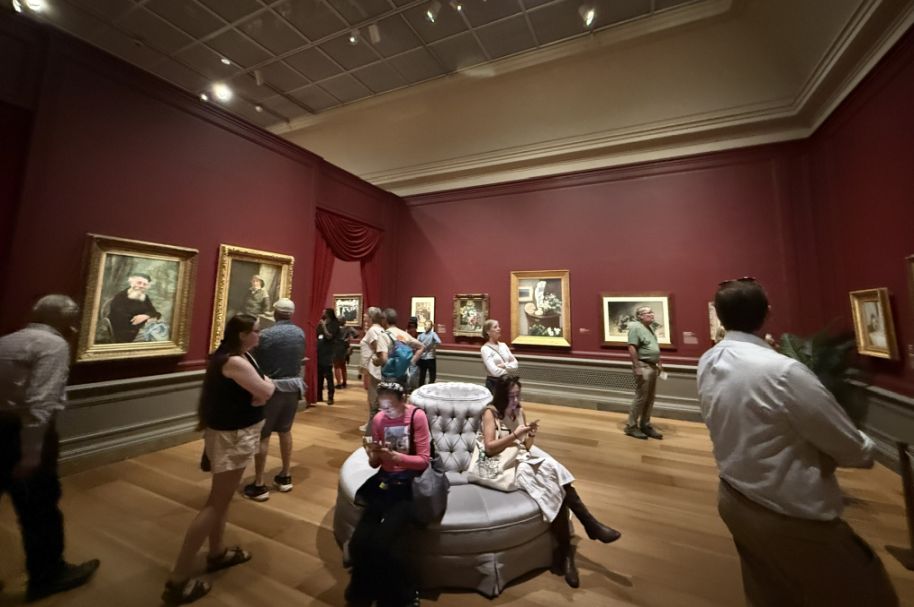
We are moving from one exhibit to the next exhibit.
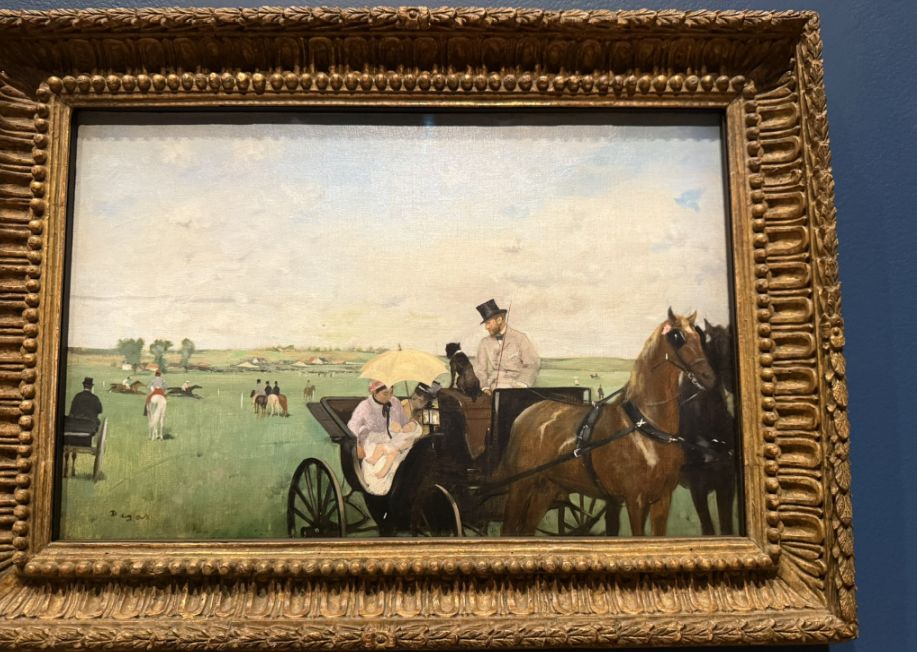
At the Races in the Countryside, 1869, oil on canvas, Edgar Degas, French, 1834-1917-Société Anonyme 1874, no. 63
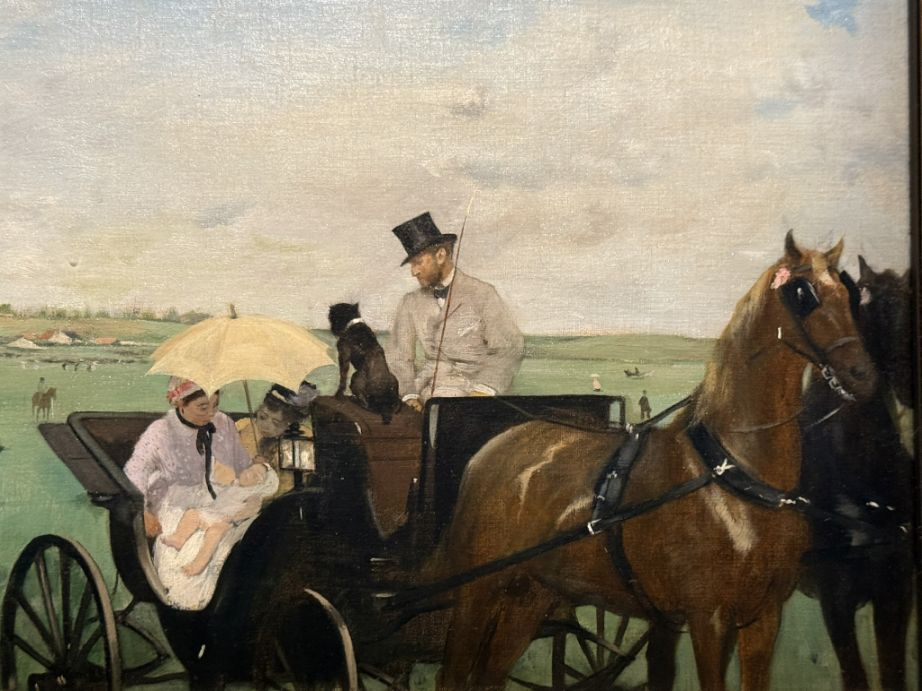
Degas was fascinated by the contemporary craze for horse racing, a dramatic spectator sport imported from England. The artist produce a large body of racing pictures. This one included two sprinting riders ad several onlookers scattered in the distance. The main subject, however, is not the competition itself but instead and intimate moment. A small, open carriage has pulled away from the main event so a wet nurse may breastfeed a now-slumbering child. The baby's mother hover nearby, shielding the nurse and infant with a parasol. While it was a common practice among well-off people to hire a wet nurse, the female-centered subject of breastfeeding was highly unconventional in art. This painting would never have been selected for display at the Salon.
 |
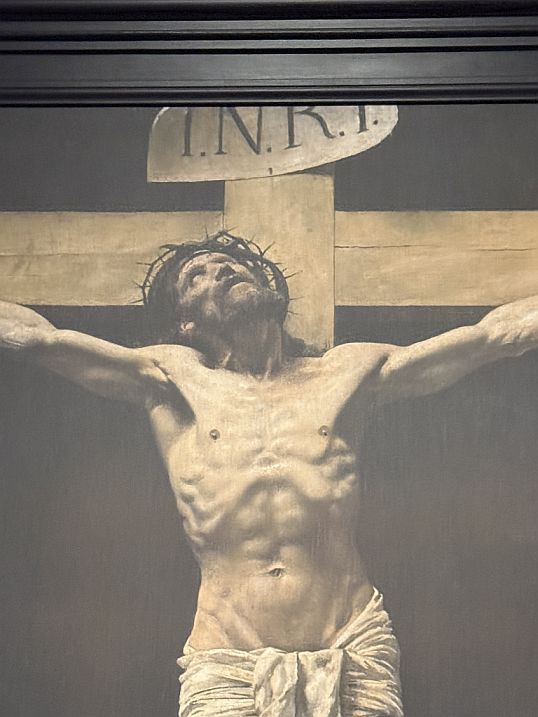 |
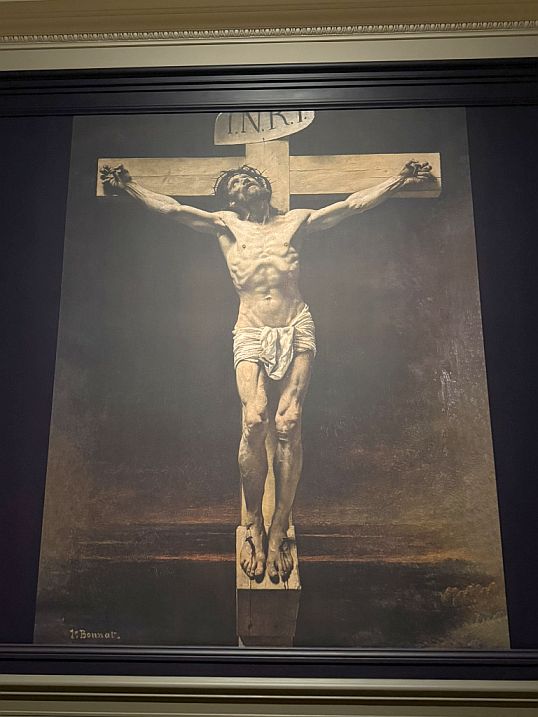
Christ on the Cross, oil on canvas, (reproduction), Leon Bonnat, French, 1833-1922
Bonnat's intensely realist interpretation of the traditional depiction of Christ's crucifixion caused a sensation at the 1874 Salon. The actual painting is seldom loaned and is shown here as a reproduction
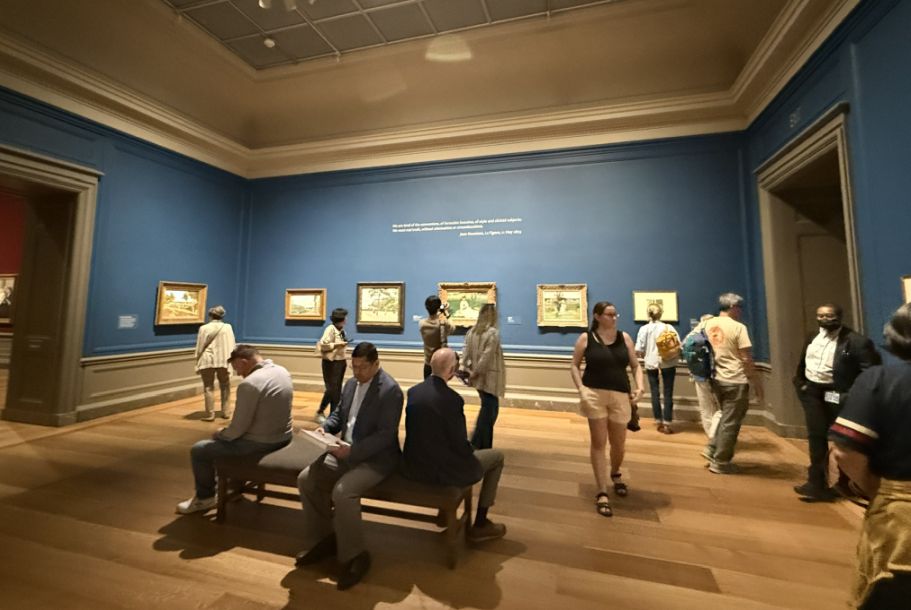
French Impressionist Landscape Gallery
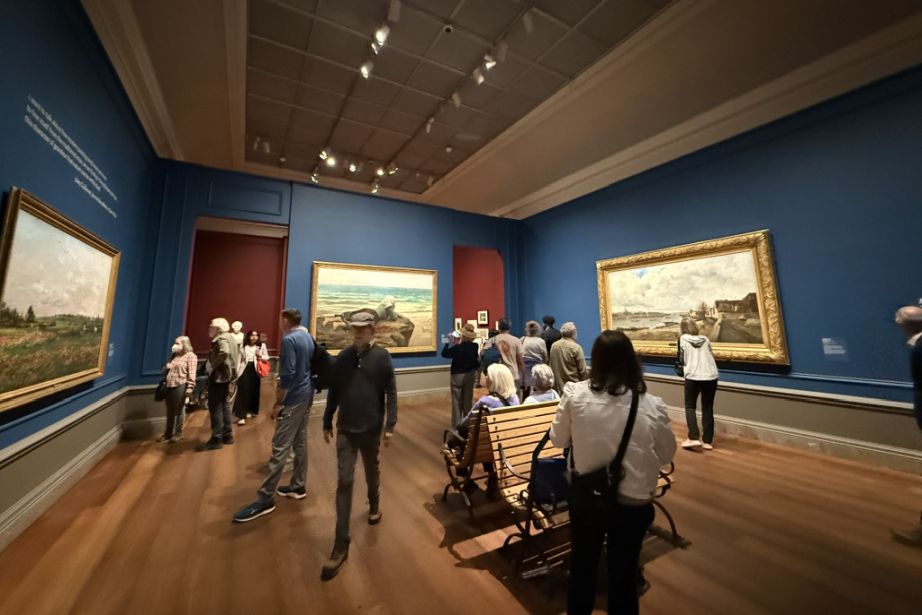
The Rise of the Landscape . After the events of 1870 and 1871, landscape painting helped bolster national healing and pride. Images of the countryside and its bounty reminded the French of their agricultural foundations and the rural backbone of the nation.

The fields in June, 1874, oil on canvas, Charles-Francois Daubigny, French, 1817-1878-Salon 1874, no. 522
This expansive landscape could just as easily have been included in the Society Anonyme exhibition as it was in the Salon. Daubigny uses loose brushwork, a bright palette, and a sense of immediacy to create a vivid springtime scene. A landscapist throughout his career, he received the highest official artistic honors and served on the Salon jury in 1874. There, he tried, but without success, to make way for emerging landscapist in the official art world.
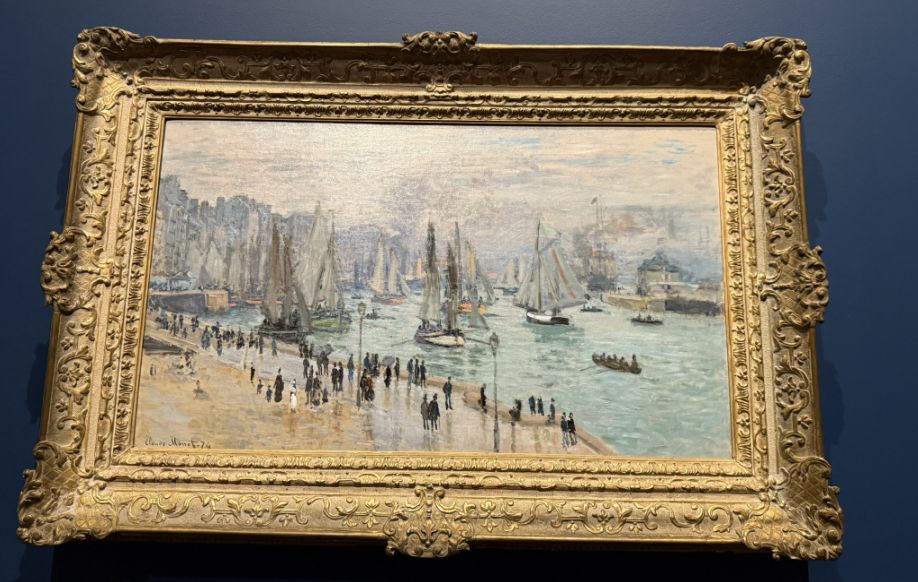
Fishing Boats leaving the Harbor, Le Havre, 1874, oil on canvas, 1874, Claude Monet, French, 1840-1926. Society Anonyme 1874, no. 96
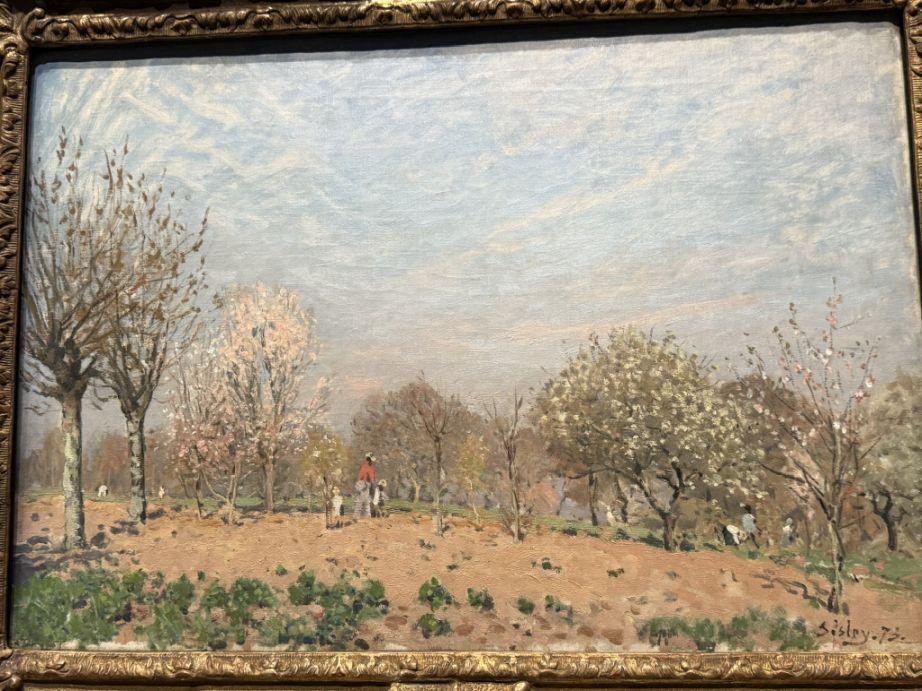
Apple Trees in Flower, Louveciennes, 1873, oil on canvas, Alfred Sisley, French, 1839-1899-Society Anonyme 1874-possibly no. 164
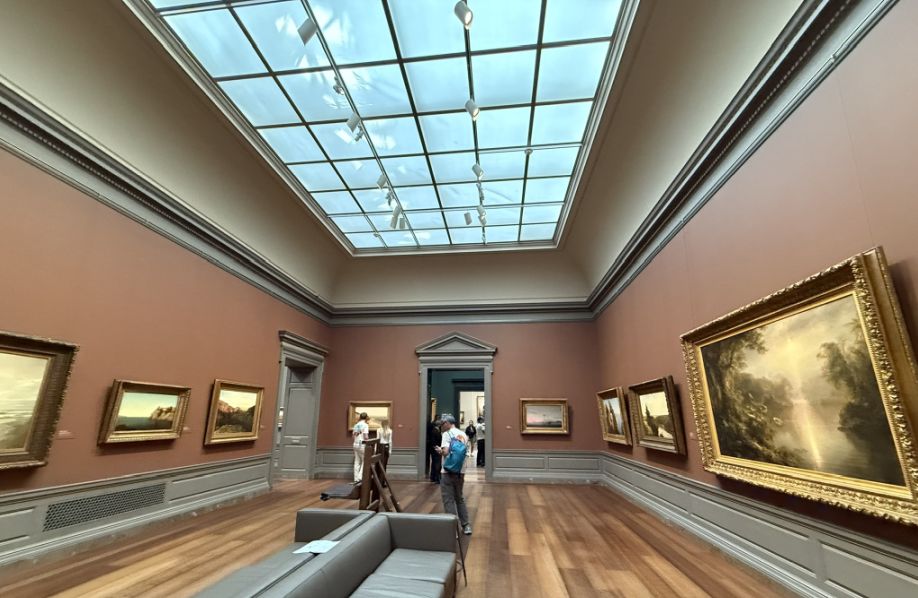
We are now in the U.S. American Landscape Painting Gallery.
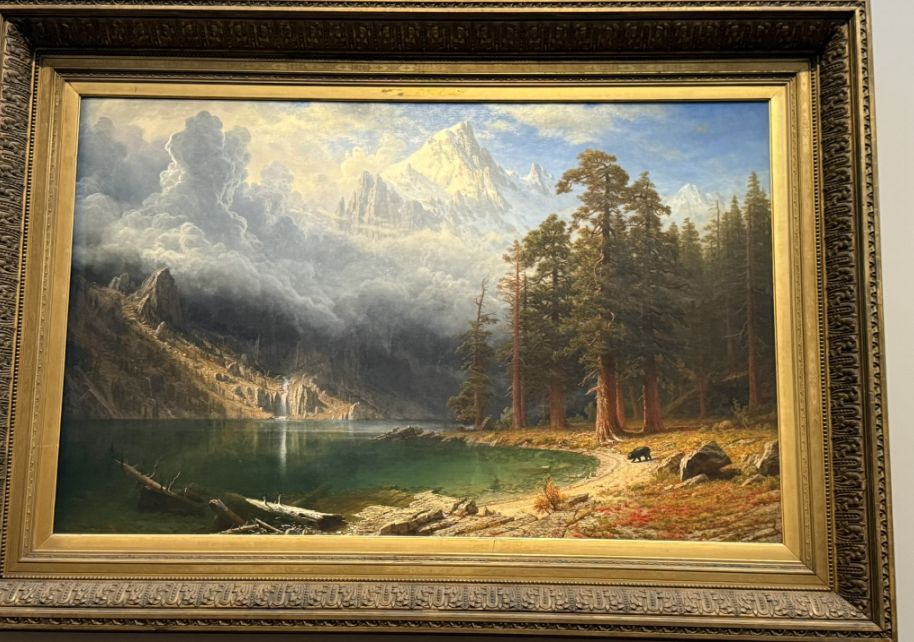
Mount Corcoran, 1876-1877, oil on canvas, Albert Bierstadt, American, 1830-1902-Corcoran Collection
To create this landscape, Albert Bierstadt drew on his experiences seeing the Rocky and Sierra Nevada mountains while traveling through the West in the 1860s. The snow-capped peak, clear mountain lake, and towering pines appear in may of the artist's Western landscapes. Despite the specific title and convincing sense of place, this scene is imagined.
Bierstadt first exhibited the painting as Mountain Lake but changed the title to entice collector William Wilson Corcoran. The artist even supplies a map showing the supposed location of Mount Corcoran. The flattery worked W.W. Corcoran purchased the painting, his first by Bierstadt, in 1878, adding it to the Corcoran Gallery's growing collection of America landscape paintings.
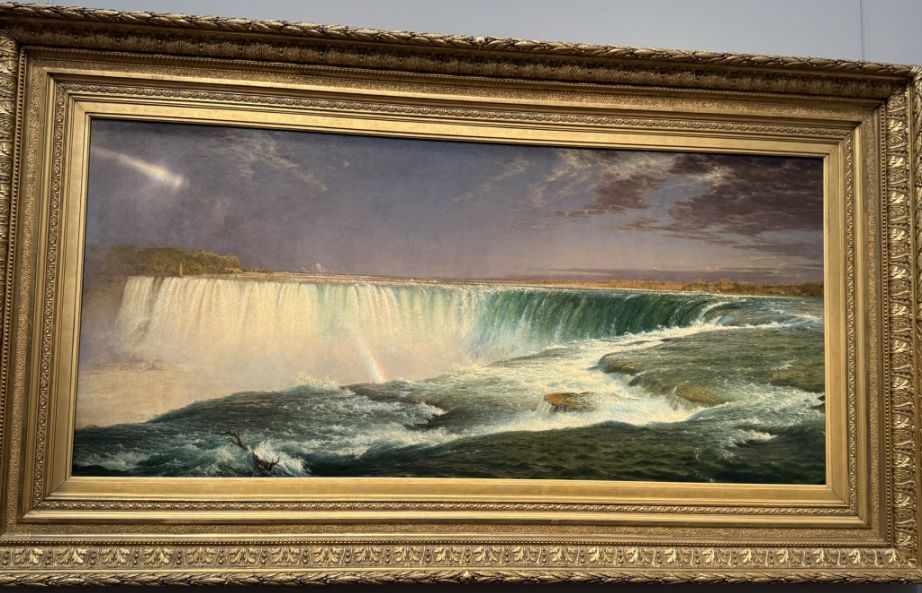
Niagara, 1857, oil on canvas, Frederic Edwin Church, American, 1826, 1900
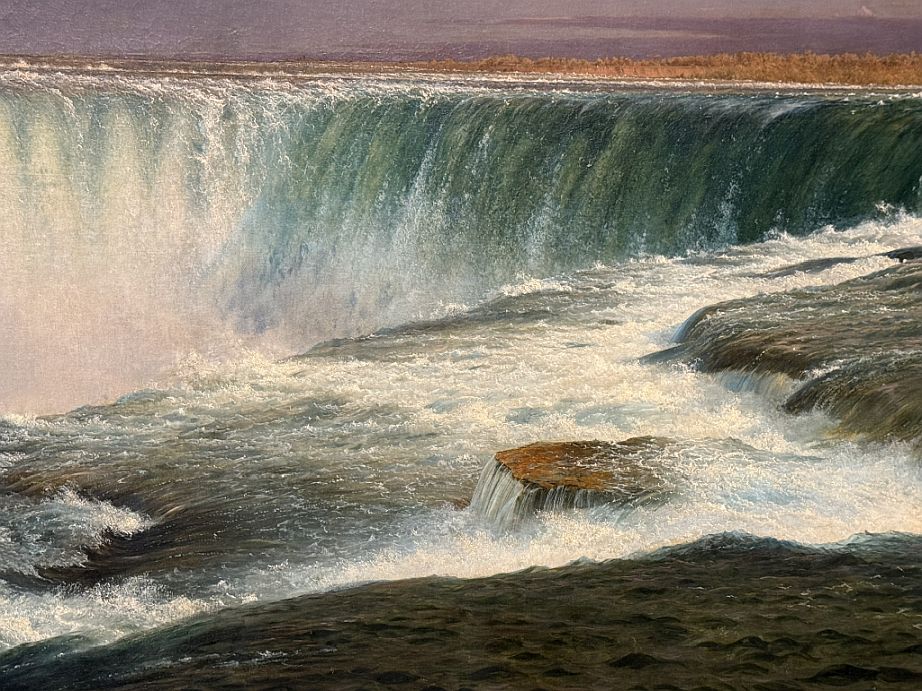
Niagara, located on the homeland of the Huadenosauncee (Iroquois), is among the greatest natural wonders of North America. Beginning in the late 17th century, the site became popular but challenging subject for European artists. An ambitious painter, Church was sure he could capture the power and beauty of Niagara Falls. In the this view of the sweeping expanse of Horseshoe Falls, Church plunges us directly into the rushing water. His detailed painting combines frothing waves and water sheeting over rock surfaces. As one writer describes the painting in 1957, " This is Niagara, with the roar left out!".
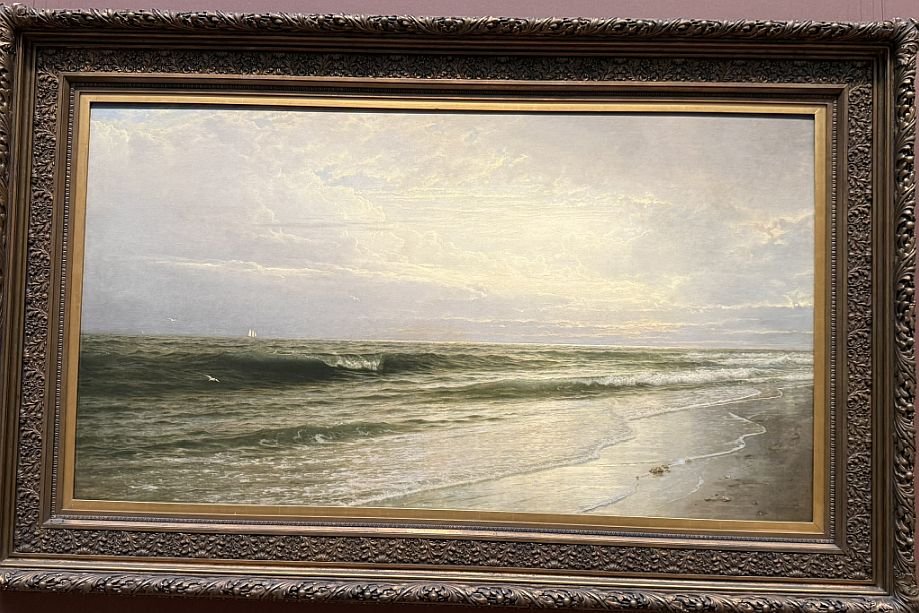
On the Coast of New Jersey, 1883, oil on canvas, William Trost Richards, American, 1833-1905-Corcoran Collection
 |
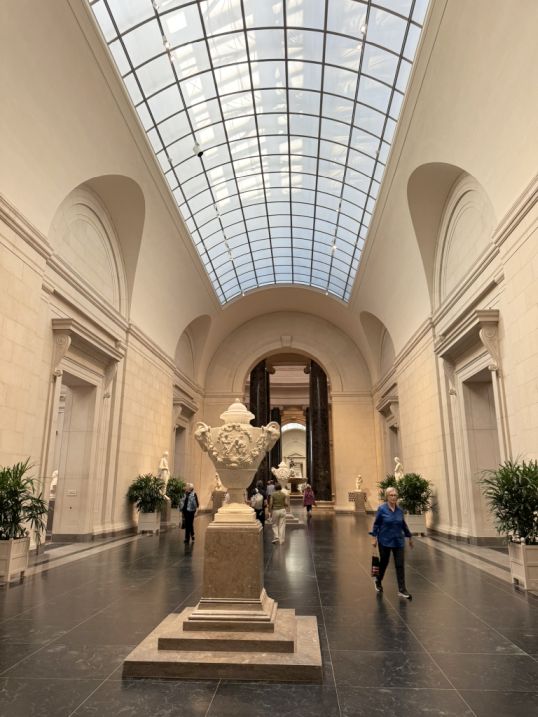 |
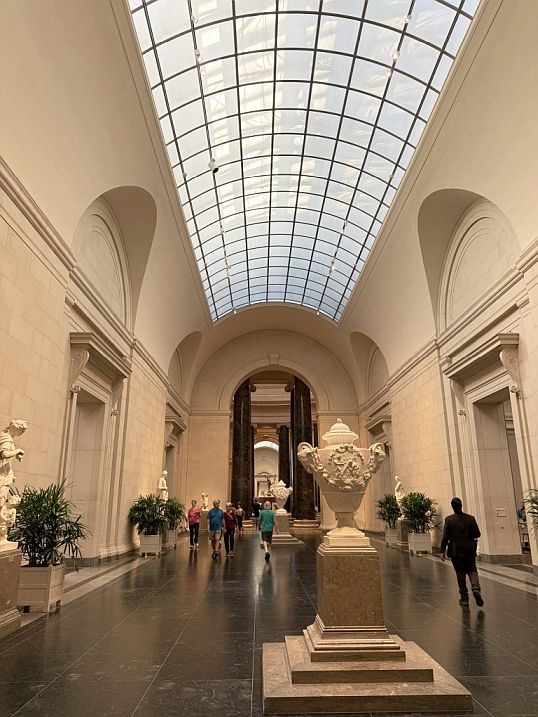
We are now almost done with the visit and we are now walking in the Garden courts.
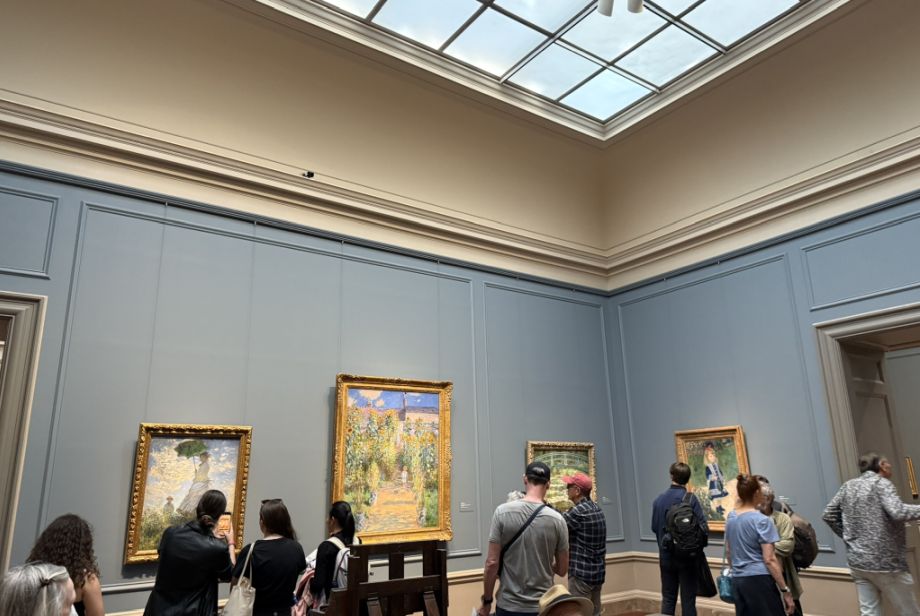
Impressionist/Post-Impressionist Gallery.
 |
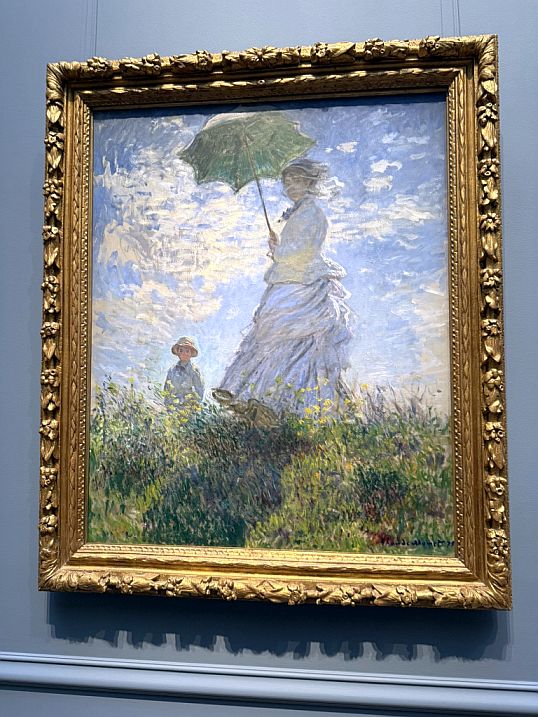 |
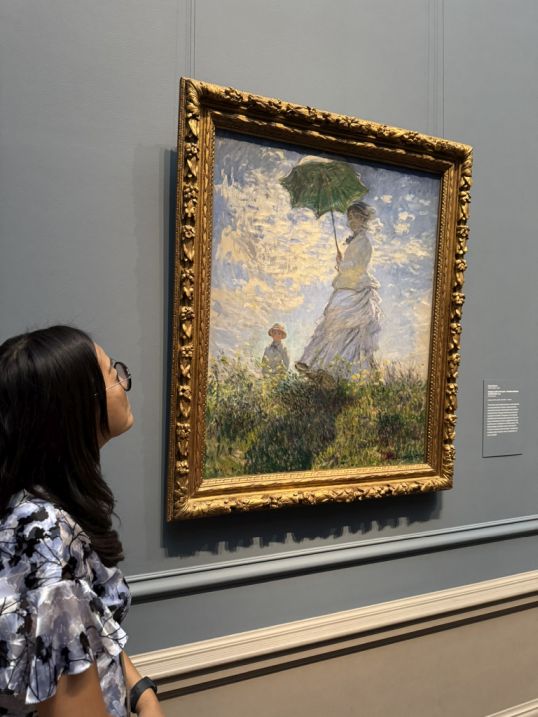
Woman with a Parasol – Madame Monet and Her Son, sometimes known as The Stroll (French: La Promenade) oil-on-canvas, Claude Monet from 1875.
The Impressionist work depicts his wife Camille Monet and their son Jean Monet in the period from 1871 to 1877 while they were living in Argenteuil, capturing a moment on a stroll on a windy summer's day. Monet's light, spontaneous brushwork creates splashes of color. Mrs. Monet's veil is blown by the wind, as is her billowing white dress; the waving grass of the meadow is echoed by the green underside of her parasol.
 |
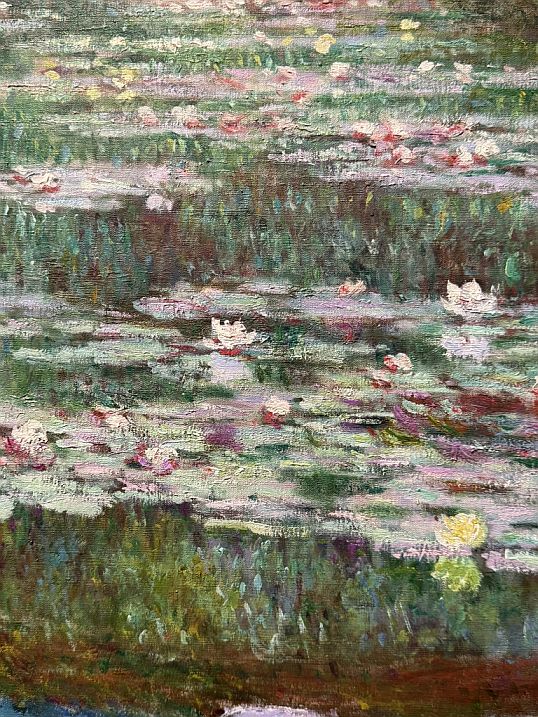 |
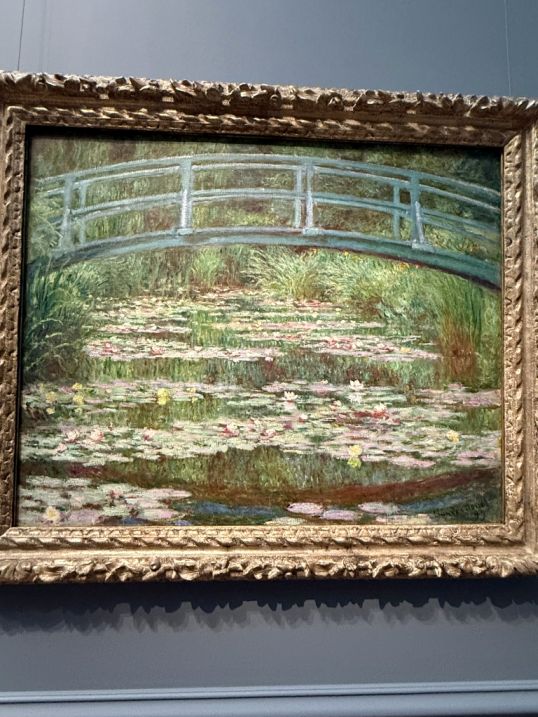
The Japanese Footbridge, 1899, oil on canvas, Claude Monet, French, 1840-1926
 |
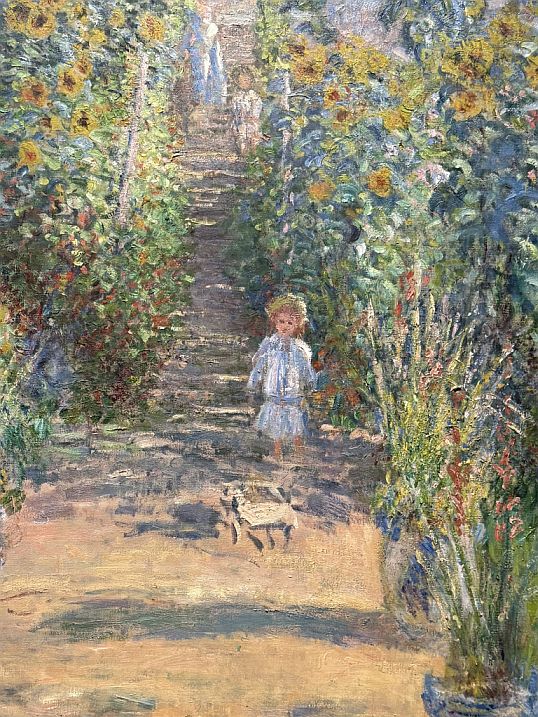 |
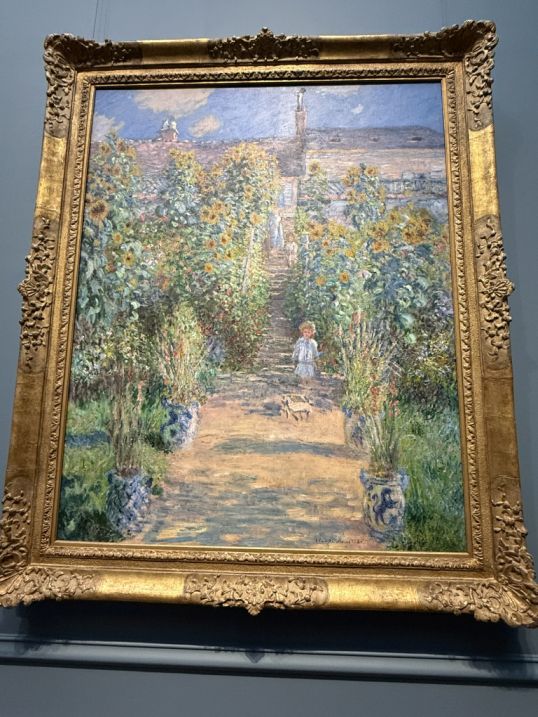
The Artist's Garden at Vetheruil, 1881, oil on canvas, Claude Monet, French, 1840-1926
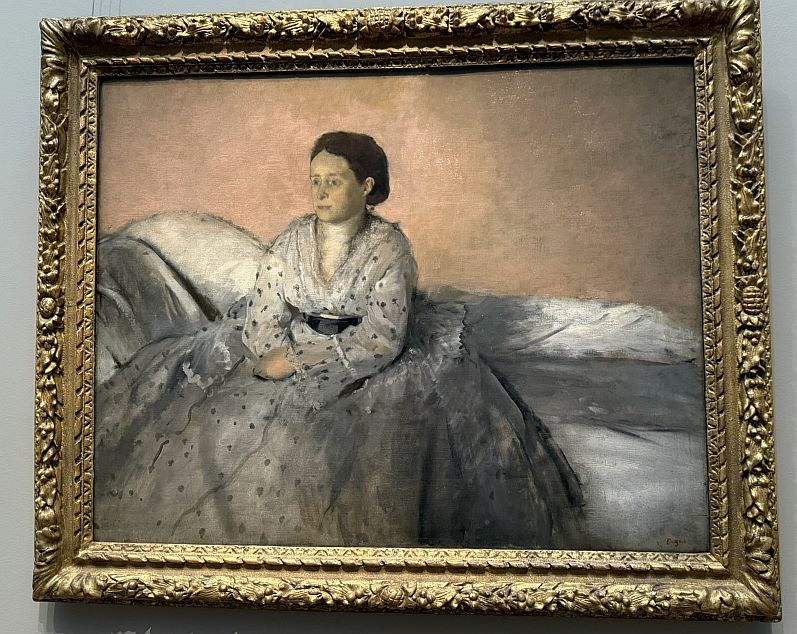
Madame Rene de Gas, 1872-1873, oil on canvas, Edgar Degas, French, 1834-1917
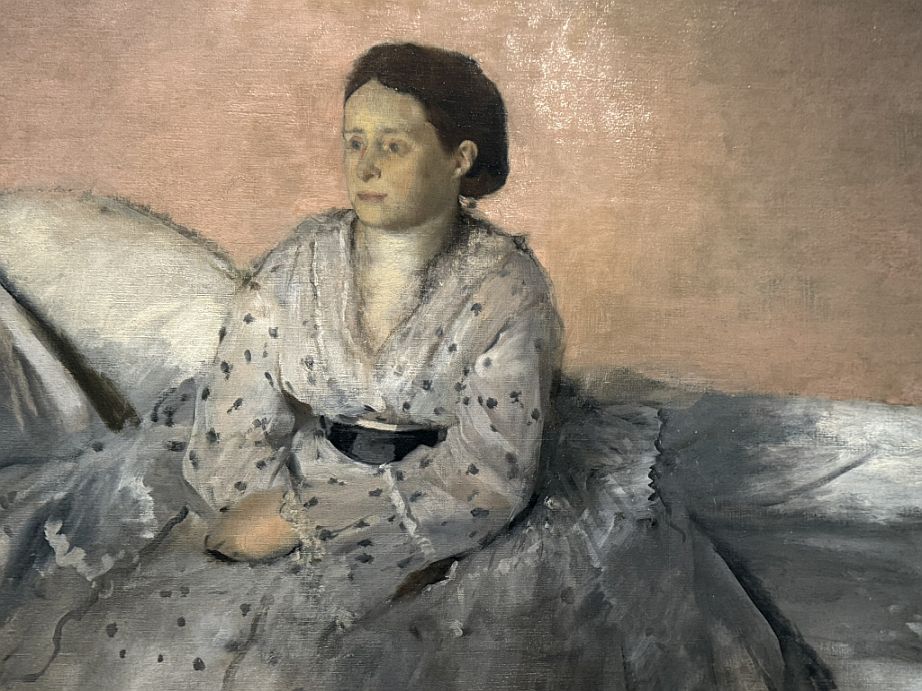
Degas painted this moving portrait of this first cousin and sister-in-law, Estelle de Gas, in New Orleans, where she lived. Estelle was nearly blind, and Degas, whose own vision was deteriorating, was deeply affected by her condition. The portrait may suggest dimming vision. The light is diffuse, the details blurred. And the palette of grays, pinks, and whites is almost monochromatic (one color). But the painting does not allow us to enter fully into Estelle's experience.. Positioned off center, she faces to the side. Her eyes seem unfocused, and her expression betrays nothing of what she is thinking or feeling. Isolated and withdrawn, she in unknowable.
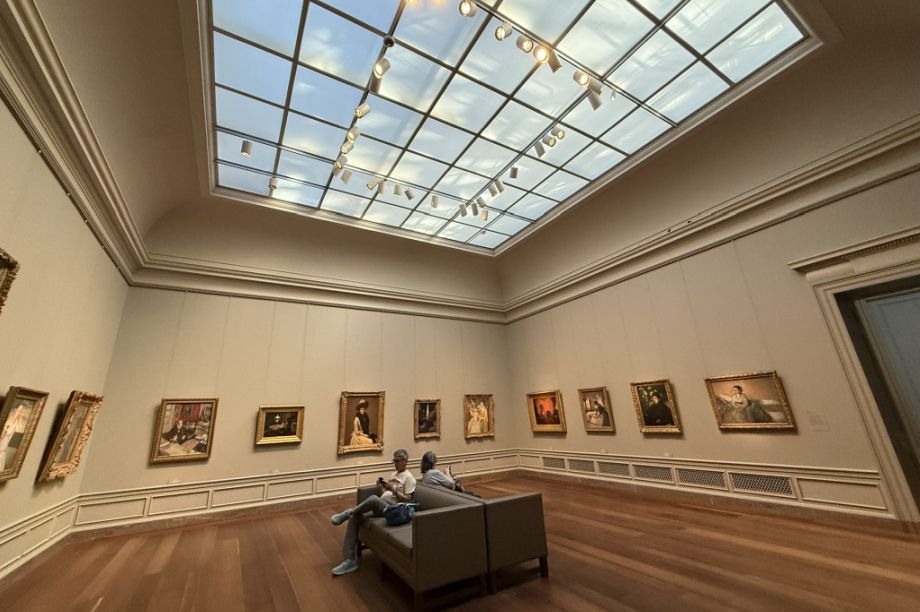
Beautiful galley with glass ceiling that lets natural light in.
 |
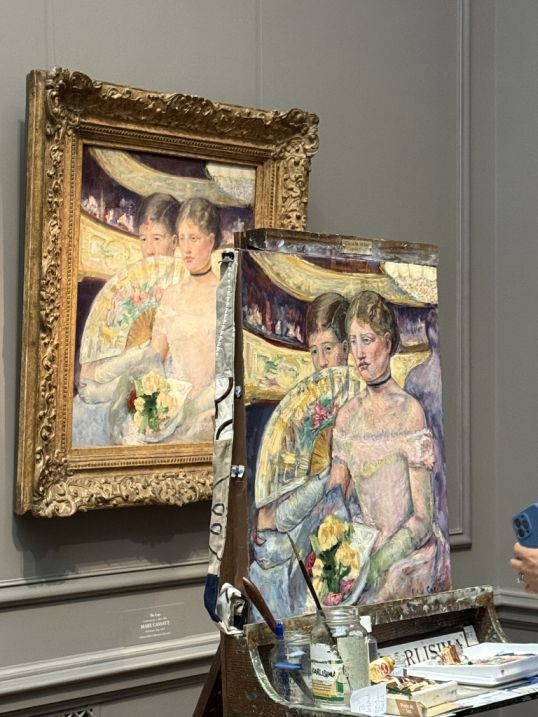 |
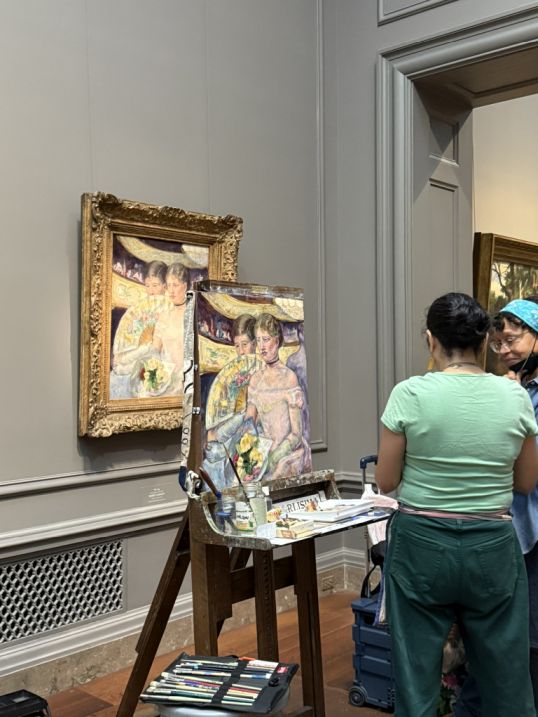
An art copyist or a museum study copyist. This practice dates back centuries, where aspiring artists would learn by meticulously replicating the works of masters. It's a fantastic way for artists to study techniques , deepen observation as it forces an artist to observe every detail, hue, and form in a way that simply looking at a painting cannot achieve.
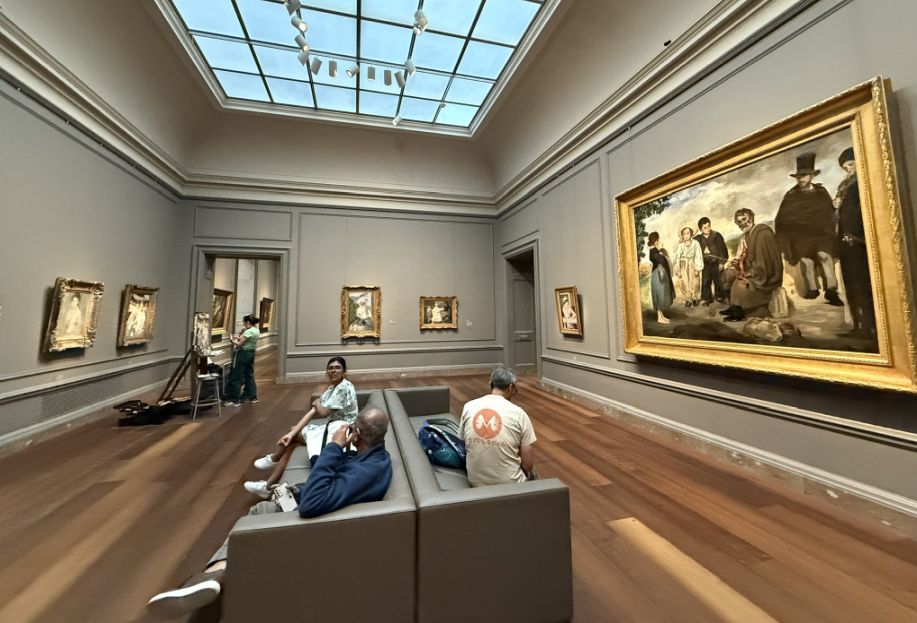
Another beautiful gallery
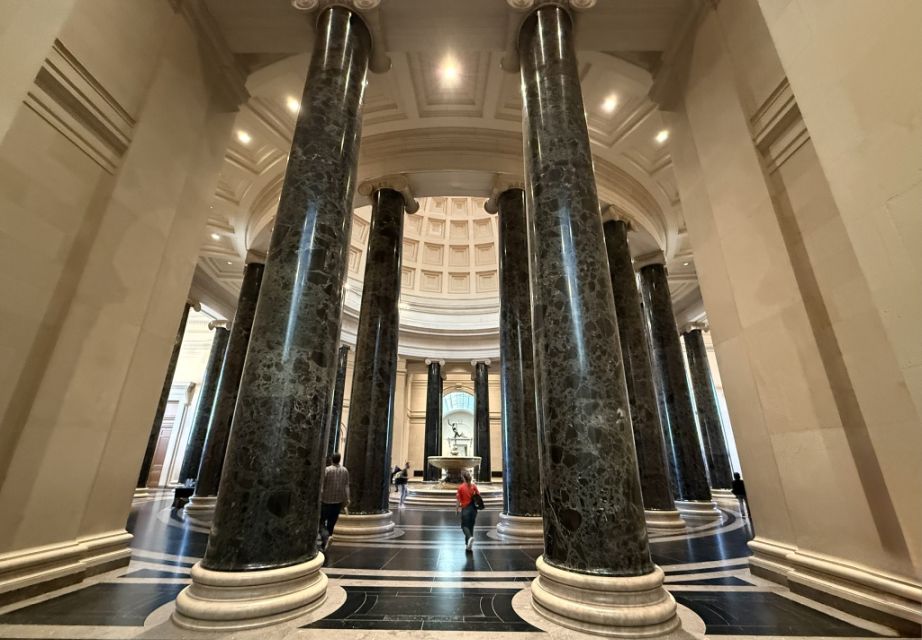
We are heading toward the Central Rotunda which is truly one of the museum's most iconic and breathtaking spaces. Designed by architect John Russell Pope, it embodies a grand, neoclassical style that harks back to ancient Roman and Greek architecture, creating an immediate sense of majesty and timelessness upon entering.
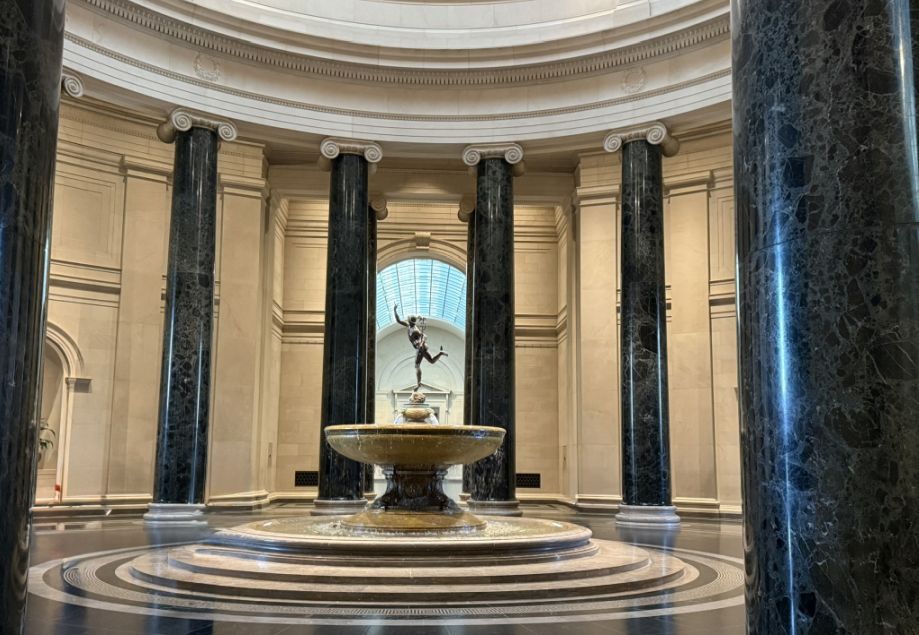
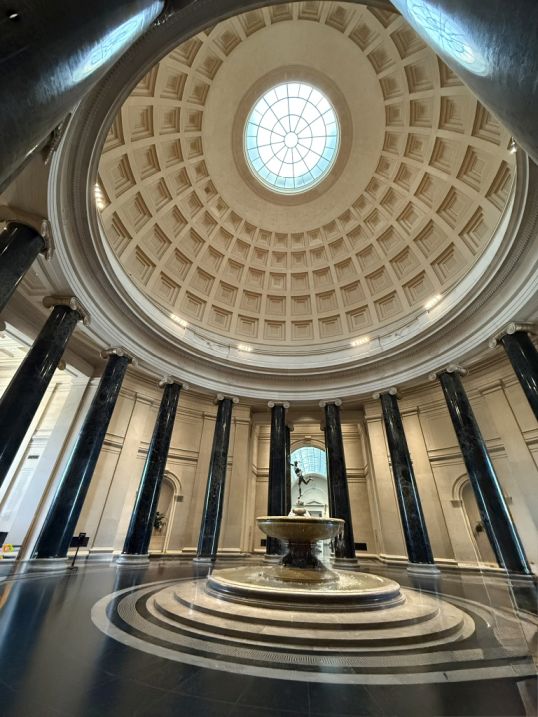
The rotunda is a massive, perfectly circular, two-story space that immediately commands attention with its imposing scale. Its symmetrical design creates a sense of harmony and balance. Marble Colonnades supporting the weight of the dome and defining the perimeter of the central floor are eight massive, fluted marble columns. These columns are arranged in a circular formation, creating a processional feel and defining the central axis of the space.
At the very heart of the rotunda, directly beneath the oculus, lies a beautiful fountain. Adorned with classical statuary, the gentle sound of its cascading water adds a peaceful and contemplative auditory element to the visual grandeur.
 |
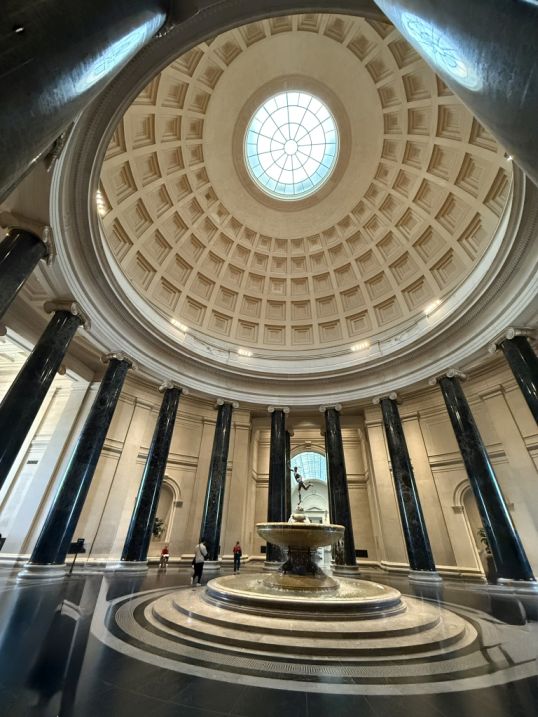 |
The Dome: Capping the entire space is a magnificent, coffered dome that soars high above. At the very center of this dome is a large oculus—a circular opening—that provides the primary source of natural light, flooding the rotunda with a soft, ethereal glow from above. This light constantly shifts with the time of day and weather, adding a dynamic quality to the space.
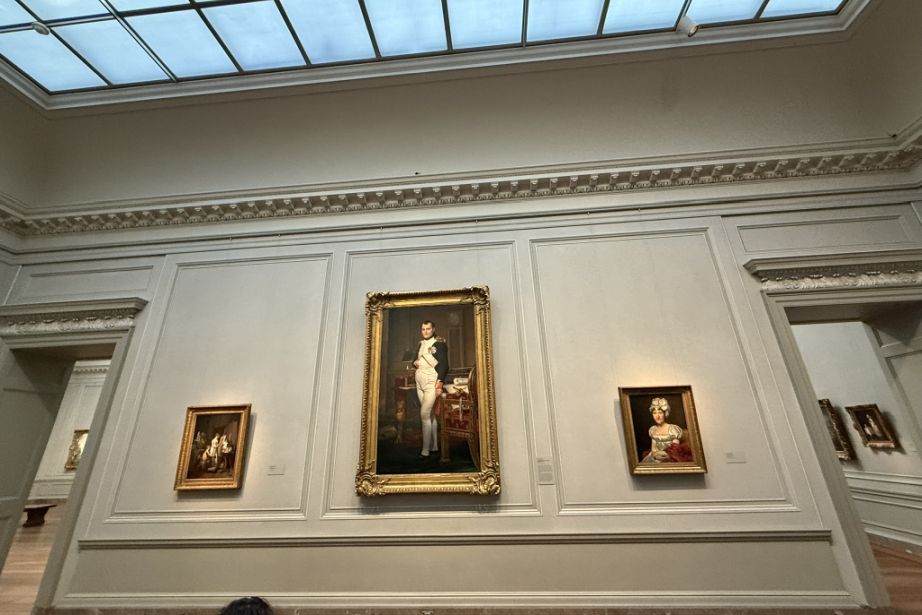
We are passing by the French Neoclassical and Romantic art of the late 18th and early 19th centuries.
 |
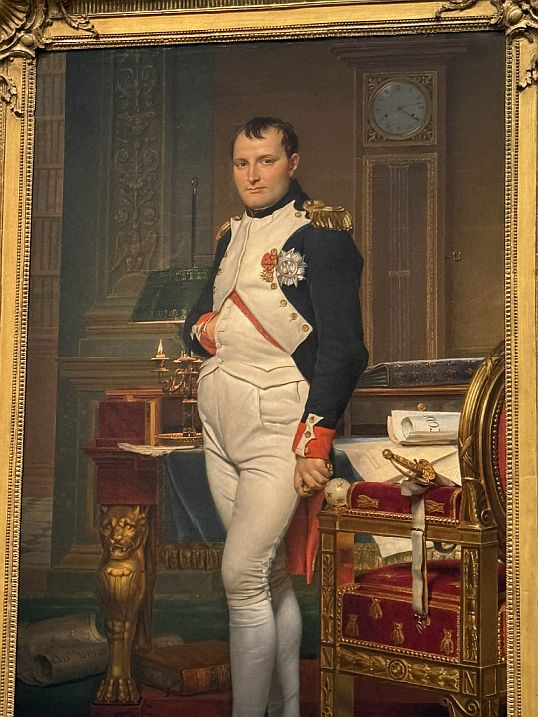 |
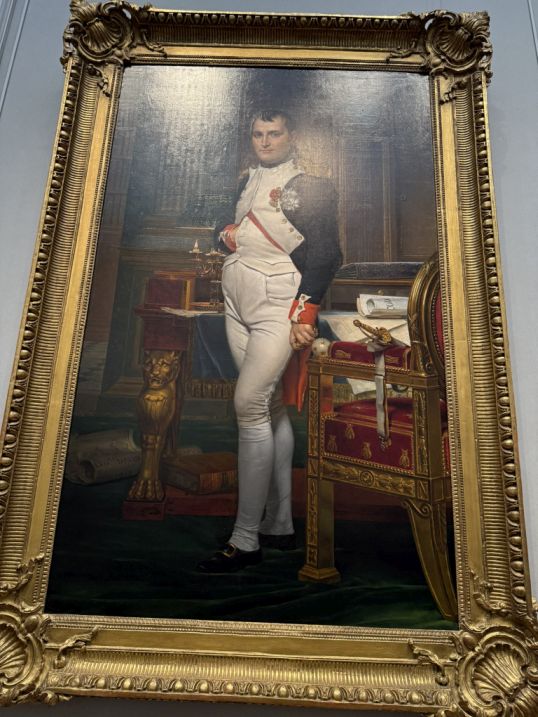
The Emperor Napoleon in His Study at the Tuileries, 1812, oil on canvas, Jacques-Louis David, French, 1748-1825
How do portraits influence the way we see historic figures? David shows Napoleon Bonaparte working tirelessly for the people of France. The clock read reads 4:13, the early morning. The candles are almost extinguished. The emperor's hair is disheveled, his stockings rumples. He has spent the night drafting the Napoleonic Code, Frances' first civil law code.
David's portrait creates a powerful myth of the leader, but it's not the full story. Napoleon was a military genius whose code became the model of modern legal systems worldwide, but he also left millions dead in his quest to conquer Europe. He reestablished slavery in France's colonies and stole art from around the globe. His complex legacy is still the subject of fierce debate.
We are now leaving the Museum
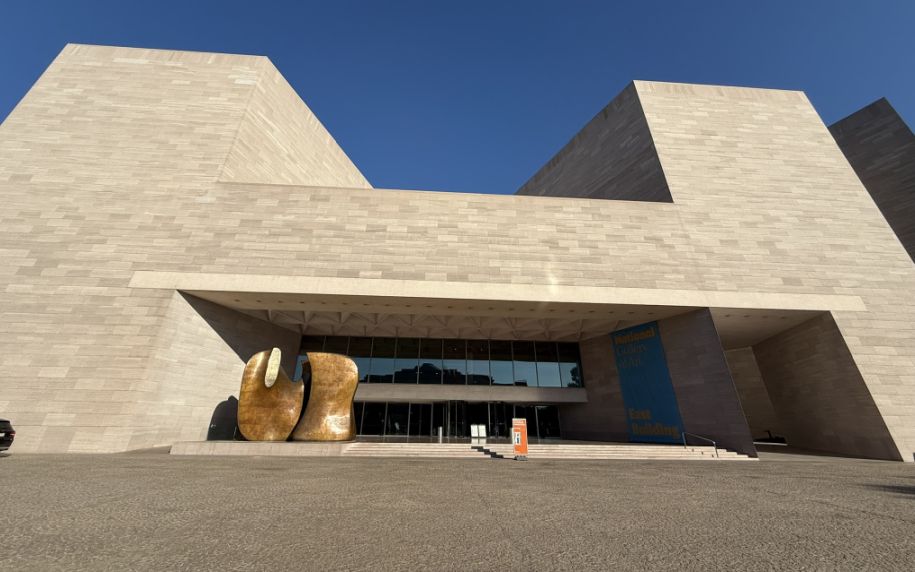
We passed by the East Building which was designed by I.M. Pei and opened in 1978, this building is a striking example of modern architecture. Its angular forms and the use of geometric shapes, including the iconic glass pyramids, are a stark contrast to the traditional West Building. The East Building typically features modern and contemporary art, as well as special exhibitions.
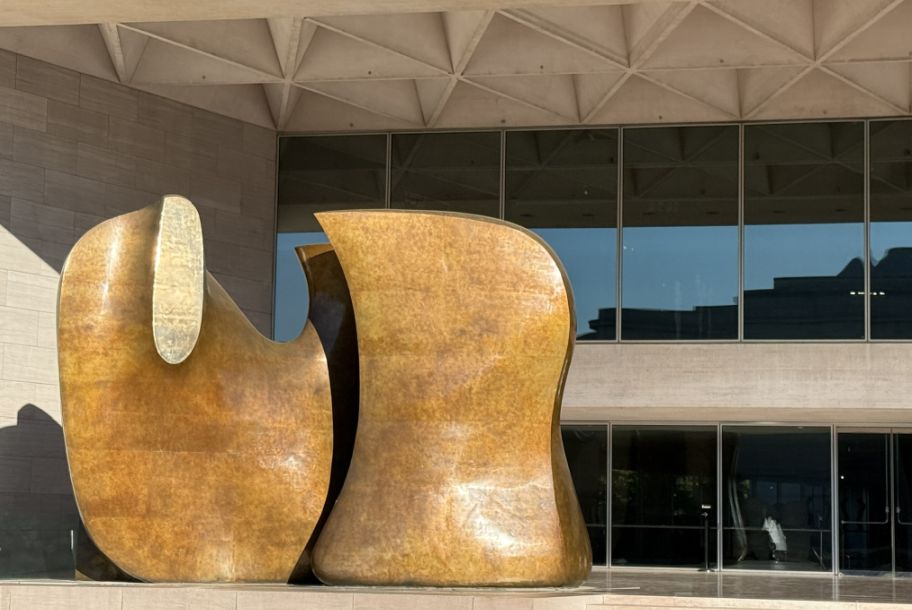
The statue you are seeing is called "Broken Obelisk" by Barnett Newman that stands prominently on the main plaza in front of the East Building. It is one of the most famous pieces of modern art in the National Gallery's collection and a very recognizable landmark on the National Mall. It's known for its powerful geometric forms and the dramatic visual dialogue between the two monumental shapes. Many see it as a symbol of broken ideals or a meditation on reversal, but its meaning is open to interpretation. It's a fantastic piece to encounter as we exited the museum!
Our visit to the National Gallery of Art West Building traced a beautiful journey through art history from the light-filled West Garden Court into Paris 1874: The Impressionist Moment, where the break between the Salon and the independent Société Anonyme marked the birth of modern art. We then moved through French sculpture and Impressionist galleries filled with works by artists like Édouard Manet and Pierre-Auguste Renoir before arriving at expansive American landscapes such as Niagara by Frederic Edwin Church. The visit ended in the serene Rotunda and neoclassical galleries, bringing you back to the museum’s timeless architectural grandeur. It is one of our favorite museums in Washington, D.C., it feels less like a collection of rooms and more like a graceful walk through the evolution of art itself.
NEXT... Day 5- Dinner at Centrolina